Terakotas figūra — putti ar kazu, Neorokoko, Francija (5979)
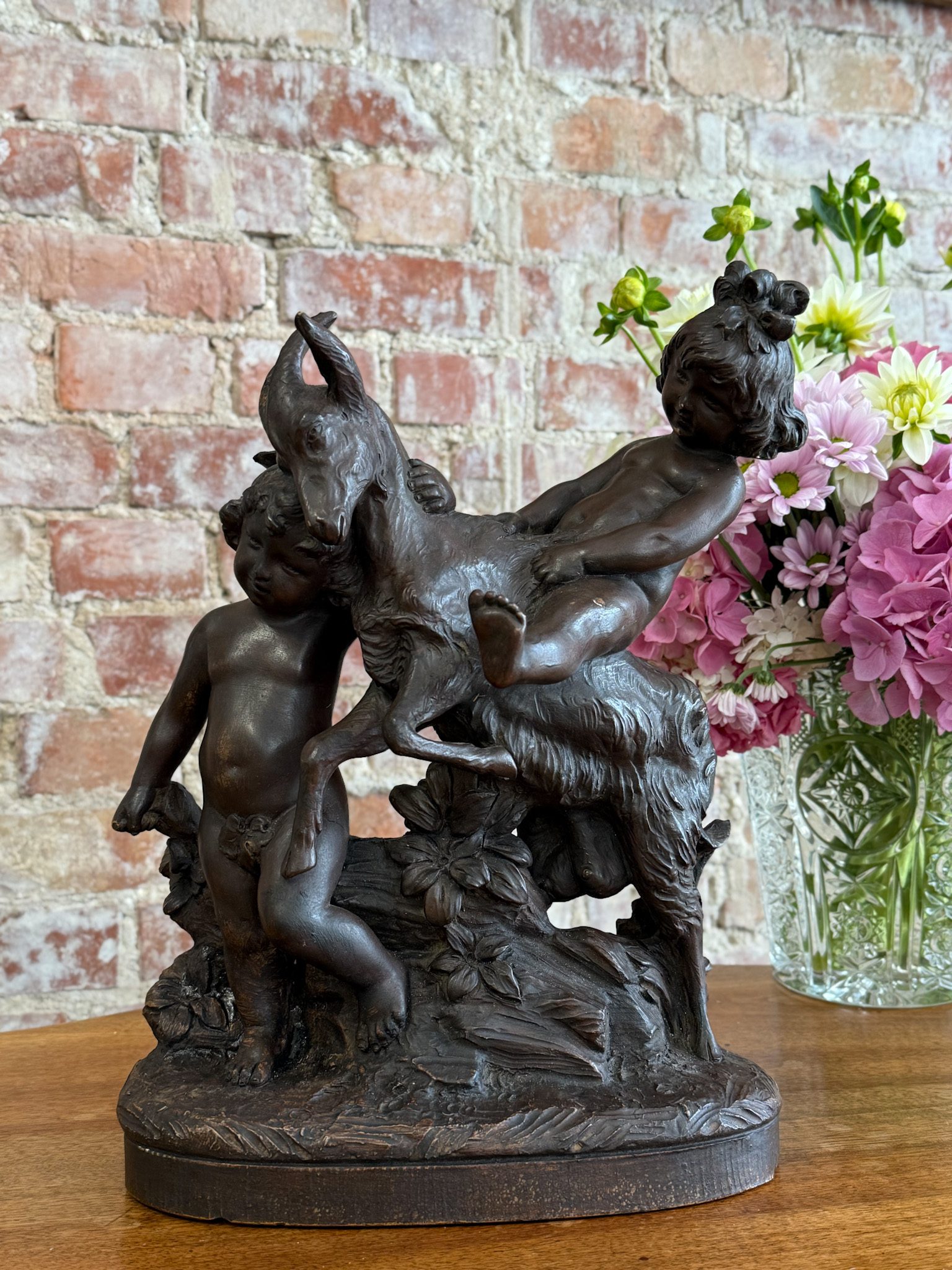
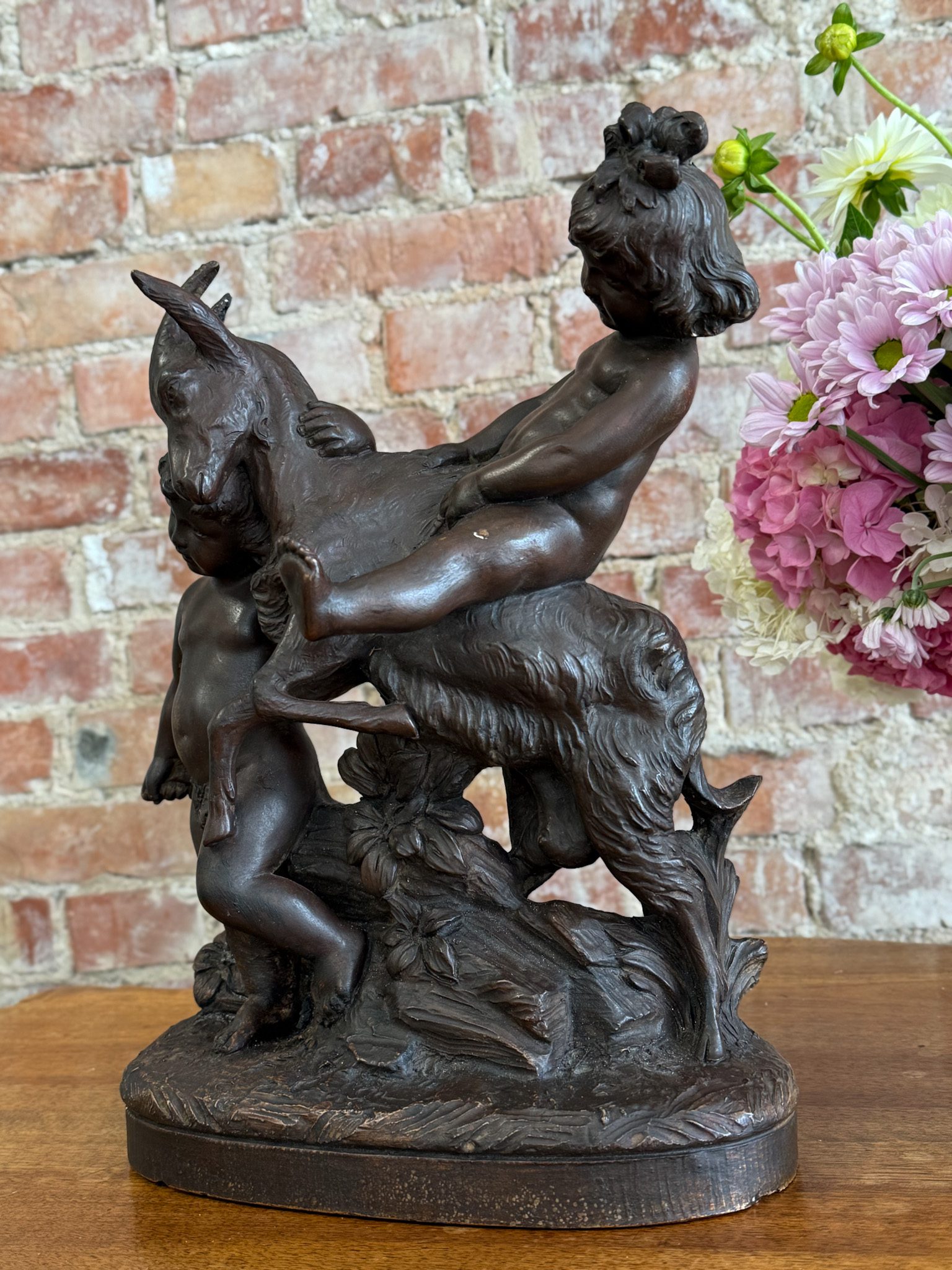
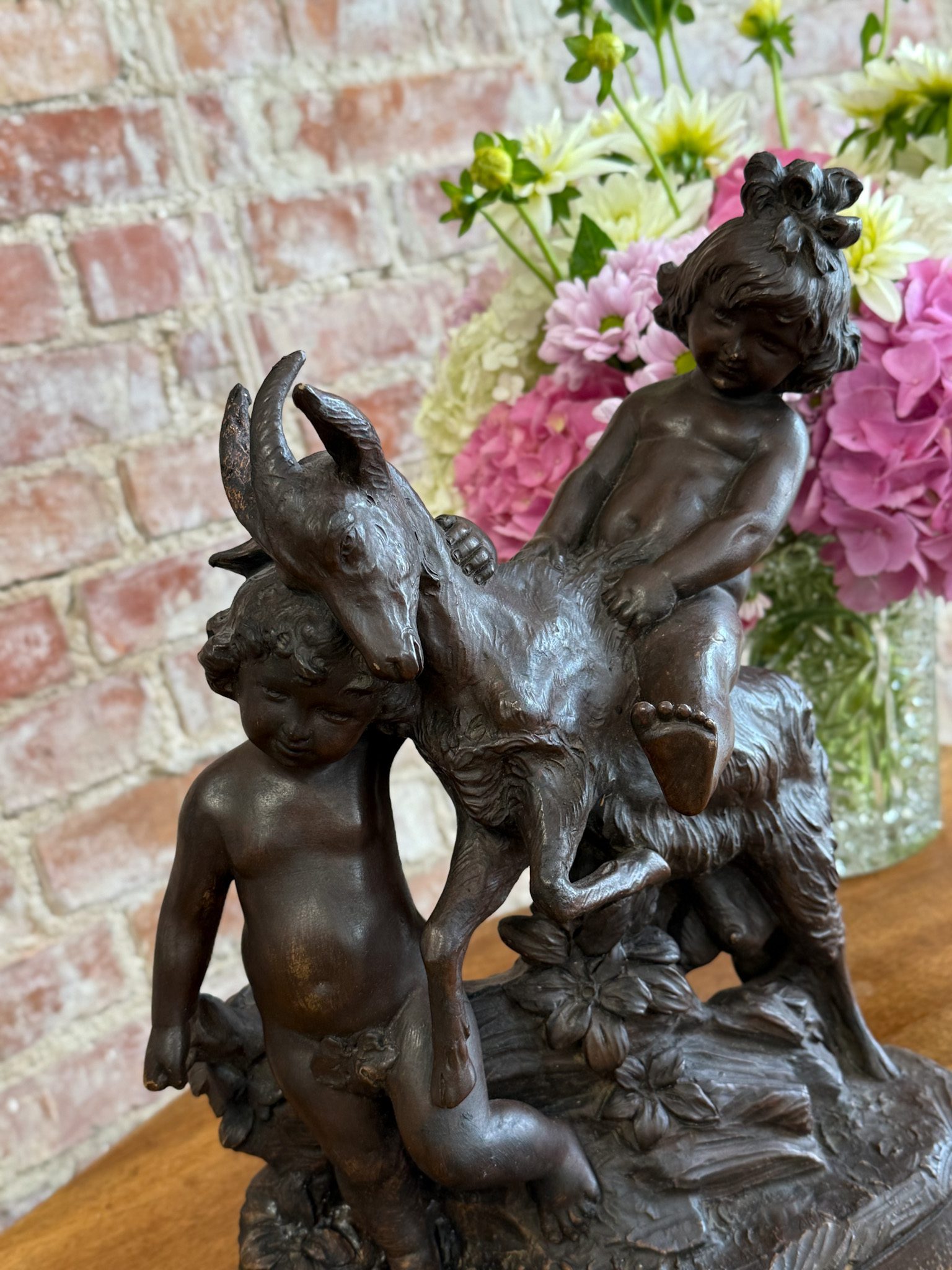
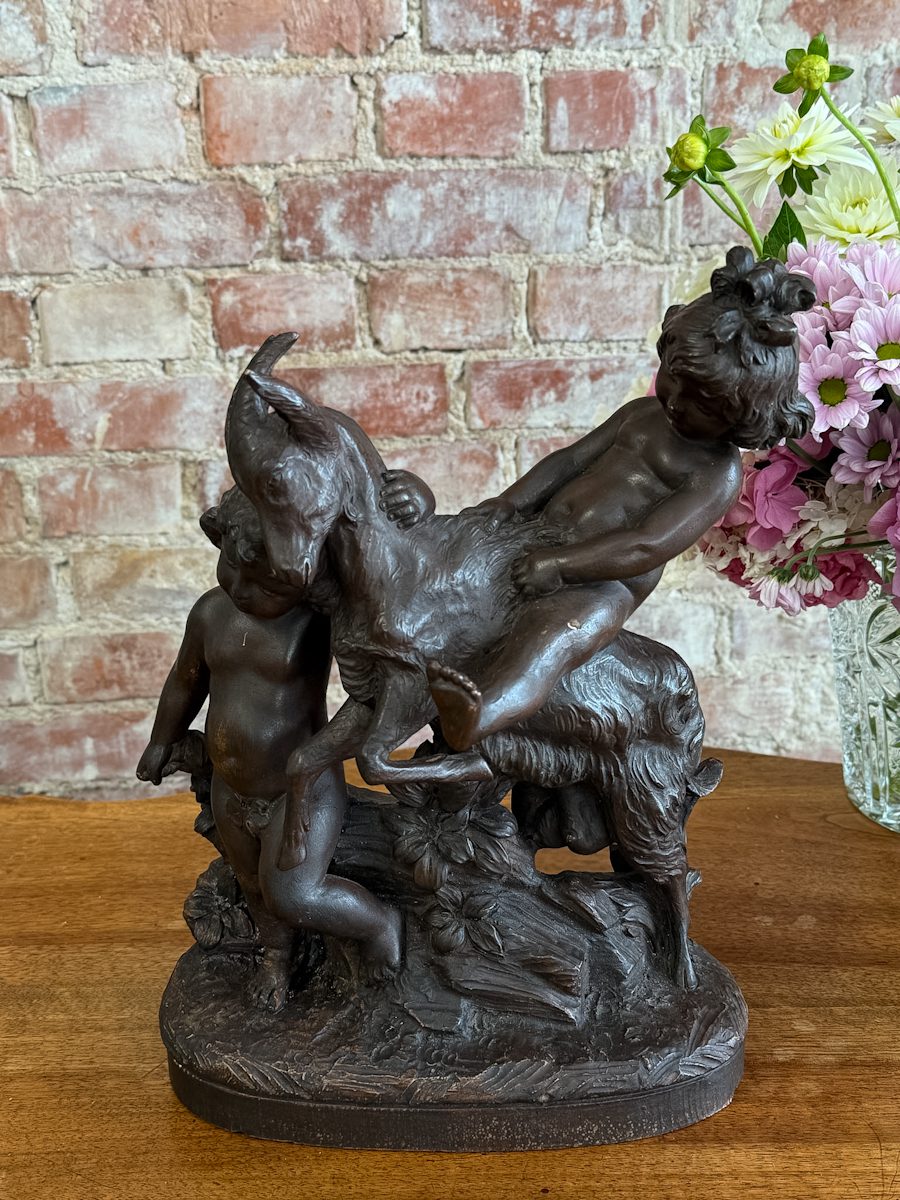
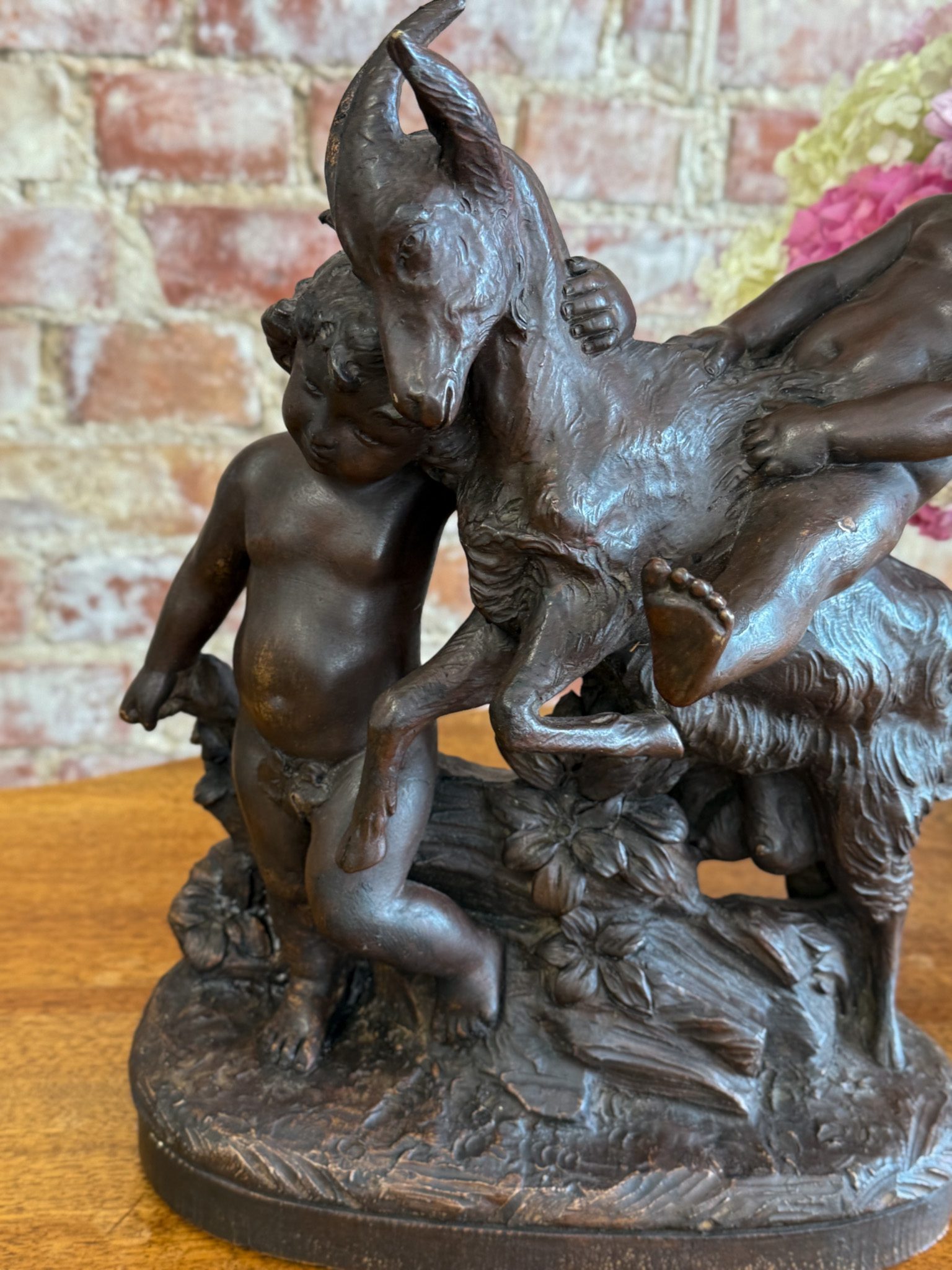
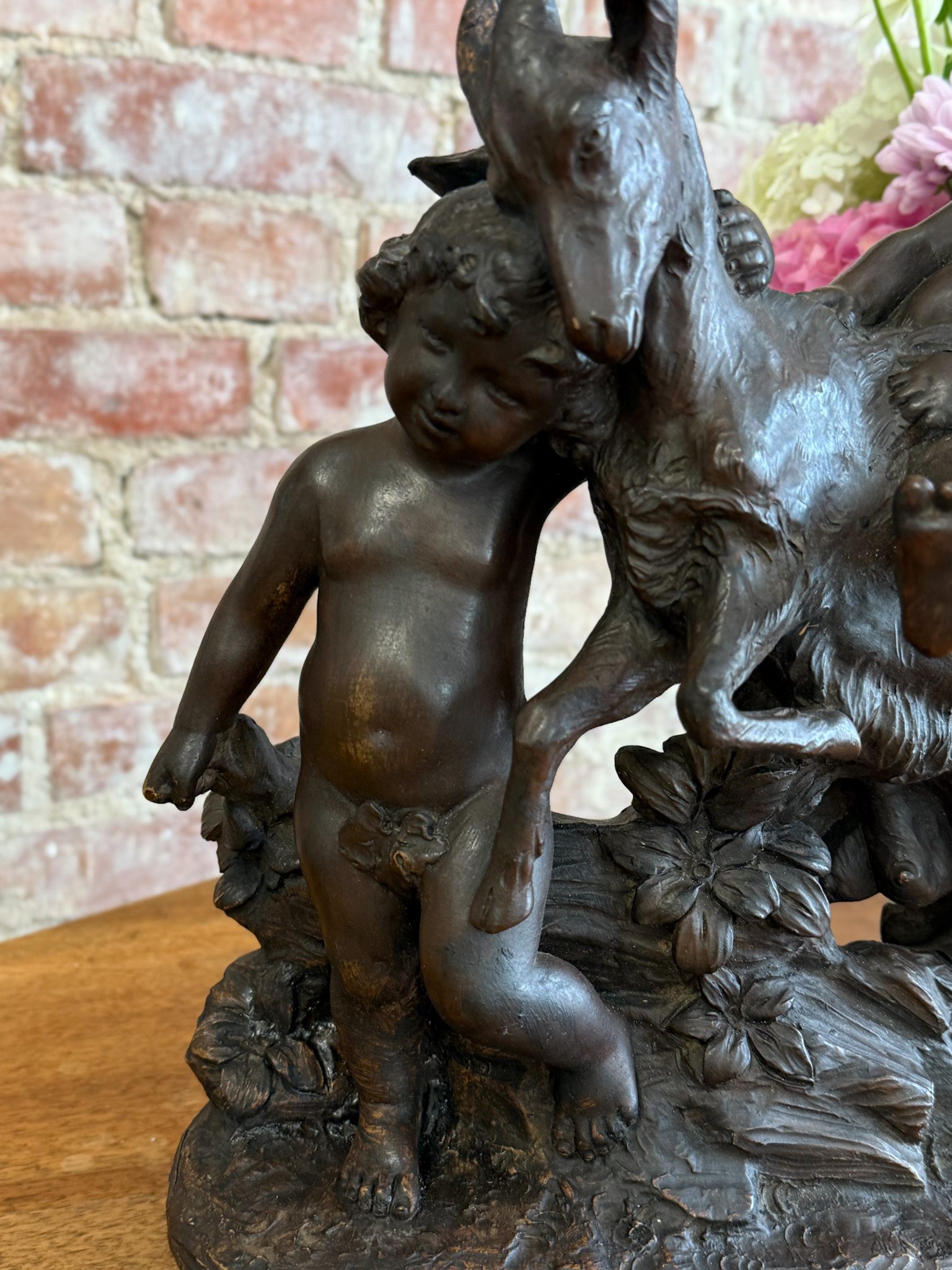
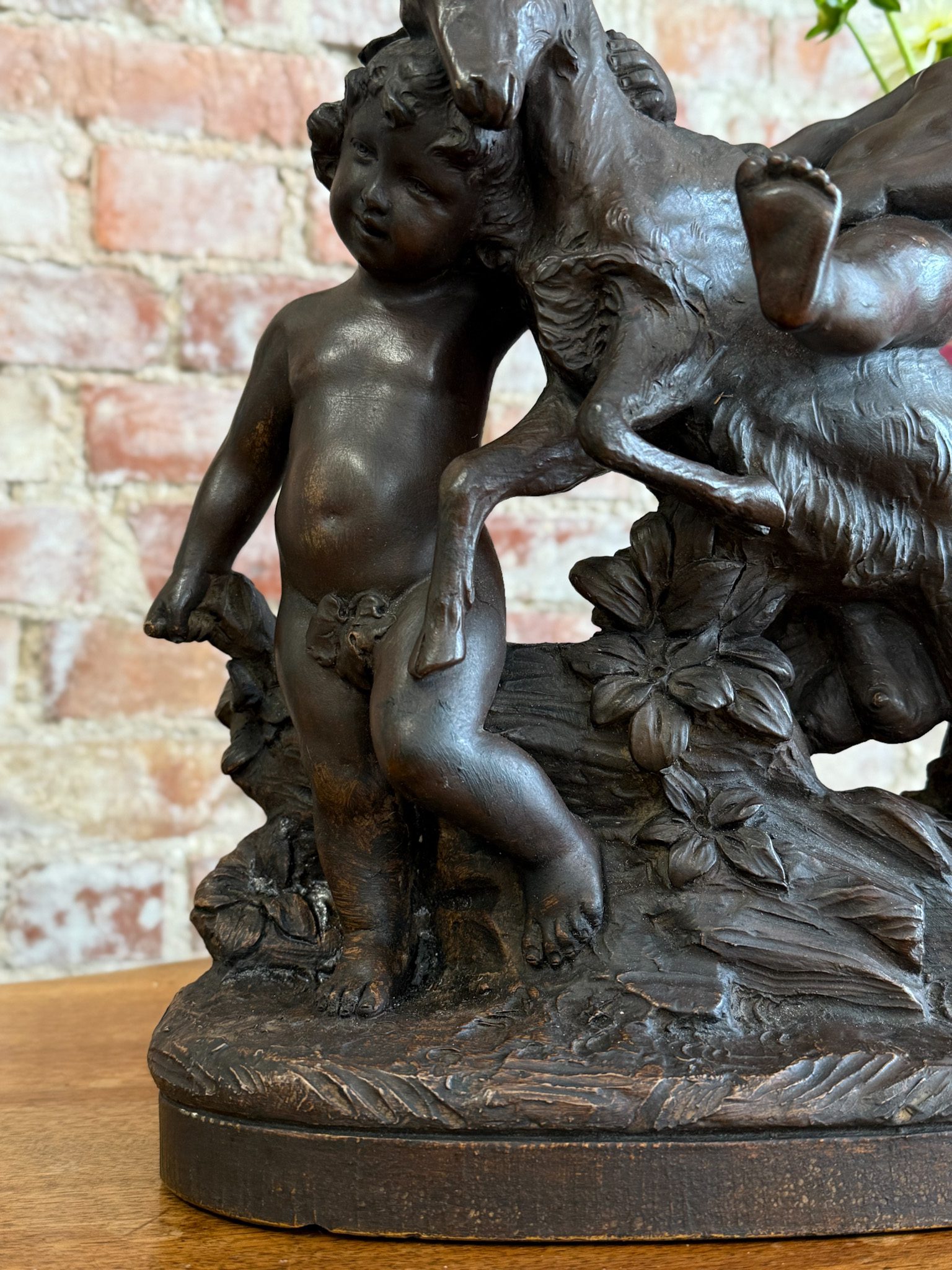
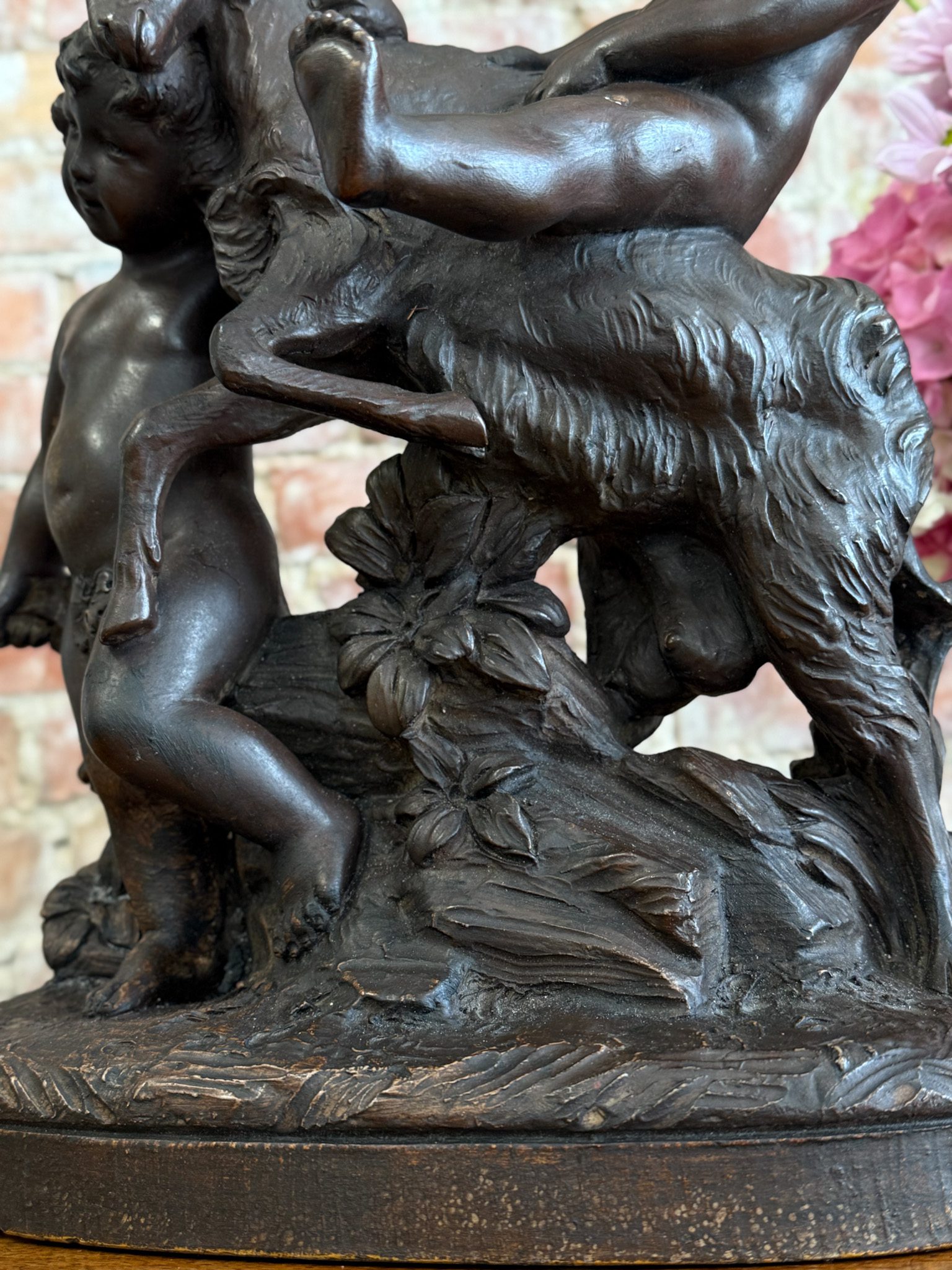
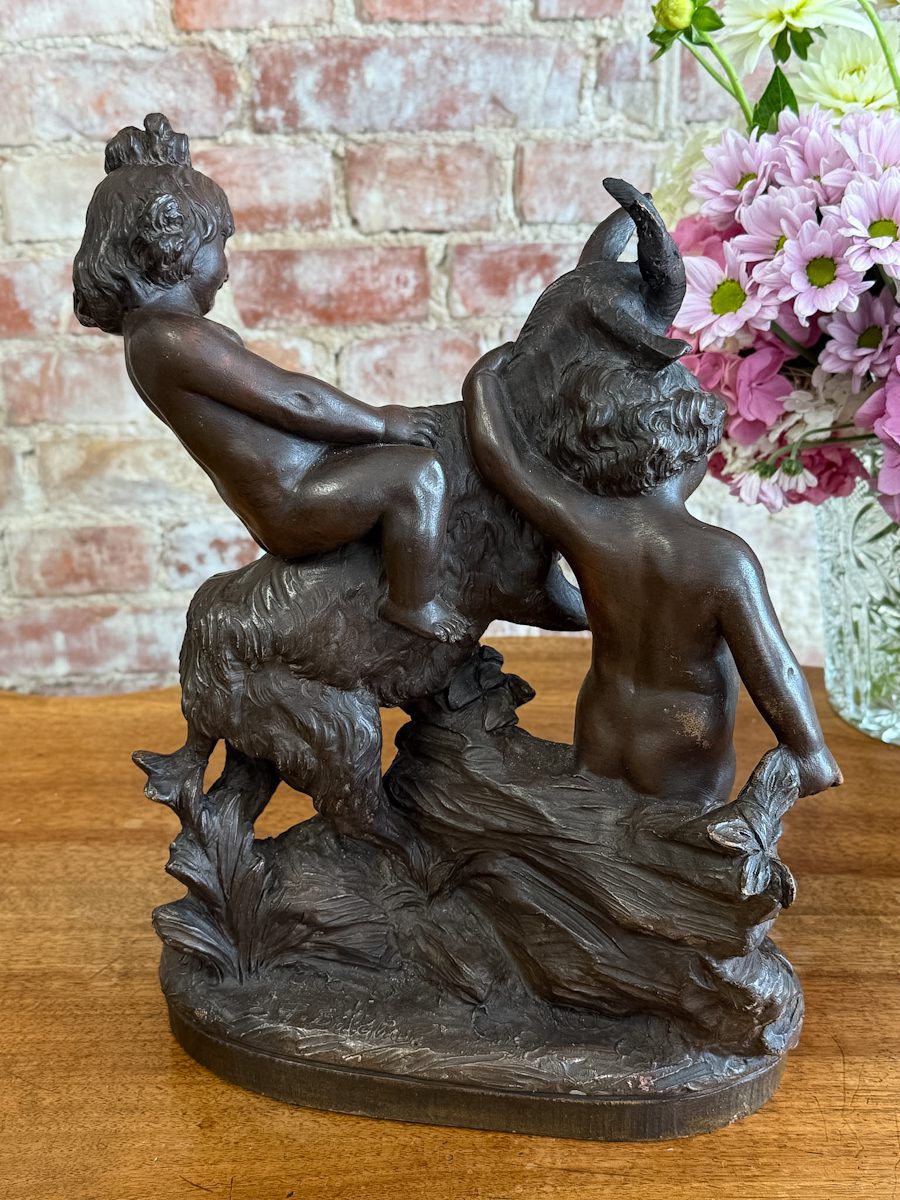
Terakotas figūra — divi putti ar kazu (groupe d’enfants à la chèvre), Neorokoko, Francija, 19. gs. beigas
Šī burvīgā terakotas figūra attēlo divus putti — kuplus, rotaļīgus bērnus — pie kazas starp ziediem un lapotni: viens stāv kāpjot, otrs atliecies guļ pār dzīvnieka muguru. Terakotas figūra pieder neorokoko žanra tēlniecībai 19. gadsimta beigās, kad franču meistari atdzīvināja 18. gadsimta rokoko vieglo, jutekliski rotaļīgo garu — tā paša laikmeta, kurā strādāja Klods Mišels (Klodions), slavenākais putti un bakhantu grupu meistars. Šādas figūras rotāja buržuāzijas salonus, kamīna dzegas un rakstāmgaldus, nesot sevī Belle Époque (Skaistā laikmeta) idillisko, bezrūpīgo skatu.
Izmēri: Augstums 38 cm × platums 27,5 cm
🇱🇻 Belle Époque (Skaistā laikmeta) momentuzņēmums: Klodions (Claude Michel, dit Clodion) apstājās darbnīcas durvīs Parīzē. Pa pavērto logu ieslīdēja siltais vasaras gaiss, un kaut kas mīksts un apaļš iezīmējās māla virsmā — locījums, kustība, bērna pēda gaisā. Viņš pielika īkšķi pie mitrā māla un viegli izlīdzināja vienu līniju. Aiz muguras māceklis kaut ko jautāja, bet viņš tikai pasmaidīja un neatbildēja. Daži mirkļi pieder tikai rokām un mālam.
Ražotājs un parakts
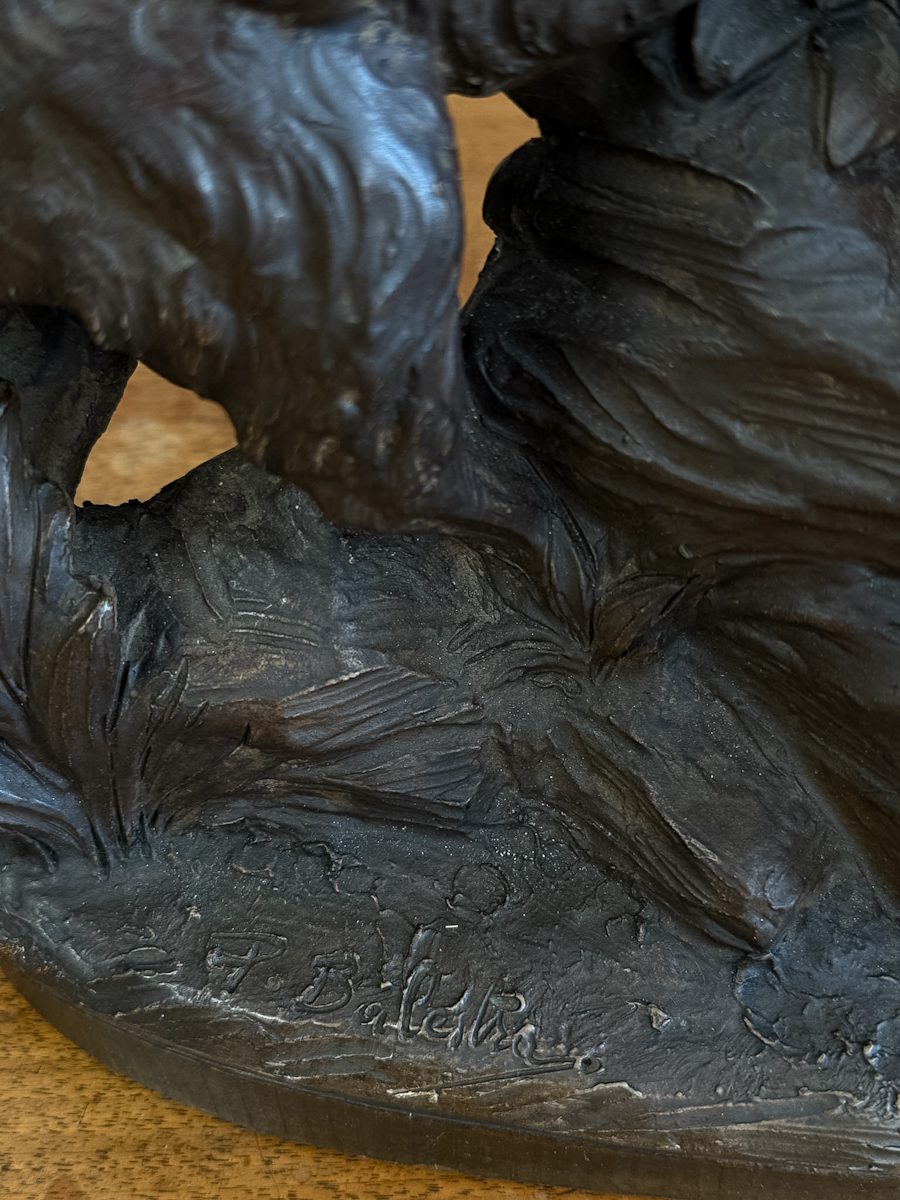
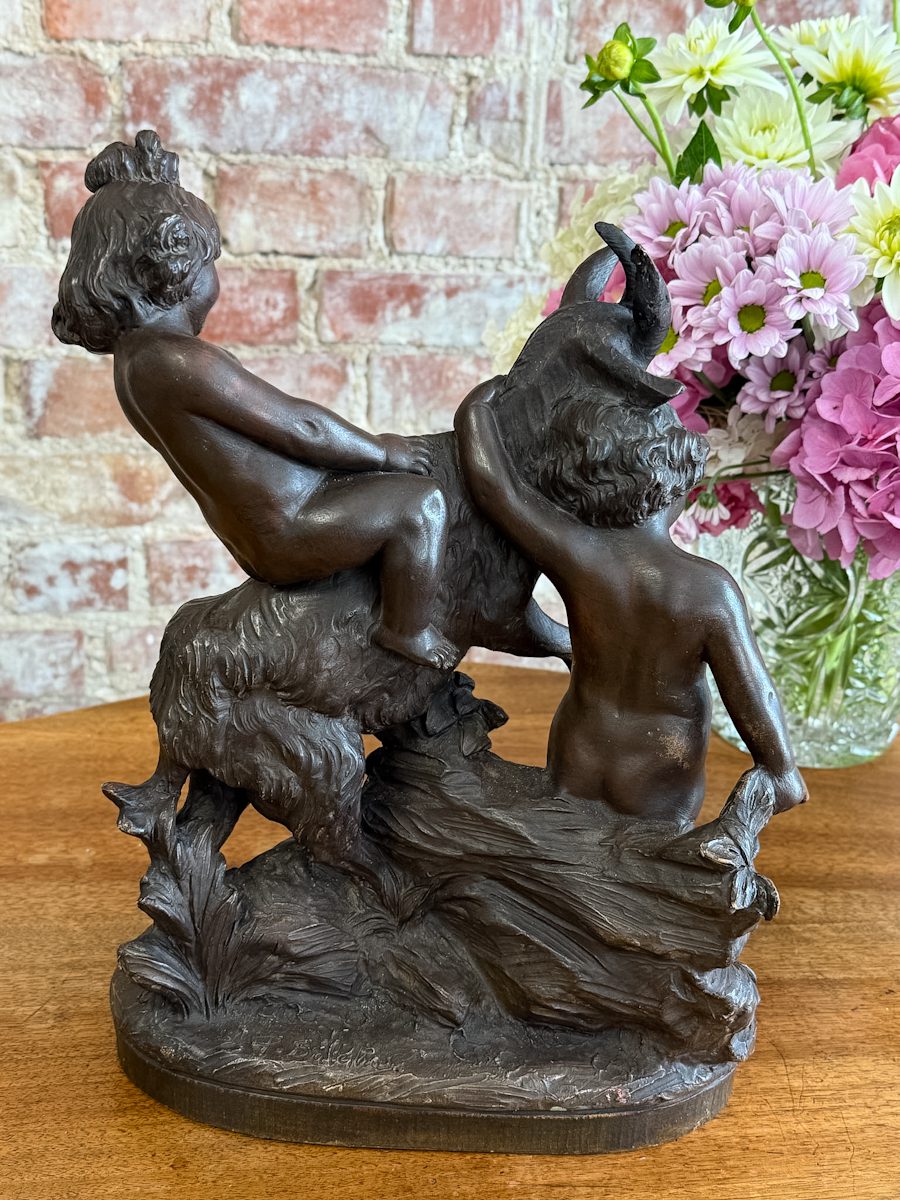
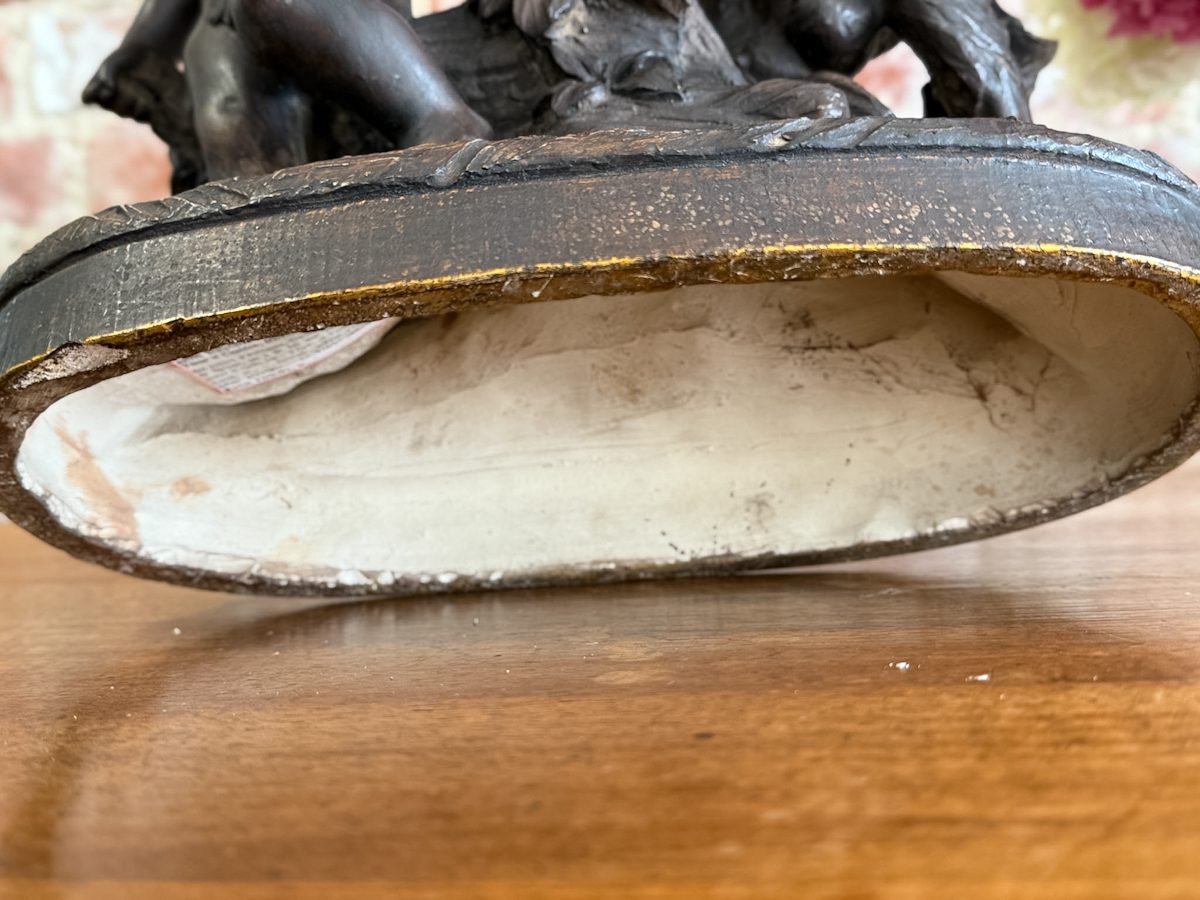
Uz pamatnes redzams iegrebts autora paraksts (skat. fotogrāfijas), kas nav skaidri salasāms un netiek atšifrēts. Pēc stila, materiāla un izpildījuma figūra atbilst franču neorokoko terakotas tradīcijai 19. gadsimta beigās. Šis ir periodā darināts terakotas darbs ar autora parakstu.
Retums un nozīme
Putti ar kazu kompozīcija ir klasisks rokoko un neorokoko žanra motīvs, kas saistās ar Klodiona mantojumu. Parakstīti terakotas darbi šajā tradīcijā ir dekoratīvi cēli un kolekcionāriem interesanti.
Pielietojums interjerā, dizainā un fotogrāfijā
Lielisks akcents klasiskā, rokoko vai eklektiskā interjerā — uz kamīna dzegas, konsoles, rakstāmgalda vai grāmatu plaukta. Silti dekoratīvs un ļoti fotogēnisks objekts.
Dāvana
Burvīga dāvana mākslas un antikvariāta cienītājam vai kolekcionāram.
Stāvoklis
Terakotai raksturīgā tumši brūnā, bronzu imitējošā virsma ar vecuma patinu un nelieliem virsmas nodilumiem atbilstoši priekšmeta vecumam. Lietas stāvoklis pilnībā atspoguļots fotogrāfijās.
🇷🇺 Терракотовая фигура — двое путти с козой (groupe d’enfants à la chèvre), неорококо, Франция, конец XIX века
Эта очаровательная терракотовая фигура изображает двух путти — пухлых, игривых детей — у козы среди цветов и листвы: один стоит, поднимаясь, другой откинулся на спину животного. Фигура принадлежит жанровой скульптуре неорококо конца XIX века, когда французские мастера возродили лёгкий, чувственно-игривый дух рококо XVIII века — той самой эпохи, в которую работал Клод Мишель (Клодион), знаменитейший мастер групп с путти и вакханками. Подобные фигуры украшали салоны буржуазии, каминные полки и письменные столы, неся в себе идиллический, беззаботный взгляд эпохи Бель Эпок.
🇷🇺 Снимок эпохи Бель Эпок: Клодион (Claude Michel, dit Clodion) остановился в дверях мастерской в Париже. Через приоткрытое окно скользнул тёплый летний воздух, и что-то мягкое и округлое обозначилось на глиняной поверхности — изгиб, движение, детская ступня в воздухе. Он приложил большой палец к влажной глине и слегка разгладил одну линию. За спиной ученик что-то спросил, но он лишь улыбнулся и не ответил. Некоторые мгновения принадлежат только руке и глине.
На основании виден врезанный авторский росчерк (см. фотографии), который читается неясно и не расшифровывается. По стилю, материалу и исполнению фигура соответствует французской неорококо традиции терракоты конца XIX века. Это терракотовое изделие периода с авторской подписью. Композиция «путти с козой» — классический мотив рококо и неорококо, связанный с наследием Клодиона. Подписанные терракотовые работы этой традиции декоративно благородны и интересны коллекционерам. Прекрасный акцент для классического, рокайльного или эклектичного интерьера — на каминной полке, консоли, письменном столе или книжной полке. Тепло-декоративный и очень фотогеничный объект. Очаровательный подарок ценителю искусства и антиквариата. Характерная для терракоты тёмно-коричневая поверхность, имитирующая бронзу, с возрастной патиной и небольшими потёртостями соответствует возрасту предмета. Состояние предмета полностью отражено на фотографиях.
🇬🇧 Terracotta Figure — Two Putti with a Goat (groupe d’enfants à la chèvre), Neo-Rococo, France, Late 19th Century
This charming terracotta figure depicts two putti — plump, playful children — beside a goat among flowers and foliage: one climbing to his feet, the other reclining across the animal’s back. The figure belongs to the genre sculpture of Neo-Rococo in the late nineteenth century, when French masters revived the light, sensually playful spirit of eighteenth-century Rococo — the very era of Claude Michel (Clodion), the most famous master of groups of putti and bacchantes. Such figures adorned the salons, mantelpieces and writing desks of the bourgeoisie, carrying the idyllic, carefree outlook of the Belle Époque.
🇬🇧 Belle Époque snapshot: Clodion (Claude Michel, dit Clodion) paused in the doorway of his Paris workshop. Warm summer air slid through the half-open window, and something soft and round took shape in the clay surface — a curve, a movement, a child’s foot in the air. He pressed his thumb to the moist clay and smoothed a single line. Behind him an apprentice asked something, but he only smiled and did not answer. Some moments belong to the hand and the clay alone.
An incised artist’s signature is visible on the base (see photographs), not clearly legible and left undeciphered. By style, material and execution the figure corresponds to the French Neo-Rococo terracotta tradition of the late nineteenth century. This is a period terracotta work bearing an artist’s signature. The “putti with a goat” composition is a classic Rococo and Neo-Rococo genre motif associated with the legacy of Clodion. Signed terracotta works in this tradition are decoratively noble and of interest to collectors. A superb accent for a classical, Rococo or eclectic interior — on a mantelpiece, console, writing desk or bookshelf. A warmly decorative and highly photogenic object. A charming gift for a lover of art and antiques. The dark brown, bronze-imitating surface characteristic of terracotta, with age patina and minor surface wear consistent with age. The condition is fully reflected in the photographs.
🇩🇪 Terrakotta-Figur — Zwei Putten mit einer Ziege (groupe d’enfants à la chèvre), Neorokoko, Frankreich, Ende 19. Jahrhundert
Diese reizvolle Terrakotta-Figur zeigt zwei Putten — rundliche, verspielte Kinder — bei einer Ziege zwischen Blüten und Laub: das eine sich aufrichtend, das andere über den Rücken des Tieres zurückgelehnt. Die Figur gehört zur Genreskulptur des Neorokoko im späten 19. Jahrhundert, als französische Meister den leichten, sinnlich-verspielten Geist des Rokoko des 18. Jahrhunderts wiederbelebten — eben jener Epoche, in der Claude Michel (Clodion), der berühmteste Meister von Putten- und Bacchantengruppen, wirkte. Solche Figuren schmückten die Salons, Kaminsimse und Schreibtische des Bürgertums und trugen den idyllischen, unbeschwerten Blick der Belle Époque in sich.
🇩🇪 Momentaufnahme der Belle-Époque-Zeit: Clodion (Claude Michel, dit Clodion) hielt in der Tür seiner Pariser Werkstatt inne. Warme Sommerluft glitt durch das halb geöffnete Fenster, und etwas Weiches, Rundes formte sich in der Tonoberfläche — eine Wölbung, eine Bewegung, ein Kinderfuß in der Luft. Er drückte den Daumen in den feuchten Ton und glättete eine einzige Linie. Hinter ihm fragte ein Lehrling etwas, doch er lächelte nur und antwortete nicht. Manche Augenblicke gehören allein der Hand und dem Ton.
Auf dem Sockel ist eine eingeritzte Künstlersignatur sichtbar (siehe Fotografien), die nicht deutlich lesbar ist und nicht entziffert wird. Nach Stil, Material und Ausführung entspricht die Figur der französischen Neorokoko-Terrakotta-Tradition des späten 19. Jahrhunderts. Es handelt sich um eine zeitgenössische Terrakotta-Arbeit mit Künstlersignatur. Die Komposition „Putten mit einer Ziege” ist ein klassisches Rokoko- und Neorokoko-Motiv, das mit dem Erbe Clodions verbunden ist. Signierte Terrakotta-Arbeiten dieser Tradition sind dekorativ edel und für Sammler interessant. Ein hervorragender Akzent für ein klassisches, Rokoko- oder eklektisches Interieur — auf einem Kaminsims, einer Konsole, einem Schreibtisch oder einem Bücherregal. Ein warm dekoratives und äußerst fotogenes Objekt. Ein reizvolles Geschenk für Liebhaber von Kunst und Antiquitäten. Die für Terrakotta charakteristische dunkelbraune, bronzeimitierende Oberfläche mit Alterspatina und geringen Oberflächenspuren entsprechend dem Alter. Der Zustand ist auf den Fotografien vollständig wiedergegeben.
🇫🇷 Figure en terre cuite — Deux putti avec une chèvre (groupe d’enfants à la chèvre), néo-rococo, France, fin du XIXe siècle
Cette charmante figure en terre cuite représente deux putti — des enfants potelés et enjoués — auprès d’une chèvre parmi les fleurs et le feuillage : l’un se relevant, l’autre renversé sur le dos de l’animal. La figure appartient à la sculpture de genre du néo-rococo de la fin du XIXe siècle, lorsque les maîtres français ranimèrent l’esprit léger et sensuellement enjoué du rococo du XVIIIe siècle — l’époque même où œuvrait Claude Michel (Clodion), le plus célèbre maître des groupes de putti et de bacchantes. De telles figures ornaient les salons, les cheminées et les bureaux de la bourgeoisie, portant en elles le regard idyllique et insouciant de la Belle Époque.
🇫🇷 Instantané de la Belle Époque : Clodion (Claude Michel, dit Clodion) s’arrêta sur le seuil de son atelier parisien. L’air chaud de l’été glissa par la fenêtre entrouverte, et quelque chose de doux et de rond prit forme dans la surface d’argile — une courbe, un mouvement, un pied d’enfant en l’air. Il pressa le pouce sur l’argile humide et lissa une seule ligne. Derrière lui, un apprenti demanda quelque chose, mais il se contenta de sourire sans répondre. Certains instants n’appartiennent qu’à la main et à l’argile.
Une signature d’artiste incisée est visible sur la base (voir photographies), peu lisible et laissée non déchiffrée. Par le style, le matériau et l’exécution, la figure correspond à la tradition française de la terre cuite néo-rococo de la fin du XIXe siècle. Il s’agit d’une œuvre en terre cuite d’époque portant une signature d’artiste. La composition « putti avec une chèvre » est un motif de genre classique du rococo et du néo-rococo associé à l’héritage de Clodion. Les œuvres en terre cuite signées de cette tradition sont décorativement nobles et intéressantes pour les collectionneurs. Un accent superbe pour un intérieur classique, rococo ou éclectique — sur une cheminée, une console, un bureau ou une étagère. Un objet chaleureusement décoratif et très photogénique. Un cadeau charmant pour un amateur d’art et d’antiquités. La surface brun foncé imitant le bronze, caractéristique de la terre cuite, avec patine d’âge et légères usures de surface conformes à l’âge. L’état est entièrement reflété par les photographies.