


Terakotas biste — Hermejs ar Dionīsu, pēc Praksiteļa (6157)
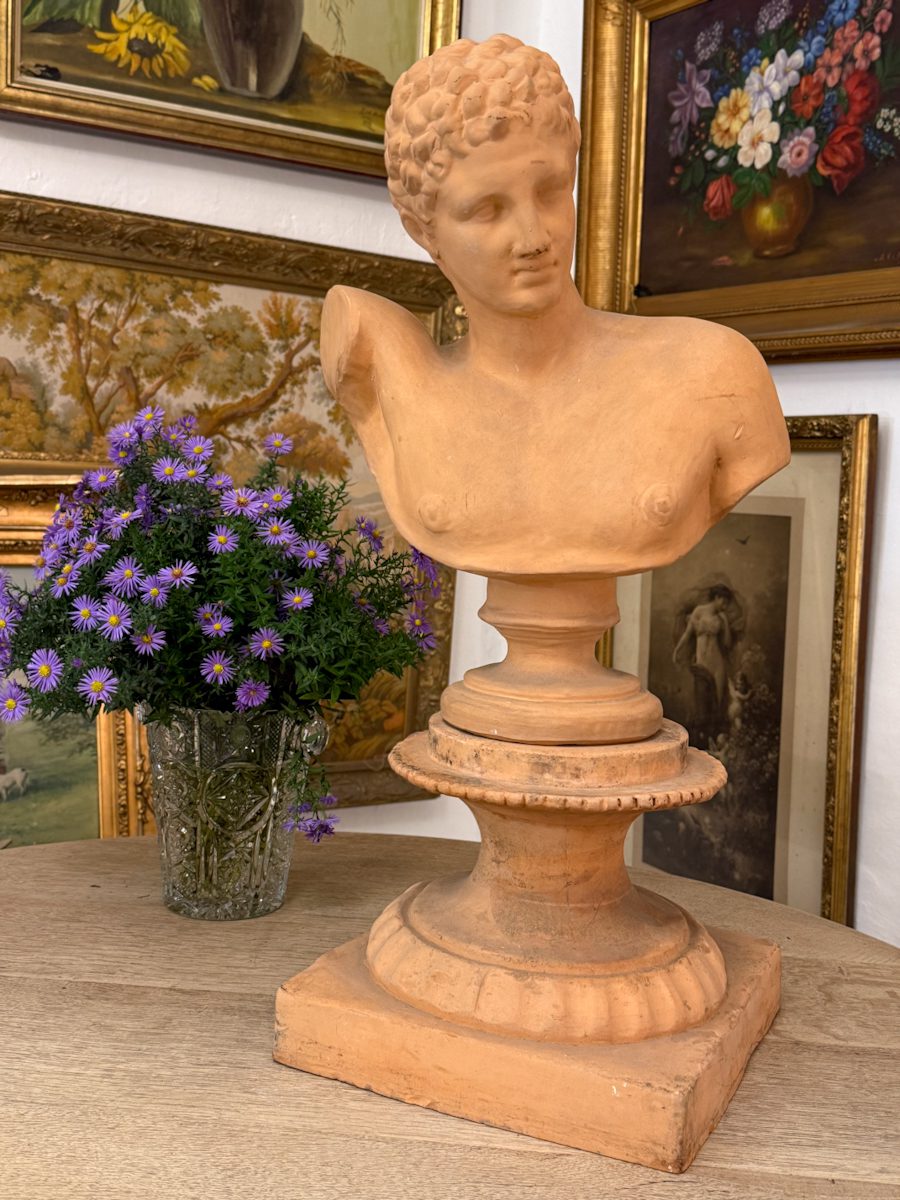
Izmēri: Bistes augstums 77,5 cm × postamenta augstums ~38 cm (kopā ~115,5 cm)
Terakotas biste — Hermejs ar mazo Dionīsu (Hermès de Praxitèle), Klasicisms pēc antīka parauga, Eiropa, 19.–20. gs.
Izgatavošanas periods, mākslas stils, laikmets
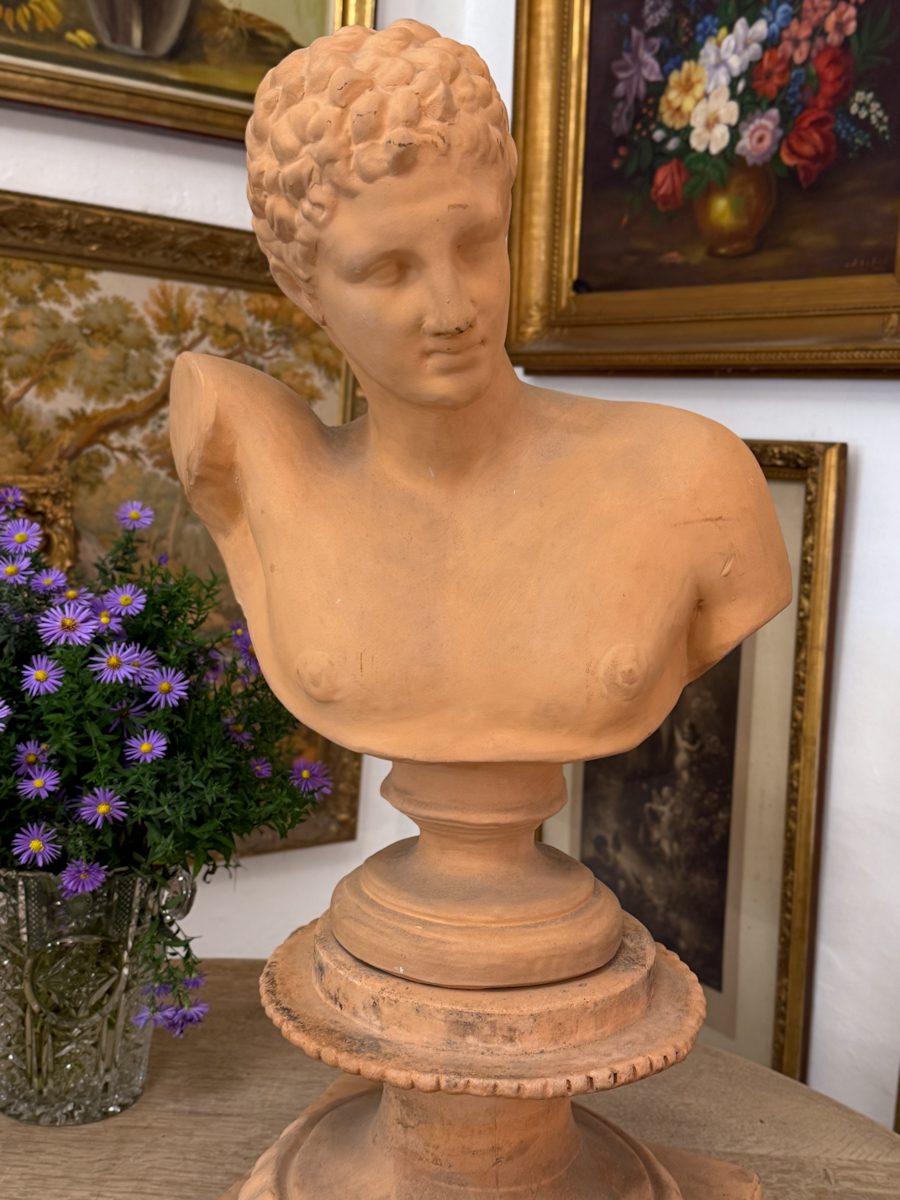
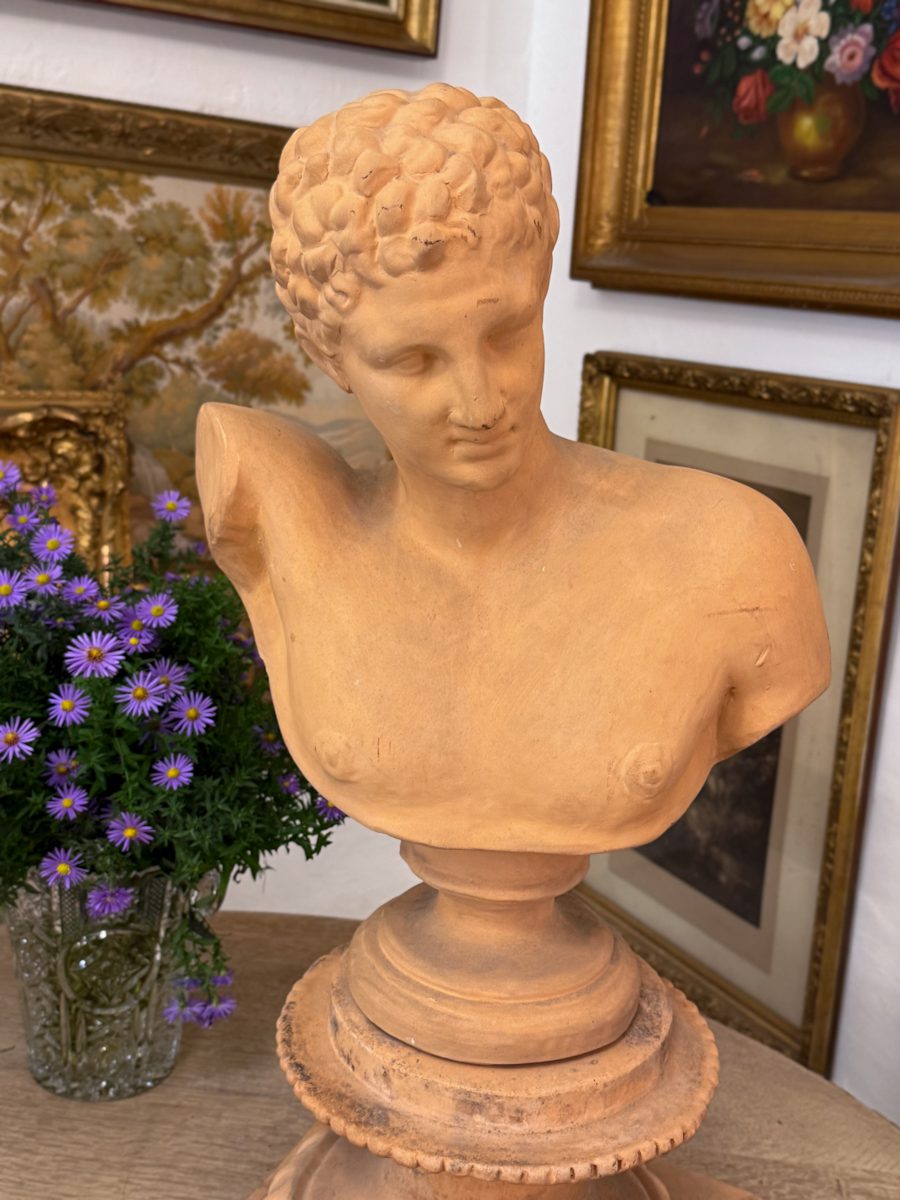
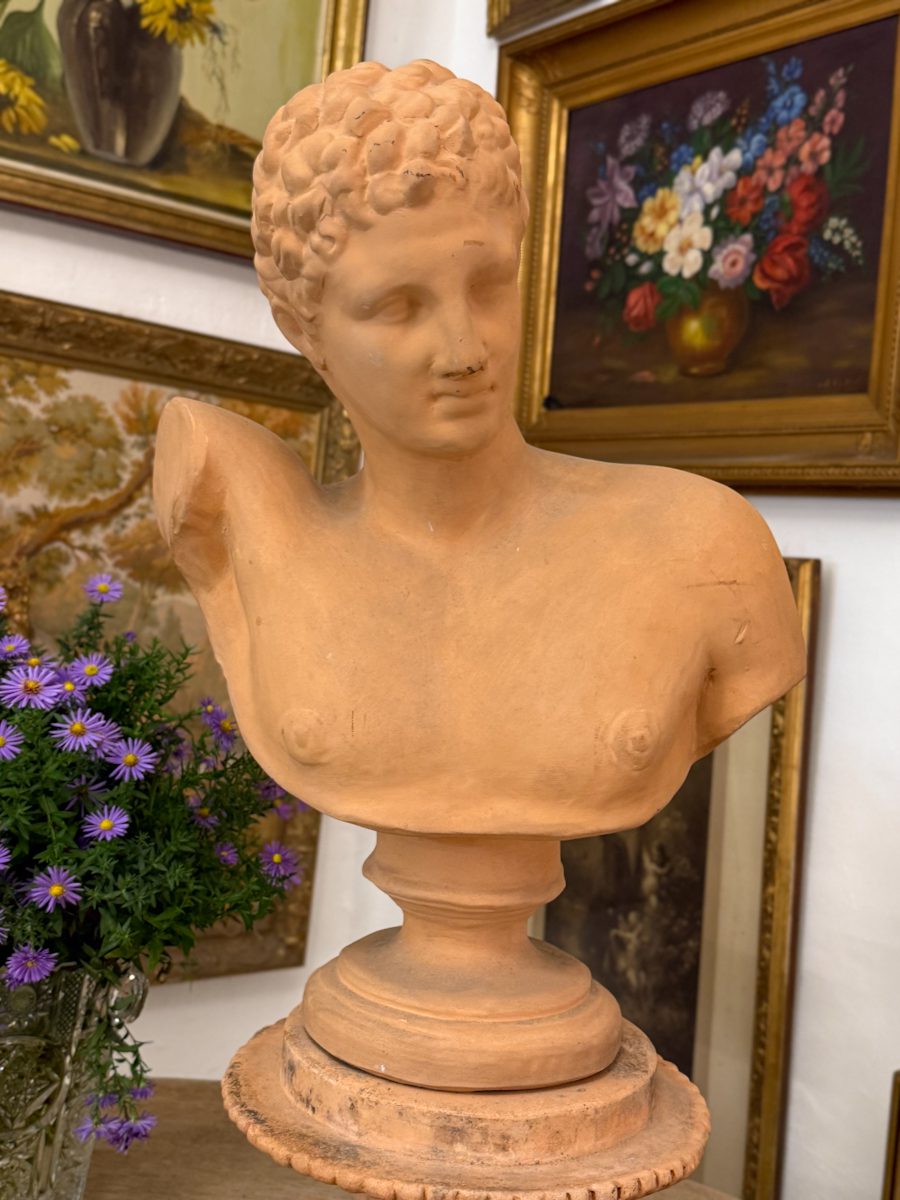
Šī skaistā terakotas biste attēlo Hermeju — grieķu dievu vēstnesi — pēc Praksiteļa slavenā darba “Hermejs ar mazo Dionīsu” (ap 340. g. pr. Kr.), kas atrasts Olimpijā 1877. gadā un kļuva par vienu no izslavētākajiem antīkās tēlniecības etaloniem. Šī terakotas biste pieder klasicisma un akadēmiskās tradīcijas lokam, kad 19. gadsimtā un 20. gadsimta sākumā Eiropas tēlnieki un manufaktūras radīja antīko šedevru atveidojumus muzejiem, akadēmijām un izglītotās buržuāzijas namiem. Idealizētais profils, mīkstā cirtu modelēšana un klasiskā miera izteiksme — tas viss nes sevī Praksiteļa laikmeta skaistuma ideālu.
🇱🇻 Belle Époque (Skaistā laikmeta) momentuzņēmums: Ogists Rodēns (Auguste Rodin) apstājās muzeja zālē Parīzē. Gar logu slīdēja vēla vakara gaisma, un kaut kas gaiši māla krāsā iemirdzējās pustumsā — pleca līnija, kakla pagrieziens, mūžsenā miera klātbūtne. Viņš pielika roku tuvāk, gandrīz pieskaroties, bet ne gluži. “Tas nav akmens,” viņš klusi noteica pavadonim. “Tā ir elpa.” Un viņš ilgi nekustējās, domīgi skatoties.
Ražotājs un zīmogs
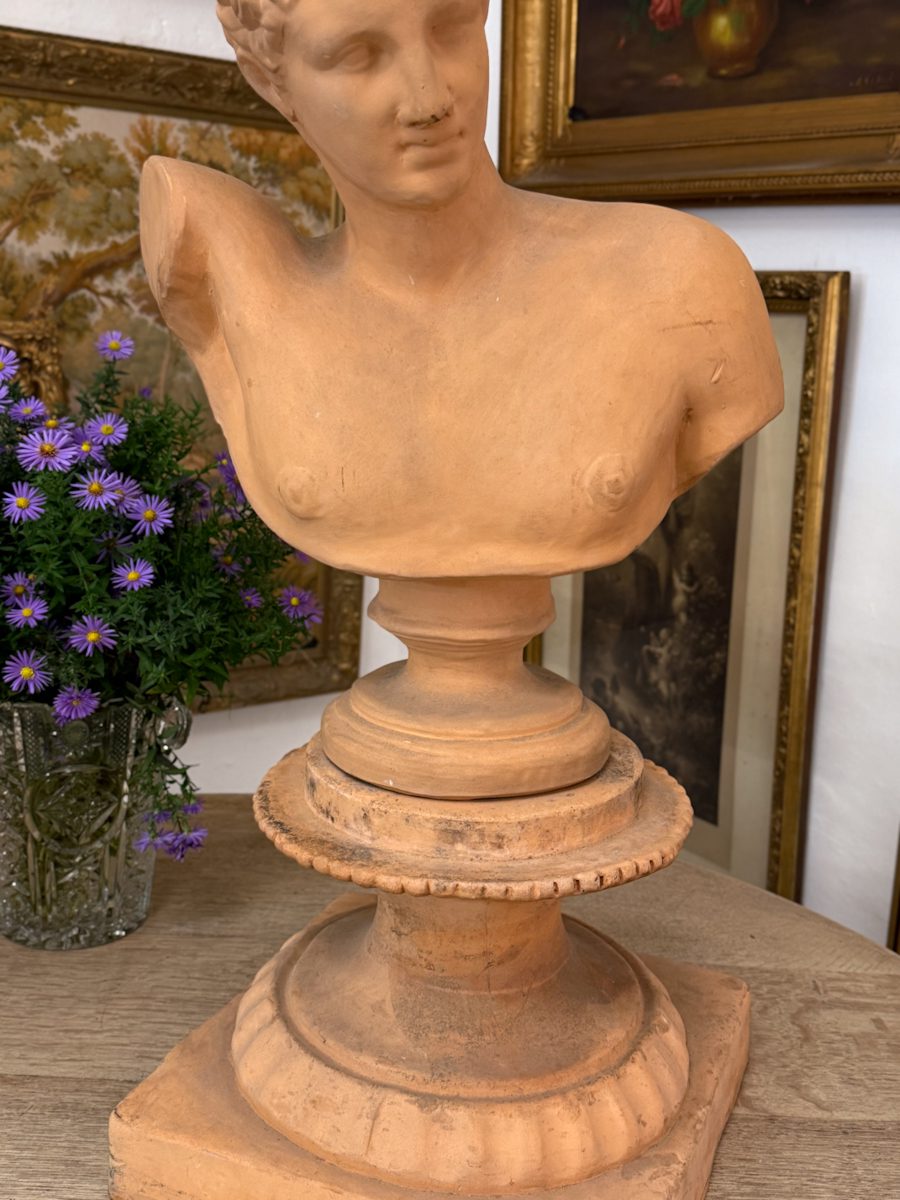
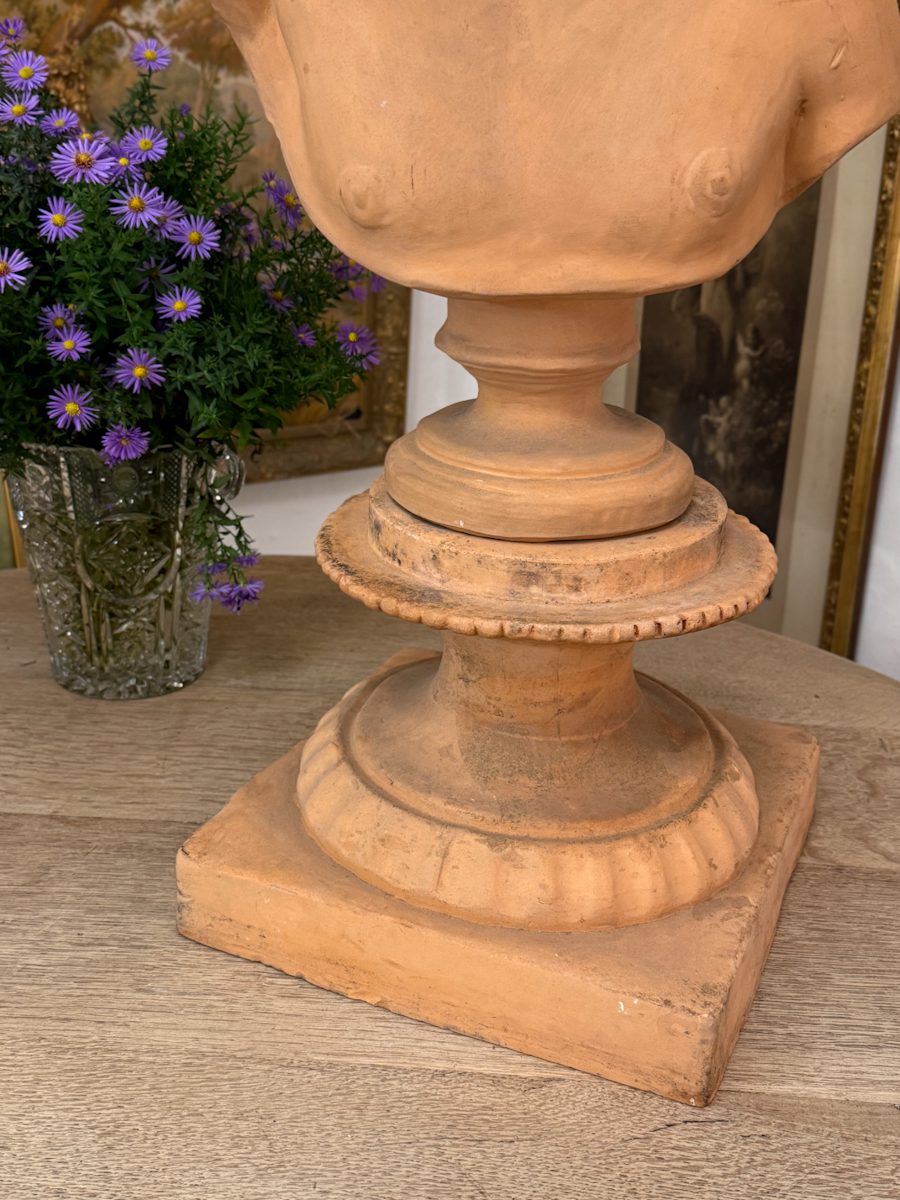
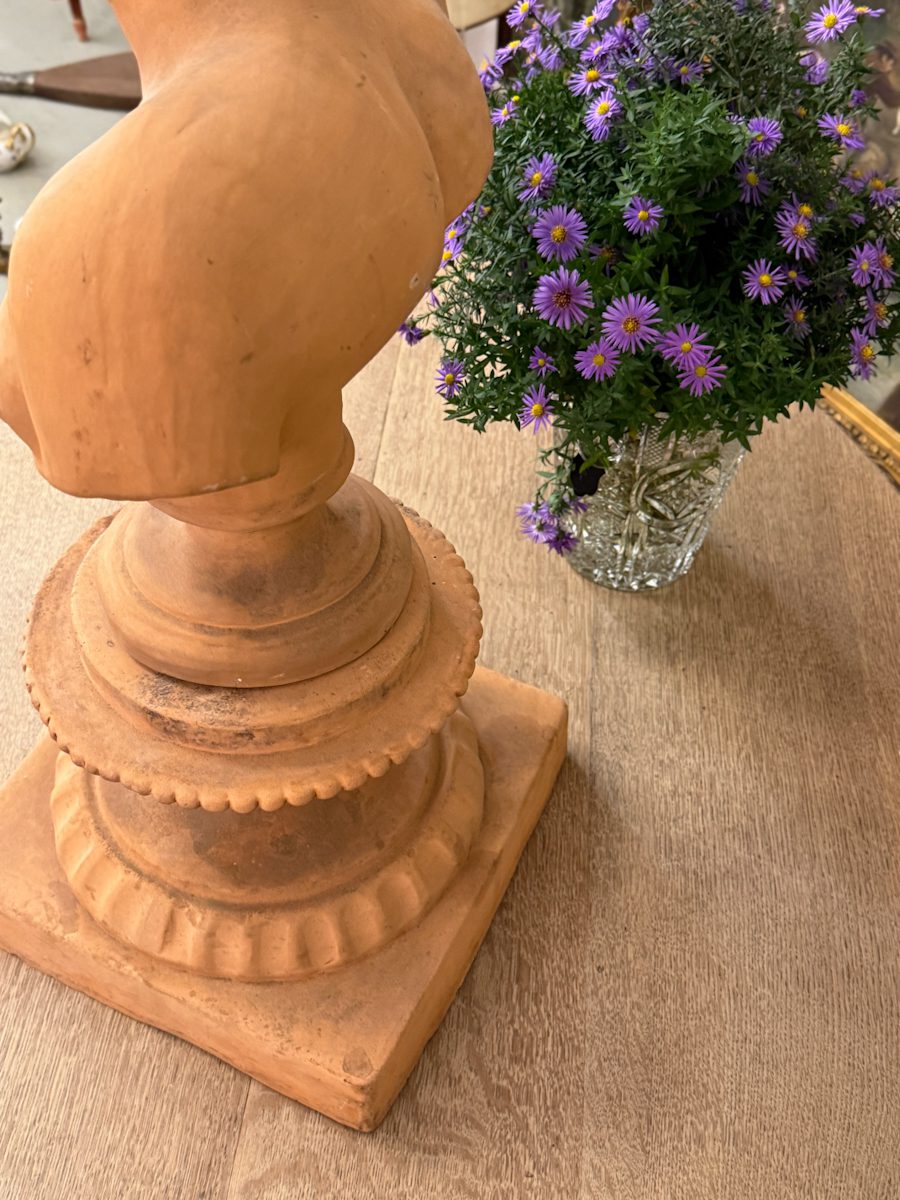
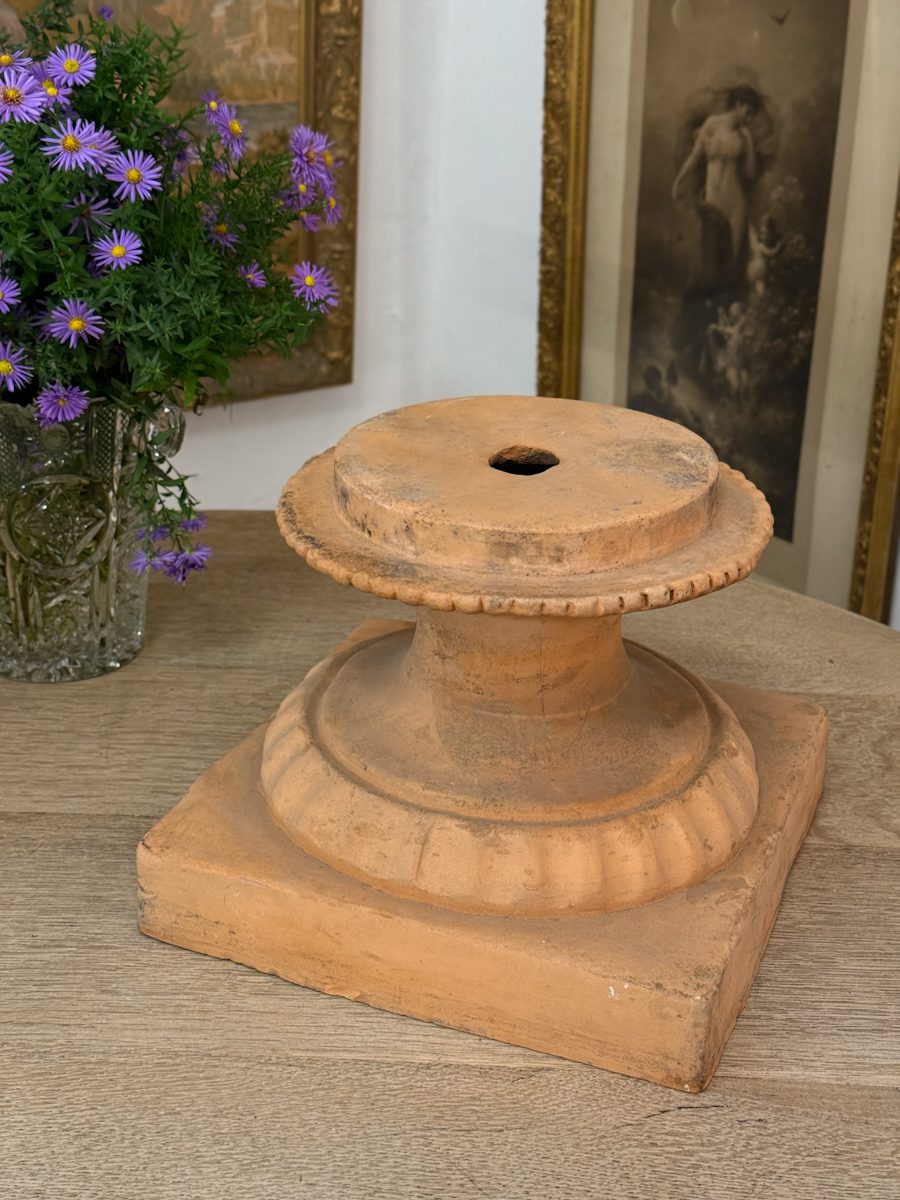
Manufaktūras vai autora zīmogs nav identificēts. Pēc materiāla, izpildījuma un parauga terakotas biste atbilst Eiropas akadēmiskās terakotas tradīcijai 19.–20. gadsimtā. Postaments — atsevišķa terakotas detaļa ar kanelētu, klasiski profilētu formu.
Retums un nozīme
Praksiteļa Hermeja atveidojumi terakotā ir dekoratīvi cēli un kultūrvēsturiski nozīmīgi — tie nes sevī vienu no Rietumu mākslas pamatformām. Biste komplektā ar atbilstošu postamentu ir īpaši vērtīga, jo veido pabeigtu, ekspozīcijai gatavu veselumu.
Pielietojums interjerā, dizainā un fotogrāfijā
Izcils akcents klasiskā, akadēmiskā vai eklektiskā interjerā — bibliotēkā, kabinetā, viesistabā vai galerijā. Antīkā tēma piešķir telpai izglītotu, cēlu noskaņu. Ļoti fotogēnisks objekts.
Dāvana
Nozīmīga dāvana mākslas, antīkās kultūras un klasiskās izglītības cienītājam.
Stāvoklis
Terakotai raksturīgā silti oranžā virsma ar vecuma patinu un nelieliem virsmas nodilumiem atbilstoši priekšmeta vecumam. Augšā redzama montāžas atvere. Lietas stāvoklis pilnībā atspoguļots fotogrāfijās.
🇷🇺 Терракотовый бюст — Гермес с младенцем Дионисом (Hermès de Praxitèle), классицизм по античному образцу, Европа, XIX–XX вв.
Этот прекрасный терракотовый бюст изображает Гермеса — греческого бога-вестника — по знаменитой работе Праксителя «Гермес с младенцем Дионисом» (около 340 г. до н. э.), найденной в Олимпии в 1877 году и ставшей одним из самых прославленных эталонов античной скульптуры. Бюст принадлежит кругу классицизма и академической традиции, когда в XIX и начале XX века европейские скульпторы и мануфактуры создавали воспроизведения античных шедевров для музеев, академий и домов образованной буржуазии. Идеализированный профиль, мягкая моделировка кудрей и выражение классического покоя несут в себе идеал красоты эпохи Праксителя.
🇷🇺 Снимок эпохи Бель Эпок: Огюст Роден (Auguste Rodin) остановился в зале музея в Париже. Вдоль окна скользил поздний свет, и что-то светлого глиняного цвета засияло в полумраке — линия плеча, поворот шеи, присутствие вечного покоя. Он поднёс руку ближе, почти касаясь, но не вполне. «Это не камень, — тихо сказал он спутнику. — Это дыхание». И он долго не двигался.
Клеймо мануфактуры или автора не идентифицировано. По материалу, исполнению и образцу бюст соответствует европейской академической традиции терракоты XIX–XX веков. Постамент — отдельная терракотовая деталь с каннелированной, классически профилированной формой. Воспроизведения Гермеса Праксителя в терракоте декоративно благородны и культурно значимы — они несут в себе одну из основополагающих форм западного искусства. Бюст в комплекте с соответствующим постаментом особенно ценен, так как образует завершённое, готовое к экспозиции целое. Превосходный акцент для классического, академического или эклектичного интерьера — библиотеки, кабинета, гостиной или галереи. Очень фотогеничный объект. Значимый подарок ценителю искусства, античной культуры и классического образования. Характерная для терракоты тёпло-оранжевая поверхность с возрастной патиной и небольшими потёртостями соответствует возрасту предмета. Сверху видно монтажное отверстие. Состояние предмета полностью отражено на фотографиях.
🇬🇧 Terracotta Bust — Hermes with the Infant Dionysus (Hermès de Praxitèle), Neoclassicism after the Antique, Europe, 19th–20th Century
This beautiful terracotta bust depicts Hermes — the Greek messenger god — after Praxiteles’ celebrated Hermes with the Infant Dionysus (c. 340 BC), discovered at Olympia in 1877 and recognised as one of the most famous benchmarks of ancient sculpture. The bust belongs to the circle of Neoclassicism and the academic tradition, when nineteenth- and early-twentieth-century European sculptors and manufactories created renderings of antique masterpieces for museums, academies and the homes of the educated bourgeoisie. The idealised profile, the soft modelling of the curls and the expression of classical repose all carry the ideal of beauty of the age of Praxiteles.
🇬🇧 Belle Époque snapshot: Auguste Rodin (Auguste Rodin) paused in a museum hall in Paris. Late light slid along the window, and something the colour of pale clay glowed in the half-dark — the line of a shoulder, the turn of a neck, the presence of an ancient stillness. He brought his hand closer, almost touching, but not quite. “This is not stone,” he said quietly to his companion. “This is breath.” And he did not move for a long while.
No manufacturer’s or artist’s mark is identified. By material, execution and model the bust corresponds to the European academic terracotta tradition of the 19th–20th centuries. The pedestal is a separate terracotta element with a fluted, classically profiled form. Renderings of Praxiteles’ Hermes in terracotta are decoratively noble and culturally significant, carrying one of the foundational forms of Western art. The bust together with its matching pedestal is especially valuable, forming a complete, display-ready whole. A superb accent for a classical, academic or eclectic interior — a library, study, drawing room or gallery — and a highly photogenic object. A significant gift for a lover of art, antique culture and classical education. The warm orange surface characteristic of terracotta, with age patina and minor surface wear consistent with age. A mounting hole is visible at the top. The condition is fully reflected in the photographs.
🇩🇪 Terrakotta-Büste — Hermes mit dem Dionysosknaben (Hermès de Praxitèle), Klassizismus nach der Antike, Europa, 19.–20. Jahrhundert
Diese schöne Terrakotta-Büste zeigt Hermes — den griechischen Götterboten — nach Praxiteles’ berühmtem Werk Hermes mit dem Dionysosknaben (um 340 v. Chr.), das 1877 in Olympia entdeckt wurde und als einer der berühmtesten Maßstäbe antiker Skulptur gilt. Die Büste gehört zum Kreis des Klassizismus und der akademischen Tradition, als europäische Bildhauer und Manufakturen im 19. und frühen 20. Jahrhundert Nachbildungen antiker Meisterwerke für Museen, Akademien und die Häuser des gebildeten Bürgertums schufen. Das idealisierte Profil, die weiche Modellierung der Locken und der Ausdruck klassischer Ruhe tragen das Schönheitsideal der Zeit des Praxiteles in sich.
🇩🇪 Momentaufnahme der Belle-Époque-Zeit: Auguste Rodin (Auguste Rodin) hielt in einem Museumssaal in Paris inne. Spätes Licht glitt am Fenster entlang, und etwas in der Farbe blassen Tons leuchtete im Halbdunkel auf — die Linie einer Schulter, die Wendung eines Halses, die Gegenwart einer uralten Stille. Er führte die Hand näher, fast berührend, doch nicht ganz. “Das ist kein Stein”, sagte er leise zu seinem Begleiter. “Das ist Atem.” Und er rührte sich lange nicht.
Eine Manufaktur- oder Künstlermarke ist nicht identifiziert. Nach Material, Ausführung und Vorbild entspricht die Büste der europäischen akademischen Terrakotta-Tradition des 19.–20. Jahrhunderts. Der Sockel ist ein separates Terrakotta-Element mit kannelierter, klassisch profilierter Form. Nachbildungen von Praxiteles’ Hermes in Terrakotta sind dekorativ edel und kulturell bedeutsam und tragen eine der grundlegenden Formen der westlichen Kunst in sich. Die Büste samt passendem Sockel ist besonders wertvoll, da sie ein vollständiges, ausstellungsbereites Ganzes bildet. Ein hervorragender Akzent für ein klassisches, akademisches oder eklektisches Interieur — eine Bibliothek, ein Arbeitszimmer, einen Salon oder eine Galerie — und ein äußerst fotogenes Objekt. Ein bedeutendes Geschenk für Liebhaber von Kunst, antiker Kultur und klassischer Bildung. Die für Terrakotta charakteristische warme orange Oberfläche mit Alterspatina und geringen Oberflächenspuren entsprechend dem Alter. Oben ist eine Montageöffnung sichtbar. Der Zustand ist auf den Fotografien vollständig wiedergegeben.
🇫🇷 Buste en terre cuite — Hermès portant Dionysos enfant (Hermès de Praxitèle), néoclassicisme d’après l’antique, Europe, XIXe–XXe siècle
Ce beau buste en terre cuite représente Hermès — le dieu messager grec — d’après l’œuvre célèbre de Praxitèle Hermès portant Dionysos enfant (vers 340 av. J.-C.), découverte à Olympie en 1877 et reconnue comme l’un des jalons les plus célèbres de la sculpture antique. Le buste appartient au cercle du néoclassicisme et de la tradition académique, lorsque les sculpteurs et manufactures européens du XIXe et du début du XXe siècle créaient des reproductions de chefs-d’œuvre antiques pour les musées, les académies et les demeures de la bourgeoisie cultivée. Le profil idéalisé, le modelé doux des boucles et l’expression de repos classique portent en eux l’idéal de beauté de l’époque de Praxitèle.
🇫🇷 Instantané de la Belle Époque : Auguste Rodin (Auguste Rodin) s’arrêta dans une salle de musée à Paris. La lumière tardive glissait le long de la fenêtre, et quelque chose de la couleur de l’argile pâle brilla dans la pénombre — la ligne d’une épaule, le tournant d’un cou, la présence d’une immobilité ancienne. Il approcha la main, presque à toucher, mais pas tout à fait. « Ce n’est pas de la pierre, dit-il doucement à son compagnon. C’est un souffle. » Et il resta longtemps sans bouger.
Aucune marque de manufacture ou d’artiste n’est identifiée. Par le matériau, l’exécution et le modèle, le buste correspond à la tradition européenne de la terre cuite académique des XIXe–XXe siècles. Le piédestal est un élément distinct en terre cuite, de forme cannelée et classiquement profilée. Les reproductions de l’Hermès de Praxitèle en terre cuite sont décorativement nobles et culturellement significatives, portant l’une des formes fondatrices de l’art occidental. Le buste accompagné de son piédestal assorti est particulièrement précieux, formant un ensemble complet et prêt à être exposé. Un accent superbe pour un intérieur classique, académique ou éclectique — une bibliothèque, un cabinet, un salon ou une galerie — et un objet très photogénique. Un cadeau important pour un amateur d’art, de culture antique et d’éducation classique. La surface orange chaude caractéristique de la terre cuite, avec patine d’âge et légères usures de surface conformes à l’âge. Un trou de montage est visible au sommet. L’état est entièrement reflété par les photographies.