
Zirga tricikls — bērnu velosipēds, Francija, ap 1900 (5152)
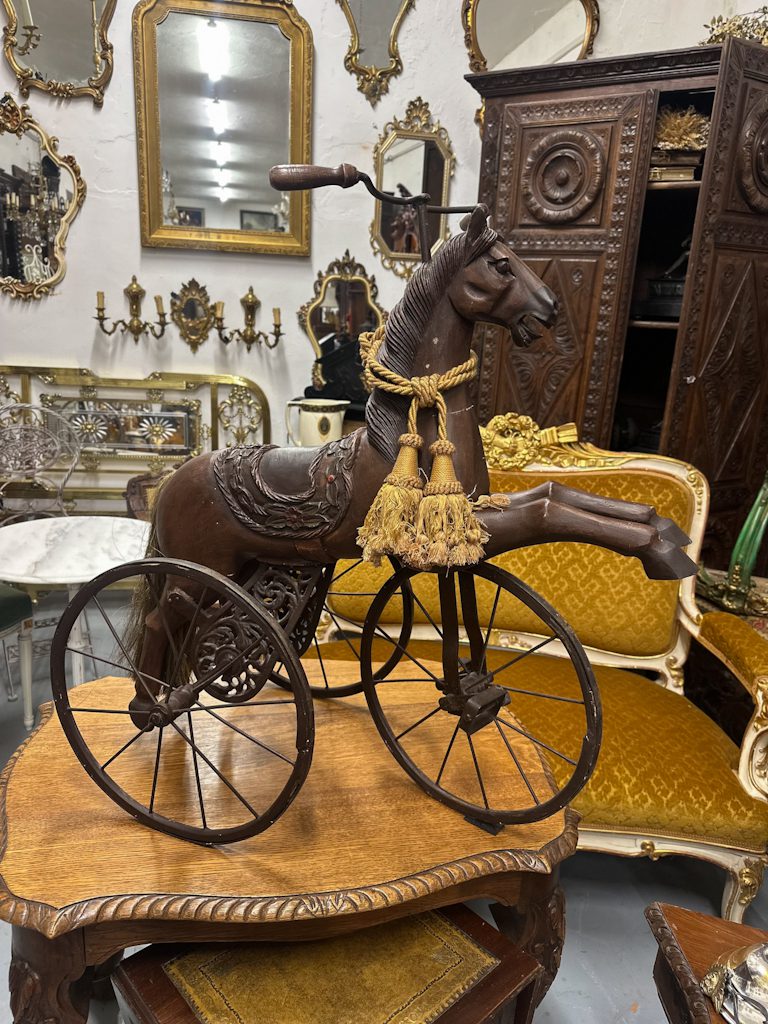
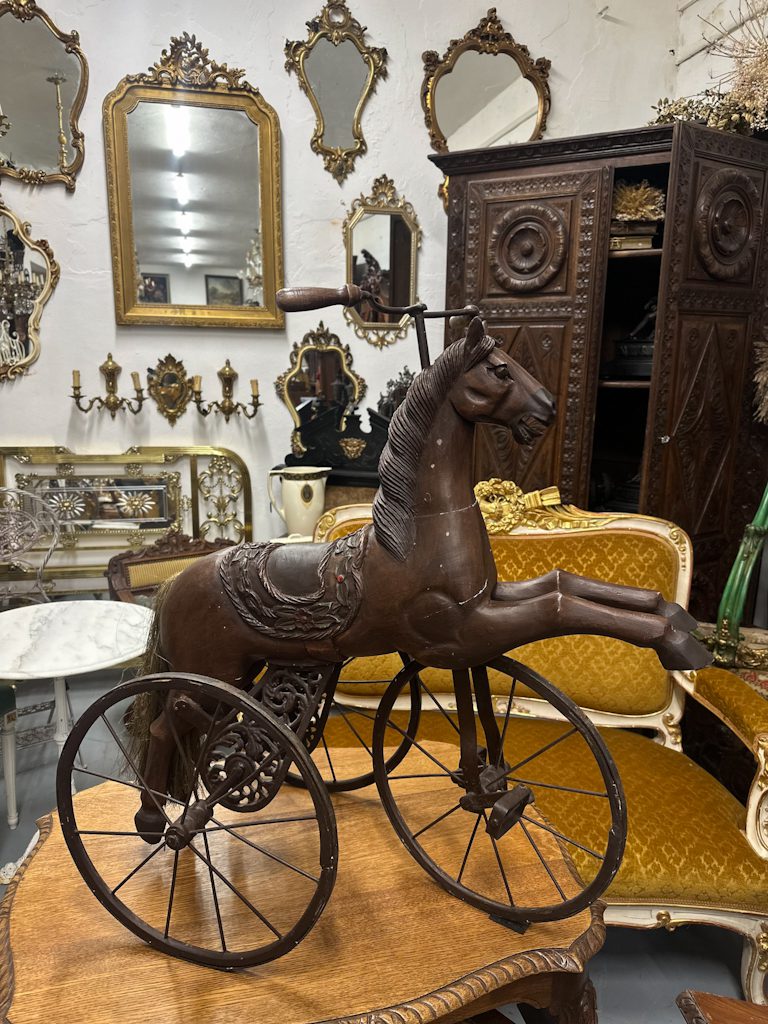
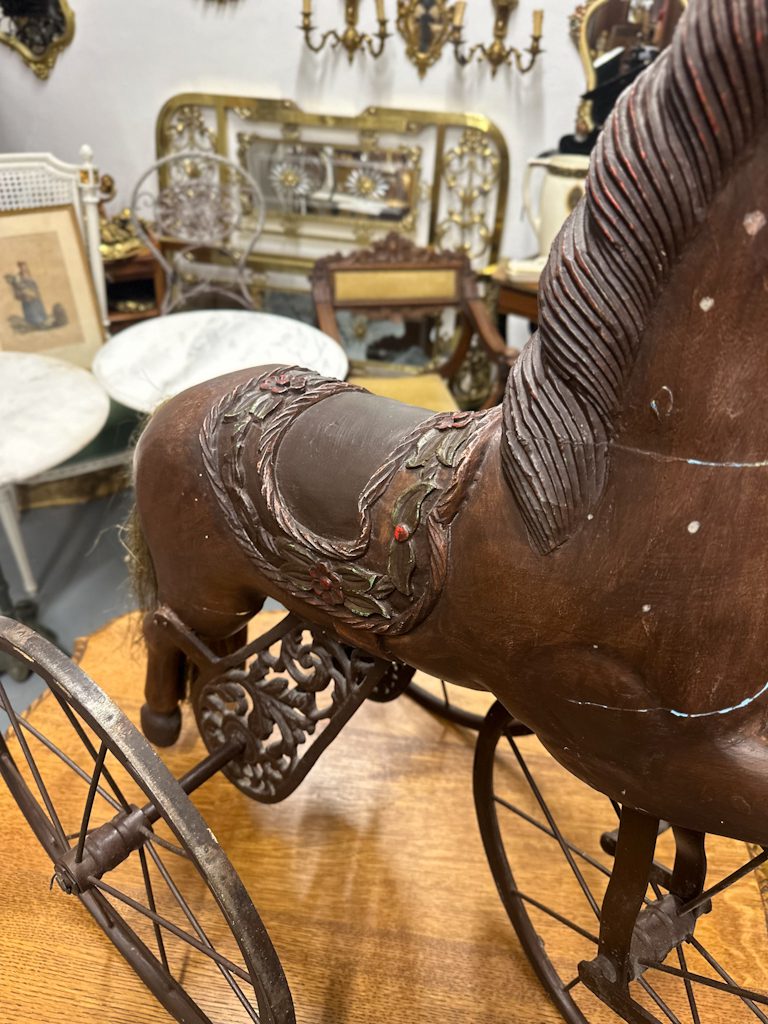
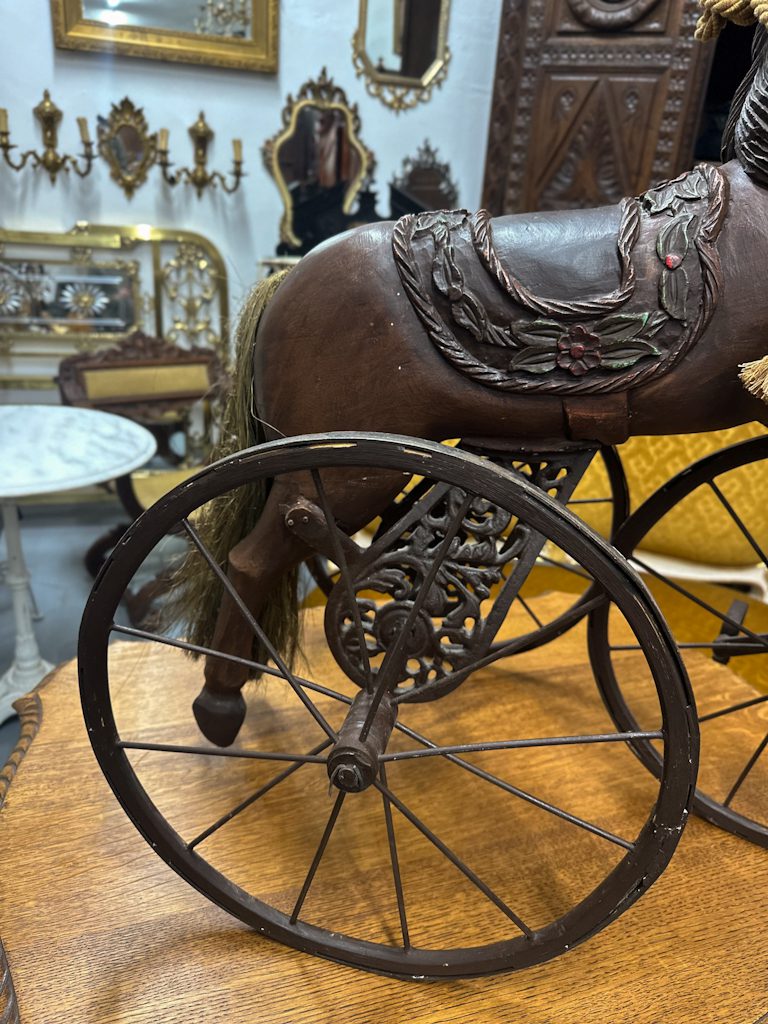
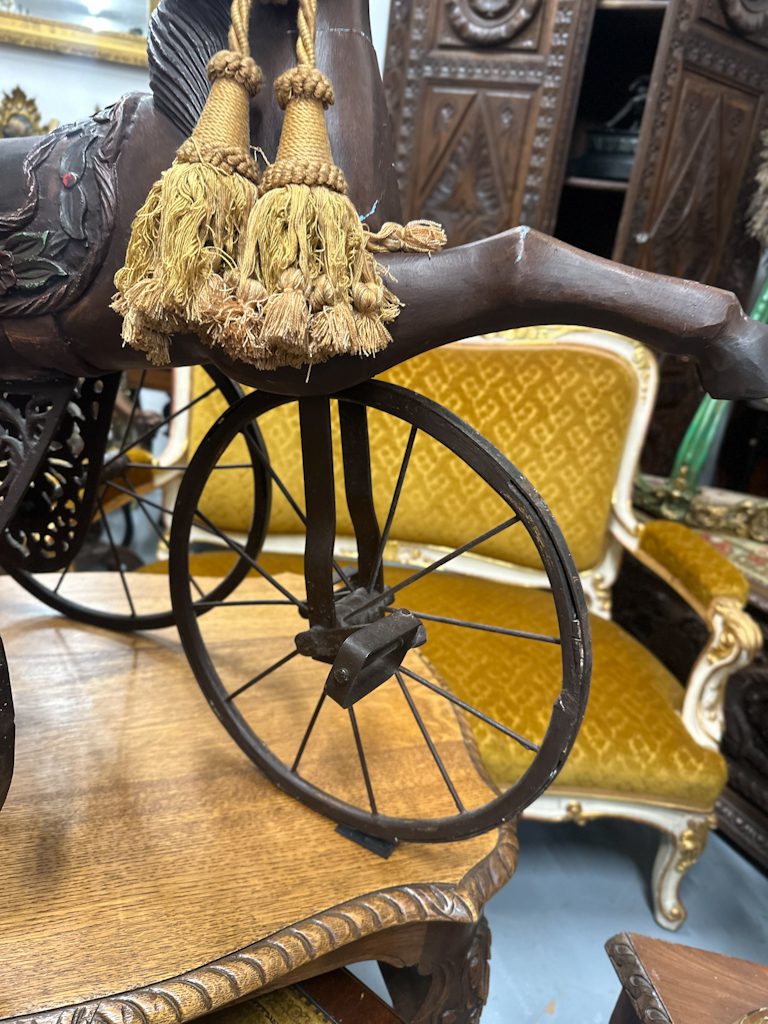
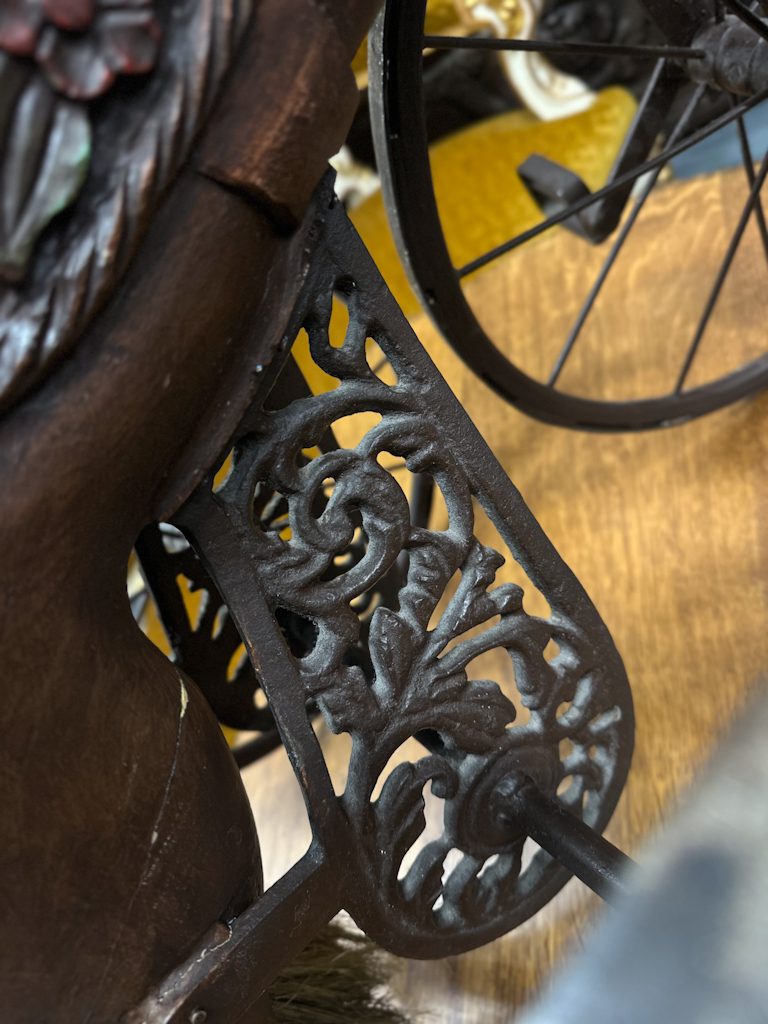
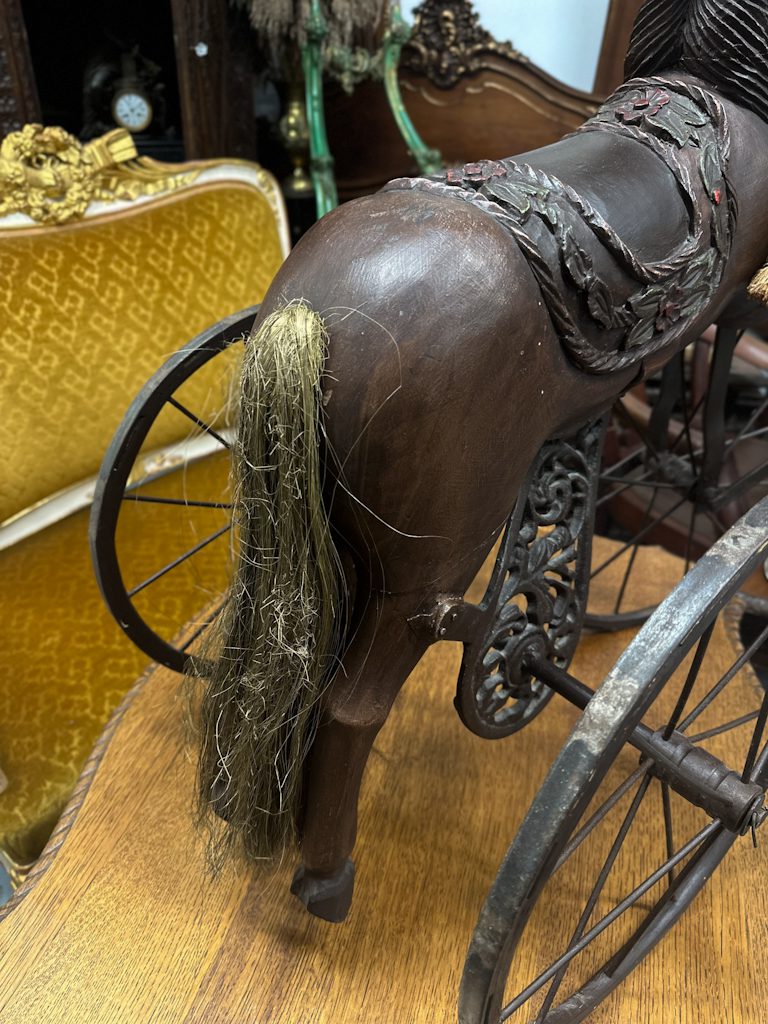
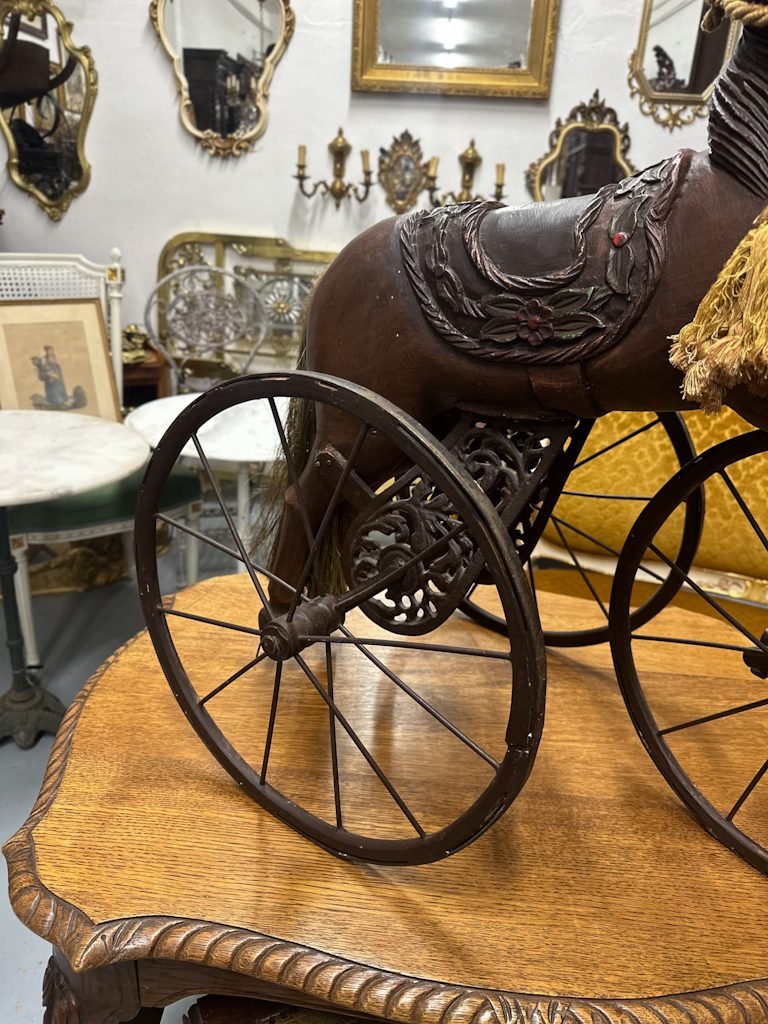
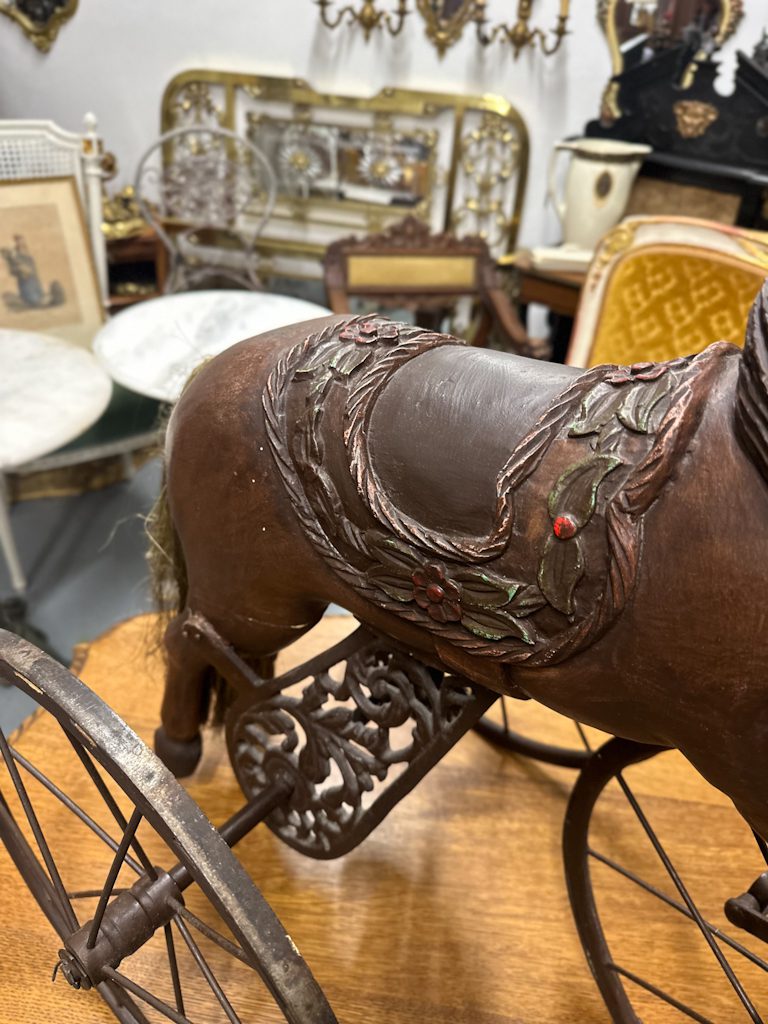
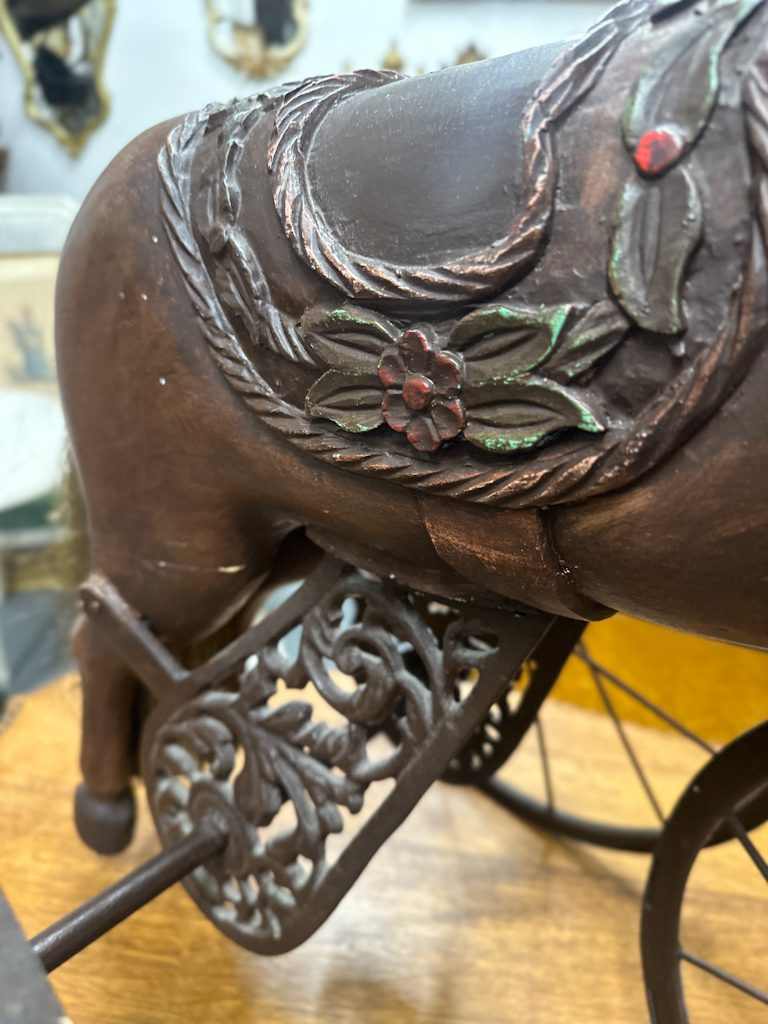
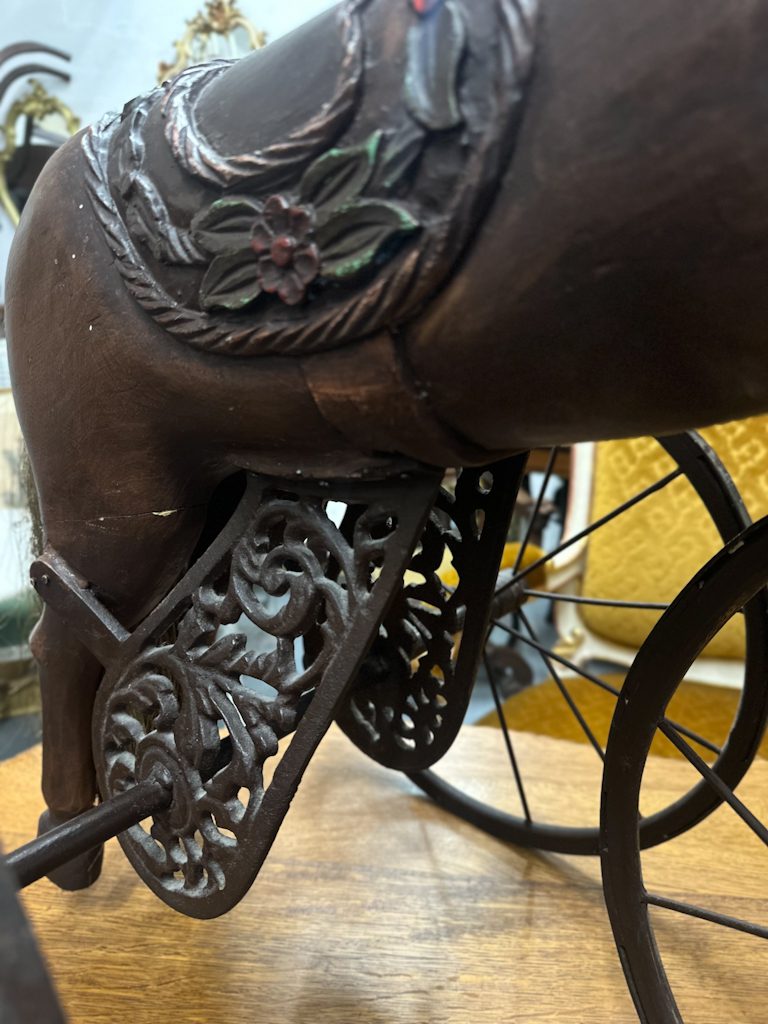
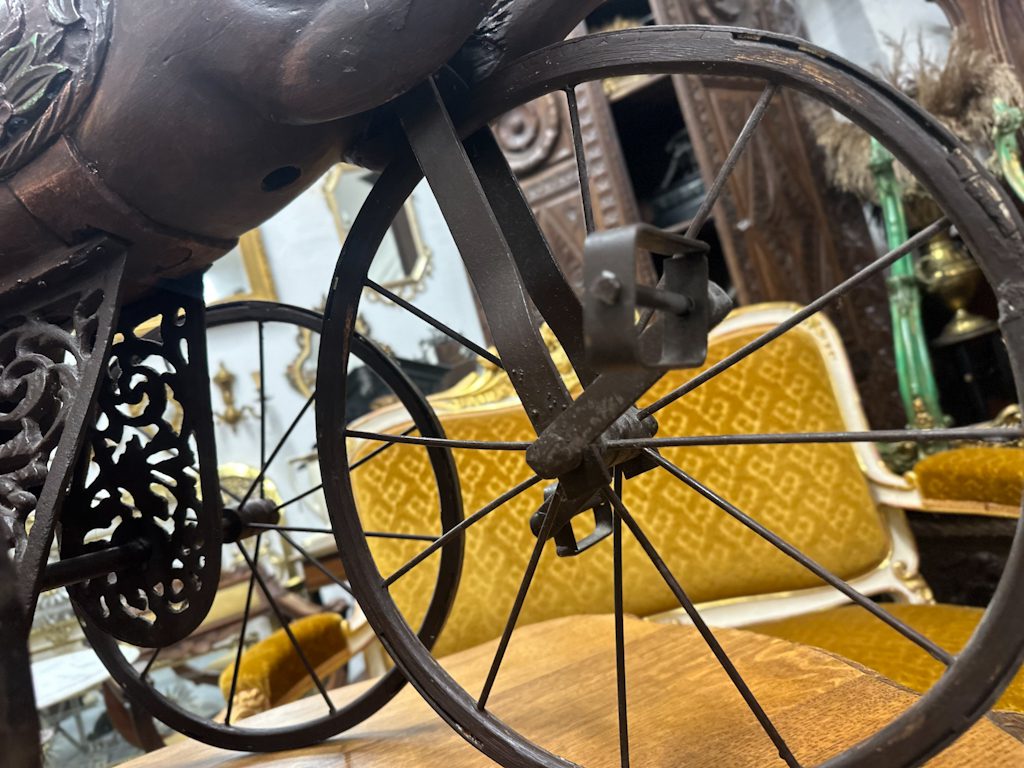
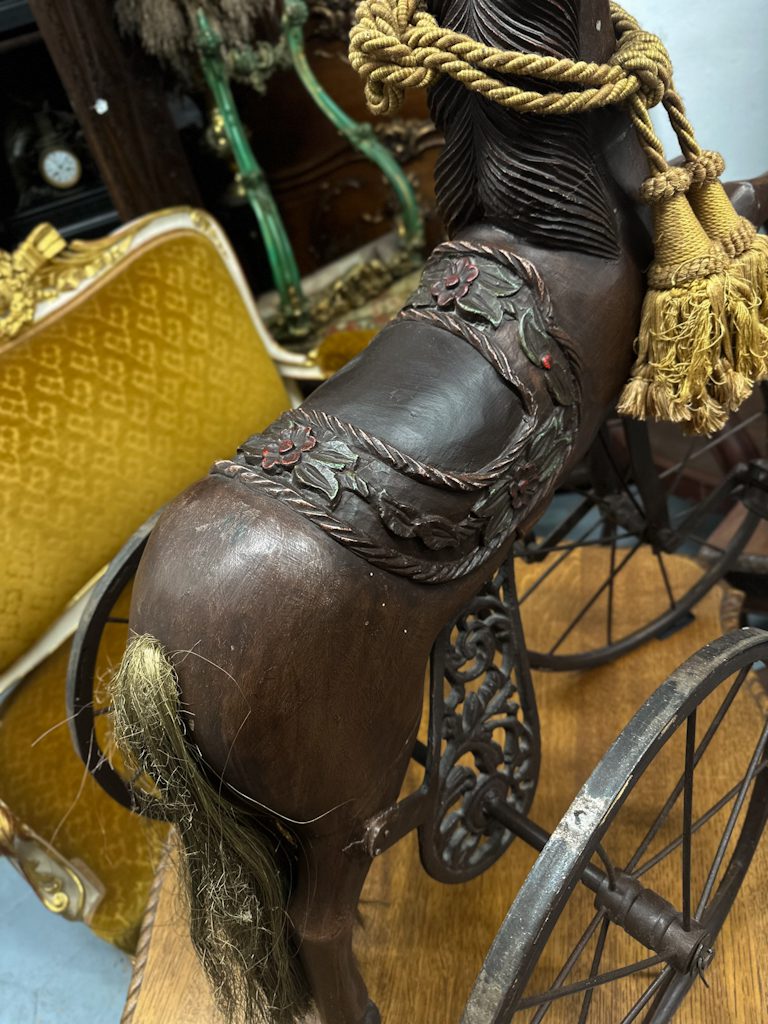
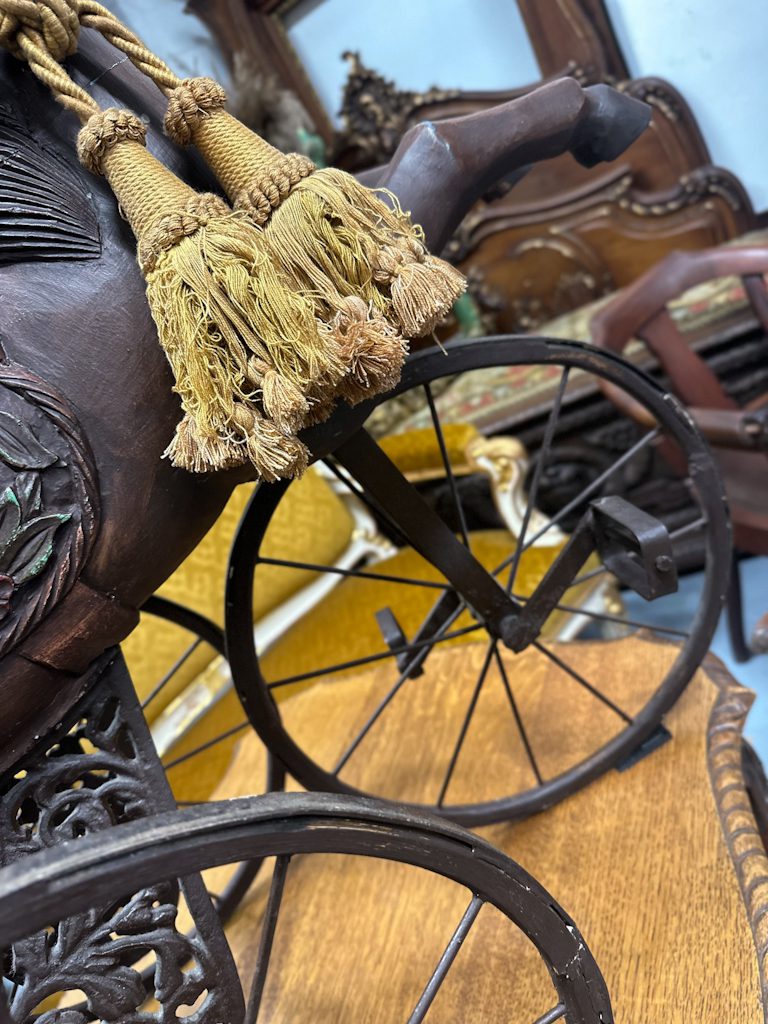
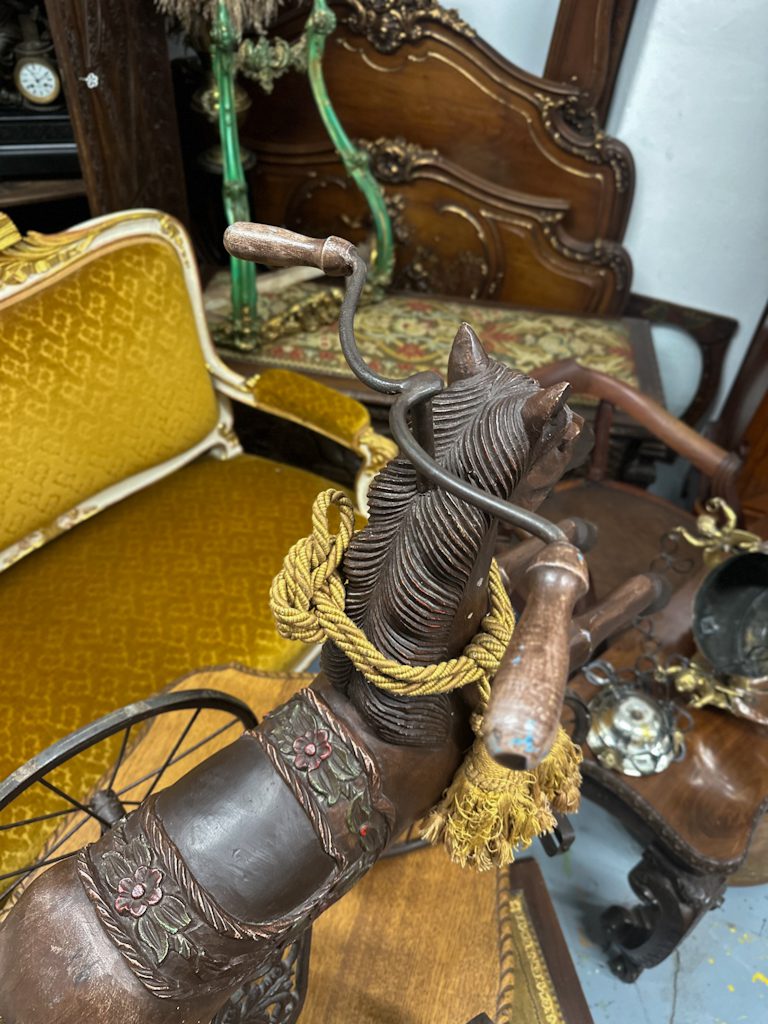
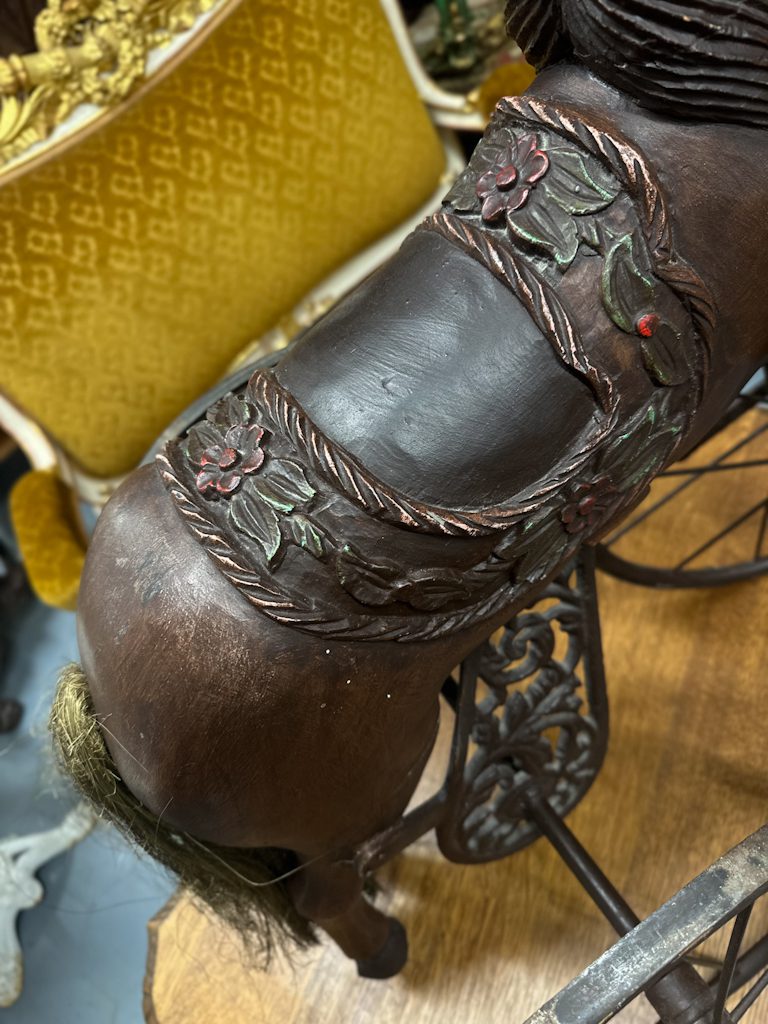
Horse Tricycle — bērnu velosipēds zirga formā (cheval tricycle), Historicisms / Belle Époque, Francija, 19. gs. beigas – 20. gs. sākums
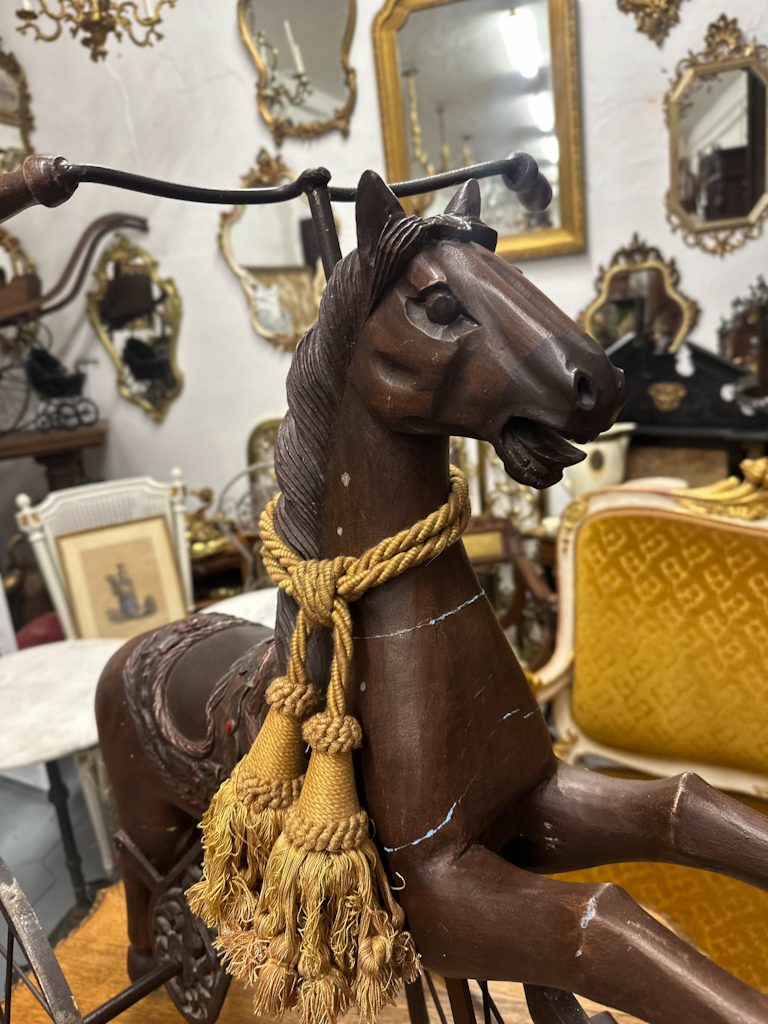
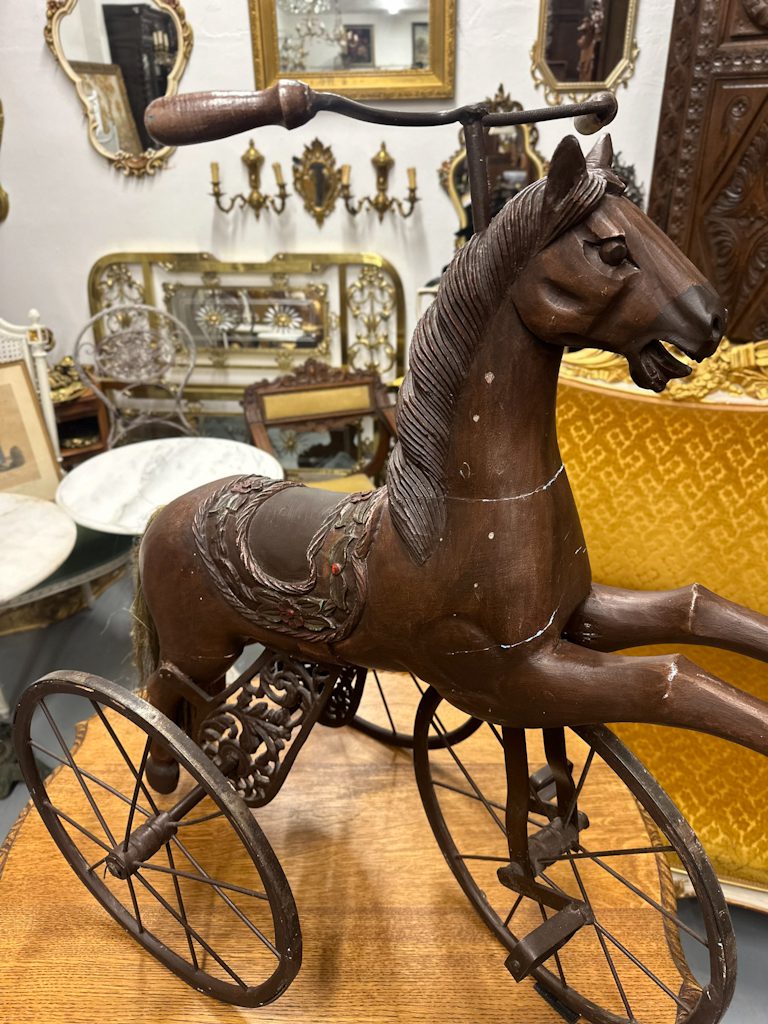
Šī burvīgā antīkā zirga tricikla figūra (horse tricycle) attēlo koka zirgu uz triju spieķu riteņu rāmja — ar roku grebtu galvu un krēpēm, dekoratīvi izgrebtu un krāsotu segli ar ziedu motīviem, kalta dzelzs ažūra sānu plāksnēm un koka roktura stūri. Šādi zirgu tricikli pieder historicisma un Belle Époque (Skaistā laikmeta) laikmeta bērnu rotaļlietu tradīcijai, kad 19. gadsimta beigās un 20. gadsimta sākumā Francijā un Eiropā ražoja grezni dekorētus, amatnieciski izstrādātus bērnu transporta līdzekļus turīgo ģimeņu atvasēm.
Izmēri: Augstums 87 cm × garums 83 cm × platums 46 cm
🇱🇻 Belle Époque (Skaistā laikmeta) momentuzņēmums: Marsels Prusts (Marcel Proust) apstājās Šanzelizē parka takas malā. Gar viņu, čīkstot riteņiem pa granti, kaut kas pabrauca garām — koka krēpes, ziedu raksts uz segliem, bērna smiekli un aukle, kas tikko spēja noturēt soli. Uz mirkli viņš atcerējās savu bērnību Iljē, vasaras smaržu un kaut ko, kas sen bija aizmirsts. Viņš izņēma piezīmju grāmatiņu, bet neko neuzrakstīja. Daži mirkļi neļaujas vārdiem.
Ražotājs un zīmogs
Manufaktūras vai ražotāja zīmogs nav identificēts. Pēc stila, materiālu kombinācijas (koks, kalts dzelzs, spieķu riteņi) un dekoratīvā grebuma tricikls atbilst franču 19. gs. beigu – 20. gs. sākuma bērnu rotaļlietu tradīcijai. Detalizēti grebtā galva, ažūra dzelzs sānu plāksnes un ziedu segli liecina par kvalitatīvu, amatniecisku darbu.
Retums un nozīme
Antīki koka zirgu tricikli ir augsti vērtēti kolekcionāru vidū — tie apvieno rotaļlietas nostalģiju, amatniecisku grebumu un dekoratīvu klātbūtni. Saglabājies braucamā stāvoklī ar oriģinālajiem elementiem, šāds priekšmets ir īpaši interesants.
Pielietojums interjerā, dizainā un fotogrāfijā
Burvīgs dekoratīvs akcents bērnistabā, dzīvojamā istabā, antikvariāta vai modes veikala vitrīnā. Ļoti fotogēnisks, nostalģisks objekts, kas piesaista skatienu jebkurā interjerā.
Dāvana
Brīnišķīga dāvana antīko rotaļlietu kolekcionāram, vēstures un amatniecības cienītājam vai kā īpaša, paliekoša dāvana ģimenei.
Stāvoklis
Koka virsma ar vecuma patinu, krāsas nodilumiem un nelielām plaisām atbilstoši priekšmeta vecumam. Dekoratīvajā stūres rokturī un dažviet redzami nelieli krāsas zudumi. Saglabājies braucamā stāvoklī. Lietas stāvoklis pilnībā atspoguļots fotogrāfijās.
⚠️ Atruna: precīzs priekšmeta vecums un izcelsme nav dokumentāri apstiprināti; datējums un attiecinājums balstīts uz stila, materiālu un izpildījuma analīzi. Priekšmets tiek pārdots kā antikvariāts tādā stāvoklī, kāds tas ir, un lietas stāvoklis pilnībā atspoguļots fotogrāfijās.
🇷🇺 Лошадка-трицикл — детский велосипед в форме лошади (cheval tricycle), историзм / Бель Эпок, Франция, конец XIX – начало XX века
Эта очаровательная антикварная фигура лошадки-трицикла изображает деревянную лошадь на раме с тремя спицованными колёсами — с резной вручную головой и гривой, декоративно вырезанным и расписанным седлом с цветочными мотивами, ажурными боковыми пластинами из кованого железа и деревянным рулём. Подобные лошадки-трициклы принадлежат традиции детских игрушек эпохи историзма и Бель Эпок, когда в конце XIX и начале XX века во Франции и Европе изготавливали богато декорированные, ремесленно выполненные детские транспортные средства для отпрысков состоятельных семей.
🇷🇺 Снимок эпохи Бель Эпок: Марсель Пруст (Marcel Proust) остановился у края дорожки в парке на Елисейских полях. Мимо него, поскрипывая колёсами по гравию, что-то проехало — деревянная грива, цветочный узор на седле, детский смех и няня, едва поспевавшая шагом. На мгновение он вспомнил своё детство в Илье, запах лета и что-то давно забытое. Он достал записную книжку, но ничего не написал. Некоторые мгновения не поддаются словам.
Клеймо мануфактуры или производителя не идентифицировано. По стилю, сочетанию материалов (дерево, кованое железо, спицованные колёса) и декоративной резьбе трицикл соответствует французской традиции детских игрушек конца XIX – начала XX века. Детально резная голова, ажурные железные боковые пластины и цветочное седло свидетельствуют о качественной, ремесленной работе. Антикварные деревянные лошадки-трициклы высоко ценятся среди коллекционеров — они сочетают ностальгию игрушки, ремесленную резьбу и декоративное присутствие. Сохранившийся в рабочем состоянии с оригинальными элементами, такой предмет особенно интересен. Очаровательный декоративный акцент для детской, гостиной, витрины антикварного или модного магазина. Очень фотогеничный, ностальгический объект, привлекающий взгляд в любом интерьере. Прекрасный подарок коллекционеру антикварных игрушек, любителю истории и ремёсел или как особый, памятный подарок семье. Деревянная поверхность с возрастной патиной, потёртостями краски и небольшими трещинами соответственно возрасту предмета. На декоративной ручке руля и местами видны небольшие утраты краски. Сохранился в рабочем состоянии. Состояние предмета полностью отражено на фотографиях.
⚠️ Оговорка: точный возраст и происхождение предмета документально не подтверждены; датировка и атрибуция основаны на анализе стиля, материалов и исполнения. Предмет продаётся как антиквариат в том состоянии, в каком он есть, и состояние полностью отражено на фотографиях.
🇬🇧 Horse Tricycle — Child’s Horse-Shaped Bicycle (cheval tricycle), Historicism / Belle Époque, France, Late 19th – Early 20th Century
This charming antique horse tricycle depicts a wooden horse on a three-spoked-wheel frame — with a hand-carved head and mane, a decoratively carved and painted saddle with floral motifs, openwork wrought-iron side plates and a wooden handlebar. Such a horse tricycle belongs to the children’s toy tradition of Historicism and the Belle Époque, when in the late nineteenth and early twentieth centuries France and Europe produced richly decorated, finely crafted children’s vehicles for the offspring of well-to-do families.
🇬🇧 Belle Époque snapshot: Marcel Proust (Marcel Proust) paused at the edge of a path in a park on the Champs-Élysées. Past him, wheels creaking on the gravel, something rolled by — a wooden mane, a floral pattern on a saddle, a child’s laughter and a nanny barely keeping pace. For a moment he remembered his childhood at Illiers, the scent of summer and something long forgotten. He took out his notebook, but wrote nothing. Some moments resist words.
No manufacturer’s or maker’s mark is identified. By style, the combination of materials (wood, wrought iron, spoked wheels) and the decorative carving, the tricycle corresponds to the French children’s toy tradition of the late 19th – early 20th century, and this horse tricycle shows quality craftsmanship in its finely carved head, openwork iron side plates and floral saddle. Antique wooden horse tricycles are highly valued among collectors, combining the nostalgia of a toy, hand carving and decorative presence; preserved in working order with original elements, this horse tricycle is especially interesting. A charming decorative accent for a nursery, living room, antique or fashion shop window — a highly photogenic, nostalgic object that draws the eye in any interior. A wonderful gift for an antique toy collector, a lover of history and craftsmanship, or as a special, lasting family gift. The wooden surface has age patina, paint wear and minor cracks consistent with age; minor paint losses are visible on the decorative handlebar and in places. Preserved in working order. The condition is fully reflected in the photographs.
⚠️ Disclaimer: the exact age and origin of the item are not documentarily confirmed; the dating and attribution are based on analysis of style, materials and execution. The item is sold as an antique in its present condition, and the condition is fully reflected in the photographs.
🇩🇪 Pferd-Dreirad — Kinderfahrrad in Pferdeform (cheval tricycle), Historismus / Belle Époque, Frankreich, Ende 19. – Anfang 20. Jahrhundert
Diese reizvolle antike Pferd-Dreirad-Figur zeigt ein hölzernes Pferd auf einem Rahmen mit drei Speichenrädern — mit handgeschnitztem Kopf und Mähne, einem dekorativ geschnitzten und bemalten Sattel mit floralen Motiven, durchbrochenen schmiedeeisernen Seitenplatten und einem hölzernen Lenker. Solche Pferd-Dreiräder gehören zur Kinderspielzeug-Tradition des Historismus und der Belle Époque, als Ende des 19. und Anfang des 20. Jahrhunderts in Frankreich und Europa reich verzierte, handwerklich gefertigte Kinderfahrzeuge für die Sprösslinge wohlhabender Familien hergestellt wurden.
🇩🇪 Momentaufnahme der Belle-Époque-Zeit: Marcel Proust (Marcel Proust) hielt am Rand eines Weges in einem Park an den Champs-Élysées inne. An ihm vorbei, die Räder knirschten auf dem Kies, rollte etwas vorüber — eine hölzerne Mähne, ein Blumenmuster auf einem Sattel, ein Kinderlachen und ein Kindermädchen, das kaum Schritt hielt. Einen Augenblick lang erinnerte er sich an seine Kindheit in Illiers, den Duft des Sommers und etwas längst Vergessenes. Er zog sein Notizbuch hervor, schrieb aber nichts. Manche Augenblicke widersetzen sich den Worten.
Eine Manufaktur- oder Herstellermarke ist nicht identifiziert. Nach Stil, der Materialkombination (Holz, Schmiedeeisen, Speichenräder) und der dekorativen Schnitzerei entspricht das Dreirad der französischen Kinderspielzeug-Tradition des späten 19. – frühen 20. Jahrhunderts. Der detailliert geschnitzte Kopf, die durchbrochenen eisernen Seitenplatten und der florale Sattel zeugen von qualitätvoller, handwerklicher Arbeit. Antike hölzerne Pferd-Dreiräder werden unter Sammlern hoch geschätzt — sie verbinden die Nostalgie eines Spielzeugs, Handschnitzerei und dekorative Präsenz. In fahrbereitem Zustand mit originalen Elementen erhalten, ist ein solches Stück besonders interessant. Ein reizvoller dekorativer Akzent für ein Kinderzimmer, ein Wohnzimmer, ein Antiquitäten- oder Modegeschäft-Schaufenster. Ein äußerst fotogenes, nostalgisches Objekt, das in jedem Interieur den Blick auf sich zieht. Ein wunderbares Geschenk für einen Sammler antiken Spielzeugs, einen Liebhaber von Geschichte und Handwerk oder als besonderes, bleibendes Familiengeschenk. Die Holzoberfläche weist Alterspatina, Farbabnutzung und kleine Risse entsprechend dem Alter auf. Am dekorativen Lenker und stellenweise sind geringe Farbverluste sichtbar. In fahrbereitem Zustand erhalten. Der Zustand ist auf den Fotografien vollständig wiedergegeben.
🇫🇷 Cheval tricycle — Vélo d’enfant en forme de cheval (cheval tricycle), historicisme / Belle Époque, France, fin du XIXe – début du XXe siècle
Cette charmante figure ancienne de cheval tricycle représente un cheval en bois sur un cadre à trois roues à rayons — avec une tête et une crinière sculptées à la main, une selle décorativement sculptée et peinte à motifs floraux, des plaques latérales ajourées en fer forgé et un guidon en bois. De tels chevaux tricycles appartiennent à la tradition des jouets d’enfants de l’historicisme et de la Belle Époque, lorsqu’à la fin du XIXe et au début du XXe siècle la France et l’Europe produisaient des véhicules d’enfants richement décorés et finement ouvragés pour les rejetons des familles aisées.
🇫🇷 Instantané de la Belle Époque : Marcel Proust (Marcel Proust) s’arrêta au bord d’une allée dans un parc des Champs-Élysées. Devant lui, les roues grinçant sur le gravier, quelque chose passa — une crinière de bois, un motif floral sur une selle, le rire d’un enfant et une gouvernante peinant à suivre le pas. Un instant, il se souvint de son enfance à Illiers, de l’odeur de l’été et de quelque chose depuis longtemps oublié. Il sortit son carnet, mais n’écrivit rien. Certains instants résistent aux mots.
Aucune marque de manufacture ou de fabricant n’est identifiée. Par le style, la combinaison des matériaux (bois, fer forgé, roues à rayons) et la sculpture décorative, le tricycle correspond à la tradition française des jouets d’enfants de la fin du XIXe – début du XXe siècle. La tête finement sculptée, les plaques latérales en fer ajouré et la selle florale témoignent d’un travail de qualité et artisanal. Les chevaux tricycles anciens en bois sont très prisés des collectionneurs — ils allient la nostalgie d’un jouet, la sculpture à la main et une présence décorative. Conservé en état de marche avec ses éléments d’origine, un tel objet est particulièrement intéressant. Un charmant accent décoratif pour une chambre d’enfant, un salon, une vitrine de magasin d’antiquités ou de mode. Un objet très photogénique et nostalgique qui attire le regard dans tout intérieur. Un cadeau merveilleux pour un collectionneur de jouets anciens, un amateur d’histoire et d’artisanat, ou comme cadeau de famille spécial et durable. La surface en bois présente une patine d’âge, une usure de la peinture et de légères fissures conformes à l’âge. De légères pertes de peinture sont visibles sur le guidon décoratif et par endroits. Conservé en état de marche. L’état est entièrement reflété par les photographies.