Apaļš Koka Galds ar Lauvas Ķepu Kājām un Kokgriezumu Frīzi — Neorenensanse, Rietumeiropa, 19.gs. (3155)







Apaļš Koka Galds ar Lauvas Ķepu Kājām un Kokgriezumu Frīzi — Neorenensanse, Rietumeiropa, 19.gs. (3155)
€1,650.00
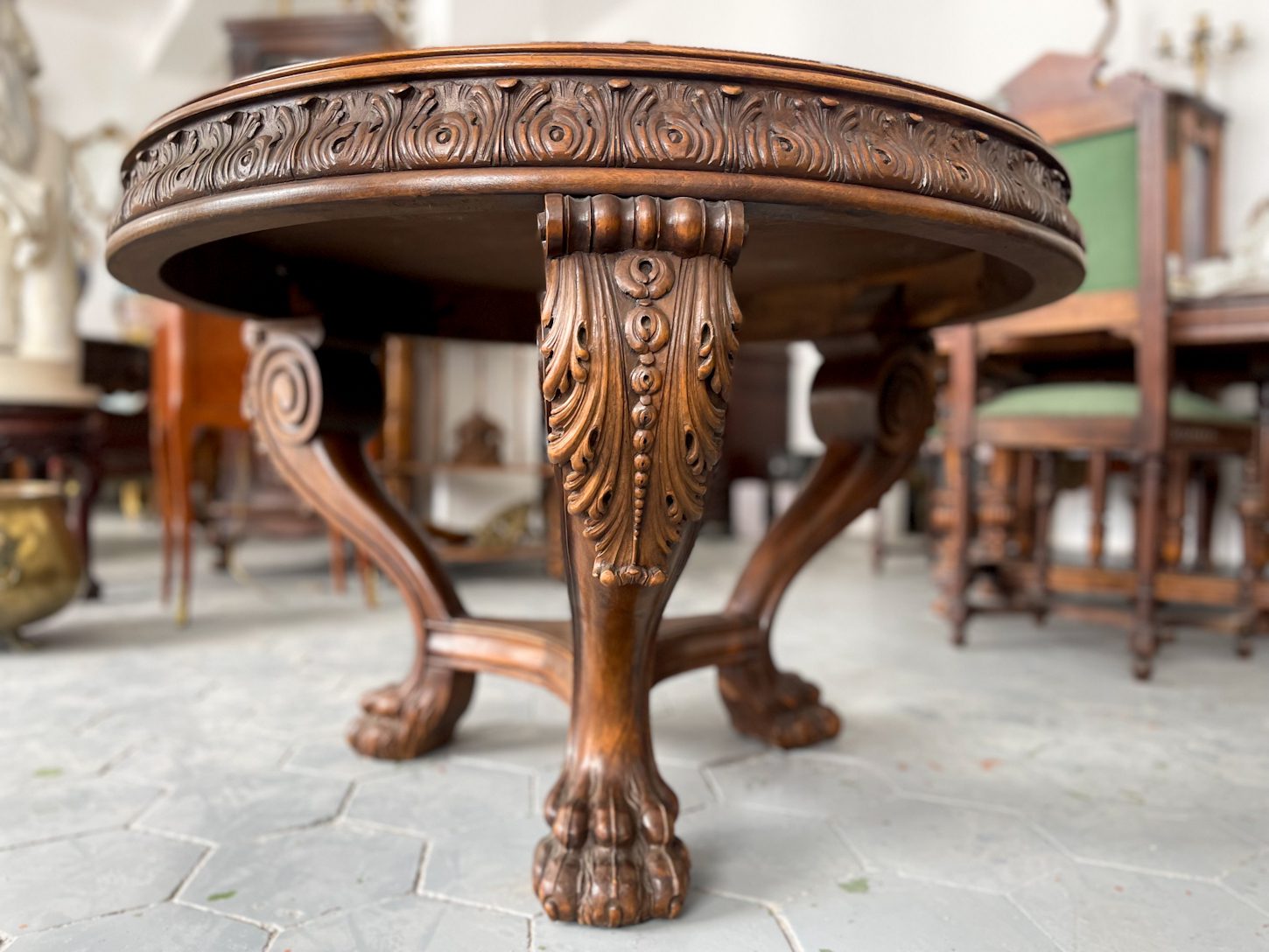
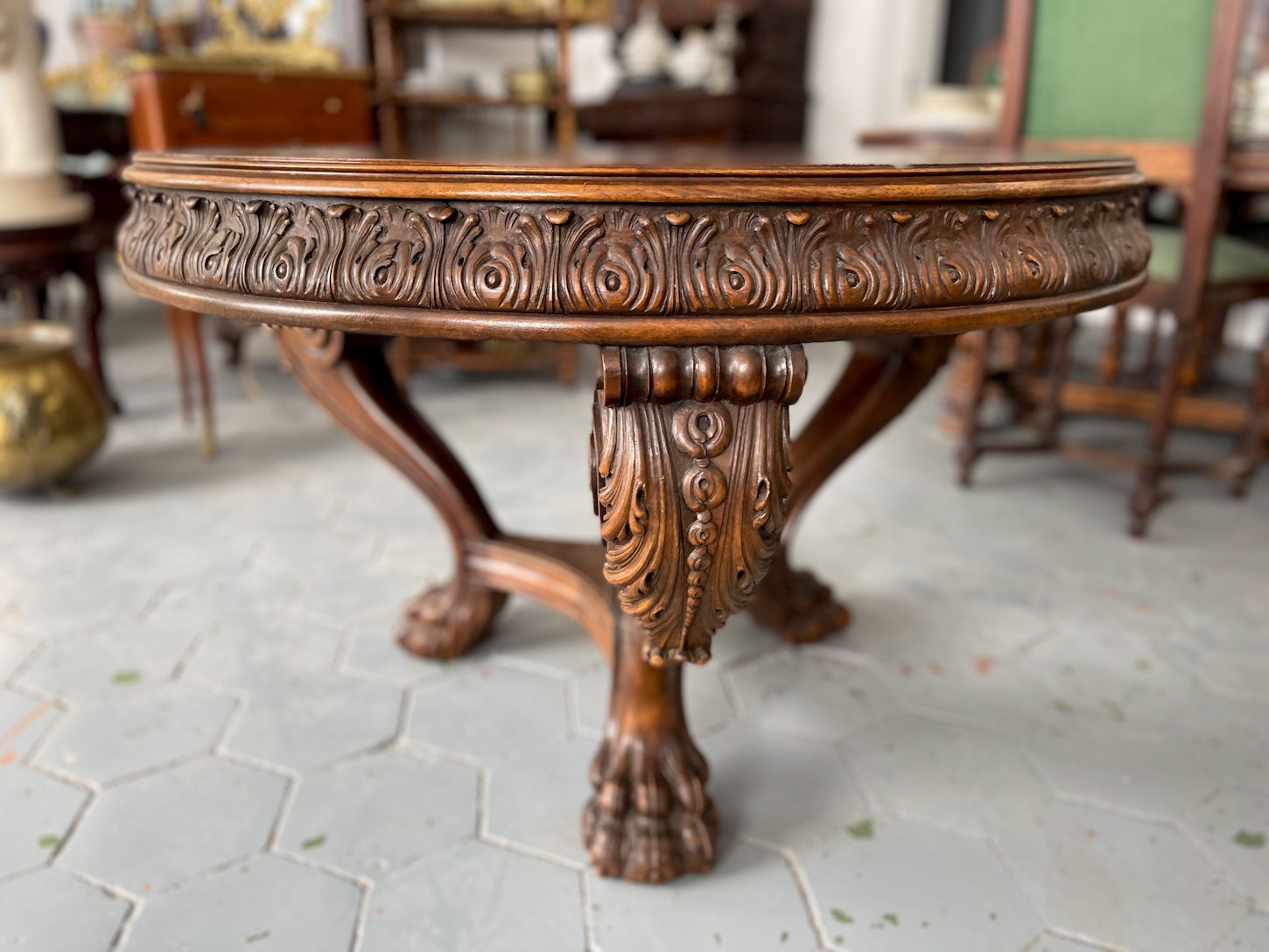
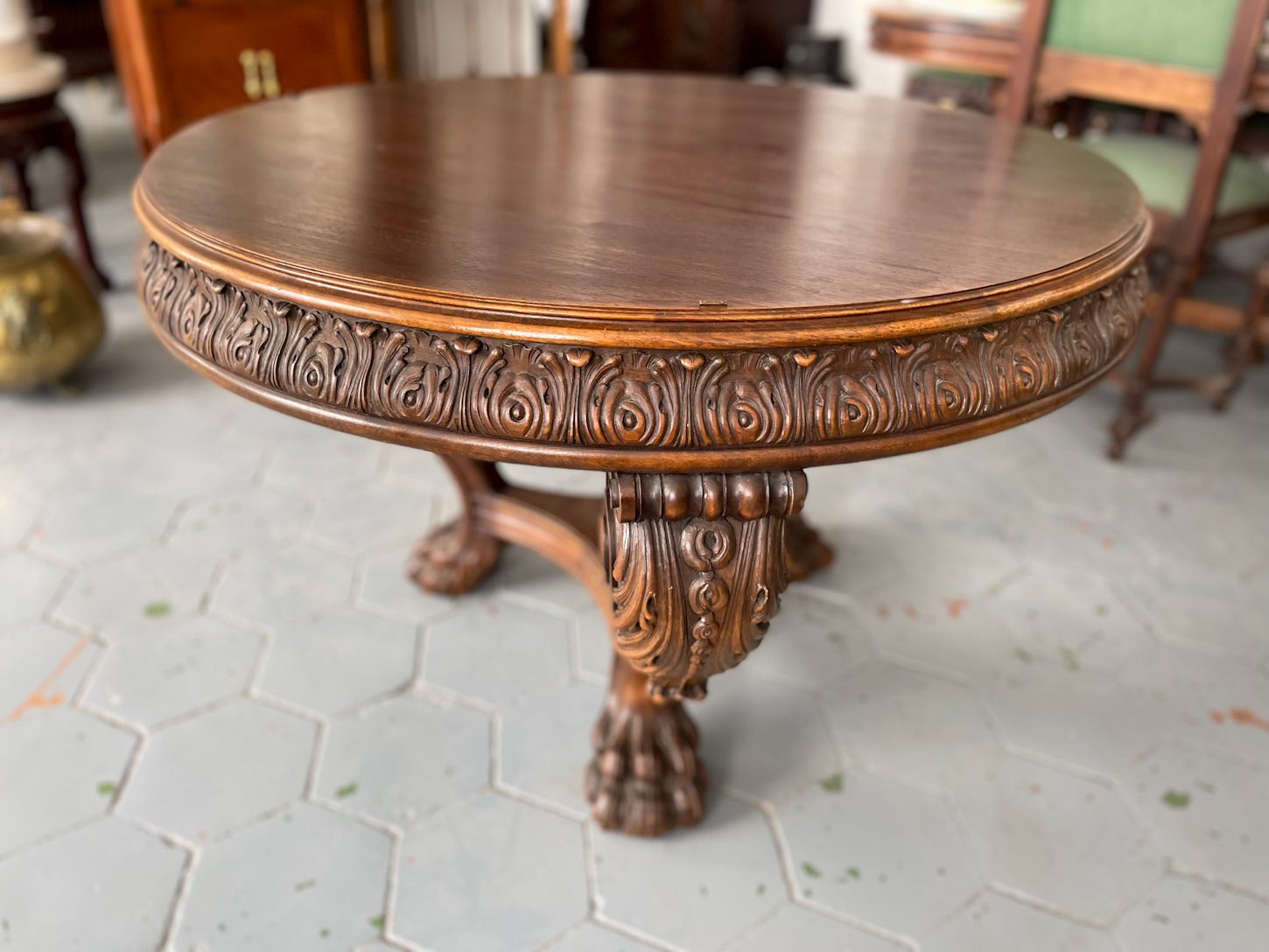
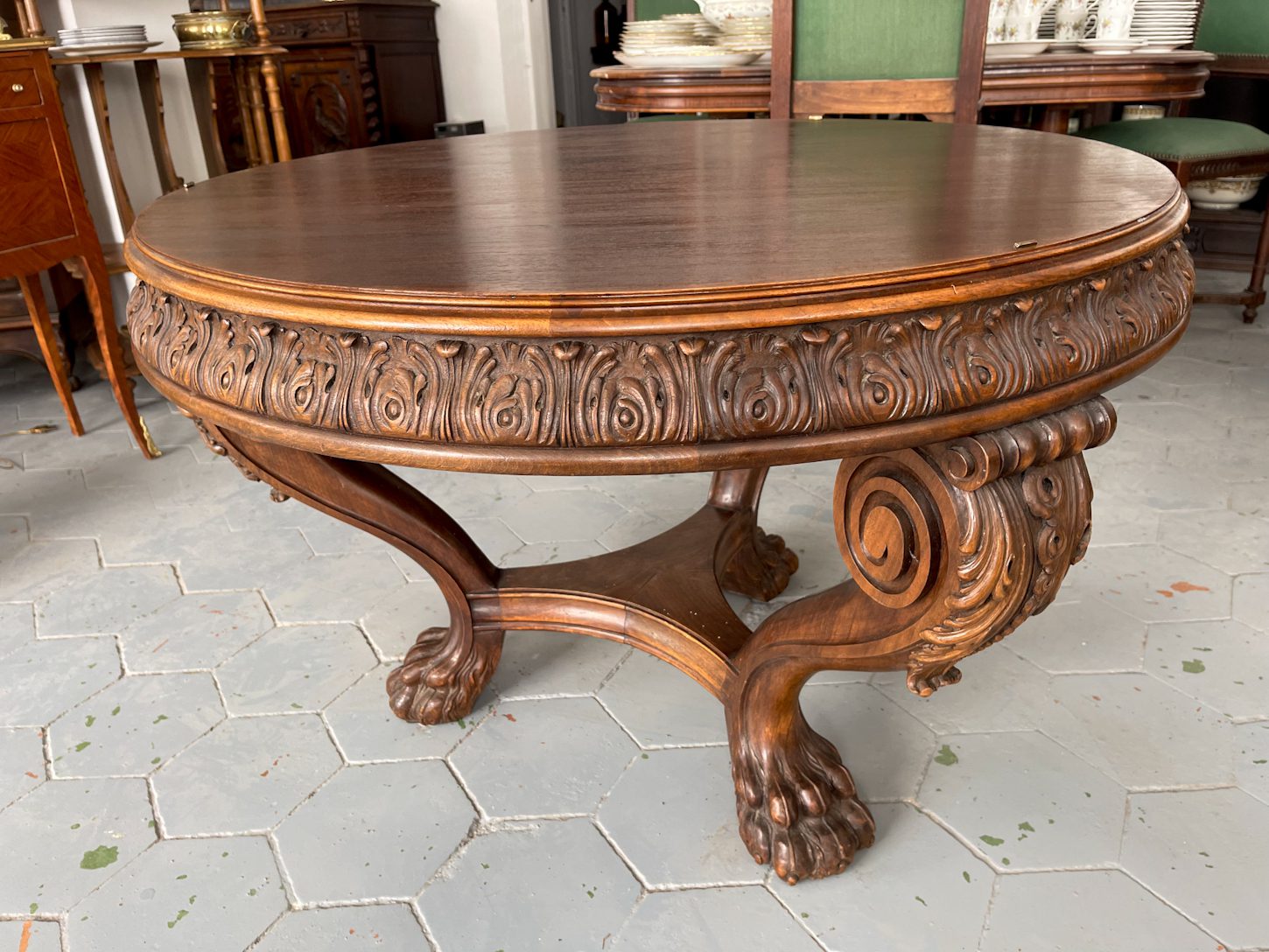
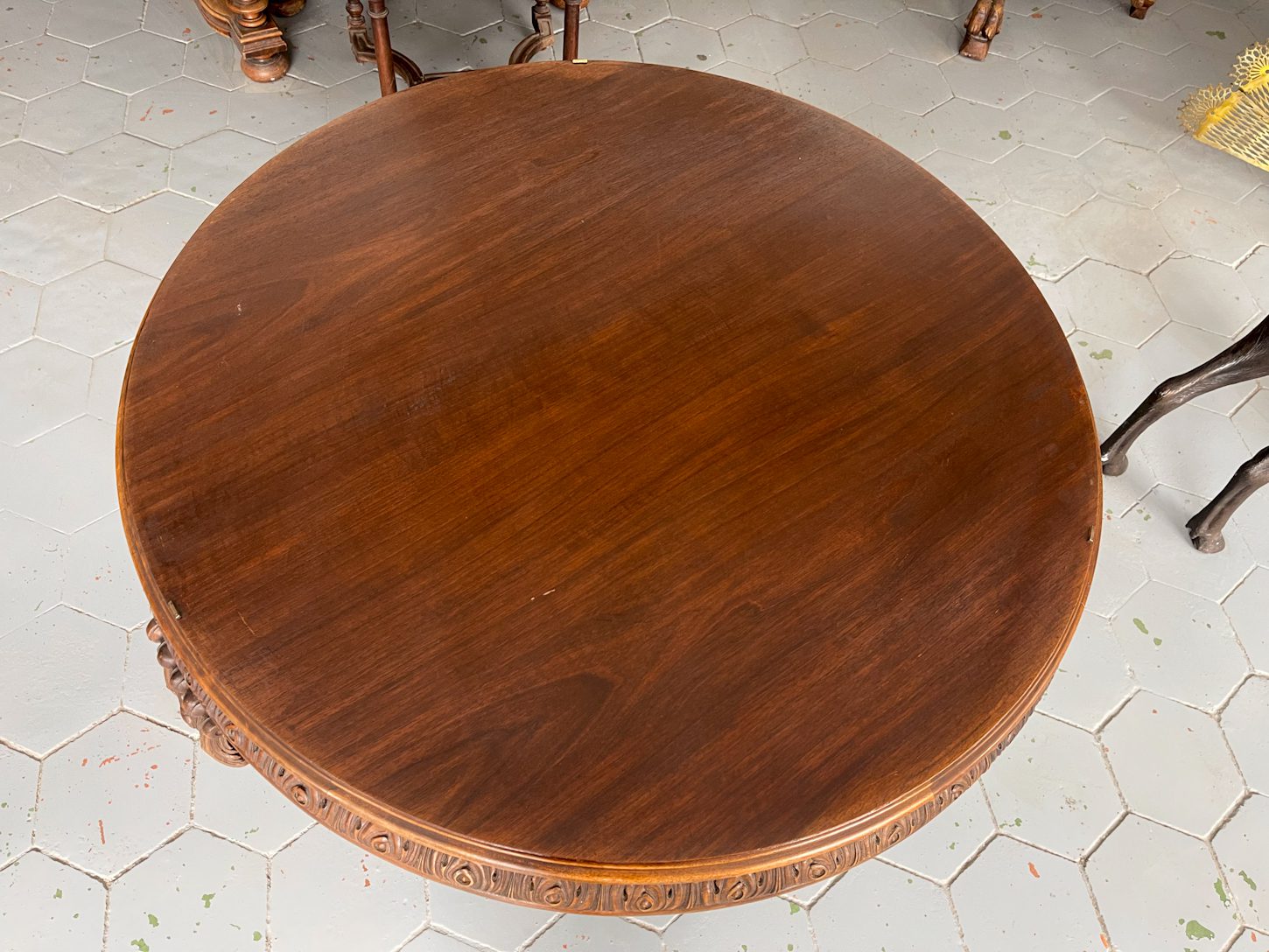
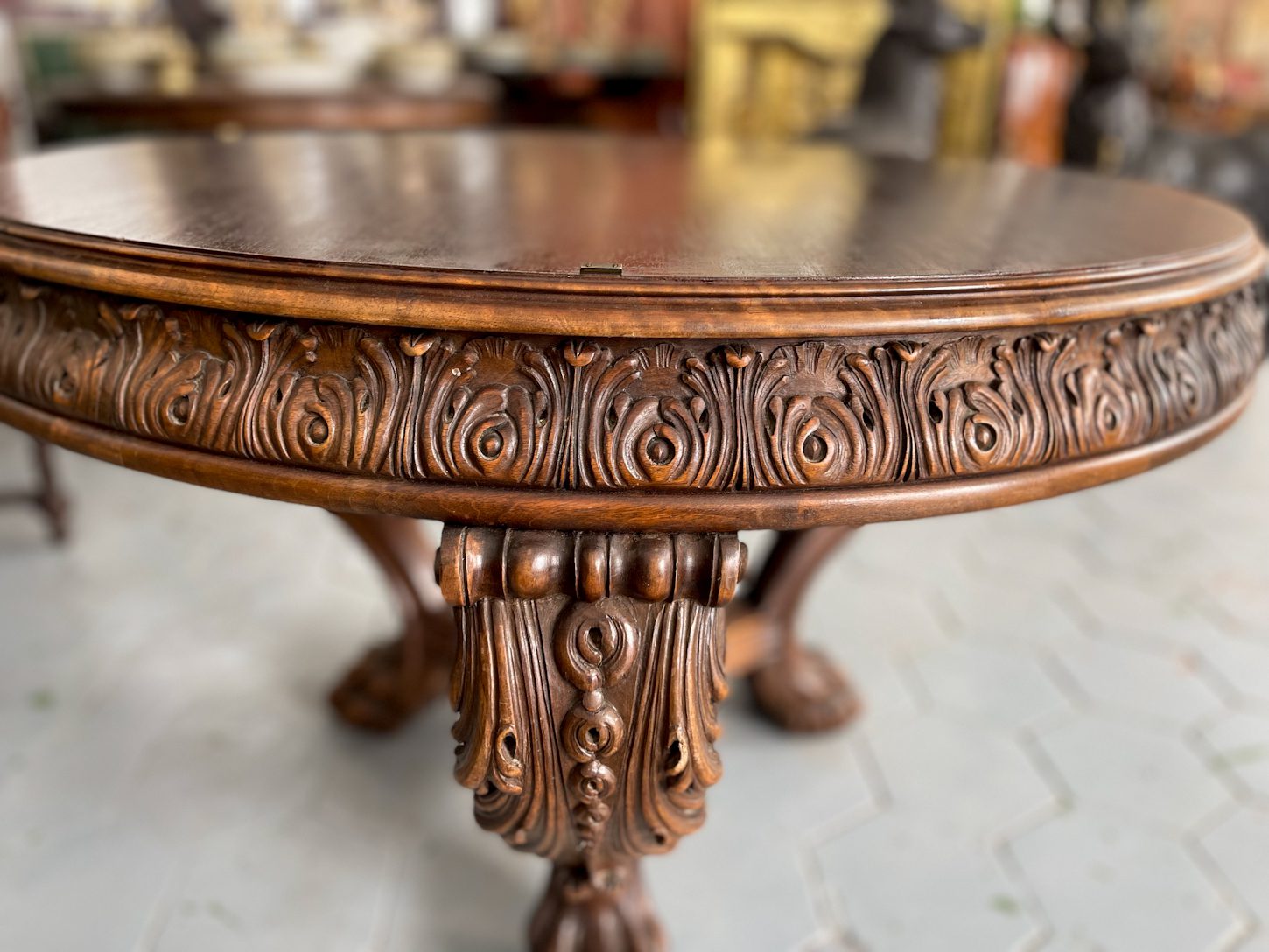
Masīvs apaļš galds ar dziļi cirstu akantus lapu frīzi ap visu apkārtmēru, četrām volute kājām un lauvas ķepu apakšdaļām. Neorenensanse / Historicisms, Rietumeiropa, ap 1860.–1890. Augstums 66 cm × diametrs 97 cm. Ozolkoks vai riekstu koks ar tumšu apdari.
📐 IZMĒRI
Augstums 66 cm × virsmas diametrs 97 cm. Masīvs un smags.
―――――――――――――――――――――
Apaļš Salona Galds ar Lauvas Ķepu Kājām un Dziļiem Kokgriezumiem — Neorenensanse / Historicisms, Rietumeiropa, ap 1860.–1890.
―――――――――――――――――――――
🏛️ IZGATAVOŠANAS PERIODS, MĀKSLAS STILS, LAIKMETS
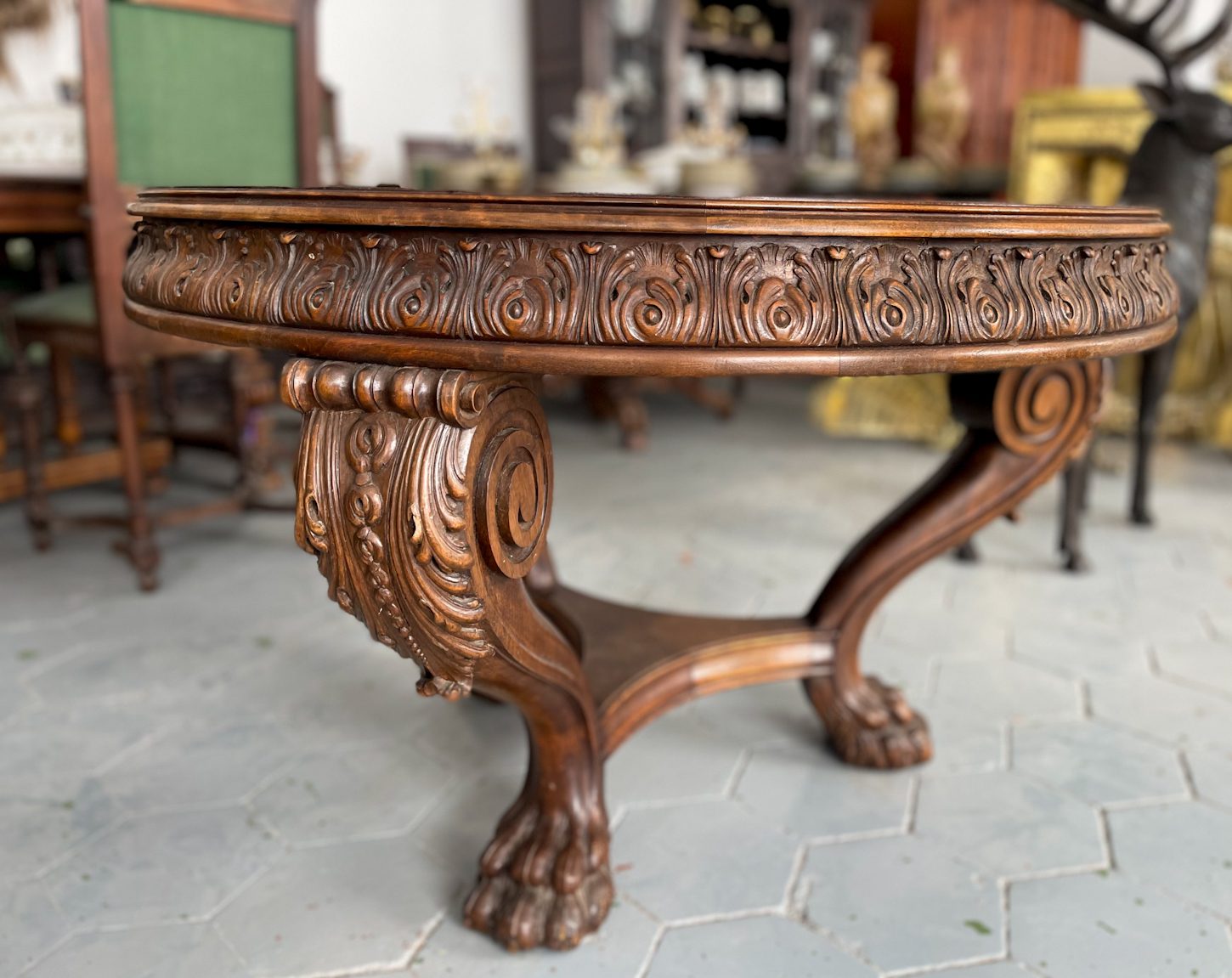
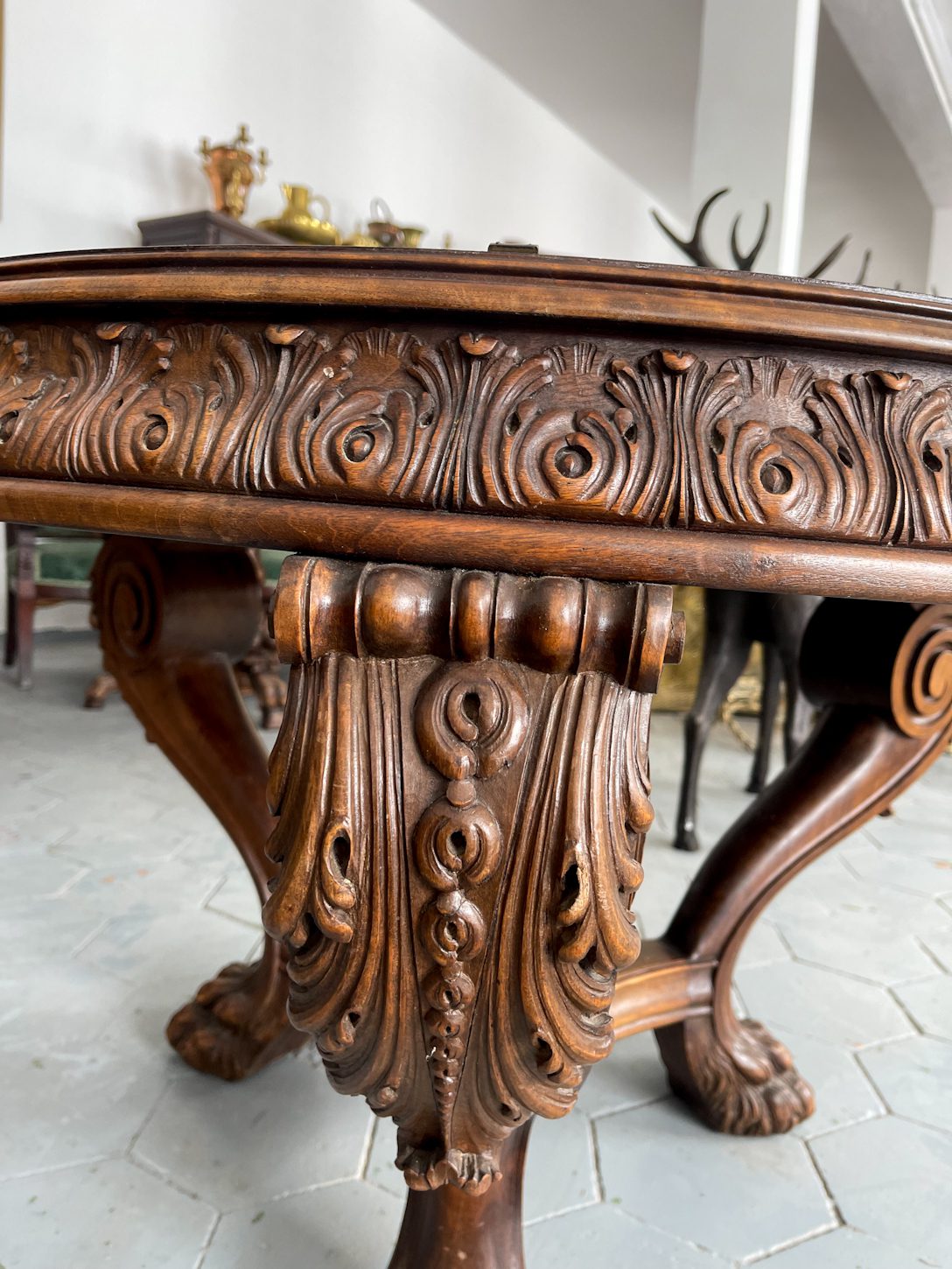
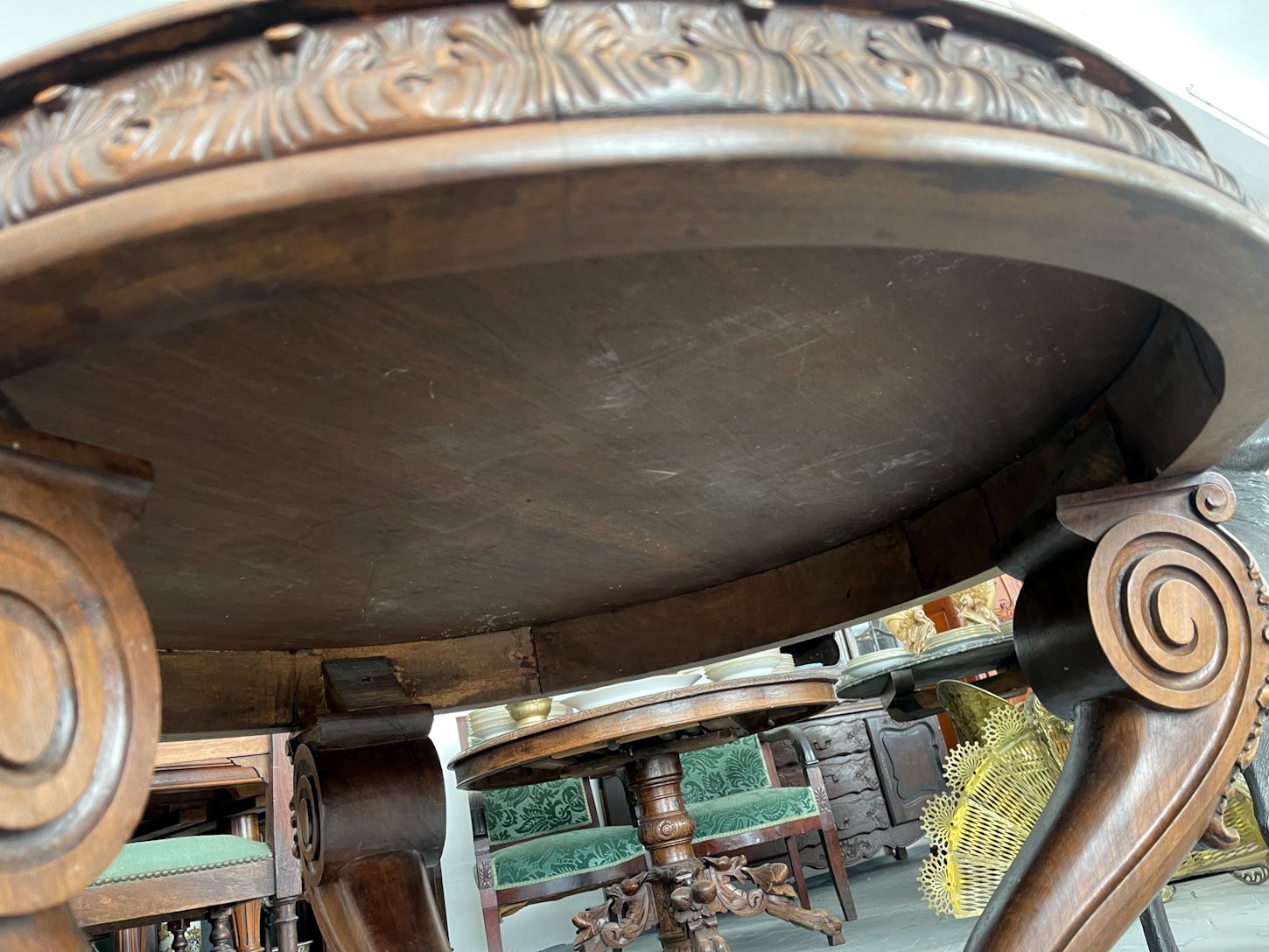
Šis galds ir izcils Historicisma un Neorenensanses stila paraugs — tā laikmeta produkts, kad Eiropas galdniecība pievērsās renesanses un baroka formām ar jaunu industriālo precizitāti, bet rokdarba dziļumu saglabāja tīri amatniecisku. Frīze ap galda malu — nepārtraukts akantus lapu un volute spirāļu joslas reljefs ar centrālajiem oļveida mezgliem — ir grieķu un romiešu arhitektūras ovolo un egg-and-dart motīvu brīva interpretācija, kāda 19. gadsimta otrajā pusē bija raksturīga Vācijas, Beļģijas un Anglijas augstākās klases galdnieku darbnīcām.
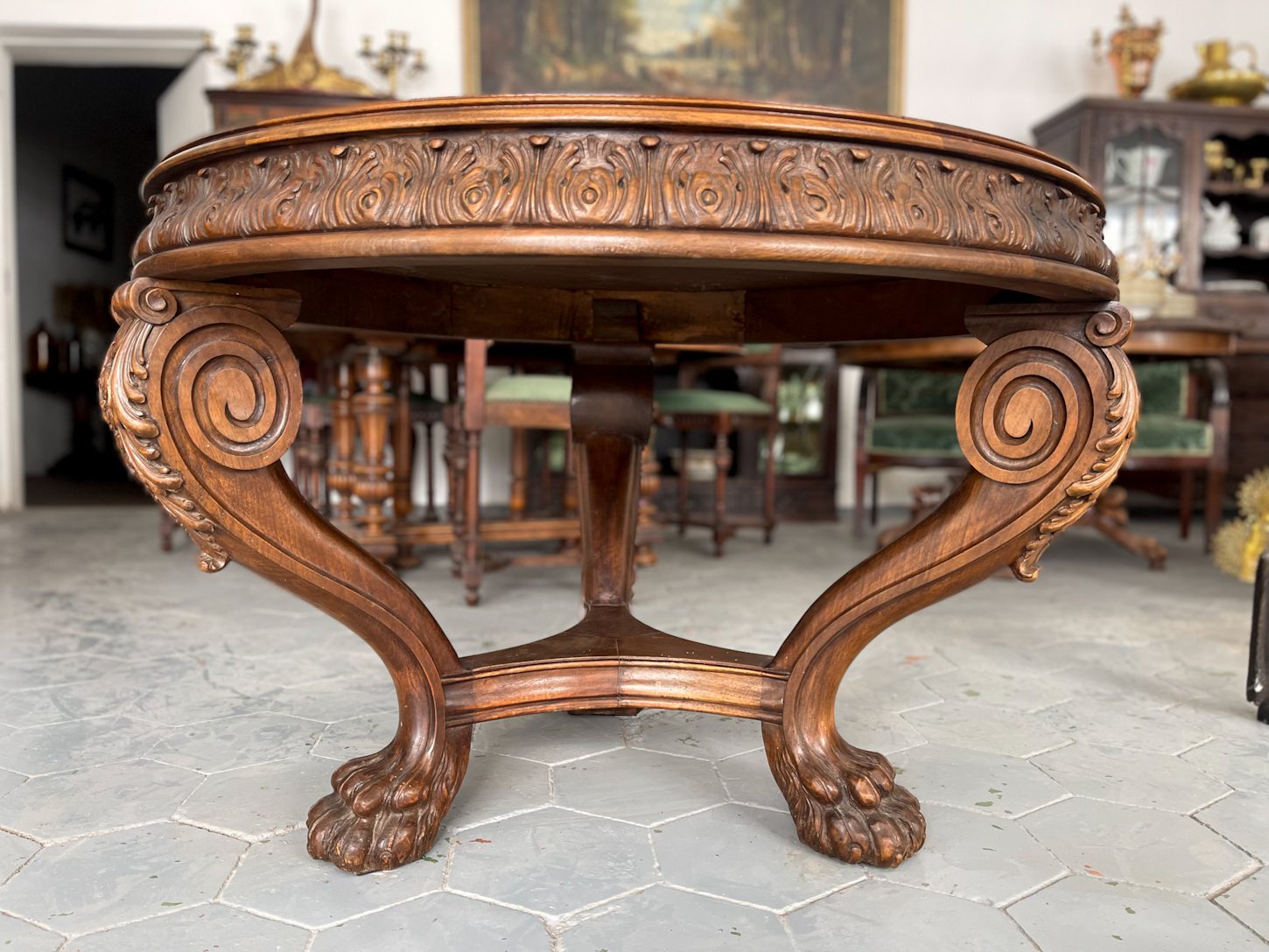
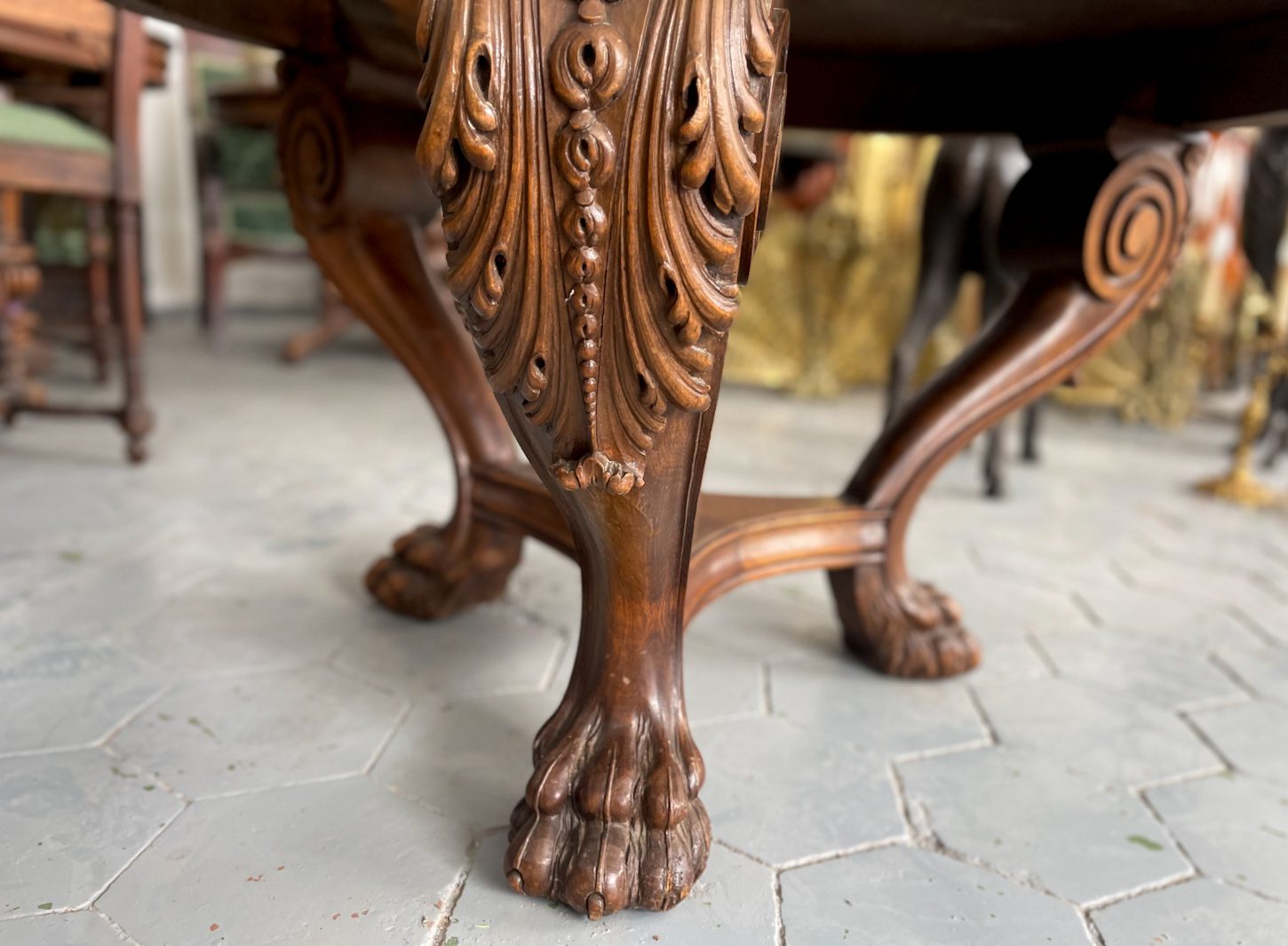
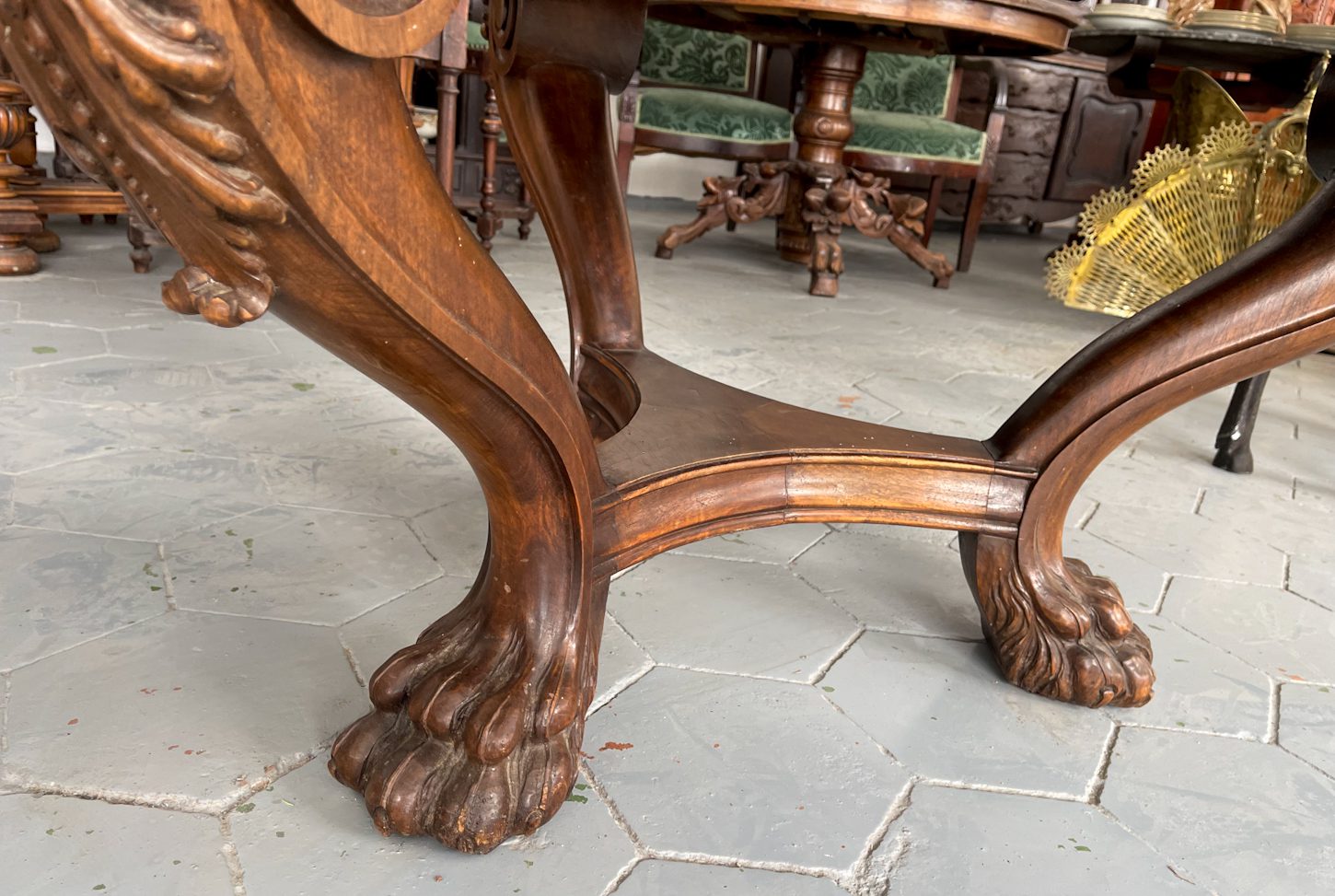
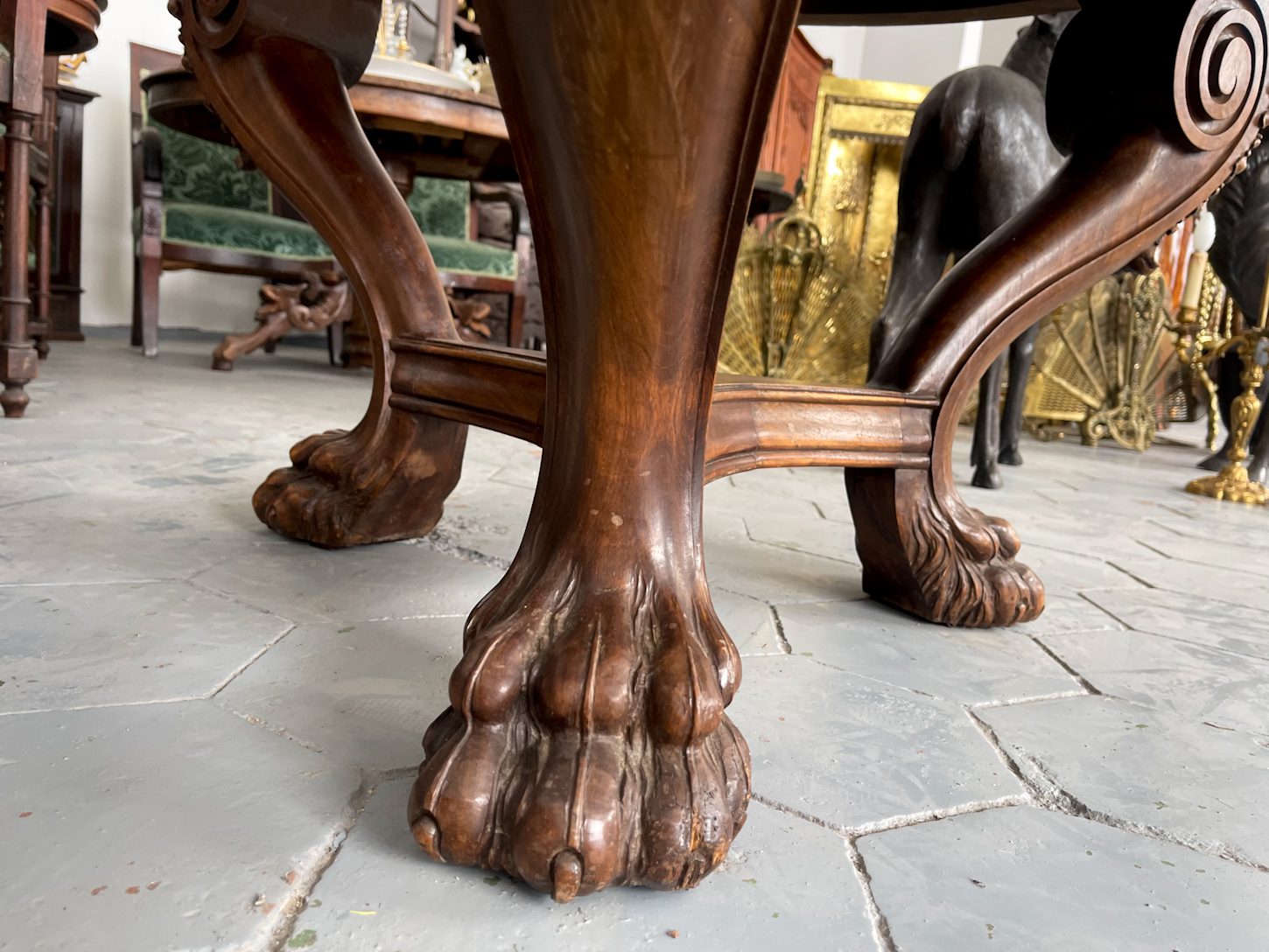
Četras kājas ar volute spirāles galotni augšā un masīvu lauvas ķepu apakšā, savienotas ar krusteniskām saitēm stretcher konstrukcijā — tas ir valdonīgs, ar lielu fizisko un vizuālo svaru. Šāds galds nestāvēja buržuāzijas dzīvokļa salonā — tas stāvēja muižas bibliotēkā, bankiera kabineta centrā vai augstmaņu ēdamistabā kā galvenā mēbele.
Belle Époque — “Skaistais Laikmets” — sākās 1871. gadā, un tieši tajā desmitgadē, kad šis galds, visticamāk, tika izgatavots, Otrs Reihs svinēja savu pirmo triumfu un Berlīne, Hamburga, Brisele sacenšas par titulu — kurš no viņiem ir Eiropas kulturālais centrs. Šādi galdi tika pasūtīti kā atbilde uz to jautājumu: kas mēs esam. Atbilde bija skaidra — mēs esam renesanses mantinieki.
―――――――――――――――――――――
⚜️ RAŽOTĀJS UN MANUFAKTŪRAS ZĪMOGS
Redzamā ražotāja zīmoga nav. Kokgriezumu kvalitāte — frīzes nepārtrauktais raksts ar dziļi cirstiem akantus locījumiem un trīsdimensionāliem spirāļu mezgliem, kāju volute galotnes ar brīvi cirstiem palmette elementiem, lauvas ķepu anatomiskā precizitāte — viss norāda uz augsti kvalificētu meistaru, kas strādājis augstākās klases darbnīcā ar specializētiem kokgriezēju brigādēm. Koka tonis un struktūra atbilst ozolkokam vai riekstu kokam ar tumšu apdari. Šāds izpildījuma līmenis 19. gadsimtā bija sasniedzams tikai lielākajās Vācijas, Beļģijas vai Anglijas galdniecības centrās.
―――――――――――――――――――――
💎 RETUMS UN NOZĪME
Apaļie galdi ar lauvas ķepu kājām un pilnīgi cilindrisko frīzi, kas apjož visu galda apkārtmēru ar nepārtrauktu kokgriezumu joslu, ir meklēts kolekcionāru tirgus objekts. Lielākā daļa šādu gabalu laika gaitā ir sadalīti vai bojāti, jo masīvā konstrukcija padara tos grūti transportējamus. Šis galds saglabājis struktūras integritāti, kokgriezumu skaidrību un visu kāju pilnīgumu. Starptautiskajos antikvāru tirgos — Londonā, Hamburgā, Briselē — šādi galdi tiek piedāvāti ar nopietnu kolekcionāru interesi.
―――――――――――――――――――――
🕯️ PIELIETOJUMS INTERJERĀ, DIZAINĀ UN FOTOGRĀFIJĀ
Galds prasa telpu un to attaisno. Ideāls kā centrālais galds lielā bibliotēkā, kabineta centrā, eklektiskā laikmetīgā interjerā kā apzināts kontrasts vai kā hunting lodge un gentlemen’s club tipa interjera galvenā akcentmēbele. Fotogrāfijā tumšais ozolkoks ar dziļajiem griezumiem rada ārkārtīgi bagātu tekstūru — tas ir dabisks editorial un arhitektūras fotogrāfiju elements. Interjera dizaineri šo tipu izmanto arī kā konferences telpas vai privātā kabineta galvenās mēbeles bāzi.
―――――――――――――――――――――
🎁 DĀVANA UN PERSONALIZĀCIJA
Lauvas ķepas ir Lauvas horoskopa zīmes simbols — šis galds ir izcila reprezentatīva dāvana jebkuram vadītājam, kuram gaumes sajūta mijas ar varas apziņu. Kā korporatīvs dāvinājums — piemērots juridiskai firmai, privātam bankas kabinetam vai kolekciju veidotājam. Viens no tiem priekšmetiem, ko dāvina tikai vienu reizi un kas paliek uz mūžu.
―――――――――――――――――――――
🔍 STĀVOKLIS
Laba antikvāra stāvokļa. Galda virsma ar vecuma lietošanas pēdām — vietām redzamas nelielas skrāpējuma līnijas, kas liecina par aktīvu izmantošanu oriģinālajā vidē. Kokgriezumi saglabājuši detalizācijas skaidrību bez nozīmīgiem zudumiem. Kājas stabila — konstrukcija bez deformācijām. Lauvas ķepu griezumi pilnīgi un skaidri. Krustenisko saišu stretcher sistēma savienojumos bez redzamiem atdalījumiem. Lietas stāvoklis pilnībā atspoguļots fotogrāfijās.
―――――――――――――――――――――
🇬🇧 DESCRIPTION IN ENGLISH
📐 DIMENSIONS
Height 66 cm × top diameter 97 cm. Massive and heavy.
―――――――――――――――――――――
Round Salon Table with Lion’s Paw Feet and Deep Carved Frieze — Neo-Renaissance / Historicism, Western Europe, circa 1860–1890.
―――――――――――――――――――――
🏛️ PERIOD, ARTISTIC STYLE, ERA
This table is an outstanding example of Historicism and Neo-Renaissance — the product of an era when European cabinetmaking turned to Renaissance and Baroque forms with new industrial precision, yet preserved the depth of hand craftsmanship in its purest artisanal form. The frieze encircling the table apron — a continuous relief of acanthus scrolls and volute spirals with central egg-shaped knots — is a free interpretation of Greek and Roman ovolo and egg-and-dart architectural motifs, characteristic of high-grade German, Belgian, and English cabinetmaking workshops in the second half of the 19th century.
Four legs with volute scroll capitals at the top and massive lion’s paw feet below, joined by a cross-braced stretcher system — this is commanding furniture, with great physical and visual weight. Such a table did not stand in a bourgeois salon — it stood in the library of a manor house, at the centre of a banker’s study, or in an aristocratic dining room as the primary piece.
Belle Époque began in 1871, and in precisely that decade — when this table was most likely made — the German Empire celebrated its first triumph and Berlin, Hamburg, and Brussels competed for the title of Europe’s cultural centre. Tables such as this were commissioned as answers to one question: who are we? The answer was unambiguous — we are the heirs of the Renaissance.
―――――――――――――――――――――
⚜️ MAKER AND PROVENANCE
No maker’s mark is visible. The quality of the carving — the continuous frieze with deeply cut acanthus scrolls and three-dimensional spiral knots, the volute scroll capitals with freely carved palmette elements, the anatomical precision of the lion’s paw feet — all point to a highly skilled craftsman working in a high-grade workshop with specialist carving brigades. The wood tone and grain correspond to oak or walnut with a dark finish. This level of execution in the 19th century was achievable only in the major cabinetmaking centres of Germany, Belgium, or England.
―――――――――――――――――――――
💎 RARITY AND SIGNIFICANCE
Round tables with lion’s paw feet and a fully cylindrical apron carved in continuous relief around the entire circumference are a sought-after category in the collector’s market. The majority of such pieces have been dismantled or damaged over time, as their massive construction makes them difficult to transport. This table retains its structural integrity, the clarity of its carving, and the completeness of all four legs. In international antique markets — London, Hamburg, Brussels — such tables command serious collector interest.
―――――――――――――――――――――
🕯️ USE IN INTERIORS, DESIGN AND PHOTOGRAPHY
The table demands space and justifies it. Ideal as a centrepiece in a large library, at the centre of a study, in an eclectic contemporary interior as a deliberate contrast, or as the primary accent piece in a hunting lodge or gentlemen’s club aesthetic. In photography, the dark oak with its deeply worked carving produces an exceptionally rich texture — a natural element for editorial and architectural photography. Interior designers also use this type as the centrepiece for conference rooms and private office settings.
―――――――――――――――――――――
🎁 AS A GIFT
Lion’s paw feet are the symbol of the Leo zodiac sign — this table is an outstanding representational gift for any leader in whom a sense of taste meets an awareness of authority. As a corporate gift, it is suited to a law firm, a private banking office, or a collection builder. One of those objects given only once and kept for a lifetime.
―――――――――――――――――――――
🔍 CONDITION
Good antique condition. The table top shows age-related use marks — minor scratching lines visible in places, attesting to active use in its original environment. The carved frieze retains its full detail without significant losses. All legs stable — no structural deformation. Lion’s paw carvings complete and crisp. The cross-braced stretcher system shows no visible separation at joints. The condition of the piece is fully documented in the photographs.
―――――――――――――――――――――