
Koka puķu galdiņš ar vītu kāju un kokgriezumu, ozols (4192)

🇱🇻 LATVISKI
Izmēri:
Augstums — 74,5 cm
Virsmas platums — 56 cm
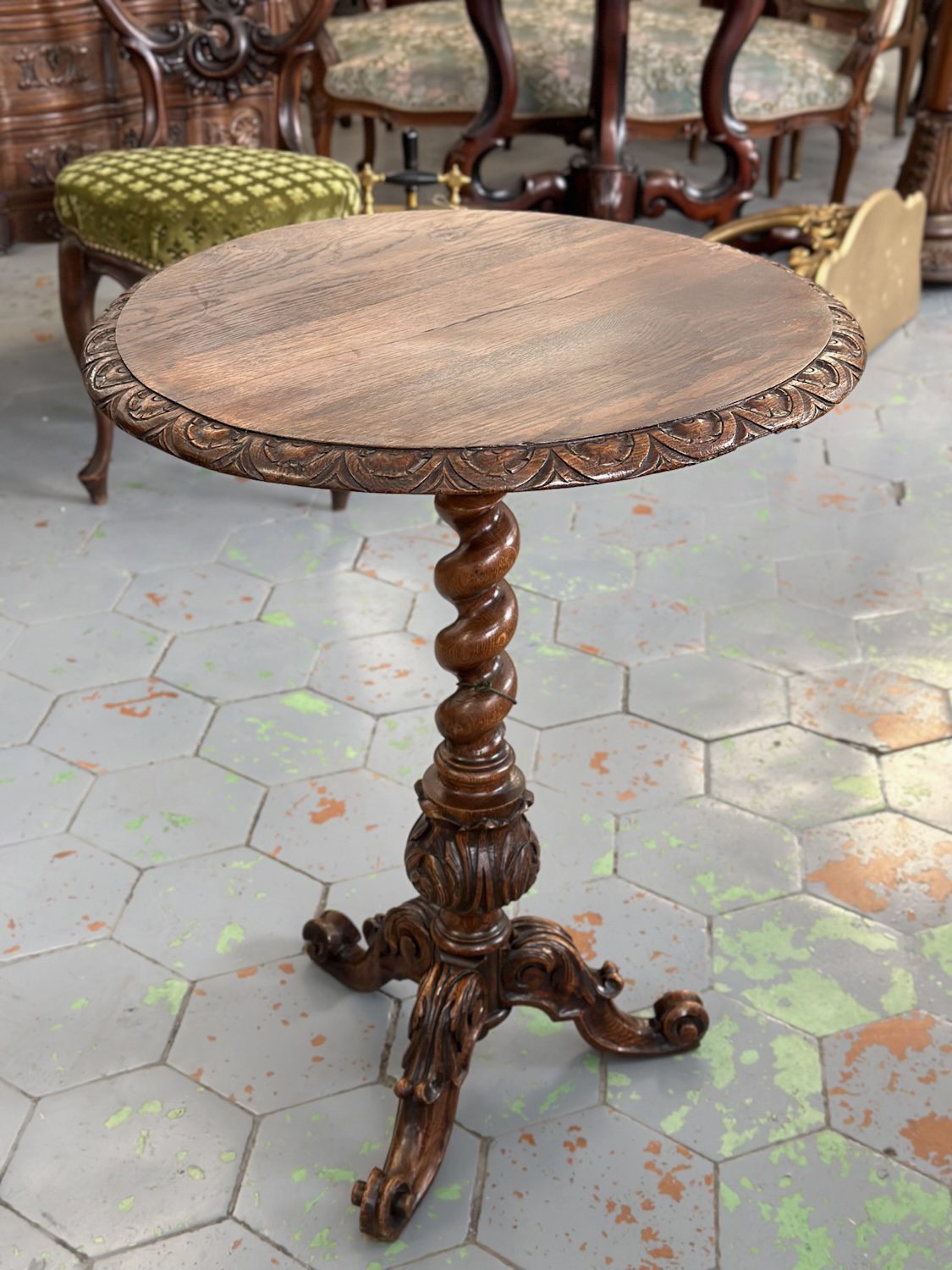
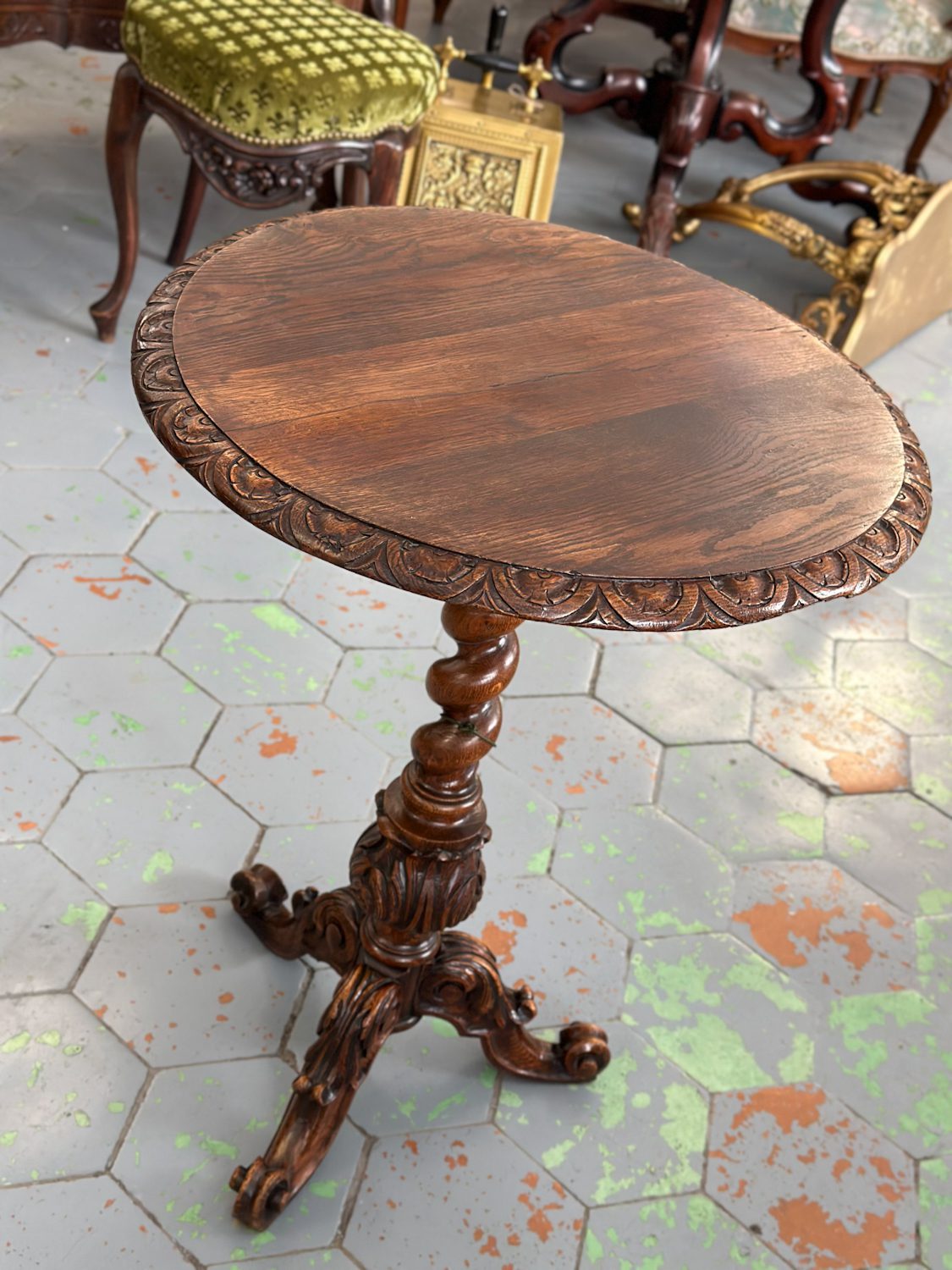
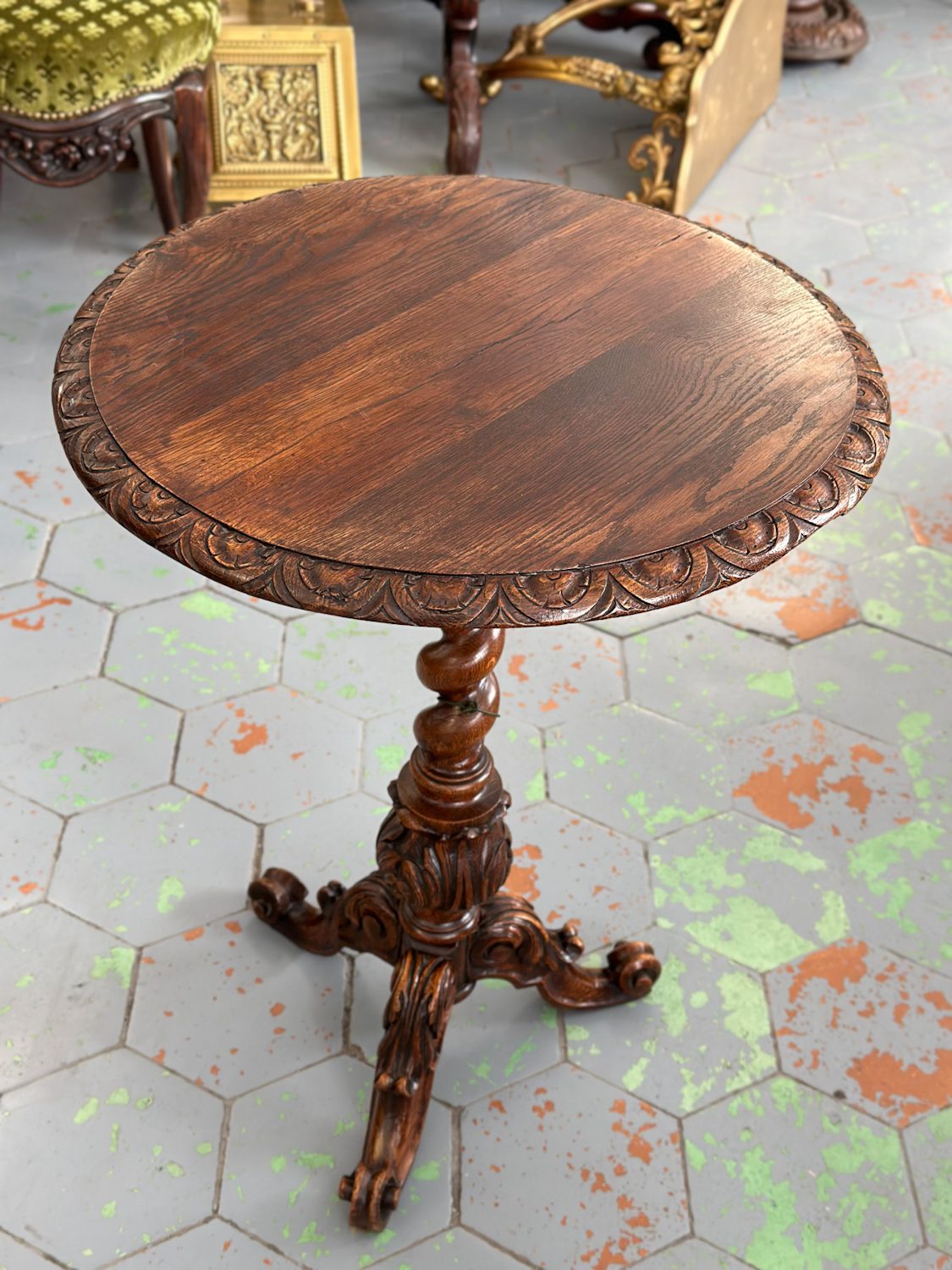
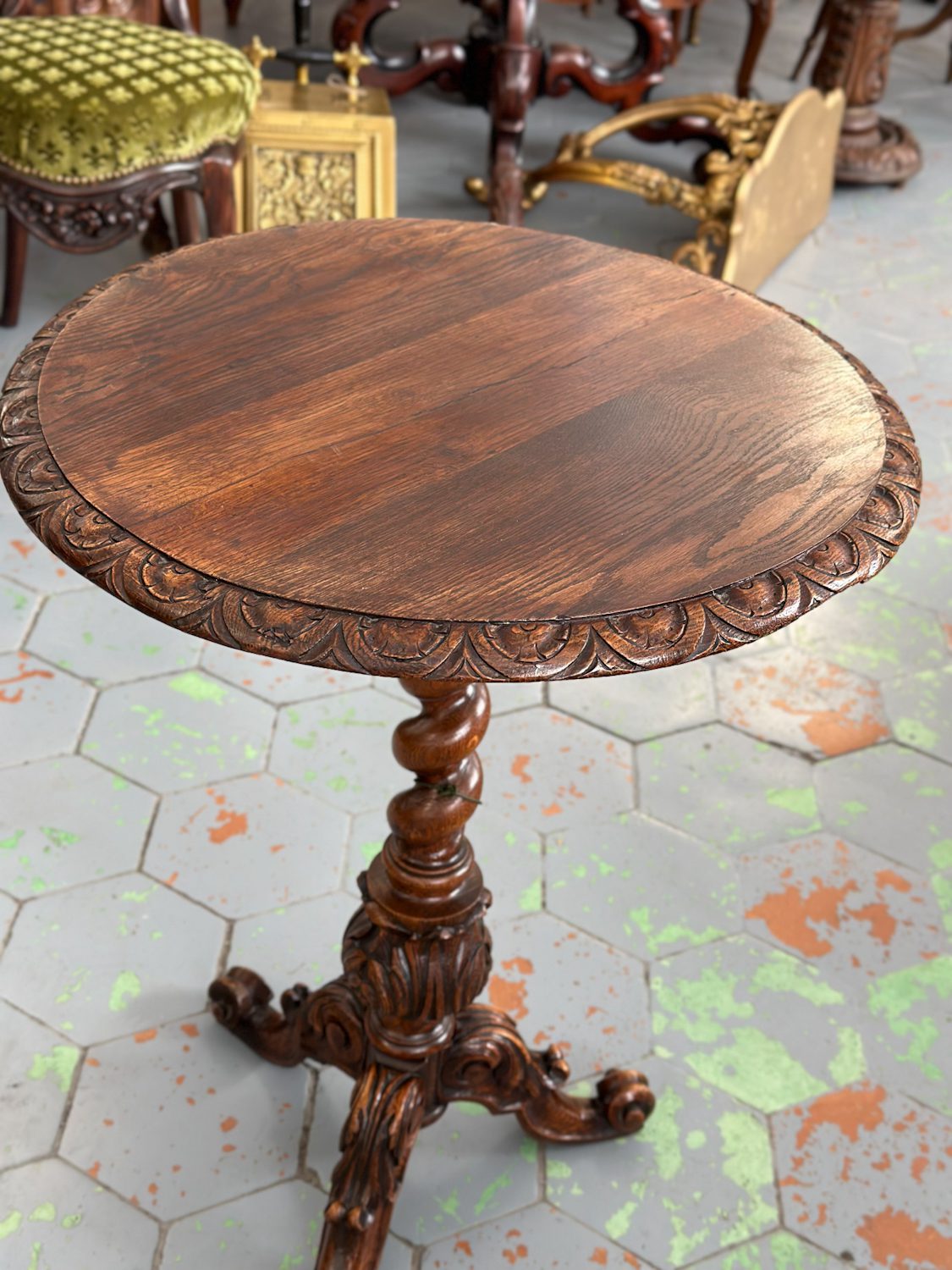
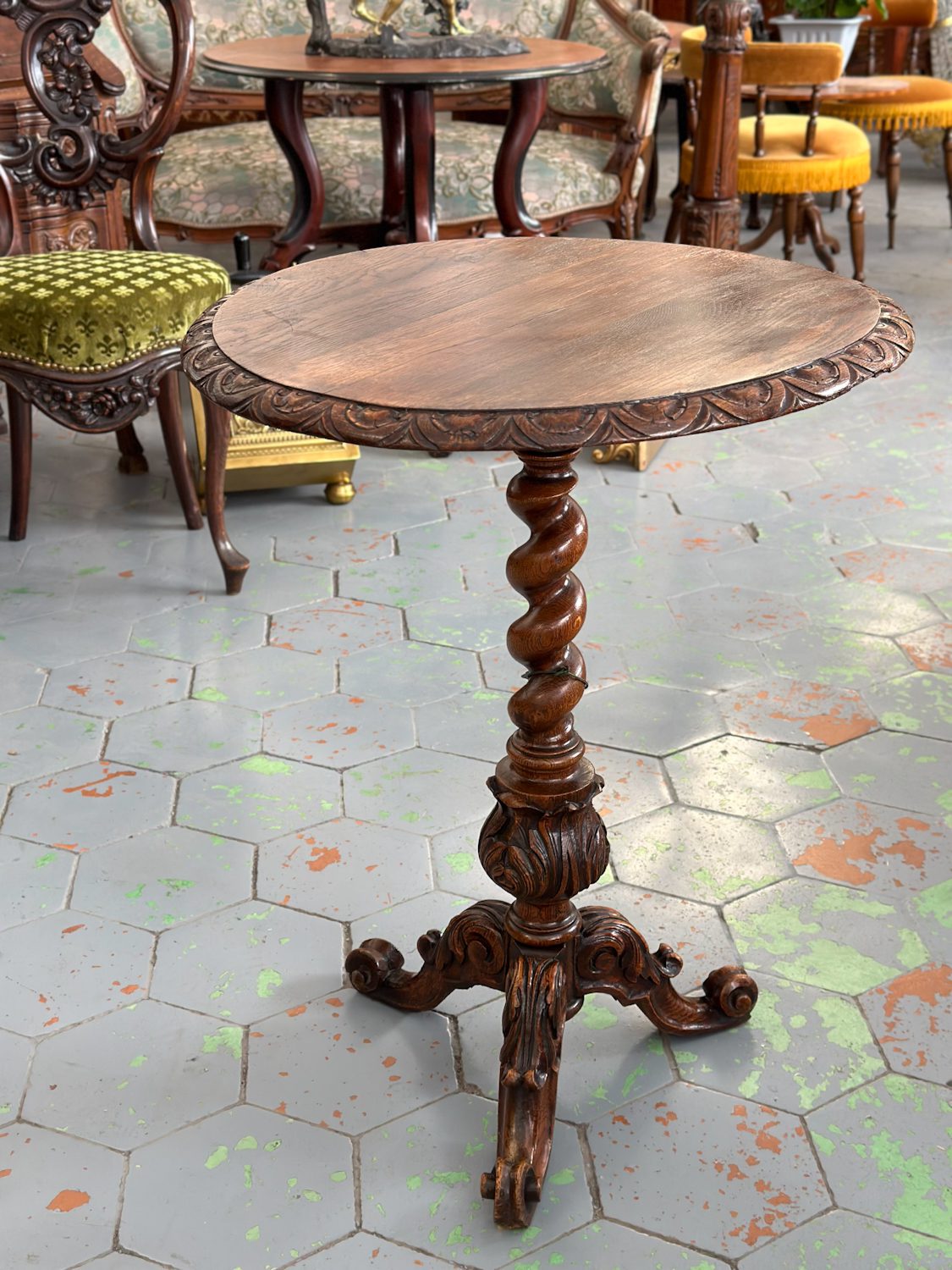
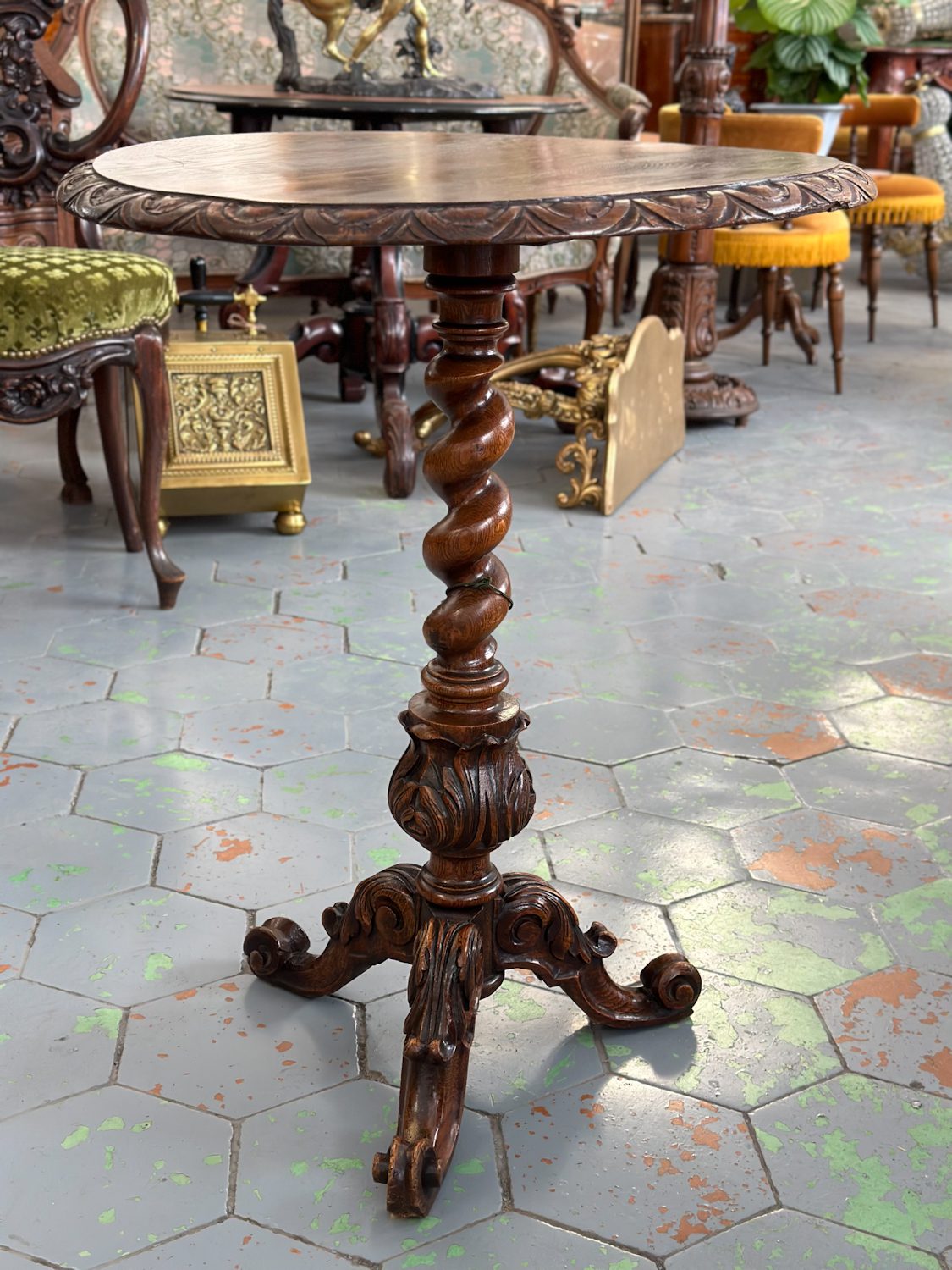
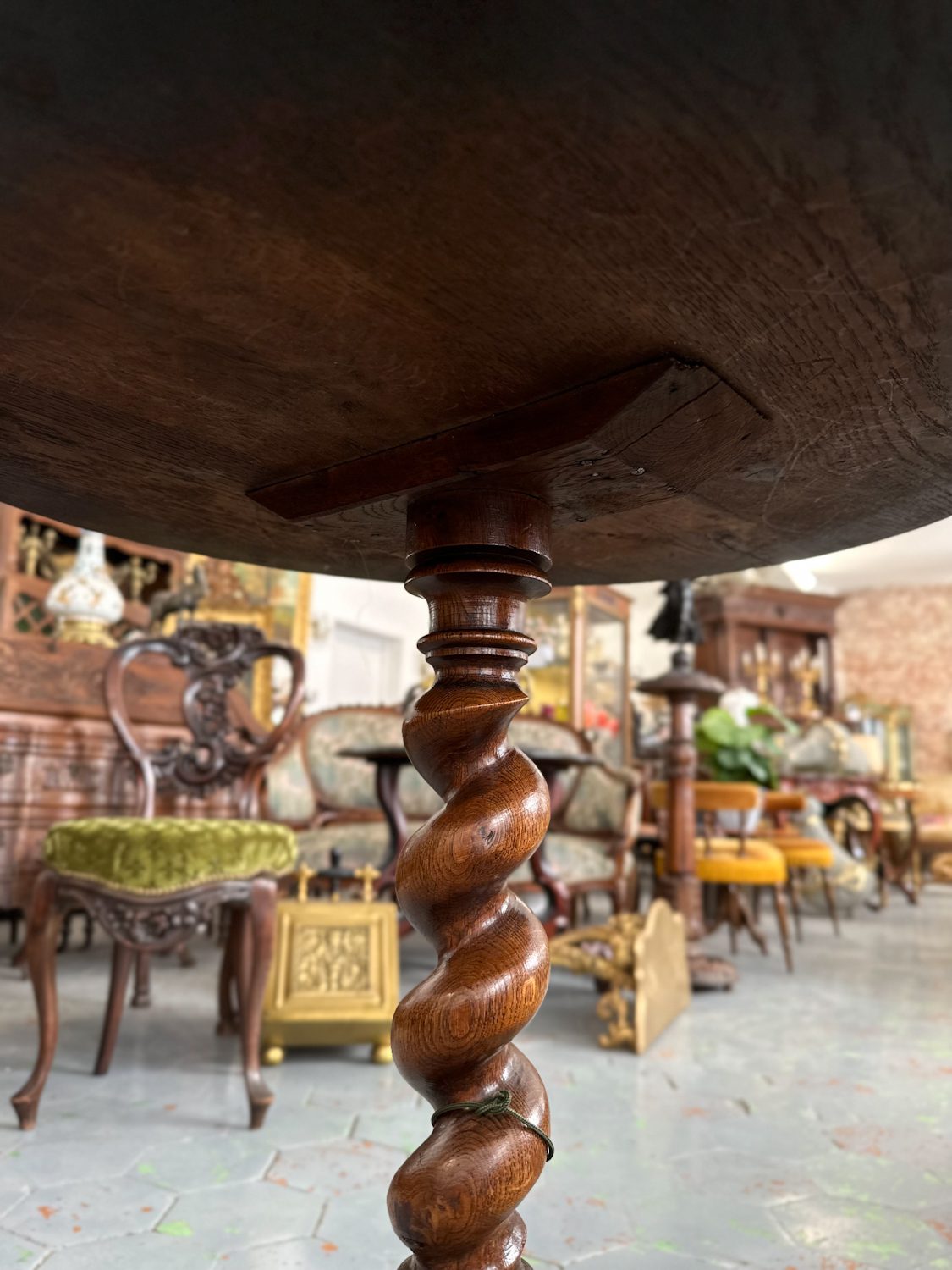
Koka puķu galdiņš ar vītu kāju un kokgriezumu
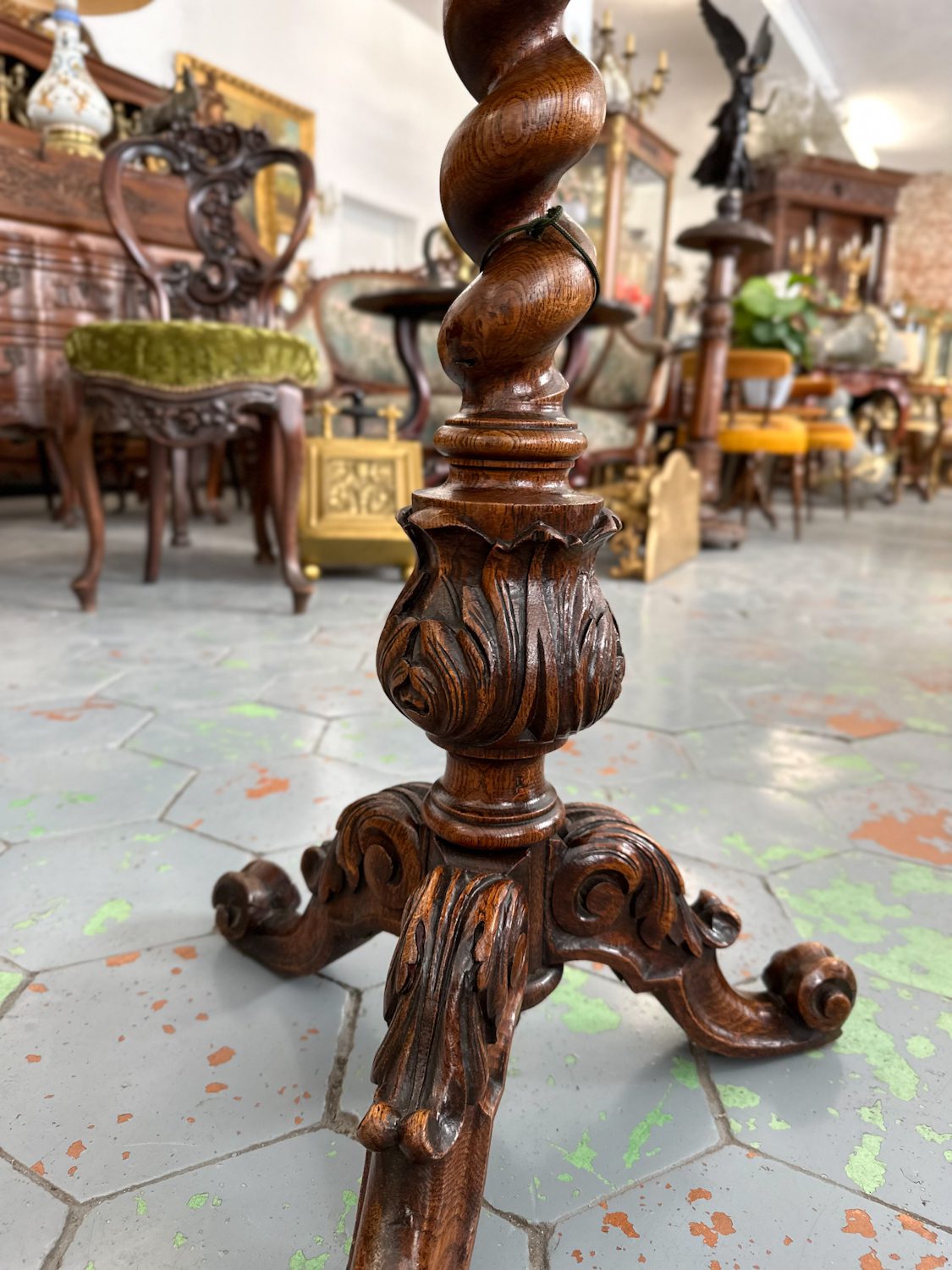
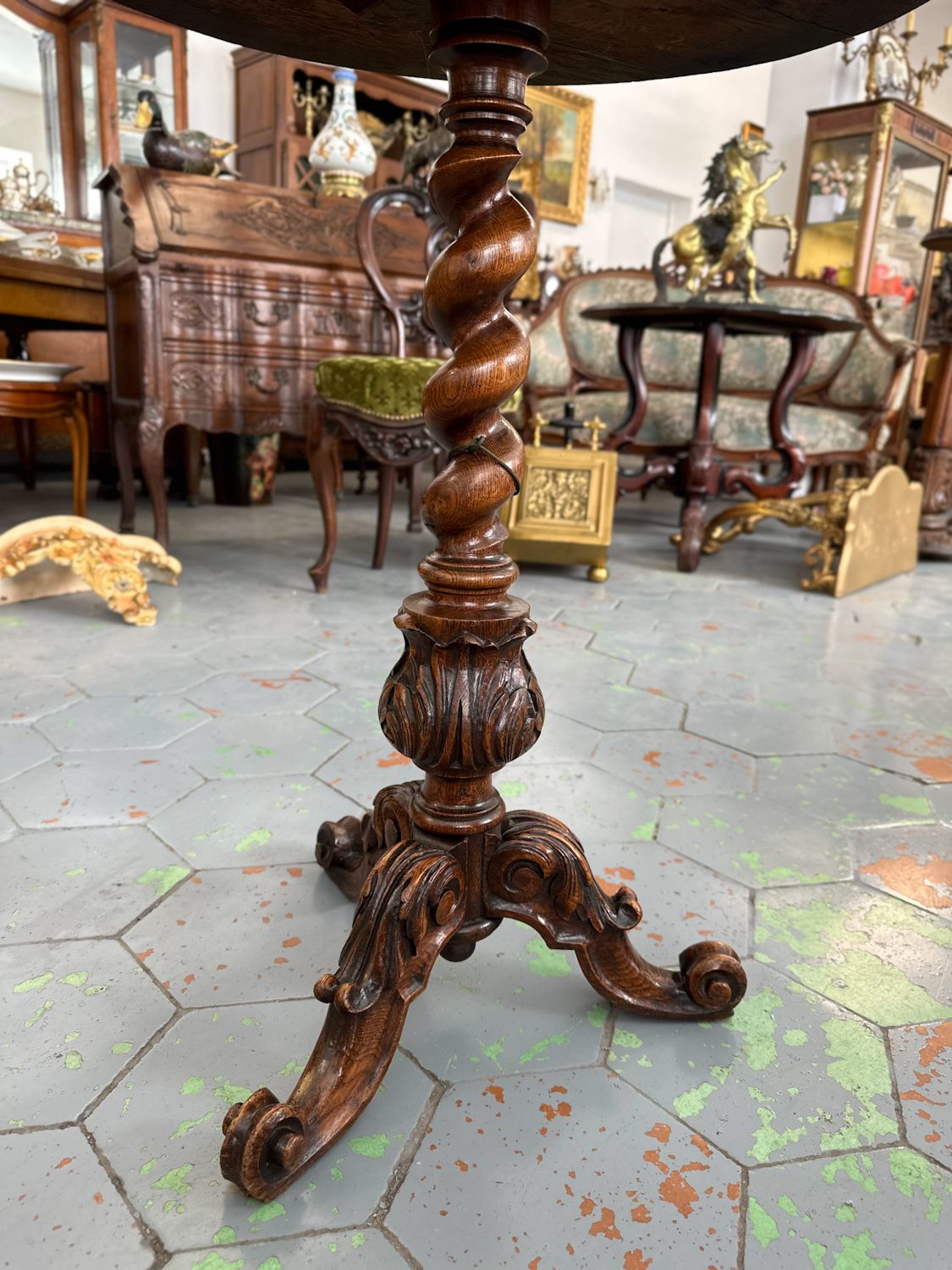
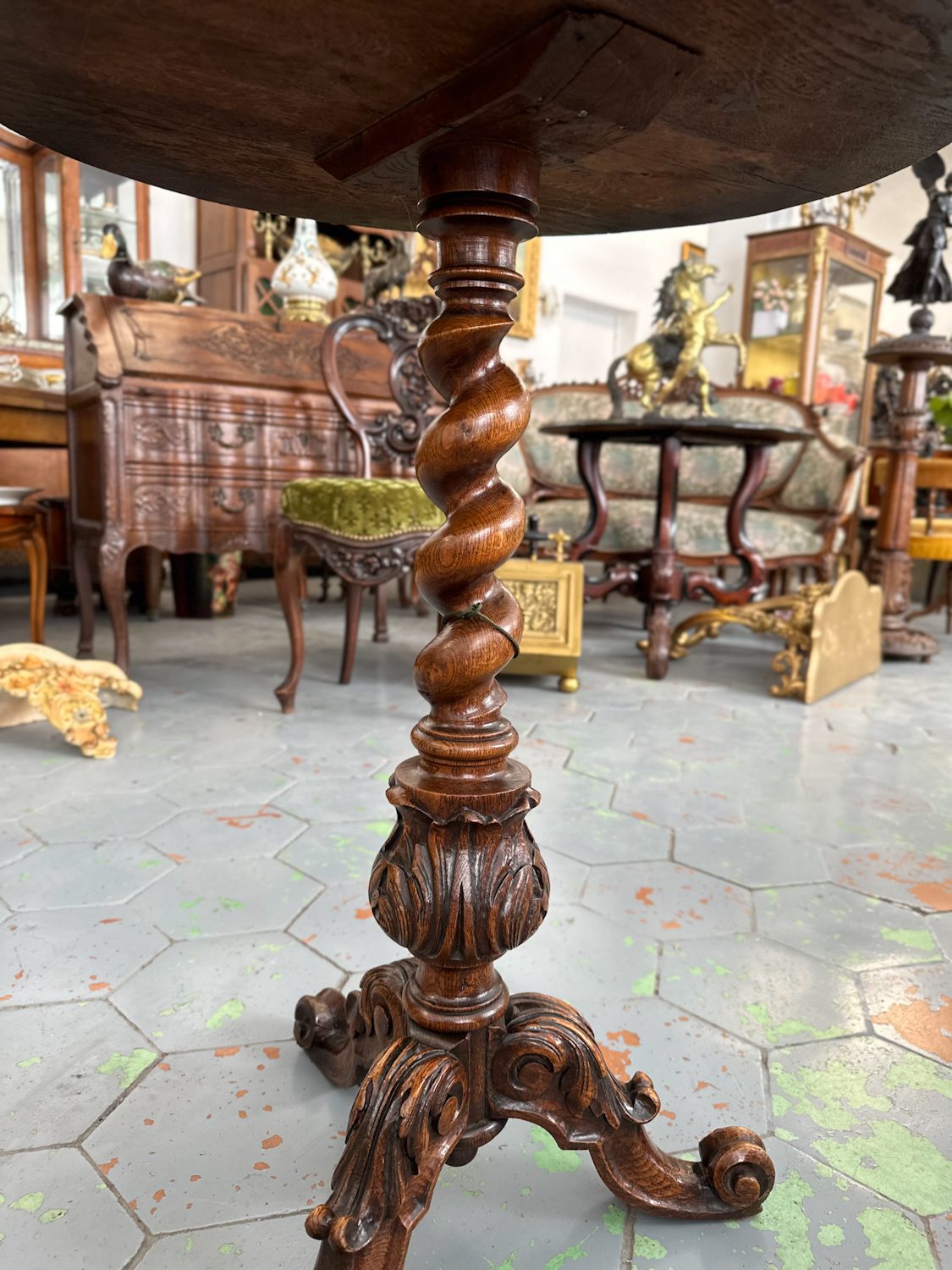
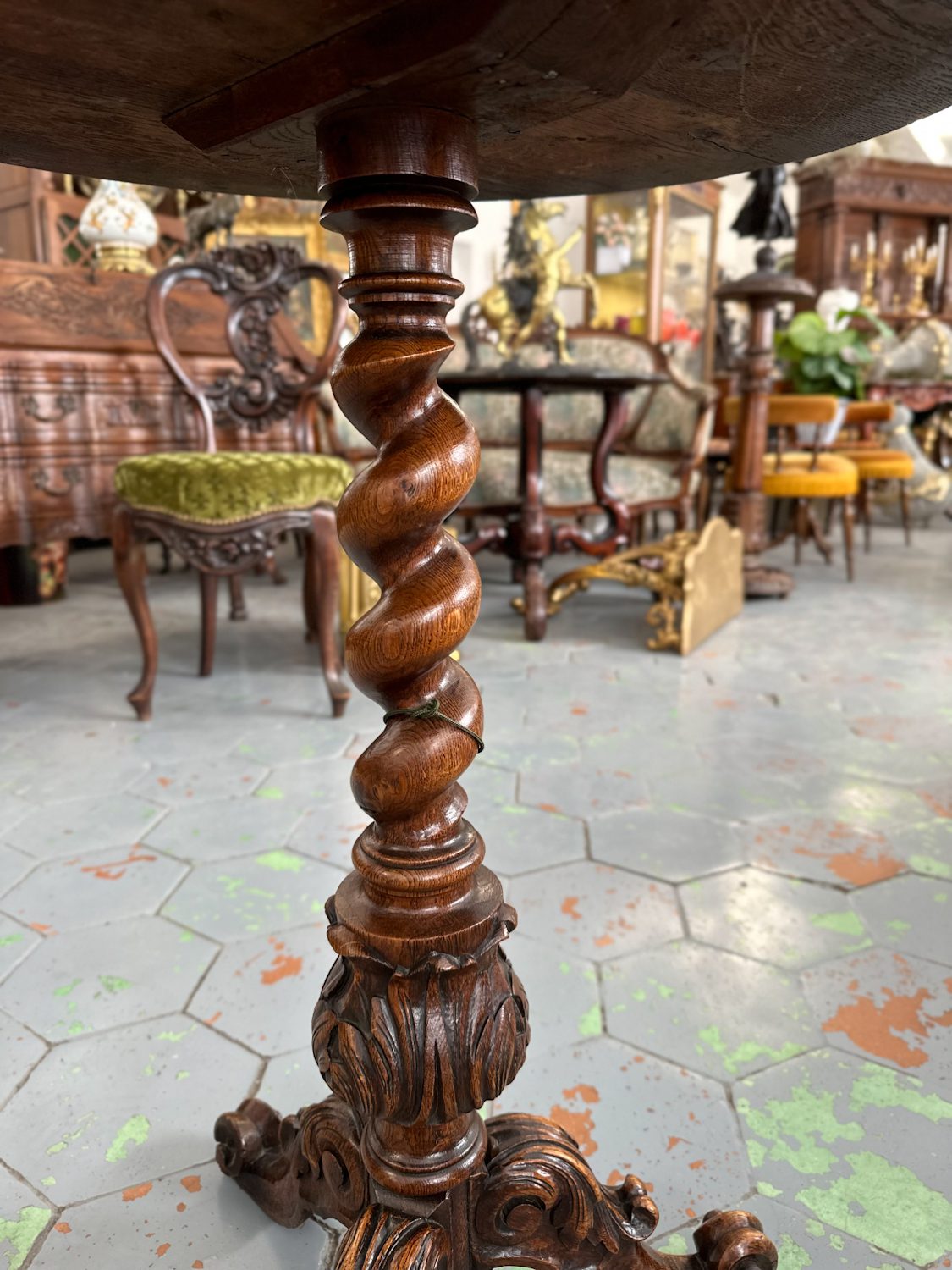
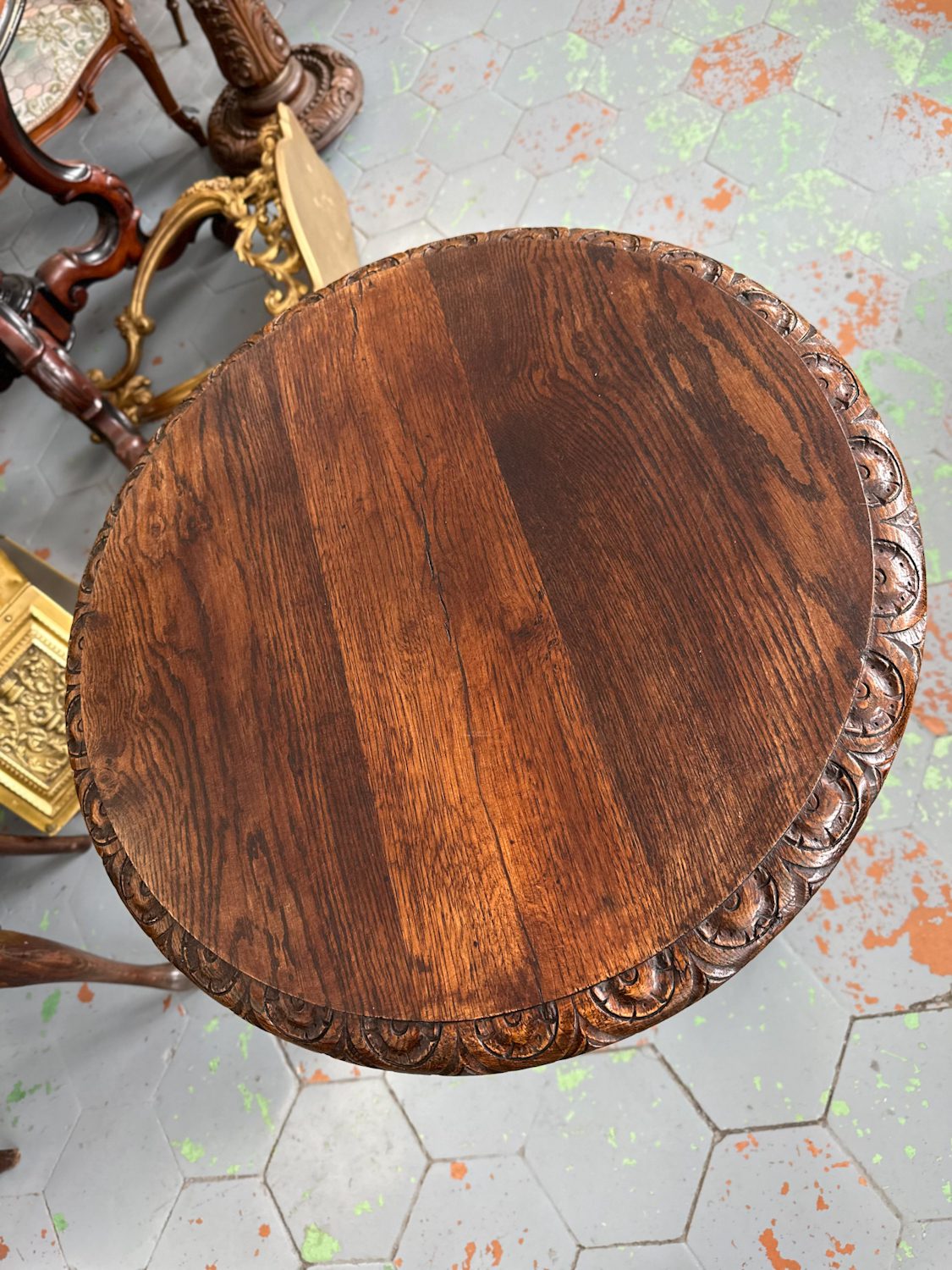
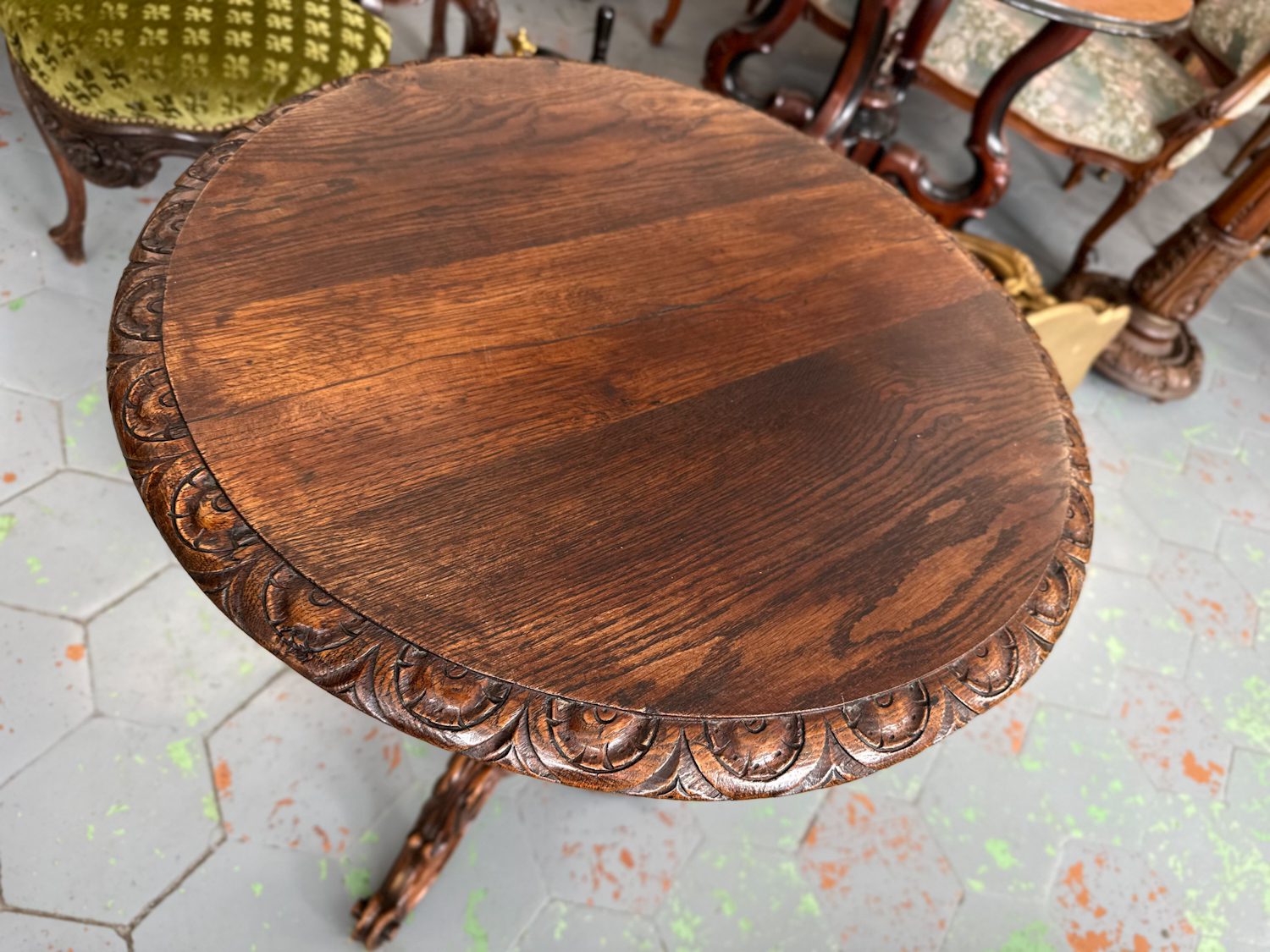
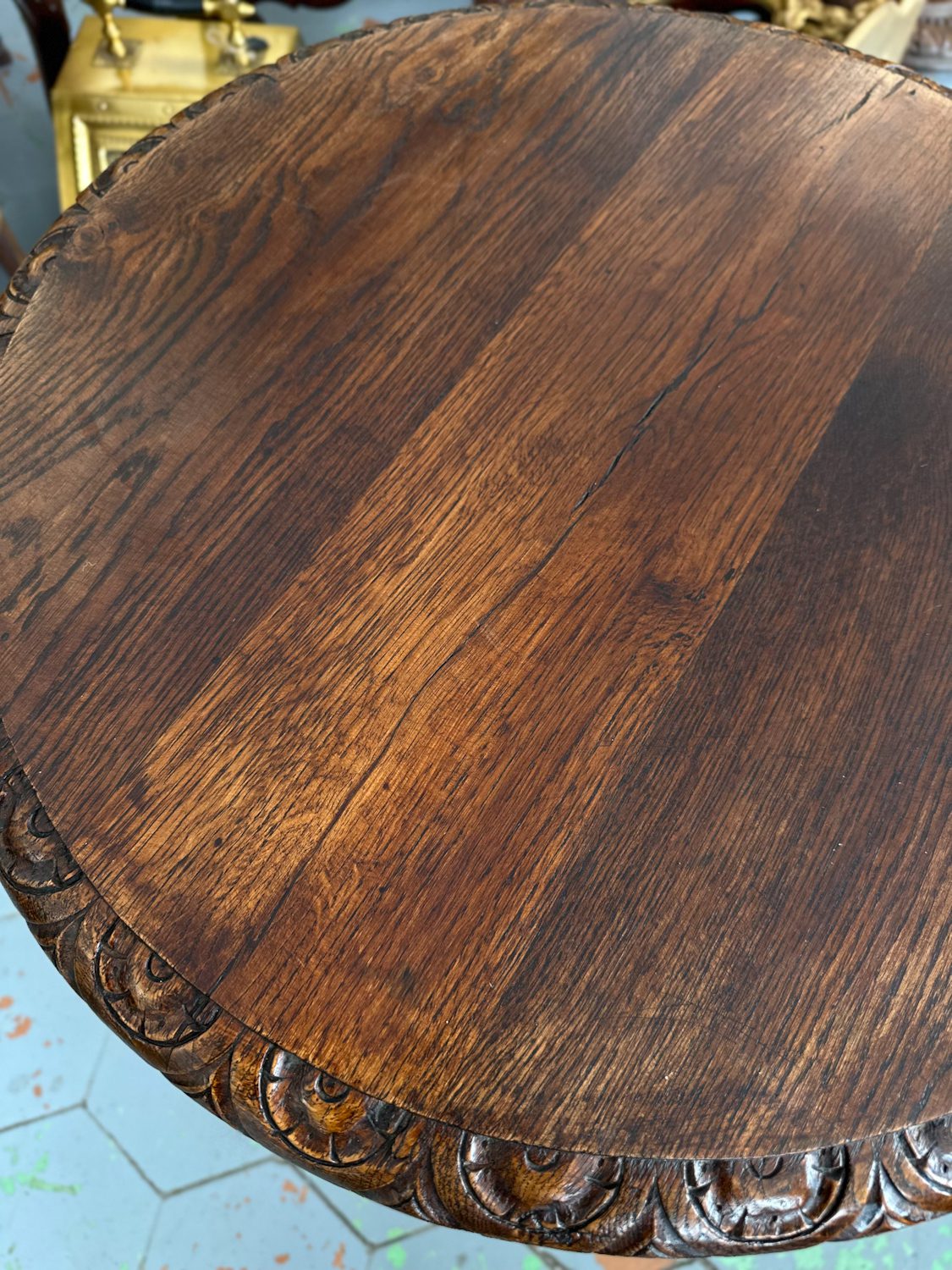
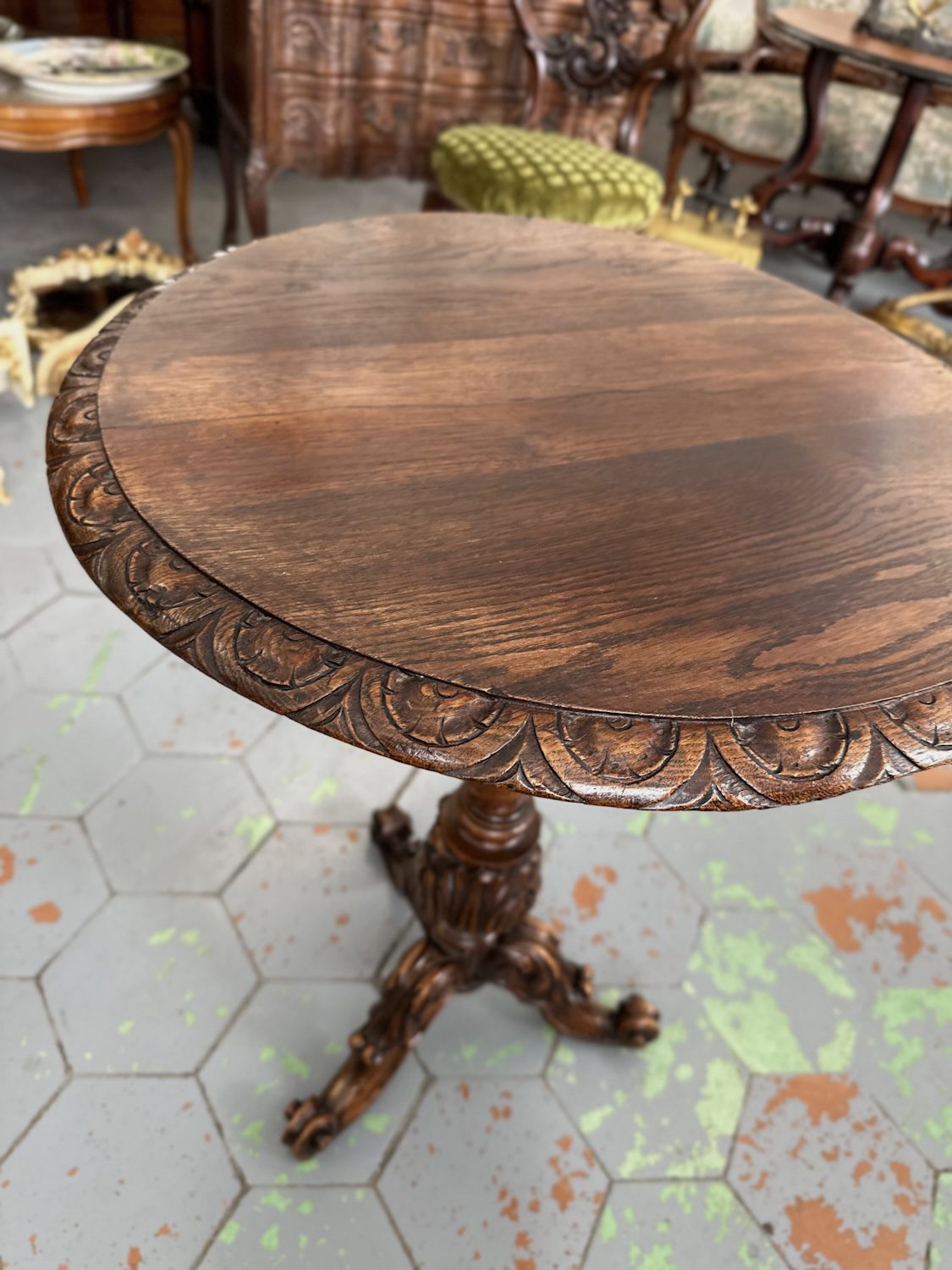
Šis šarmantais apaļais puķu galdiņš (angļu barley twist table) ir darināts izteiksmīgā historisma garā ar atpazīstamu Renesanses atdzimšanas raksturu. Korpuss izgatavots no masīva ozolkoka ar siltu, zeltaini brūnu toni un izteiktu dabīgo dzīslojumu, kas galdiņam piešķir gan solīdumu, gan rokdarba šarmu.
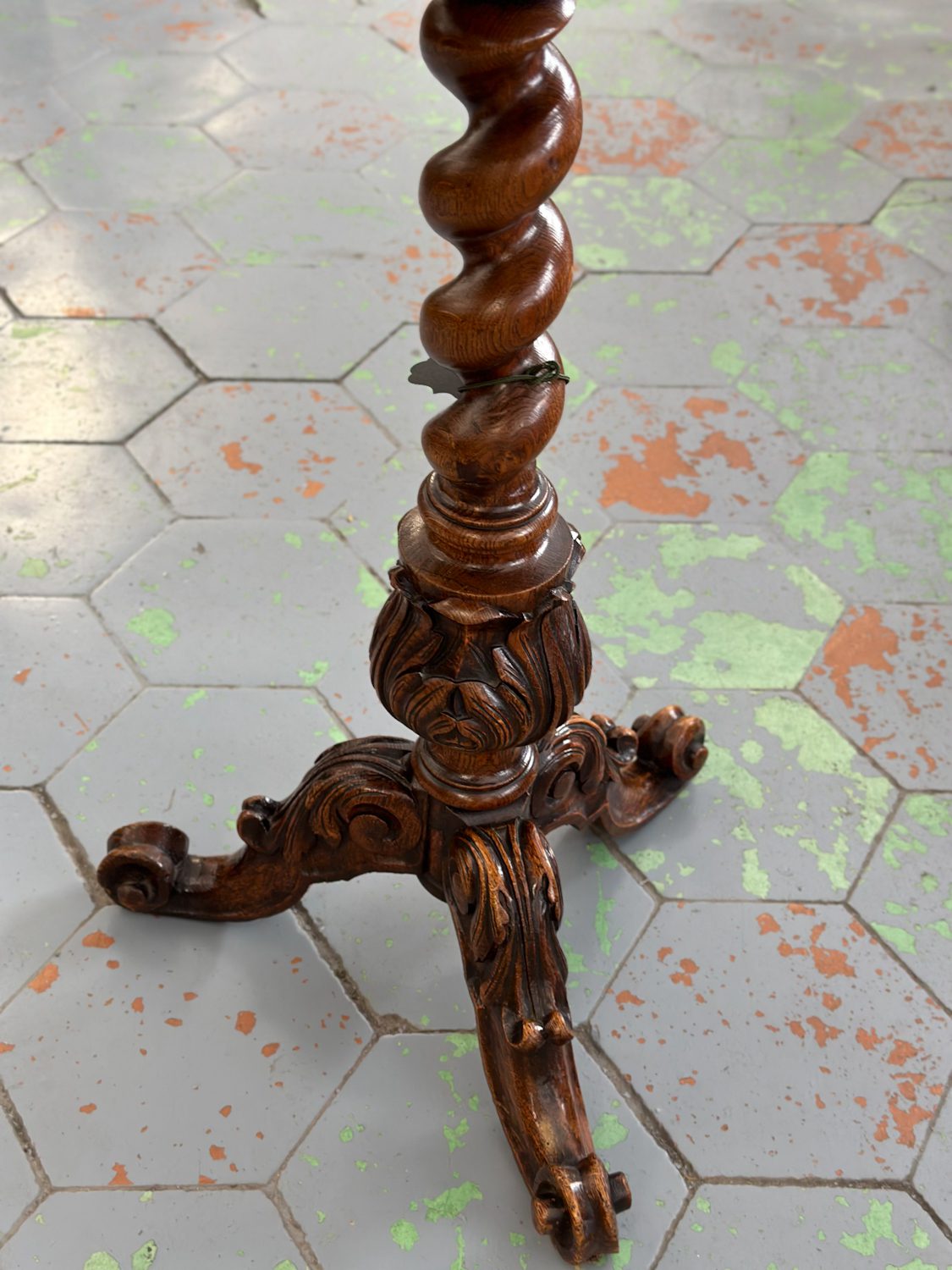
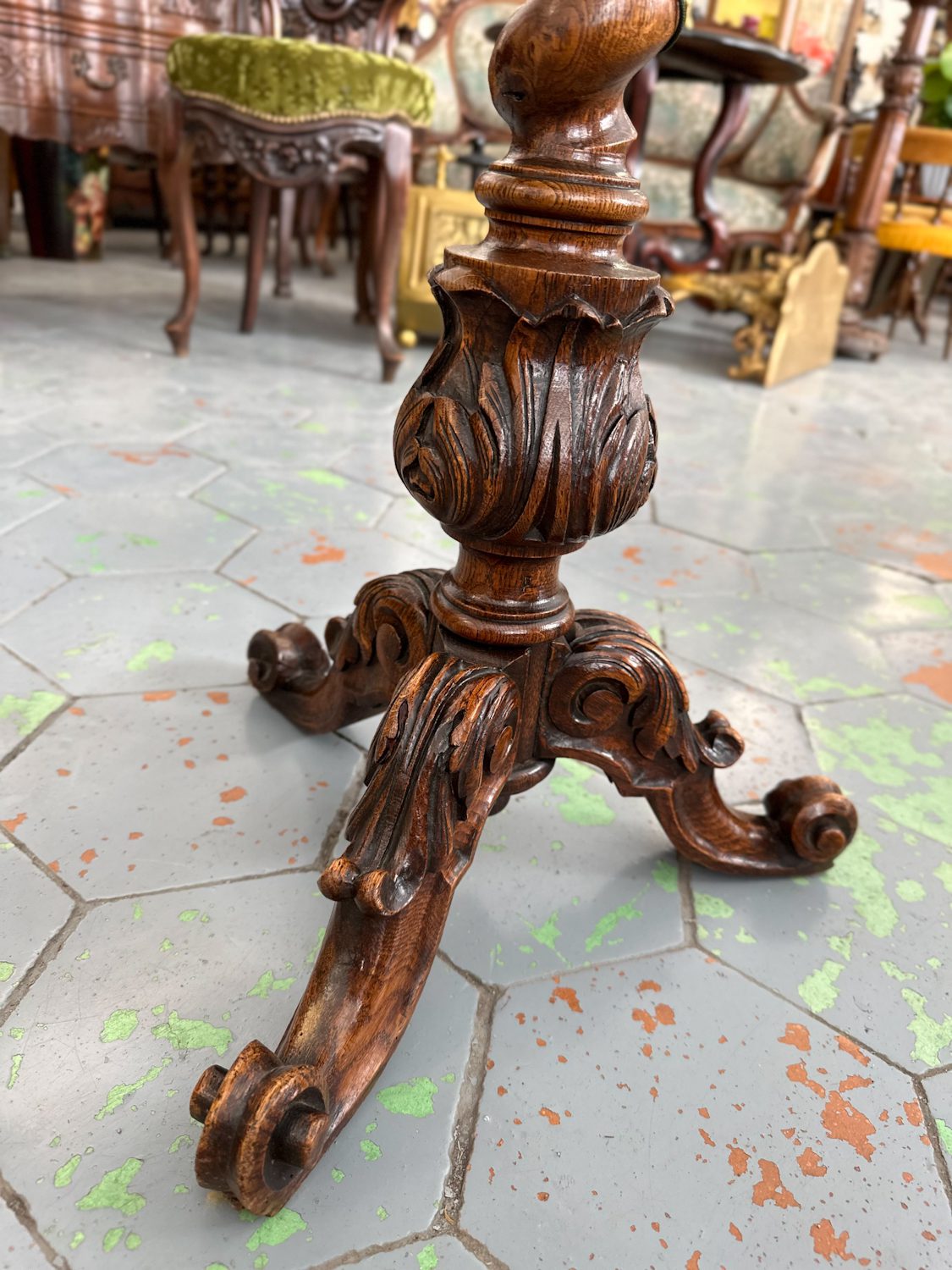
Apaļo virsmu ietver smalki kokgriezta mala ar ritmisku gliemežvāka (godroon) motīvu. Galdiņa centrālā kāja ir grezna vītā kolonna (barley twist) — spirālveidā virpota un grieztā forma, ko vainago bagātīga akantu lapotnes čaula. Tā balstās uz trīskāju pamatnes ar volūtām un rituļiem izgrieztām kājām, kas eleganti izliecas uz āru. Tieši šī kombinācija — vītā kāja un dzīvespriecīgais kokgriezums — galdiņu padara izteiksmīgu jebkurā telpā.
Izgatavošanas periods. Darināts historisma laikā populārā Renesanses atdzimšanas (neorenesanses) stilā, kas Eiropā plaši izplatījās 19. gadsimtā. Vītā kolonna un akantu griezums ir klasiskas šī stila pazīmes.
Ražotājs un manufaktūras zīmogs. Redzama manufaktūras zīmoga vai meistara paraksta uz galdiņa nav. Izpildījums — precīzā vītā kolonna un ass akantu griezums — norāda uz prasmīgu galdnieka un kokgriezēja darbu.
Retums un nozīme. Vītās kājas (barley twist) galdiņi ar pilnībā kokgrieztu trīskāju pamatni ir iecienīti tieši savas faktūrām bagātās formas dēļ. Šāds vientuļš statīvs ir gan funkcionāla mēbele, gan dekoratīvs akcents, kas piesaista skatienu.
Pielietojums interjerā, dizainā un fotogrāfijā. Ideāls statīvs puķu podam vai vāzei, lampai, skulptūrai vai grāmatu kaudzītei. Lielisks blakusgaldiņš krēsla malā viesistabā, bibliotēkā, hallē vai ziemas dārzā. Tumšais ozols ar vīto kāju ir pateicīgs, faktūrām bagāts objekts interjera fotogrāfijai.
Dāvana un personalizācija. Izsmalcināta dāvana antikvariāta cienītājam, jaunu māju saimniekam vai cilvēkam, kurš novērtē roku darba koka mēbeles. Uz galdiņa novietots saņēmēja mīļākais augs vai lieta padara dāvanu personisku.
Stāvoklis. Stabils un viengabalains, kokgriezums ass un labi saglabājies, ozola tonis silts ar dabīgu patinu. Atsevišķas dabīgas lietošanas pēdas un virsmas patina atbilst vecumam.
Renesanses atdzimšanas momentuzņēmums: Teodors Fontāne (Theodor Fontane) nolika rakstāmspalvu un piecēlās no galda krēsla vēlā pēcpusdienā. Pie loga, uz apaļā ozola galdiņa, gaidīja tasi tējas un atvērta grāmata — koks zem pirkstiem silts un gluds, vītās kolonnas spirāle tikko jūtama zem skāriena. Telpā smaržoja tinte un sausi ziedi vāzē; pa logu nāca Brandenburgas dārza klusums. Viņš ar acīm sekoja vītās kājas līnijai lejup līdz izgrieztajai trīskāju pamatnei un sajuta to mājīgo gandarījumu, kāds rodas, kad katra lieta telpā stāv savā īstajā vietā.
🇷🇺 РУССКИЙ
Размеры:
Высота — 74,5 см
Ширина поверхности — 56 см
Деревянный столик для цветов с витой ножкой и резьбой
Этот очаровательный круглый столик для цветов (barley twist table) выполнен в выразительном духе историзма с узнаваемым характером неоренессанса. Корпус изготовлен из массивного дуба тёплого золотисто-коричневого тона с выразительной natural текстурой, придающей столику и основательность, и очарование ручной работы.
Круглую столешницу обрамляет тонко резной край с ритмичным мотивом раковины (godroon). Центральная ножка столика — нарядная витая колонна (barley twist), выточенная и вырезанная спиралью, увенчанная богатой чашей из листвы аканта. Она опирается на основание-треножник с волютами и резными завитками на ножках, изящно изгибающихся наружу. Именно это сочетание — витая ножка и жизнерадостная резьба — делает столик выразительным в любом помещении.
Столик выполнен в популярном в эпоху историзма стиле неоренессанса, широко распространившемся в Европе в XIX веке. Витая колонна и резьба по аканту — классические признаки этого стиля. Видимого клейма мануфактуры или подписи мастера на столике нет; исполнение — точная витая колонна и чёткая резьба по аканту — указывает на умелую работу столяра и резчика.
Столики на витой ножке (barley twist) с полностью резным основанием-треножником ценятся именно за богатую фактурой форму. Такой одиночный столик является одновременно функциональной мебелью и декоративным акцентом, привлекающим взгляд. Идеальная подставка для цветочного горшка или вазы, лампы, скульптуры или стопки книг. Прекрасный приставной столик у кресла в гостиной, библиотеке, прихожей или зимнем саду. Тёмный дуб с витой ножкой — благодарный, богатый фактурами объект для интерьерной фотографии.
Это изысканный подарок ценителю антиквариата, хозяину нового дома или человеку, который ценит деревянную мебель ручной работы. Поставленное на столик любимое растение или предмет получателя делает подарок личным.
Столик устойчив и цельн, резьба чёткая и хорошо сохранилась, тон дуба тёплый, с естественной патиной. Отдельные естественные следы пользования и патина поверхности соответствуют возрасту.
Снимок эпохи неоренессанса: Теодор Фонтане (Theodor Fontane) отложил перо и поднялся из-за стола поздним днём. У окна, на круглом дубовом столике, ждали чашка чая и открытая книга — дерево тёплое и гладкое под пальцами, спираль витой колонны едва ощутима. В комнате пахло чернилами и сухими цветами в вазе; из окна веяла тишина бранденбургского сада. Он проследил взглядом за линией витой ножки вниз до резного основания-треножника и ощутил то уютное удовлетворение, какое возникает, когда каждая вещь в комнате стоит на своём месте.
🇬🇧 ENGLISH
Dimensions:
Height — 74.5 cm
Top width — 56 cm
Barley Twist Table in Carved Oak — Tripod Pedestal Side Table
This charming round flower table — a barley twist table — is made in the expressive historicist manner with a recognisable Renaissance-revival character. The frame is of solid oak in a warm, golden-brown tone with a strongly figured grain that gives the table both solidity and handmade charm.
The round top is framed by a finely carved edge with a rhythmic gadroon (godroon) motif. The central column is a handsome barley twist — a spiral-turned and carved form, crowned by a rich cup of acanthus foliage. It rests on a tripod base, its legs carved with volutes and scrolls and curving gracefully outward. It is precisely this combination — the spiral column and the lively carving — that makes the table expressive in any room.
Made in the Renaissance-revival (neo-Renaissance) style popular in the historicist period, which spread widely across Europe in the nineteenth century. The barley-twist column and acanthus carving are classic marks of the style. There is no visible maker’s stamp or signature on the table; the execution — the precise spiral column and crisp acanthus carving — points to skilled joinery and woodcarving.
Barley-twist tables with a fully carved tripod base are prized precisely for their texture-rich form. Such a single stand is at once a functional piece of furniture and a decorative accent that draws the eye. A perfect stand for a flowerpot or vase, a lamp, a sculpture or a stack of books. A fine side table beside a chair in a drawing room, library, hall or winter garden. The dark oak with its spiral column is a rewarding, texture-rich subject for interior photography.
This makes a refined gift for a lover of antiques, for the owner of a new home, or for someone who values handmade wooden furniture. Placing the recipient’s favourite plant or object on the table makes the gift personal.
The table is stable and sound, the carving crisp and well preserved, the oak warm in tone with a natural patina. Some natural traces of use and surface patina are in keeping with its age.
Renaissance-revival snapshot: Theodor Fontane (Theodor Fontane) set down his pen and rose from his desk in the late afternoon. By the window, upon the round oak table, a cup of tea and an open book awaited him — the wood warm and smooth beneath his fingers, the spiral of the barley-twist column barely felt to the touch. The room smelled of ink and dried flowers in a vase; the stillness of a Brandenburg garden came through the window. He followed the line of the spiral column down to the carved tripod base and felt the homely contentment that comes when each thing in a room stands in its rightful place.
🇩🇪 DEUTSCH
Maße:
Höhe — 74,5 cm
Deckflächenbreite — 56 cm
Hölzerner Blumentisch mit gedrehtem Bein und Schnitzerei
Dieser reizvolle runde Blumentisch (barley twist table) ist im ausdrucksvollen Geist des Historismus mit einem erkennbaren Neorenaissance-Charakter gefertigt. Der Korpus besteht aus massiver Eiche in warmem, goldbraunem Ton mit ausgeprägter Maserung, die dem Tisch zugleich Solidität und handwerklichen Charme verleiht.
Die runde Platte wird von einem fein geschnitzten Rand mit rhythmischem Godron-Motiv eingefasst. Das Mittelbein ist eine prächtige Drehsäule (barley twist) — eine spiralig gedrechselte und geschnitzte Form, bekrönt von einer reichen Schale aus Akanthuslaub. Sie ruht auf einem Dreifuß, dessen Beine mit Voluten und Schnörkeln geschnitzt sind und sich anmutig nach außen schwingen. Gerade diese Verbindung — die Drehsäule und die lebendige Schnitzerei — macht den Tisch in jedem Raum ausdrucksstark.
Gefertigt im Neorenaissance-Stil, der in der Zeit des Historismus beliebt war und sich im 19. Jahrhundert weit über Europa verbreitete. Die gedrehte Säule und die Akanthus-Schnitzerei sind klassische Merkmale des Stils. Ein sichtbarer Herstellerstempel oder eine Signatur fehlt am Tisch; die Ausführung — die präzise Drehsäule und die scharfe Akanthus-Schnitzerei — weist auf gekonnte Tischler- und Schnitzarbeit hin.
Tische mit gedrehtem Bein und vollständig geschnitztem Dreifuß werden gerade wegen ihrer texturreichen Form geschätzt. Ein solcher einzelner Ständer ist zugleich ein funktionales Möbel und ein dekorativer Blickfang. Ein perfekter Ständer für einen Blumentopf oder eine Vase, eine Lampe, eine Skulptur oder einen Bücherstapel. Ein feiner Beistelltisch neben einem Sessel im Salon, in der Bibliothek, in der Diele oder im Wintergarten. Die dunkle Eiche mit ihrer Drehsäule ist ein dankbares, texturreiches Motiv für die Interieurfotografie.
Das macht ein feines Geschenk für Liebhaber von Antiquitäten, für die Besitzer eines neuen Hauses oder für jemanden, der handgefertigte Holzmöbel schätzt. Stellt man die Lieblingspflanze oder das Lieblingsobjekt des Beschenkten auf den Tisch, wird das Geschenk persönlich.
Der Tisch ist stabil und ganz, die Schnitzerei scharf und gut erhalten, die Eiche warm im Ton mit natürlicher Patina. Einzelne natürliche Gebrauchsspuren und Oberflächenpatina entsprechen dem Alter.
Momentaufnahme der Neorenaissance: Theodor Fontane (Theodor Fontane) legte die Feder nieder und erhob sich am späten Nachmittag vom Schreibtisch. Am Fenster, auf dem runden Eichentisch, warteten eine Tasse Tee und ein aufgeschlagenes Buch — das Holz warm und glatt unter den Fingern, die Spirale der Drehsäule kaum spürbar. Es roch nach Tinte und getrockneten Blumen in einer Vase; die Stille eines brandenburgischen Gartens kam durch das Fenster. Er folgte der Linie der Drehsäule hinab zum geschnitzten Dreifuß und empfand jene heimelige Zufriedenheit, die entsteht, wenn jedes Ding im Raum an seinem rechten Platz steht.
🇫🇷 FRANÇAIS
Dimensions :
Hauteur — 74,5 cm
Largeur du plateau — 56 cm
Table à fleurs en bois à pied torsadé et sculpture
Cette charmante table à fleurs ronde (barley twist table) est réalisée dans l’esprit expressif de l’historicisme, au caractère néo-Renaissance reconnaissable. Le bâti est en chêne massif d’un ton chaud brun doré, au veinage marqué qui confère à la table à la fois solidité et charme du fait main.
Le plateau rond est encadré d’un bord finement sculpté à motif de godrons rythmé. Le pied central est une élégante colonne torsadée (barley twist) — une forme tournée et sculptée en spirale, couronnée d’une riche coupe de feuillage d’acanthe. Elle repose sur un piétement tripode dont les pieds, sculptés de volutes et d’enroulements, s’incurvent gracieusement vers l’extérieur. C’est précisément cette association — la colonne torsadée et la sculpture pleine de vie — qui rend la table expressive dans toute pièce.
Réalisée dans le style néo-Renaissance, en vogue à l’époque de l’historicisme et largement répandu en Europe au XIXᵉ siècle. La colonne torsadée et la sculpture d’acanthe sont des marques classiques du style. Aucun cachet de fabrique ni signature visible sur la table ; l’exécution — la colonne torsadée précise et la sculpture d’acanthe nette — indique un travail habile d’ébéniste et de sculpteur sur bois.
Les tables à pied torsadé et piétement tripode entièrement sculpté sont prisées précisément pour leur forme riche en texture. Un tel guéridon isolé est à la fois un meuble fonctionnel et un accent décoratif qui attire le regard. Un présentoir parfait pour un pot de fleurs ou un vase, une lampe, une sculpture ou une pile de livres. Une belle table d’appoint près d’un fauteuil, dans un salon, une bibliothèque, un vestibule ou un jardin d’hiver. Le chêne sombre, avec sa colonne torsadée, est un sujet gratifiant et riche en textures pour la photographie d’intérieur.
Voilà un cadeau raffiné pour un amateur d’antiquités, pour les propriétaires d’une nouvelle maison ou pour quelqu’un qui apprécie le mobilier en bois fait main. Y poser la plante ou l’objet favori du destinataire rend le présent personnel.
La table est stable et entière, la sculpture nette et bien conservée, le chêne d’un ton chaud avec une patine naturelle. Quelques traces naturelles d’usage et une patine de surface sont conformes à son âge.
Instantané du néo-Renaissance : Theodor Fontane (Theodor Fontane) posa sa plume et se leva de son bureau en fin d’après-midi. Près de la fenêtre, sur la table ronde en chêne, l’attendaient une tasse de thé et un livre ouvert — le bois tiède et lisse sous ses doigts, la spirale de la colonne torsadée à peine sensible au toucher. La pièce sentait l’encre et les fleurs séchées dans un vase ; le silence d’un jardin de Brandebourg entrait par la fenêtre. Il suivit la ligne de la colonne torsadée jusqu’au piétement tripode sculpté et ressentit ce contentement paisible qui naît quand chaque chose, dans une pièce, se tient à sa juste place.