
Keramikas Kašpo ar Rokturiem — Zili Baltā Transferdruka Tradīcija, Anglija (Staffordshire), 19. gs. beigas – 20. gs. sākums, vidēja izmēra, vidēji smags (6676)
📐 IZMĒRI
Augstums 14.5 cm, garums 31cm, platums 21cm. Svars vidēji smags, kas liecina par masīvu keramikas sieniņu biezumu, raksturīgu angļu krāsns keramikas tradīcijai.
―――――――――――――――――――――
Keramikas Kašpo ar Rokturiem — Zili Baltā Transferdruka Tradīcija, Anglija (Staffordshire), 19. gs. beigas – 20. gs. sākums
―――――――――――――――――――――
🏛️ IZGATAVOŠANAS PERIODS, MĀKSLAS STILS, LAIKMETS
Šis kašpo pieder Lielbritānijas keramikas ziedu laikmetam — 19. gadsimta otrajai pusei, kad Staffordshire apgabala manufaktūras apgādāja ne tikai Anglijas muižniecību, bet arī eksportēja uz visu Eiropas kontinentu un tālāk. Transferdrukas tehnika, kas ļāva reproducēt smalkas grafiskas ainas uz keramikas masveida ražošanā, sasniedza savu kulmināciju tieši šajā periodā: zili baltā pāris — kobalts uz krēmbaltas fajanss pamatnes — kļuva par vienu no Viktorijas laikmeta raksturīgākajām estētiskajām vēstulēm.
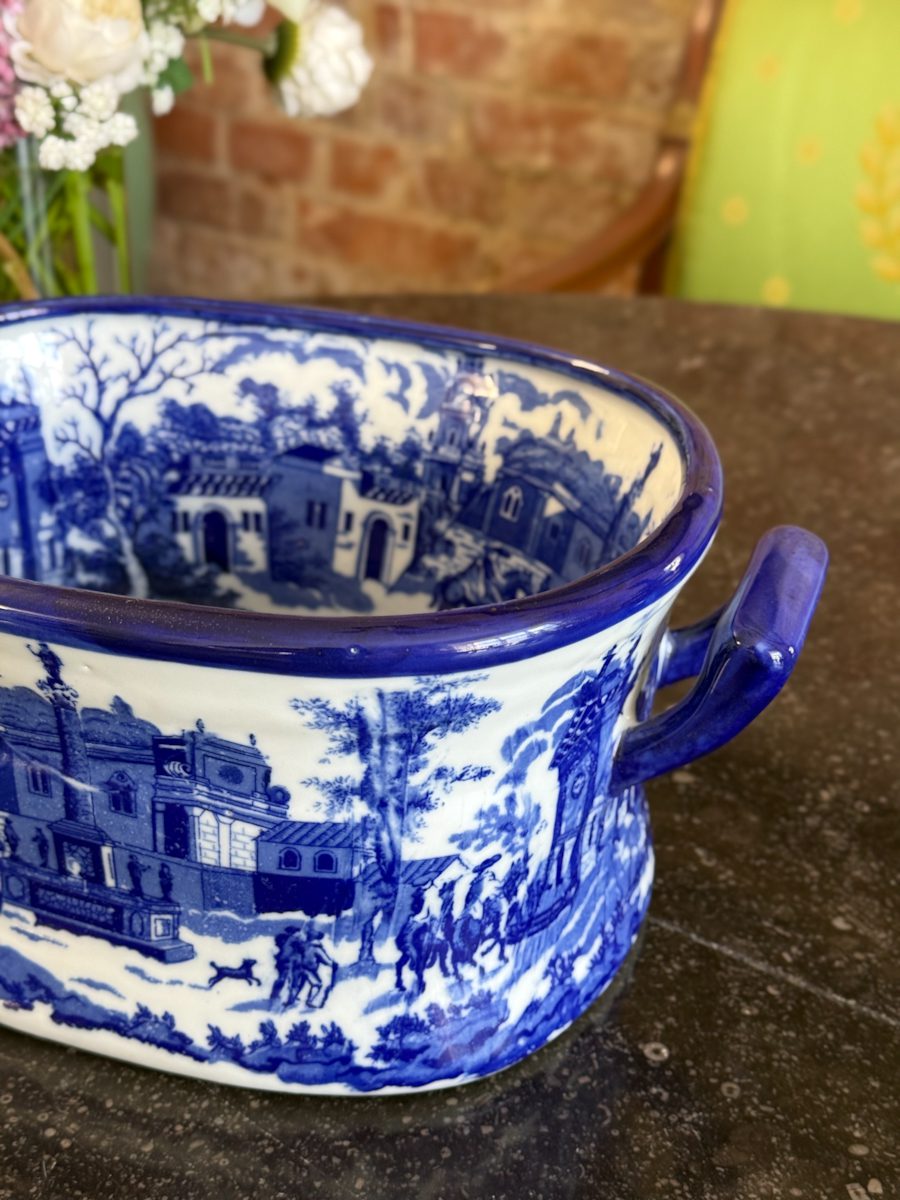
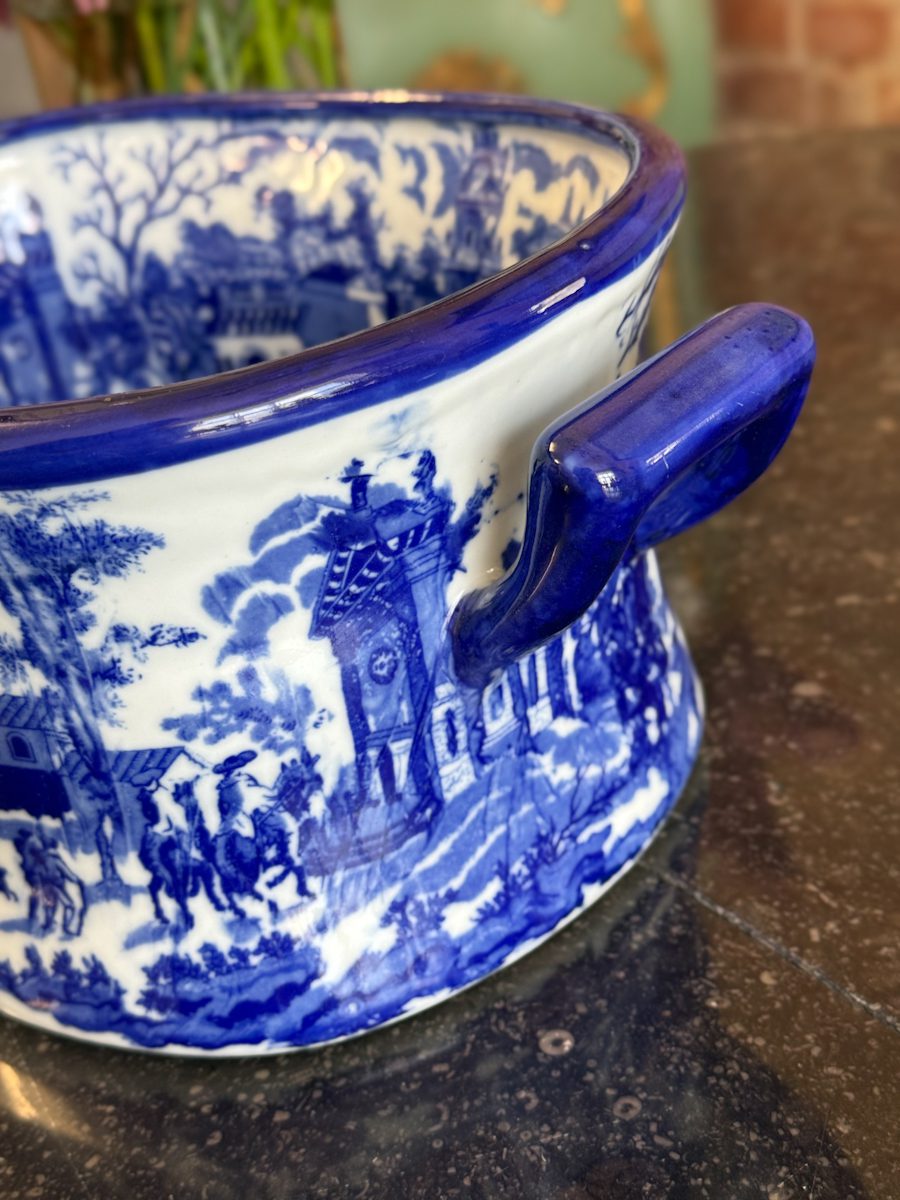
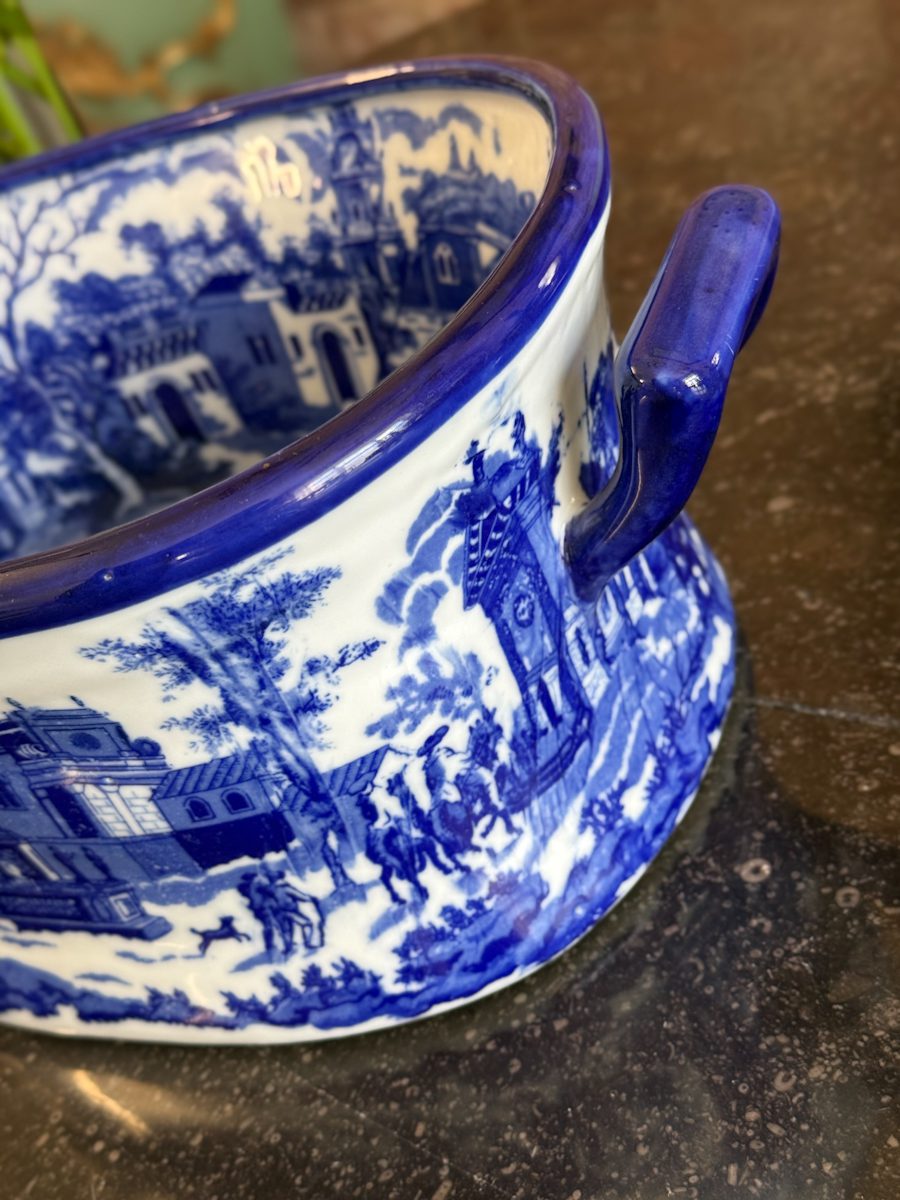
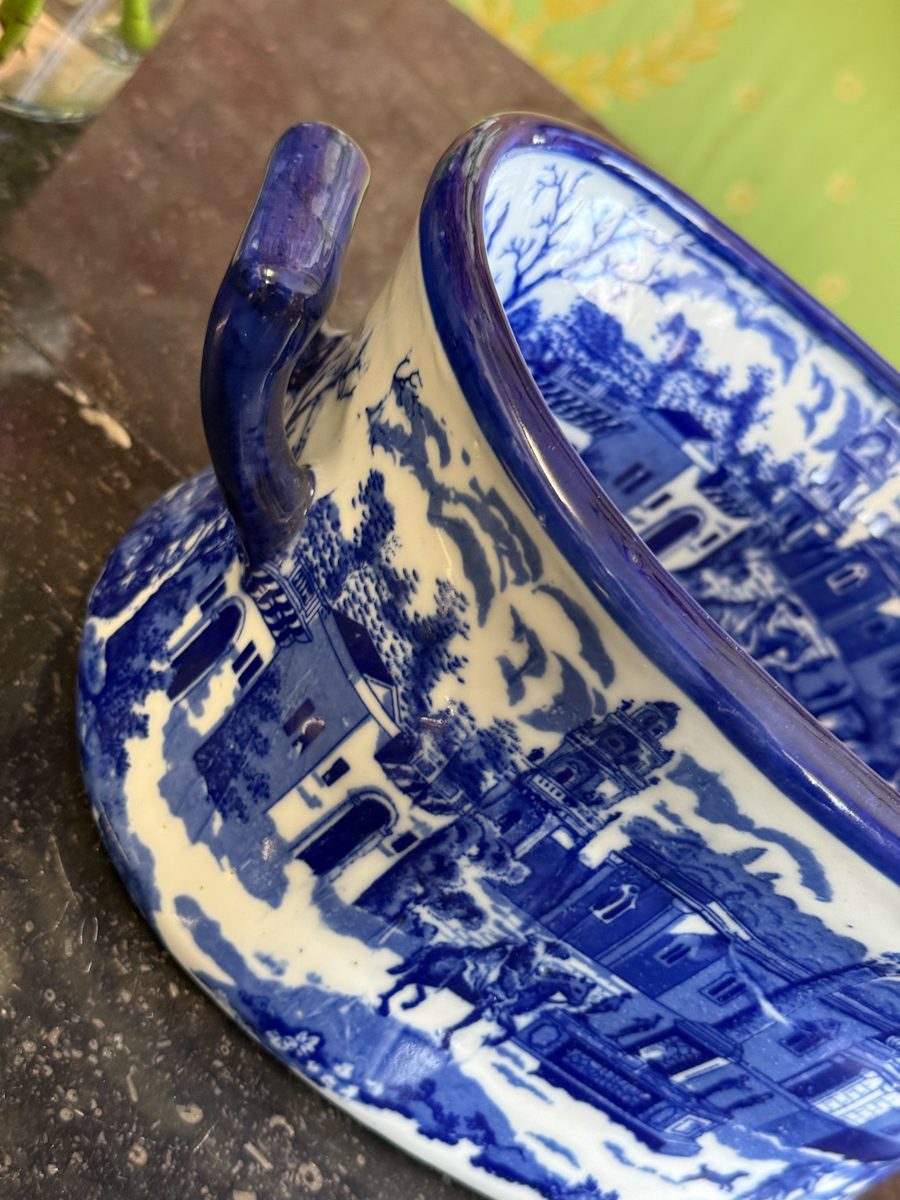
Šķīvi un trauki ar šādām ainām bija klātesoši katrā cienīgā angļu muižas mājas virtuvē un ēdamistabā — no apgaismotu Cotswolds māju maltīšu galdiem līdz skotu pils brokastistabām. Forma — ovāls kašpo ar diviem cilpveida rokturiem un izliektu pamatni — ir klasisks Viktorijas laikmeta interjera elements, ko izmantoja gan ziedu stādīšanai, gan kā dekoratīvu trauku.
―――――――――――――――――――――
⚜️ RAŽOTĀJS UN STILISTISKĀ PIEDERĪBA
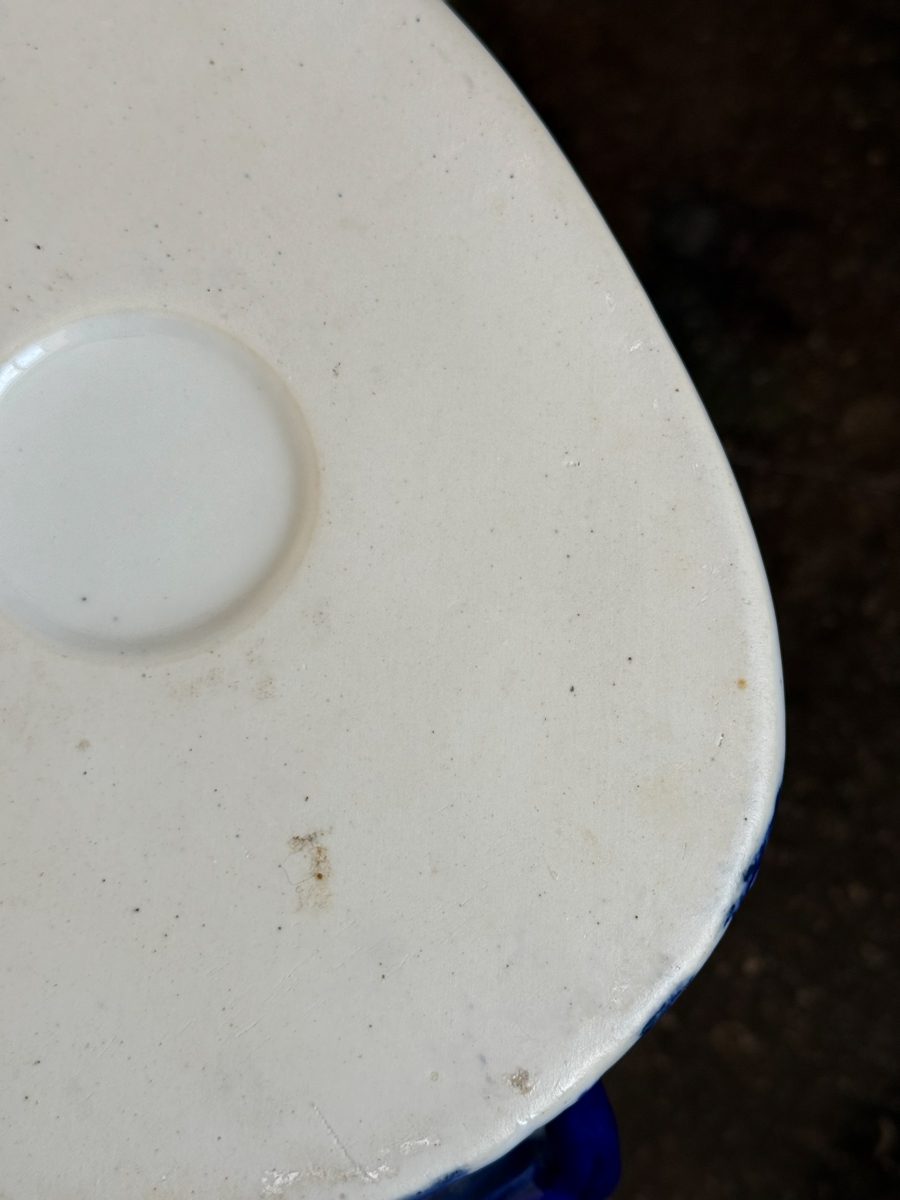
Apakšā nav redzams skaidrs drukāts ražotāja zīmogs — pamatne ir neglazēta, balta, ar smalku porainību, kas raksturīga kvalitatīvai angļu krāsns keramikai (fajanss jeb ironstons). Šādi izstrādājumi bez ražotāja marķējuma ir parasts parādība lielākajiem Staffordshire ražotājiem, kuri dažkārt ražoja veselas kolekcijas bez pastāvīgas marķēšanas, jo tirgu noteica tālo importētāju pasūtījumi.
Dekorācijas stils un kokaltā transferdrukas kvalitāte atgādina Spode manufaktūras tradīciju — vienu no izcilākajiem Staffordshire uzņēmumiem, ko 1770. gadā dibināja Josiah Spode. Spode bija pirmā manufaktūra Anglijā, kas pilnveidoja transferdrukas metodi uz fajanss un ironstone keramikas, un šī tehnika kļuva par firmas vizītkarti. Vēlāk uzņēmumu pārņēma Copeland & Garrett, saglabājot augstākos ražošanas standartus. Spode piegādāja savus izstrādājumus angļu augstākajai sabiedrībai, Viktorijas laikmeta aristokrātijai, un eksportēja uz Amerikas, Indijas un Eiropas tirgiem.
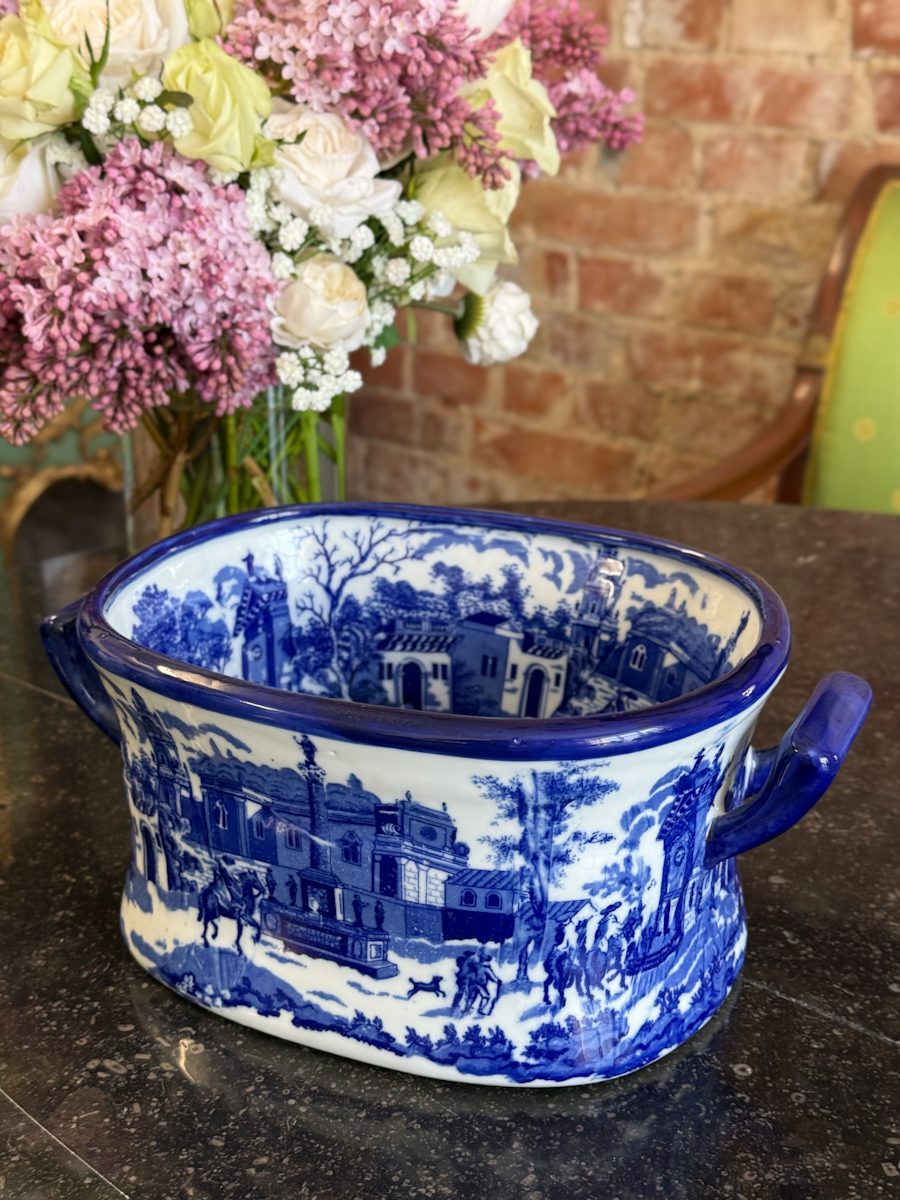
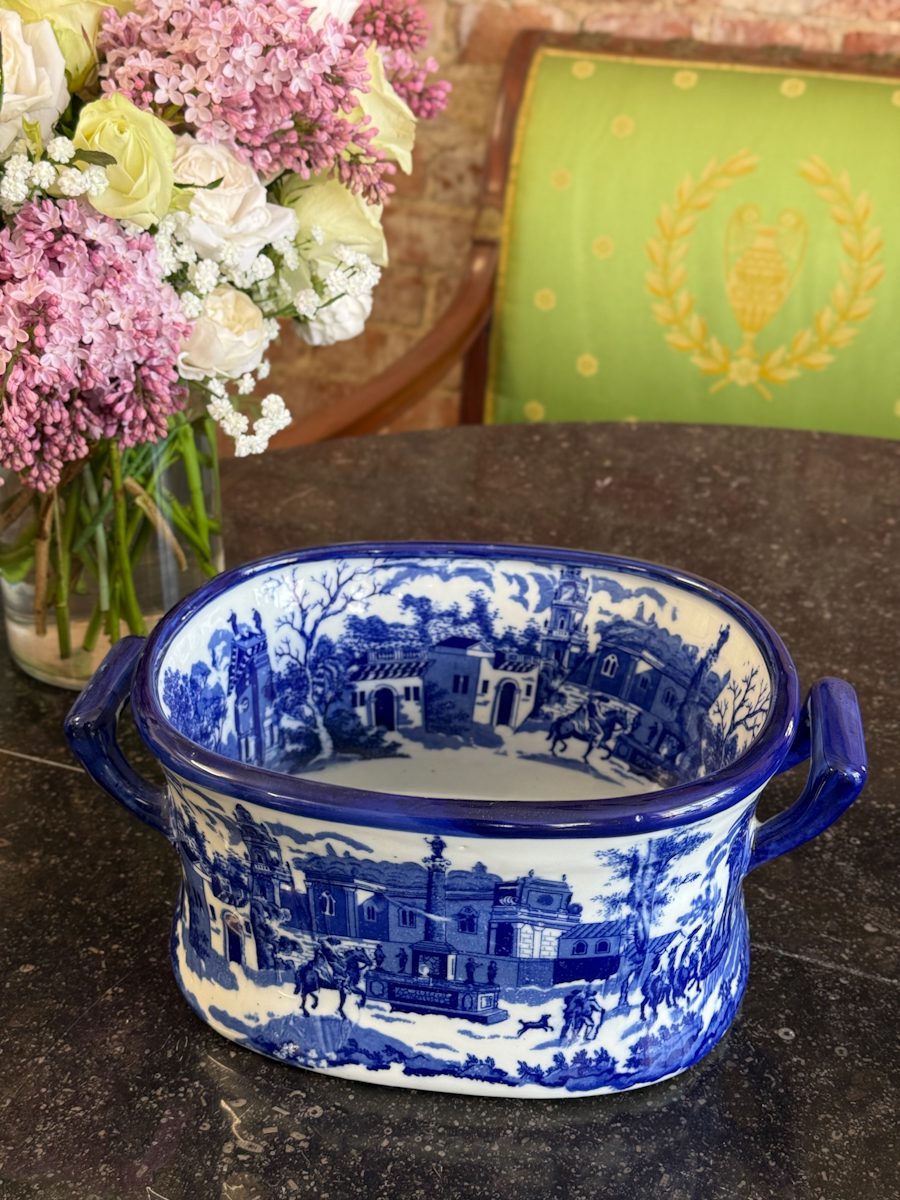
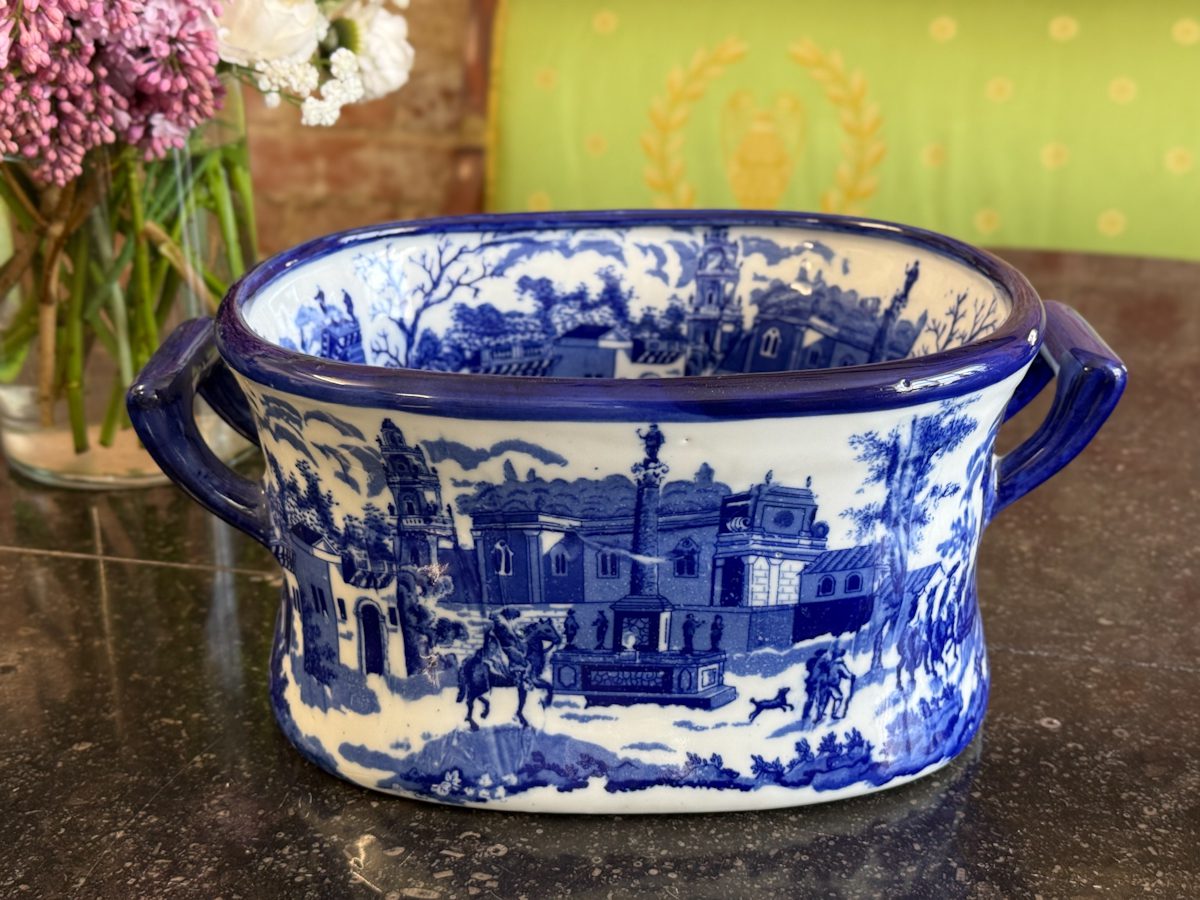
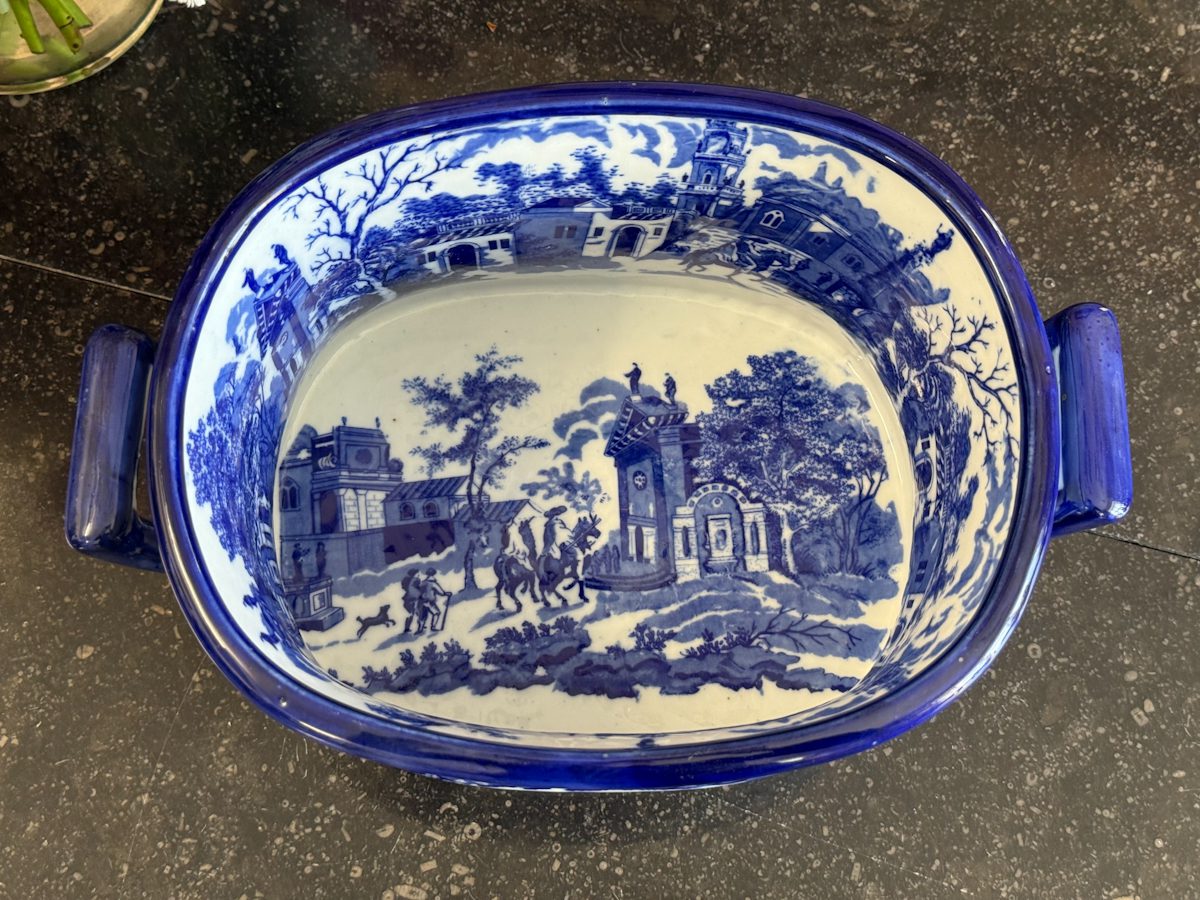
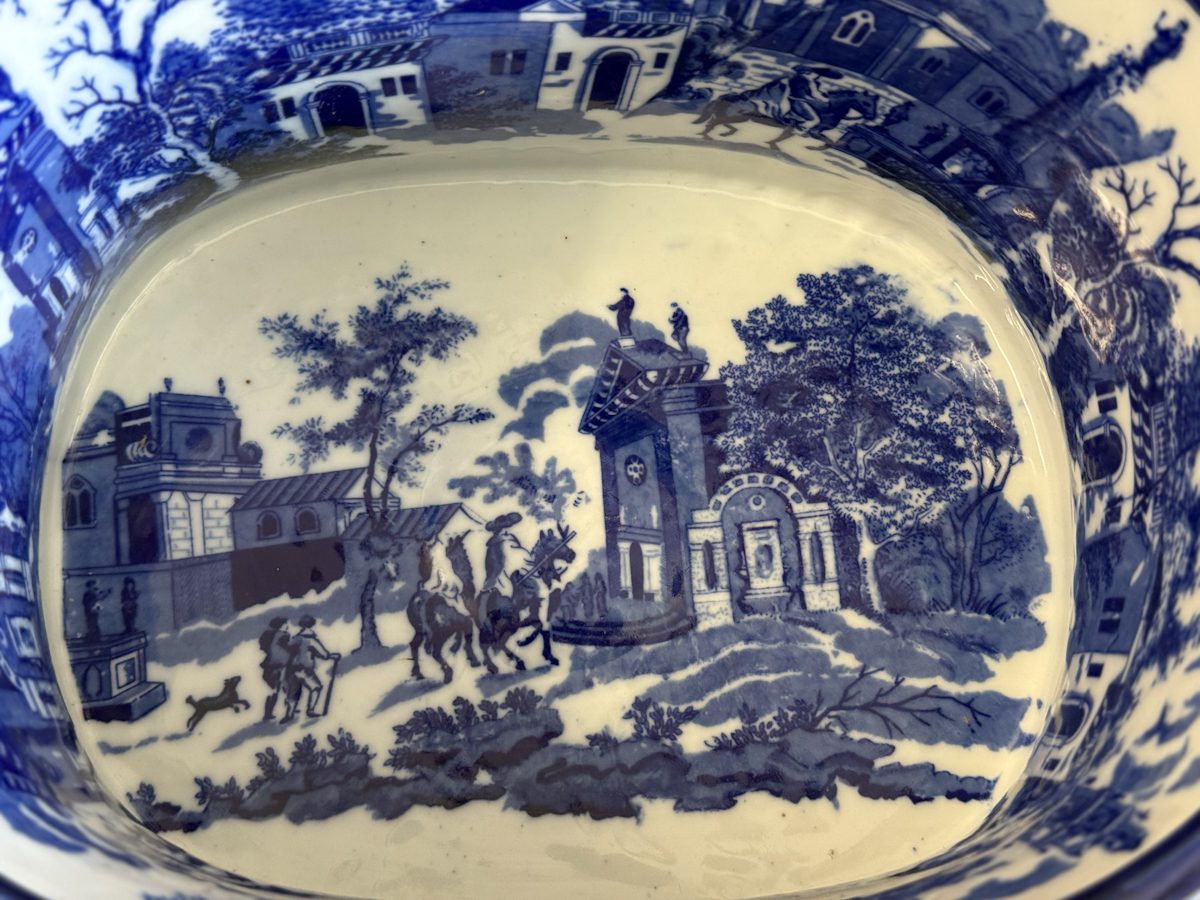
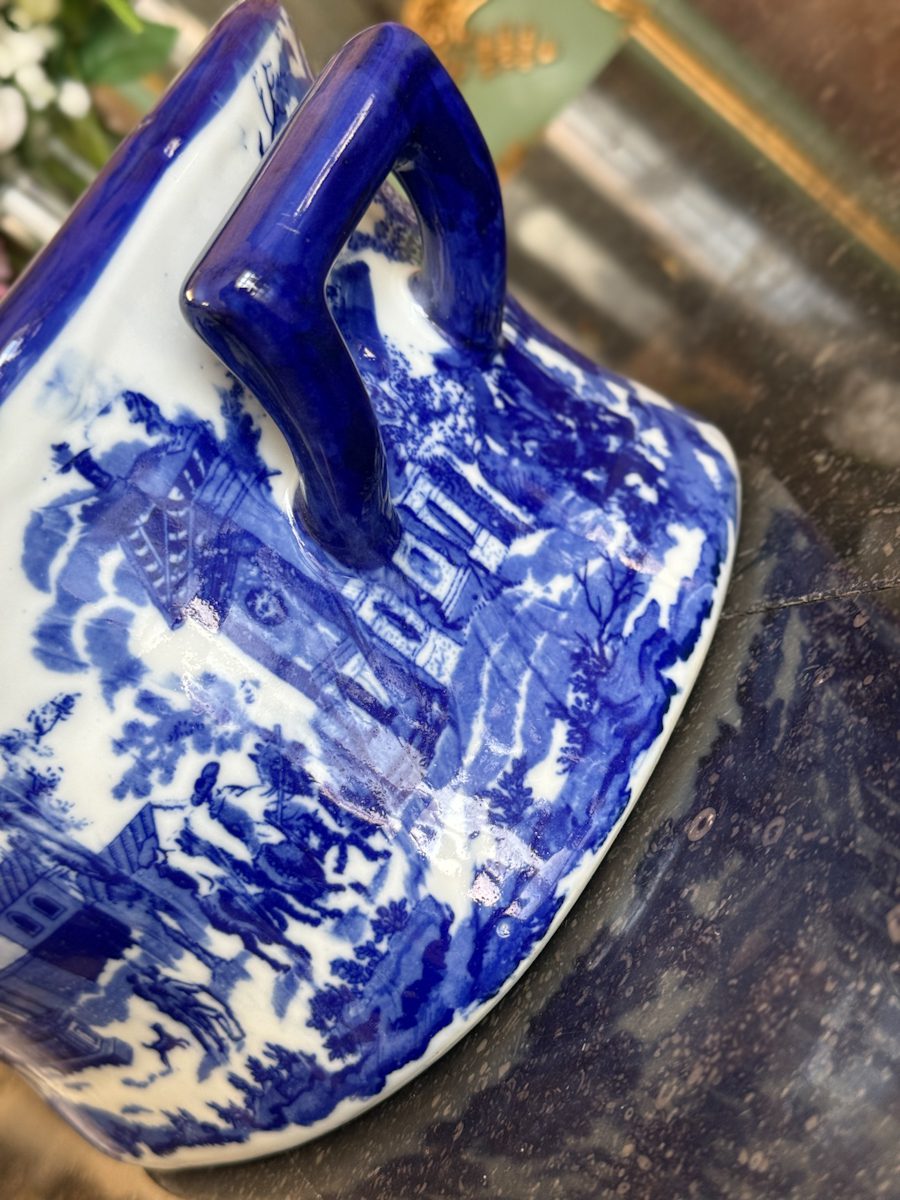
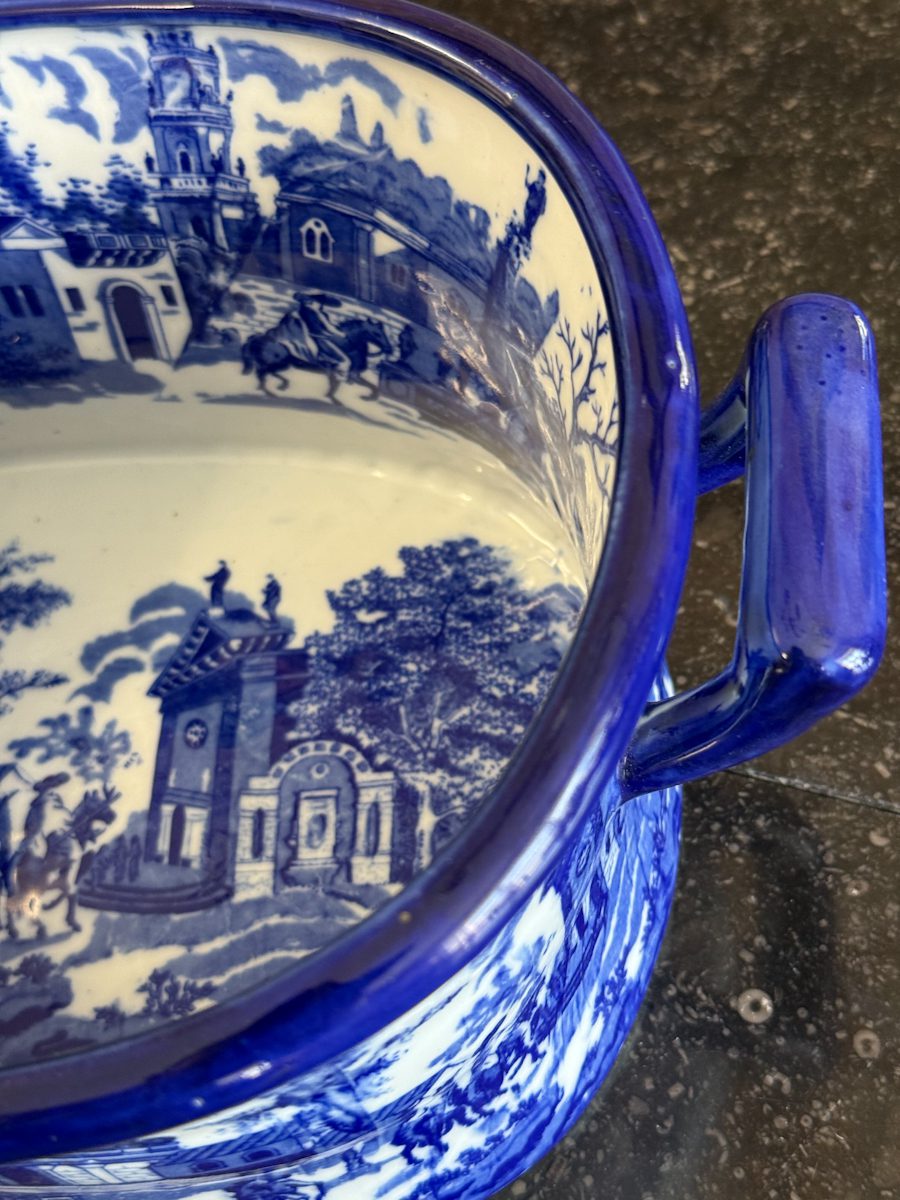
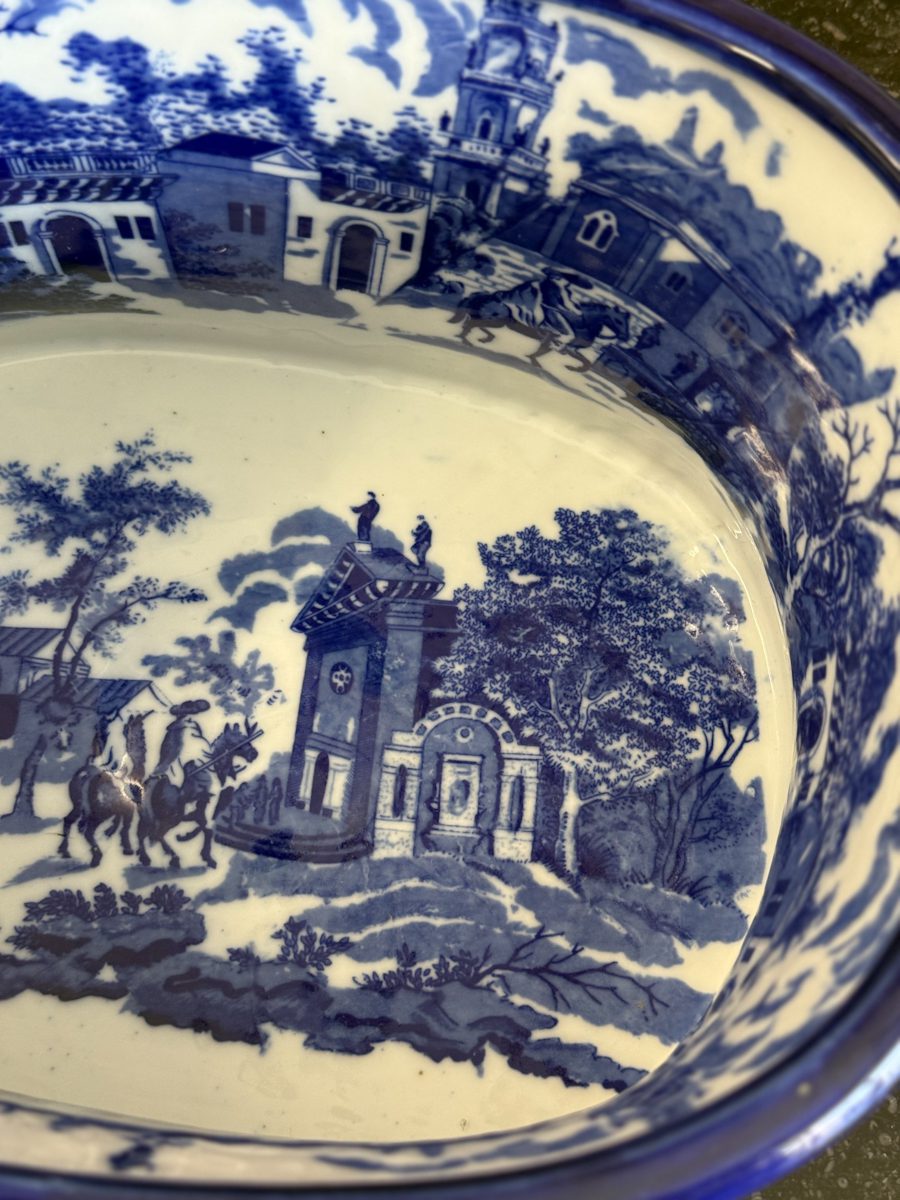
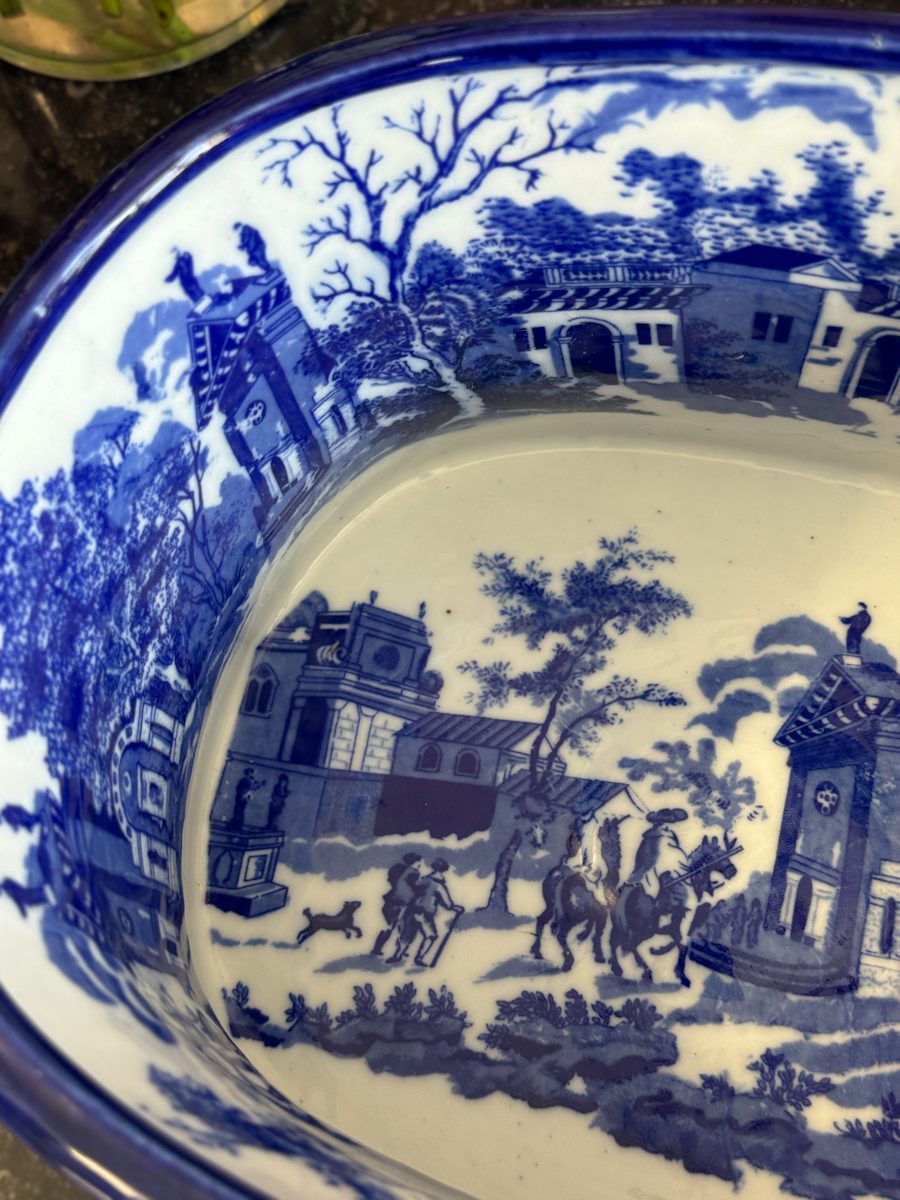
Dekorācijas ainas — jātnieki, suņi, angļu muižu ēkas, klasicistiski torņi un arkas, koki romiešu parka manierē — iekļaujas tā dēvētajā “Angļu ainavu” scenogrāfijas tradīcijā, kas bija ļoti populāra gan Spode, gan Davenport, gan Wedgwood un citu Staffordshire manufaktūru produkcijā.
―――――――――――――――――――――
💎 RETUMS UN NOZĪME
Angļu zili baltā Staffordshire transferdruka keramika ir viena no stabilākajām kolekcionāru kategorijām pasaulē — pieprasījums pēc tās nekad nav pazudis, bet gadu gaitā tikai pieaudzis. Kašpo formāts ar rokturiem ir retāk sastopams nekā šķīvji vai bļodas — tā ir funkcionāla un dekoratīva forma, kuras vērtību papildina nevainojami saglabātais kobaltmēles krāsas intensitāte un ainavu detalizācija.
Kolekcionāri no Lielbritānijas, Skandināvijas, ASV un Āzijas aktīvi meklē šāda veida priekšmetus kā reprezentatīvus Viktorijas laikmeta interjera autentikātorus.
―――――――――――――――――――――
🕯️ PIELIETOJUMS INTERJERĀ, DIZAINĀ UN FOTOGRĀFIJĀ
Kašpo dabiskā vidē ir klasiskais angļu country house interjers — zem loga uz koka galda, tajā ielikts mazs efeja vai hiacintes stāds. Taču šāds priekšmets tikpat labi dzīvo modernā skandināviskai iedvesmotā interjerā: kobalta zilā krāsa uz baltas sienas fona ir apzināts dizainera gājiens, kas telpu paceļ virs kārtējās mājas interjera.
Kā fotografēšanas rekvizīts tas ir pieprasīts — angļu zili baltā keramika ir viens no meklētākajiem stilista priekšmetiem stila mākslas un interjera fotogrāfijā.
―――――――――――――――――――――
🎁 DĀVANA UN PERSONALIZĀCIJA
Skaista un lietojama dāvana interjera un keramikas kolekcionāriem, angļu kultūras mīļotājiem, cilvēkiem ar klasisko vai eklektisko interjeru. Piedāvā patiesu vēsturisku sajūtu: šis priekšmets ir stāsts par to laiku, kad Anglija bija pasaules fabrika un stilā — arī.
―――――――――――――――――――――
🔍 STĀVOKLIS
Kašpo labā vispārējā stāvoklī. Glazūra saglabājusies labi, kobaltā zilā krāsa intensīva, bez ievērojamas izbalēšanas. Apakšā redzams nelielā nolietojuma traips, kas atbilst vecumam un lietošanai. Nav redzami skaldījumi, šķēlumi vai restaurācijas pēdas. Neglazētā pamatne ar nelielu laiku pazīmju nospiedumu.
Lietas stāvoklis pilnībā atspoguļots fotogrāfijās.
―――――――――――――――――――――
🇬🇧 DESCRIPTION IN ENGLISH
Ceramic Cachepot with Handles — Blue and White Transfer-Print Tradition, England (Staffordshire), Late 19th – Early 20th Century
―――――――――――――――――――――
📐 DIMENSIONS
Height 14.5 cm, length 31cm, width 21cm. Medium weight, consistent with the substantial wall thickness characteristic of English ceramic production.
―――――――――――――――――――――
🏛️ PERIOD, ARTISTIC STYLE, ERA
This cachepot belongs to the golden age of British ceramics — the second half of the 19th century, when the Staffordshire potteries supplied not only the English gentry but exported across the European continent and beyond. The transfer-print technique, which allowed the mass reproduction of finely detailed scenic compositions onto ceramic bodies, reached its peak in this period. The blue and white pairing — cobalt on a cream-white earthenware ground — became one of the most recognisable aesthetic signatures of the Victorian era.
Pieces decorated in this manner were present in every respectable English country house, from the dining tables of illuminated Cotswolds homes to the breakfast rooms of Scottish castles. The form — an oval cachepot with two loop handles and a gently flared base — is a classic Victorian interior object, used both for planting and as a purely decorative vessel.
―――――――――――――――――――――
⚜️ MAKER AND STYLISTIC ATTRIBUTION
No printed maker’s mark is visible on the base, which is unglazed, white, and displays the fine porosity characteristic of quality English earthenware or ironstone. The absence of a printed mark was not uncommon among the larger Staffordshire producers, who at various periods supplied export markets under the buyer’s name rather than their own.
The transfer-print quality, the depth of the cobalt blue, and the scenic style are consistent with the Spode manufactory tradition — one of the most distinguished of all Staffordshire enterprises, founded in 1770 by Josiah Spode. Spode was the first English manufacturer to perfect the transfer-print method on earthenware and ironstone, and this technique became the firm’s defining legacy. Later continued under the name Copeland & Garrett, the manufactory supplied the English aristocracy, Victorian society, and exported extensively to American, Indian, and European markets.
The decorative scenes — riders with hounds, English manor architecture, classical columns and arches, parkland trees in the Roman manner — fall within the tradition of the so-called “English Landscape” genre, widely used by Spode, Davenport, Wedgwood, and numerous other Staffordshire houses.
―――――――――――――――――――――
💎 RARITY AND SIGNIFICANCE
English blue and white Staffordshire transfer-printed ceramics represent one of the most consistently collected categories in the antiques world — demand has never disappeared and has grown steadily over the decades. The cachepot form with handles is encountered less frequently than plates or serving dishes, making it a more distinctive find. Its value is further supported by the well-preserved intensity of the cobalt blue and the quality of the landscape detailing.
Collectors in Great Britain, Scandinavia, the United States, and Asia actively seek objects of this type as authentic representatives of Victorian interior culture.
―――――――――――――――――――――
🕯️ USE IN INTERIOR DESIGN AND PHOTOGRAPHY
The cachepot is naturally at home in a classic English country house interior — placed beneath a window on a wooden table, holding a small ivy or hyacinth. Yet it works equally well in a modern Scandinavian-inspired space: the cobalt blue against a white wall is a deliberate designer’s move that elevates a room above the ordinary.
As a photography prop it is much sought after — English blue and white ceramics are among the most requested objects in still life and interior photography.
―――――――――――――――――――――
🎁 AS A GIFT
A beautiful and practical gift for collectors of interior objects and ceramics, lovers of English cultural heritage, and those with classical or eclectic interiors. It carries with it a genuine sense of history — this is an object that speaks of the era when England was the world’s manufactory, and in matters of taste, its arbiter.
―――――――――――――――――――――
🔍 CONDITION
The cachepot is in good overall condition. The glaze is well preserved, the cobalt blue remains strong without significant fading. Minor age-related marks are visible on the unglazed base, consistent with period use. No chips, cracks, or evidence of restoration are observed.
The condition of the item is fully reflected in the photographs.