Liela Misiņa Ziedu Kašpo ar Lauvas Galvām un Lauvas Ķepām — Historizms / Napoleona III stils, Francija vai Beļģija, ap 1860.–1890. (6673)
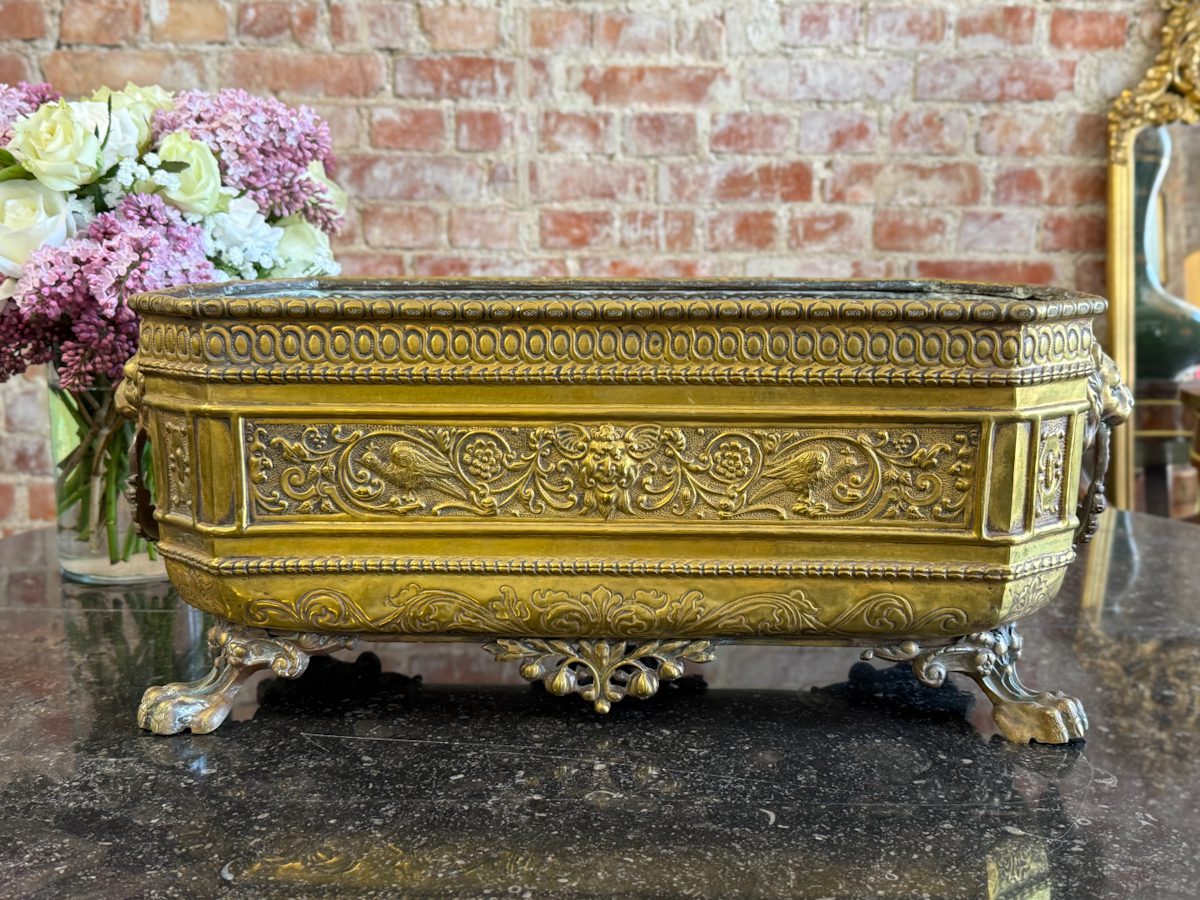
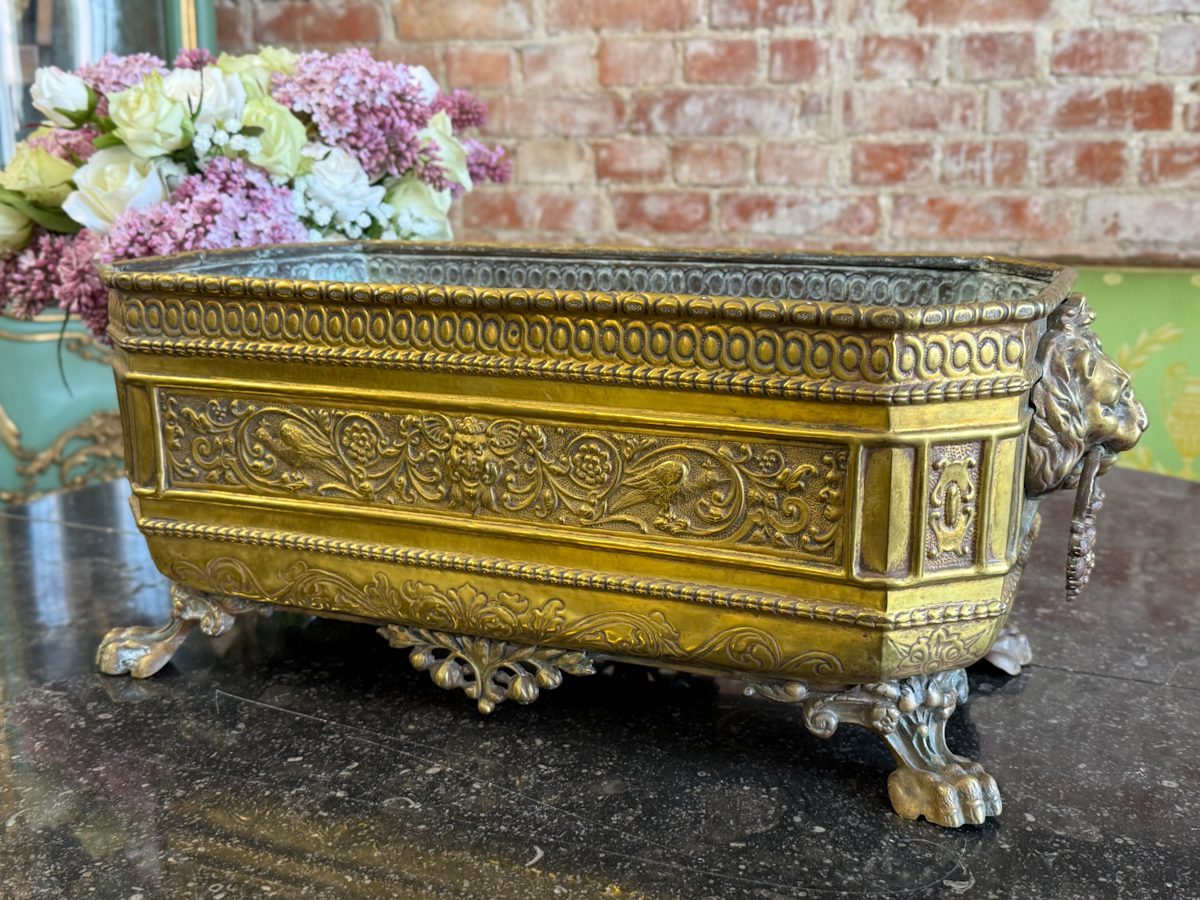
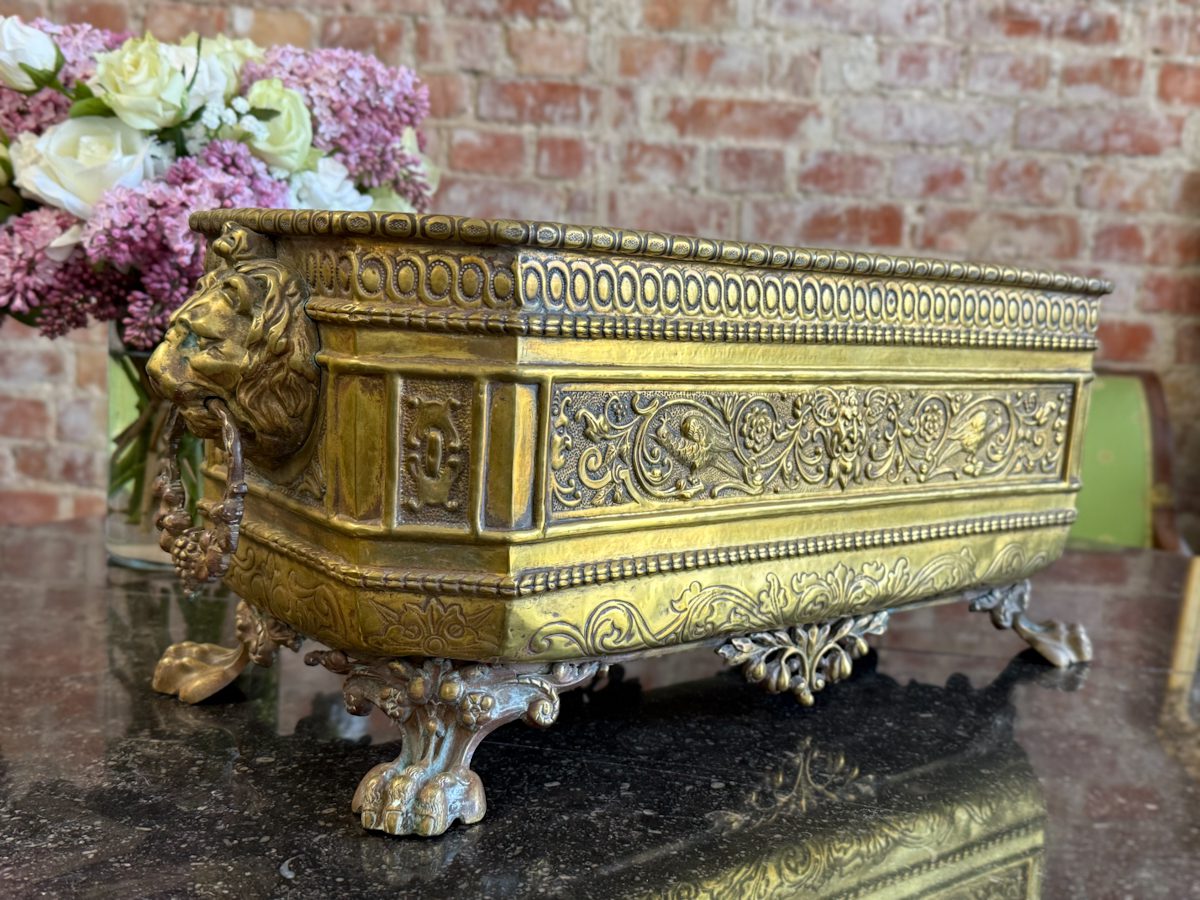
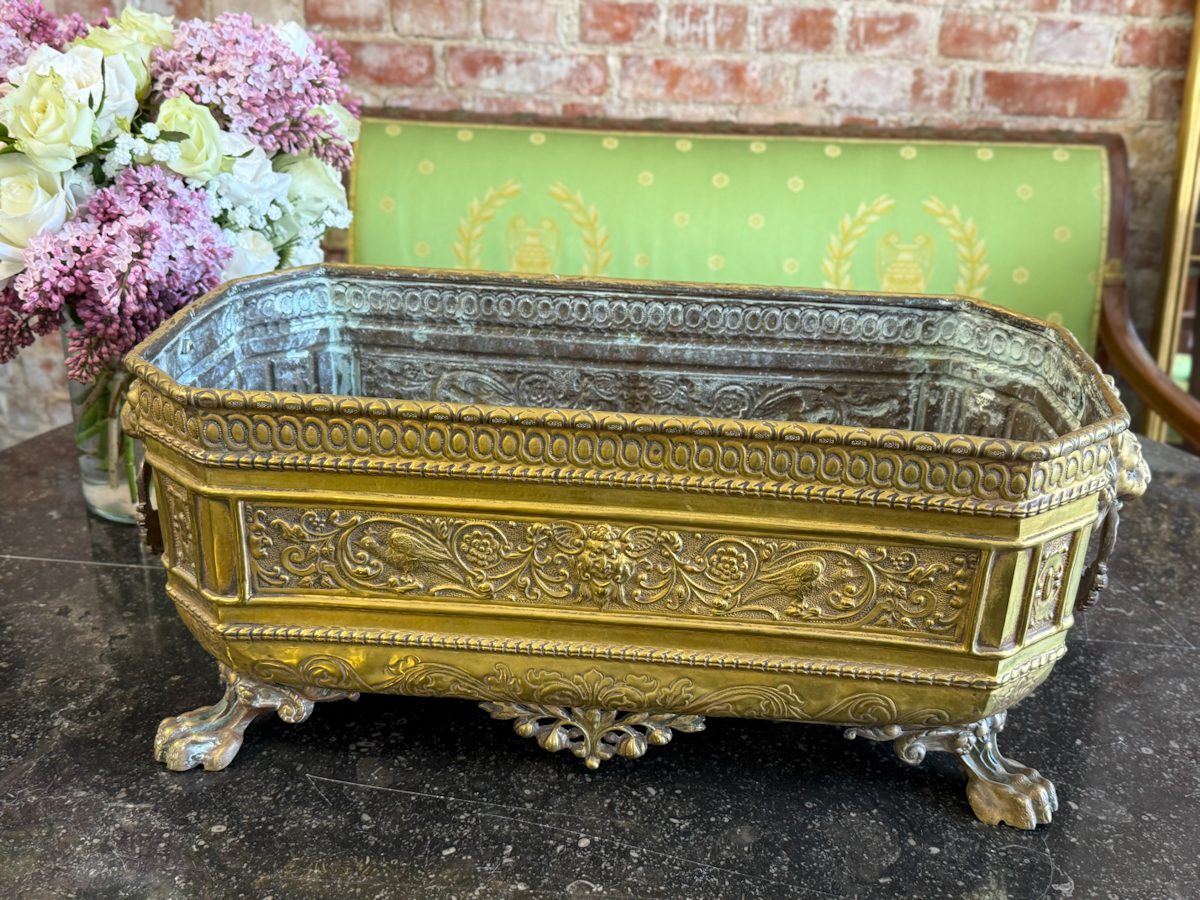
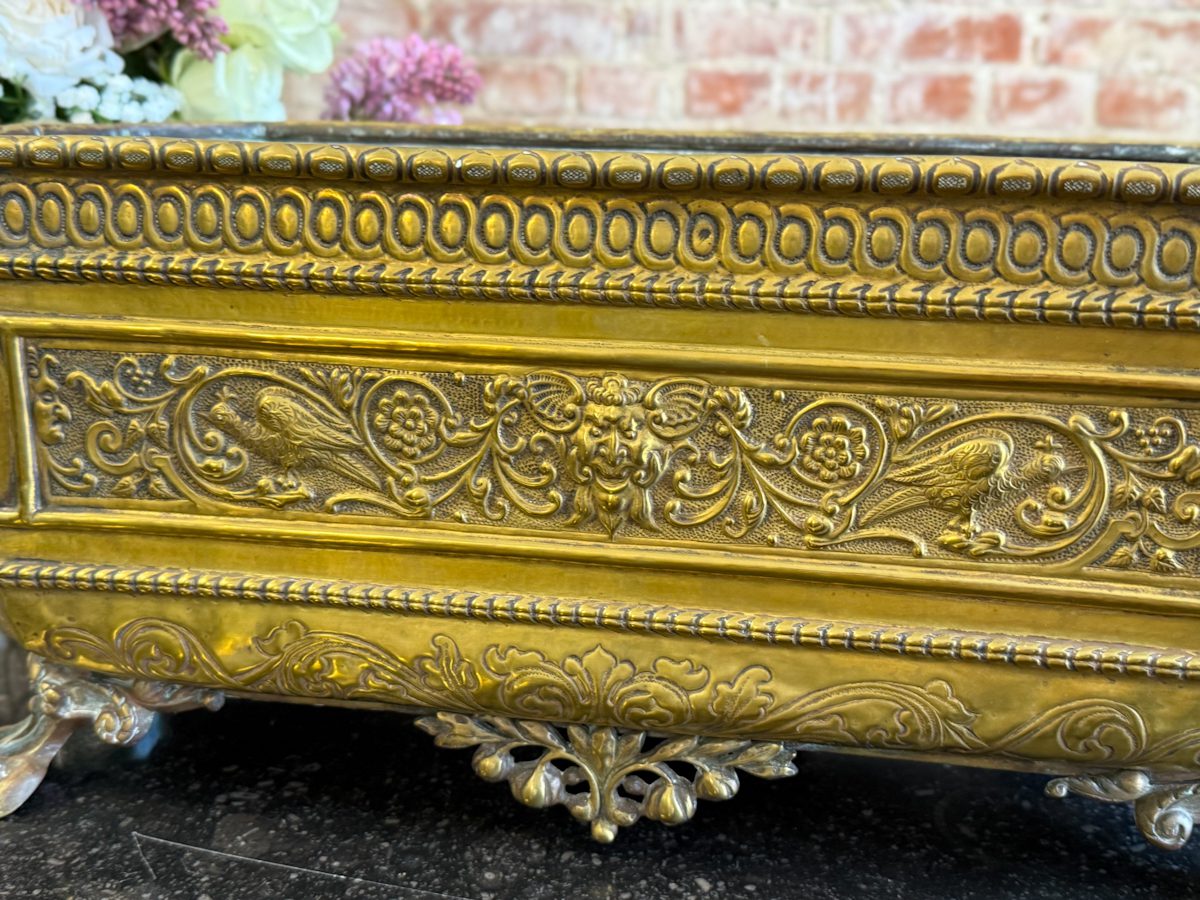
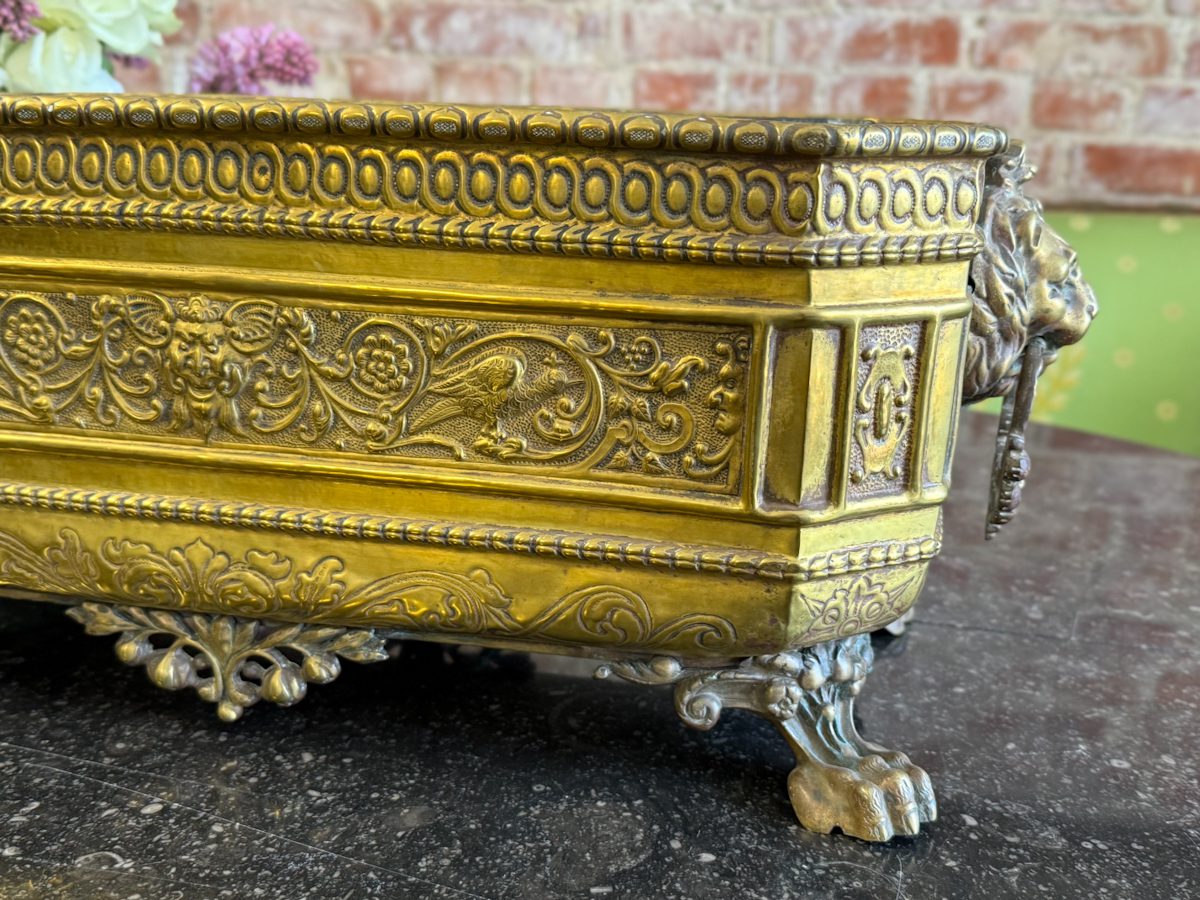
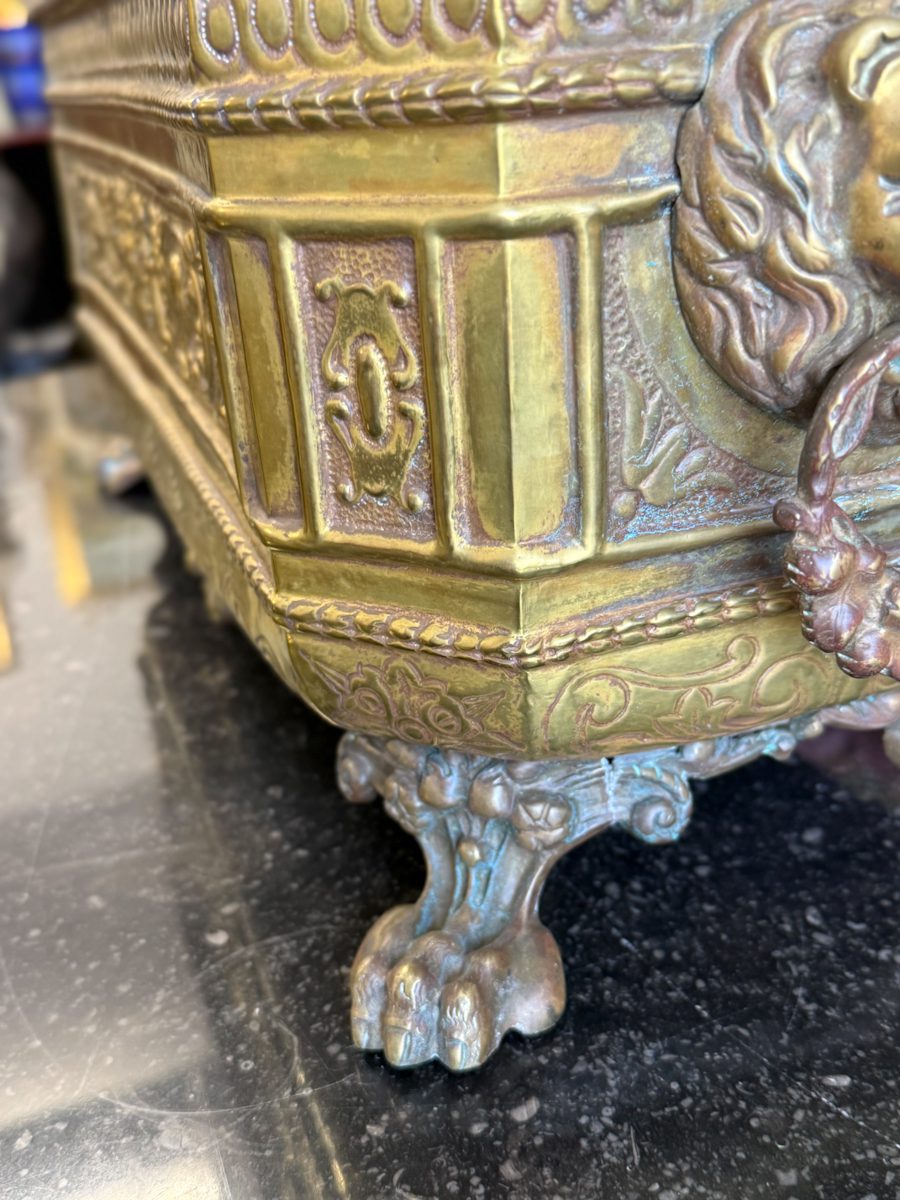
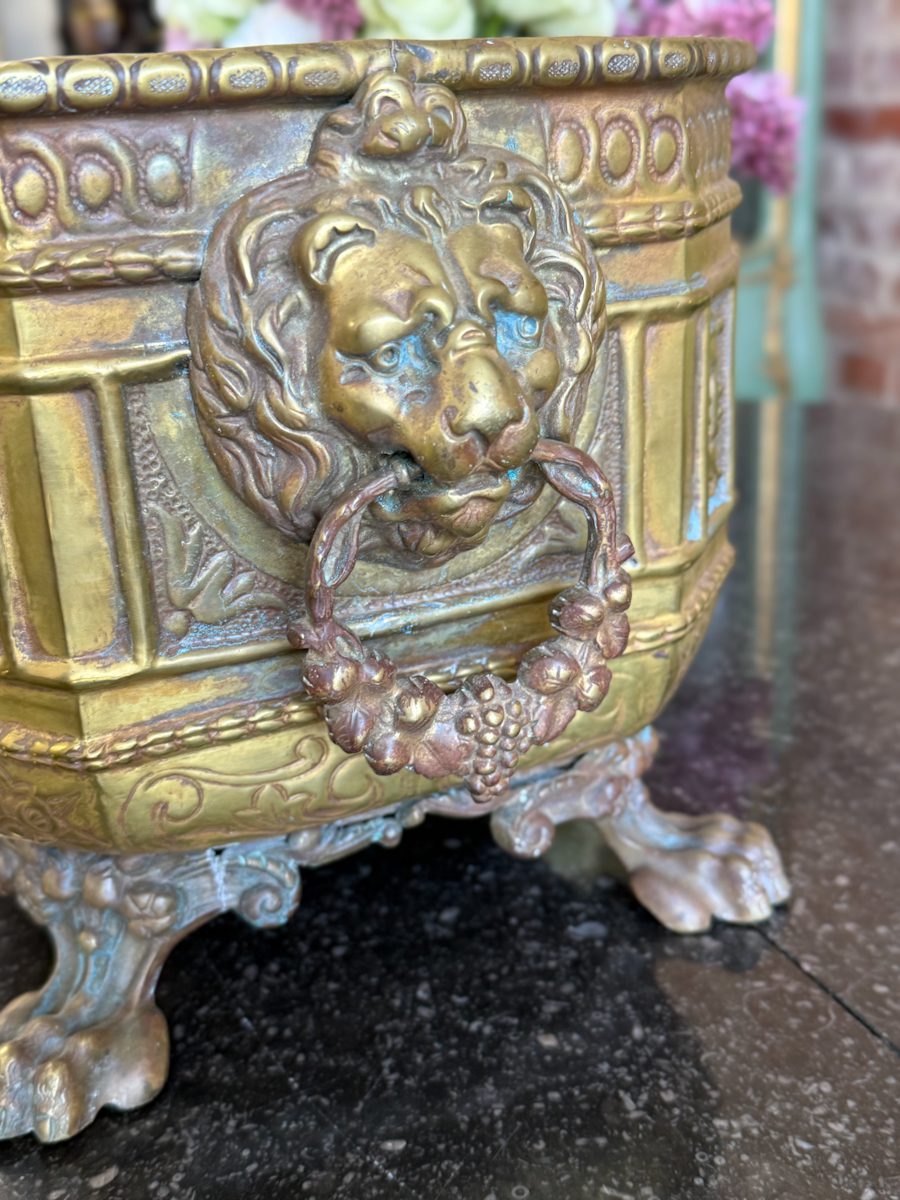
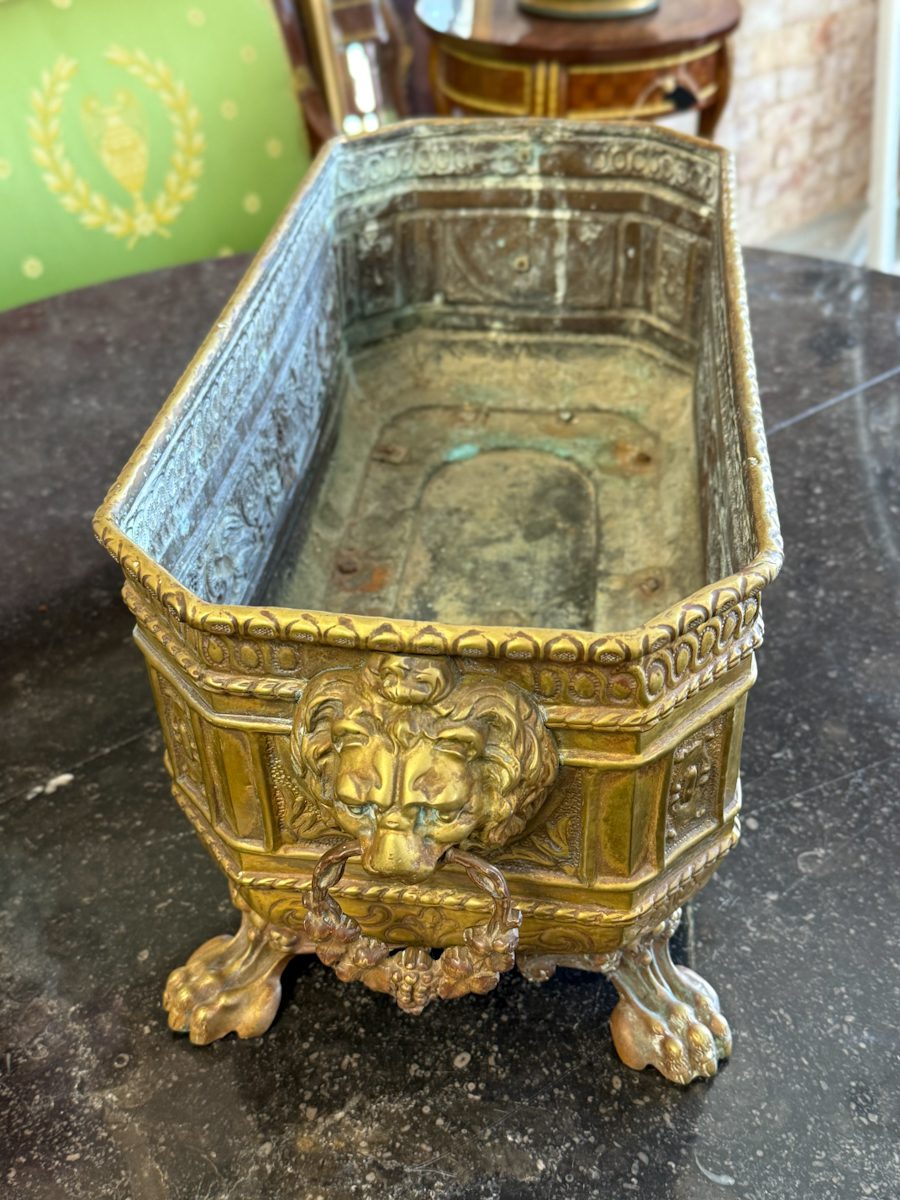
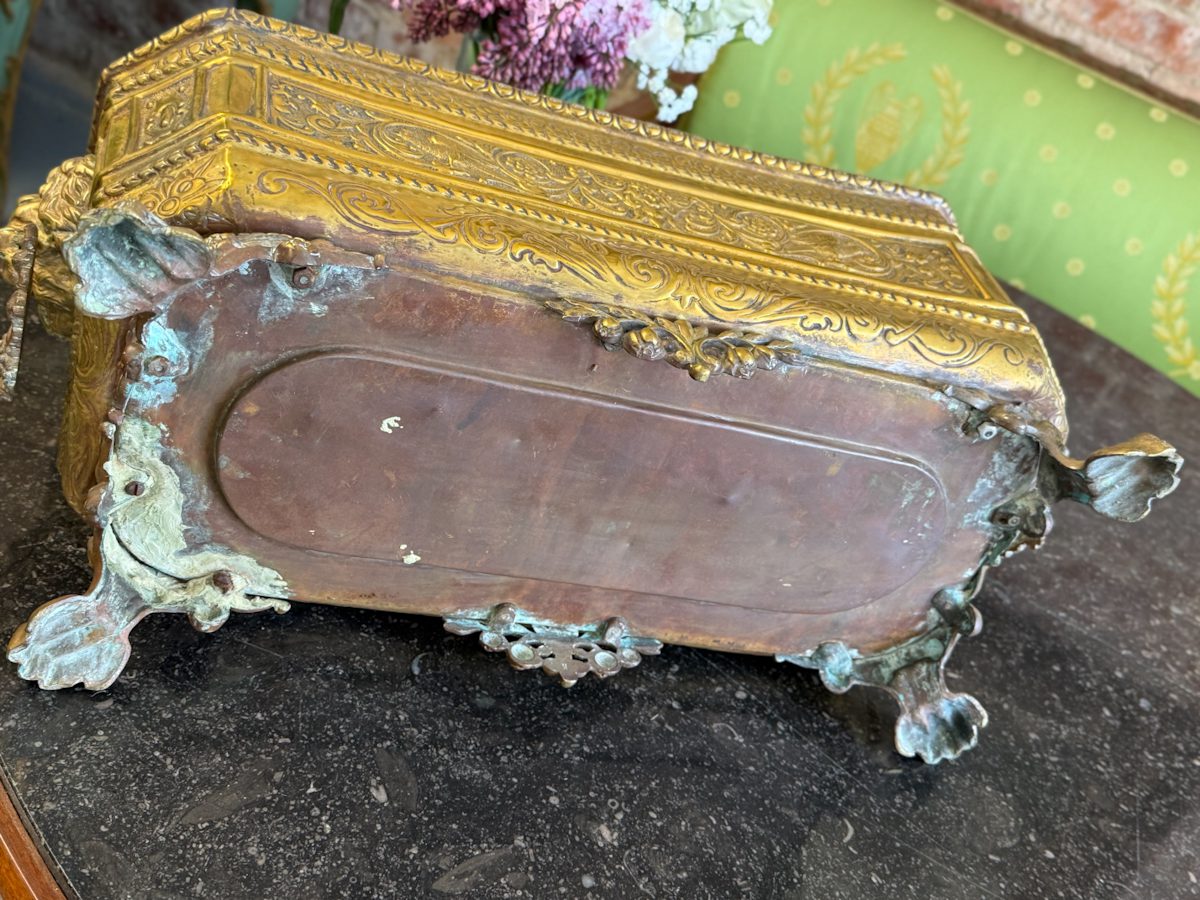
Liela Misiņa Ziedu Kašpo ar Lauvas Galvām un Lauvas Ķepām — Historizms / Napoleona III stils, Francija vai Beļģija, ap 1860.–1890.
―――――――――――――――――――――
📐 IZMĒRI
Garums 56cm, augstums 22cm, platums 23.5cm. Svars ievērojams, priekšmets masīvs.
―――――――――――――――――――――
🏛️ IZGATAVOŠANAS PERIODS, MĀKSLAS STILS, LAIKMETS
Šis kašpo pieder 19. gadsimta otrās puses Eiropas dekoratīvās mākslas grandiozākajam stilistiskajam laikmetam — Napoleona III Historismam, kad Francija un Beļģija apvienoja Baroka varenību, Renesanses ornamentālo bagātību un Luija XIV laika reprezentācijas kultu vienā pārsteidzošā dekoratīvajā valodā. Šis ir laikmets, kad misiņa meistari, bruņoti ar hammers un repusē tehnikām, veidoja priekšmetus, kas bija paredzēti ne tikai lietošanai, bet arī demonstrācijai — bagātībai, gaumei, statusam.
Kašpo forma ir varonīga un dominējoša: astoņstūraini nošķelti stūri, bagāts daudzlīmeņu reljefs, kas vēstī par dziļu izpratni par klasisko ornamentiku. Tas nav vienkārši ziedu trauks — tas ir aristokrātiskas dzīves telpas centrālais aksesuārs, kāds rotāja Parīzes privātpilī jeb hôtel particulier un Beļģijas muižu konservatorijās.
―――――――――――――――――――――
⚜️ MATERIĀLS, IZPILDĪJUMS UN ZĪMOGS
Kašpo izgatavots no kaltas un čuguna misiņa, ar bagātu repusē (izsistā reljefa) ornamentu visās ārējās virsmās. Iekšpuse veidota no atsevišķa cinka vai svina apšuvuma — tradicionāls risinājums ziedu stādīšanai, kas aizsargāja misiņu no mitruma bojājumiem.
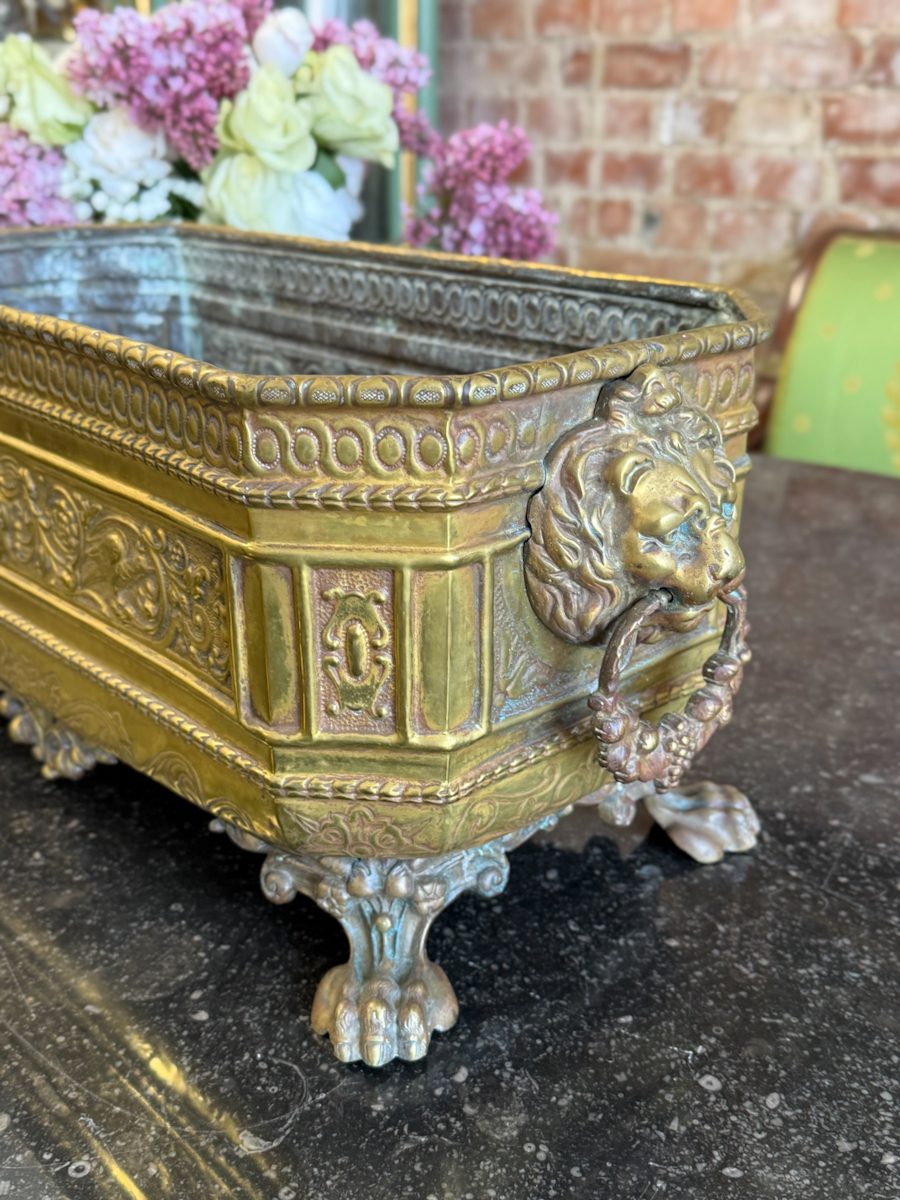
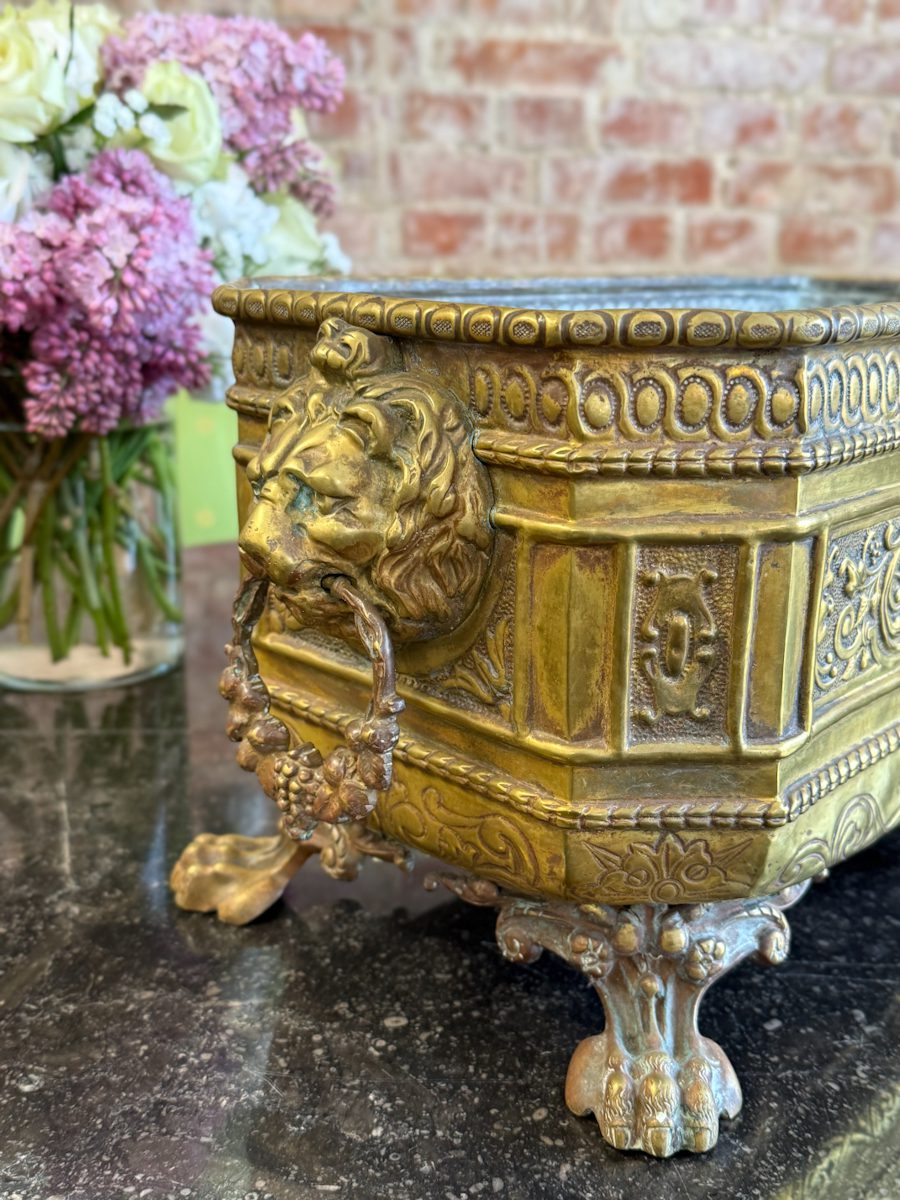
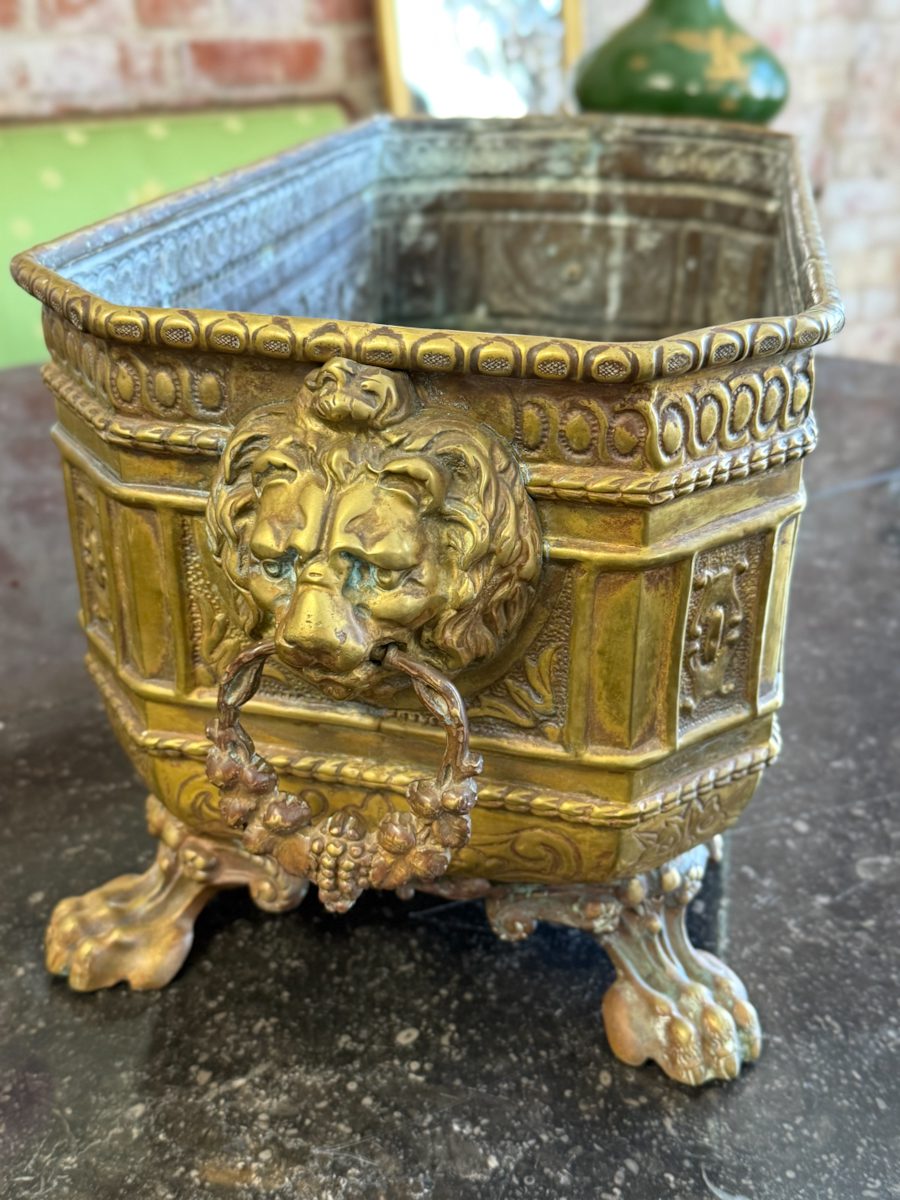
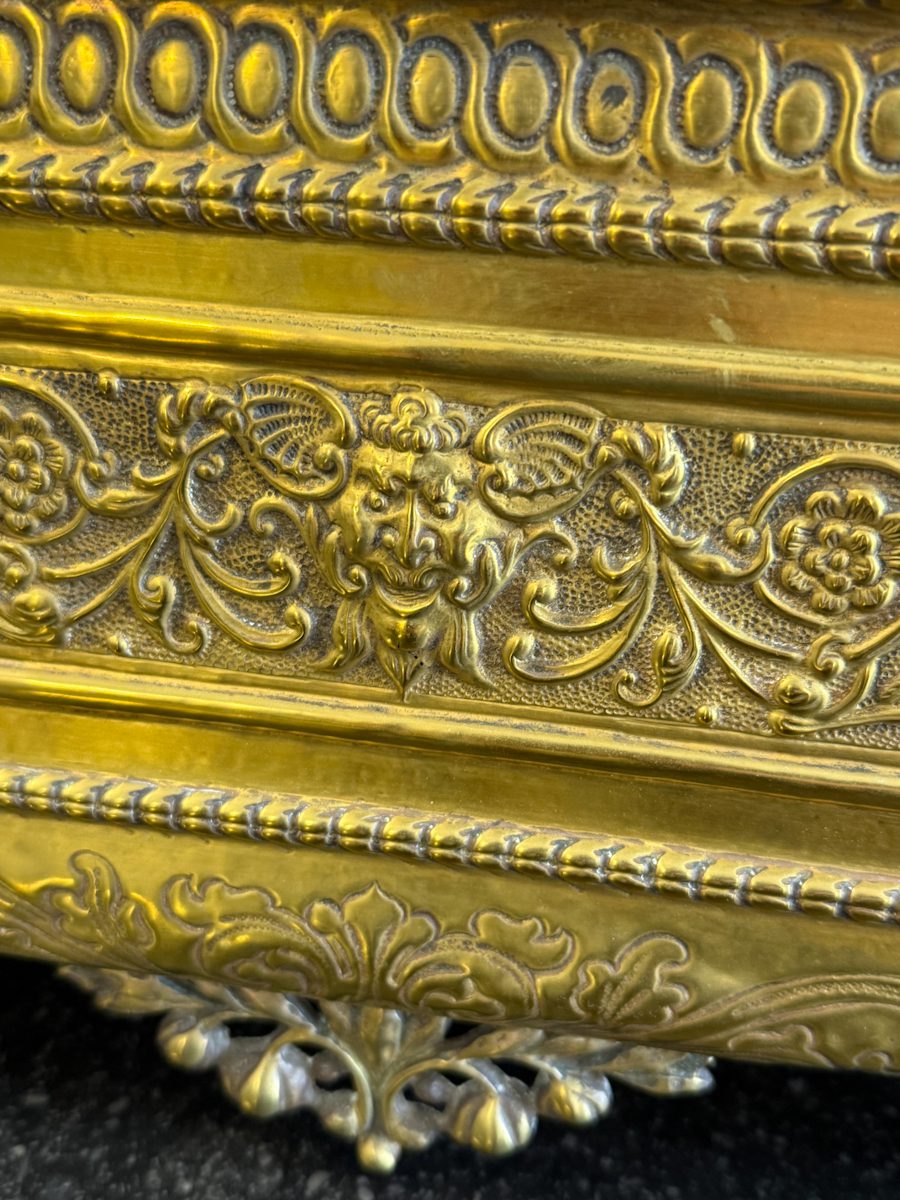
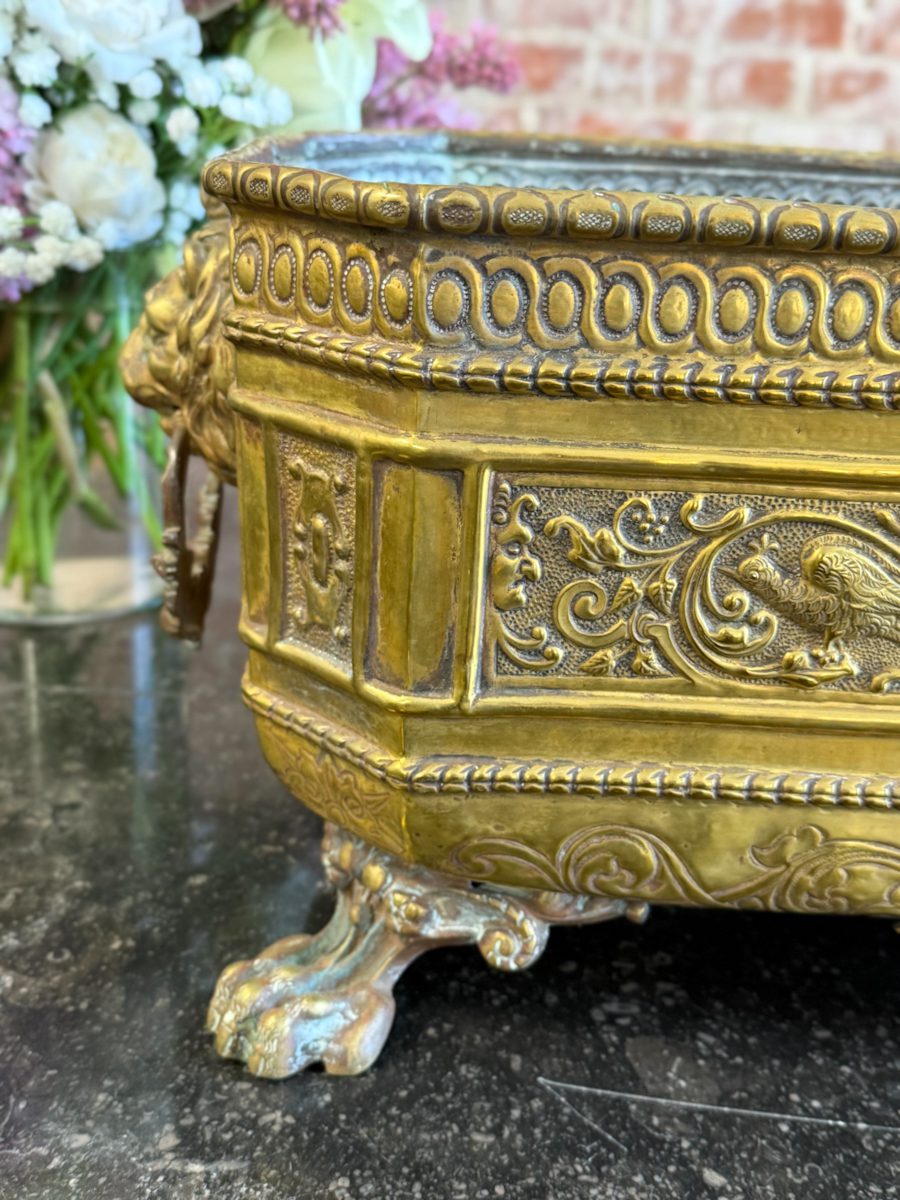
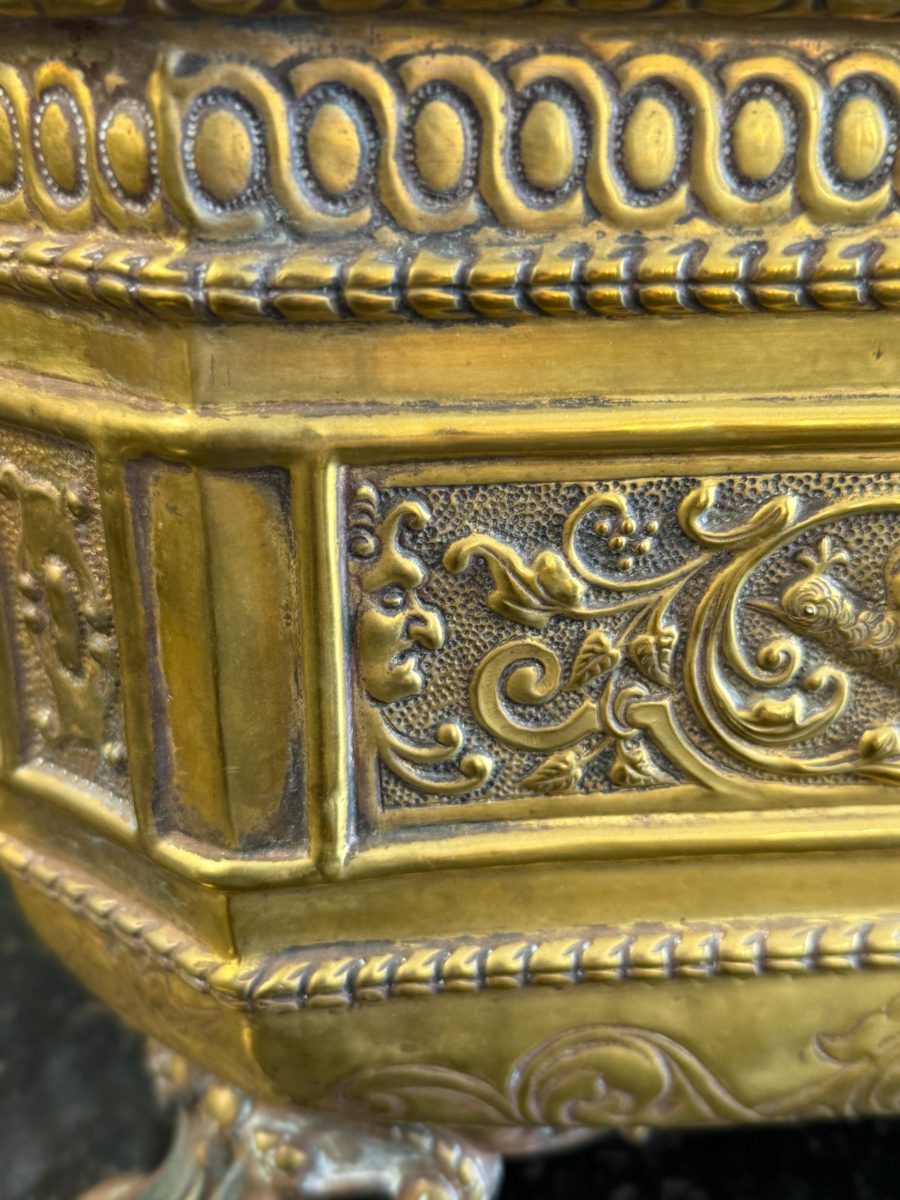
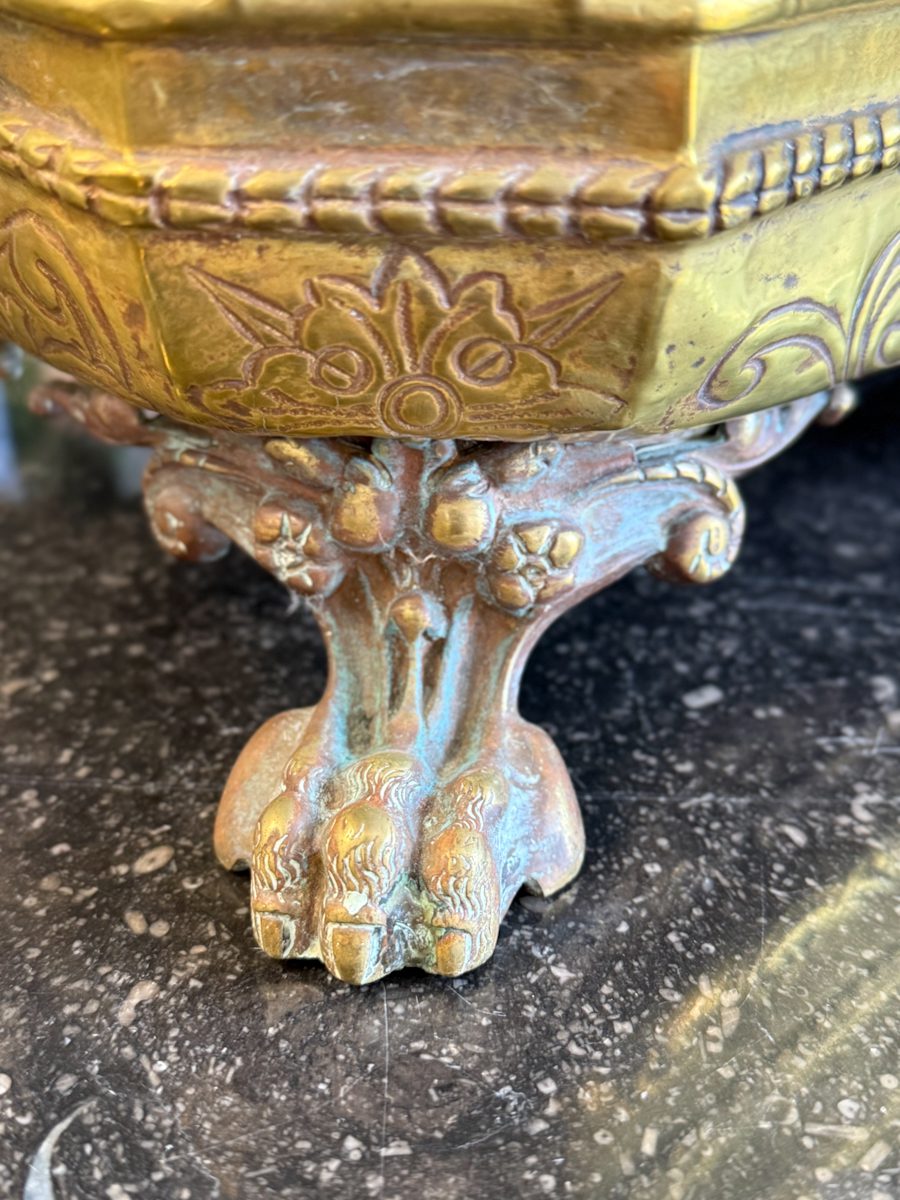
Dekorācija ir vairāklīmeņu: augšā — olu un šķautnes (egg-and-dart) bordūra, kas tieši atspoguļo klasiskās arhitektūras tradīciju; galvenajā laukumā — skroļlveida akantuss ar putnu figūrām (papagaiļi, fantastiskas radības), maskas un rozetes. Sānos — divi grandiozi lauvas galvu relikvizīti ar vīnogu ķekaru vainaga gredzenveida rokturiem. Pamatne — četras masīvas lauvas ķepas uz ornamentētiem konsoles pamatnēm ar caurgrieztu augu motīvu.
Apakšā nav redzams ražotāja zīmogs, kas ir tipiska parādība labākajiem 19. gadsimta Francijas un Beļģijas misiņa darbnīcām, kas ražoja pasūtījuma priekšmetus privātām rezidencēm bez komerciālā marķējuma. Izpildījuma kvalitāte un kompozīcijas sarežģītība liecina par augstākās klases metalurģiskās darbnīcas darbu — tāda veida izstrādājumus Parīzē ražoja t.s. bronziers darbnīcas, kas apgādāja aristokrātijas pilis un svarīgākos biroja reprezentācijas telpas.
―――――――――――――――――――――
💎 RETUMS UN NOZĪME
Šāda izmēra un kvalitātes misiņa ziedu kašpo ar pilnu lauvas ikonogrāfiju — galvas, rokturi, ķepas — ir viens no meklētākajiem 19. gadsimta dekoratīvās mākslas priekšmetiem Eiropas antikvāru tirgū. Repusē ornaments šajā detalizācijas pakāpē, savienojumā ar plastiskās skulptūras elementiem, padara šo priekšmetu par robeži starp dekoratīvo amatniecību un tēlniecību.
Kolekcionāri no Francijas, Beļģijas, Lielbritānijas un Persijas līča valstīm aktīvi meklē šāda veida gabālus kā galvenos interjera akcentus reprezentācijas telpās. Lauvas simbolika piešķir papildu vērtību gan kultūrvēsturiskā, gan simboliskā ziņā.
―――――――――――――――――――――
🕯️ PIELIETOJUMS INTERJERĀ, DIZAINĀ UN FOTOGRĀFIJĀ
Šis kašpo ir interjera smagā artilērija — tas neaizpilda telpu, tas to definē. Kamīna priekšā, uz marmora grīdas konservatorijā ar tropu augiem, bibliotēkas centrā uz masīva ozolkoka galda vai ieejas hallē kā pirmais iespaids — katrā no šīm atrašanās vietām tas izsaka vienu un to pašu vēstījumu: šeit dzīvo cilvēks ar gaumi un vēsturi.
Modernā interjerā baltā vai pelēkā telpā tas darbojas kā tīrs kontrasts — zeltainā misiņa lauka dinamika uz neitrāla fona ir dizainera izmantots paņēmiens augstākajā līmenī. Fotogrāfiem tas ir izcils objekts — repusē virsmas tekstūra, ķepu plastiskums un lauvas galvu izteiksme sniedz neizsmeļamu vizuālu materiālu.
―――――――――――――――――――――
🎁 DĀVANA UN PERSONALIZĀCIJA
Lauvas simbolika padara šo priekšmetu par ārkārtīgi personisku un jēgpilnu dāvanu: Lauvas zodiaka zīmes cilvēkiem (23. jūlijs – 22. augusts) tas ir tieša astroloģiskā rezonanse. Varas, tiesu vai militārā konteksta pārstāvjiem — vēstniekiem, ministriem, augstākās pakāpes militārpersonām — lauvas galva ir klasiskākais no varas simboliem. Šāda izmēra un kvalitātes priekšmets ir reprezentatīva korporatīvā vai diplomātiskā dāvana augstākajā pakāpē — tāda, ko atceras.
―――――――――――――――――――――
🔍 STĀVOKLIS
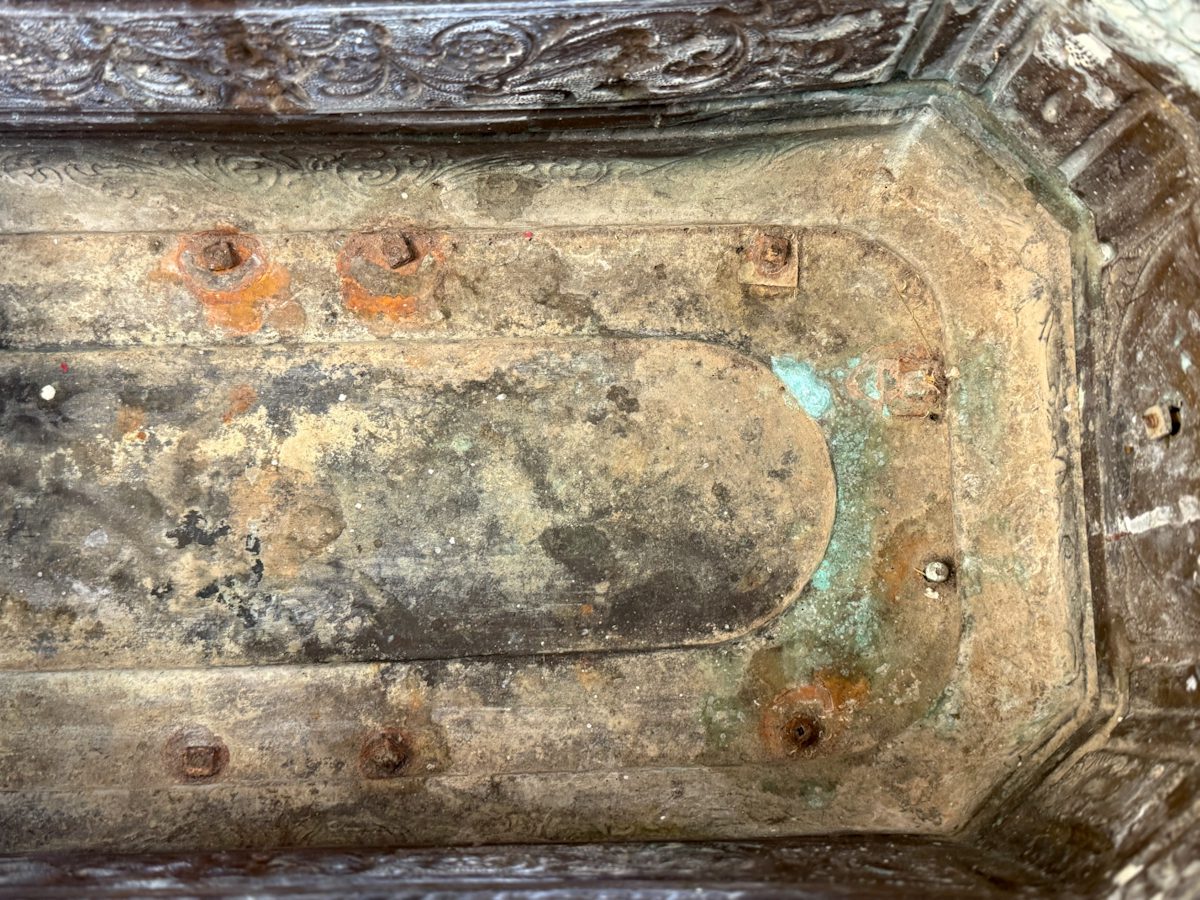
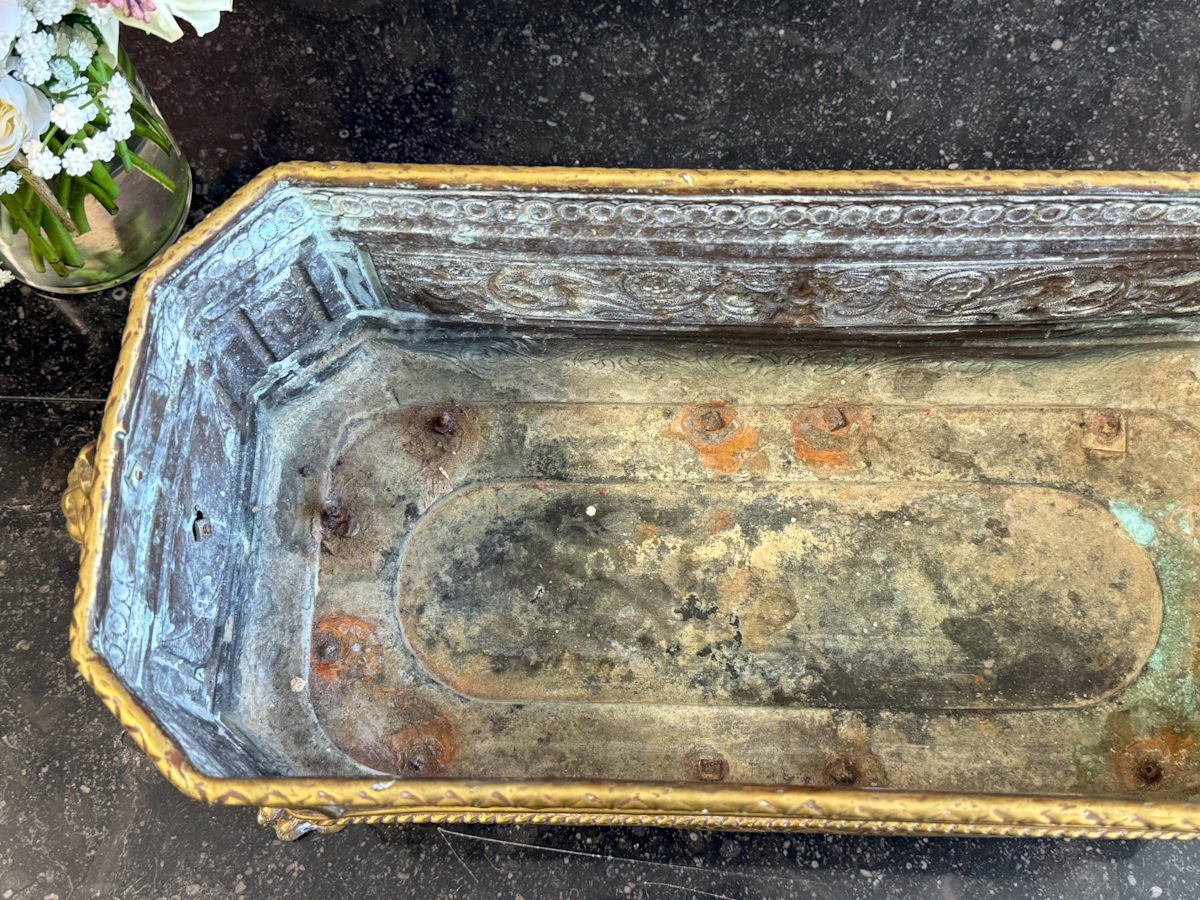
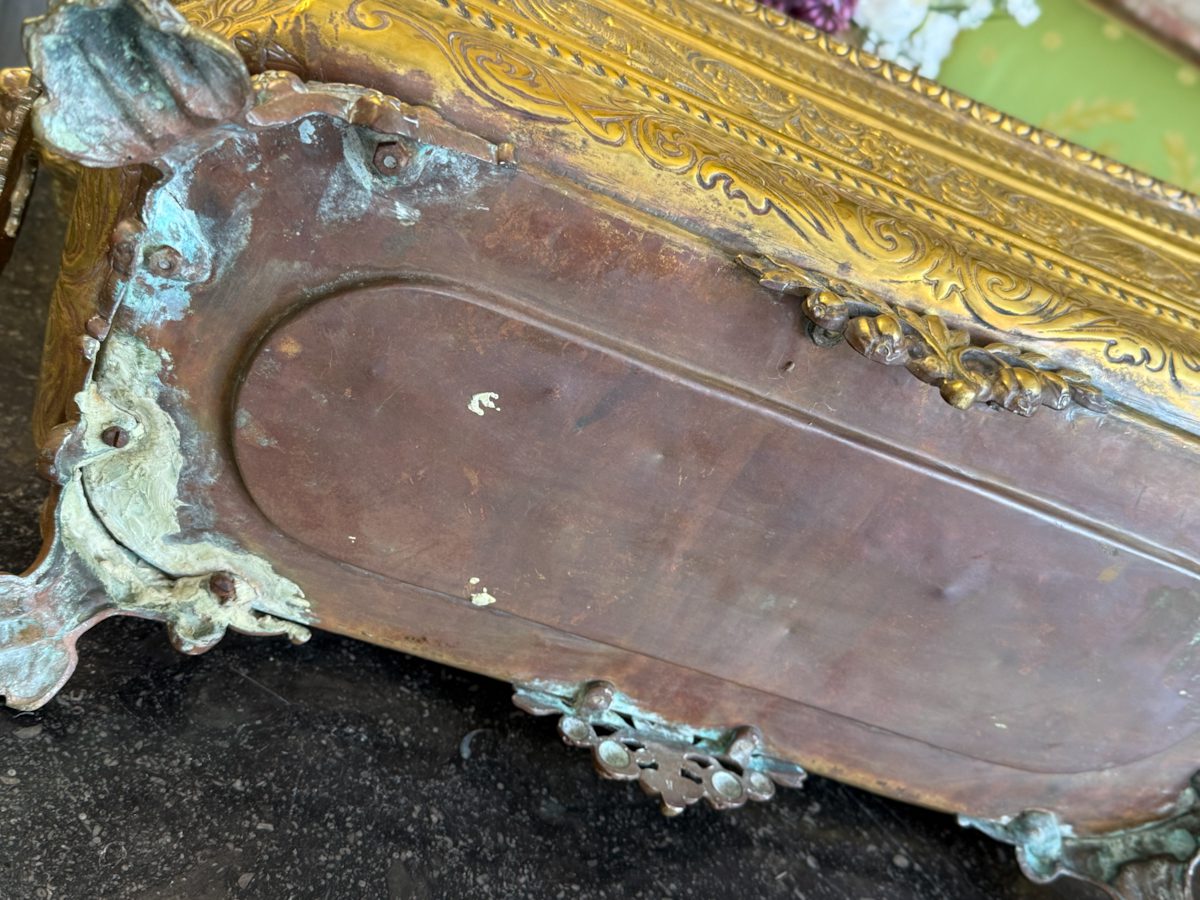
Kašpo labā vispārējā stāvoklī, kas atbilst tā vecumam un autentiskumam. Misiņa ārējā virsma saglabājusi bagātu zeltaini brūnu patinu ar vienmērīgu oksidāciju dziļumos. Iekšējā cinka/svina ausklājuma virsma uzrāda ievērojamākus laika ietekmes pēdas — rūsas plankumus, virsmas oksidāciju un mehāniskos bojājumus no augkopības izmantojuma; tas ir pilnīgi gaidāms un neietekmē ārējo dekoratīvo vērtību. Pamatnes apakšpusē redzama virsmas oksidācija (zaļganbrūna verdigri) un kniedžu nolietojuma pēdas. Nav redzami strukturāli bojājumi, lūzumi vai plastisko elementu zudumi.
Lietas stāvoklis pilnībā atspoguļots fotogrāfijās.
―――――――――――――――――――――
🇬🇧 DESCRIPTION IN ENGLISH
Large Brass Flower Jardinière with Lion Head Handles and Lion Paw Feet — Historicism / Napoleon III Style, France or Belgium, circa 1860–1890
―――――――――――――――――――――
📐 DIMENSIONS
Length 56cm, height 22cm, width 23.5cm. The piece is of substantial weight and presence.
―――――――――――――――――――――
🏛️ PERIOD, ARTISTIC STYLE, ERA
This jardinière belongs to the grandest stylistic era of 19th-century European decorative arts — the Napoleon III Historicist period, when France and Belgium united the grandeur of the Baroque, the ornamental richness of the Renaissance, and the representational cult of the Louis XIV era into one astonishing decorative language. This was the age when brass masters, armed with hammers and repoussé technique, created objects designed not merely for use but for display — for wealth, taste, and status.
The form of the jardinière is heroic and commanding: octagonally chamfered corners, rich multi-register relief decoration, and a deep understanding of classical ornament. This is not simply a flower vessel — it is the central accessory of an aristocratic interior, the kind that graced the hôtel particulier in Paris and the conservatories of Belgian country estates.
―――――――――――――――――――――
⚜️ MATERIAL, CRAFTSMANSHIP AND MARK
The jardinière is constructed from hammered and cast brass, with rich repoussé ornament covering all external surfaces. The interior is lined with a separate zinc or lead insert — a traditional arrangement for flower planting that protected the brass body from moisture damage.
The decoration is multi-register: at the top, a continuous egg-and-dart border directly reflecting classical architectural tradition; in the main field, scrolling acanthus populated with bird figures (parrots, fantastical creatures), grotesque masks and rosettes; at the sides, two magnificent lion head reliefs with grape-and-leaf garland ring handles. The base rests on four massive lion paw feet set on ornate scrolled consoles with pierced foliate motifs.
No maker’s mark is visible on the base — typical of the finest 19th-century French and Belgian brass workshops that produced bespoke pieces for private residences without commercial marking. The quality of execution and the complexity of the composition point to work of the highest order, consistent with the Parisian bronziers who supplied the great aristocratic houses and the principal offices of state.
―――――――――――――――――――――
💎 RARITY AND SIGNIFICANCE
A brass flower jardinière of this scale and quality, with a complete iconographic programme of lion heads, handles, and paw feet, is among the most sought-after objects in the 19th-century decorative arts market in Europe. The repoussé ornament at this level of detail, combined with sculptural plastic elements, places this piece at the boundary between decorative craft and sculpture.
Collectors from France, Belgium, Great Britain, and the Gulf states actively seek objects of this type as principal interior accents in representation rooms. The lion symbolism adds further value — both culturally and symbolically.
―――――――――――――――――――――
🕯️ USE IN INTERIOR DESIGN AND PHOTOGRAPHY
This jardinière is the heavy artillery of interior design — it does not fill a room, it defines it. Before a fireplace, on a marble floor in a conservatory with tropical plants, at the centre of a library on a massive oak table, or in an entrance hall as the first impression — in each of these positions it speaks the same message: here lives a person with taste and history.
In a modern interior of white or grey, it operates as pure contrast — the dynamic of the gilded brass field against a neutral background is a designer’s technique of the highest order. For photographers it is an exceptional subject — the texture of the repoussé surface, the plasticity of the paw feet, and the expressiveness of the lion heads provide inexhaustible visual material.
―――――――――――――――――――――
🎁 AS A GIFT
The lion symbolism makes this an exceptionally personal and meaningful gift. For those born under Leo (July 23 – August 22) it carries a direct astrological resonance. For those in positions of authority, law, or military service — ambassadors, ministers, senior commanders — the lion head is the most classical of all symbols of power. At this scale and quality the piece represents a corporate or diplomatic gift of the highest order — one that is remembered.
―――――――――――――――――――――
🔍 CONDITION
The jardinière is in good overall condition consistent with its age and authenticity. The external brass surface retains a rich golden-brown patina with even oxidation in the recesses. The interior zinc or lead liner shows more pronounced signs of time — rust spotting, surface oxidation, and mechanical marks from horticultural use; this is entirely expected and does not affect the exterior decorative value. The underside of the base displays surface verdigris oxidation and wear marks at the rivets. No structural damage, fractures, or loss of plastic elements is observed.
The condition of the item is fully reflected in the photographs.