
19gab porcelāna, salātu šķīvji ar ziedu, putnu un spāres motīviem, Jūgendstils / Eklektisms (6195)
🇱🇻 LATVISKI
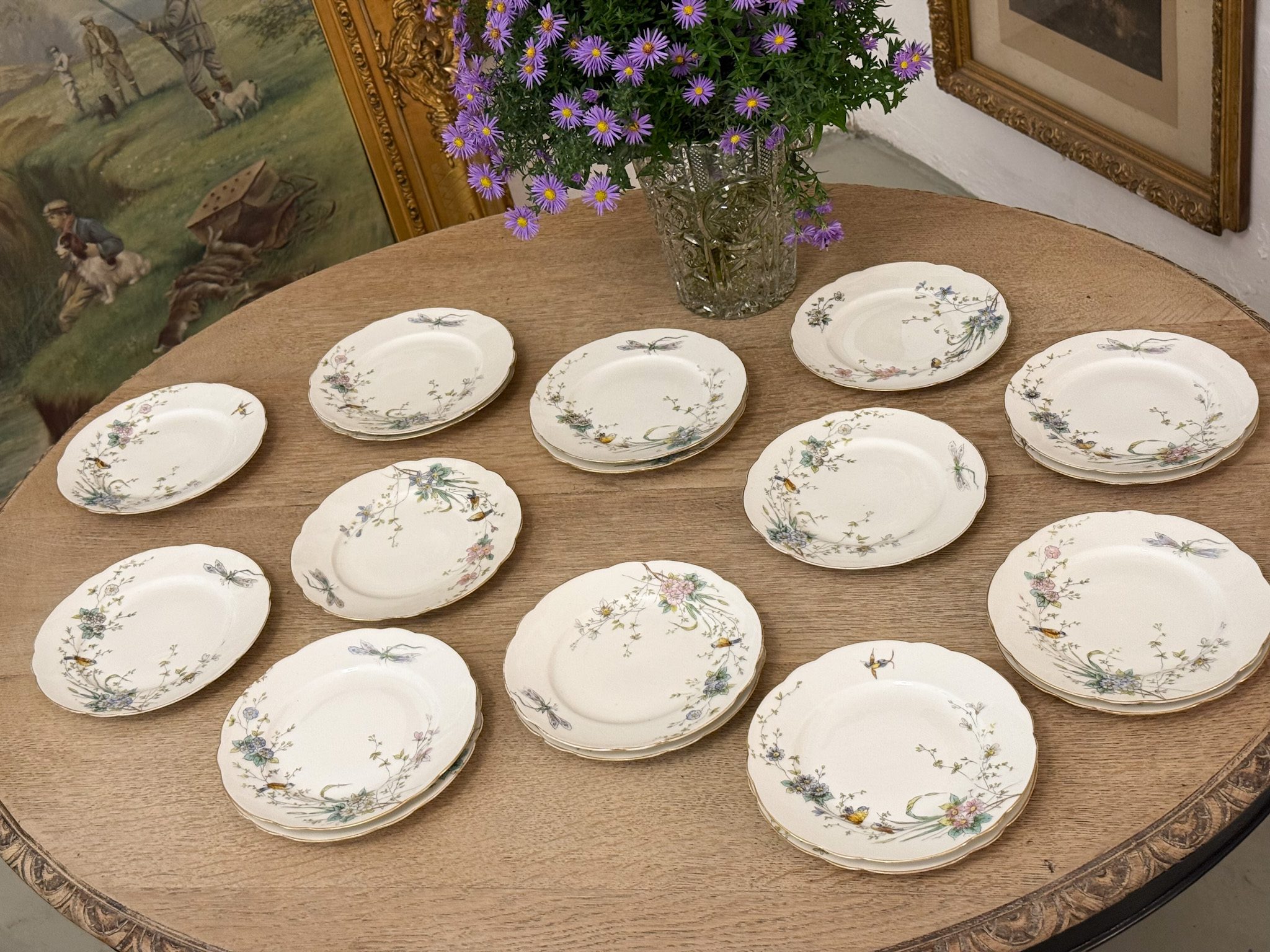
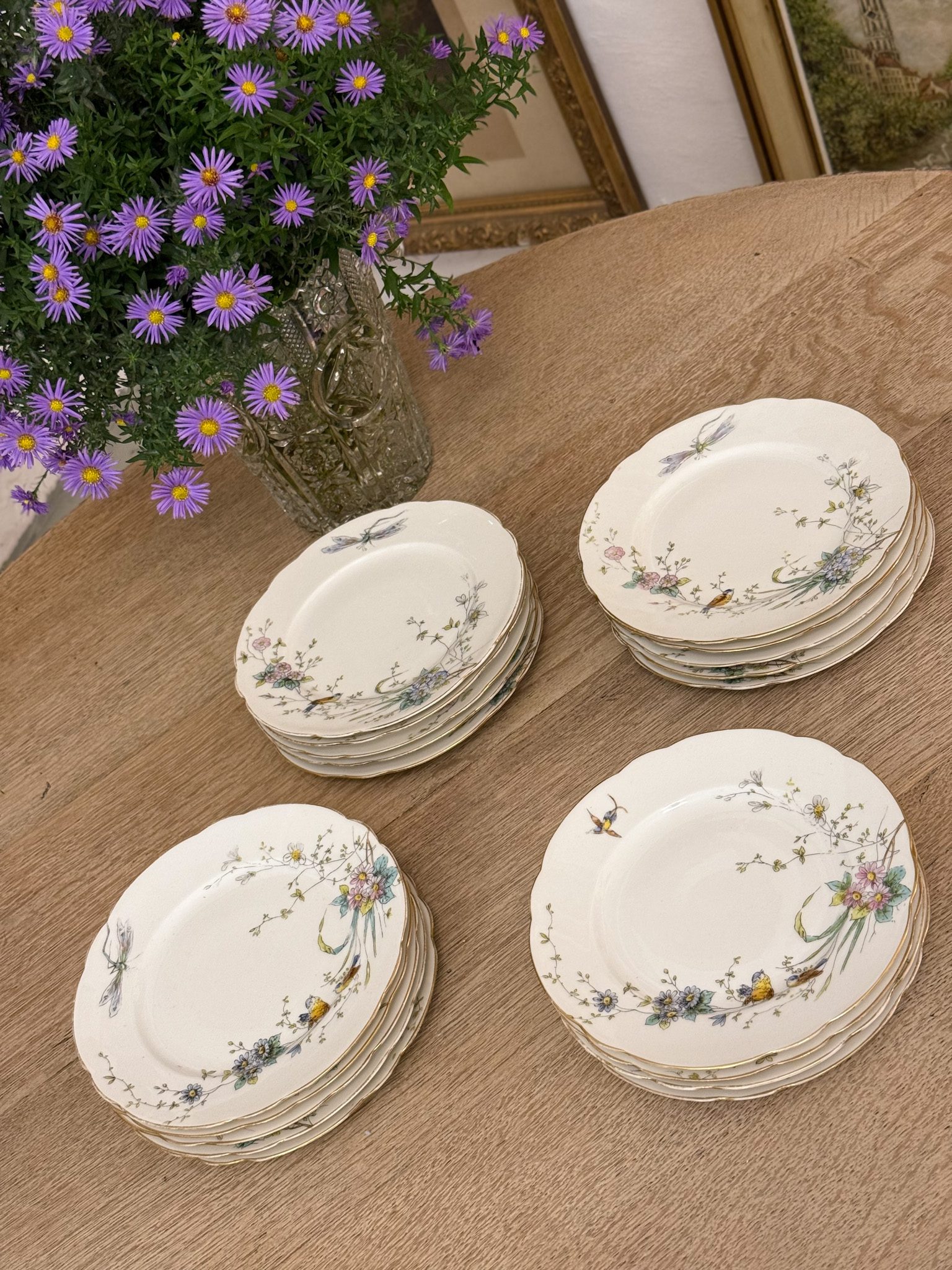
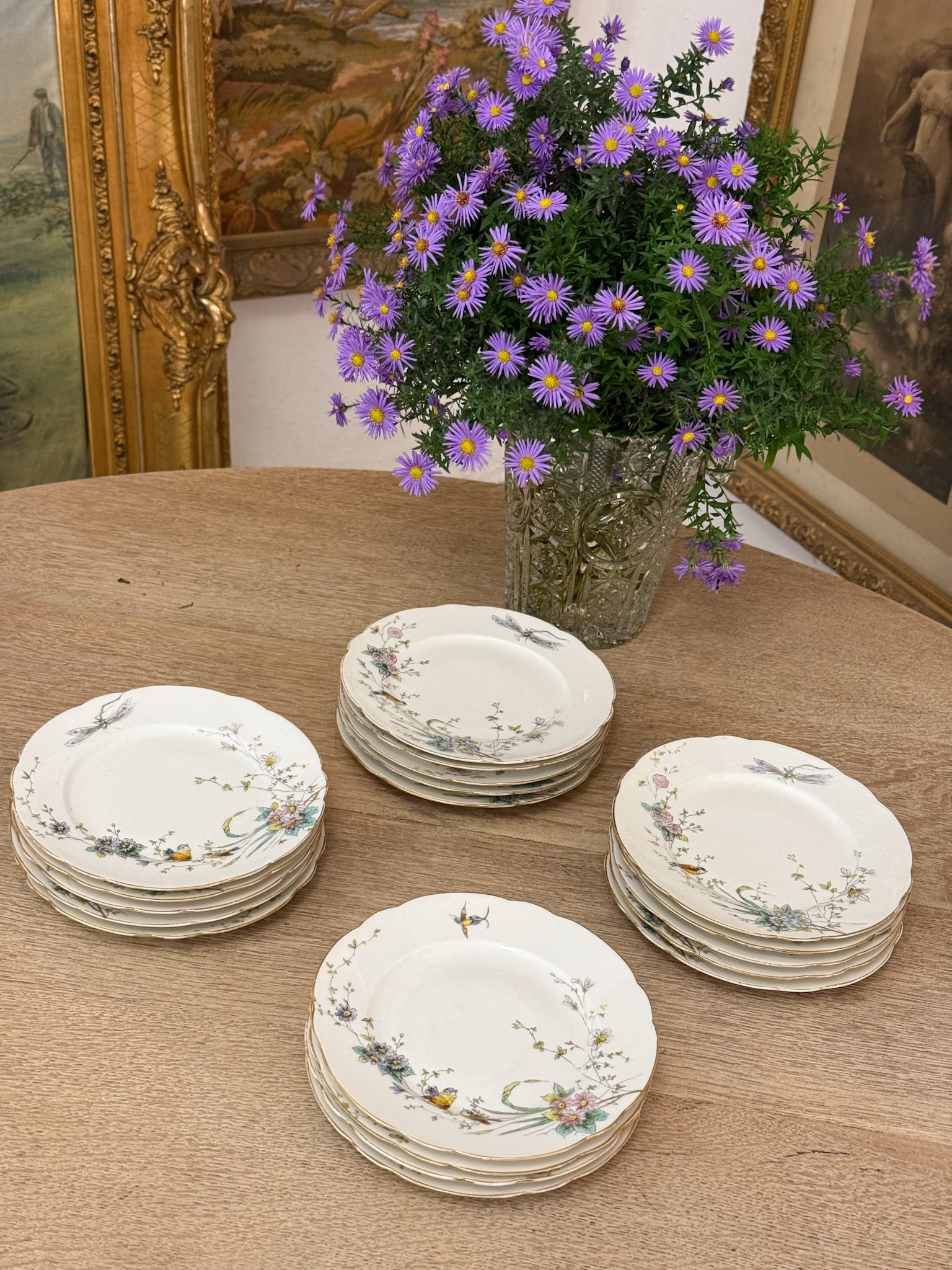
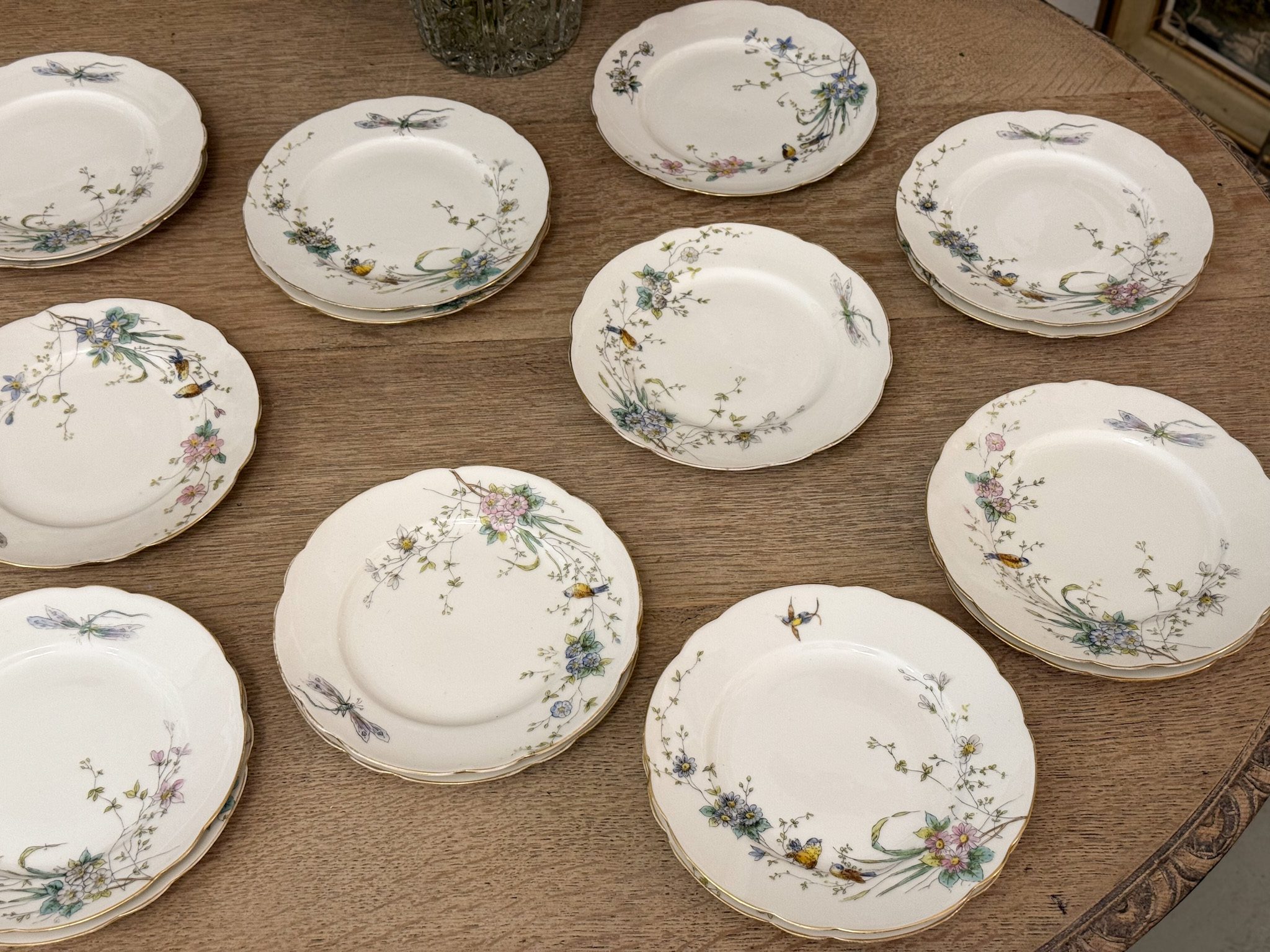
19 porcelāna šķīvju komplekts ar putniem, spārēm un ziediem. Francija (Limoža) vai Bohēmija, aptuveni 1880.–1905. gads. Jūgendstils / Eklektisms.
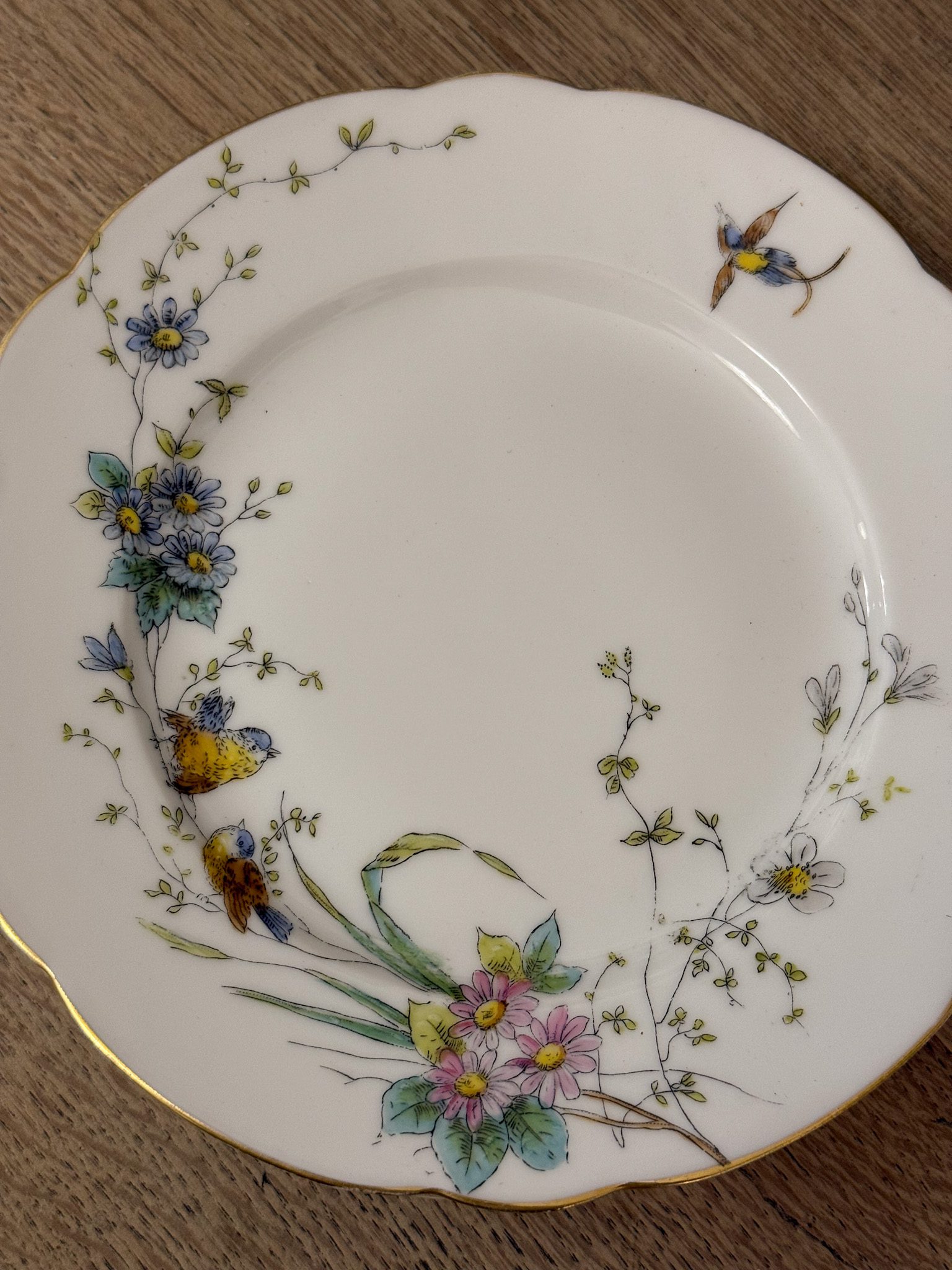
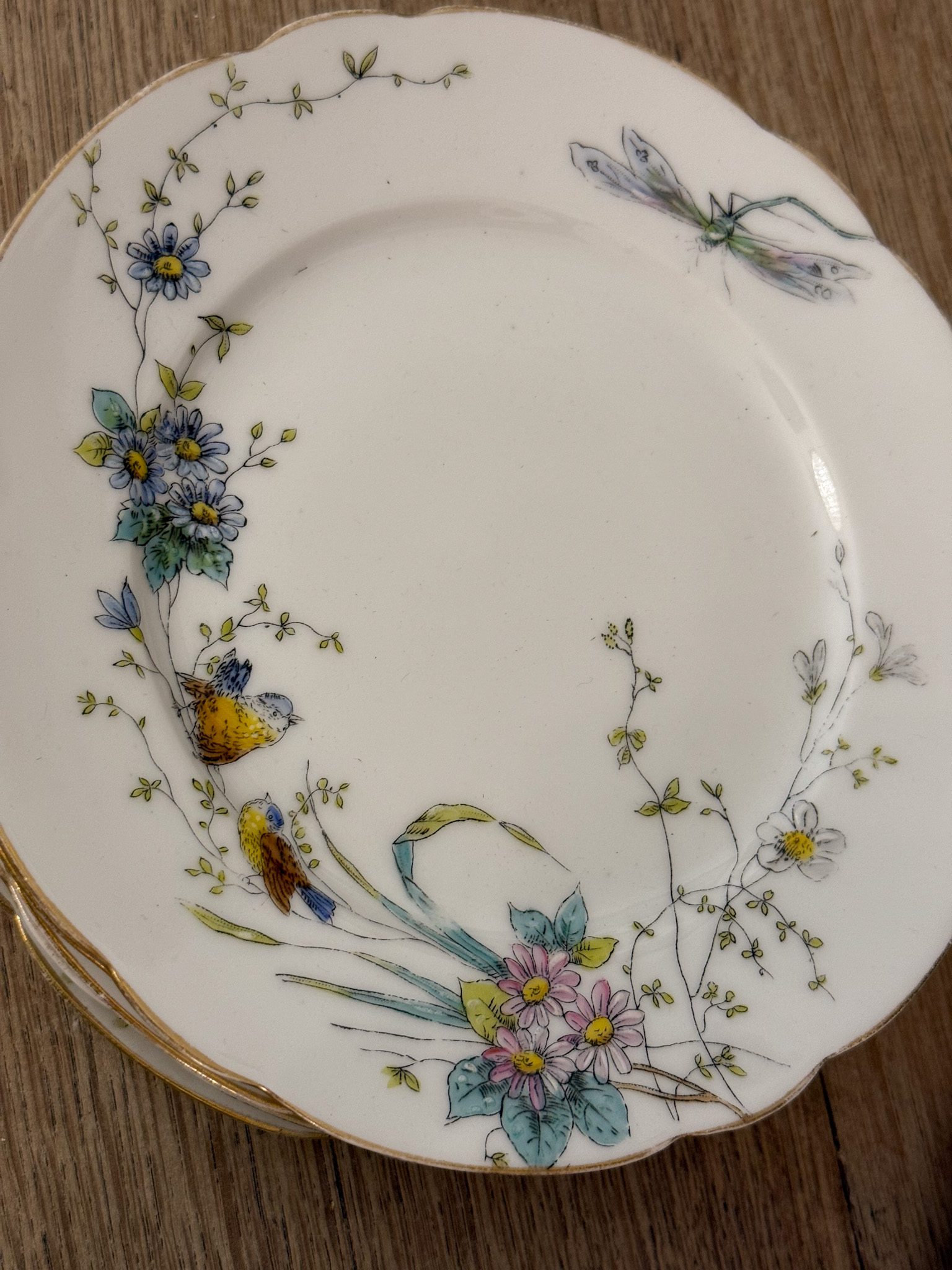
Šis izsmalcinātais 19 šķīvju komplekts ir izcils Agrīnā Jūgendstila (Art Nouveau) dekoratīvās mākslas paraugs, kas Eiropā uzplauka aptuveni no 1880. līdz 1910. gadam. Jūgendstils kā kustība iestājās pret industriālās ražošanas vienmuļību un aicināja atgriezties pie dabas kā galvenā mākslinieciskās iedvesmas avota. Šajā periodā porcelāna dekorācijās sāka dominēt smalkāka, gandrīz botāniska pieeja — gaišas, stieplveida ziedu vijas, lidojoši putniņi un kukaiņi ar caurspīdīgiem spārniem, ko skatītājs varēja gandrīz sajust kā dabas fragmentu uz porcelāna. Tieši šādi motīvi — spāre, putni dažādās lidojuma pozās, puķes ar plāniem kātiem — ir Jūgendstila ikonogrāfijas pamatelementi.
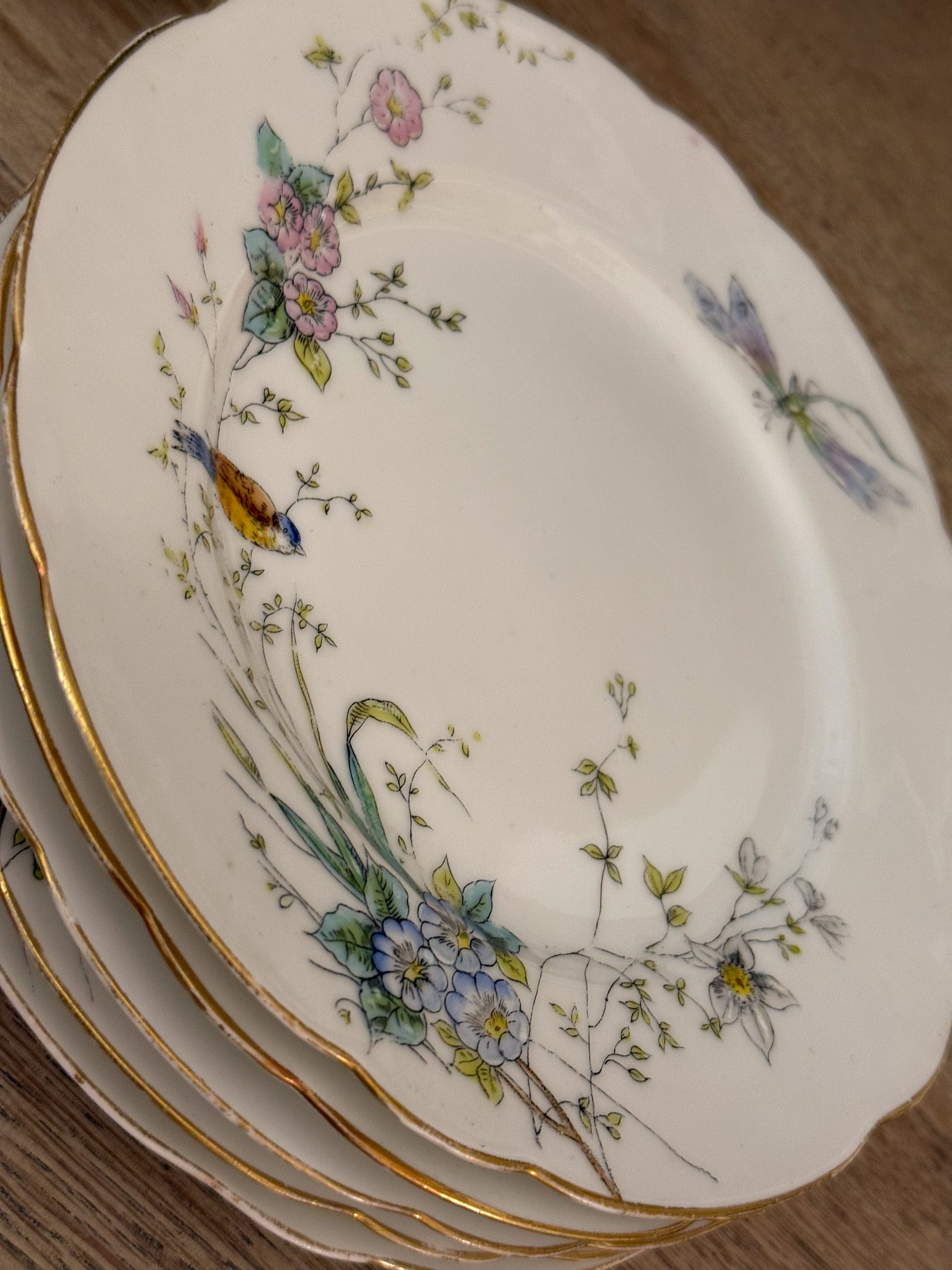
Šķīvji izgatavoti no kvalitatīva balta vai viegli krēmkrāsaina kaulmasa porcelāna ar smalkām viļņainām malām un zelta apmali. Katrs šķīvis ir unikāls — gleznojums izvietots atšķirīgi un katram eksemplāram ir savs kompozīcijas risinājums: dažos dominē zilā spāre, citos — divi mazie putniņi ziedos, vēl citos — garais Āzijas tipa putns (iespējams, paradīzes putna stilizācija) zaļu lapotņu ielokā. Šāda “katra šķīvis atšķirīgs” pieeja bija ārkārtīgi modīga 19. gs. beigās un apliecina augstu māksliniecisko nodomu. Ziedu palete — ceriņkrāsas asteres, baltas un rozā vārpatas, zilganas margrietiņas, spilgti zaļi lapojumi — izvēlēta ar lielu gaumi un rada kopumā gaišu, pavasarīgu atmosfēru.
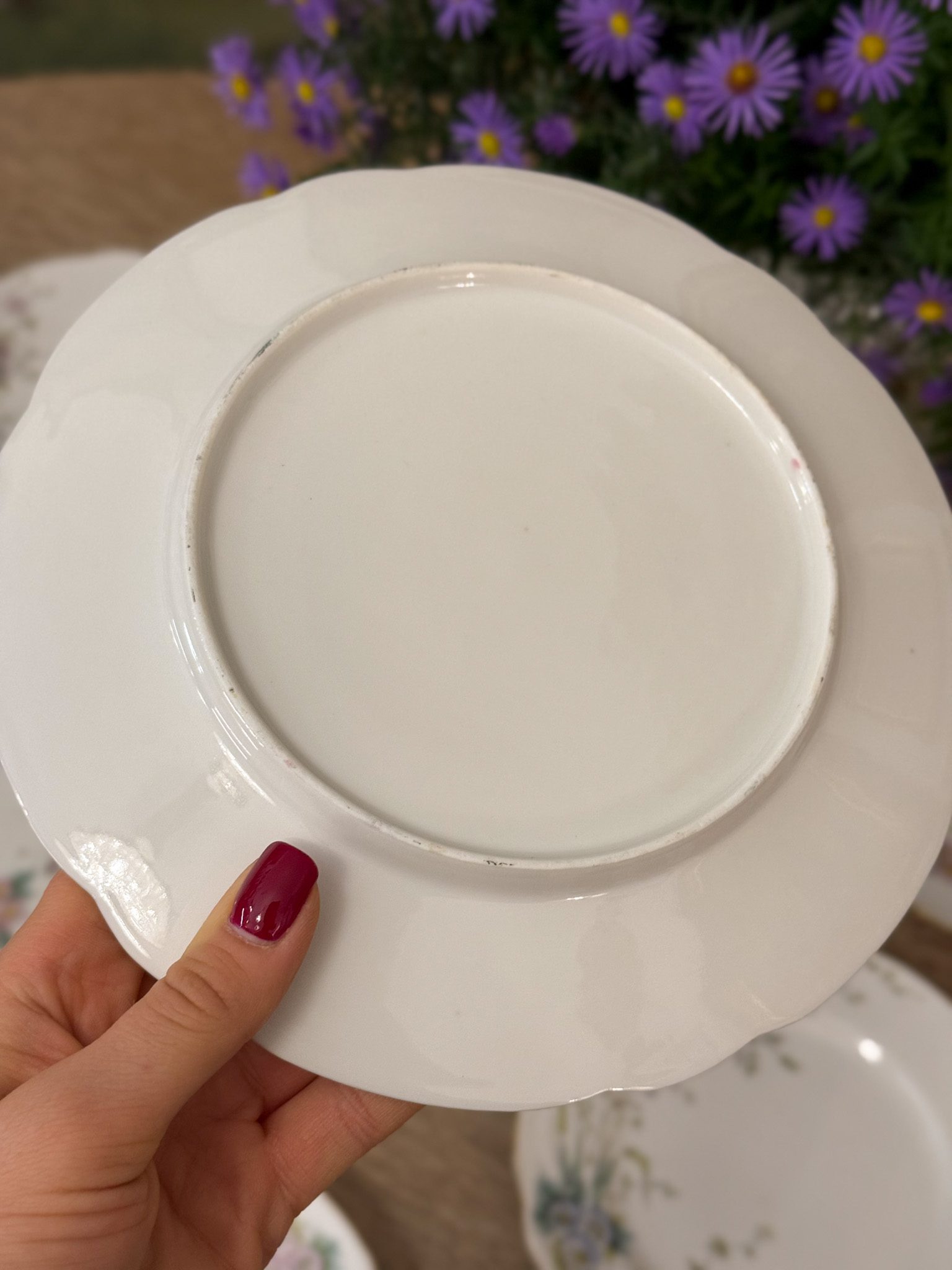
Stils un gleznojuma veids — īpaši spāres tēlojums ar plānām, caurspīdīgām spārniem un putnu grafiskais zīmējums uz smalkiem kātiem — ļoti cieši atbilst Francijas Limožas (Limoges) manufaktūru produkcijai no 19. gs. pēdējiem diviem gadu desmitiem un 20. gs. pirmajiem gadiem. Apakšas marķējums nav skaidri nolasāms fotogrāfijās. Pēc glazūras kvalitātes, formu proporcijām un gleznojuma stila šis komplekts ļoti droši atbilst augstas klases Francijas ražojumam — iespējamie ražotāji ir Haviland & Co. vai kāda no tā laika Limožas tuvumā esošajām manufaktūrām. Neizslēdzama arī augstākās klases Bohēmijas izcelsme.
Interjera ieteikums: šie šķīvji ir nevainojami piemēroti gan lietošanai, gan dekoratīvai ekspozīcijai. Kā aktīvs galda klājums tie piešķirs jebkuram pusdienu vai vakariņu galdam izsmalcinātu, romantisku izskatu. Kā dekorācija — piestiprināti pie sienas (ar speciāliem šķīvju turētājiem) tie veidotu ļoti elegantu kompozīciju ēdamistabā, hallē vai virtuvē ar Jūgendstila, Provansas vai klasiskā stila iekārtojumu. Šķīvji īpaši labi iekļausies interjerā, kur ir smalki koka elementi, dabīgas tekstilijas (lins, muslīns) un ziedi dabīgā krāsainībā.
Stāvokļa novērtējums: Komplekts kopumā saglabājies labā stāvoklī. Gleznojums uz lielākās daļas šķīvju ir spilgts un neskarsts. Zelta apmale vairumā gadījumu labi saglabājusies, ar nelielu nolietojumu atsevišķiem eksemplāriem — tas ir normāli vienumiem ar aktīvas lietošanas vēsturi. Dažiem šķīvjiem var būt viegli kutleru pēdu zīmes vai smalks netīrumu uzkrājums malā, kas ir tīrāms. Porcelāns nav plaisājis, nav lausku vai restaurāciju. Ņemot vērā komplekta vecumu (aptuveni 120+ gadi), vispārējais stāvoklis ir teicams.
Priekšmeta stāvoklis ir pilnībā atspoguļots pievienotajās fotogrāfijās.
🇬🇧 ENGLISH
Set of 19 porcelain plates with birds, dragonflies and floral motifs. France (Limoges) or Bohemia, approximately 1880–1905. Art Nouveau / Eclectic style.
This refined set of 19 porcelain plates is an outstanding example of early Art Nouveau decorative art, a movement that flourished across Europe from approximately 1880 to 1910. Art Nouveau was, at its core, a reaction against the monotony of industrial production and a return to nature as the supreme source of artistic inspiration. In porcelain decoration of this period, this philosophy manifested in a delicate, almost botanical approach — light, trailing floral sprays, birds in flight, and insects with translucent wings rendered so finely that they appear as fragments of a living garden preserved on porcelain. The motifs present here — the dragonfly, small birds in various poses, flowers with fine stems, and ornamental grasses — are canonical elements of the Art Nouveau decorative vocabulary.
The plates are made from fine white to very slightly cream-toned bone china with subtly scalloped edges and a gilded rim. Remarkably, each plate in the set carries a unique compositional arrangement: some are dominated by a large blue dragonfly, others by a pair of small birds among flowers, still others by a long-tailed bird of paradise-style figure amid sweeping foliage. This “each plate different” approach was extremely fashionable in the late 19th century and speaks to a high level of artistic intention in the commission or manufacture of the set. The floral palette — lilac asters, white and pink forget-me-nots, blue daisies, vivid green foliage — is chosen with considerable taste, creating an overall effect that is luminous, spring-like, and deeply decorative.
The style of the decoration — particularly the rendering of the dragonfly with diaphanous wings and the graphic precision of the bird motifs on fine stems — is very closely consistent with the output of Limoges manufacturers during the final two decades of the 19th century and the opening years of the 20th. The maker’s mark on the reverse is not clearly legible in the photographs provided. Based on the glaze quality, proportions of the forms, and the style of painting, this set corresponds most plausibly to French manufacture of the highest order — likely Haviland & Co. or a comparable Limoges atelier — though superior Bohemian manufacture cannot be excluded.
Interior recommendation: These plates are perfectly suited both for active use and for decorative display. As a working dinner set, they bring an air of refined elegance to any lunch or dinner table. As wall decoration — mounted using purpose-made plate hangers — they create a beautifully composed arrangement in a dining room, hallway, or kitchen with Art Nouveau, Provençal, or classical-style furnishings. They pair particularly well with interiors featuring fine wood elements, natural textiles such as linen or muslin, and flowers in their natural colours.
Condition: The set is in good overall condition. The painted decoration on the majority of plates is vivid and intact. The gilded rim is well-preserved on most examples, with minor wear on individual pieces consistent with age and prior use. Some plates may show light cutlery marks or minor rim soiling, which is cleanable. No crazing, chips, or restoration is present across the set. Given the age of the pieces — approximately 120 or more years — the overall condition is excellent.
The condition of this piece is fully documented in the accompanying photographs.