
trīsdaļīgs porcelāna šķīvis ar ziedu, putna un zivs motīviem (6170)
🇱🇻 LATVISKI
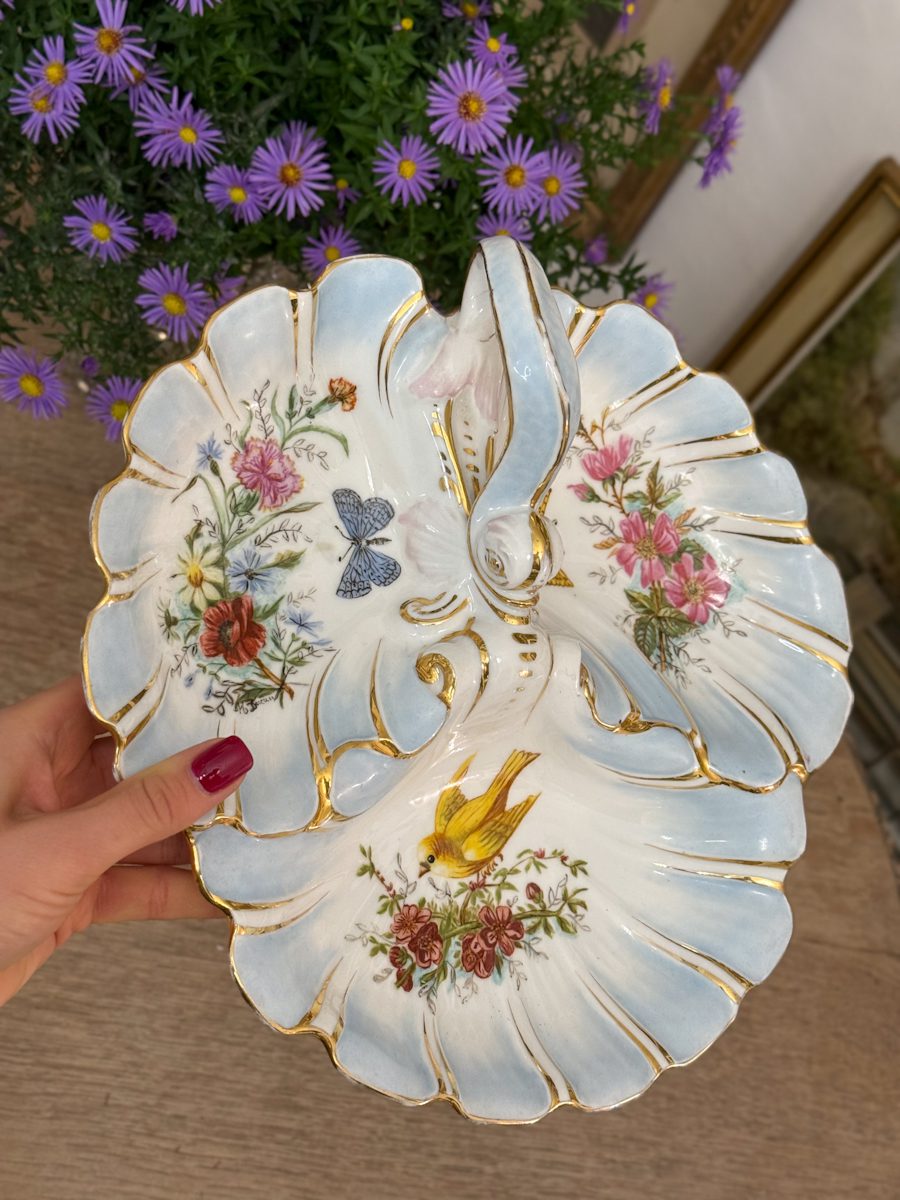
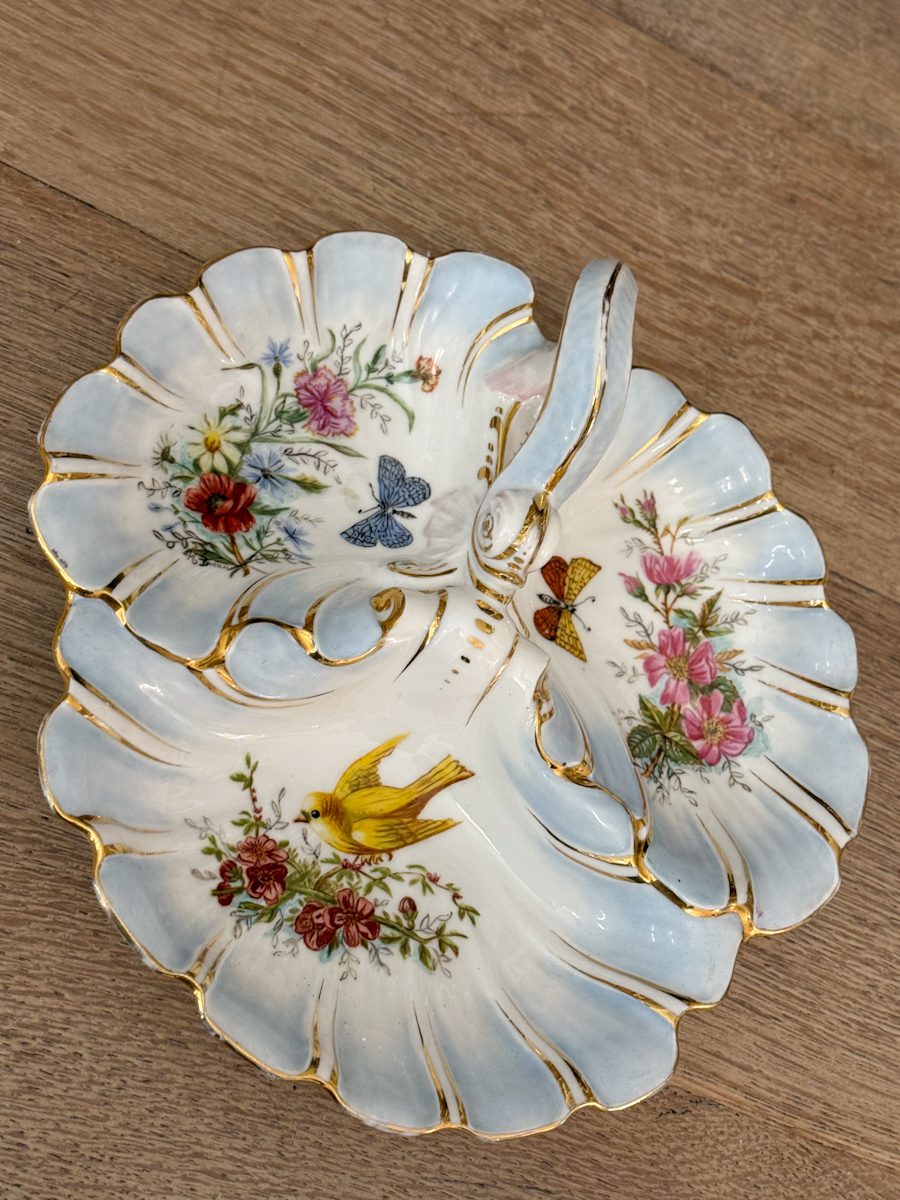
Trīsdaļīgs porcelāna konfekšu/uzkodu šķīvis ar rokturi. Eiropa, aptuveni 19. gs. otrā puse — 20. gs. sākums.
Šis izsmalcinātais trīsdaļīgais porcelāna šķīvis ar augstu rokturi pieder Vēlā Romantisma un agrīnā Eklektisma stilam, kas Eiropas dekoratīvajā mākslā dominēja aptuveni no 1860. līdz 1900. gadam. Šis periods raksturojās ar tieksmi uz greznību, dabas motīvu idealizāciju un Rokokō perioda (18. gs.) formu un dekorācijas principu atdzimšanu — tā sauktā Neo-Rokoko jeb Otrā Rokoko kustība, kas bija īpaši populāra Francijā, Vācijā un Bohēmijā.
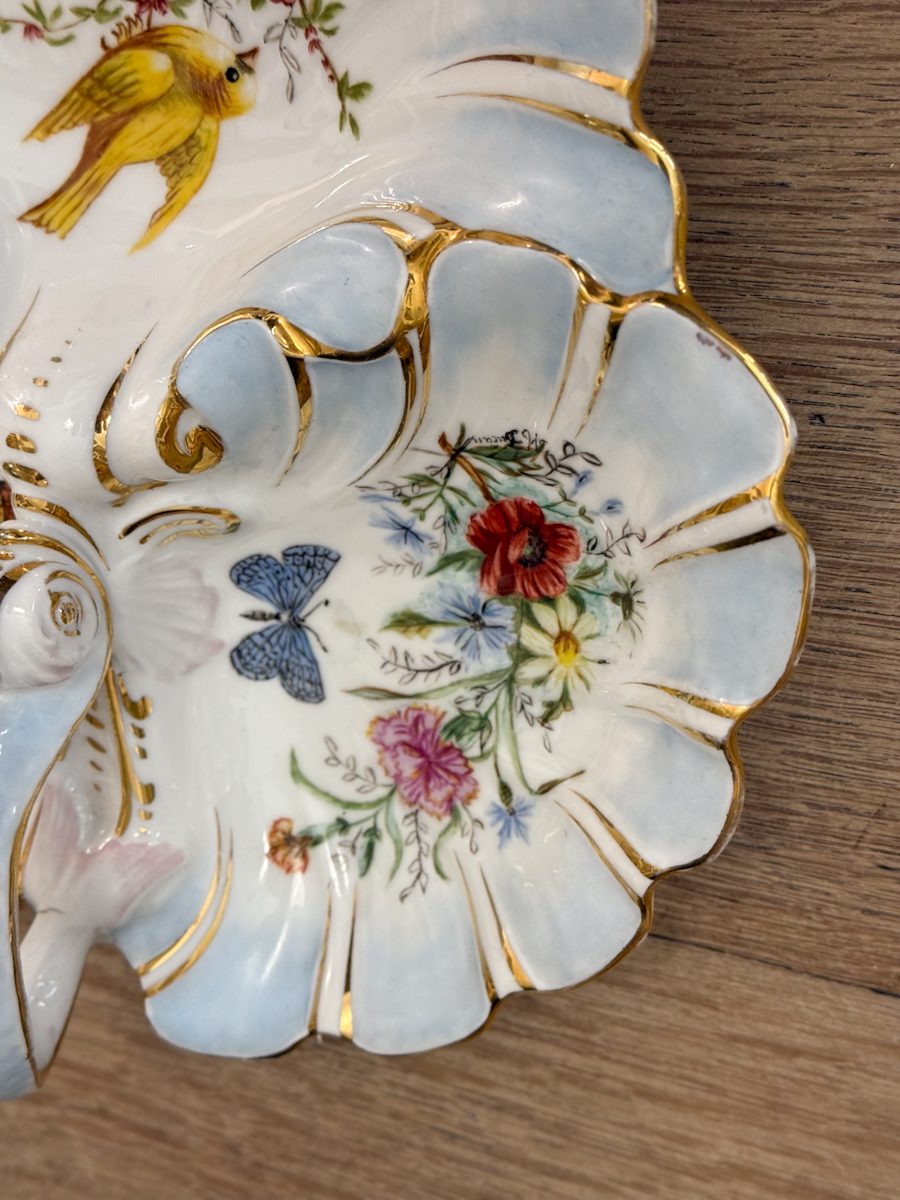
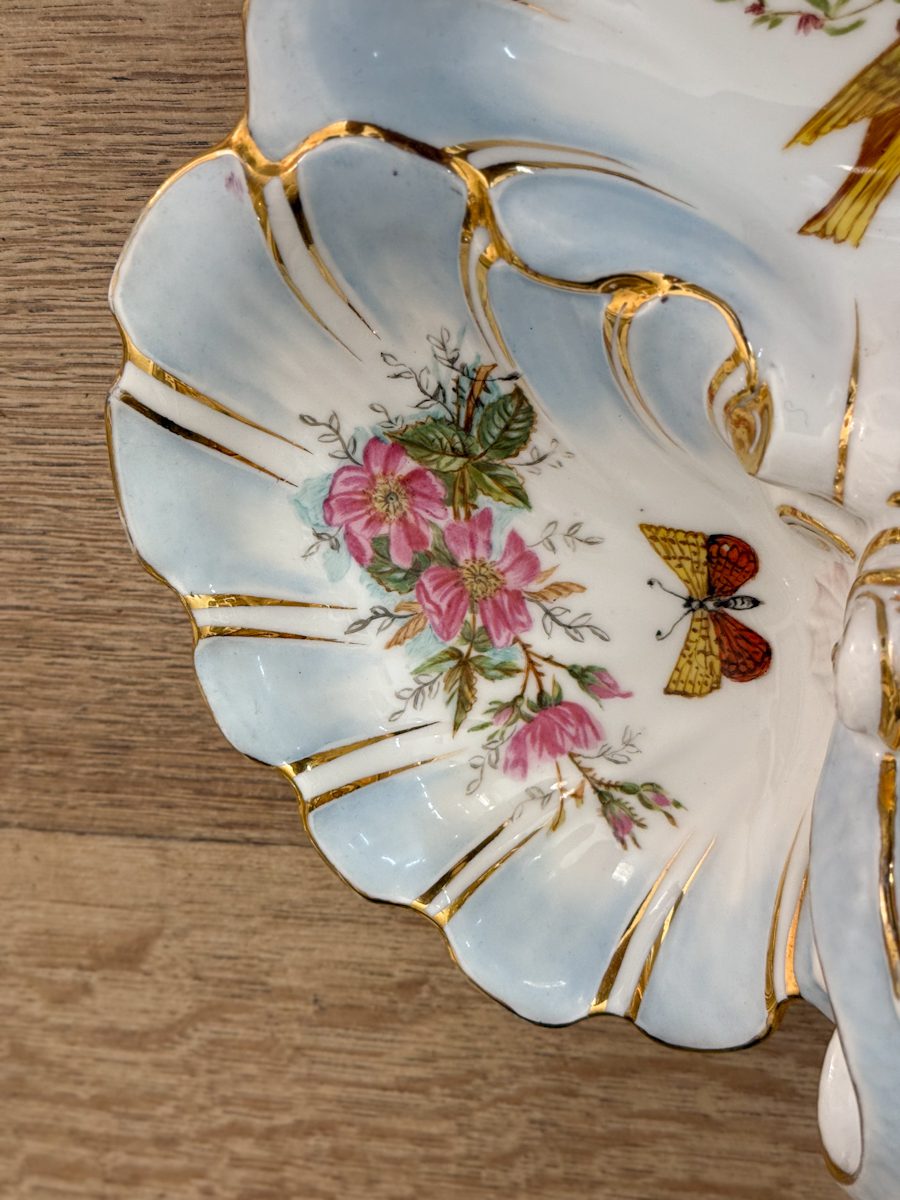
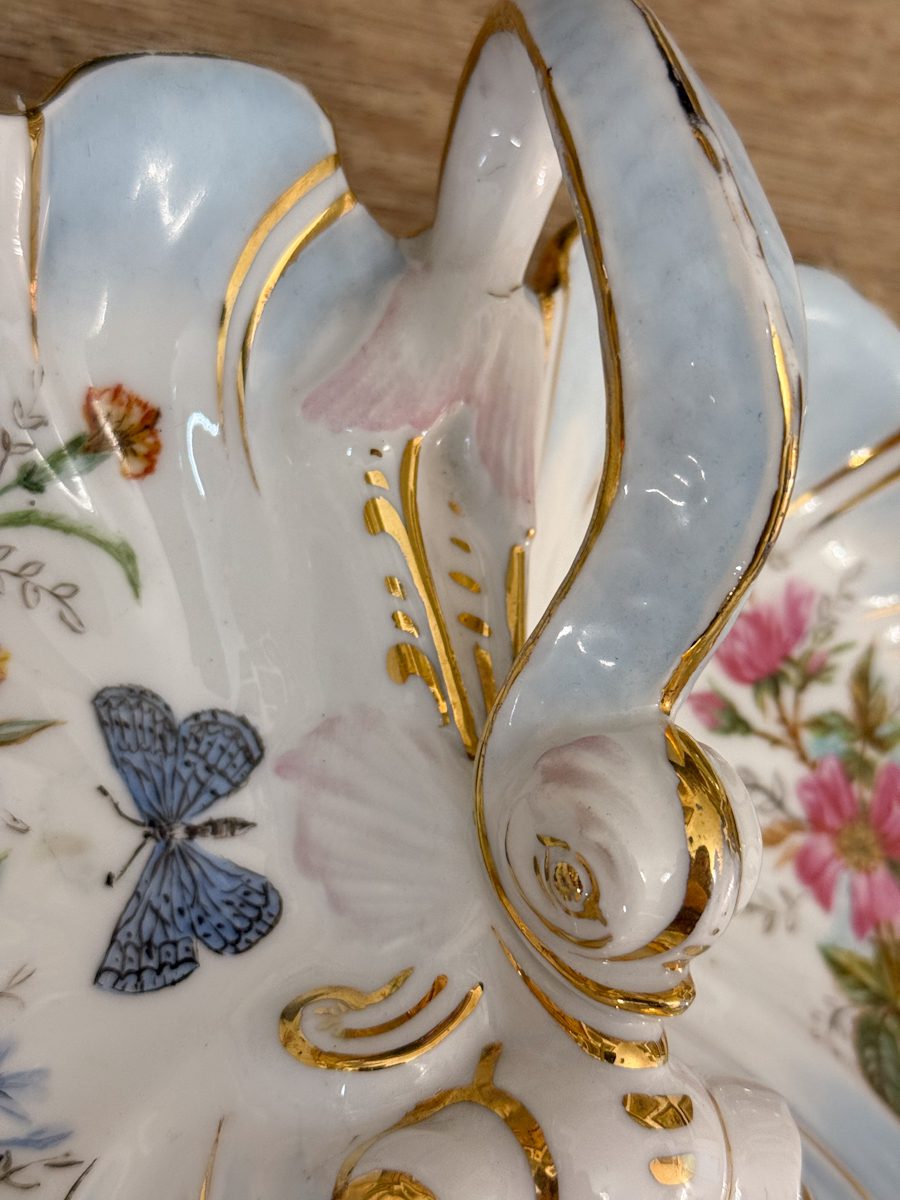
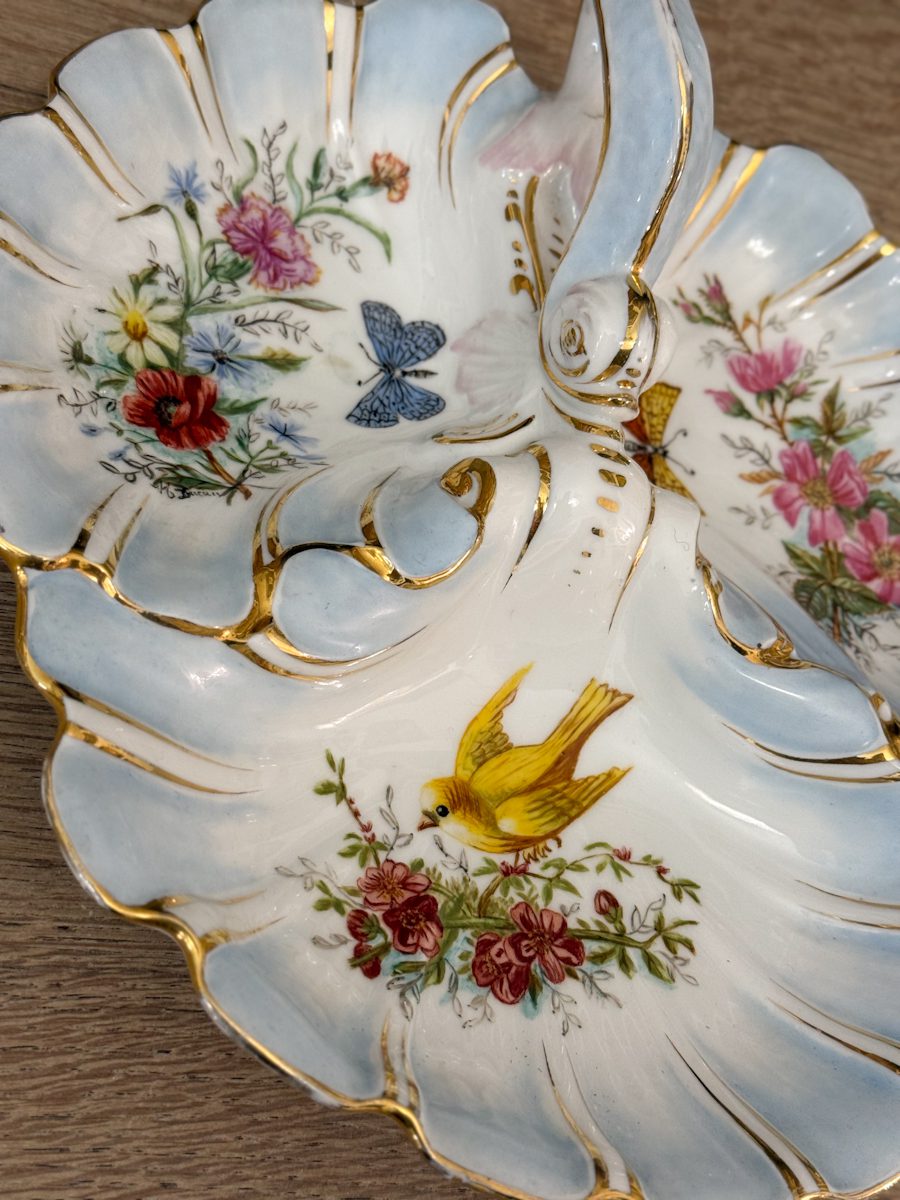
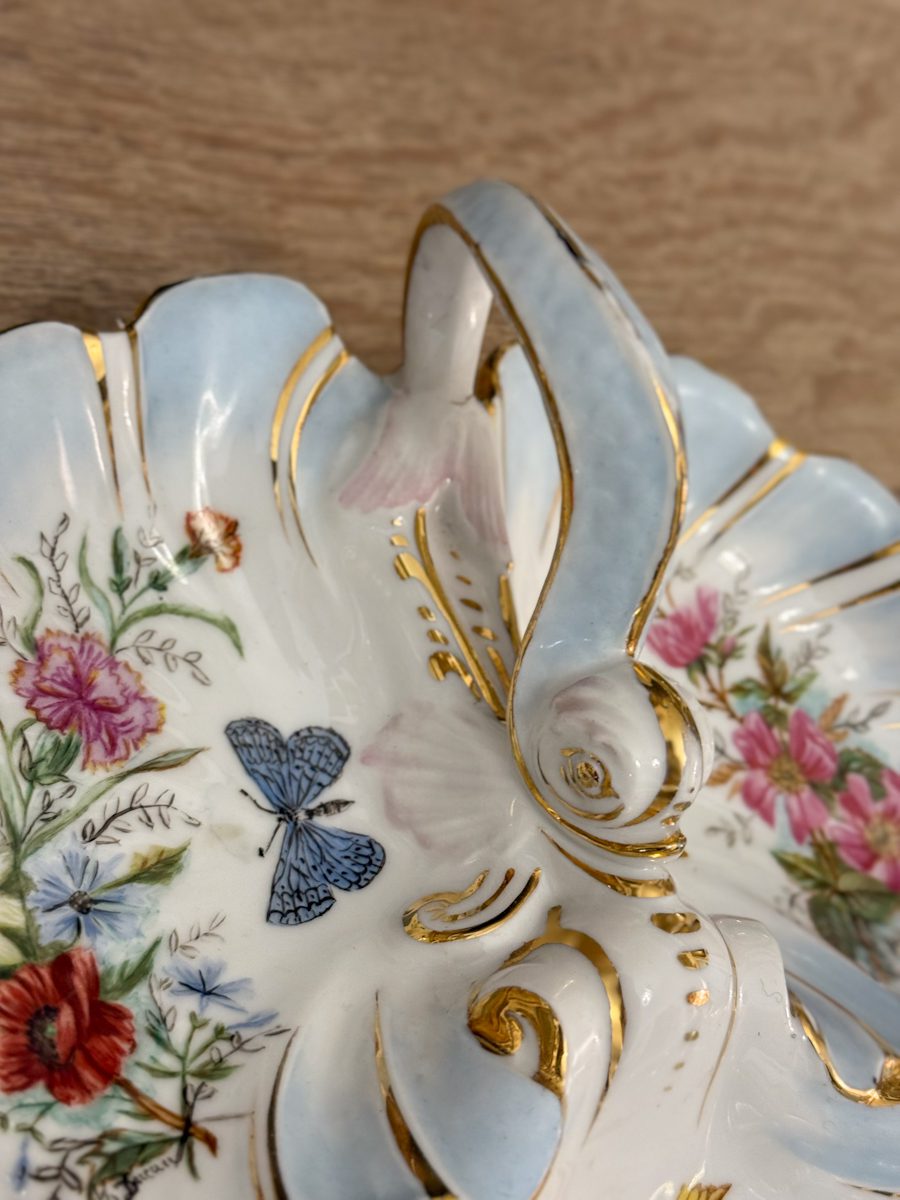
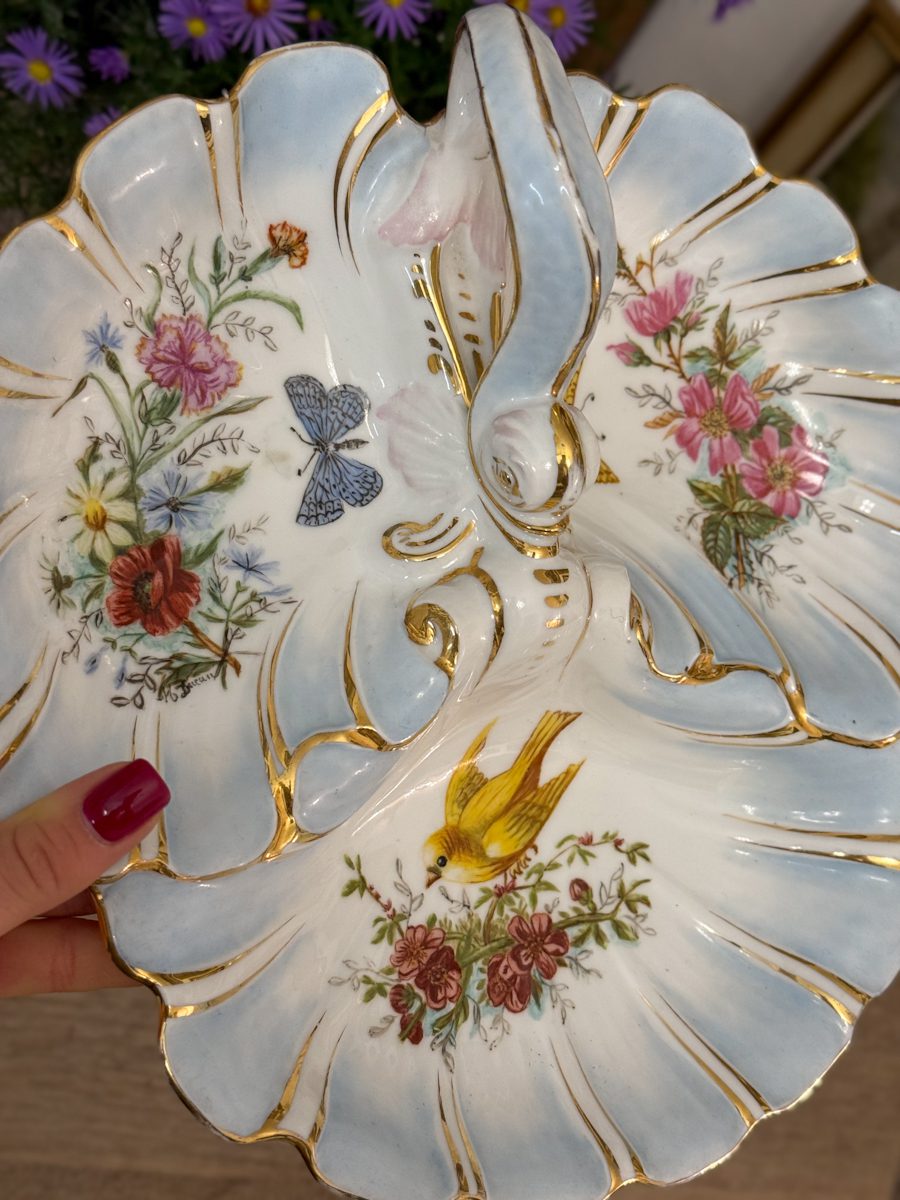
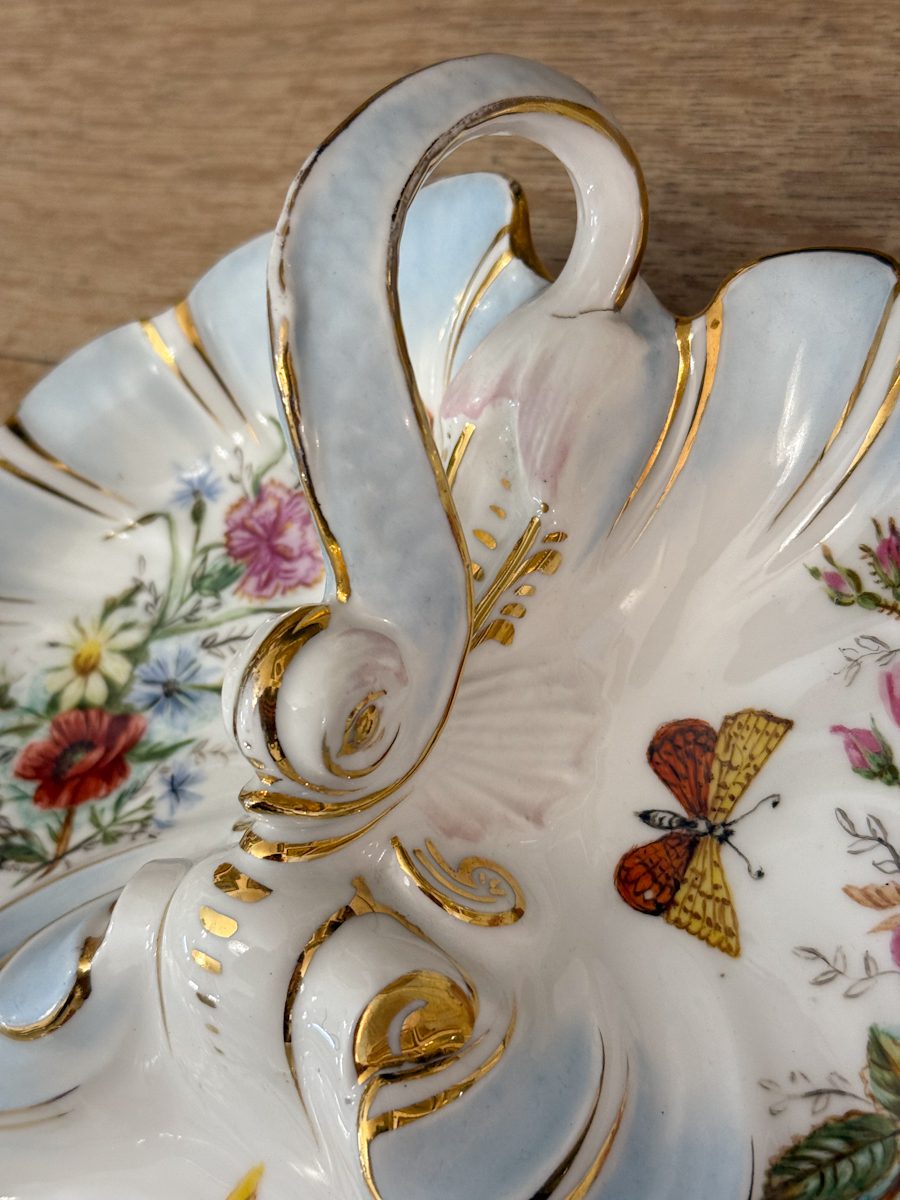
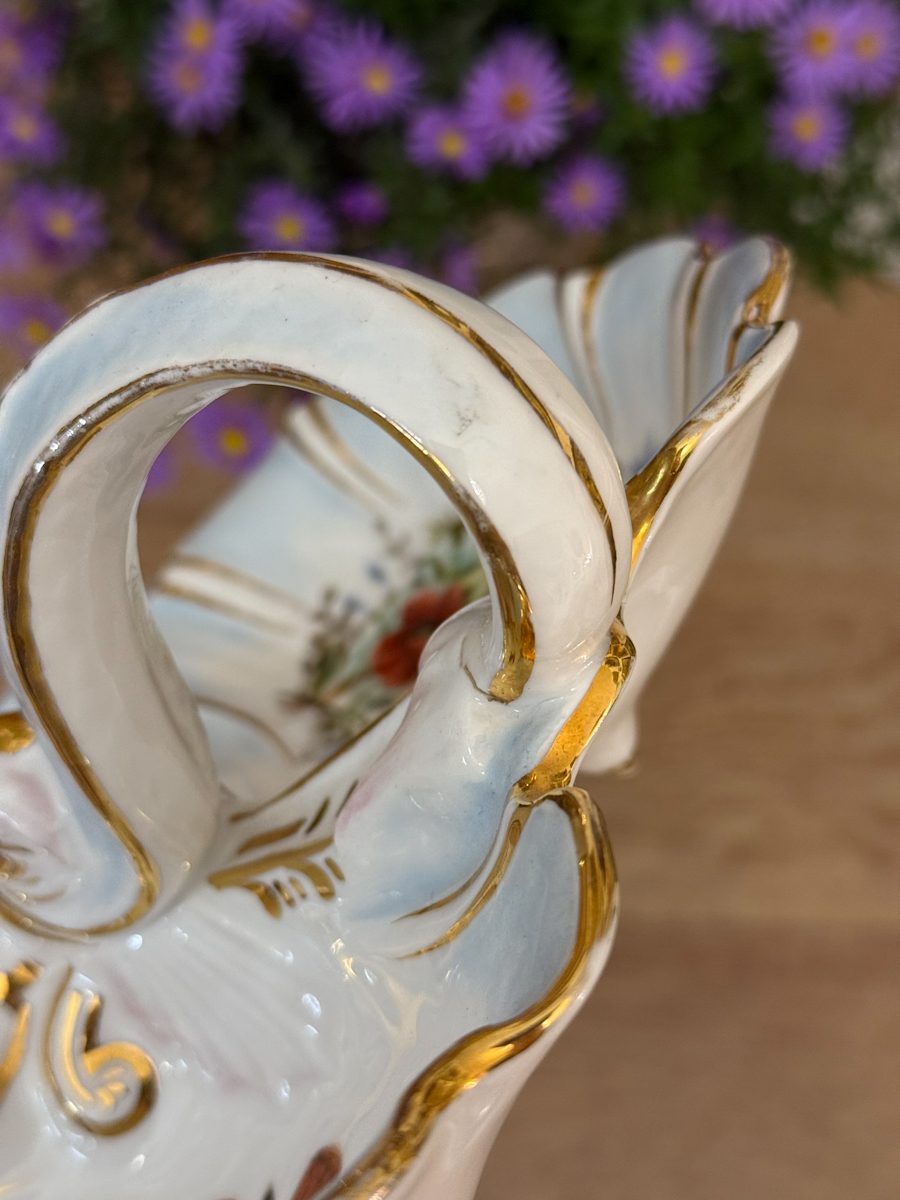
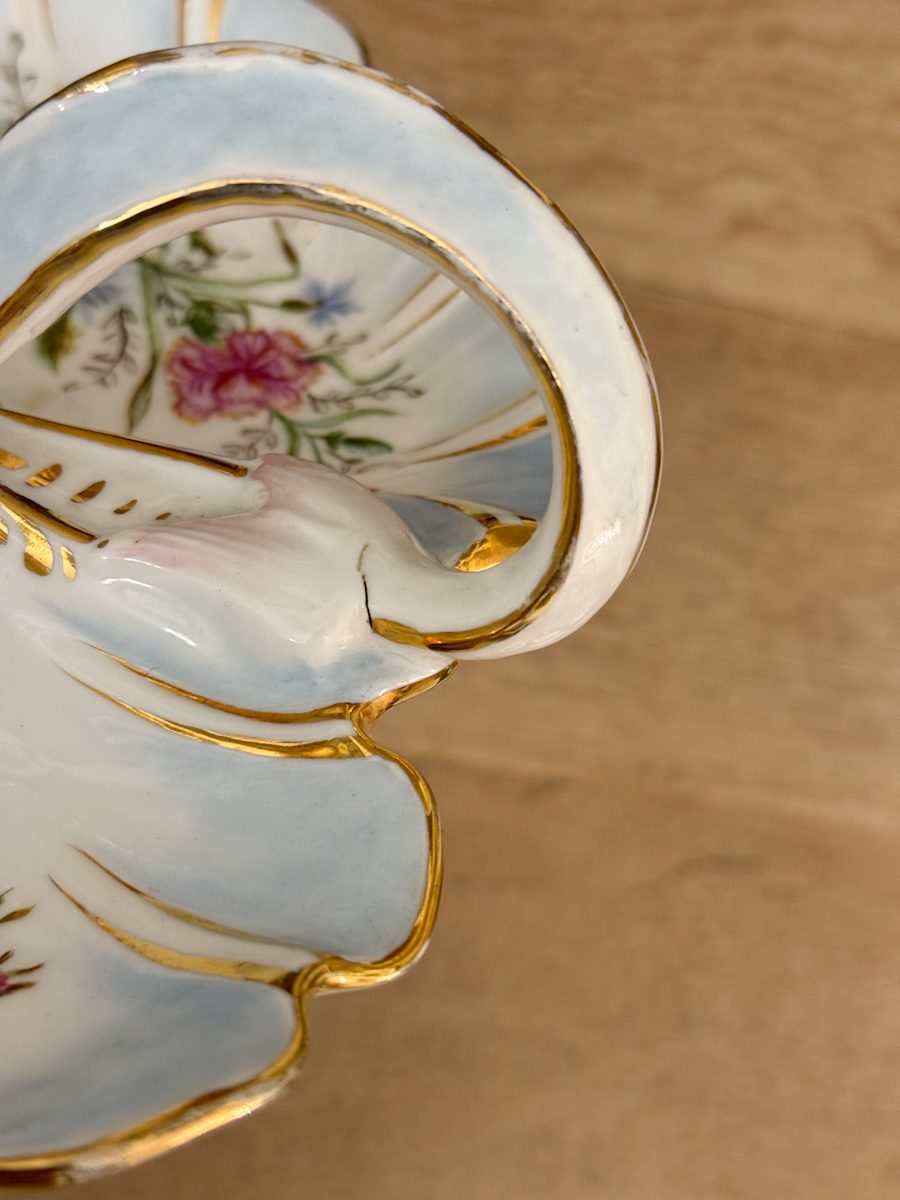
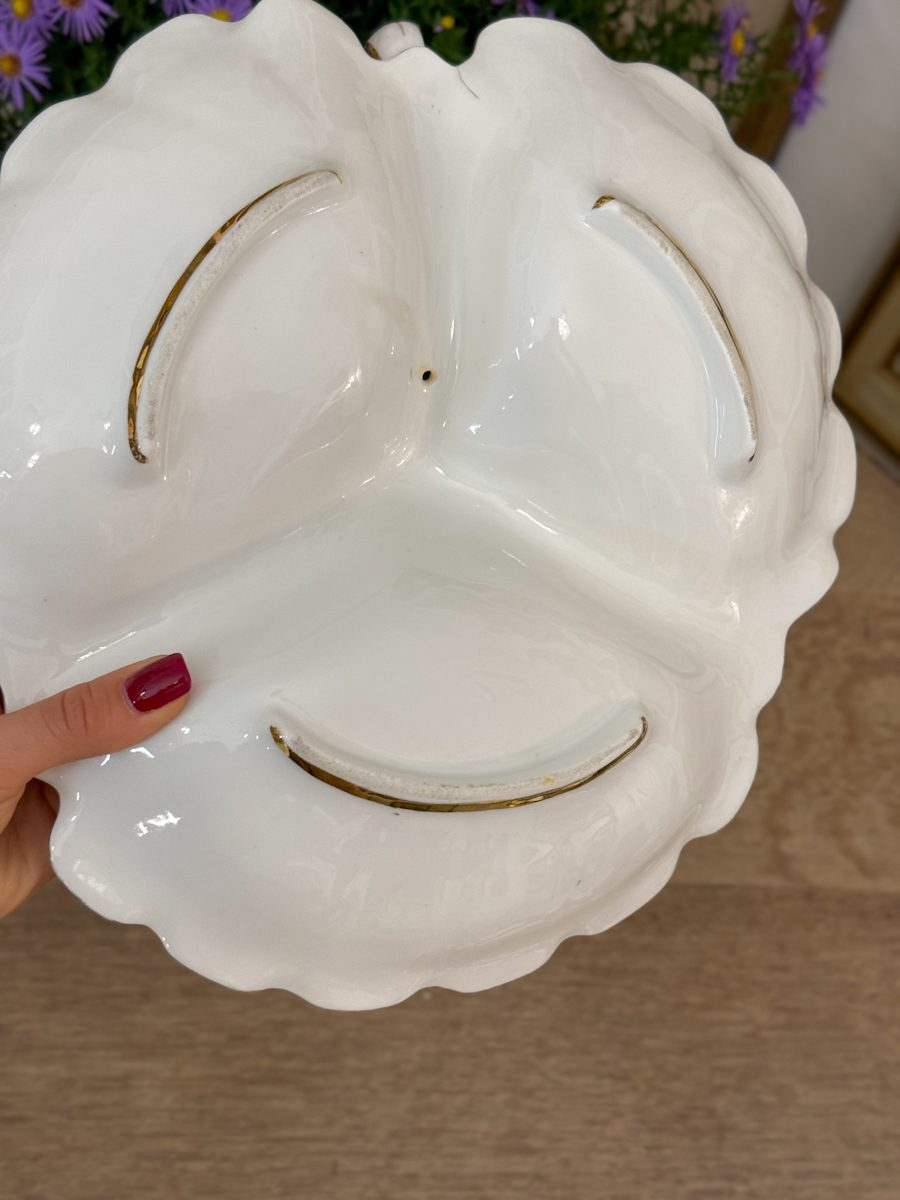
Šķīvis veidots no baltā kaulmasa porcelāna ar maigi zilganpelēku aerografētu fonu, kas piešķir tam raksturīgo spīdīgo, “debesu” efektu. Formu veido trīs lapiņveida sekcijas, kuras savā starpā nodala plastisks, greznots rokturis ar ažūriem ritinājumiem un reljefa rozes pumpura akcentu. Visu kontūru norobežo smalkais zelta aveļot krāsots malas apmale. Gleznojums veikts ar augstu meistarību: katrā sekcijā ir atšķirīga dārzā un dabā sastopamu radību kompozīcija — meža un dārza ziedi (magones, margrietiņas, neļķes, mežrozes), trīs dažādi tauriņi (zilais, oranždzeltens un brūnais), dzeltens putniņš (varbūt kanarijs vai zeltīte) uz ziedu zara. Gleznojuma tehnika un smalkums liecina par rūpīgu roku darbu vai augstākās klases transfera druku ar roku papildinājumiem.
Ražotāja marķējums uz apakšas nav skaidri saredzams fotogrāfijās. Pēc izpildes stila, formas valodas un glazūras kvalitātes šādi šķīvji visbiežāk ražoti Bohēmijā (Čehija), Silēzijā vai Francijā (Limoža). Limoges reģions Francijā bija 19. gs. otrajā pusē galvenais šāda veida dekoratīvā galda porcelāna ražošanas centrs Eiropā — tur darbojās vairāk nekā 30 manufaktūras, tostarp tādas kā Haviland & Co., Bernardaud, Pouyat un citas, kas specializējās tieši šādos elegantajos galds rīkos ar dabas motīviem un zelta apdari. Bohēmijas manufaktūras (piemēram, no Karlosbades/Karlovy Vary apkārtnes) ražoja līdzīgas kvalitātes preces, kuras eksportēja pa visu Eiropu, arī uz Baltijas guberņām.
Interjera ieteikums: šis šķīvis ir izcils akcents klasiskā, romantiskā vai French Country stilā iekārtotā mājoklī. Tas lieliski derēs uz konsoles galdiņa vai governess galda zem spoguļa, blakus svecturim vai nelielai porcelāna vāzei ar žāvētiem ziediem. Var tikt izmantots arī kā dekoratīvs elements uz ēdamistabas galda vai bufetes ar retro, Provansas vai Victorian stilistikas interjeru.
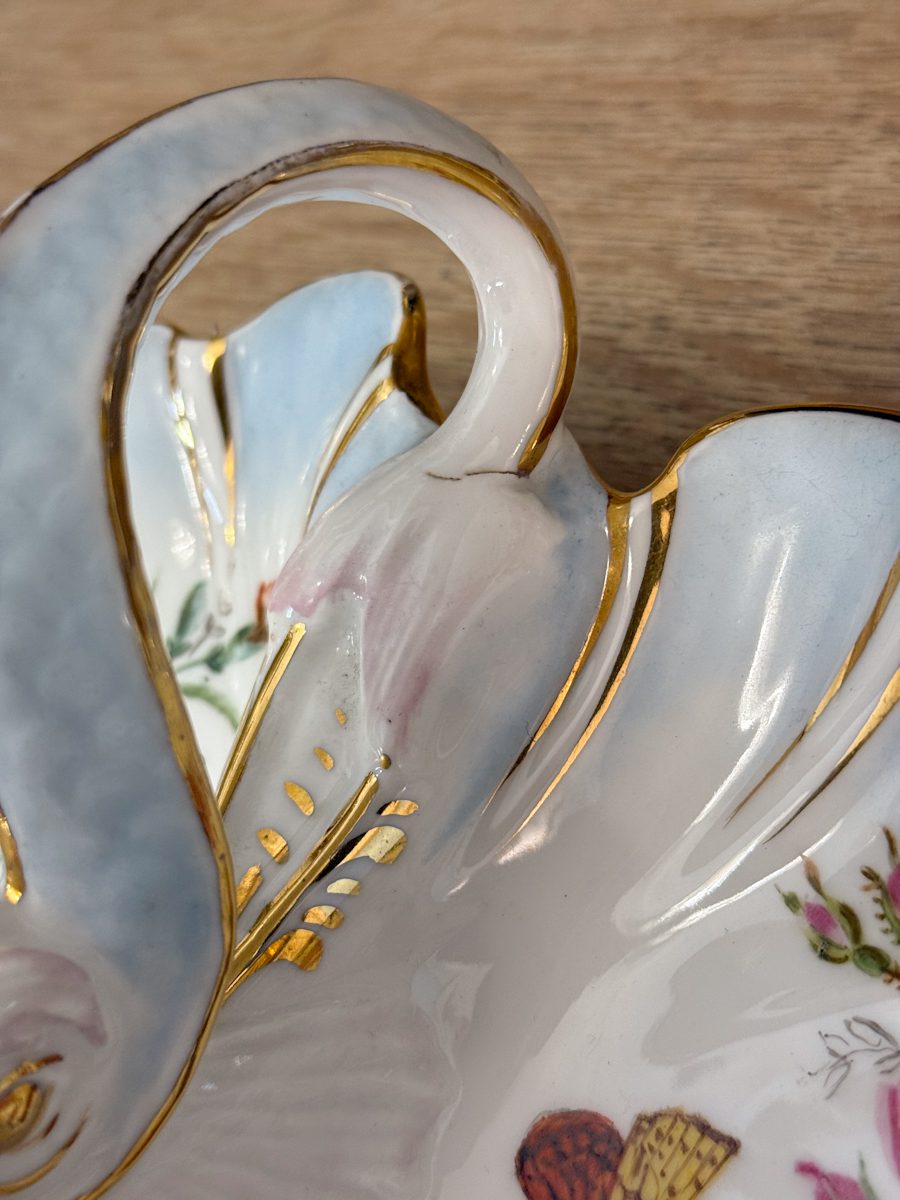
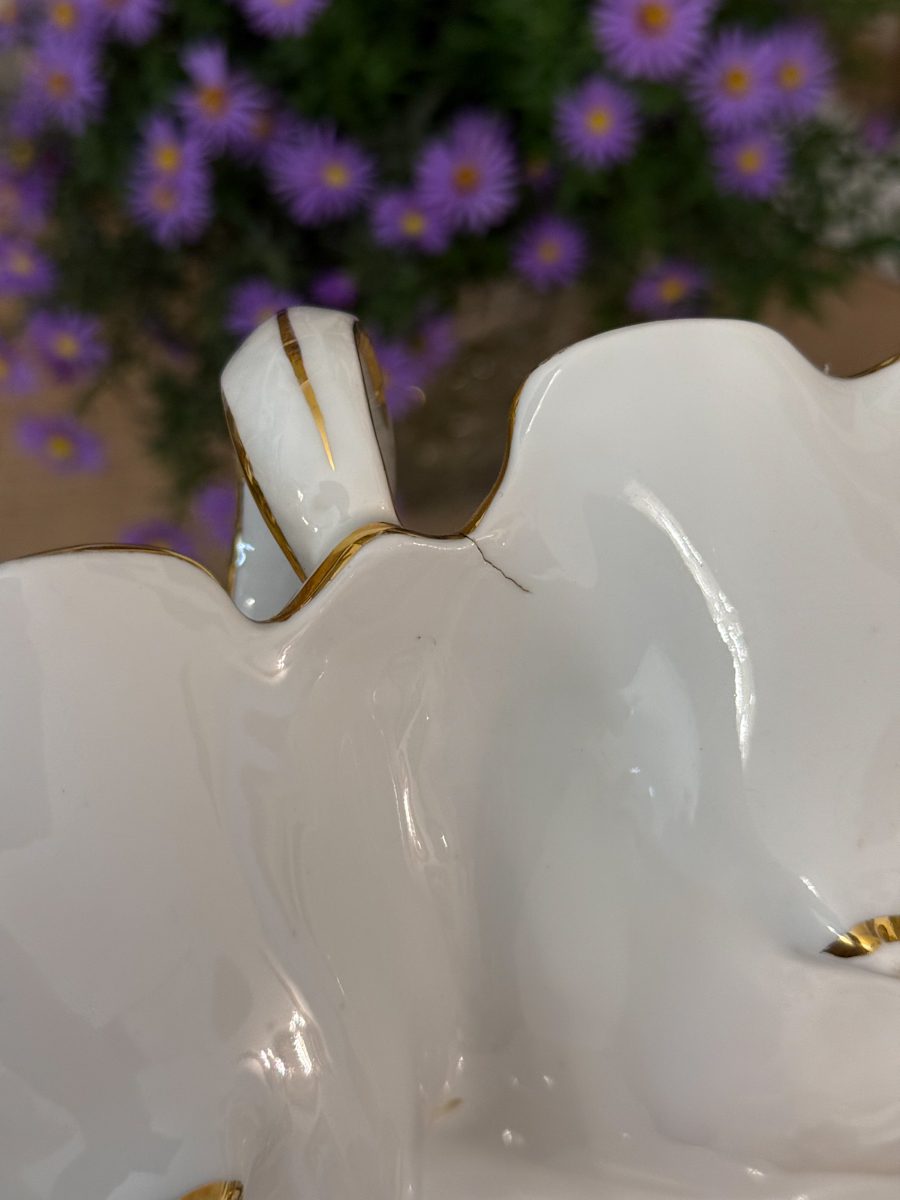
Stāvokļa novērtējums: Šķīvis saglabājies labā vispārējā stāvoklī, ņemot vērā tā vecumu. Gleznojums ir spilgts un neskarsts. Zeltījums lielākoties labi saglabājies, ar minimālām nolietojuma pazīmēm atsevišķās vietās. Redzamas divas rūpnieciskas rakstura plaisas (hairline cracks) — viena roktura pamatnē, otra ārējā apmalē — kas ir bieži novērojama parādība šāda sarežģīta apjoma porcelāna priekšmetos, veidojas žāvēšanas vai apdedzināšanas laikā un neliecina par mehānisku bojājumu. Šo plaisu klātbūtne ir pilnīgi normāla šādam priekšmetam un nemazina tā dekoratīvo un kolekcionāru vērtību. Šķīvis ir vesels, bez lauskiem vai restaurācijām.
Priekšmeta stāvoklis ir pilnībā atspoguļots pievienotajās fotogrāfijās.
🇬🇧 ENGLISH
Three-section porcelain bon-bon / hors d’oeuvre dish with handle. Europe, circa second half of the 19th century – early 20th century.
This exquisite three-section porcelain dish with a tall openwork handle belongs to the Late Romantic and early Eclectic style, which dominated European decorative arts from approximately 1860 to 1900. This era was characterised by a taste for opulence, the idealisation of natural motifs, and a revival of 18th-century Rococo forms and decorative principles — known as the Neo-Rococo or Second Rococo movement, particularly fashionable in France, Germany, and Bohemia.
The dish is crafted from fine white bone china with a delicate airbrush-applied powder-blue ground, lending it a luminous, celestial quality. Its form consists of three leaf-shaped sections divided by a sculptural handle with pierced scrollwork and a raised rosebud finial. All edges are finished with a fine hand-applied gilded border. The polychrome painted decoration is executed with considerable skill: each section presents a distinct naturalistic composition featuring meadow and garden flowers (poppies, daisies, carnations, wild roses), three different butterfly species (blue, orange-and-yellow, and brown), and a yellow songbird — possibly a canary or goldfinch — perched among flowering branches. The fineness of the painting suggests either skilled hand-painting or high-quality transfer printing with hand-enhanced details.
The maker’s mark on the base is not clearly legible in the photographs provided. Based on the stylistic execution, formal language, and quality of the glaze, pieces of this type were most commonly produced in Bohemia (present-day Czech Republic), Silesia, or France — particularly the Limoges region, which was the pre-eminent centre of European decorative table porcelain production in the second half of the 19th century. Among the many Limoges manufacturers active during this period were Haviland & Co., Bernardaud, and Pouyat, all of which specialised in elegant tableware featuring naturalistic motifs and gilded decoration. Bohemian manufacturers from the Karlovy Vary region produced goods of comparable quality that were exported across Europe, including to the Baltic provinces.
Interior recommendation: This dish makes an outstanding accent piece in a Classic, Romantic, or French Country interior. It would suit perfectly on a console table or dressing table beneath a mirror, alongside a candlestick or small porcelain vase with dried flowers. It can equally serve as a decorative focal point on a dining table or sideboard in a Provençal, Victorian, or vintage-inspired setting.
Condition: The dish is in good overall condition considering its age. The painted decoration is vivid and intact. Gilding is largely well-preserved, with minor wear in isolated areas consistent with age. Two hairline cracks are present — one at the base of the handle and one along the outer rim — a commonly observed characteristic in porcelain pieces of complex sculptural form, typically occurring during the drying or firing process rather than as a result of mechanical damage. Their presence is entirely normal for a piece of this type and does not diminish its decorative or collector value. The dish is complete, with no chips, losses, or restoration.
The condition of this piece is fully documented in the accompanying photographs.