
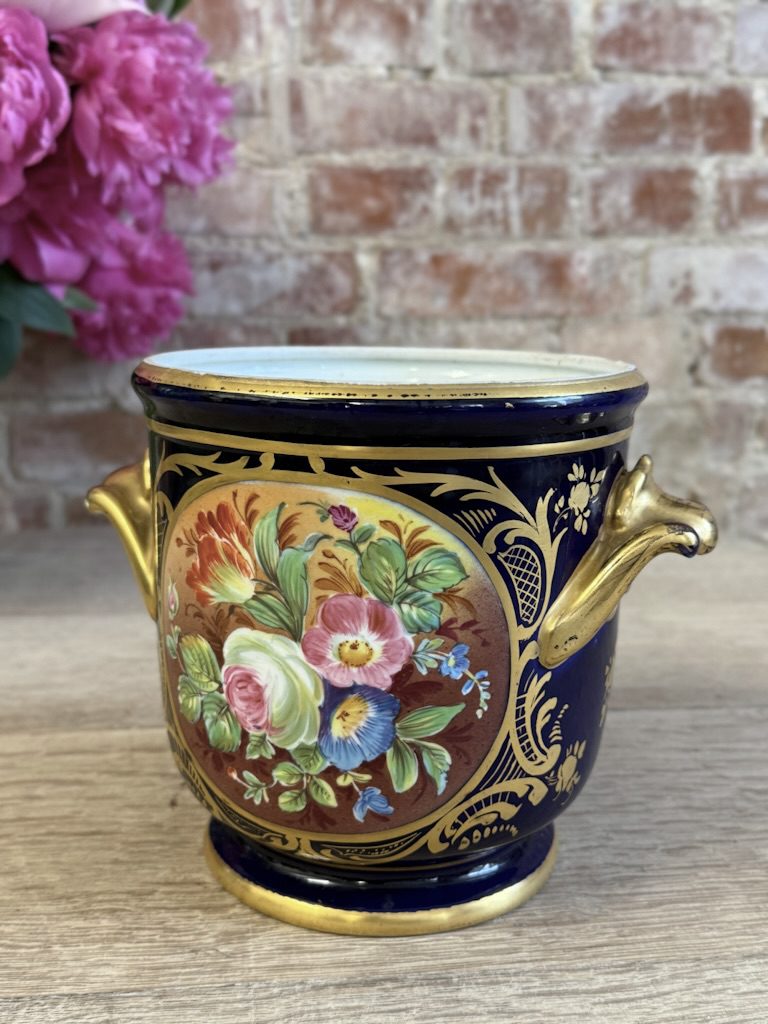
porcelāna kašpo, tumši zilā krāsā ar ziedu motīviem, neliela izmēra (5794)
Izmēri: augstums 19 cm, platums 24 cm, atvēruma diametrs 17,5 cm
Antīks franču Sèvres (Sevres) porcelāna kašpo kobalta zilā krāsā ar ziedu motīviem
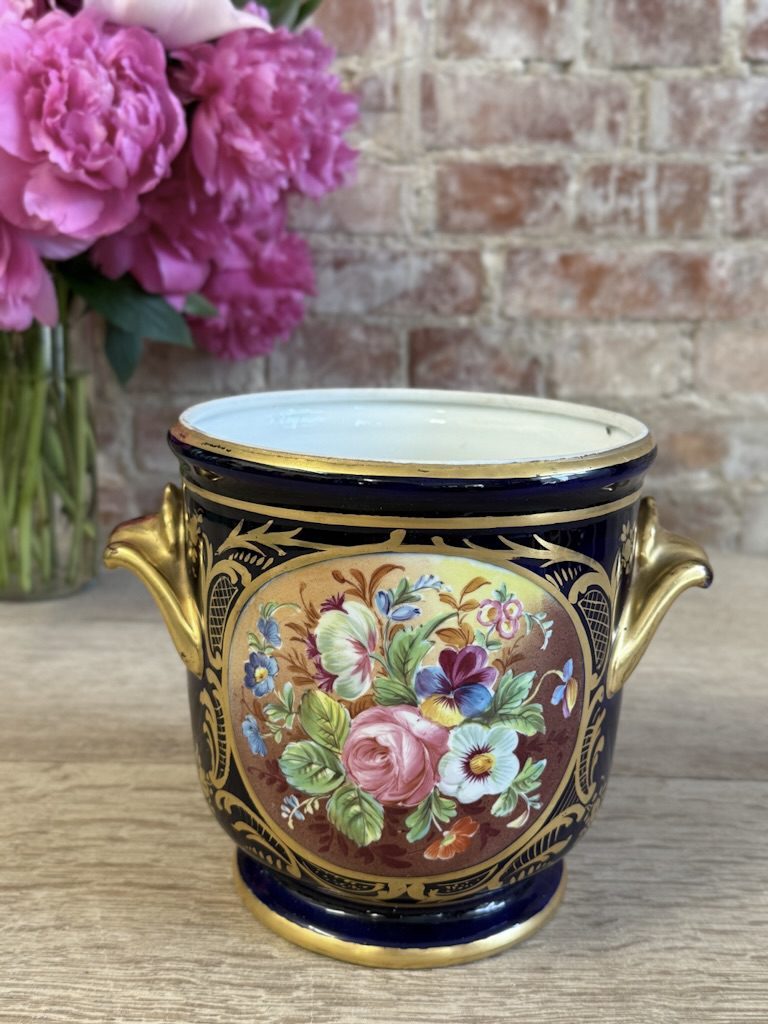
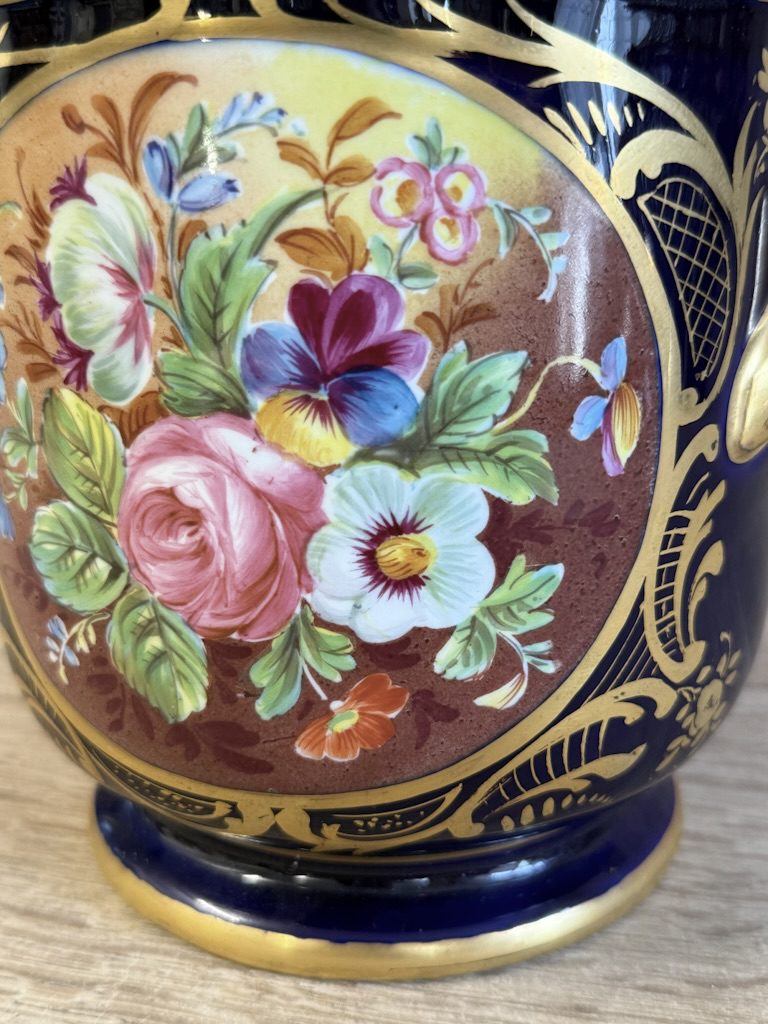
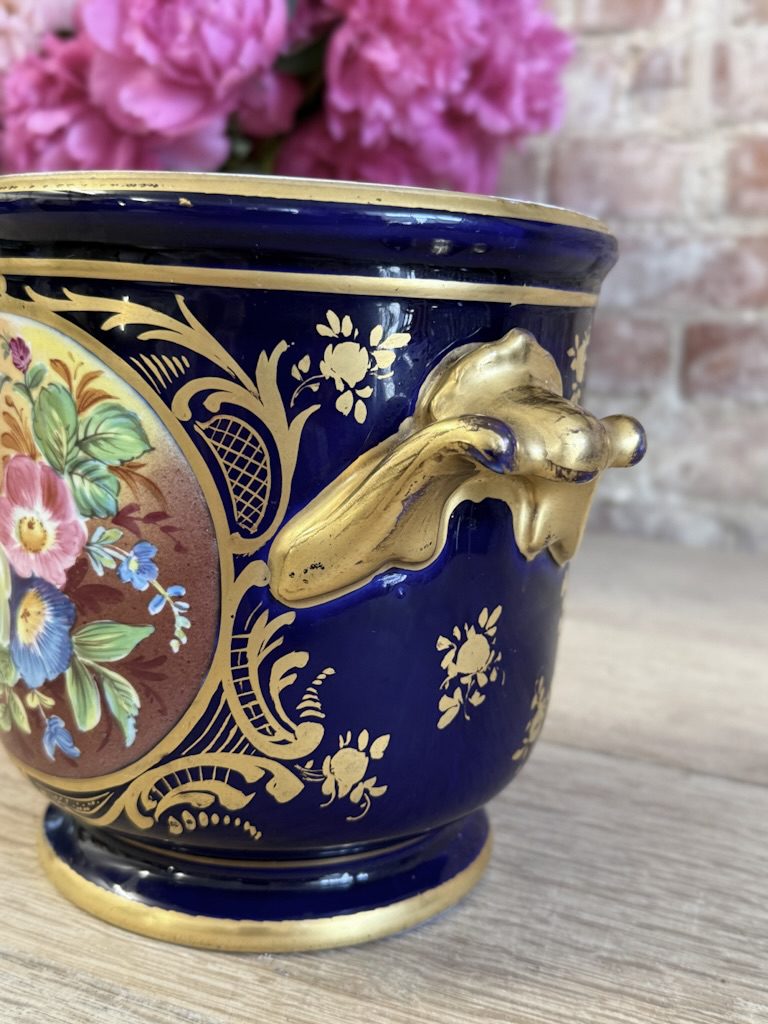
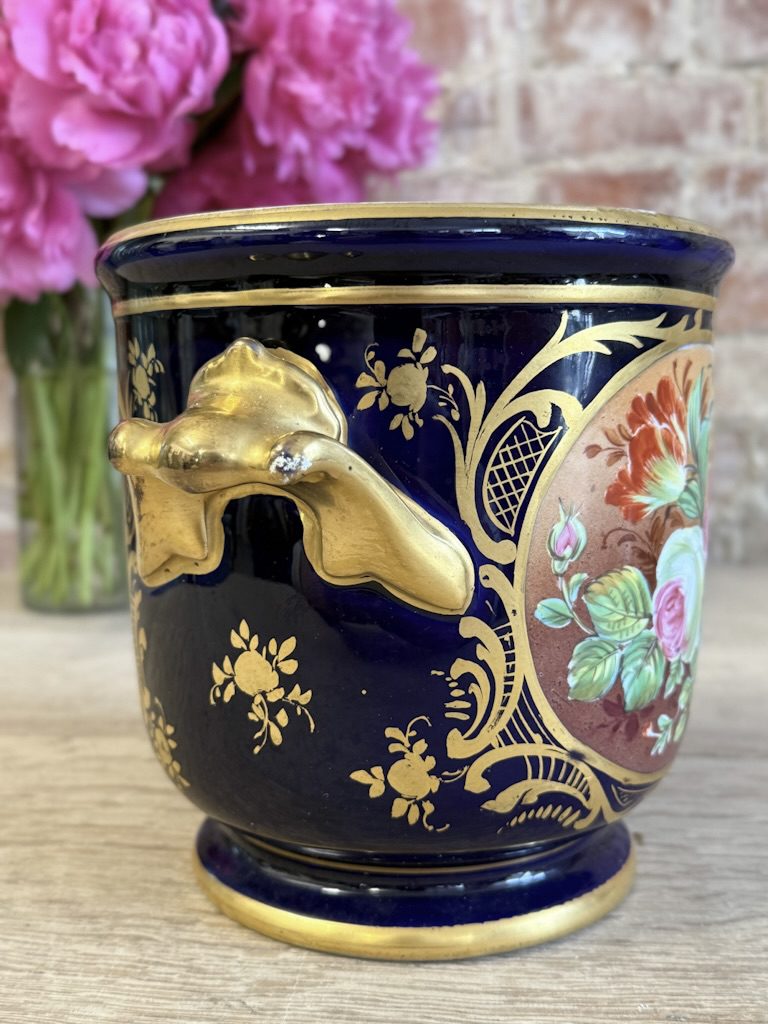
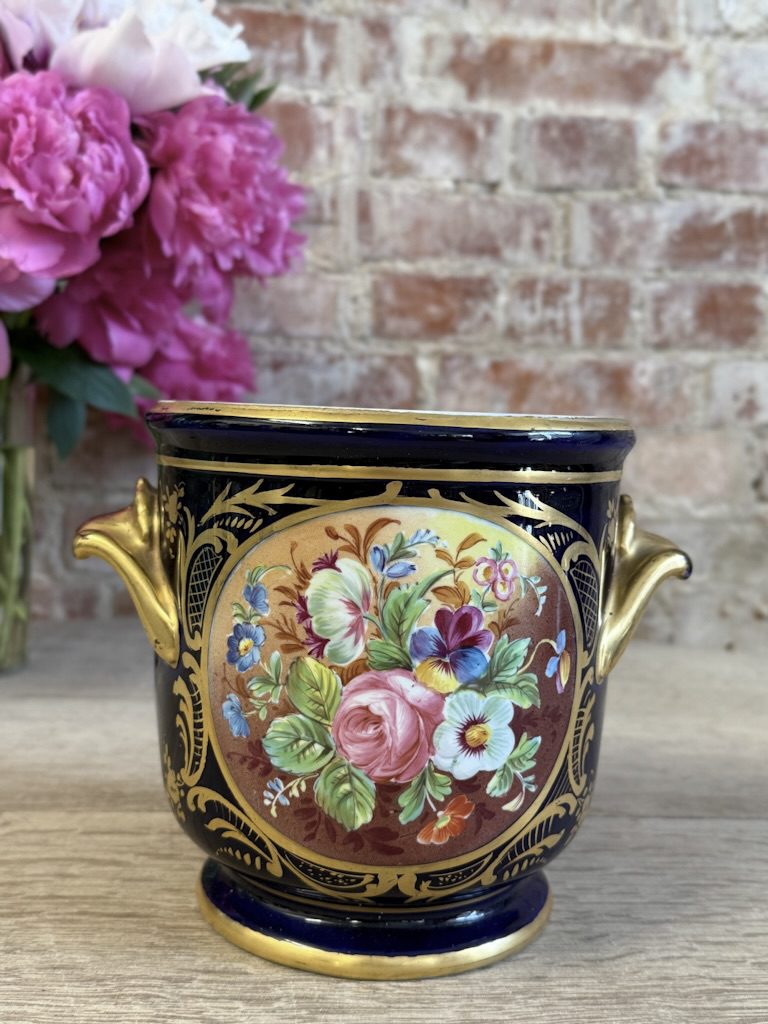
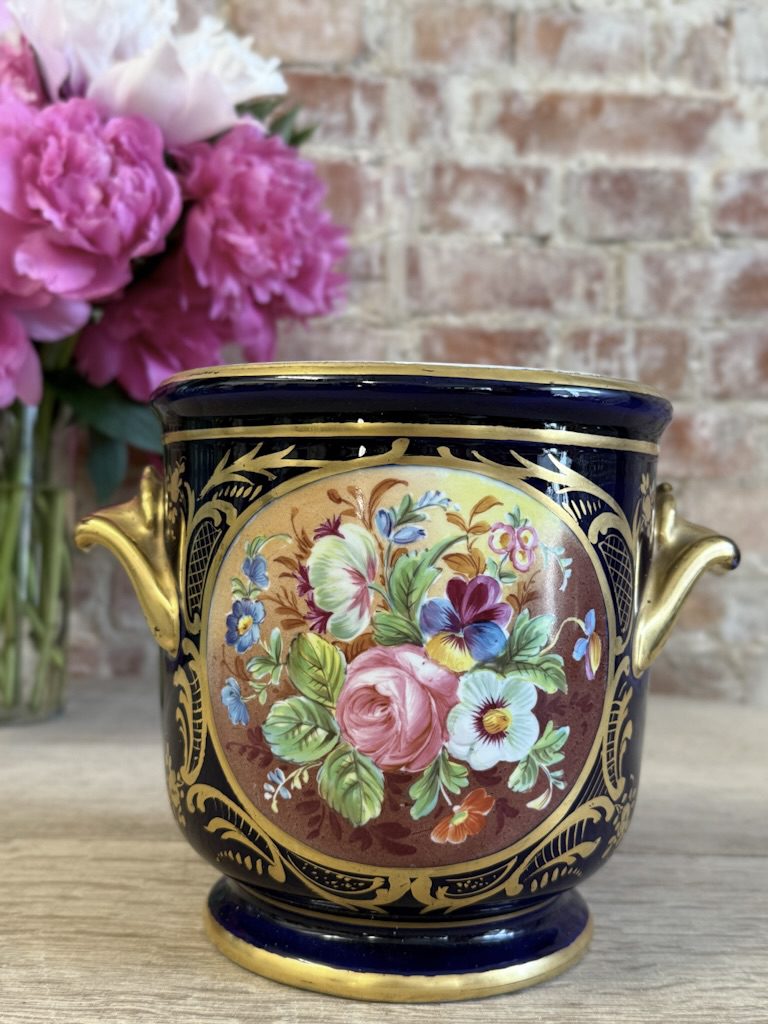
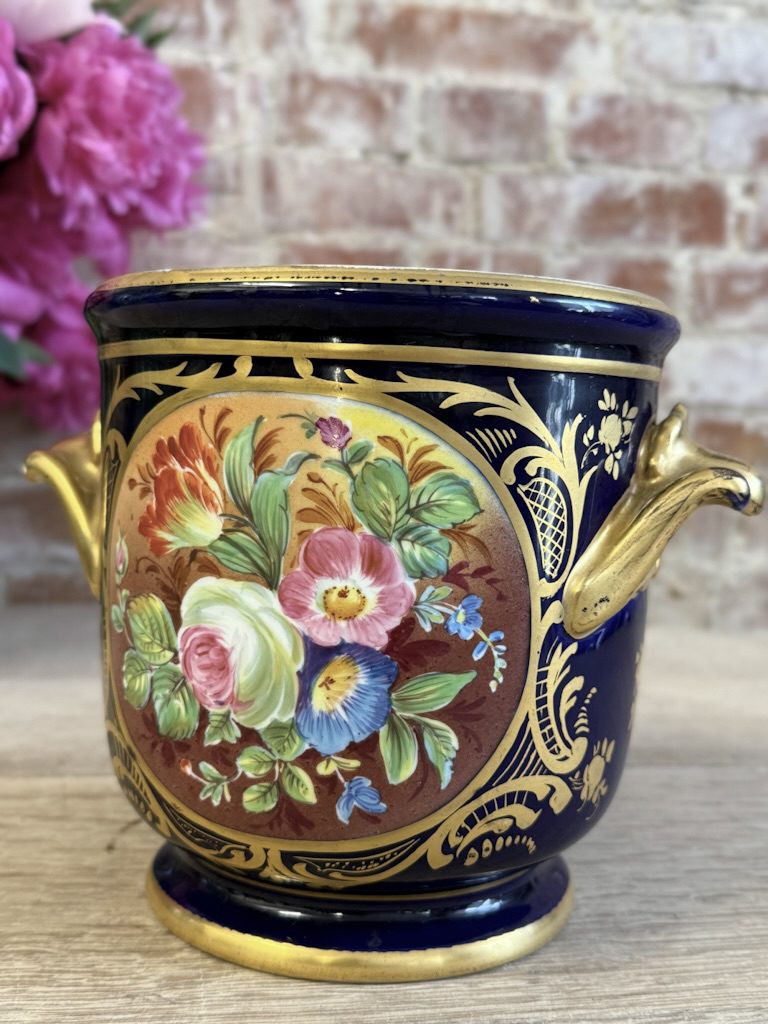
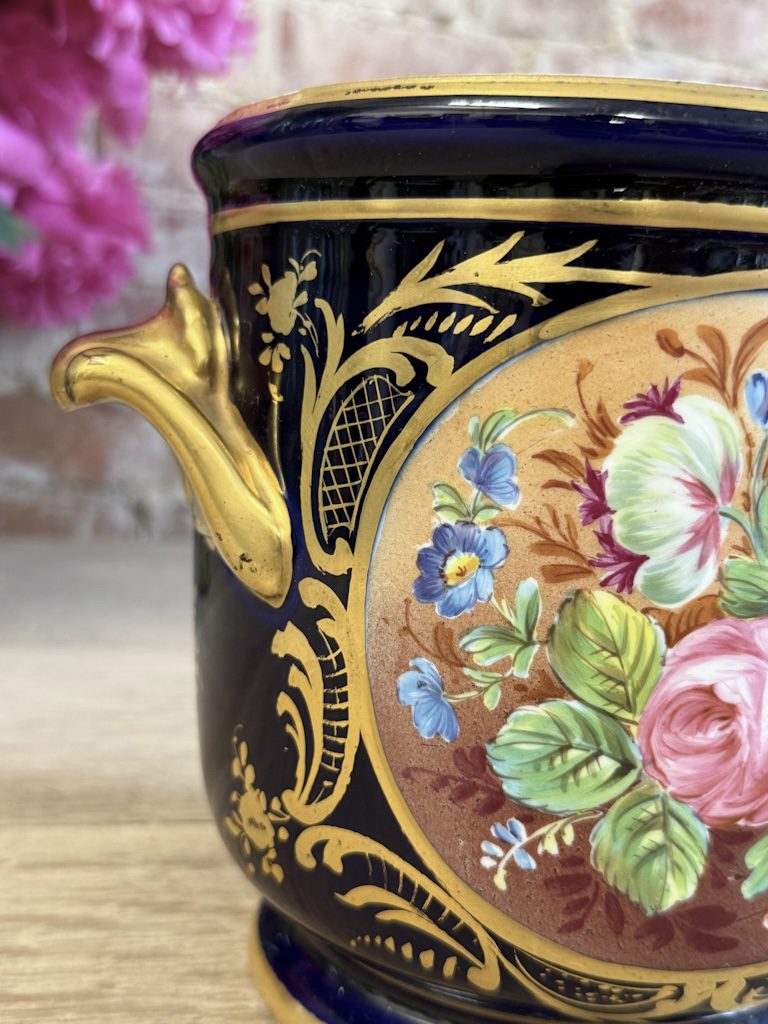
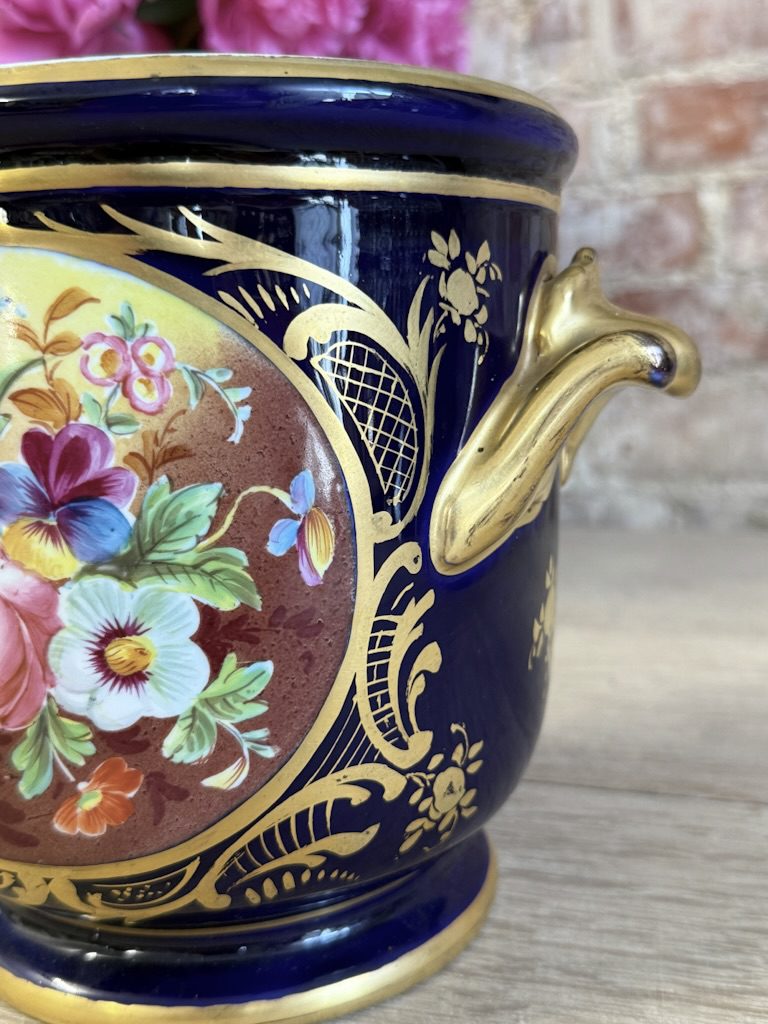
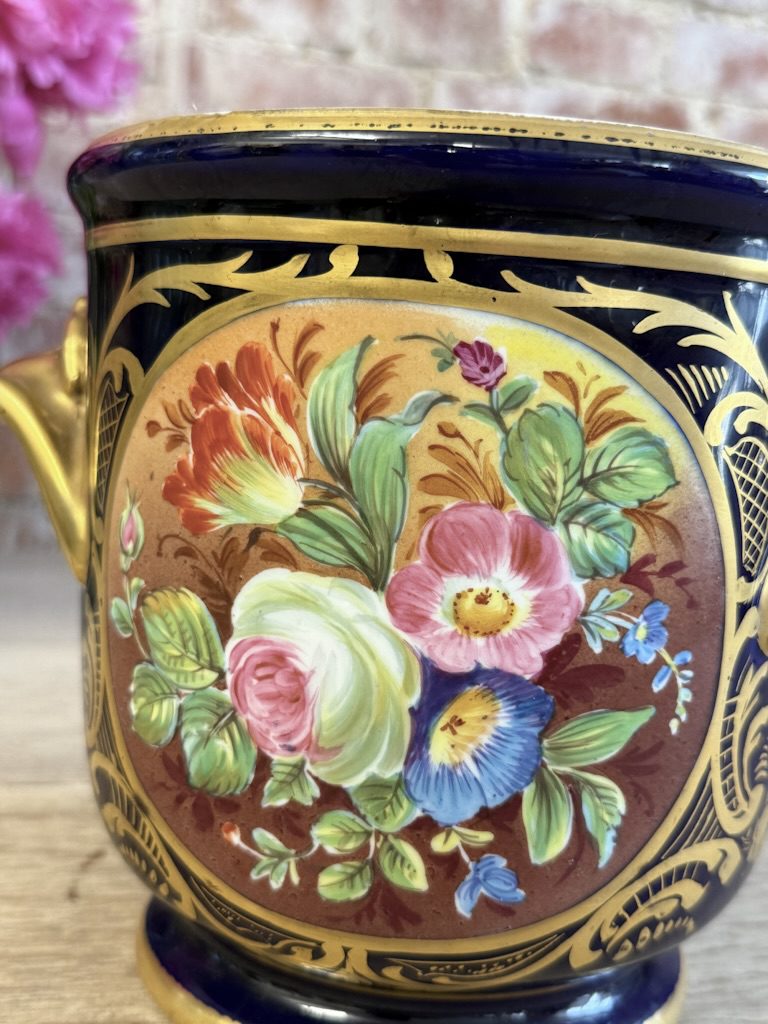
Šis masīvais un ārkārtīgi greznais porcelāna kašpo (dekoratīvais puķu pods jeb žardinjēra) ir izcils Francijas luksusa klases porcelāna mākslas paraugs. Trauka pamatkrāsa ir leģendārais, dziļais un piesātinātais kobalta tonis, kas pazīstams kā “Bleu de Sèvres” (Sevres zilais). Uz šī tumšā fona spilgti izceļas liels, ar smalku un precīzu roku darbu gleznots ziedu medaljons (kartaša), kurā attēlotas rozes, atraitnītes un citi pļavas ziedi. Kašpo greznumu izceļ bagātīgs 24 karātu zeltījums – gan sarežģītie rokoko stila vijumi un ģeometriskie režģi uz korpusa, gan masīvie, telpiskie un elegantie trauka rokturi.
Laika periods un stila ietekme Priekšmets veidots izteiktā neorokoko (Rococo Revival) stilā, kas Francijā savu vislielāko uzplaukumu piedzīvoja 19. gadsimta otrajā pusē, īpaši Napoleona III valdīšanas laikā (ap 1850.–1870. gadiem). Šim periodam ir raksturīga atgriešanās pie 18. gadsimta Francijas karaļnama estētikas – asimetriskiem zelta vijumiem, akanta lapu motīviem, spilgtām krāsām un izteiktas, teatrālas greznības, kas iemiesoja tā laika sabiedrības eliti.
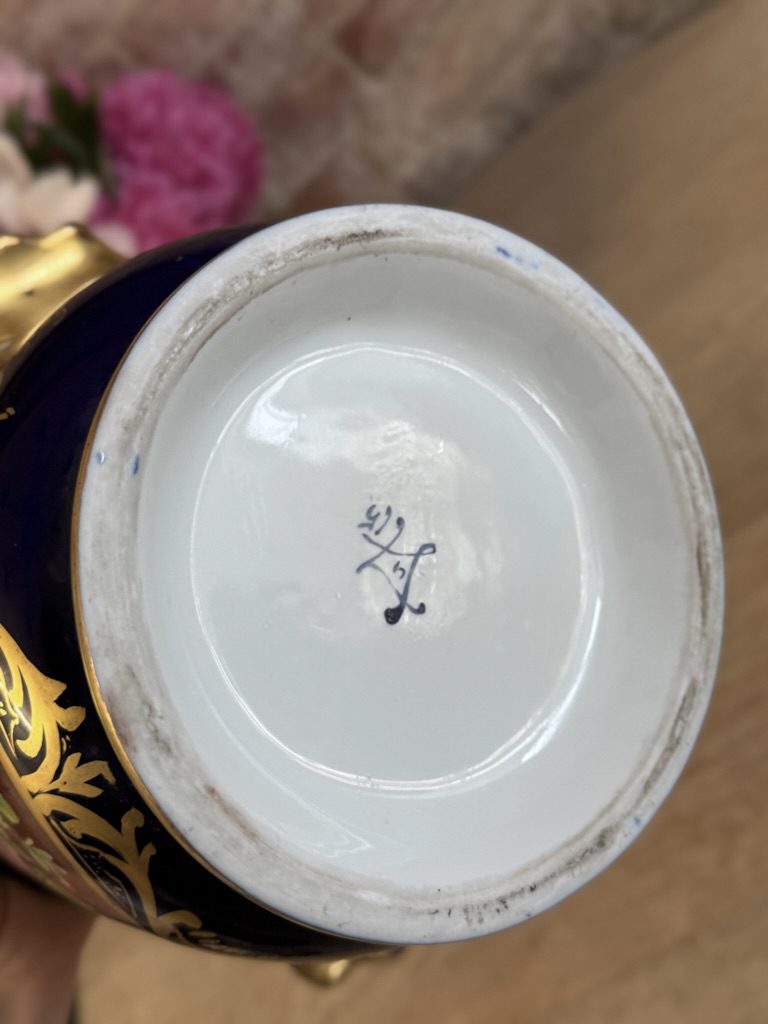
Sevres manufaktūras vēsture un tradīcijas Uz pamatnes redzamais zīmogs – klasiski sakrustotie burti “L” – ir vēsturiskās Sèvres (Sevres) manufaktūras pazīšanās zīme. Šī manufaktūra tika dibināta 1740. gadā un drīz vien nonāca tiešā Francijas karaļa Luija XV un viņa favorītes marķīzes de Pompadūras aizbildniecībā. Vēsturiski Sevres porcelāns tika radīts tikai karaliskajam galmam un diplomātiskajām dāvanām, un tas noteica keramikas modes tendences visā Eiropā. Sevres meistari gadsimtiem ilgi ir slaveni ar savu spēju radīt nevainojami baltu porcelānu, unikālas fona krāsas un nepārspējamu miniatūru glezniecības kvalitāti.
Retums un pieprasījums antikvāriāta pasaulē Antikvāriāta tirgū vārds “Sèvres” ir sinonīms absolūtai augstākajai klasei. Autentiski Sevres (vai augstākās kvalitātes Vieux Paris Sevres stilā veidoti) priekšmeti ir vieni no drošākajiem kolekciju un investīciju objektiem. Šādi liela izmēra un funkcionāli kašpo tirgū nonāk daudz retāk nekā vāzes vai šķīvji, jo laika gaitā, izmantojot tos tiešajam mērķim, tie bieži ir tikuši saplēsti vai bojāti mitruma ietekmē. Līdz ar to nebojāts, grezni apgleznots un zeltīts Sevres kašpo ir ārkārtīgi pieprasīts gan privāto kolekcionāru, gan prestižu interjera dizaineru vidū.
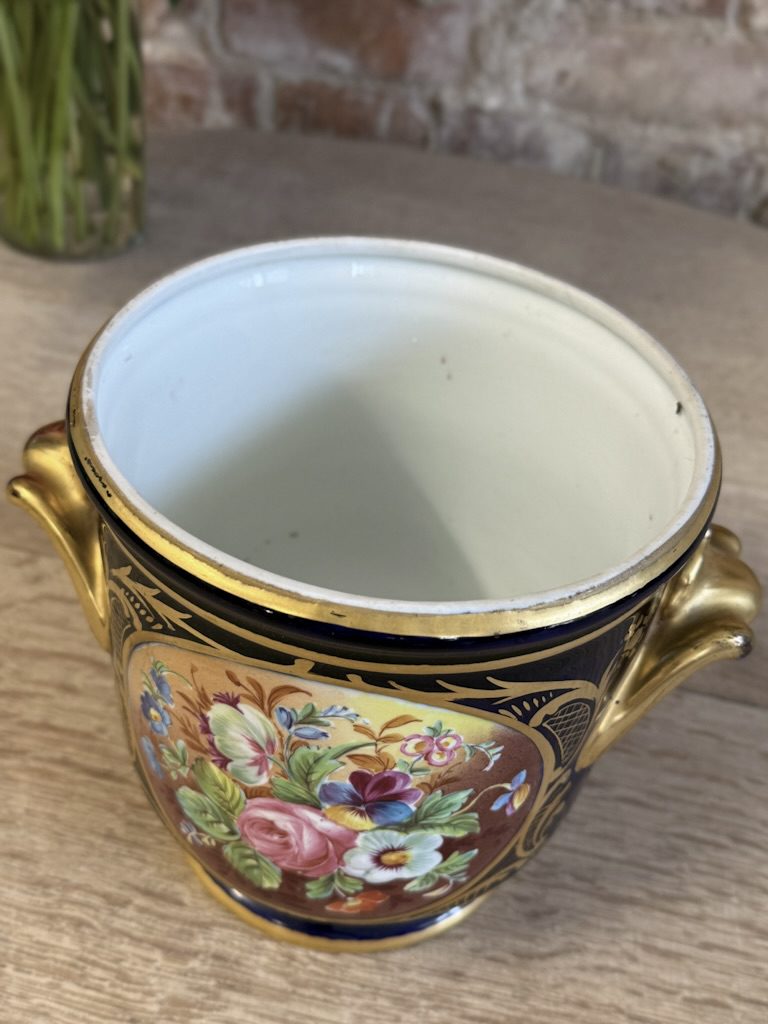
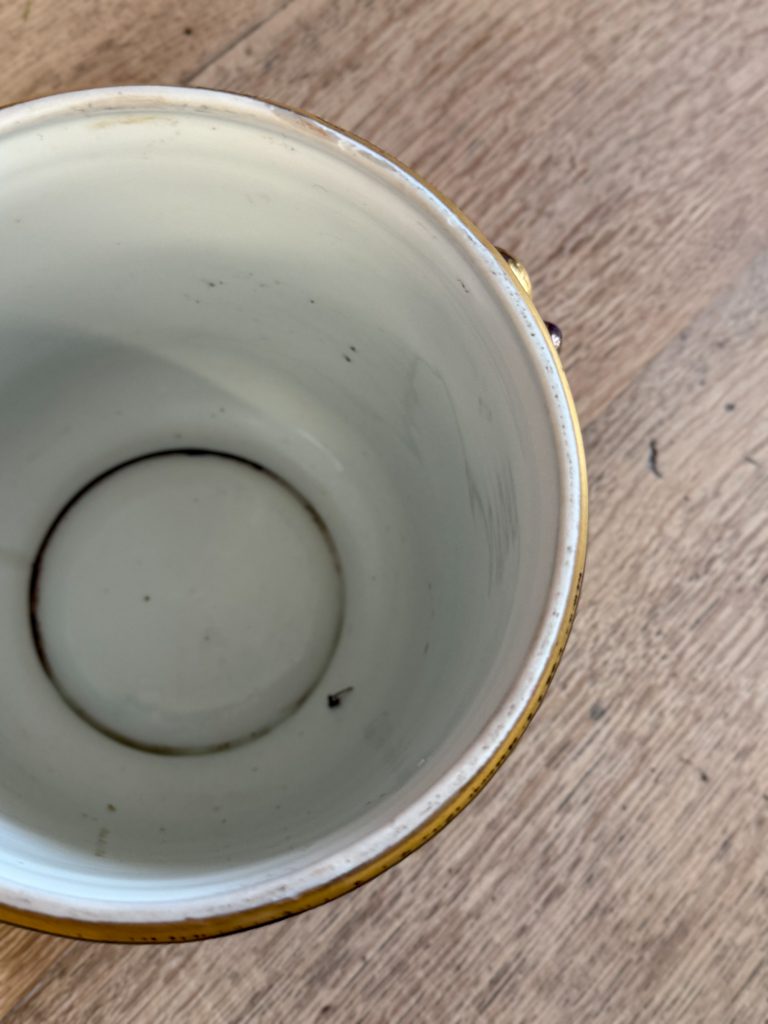
Stāvoklis Priekšmets ir izcilā antīkā stāvoklī, saglabājot savu aristokrātisko šarmu. Bagātīgais ziedu apgleznojums ir nevainojams. Jāņem vērā priekšmeta ievērojamais vecums – uz masīvajiem zelta rokturiem ir vērojams dabisks, viegls zeltījuma nodilums no pieskārieniem, un trauka iekšpusē redzamas nelielas vēsturiskas lietojuma pazīmes. Viss stāvoklis ir skaidri un detalizēti apskatāms pievienotajos fotoattēlos.
Antique French Sèvres Porcelain Cobalt Blue Cachepot with Floral Motifs
This massive and exceptionally opulent porcelain cachepot (planter or jardinière) is an outstanding example of luxury French porcelain art. The base color of the vessel is the legendary, deep, and saturated cobalt shade known as “Bleu de Sèvres” (Sèvres blue). Against this dark background, a large, meticulously hand-painted floral cartouche stands out brilliantly, depicting roses, pansies, and other meadow flowers. The cachepot’s grandeur is accentuated by heavy 24-karat gilding—ranging from the intricate Rococo-style scrollwork and geometric trellises on the body to the massive, dimensional, and elegant handles.
Time Period and Style Influence The piece is crafted in a pronounced Rococo Revival style, which saw its greatest flourish in France during the second half of the 19th century, particularly during the reign of Napoleon III (circa 1850s–1870s). This period is characterized by a return to the aesthetics of the 18th-century French royal court—asymmetrical gold scrolls, acanthus leaf motifs, vibrant colors, and a distinct, theatrical opulence that embodied the social elite of the time.
Sèvres Manufactory History and Traditions The mark on the base—the classic interlaced “L”s—is the hallmark of the historic Sèvres manufactory. Founded in 1740, the manufactory soon came under the direct patronage of the French King Louis XV and his favorite, Madame de Pompadour. Historically, Sèvres porcelain was created exclusively for the royal court and for diplomatic gifts, setting ceramic fashion trends throughout Europe. For centuries, Sèvres artisans have been renowned for their ability to produce flawlessly white porcelain, unique ground colors, and unparalleled miniature painting quality.
Rarity and Demand in the Antique World In the antique market, the name “Sèvres” is synonymous with the absolute highest tier of luxury. Authentic Sèvres (or top-quality Vieux Paris in the Sèvres style) pieces are among the safest and most sought-after collector and investment items. Large, functional cachepots like this appear on the market much less frequently than vases or plates, as they were often broken or damaged by moisture over time due to their intended use. Consequently, an intact, richly painted, and gilded Sèvres cachepot is extremely coveted by both private collectors and prestigious interior designers.
Condition The piece is in excellent antique condition, retaining its aristocratic charm. The rich floral painting is flawless. Given its considerable age, there is natural, light wear to the gilding on the massive handles from touch, and minor historical signs of use inside the vessel. The complete condition is clearly and detailedly visible in the attached photographs.