
Sešu Murano stikla liķiera glāzīšu komplekts ar roku apgleznotu emaljas ziedu dekoru zilpelēkā tonī — Murano, Itālija, ap 1920.–1960. gads, 6gab (5583)
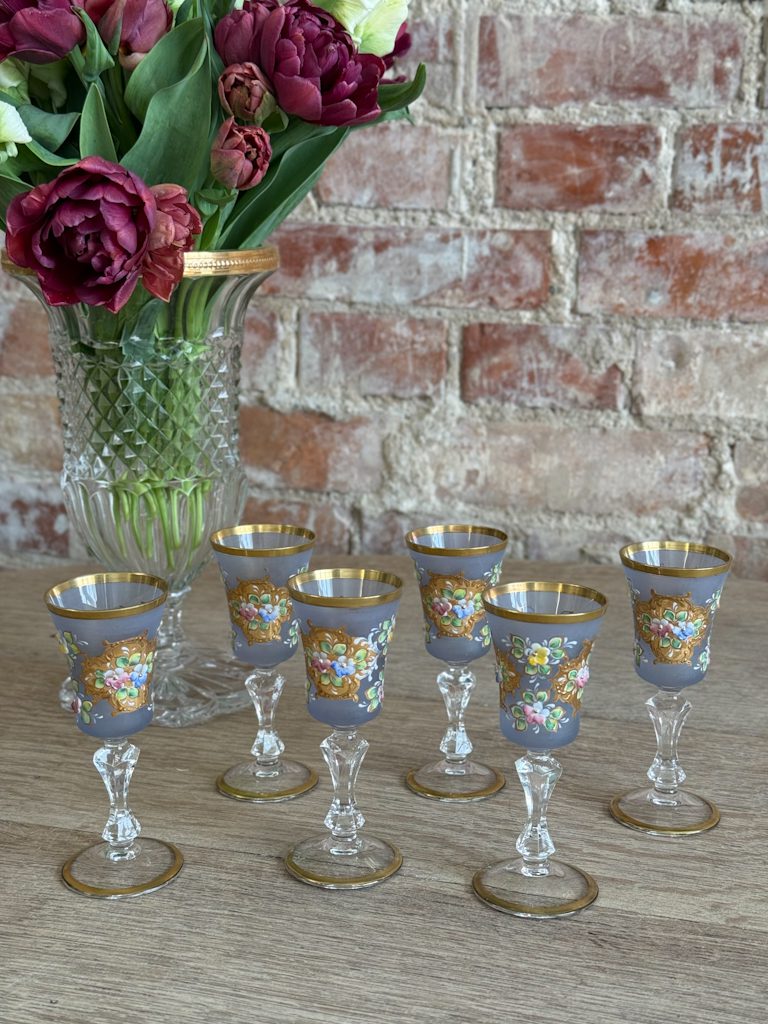
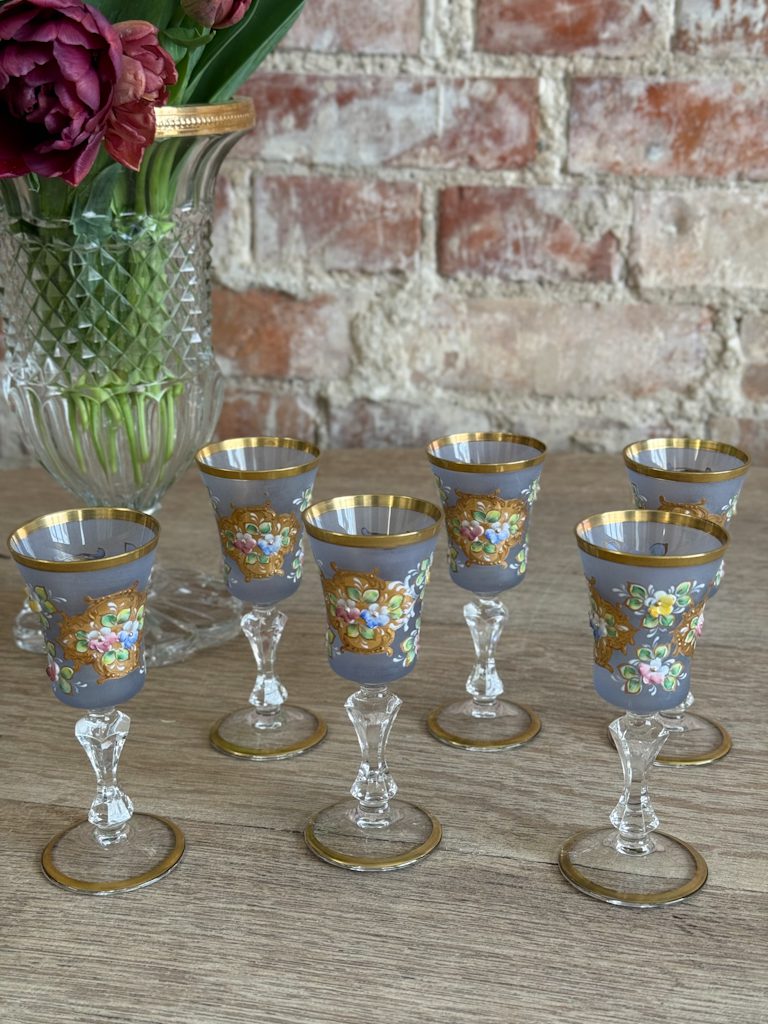
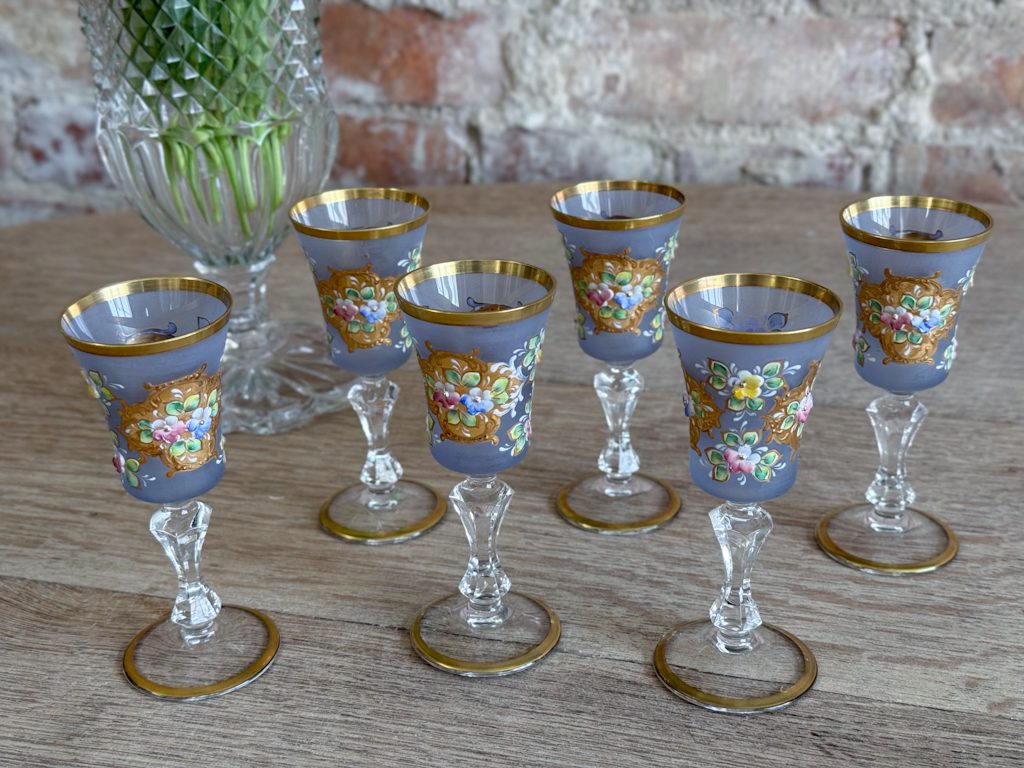
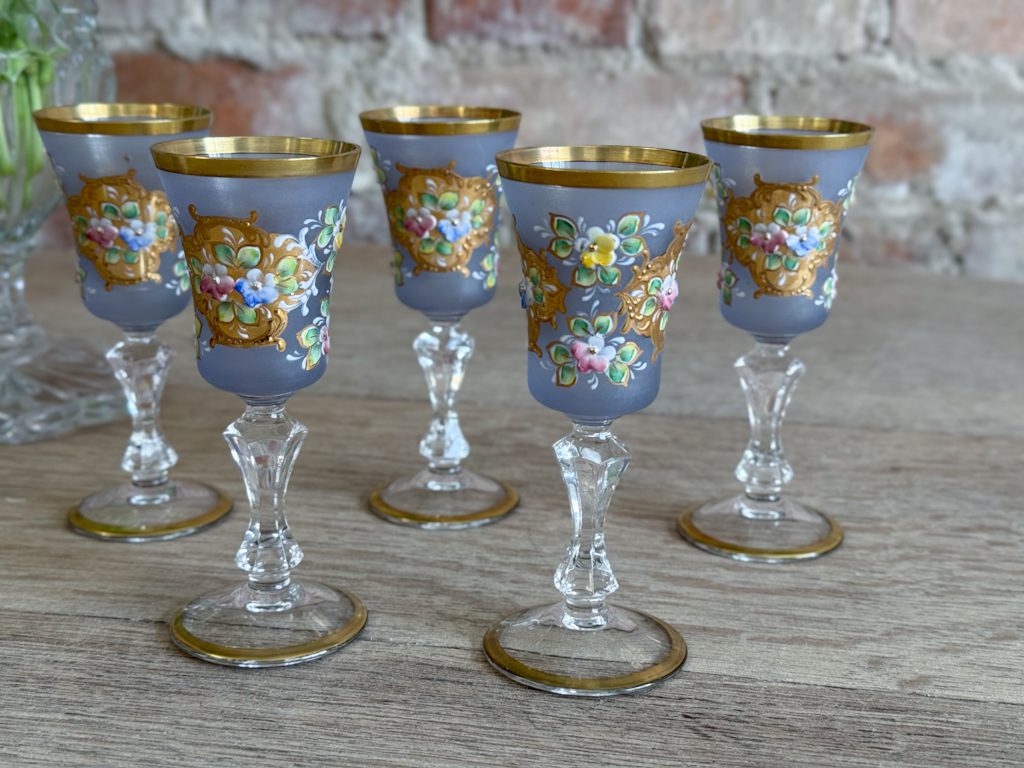
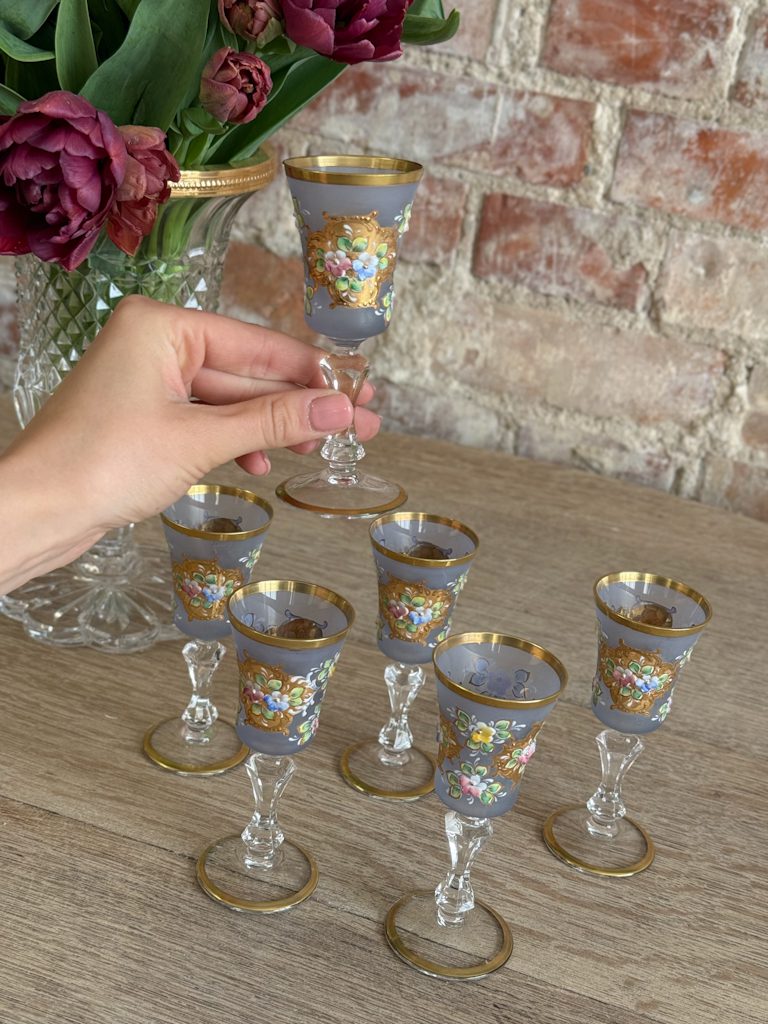
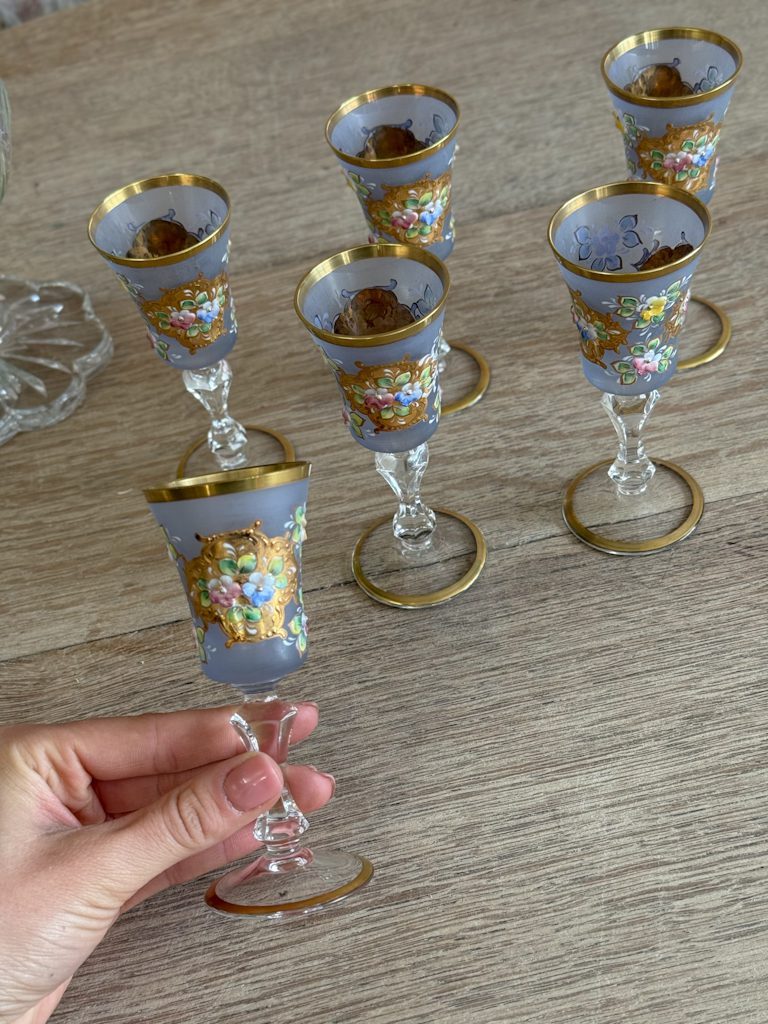
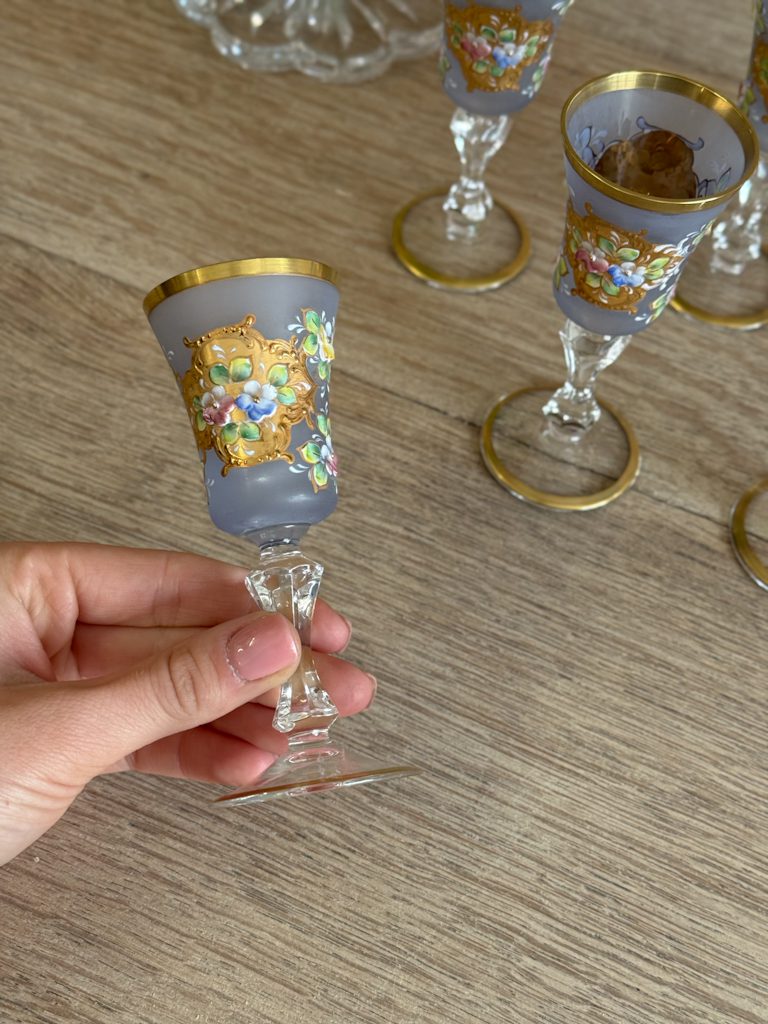
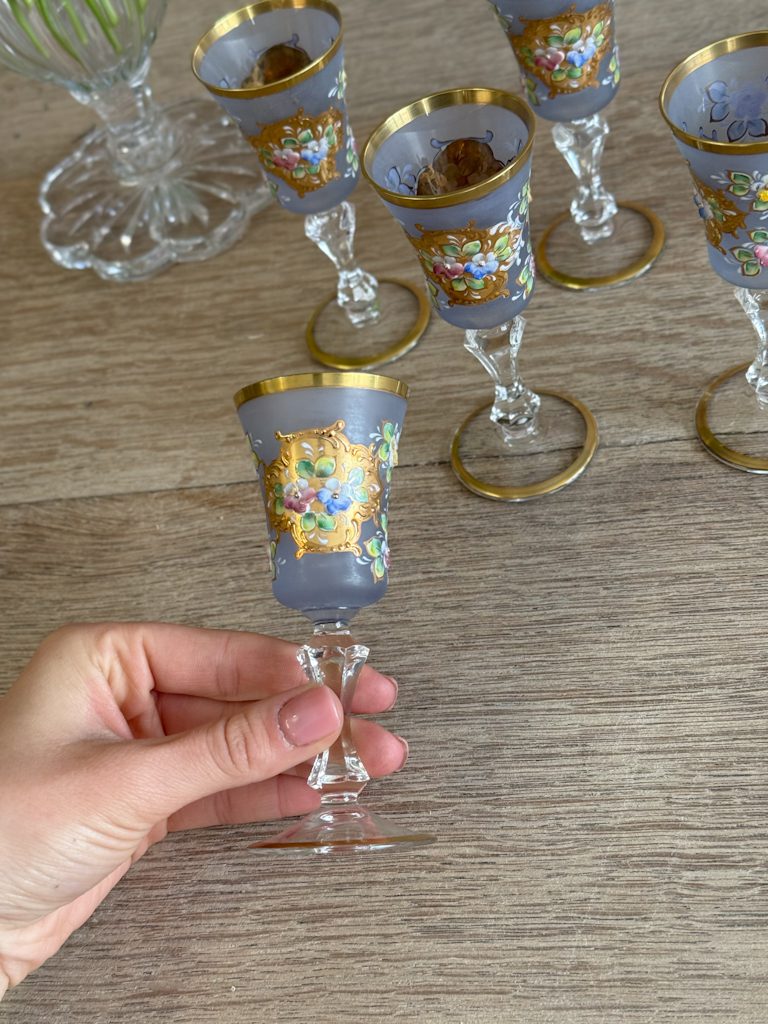
📐 IZMĒRI — Augstums aptuveni 9–10 cm. Diametrs apmēram 5 cm. Vieglas. Komplektā 6 gab
Sešu Murano stikla liķiera glāzīšu komplekts ar roku apgleznotu emaljas ziedu dekoru zilpelēkā tonī — Murano, Itālija, ap 1920.–1960. gads
―――――――――――――――――――――
🏛️ IZGATAVOŠANAS PERIODS, MĀKSLAS STILS, LAIKMETS
Ir brīži, kas pastāv ārpus laika. Viens no tiem — vakara gaismā, kad sveču liesmas atspīd pār zeltainiem stikla malām un liķiera pēdējais piliens norit gar roku gleznota zieda ziedlapiņu, apstājoties tur, kur zeltītais kartuša ornaments satiekas ar zilpelēko matēto stiklu. Šīs glāzītes nav radītas ikdienai — tās radītas tam vienīgajam brīdim, kad laiks palēninās un krāsa, gaisma un smarža saplūst vienā sajūtā.
Komplekts datējams ar aptuveni 1920.–1960. gadu — periodu, kurā Murano stikla tradīcija piedzīvoja savu otro ziedu laiku, apvienojot 18. gs. smalto emaljēšanas meistarību ar Art Deco un vēlāk neobaroka dekoratīvās mākslas formvalodu. Katra glāzīte veidota no zilpelēkā (grigio-azzurro) matētā stikla korpusa uz caurspīdīga, daudzskaldņu griezta kātiņa — kontrasts starp matēto un spīdīgo stiklu ir apzināts māksliniecisks lēmums, kas kātiņam piešķir kristāla dzirksti uz glāzītes miglainā klusuma fona. Dekorācija — trīsdimensiju emaljētu ziedu rozetes (rosette a smalto vai a rilievo) zelta baroka kartuša ietvarā, ar apkārtējiem atsevišķiem ziediem uz matētā korpusa — ir izpildīta ar smalku otu un precisitāti, kas atgādina miniatūrgleznu uz stikla.
Šis ir tas auglīgais pārejas brīdis, kad Art Nouveau organiskais ziedu motīvs vēl dzīvo dekorā, bet Art Deco un neobaroka ģeometriskā kartušas forma jau nosaka kompozīcijas struktūru — abas estētikas sadzīvo katrā glāzītē ar pilnīgu harmoniju.
―――――――――――――――――――――
⚜️ RAŽOTĀJS UN TRADĪCIJA
Murano — Venēcijas lagūnas sala, kuras stiklapūšanas tradīcija aizsākās 1291. gadā, kad Venēcijas Republika pārcēla visas stikla darbnīcas uz šo salu, lai pasargātu pilsētu no ugunsgrēkiem un saglabātu stikla meistarību kā valsts noslēpumu. Gadsimtu garumā Murano stikls bija Eiropas ekskluzivitātes simbols — Versaļas pils spoguļu zāle ir izgatavojusi savus spoguļus tieši no Murano stiklotājiem, Habsburgu galms pasūtīja Murano lusterus, un Venēcijas aristokrātija dzēra no Murano glāzēm kā statusa zīmes. Emaljas dekorēšanas tehnika — smalto a rilievo jeb izciļņu emaljas, ko uzliek slānis pa slānim, lai radītu trīsdimensiju efektu — ir viena no Murano augstākās klases darbu pazīmēm, kas prasa daudzus apdedzināšanas posmus un izcilu meistarību. Šāda veida glāzītes 20. gs. pirmajā pusē tika eksportētas uz Parīzes smalkajiem universālveikaliem un privātajiem mājas preču namiem, apgādājot Eiropas augstākās buržuāzijas galdu klājumus.
―――――――――――――――――――――
💎 RETUMS UN NOZĪME
Pilnīgs sešu glāzīšu komplekts ar vienotu dekoru, saglabātām trīsdimensiju emaljām un bez lūzumiem ir ievērojami retāks atradums nekā atsevišķas glāzītes — jo Murano stikls, neskatoties uz savu skaistumu, ir trausls, un komplekti laika gaitā parasti tiek izšķirti. Zilpelēkais (grigio-azzurro) pamatkrāsas tonis kombinācijā ar zelta baroka kartušu un roku veidotiem emaljas ziediem ir vizuāli viens no pievilcīgākajiem Murano dekoratīvā stikla variantiem, kuru kolekcionāri Itālijā, Francijā, Lielbritānijā un ASV vērtē gan kā lietošanas priekšmetu, gan kā mākslas objektu.
―――――――――――――――――――――
🕯️ PIELIETOJUMS INTERJERĀ, DIZAINĀ UN FOTOGRĀFIJĀ
Šīs glāzītes ir radītas sveču gaismā — un tieši tur tās atklāj savu pilno skaistumu. Uz vakara galda ar liķieri vai grappa, kur zeltainais šķidrums caur zilpelēko stiklu iegūst maģisku dziļumu. Stikla vitrīnā kā kolekcionāru kolekcijas centerpieces, kur katru dienu var baudīt emaljas ziedu rotaļu gaismā. Venēciešu, baroka, eklektiskā un romantiskā stila interjeros — kā galda aksesuāri, kas stāsta par Murano gadsimtiem ilgo meistarību. Fotogrāfijā — ideāli priekšmeti still-life un lifestyla uzņēmumiem, kur matētā stikla krāsa, zelta spīdums un emaljēto ziedu faktūra rada nepārspējamu sensorisko dziļumu.
―――――――――――――――――――――
🔍 STĀVOKLIS
Vispārējais stāvoklis — labs, atbilstošs vecumam. Visi 6 gabali veseli, bez lūzumiem vai skaldījumiem. Zilpelēkais matētais stikls saglabājis savu krāsu un dziļumu. Trīsdimensiju emaljētie ziedi — labi saglabājušies, ar raksturīgu minimālu nodilumu atsevišķiem ziedlapiņu galiem. Zelta apmale malā un pamatnē saglabājusies labi. Grieztie caurspīdīgie kātiņi — bez skrambām vai bojājumiem. Lietas stāvoklis pilnībā atspoguļots fotogrāfijās.
―――――――――――――――――――――
🇬🇧 DESCRIPTION IN ENGLISH
📐 DIMENSIONS — Height approximately 9–10 cm. Diameter approximately 5 cm. Lightweight. Set of 6 pieces.
Set of Six Murano Glass Liqueur Glasses with Hand-Painted Enamel Floral Décor in Blue-Grey — Murano, Italy, circa 1920–1960
―――――――――――――――――――――
🏛️ PERIOD, ART STYLE, HISTORICAL CONTEXT
There are moments that exist outside of time. One of them — in evening candlelight, when the flames dance across gilded glass rims and the last drop of liqueur runs down the petal of a hand-painted flower, pausing where the gilded cartouche ornament meets the blue-grey frosted glass. These glasses were not made for the everyday — they were made for that singular moment when time slows and colour, light and fragrance merge into a single sensation.
The set dates to approximately 1920–1960 — a period in which the Murano glassmaking tradition experienced its second golden age, combining the 18th-century mastery of smalto enamelling with the decorative language of Art Deco and later neo-Baroque. Each glass is formed from a blue-grey (grigio-azzurro) frosted glass body on a transparent, multi-faceted cut stem — the contrast between the frosted and the brilliant glass is a deliberate artistic choice, giving the stem a crystalline sparkle against the misty stillness of the cup. The decoration — three-dimensional enamel flower rosettes (rosette a smalto a rilievo) within a gilded Baroque cartouche, with additional scattered flowers on the frosted body — is executed with a delicate brush and a precision reminiscent of miniature painting on glass.
This is that fertile transitional moment when the organic floral motif of Art Nouveau still lives in the decoration, while the geometric cartouche form of Art Deco and neo-Baroque already determines the compositional structure — both aesthetics coexist in each glass with complete harmony.
―――――――――――――――――――――
⚜️ MAKER AND TRADITION
Murano — the island in the Venetian lagoon whose glassblowing tradition began in 1291, when the Venetian Republic relocated all its glassworks to this single island to protect the city from fire and guard the secrets of glassmaking as a matter of state. For centuries, Murano glass was the symbol of European exclusivity — the Hall of Mirrors at Versailles was supplied by Murano glassmakers, the Habsburg court commissioned Murano chandeliers, and the Venetian aristocracy drank from Murano glasses as a mark of rank. The enamel decoration technique — smalto a rilievo, or raised enamel applied layer by layer to create a three-dimensional effect — is one of the defining marks of high-quality Murano work, requiring multiple firing stages and exceptional craftsmanship. Liqueur glasses of this type were exported in the first half of the 20th century to the finest Parisian department stores and private home goods houses, supplying the table settings of Europe’s haute bourgeoisie.
―――――――――――――――――――――
💎 RARITY AND SIGNIFICANCE
A complete set of six glasses with a unified decoration, intact three-dimensional enamels, and no chips or losses is a considerably rarer find than individual pieces — for Murano glass, for all its beauty, is fragile, and sets are typically separated over time. The blue-grey (grigio-azzurro) ground tone combined with the gilded Baroque cartouche and hand-formed enamel flowers is one of the most visually compelling variants of Murano decorative glass, prized by collectors in Italy, France, the United Kingdom, and the United States both as objects of use and as works of art.
―――――――――――――――――――――
🕯️ USE IN INTERIOR DESIGN AND PHOTOGRAPHY
These glasses were made for candlelight — and it is there that they reveal their full beauty. On the evening table with liqueur or grappa, where the golden liquid takes on a magical depth through the blue-grey glass. In a glass cabinet as the centrepiece of a collector’s display, where the enamel flowers can be enjoyed in the play of light each day. In Venetian, Baroque, eclectic, and romantic style interiors — as table accessories that tell of centuries of Murano mastery. In photography — ideal subjects for still-life and lifestyle shoots, where the frosted glass colour, golden lustre, and textured enamel flowers create an incomparable sensory depth.
―――――――――――――――――――――
🔍 CONDITION
Overall condition — good, consistent with age. All 6 pieces are intact, with no cracks or chips. The blue-grey frosted glass has retained its colour and depth. The three-dimensional enamel flowers are well preserved, with characteristic minimal wear to certain petal tips. The gold border at the rim and base is well retained. The cut transparent stems show no scratches or damage. The condition of the item is fully reflected in the photographs.