
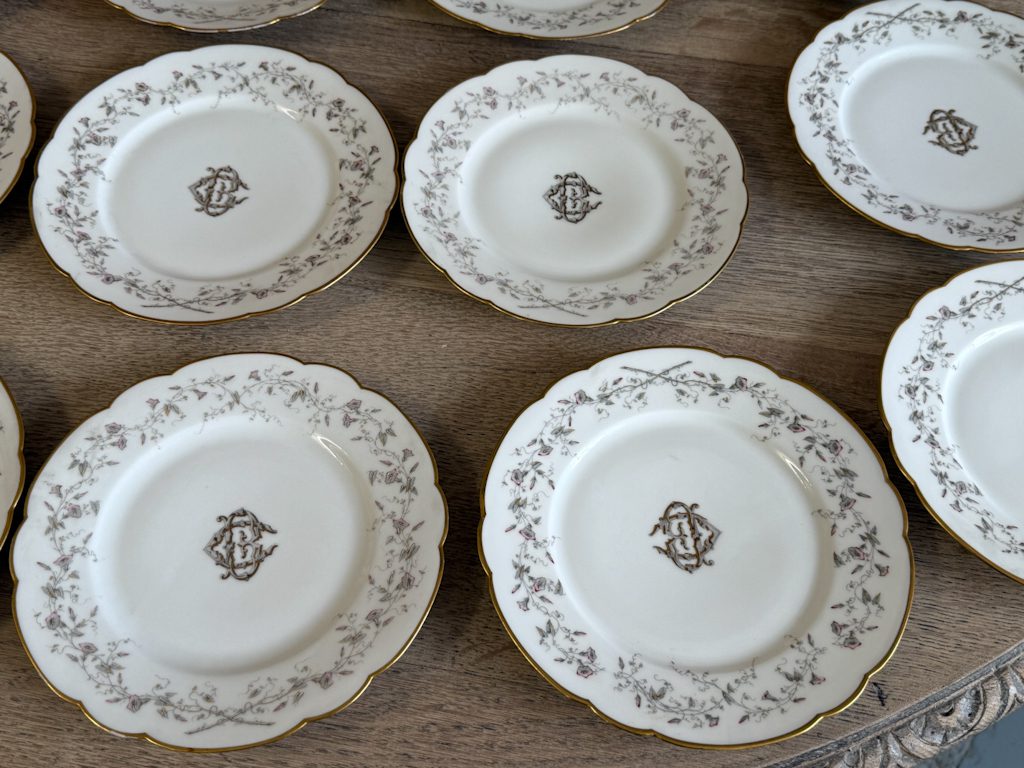
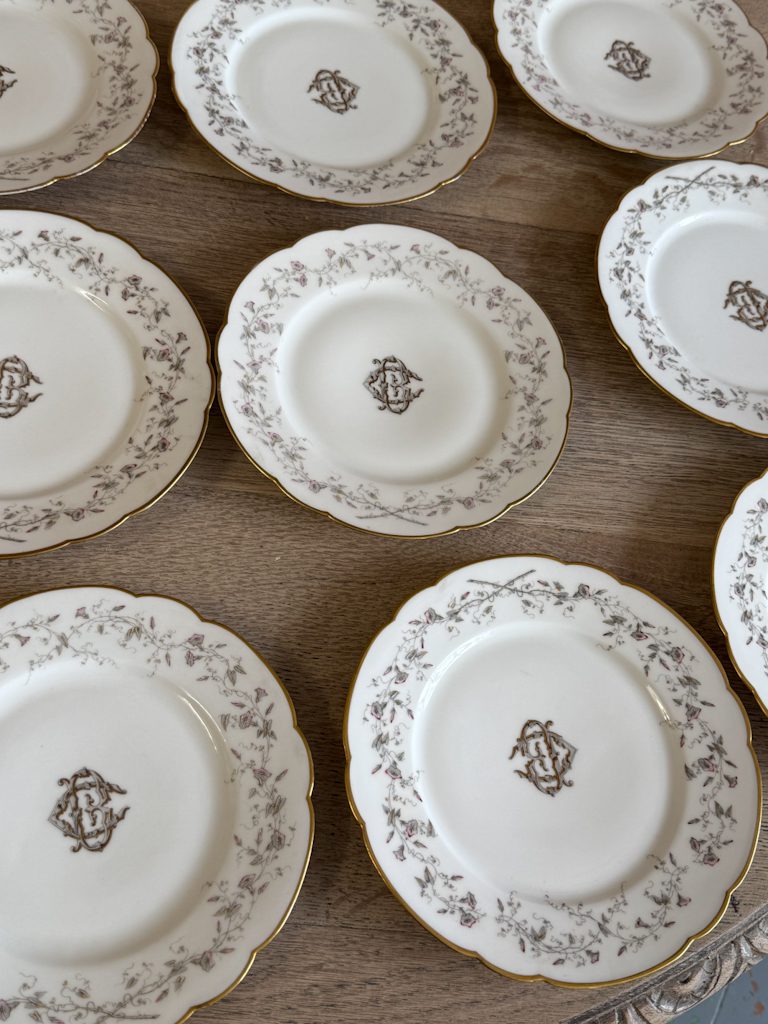
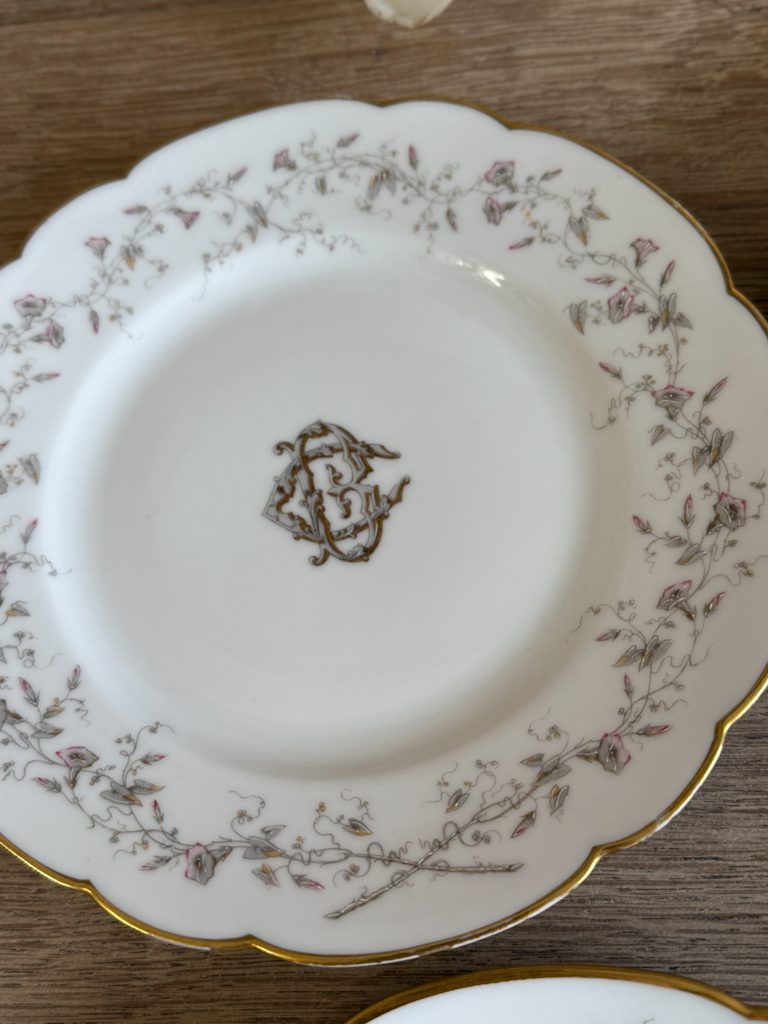
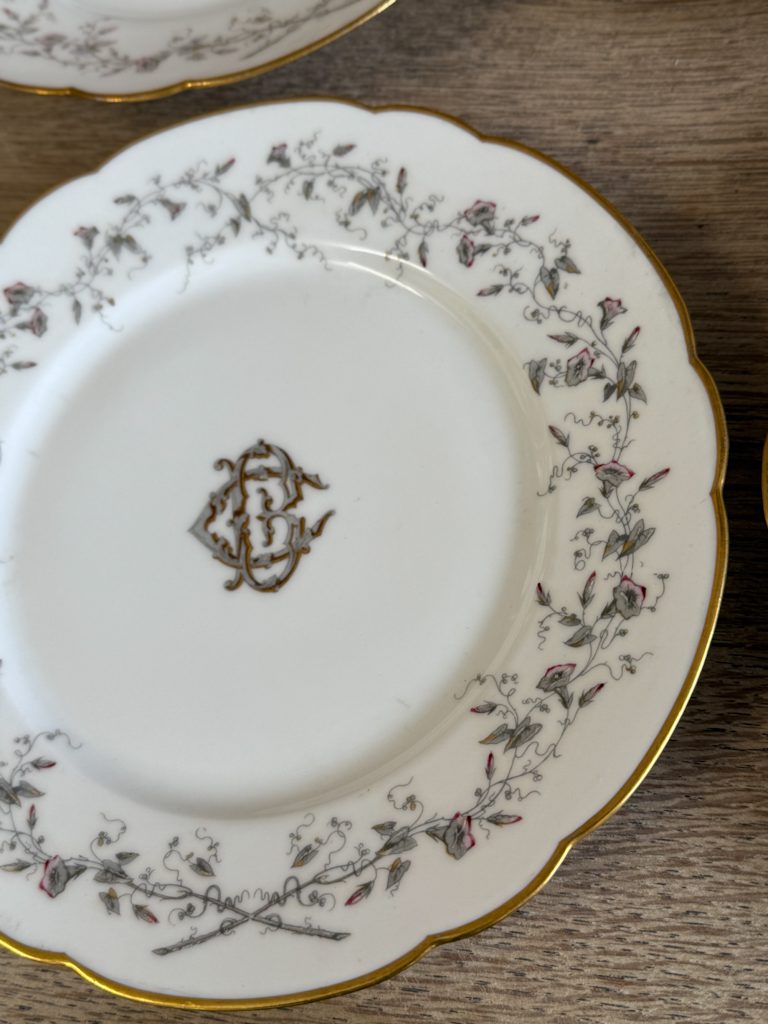
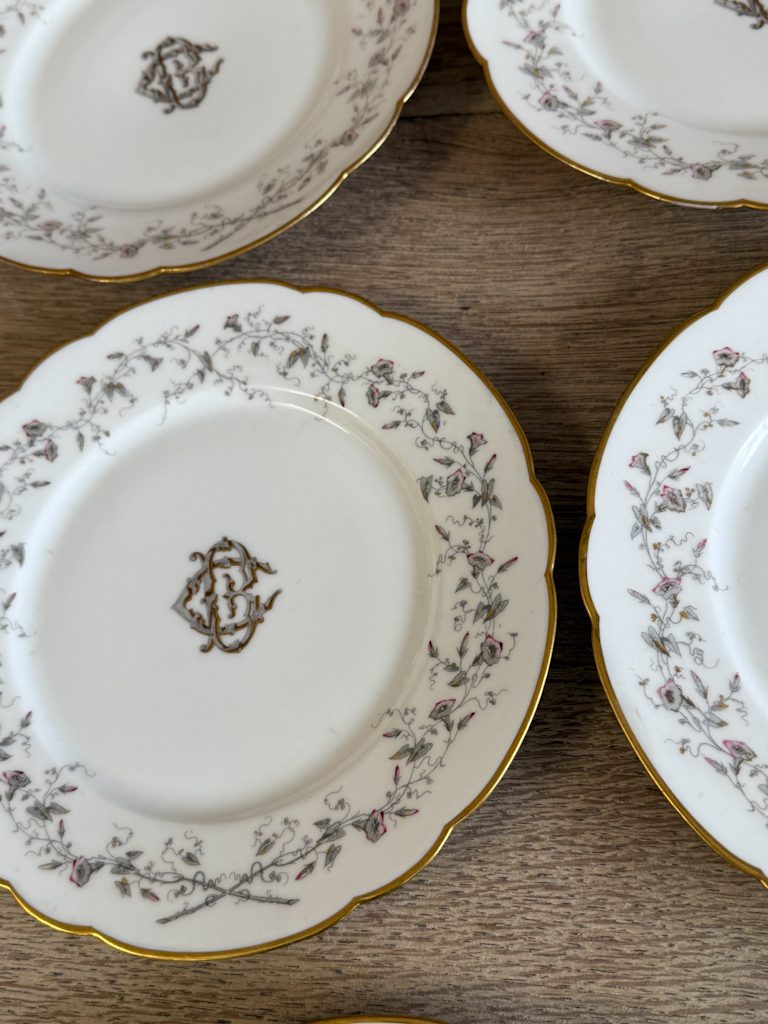
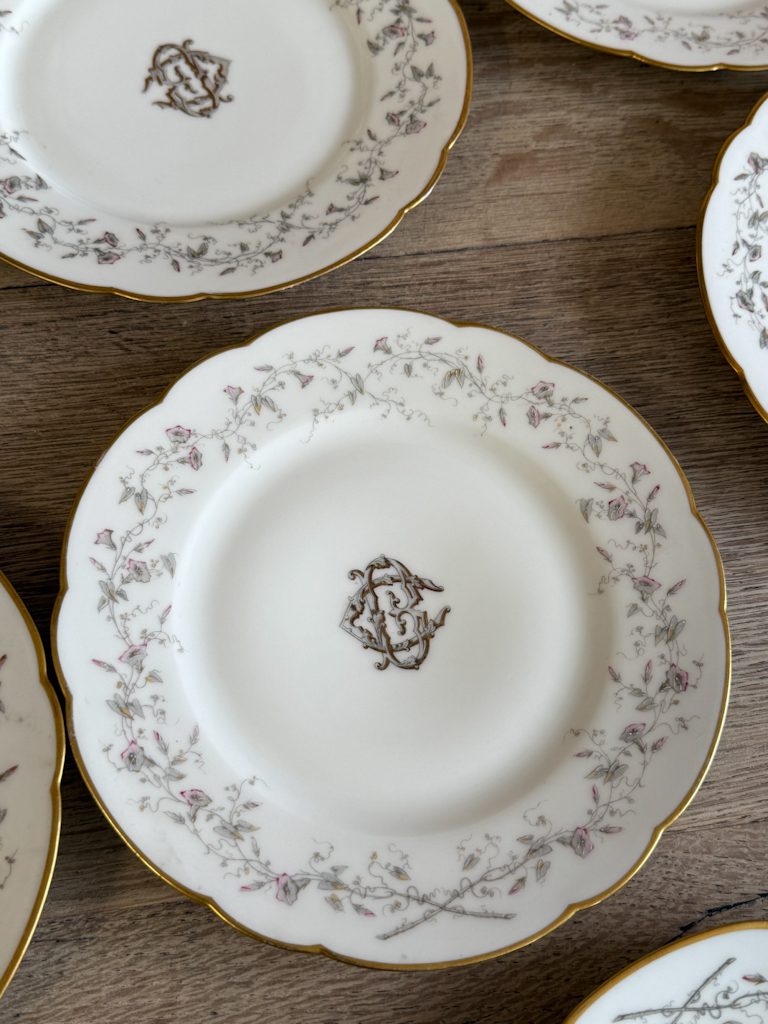
Divpadsmit Limoges porcelāna salātu / kūkas šķīvju komplekts ar CB monogrammu un Art Nouveau vijolīšu vītņu dekoru — Mansard, 34 Rue Paradis, Paris; Limoges, Francija, ap 1880.–1900. gads, 12 gab. (5564)
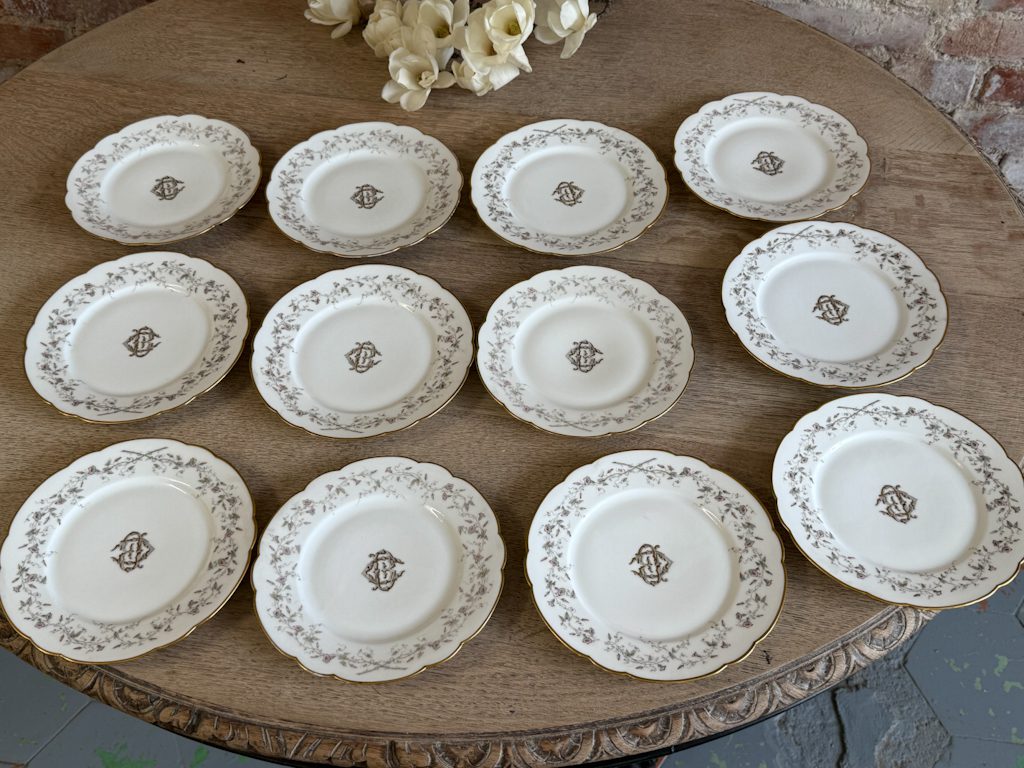
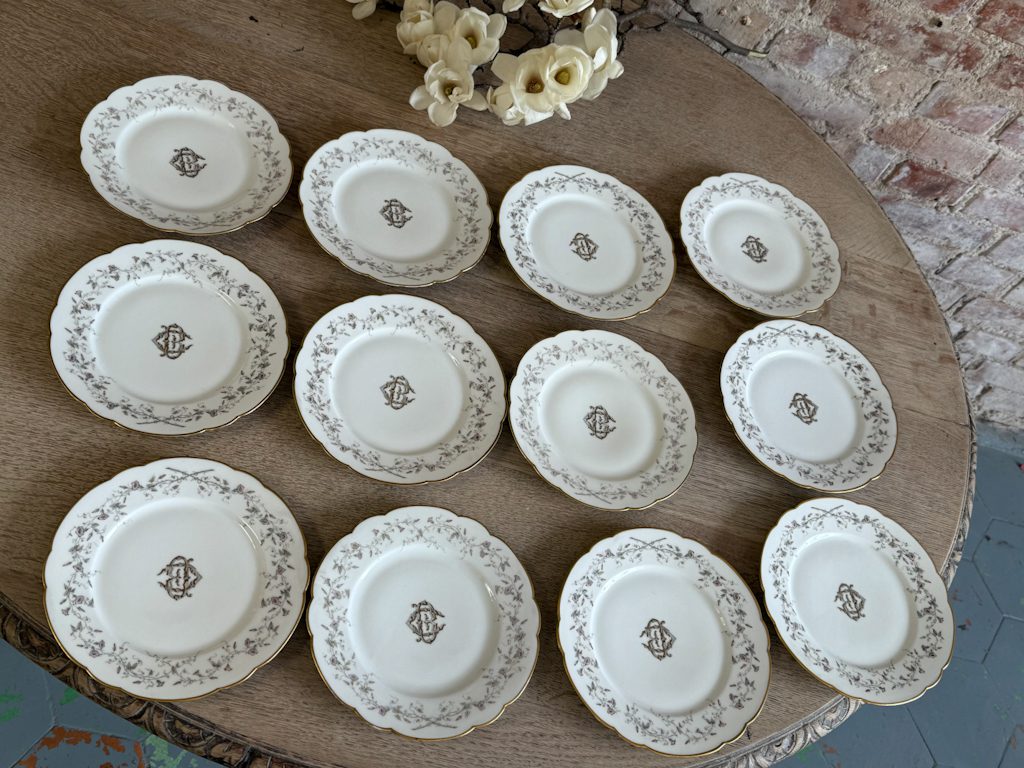
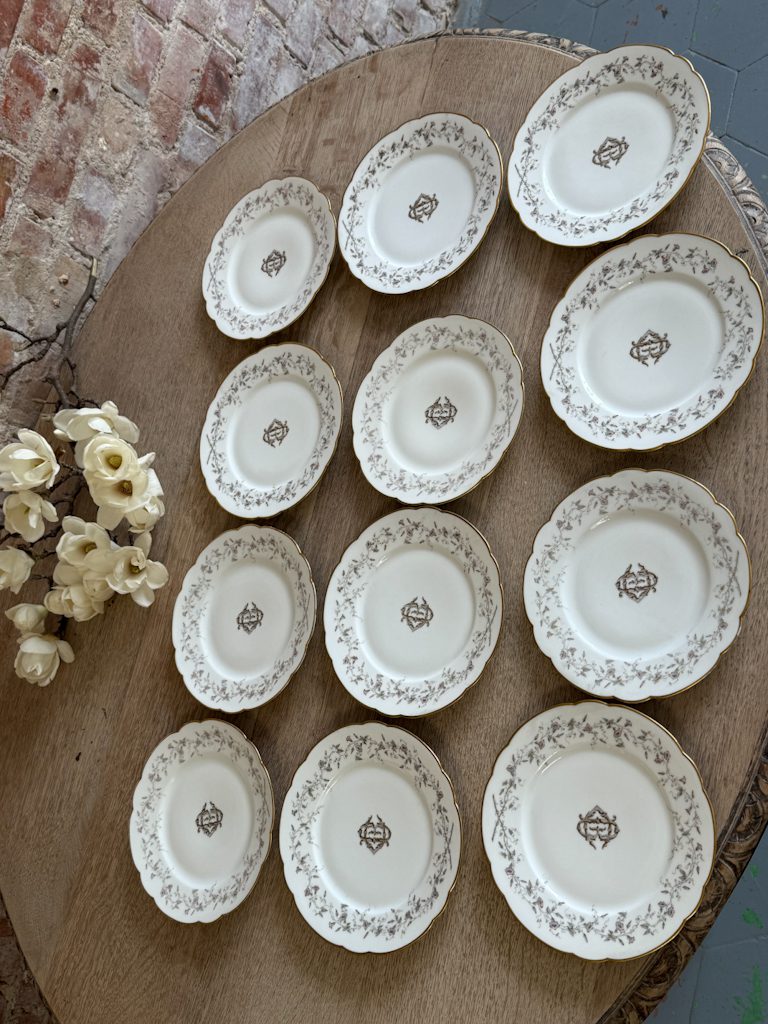
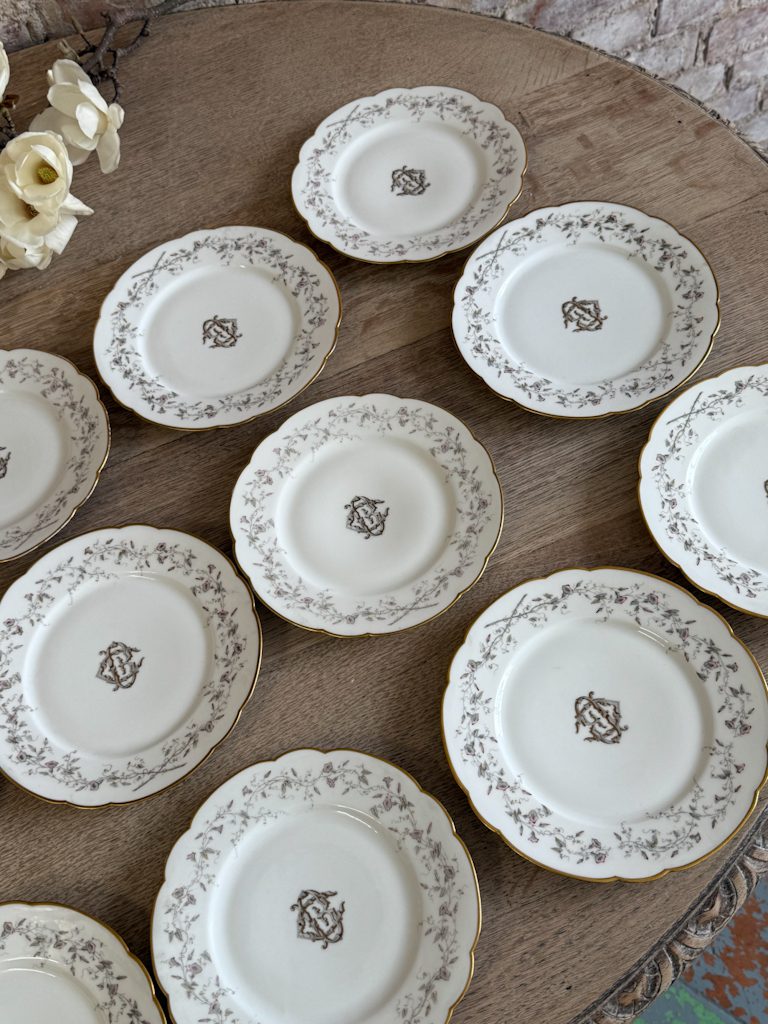
📐 IZMĒRI — Diametrs 22 cm. Komplektā 12 gabali.
Divpadsmit Limoges porcelāna salātu / kūkas šķīvju komplekts ar CB vai BC monogrammu un Art Nouveau vijolīšu vītņu dekoru — Mansard, 34 Rue Paradis, Paris; Limoges, Francija, ap 1880.–1900. gads, 12 gab.
―――――――――――――――――――――
🏛️ IZGATAVOŠANAS PERIODS, MĀKSLAS STILS, LAIKMETS
Ir servīzes, kas stāsta par ģimeni. Ne par vienu vakaru — par paaudzi. Par to, ka kāds Parīzē vai provinces pilī sēdēja pie rakstāmgalda un rakstīja pasūtījumu: šāds porcelāns, šāda robeža, un vidū — mūsu iniciaļi. Lai katrs, kas sēdēs pie mūsu galda, zina, ka šis galds ir mūsējs.
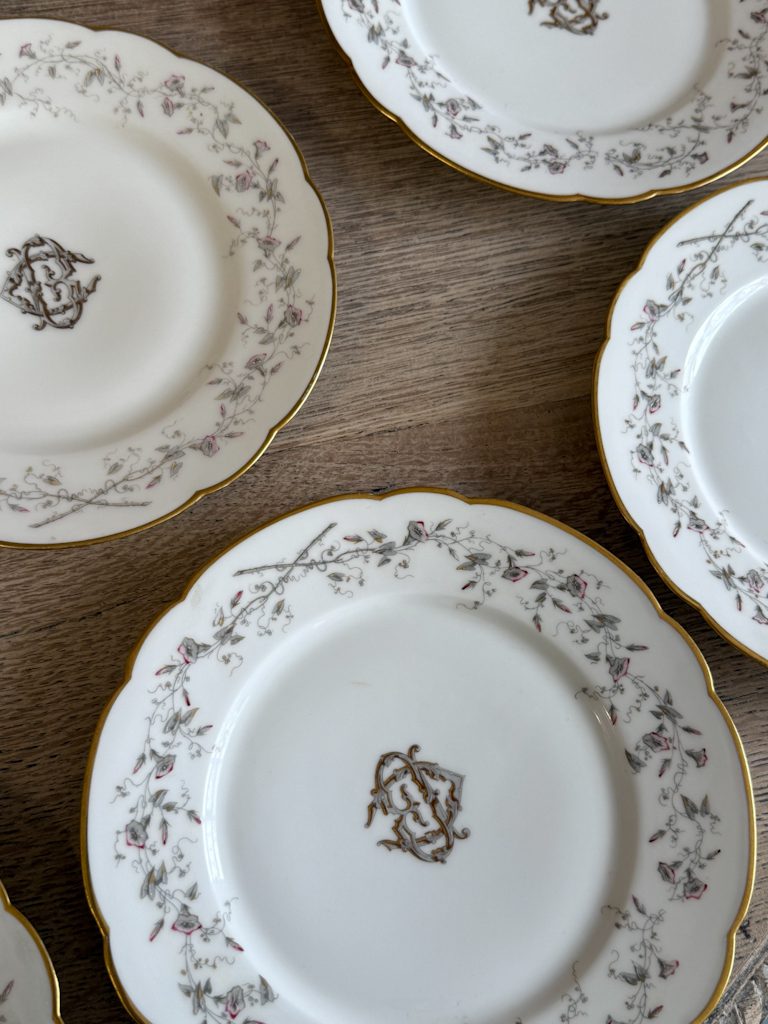
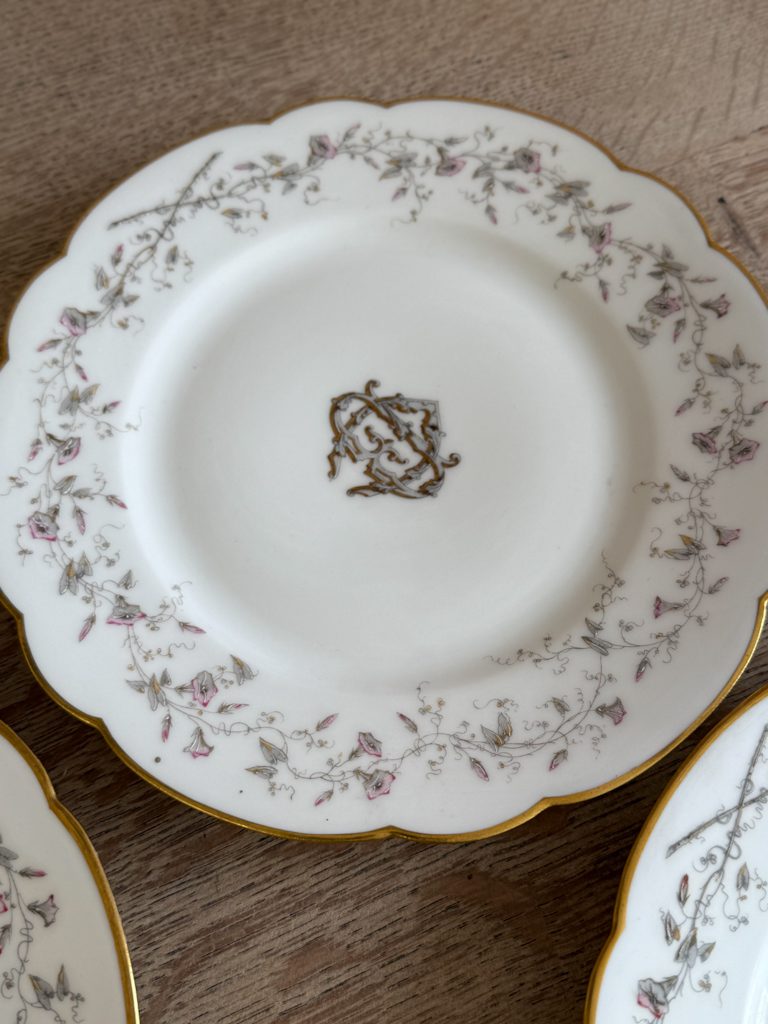
Šie šķīvji pieder tam auglīgajam pārejas brīdim starp vēlo Historicismu un ienākošo Art Nouveau — brīdim, kad dekoratīvā māksla atbrīvojās no smagajām historisma draperijas krokām un sāka atcerēties, ka ziedu vīteņi var būt viegli. Vijolīšu un savvaļas rožu vītnes uz šķīvju malām ir gleznots ar to nevainojamo precizitāti, ko deva Limoges meistaru skola — katrs zieds atpazīstams, katrs lapotnes vijums ir elpojošs, nevis saspringts. Krāsu palete — pelēkbrūns un maigi rozā uz ziloganbaltas porcelāna masas — ir vizuāli tik smalkjūtīga, ka šķīvji izskatās kā akvareles, nevis porcelāna izstrādājumi.
Zelta monogramma šķīvja centrā — savīti iniciaļi, visticamāk CB vai BC — ir privāta pasūtījuma zīme. Šis komplekts netika ražots plašai tirdzniecībai. Tas tika pasūtīts konkrētai ģimenei, konkrētam galdam, konkrētam dzīvesveidam. Tā ir atšķirība starp antikvāru priekšmetu un antikvāru dokumentu — šie šķīvji ir gan viens, gan otrs.
―――――――――――――――――――――
⚜️ RAŽOTĀJS UN TIRDZNIECĪBAS MĀJA
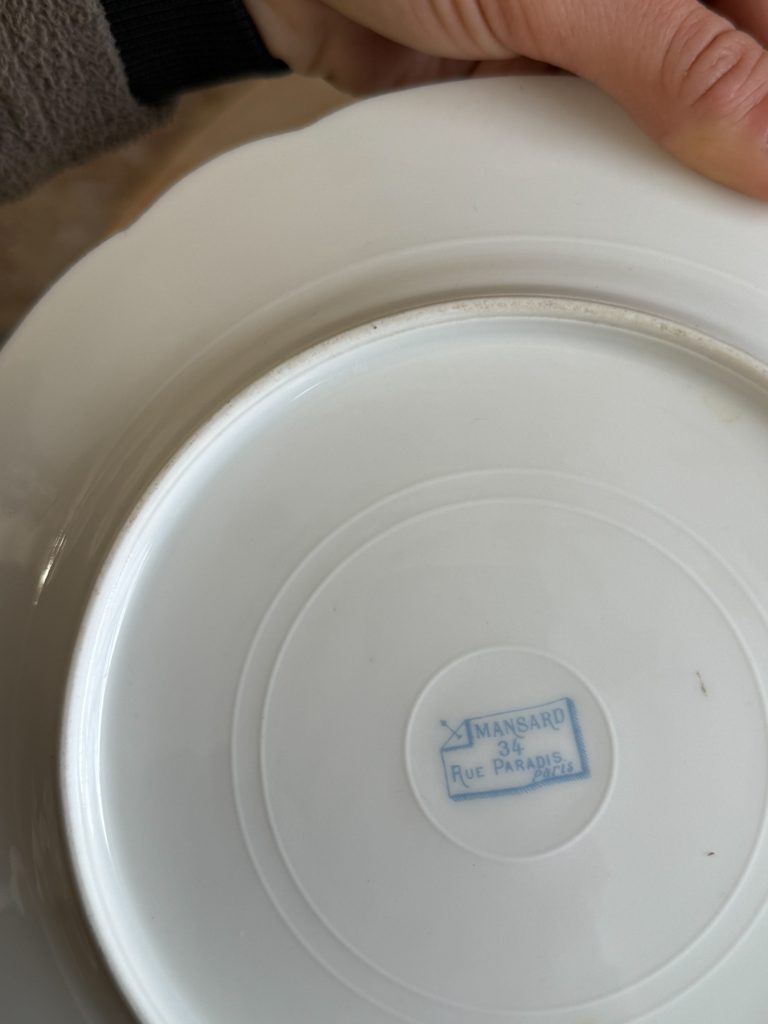
Zīmogs apakšā ir precīza vēstures adrese: MANSARD, 34 Rue Paradis, Paris. Rue Paradis — Paradīzes iela — nebija nejauša nosaukums. Tā bija Parīzes porcelāna un kristāla tirdzniecības galvenā artērija, kur 19. gs. otrajā pusē atradās visi lielākās porcelāna mājas, kas apgādāja Francijas augstāko sabiedrību un eksportēja uz visu Eiropu. Mansard bija prestižs porcelāna tirgotājs, kas darbojas pēc klasiskā Parīzes modeļa: pasūtīja porcelāna masas un balta porcelāna izstrādājumus pie vadošajām Limoges manufaktūrām, pēc tam tos dekorēja vai dekorēšanu uzraudzīja pēc saviem dizainiem, un pārdeva savā veikalā ar savu firmas zīmogu.
Limoges — Francijas centrā esošā pilsēta — bija un joprojām ir Eiropas smalko porcelānu galvaspilsēta. Tās baltās māla atradnes tika atklātas 1768. gadā, un tūlīt pēc tam pilsētā izveidojās manufaktūras, kas apgādāja gan Versaļas galmam, gan vēlāk visu Eiropas augstāko buržuāziju. Limoges porcelānam raksturīgā īpašība — tā ārkārtējā baltuma tīrība un glazūras caurspīdīgums — padara to par ideālu pamatu smalkai glezniecībai, un tieši šī īpašība ir redzama katrā no šiem šķīvjiem.
―――――――――――――――――――――
💎 RETUMS UN NOZĪME
Pilnīgs divpadsmit šķīvju komplekts ar privātu monogrammu, saglabātā zelta apmali, neskartu Mansard zīmogu un šajā kvalitātē saglabātu vijolīšu dekoru ir izcili rets atradums. Monogrammētie Limoges komplekti, kas izgājuši caur Parīzes prestižo tirdzniecības māju sistēmu, kolekcionāru pasaulē Francijā, Beļģijā un Lielbritānijā tiek vērtēti augstāk nekā anonīma ražojumi, jo tie satur divkāršu vēsturisko slāni — gan manufaktūras, gan pasūtītāja ģimenes stāstu. Divpadsmit gabalu komplekta pilnīgums ir sevišķi nozīmīgs, jo šādi servīzes laika gaitā parasti tiek izšķirtas.
―――――――――――――――――――――
🕯️ PIELIETOJUMS INTERJERĀ, DIZAINĀ UN FOTOGRĀFIJĀ
Šie šķīvji ir radīti galdam — un tie ir vienādi skaisti gan aktīvā lietošanā, gan kā dekorācija. Kūkas vai deserta pasniegšanai svētku galdam, kur katrs šķīvis ar savu monogrammu kļūst par vakara tēmu un stāstu. Stikla vitrīnā kā kolekcijas centerpiece, kur divpadsmit identisko monogrammu ritms rada hipnotisku vizuālo kārtību. Franču buržuāziskā, romantisma, provansas un Art Nouveau stila interjeros — kā autentiski galda aksesuāri, kas nav māksloti “antīkie”, bet patiesi nākuši no tā laika un tās pasaules. Fotogrāfijā — baltais porcelāns ar pelēkbrūno vītni un zelta monogrammu ir klasiska still-life kompozīcija, kas darbojas gan ar lina salveti un sviestu, gan ar kristāla glāzēm un svaigiem ziediem.
―――――――――――――――――――――
🔍 STĀVOKLIS
Vispārējais stāvoklis — labs, atbilstošs vecumam. Visi 12 gabali veseli, bez lūzumiem vai skaldījumiem. Vijolīšu un rožu vītņu dekors saglabājies skaidri ar pilnu krāsu intensitāti. Zelta monogramma centrā — labi saglabājusies. Zelta apmale malā — ar dabīgu, vecumam atbilstošu minimālu nodilumu atsevišķās vietās. Apakšā zils Mansard, 34 Rue Paradis, Paris zīmogs — skaidri lasāms. Lietas stāvoklis pilnībā atspoguļots fotogrāfijās.
―――――――――――――――――――――
🇬🇧 DESCRIPTION IN ENGLISH
Set of Twelve Limoges Porcelain Salad / Dessert Plates with CB or BC Monogram and Art Nouveau Floral Vine Décor — Mansard, 34 Rue Paradis, Paris; Limoges, France, circa 1880–1900, set of 12
―――――――――――――――――――――
📐 DIMENSIONS — Diameter 22 cm. Set of 12 pieces.
―――――――――――――――――――――
🏛️ PERIOD, ART STYLE, HISTORICAL CONTEXT
There are dinner services that tell the story of a family. Not of a single evening — of a generation. Of someone sitting at a writing desk in Paris or a provincial manor, composing an order: this porcelain, this border, and in the centre — our initials. So that everyone who sits at our table knows that this table is ours.
These plates belong to that fertile transitional moment between late Historicism and the emerging Art Nouveau — the moment when decorative art freed itself from the heavy drapery folds of historicism and began to remember that floral garlands could be light. The sweet pea and wild rose vines along the plate rims are painted with the impeccable precision that defined the Limoges master school — each flower identifiable, each tendril of foliage breathing rather than stiff. The colour palette — grey-brown and pale rose on the blue-white porcelain body — is so refined that the plates appear as watercolours rather than ceramic objects.
The gilt monogram at the centre of each plate — intertwined initials, most likely CB or BC — is the mark of a private commission. This set was not produced for general sale. It was ordered for a specific family, a specific table, a specific way of life. That is the difference between an antique object and an antique document — these plates are both.
―――――――――――――――――――――
⚜️ MAKER AND RETAIL HOUSE
The mark on the base is a precise address in history: MANSARD, 34 Rue Paradis, Paris. Rue Paradis — the Street of Paradise — was no accidental name. It was the principal artery of Parisian porcelain and crystal trade, where in the second half of the 19th century the finest porcelain houses were gathered, supplying French high society and exporting across Europe. Mansard was a prestigious porcelain retailer operating on the classic Parisian model: commissioning porcelain blanks from the leading Limoges manufactories, supervising decoration to their own designs, and selling in their own premises under their own mark.
Limoges — a city in central France — was and remains the capital of fine European porcelain. Its white kaolin deposits were discovered in 1768, and manufactories immediately established there went on to supply the court at Versailles and subsequently all of Europe’s haute bourgeoisie. The defining quality of Limoges porcelain — its exceptional whiteness and the translucency of its glaze — makes it the ideal ground for fine painted decoration, and that quality is visible in every one of these plates.
―――――――――――――――――――――
💎 RARITY AND SIGNIFICANCE
A complete set of twelve plates with a private monogram, preserved gilt border, intact Mansard mark, and floral decoration in this quality is an exceptionally rare find. Monogrammed Limoges sets that passed through the Parisian prestige retail system are valued more highly by collectors in France, Belgium, and the United Kingdom than anonymous pieces, because they carry a double historical layer — the story of both the manufactory and the commissioning family. The completeness of a twelve-piece set is especially significant, as dinner services of this type are almost invariably separated over time.
―――――――――――――――――――――
🕯️ USE IN INTERIOR DESIGN AND PHOTOGRAPHY
These plates are made for the table — and they are equally beautiful in active use and as decoration. For serving dessert or cake at a celebratory table, where each plate with its monogram becomes the conversation piece of the evening. In a glass cabinet as the centrepiece of a collection, where the rhythm of twelve identical monograms creates a hypnotic visual order. In French bourgeois, Romantic, Provençal, and Art Nouveau interiors — as authentic table accessories that are not artificially “antique” but genuinely come from that time and that world. In photography — white porcelain with a grey-brown floral vine and a gilt monogram is a classic still-life composition, working equally with a linen napkin and butter dish as with crystal glasses and fresh flowers.
―――――――――――――――――――――
🔍 CONDITION
Overall condition — good, consistent with age. All 12 pieces are intact, with no cracks or chips. The sweet pea and rose vine decoration is well preserved with full colour intensity. The gilt monogram at the centre is well retained. The gilt border at the rim shows natural, age-appropriate minimal wear in places. The Mansard, 34 Rue Paradis, Paris mark on the base is clearly legible in blue. The condition of the item is fully reflected in the photographs.