
Apgleznoti Franču Porcelāna Kašpo, Vidēja Izmēra, Pieejami 2gab (5234)
📐 IZMĒRI
Pieejami 2 gabali — cena norādīta par 1 gabalu. Augstums 20 cm × platums 20,5 cm.
―――――――――――――――――――――
Porcelāna kašpo pāris ar roku gleznotu žanrainā sižeta dekoru — Vēlais Historicisms / Sentimentālais Naturālisms, Altwasser, Silēzija (Vācija), ap 1880.–1900.
―――――――――――――――――――――
🏛️ IZGATAVOŠANAS PERIODS, MĀKSLAS STILS, LAIKMETS
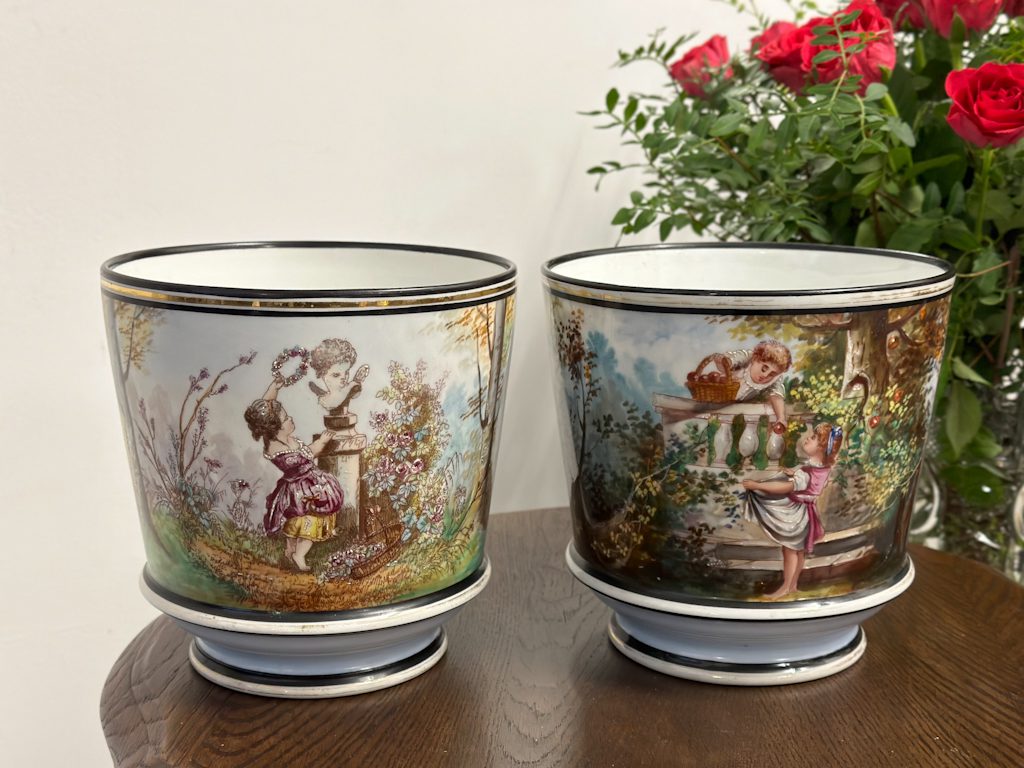
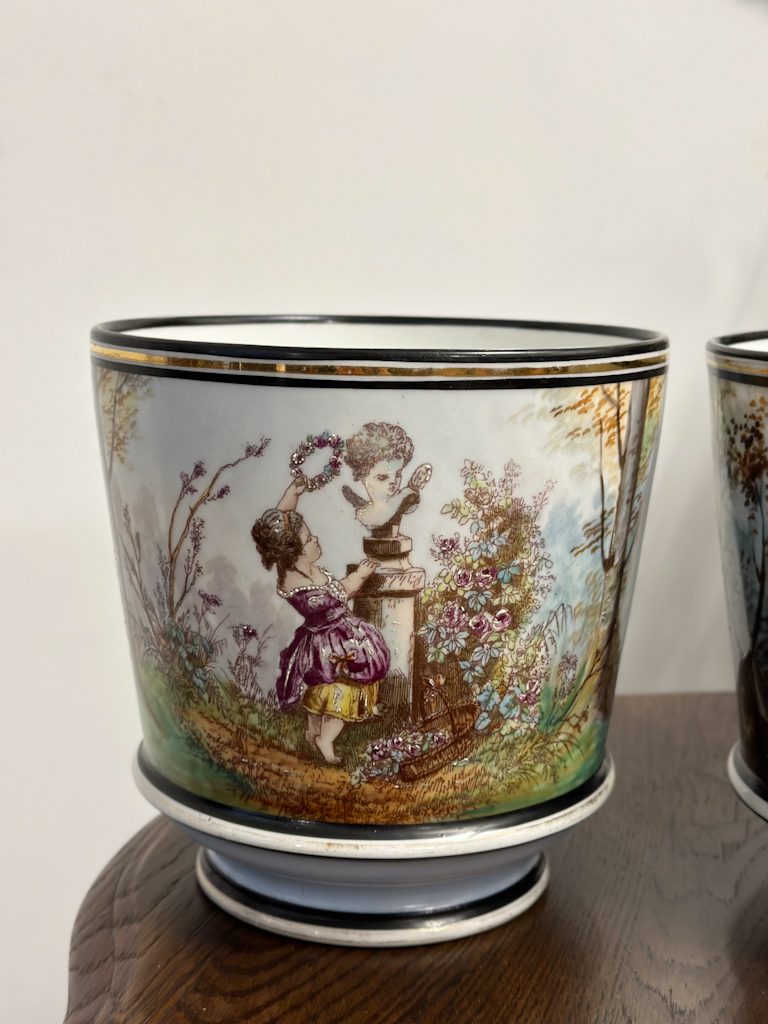
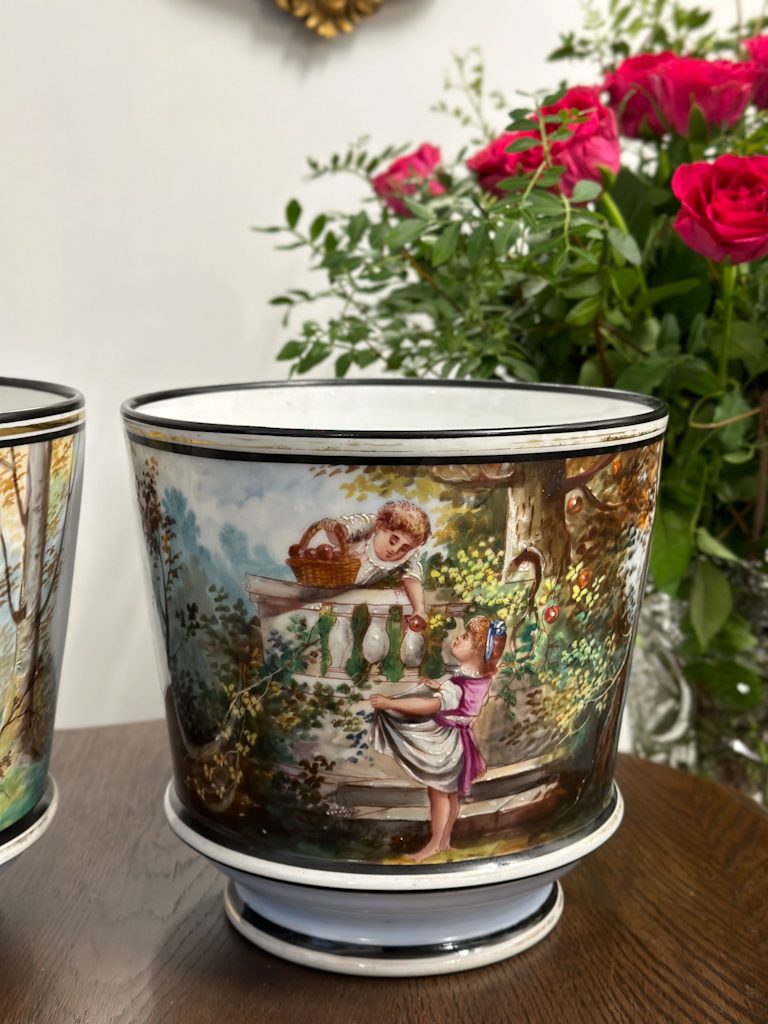
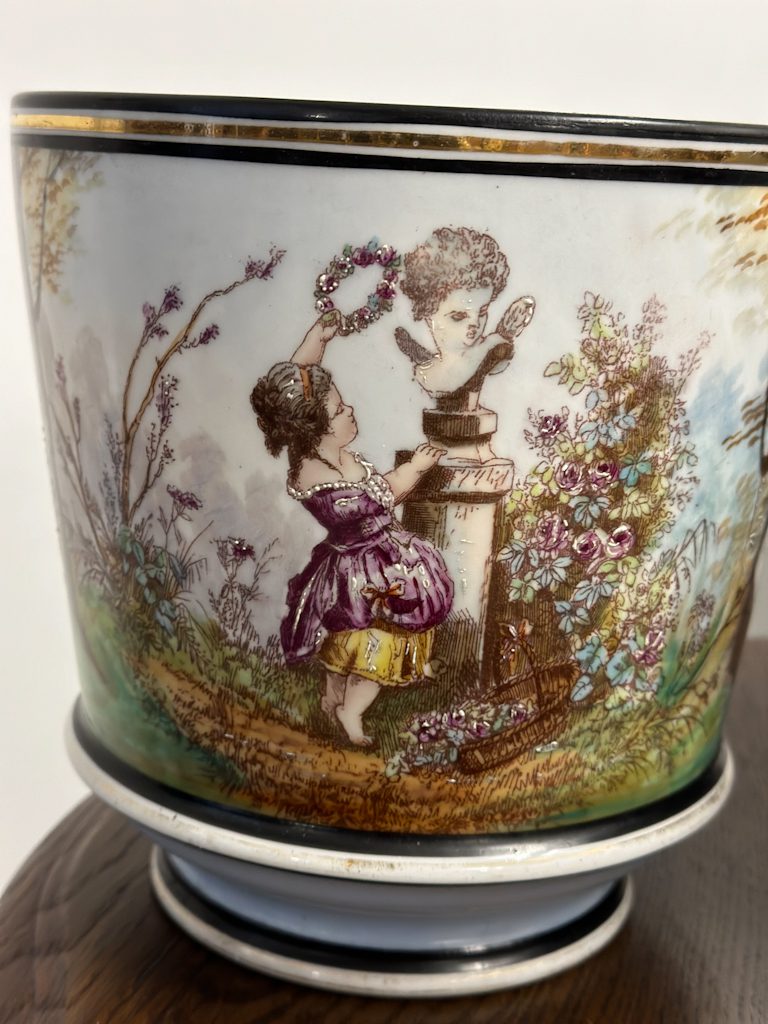
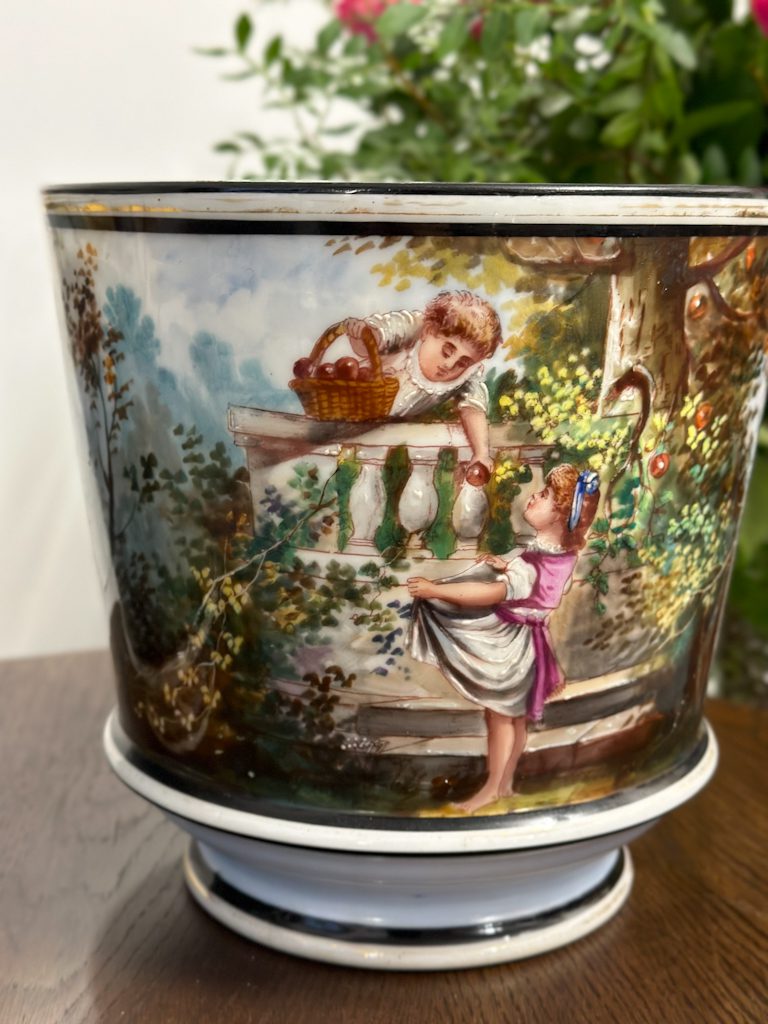
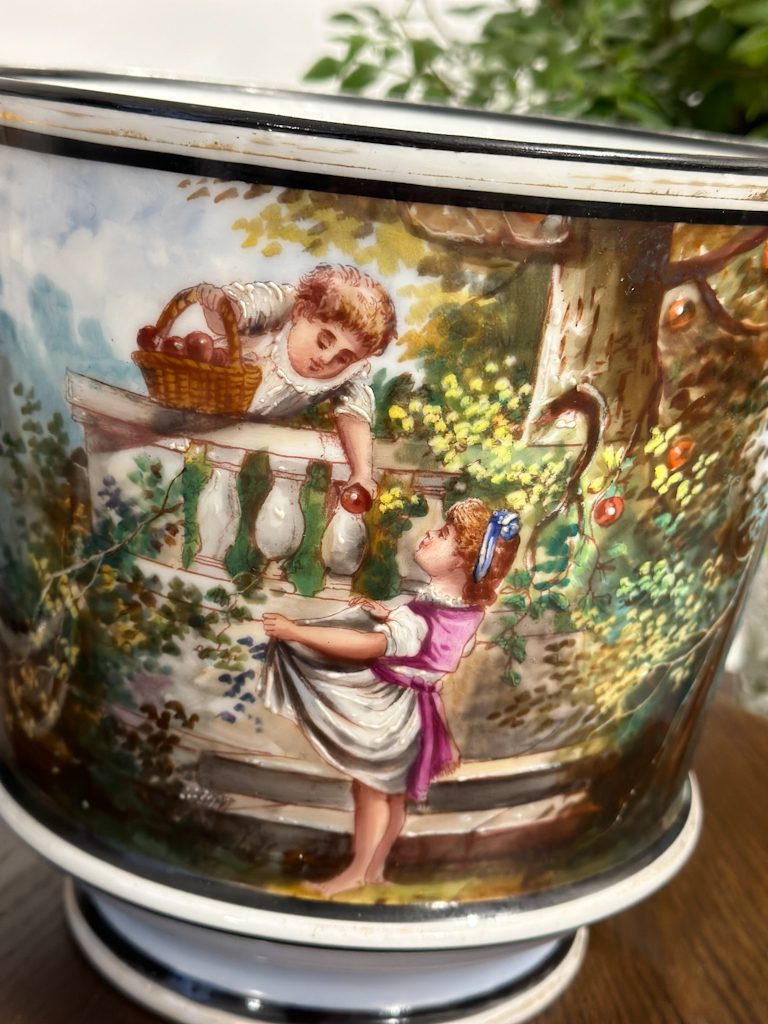
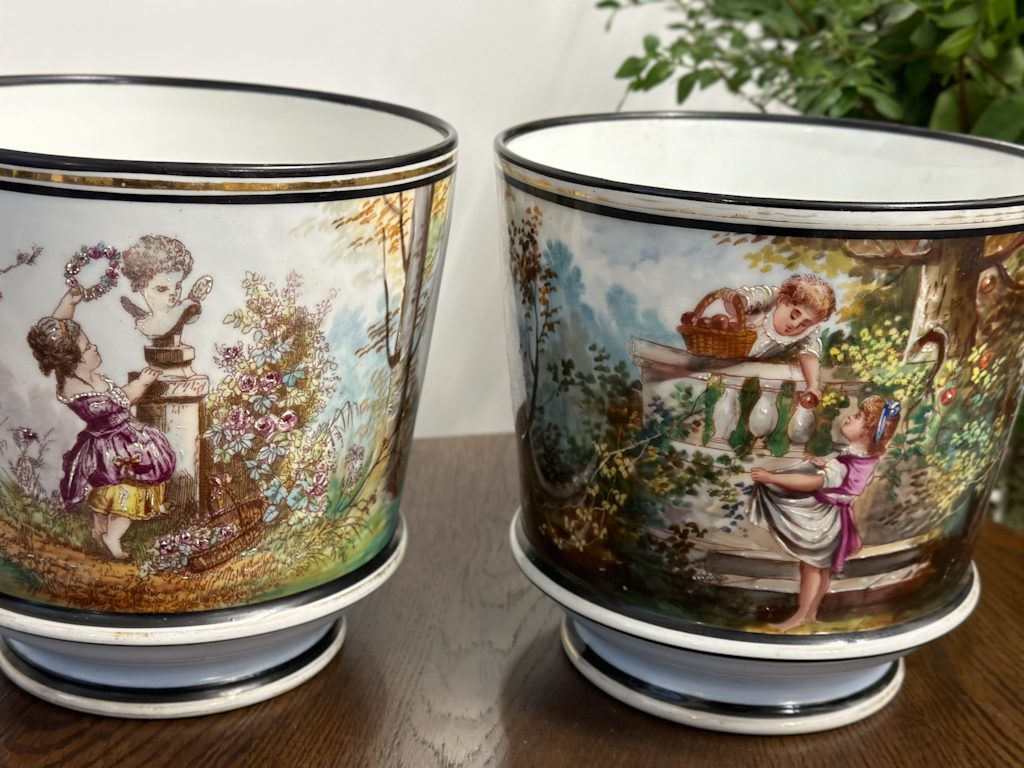
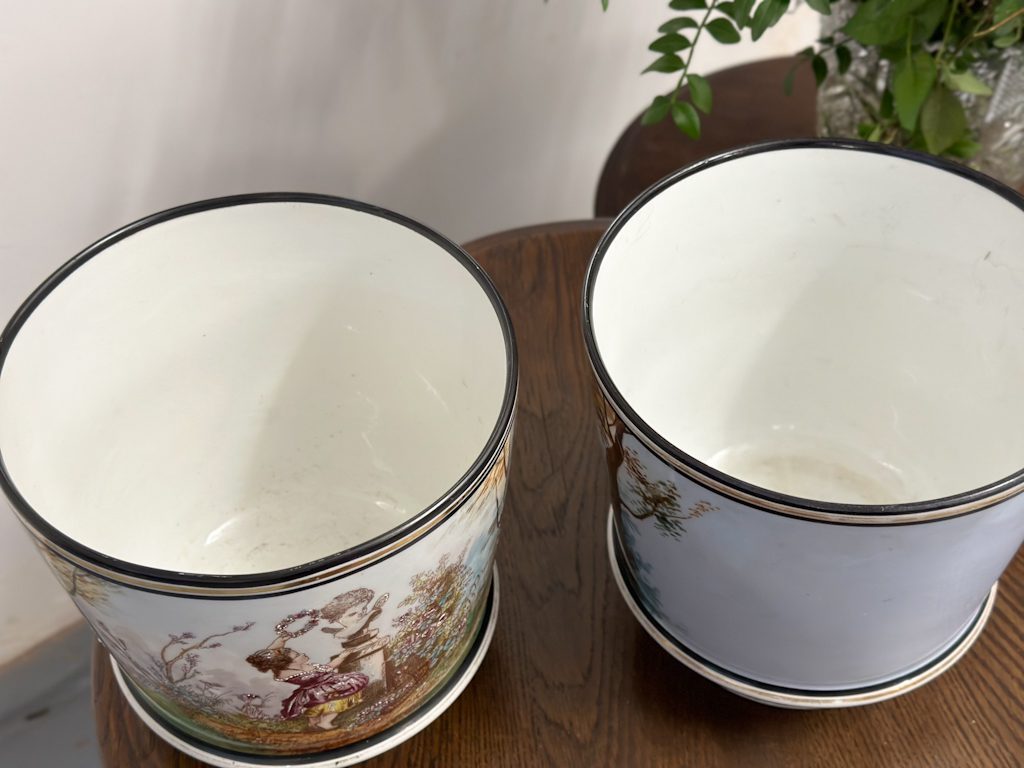
Šie izcilie porcelāna kašpo izgatavoti Vācijā 19. gadsimta pēdējās desmitgadēs — laikposmā, kad Eiropas porcelāna māksla piedzīvoja savu vēlā Historicisma kulmināciju. Šis ir tas auglīgais brīdis, kad akadēmiskā glezniecība un dekoratīvā porcelāna māksla saplūda vienā — manufaktūras algoja profesionālus gleznotājus, kas uz porcelāna virsmas reproducēja pilnvērtīgas ainavas un žanra ainas. Abu kašpo gleznojums veido stāstījumu: vienā — meitene košā tērpā vainago balta marmora bustu ar ziedu vainagu dārzā, otrā — divas bērnu figūras pie balustrādes, no kuras nodod augļus. Šie sižeti ir tipiski 19. gadsimta otrās puses Sentimentālajam Naturālismam — virzienu, kas idealizēja bērnību, dabu un nevainīgu lauku dzīvi kā pretsvaru industrializācijas Eiropai. Panorāmiski apgleznojums, kas nepārtraukti iet apkārt visam traukam, ir augstākās prasmes prasīgs paņēmiens — tādas glezniecības tehnikas, kas tika lietotas tikai labākajās Eiropas manufaktūrās. Pamattoņi — pērļpelēkā ārpuse ar melniem un zelta apmales svītriem — piešķir kašpo svinīgu, aristokrātisku raksturu.
―――――――――――――――――――――
⚜️ RAŽOTĀJS UN MANUFAKTŪRAS ZĪMOGS
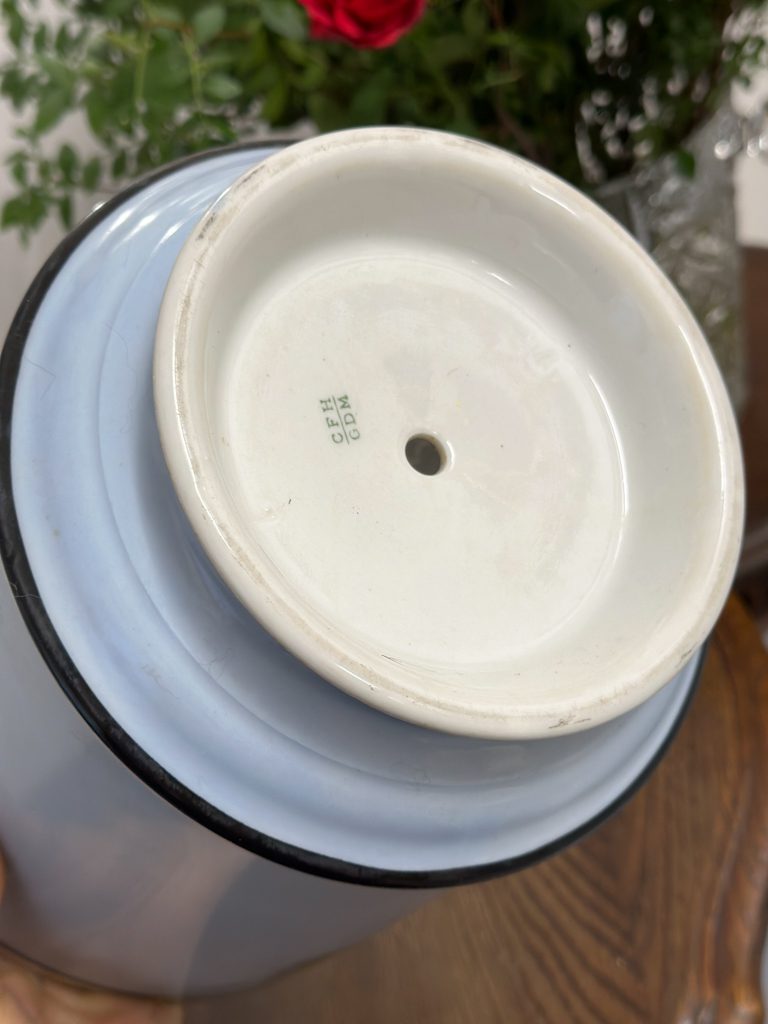
Uz apakšas redzams zaļš iespiests zīmogs “CFH / GDM” — tas pieder Carl Friedrich Heinrich Schumann manufaktūrai Altwasser, Silēzijā (tagad Wałbrzych apgabals, Polija). Šī manufaktūra darbojās no 1845. gada un bija viena no nozīmīgākajām Silēzijas porcelāna ražotnēm 19. gadsimta otrajā pusē. Apzīmējums GDM nozīmē “Geschützte Deutsche Muster” — aizsargāts Vācijas dizains — kas liecina, ka konkrētais dekors bija reģistrēts un aizsargāts, t.i., tas nebija vienkāršs rūpniecisks ražojums, bet apzināti radīts māksliniecisks produkts. Schumann manufaktūra specializējās augstas kvalitātes dekoratīvajā porcelānā ar figurālu un ainavu gleznojumu — tās izstrādājumi tika piegādāti Vācijas augstākajai sabiedrībai un eksportēti uz Rietumeiropu. Zīmoga zaļā krāsa un šī perioda formas norāda uz izgatavošanas laiku aptuveni 1880.–1900. gadā — Vācijas Keizarvalsts porcelāna mākslas ziedu laiku.
―――――――――――――――――――――
💎 RETUMS UN NOZĪME
Pāris — nevis viens, bet divi identiski kašpo ar dažādiem, bet saturiski saistītiem sižetiem — ir krietni retāks atradums nekā atsevišķs priekšmets. Šādi pāri tika izgatavoti speciāli kā komplekti aristokrātiskajiem saloniem un redzamākajiem interjeriem — tie nekad nav bijuši masas prece. Schumann / CFH GDM zīmogs ar aizsargātu dizaina statusu piešķir kolekcionārā vērtību: šie ir dokumentēti mākslas izstrādājumi, nevis anonīma produkcija. Vācijas 19. gadsimta Historicisma porcelāna žanraino ainu kašpo pāri ir meklēts objekts gan Eiropas, gan Ziemeļamerikas antikvariātu tirgū.
―――――――――――――――――――――
🕯️ PIELIETOJUMS INTERJERĀ, DIZAINĀ UN FOTOGRĀFIJĀ
Šāda izmēra kašpo pāris (augstums 20 cm) ir ideāls kā kamīna plaukta pāris simetriskā kompozīcijā, kā balkonu vai loglogu dekorācija augiem, vai kā gaiteņa konsoles galda centrālais akords. Pelēkā pamattoņa un zeltainā apmales kombinācija ļauj integrēt abus kašpo gan klasiskajos, gan modernākajos interjerās — tie der Eiropas “Old Money” estētikā, franču salona stilā, kā arī mūsdienu eklektiskajā luksusa interjerā. Fotogrāfiem un rekvizītu stilistiem šie kašpo ir izcila izvēle lielformāta flatiņu, dārglietu vai parfimērijas kadros — apgleznojuma ainava darbojas kā miniatūra pasaule aiz priekšmeta.
―――――――――――――――――――――
🎁 DĀVANA
Kašpo pāris ir reprezentatīva dāvana ar spēcīgu stāstu — piemērota kā augstākā līmeņa korporatīva vai diplomātiska dāvana, kas liecina par izsmalcinātu gaumi un kultūrvēsturisko izglītību. Atsevišķs gabals der arī kā izsmalcināta dāvana kolekcionāriem, interjera dizaina entuziastiem un tiem, kas novērtē Eiropas 19. gadsimta mākslas mantojumu.
―――――――――――――――――――――
🔍 STĀVOKLIS
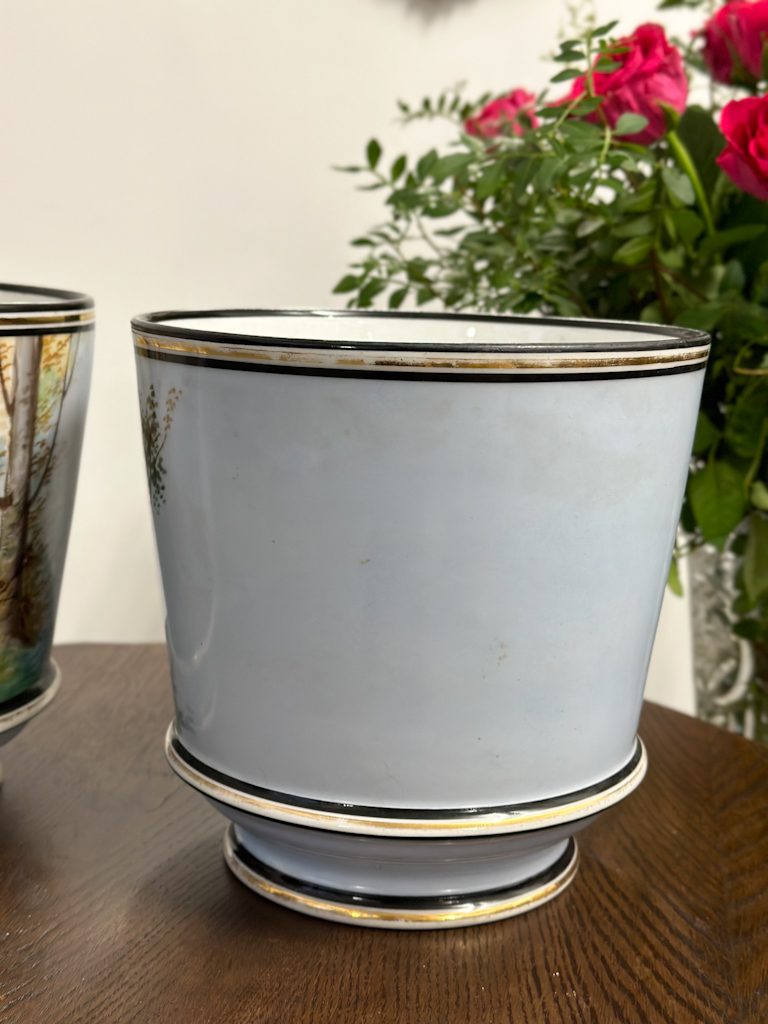
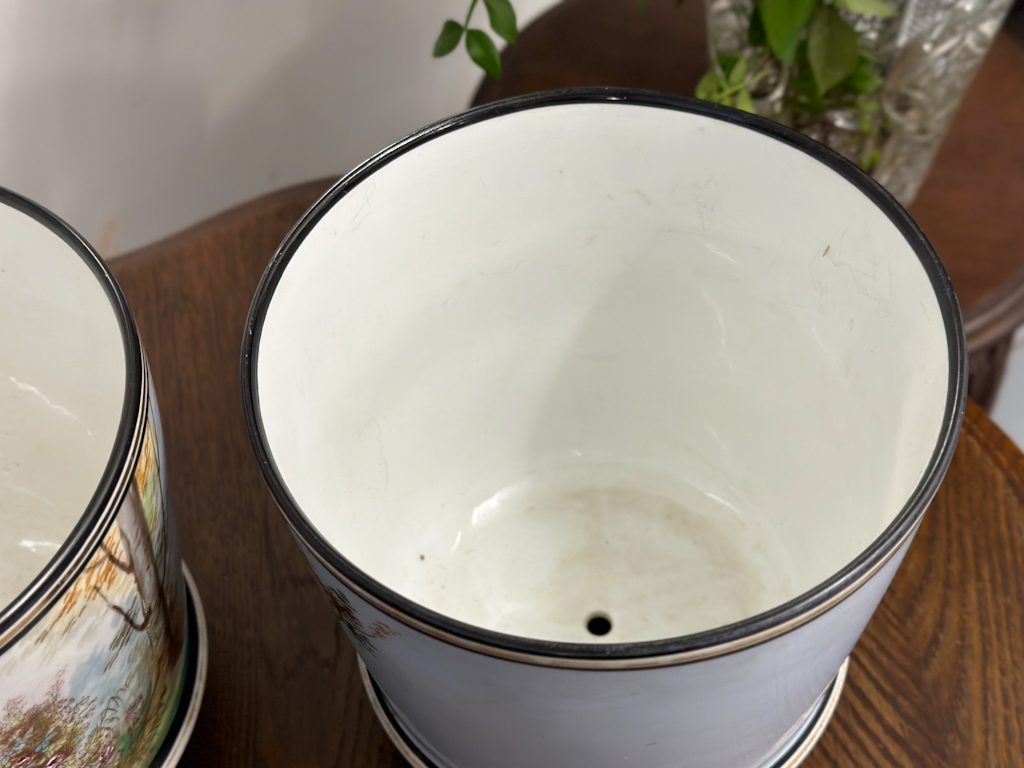
Abi kašpo ir labā vispārējā stāvoklī, ņemot vērā to vecumu. Gleznojums saglabājies ar spilgtu krāsu intensitāti. Vienam kašpo aizmugurējā pusē redzams neapgleznots baltais porcelāns — tas ir autentiskas ražošanas iezīme, nevis bojājums. Dabiska nolietošanās uz apmales un zeltījuma, atbilstoša 130–140 gadu vecumam. Lietas stāvoklis pilnībā atspoguļots fotogrāfijās.
―――――――――――――――――――――
🇬🇧 DESCRIPTION IN ENGLISH
Pair of hand-painted porcelain cachepots with genre scene decoration — Late Historicism / Sentimental Naturalism, Altwasser, Silesia (Germany), circa 1880–1900.
―――――――――――――――――――――
📐 DIMENSIONS
Height 20 cm × width 20.5 cm. Available as a pair of 2 pieces — price indicated per individual piece.
―――――――――――――――――――――
🏛️ PERIOD, ART STYLE, HISTORICAL CONTEXT
These exceptional porcelain cachepots were made in Germany during the final decades of the 19th century — a period when European porcelain art reached the culmination of Late Historicism. This was the fertile moment when academic painting and decorative porcelain converged: manufactories employed professional artists to paint fully realised landscapes and genre scenes on porcelain surfaces. The decoration on each cachepot tells a narrative: one depicts a girl in a vivid dress crowning a white marble bust with a floral wreath in a garden setting; the other shows two children at a garden balustrade, one passing fruit down to the other. These subjects are characteristic of 19th-century Sentimental Naturalism — a tendency that idealised childhood, nature and innocent rural life as a counterpoint to industrialising Europe. The panoramic decoration, which flows continuously around the entire body of each vessel without interruption, is a technically demanding achievement requiring the skill of a trained porcelain painter — a technique reserved for the finest European manufactories. The pearl-grey exterior ground with black and gold border lines lends both pieces a formal, aristocratic character.
―――――――――――――――――――――
⚜️ MAKER AND MANUFACTURER’S MARK
The underside bears a green printed mark “CFH / GDM” — the mark of the Carl Friedrich Heinrich Schumann manufactory in Altwasser, Silesia (now the Wałbrzych region of Poland). This manufactory operated from 1845 and was one of the most significant Silesian porcelain producers of the second half of the 19th century. The designation GDM stands for “Geschützte Deutsche Muster” — Protected German Design — indicating that the specific decoration was registered and legally protected: this was not a generic industrial product but a deliberately created artistic work. The Schumann manufactory specialised in high-quality decorative porcelain with figurative and landscape painting, supplying the upper echelons of German society and exporting to Western Europe. The green mark and the formal characteristics of the period place the date of manufacture at approximately 1880–1900 — the height of porcelain art in the German Empire.
―――――――――――――――――――――
💎 RARITY AND SIGNIFICANCE
A matched pair — not one but two identical cachepots bearing different yet narratively connected scenes — is considerably rarer than a single piece. Such pairs were produced specifically as sets for aristocratic salons and prestigious interiors; they were never a mass-market commodity. The Schumann CFH GDM mark with its protected design status adds collectible significance: these are documented works of decorative art, not anonymous production. A matched pair of German 19th-century Historicist porcelain cachepots with genre figure scenes is a sought-after object in both European and North American antiques markets.
―――――――――――――――――――――
🕯️ USE IN INTERIOR, DESIGN AND PHOTOGRAPHY
A matched pair of cachepots of this size (height 20 cm) is ideal as a symmetrical mantelpiece arrangement, as a window ledge or balcony display with plants, or as the central accent on a console table in an entrance hall. The grey ground combined with gold border lines allows both pieces to integrate naturally into classical as well as more contemporary interiors — they suit the European “Old Money” aesthetic, the French salon style, and modern eclectic luxury interiors alike. For photographers and prop stylists, these cachepots are an outstanding choice for large-format still life, jewellery or perfumery shoots — the painted landscape functions as a miniature world framing the subject.
―――――――――――――――――――――
🎁 AS A GIFT
The pair makes a distinguished gift with a powerful provenance story — appropriate as a high-level corporate or diplomatic present that conveys refined taste and cultural knowledge. An individual piece also makes an excellent gift for collectors, interior design enthusiasts and those who appreciate the artistic legacy of 19th-century Europe.
―――――――――――――――――――――
🔍 CONDITION
Both cachepots are in good overall condition given their age. The painted decoration retains strong colour intensity. One cachepot has an undecorated white porcelain reverse — this is an authentic feature of manufacture, not damage. Natural wear to the border and gilding is consistent with an age of approximately 130–140 years. The condition of the items is fully reflected in the photographs.