Lauva Cīnītājs — “Lion Combattant” — Franču Animālisms, Francija, ap 1910.–1940. Liela Izmēra Lauvas Figūra (1879-1943), Terakota, ar Zīmogu un Parakstu, Smaga (5190)
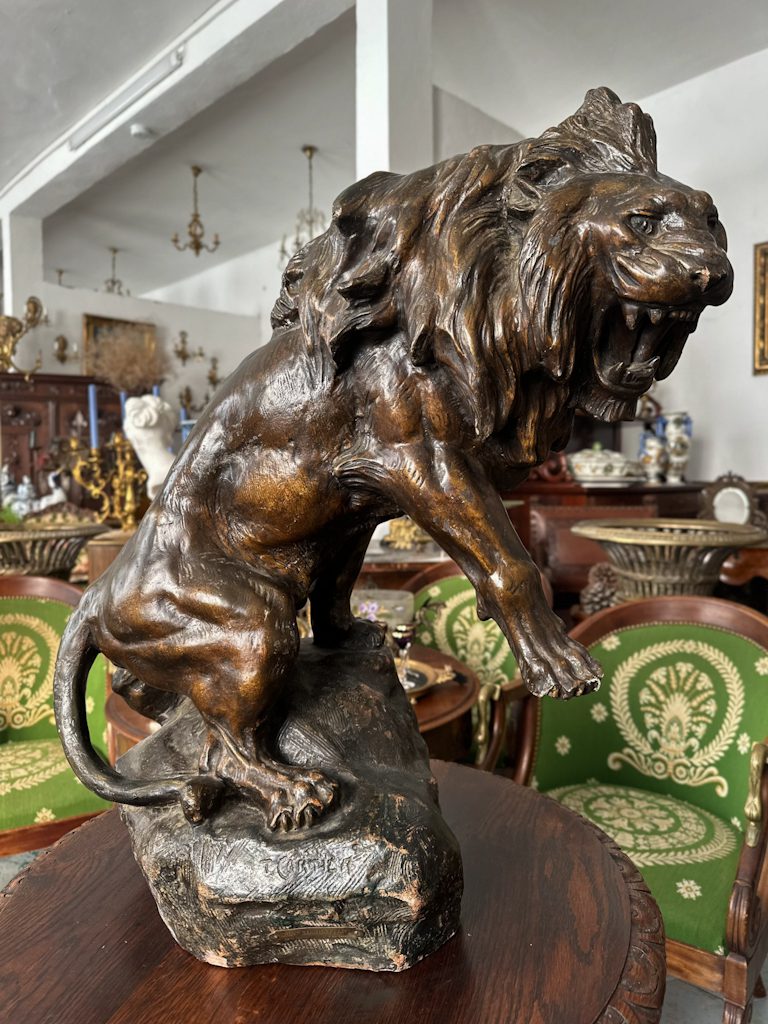
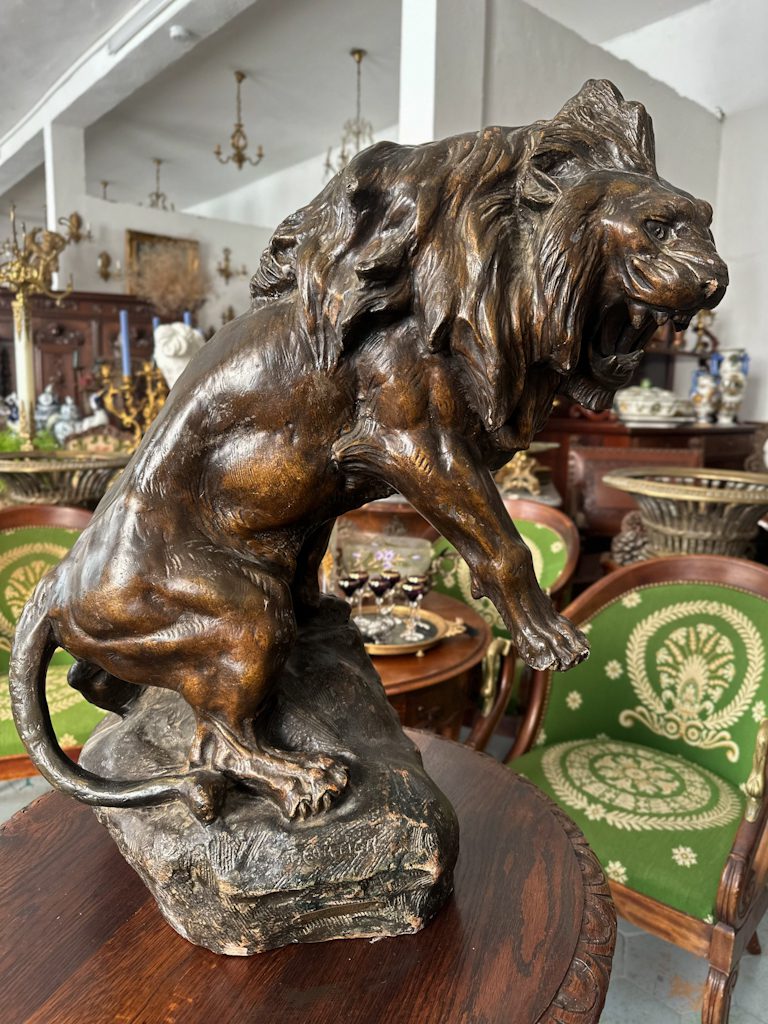
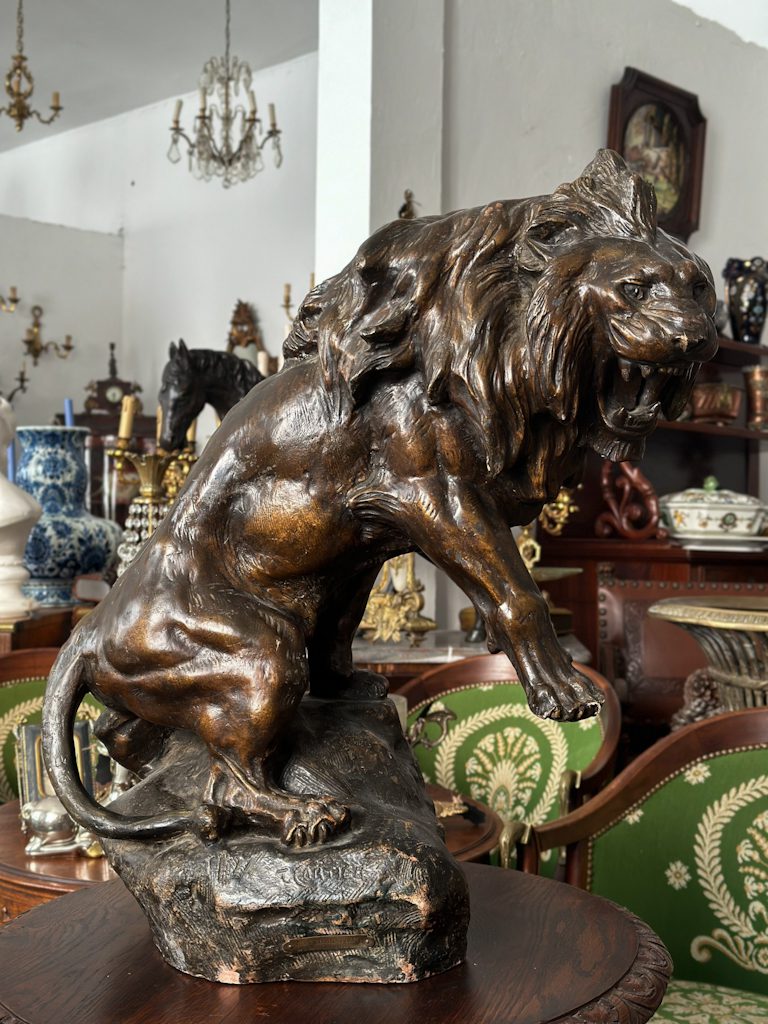
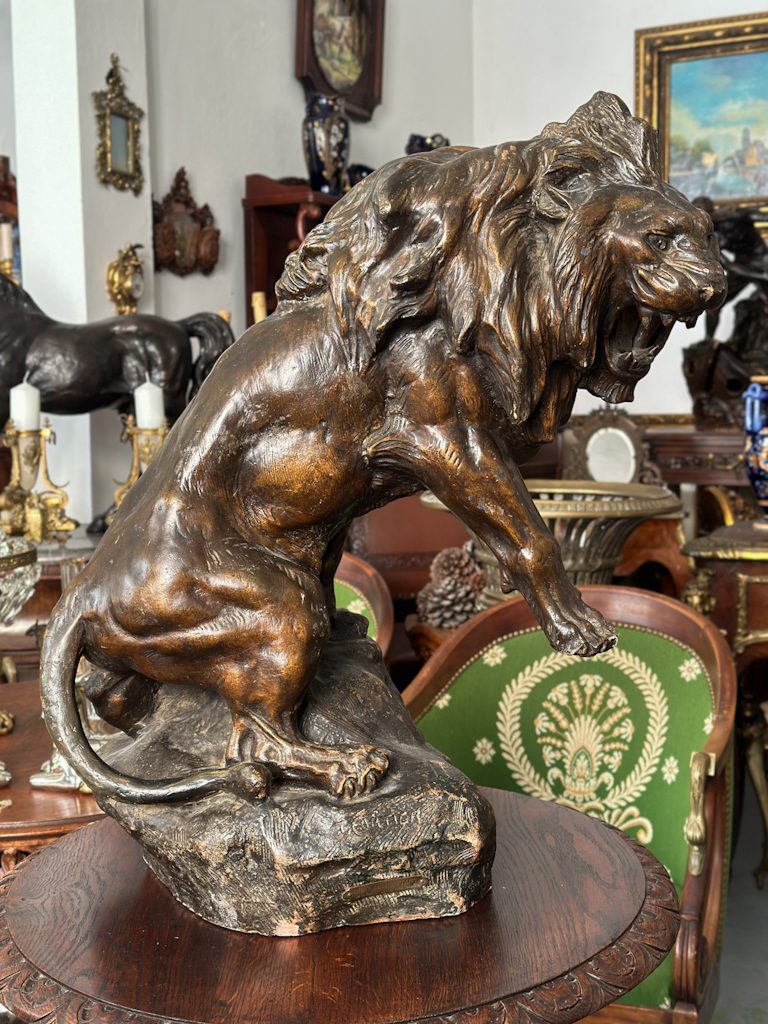
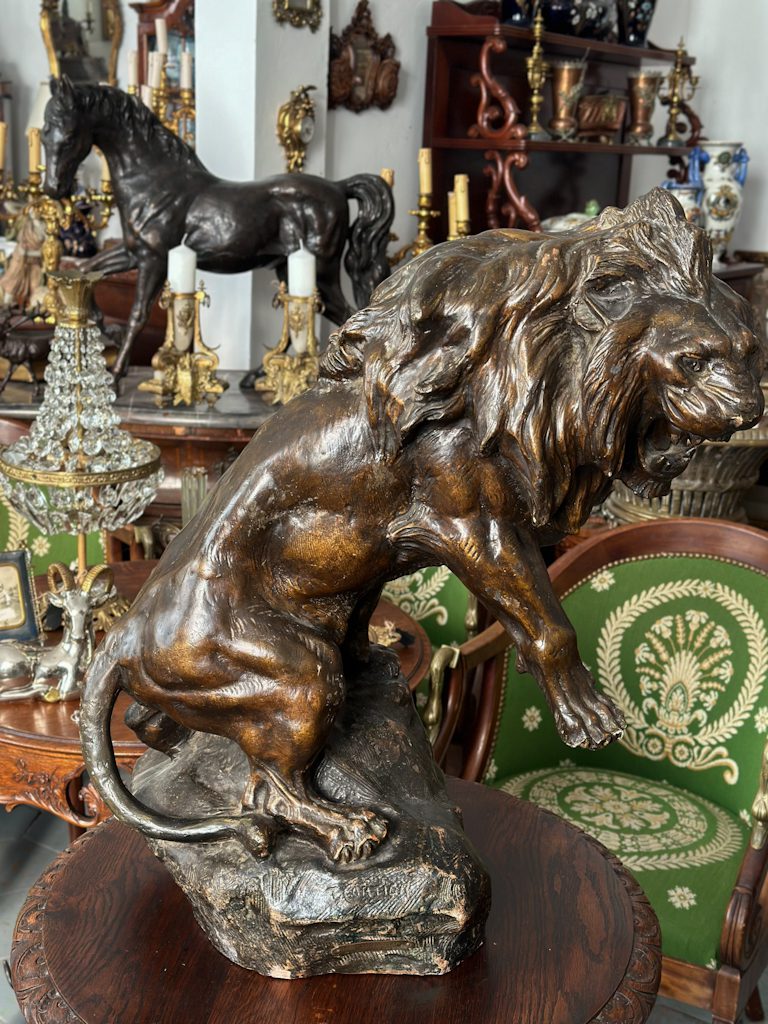
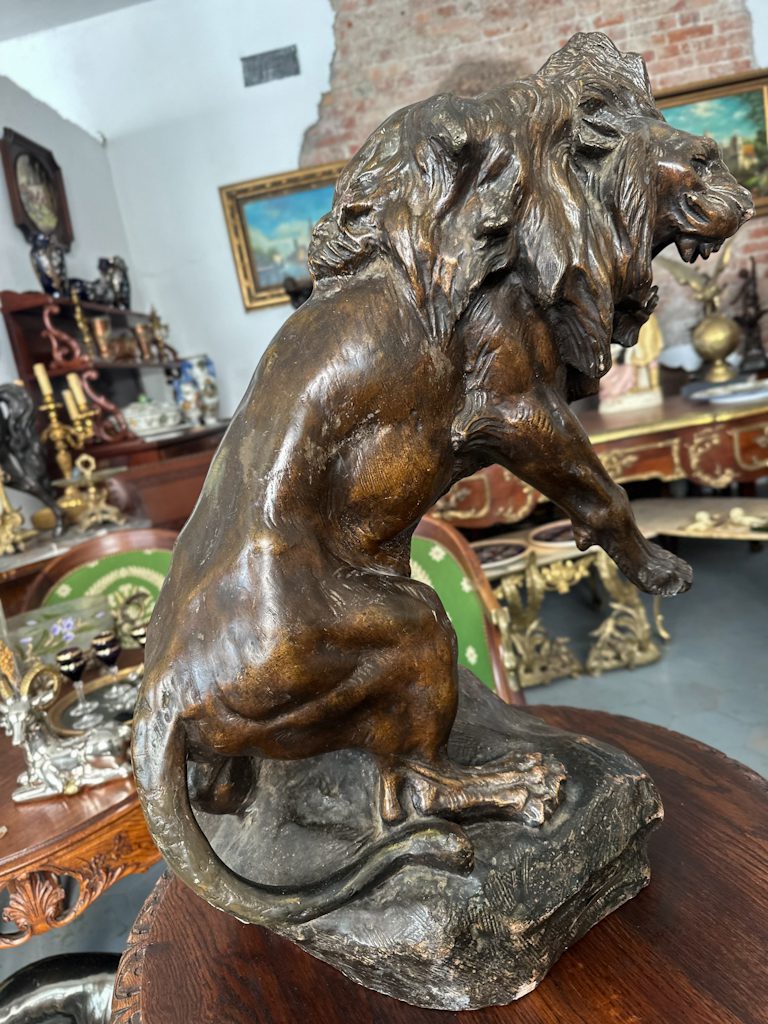
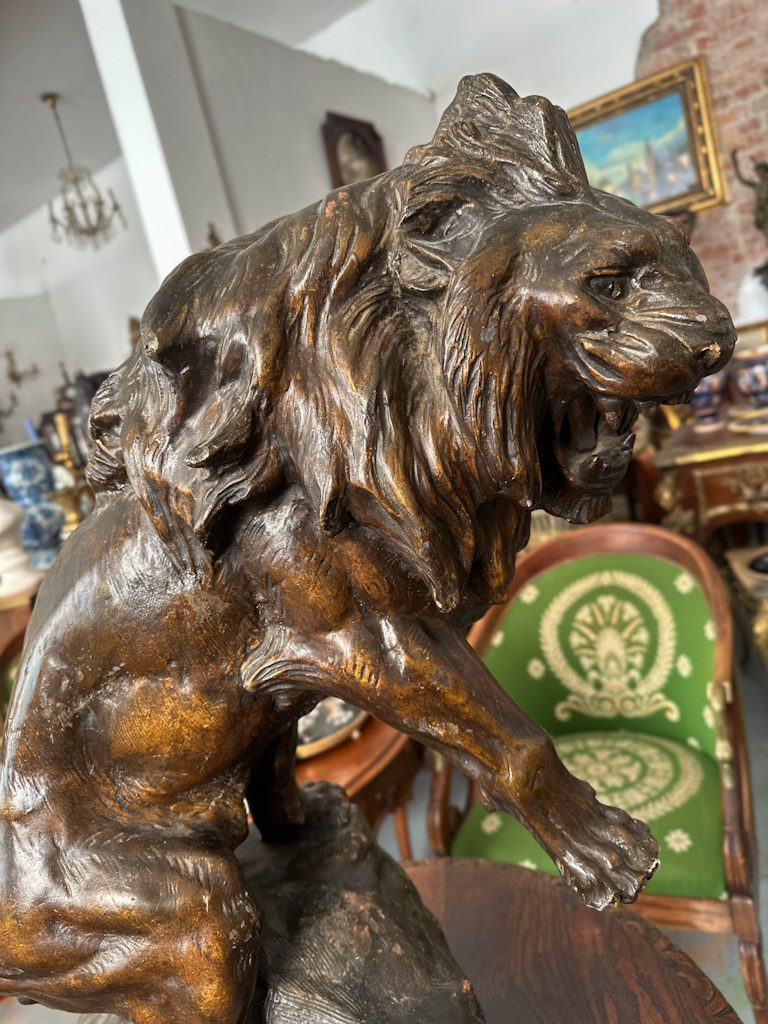
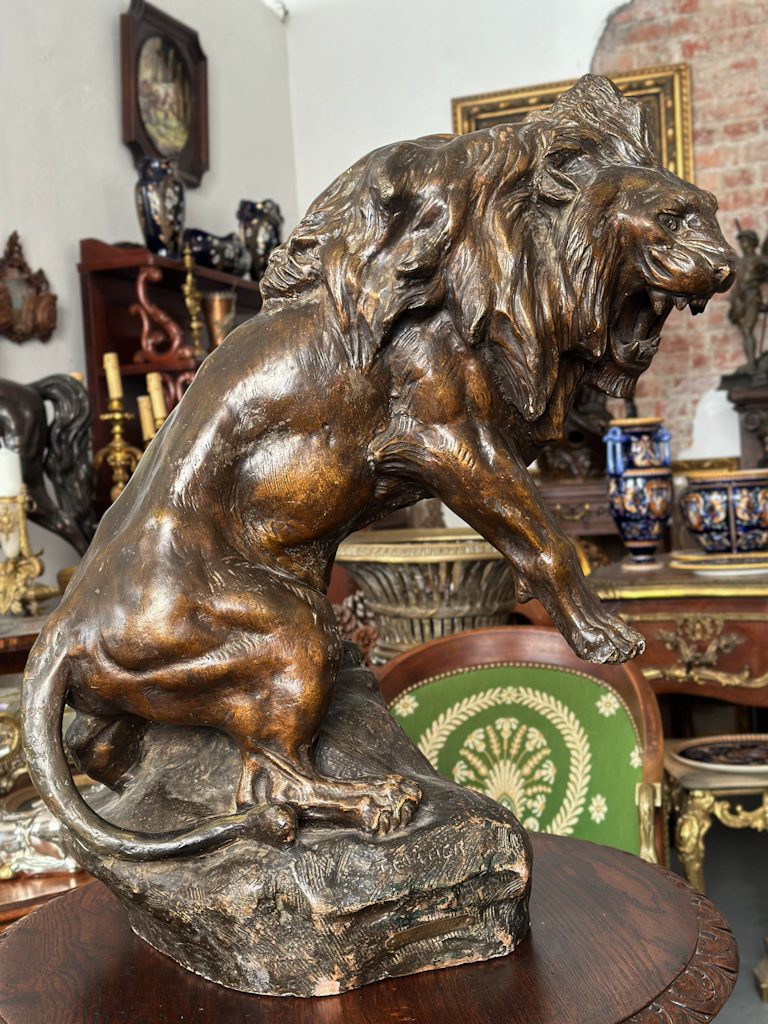
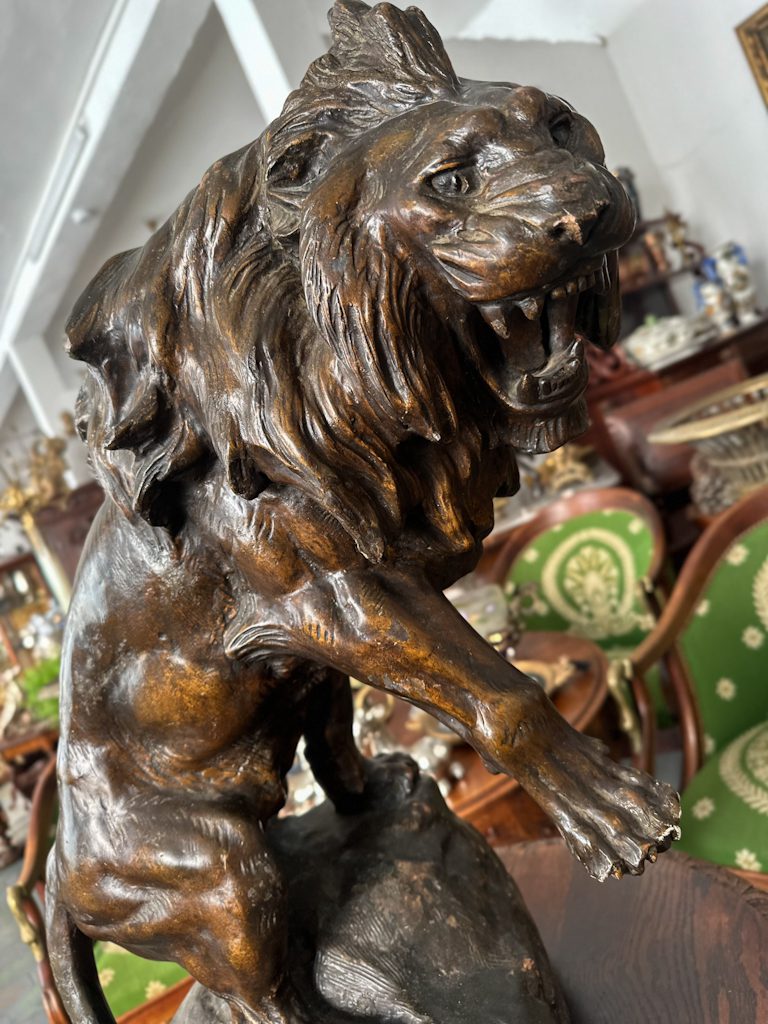
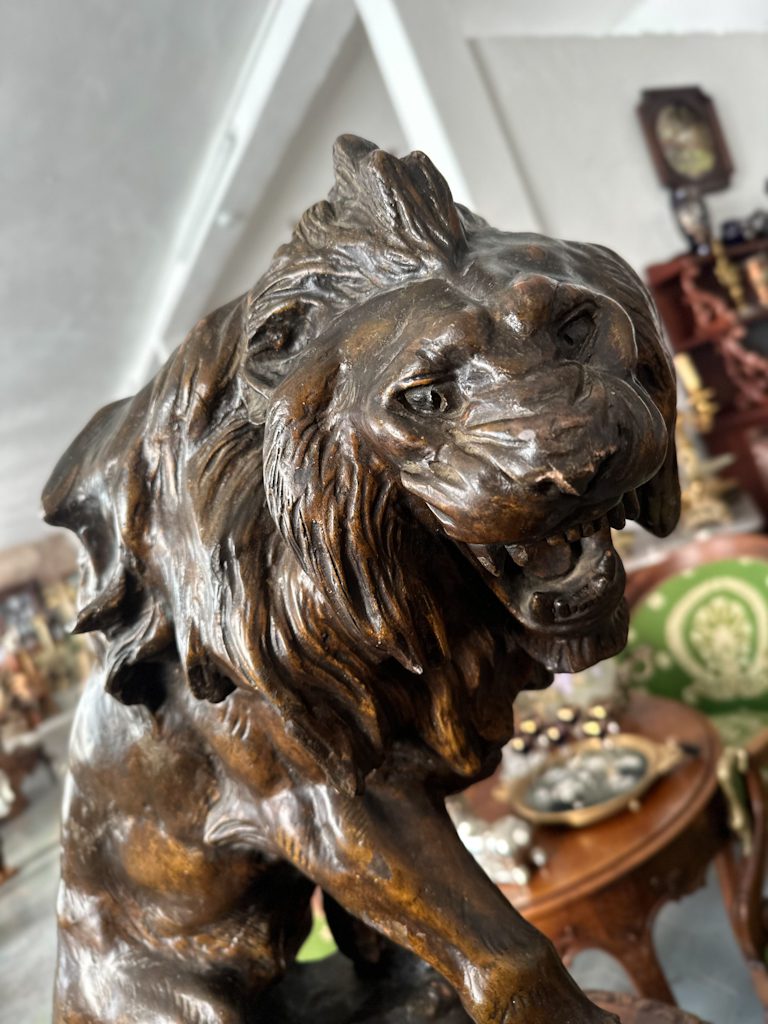
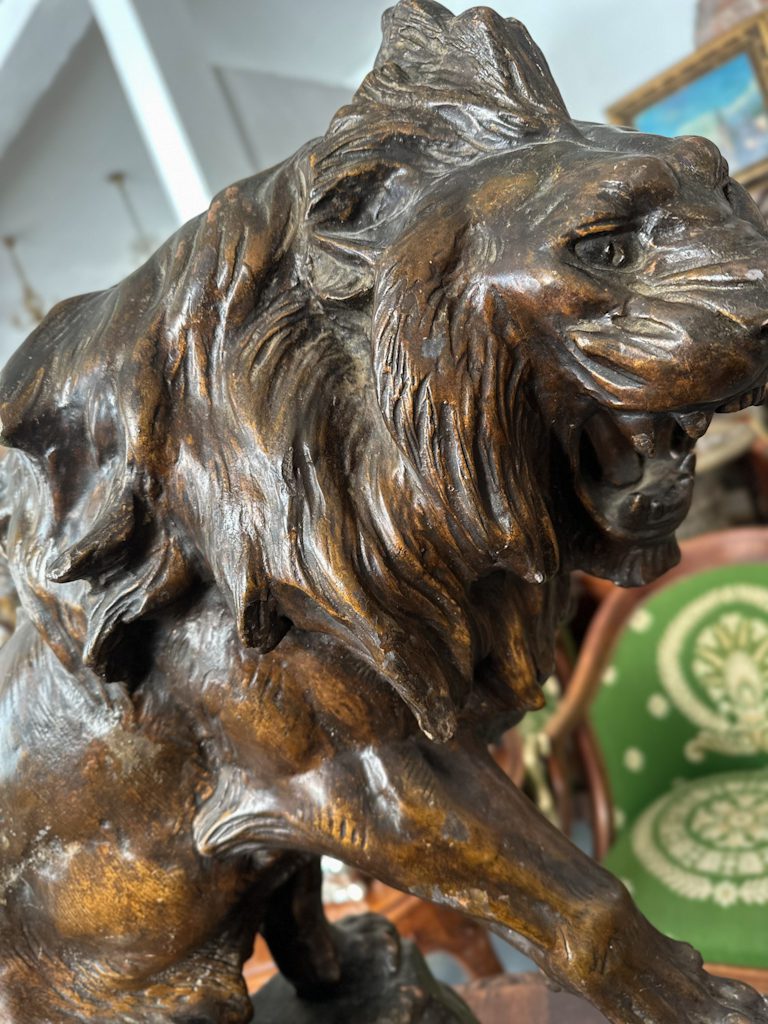
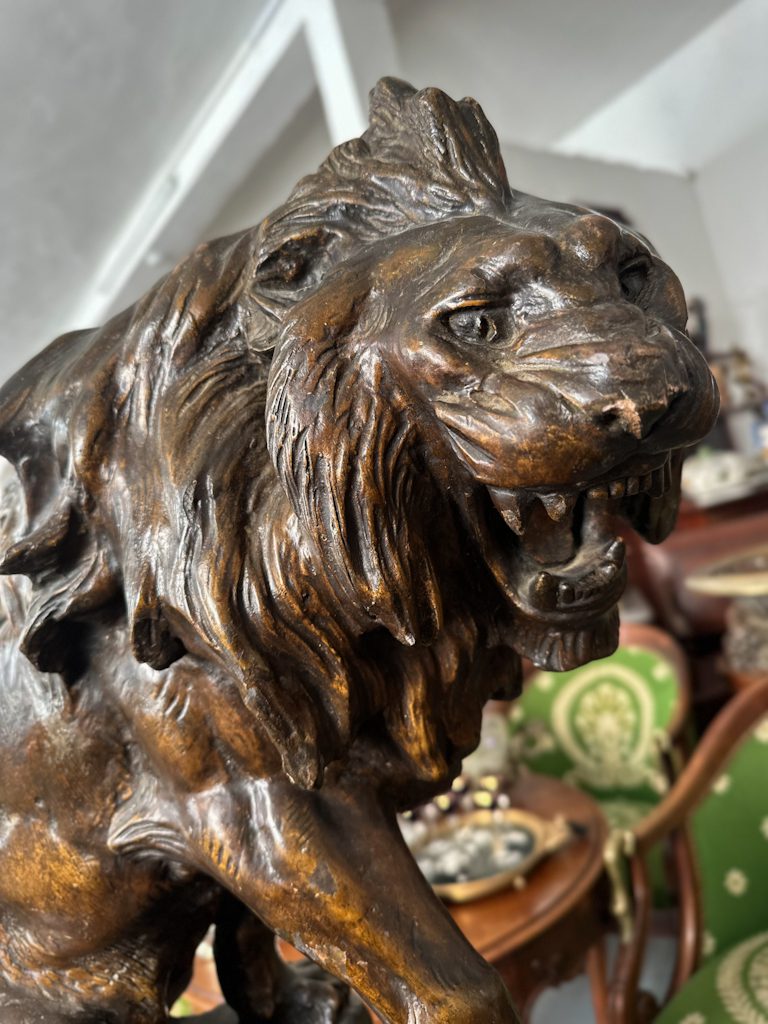
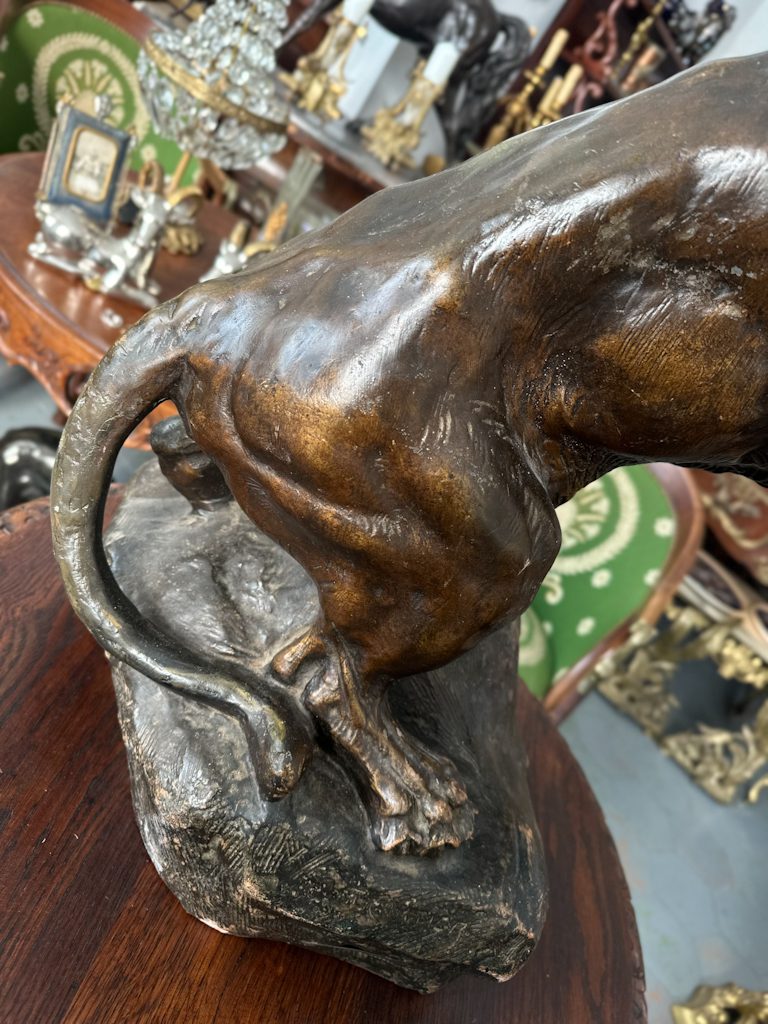
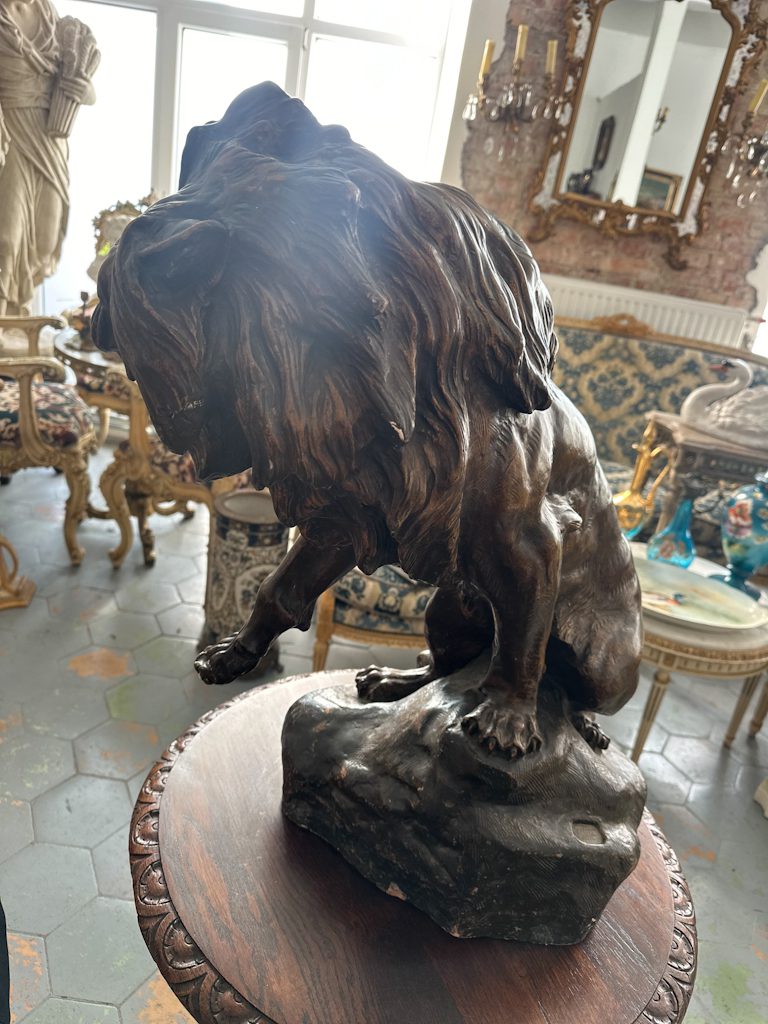
“Lion Combattant” — Cīņas lauva, terakota ar bronzas patinu, pēc Thomas François Cartier (1879–1943) modeļa, Ateliers d’Art Martini izdevums, Francija, ap 1910.–1940.
―――――――――――――――――――――
📐 IZMĒRI
Augstums 63 cm. Materiāls: terakota ar tumši brūnu bronzas imitācijas patinu. Svars: ievērojami smags — masīvs lējums uz organiskas klints pamatnes.
―――――――――――――――――――――
🏛️ IZGATAVOŠANAS PERIODS, MĀKSLAS STILS, LAIKMETS
Šī skulptūra pieder Francijas Animalier skolas ziedu laikam — periodam, kad dzīvnieku skulptūra Parīzē baudīja tādu prestižu un kolekcionāru uzmanību, kādu agrāk bija pelnījušas tikai vēsturiskas un mitoloģiskas ainas. No Antoine-Louis Barye — animalier tradīcijas tēva — iedibinātās tradīcijas tiešā mantojumā uzauga jauna paaudze skulptoru, no kuriem Thomas François Cartier bija viens no spilgtākajiem.
Cīņas lauva — Lion Combattant — ir viens no klasiskākajiem animalier motīviem, kas simbolizē ne tikai dzīvnieku pasaules spēku un skaistumu, bet arī to tikumisko dimensiju, ko 19.–20. gadsimta sākuma Eiropas kultūra projicēja uz savvaļas plēsēju: drosmi, brīvību, karalisko cieņu pat briesmās. Cīnošā vai draudošā lauva kā skulptūras tēls bija klātesošs gan aristokrātiskajos un buržuāziskajos interjoros, gan publiskajā telpā — valdnieku pilīs, bankās, ministrijās — kā varas un neuzvaramas gribas vizuālais simbols.
―――――――――――――――――――――
⚜️ RAŽOTĀJS UN ZĪMOGS
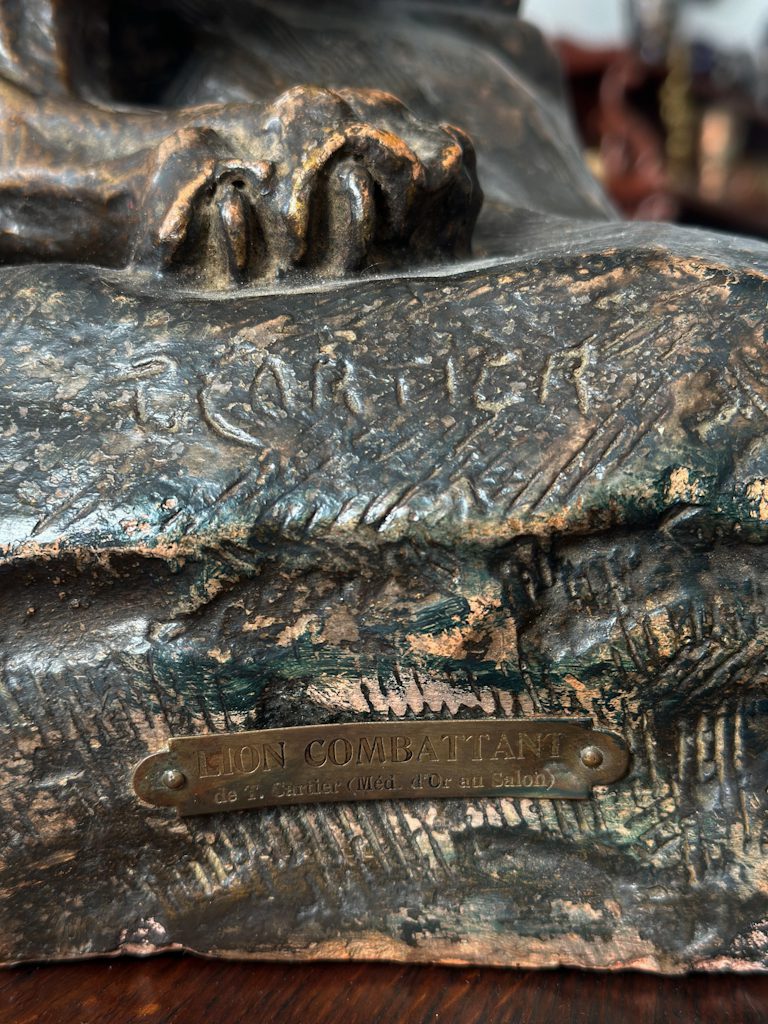
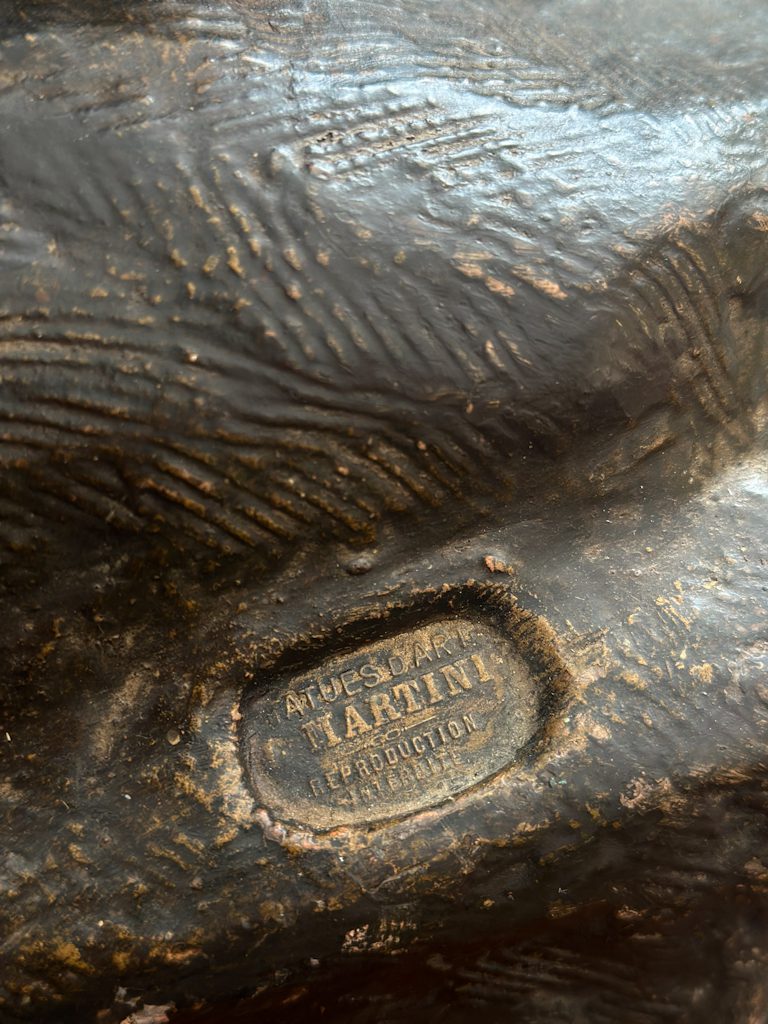
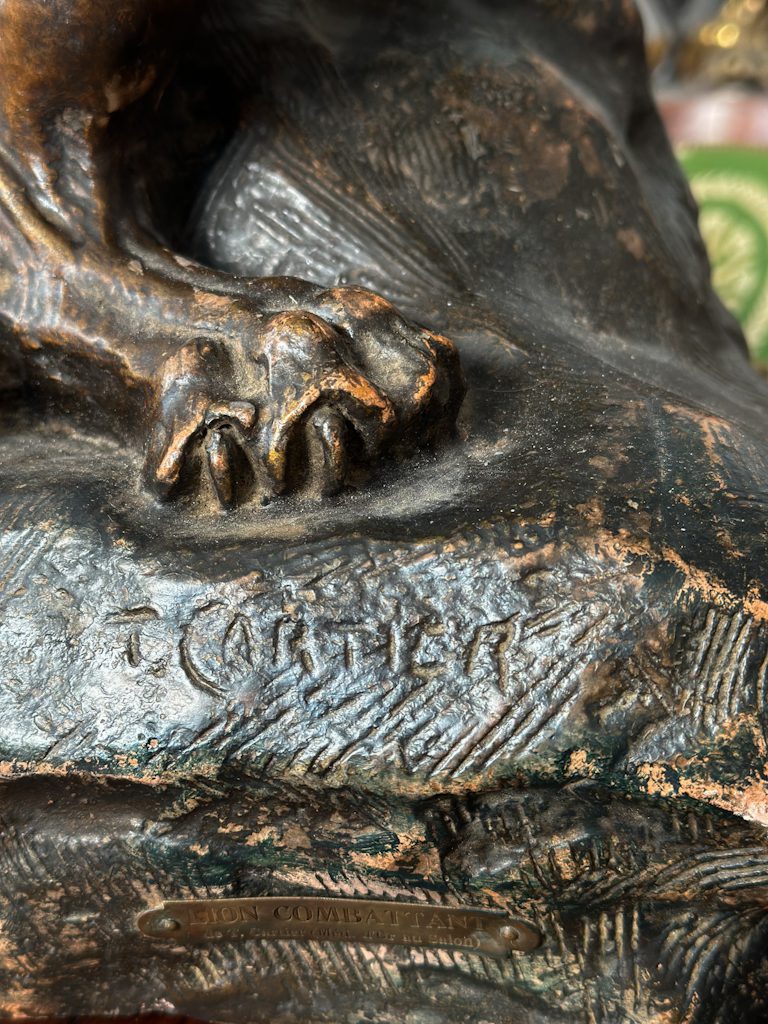
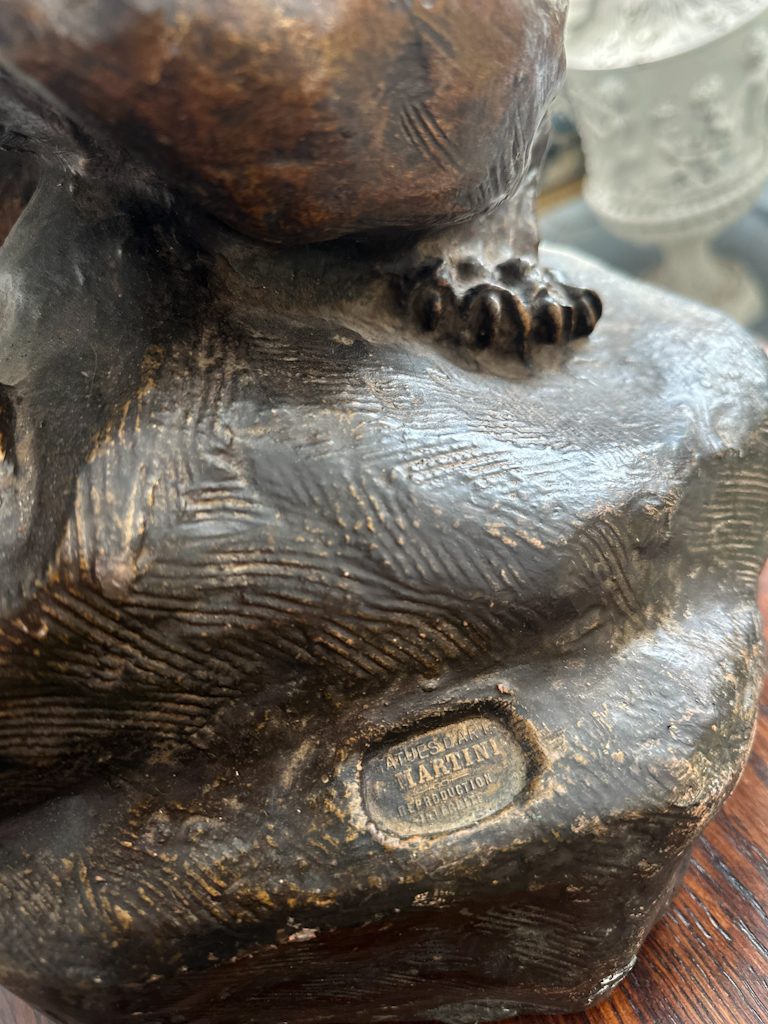
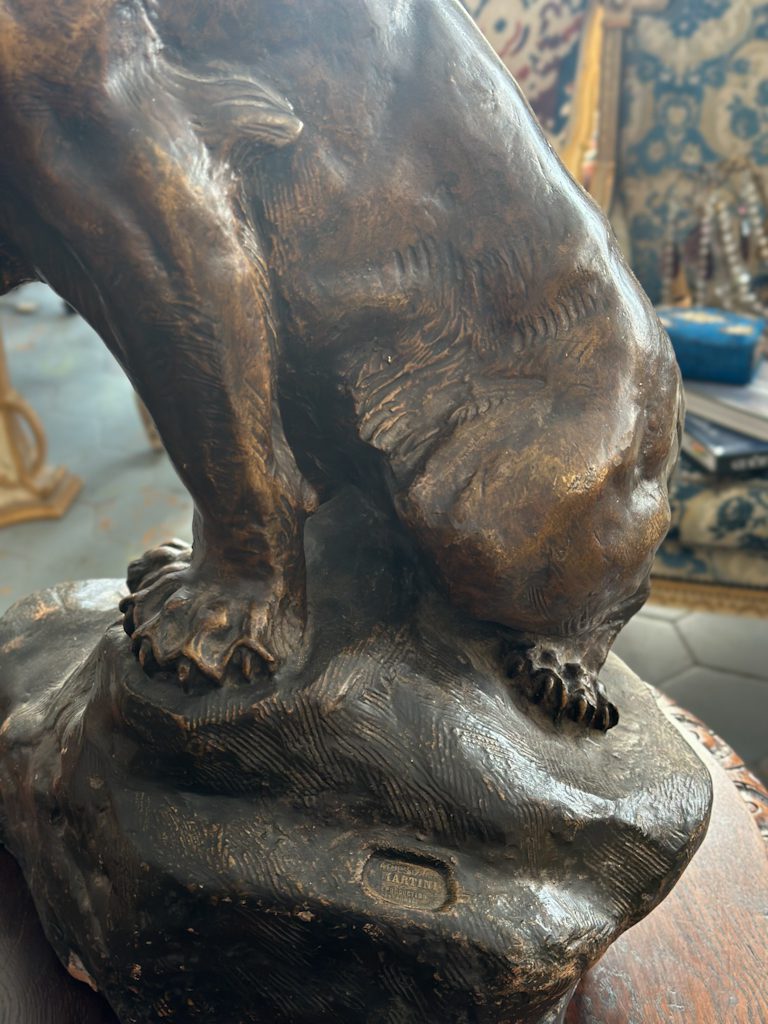
Uz skulptūras pamatnes redzami divi marķējumi, kas kopā veido precīzu izcelsmes dokumentu:
Pirmais — bronzas plāksnīte ar tekstu “LION COMBATTANT / de T. Cartier (Méd. d’Or au Salon)” — apliecina gan darba nosaukumu, gan autora identitāti un viņa augstāko apbalvojumu: Zelta medaļu Parīzes Salonā. Tas ir viens no prestižākajiem apbalvojumiem, ko 20. gadsimta pirmajā pusē varēja iegūt Francijā praktizējošs tēlnieks.
Otrais — iespiestais ovālais zīmogs “ATELIERS D’ART MARTINI / REPRODUCTION INTERDITE” — norāda uz izdevēju. Ateliers d’Art Martini bija ievērojama Parīzes mākslas reprodukciju un skulptūras izdošanas firma, kas specializējās augstvērtīgu mākslinieku darbu tirāžas reprodukcijās terakotā un bronzā ar striktu autortiesību aizsardzību — par to liecina uzraksts “Reproduction interdite” (reproducēšana aizliegta). Šādi ateljeji sadarbojas ar dzīviem māksliniekiem vai viņu mantiniekiem, maksāja autorhonorārus un nodrošināja, ka katra tirāža tiek kontrolēta un numurēta. Tas nozīmē, ka šis gabals nav anonīma kopija, bet gan autorizēts autora darba izdevums.
Thomas François Cartier (1879–1943) bija viens no izcilākajiem Francijas animalier tēlniekiem 20. gadsimta pirmajā pusē. Viņš studēja Parīzes École des Beaux-Arts un kļuva par regulāru Parīzes Salona dalībnieku, kur ieguva augstākos apbalvojumus. Cartier specializējās eksotisko un savvaļas dzīvnieku tēlošanā — lauvās, tīģeros, leopardos, zirgos — ar ārkārtēju naturālistisku precizitāti un dramatisku enerģiju. Viņa darbi atrodami Francijas un Beļģijas nacionālajos muzejos, kā arī privātajās kolekcijās visā pasaulē.
―――――――――――――――――――――
💎 RETUMS UN NOZĪME
Autorizēti Martini atelje izdevumi pēc T. F. Cartier modeļiem ar abiem marķējumiem — gan autora parakstu, gan izdevēja zīmogu — ir reti kolekcionāru tirgū. Šāda dokumentēta izcelsme — mākslinieks ar Zelta medaļu au Salon, autorizēts izdevējs ar “Reproduction interdite” klauzulu — piešķir skulptūrai muzejisko vērtību un striktu provenances ķēdi.
Animalier skulptūras ar verificējamu mākslinieka izcelsmi, it īpaši no Parīzes Salona medaļniekiem, pēdējās desmitgadēs piedzīvo ievērojamu pieprasījuma pieaugumu gan Eiropas, gan starptautiskajā izsoles un galēriju tirgū.
―――――――――――――――――――――
🕯️ PIELIETOJUMS INTERJERĀ, DIZAINĀ UN FOTOGRĀFIJĀ
63 cm augstā lauvas skulptūra ar tās dramatisko, uz priekšu virzošo kustību ir izcils galvenais akcentgabals jebkurā interjerā — uz masīva koka galda, kamīnmalas, konsoles vai postamenta. Tumši brūnā patina ar bronzas atspulgiem iederas gan klasiskos un eklektiskos interjoros, gan modernā, kontrastainā vidē. Skulptūras trīsdimensionālā dinamika — lauva it kā tikko pakāpusi uz klints, galva pagriezta ar atvērtu muti — nodrošina vizuālu iespaidu no jebkura skatpunkta.
Interjera un mākslas fotogrāfiem šī skulptūra ir izcils objekts: dziļā patina, matu faktūra un muskulatūras modelējuma precizitāte lieliski reaģē gan uz sānu, gan frontālo apgaismojumu.
―――――――――――――――――――――
🎁 DĀVANA UN PERSONALIZĀCIJA
Lauva ir Lauvas zodiaka zīmes simbols (23. jūlijs — 22. augusts) — un šī izcilā skulptūra ir reprezentatīva dāvana augstākajā iespējamajā līmenī: vēstniekiem, valsts amatpersonām, uzņēmumu vadītājiem un jebkuram, kura dzīvē lauvas tēls nes personīgu vai profesionālu nozīmi. Lauva kā varas, drosmes un cēluma arhetips ir universāls simbols visās kultūrās — no Eiropas heraldikas līdz Āzijas tradīcijai, kur lauvas figūra aizsargā ieejas un marķē ievērojamas telpas. Šī skulptūra ir arī izcila korporatīva dāvana finanšu, juridiskā vai valsts sektora kontekstā — tā runā bez vārdiem par spēku, stabilitāti un prestižu.
―――――――――――――――――――――
🔍 STĀVOKLIS
Skulptūra kopumā labā un kolekcionāriski nozīmīgā stāvoklī. Terakotas virsma ar bronzas imitācijas patinu saglabājusi savu dziļumu un nokrāsu. Uz pamatnes atsevišķās vietās redzams tumšāks terakotas tonis — patinas daļēja nolupšana, kas atklāj pamatmateriālu — tas ir vecuma un lietošanas dabisks rezultāts, nemazinot skulptūras māksliniecisko un kolekcionāro vērtību. Abas zīmognospiedumi — bronzas plāksnīte un Martini ovālais zīmogs — skaidri lasāmi un neskarti. Nav lūzumu vai restaurācijas pazīmju galvenajos kompozīcijas elementos.
Lietas stāvoklis pilnībā atspoguļots fotogrāfijās.
―――――――――――――――――――――
🇬🇧 DESCRIPTION IN ENGLISH
“Lion Combattant” — Fighting Lion, terracotta with bronze patina, after the model by Thomas François Cartier (1879–1943), Ateliers d’Art Martini edition, France, circa 1910–1940.
―――――――――――――――――――――
📐 DIMENSIONS
Height 63 cm. Material: terracotta with a deep brown bronze-imitation patina. Weight: considerably heavy — a solid casting on an organic rock base.
―――――――――――――――――――――
🏛️ PERIOD, ARTISTIC STYLE, AND HISTORICAL CONTEXT
This sculpture belongs to the zenith of the French Animalier school — a period when animal sculpture in Paris enjoyed a prestige and collector attention previously reserved for historical and mythological subjects. From the tradition established by Antoine-Louis Barye — the founding father of the animalier movement — a new generation of sculptors grew in direct inheritance, of whom Thomas François Cartier was among the most brilliant.
The fighting lion — Lion Combattant — is one of the most classical animalier motifs, symbolising not only the power and beauty of the animal kingdom but also the moral dimension that 19th- and early 20th-century European culture projected onto the wild predator: courage, freedom, and regal dignity even in danger. The fighting or threatening lion as a sculptural subject was present in both aristocratic and bourgeois interiors and in public spaces — royal palaces, banks, ministries — as a visual symbol of power and indomitable will.
―――――――――――――――――――――
⚜️ MAKER’S MARK AND PUBLISHER
The base of the sculpture bears two marks that together constitute a precise document of origin.
The first — a bronze plaque reading “LION COMBATTANT / de T. Cartier (Méd. d’Or au Salon)” — confirms both the title of the work and the author’s identity, together with his highest distinction: the Gold Medal at the Paris Salon. This is one of the most prestigious awards available to a practising sculptor in early 20th-century France.
The second — an impressed oval stamp reading “ATELIERS D’ART MARTINI / REPRODUCTION INTERDITE” — identifies the publisher. Ateliers d’Art Martini was a distinguished Parisian firm specialising in high-quality authorised reproductions of sculptors’ works in terracotta and bronze, with strict copyright protection — as indicated by the “Reproduction interdite” (reproduction prohibited) notice. Such ateliers collaborated with living artists or their estates, paid royalties, and ensured that each edition was controlled and supervised. This confirms that the present piece is not an anonymous copy but an authorised edition of the artist’s work.
Thomas François Cartier (1879–1943) was one of the foremost French animalier sculptors of the first half of the 20th century. He studied at the École des Beaux-Arts in Paris and became a regular exhibitor at the Paris Salon, where he received the highest distinctions. Cartier specialised in exotic and wild animal subjects — lions, tigers, leopards, horses — with extraordinary naturalistic precision and dramatic energy. His works are held in French and Belgian national museums and in private collections throughout the world.
―――――――――――――――――――――
💎 RARITY AND SIGNIFICANCE
Authorised Martini atelier editions after models by T. F. Cartier bearing both marks — the author’s signature and the publisher’s stamp — are rare on the collector market. This documented provenance — an artist awarded the Gold Medal au Salon, an authorised publisher with a “Reproduction interdite” clause — gives the sculpture museum-quality significance and a clear chain of provenance.
Animalier sculptures with verifiable artist attribution, particularly from Paris Salon medallists, have experienced significant growth in demand in both European and international auction and gallery markets in recent decades.
―――――――――――――――――――――
🕯️ USE IN INTERIOR DESIGN AND PHOTOGRAPHY
At 63 cm in height, with its dramatic forward-thrusting movement, this lion sculpture is an outstanding focal piece in any interior — on a solid timber table, mantelpiece, console, or plinth. The deep brown patina with bronze highlights suits both classical and eclectic interiors and a modern, high-contrast setting. The three-dimensional dynamism of the composition — the lion stepping onto a rock, head turned with open mouth — ensures a compelling visual impact from every angle.
For interior and art photographers, this sculpture is an exceptional subject: the deep patina, the texture of the mane, and the precision of the musculature modelling respond superbly to both lateral and frontal lighting.
―――――――――――――――――――――
🎁 AS A GIFT AND PERSONALISATION
The lion is the symbol of the Leo zodiac sign (23 July – 22 August) — and this exceptional sculpture represents a gift of the highest order: for ambassadors, senior officials, corporate executives and anyone for whom the lion carries personal or professional significance. The lion as an archetype of power, courage and nobility is a universal symbol across all cultures — from European heraldry to the Asian tradition, where the lion guards entrances and marks spaces of distinction. This sculpture also makes an outstanding corporate gift in financial, legal or governmental contexts — it speaks without words of strength, stability and prestige. The condition of the piece is fully reflected in the photographs.
―――――――――――――――――――――
🔍 CONDITION
The sculpture is in overall good and collectibly significant condition. The bronze-imitation patina on the terracotta surface retains its depth and tone. In certain areas of the base, a slightly darker terracotta tone is visible where the patina has partially worn, revealing the base material — a natural result of age and handling that does not diminish the artistic or collectible value of the piece. Both marks — the bronze plaque and the Martini oval stamp — are clearly legible and undamaged. No breaks or evidence of restoration are present on the principal compositional elements.
The condition of the piece is fully represented in the photographs.