
Venera ar tualetes galdiņu — “Vénus à sa toilette” — Neoklasicisms, Eiropa, ap 1880.–1920. Zīmogs: B.S. 59, Vidēja Lieluma, Vidēja Smaguma (4027)
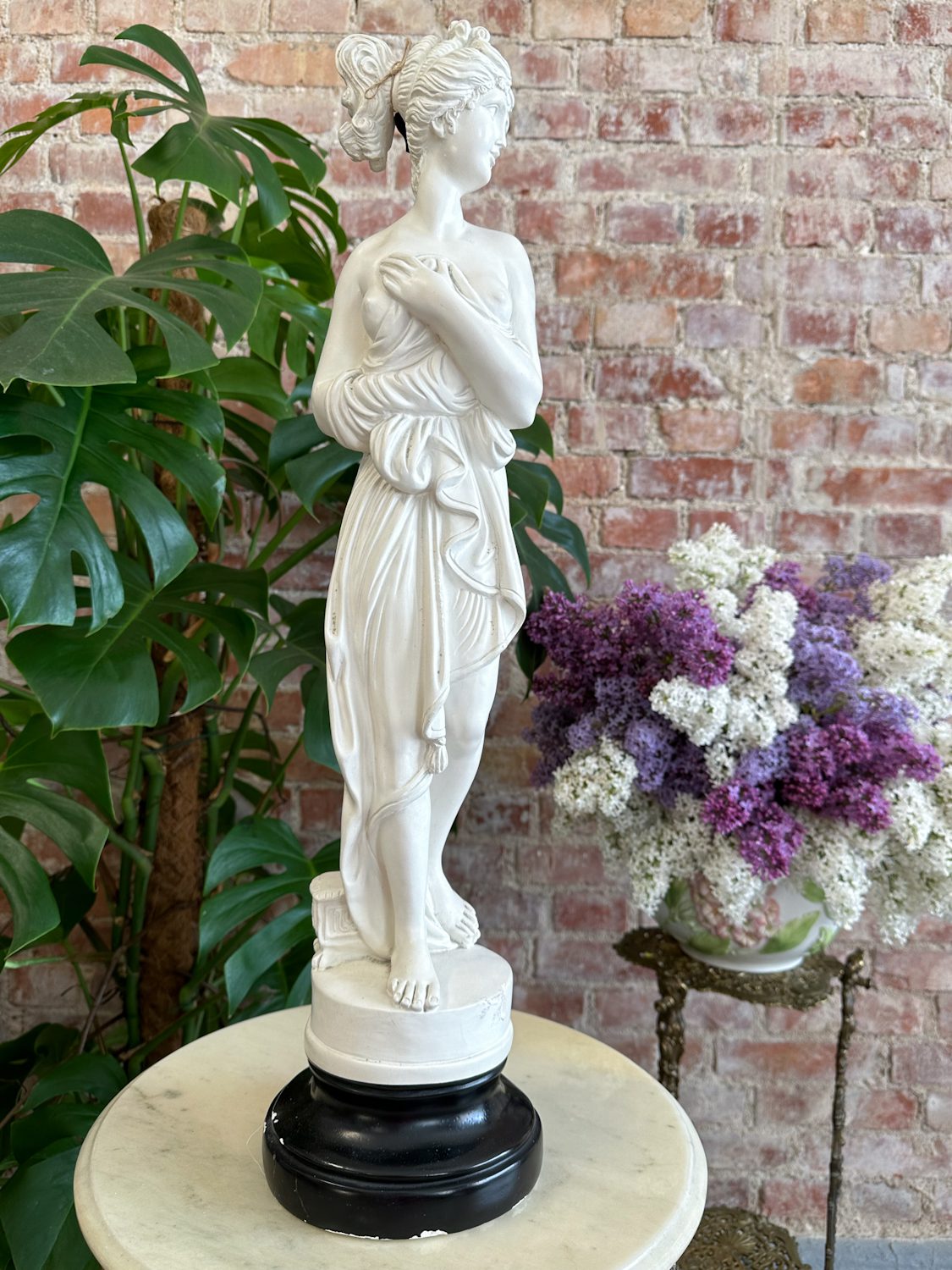
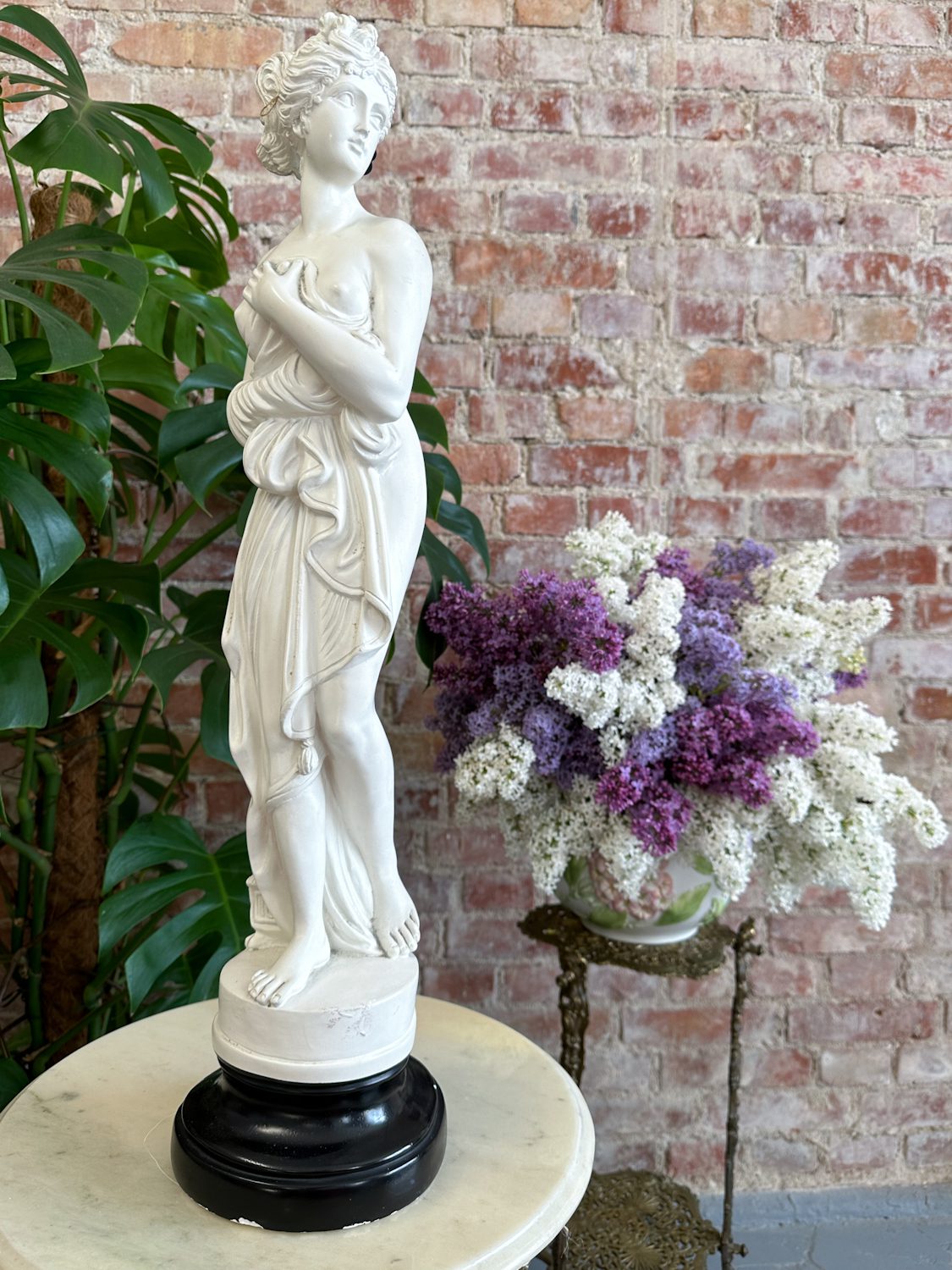
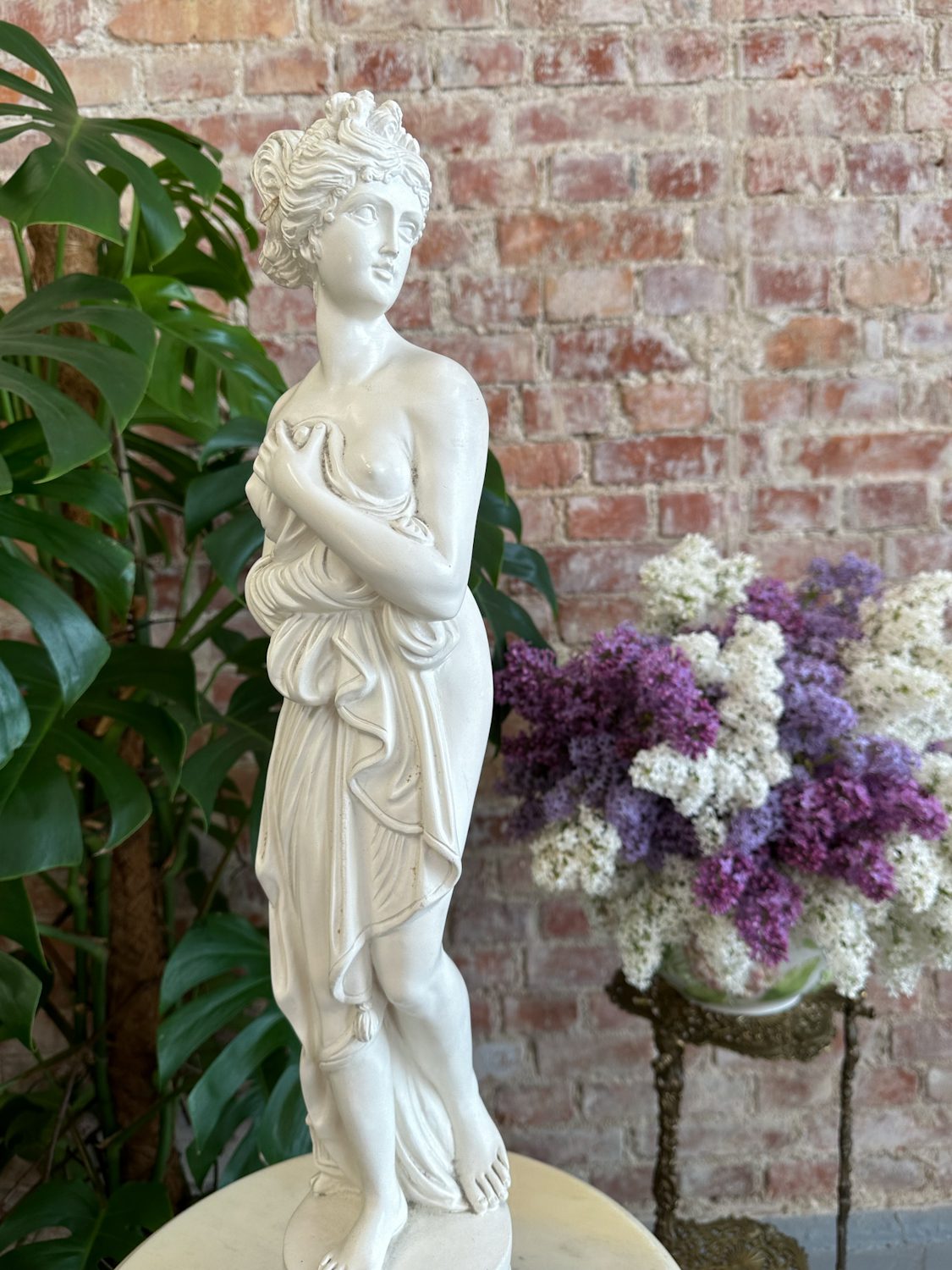
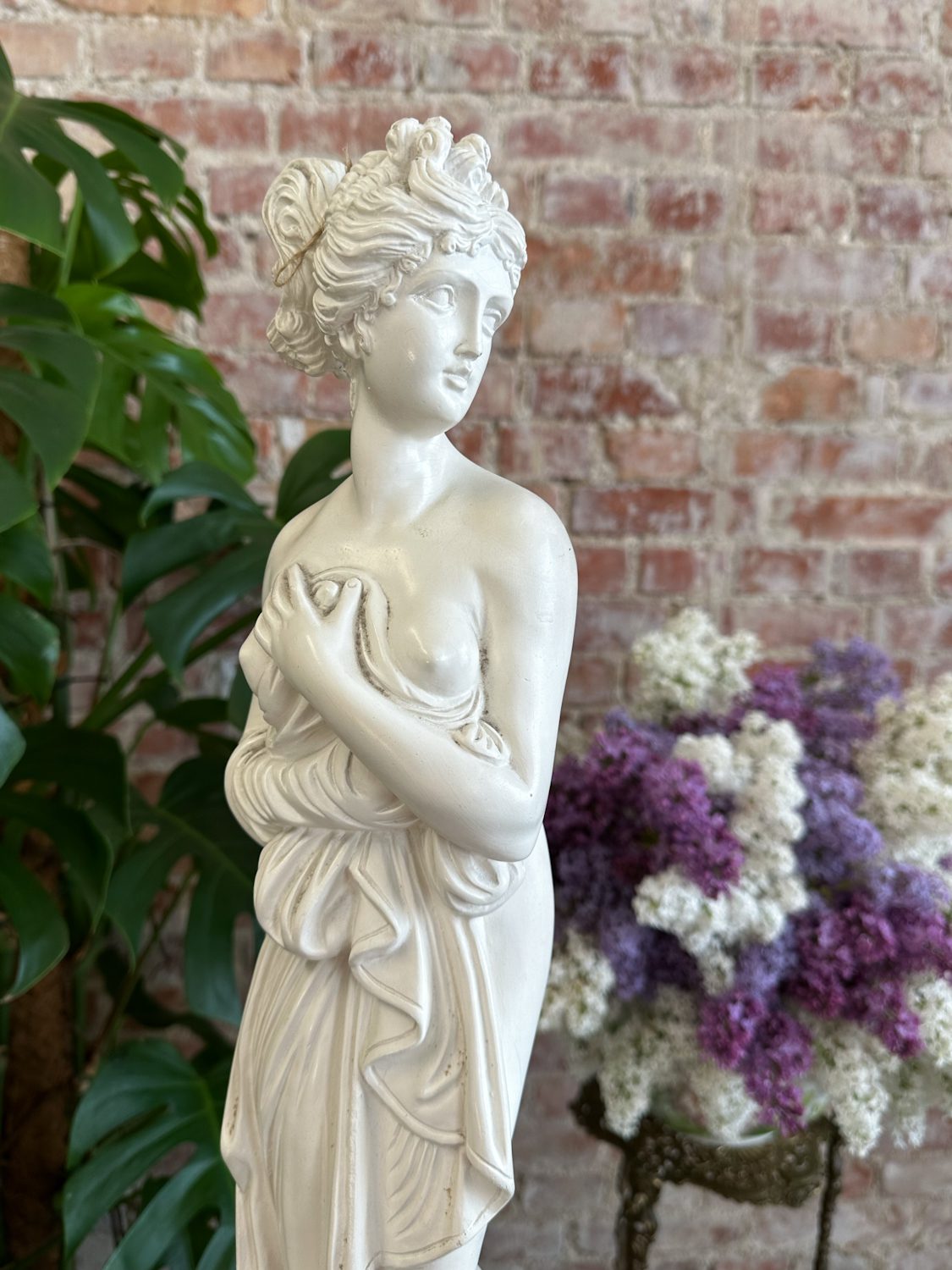
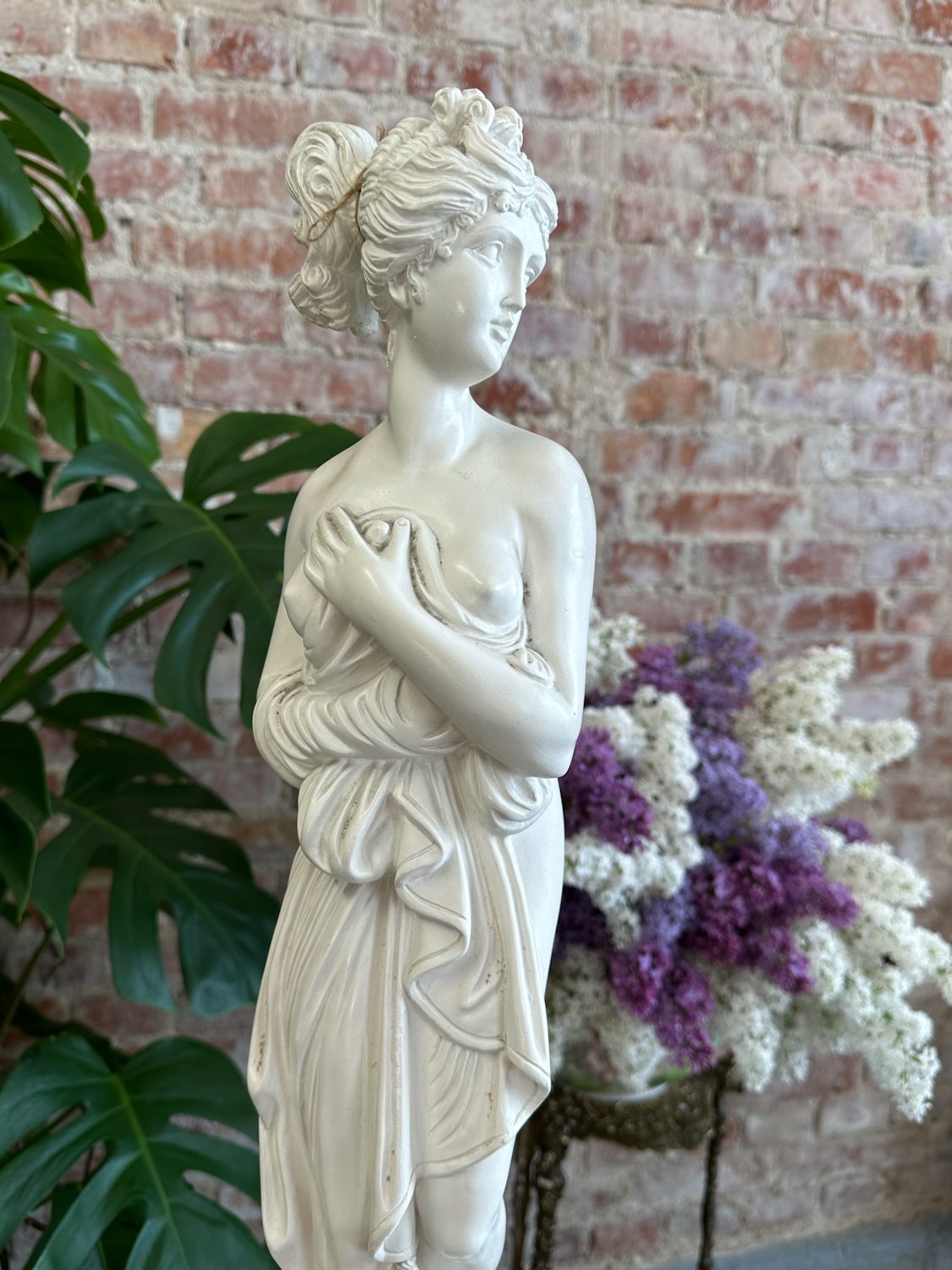
📐 IZMĒRI Augstums: 68 cm (kopā ar melno ģipša pamatni). Platums: 14 cm. Materiāls: smalkgraudains mākslinieku ģipsis ar matētu virsmas apstrādi. Pamatne: melns lakots ģipsis ar profilētu moldingu.
―――――――――――――――――――――
Venera ar tualetes galdiņu — “Vénus à sa toilette” — Neoklasicisms, Eiropa, ap 1880.–1920. Zīmogs: B.S. 59
―――――――――――――――――――――
🏛️ IZGATAVOŠANAS PERIODS, MĀKSLAS STILS, LAIKMETS
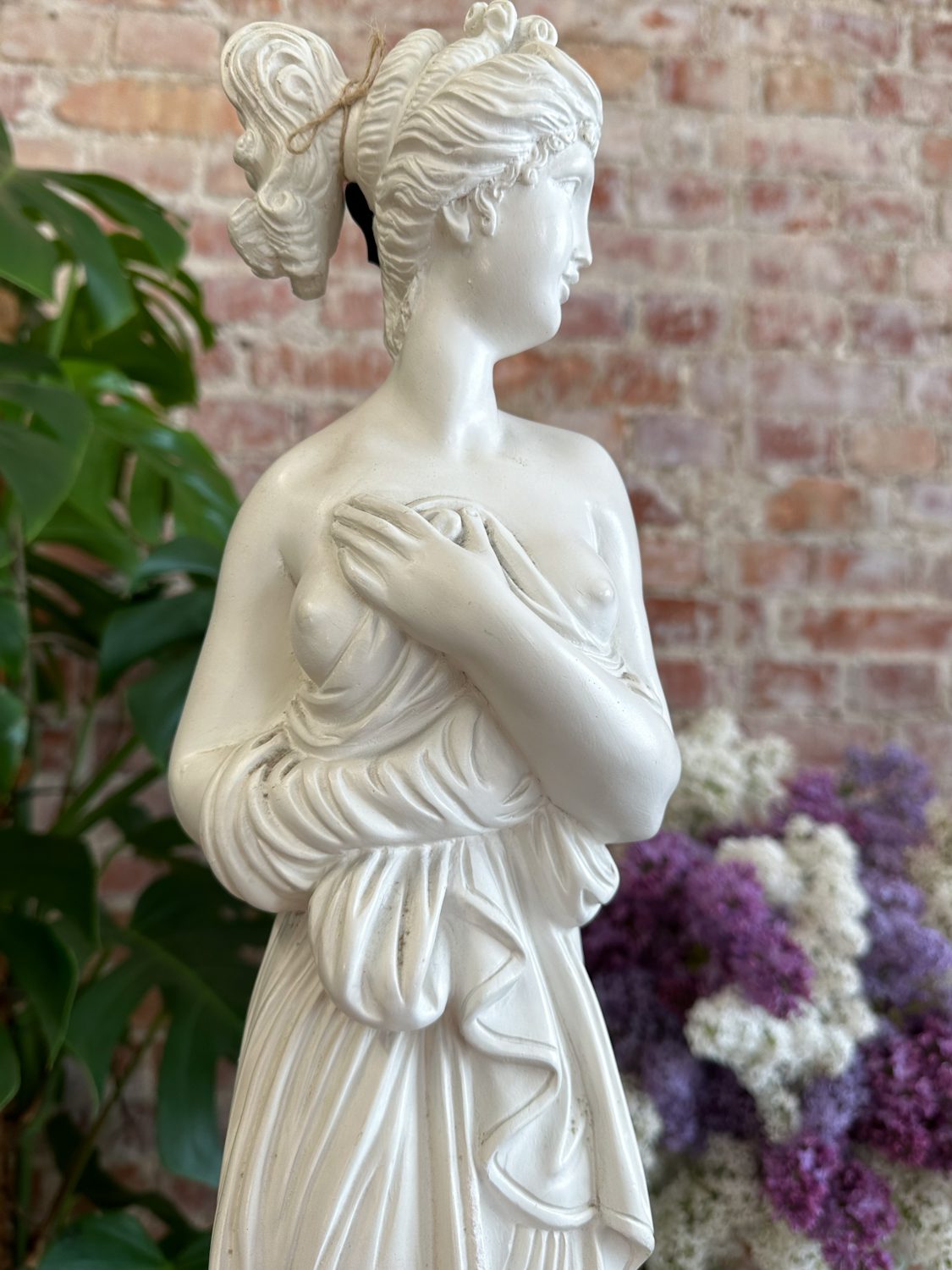
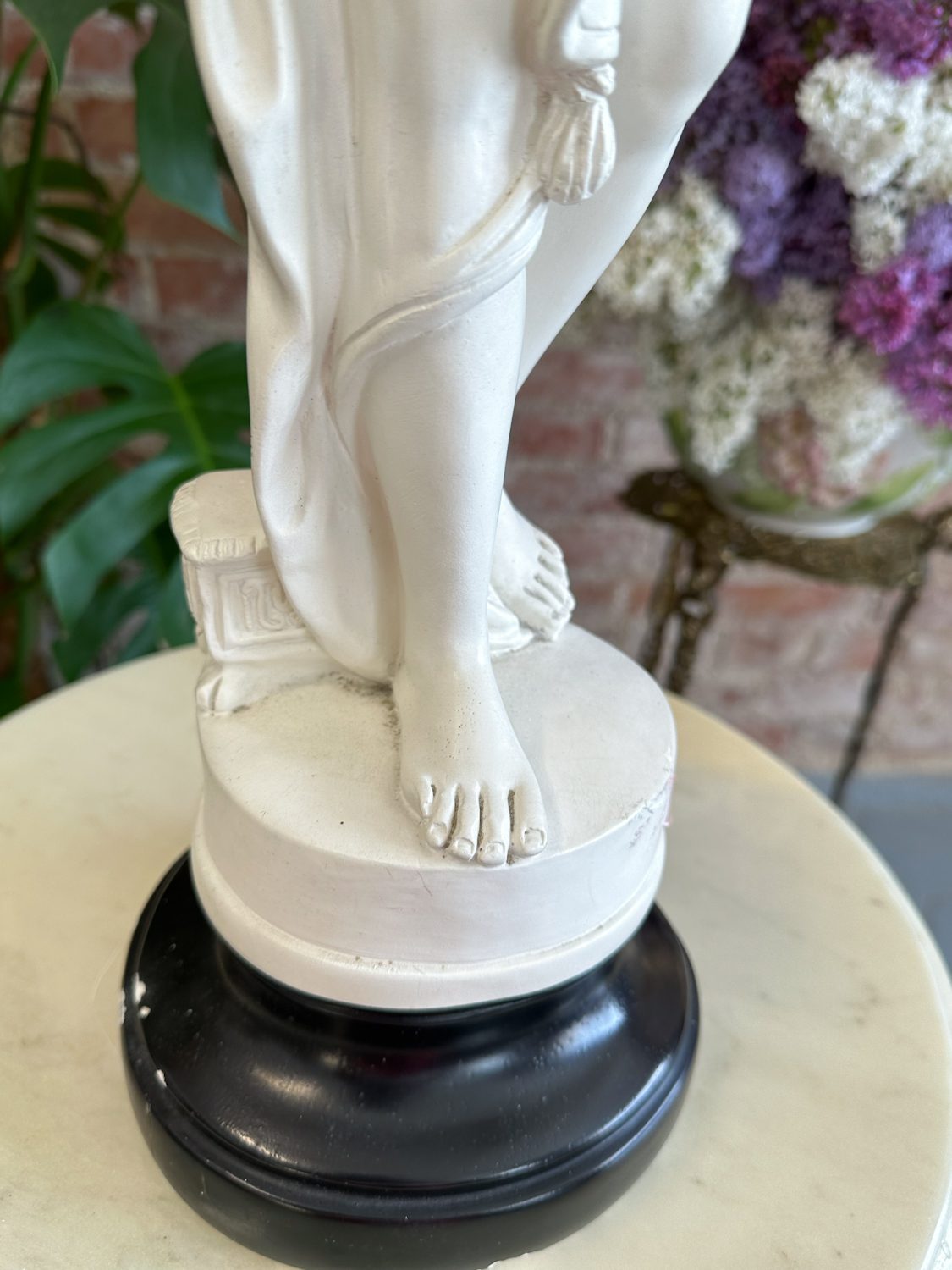
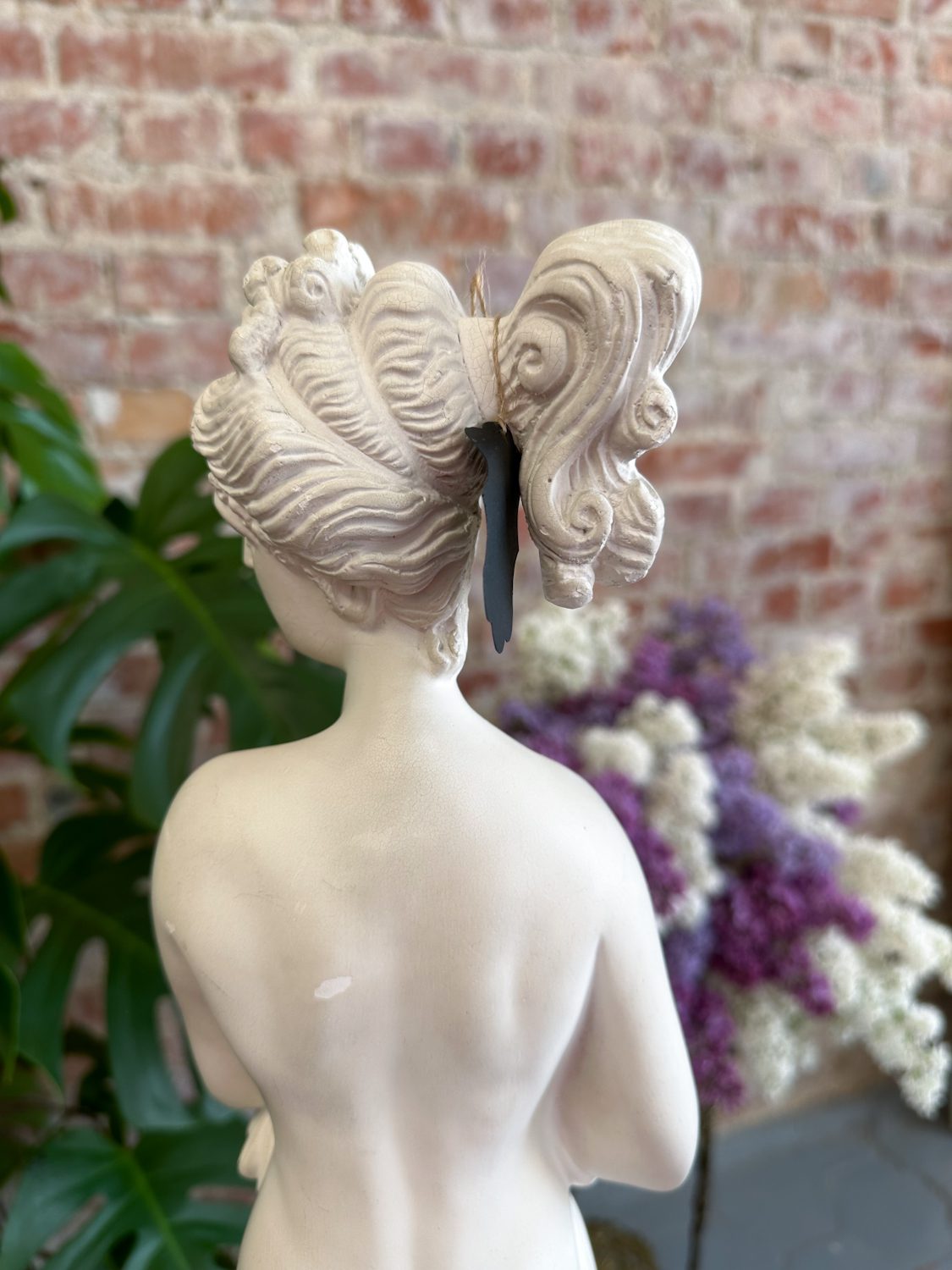
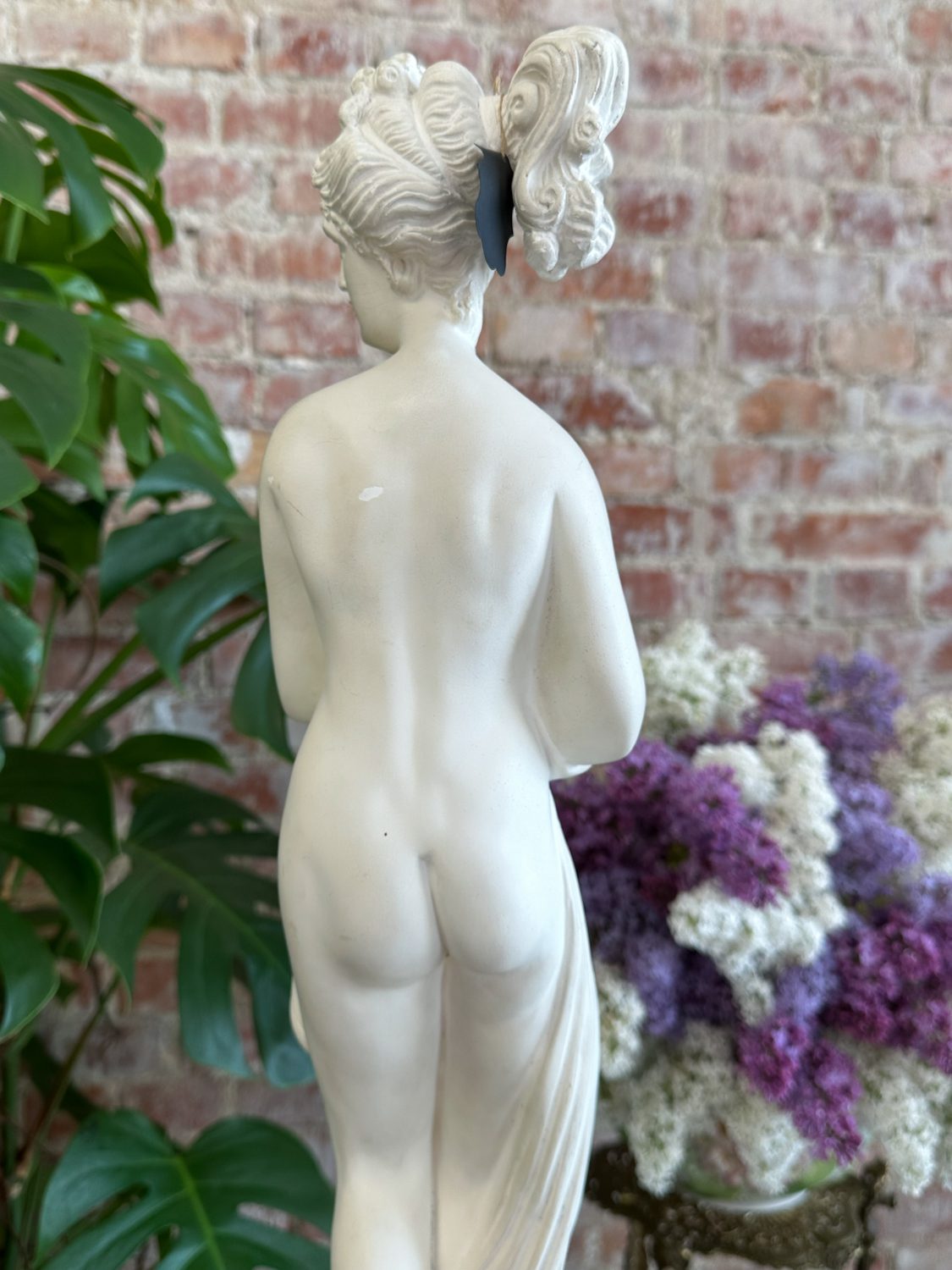
Šī figūra attēlo Veneru pie tualetes galdiņa — vienu no neoklasicisma mīļākajām tēmām, kurā mīlestības un skaistuma dieviete tiek satverta intīmā, cilvēciski tuvinātā brīdī: viņa sakārtojasi matus vai tērpjas, vēl pusapklāta ar drāpētu apģērbu, kas gludi krīt gar augšstilbiem. Figūra stāv pie klasiska tualetes galdiņa ar reljefa rotājumu — tieša atsauce uz antīkās pasaules ikdienišķo rituālu, kas neoklasicismā ieguva dievišķo cieņu. Greznie savītie mati, rotāti ar lentīti un sprādzi, ir ārkārtīgi rūpīgi izstrādāti — no aizmugures redzamais matu sakārtojums ar spirālveida cirtskulām ir šīs figūras vizuāli iespaidīgākais elements un liecina par augstu skulptora prasmi. Ķermeņa plastika — elegantais S-veida līkums, vieglais soļa pagrieziens — atsaucas uz Antonio Canova un viņa sekotāju estētiku, kurā antīkais ideāls sapludina dievišķo un cilvēcisko vienā harmoniskā tēlā.
―――――――――――――――――――――
⚜️ RAŽOTĀJS UN MANUFAKTŪRAS ZĪMOGS
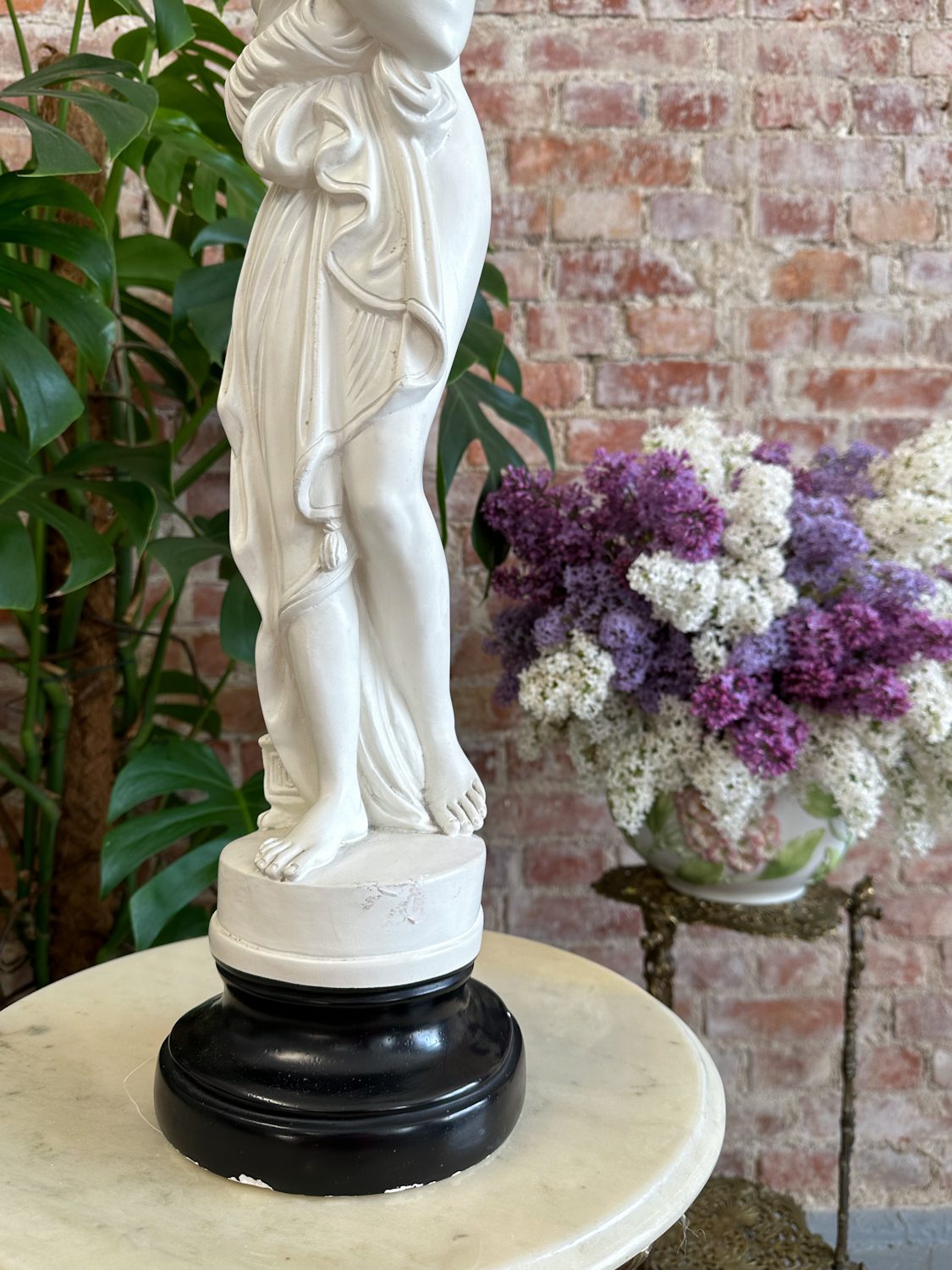
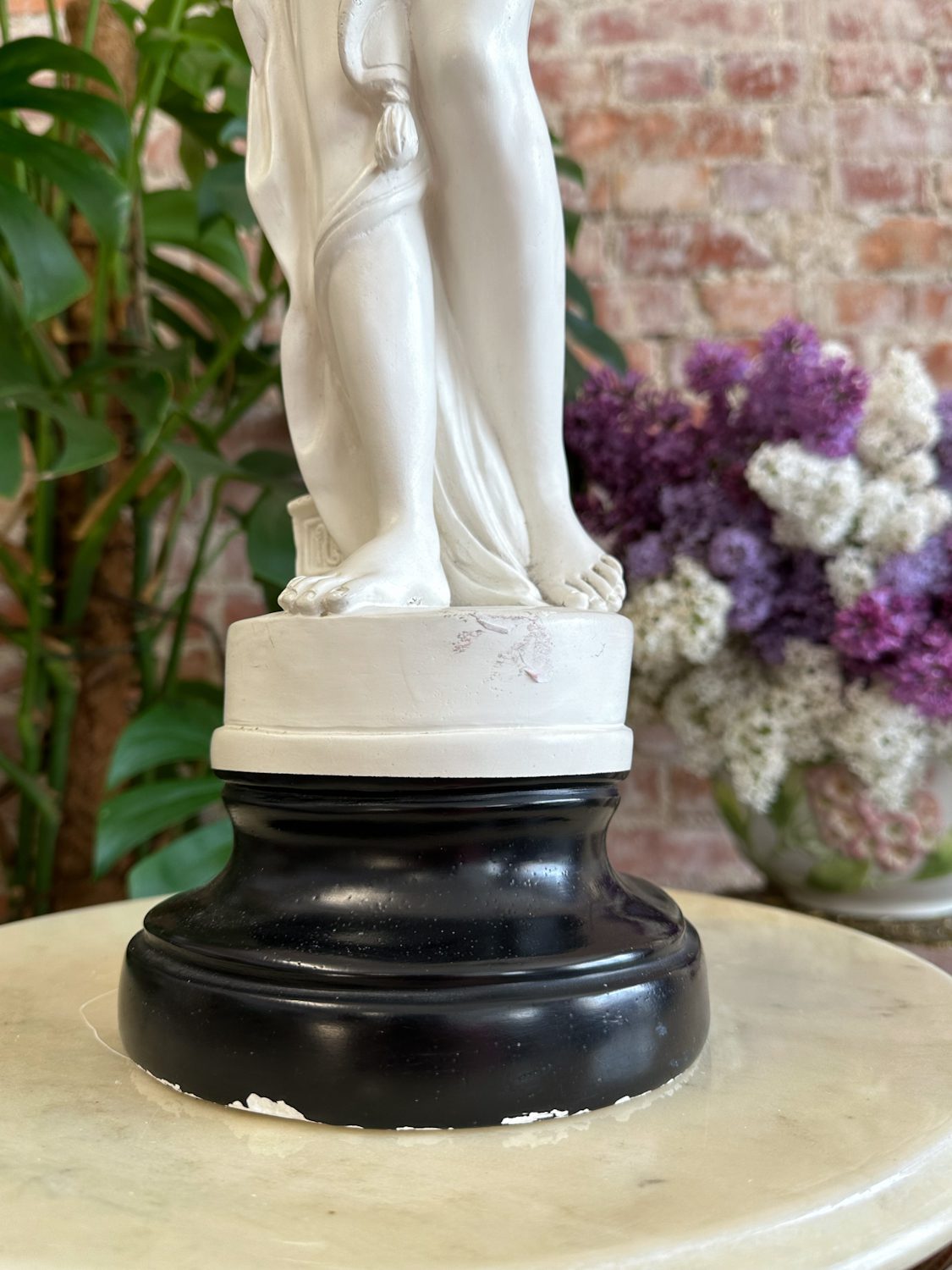
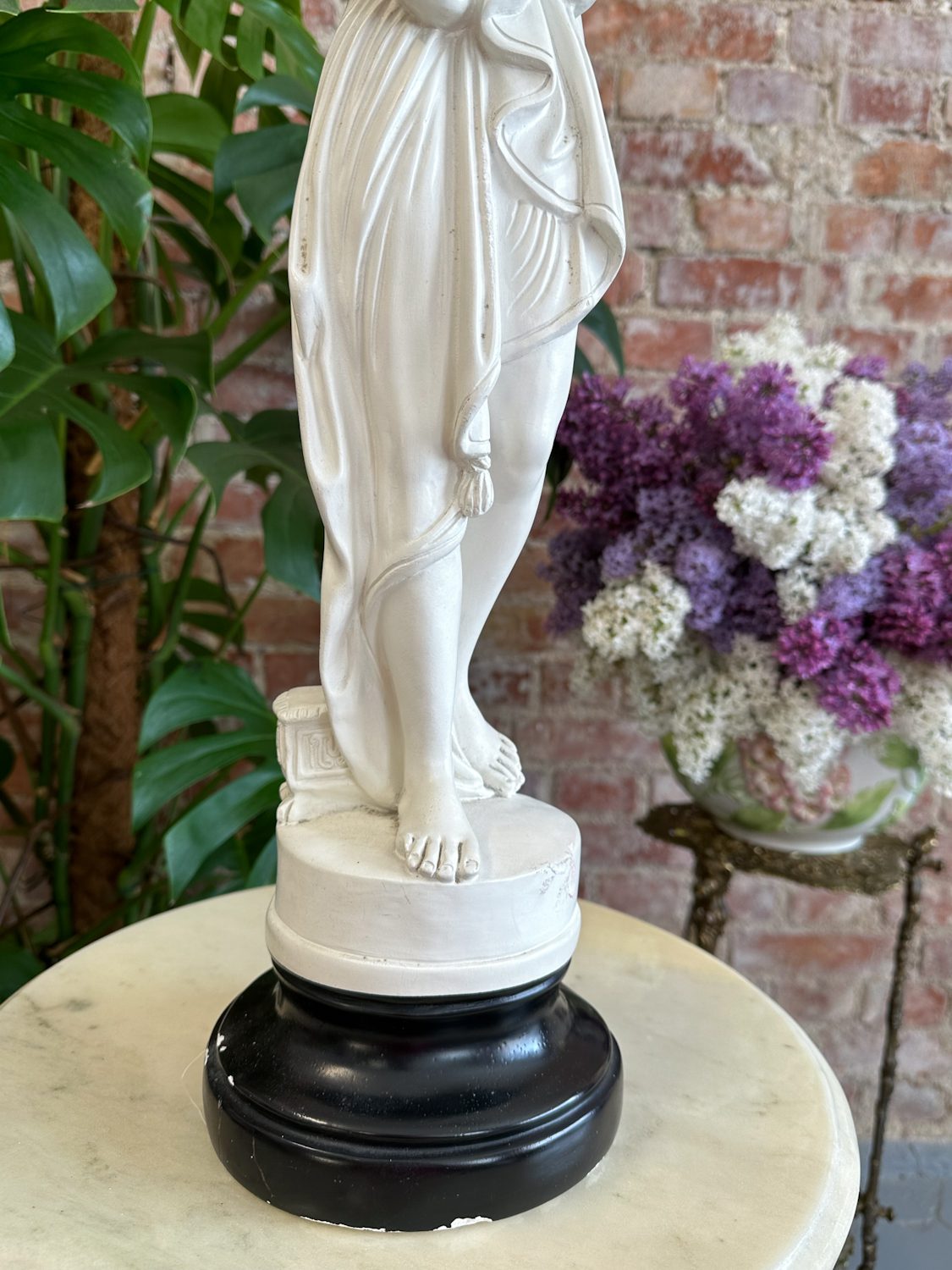
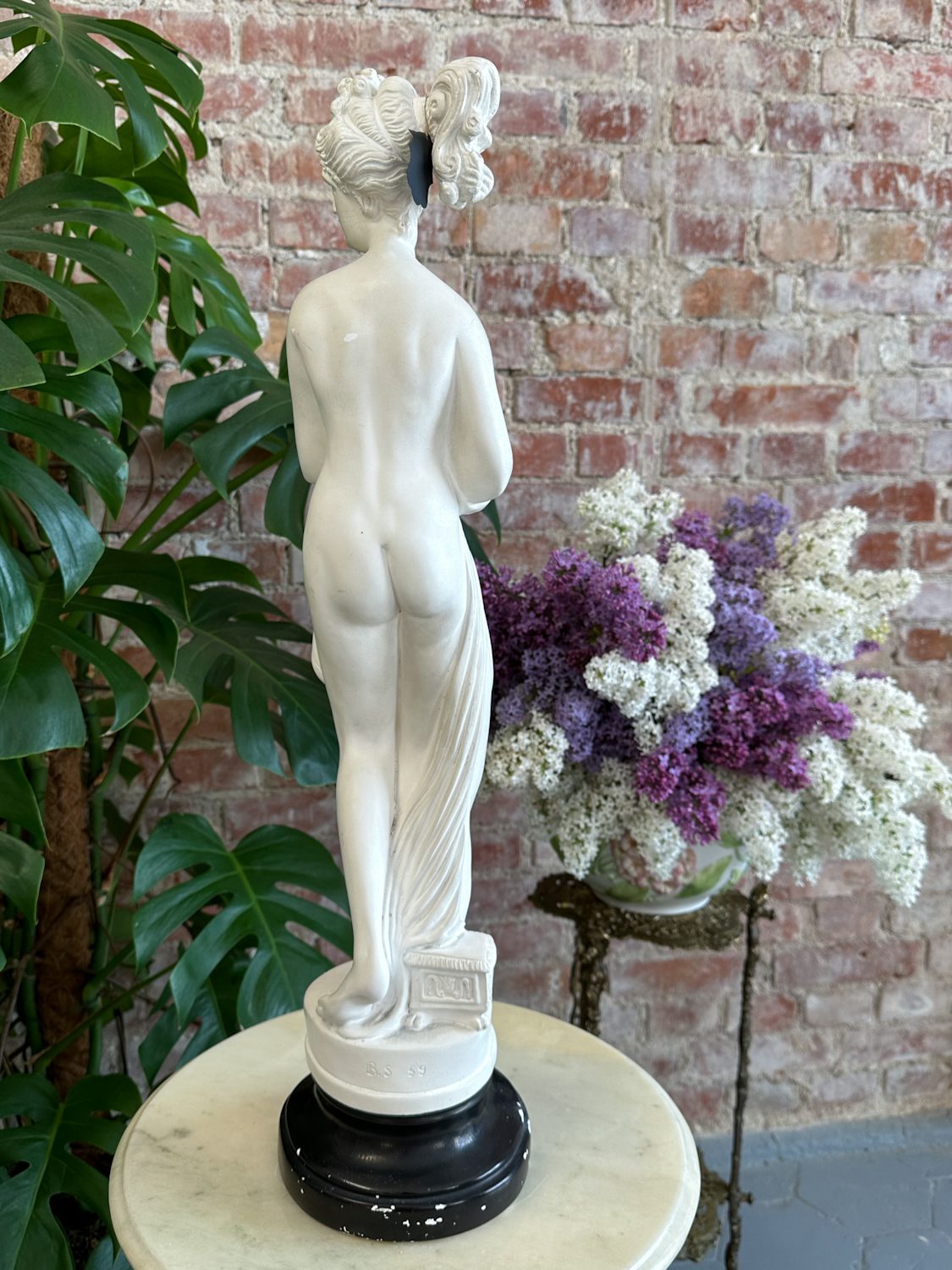
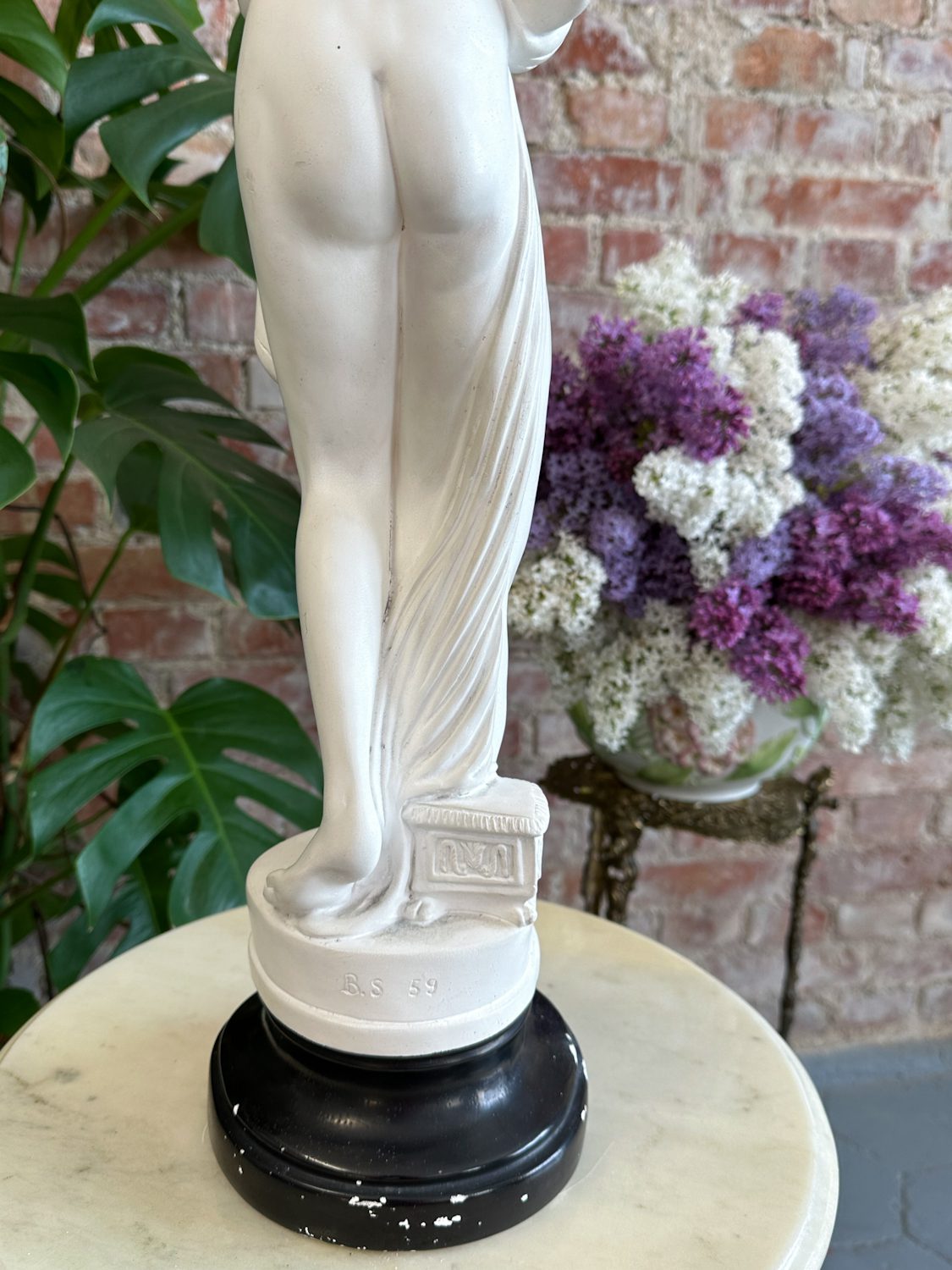
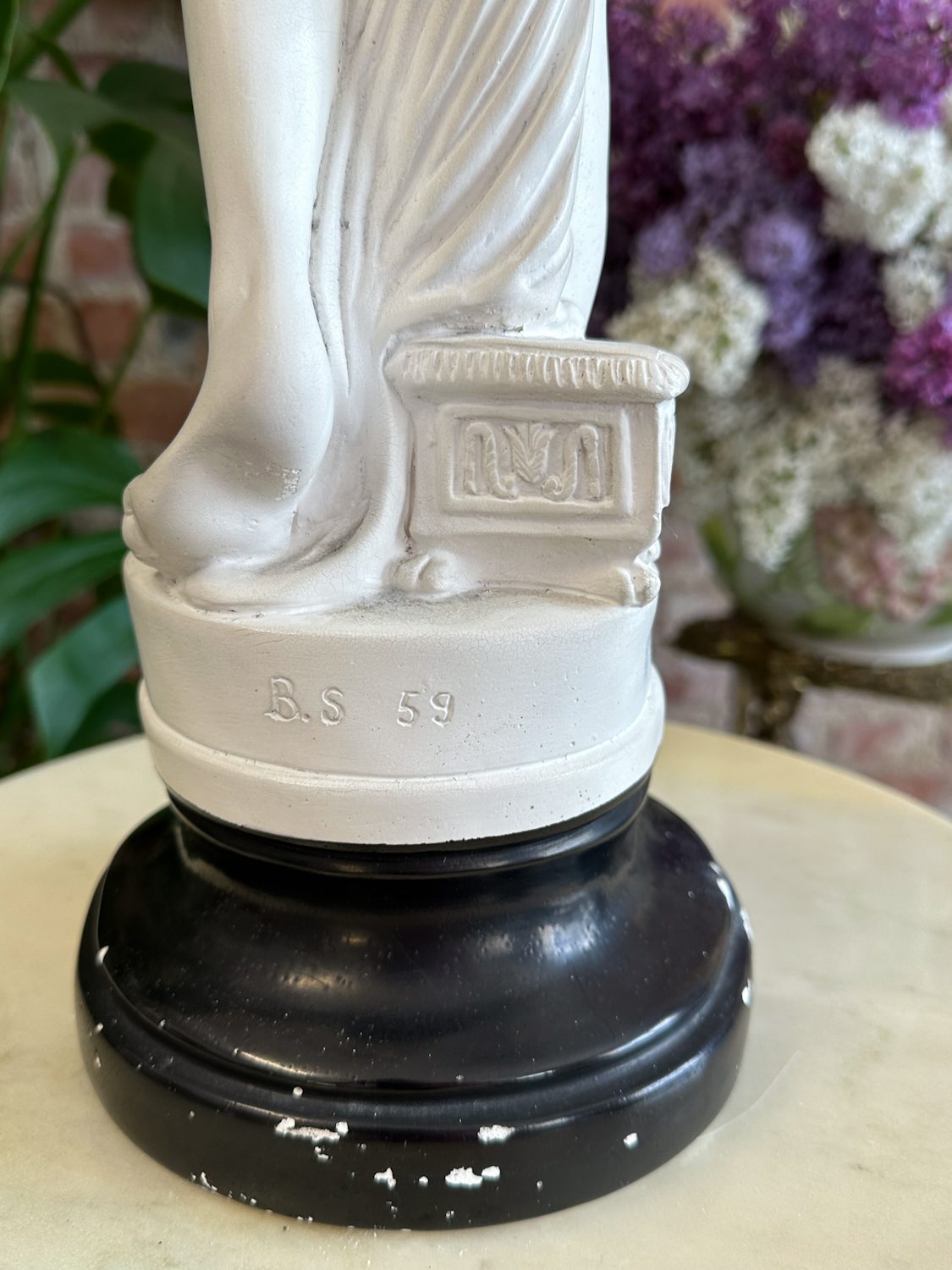
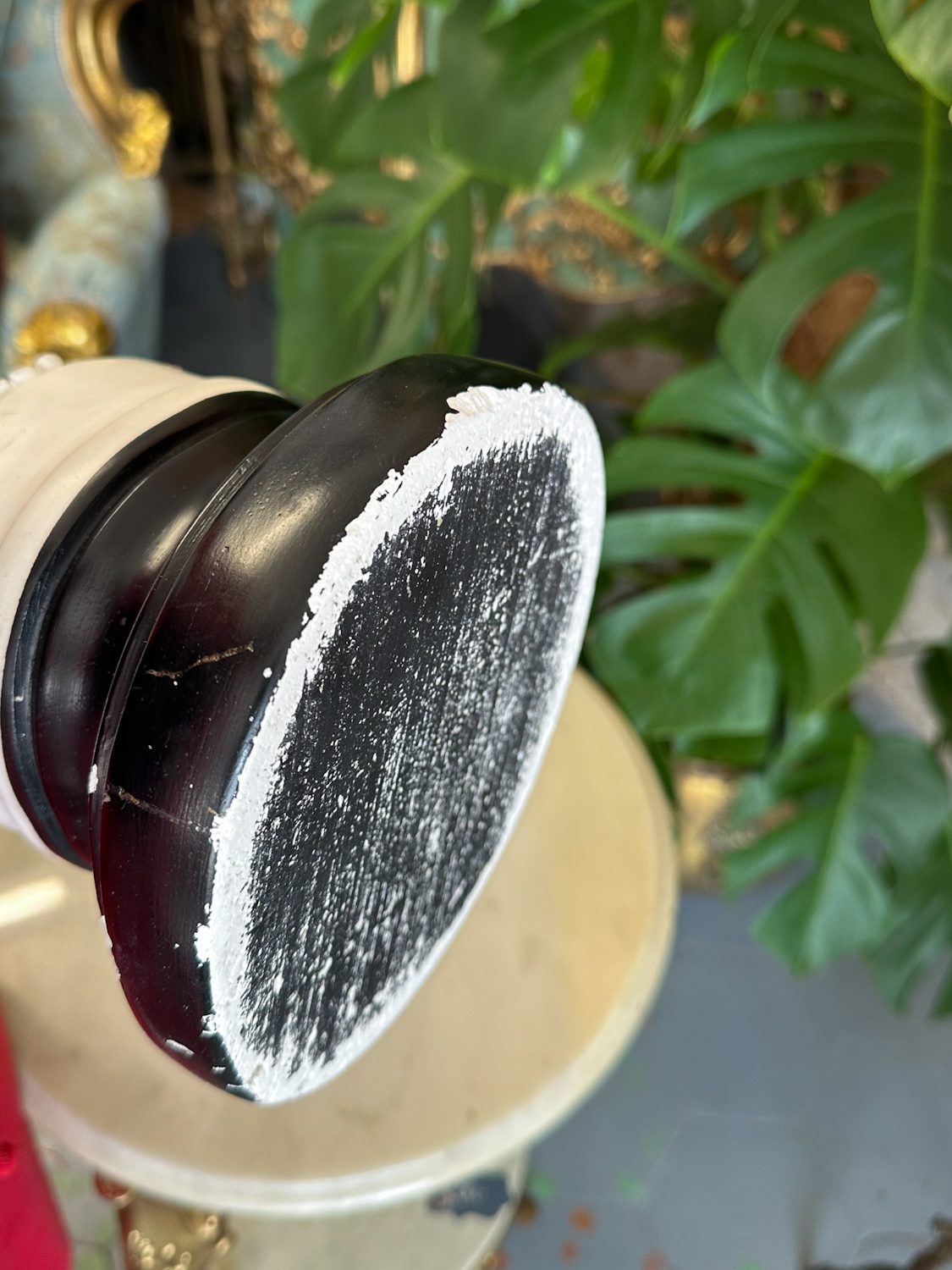
Uz ģipša pamatnes malas skaidri iespiestas iniciāļi un numurs: B.S. 59. Šis ir tās pašas ražotnes zīmogs, kas fiksēts arī citos šīs sērijas eksemplāros — B.S. (iespējams, itāļu vai franču skulptūru darbnīca) ar katalogu numuriem 56, 59 un citiem, liecinot par organizētu, plašu ražošanas programmu ar vairākiem modelis. Pamatnes aizmugurē pie kājām redzams arī neliels taisnstūra kartušs ar ornamentālu reljefa rakstu — iespējams, papildu manufaktūras vai modeļa zīme. Šādas apzīmētās sērijas ir kolekcionāriski nozīmīgākas par anonīmajiem eksemplāriem, jo ļauj salīdzināt un identificēt izcelsmi. Melno lakoto koka pamatni var uzskatīt par vēlāku pievienojumu — raksturīgu 20. gs. pirmajam ceturksnim, kad klasiskās figūras tika prezentētas uz kontrastainām pamatnēm, lai uzsvērtu skulptūras baltumu.
―――――――――――――――――――――
💎 RETUMS UN NOZĪME
“Venera pie tualetes” ir viens no Eiropas skulptūras kanoniskajiem motīviem — no Ticiana gleznām līdz Canova marmora tēliem un visu 19. gs. akadēmisma tradīcijai. Šāda izmēra ģipša reprodukcijas ar ārkārtīgi rūpīgi izstrādātu matu skulptūru aizmugurē, saglabātu tualetes galdiņa elementu pie kājām, skaidru zīmogu un melno koka pamatni komplektā ir ievērojami retas. Augstums 68 cm padara šo figūru par dominējošu interjera akcentu. Matu aizmugurējais skats ar spirālveida, vēdekļveida cirtskulām ir šā konkrētā eksemplāra īpaša vērtība — lielākā daļa kolekcionāru un interjera fotogrāfu to atzīst par vienu no figūras skaistākajiem skatpunktiem.
―――――――――――――――――――――
🕯️ PIELIETOJUMS INTERJERĀ, DIZAINĀ UN FOTOGRĀFIJĀ
Figūra harmoniski iekļaujas gan klasiski elegantā, gan modernā interjerā — balta skulptūra uz melnas pamatnes ir pati par sevi pilnīga kompozīcija, kas neprasa papildu dekoratīvus elementus. Ideāla novietošana: sievietes guļamistabas tualetes zona vai spoguļa tuvumā, salonā uz kājas galda, spa vai skaistumkopšanas kabinetu uzgaidāmajā telpā, kā arī arhitektu un dizaineru biroja uzgaidāmajās telpās. Aizmugurējais skatpunkts ar apbrīnojamo matu skulptūru ir īpaši piemērots fotogrāfijas uzņēmumiem — smaržu, juvelierizstrādājumu un modes brendu reklāmmaterāliem.
―――――――――――――――――――――
🎁 DĀVANA UN PERSONALIZĀCIJA
Venera — mīlestības, skaistuma un feminīnās grācijas arhetips — ir izsmalcināta dāvana sievietēm ar augstu estētisko kultūru: māksliniecēm, modei, interjeram vai skaistumkopšanai veltītām profesionālēm. Kā reprezentatīva korporatīva dāvana tā der luksusa, smaržu, juvelierizstrādājumu un mode industrijas uzņēmumu vadītājiem. Augstākā sabiedriskā vai diplomātiskā līmenī Veneras tēls ir universāli pazīstams Eiropas civilizācijas simbols — piemērots gan kā personīga, gan reprezentatīva dāvana.
―――――――――――――――――――――
🔍 STĀVOKLIS
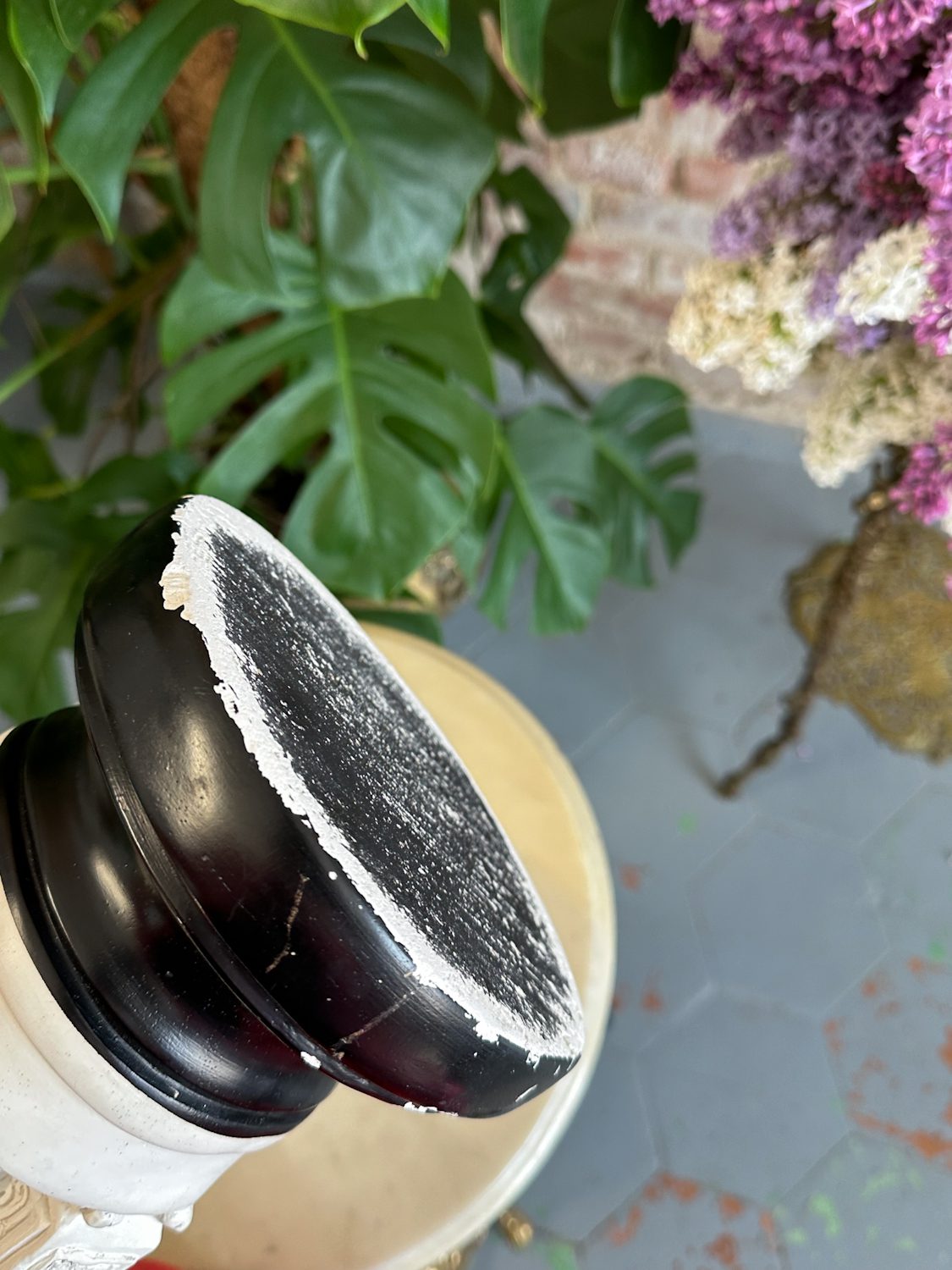
Skulptūra labā un stabilā stāvoklī. Ģipša virsma bez lūzumiem redzamajās frontālajās daļās. Uz mugurpuses augšstilbu zonā redzama neliela ģipša atplēsuma vieta — virspusējs bojājums, kas neskar skulptūras strukturālo integritāti. Melnā ģipša pamatne ar nelieliem baltās krāsas noplēsumiem pie apakšējās malas — uzskatāmi redzami fotogrāfijā. Zīmogs B.S. 59 skaidri salasāms. Lietas stāvoklis pilnībā atspoguļots fotogrāfijās.
――――――――――――――――――――― ―――――――――――――――――――――
🇬🇧 DESCRIPTION IN ENGLISH
Venus at Her Dressing Table — “Vénus à sa toilette” — Neoclassicism, Europe, circa 1880–1920. Mark: B.S. 59
―――――――――――――――――――――
📐 DIMENSIONS Height: 68 cm (including the black wooden base). Width: 14 cm. Material: fine-grain artist’s plaster with a matte surface finish. Base: black lacquered plaster with profiled moulding.
―――――――――――――――――――――
🏛️ PERIOD, ARTISTIC STYLE AND HISTORICAL CONTEXT
This figure depicts Venus at her dressing table — one of the most beloved subjects in neoclassical sculpture, in which the goddess of love and beauty is captured in an intimate, humanised moment: arranging her hair or dressing, still half-draped in fabric that falls gracefully around her thighs. The figure stands beside a classical dressing table with relief decoration — a direct reference to the everyday rituals of the ancient world, elevated by neoclassicism to divine dignity. The elaborately arranged hair, decorated with a ribbon and clasp, is executed with exceptional care: the view from the rear, with its spiralling, fan-like curls, is the most visually striking element of this figure and speaks to a high level of sculptural skill. The body’s plasticity — the elegant S-curve, the slight turn of the step — echoes the aesthetic of Antonio Canova and his followers, in which the antique ideal fuses the divine and the human into a single harmonious form.
―――――――――――――――――――――
⚜️ MAKER AND MARKS
Clearly impressed on the rim of the plaster base are the initials and number: B.S. 59. This is the same maker’s mark recorded on other examples in this series — B.S. (likely an Italian or French sculptural workshop) with catalogue numbers 56, 59, and others, indicating an organised and extensive production programme comprising multiple models. On the rear of the base near the feet, a small rectangular cartouche with an ornamental relief design is also visible — possibly an additional manufactory or model mark. Such numbered series are of greater collector interest than anonymous examples, as they allow for comparative study and origin identification. The black lacquered wooden base is likely a later addition, characteristic of the first quarter of the 20th century, when classical figures were frequently presented on contrasting plinths to emphasise the whiteness of the sculpture above.
―――――――――――――――――――――
💎 RARITY AND SIGNIFICANCE
“Venus at her toilet” is one of the canonical motifs of European sculpture — from the paintings of Titian to the marble works of Canova and the entire academic tradition of the 19th century. Plaster reproductions of this scale, with exceptionally detailed hair sculpture viewed from the rear, the dressing table element preserved at the feet, a clear maker’s stamp, and the black wooden base included as a set, are considerably rare. At 68 cm in height, this figure commands attention as a dominant interior accent. The rear view of the coiffure — with its spiralling, fan-shaped curls — is a particular value of this specific example: most collectors and interior photographers identify it as one of the figure’s most beautiful viewpoints.
―――――――――――――――――――――
🕯️ USE IN INTERIOR, DESIGN AND PHOTOGRAPHY
The figure integrates harmoniously into both classically elegant and modern interiors — a white sculpture on a black base is in itself a complete composition, requiring no additional decorative elements. Ideal placement: a feminine bedroom dressing area or near a mirror, in a salon on a side table, in the waiting area of a spa or beauty studio, and in the reception rooms of architects’ and designers’ offices. The rear viewpoint with its extraordinary coiffure sculpture is particularly suited to photography — for fragrance, jewellery, and fashion brand campaigns.
―――――――――――――――――――――
🎁 GIFT AND PERSONALISATION
Venus — the archetype of love, beauty, and feminine grace — is a refined gift for women of high aesthetic culture: artists, and professionals dedicated to fashion, interior design, or the beauty industry. As a distinguished corporate gift, she is ideal for leaders in the luxury, fragrance, jewellery, and fashion sectors. At the highest social or diplomatic level, the figure of Venus is a universally recognised symbol of European civilisation — equally appropriate as a personal or representative gift.
―――――――――――――――――――――
🔍 CONDITION
The sculpture is in good and stable condition. The plaster surface shows no fractures on the visible frontal areas. A small surface chip is visible on the rear in the upper thigh area — a superficial mark that does not affect the structural integrity of the piece. The black plaster base shows minor white paint losses along its lower edge, clearly visible in the photographs. The mark B.S. 59 is cleanly legible. The condition of the piece is fully reflected in the photographs.