
Melns lakota metāla kamīna aizslietnis ar zelta ornamentu, Napoleona III stils (5812)
Melns lakota metāla kamīna aizslietnis ar zelta ornamentu, Napoleona III stils (5812)
€400.00
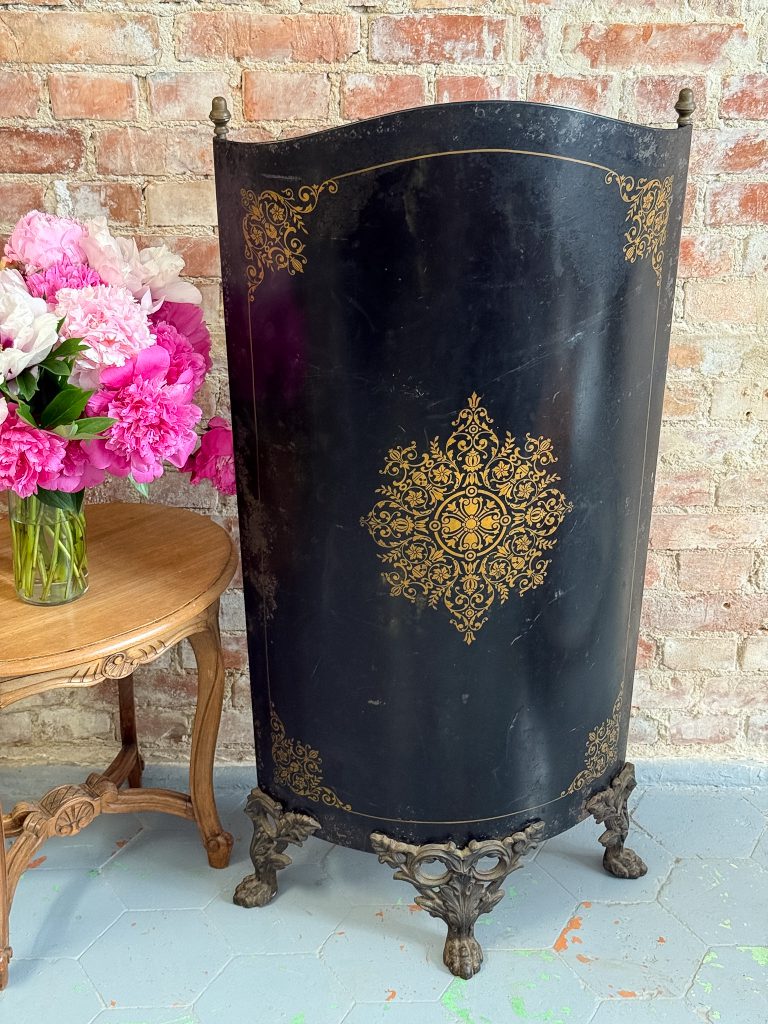
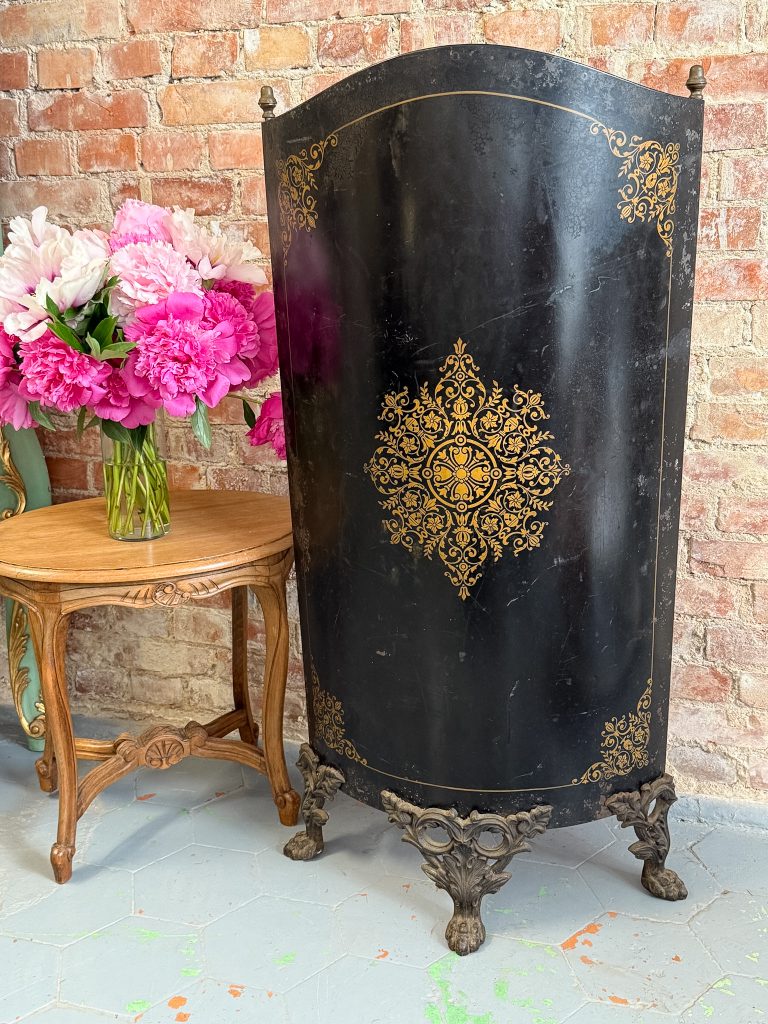
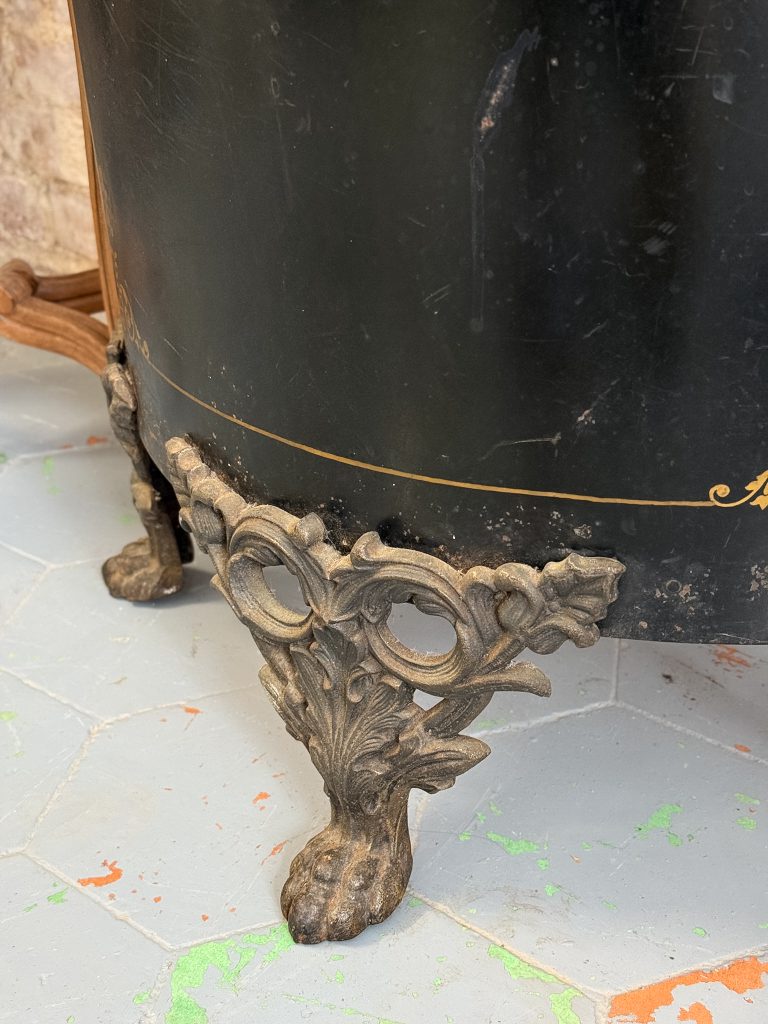
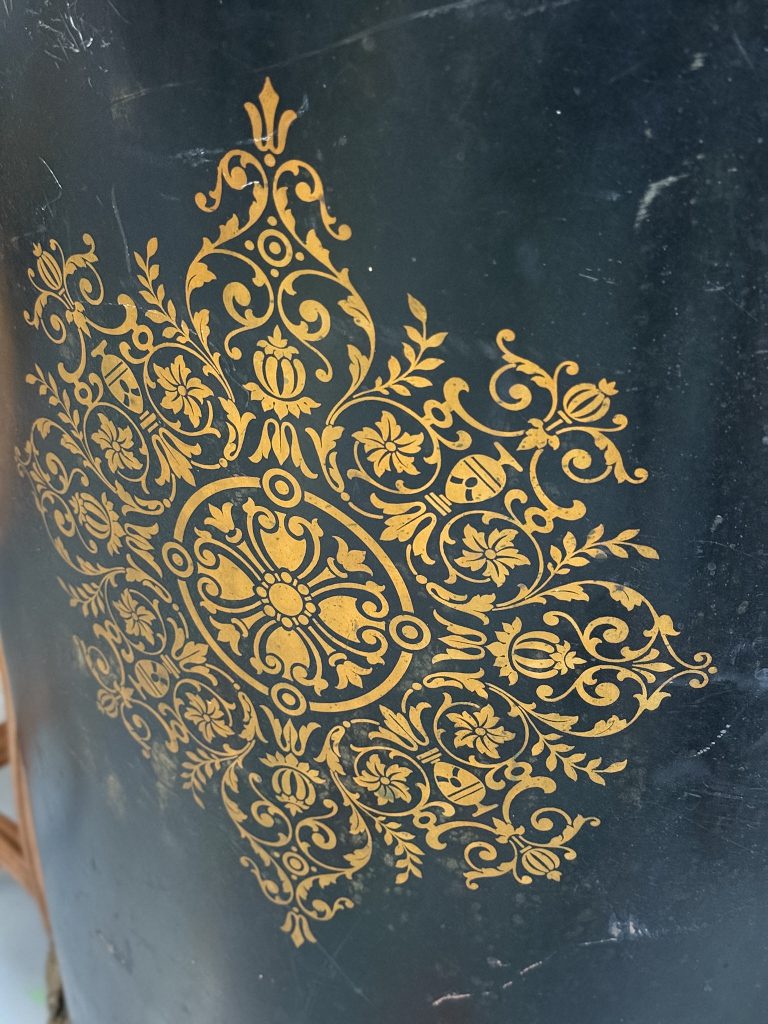
Vidēji liels izliekts melni lakota metāla (tôle) kamīna aizslietnis ar zeltētu trafareta ornamentu un čuguna lauvas ķepu kājām. Napoleona III stils, 19. gadsimta vidus.
🇱🇻 Melns lakota metāla kamīna aizslietnis ar zelta ornamentu — Napoleona III stils, Francija, 19. gadsimta vidus
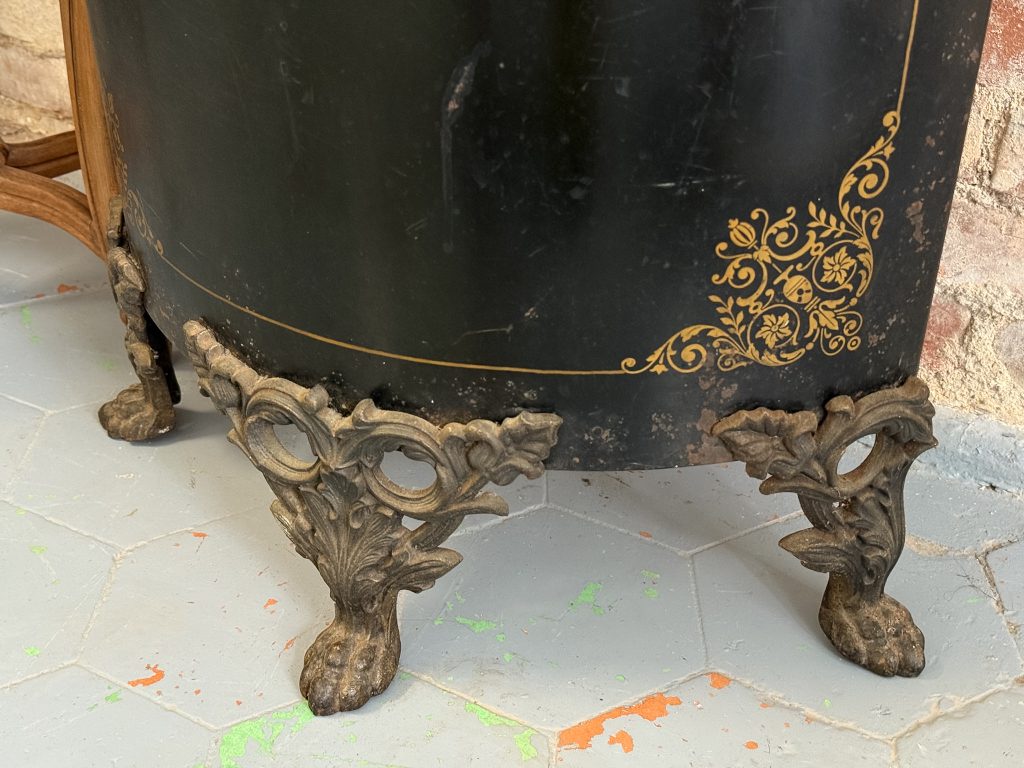
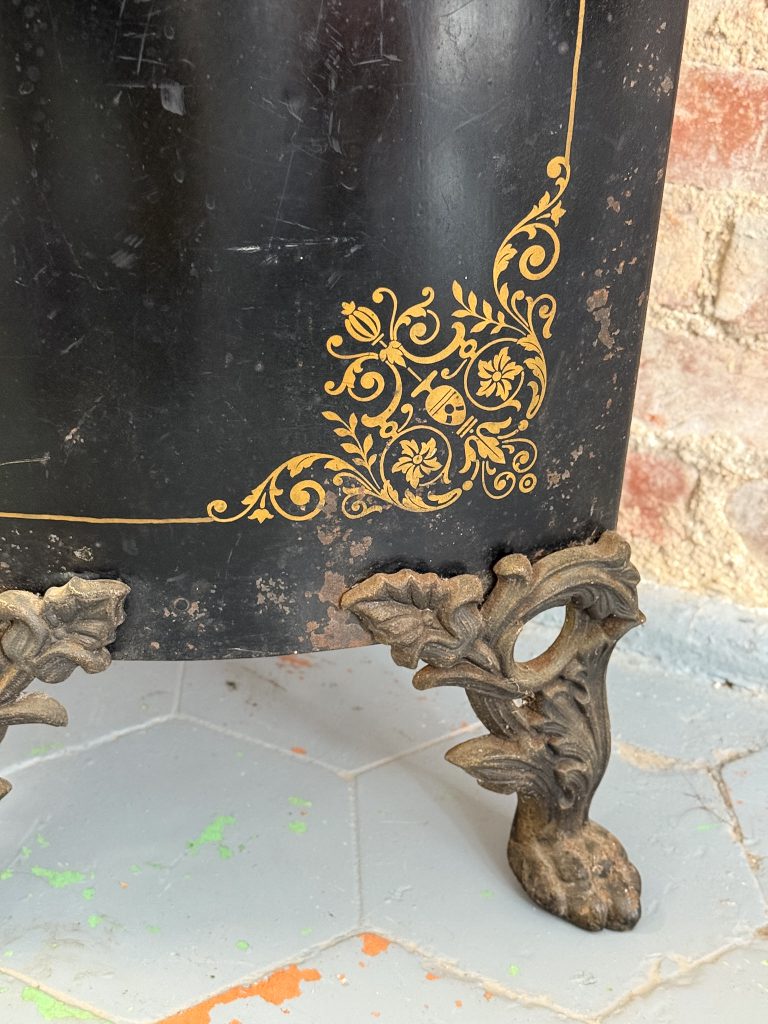
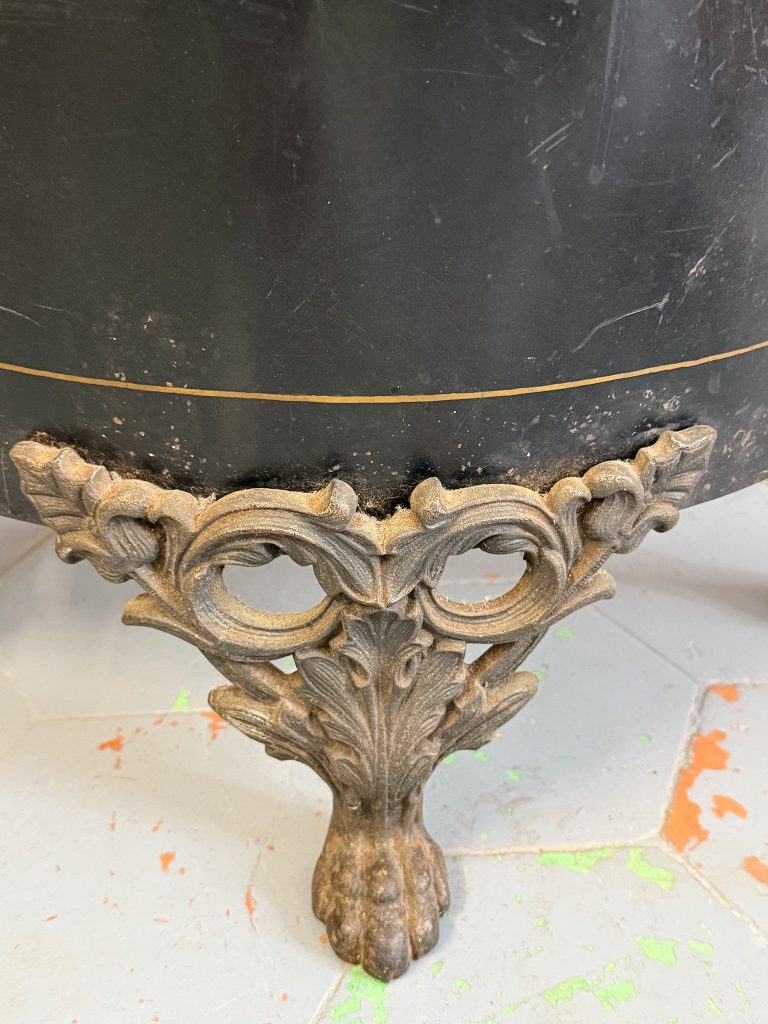
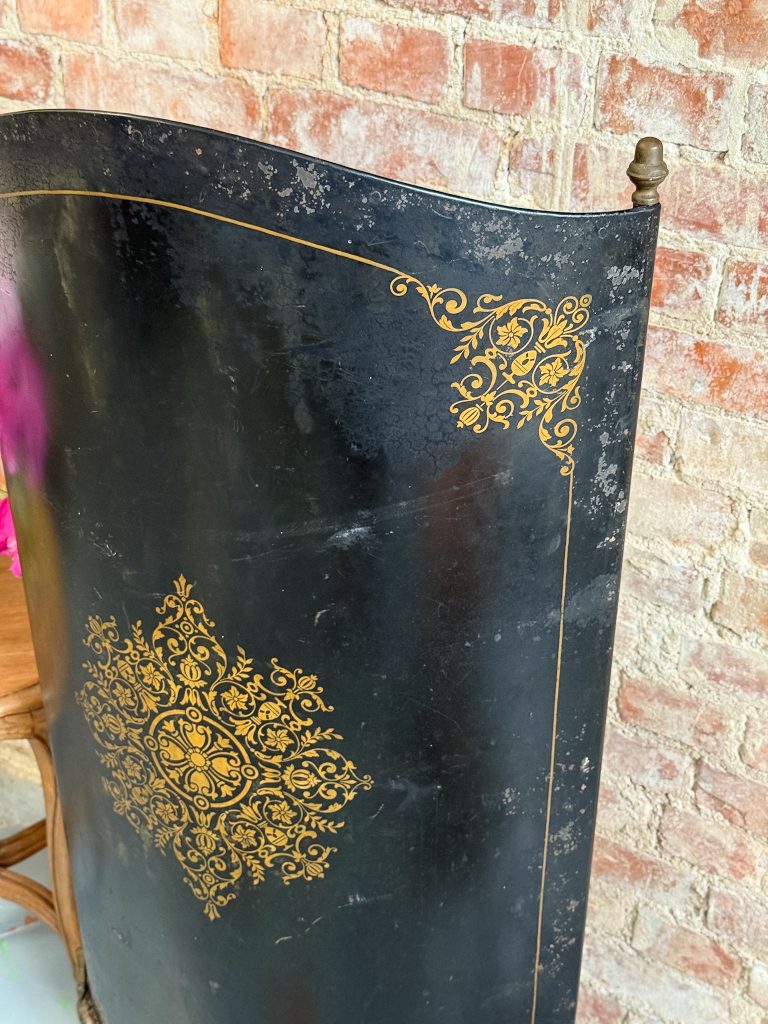
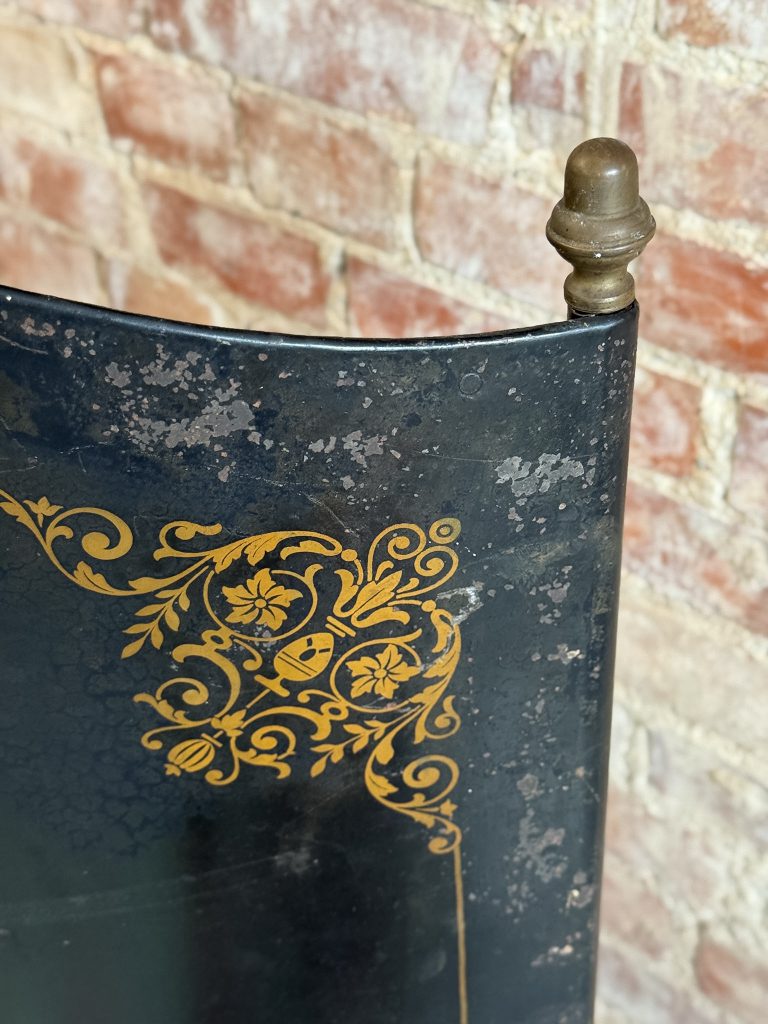
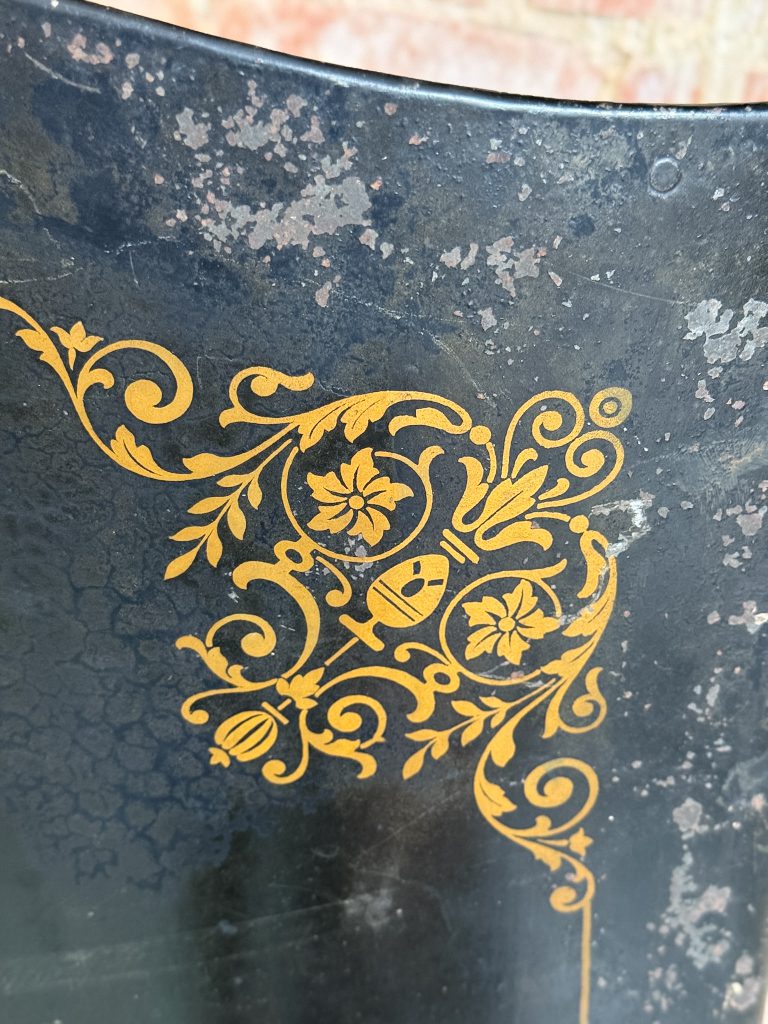
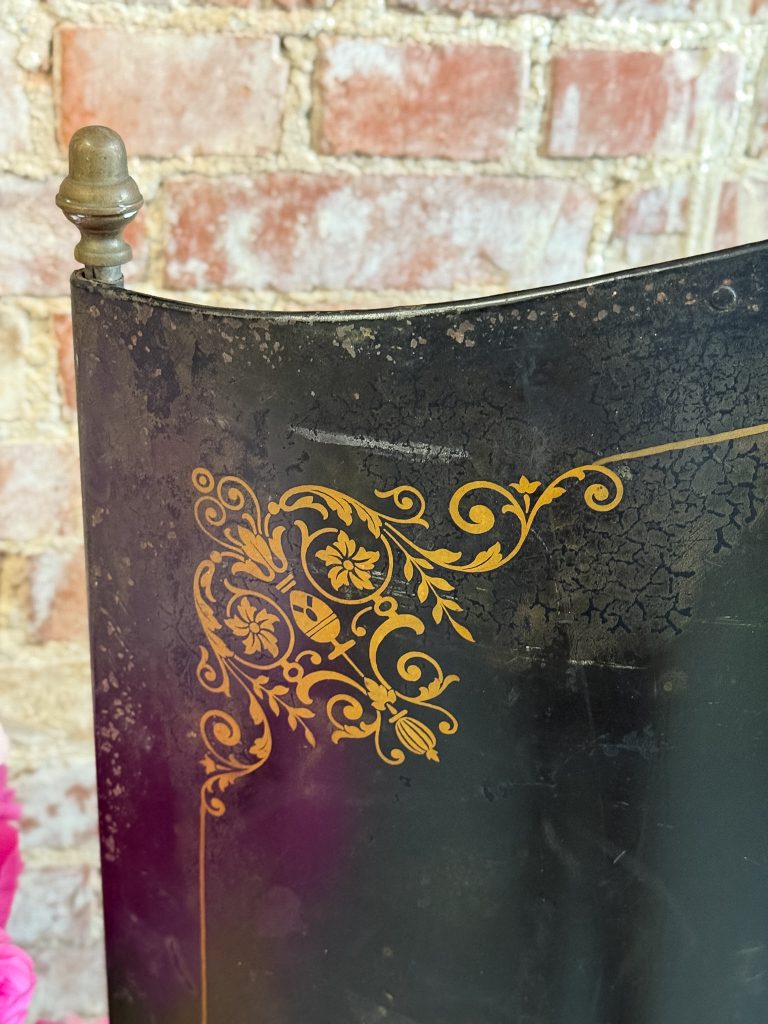
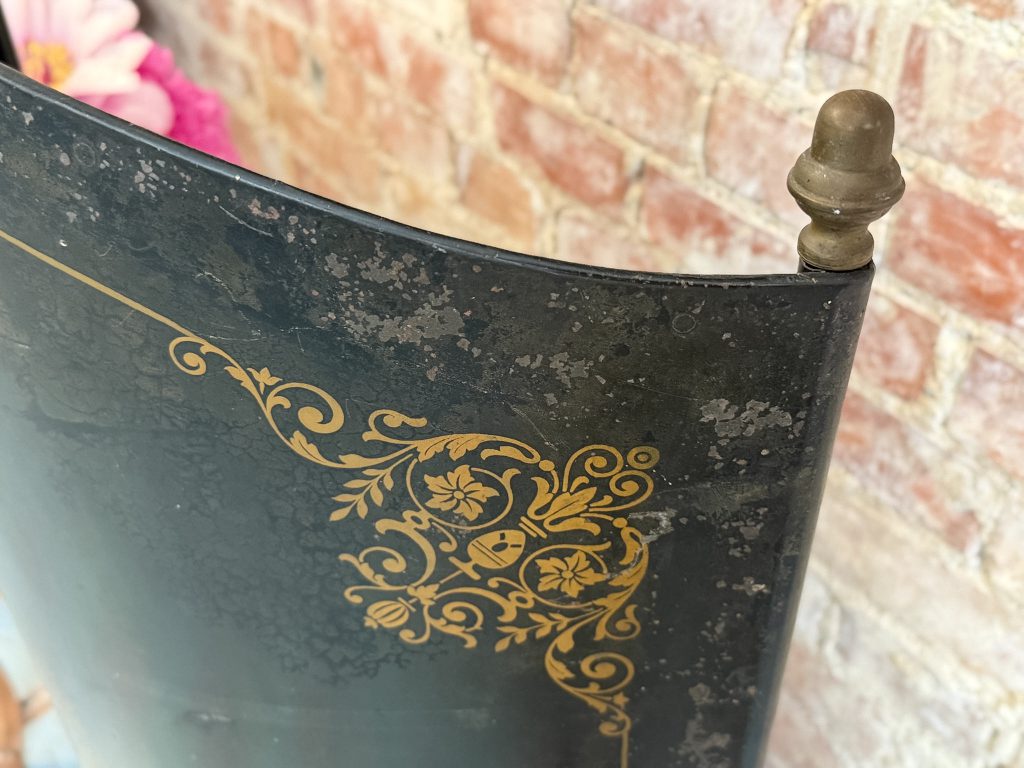
Šis elegantais kamīna aizslietnis (tole firescreen) ir raksturīgs lakota un zeltēta metāla (tôle peinte) darbs Napoleona III un Luija Filipa laikmetā. Izliektais melni lakotais panelis kalpoja kā pare-étincelles — dzirksteļu aizsegs uguns priekšā, kas vienlaikus rotāja kamīnu ar smalku zeltētu ornamentu. Paneļa centrā mirdz romba formas rozete ar ziedu, akanta un urnu motīviem; stūrus rotā vijīgi zeltēti ornamenti, malu ietver plāna zelta līnija. Panelis balstās uz četrām čuguna lauvas ķepu kājām ar akanta volūtām, augšā noslēgts ar diviem metāla galiņiem.
Augstums 122,5 cm · platums 66,5 cm · dziļums ~22 cm
Izgatavošanas periods, mākslas stils, laikmets. Aizslietnis datējams ar 19. gadsimta vidu, Napoleona III un Luija Filipa laiku, kad Francijā un Anglijā uzplauka tôle peinte māksla — lakoti metāla priekšmeti ar roku vai trafareta zeltējumu. Šādi kamīna aizslietņi bija gan praktiski (sargāja telpu no dzirkstelēm un siltuma), gan dekoratīvi, ar austrumnieciski iedvesmotu ornamentiku, kas atgādina lakas darbus.
Momentuzņēmums: rakstniece Žorža Sanda (George Sand) pacēla acis no manuskripta vēlā vakarā Noānā, kad kamīnā jau gruzdēja ogles. Melnais panelis ar zelta rakstu atspoguļoja liesmu kā tumšs spogulis, un viņas pildspalva uz brīdi apstājās. Istabā kļuva silti un klusi; ārā lija lietus. Viņa atkal pieliecās pār lapu — bet zelta raksts vēl ilgi mirgoja viņas redzes malā kā kaut kas dzīvs.
Ražotājs. Bez zīmoga; ornamenta kvalitāte un čuguna kāju modelējums norāda uz franču tôle darbnīcu 19. gadsimta vidū.
Retums un nozīme. Tôle peinte kamīna aizslietņi ar saglabātu oriģinālo zeltējumu un čuguna kājām mūsdienās ir grūti atrodami — lakas virsma viegli bojājas, un zeltējums nodilst uguns tuvumā. Saglabājies ornaments šim eksemplāram piešķir īpašu vērtību.
Pielietojums interjerā, dizainā un fotogrāfijā. Aizslietnis kalpo kamīna priekšā kā dekoratīvs un funkcionāls elements; ārpus apkures sezonas tas noslēdz kamīna atveri kā skaists melns un zelta akcents. Tā tumšā virsma un zelta raksts veido dramatisku, fotogēnu detaļu interjera fotogrāfijā.
Dāvana. Iespaidīga dāvana kamīna īpašniekam, antikvariāta cienītājam vai interjera dizainerim.
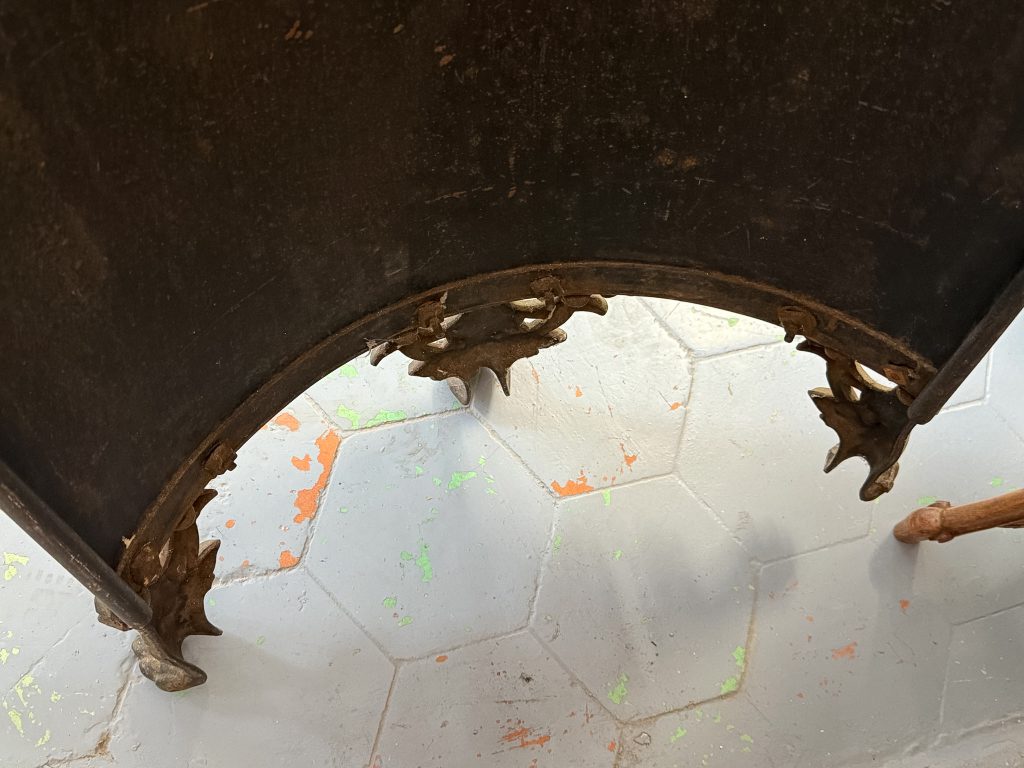
Stāvoklis. Aizslietnis nesteidzīgi nesis savu vēsturi: melnā laka un zeltētais ornaments lielā mērā saglabājušies, taču redzamas laika pēdas — virsmas skrāpējumi, lakas nodilumi un patina, īpaši apakšējā daļā un malās, kā arī korozijas vietas. Tieši šī autentiskā patina liecina par priekšmeta vēsturi. Lietas stāvoklis pilnībā atspoguļots fotogrāfijās.
🇷🇺 Чёрный каминный экран из лакированного металла с золотым орнаментом — стиль Наполеона III, Франция, середина XIX века
Этот элегантный каминный экран (tole firescreen) — характерная работа из лакированного и золочёного металла (tôle peinte) эпохи Наполеона III и Луи-Филиппа. Изогнутая чёрная лакированная панель служила как pare-étincelles — защита от искр перед огнём, одновременно украшавшая камин тонким золочёным орнаментом. В центре панели мерцает ромбовидная розетка с цветочными, акантовыми и вазовыми мотивами; углы украшены вьющимися золочёными орнаментами, край обрамлён тонкой золотой линией. Панель покоится на четырёх чугунных ножках в виде львиных лап с волютами аканта, сверху завершена двумя металлическими навершиями.
Высота 122,5 см · ширина 66,5 см · глубина ~22 см
Экран датируется серединой XIX века, эпохой Наполеона III и Луи-Филиппа, когда во Франции и Англии расцвело искусство tôle peinte — лакированные металлические предметы с ручным или трафаретным золочением. Такие каминные экраны были и практичны (защищали комнату от искр и жара), и декоративны, с орнаментикой восточного вдохновения, напоминающей лаковые работы.
Снимок эпохи: писательница Жорж Санд (George Sand) подняла глаза от рукописи поздним вечером в Ноане, когда в камине уже тлели угли. Чёрная панель с золотым узором отражала пламя, как тёмное зеркало, и её перо на миг замерло. В комнате стало тепло и тихо; за окном шёл дождь. Она снова склонилась над листом — но золотой узор ещё долго мерцал на краю её зрения, словно что-то живое.
Без клейма; качество орнамента и моделировка чугунных ножек указывают на французскую мастерскую tôle середины XIX века. Каминные экраны tôle peinte с сохранившимся оригинальным золочением и чугунными ножками сегодня встречаются нечасто — лаковая поверхность легко повреждается, а золочение стирается у огня. Сохранившийся орнамент придаёт этому экземпляру особую ценность.
Экран служит перед камином как декоративный и функциональный элемент; вне отопительного сезона он закрывает топку как красивый чёрно-золотой акцент. Тёмная поверхность и золотой узор образуют драматичную, фотогеничную деталь в интерьерной фотографии. Это впечатляющий подарок владельцу камина, ценителю антиквариата или дизайнеру интерьера.
Экран неспешно нёс свою историю: чёрный лак и золочёный орнамент в значительной мере сохранились, но видны следы времени — царапины поверхности, потёртости лака и патина, особенно в нижней части и по краям, а также участки коррозии. Именно эта подлинная патина свидетельствует об истории предмета. Состояние предмета полностью отражено на фотографиях.
🇬🇧 Black Tole Firescreen with Gilt Ornament — Napoleon III Style, France, Mid-19th Century
This elegant tole firescreen is a characteristic work of lacquered and gilded metal (tôle peinte) from the Napoleon III and Louis Philippe era. The curved black-lacquered panel served as a pare-étincelles — a spark guard before the fire that at the same time adorned the hearth with fine gilt ornament. At the centre of the panel a lozenge-shaped rosette shimmers with floral, acanthus and urn motifs; the corners are decorated with scrolling gilt ornaments, the edge framed by a thin gold line. The panel rests on four cast-iron lion-paw feet with acanthus volutes and is topped by two metal finials, a form that marks this tole firescreen as both guard and ornament.
Height 122.5 cm · width 66.5 cm · depth ~22 cm
The screen dates to the mid-19th century, the time of Napoleon III and Louis Philippe, when the art of tôle peinte flourished in France and England — lacquered metal objects with hand or stencilled gilding. Such fire screens were both practical (guarding the room from sparks and heat) and decorative, with an orientalising ornament recalling lacquerwork. Unmarked, the quality of the ornament and the modelling of the cast-iron feet point to a French tôle workshop of the mid-19th century.
Snapshot: the writer George Sand (George Sand) raised her eyes from the manuscript late one evening at Nohant, when the embers were already glowing in the hearth. The black panel with its gold pattern reflected the flame like a dark mirror, and her pen paused for a moment. The room grew warm and still; outside it was raining. She bent again over the page — but the gold pattern lingered long at the edge of her sight, like something alive.
A tôle peinte fire screen with its original gilding and cast-iron feet preserved is not easily found today, as the lacquer surface is easily damaged and the gilding wears away beside the fire; the surviving ornament gives this example particular value. The screen serves before the fireplace as a decorative and functional element; outside the heating season it closes the hearth opening as a handsome black-and-gold accent. Its dark surface and gold pattern form a dramatic, photogenic detail in interior photography, and make an impressive gift for the fireplace owner, the lover of antiques or the interior designer.
The screen has carried its history unhurriedly: the black lacquer and gilt ornament are largely preserved, but traces of age are visible — surface scratches, lacquer wear and patina, especially in the lower part and along the edges, as well as areas of corrosion. It is exactly this authentic patina that speaks of the object’s history. The condition is fully reflected in the photographs.
🇩🇪 Schwarzer Kaminschirm aus lackiertem Metall mit Golddekor — Napoleon-III-Stil, Frankreich, Mitte des 19. Jahrhunderts
Dieser elegante Kaminschirm (tole firescreen) ist eine charakteristische Arbeit aus lackiertem und vergoldetem Metall (tôle peinte) der Napoleon-III- und Louis-Philippe-Zeit. Die gebogene schwarz lackierte Platte diente als pare-étincelles — ein Funkenschutz vor dem Feuer, der den Kamin zugleich mit feinem Golddekor schmückte. In der Mitte der Platte schimmert eine rautenförmige Rosette mit Blüten-, Akanthus- und Urnenmotiven; die Ecken sind mit geschwungenen vergoldeten Ornamenten verziert, der Rand von einer dünnen Goldlinie eingefasst. Die Platte ruht auf vier gusseisernen Löwentatzenfüßen mit Akanthusvoluten und ist oben mit zwei Metallbekrönungen abgeschlossen.
Höhe 122,5 cm · Breite 66,5 cm · Tiefe ~22 cm
Der Schirm datiert in die Mitte des 19. Jahrhunderts, die Zeit Napoleons III und Louis-Philippes, als in Frankreich und England die Kunst der tôle peinte aufblühte — lackierte Metallobjekte mit Hand- oder Schablonenvergoldung. Solche Kaminschirme waren zugleich praktisch (sie schützten den Raum vor Funken und Hitze) und dekorativ, mit einer orientalisierenden Ornamentik, die an Lackarbeiten erinnert. Ohne Marke; die Qualität des Ornaments und die Modellierung der gusseisernen Füße deuten auf eine französische tôle-Werkstatt der Jahrhundertmitte.
Momentaufnahme: die Schriftstellerin George Sand (George Sand) hob spät am Abend in Nohant die Augen vom Manuskript, als im Kamin schon die Glut glomm. Die schwarze Platte mit ihrem Goldmuster spiegelte die Flamme wie ein dunkler Spiegel, und ihre Feder hielt einen Augenblick inne. Im Zimmer wurde es warm und still; draußen regnete es. Sie beugte sich wieder über das Blatt — doch das Goldmuster schimmerte noch lange am Rand ihres Blicks, wie etwas Lebendiges.
Ein tôle peinte-Kaminschirm mit erhaltener originaler Vergoldung und gusseisernen Füßen ist heute schwer zu finden, da die Lackoberfläche leicht beschädigt wird und die Vergoldung am Feuer abnutzt; das erhaltene Ornament verleiht diesem Exemplar besonderen Wert. Der Schirm dient vor dem Kamin als dekoratives und funktionales Element; außerhalb der Heizsaison schließt er die Kaminöffnung als schöner schwarz-goldener Akzent. Seine dunkle Oberfläche und das Goldmuster bilden ein dramatisches, fotogenes Detail in der Interieurfotografie. Ein eindrucksvolles Geschenk für den Kaminbesitzer, den Liebhaber von Antiquitäten oder den Innenarchitekten.
Der Schirm hat seine Geschichte uneilig getragen: schwarzer Lack und Golddekor sind weitgehend erhalten, doch sind Altersspuren sichtbar — Oberflächenkratzer, Lackabrieb und Patina, besonders im unteren Teil und an den Rändern, sowie Korrosionsstellen. Gerade diese authentische Patina zeugt von der Geschichte des Objekts. Der Zustand ist in den Fotografien vollständig wiedergegeben.
🇫🇷 Pare-feu en métal laqué noir à décor doré — style Napoléon III, France, milieu du XIXᵉ siècle
Cet élégant pare-feu (tole firescreen) est une œuvre caractéristique en métal laqué et doré (tôle peinte) de l’époque Napoléon III et Louis-Philippe. Le panneau galbé laqué noir servait de pare-étincelles — une protection contre les étincelles devant le feu, qui ornait en même temps la cheminée d’un fin décor doré. Au centre du panneau scintille une rosace en losange à motifs de fleurs, d’acanthe et d’urnes ; les angles sont ornés d’enroulements dorés, le bord souligné d’un mince filet d’or. Le panneau repose sur quatre pieds en fonte en forme de pattes de lion à volutes d’acanthe et se termine en haut par deux fleurons métalliques.
Hauteur 122,5 cm · largeur 66,5 cm · profondeur ~22 cm
Le pare-feu date du milieu du XIXᵉ siècle, l’époque de Napoléon III et de Louis-Philippe, lorsque l’art de la tôle peinte s’épanouit en France et en Angleterre — objets de métal laqué à dorure à la main ou au pochoir. De tels pare-feu étaient à la fois pratiques (ils protégeaient la pièce des étincelles et de la chaleur) et décoratifs, avec une ornementation d’inspiration orientale rappelant les laques. Sans estampille, la qualité de l’ornement et la modélisation des pieds en fonte désignent un atelier de tôle français du milieu du siècle.
Instantané : l’écrivaine George Sand (George Sand) leva les yeux de son manuscrit tard un soir à Nohant, quand les braises rougeoyaient déjà dans l’âtre. Le panneau noir au motif d’or reflétait la flamme comme un miroir sombre, et sa plume s’arrêta un instant. La pièce devint chaude et silencieuse ; dehors, il pleuvait. Elle se pencha de nouveau sur la page — mais le motif d’or scintilla longtemps au bord de son regard, comme quelque chose de vivant.
Un pare-feu en tôle peinte à la dorure d’origine et aux pieds de fonte conservés est aujourd’hui difficile à trouver, car la surface laquée s’abîme aisément et la dorure s’use auprès du feu ; l’ornement subsistant confère à cet exemplaire une valeur particulière. Le pare-feu sert devant la cheminée comme élément décoratif et fonctionnel ; hors saison de chauffe, il ferme l’ouverture de l’âtre comme un bel accent noir et or. Sa surface sombre et son motif d’or forment un détail dramatique et photogénique en photographie d’intérieur. Un cadeau impressionnant pour le propriétaire d’une cheminée, l’amateur d’antiquités ou le décorateur d’intérieur.
Le pare-feu a porté son histoire sans hâte : la laque noire et le décor doré sont en grande partie conservés, mais des traces du temps sont visibles — rayures de surface, usure de la laque et patine, surtout dans la partie basse et le long des bords, ainsi que des zones de corrosion. C’est précisément cette patine authentique qui témoigne de l’histoire de l’objet. L’état est entièrement reflété dans les photographies.