Zeltēta bronzas kamīna ekrāns ar eņģeļiem (ķerubiem) un uguns motīvu, Luija XV stils (4369)
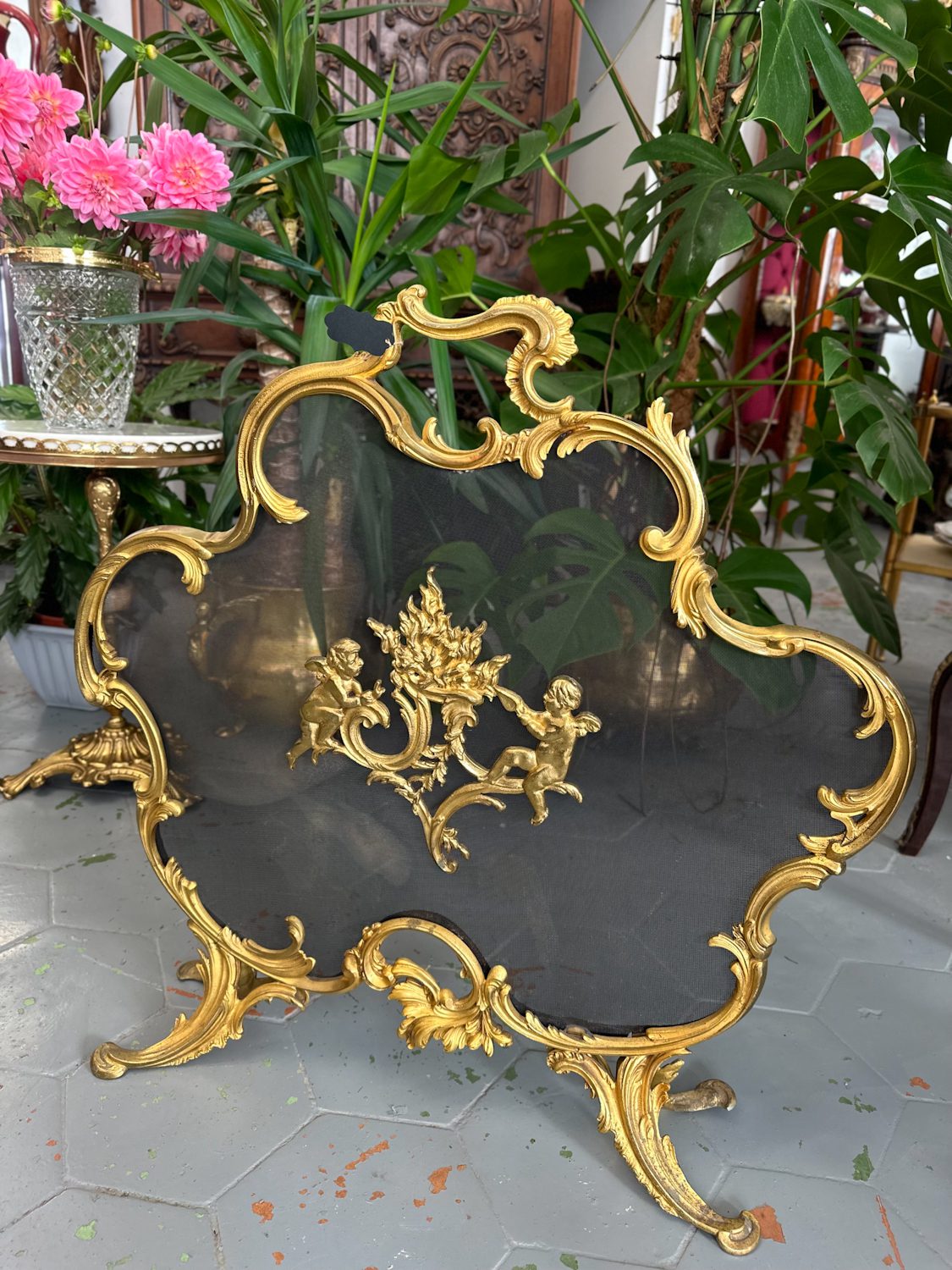
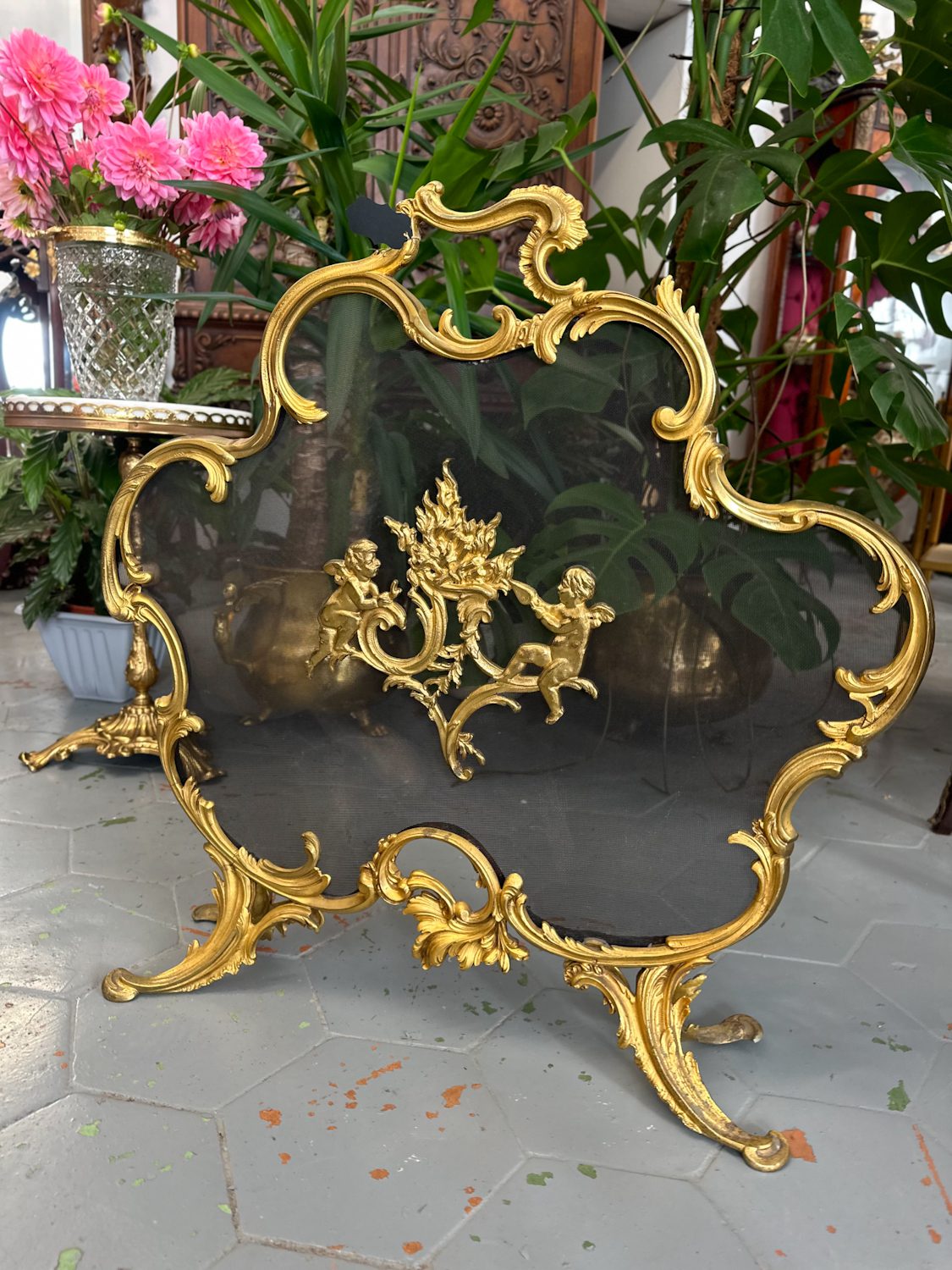
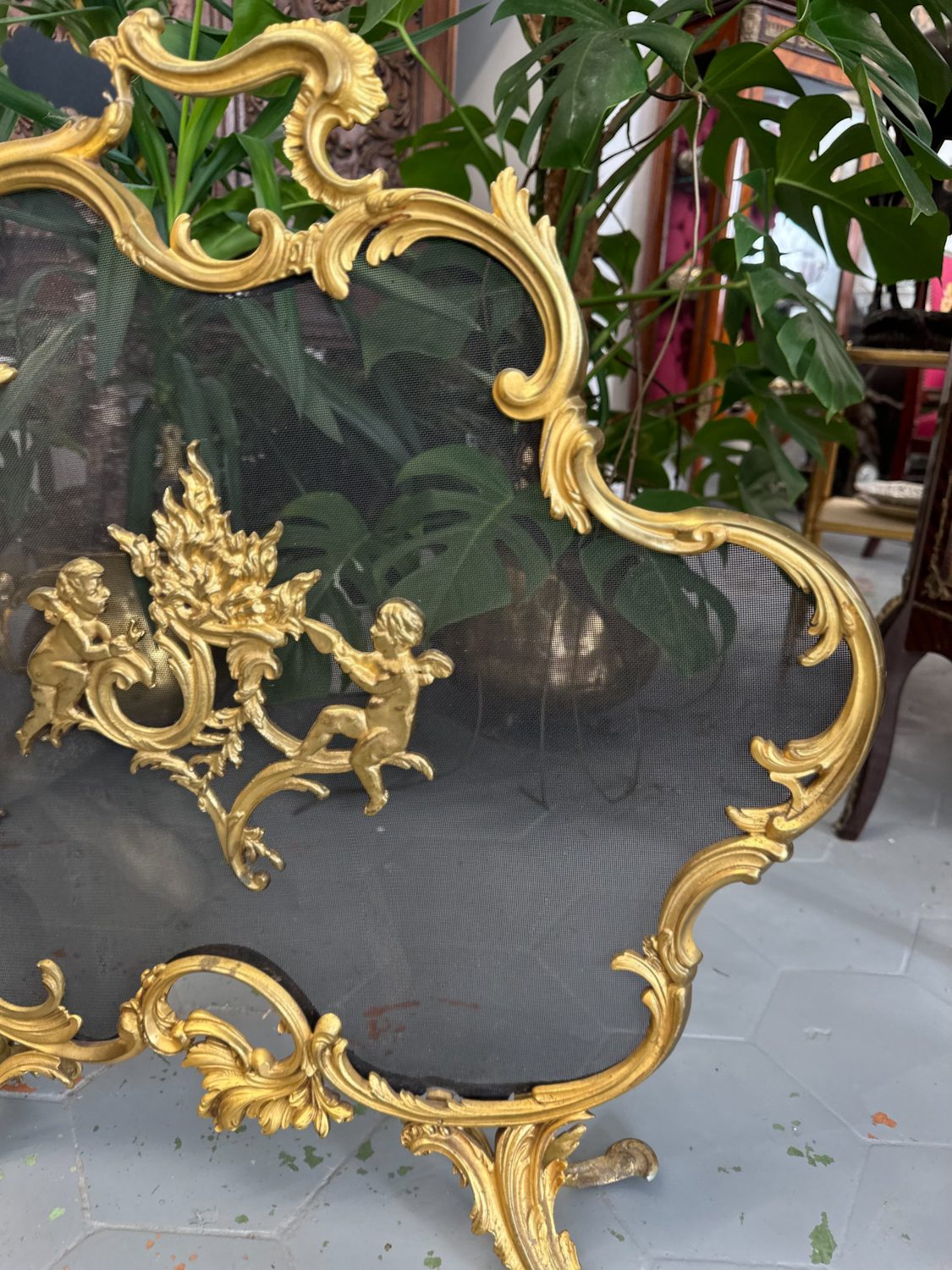
Zeltēta bronzas kamīna ekrāns ar eņģeļiem (ķerubiem) un uguns motīvu, Luija XV stils (4369)
€750.00
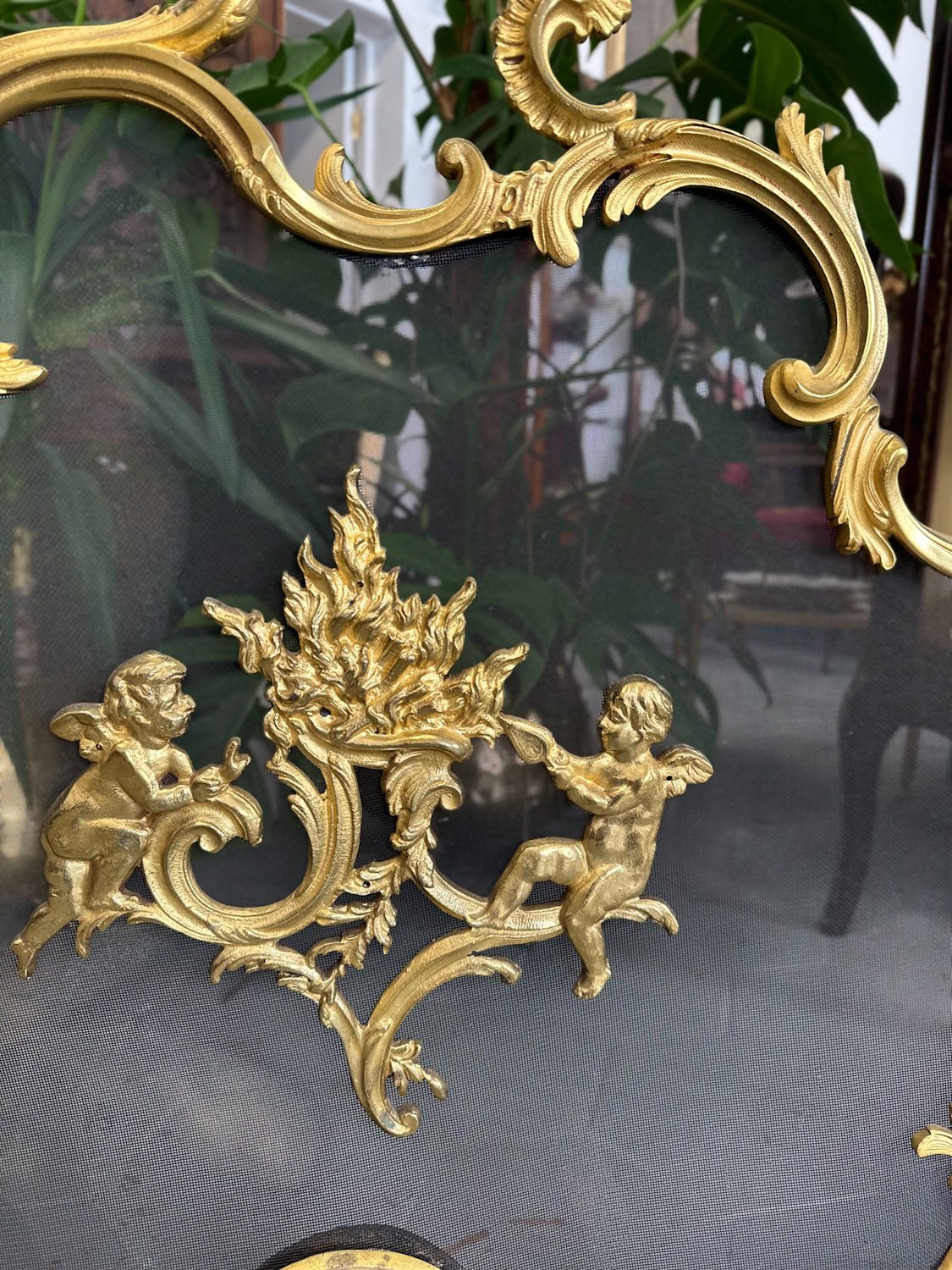
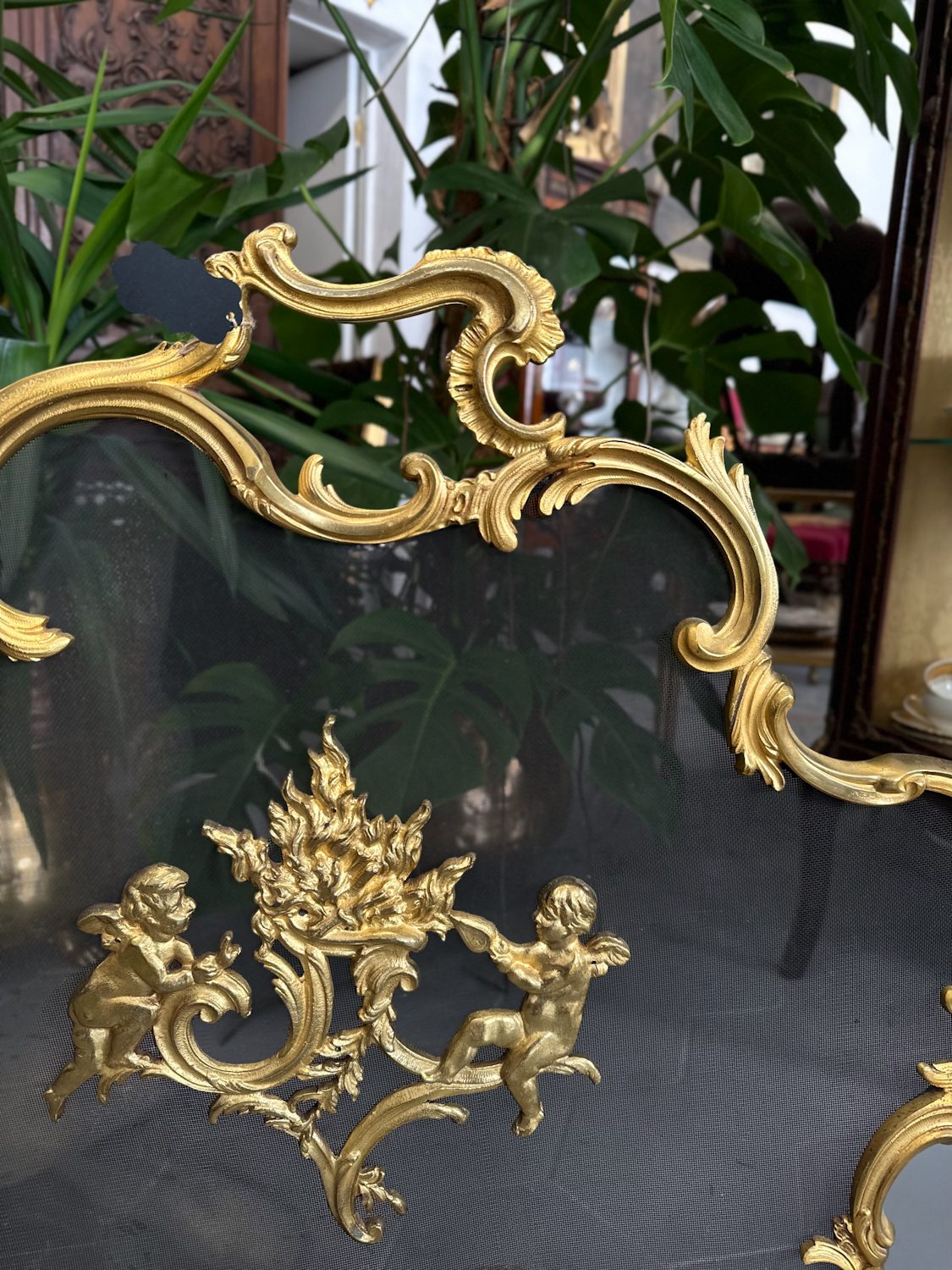
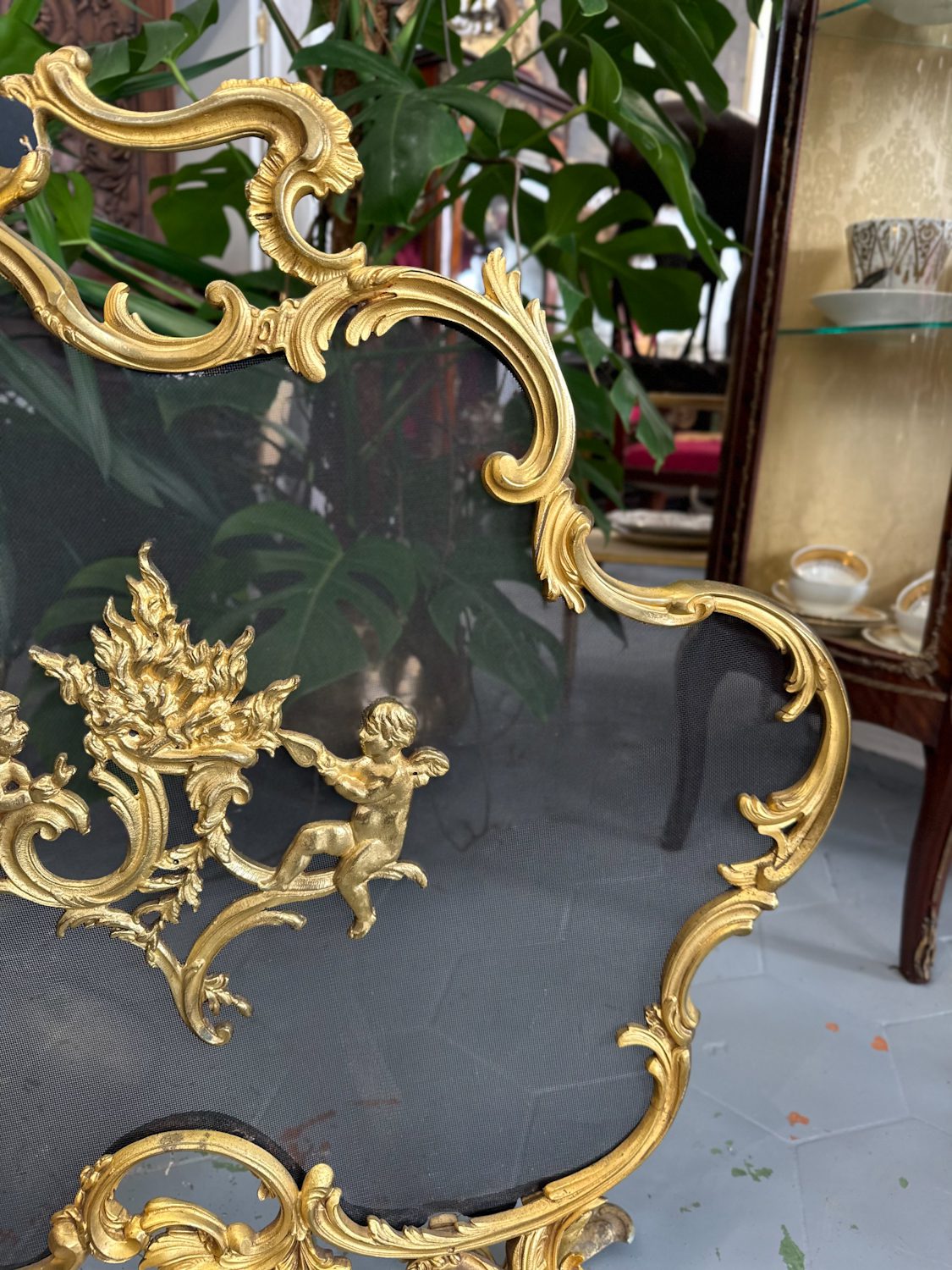
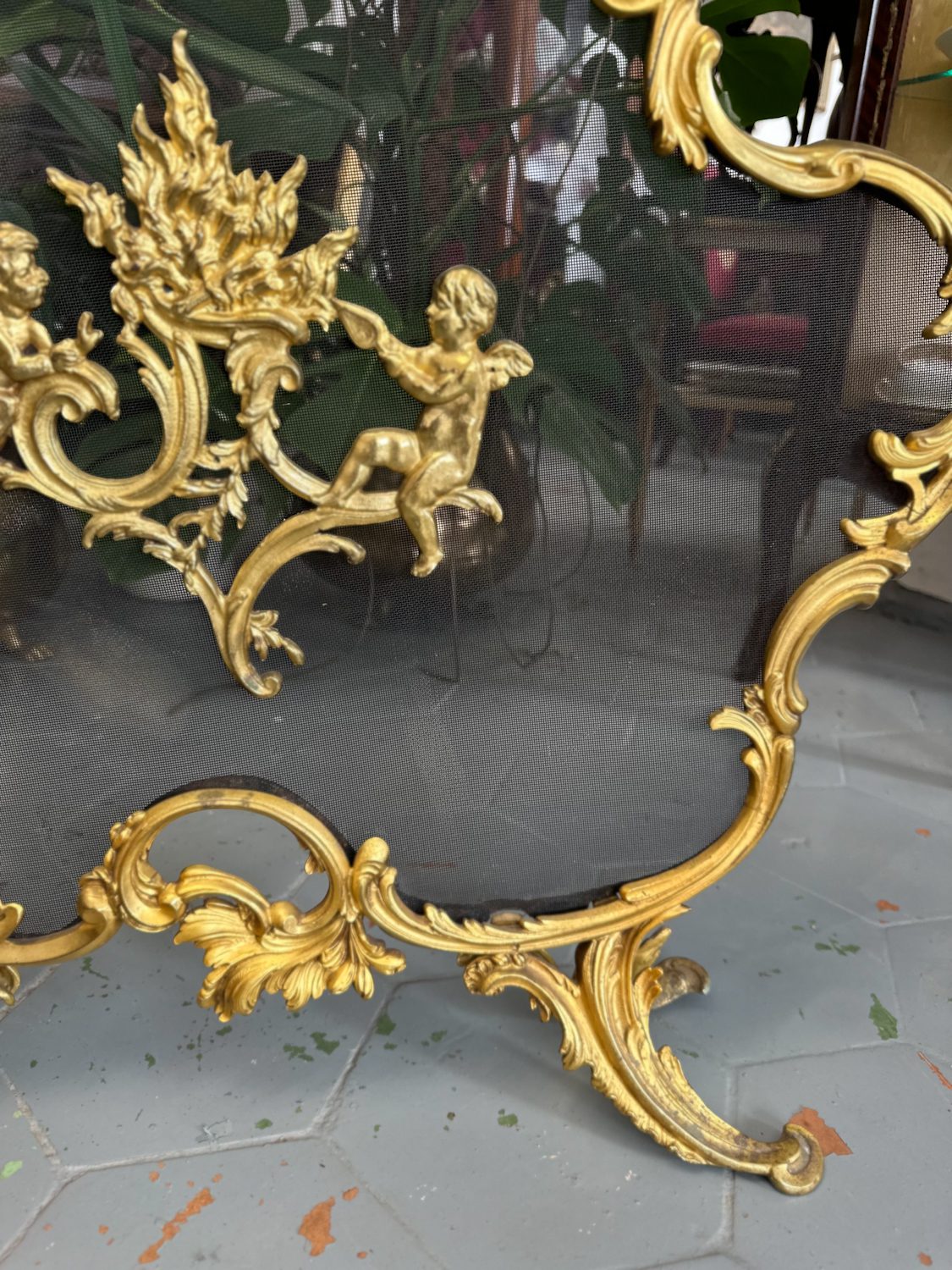
Grezns zeltēta bronzas kamīna ekrāns rokoko manierē ar diviem eņģeļiem (ķerubiem) ap uguns vāzes motīvu, ažūru volūtu rāmi un sietu. Luija XV stils.
🇱🇻 Zeltēta bronzas kamīna ekrāns ar eņģeļiem (ķerubiem) un uguns motīvu — Luija XV / rokoko stils, Francija
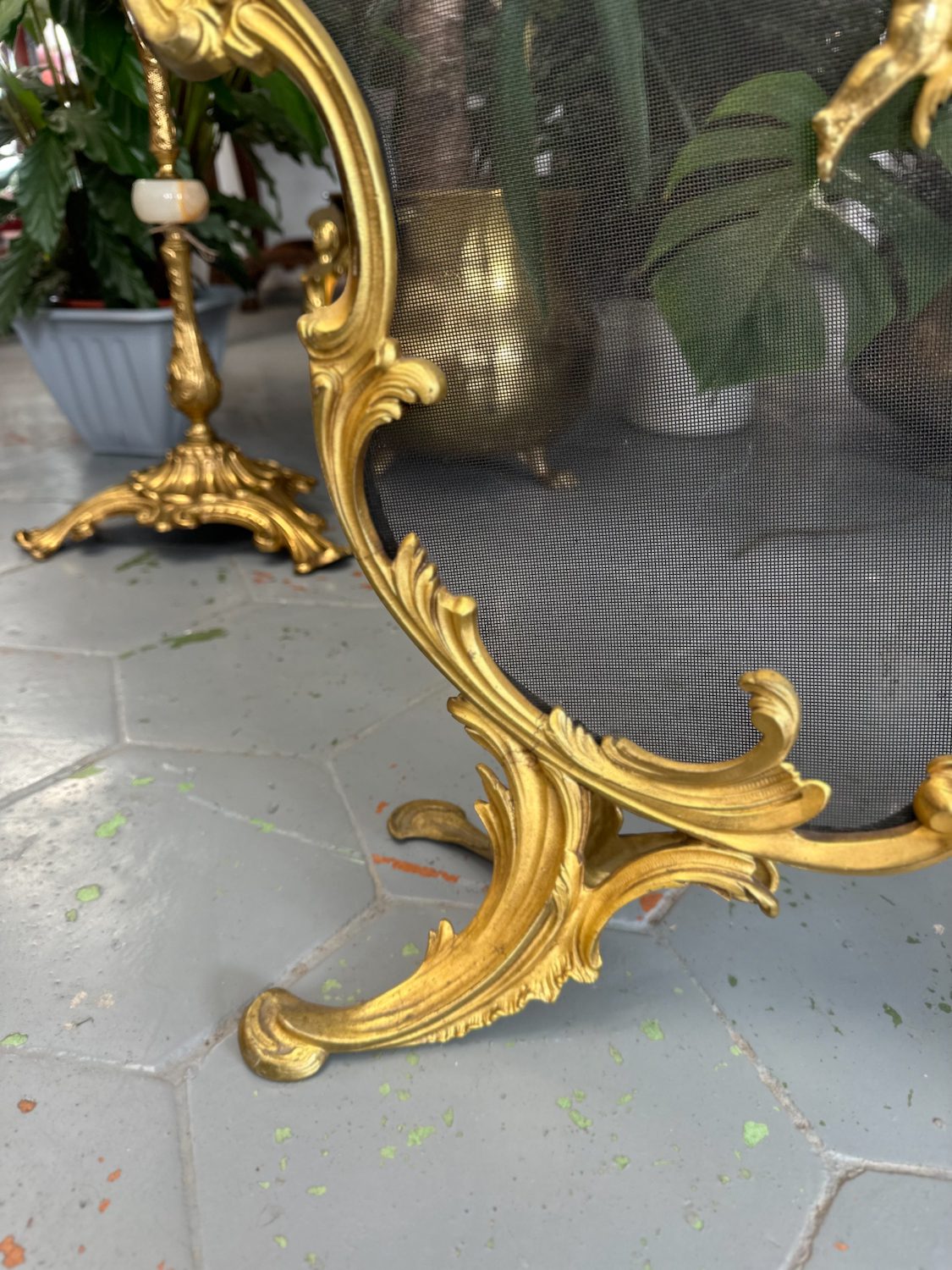
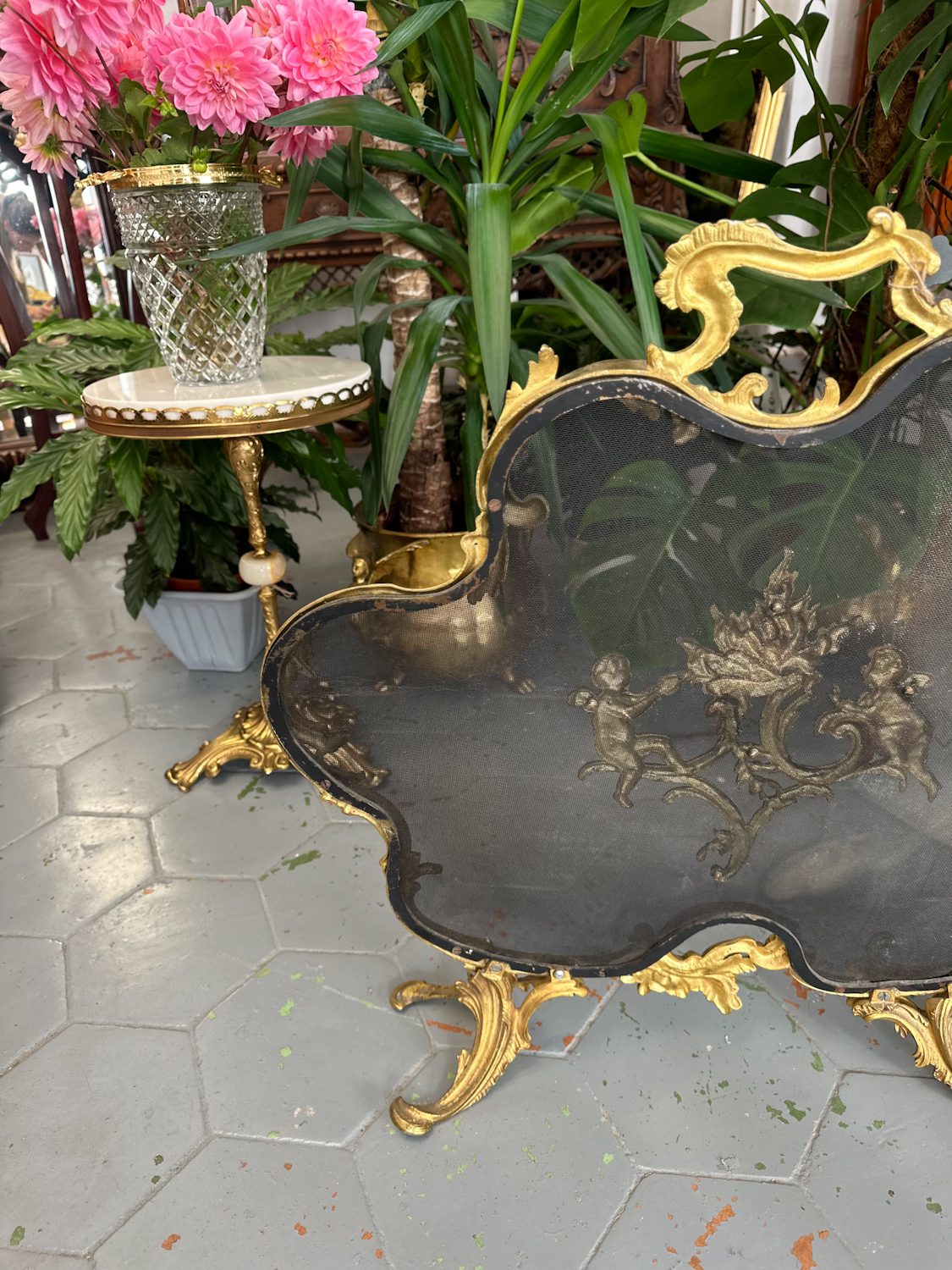
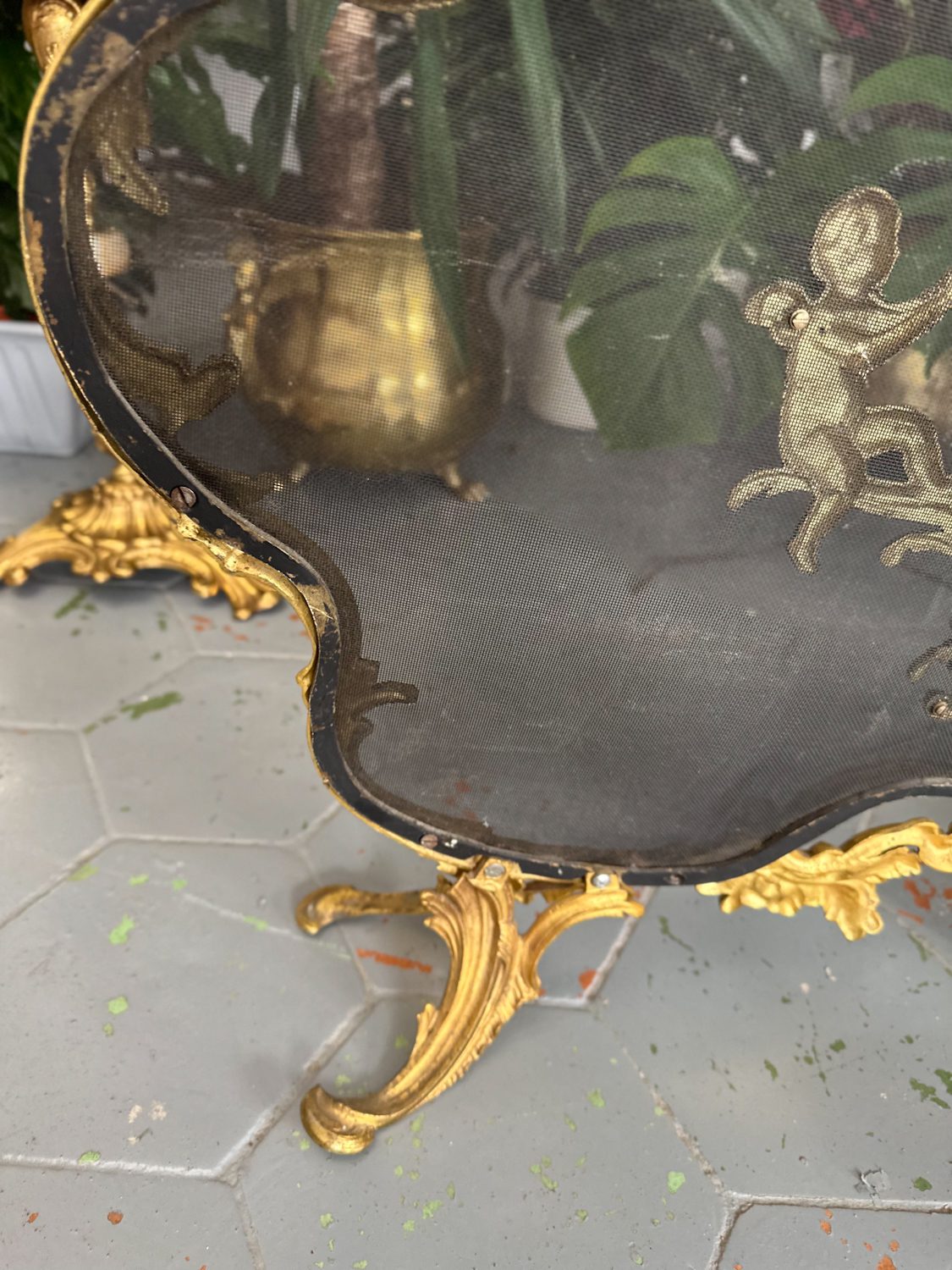
Šis izsmalcinātais kamīna ekrāns (rococo firescreen) ir grezns zeltēta bronzas (ormolu) darbs Luija XV un rokoko garā — pare-feu, kas aizsargā telpu no dzirkstelēm un vienlaikus rotā kamīnu kā patstāvīgs mākslas darbs. Centrā divi spārnoti eņģeļi (ķerubi) rotaļājas ap stilizētu uguns vāzes un liesmu motīvu — viens it kā baro uguni, otrs sniedzas tai pretī, mūžīga rokoko alegorija par uguns valdzinājumu. Tos ietver bagātīgs, izteikti asimetrisks cartouche formas rāmis ar C un S volūtām un akanta lapām, balstīts uz vijīgām rocaille kājām. Aizmugurē — smalks metāla siets, kas laiž cauri uguns siltumu un aiztur dzirksteles.
Augstums 68 cm · platums 68 cm · dziļums 16,5 cm
Izgatavošanas periods, mākslas stils, laikmets. Ekrāns darināts Luija XV stila (style Louis XV) tradīcijā, kuras pamatā ir 18. gadsimta vidus rokoko ar tā asimetriju, gliemežvāka un liesmas motīviem un dabas formu plūdumu. Kamīna ekrāni (pare-feu) bija gan praktiska nepieciešamība, gan greznuma zīme; figurālie putti motīvi tos pacēla mākslas darba līmenī.
Rokoko momentuzņēmums: bronzier Žaks Kafjēri (Jacques Caffieri) pacēla tikko zeltēto rāmi pret darbnīcas logu, lai pārbaudītu, kā rīta gaisma plūst pār akanta volūtām. Viņa skatiens apstājās pie diviem mazajiem ķermeņiem, kas mūžīgi tiecās pretī liesmai. Viņš iztēlojās tos uguns priekšā — kā zeltējums uztvers liesmu atspulgu un mazie spārni šķitīs trīsam. Aiz loga Parīze pamodās, bet šeit, bronzā, jau dega cita, klusāka uguns.
Ražotājs. Bez zīmoga; modelējuma smalkums, putti figūru dzīvīgums un zeltējuma dziļums norāda uz labu franču bronzier darbnīcu rokoko tradīcijā.
Retums un nozīme. Kamīna ekrāni ar figurālām putti (ķerubu) aplikācijām un pilnībā saglabātu zeltējumu mūsdienās ir grūti atrodami — figūras viegli pazūd, un siets bieži bojāts. Mūsu krājumā ir vēl viens līdzīgs rokoko kamīna ekrāns ar eņģeļiem, kas veido skaistu vēsturisku pāri šim.
Pielietojums interjerā, dizainā un fotogrāfijā. Ekrāns kalpo gan funkcionālā kamīnā kā dzirksteļu aizsargs, gan kā dekoratīvs akcents kamīna priekšā arī ārpus apkures sezonas. Tā zeltainais mirdzums un eņģeļu figūras veido krāšņu, fotogēnu detaļu interjera fotogrāfijā.
Dāvana. Iespaidīga dāvana kamīna īpašniekam, antikvariāta cienītājam vai kolekcionāram.
Stāvoklis. Saglabāts zeltējums, bronzas rāmis, putti figūras un siets; iespējamas zeltējuma nodiluma vietas, sieta patina vai sīki retušējumi, kas atbilst vecumam un funkcijai. Lietas stāvoklis pilnībā atspoguļots fotogrāfijās.
🇷🇺 Каминный экран из золочёной бронзы с ангелами (херувимами) и мотивом огня — стиль Людовика XV / рококо, Франция
Этот изысканный каминный экран (rococo firescreen) — роскошная работа из золочёной бронзы (ormolu) в духе Людовика XV и рококо — pare-feu, защищающий комнату от искр и одновременно украшающий камин как самостоятельное произведение искусства. В центре два крылатых ангела (херувима) играют вокруг стилизованного мотива пылающей вазы и языков пламени — один словно питает огонь, другой тянется к нему, вечная аллегория рококо о притягательности огня. Их обрамляет богатая, подчёркнуто асимметричная рама в форме cartouche с волютами C и S и листьями аканта, опирающаяся на вьющиеся ножки rocaille. Сзади — тонкая металлическая сетка, пропускающая тепло огня и задерживающая искры.
Высота 68 см · ширина 68 см · глубина 16,5 см
Экран выполнен в традиции стиля Людовика XV (style Louis XV), основанного на рококо середины XVIII века с его асимметрией, мотивами раковины и пламени, текучестью природных форм. Каминные экраны (pare-feu) были и практической необходимостью, и знаком роскоши; фигурные мотивы путти поднимали их до уровня произведения искусства.
Снимок рококо: bronzier Жак Каффьери (Jacques Caffieri) поднял только что позолоченную раму к окну мастерской, чтобы проверить, как утренний свет течёт по волютам аканта. Его взгляд остановился на двух маленьких телах, вечно тянущихся к пламени. Он представил их перед огнём — как золочение поймает отблеск пламени, и маленькие крылья будто задрожат. За окном просыпался Париж, но здесь, в бронзе, уже горел иной, более тихий огонь.
Без клейма; тонкость моделировки, живость фигур путти и глубина золочения указывают на хорошую французскую мастерскую bronzier в традиции рококо. Каминные экраны с фигурными аппликациями путти (херувимов) и полностью сохранившимся золочением сегодня встречаются нечасто — фигуры легко теряются, а сетка часто повреждена. В нашей коллекции есть ещё один похожий каминный экран рококо с ангелами, образующий красивую историческую пару этому.
Экран служит как в действующем камине в качестве защиты от искр, так и в качестве декоративного акцента перед камином вне отопительного сезона. Золотистое сияние и фигуры ангелов образуют роскошную, фотогеничную деталь в интерьерной фотографии. Это впечатляющий подарок владельцу камина, ценителю антиквариата или коллекционеру.
Сохранены золочение, бронзовая рама, фигуры путти и сетка; возможны потёртости позолоты, патина сетки или мелкие реставрации, соответствующие возрасту и назначению. Состояние предмета полностью отражено на фотографиях.
🇬🇧 Gilt-Bronze Rococo Firescreen with Cherubs — Louis XV Style, France
This refined rococo firescreen is a sumptuous work of gilt-bronze (ormolu) in the spirit of Louis XV and the rococo — a pare-feu that guards the room from sparks while adorning the hearth as a work of art in its own right. At the centre two winged angels (cherubs) play around a stylised flaming-urn and flame motif — one as if feeding the fire, the other reaching towards it, an eternal rococo allegory of the lure of fire. They are framed by a rich, markedly asymmetrical cartouche-shaped border of C- and S-volutes and acanthus leaves, resting on scrolling rocaille feet. Behind is a fine metal mesh that lets the warmth of the fire pass while holding back the sparks, the mark of a true rococo firescreen.
Height 68 cm · width 68 cm · depth 16.5 cm
The screen is made in the tradition of the Louis XV style (style Louis XV), rooted in the mid-18th-century rococo with its asymmetry, shell and flame motifs and the flow of natural forms. Fire screens (pare-feu) were both a practical necessity and a mark of luxury; figural putti motifs raised them to the level of a work of art. Unmarked, the fineness of the modelling, the liveliness of the putti figures and the depth of the gilding point to a good French bronzier workshop in the rococo tradition.
Rococo snapshot: the bronzier Jacques Caffieri (Jacques Caffieri) raised the freshly gilded frame to the workshop window to see how the morning light ran over the acanthus volutes. His gaze settled on the two small bodies forever reaching towards the flame. He imagined them before a fire — how the gilding would catch the flicker of the flames, and the small wings would seem to tremble. Beyond the window Paris was waking, but here, in the bronze, another, quieter fire was already burning.
A fire screen with figural putti (cherub) appliqués and its gilding fully preserved is not easily found today, as the figures are easily lost and the mesh often damaged. Our collection holds a second, similar rococo fire screen with angels, which forms a beautiful historical pair to this one. The screen serves both in a working fireplace as a spark guard and as a decorative accent before the hearth outside the heating season. Its golden glow and angel figures form a rich, photogenic detail in interior photography, and make an impressive gift for the fireplace owner, the lover of antiques or the collector. The gilding, bronze frame, putti figures and mesh are preserved; gilding wear, mesh patina or minor restorations consistent with age and function are possible. The condition is fully reflected in the photographs.
🇩🇪 Kaminschirm aus vergoldeter Bronze mit Engeln (Cherubim) und Feuermotiv — Louis-XV-/Rokoko-Stil, Frankreich
Dieser erlesene Kaminschirm (rococo firescreen) ist eine prächtige Arbeit aus vergoldeter Bronze (ormolu) im Geist von Louis XV und des Rokoko — ein pare-feu, das den Raum vor Funken schützt und zugleich den Kamin als eigenständiges Kunstwerk ziert. In der Mitte spielen zwei geflügelte Engel (Cherubim) um ein stilisiertes Motiv aus flammender Vase und Feuerzungen — der eine, als nähre er das Feuer, der andere, der sich danach streckt, eine ewige Rokoko-Allegorie auf die Verlockung des Feuers. Sie werden von einem reichen, betont asymmetrischen Cartouche-Rahmen aus C- und S-Voluten und Akanthusblättern umrahmt, ruhend auf geschwungenen Rocaille-Füßen. Dahinter ein feines Metallgitter, das die Wärme des Feuers durchlässt und die Funken zurückhält.
Höhe 68 cm · Breite 68 cm · Tiefe 16,5 cm
Der Schirm entstand in der Tradition des Louis-XV-Stils (style Louis XV), der im Rokoko der Mitte des 18. Jahrhunderts wurzelt — mit seiner Asymmetrie, den Muschel- und Flammenmotiven und dem Fluss der Naturformen. Kaminschirme (pare-feu) waren zugleich praktische Notwendigkeit und Zeichen des Luxus; figürliche Putti-Motive hoben sie auf die Ebene eines Kunstwerks. Ohne Marke; die Feinheit der Modellierung, die Lebendigkeit der Putti-Figuren und die Tiefe der Vergoldung deuten auf eine gute französische bronzier-Werkstatt in der Rokoko-Tradition.
Rokoko-Momentaufnahme: der bronzier Jacques Caffieri (Jacques Caffieri) hob den frisch vergoldeten Rahmen ans Werkstattfenster, um zu sehen, wie das Morgenlicht über die Akanthusvoluten floss. Sein Blick verweilte auf den beiden kleinen Körpern, die sich ewig der Flamme entgegenstreckten. Er stellte sie sich vor einem Feuer vor — wie die Vergoldung das Flackern der Flammen einfangen und die kleinen Flügel zu zittern scheinen würden. Vor dem Fenster erwachte Paris, doch hier, in der Bronze, brannte schon ein anderes, stilleres Feuer.
Ein Kaminschirm mit figürlichen Putti- (Cherub-) Applikationen und vollständig erhaltener Vergoldung ist heute schwer zu finden, da die Figuren leicht verloren gehen und das Gitter oft beschädigt ist. Unsere Sammlung birgt einen zweiten, ähnlichen Rokoko-Kaminschirm mit Engeln, der ein schönes historisches Paar zu diesem bildet. Der Schirm dient sowohl im funktionierenden Kamin als Funkenschutz als auch als dekorativer Akzent vor dem Herd außerhalb der Heizsaison. Sein goldener Schimmer und die Engelsfiguren bilden ein reiches, fotogenes Detail in der Interieurfotografie. Ein eindrucksvolles Geschenk für den Kaminbesitzer, den Liebhaber von Antiquitäten oder den Sammler. Vergoldung, Bronzerahmen, Putti-Figuren und Gitter sind erhalten; Vergoldungsabrieb, Gitterpatina oder kleine Restaurierungen entsprechend Alter und Funktion sind möglich. Der Zustand ist in den Fotografien vollständig wiedergegeben.
🇫🇷 Pare-feu en bronze doré aux anges (chérubins) et au motif de feu — style Louis XV / rococo, France
Ce raffiné pare-feu (rococo firescreen) est une somptueuse œuvre en bronze doré (ormolu) dans l’esprit de Louis XV et du rococo — un pare-feu qui protège la pièce des étincelles tout en ornant la cheminée comme une œuvre d’art à part entière. Au centre, deux anges (chérubins) ailés jouent autour d’un motif stylisé de vase enflammé et de langues de feu — l’un comme s’il nourrissait le feu, l’autre se tendant vers lui, éternelle allégorie rococo de l’attrait du feu. Ils sont encadrés par une riche bordure en forme de cartouche, nettement asymétrique, de volutes en C et en S et de feuilles d’acanthe, reposant sur des pieds rocaille enroulés. À l’arrière, une fine maille métallique laisse passer la chaleur du feu tout en retenant les étincelles.
Hauteur 68 cm · largeur 68 cm · profondeur 16,5 cm
Le pare-feu est réalisé dans la tradition du style Louis XV (style Louis XV), enracinée dans le rococo du milieu du XVIIIᵉ siècle, avec son asymétrie, ses motifs de coquille et de flamme et la fluidité des formes naturelles. Les pare-feu étaient à la fois une nécessité pratique et un signe de luxe ; les motifs figuratifs de putti les élevaient au rang d’œuvre d’art. Sans estampille, la finesse de la modélisation, la vivacité des figures de putti et la profondeur de la dorure désignent un bon atelier de bronzier français dans la tradition rococo.
Instantané rococo : le bronzier Jacques Caffieri (Jacques Caffieri) leva le cadre fraîchement doré vers la fenêtre de l’atelier pour voir comment la lumière du matin coulait sur les volutes d’acanthe. Son regard s’arrêta sur les deux petits corps tendus à jamais vers la flamme. Il les imagina devant un feu — comment la dorure capterait le vacillement des flammes, et les petites ailes sembleraient trembler. Au-delà de la fenêtre, Paris s’éveillait, mais ici, dans le bronze, brûlait déjà un autre feu, plus silencieux.
Un pare-feu aux appliques figuratives de putti (chérubins) et à la dorure entièrement conservée est aujourd’hui difficile à trouver, car les figures se perdent aisément et la maille est souvent endommagée. Notre collection conserve un second pare-feu rococo similaire aux anges, qui forme un beau pendant historique à celui-ci. Le pare-feu sert aussi bien dans une cheminée en fonction comme protection contre les étincelles que comme accent décoratif devant l’âtre hors saison de chauffe. Sa lueur dorée et ses figures d’anges forment un détail riche et photogénique en photographie d’intérieur. Un cadeau impressionnant pour le propriétaire d’une cheminée, l’amateur d’antiquités ou le collectionneur. La dorure, le cadre de bronze, les figures de putti et la maille sont conservés ; usure de la dorure, patine de la maille ou petites restaurations conformes à l’âge et à la fonction sont possibles. L’état est entièrement reflété dans les photographies.