
Japāņu Litofānijas Geišas Tējas Servīze — Zila ar Zeltu, Celtņi, 20. gs. sākums (6729)
Japāņu Litofānijas Geišas Tējas Servīze — Zila ar Zeltu, Celtņi, 20. gs. sākums (6729)
€550.00
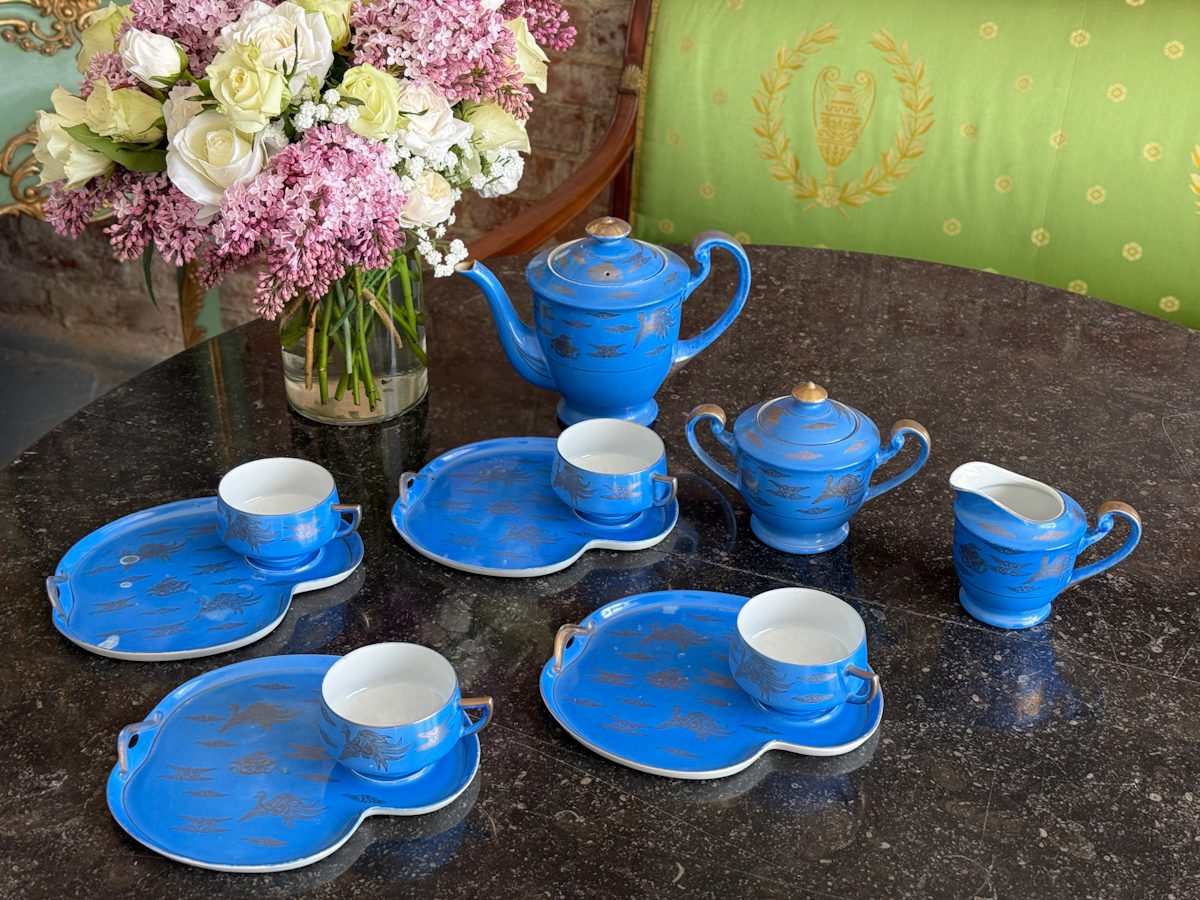
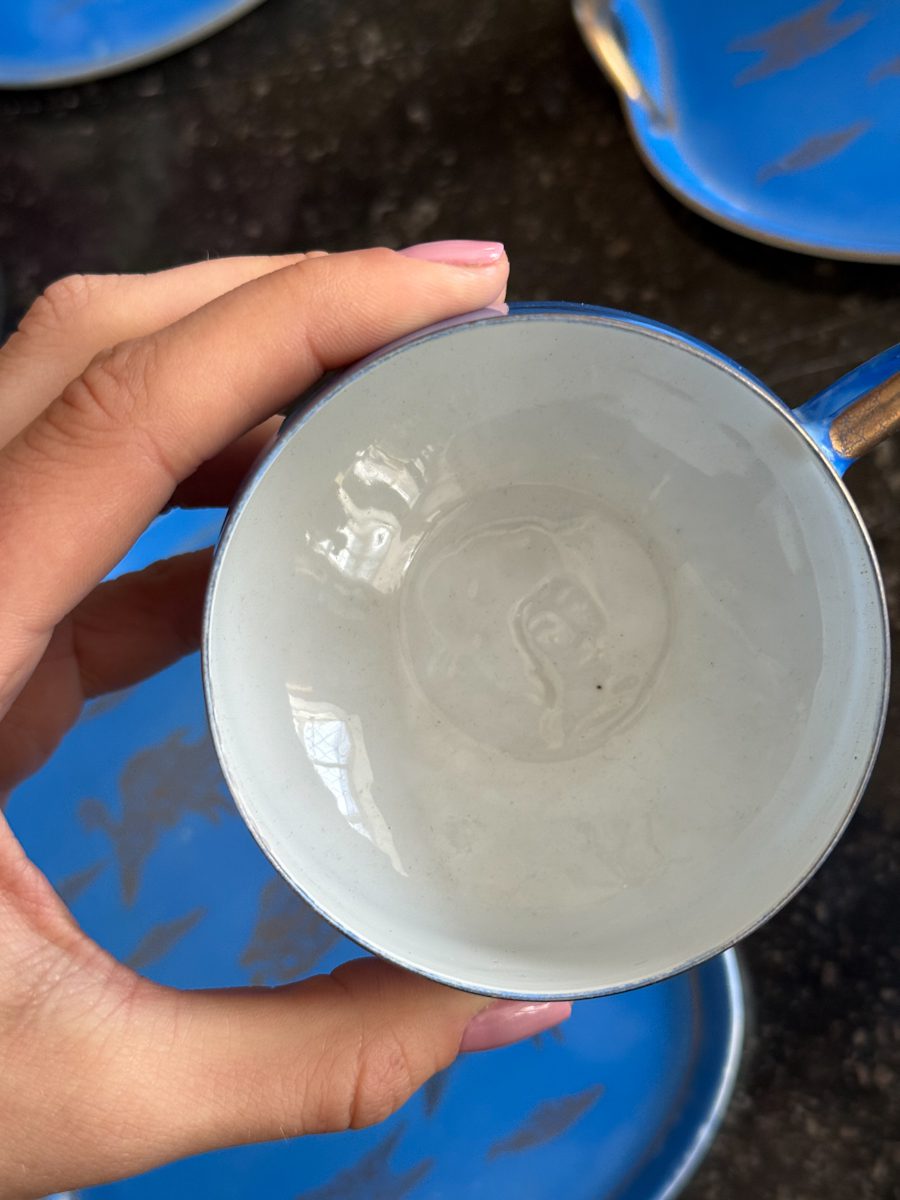
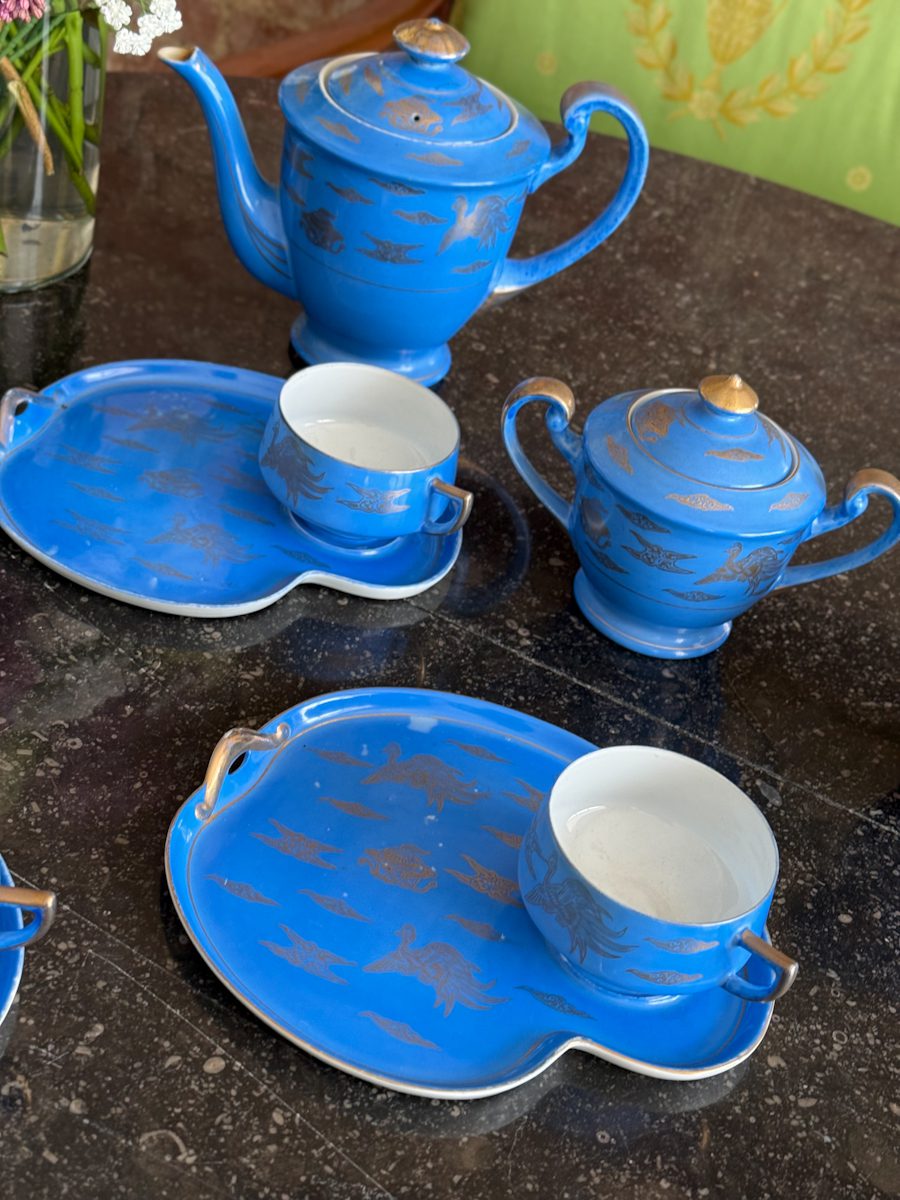
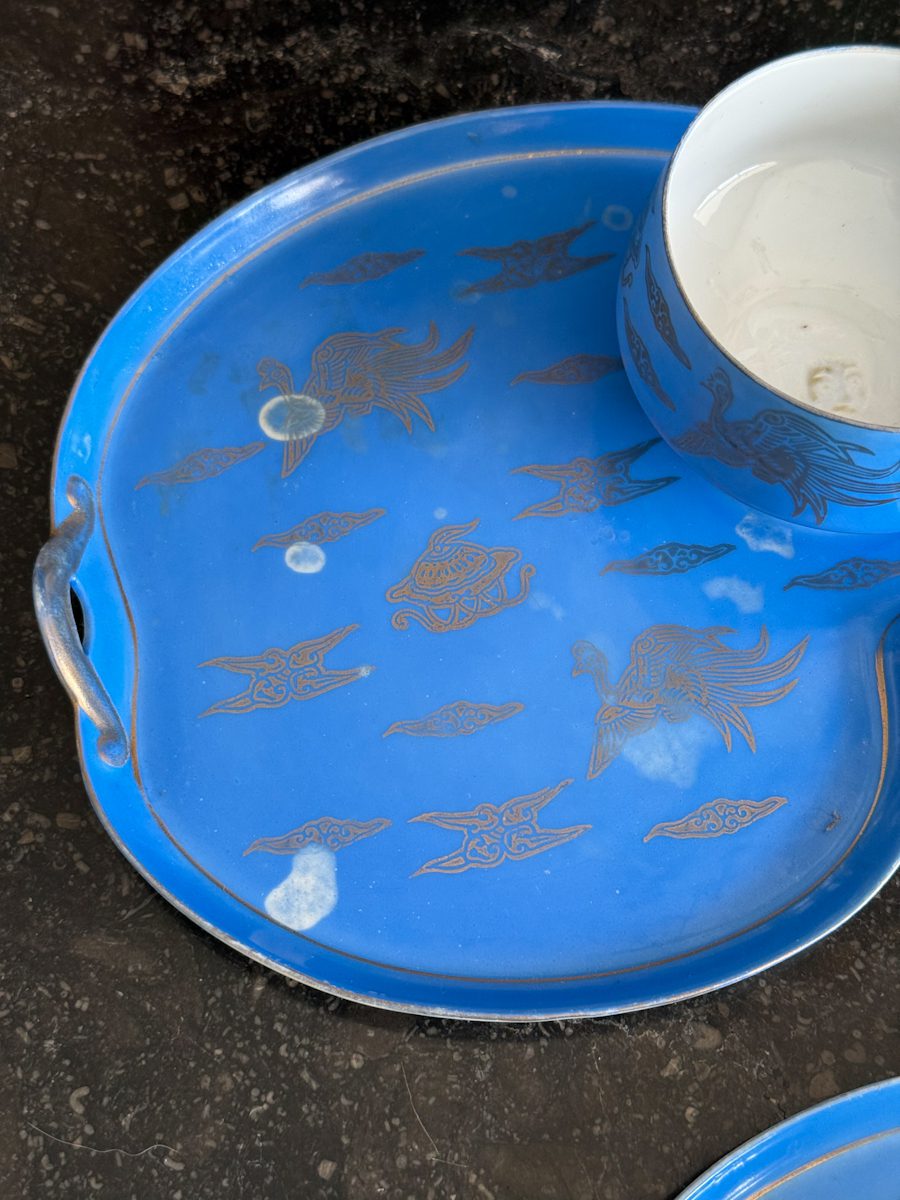
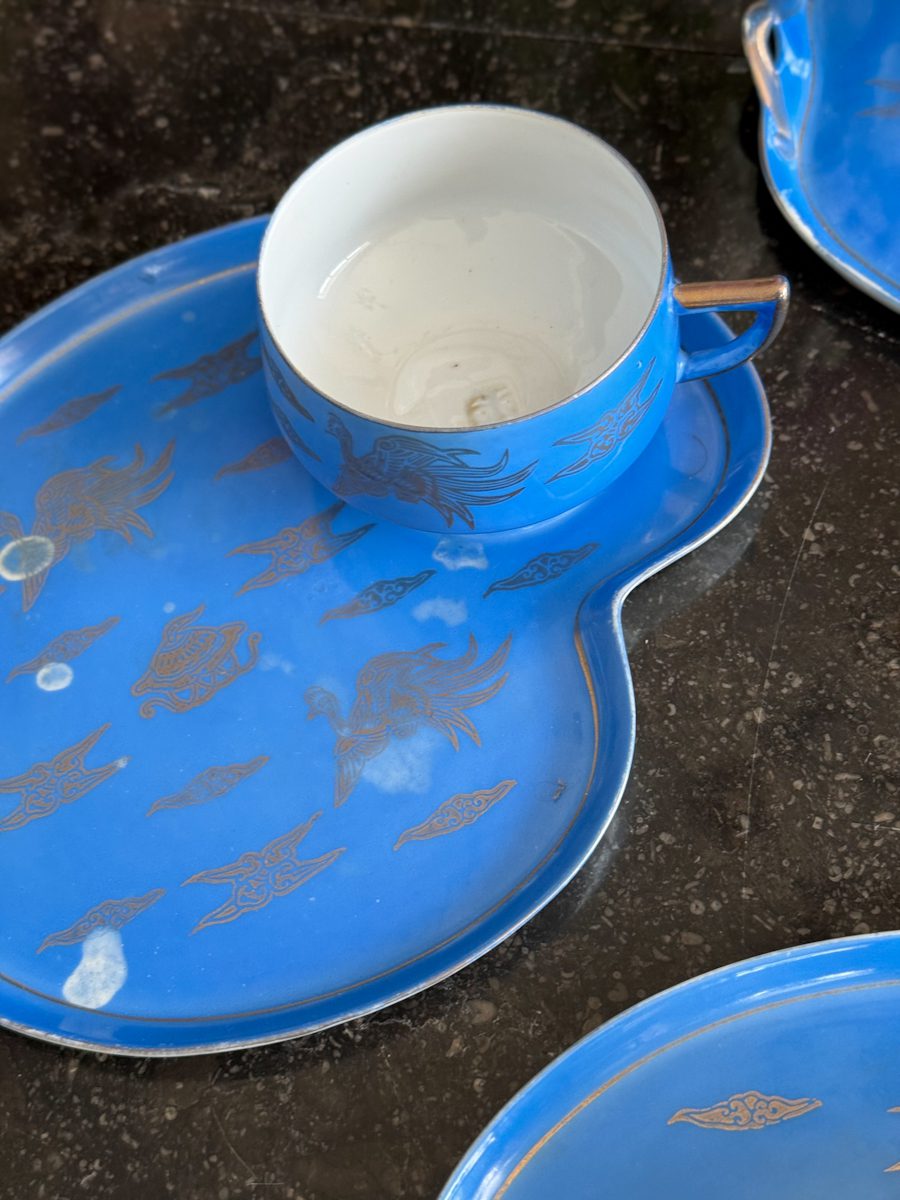
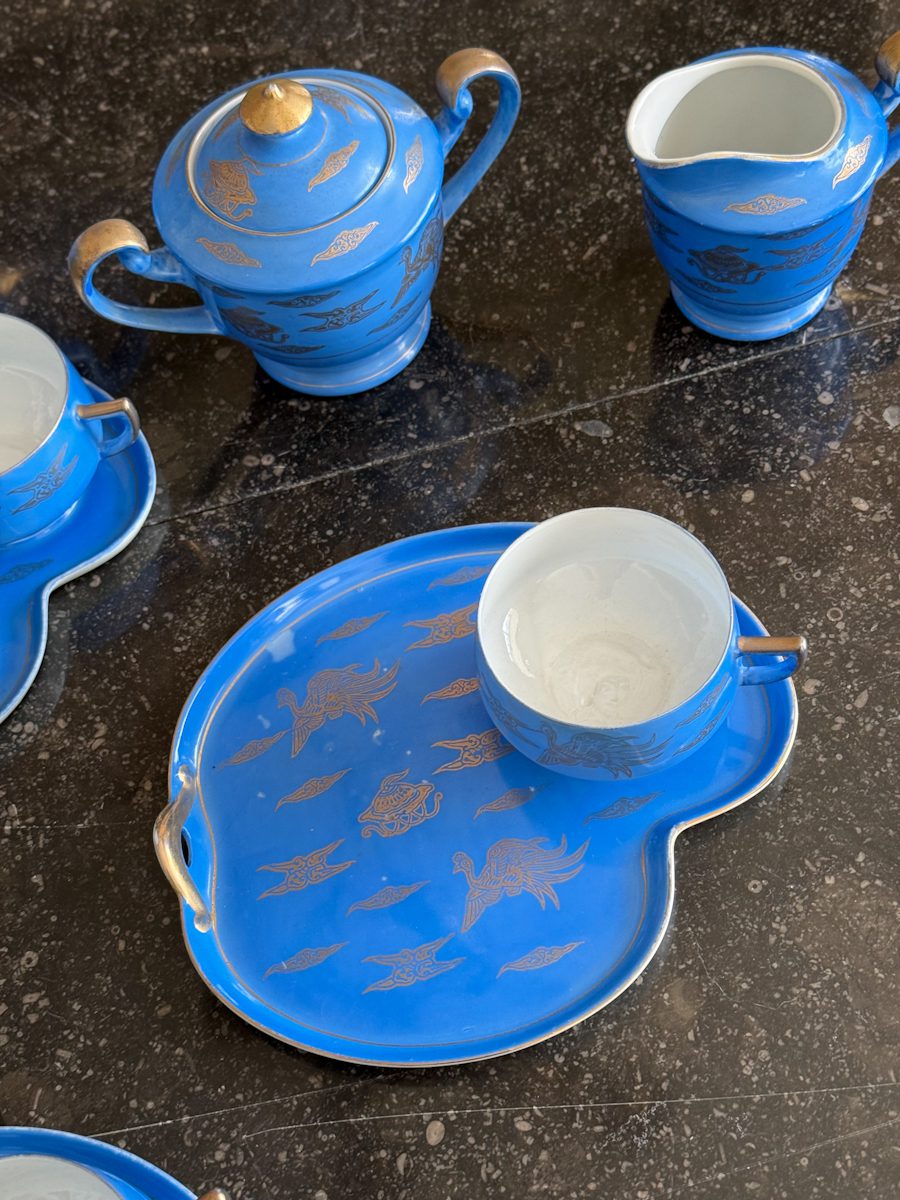
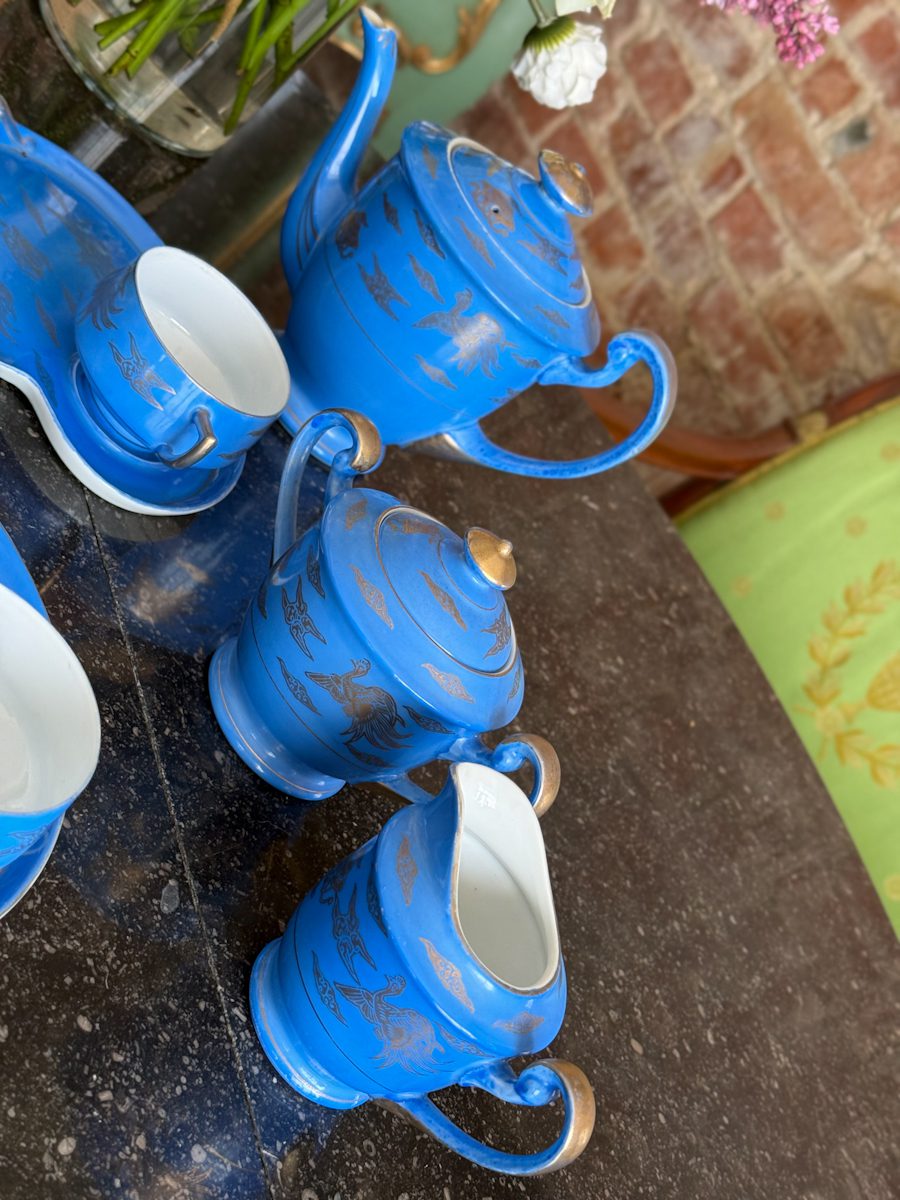
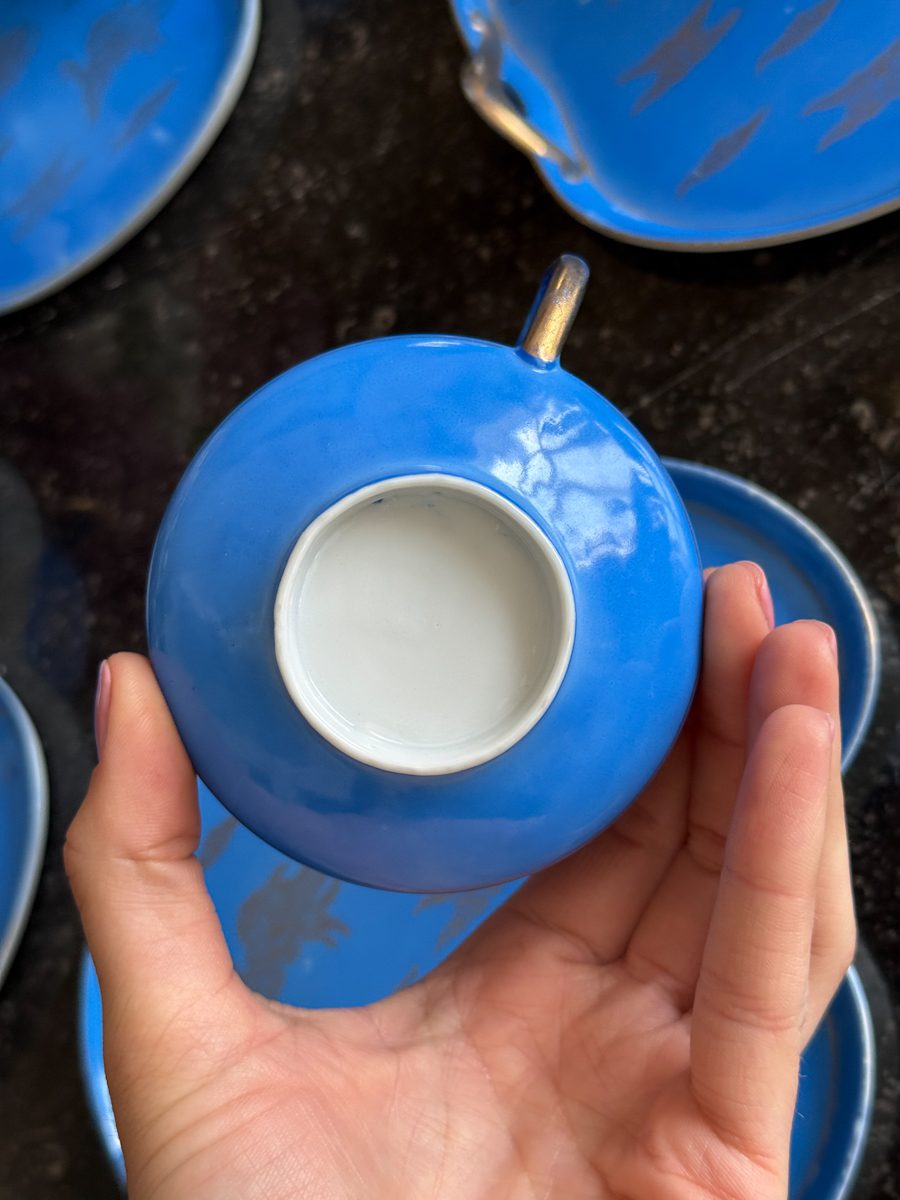
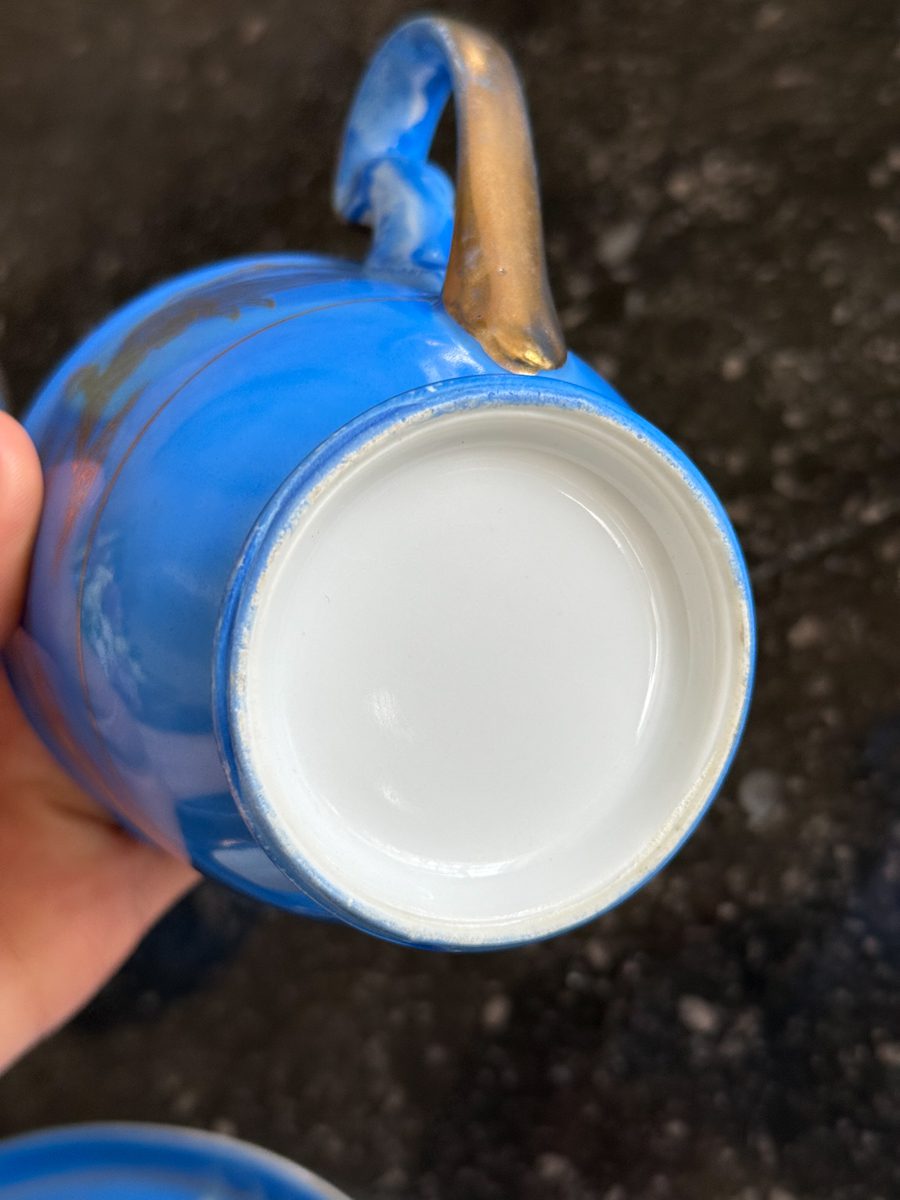
Japāņu eksporta porcelāna tējas servīze 4 personām — koši zila ar zelta celtņiem, krūžu dibenā apslēpts geišas portrets (litofānija), redzams pret gaismu. 20. gs. sākums. Tējkanna, cukurtrauks, krējuma kanna, 4 tases, 4 apakštrauki. Cena par komplektu.
🇱🇻 Lithophane Tea Set – Japāņu Litofānijas Geišas Tējas Servīze — Zila ar Zeltu, Celtņu Motīvs, 20. gs. sākums (6729)
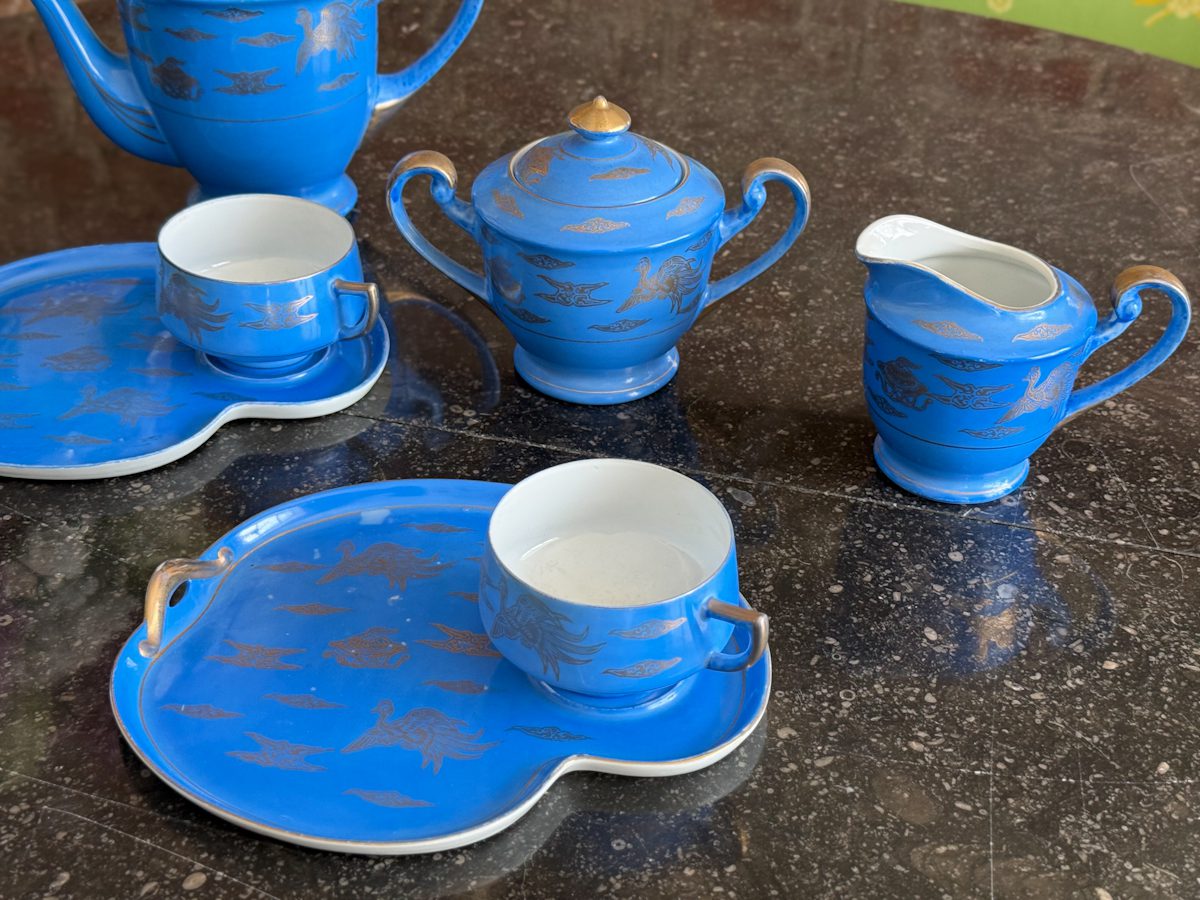
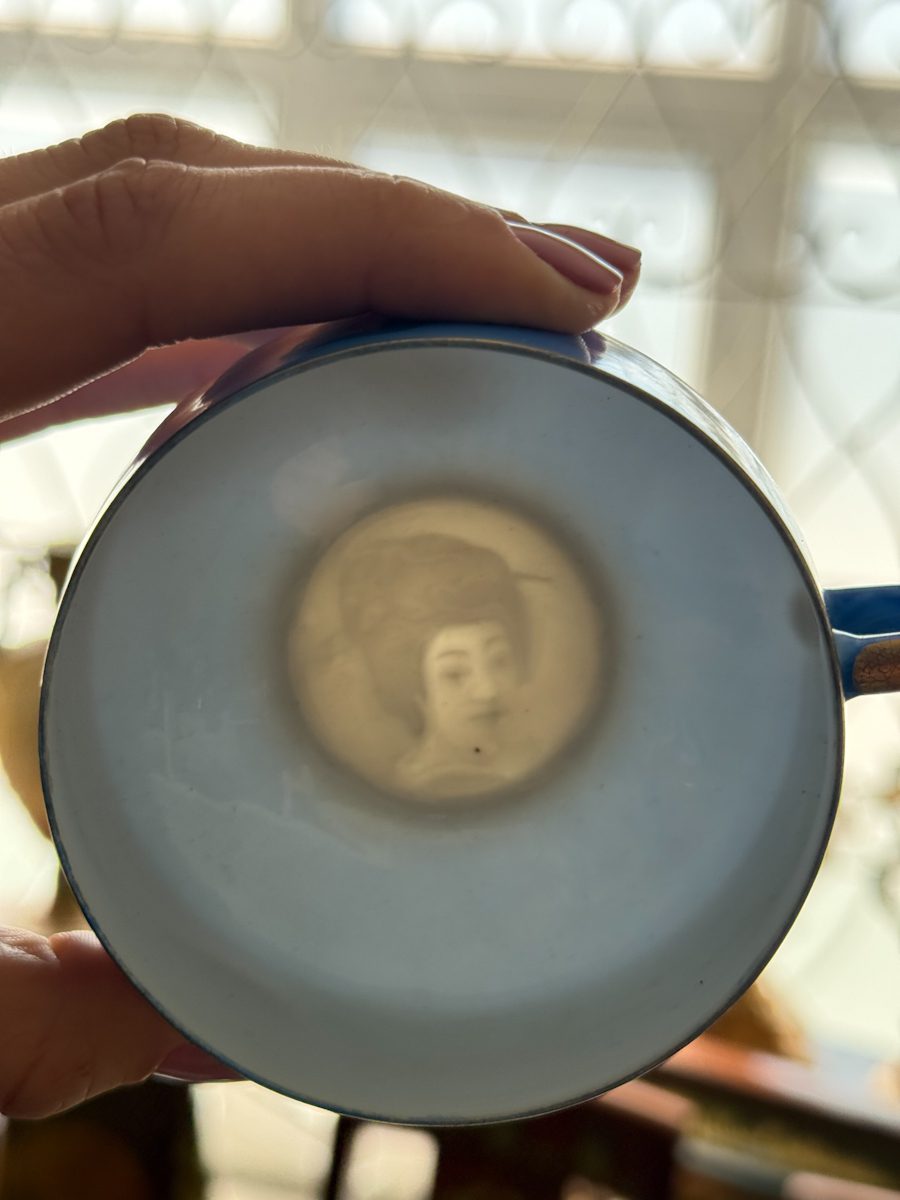
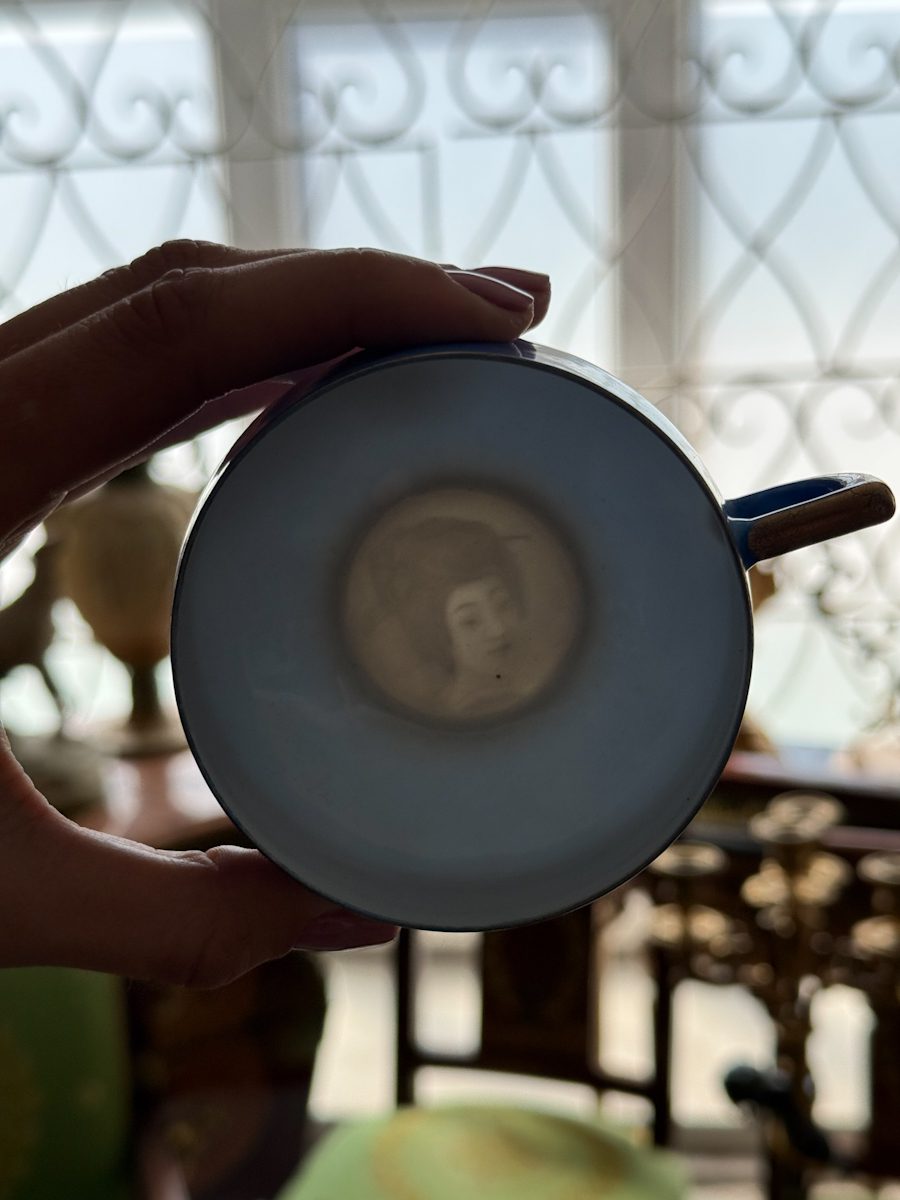
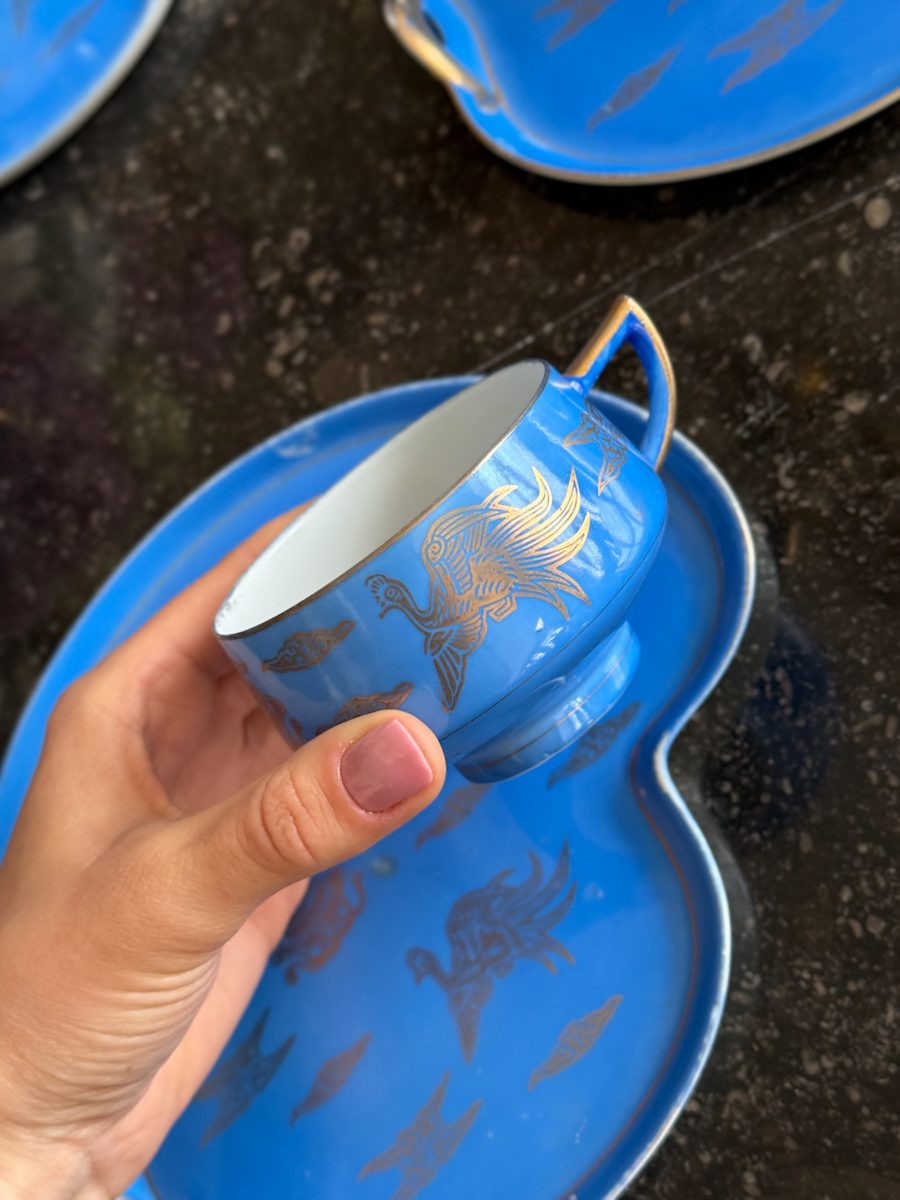
Šī izsmalcinātā japāņu litofānijas tējas servīze (lithophane tea set) glabā apslēptu noslēpumu: koši zilā glazūrā ar zeltā apgleznotiem lidojošiem celtņiem un stilizētiem mākoņiem, bet katras tases dibenā — geišas portrets, kas kļūst redzams tikai tad, kad tasi paceļ pret gaismu. Šis ir litofānijas (lithophane) efekts, japāņu eksporta porcelāna meistarības augstākais paņēmiens, ko Rietumu kolekcionāri īpaši augstu vērtē.
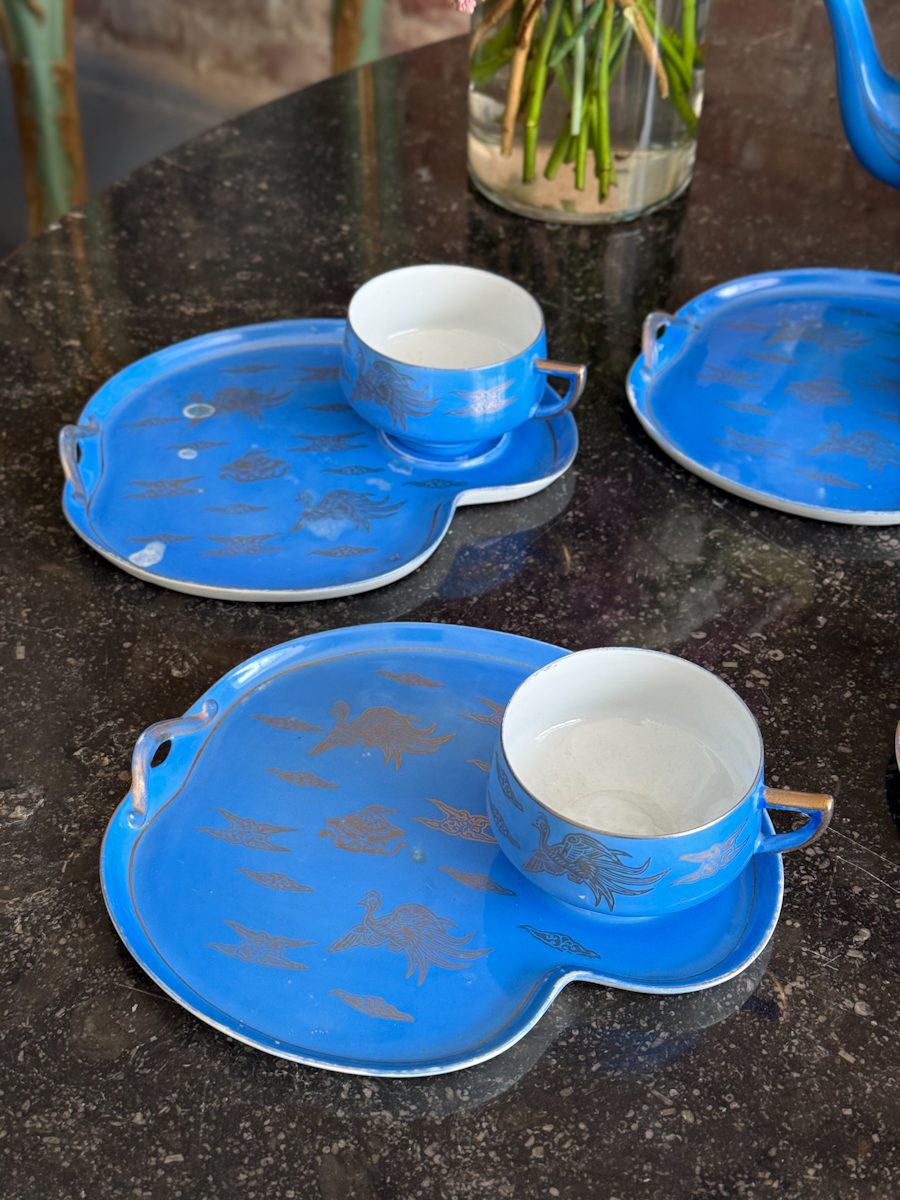
Komplektā: tējkanna, cukurtrauks ar vāku, krējuma kanniņa, 4 tases un 4 figūrveida apakštrauki (servīze 4 personām). Tējkannas augstums ~16 cm. Cena norādīta par visu komplektu.
Izgatavošanas periods un mākslas stils Servīze datējama ar 20. gadsimta sākumu (aptuveni 1920.–1940. gadi), Japānu — tā saukto eggshell jeb plānsienu eksporta porcelāna laikmetu. Tas ir periods, kad japāņu manufaktūras (Noritake, Kutani un citas) ražoja porcelānu īpaši Eiropas un Amerikas tirgum, apvienojot tradicionālos austrumu motīvus — celtni kā ilgmūžības un laimes simbolu — ar rietumnieciskām formām un litofānijas tehnisko brīnumu. Koši zilais fons ar zelta apgleznojumu ir tipisks šī laikmeta eksporta porcelāna paraugs.
🇱🇻 20. gadsimta momentuzņēmums: Lafkadio Hērns (Lafkadio Hearn) pacēla tasi pret papīra loga gaismu kādā Macues namā, un tējas tvaiks vēl virmoja gaisā. Sākumā — tikai zilums un zelts. Tad, gaismai izlaužoties cauri plānajai sienai, dibenā lēni izgaismojās sieviete, kuras nebija bijis ne mirkli iepriekš. Viņš nekustējās. Japāna, viņš saprata, nekad nerāda visu uzreiz — vissvarīgākais vienmēr paliek paslēpts, līdz tu iemācies skatīties pret gaismu.
Ražotājs un zīmogs Servīze ir japāņu eksporta porcelāns; tases dibenā redzams litofānijas portrets, kas norāda uz kvalitatīvu plānsienu izpildījumu. Pamatnē var būt ražotāja zīmogs (sarkans, zaļš vai zelts “Made in Japan” vai manufaktūras marka) — lūdzu, pārbaudi trauku pamatnes, jo zīmols (piem., Noritake) krasi ietekmē vērtību.
Retums un nozīme Pilnas litofānijas servīzes, kas saglabājušās bez iztrūkumiem un ar visiem apakštraukiem, ir patiesi grūti atrodamas — tases ir trauslas, un komplekti gadu desmitos parasti tiek izjaukti. Apslēptais geišas portrets katrā tasē padara šo servīzi par kolekcionāru objektu, ne tikai par lietišķu trauku.
Pielietojums interjerā, dizainā un fotogrāfijā Lieliska kā kolekcijas priekšmets vitrīnā, kā svētku galda akcents vai kā sarunu izraisošs eksponāts. Koši zilā krāsa ar zeltu efektīgi izceļas gaišā interjerā un ir pateicīgs objekts fotografēšanai — īpaši tase pret gaismu, kad parādās geišas seja.
Dāvana Neaizmirstama dāvana tējas kultūras, japāņu mākslas vai porcelāna cienītājam — priekšmets ar apslēptu pārsteigumu.
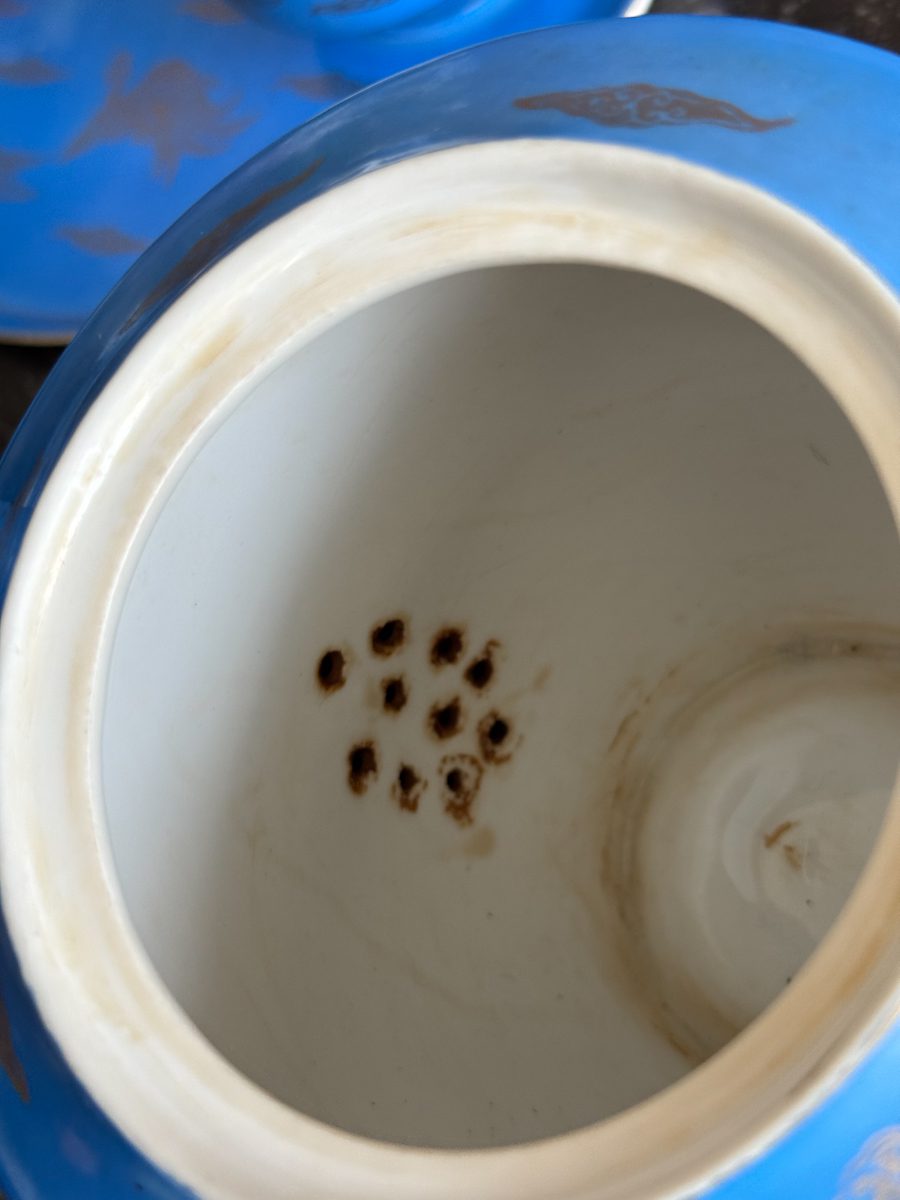
Stāvoklis Vecumam atbilstošā stāvoklī. Zelta apgleznojumam vietām redzams dabīgs nodilums (īpaši uz apakštrauku virsmām un malām), kā gaidāms lietotam eksporta porcelānam; iespējami sīki glazūras defekti. Litofānijas portreti tasēs saglabājušies labi. Lietas stāvoklis pilnībā atspoguļots fotogrāfijās.
🇷🇺 Японский литофанный чайный сервиз с гейшей — голубой с золотом, мотив журавлей, начало XX века (6729)
Этот изысканный японский литофанный чайный сервиз хранит скрытую тайну: яркая голубая глазурь с золотой росписью летящих журавлей и стилизованных облаков, а на дне каждой чашки — портрет гейши, который становится виден лишь тогда, когда чашку поднимают к свету. Это эффект литофании (lithophane), высший приём мастерства японского экспортного фарфора, который западные коллекционеры ценят особенно высоко.
В комплекте: чайник, сахарница с крышкой, молочник, 4 чашки и 4 фигурных блюдца (сервиз на 4 персоны). Высота чайника ~16 см. Цена указана за весь комплект.
Сервиз датируется началом XX века (примерно 1920–1940-е годы), Япония — эпоха так называемого тонкостенного фарфора eggshell на экспорт. Это период, когда японские мануфактуры (Noritake, Kutani и другие) производили фарфор специально для европейского и американского рынка, сочетая традиционные восточные мотивы — журавля как символ долголетия и счастья — с западными формами и техническим чудом литофании. Яркий голубой фон с золотой росписью — типичный образец экспортного фарфора этой эпохи.
🇷🇺 Снимок эпохи начала XX века: Лафкадио Хирн (Lafcadio Hearn) поднял чашку к свету бумажного окна в доме в Мацуэ, и пар от чая ещё витал в воздухе. Сначала — лишь синева и золото. Затем, когда свет пробился сквозь тонкую стенку, на дне медленно проступила женщина, которой не было ни мгновением раньше. Он не шевельнулся. Япония, понял он, никогда не показывает всё сразу — самое важное всегда остаётся скрытым, пока не научишься смотреть на свет.
Сервиз представляет собой японский экспортный фарфор; на дне чашек виден литофанный портрет, что указывает на качественное тонкостенное исполнение. На основании может быть клеймо производителя (красное, зелёное или золотое «Made in Japan» или марка мануфактуры) — рекомендуем проверить донышки предметов, поскольку бренд (например, Noritake) сильно влияет на ценность.
Полные литофанные сервизы, сохранившиеся без утрат и со всеми блюдцами, по-настоящему трудно найти — чашки хрупки, а комплекты за десятилетия обычно разрознены. Скрытый портрет гейши в каждой чашке делает этот сервиз предметом коллекционирования, а не просто посудой. Прекрасен как предмет коллекции в витрине, как акцент праздничного стола или как экспонат, вызывающий разговоры. Яркий голубой цвет с золотом эффектно выделяется в светлом интерьере и благодарен для фотографии — особенно чашка на свету, когда проступает лицо гейши. Незабываемый подарок ценителю чайной культуры, японского искусства или фарфора — предмет со скрытым сюрпризом.
Состояние соответствует возрасту. На золотой росписи местами заметен естественный износ (особенно на поверхностях и краях блюдец), что ожидаемо для использовавшегося экспортного фарфора; возможны мелкие дефекты глазури. Литофанные портреты в чашках сохранились хорошо. Состояние предмета полностью отражено на фотографиях.
🇬🇧 Antique Japanese Lithophane Tea Set with Geisha — Blue and Gold Crane Motif, Early 20th Century (6729)
This exquisite Japanese lithophane tea set keeps a hidden secret: a brilliant blue glaze painted in gold with flying cranes and stylised clouds, while at the bottom of each cup lies the portrait of a geisha, visible only when the cup is lifted to the light. This is the lithophane effect, the highest mark of Japanese export-porcelain craftsmanship, especially prized by Western collectors.
The set includes: a teapot, a lidded sugar bowl, a creamer, 4 cups and 4 shaped saucers (a service for 4). Teapot height ~16 cm. Price is for the complete set.
This lithophane tea set dates to the early 20th century (around the 1920s–1940s), Japan — the era of so-called eggshell, thin-walled export porcelain. It is the period when Japanese manufactories (Noritake, Kutani and others) produced porcelain specifically for the European and American market, combining traditional Eastern motifs — the crane as a symbol of longevity and happiness — with Western forms and the technical marvel of the lithophane. The brilliant blue ground with gold painting is a typical example of export porcelain of this age.
🇬🇧 Early 20th-century snapshot: Lafcadio Hearn (Lafcadio Hearn) lifted a cup toward the light of a paper window in a house in Matsue, the steam of the tea still drifting in the air. At first — only blue and gold. Then, as the light broke through the thin wall, a woman slowly emerged at the bottom, who had not been there a moment before. He did not move. Japan, he understood, never shows everything at once — the most important thing always stays hidden, until you learn to look toward the light.
The pieces of this Japanese lithophane tea set are export porcelain; the lithophane portrait visible at the bottom of each cup points to a fine thin-walled execution. A maker’s mark may be present on the base (a red, green or gold “Made in Japan” or a manufactory mark), so we recommend checking the undersides, as the brand (for example Noritake) strongly affects value. Complete lithophane sets surviving without losses and with all their saucers are genuinely hard to find — the cups are fragile, and sets are usually broken up over the decades. The hidden geisha portrait in each cup makes this a collector’s piece rather than mere tableware. It is wonderful as a collection piece in a display cabinet, as an accent on a festive table, or as a conversation-starting exhibit. The brilliant blue and gold stands out beautifully in a light interior and is a rewarding subject for photography — especially a cup held to the light, when the geisha’s face appears. An unforgettable gift for a lover of tea culture, Japanese art or porcelain.
Condition is consistent with age. The gold painting shows natural wear in places (especially on the surfaces and edges of the saucers), as expected of used export porcelain; minor glaze flaws are possible. The lithophane portraits in the cups are well preserved. The condition of the item is fully reflected in the photographs.
🇩🇪 Japanisches Lithophanie-Teeservice mit Geisha — Blau mit Gold, Kranichmotiv, frühes 20. Jahrhundert (6729)
Dieses erlesene japanische Lithophanie-Teeservice birgt ein verborgenes Geheimnis: eine leuchtend blaue Glasur, in Gold mit fliegenden Kranichen und stilisierten Wolken bemalt, während am Boden jeder Tasse das Bildnis einer Geisha liegt, das erst sichtbar wird, wenn man die Tasse zum Licht hebt. Dies ist der Lithophanie-Effekt (lithophane), das höchste Zeichen japanischer Exportporzellan-Kunst, von westlichen Sammlern besonders geschätzt.
Im Set enthalten: eine Teekanne, eine Zuckerdose mit Deckel, ein Milchkännchen, 4 Tassen und 4 geformte Untertassen (ein Service für 4). Höhe der Teekanne ~16 cm. Der Preis gilt für das komplette Set.
Das Service datiert ins frühe 20. Jahrhundert (etwa 1920er–1940er Jahre), Japan — die Ära des sogenannten Eggshell-, dünnwandigen Exportporzellans. Es ist die Zeit, in der japanische Manufakturen (Noritake, Kutani und andere) Porzellan eigens für den europäischen und amerikanischen Markt herstellten und dabei traditionelle östliche Motive — den Kranich als Symbol für Langlebigkeit und Glück — mit westlichen Formen und dem technischen Wunder der Lithophanie verbanden. Der leuchtend blaue Grund mit Goldmalerei ist ein typisches Beispiel für Exportporzellan dieser Zeit.
🇩🇪 Momentaufnahme des frühen 20. Jahrhunderts: Lafcadio Hearn (Lafcadio Hearn) hob eine Tasse zum Licht eines Papierfensters in einem Haus in Matsue, der Dampf des Tees schwebte noch in der Luft. Zuerst — nur Blau und Gold. Dann, als das Licht durch die dünne Wand brach, trat am Boden langsam eine Frau hervor, die einen Augenblick zuvor noch nicht da gewesen war. Er rührte sich nicht. Japan, begriff er, zeigt niemals alles auf einmal — das Wichtigste bleibt stets verborgen, bis man lernt, zum Licht zu schauen.
Die Stücke sind Exportporzellan; das am Boden jeder Tasse sichtbare Lithophanie-Bildnis verweist auf eine feine dünnwandige Ausführung. Auf dem Boden kann eine Herstellermarke vorhanden sein (ein rotes, grünes oder goldenes „Made in Japan” oder eine Manufakturmarke), weshalb wir empfehlen, die Unterseiten zu prüfen, da die Marke (zum Beispiel Noritake) den Wert stark beeinflusst. Vollständige Lithophanie-Service, die ohne Verluste und mit allen Untertassen erhalten sind, sind wirklich schwer zu finden — die Tassen sind zerbrechlich, und Service werden über die Jahrzehnte meist auseinandergerissen. Das verborgene Geisha-Bildnis in jeder Tasse macht dies zu einem Sammlerstück und nicht zu bloßem Geschirr. Es ist wunderbar als Sammlungsstück in einer Vitrine, als Akzent auf einer festlichen Tafel oder als gesprächsanregendes Exponat. Das leuchtende Blau mit Gold hebt sich in einem hellen Interieur schön ab und ist ein dankbares Motiv für die Fotografie — besonders eine zum Licht gehaltene Tasse, wenn das Gesicht der Geisha erscheint. Ein unvergessliches Geschenk für Liebhaber der Teekultur, japanischer Kunst oder Porzellans.
Der Zustand entspricht dem Alter. Die Goldmalerei zeigt stellenweise natürliche Abnutzung (besonders auf den Flächen und Rändern der Untertassen), wie bei benutztem Exportporzellan zu erwarten; kleinere Glasurfehler sind möglich. Die Lithophanie-Bildnisse in den Tassen sind gut erhalten. Der Zustand des Objekts ist vollständig auf den Fotografien wiedergegeben.
🇫🇷 Service à thé japonais en lithophanie à la geisha — bleu et or, motif de grues, début du XXe siècle (6729)
Ce raffiné service à thé japonais en lithophanie garde un secret caché : une glaçure d’un bleu éclatant peinte à l’or de grues en vol et de nuages stylisés, tandis qu’au fond de chaque tasse repose le portrait d’une geisha, visible seulement lorsqu’on lève la tasse vers la lumière. C’est l’effet de lithophanie (lithophane), la plus haute marque du savoir-faire du porcelaine d’exportation japonaise, particulièrement prisée des collectionneurs occidentaux.
Le service comprend : une théière, un sucrier couvert, un pot à lait, 4 tasses et 4 sous-tasses de forme (un service pour 4). Hauteur de la théière ~16 cm. Le prix est indiqué pour le service complet.
Le service date du début du XXe siècle (vers les années 1920–1940), Japon — l’ère du porcelaine d’exportation dit eggshell, à parois fines. C’est la période où les manufactures japonaises (Noritake, Kutani et autres) produisaient de la porcelaine spécialement pour le marché européen et américain, alliant les motifs orientaux traditionnels — la grue, symbole de longévité et de bonheur — aux formes occidentales et au prodige technique de la lithophanie. Le fond bleu éclatant à la peinture dorée est un exemple typique du porcelaine d’exportation de cette époque.
🇫🇷 Instantané du début du XXe siècle : Lafcadio Hearn (Lafcadio Hearn) leva une tasse vers la lumière d’une fenêtre de papier dans une maison de Matsue, la vapeur du thé flottant encore dans l’air. D’abord — rien que le bleu et l’or. Puis, lorsque la lumière traversa la mince paroi, une femme apparut lentement au fond, qui n’y était pas un instant plus tôt. Il ne bougea pas. Le Japon, comprit-il, ne montre jamais tout d’un coup — l’essentiel reste toujours caché, jusqu’à ce qu’on apprenne à regarder vers la lumière.
Les pièces sont en porcelaine d’exportation ; le portrait en lithophanie visible au fond de chaque tasse témoigne d’une fine exécution à parois minces. Une marque de fabricant peut figurer sous la base (un « Made in Japan » rouge, vert ou or, ou une marque de manufacture), aussi recommandons-nous d’examiner les dessous, car la marque (par exemple Noritake) influe fortement sur la valeur. Les services en lithophanie complets, conservés sans manques et avec toutes leurs sous-tasses, sont véritablement difficiles à trouver — les tasses sont fragiles et les services se dispersent généralement au fil des décennies. Le portrait caché de la geisha dans chaque tasse en fait une pièce de collection plutôt qu’une simple vaisselle. Il est merveilleux comme pièce de collection en vitrine, comme accent sur une table de fête, ou comme objet propice à la conversation. Le bleu éclatant et l’or se détachent magnifiquement dans un intérieur clair et constituent un sujet gratifiant pour la photographie — surtout une tasse tenue à la lumière, lorsque le visage de la geisha apparaît. Un cadeau inoubliable pour un amateur de culture du thé, d’art japonais ou de porcelaine.
L’état est conforme à l’âge. La peinture dorée présente par endroits une usure naturelle (surtout sur les surfaces et les bords des sous-tasses), comme il est attendu d’une porcelaine d’exportation ayant servi ; de légers défauts de glaçure sont possibles. Les portraits en lithophanie dans les tasses sont bien conservés. L’état de l’objet est entièrement reflété par les photographies.