
Apaļš Galds ar Marmora Virsmu un Lauvas Ķepām — Empire stils, Francija, 19.gs. (649)
Apaļš Galds ar Marmora Virsmu un Lauvas Ķepām — Empire stils, Francija, 19.gs. (649)
€650.00
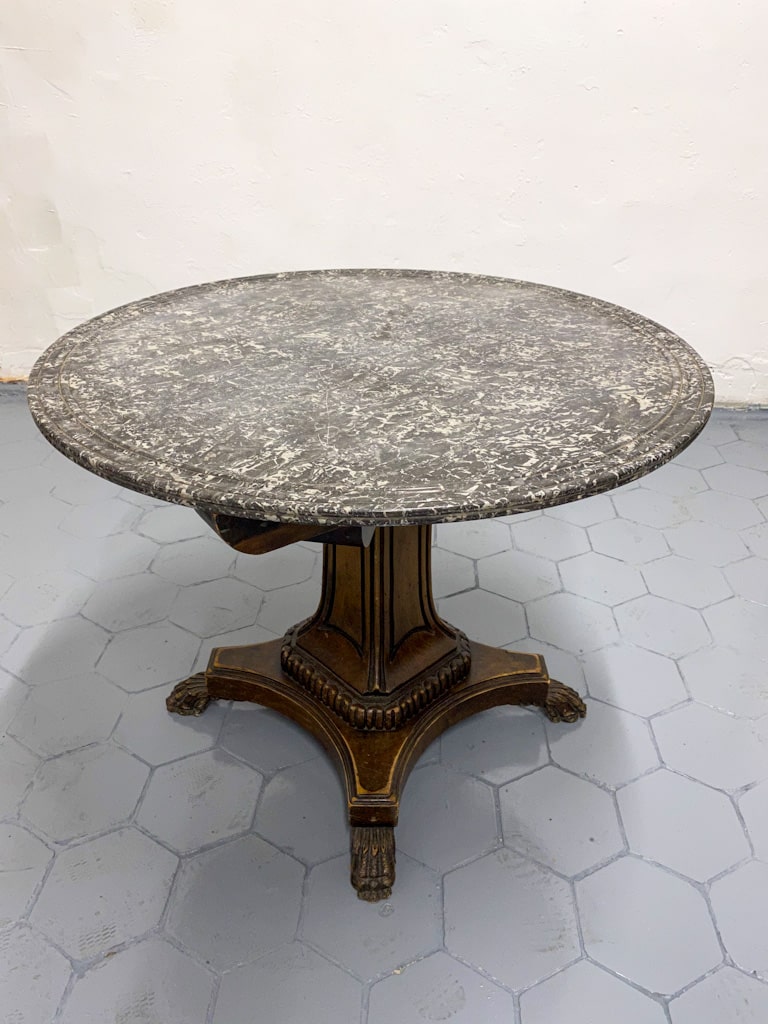
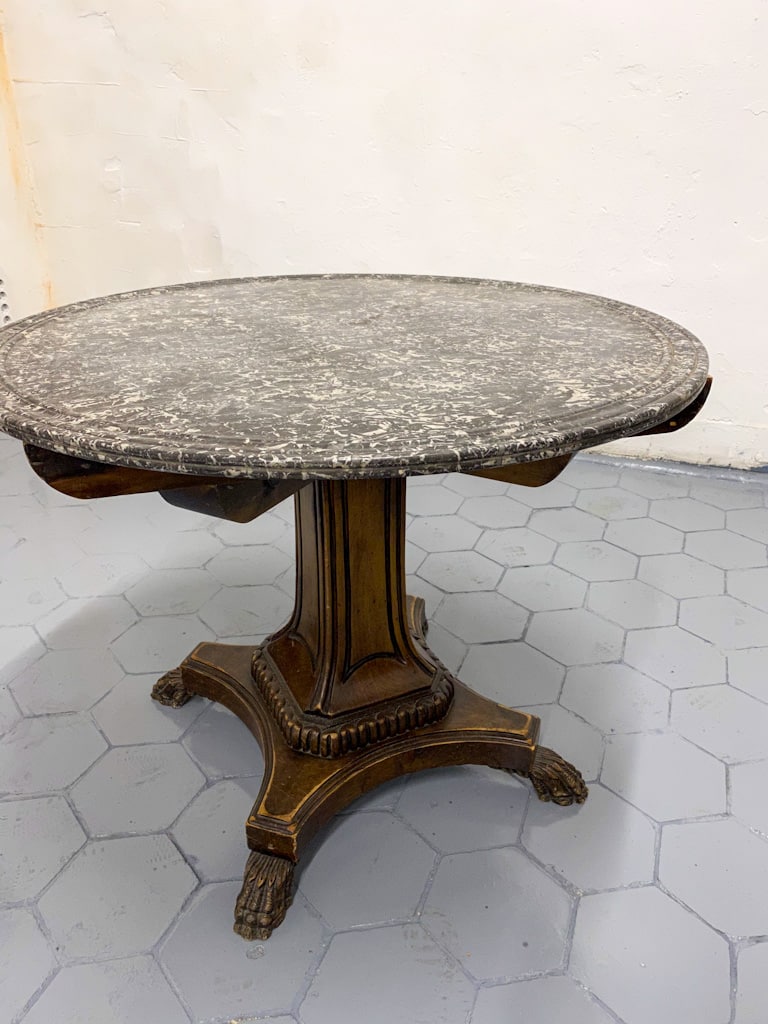
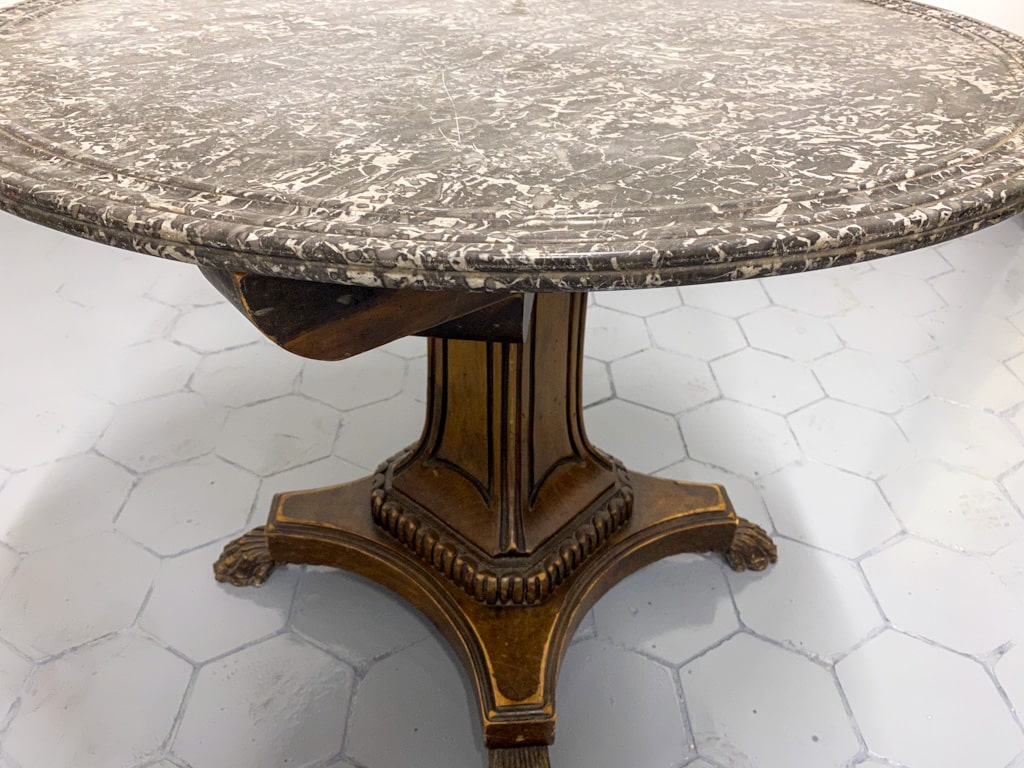
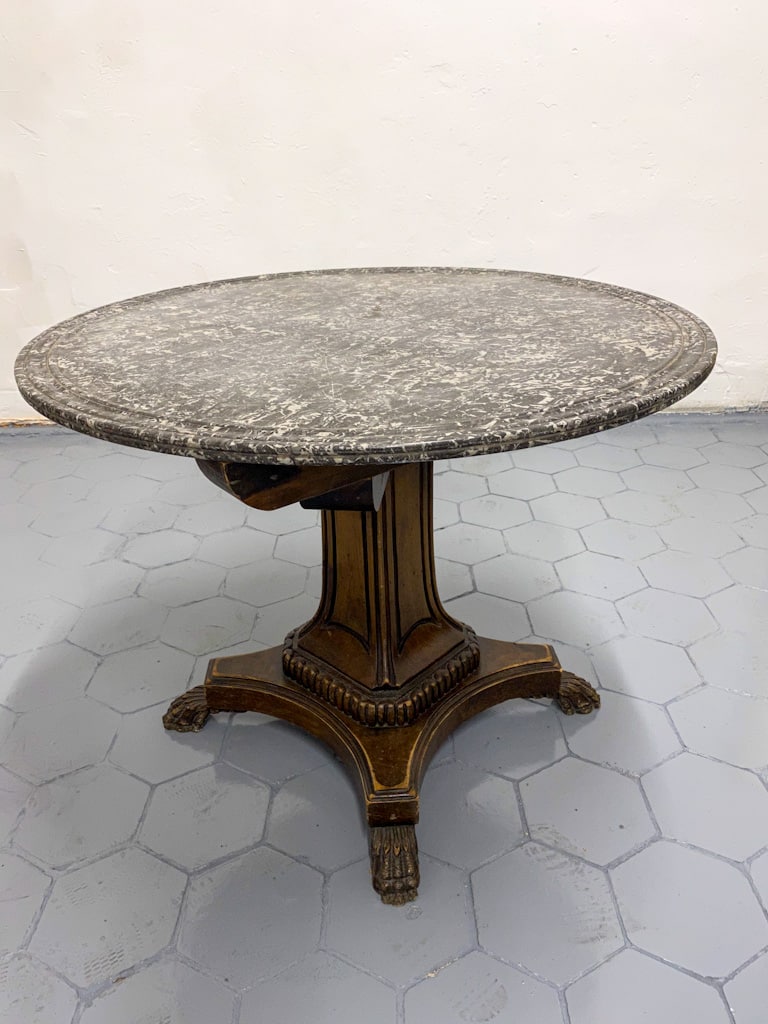
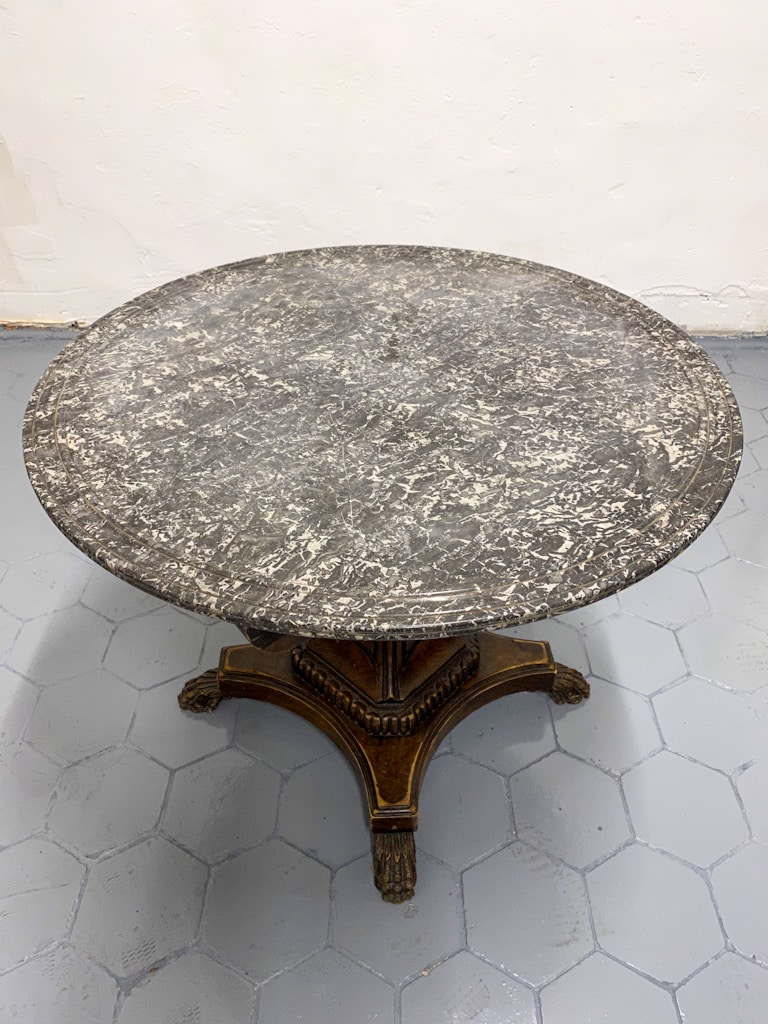
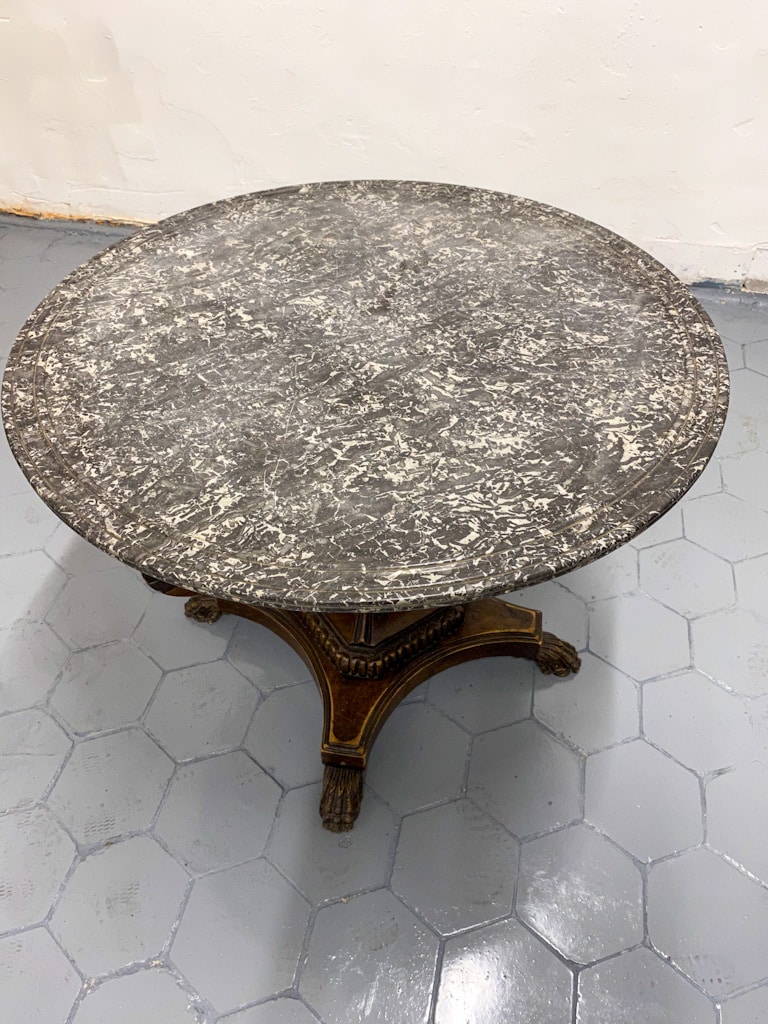
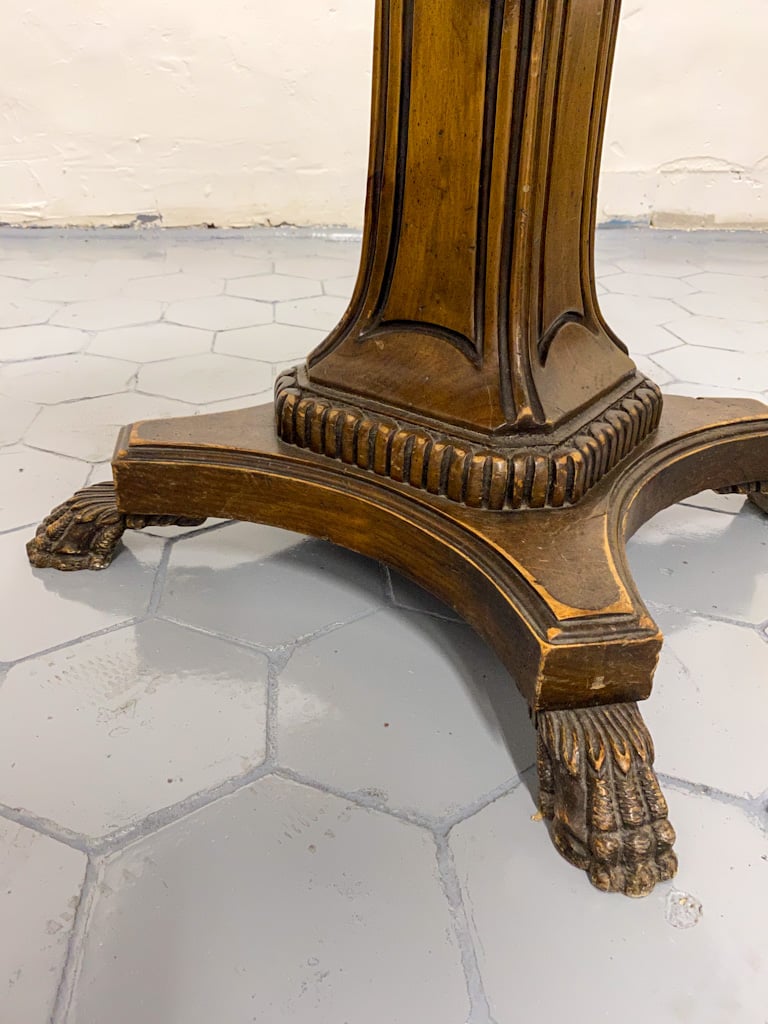
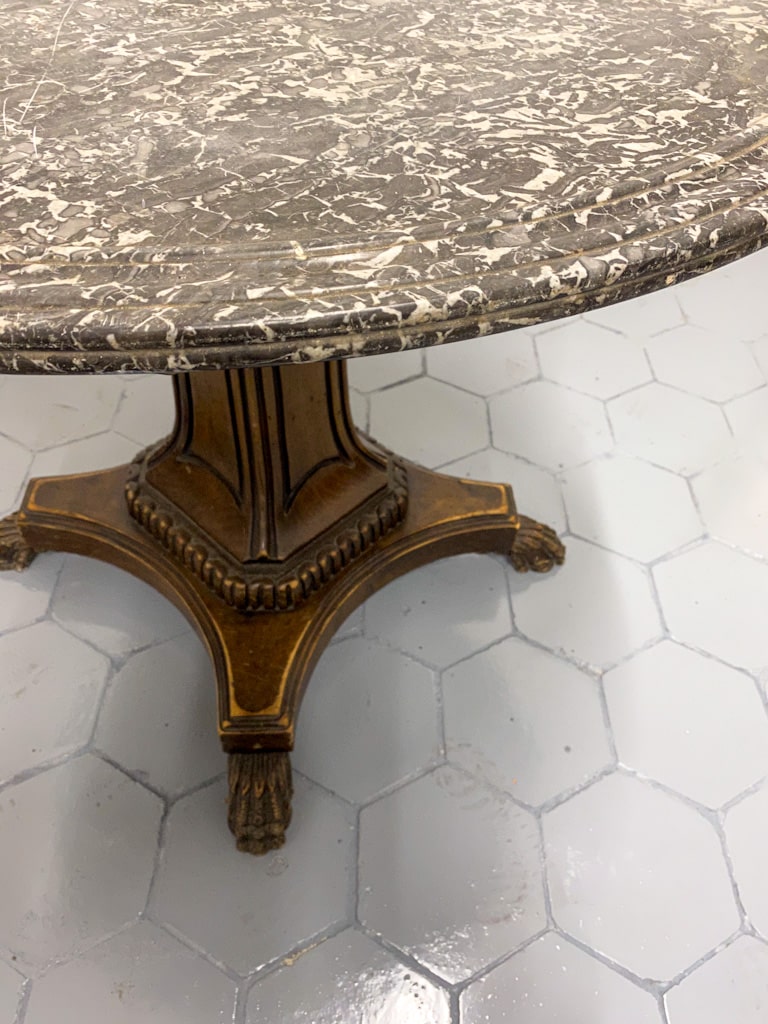
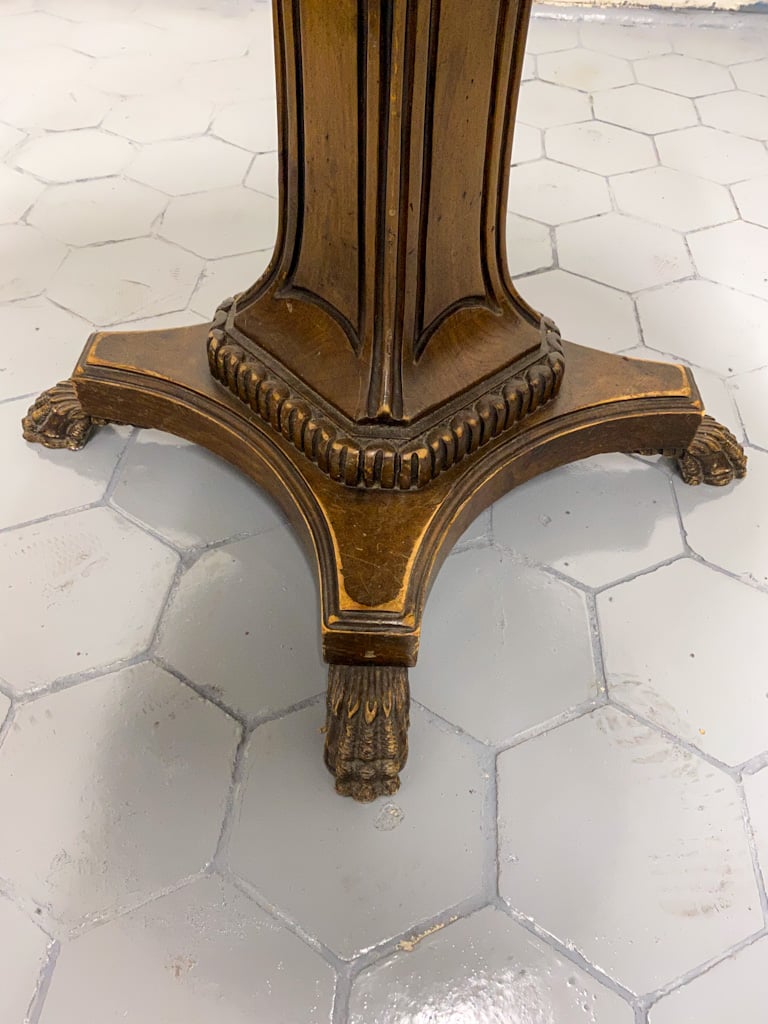
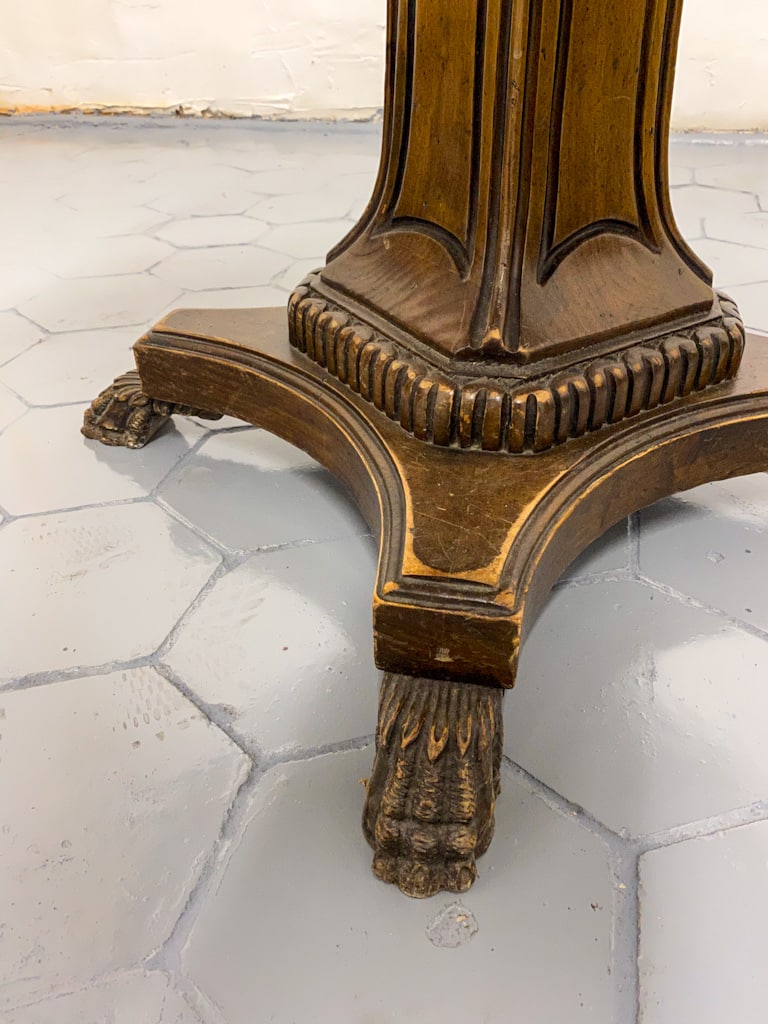
Apaļš salona galds ar pelēkā marmora virsmu un masīvu koka pjedestālu uz četrām lauvas ķepu kājām. Kanelēts kolonnas stabs, gadroon bordieris. Empire stils / Neoklasicisms, Francija, ap 1820.–1860. Diametrs 98 cm × augstums 75 cm.
📐 IZMĒRI
Diametrs 98 cm × augstums 75 cm. Ļoti smags — marmora virsma un masīvs koka pjedestāls.
―――――――――――――――――――――
Apaļš Salona Galds ar Pelēkā Marmora Virsmu un Lauvas Ķepām — Empire stils / Neoklasicisms, Francija, ap 1820.–1860.
―――――――――――――――――――――
🏛️ IZGATAVOŠANAS PERIODS, MĀKSLAS STILS, LAIKMETS
Šis iespaidīgais apaļais salona galds runā skaidrā un nepārprotamā Empire stila valodā — tā sauktā style Empire, kas Napoleona laikmetā kļuva par Francijas valsts un aristokrātijas reprezentācijas instrumentu un turpināja valdīt Eiropas labākajos interjerus vēl ilgi pēc imperatora krišanas. Galds datējams aptuveni 1820.–1860. gados — periodā, kad Empire pārtapa Neoklasicismā un saglabāja visus savus monumentālos elementus bez politiskās nastas.
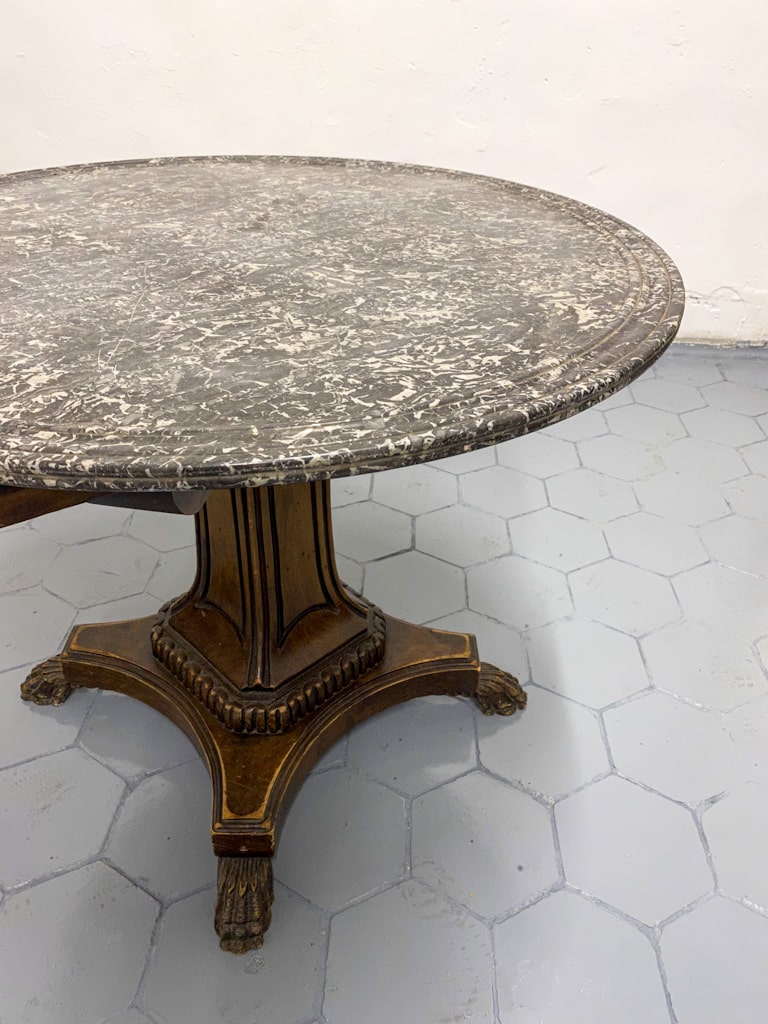
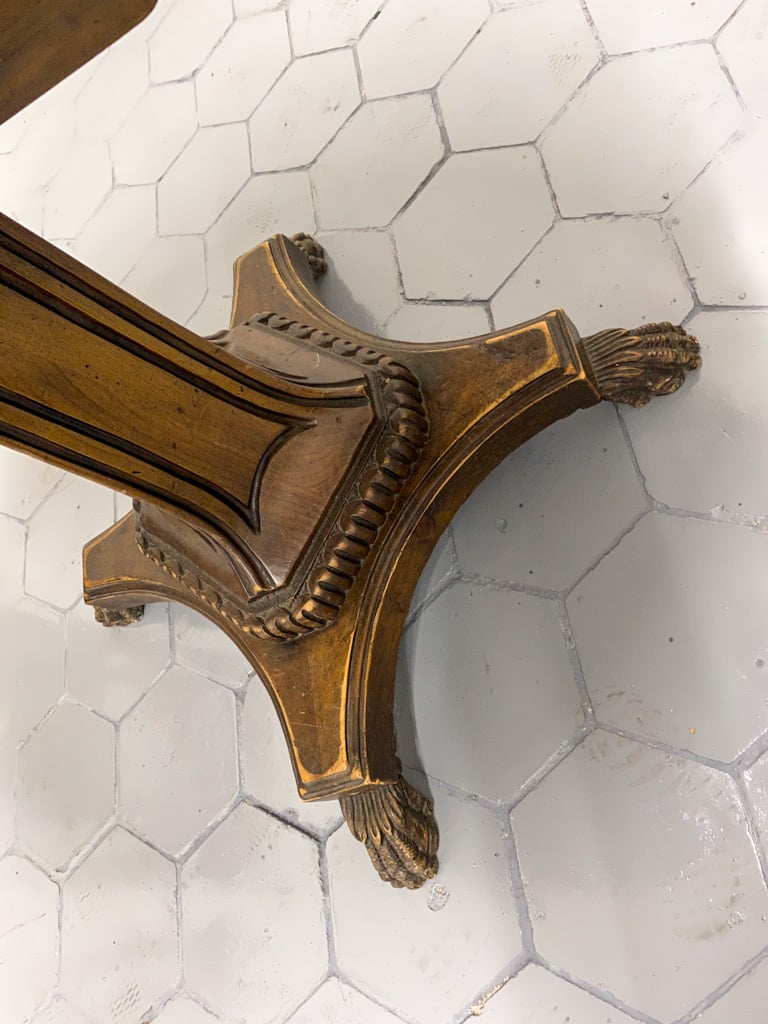
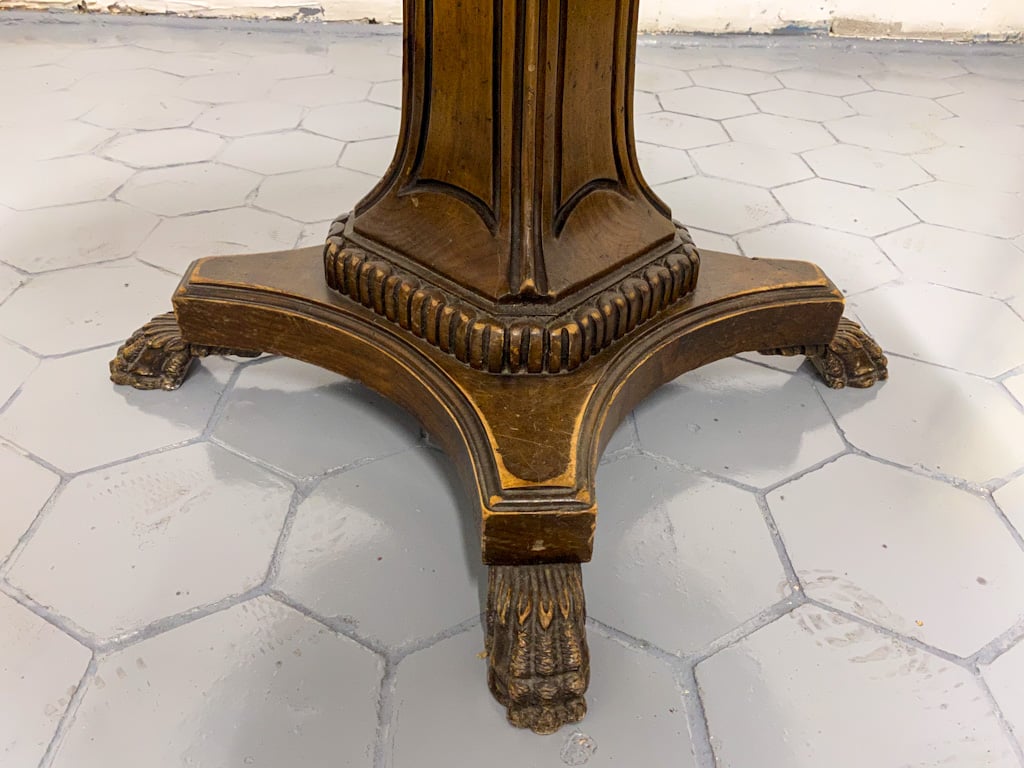
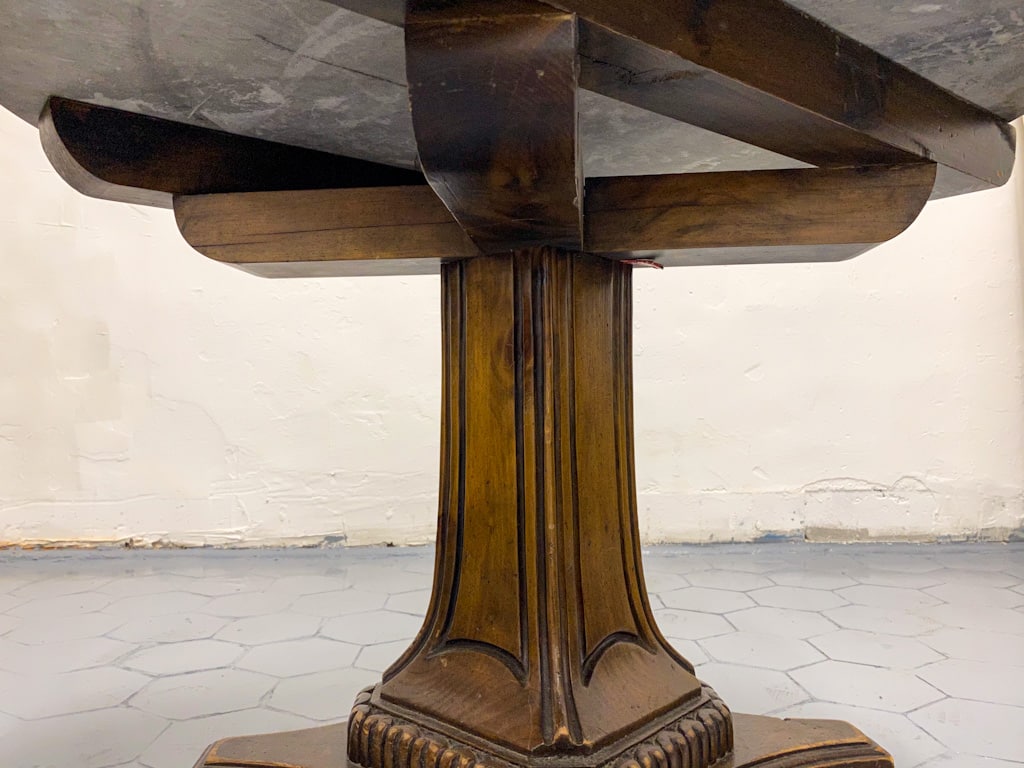
Katra šī galda detaļa ir klasisks Empire vārdnīcas elements: masīvais kanelētais kolonnas stabs — tieša atsauce uz antīkās Grieķijas un Romas arhitektūru — paceļas no četrstūrainas pjedestāla pamatnes ar gadroon bordieri, kuru kaktos noslēdz četras izkaltās lauvas ķepas. Lauva Empire stilā bija varas, uzvaras un mūžības simbols — Napoleons to lika uz saviem troņkrēsliem, maršalu galda sudraba traukos un imperatristu gultām. Šī galda lauvas ķepas nav dekoratīva kaprīze — tās ir apzināta laikmeta valoda.
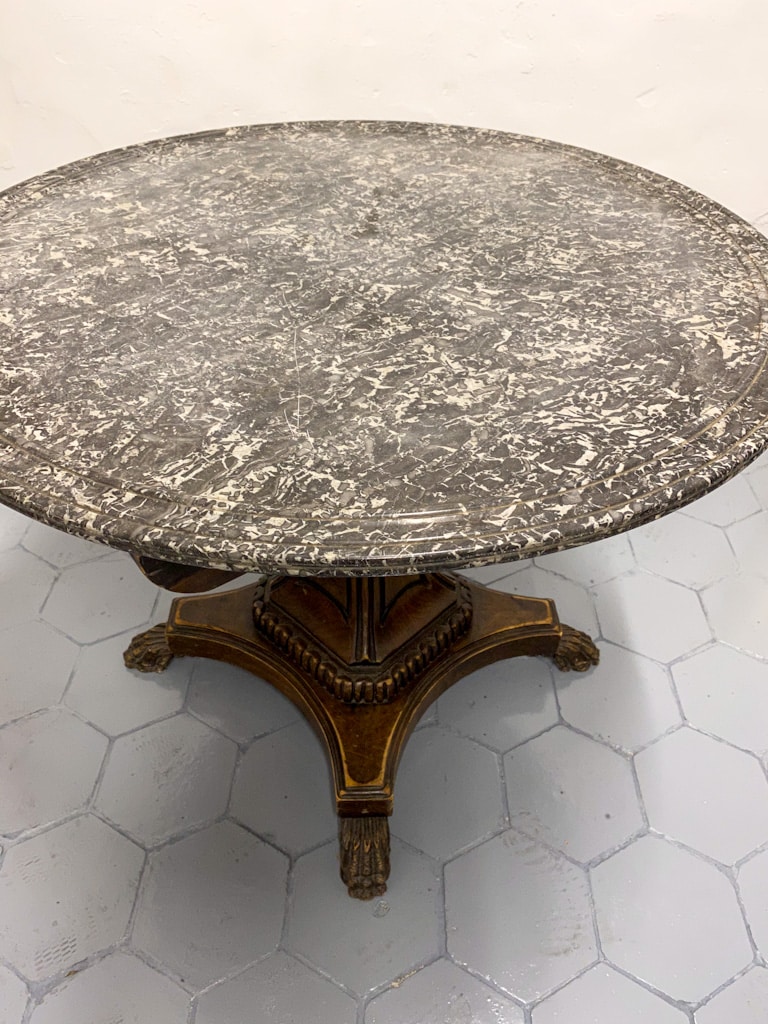
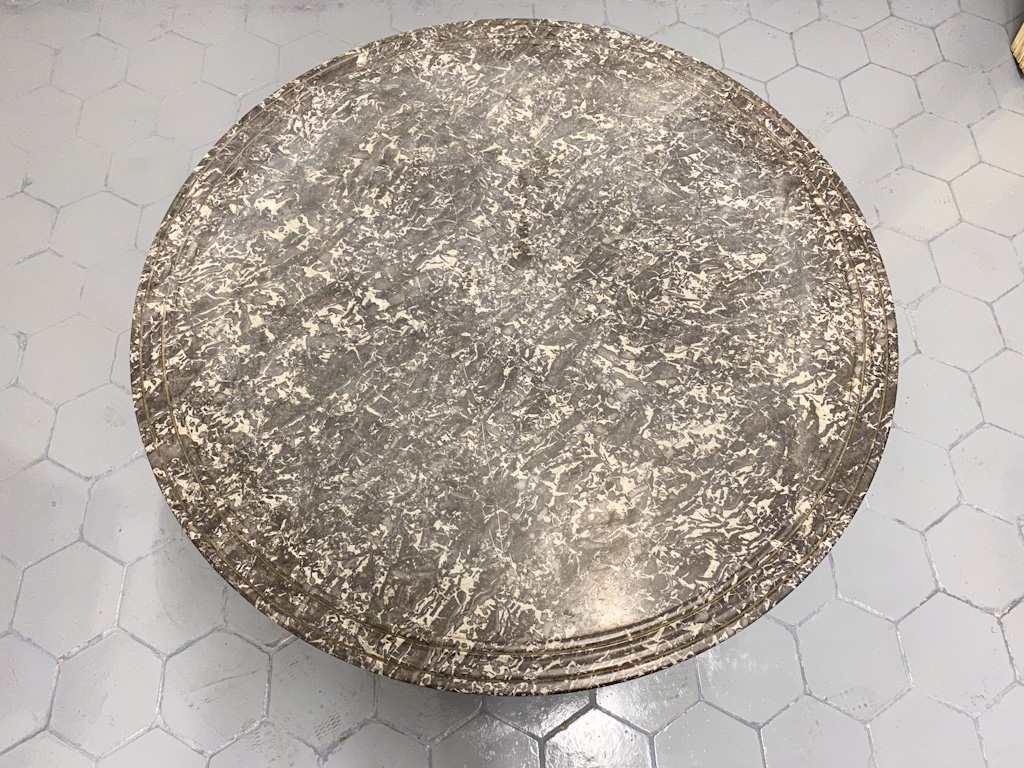
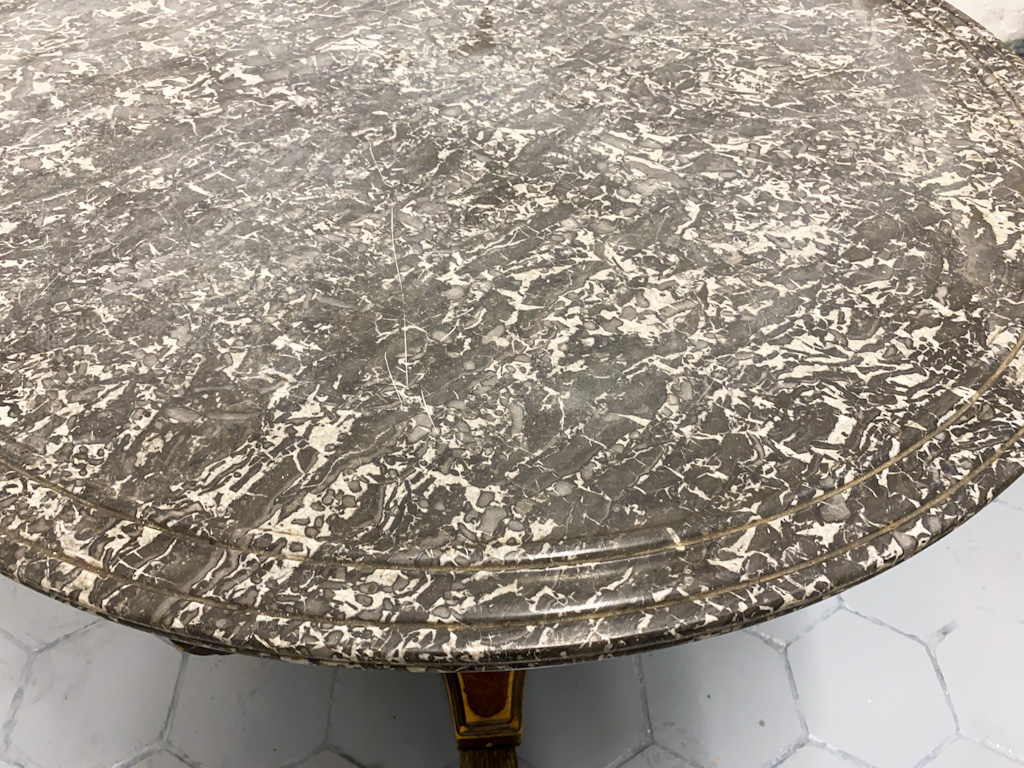
Virs visa šī paceļas pelēkā Saint-Anne tipa marmora virsma — mākoņaini pelēka ar baltiem žilbinošiem dzīslojumiem — materiāls, ko Napoleona interjeru architekti un vēlākie Restoration perioda meistari vēlēja virsraksta vietās, kur vajadzēja teikt: šeit mājo stils bez kompromisiem.
Stendāls tajā laikā vēl rakstīja Sarkano un melno — un tieši pie šāda galda Parīzes salonu saimnieces uzņēma viņu vakara sarunās, kur politika, māksla un mīlestība savijās vienā elpu aizraujošā sarunā. Marmors bija auksts roku pirkstiem, bet saruna — karsta.
―――――――――――――――――――――
⚜️ RAŽOTĀJS UN MANUFAKTŪRAS ZĪMOGS
Redzama ražotāja zīmoga nav. Tomēr galda kompozīcija, proporcijas un izpildījuma līmenis — īpaši lauvas ķepu modelējuma kvalitāte un kanelētā staba precizitāte — liecina par profesionālu Francijas ébénisterie vai menuiserie darbnīcu. Empire un agrīnā Restaurācijas perioda galdi ar marmora virsmām tika ražoti Parīzē gan galmam, gan augstākajai buržuāzijai. Pelēkais Saint-Anne vai Gris de Flandre tipa marmors bija iecienīts tieši Francijas un Beļģijas darbnīcās, kur tas tika izmantots reprezentatīviem salonu galdiem un konsolēm.
―――――――――――――――――――――
💎 RETUMS UN NOZĪME
Apaļi salona galdi ar autentiskām lauvas ķepu kājām un oriģinālu marmora virsmu Empire stilā ir vieni no meklētākajiem 19. gadsimta sākuma mēbeļu gabaliem starptautiskajā tirgū. Šī galda saglabātības līmenis — gan marmora virsma, gan koka pjedestāla detaļu integritāte — padara to par vērtīgu atradumu. Kolekcionāri un interjeru dizaineri, kas strādā ar Empire vai Regency perioda ansambliem, šādu centrālo gabalu meklē ilgi un maksā dārgi.
―――――――――――――――――――――
🕯️ PIELIETOJUMS INTERJERĀ, DIZAINĀ UN FOTOGRĀFIJĀ
Šis galds ir radīts telpas centram — un to tas pieprasīs ar nesatricināmu pārliecību. Klasiskā vai Empire interjerā tas ir dabiski savā vietā; mūsdienu vai industriālā vidē tas darbojas kā monumentāls vēstures fragments, kas piešķir telpai raksturu un dziļumu. Marmora virsmas aukstā pelēkā toņu gamma lieliskai harmonē ar gan mūsdienu metāla un betona estētiku, gan zelta un tumšā koka tradicionālo interieri. Fotogrāfiem marmora organiskais raksts un pjedestāla skulpturālais siluets nodrošina izcilu vizuālo materiālu.
―――――――――――――――――――――
🎁 DĀVANA UN PERSONALIZĀCIJA
Lauvas ķepas padara šo galdu par izcilu dāvanu ar simbolisku nozīmi — lauva ir varas, drošsirdības un vadošās pozīcijas simbols. Kā reprezentatīva korporatīva vai diplomātiska dāvana augstākajā līmenī, kā arī kā izcils papildinājums privātai kolekcijjai vai pārstāvniecības telpai — šis galds runā bez vārdiem.
―――――――――――――――――――――
🔍 STĀVOKLIS
Galds ir labā vispārējā stāvoklī atbilstoši vecumam. Marmora virsmai ir redzamas nolietojuma pēdas — nelielas skrāpējumu zīmes un patina, kas apliecina autentiskumu un ilgu dzīvi. Koka pjedestāls saglabājies labi — lauvas ķepu detaļas skaidras, kanelētā staba forma integra. Konstrukcija stabila. Lietas stāvoklis pilnībā atspoguļots fotogrāfijās.
―――――――――――――――――――――
🇬🇧 DESCRIPTION IN ENGLISH
―――――――――――――――――――――
📐 DIMENSIONS
Diameter 98 cm × height 75 cm. Extremely heavy — marble top and solid wood pedestal.
―――――――――――――――――――――
Round Salon Table with Grey Marble Top and Lion Paw Feet — Empire Style / Neoclassicism, France, c. 1820–1860
―――――――――――――――――――――
🏛️ PERIOD, ART STYLE, EPOCH
This commanding round salon table speaks in the clear and uncompromising language of the Empire style — the style Empire that under Napoleon became the instrument of French state representation and aristocratic prestige, and continued to reign in Europe’s finest interiors long after the Emperor’s fall. The table dates to approximately 1820–1860, the period when Empire evolved into Neoclassicism and retained all its monumental elements without the political weight.
Every detail here is a canonical element of the Empire vocabulary: the massive fluted column shaft — a direct reference to ancient Greek and Roman architecture — rises from a quadrangular pedestal base with a gadrooned border, terminating at each corner in four boldly carved lion paw feet. The lion in Empire style was the symbol of power, victory, and eternity — Napoleon placed it on his throne chairs, his marshals’ silver, and the empress’s beds. These lion paw feet are not decorative whimsy: they are the deliberate language of an era.
Above it all floats the grey marble top — cloud-grey with dazzling white veining — the very material that Napoleon’s interior architects and later Restoration masters chose for surfaces where they needed to say: here, style lives without compromise.
Stendhal was still writing The Red and the Black in those years — and it was precisely at tables like this in Parisian salons that hostesses received him for evening conversations where politics, art, and love wound together in one breathless exchange. The marble was cold to the touch; the conversation burned.
―――――――――――――――――――――
⚜️ MAKER AND MARK
No visible maker’s mark has been identified. The composition, proportions, and level of execution — particularly the modelling quality of the lion paw feet and the precision of the fluted column shaft — point firmly to a professional French ébénisterie or menuiserie workshop. Empire and early Restoration period marble-top tables were produced in Paris for both court and haute bourgeoisie clientele. The grey Saint-Anne or Gris de Flandre type marble was a particular favourite of French and Belgian workshops for representative salon tables and consoles.
―――――――――――――――――――――
💎 RARITY AND SIGNIFICANCE
Round salon tables with authentic lion paw feet and original marble tops in Empire style are among the most sought-after early 19th-century furniture pieces on the international market. The level of preservation here — both the marble surface and the integrity of the carved pedestal details — makes this an exceptionally valuable find. Collectors and interior designers working with Empire or Regency period ensembles search long for centrepieces of this quality.
―――――――――――――――――――――
🕯️ USE IN INTERIORS, DESIGN AND PHOTOGRAPHY
This table was made for the centre of a room — and it will claim that position with unshakeable authority. In a classical or Empire interior it sits naturally in its element; in a contemporary or industrial setting it functions as a monumental fragment of history that gives the space character and depth. The cool grey tones of the marble surface harmonise beautifully with both modern metal and concrete aesthetics and traditional gold-and-dark-wood interiors. For photographers, the organic patterning of the marble and the sculptural silhouette of the pedestal provide exceptional visual material.
―――――――――――――――――――――
🎁 GIFT AND PERSONALISATION
The lion paw feet make this table an outstanding gift with symbolic weight — the lion is the universal symbol of power, courage, and leadership. As a representative corporate or diplomatic gift at the highest level, or as a distinguished addition to a private collection or reception room, this table speaks without words.
―――――――――――――――――――――
🔍 CONDITION
The table is in good overall condition consistent with its age. The marble top shows signs of honest wear — minor surface marks and a natural patina that confirm authenticity and a long life well lived. The wooden pedestal is well preserved — the lion paw details remain clearly defined, and the fluted column shaft retains its full integrity. The structure is solid and stable throughout. The condition of the item is fully reflected in the photographs.