
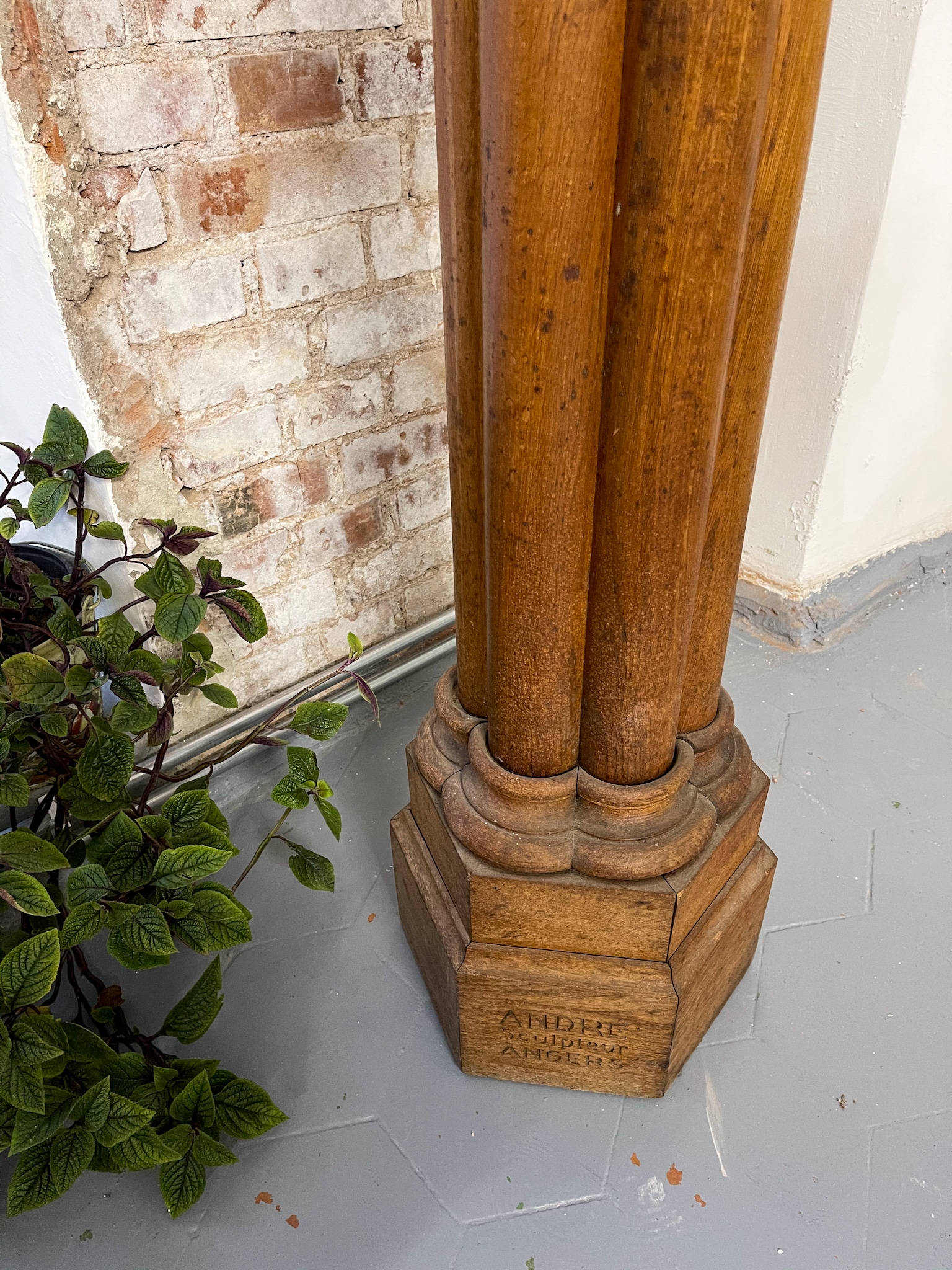
Liela ozolkoka kolonna-postaments ar koktēlnieka parakstu (Angers), neogotikas stilā (739) REZERVĒTS
Liela ozolkoka kolonna-postaments ar koktēlnieka parakstu (Angers), neogotikas stilā (739) REZERVĒTS
€430.00
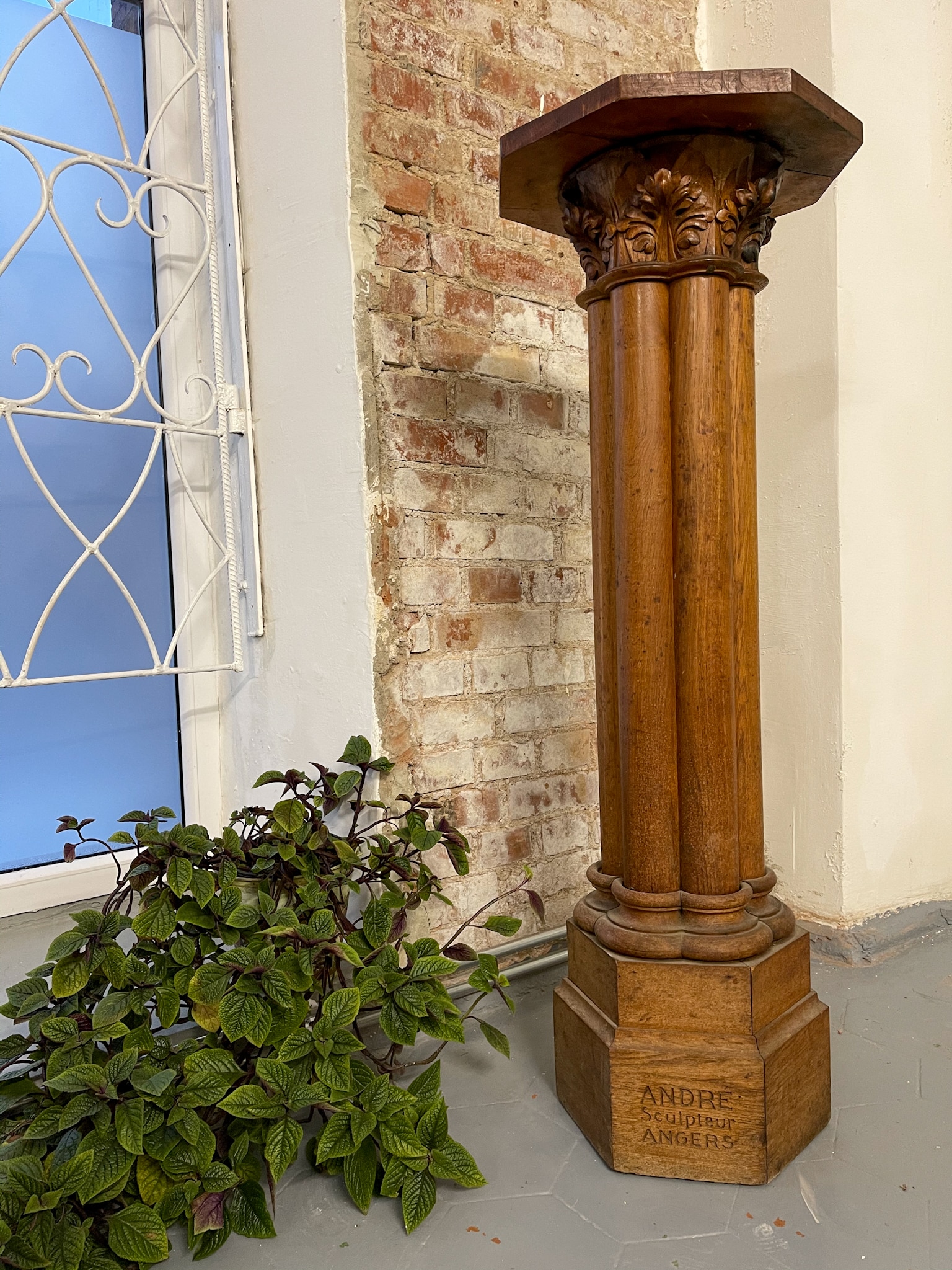
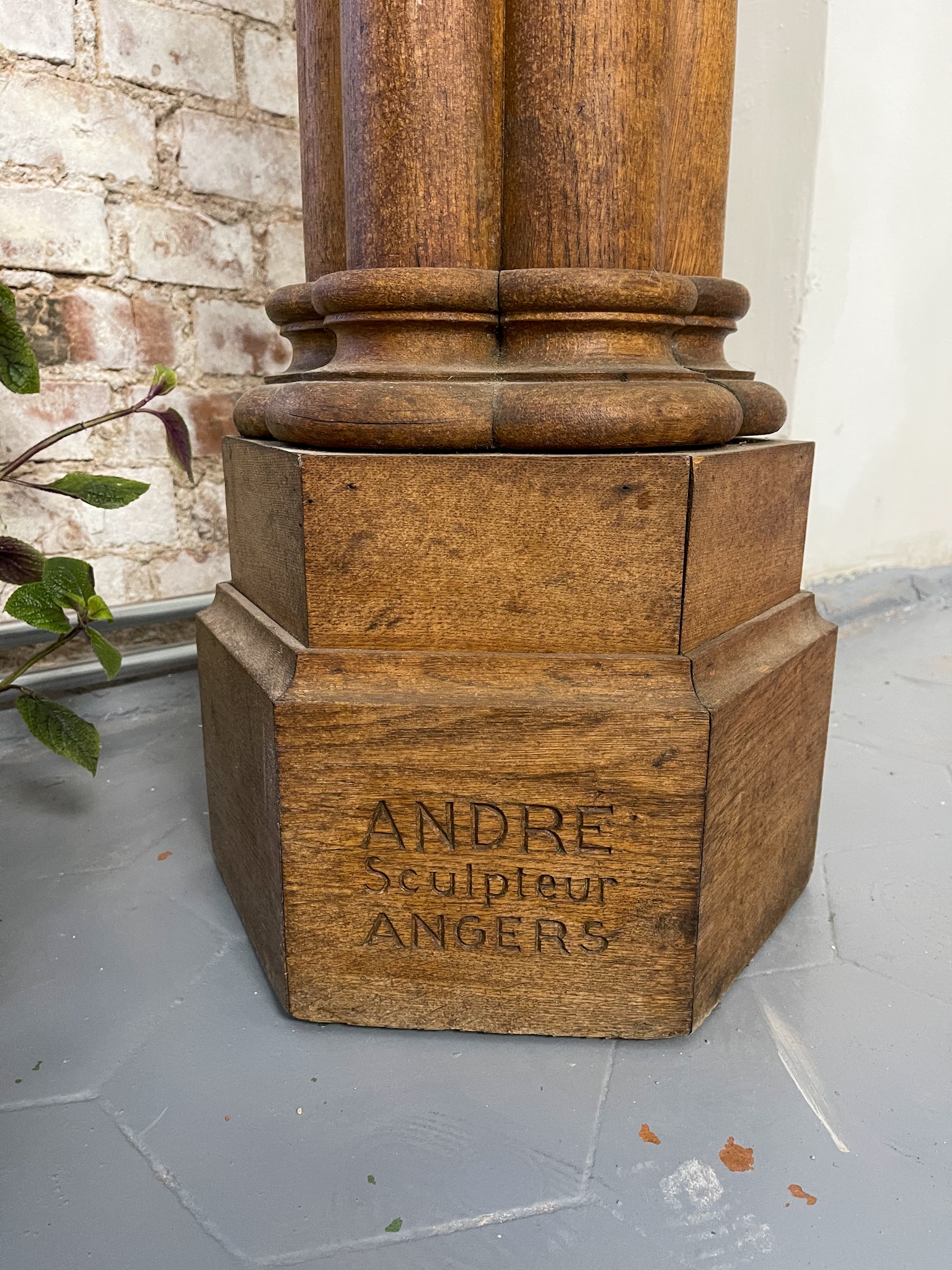
Liela, ļoti smaga ozolkoka kolonna-postaments ar kūļa stumbru un kokgriezuma lapotnes kapiteli, neogotikas/historisma stilā. Cokolā gravēts koktēlnieka paraksts “ANDRÉ Sculpteur ANGERS”. 19. gs. beigas – 20. gs. sākums.
🇱🇻 LATVISKI
Izmēri:
Augstums — 124 cm
Platums — 46 cm
Liela ozolkoka kolonna-postaments ar koktēlnieka parakstu — neogotikas stilā
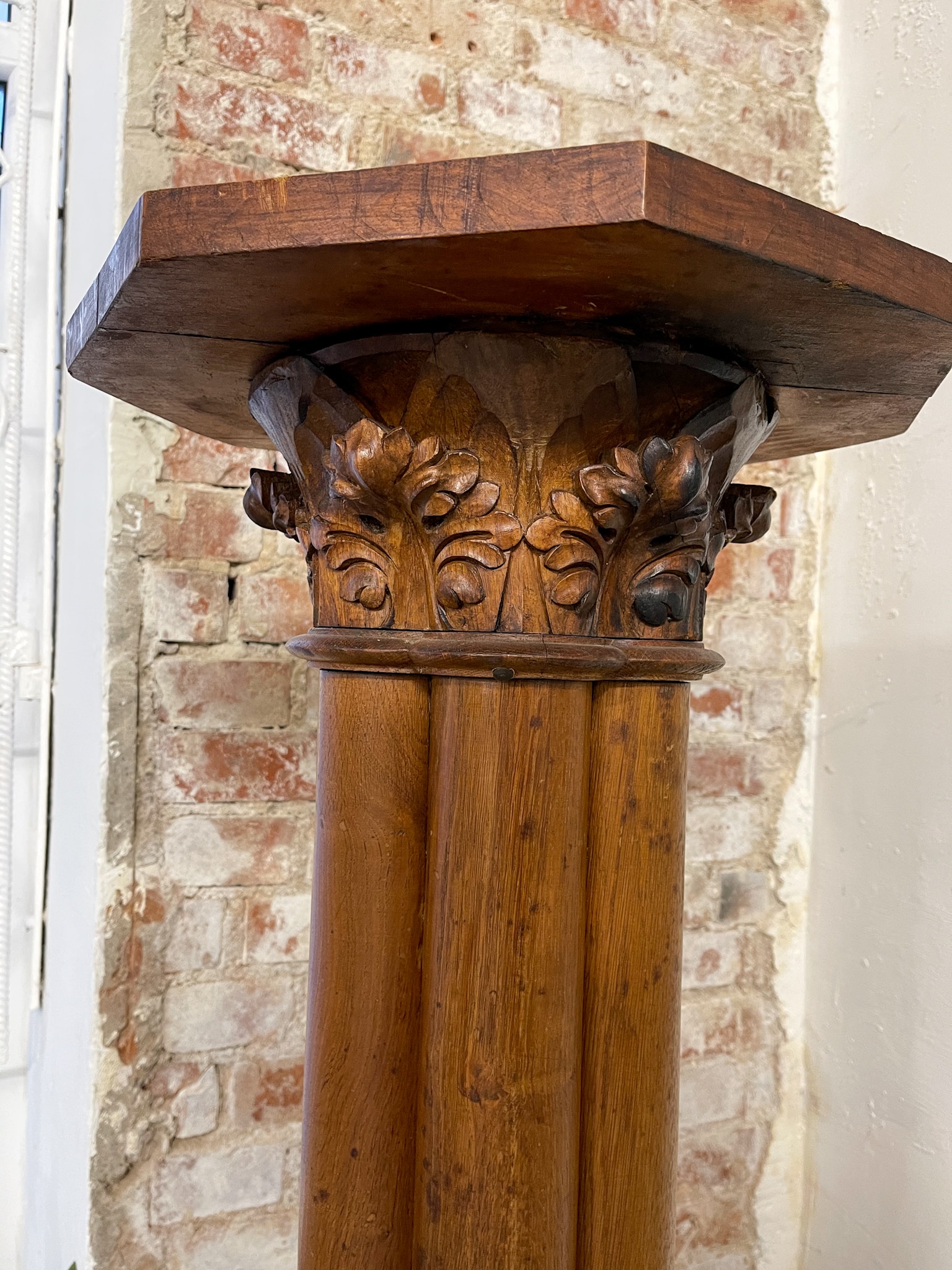
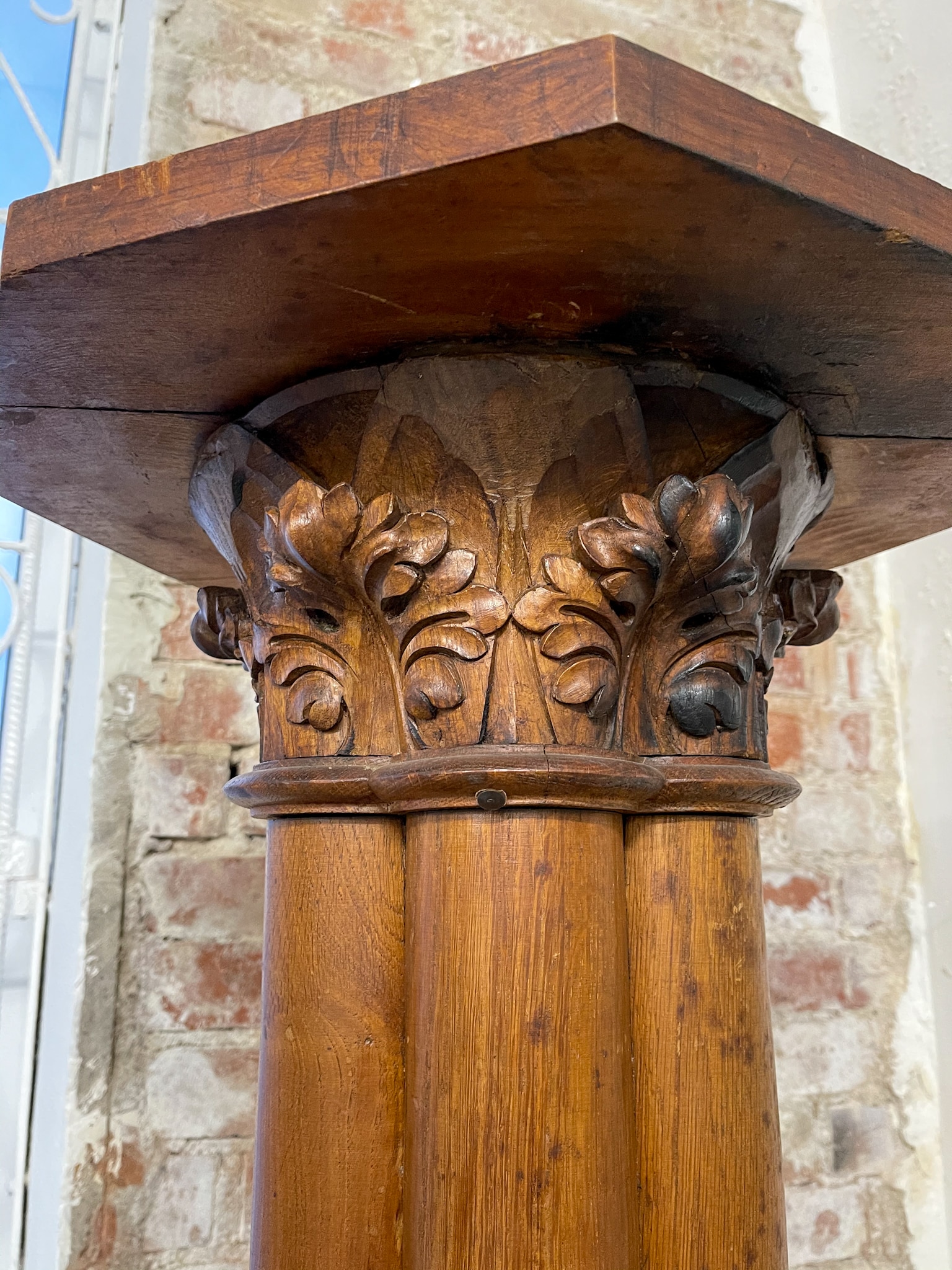
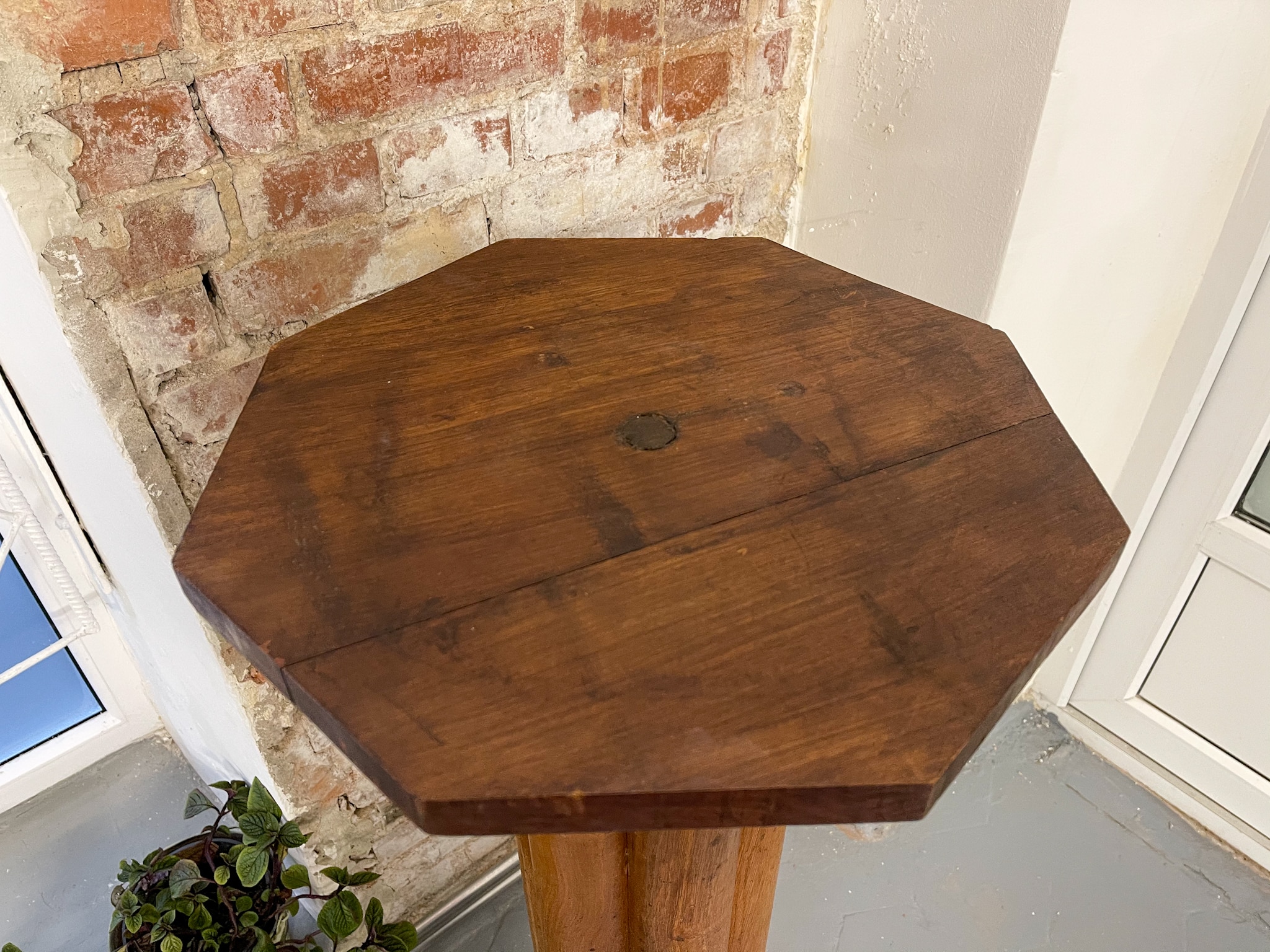
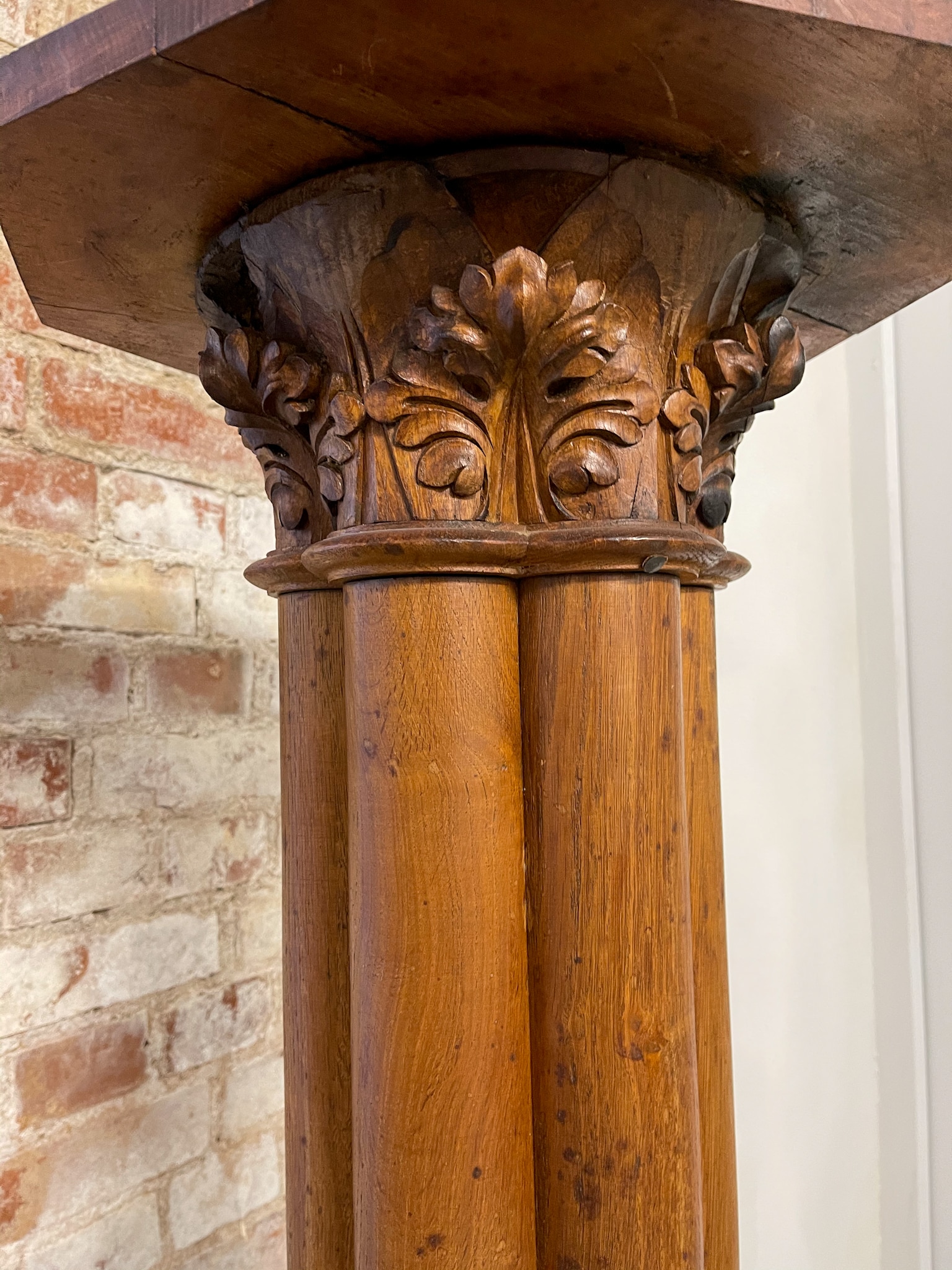
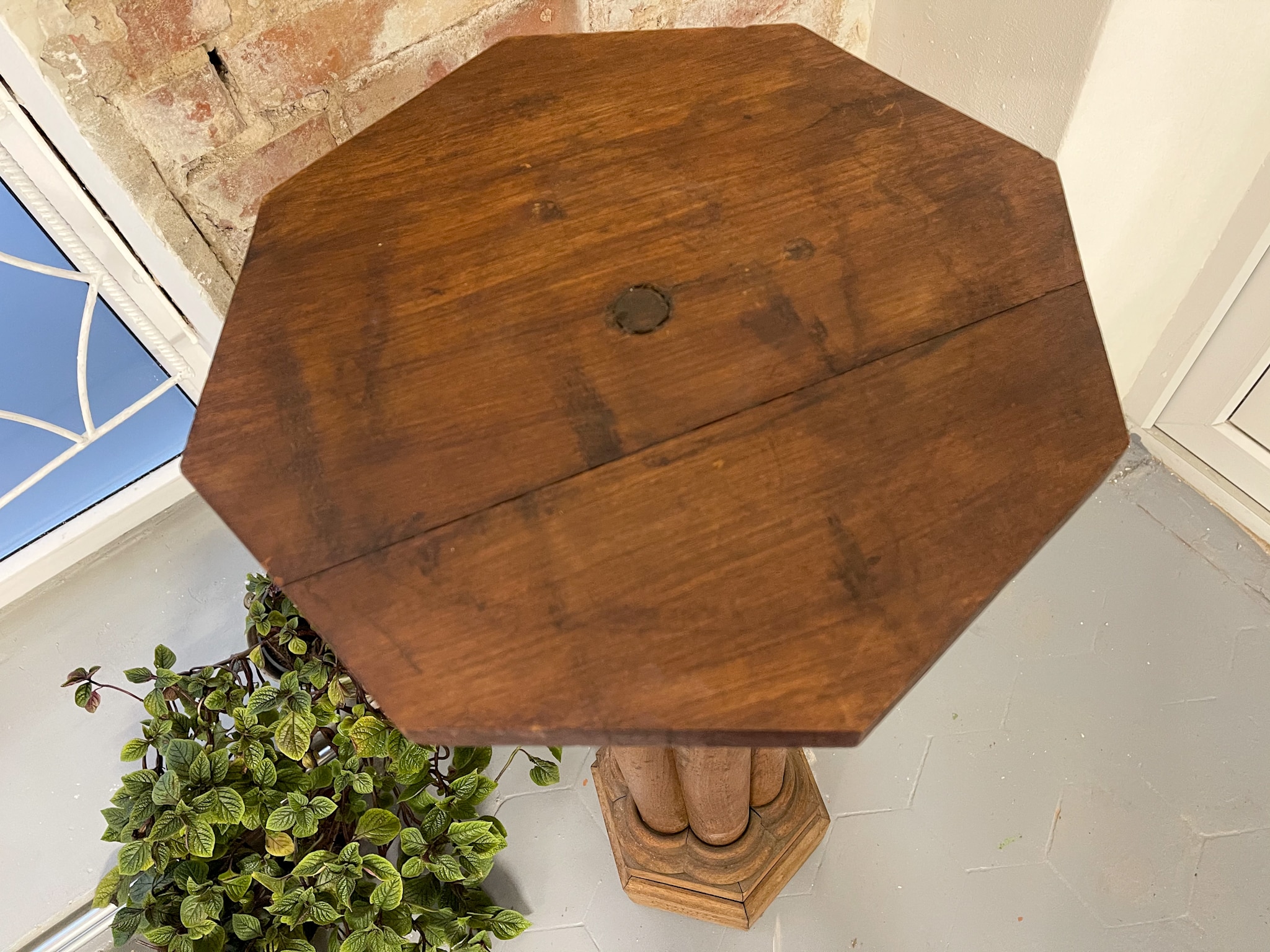
Iespaidīga un ļoti smaga ozolkoka kolonna-postaments (carved oak column pedestal), darināta neogotikas / historisma stila valodā. Tās stumbrs nav vienkārša apaļa kolonna, bet kūļa pīlārs — vairākas saaugušas, noapaļotas puskolonnas, kas tieši atkārto gotikas katedrāļu balstu formu. Augšā stumbrs vainagots ar bagātīgu kokgriezuma lapotnes kapiteli — sulīgas, plastiski cērtas akanta un lapu formas, kas atgādina viduslaiku augu kapiteļus. Virsma un cokols ir astoņstūra formā, kas pastiprina arhitektonisko, gandrīz sakrālo iespaidu.
Lieta ir koktēlnieka, nevis vienkārša galdnieka darbs: kapiteļa lapotne veidota brīvi un dzīvi, ar manāmu rokas pieskārienu. Ozola koksne ir silta, zeltaini brūna, ar izteiksmīgu dzīslojumu un gadu desmitu patinu.
🇱🇻 Historisma laikmeta momentuzņēmums: Vēlā pēcpusdienā Angeras darbnīcā vecmeistars noslaucīja skaidas no astoņstūra pamata un ar kaltu vēlreiz pārlaboja vienu vienīgu lapu kapiteļa malā. Pa augsto logu kritošā gaisma izcēla katru rievu kūļa stumbrā un meta garas ēnas pāri grīdai. Viņš pieskārās vēsajai koksnei, sekoja ar pirkstu lapotnes lokam augšup un brīdi klausījās, kā pa pagalmu dunot rit rati. Tad viņš paņēma dedzināmo zīmuli un cokola apakšā lēni ievilka savu vārdu un pilsētu — ne lepnībā, bet kā amata gods. Rīt lieta dosies prom, bet šis paraksts paliks ar to mūžam.
Izgatavošanas periods. Kolonna datējama ar 19. gs. beigām – 20. gs. sākumu, neogotikas / historisma stila uzplaukuma laiku.
Paraksts un izcelsme. Cokola sienā gravēts koktēlnieka paraksts: “ANDRÉ Sculpteur ANGERS”. Tā ir autentiska meistara zīme — Francijas pilsēta Angers ir pazīstama ar senu kokgriezuma un skulptūras tradīciju (no šejienes nāca arī izcilais 19. gs. tēlnieks David d’Angers, kura tēvs bija kokgriezējs). Konkrēto meistaru “André” pēc šī paraksta vien droši identificēt nav iespējams; lieta tiek godīgi piedāvāta kā kvalitatīvs nezināma Angeras koktēlnieka darbs. Papildu izpētei noderīgas mākslinieku datubāzes (Bénézit, askArt).
Pielietojums. Reprezentatīvs postaments skulptūrai, vāzei, biste vai augam — vestibilā, salonā, baznīcā, kāpņu telpā vai kā patstāvīgs arhitektonisks akcents. Lielais izmērs un svars piešķir telpai svinīgu, gandrīz sakrālu noskaņu.
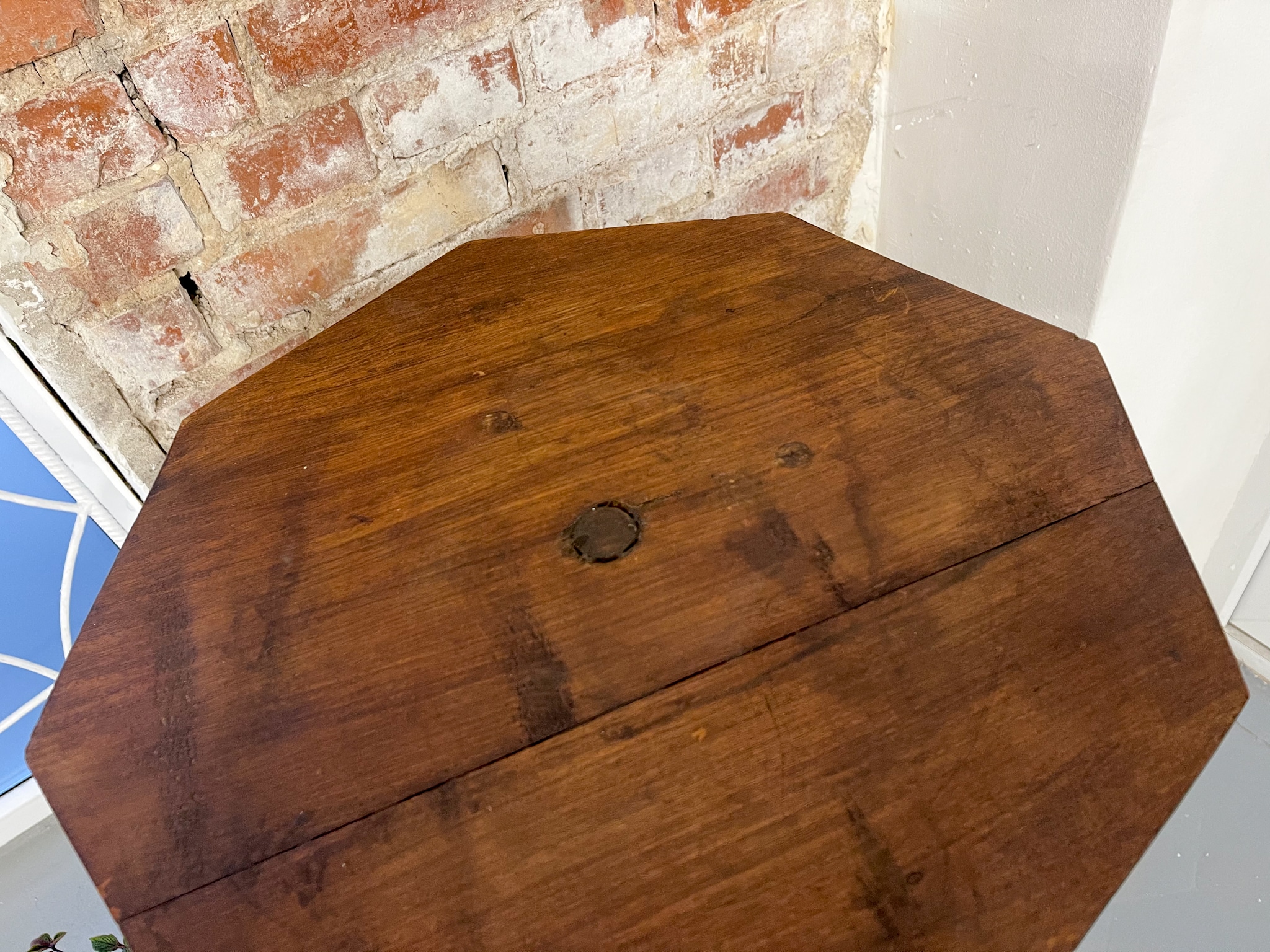
Stāvoklis. Labs, vecumam atbilstošs stāvoklis; ozolam dabīga patina un dzīslojums. Lietas stāvoklis pilnībā atspoguļots fotogrāfijās.
🇷🇺 РУССКИЙ
Размеры:
Высота — 124 см
Ширина — 46 см
Большая дубовая колонна-постамент с подписью скульптора по дереву — в стиле неоготики
Внушительная и очень тяжёлая дубовая колонна-постамент, выполненная в языке неоготики / историзма. Её ствол — не простая круглая колонна, а пучковый пилон: несколько сросшихся, скруглённых полуколонн, в точности повторяющих форму опор готических соборов. Сверху ствол увенчан богатым резным лиственным капителем — сочные, пластично вырезанные формы аканта и листвы, напоминающие средневековые растительные капители. Столешница и цоколь восьмиугольной формы, что усиливает архитектурное, почти сакральное впечатление.
Это работа скульптора по дереву, а не простого столяра: листва капители вырезана свободно и живо, с заметным прикосновением руки. Дубовая древесина тёплая, золотисто-коричневая, с выразительной текстурой и патиной десятилетий.
🇷🇺 Снимок эпохи историзма: Поздним вечером в мастерской Анже старый мастер смахнул стружку с восьмиугольного основания и резцом ещё раз поправил один-единственный лист на краю капители. Свет, падавший из высокого окна, выделял каждую ложбинку пучкового ствола и бросал длинные тени по полу. Он коснулся прохладной древесины, провёл пальцем по изгибу листвы вверх и мгновение слушал, как по двору, громыхая, катится повозка. Затем он взял выжигательный карандаш и медленно вывел на низе цоколя своё имя и город — не из гордыни, а как честь ремесла. Завтра вещь уедет, но эта подпись останется с ней навсегда.
Колонна датируется концом XIX – началом XX века, временем расцвета стиля неоготики / историзма. На грани цоколя выгравирована подпись скульптора по дереву: “ANDRÉ Sculpteur ANGERS”. Это подлинная мастерская метка — французский город Анже известен давней традицией резьбы по дереву и скульптуры (отсюда происходил и выдающийся скульптор XIX века Давид д’Анже, чей отец был резчиком по дереву). Конкретного мастера “André” по одной этой подписи достоверно установить невозможно; вещь честно предлагается как качественная работа неизвестного резчика из Анже. Для дальнейшего исследования полезны базы данных художников (Bénézit, askArt).
Это представительный постамент для скульптуры, вазы, бюста или растения — в холле, салоне, церкви, лестничном пространстве или как самостоятельный архитектурный акцент. Большой размер и вес придают пространству торжественное, почти сакральное настроение. Состояние хорошее, соответствующее возрасту; у дуба естественная патина и текстура. Состояние вещи полностью отражено на фотографиях.
🇬🇧 ENGLISH
Dimensions:
Height — 124 cm
Width — 46 cm
Carved Oak Column Pedestal in Neo-Gothic Style
This imposing and very heavy carved oak column pedestal is executed in the vocabulary of Neo-Gothic / Historicism. Its shaft is not a simple round column but a clustered pier — several fused, rounded half-columns that directly echo the supports of Gothic cathedrals. Above, the shaft is crowned by a rich carved foliate capital — lush, plastically cut acanthus and leaf forms recalling medieval vegetal capitals. The top and plinth are octagonal, reinforcing the architectural, almost sacral impression. As a true carved oak column pedestal, it brings the cathedral into the room.
This is the work of a woodcarver, not a mere joiner: the foliage of the capital is cut freely and vividly, with a clear touch of the hand. The oak is warm, golden-brown, with expressive graining and the patina of decades.
🇬🇧 Historicism snapshot: In the late afternoon, in a workshop in Angers, an old master brushed the shavings from the octagonal base and, with a chisel, adjusted a single leaf at the edge of the capital once more. The light from the high window picked out every groove in the clustered shaft and threw long shadows across the floor. He touched the cool wood, followed the curve of the foliage upward with a finger, and listened for a moment to a cart rumbling across the yard. Then he took a pyrography pencil and slowly drew his name and his city into the foot of the plinth — not in pride, but as the honour of the craft. Tomorrow the piece would leave, but this signature would stay with it forever.
The column dates to the late 19th – early 20th century, the heyday of the Neo-Gothic / Historicism style. The face of the plinth bears an engraved woodcarver’s signature: “ANDRÉ Sculpteur ANGERS”. It is an authentic maker’s mark — the French city of Angers is known for a long tradition of woodcarving and sculpture (home, too, of the great 19th-century sculptor David d’Angers, whose father was a woodcarver). The specific maker “André” cannot be securely identified from this signature alone; the piece is offered honestly as the quality work of an unidentified Angers woodcarver. For further research, artist databases (Bénézit, askArt) are useful. It is a commanding pedestal for a sculpture, vase, bust or plant — in a hall, salon, church, stairwell or as a freestanding architectural accent. Its great size and weight bring a solemn, almost sacral mood to a room. Condition is good and consistent with age; the oak has a natural patina and graining. The condition is fully reflected in the photographs.
🇩🇪 DEUTSCH
Maße:
Höhe — 124 cm
Breite — 46 cm
Große Eichensäule-Postament mit Signatur des Holzbildhauers — im neugotischen Stil
Eine imposante und sehr schwere Eichensäule-Postament, ausgeführt in der Sprache der Neugotik / des Historismus. Ihr Schaft ist keine einfache runde Säule, sondern ein Bündelpfeiler — mehrere verwachsene, gerundete Halbsäulen, die unmittelbar die Stützen gotischer Kathedralen nachbilden. Oben ist der Schaft von einem reichen geschnitzten Laubkapitell gekrönt — saftige, plastisch geschnittene Akanthus- und Blattformen, die an mittelalterliche Pflanzenkapitelle erinnern. Platte und Sockel sind achteckig, was den architektonischen, beinahe sakralen Eindruck verstärkt.
Es ist die Arbeit eines Holzbildhauers, nicht eines bloßen Tischlers: Das Laub des Kapitells ist frei und lebendig geschnitten, mit deutlicher Handschrift. Das Eichenholz ist warm, golden-braun, mit ausdrucksvoller Maserung und der Patina von Jahrzehnten.
🇩🇪 Momentaufnahme der Zeit des Historismus: Am späten Nachmittag, in einer Werkstatt in Angers, wischte ein alter Meister die Späne vom achteckigen Sockel und besserte mit dem Stecheisen noch einmal ein einzelnes Blatt am Rand des Kapitells aus. Das Licht des hohen Fensters hob jede Rille des Bündelschaftes hervor und warf lange Schatten über den Boden. Er berührte das kühle Holz, folgte mit dem Finger der Kurve des Laubes nach oben und lauschte einen Augenblick einem Karren, der über den Hof rumpelte. Dann nahm er einen Brennstift und zog langsam seinen Namen und seine Stadt in den Fuß des Sockels — nicht aus Stolz, sondern als Ehre des Handwerks. Morgen würde das Stück fortgehen, doch diese Signatur würde für immer bei ihm bleiben.
Die Säule datiert ins späte 19. – frühe 20. Jahrhundert, die Blütezeit der Neugotik / des Historismus. Die Sockelfläche trägt eine eingravierte Holzbildhauer-Signatur: “ANDRÉ Sculpteur ANGERS”. Es ist eine authentische Meistermarke — die französische Stadt Angers ist für eine lange Tradition der Holzschnitzerei und Bildhauerei bekannt (Heimat auch des großen Bildhauers David d’Angers des 19. Jahrhunderts, dessen Vater Holzschnitzer war). Der konkrete Meister “André” lässt sich allein anhand dieser Signatur nicht sicher bestimmen; das Stück wird ehrlich als die Qualitätsarbeit eines nicht identifizierten Holzbildhauers aus Angers angeboten. Für die weitere Recherche sind Künstlerdatenbanken (Bénézit, askArt) hilfreich. Es ist ein eindrucksvolles Postament für eine Skulptur, Vase, Büste oder Pflanze — in Diele, Salon, Kirche, Treppenhaus oder als freistehender architektonischer Akzent. Seine Größe und sein Gewicht bringen eine feierliche, beinahe sakrale Stimmung in einen Raum. Zustand gut und altersgemäß; die Eiche hat eine natürliche Patina und Maserung. Der Zustand ist auf den Fotografien vollständig wiedergegeben.
🇫🇷 FRANÇAIS
Dimensions :
Hauteur — 124 cm
Largeur — 46 cm
Grande colonne-piédestal en chêne signée par le sculpteur sur bois — de style néogothique
Une imposante et très lourde colonne-piédestal en chêne, exécutée dans le vocabulaire du néogothique / de l’historicisme. Son fût n’est pas une simple colonne ronde mais un pilier fasciculé — plusieurs demi-colonnes arrondies et soudées, reprenant directement la forme des supports des cathédrales gothiques. En haut, le fût est couronné d’un riche chapiteau à feuillage sculpté — des formes d’acanthe et de feuilles charnues, taillées avec relief, rappelant les chapiteaux végétaux médiévaux. Le plateau et le socle sont octogonaux, ce qui renforce l’impression architecturale, presque sacrée.
C’est l’œuvre d’un sculpteur sur bois, et non d’un simple menuisier : le feuillage du chapiteau est taillé librement et avec vivacité, avec une touche de main manifeste. Le chêne est chaud, brun doré, au veinage expressif et à la patine des décennies.
🇫🇷 Instantané de l’époque de l’historicisme : En fin d’après-midi, dans un atelier d’Angers, un vieux maître balaya les copeaux du socle octogonal et, au ciseau, retoucha encore une seule feuille au bord du chapiteau. La lumière de la haute fenêtre faisait ressortir chaque cannelure du fût fasciculé et jetait de longues ombres sur le sol. Il toucha le bois frais, suivit du doigt la courbe du feuillage vers le haut et écouta un instant une charrette qui roulait en grondant dans la cour. Puis il prit un crayon à pyrograver et traça lentement, au pied du socle, son nom et sa ville — non par orgueil, mais comme l’honneur du métier. Demain la pièce partirait, mais cette signature resterait avec elle à jamais.
La colonne date de la fin du XIXe – début du XXe siècle, l’apogée du style néogothique / historiciste. La face du socle porte une signature de sculpteur sur bois gravée : “ANDRÉ Sculpteur ANGERS”. C’est une marque de maître authentique — la ville française d’Angers est connue pour une longue tradition de sculpture sur bois et de statuaire (patrie aussi du grand sculpteur du XIXe siècle David d’Angers, dont le père était sculpteur sur bois). Le maître précis « André » ne peut être identifié avec certitude à partir de cette seule signature ; la pièce est honnêtement proposée comme l’œuvre de qualité d’un sculpteur sur bois non identifié d’Angers. Pour des recherches complémentaires, les bases de données d’artistes (Bénézit, askArt) sont utiles. C’est un piédestal imposant pour une sculpture, un vase, un buste ou une plante — dans un hall, un salon, une église, une cage d’escalier ou comme accent architectural autonome. Sa grande taille et son poids apportent à une pièce une atmosphère solennelle, presque sacrée. État bon et conforme à l’âge ; le chêne présente une patine et un veinage naturels. L’état est entièrement reflété sur les photographies.