
Ļiela izmēra Monumentāla Kumode ar Bronzas Appliqué un Melnu Marmoru — Boulle stils, Francija, 19.gs. (200)
Ļiela izmēra Monumentāla Kumode ar Bronzas Appliqué un Melnu Marmoru — Boulle stils, Francija, 19.gs. (200)
€1,550.00
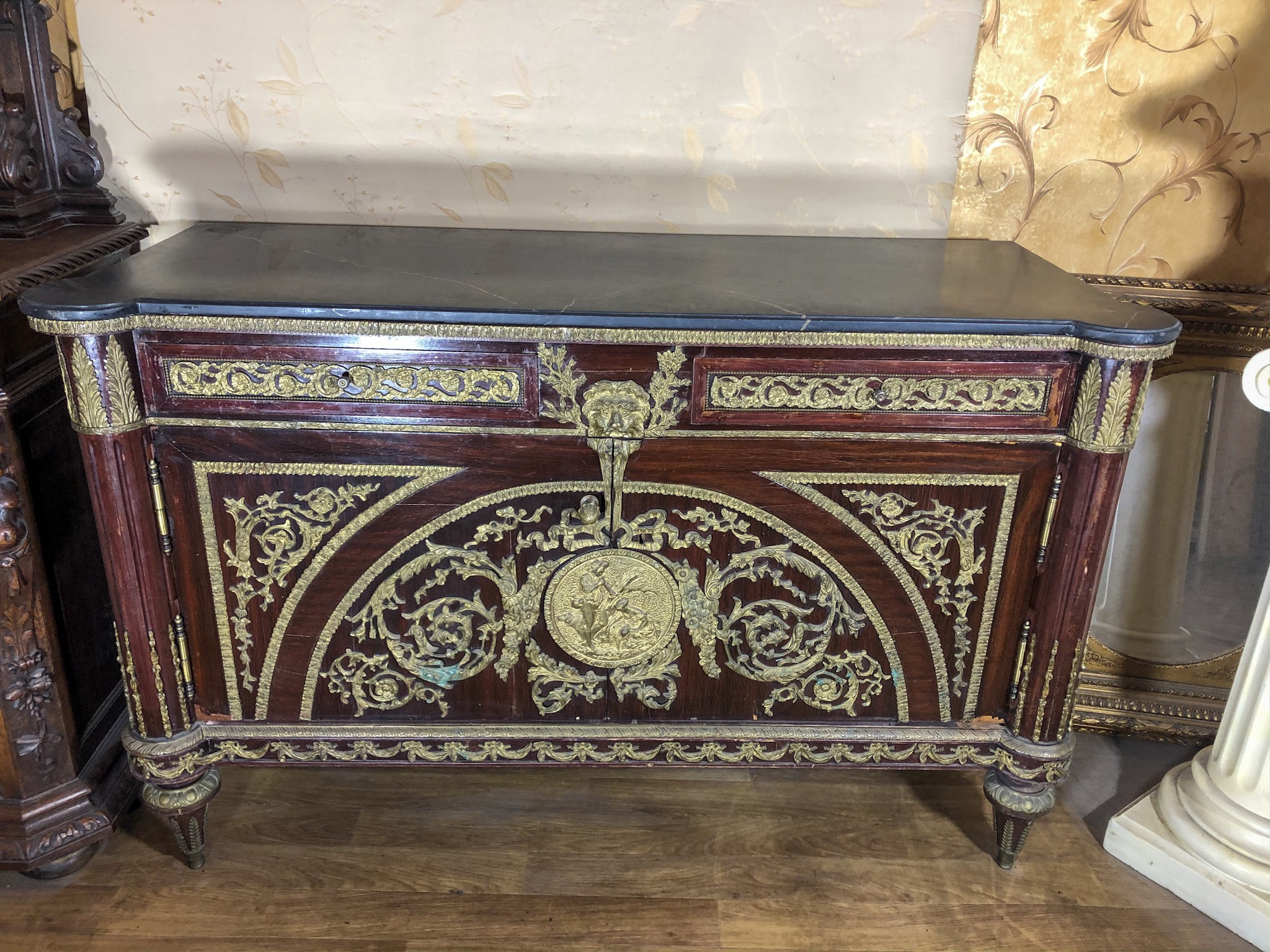
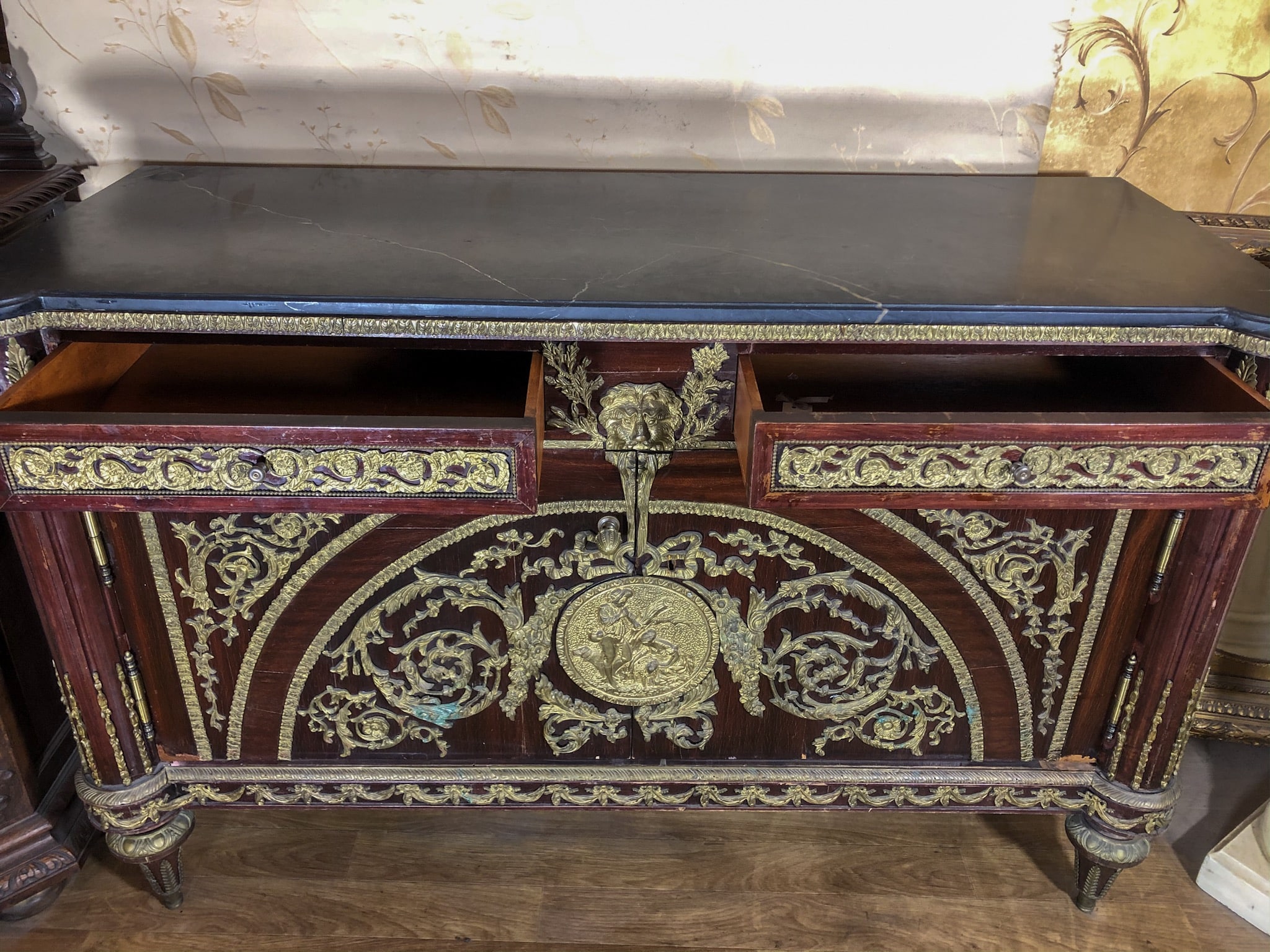
Monumentāla kumode mahagonā ar blīvu bronzas appliqué furnitūru Boulle stilā: médaillon ar mitoloģisku ainu, lauvas mascaron, acanthus vijumi, kolonnas ar ormolu kapiteļiem. Luija XIV / Second Empire stils, Francija, ap 1860.–1880. Augstums 100 cm, platums 160 cm, dziļums 61 cm.
―――――――――――――――――――――
📐 IZMĒRI
Augstums: 100 cm × Platums: 160 cm × Dziļums: 61 cm. Svars: ārkārtīgi smags (masīvs koks, bronza, marmors).
―――――――――――――――――――――
Monumentāla Kumode ar Bronzas Boulle Inkrustācijām un Melna Marmora Virsmu — Luija XIV / Second Empire stils, Francija, ap 1860.–1880.
―――――――――――――――――――――
🏛️ IZGATAVOŠANAS PERIODS, MĀKSLAS STILS, LAIKMETS
Šī monumentālā kumode ir viens no iespaidīgākajiem Luija XIV un Second Empire stilu sintēzes paraugiem, kādi vien iespējami 19. gadsimta Eiropas augstākās klases galdniecībā. Tās mākslinieciskā valoda tieši atsaucas uz André-Charles Boulle — Luija XIV galma ébéniste, kurš 17. gadsimtā izveidoja tehnikas, kas vēlāk kļuva par Francijas mēbeļu mākslas augstāko simbolu. Boulle stilā bronzas appliqué furnitūra tiek uzklāta uz tumša koka — mahagona vai rozīpkoka — veidojot blīvu, gandrīz tapisserie efektu, kurā katrs kvadrātcentimetrs ir rotāts.
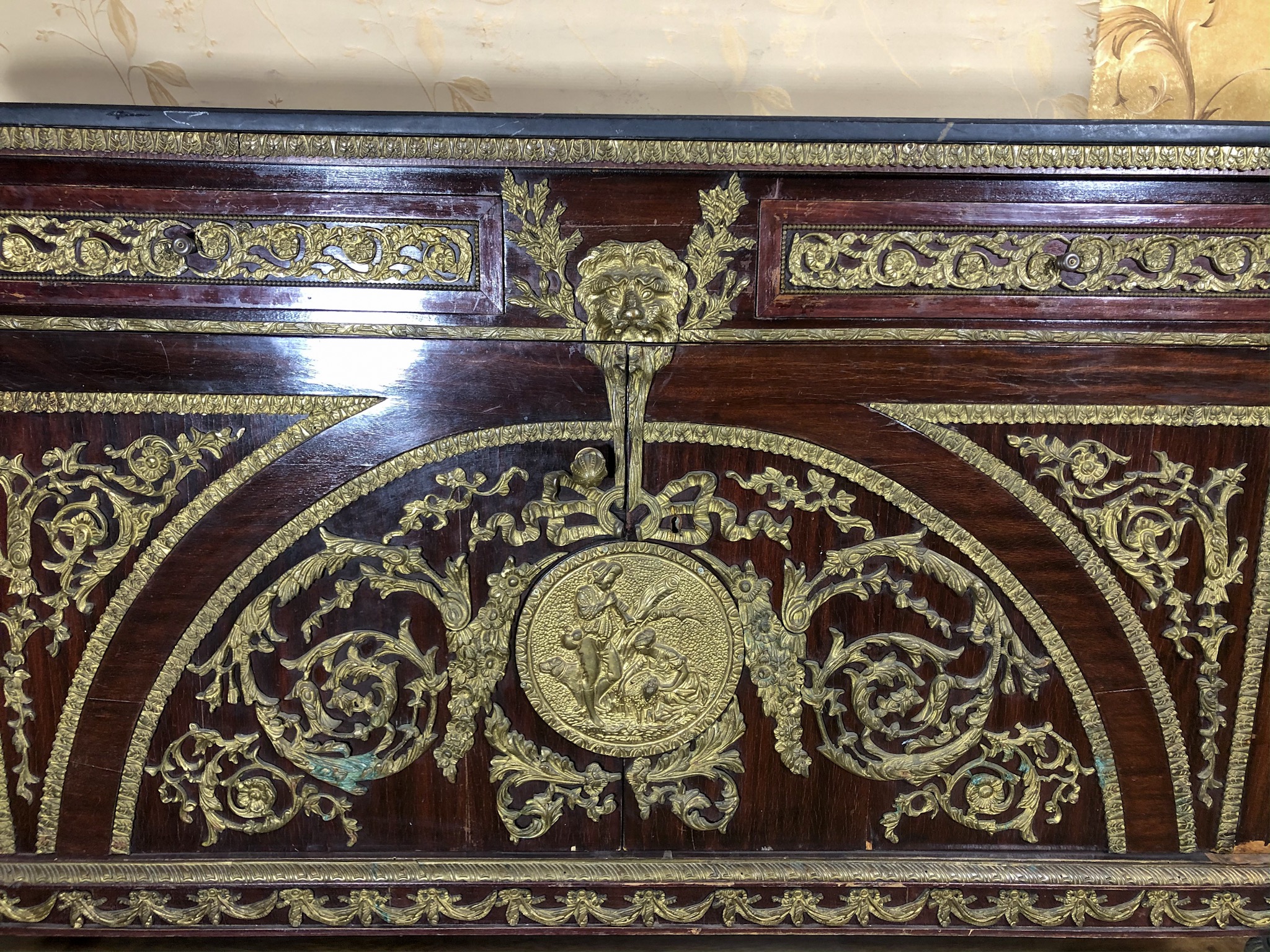
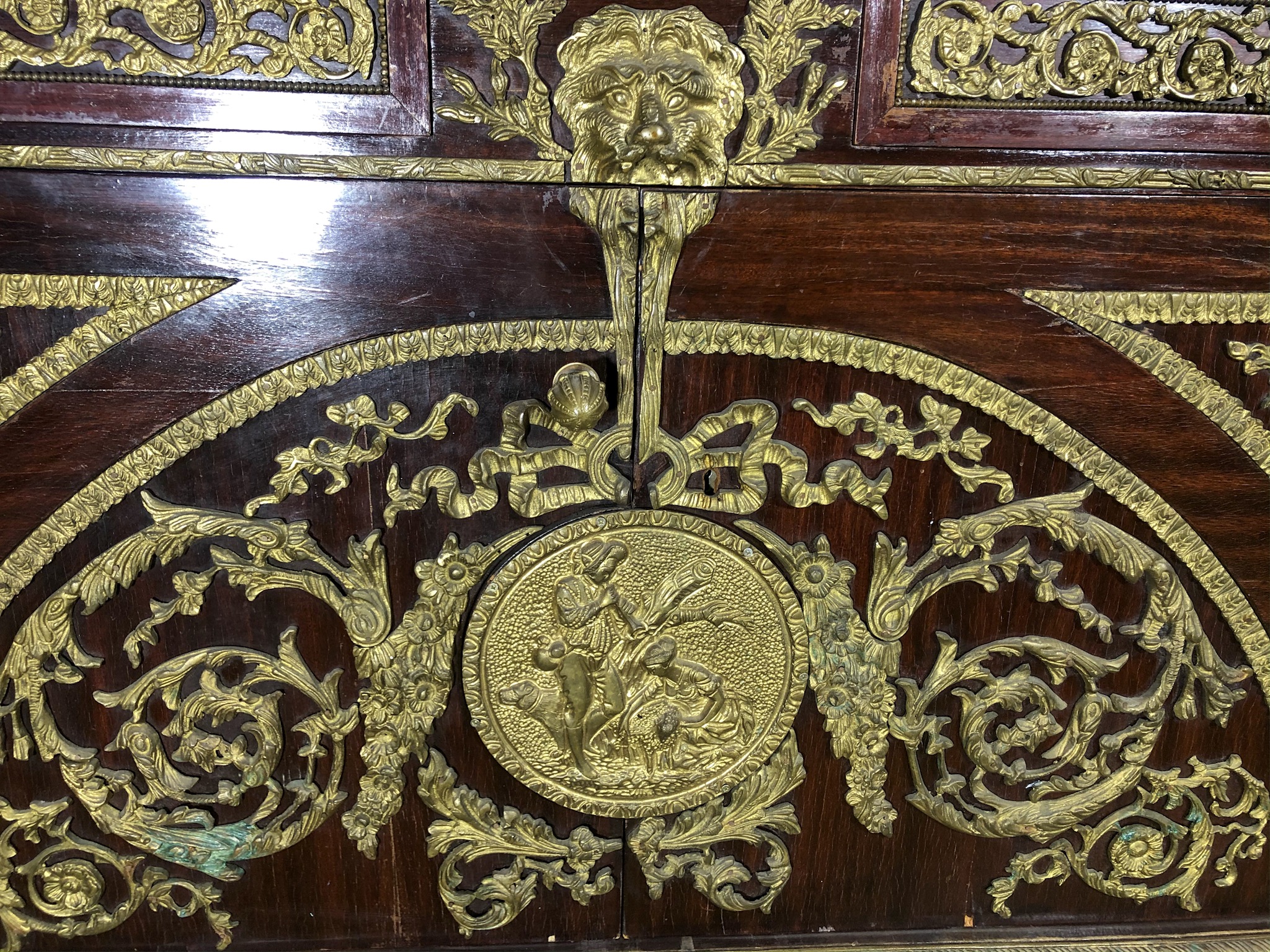
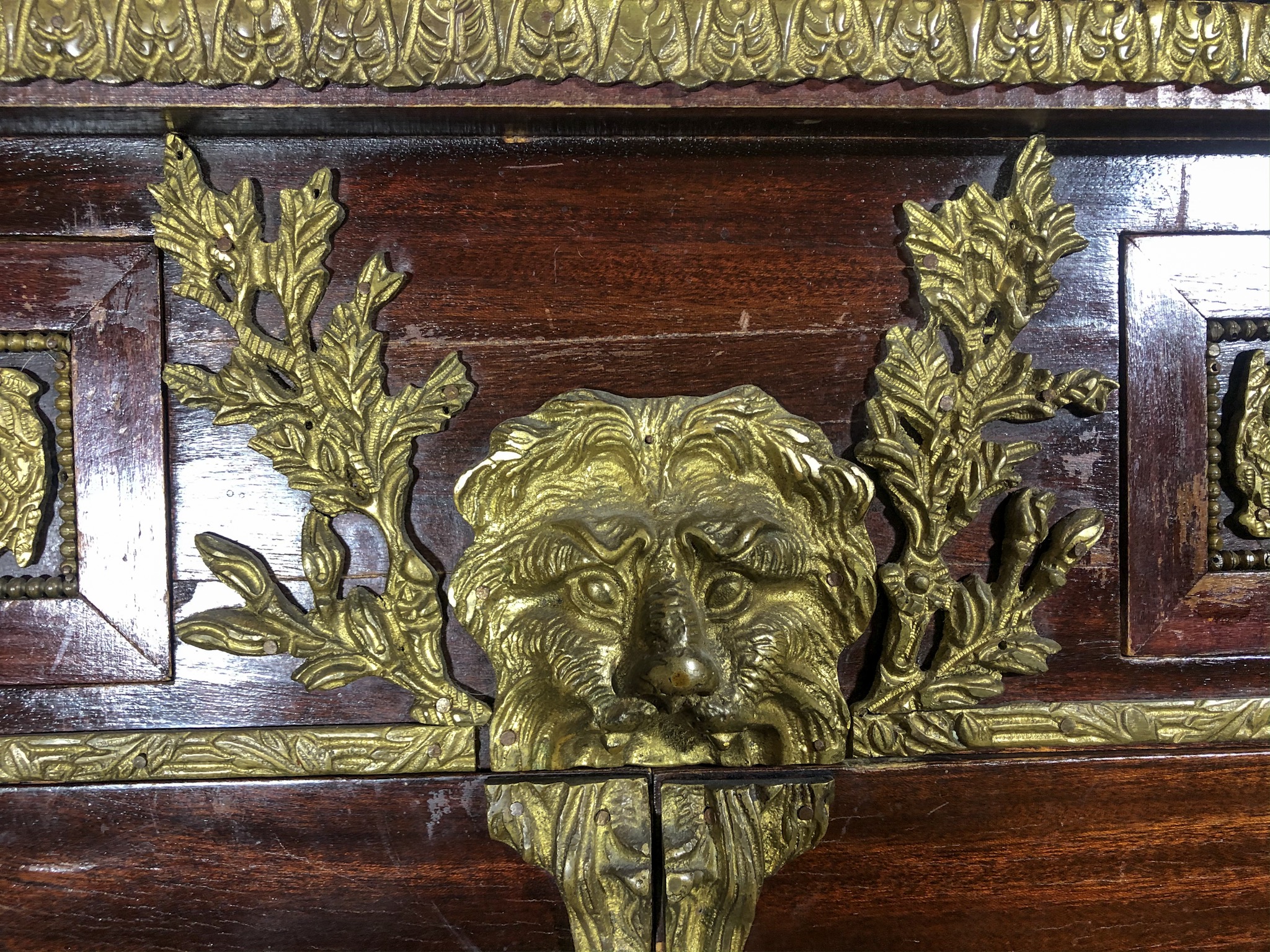
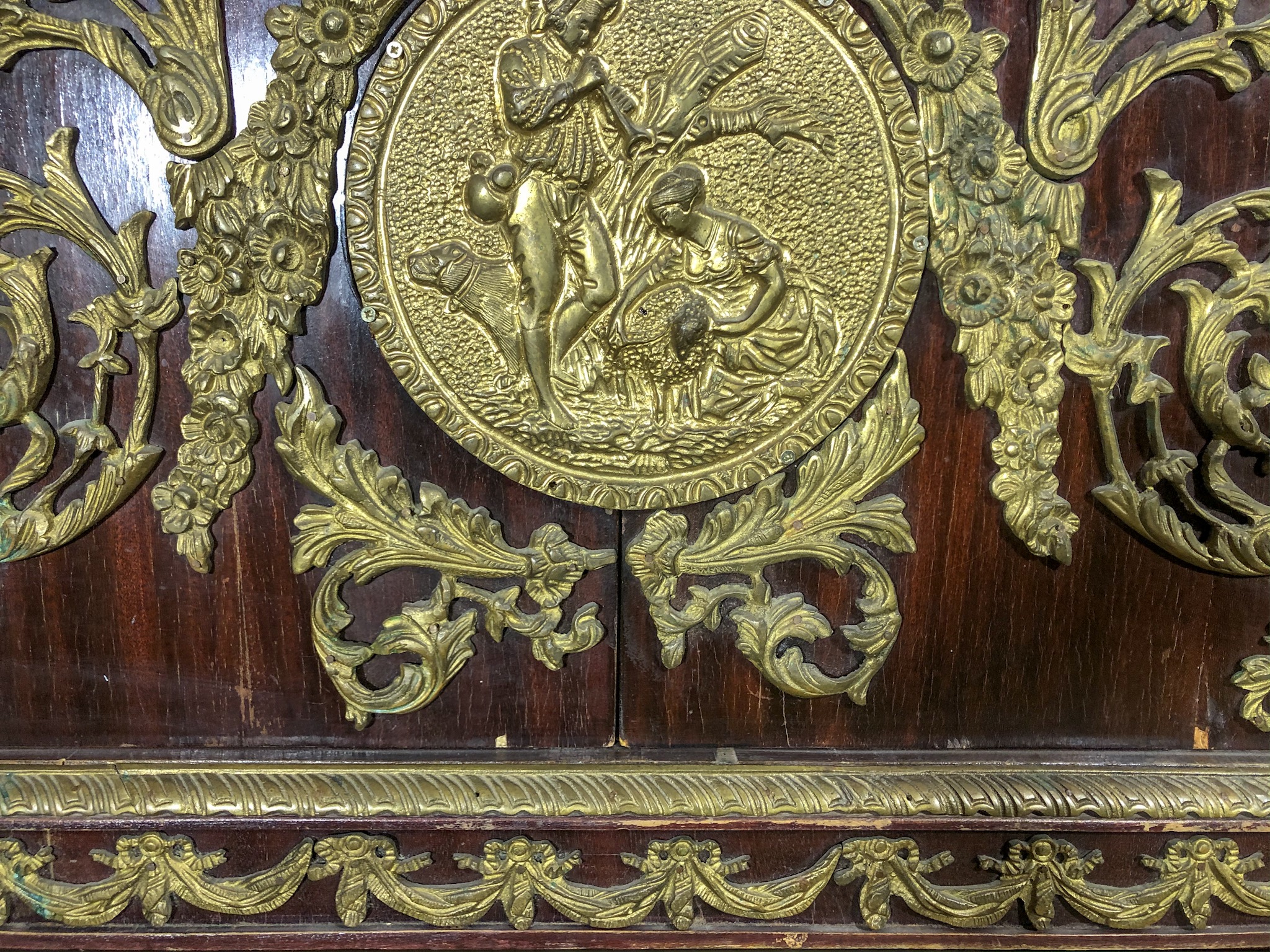
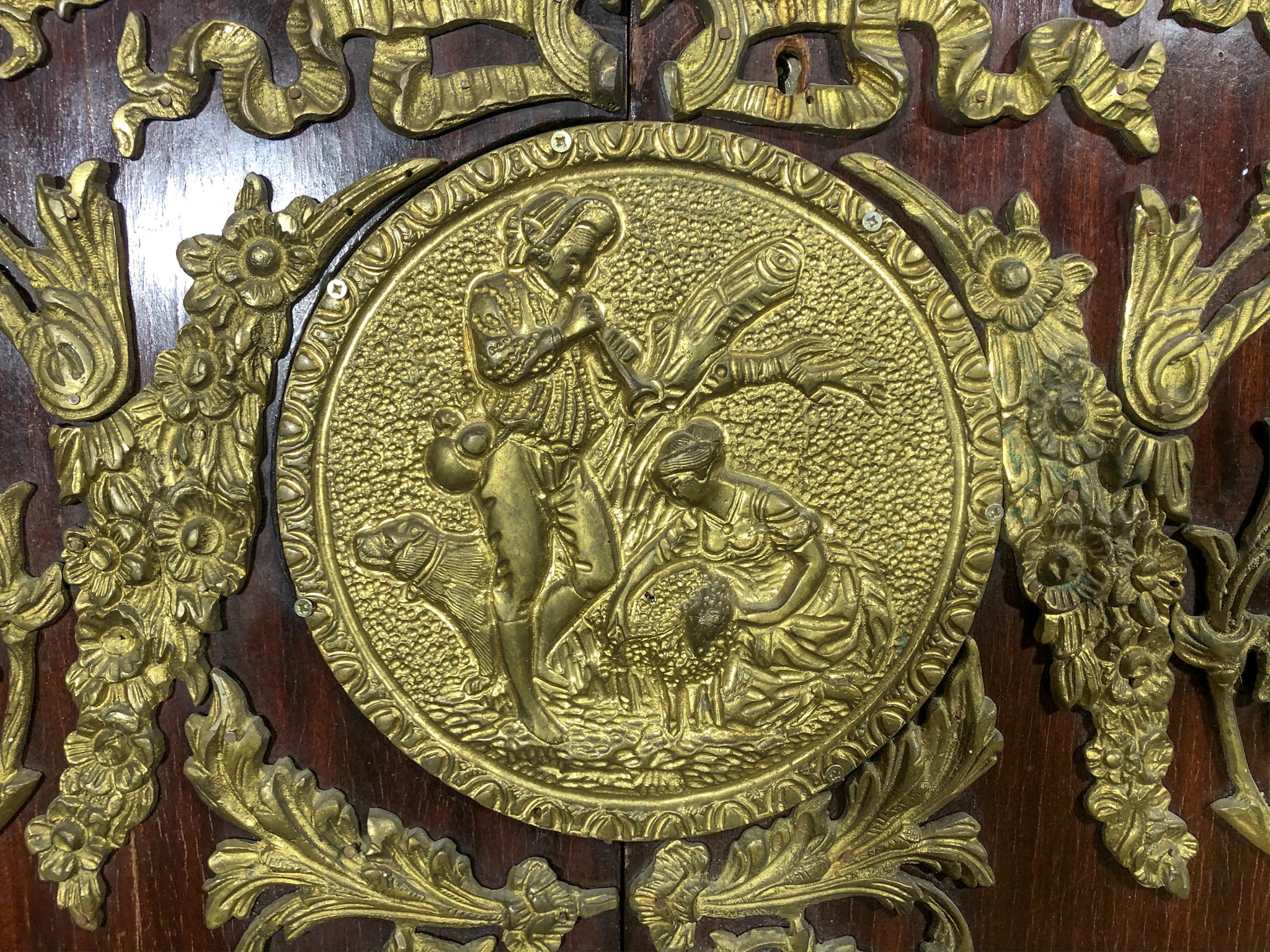
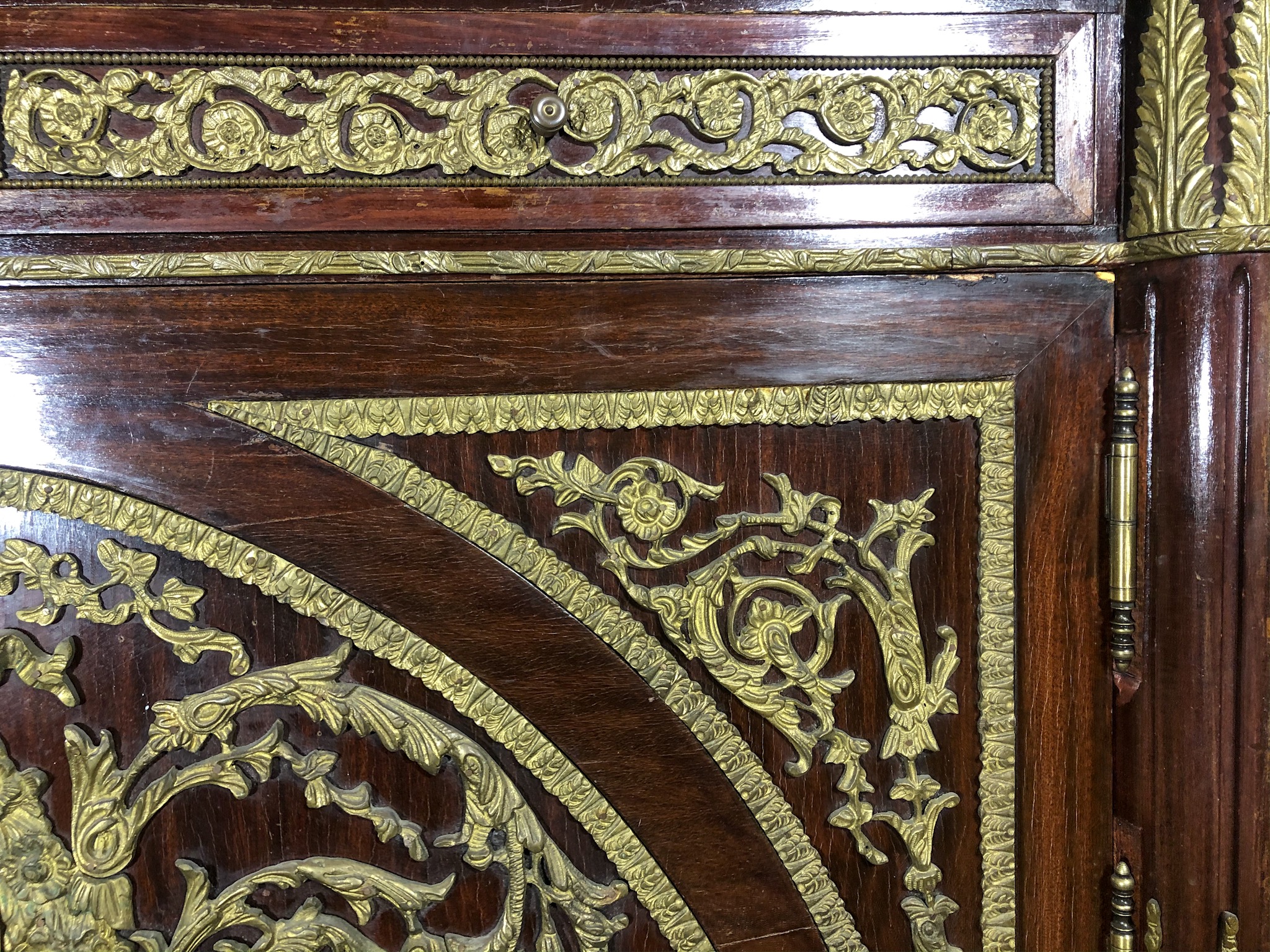
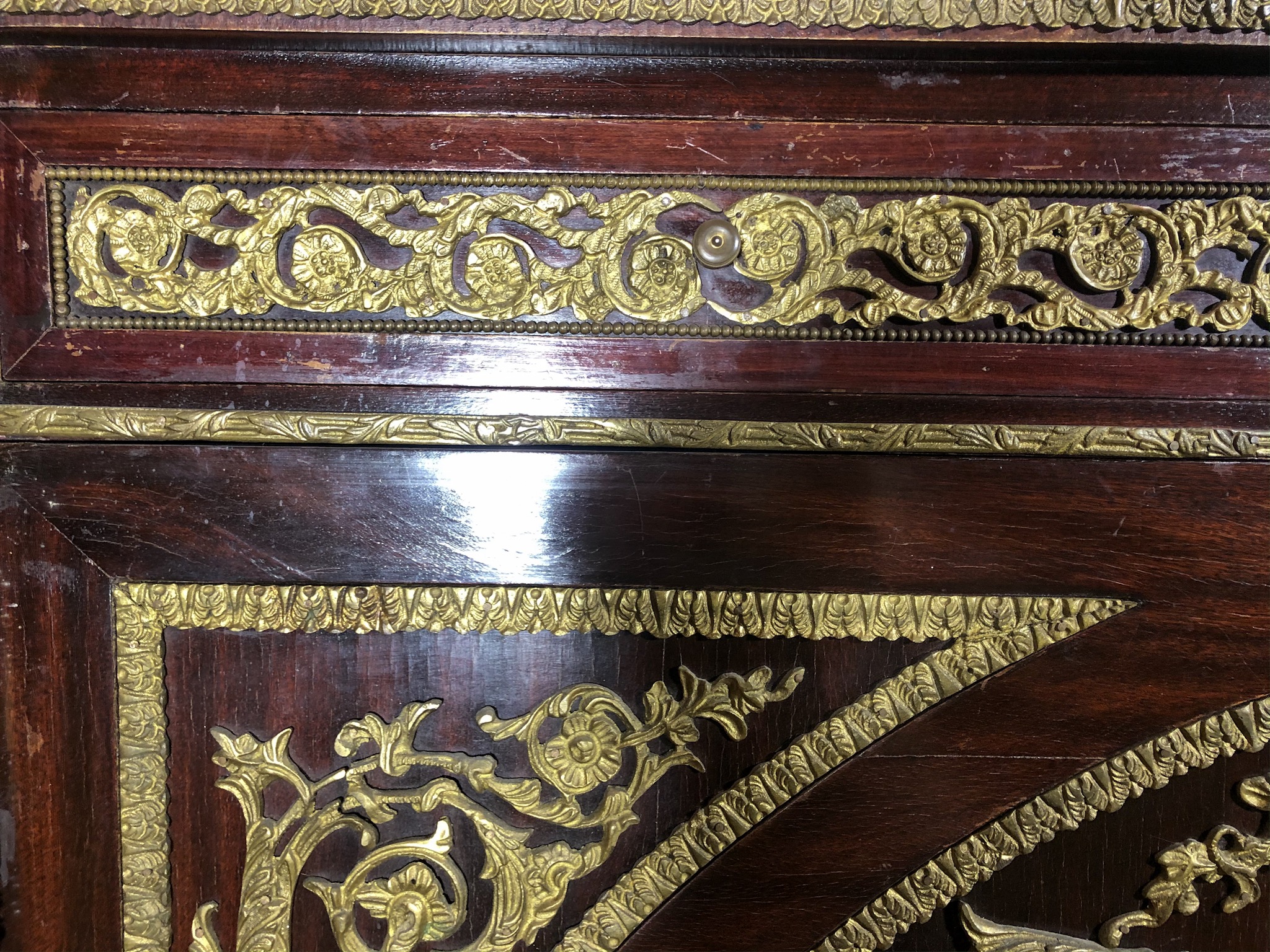
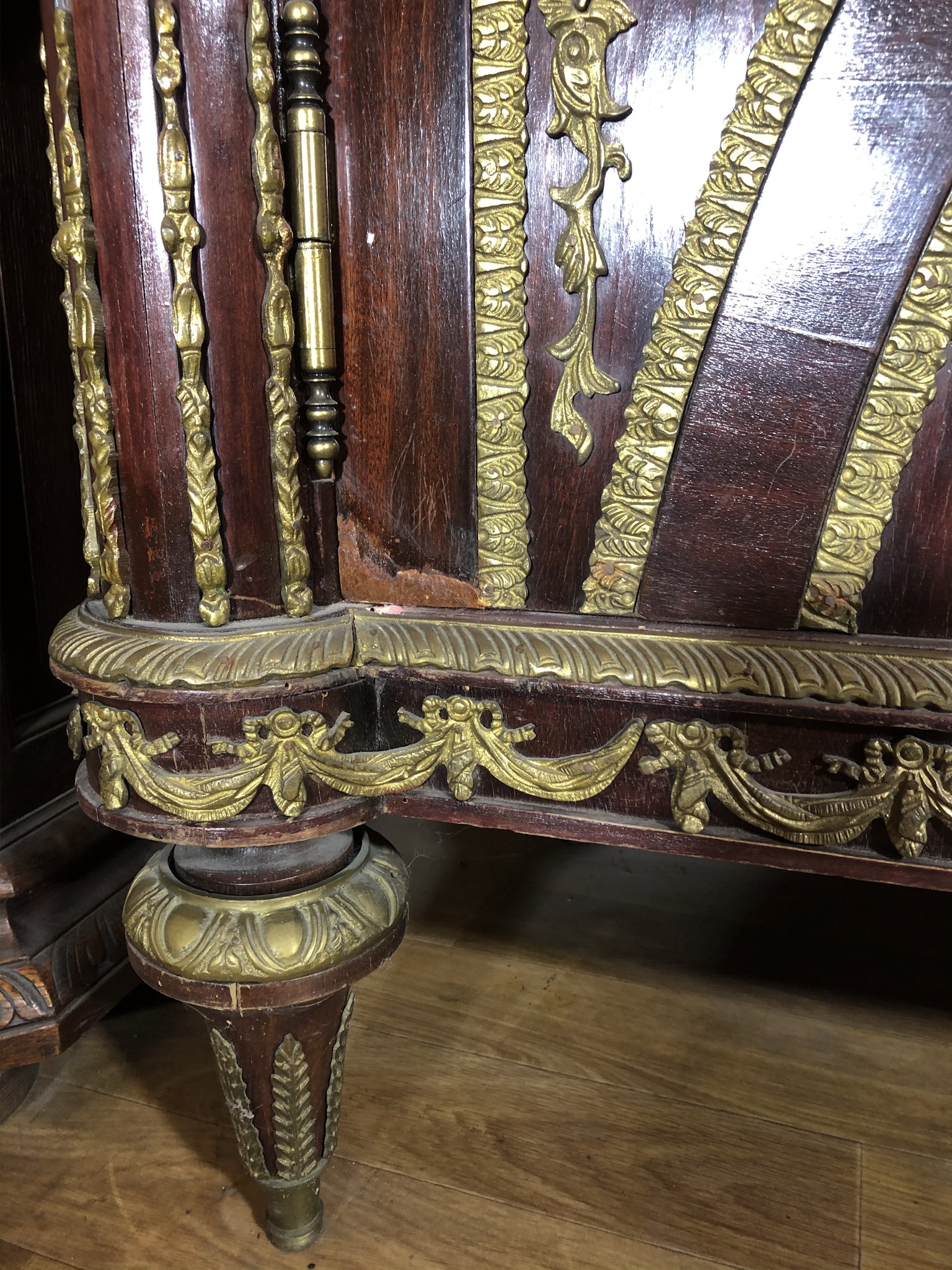
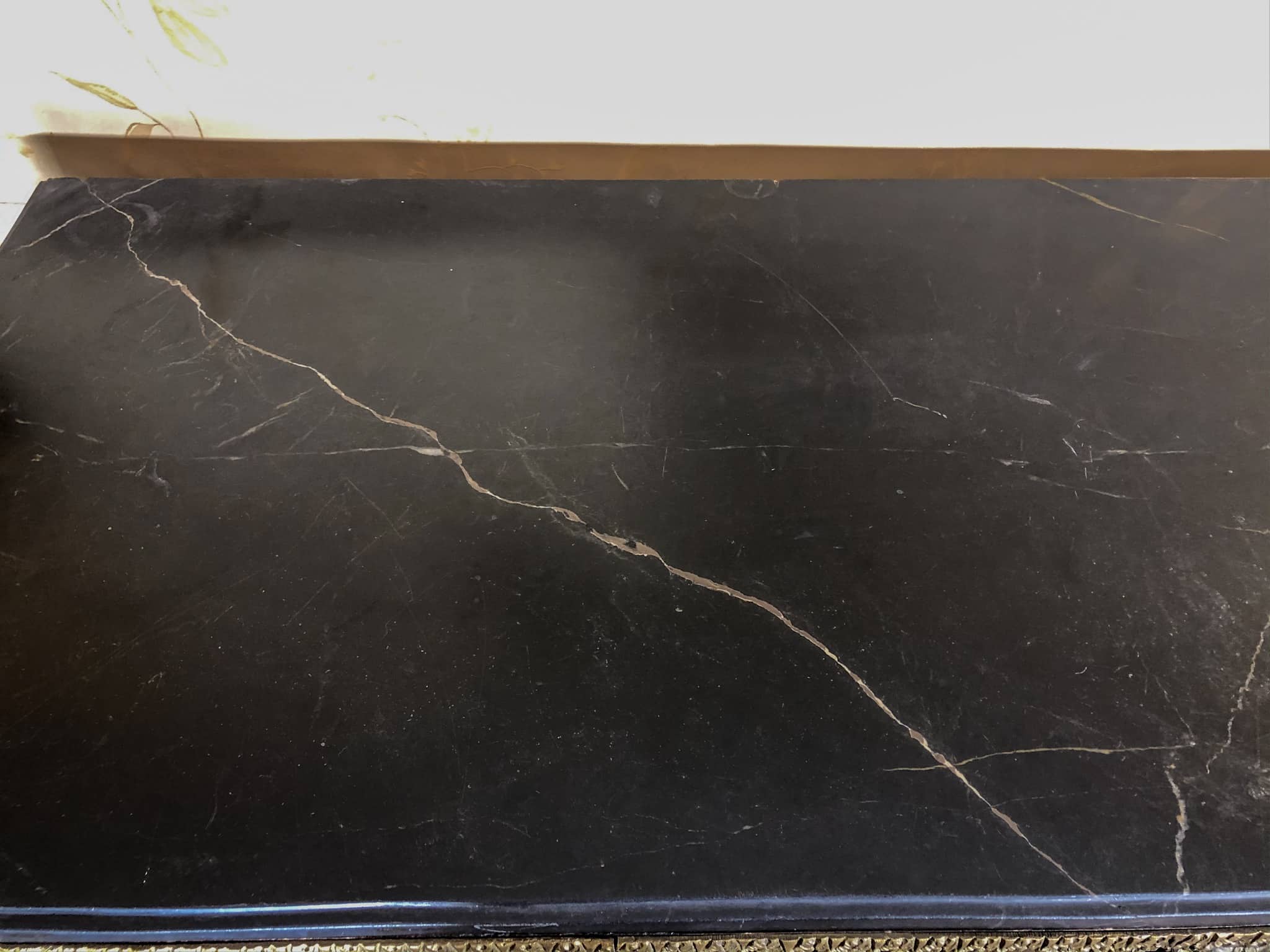
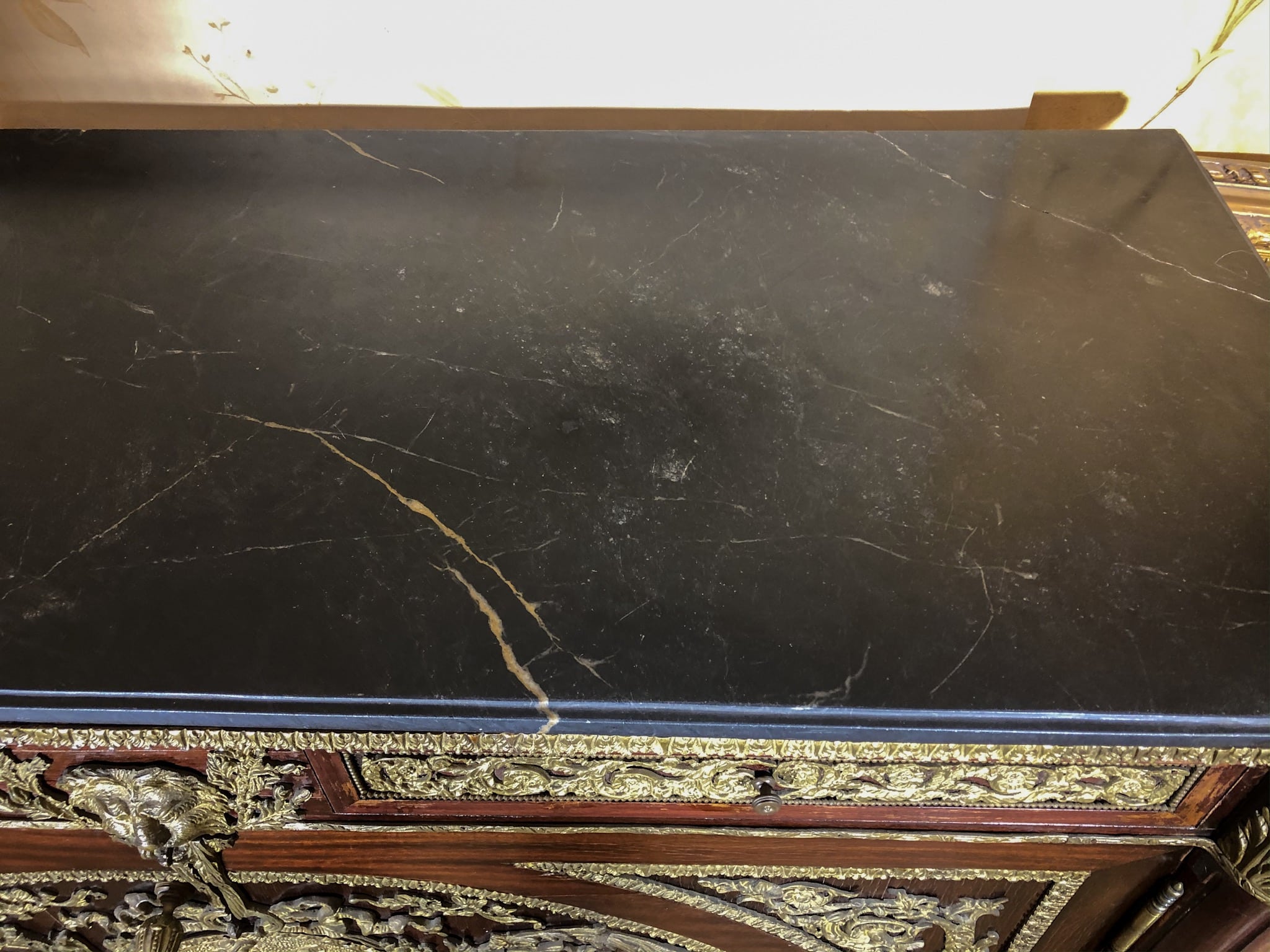
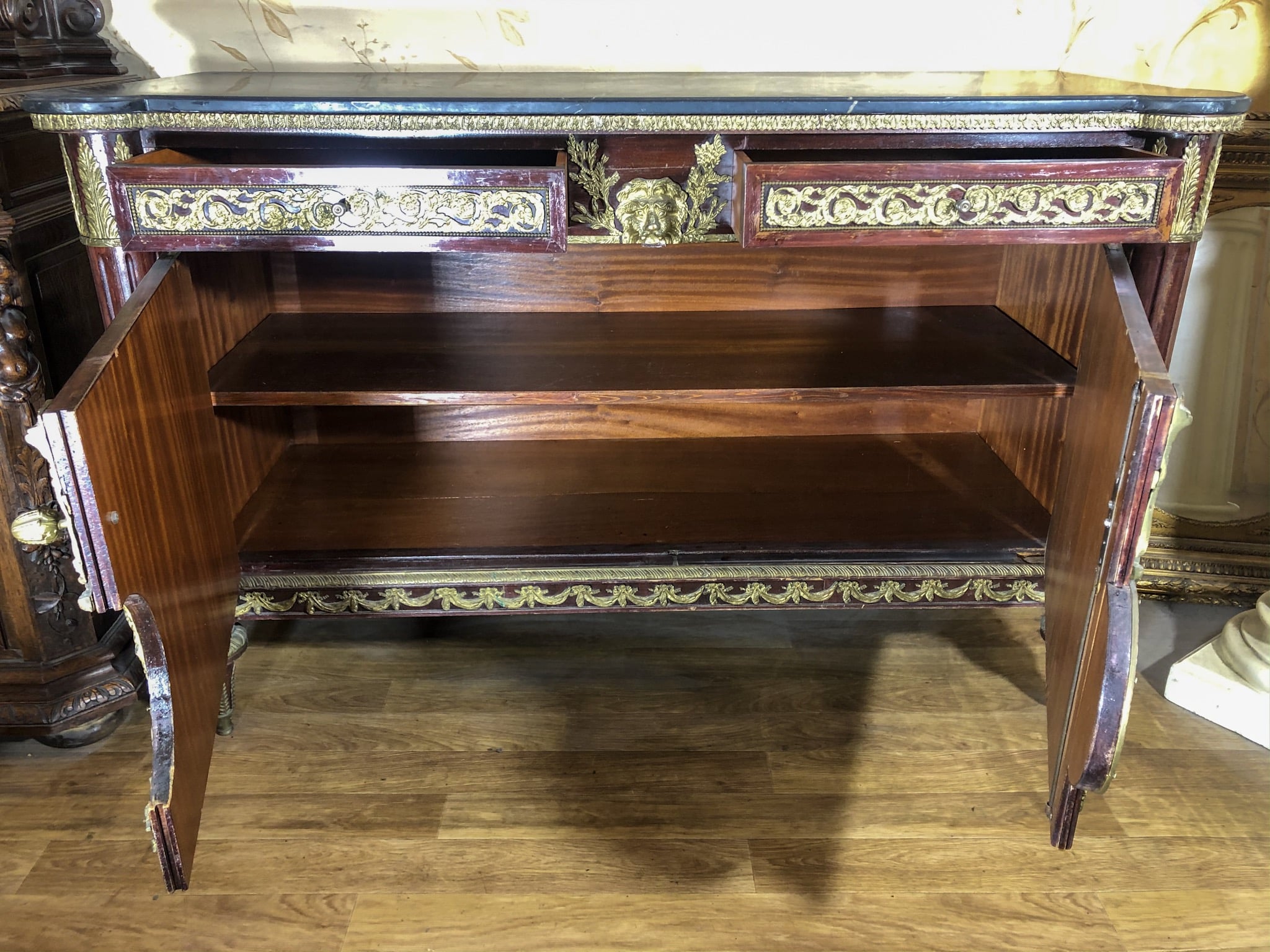
Šīs kumodes fasādi dominē monumentāls pusarkas tympanon ar centrālo bronzas médaillon — mitoloģiska aina ar figūrām pastorālā ainavā. Pusloka loka iekšpusi piepilda blīvs acanthus, puķu un lapu appliqué vijums. Augšējā frize — ar rinceau vijumu bronzā un godrons maliņu. Stūros — pilnīgas bronzas kolonnas ar cannelures un ormolu kapiteļiem. Sānos — vertikāli bronzas baguettes vijumi. Lejasdaļā — swagged vītņu bronzas guirlandes. Kājas — koniskas, ar ormolu lapu sabots. Centrālais mascaron virs durvju šķīruma — lauvas seja ar krēpēm, augstākās Empire ikonografijas elements. Marmora virsma — melna ar baltiem dzīslojumiem, Nero Marquina vai līdzīgs — piešķir kumodes augšdaļai absolūtu reprezentativitāti.
Prece datējama 1860.–1880. periodā — Belle Époque priekšvakarā un sākumā, kad Napoleona III Second Empire laikmeta Parīze bija pasaules elegances centrs.
Belle Époque momentuzņēmums: 1867. gadā Napoleons III uzņēma Eiropas monarķus Tuilerie pilī — starp viņiem Krievijas caru Aleksandru II un Prūsijas karali Vilhelmu I. Pieņemšanas zāles kumodes un bufetes bija tieši šāda veida — ar bronzas médaillon un melna marmora virsmām — un tās kalpoja kā vizuāls arguments par Francijas kultūras pārākumu pār Eiropu. Šī kumode varētu būt piederējusi tieši tam pašam diplomātiskās reprezentācijas pasaulei.
―――――――――――――――――――――
⚜️ RAŽOTĀJS UN MANUFAKTŪRAS ZĪMOGS
Redzama marķējuma nav. Pēc bronzas appliqué apstrādes blīvuma, médaillon plastiskuma un kolonnu ormolu kapiteļu kvalitātes — lieta nācis no augstākās klases Parīzes ébéniste darbnīcas, kas specializējās Boulle stila mēbelēs. 19. gadsimta otrajā pusē šādu kumodu galvenie ražotāji Parīzē bija tādas firmas kā Beurdeley, Grohé un Zwiener — augstākā ébénisterie līmeņa pārstāvji, kuru darbi nonāca Eiropas karalisko galmu kolekcijās. Bronzas médaillon mitoloģiskā aina ar amorīniem pastorālā ainavā ir tipisks Beurdeley vai Linke stila elements.
―――――――――――――――――――――
💎 RETUMS UN NOZĪME
Monumentāla Boulle stila kumode šādā izmērā — 160 cm platumā — ar pilnīgi saglabātu bronzas appliqué fasādi, médaillon, lauvas mascaron un oriģinālu melna marmora virsmu ir ārkārtīgi reta parādība antikvāru tirgū. Šāda veida lielformāta kumodes tika izgatavotas vien mazā skaitā — tās bija paredzētas pilu un augstāko sabiedrības aprindu rezidencēm. Kolekcionāru un muzeju pasaulē Boulle stila lielformāta lietas ar mitoloģiskiem médaillons pieder augstākās cenas kategorijai.
―――――――――――――――――――――
🕯️ PIELIETOJUMS INTERJERĀ, DIZAINĀ UN FOTOGRĀFIJĀ
Šī kumode ir radīta reprezentatīviem salona, ēdamistabas vai vestibila interjeriem. Tās 160 cm platums un melna marmora virsma padara to par ideālu bufeti vai ekspozīcijas leti mākslas priekšmetiem, lampām vai porcelānam. Sader ar Luija XIV, Second Empire, Neo-Baroka un grand palais interjeriem. Interjeru fotogrāfijā — absolūts 19. gadsimta Parīzes grand salon akcents. Luksusa viesnīcu, galēriju un pils stila rezidences iekārtošanā tā ir vienas no dominējošajām mēbelēm.
―――――――――――――――――――――
🎁 DĀVANA UN PERSONALIZĀCIJA
Šīs kumodes apjoms un mākslinieciskā intensitāte padara to par izcilu reprezentatīvu iegādi augstākā līmeņa kolekcijām, luksusa rezidencēm un institucionāliem interjeriem. Tā izsaka ne tikai gaumi, bet arī dziļu izpratni par Eiropas kultūrvēsturi. Zvaigznāju simbolikā — Lauva, Skorpions un Mērkaķis — personas ar dramatisku, monumentālu estētisko redzējumu.
―――――――――――――――――――――
🔍 STĀVOKLIS
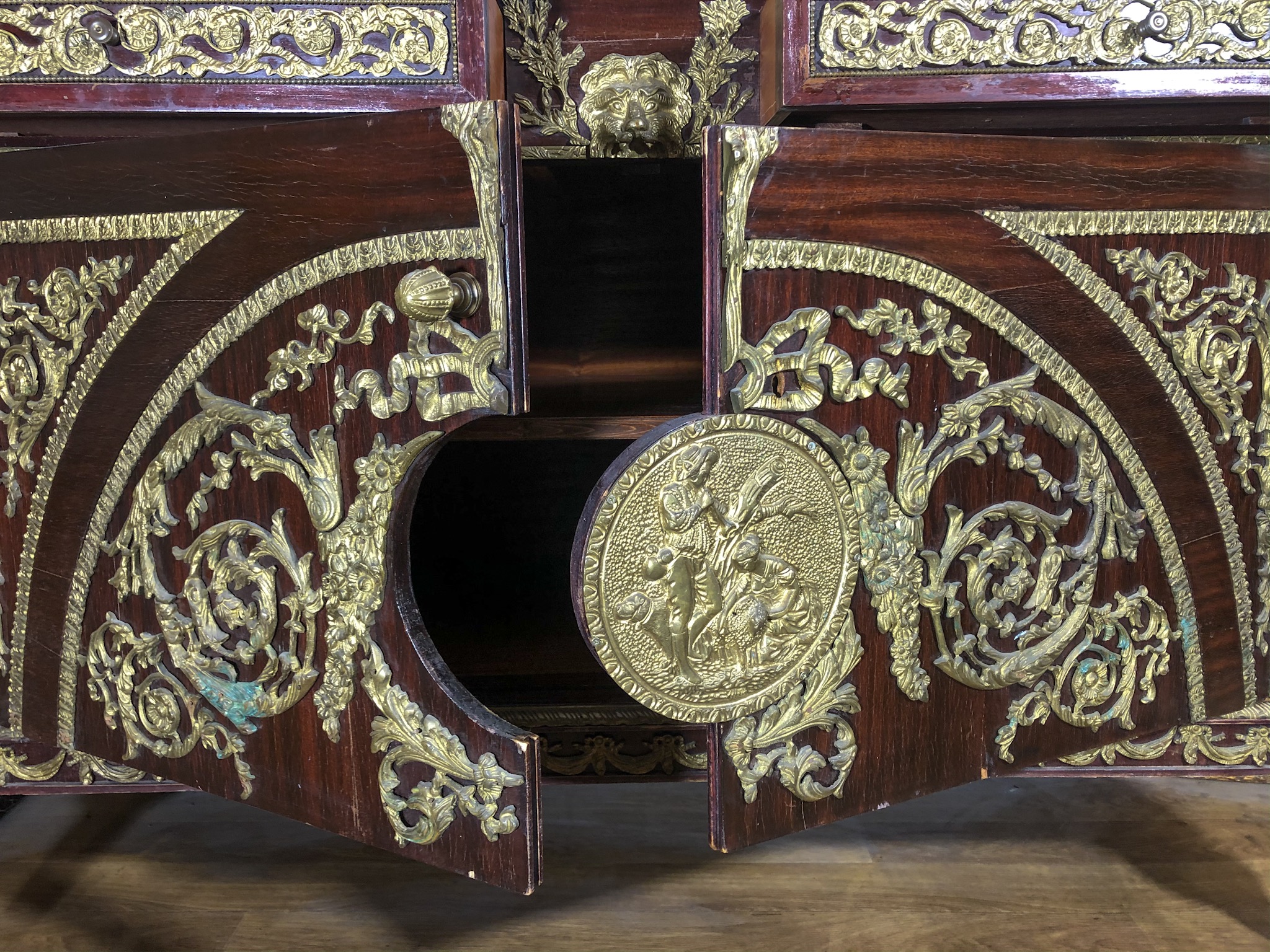
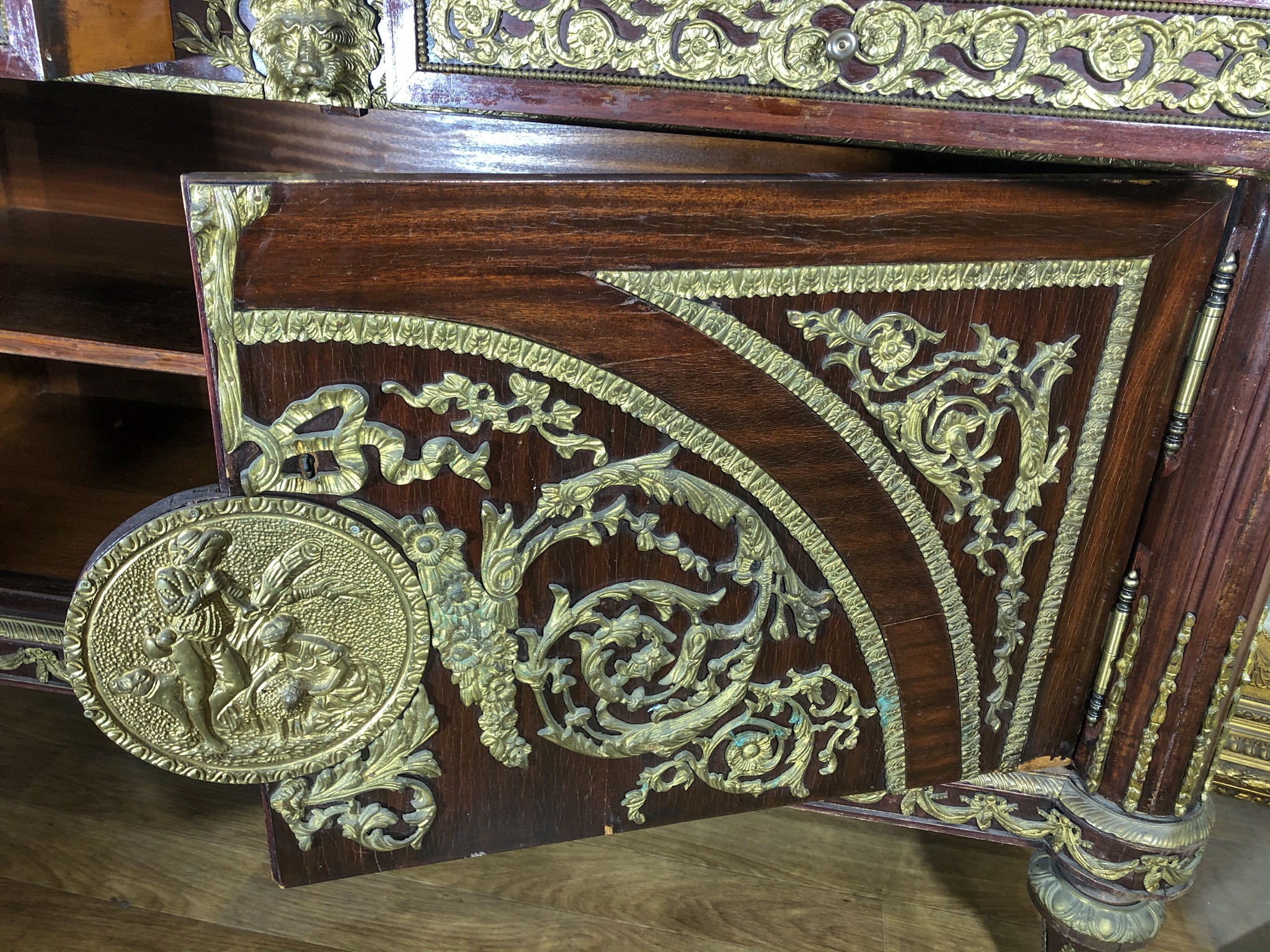
Kumode ir labā vispārējā stāvoklī, ņemot vērā vecumu un apjomu. Bronzas appliqué fasāde lielākoties saglabājusies — vietām redzama dabīga oksidācija un patina, kas piešķir autenticitāti. Atsevišķas bronzas detaļas sānos ar nelielu mehānisku bojājumu — redzams fotogrāfijās. Melna marmora virsma ar dabīgiem žilbu vijumiem, bez lūzumiem. Iekšpuse — ar plauktu, funkcionāla. Durvis atveramas. Lietas stāvoklis pilnībā atspoguļots fotogrāfijās.
―――――――――――――――――――――
🇬🇧 DESCRIPTION IN ENGLISH
―――――――――――――――――――――
📐 DIMENSIONS
Height: 100 cm × Width: 160 cm × Depth: 61 cm. Weight: extremely heavy (solid wood, bronze, marble).
―――――――――――――――――――――
Monumental Commode with Bronze Boulle Appliqués and Black Marble Top — Louis XIV / Second Empire Style, France, approximately 1860–1880
―――――――――――――――――――――
🏛️ PERIOD, ARTISTIC STYLE, ERA
This monumental commode is one of the most impressive examples of the synthesis of Louis XIV and Second Empire styles possible in the highest-class cabinetmaking of 19th-century Europe. Its artistic vocabulary directly references André-Charles Boulle — Louis XIV‘s court ébéniste, who in the 17th century developed techniques that would become the supreme symbol of French furniture art. In the Boulle tradition, bronze appliqué mounts are applied to a dark wood ground — mahogany or rosewood — creating a dense, almost tapisserie effect in which every square centimetre is ornamented.
The façade of this commode is dominated by a monumental semicircular tympanon with a central bronze médaillon — a mythological scene with figures in a pastoral landscape. The interior of the arch is filled with a dense acanthus, floral and leaf appliqué scroll. The upper frieze features a rinceau scroll in bronze with a godrons moulding. The corners are dressed with full bronze columns with cannelures and ormolu capitals. The sides carry vertical bronze baguette scrolls. The lower section features swagged bronze guirlandes. The legs are conical with ormolu leaf sabots. The central mascaron above the door division — a lion’s head with mane — is the supreme element of Empire iconography. The marble top — black with white veining, consistent with Nero Marquina or similar — lends the upper surface absolute representative authority.
The piece is dateable to approximately 1860–1880 — on the eve and at the dawn of the Belle Époque, when Napoleon III‘s Second Empire Paris was the world centre of elegance.
Belle Époque snapshot: In 1867, Napoleon III received the monarchs of Europe at the Tuileries Palace — among them Tsar Alexander II of Russia and King Wilhelm I of Prussia. The sideboards and commodes of the reception rooms were exactly of this type — with bronze médaillons and black marble tops — serving as a visual argument for France’s cultural supremacy over Europe. This commode may well have belonged to that same world of diplomatic representation.
―――――――――――――――――――――
⚜️ MAKER AND MANUFACTORY MARK
No visible maker’s mark is present. Based on the density of the bronze appliqué work, the plasticity of the médaillon and the quality of the column ormolu capitals, the piece originates from a high-class Parisian ébéniste workshop specialising in Boulle style furniture. In the second half of the 19th century, the leading producers of such commodes in Paris included firms such as Beurdeley, Grohé and Zwiener — representatives of the highest ébénisterie level, whose works entered the collections of European royal courts. The mythological scene with amorini in a pastoral landscape on the bronze médaillon is a characteristic element of the Beurdeley or Linke style.
―――――――――――――――――――――
💎 RARITY AND SIGNIFICANCE
A monumental Boulle style commode of this scale — 160 cm in width — with a fully preserved bronze appliqué façade, médaillon, lion mascaron and original black marble top is an exceptionally rare find on the antiques market. Large-format commodes of this type were produced in small numbers — they were intended for palaces and the residences of the highest social circles. In the world of collectors and museums, large-format Boulle style pieces with mythological médaillons belong to the highest price category.
―――――――――――――――――――――
🕯️ USE IN INTERIOR, DESIGN AND PHOTOGRAPHY
This commode was created for representative salon, dining room or vestibule interiors. Its 160 cm width and black marble top make it ideal as a sideboard or display surface for art objects, lamps or porcelain. It harmonises with Louis XIV, Second Empire, Neo-Baroque and grand palais interiors. In interior photography — an absolute 19th-century Parisian grand salon accent. In luxury hotel, gallery and palace-style residential furnishing it is one of the dominant pieces.
―――――――――――――――――――――
🎁 GIFT AND PERSONALISATION
The scale and artistic intensity of this commode make it an outstanding acquisition for the highest-level collections, luxury residences and institutional interiors. It expresses not only taste but a deep understanding of European cultural history. In astrological symbolism — Leo, Scorpio and Capricorn — personalities with a dramatic, monumental aesthetic vision.
―――――――――――――――――――――
🔍 CONDITION
The commode is in good overall condition considering its age and scale. The bronze appliqué façade is largely intact — natural oxidation and patina are visible in places, which lend authenticity. Certain bronze details on the sides show minor mechanical damage — visible in the photographs. The black marble top retains its natural vein patterns, with no breaks. The interior is functional, fitted with a shelf. The doors open correctly. The condition of the item is fully reflected in the photographs.
―――――――――――――――――――――
🇷🇺 ОПИСАНИЕ НА РУССКОМ
―――――――――――――――――――――
📐 Размеры: Высота: 100 см × Ширина: 160 см × Глубина: 61 см. Очень тяжёлый (массив дерева, бронза, мрамор).
Монументальный комод с бронзовыми накладками в стиле Буль и чёрной мраморной столешницей — стиль Людовика XIV / Второй империи, Франция, около 1860–1880 гг.
Этот монументальный комод — выдающийся образец синтеза стилей Людовика XIV и Второй империи, созданный в традиции Андре-Шарля Буля — придворного ébéniste Людовика XIV, основателя техники плотных бронзовых appliqué на тёмном дереве. Фасад украшен полуарочным тимпаном с центральным бронзовым médaillon — мифологической сценой с фигурами в пасторальном пейзаже. Полуарка заполнена густым acanthus и цветочными бронзовыми завитками. Угловые колонны с cannelures и ormolu-капителями, центральная маска льва над дверным разделом, гирлянды у основания — всё выполнено с исключительным мастерством. Столешница из чёрного мрамора с белыми прожилками (Nero Marquina или аналог) создаёт абсолютный контраст с позолоченной бронзой.
В 1867 году Наполеон III принимал европейских монархов в Тюильри — буфеты и комоды парадных залов были именно такими: с бронзовыми медальонами и чёрным мрамором. Этот предмет мог принадлежать тому же миру дипломатического великолепия. Происхождение: предположительно мастерская высшего класса в Париже — возможно, Beurdeley, Grohé или Zwiener. Состояние хорошее, с естественной патиной и следами времени. Состояние предмета полностью отражено на фотографиях.
―――――――――――――――――――――
🇩🇪 BESCHREIBUNG AUF DEUTSCH
―――――――――――――――――――――
📐 Maße: Höhe: 100 cm × Breite: 160 cm × Tiefe: 61 cm. Außerordentlich schwer (Massivholz, Bronze, Marmor).
Monumentale Kommode mit Bronze-Boulle-Applikationen und schwarzer Marmorplatte — Stil Louis XIV / Second Empire, Frankreich, circa 1860–1880
Diese monumentale Kommode ist ein herausragendes Beispiel der Synthese von Louis XIV– und Second Empire-Stil in der Tradition von André-Charles Boulle — dem Hofschreiner Ludwigs XIV., der die Technik der dichten Bronzeapplikationen auf dunklem Holzgrund begründete. Die Fassade wird von einem halbkreisförmigen Tympanon mit zentralem Bronze-Médaillon dominiert — eine mythologische Szene mit Figuren in einer pastoralen Landschaft. Den Bogen füllt ein dichtes Rankenwerk aus Acanthus und Blüten. Eckkolumnen mit Cannelures und Ormolu-Kapitellen, eine zentrale Löwenmaske über der Türteilung, Guirlanden am Sockel — alles von aussergewöhnlicher handwerklicher Qualität. Die schwarze Marmorplatte mit weissen Adern (Nero Marquina oder vergleichbar) verleiht dem Stück absolute Repräsentativität.
Im Jahr 1867 empfing Napoleon III. die Monarchen Europas in den Tuilerien — die Anrichten und Kommoden der Empfangssäle waren genau von dieser Art. Herkunft: vermutlich eine Pariser ébéniste-Werkstatt höchster Klasse — möglicherweise Beurdeley, Grohé oder Zwiener. Zustand gut, mit natürlicher Patina und Altersspuren. Der Zustand des Objekts ist vollständig in den Fotografien dokumentiert.
―――――――――――――――――――――
🇫🇷 DESCRIPTION EN FRANÇAIS
―――――――――――――――――――――
📐 Dimensions : Hauteur : 100 cm × Largeur : 160 cm × Profondeur : 61 cm. Extrêmement lourd (bois massif, bronze, marbre).
Commode monumentale à appliques de bronze style Boulle et plateau de marbre noir — style Louis XIV / Second Empire, France, circa 1860–1880
Cette commode monumentale est un exemple remarquable de la synthèse des styles Louis XIV et Second Empire, créée dans la pure tradition d’André-Charles Boulle — l’ébéniste attitré de Louis XIV, fondateur de la technique des appliques de bronze doré sur fond de bois sombre. La façade est dominée par un tympan en demi-cercle avec un médaillon central en bronze fondu — une scène mythologique avec des figures dans un paysage pastoral. L’intérieur de l’arc est rempli d’un réseau dense d’acanthes, de fleurs et de rinceaux en bronze. Colonnes d’angle à cannelures avec chapiteaux ormolu, mascaron central en tête de lion au-dessus de la division des portes, guirlandes drapées à la base — tout exécuté avec une maîtrise exceptionnelle. Le plateau de marbre noir à veines blanches — Nero Marquina ou similaire — confère à la pièce une autorité représentative absolue.
En 1867, Napoléon III recevait les souverains d’Europe aux Tuileries — les buffets et commodes des salons d’apparat étaient exactement de ce type, servant d’argument visuel à la suprématie culturelle de la France. Origine probable : atelier parisien de première classe — peut-être Beurdeley, Grohé ou Zwiener. État général bon, avec patine naturelle et traces d’ancienneté. L’état de la pièce est entièrement reflété dans les photographies.
―――――――――――――――――――――