
Monumentāla Ozolkoka Bufete ar Figurāliem Kokgriezumiem – sieviešu figūrām, eņģeļiem, dzīvniekiem— Neo-Renesanse, Beļģija, 19.gs. (202)
Monumentāla Ozolkoka Bufete ar Figurāliem Kokgriezumiem – sieviešu figūrām, eņģeļiem, dzīvniekiem— Neo-Renesanse, Beļģija, 19.gs. (202)
€2,900.00
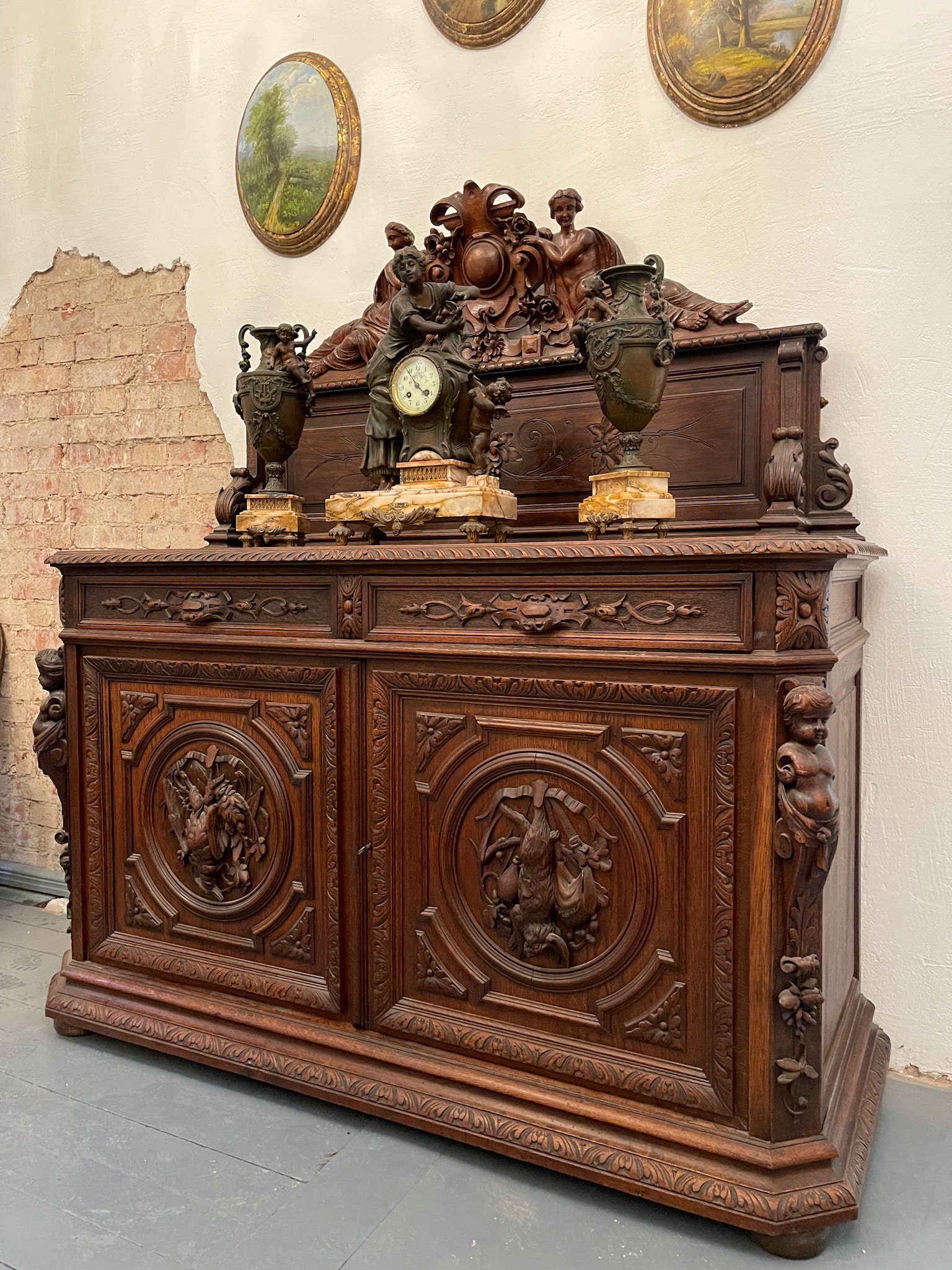
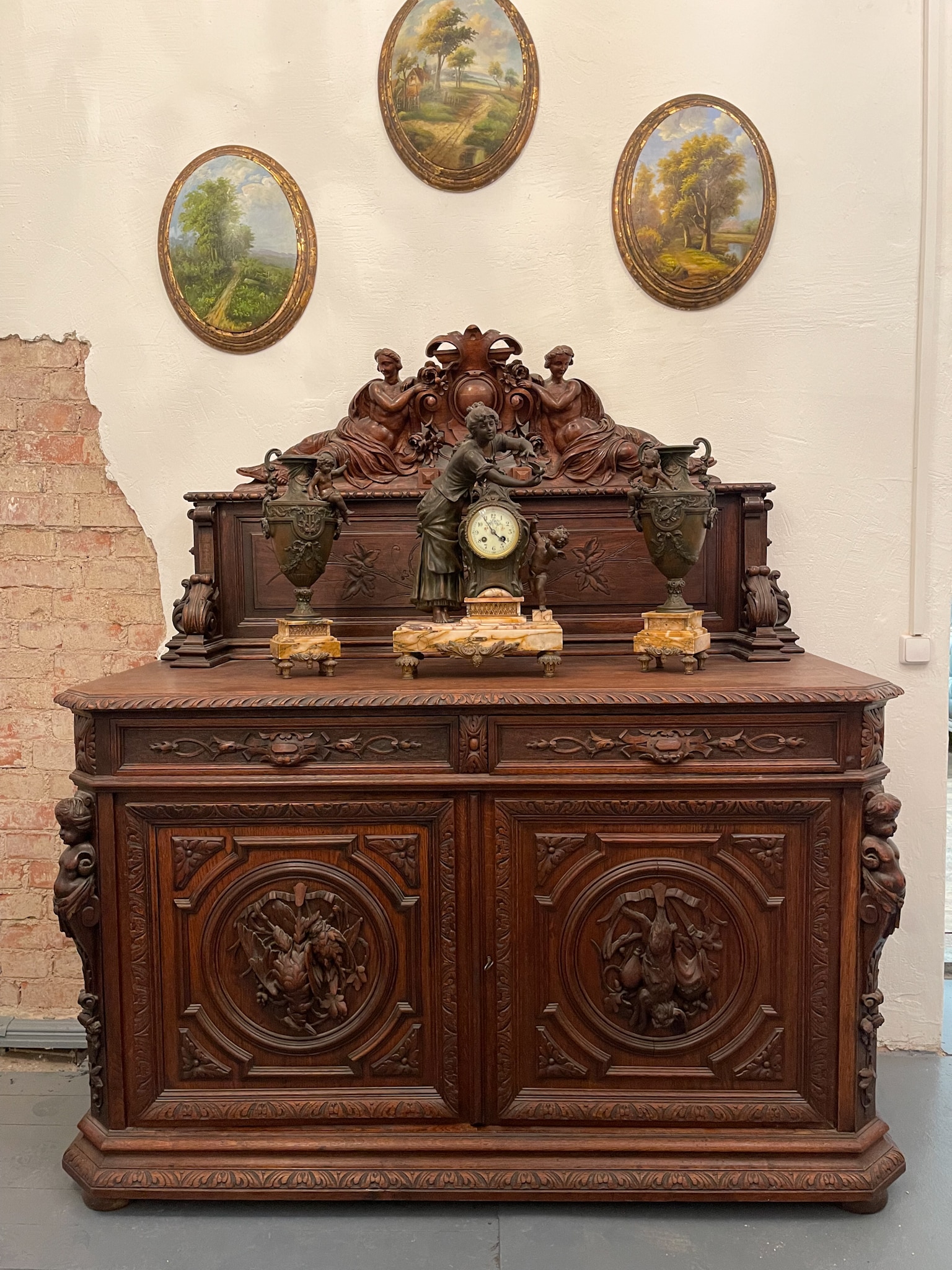
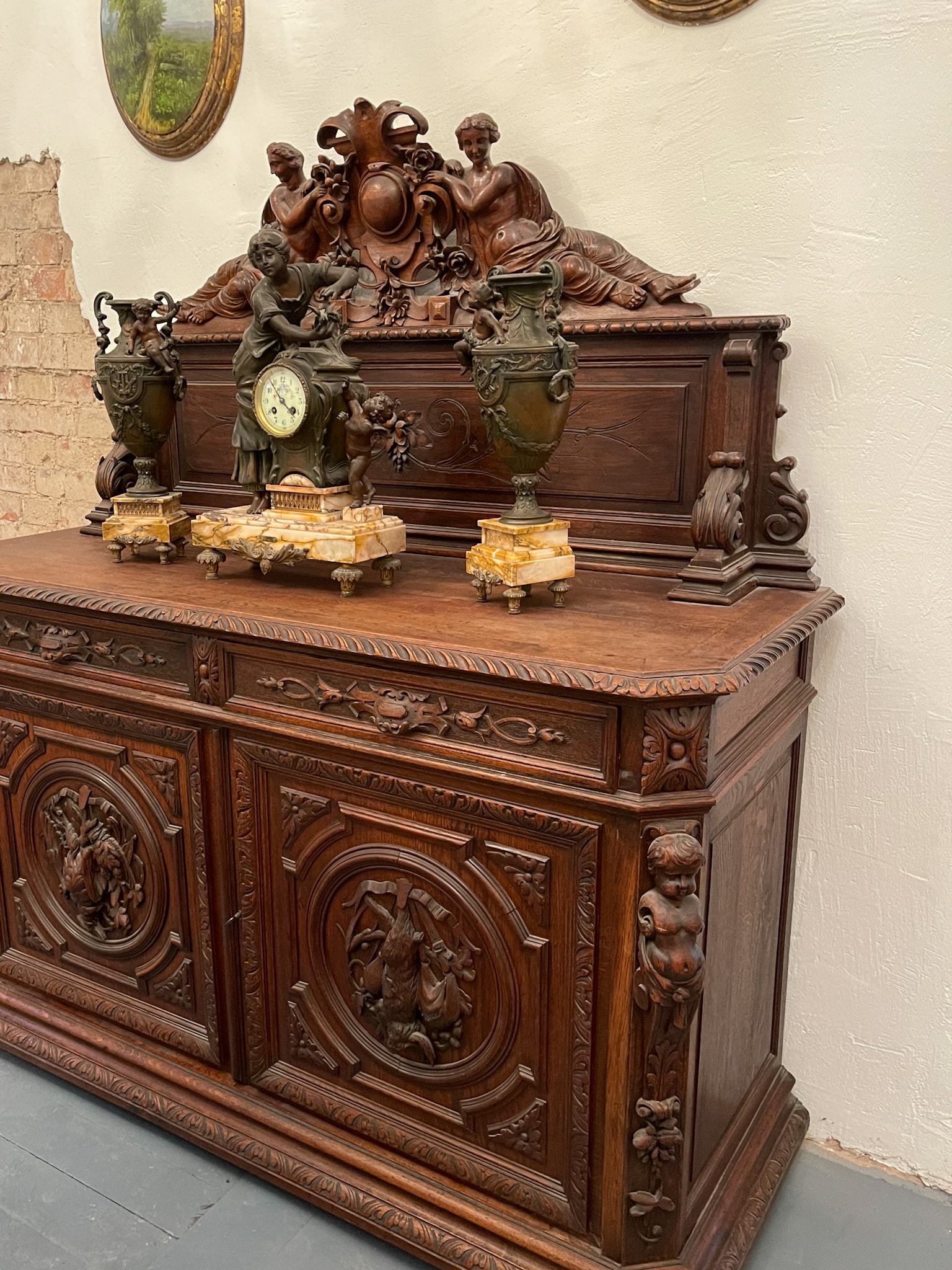
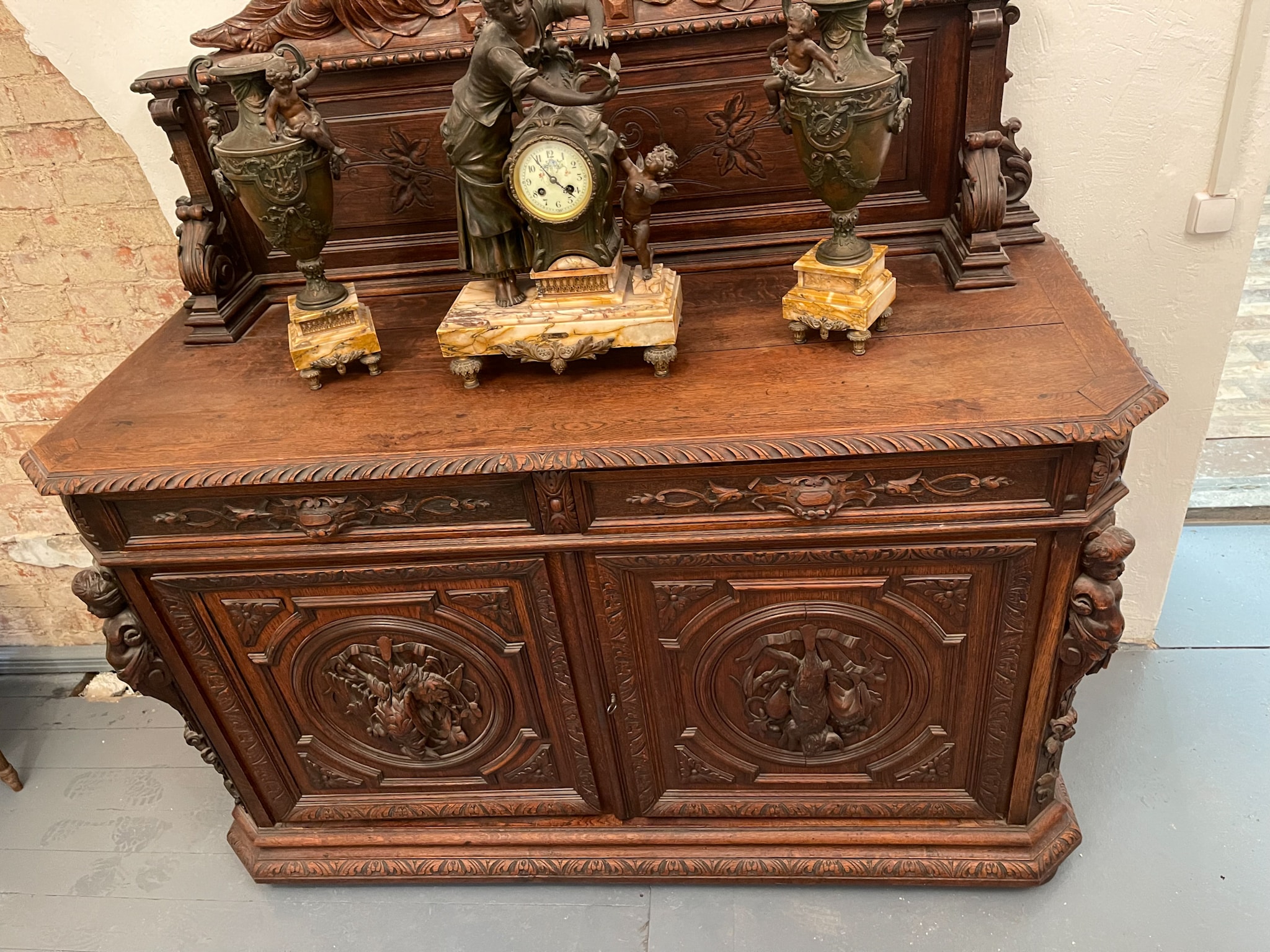
Monumentāla ozolkoka bufete-kredence ar pilnīgu figurālo fronton — divas cariatide figūras, putti stūra termes, medījuma médaillons durvīs, acanthus un rinceau frizes. Neo-Renesanse / Historicisms, Francija vai Beļģija, ap 1870.–1890. Augstums 175 cm, platums 160 cm, dziļums 60 cm.
IZMĒRI
Augstums: 175 cm × Platums: 160 cm × Dziļums: 60 cm. Svars: ārkārtīgi smags (masīvs ozols).
Monumentāls Ozolkoka Bufete-Kredence ar Figurāliem Kokgriezumiem — Neo-Renesanse / Historicisms, Francija vai Beļģija, ap 1870.–1890.
IZGATAVOŠANAS PERIODS, MĀKSLAS STILS, LAIKMETS
Šī monumentālā ozolkoka bufete-kredence ir viens no iespaidīgākajiem Neo-Renesanses un Historicisma laikmeta mēbeļu paraugiem, kas saglabājies pilnīgā, neskartā veidolā. Tās augstums — 175 cm — un skulpturālais bagātums padara to par patiešām muzeja kvalitātes lietu, kuras radīšanā vismaz viens meistars galdnieks un viens kokgriezuma mākslinieks strādājuši kopā pie viena pasūtījuma. Neo-Renesanses stils 19. gadsimta otrajā pusē bija ne tikai mākslinieciska mode, bet nacionālās un kultūras identitātes apliecinājums — un tieši šāda veida bufetes rotāja Parīzes, Briseles un Antverpenes hôtels particuliers ēdamistabas.
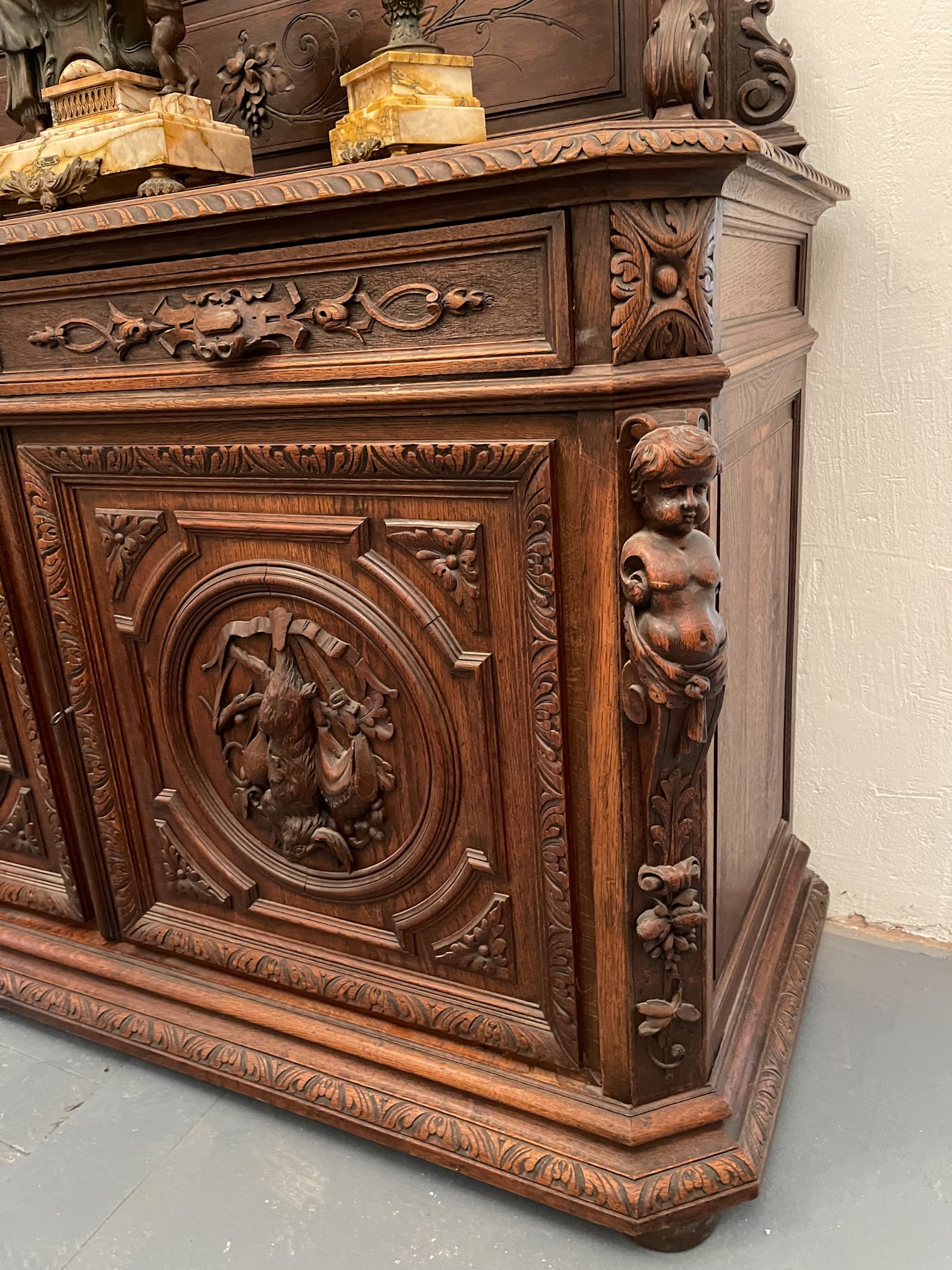
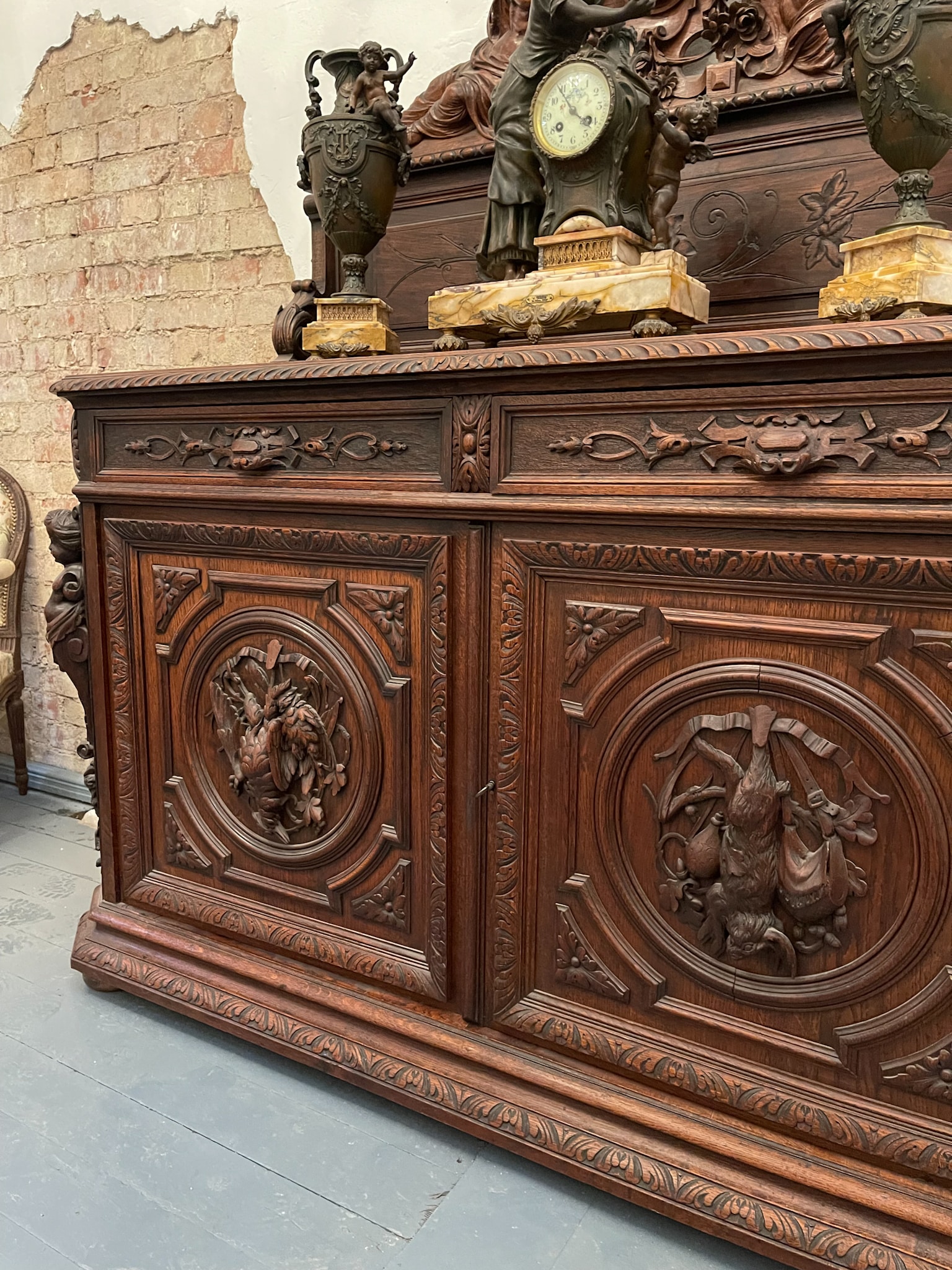
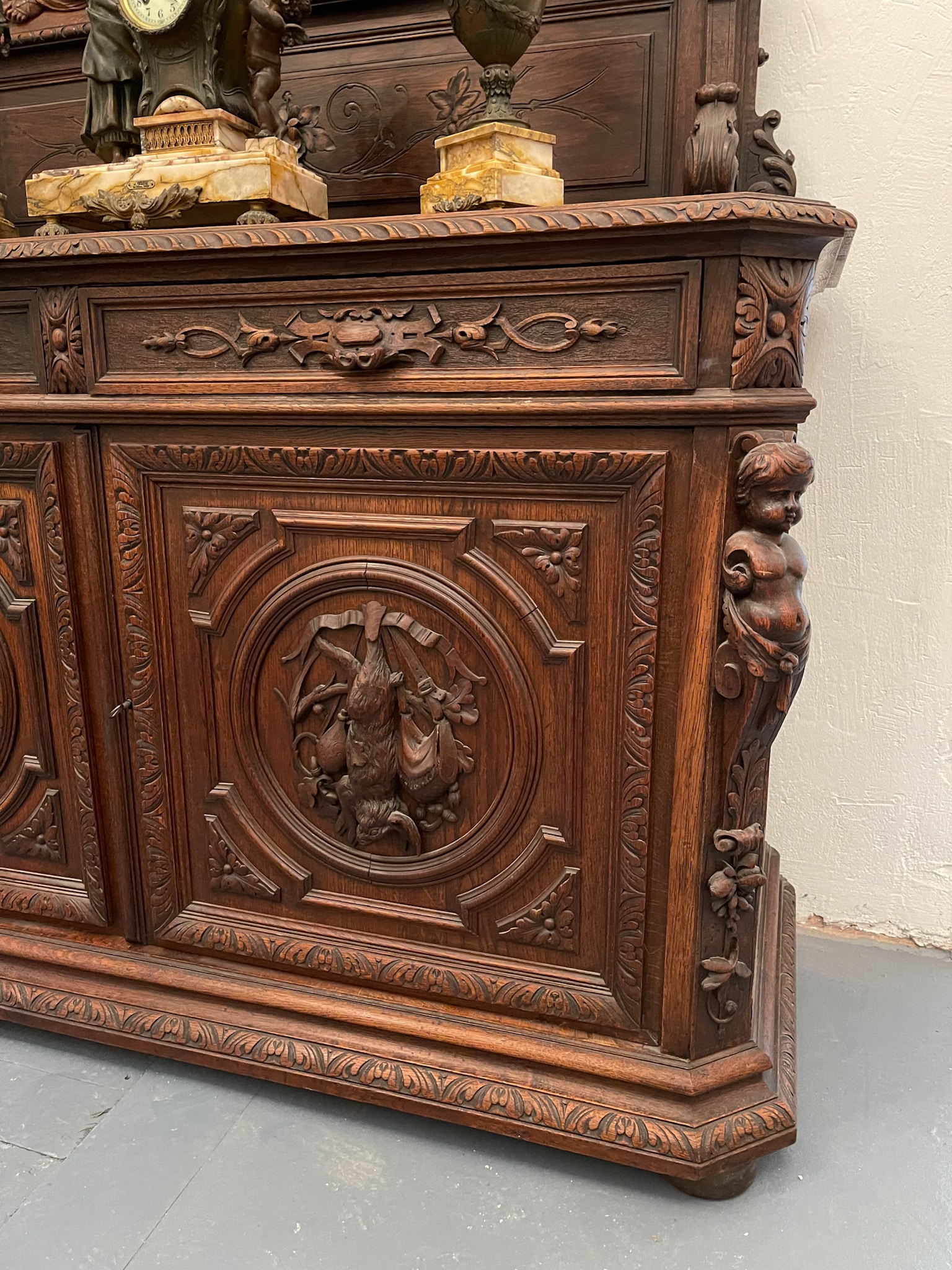
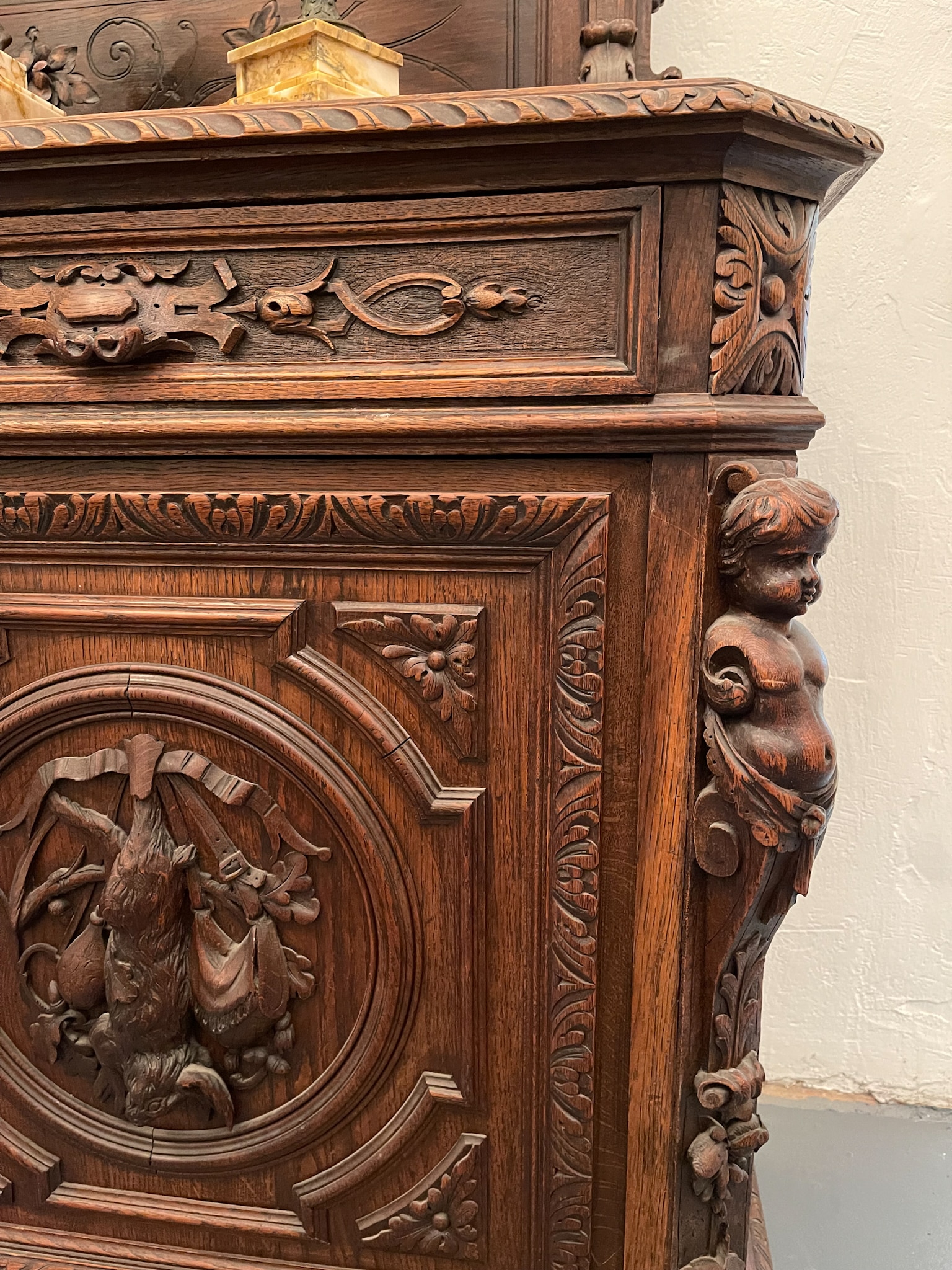
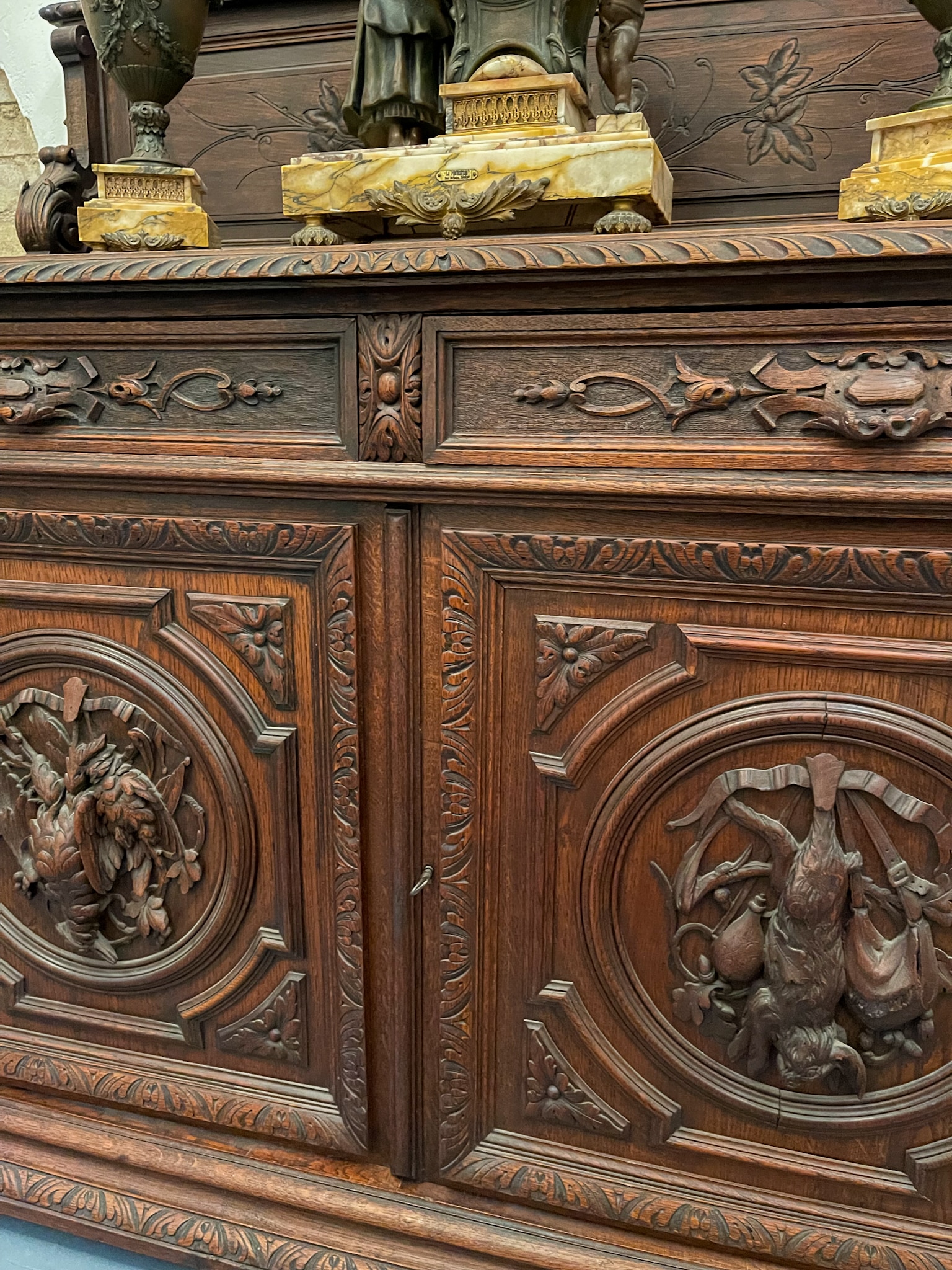
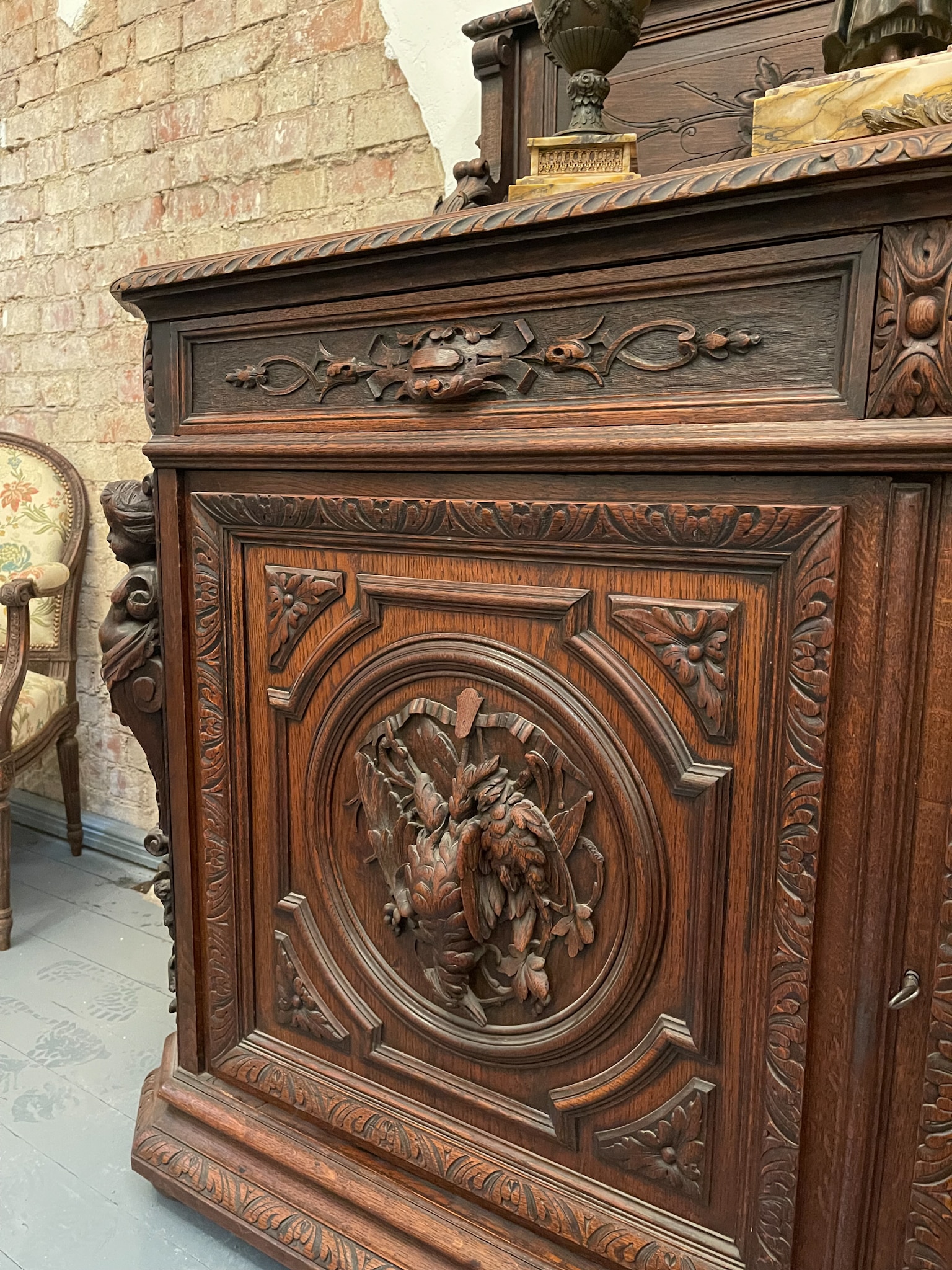
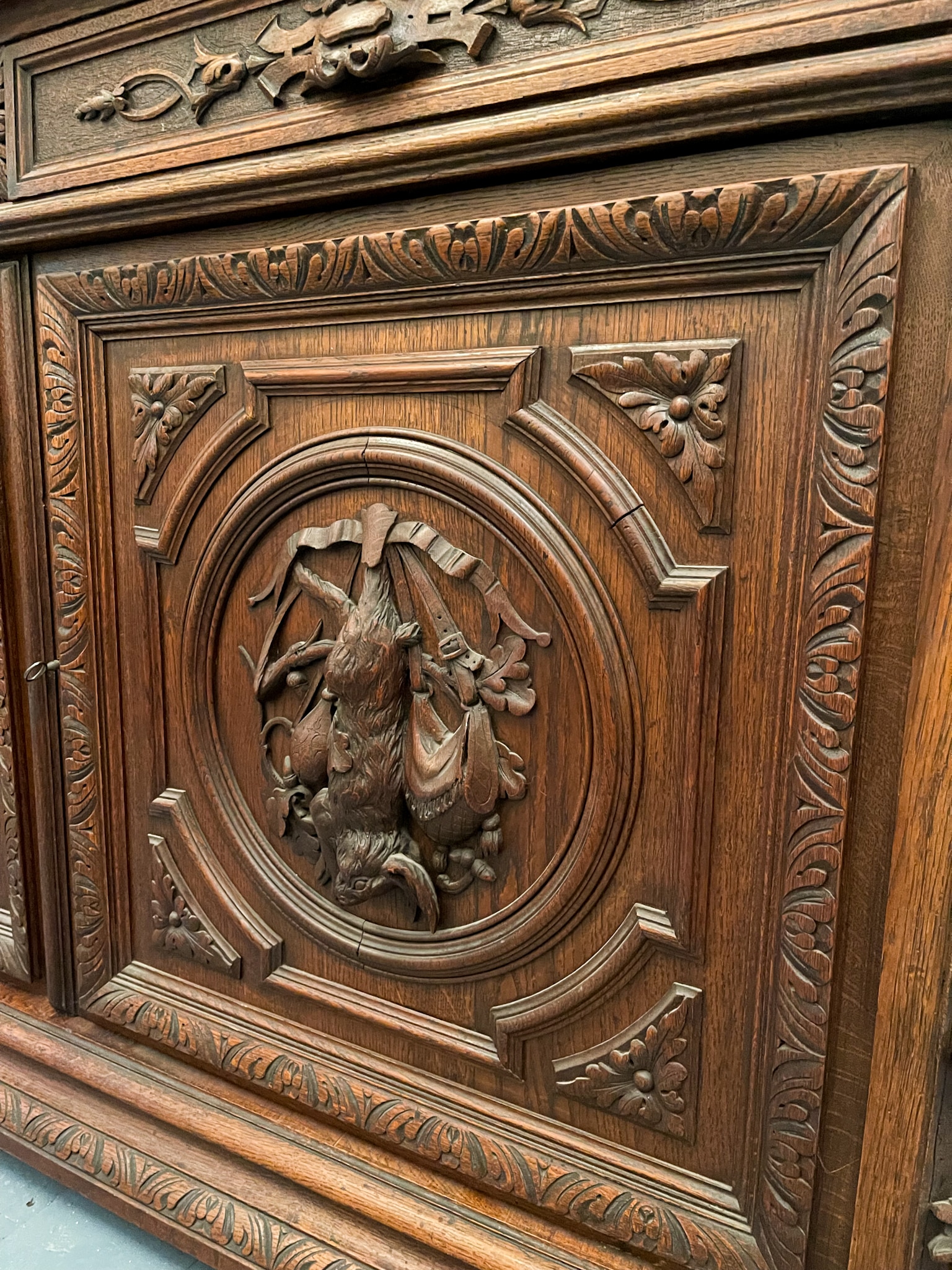
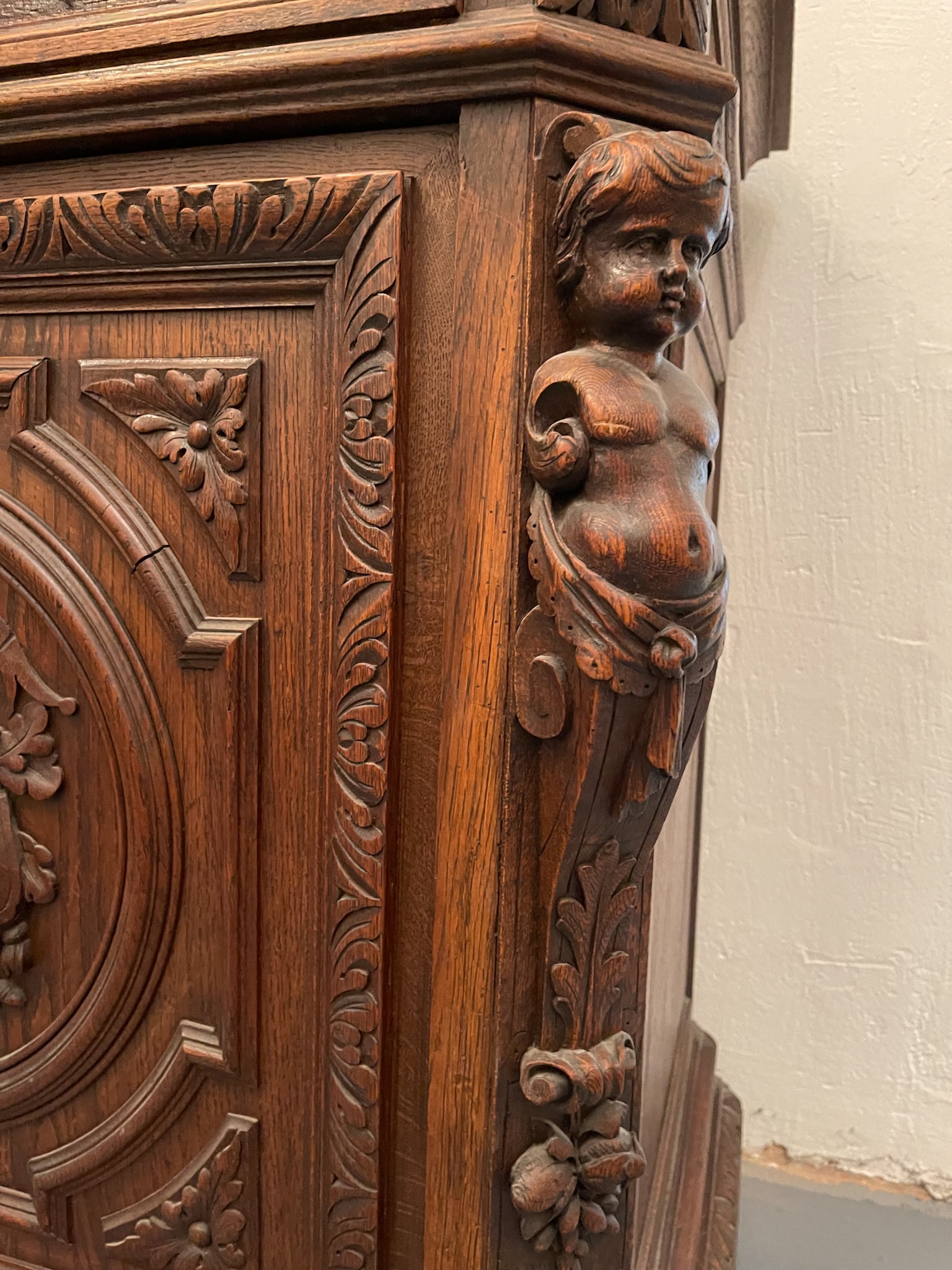
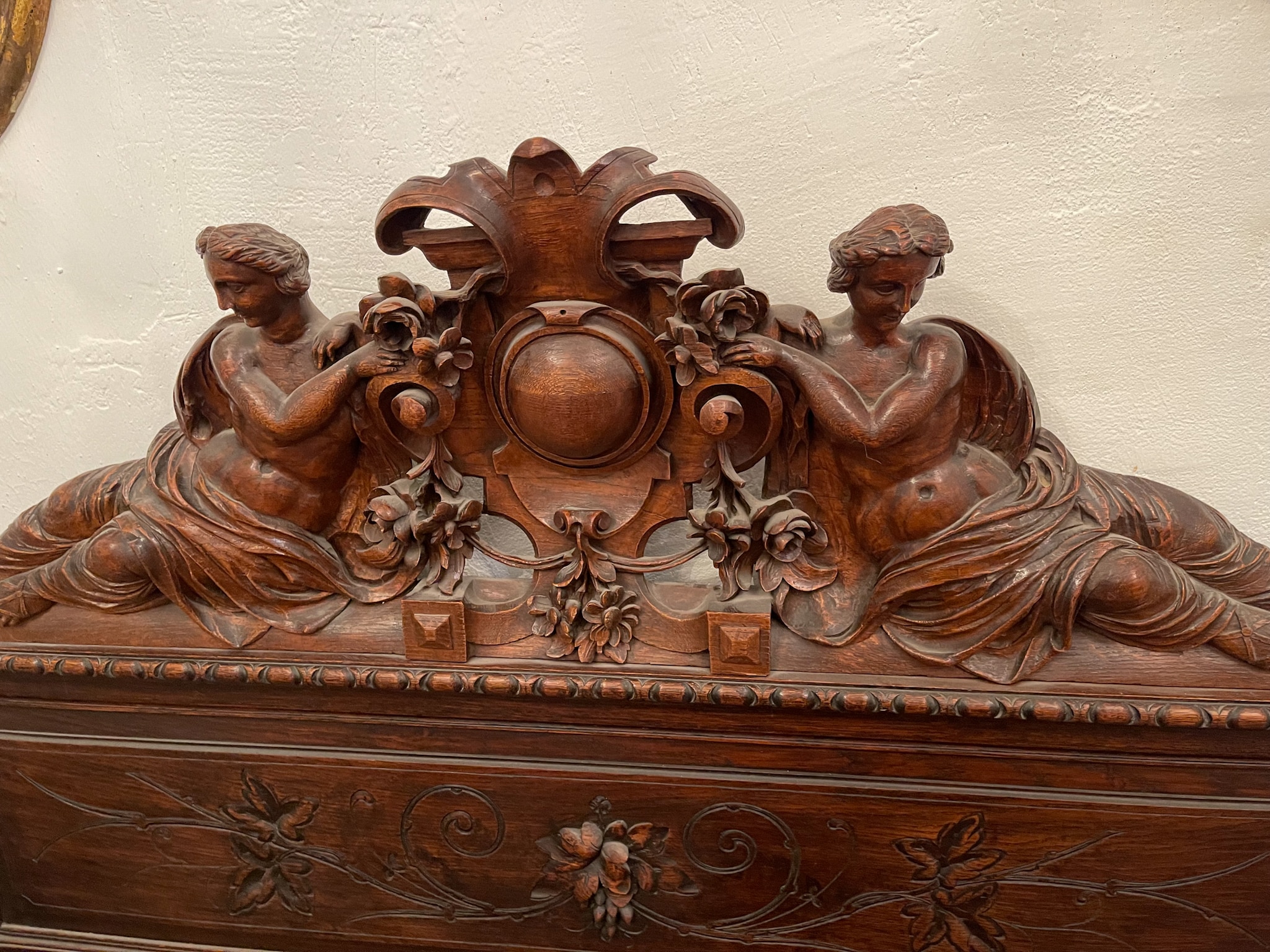
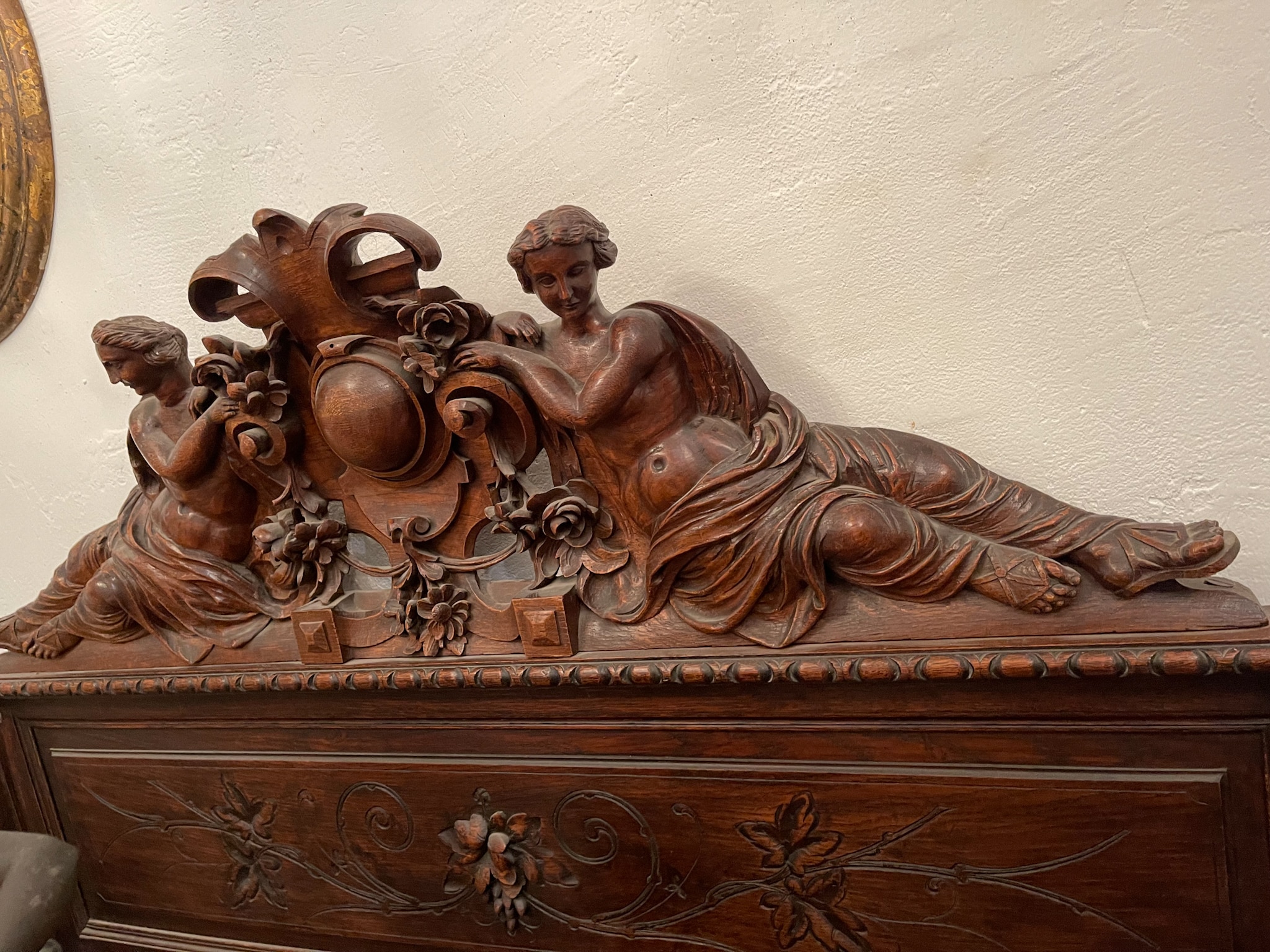
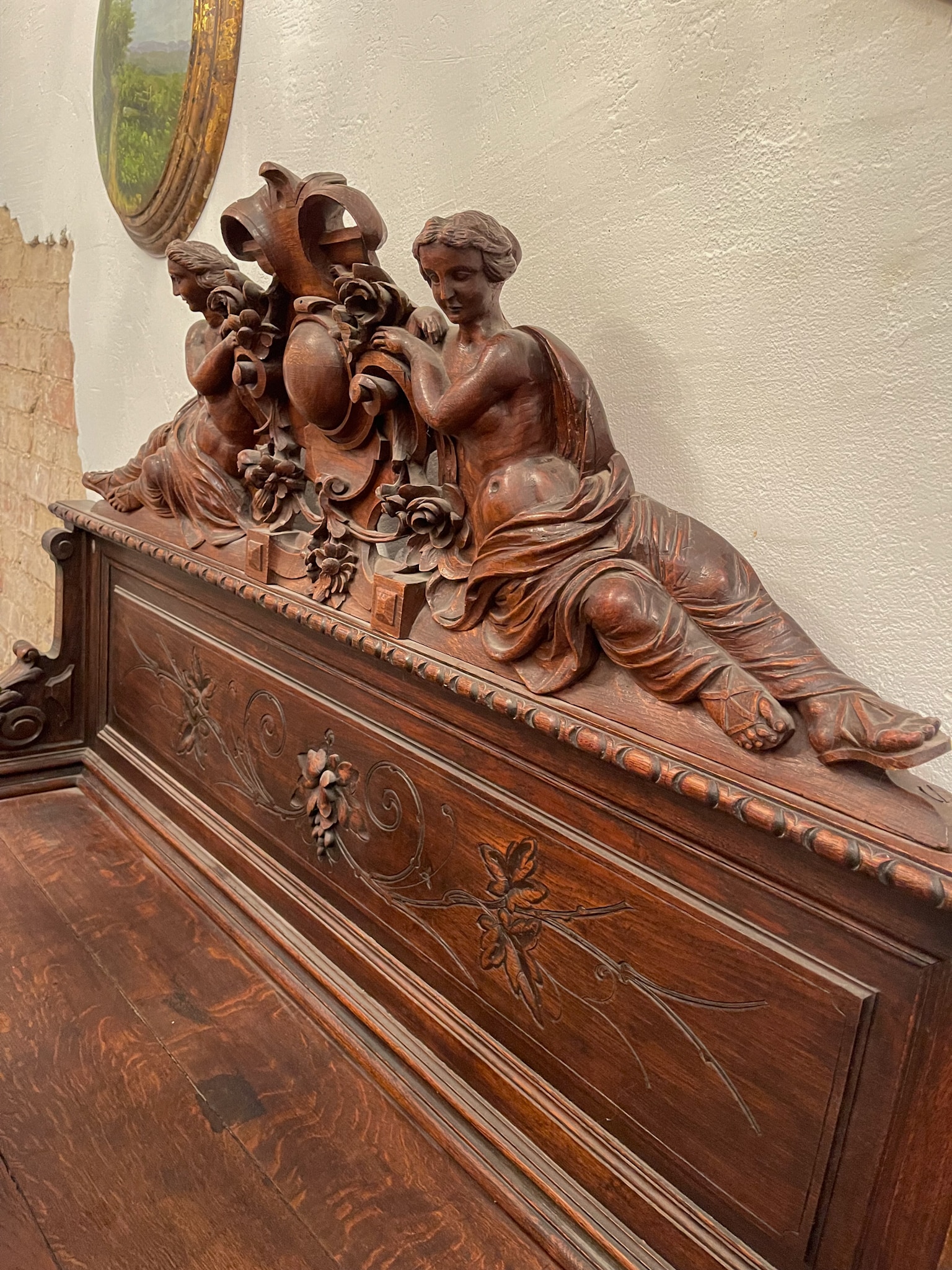
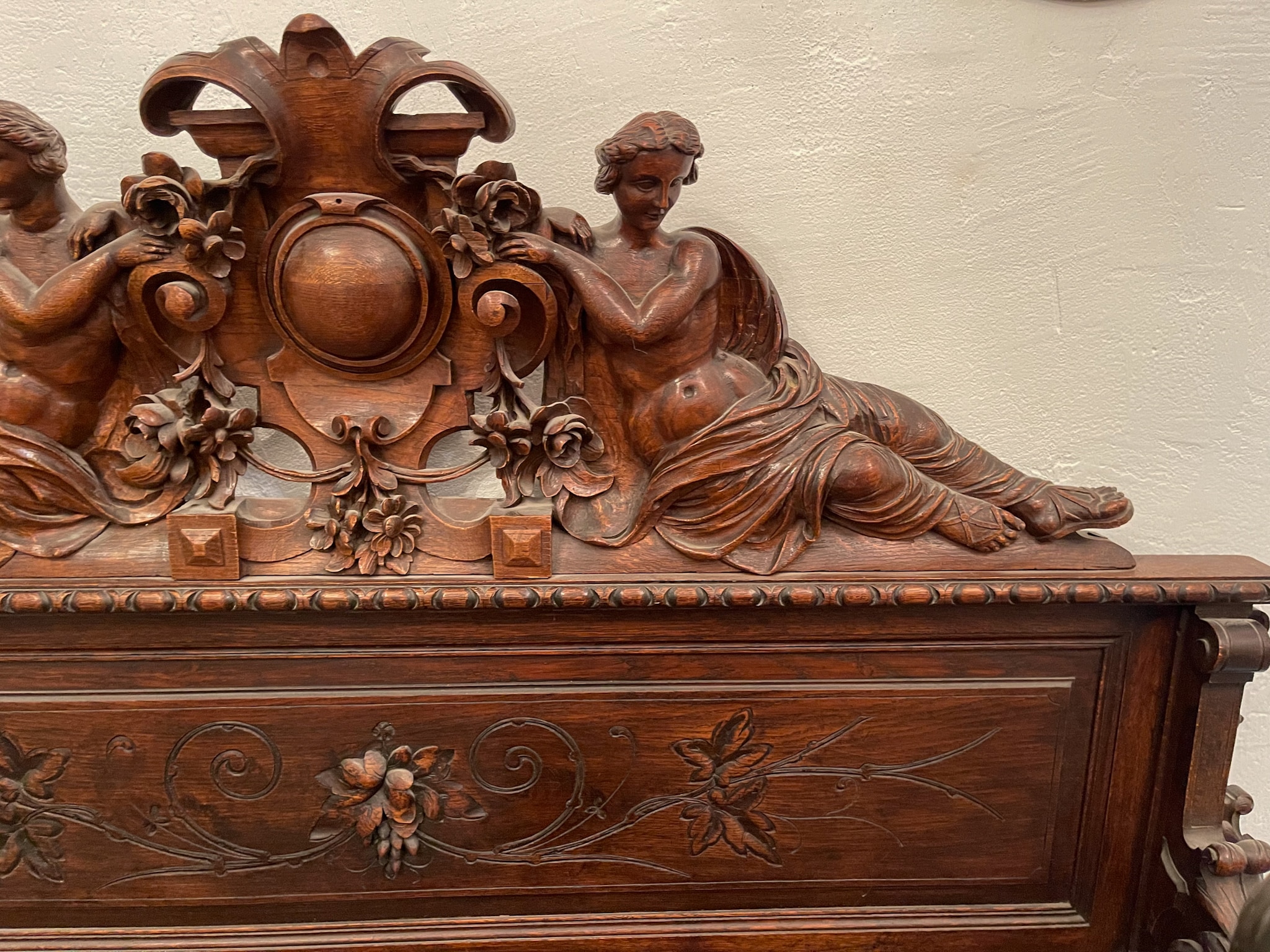
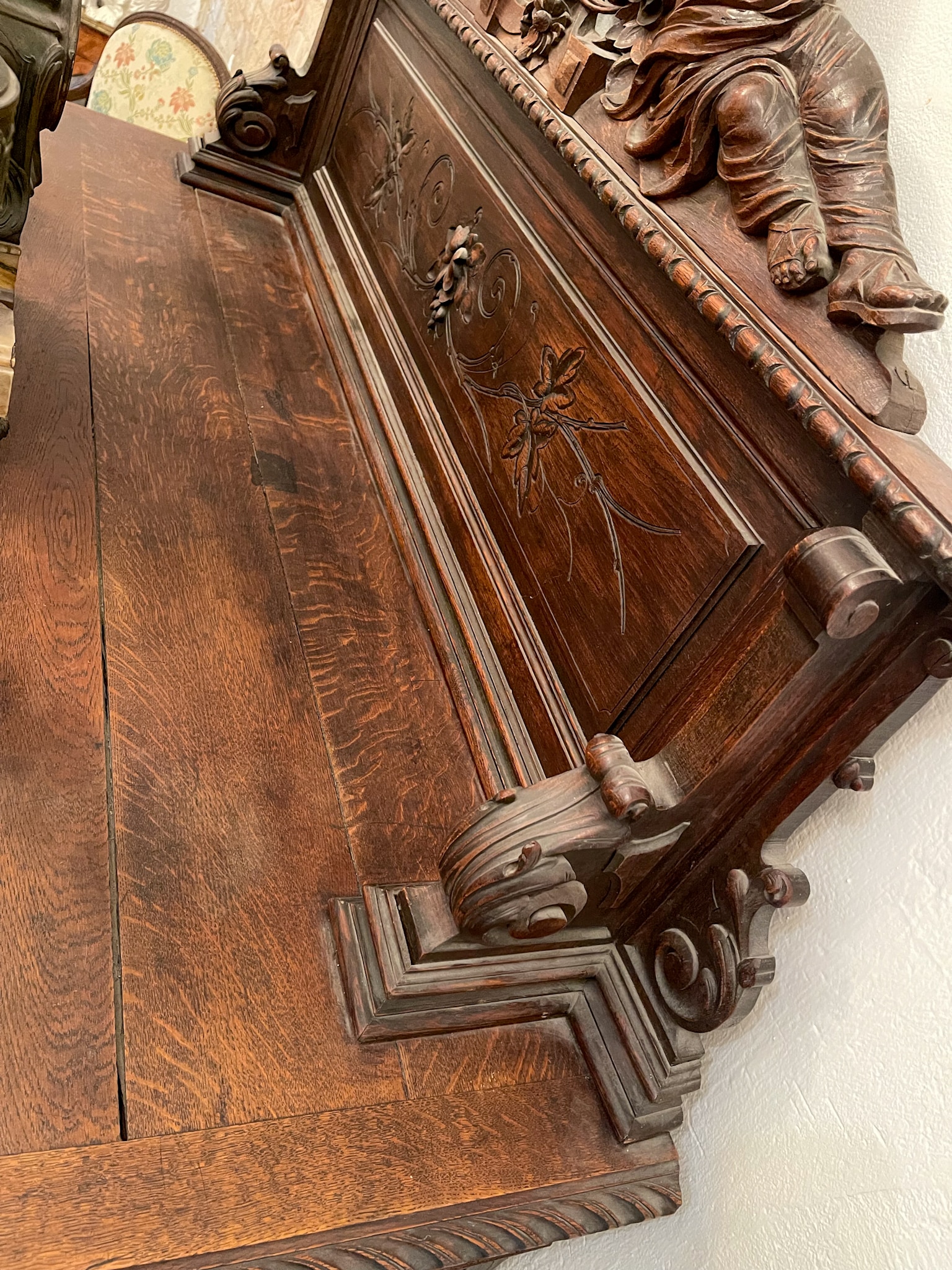
Lietas figurālā programma ir ārkārtīgi bagāta. Augšējais fronton — kokā cirsti divas pusguļošas sievietes figūras (cariatides) ar centrālo cartouche un cornucopia — ir tieša atsauce uz Renesanses alegoriskās skulptūras tradīciju: Dabas pārpilnības un Mākslu personifikācijas. Stūru termes — putti figūras ar ziediem un augļiem — saskan ar Luija XIV un Luija XV dekoratīvās ikonografijas tradīciju. Durvju paneļu centrālie médaillons — ar medījuma kompozīciju: piekārti putni, zaķis un medību aksesuāri — ir klasisks Henri II un Renaissance flamande stila elements, ko 19. gadsimtā atdzīvināja Neo-Renesanses meistari. Augšējo atvilktņu frize ar ziedu un lapu rinceaux vijumu, godrons maliņa un acanthus lejasdaļas josla noslēdz kompozīciju ar arhitektonisko pilnību.
Prece datējama 1870.–1890. periodā un pilnībā pieder Belle Époque laikmetam — 1871.–1914. — kad Eiropas buržuāzija sacenšas greznumā un ēdamistabas bufetes kļūst par sociālā statusa vizuālo deklarāciju.
Belle Époque momentuzņēmums: 1878. gadā Parīzes Exposition Universelle mēbeļu paviljonā Beļģijas un Ziemeļfrancijas galdnieki demonstrēja tieši šāda veida masīvozola bufetes ar figurāliem frontoniem — un žūrija piešķīra Liège un Antverpenes darbnīcām augstāko apbalvojumu. Kritiķis Charles Blanc Gazette des Beaux-Arts tobrīd rakstīja, ka “flāmu ozolkoka mēbele ir vienīgā, kas iztur laika pārbaudi, jo tajā dzīvo pats koks, nevis tikai galdnieka griba.” Šī bufete varētu būt tapusi tieši tajā triumfa brīdī.
RAŽOTĀJS UN MANUFAKTŪRAS ZĪMOGS
Redzama marķējuma nav. Pēc ozolkoka struktūras, figurālo kokgriezumu plastiskuma un fronton kompozīcijas izsmalcinātības — lieta nākusi no augstākās klases Beļģijas vai Ziemeļfrancijas galdnieku darbnīcas, kas specializējās Neo-Renesanses reprezentatīvajās mēbelēs. Lieges, Antverpenes un Briseles darbnīcas 19. gadsimta otrajā pusē bija Eiropas vadošās masīvozola skulpturālo mēbeļu ražotājas. Durvju médaillons medījuma kompozīcija — ar piekārtiem putniem un zaķi — ir īpaši raksturīga Beļģijas buffet de chasse tradīcijai, ko kultivēja tādas firmas kā Vanden Berghe-Pauvers Ghentā.
RETUMS UN NOZĪME
Monumentāla ozolkoka bufete-kredence ar pilnīgu figurālo fronton — ar divām cariatide figūrām un centrālo cartouche — putti stūra termes, durvju medījuma médaillons un oriģinālu atvilktņu frizi šādā izmērā un saglabāšanās stāvoklī ir ārkārtīgi reta parādība. Lielākā daļa saglabājušos Neo-Renesanses bufešu ir vai nu bez fronton skulptūras, vai ar bojātiem stūra elementiem. Šīs lietas neskartums visā augstumā — no apakšējās acanthus joslas līdz augšējo figūru galvām — padara to par kolekcijas lietu augstākajā kategorijā.
PIELIETOJUMS INTERJERĀ, DIZAINĀ UN FOTOGRĀFIJĀ
Šī bufete-kredence ir radīta ēdamistabas, bibliotēkas vai reprezentatīvas zāles centrālajam akcentam. Tās 175 cm augstums un 160 cm platums nosaka telpas toni jebkurā vidē. Sader ar Neo-Renesanses, Historicisma, Second Empire, eklektisko un grand manor interjeru. Augšējā virsma — ideāla bronzas skulptūru, pulksteņu un vāzu ekspozīcijai, kā redzams fotogrāfijās ar bronzas pulksteņa komplektu. Interjeru fotogrāfijā — nepārprotams 19. gadsimta Eiropas aristokrātiskās ēdamistabas akcents. Maximalist un dark academia estētikas interjerā tā ir kulminācijas elements.
DĀVANA UN PERSONALIZĀCIJA
Šīs lietas mākslinieciskā intensitāte un vēsturiskā autentiskums padara to par izcilu reprezentatīvu iegādi augstākā līmeņa kolekcijām, pils stila rezidencēm, restorāniem un klubiem ar vēsturisku ambīciju. Tā izsaka ne tikai gaumi, bet dziļu izpratni par Eiropas kultūrmantojumu. Zvaigznāju simbolikā — Lauva, Mērkaķis un Skorpions — personas ar spēcīgu, monumentālu estētisko redzējumu.
STĀVOKLIS
Lieta ir ļoti labā vispārējā stāvoklī, ņemot vērā vecumu un apjomu. Ozolkoka figurālie kokgriezumi — cariatides, putti, medījuma médaillons — asi un detalizēti visā augstumā. Augšējo virsmu atvilktņu frize ar nelielu dabīgu patinu. Sānu un aizmugurējo paneļu ozolkoks ar vecuma tonējumu. Durvju eņģes un slēgmehanisms funkcionāli. Nav nozīmīgu lūzumu vai restaurācijas pēdu. Lietas stāvoklis pilnībā atspoguļots fotogrāfijās.
―――――――――――――――――――――
🇬🇧 DESCRIPTION IN ENGLISH
DIMENSIONS
Height: 175 cm × Width: 160 cm × Depth: 60 cm. Weight: extremely heavy (solid oak).
Monumental Oak Buffet-Credenza with Figural Carvings — Neo-Renaissance / Historicism, France or Belgium, approximately 1870–1890
PERIOD, ARTISTIC STYLE, ERA
This monumental solid oak buffet-credenza is one of the most impressive surviving examples of Neo-Renaissance and Historicism era furniture in complete, unaltered form. Its height of 175 cm and sculptural richness make it a genuinely museum-quality piece, created through the collaboration of at least one master cabinetmaker and one carving artist on a single commission. The Neo-Renaissance style in the second half of the 19th century was not merely an artistic fashion but an affirmation of national and cultural identity — and it was exactly this type of buffet that adorned the dining rooms of hôtels particuliers in Paris, Brussels and Antwerp.
The figural programme of the piece is exceptionally rich. The upper fronton — two reclining female figures (cariatides) carved in oak with a central cartouche and cornucopia — is a direct reference to the Renaissance tradition of allegorical sculpture: personifications of Nature’s Abundance and the Arts. The corner termes — putti figures with flowers and fruit — align with the decorative iconography of the Louis XIV and Louis XV traditions. The central médaillons of the door panels — with a game composition of hanging birds, a hare and hunting accessories — are a classic element of the Henri II and Renaissance flamande style, revived in the 19th century by Neo-Renaissance masters. The upper drawer frieze with a floral and foliate rinceau scroll, a godrons moulding and an acanthus lower border complete the composition with architectural completeness.
The piece is dateable to approximately 1870–1890 and belongs fully to the Belle Époque — 1871 to 1914 — when the European bourgeoisie competed in luxury and the dining room buffet became the visual declaration of social standing.
Belle Époque snapshot: At the 1878 Paris Exposition Universelle, the furniture pavilion saw Belgian and Northern French cabinetmakers exhibit exactly this type of solid oak buffet with figural frontons — and the jury awarded the highest distinctions to workshops from Liège and Antwerp. The critic Charles Blanc wrote in the Gazette des Beaux-Arts at the time that “the Flemish oak piece is the only one that withstands the test of time, because the wood itself lives within it, not merely the will of the cabinetmaker.” This buffet may well have been born at that very moment of triumph.
MAKER AND MANUFACTORY MARK
No visible maker’s mark is present. Based on the oak structure, the plasticity of the figural carvings and the refinement of the fronton composition, the piece originates from a high-class Belgian or Northern French cabinetmaking workshop specialising in Neo-Renaissance representative furniture. The workshops of Liège, Antwerp and Brussels in the second half of the 19th century were Europe’s leading producers of solid oak sculptural furniture. The game médaillon composition on the doors — with hanging birds and a hare — is particularly characteristic of the Belgian buffet de chasse tradition, cultivated by firms such as Vanden Berghe-Pauvers in Ghent.
RARITY AND SIGNIFICANCE
A monumental solid oak buffet-credenza with a complete figural fronton — with two cariatide figures and a central cartouche — putti corner termes, game médaillons on the doors and an original drawer frieze of this scale and state of preservation is an exceptionally rare find. The majority of surviving Neo-Renaissance buffets either lack the fronton sculpture entirely or have damaged corner elements. The integrity of this piece across its entire height — from the lower acanthus border to the crowns of the upper figures — places it in the highest collection category.
USE IN INTERIOR, DESIGN AND PHOTOGRAPHY
This buffet-credenza was created as the central accent of a dining room, library or representative hall. Its height of 175 cm and width of 160 cm set the tone of any environment. It harmonises with Neo-Renaissance, Historicism, Second Empire, eclectic and grand manor interiors. The upper surface is ideal for displaying bronze sculptures, clocks and vases, as seen in the photographs with the bronze clock set. In interior photography — an unmistakable accent of a 19th-century European aristocratic dining room. In maximalist and dark academia interiors it is the culminating element.
GIFT AND PERSONALISATION
The artistic intensity and historical authenticity of this piece make it an outstanding acquisition for the highest-level collections, palace-style residences, restaurants and clubs with historical ambition. It expresses not only taste but a deep understanding of European cultural heritage. In astrological symbolism — Leo, Capricorn and Scorpio — personalities with a powerful, monumental aesthetic vision.
CONDITION
The piece is in very good overall condition considering its age and scale. The solid oak figural carvings — cariatides, putti, game médaillons — are sharp and detailed throughout their entire height. The upper surface drawer frieze carries a natural patina. The side and rear panels show the oak’s natural age tonality. The door hinges and locking mechanism are functional. No significant breaks or traces of restoration are apparent. The condition of the item is fully reflected in the photographs.
―――――――――――――――――――――
🇷🇺 ОПИСАНИЕ НА РУССКОМ
Размеры: Высота: 175 см × Ширина: 160 см × Глубина: 60 см. Очень тяжёлый (массивный дуб).
Монументальный дубовый буфет-кредеза с фигурной резьбой — Нео-Ренессанс / Историзм, Франция или Бельгия, около 1870–1890 гг.
Этот монументальный буфет из массивного дуба — один из наиболее впечатляющих образцов мебели эпохи нео-ренессанса и историзма, сохранившийся в полном и нетронутом виде. Высота 175 см и скульптурное богатство делают его предметом музейного уровня. Верхний фронтон украшен двумя полулежащими женскими фигурами (кариатидами) с центральным картушем и рогом изобилия — прямая отсылка к ренессансной аллегорической традиции. Угловые термы в виде путти с цветами и фруктами, центральные медальоны дверей с охотничьими трофеями — подвешенными птицами и зайцем — всё это классические элементы стиля Henri II и Renaissance flamande, возрождённые мастерами XIX века.
В 1878 году на парижской Exposition Universelle бельгийские и северофранцузские краснодеревщики демонстрировали именно такие буфеты с фигурными фронтонами — жюри присудило мастерским Льежа и Антверпена высшие награды. Критик Шарль Блан писал тогда, что “фламандский дубовый предмет — единственный, выдерживающий испытание временем.” Происхождение: предположительно мастерская высшего класса в Бельгии или Северной Франции, около 1870–1890 гг. Состояние очень хорошее. Состояние предмета полностью отражено на фотографиях.
―――――――――――――――――――――
🇩🇪 BESCHREIBUNG AUF DEUTSCH
Maße: Höhe: 175 cm × Breite: 160 cm × Tiefe: 60 cm. Außerordentlich schwer (massiver Eiche).
Monumentales Eichen-Buffet-Kredenz mit Figurenschnitzerei — Neo-Renaissance / Historismus, Frankreich oder Belgien, circa 1870–1890
Dieses monumentale Buffet aus massiver Eiche ist eines der beeindruckendsten erhaltenen Beispiele der Neo-Renaissance– und Historismus-Ära in vollständiger, unveränderter Form. Mit einer Höhe von 175 cm und einem skulpturalen Reichtum, der seinesgleichen sucht, ist es ein Stück von Museumsqualität. Der obere Fronton zeigt zwei liegende weibliche Figuren (Karyatiden) mit zentralem Cartouche und Füllhorn — eine direkte Referenz an die allegorische Skulptur der Renaissance. Die Eck-Termen als Putti mit Blumen und Früchten, die zentralen Médaillons der Türen mit Jagdtrophäen — hängendes Geflügel und ein Hase — sind klassische Elemente des Henri II-Stils und der Renaissance flamande, die von den Meistern des 19. Jahrhunderts neu belebt wurden.
Auf der Pariser Exposition Universelle von 1878 stellten belgische und nordfranzösische Tischler genau solche Buffets mit figürlichen Frontonen aus — die Jury zeichnete die Werkstätten aus Lüttich und Antwerpen mit Höchstpreisen aus. Herkunft: vermutlich eine Werkstatt höchster Klasse in Belgien oder Nordfrankreich, circa 1870–1890. Zustand sehr gut. Der Zustand des Objekts ist vollständig in den Fotografien dokumentiert.
―――――――――――――――――――――
🇫🇷 DESCRIPTION EN FRANÇAIS
Dimensions : Hauteur : 175 cm × Largeur : 160 cm × Profondeur : 60 cm. Extrêmement lourd (chêne massif).
Buffet-crédence monumental en chêne à sculptures figuratives — Néo-Renaissance / Historisme, France ou Belgique, circa 1870–1890
Ce buffet-crédence monumental en chêne massif est l’un des exemples les plus saisissants de mobilier Néo-Renaissance et Historisme parvenus dans leur intégralité. Avec une hauteur de 175 cm et une richesse sculpturale sans équivalent, c’est une pièce de qualité muséale. Le fronton supérieur présente deux figures féminines allongées (cariatides) encadrant un cartouche central et une corne d’abondance — référence directe à la tradition allégorique de la Renaissance. Les termes d’angle en putti fleuris, les médaillons centraux des portes avec des trophées de chasse — gibier à plume et lièvre suspendus — sont des éléments classiques du style Henri II et de la Renaissance flamande, ressuscités au XIXe siècle.
Lors de l’Exposition Universelle de Paris en 1878, les ébénistes belges et du Nord de la France exposaient précisément ce type de buffets à frontons figuratifs — le jury décerna les plus hautes distinctions aux ateliers de Liège et d’Anvers. Le critique Charles Blanc écrivit alors dans la Gazette des Beaux-Arts que “le meuble flamand en chêne est le seul qui résiste à l’épreuve du temps.” Origine probable : atelier de première classe en Belgique ou dans le Nord de la France, circa 1870–1890. État très bon. L’état de la pièce est entièrement reflété dans les photographies.