
Majolica Kašpo ar Putto, Lauvas Maskaroniem un Akantus Vijumiem — Historicisms, Francija/Vācija, ap 1870.–1900. (2722)
Majolica Kašpo ar Putto, Lauvas Maskaroniem un Akantus Vijumiem — Historicisms, Francija/Vācija, ap 1870.–1900. (2722)
€180.00
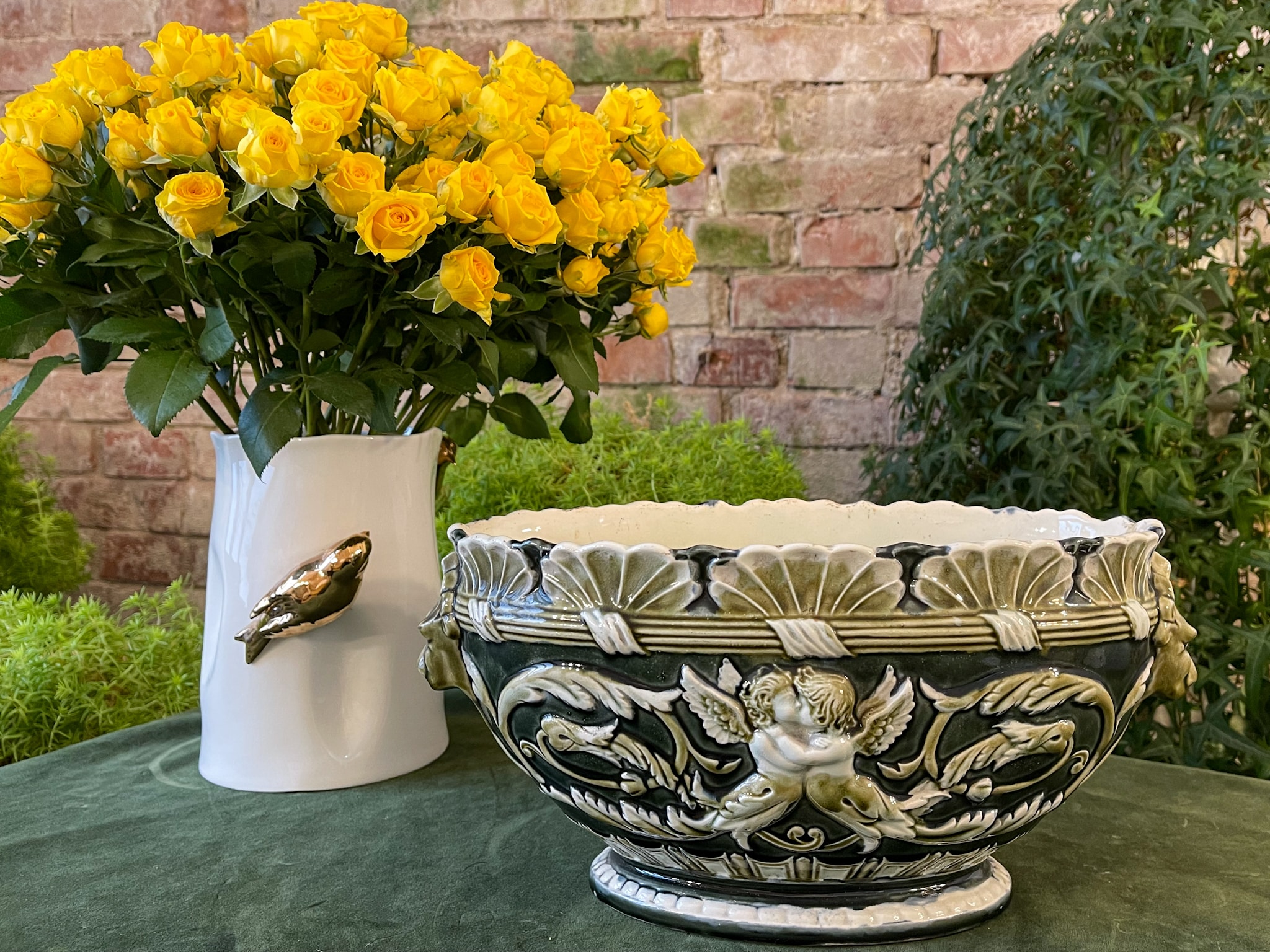
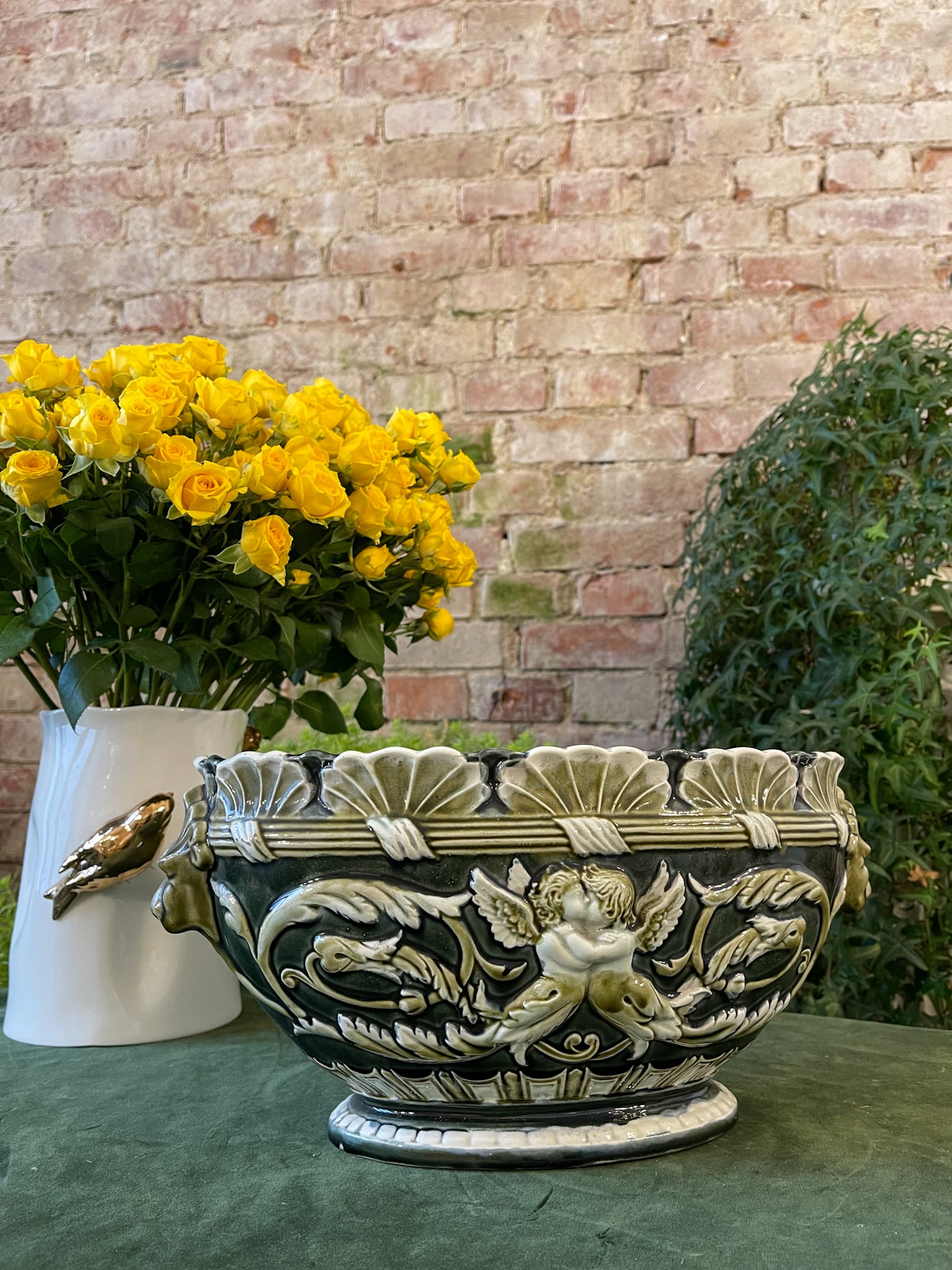
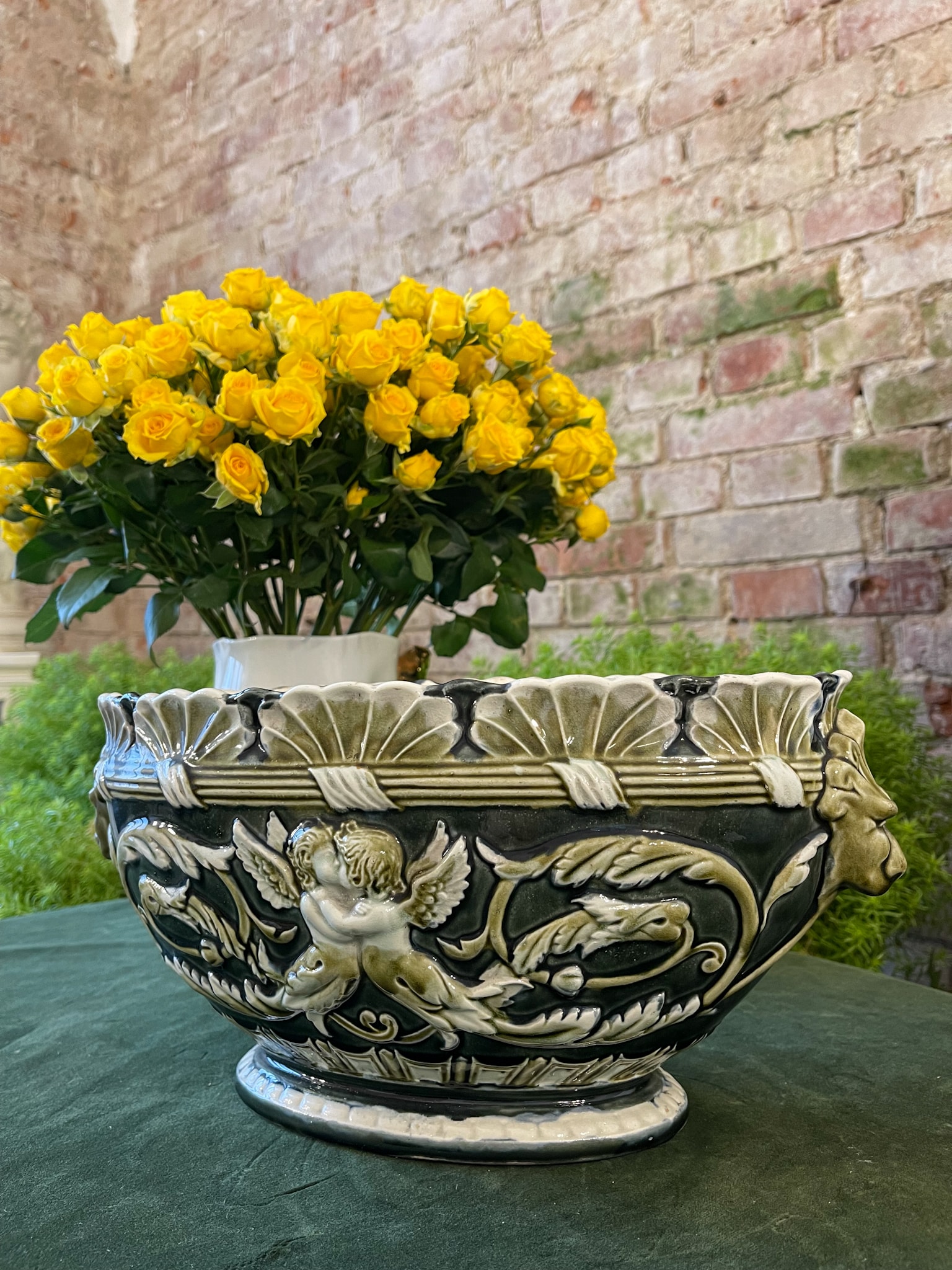
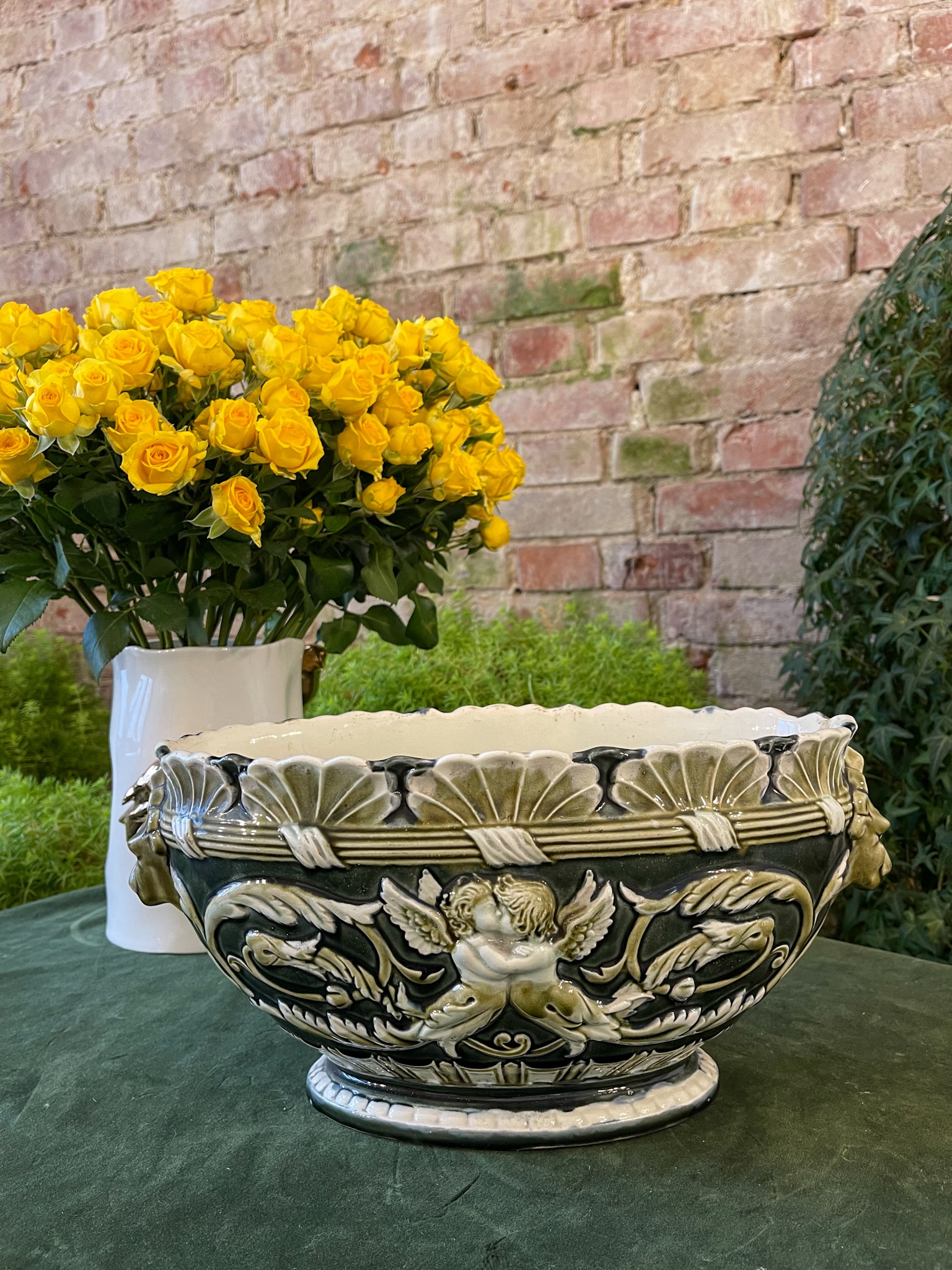
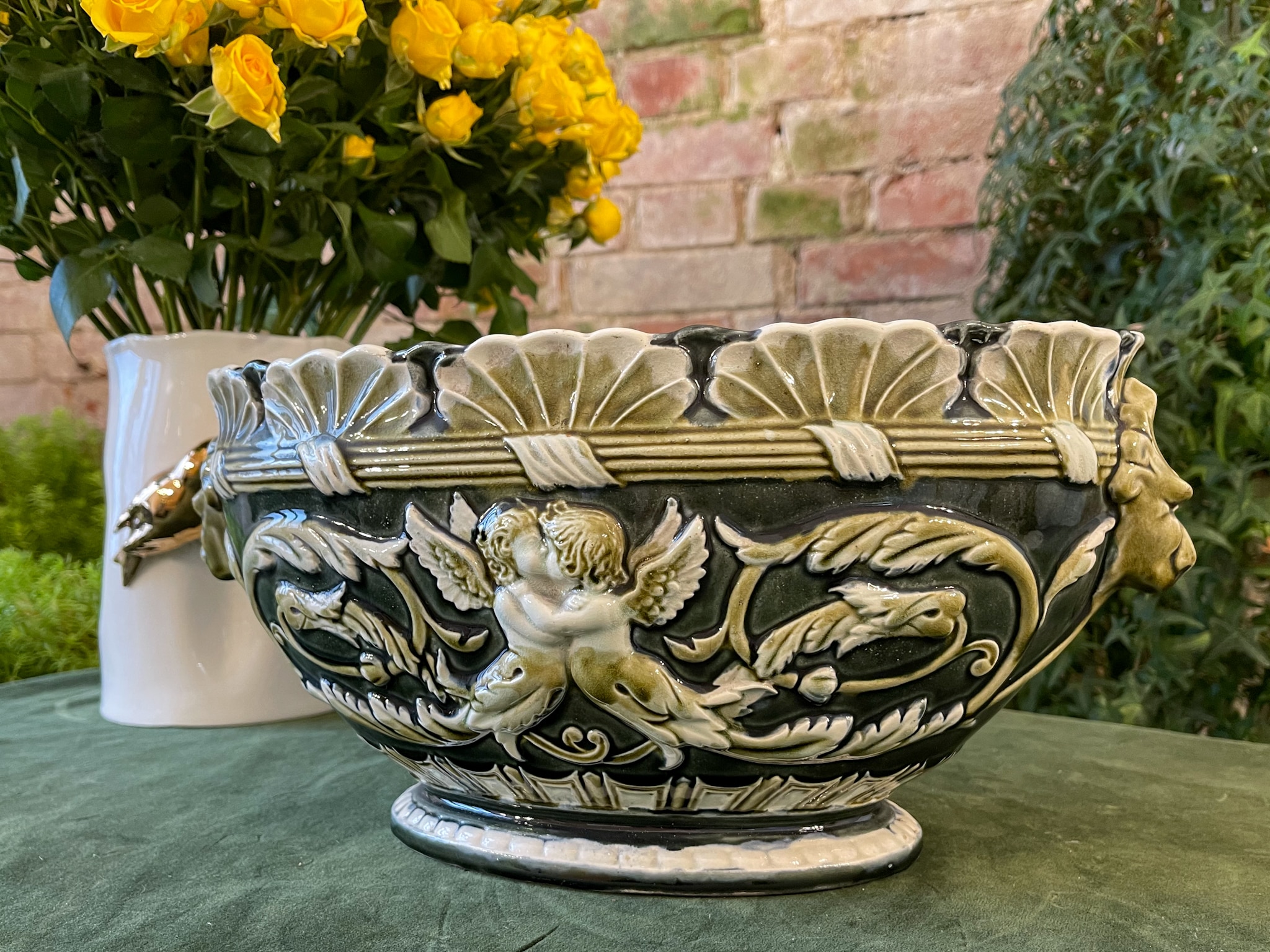
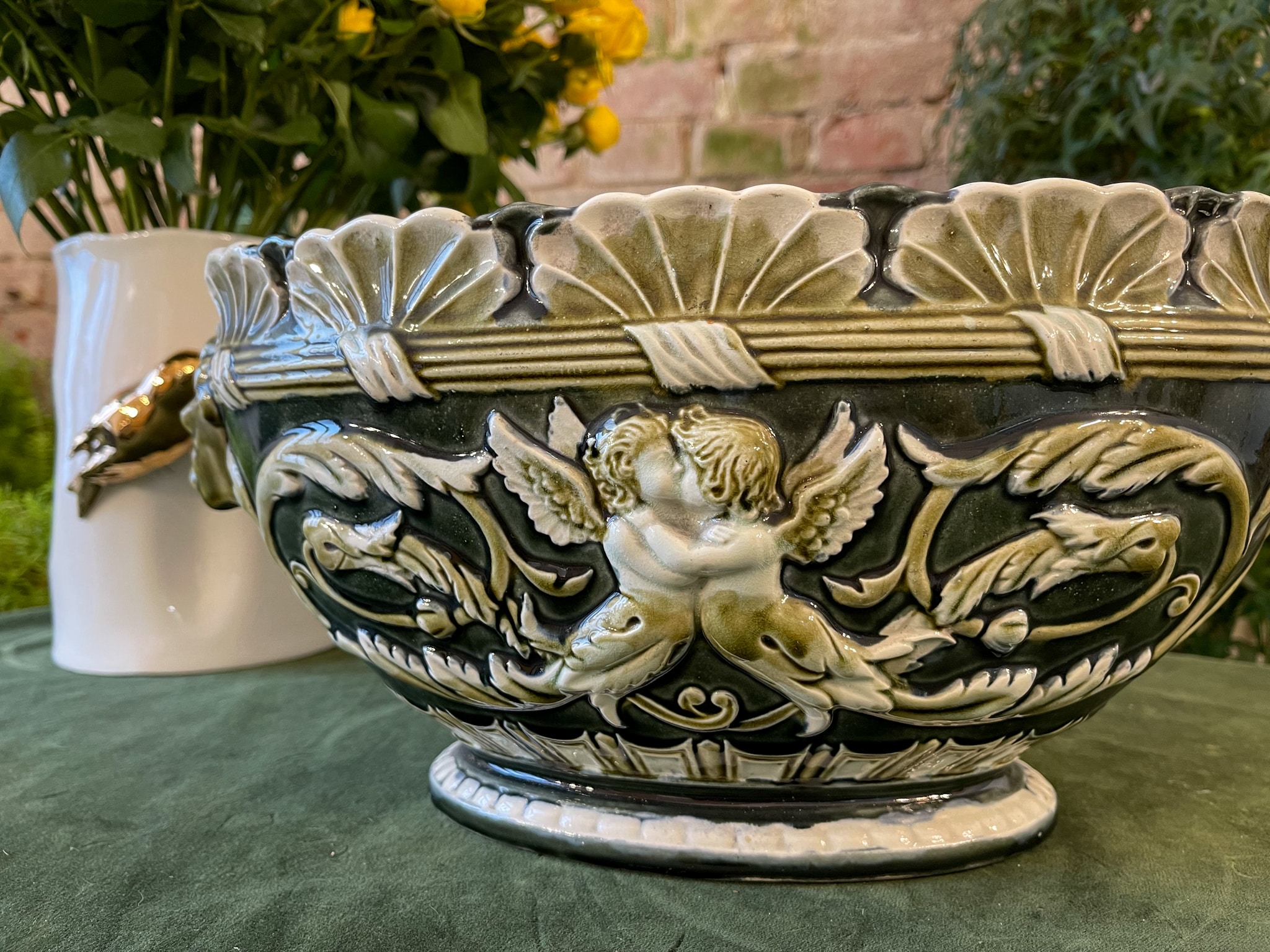
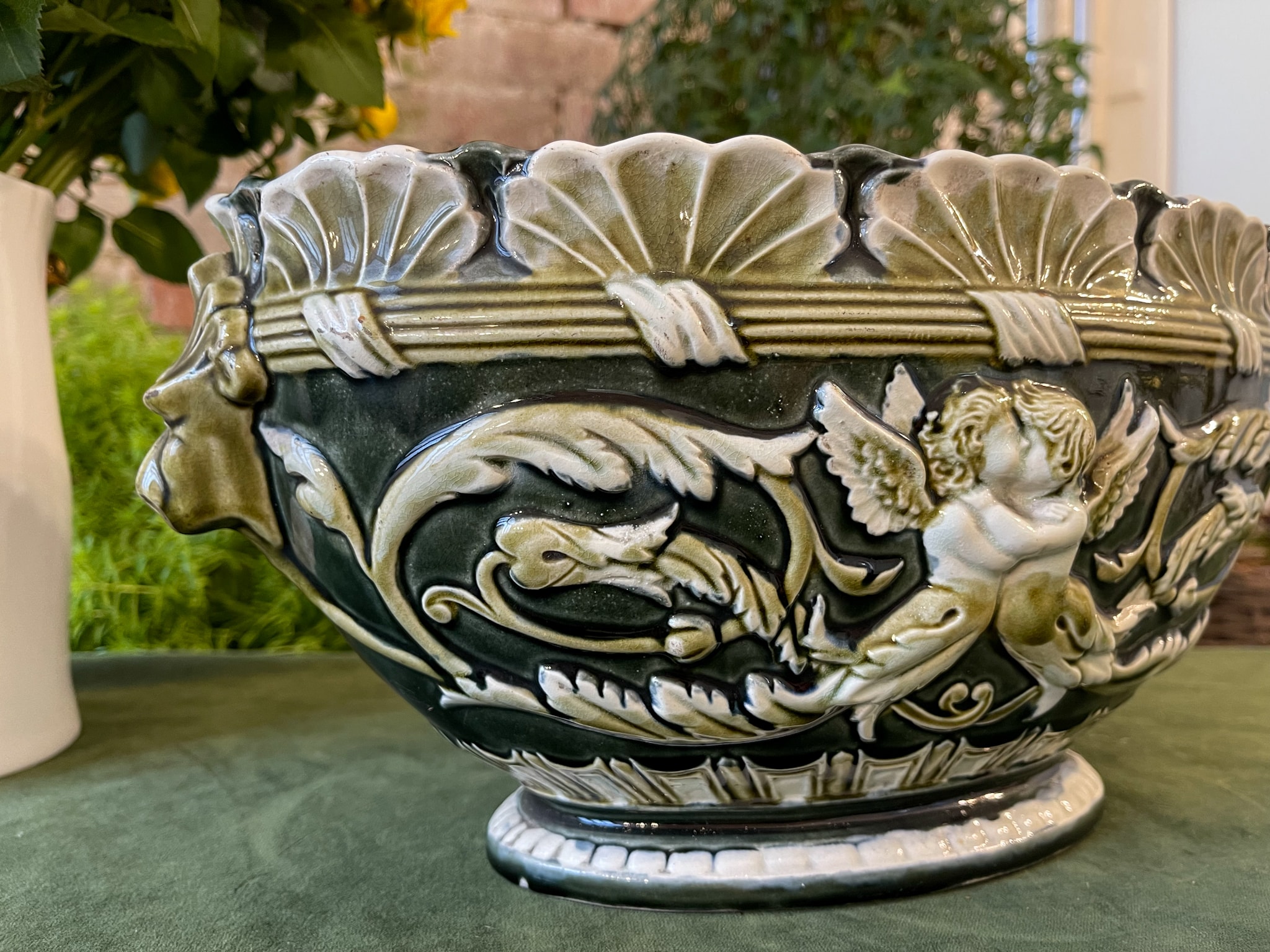
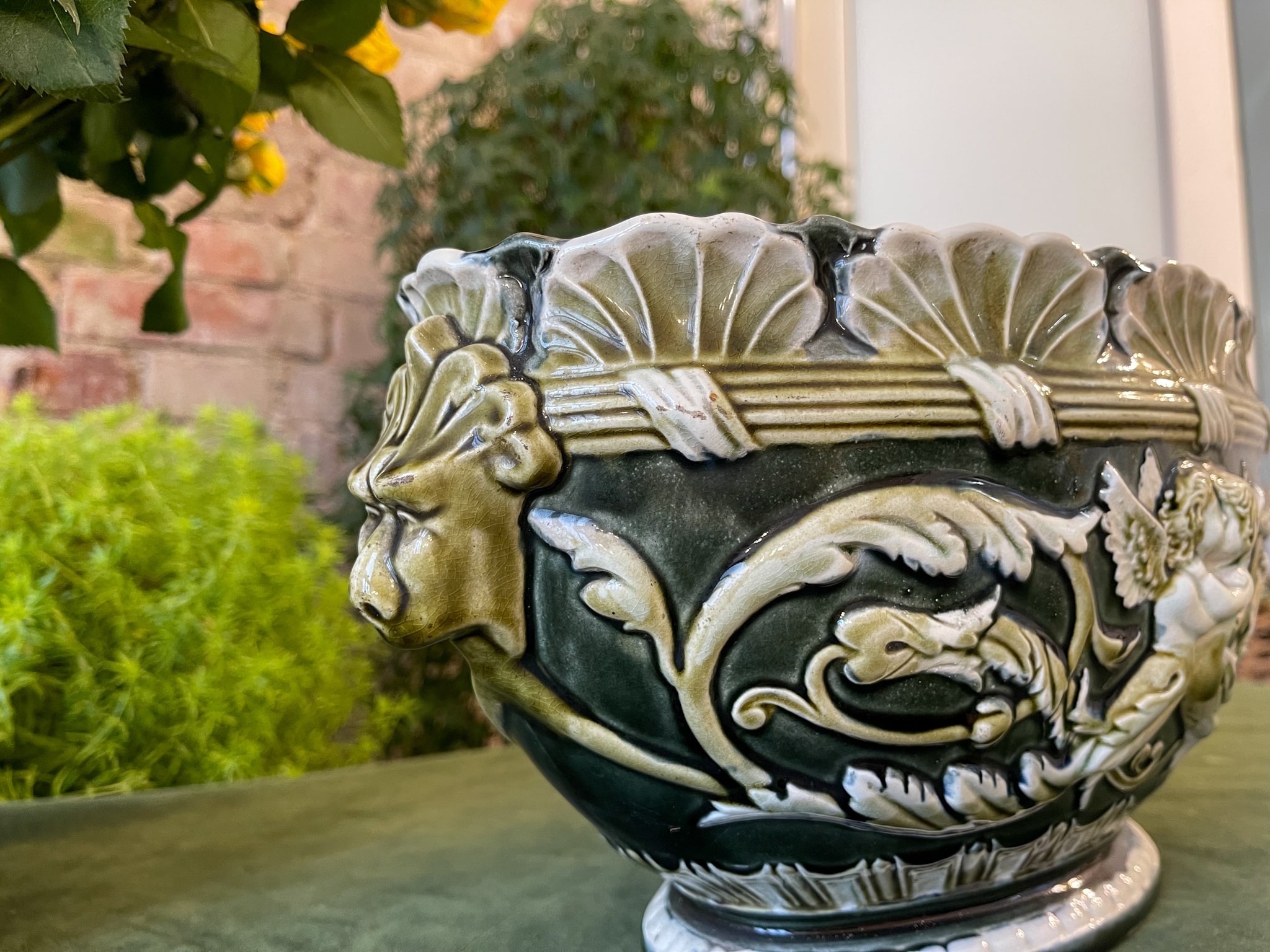
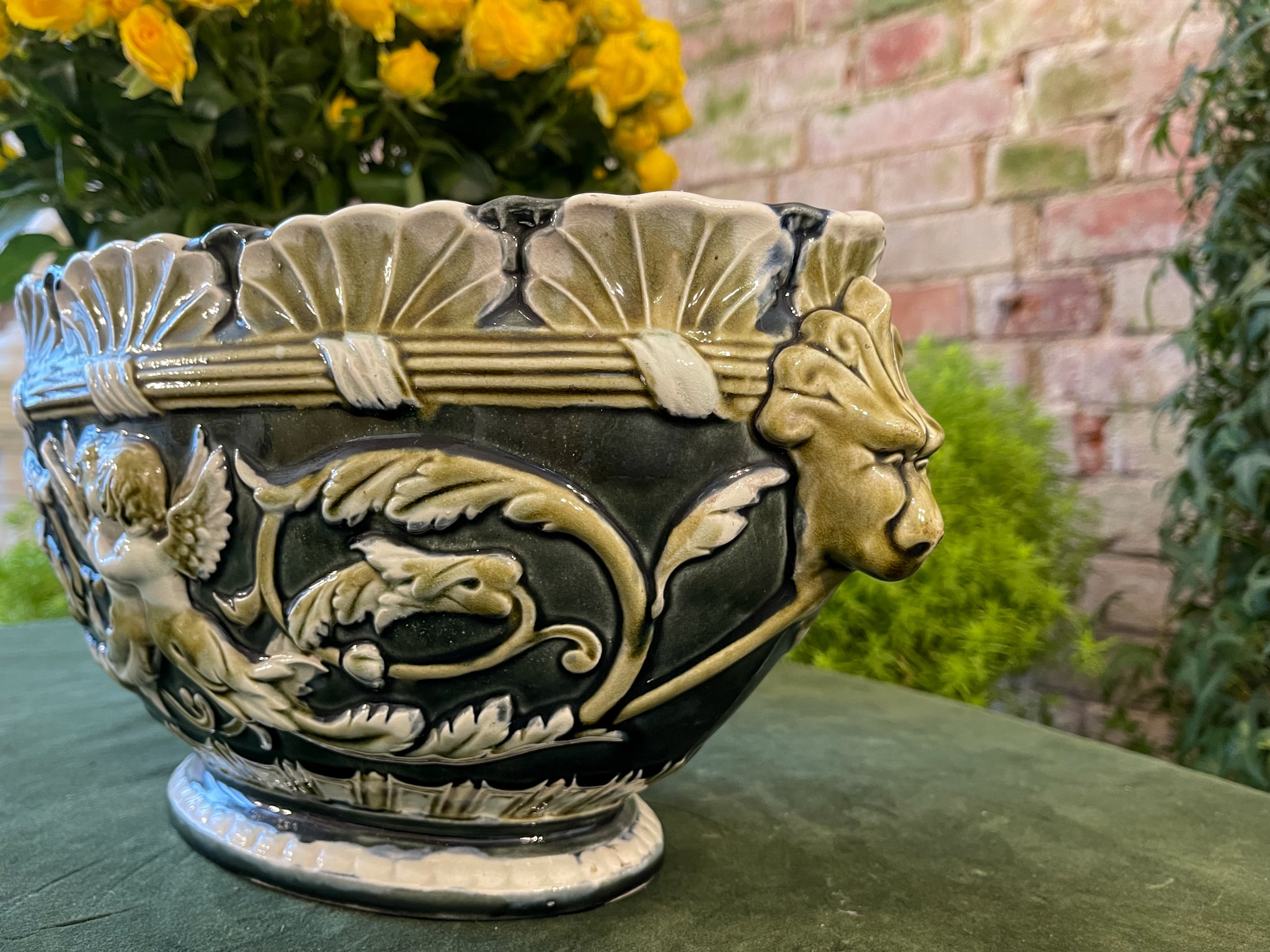
Majolica kašpo ar dziļu skulpturālu reljefu: putto eņģeļi, lauvas maskaronu rokturi, akantus vijumi, gliemežvāku vainags. Barbotine glazūra melnzaļā un krēmkrāsā. Historicisms / Neo-Renesanse, Francija/Vācija, ap 1870.–1900. Augstums 17 cm × garums 36 cm.
📐 Augstums 17 cm × garums 36 cm.
―――――――――――――――――――――
Majolica Kašpo ar Putto, Lauvas Maskaroniem un Akantus Vijumiem — Historicisms / Neo-Renesanse, Francija vai Vācija, ap 1870.–1900.
―――――――――――――――――――――
🏛️ IZGATAVOŠANAS PERIODS, MĀKSLAS STILS, LAIKMETS
Šis kašpo pieder Historicisma laikmeta izsmalcinātākajai reljefu keramikas tradīcijai — periodam, kad 19. gadsimta otrās puses Eiropas rūpnīcas un manufaktūras ar akadēmisku dedzību atgrieza dzīvē Renesanses un Baroka ornamentālās sistēmas, izmantojot majolica un barbotine glazūru tehnikas, lai radītu skulpturālas, trīsdimensionālas keramikas virsmas.
Dekors runā Neo-Renesanses un Neo-Baroka valodā ar pilnu ornamenta vārdnīcu: centrālajā joslā — spārnotie putto jeb eņģeļi, kas rotaļīgi cīnās ar delfīna tipa jūras radījumu akantus lapu vijumu vidū — šis motīvs tieši atsaucas uz Rafaēla un Mikelandželo dekorācijām Vatikāna logijās un Fontainebleau skolas stucco tradīciju. Abos sānos — lauvas maskaroni kā rokturi, kas piešķir traukam monumentālu, arhitektonisku raksturu. Augšmalā — gliemežvāku (coquille) vainags un joslu cannelure ornaments; apakšā — stilizēts meandrs. Visa virsma klāta ar tumšzaļu un melnu barbotine glazūru ar krēmkrāsas augsto reljefu — klasiska Historicisma majolica krāsu kombinācija, kas radīja barokainu kontrastu starp tumšo fonu un gaišo skulpturālo dekoru.
―――――――――――――――――――――
⚜️ RAŽOTĀJS UN MANUFAKTŪRAS ZĪMOGS
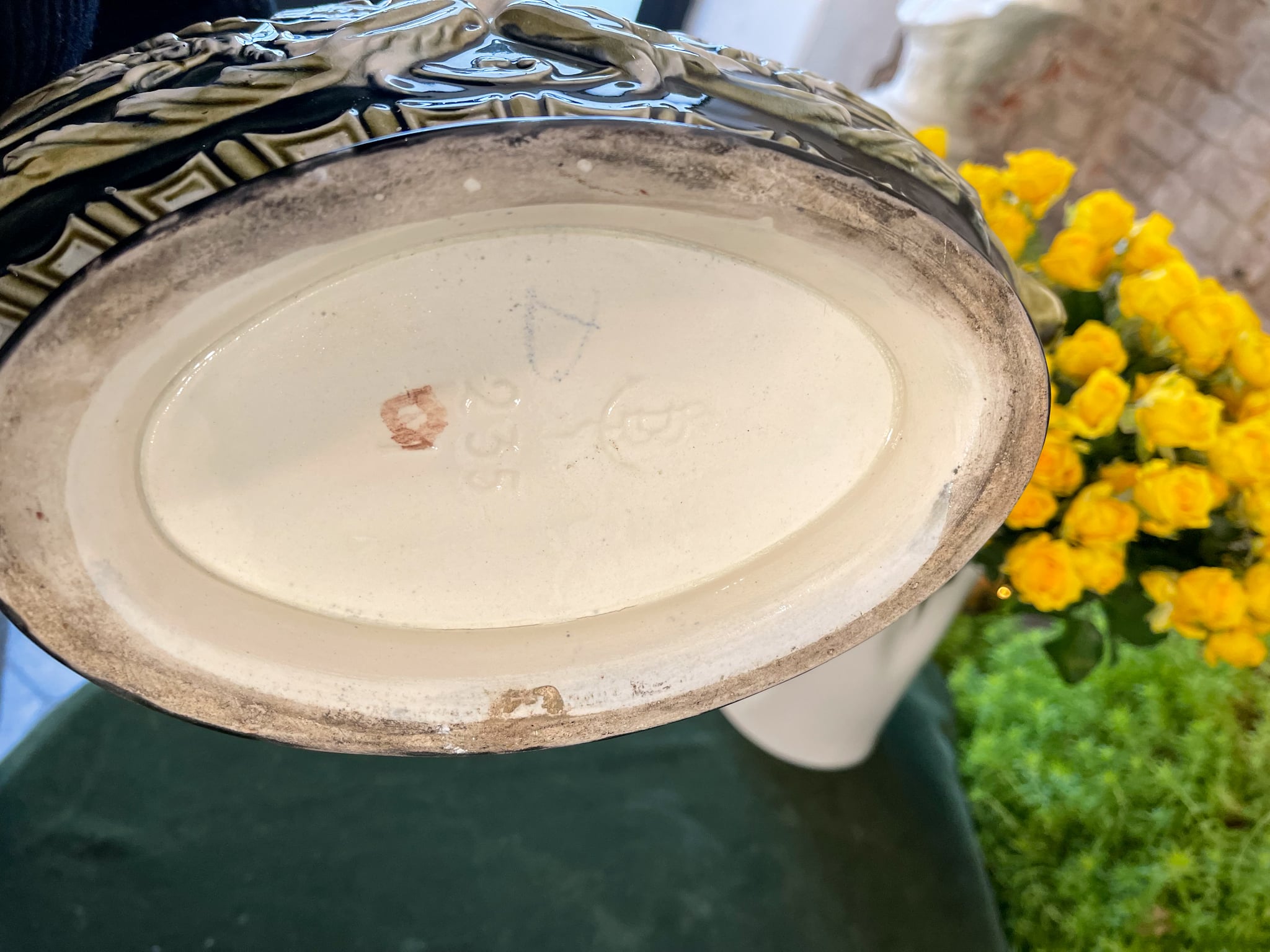
Apakšā redzams neskaidrs zīmogs — izskatās pēc burtiem ar numuru, taču fotogrāfijā nav pilnībā salasāms. Šāda reljefa majolica ar putto, lauvas maskaroniem un barbotine glazūru ir raksturīga gan Francijas (Sarreguemines, Choisy-le-Roi, Gien), gan Vācijas (Villeroy & Boch, Mettlach, Schramberg) keramikas manufaktūrām, kas 1870.–1900. gados ražoja reprezentatīvus dekoratīvos traukus Historicisma stilā Eiropas un starptautiskajam tirgum.
Sarreguemines manufaktūra Francijā (Lotringā) un Villeroy & Boch Vācijā bija vadošie šāda tipa izstrādājumu ražotāji — to produkti tika izstādīti Pasaules izstādēs Parīzē (1878, 1889, 1900) un Vīnē (1873), iegūstot augstus apbalvojumus un apgādājot Eiropas augstākās sabiedrības interjera vajadzības. Arī bez pilnībā salasāma zīmoga — reljefa kvalitāte, glazūras dziļums un ornamentālās sistēmas precizitāte liecina par profesionālu lielas manufaktūras ražojumu.
―――――――――――――――――――――
💎 RETUMS UN NOZĪME
Majolica kašpo ar skulpturālu putto un lauvas maskarona reljefu šādā izmērā un saglabātības pakāpē ir izsmalcināts kolekcionāru priekšmets. Historicisma majolica ar figūrālu reljefu — īpaši ar putto un lauvu motīviem — saglabā stabilu pieprasījumu Rietumeiropas un Ziemeļamerikas antikvāru tirgū. Šādi trauki ir meklēti gan kā autonomi skulpturāli objekti, gan kā interjera akcentu pāri vai komplekti. Dekora programmas pilnīgums — putto, maskaroni, akantus, coquille, meandrs — padara šo trauku par enciklopēdisku Neo-Renesanses ornamenta paraugdemonstrāciju.
―――――――――――――――――――――
🕯️ PIELIETOJUMS INTERJERĀ, DIZAINĀ UN FOTOGRĀFIJĀ
Šis kašpo ir dominējošs interjera akcents — pietiekami liels un skulpturāli bagāts, lai dominētu uz kamīnmalas, konsoles, bibliotēkas plaukta vai centrālā galda jebkurā Historicisma, Neo-Renesanses, Baroka vai bagātīgā eklektiskā interjerā. Tumšzaļā un melnā glazūra ar krēmkrāsas reljefu lieliski papildina tumšās koka mēbeles, bronzas akcentus un zaļo augu dekorāciju — kā skaidri redzams fotogrāfijās ar dzelteno rožu kompozīciju. Izcils rekvizīts reprezentatīvā interjera un produktu fotogrāfijā.
―――――――――――――――――――――
🎁 DĀVANA UN PERSONALIZĀCIJA
Kašpo ar lauvas maskaroniem ir reprezentatīva dāvana Lauvas horoskopa zīmes īpašniekam, vadītājam vai ikvienam, kas identificējas ar spēka, varenības un cēluma simboliku. Putto motīvs piešķir traukam papildu nozīmi — tas ir mākslas, mīlestības un radošuma simbols. Korporatīvā vai diplomātiskā līmeņa dāvana, kas izsaka augstu gaumi un kultūras izpratni.
―――――――――――――――――――――
🔍 STĀVOKLIS
Keramikas korpuss labā stāvoklī, reljefs skaidrs un pilnīgs. Barbotine glazūra ar dabisku patinu — neliels krēmkrāsas reljefa nodilums vietumis atbilst trauka vecumam. Apakšā redzams neskaidrs zīmogs ar nelielu sarkanu iesārņojumu — iespējams, vecas uzlīmes vai krāsas pēda. Foot ring ar dabisku nolietojuma pēdām. Lietas stāvoklis pilnībā atspoguļots fotogrāfijās.
―――――――――――――――――――――
🇬🇧 DESCRIPTION IN ENGLISH
📐 Height 17 cm × Length 36 cm.
―――――――――――――――――――――
Majolica Cachepot with Putti, Lion Masks and Acanthus Scrolls — Historicism / Neo-Renaissance, France or Germany, circa 1870–1900.
―――――――――――――――――――――
🏛️ PERIOD, ART STYLE AND HISTORICAL CONTEXT
This cachepot belongs to the most refined relief ceramics tradition of the Historicist era — a period when the factories and manufactories of late 19th-century Europe, with academic zeal, restored the ornamental systems of the Renaissance and Baroque to life, employing majolica and barbotine glaze techniques to create sculptural, three-dimensional ceramic surfaces.
The decoration speaks in the full vocabulary of Neo-Renaissance and Neo-Baroque ornament: the central register presents winged putti playfully wrestling with dolphin-type sea creatures amid acanthus leaf scrolls — a motif drawn directly from Raphael‘s Vatican Loggie decorations and the stucco tradition of the Fontainebleau school. On either side, lion mascarons serve as handles, lending the vessel a monumental, architectural character. The upper rim carries a coquille shell crown and cannelure band; the base features a stylised meander. The entire surface is covered in dark green and black barbotine glaze with cream-coloured high relief — the classic Historicist majolica colour combination that creates a baroque contrast between the dark ground and the pale sculptural decoration.
―――――――――――――――――――――
⚜️ MAKER AND MARK
The base bears a mark that is not fully legible in the photograph — it appears to show letters with a number. Relief majolica of this type — with putti, lion mascarons and barbotine glaze — is characteristic of both French manufactories (Sarreguemines, Choisy-le-Roi, Gien) and German ones (Villeroy & Boch, Mettlach, Schramberg), which during 1870–1900 produced representative decorative vessels in the Historicist style for the European and international market.
The Sarreguemines manufactory in France (Lorraine) and Villeroy & Boch in Germany were the leading producers of this type — their products were exhibited at the World Fairs in Paris (1878, 1889, 1900) and Vienna (1873), winning high awards and supplying the interior needs of European high society. Even without a fully legible mark, the quality of the relief modelling, the depth of the glaze and the precision of the ornamental system attest to the production of a professional large-scale manufactory.
―――――――――――――――――――――
💎 RARITY AND SIGNIFICANCE
A majolica cachepot with sculptural putto and lion mascaron relief in this size and state of preservation is a refined collector’s piece. Historicist majolica with figural relief — particularly with putti and lion motifs — maintains steady demand on the Western European and North American antiques market. Such vessels are sought both as autonomous sculptural objects and as pairs or sets of interior accents. The completeness of the decorative programme — putti, mascarons, acanthus, coquille, meander — makes this cachepot an encyclopaedic demonstration of Neo-Renaissance ornament.
―――――――――――――――――――――
🕯️ USE IN INTERIORS, DESIGN AND PHOTOGRAPHY
This cachepot is a dominant interior accent — large and sculptural enough to command a mantelpiece, console, library shelf or central table in any Historicist, Neo-Renaissance, Baroque or richly eclectic interior. The dark green and black glaze with cream relief complements dark wood furniture, bronze accents and living plant decoration beautifully — as clearly demonstrated in the photographs with the yellow rose composition. An outstanding prop for representative interior and product photography.
―――――――――――――――――――――
🎁 AS A GIFT
A cachepot bearing lion mascarons is a distinguished gift for those born under the Leo zodiac sign, for leaders, or for anyone who identifies with the symbolism of strength, nobility and authority. The putto motif adds a further dimension — it is a symbol of art, love and creative spirit. A corporate or diplomatic-level gift expressing refined taste and cultural understanding.
―――――――――――――――――――――
🔍 CONDITION
The ceramic body is in good condition; the relief is clear and complete. The barbotine glaze carries a natural patina — minor wear to the cream relief in places is consistent with the age of the piece. The base shows a partially legible mark with a small red stain — possibly the trace of an old label or pigment. The foot ring shows natural signs of use. Condition is fully reflected in the photographs.
―――――――――――――――――――――