
Liels kokgriezuma sienas spogulis ar rocaille kroni, neorokoko stilā (6835)
Liels kokgriezuma sienas spogulis ar rocaille kroni, neorokoko stilā (6835)
€980.00
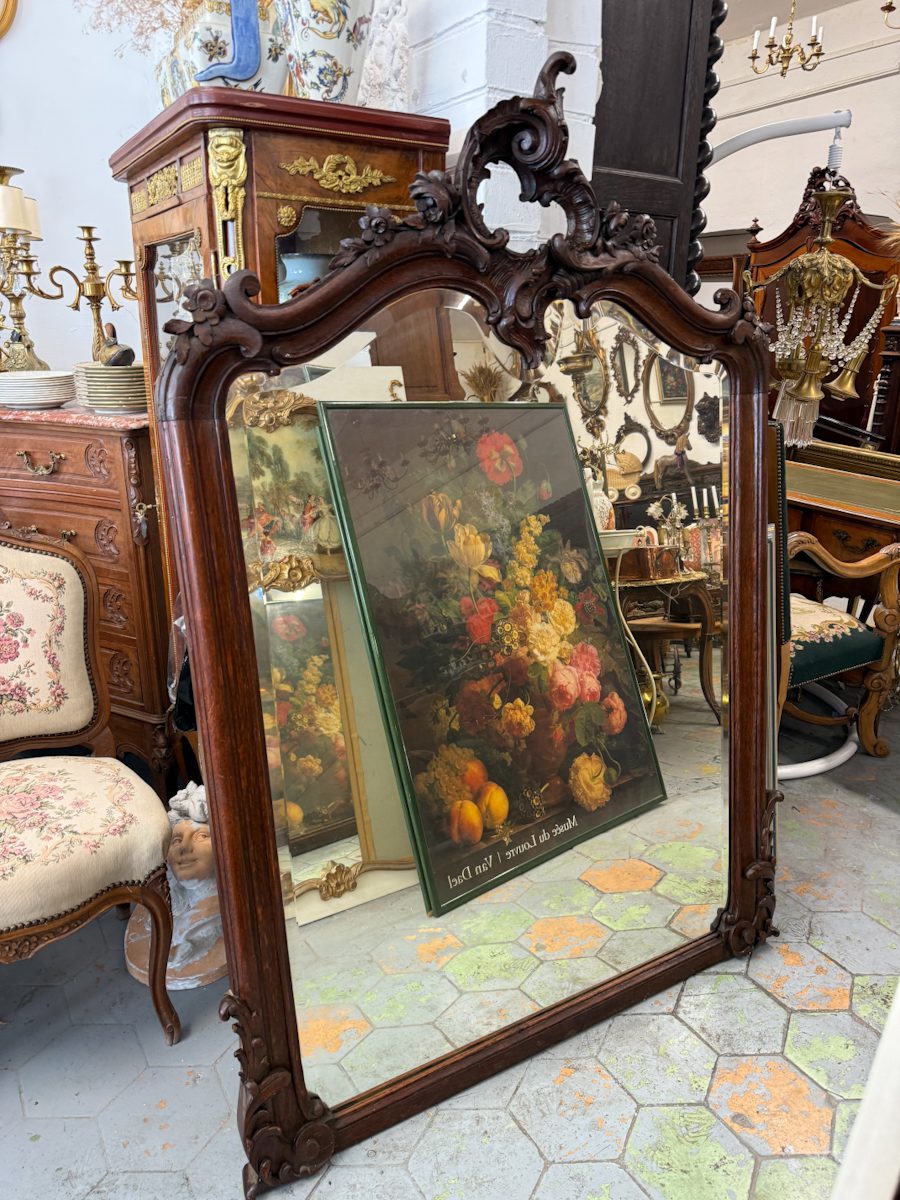
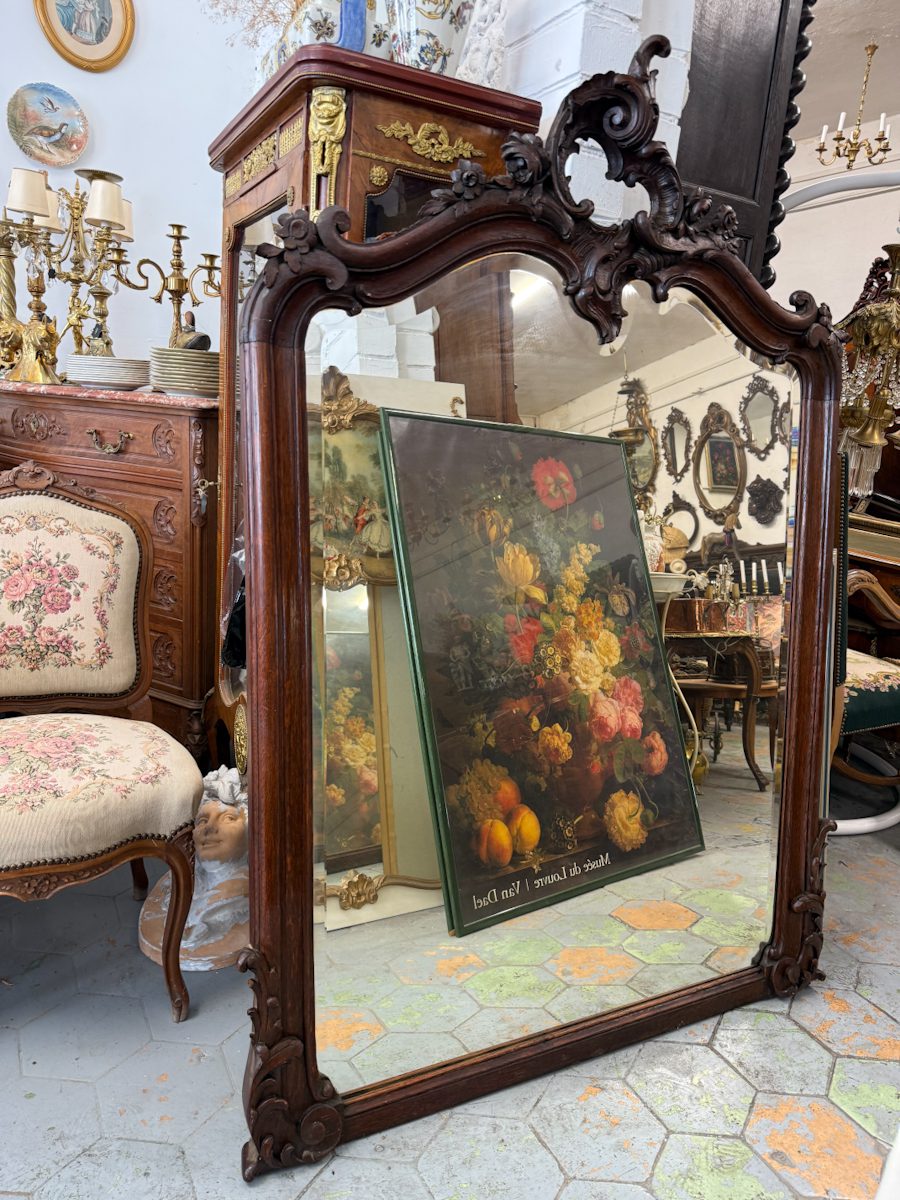
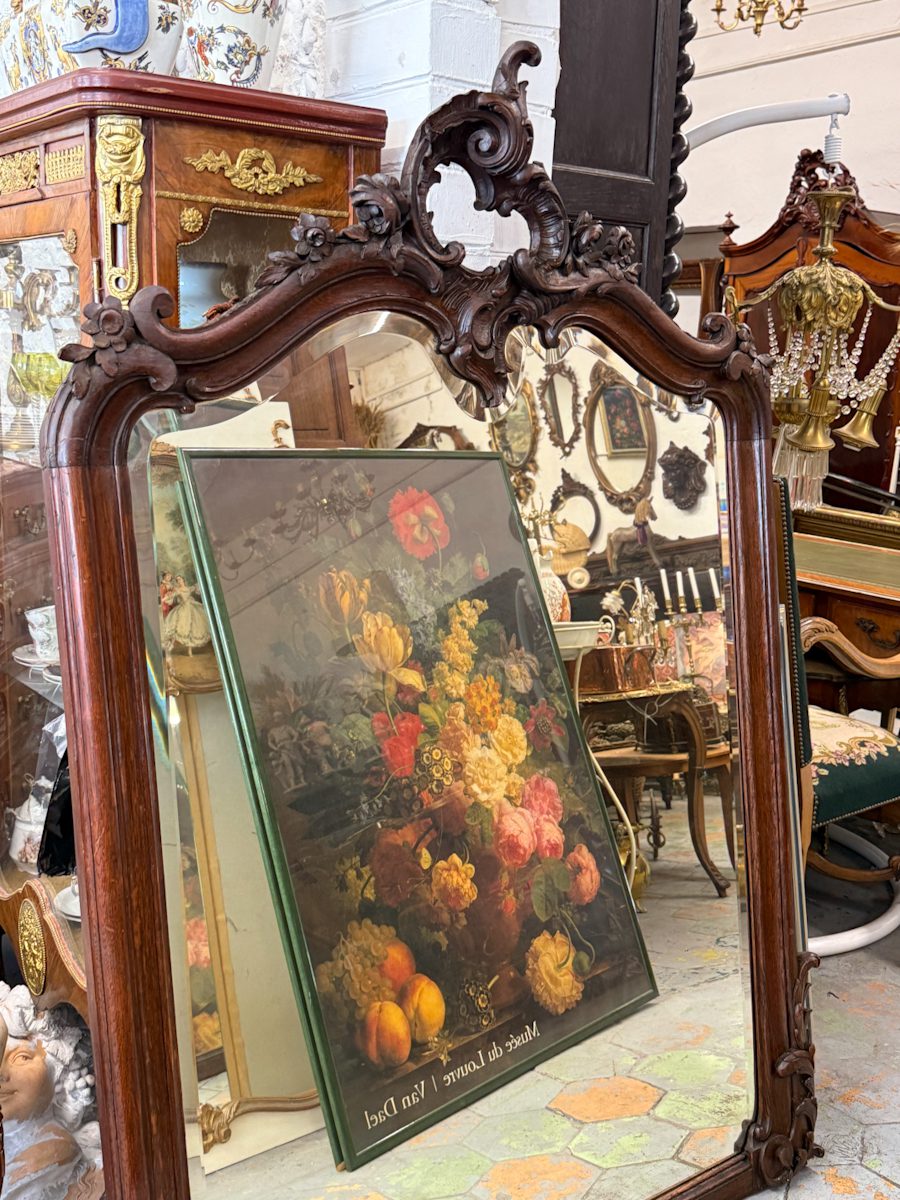
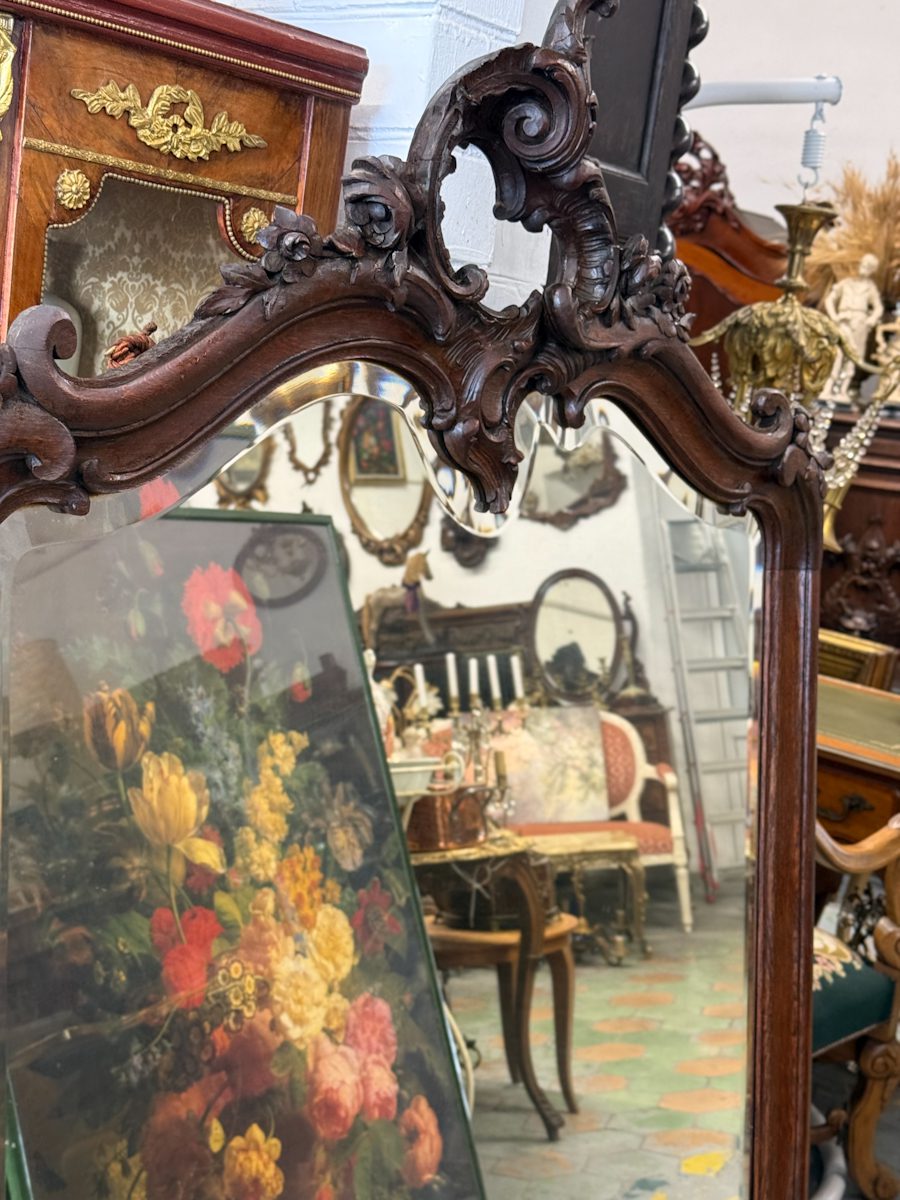
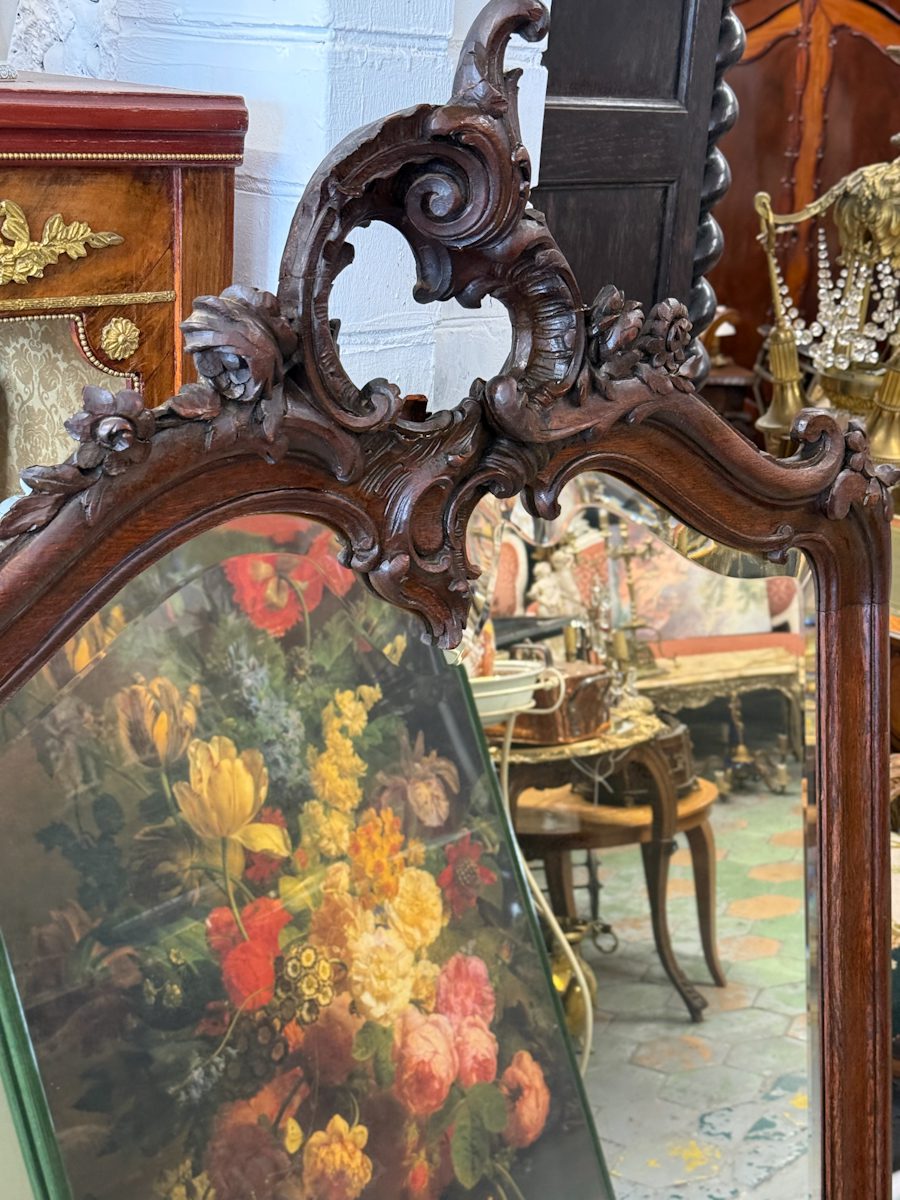
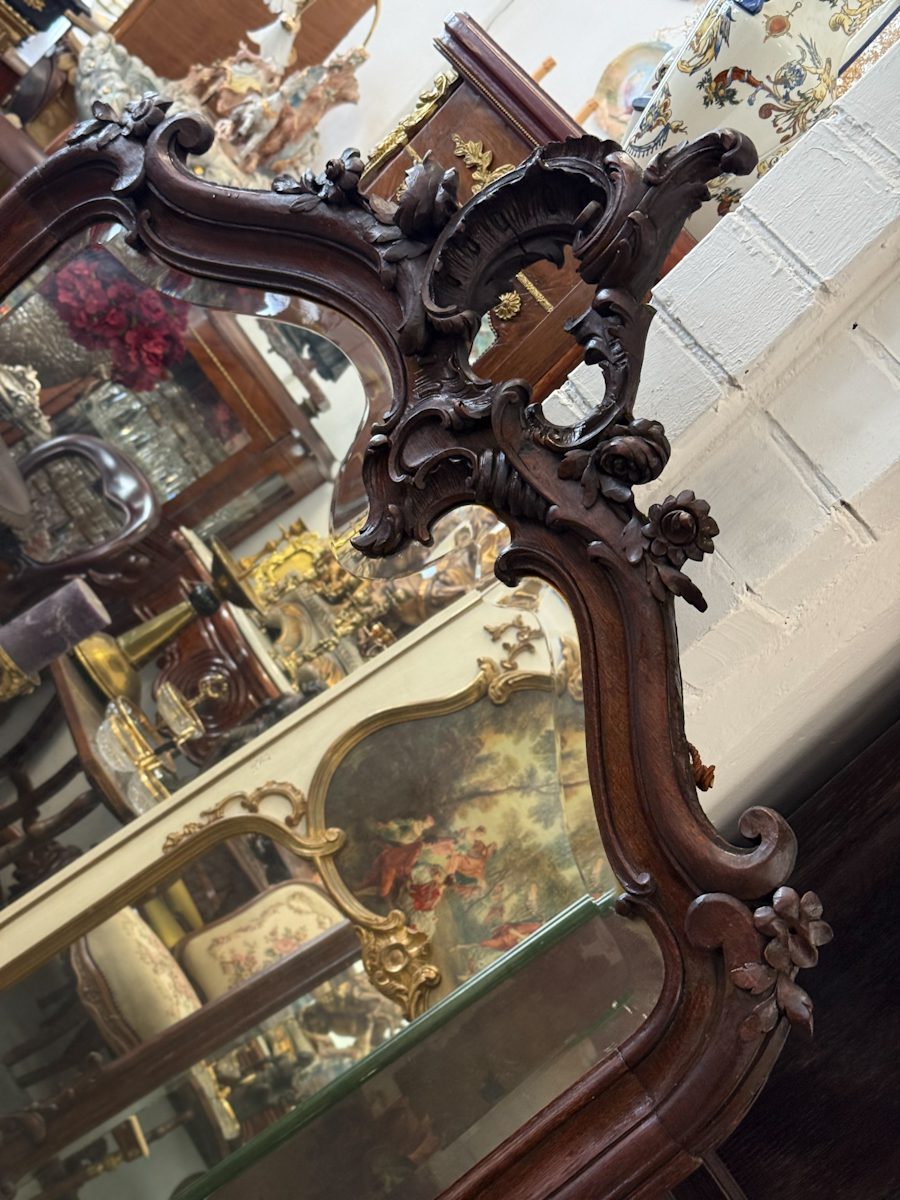
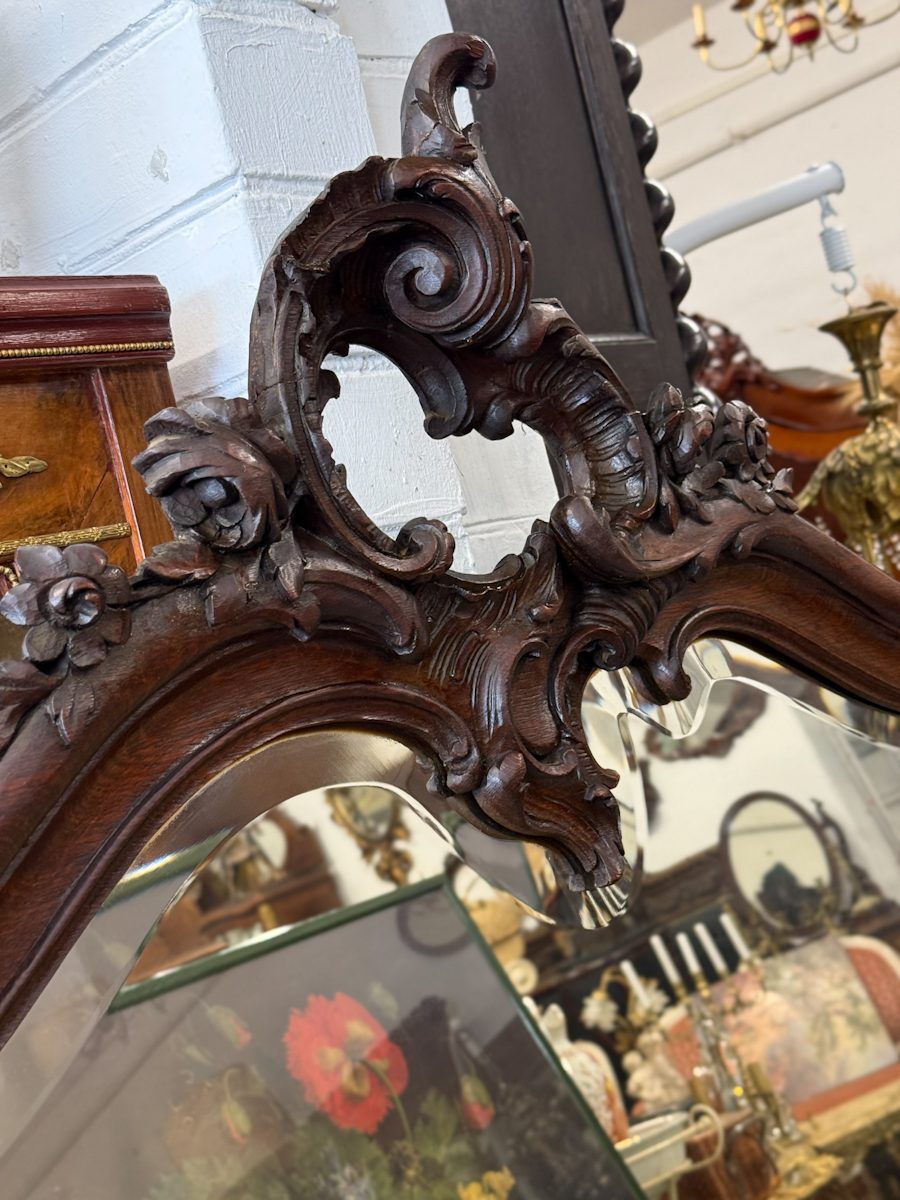
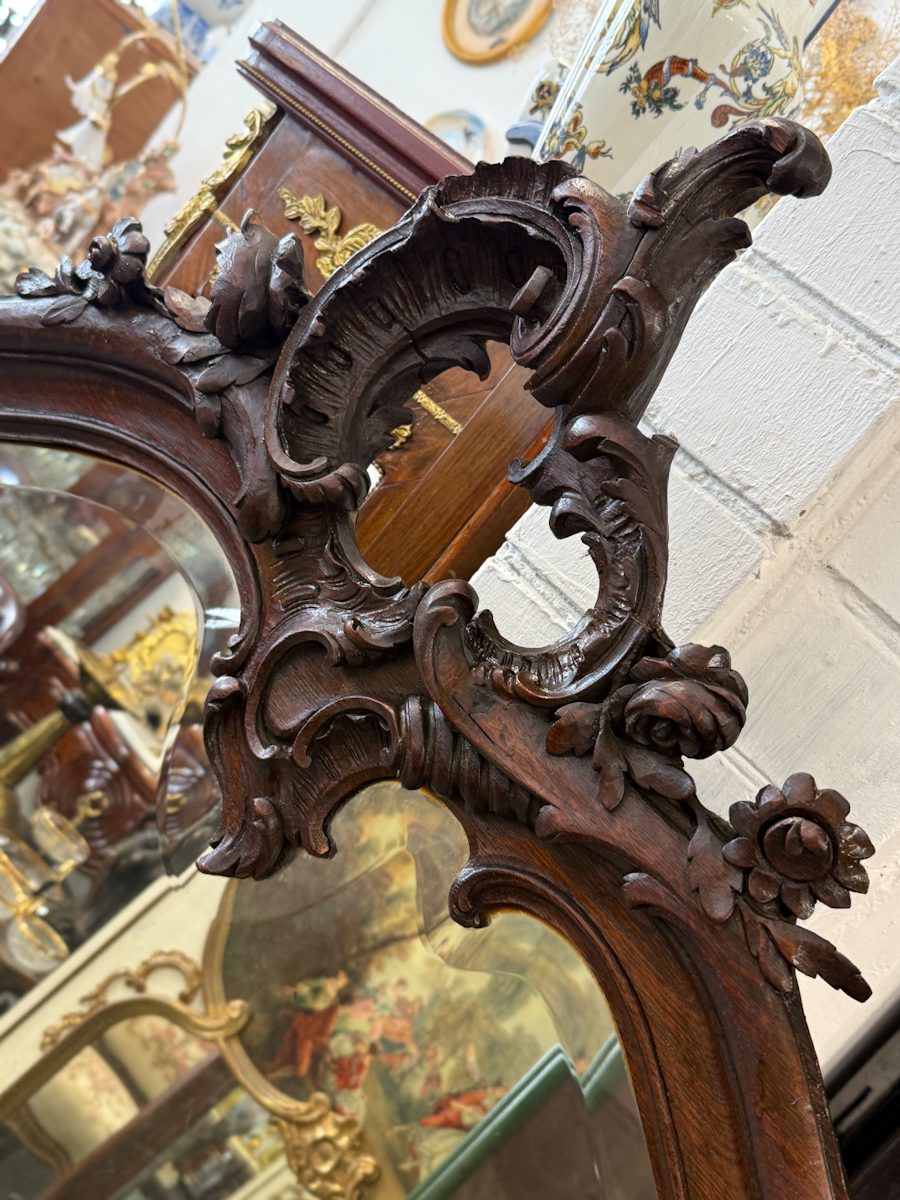
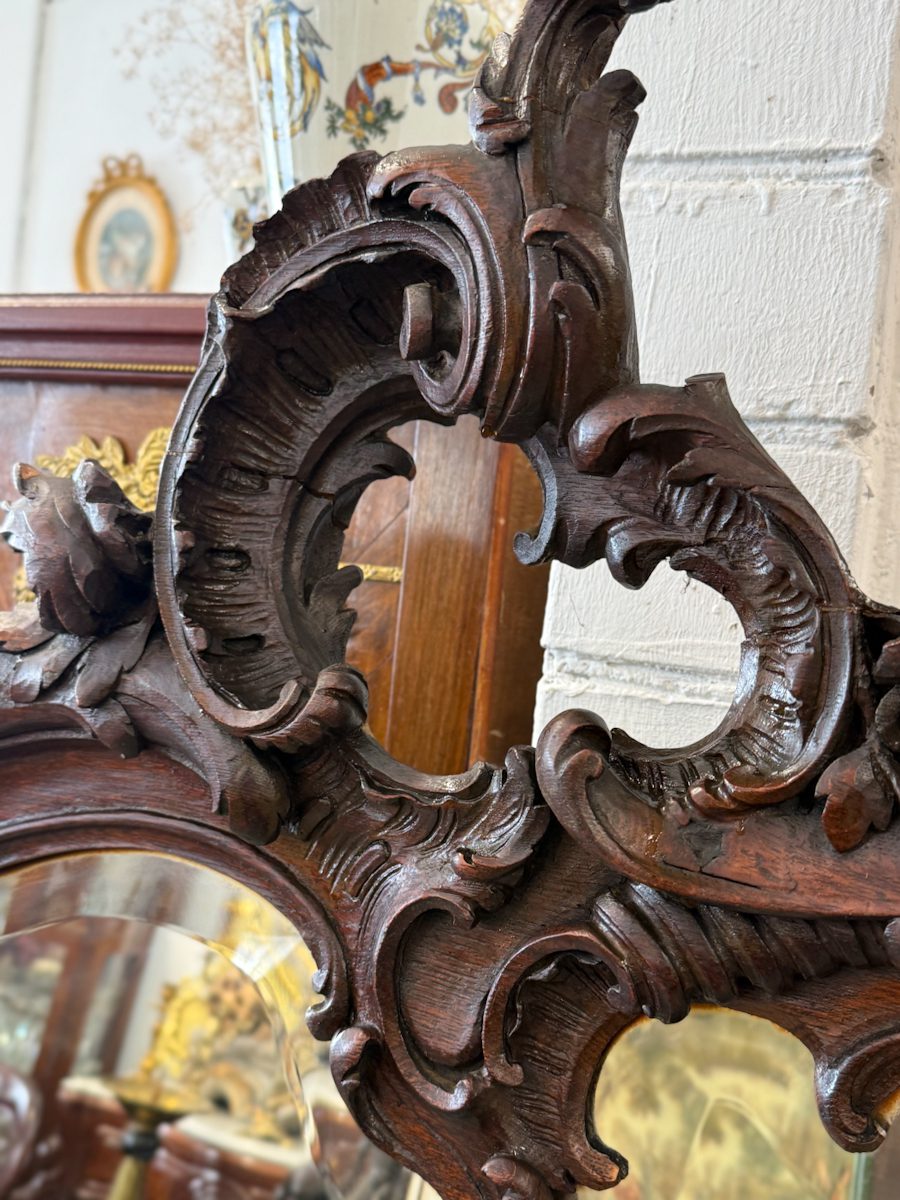
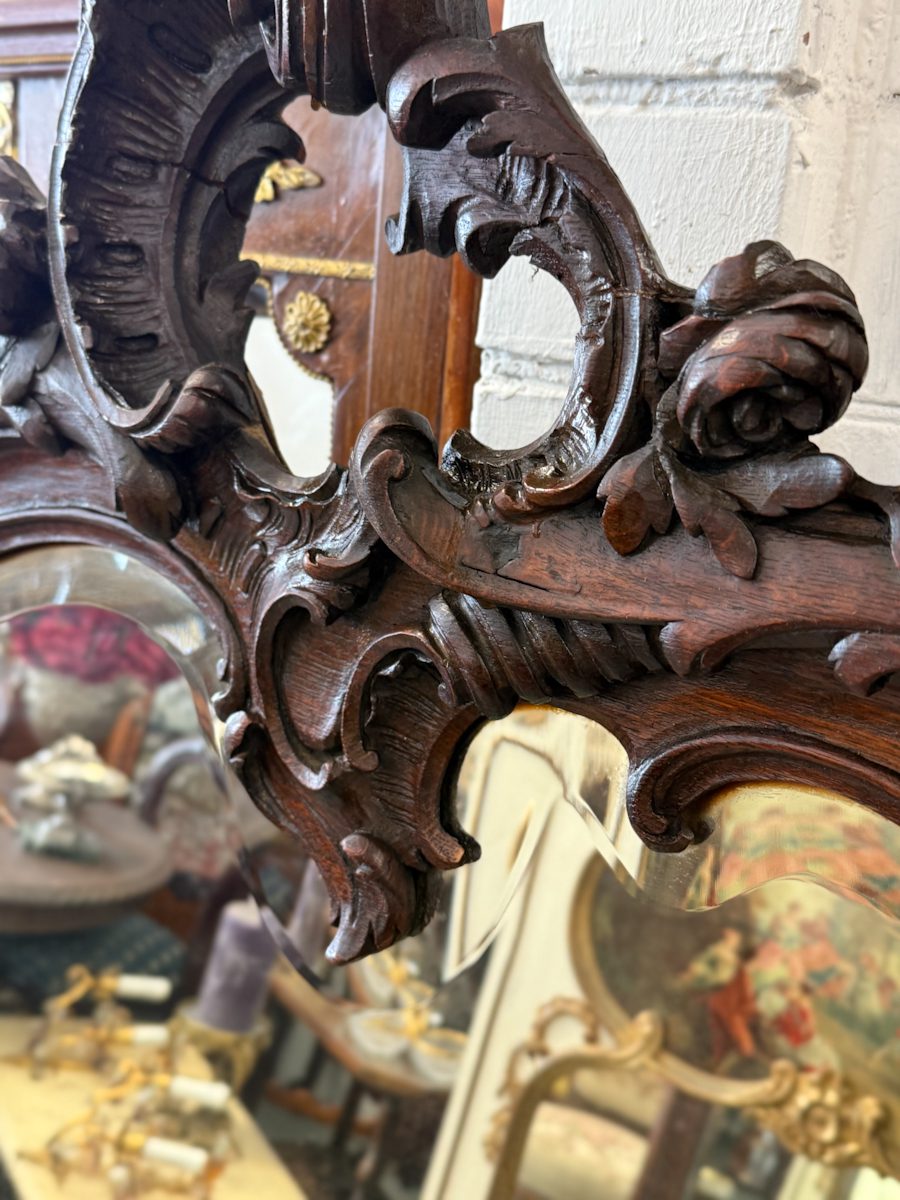
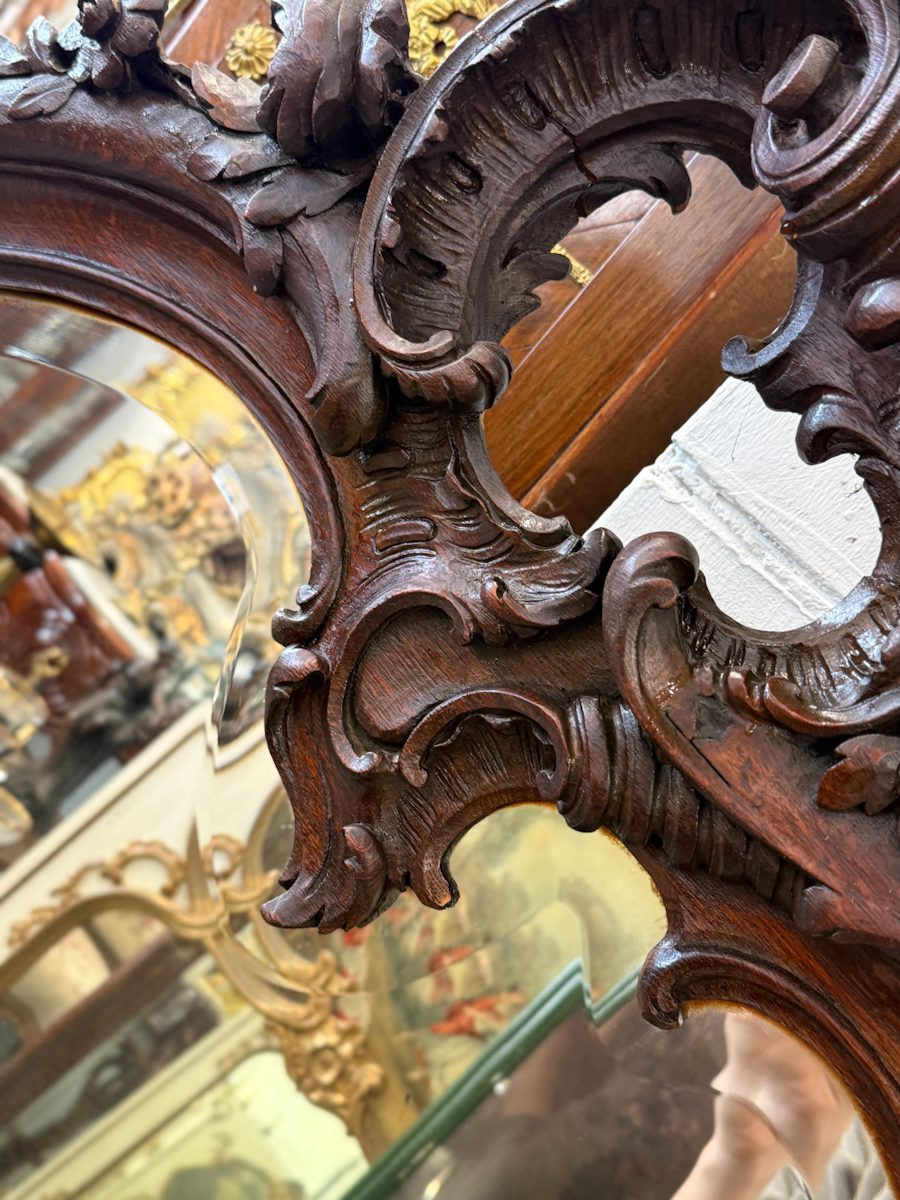
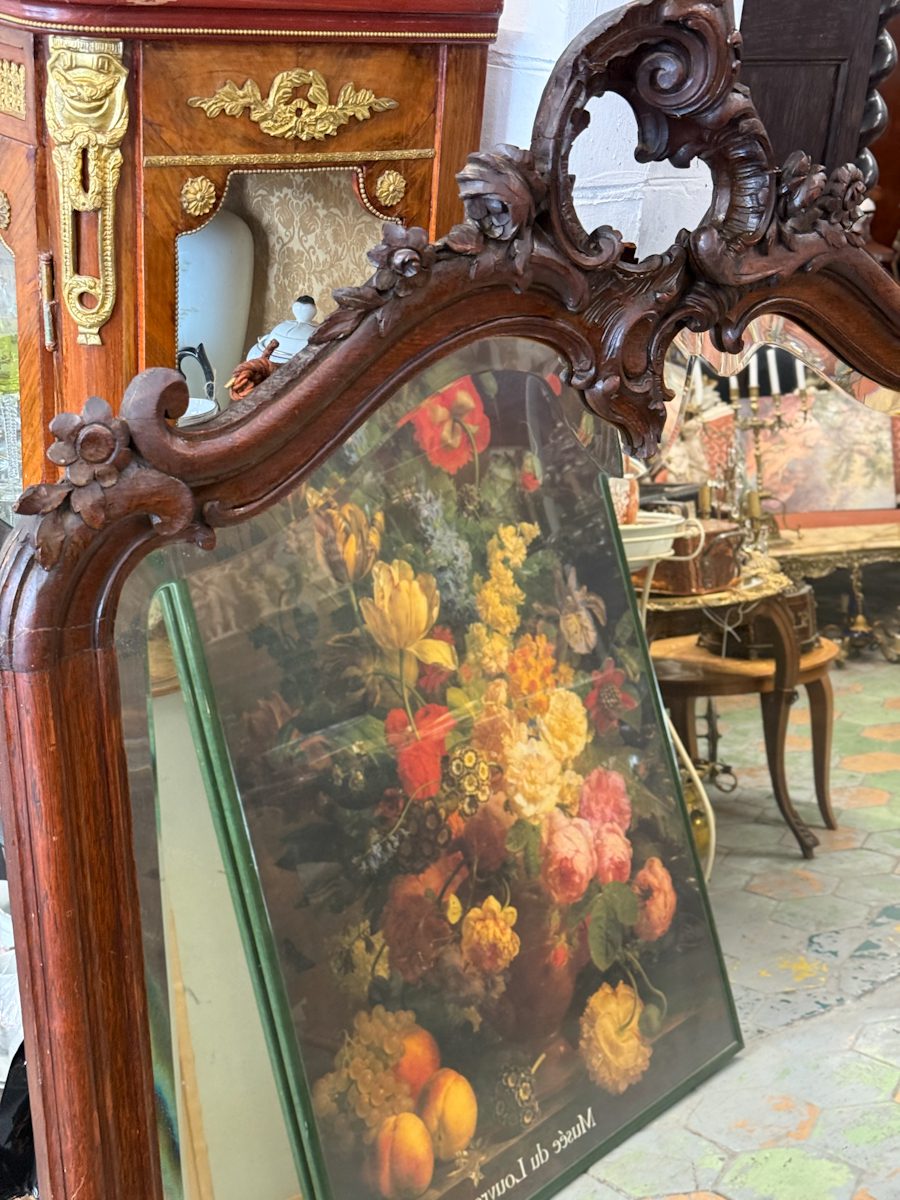
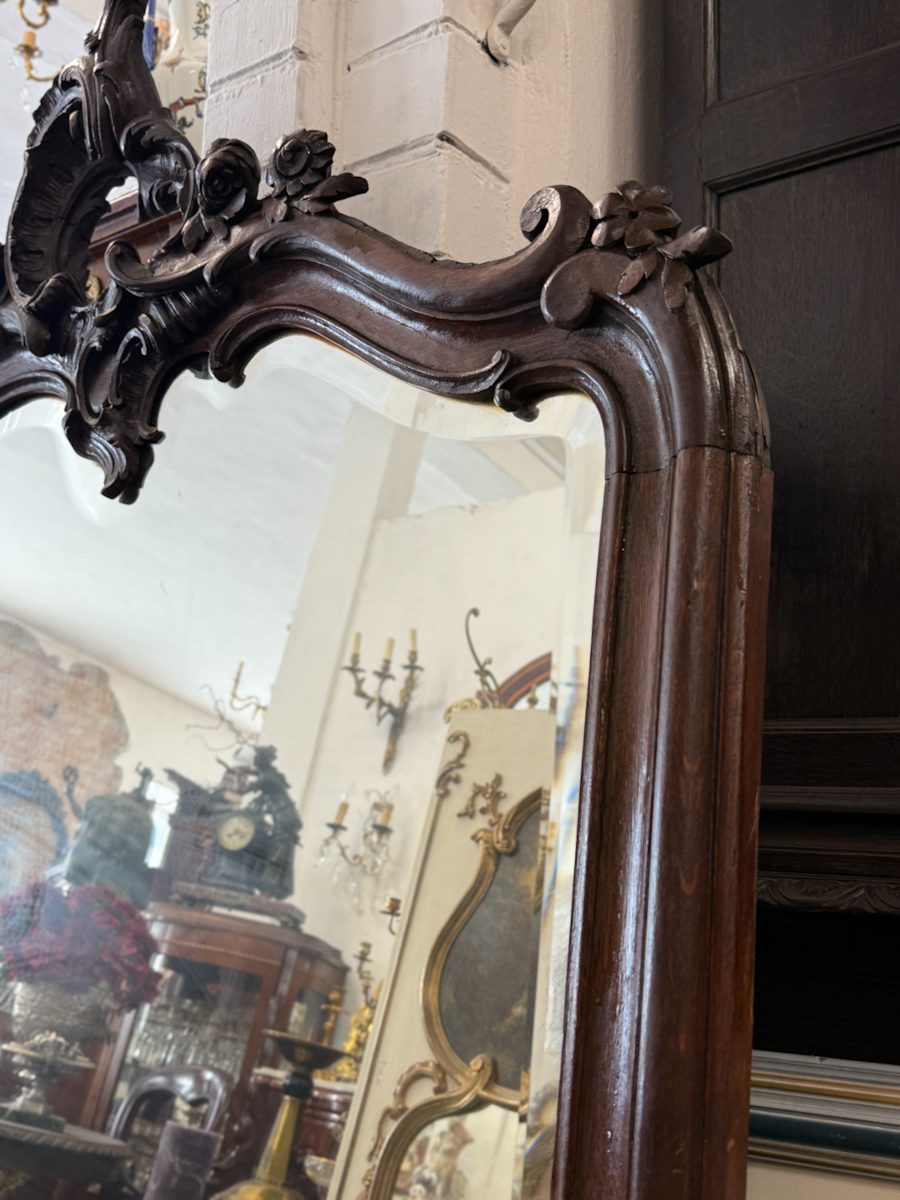
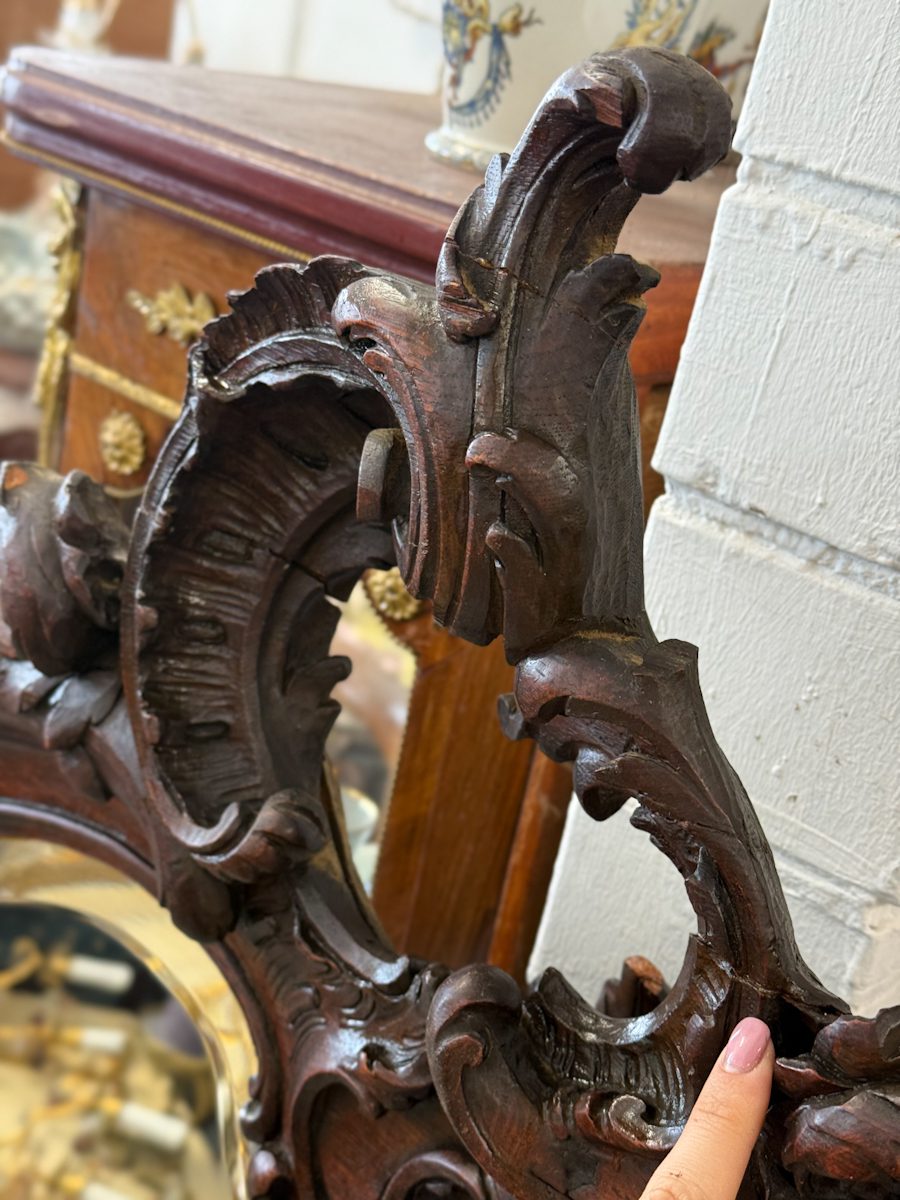
Iespaidīgs liela izmēra kokgriezuma sienas spogulis neorokoko (Luija XV) stilā: figūrveida fasetēts stikls, bagātīgs ažūrs rocaille kronis ar C-rituļiem, gliemežvāka kartušu un rožu pušķiem. 19. gs. beigas.
🇱🇻 LATVISKI
Izmēri:
Augstums — 169,5 cm
Platums — 121,5 cm
Liels kokgriezuma sienas spogulis ar rocaille kroni — neorokoko stilā
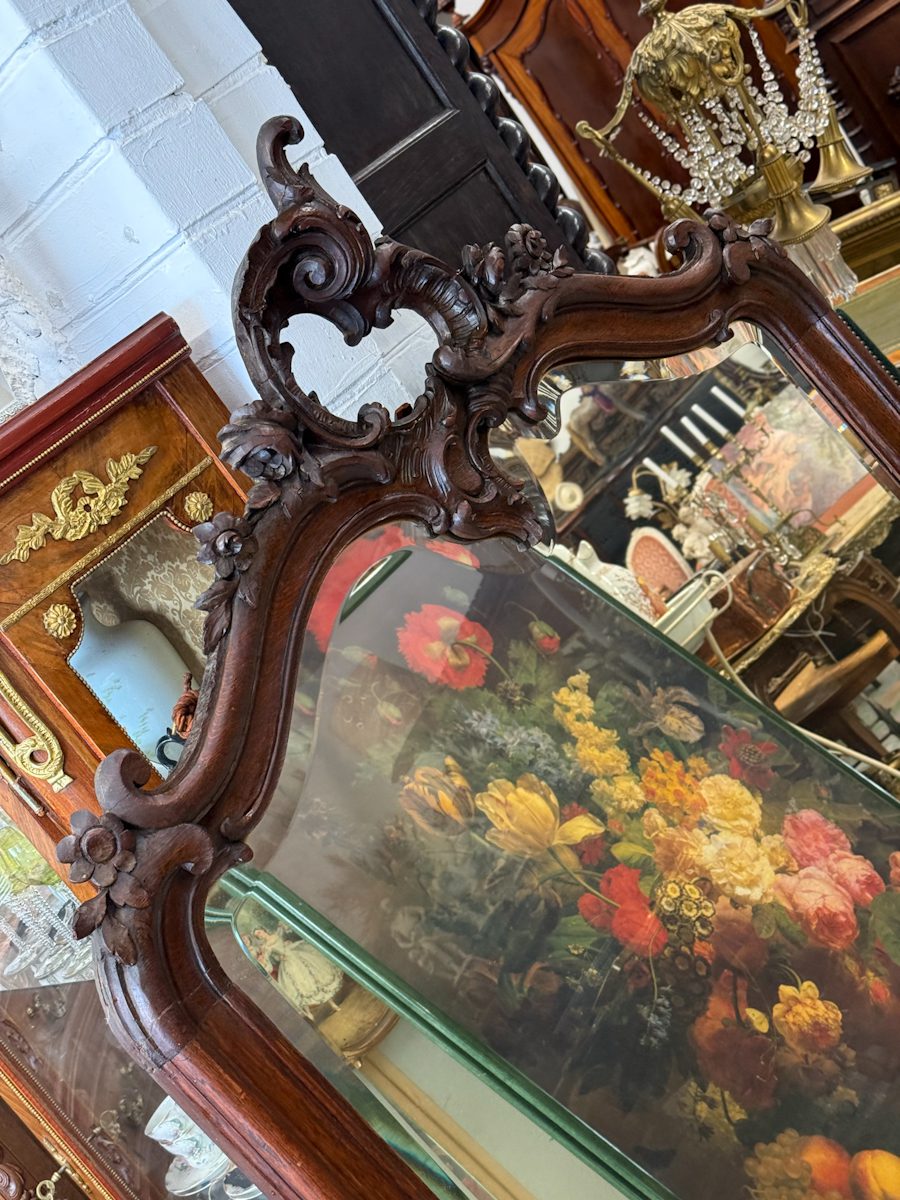
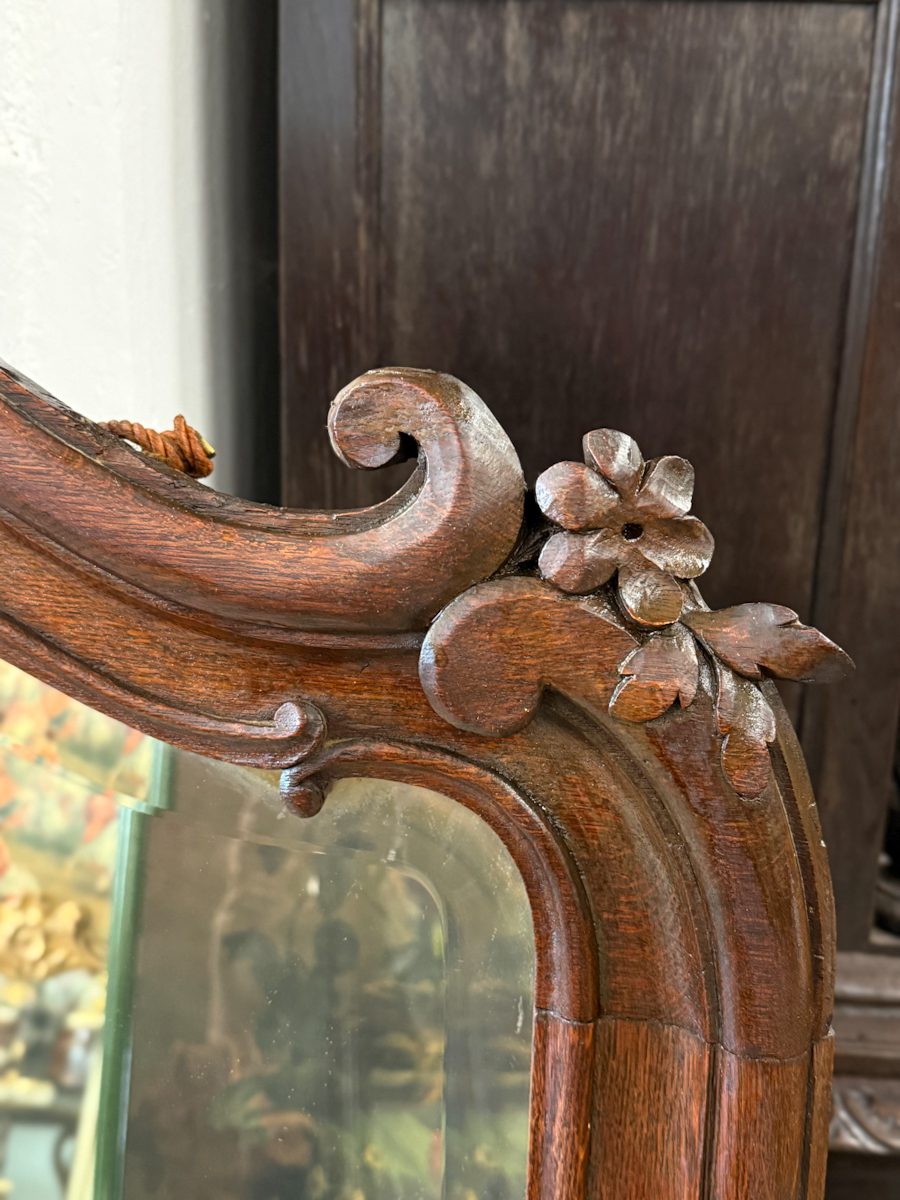
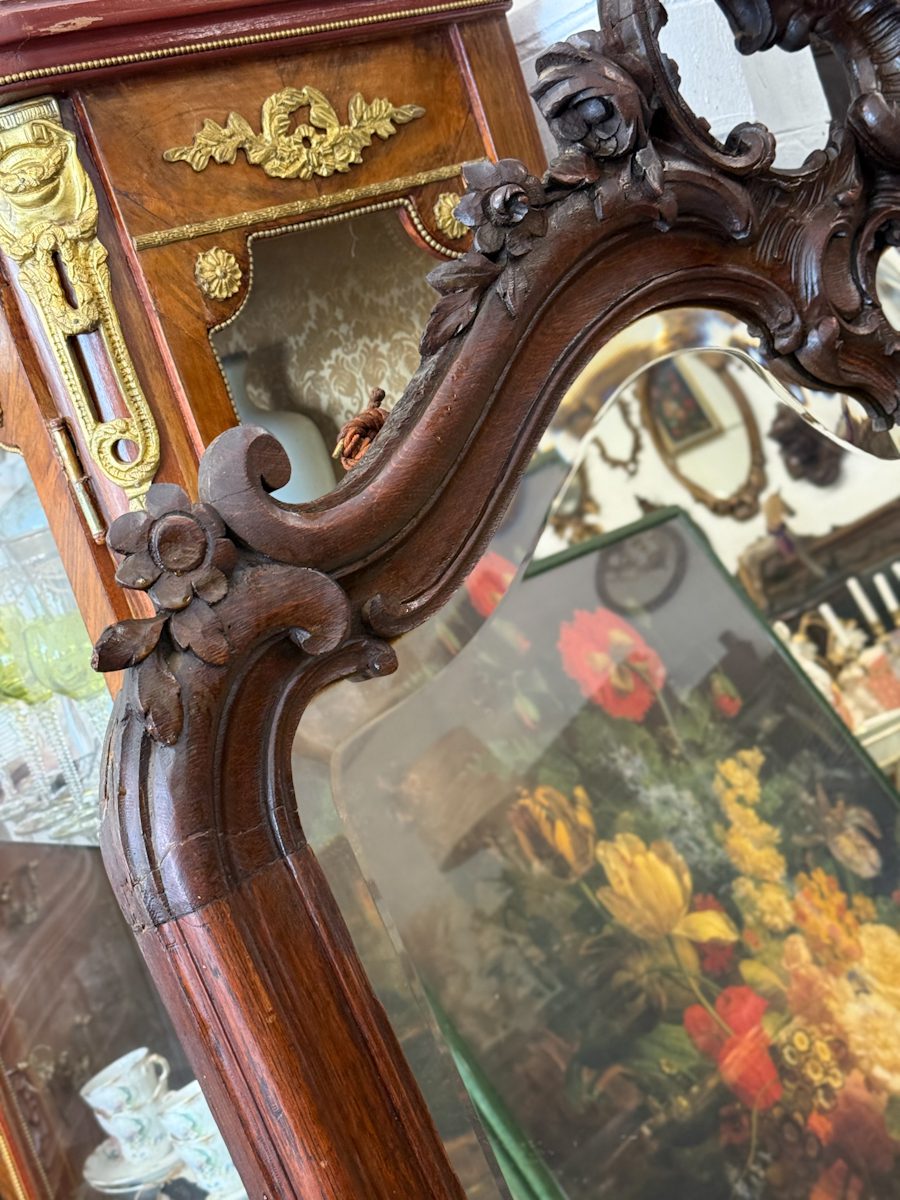
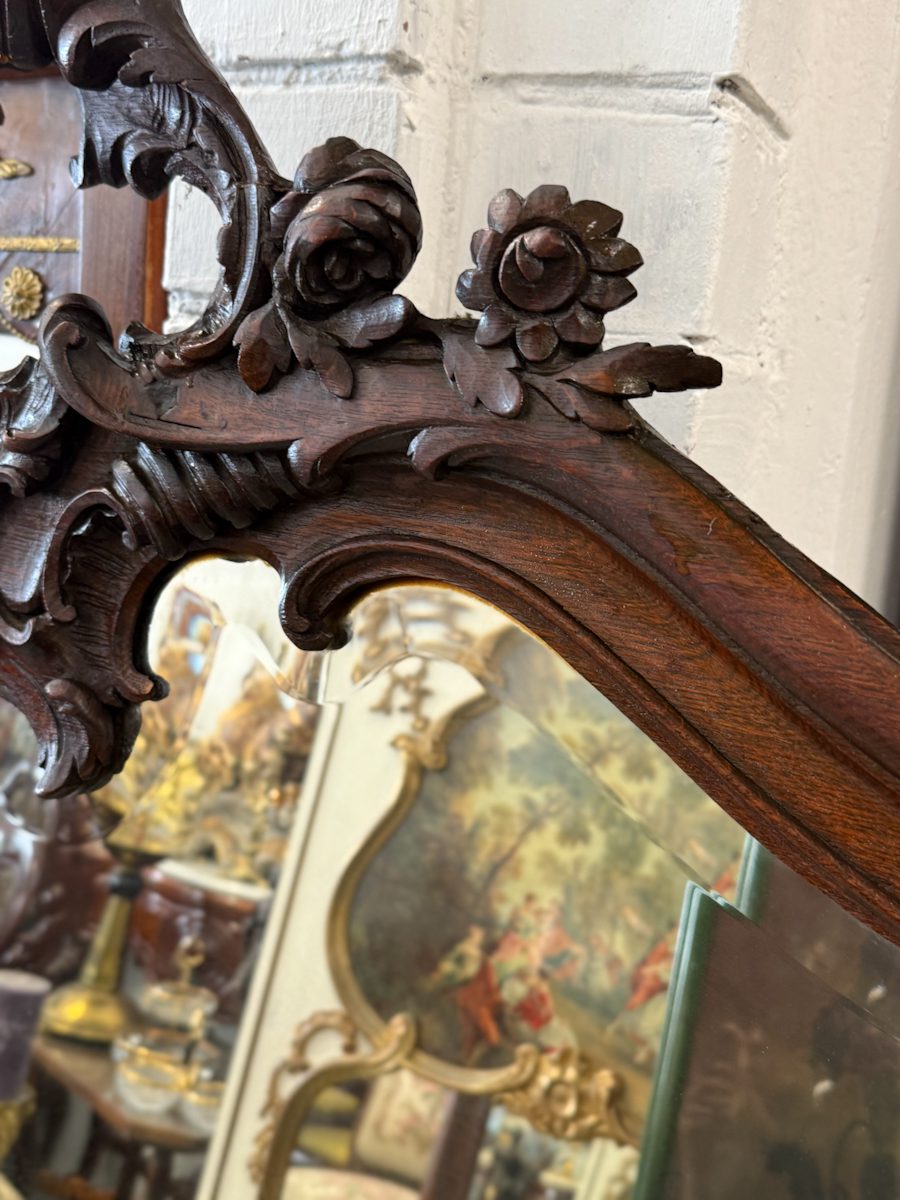
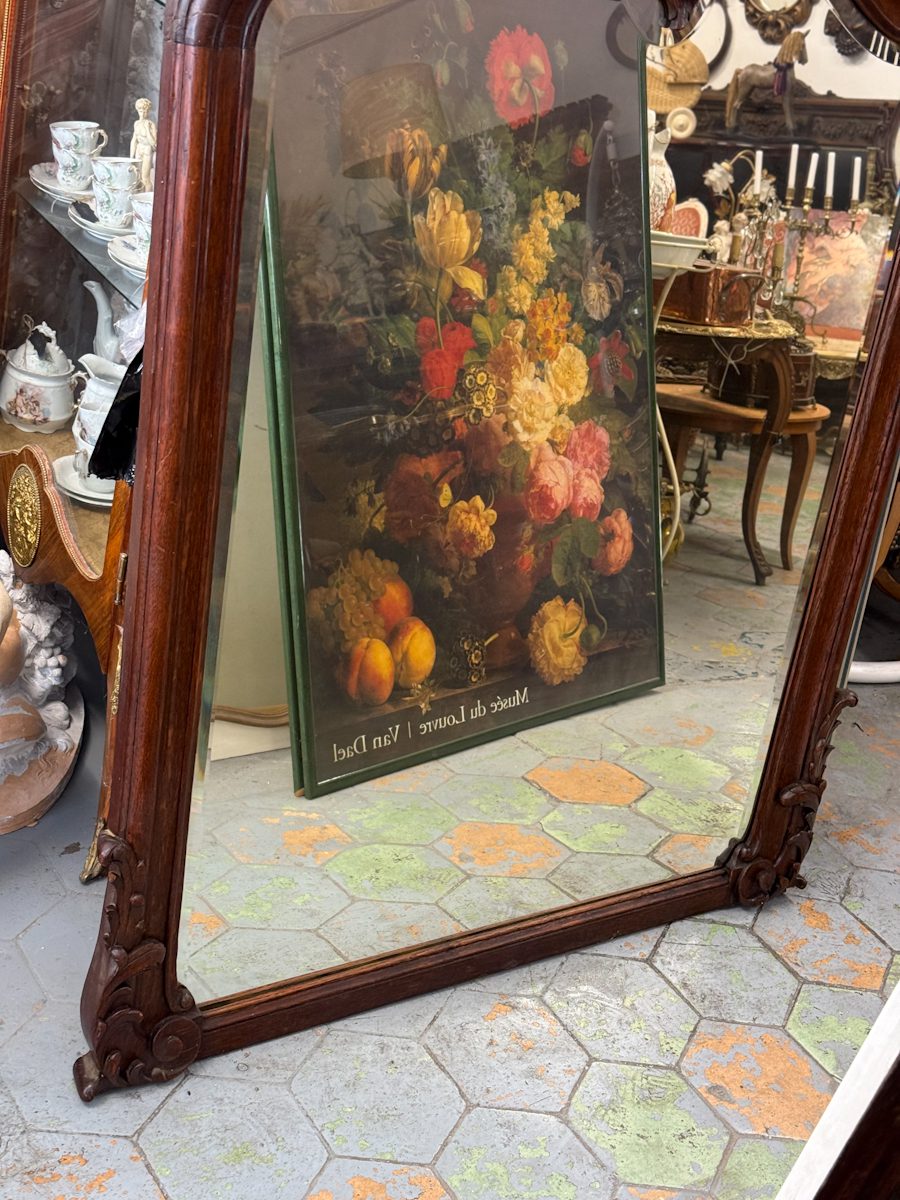
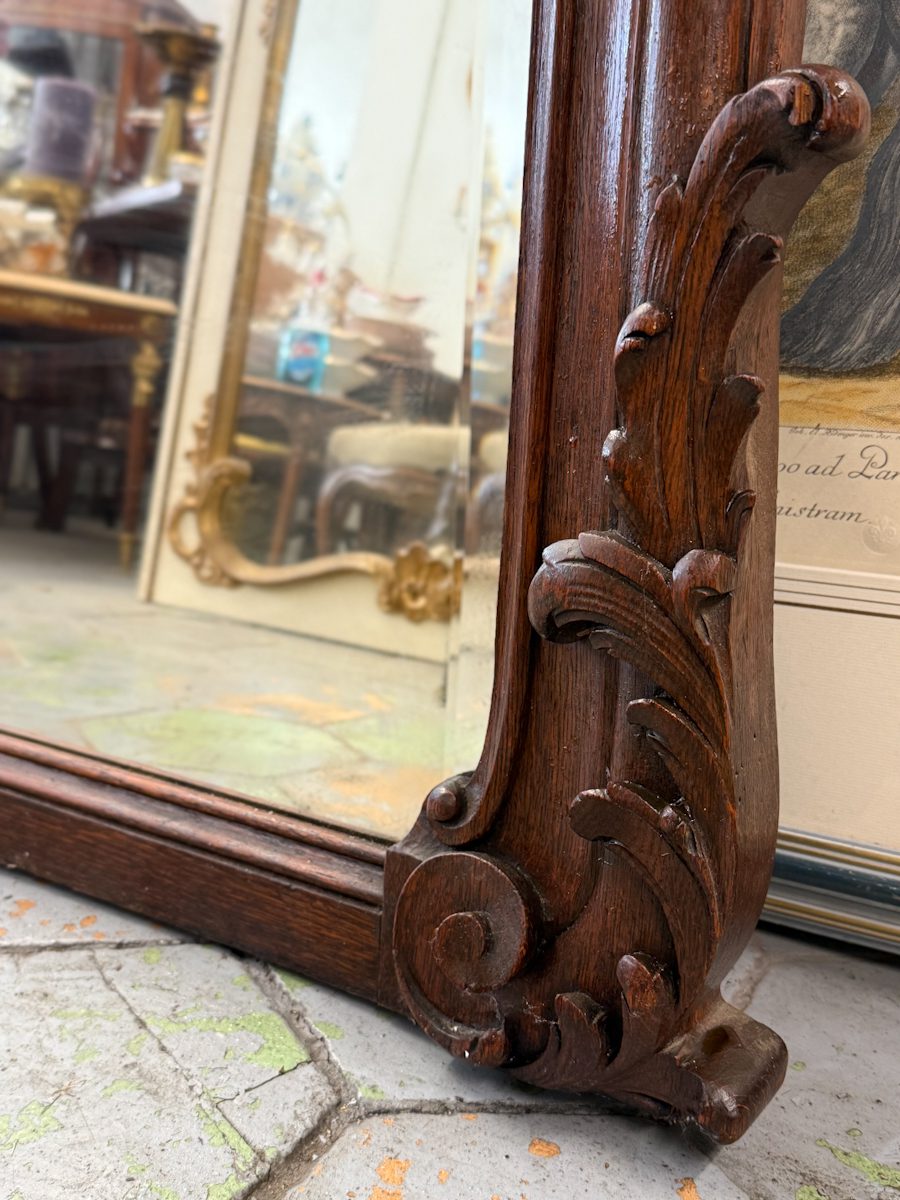
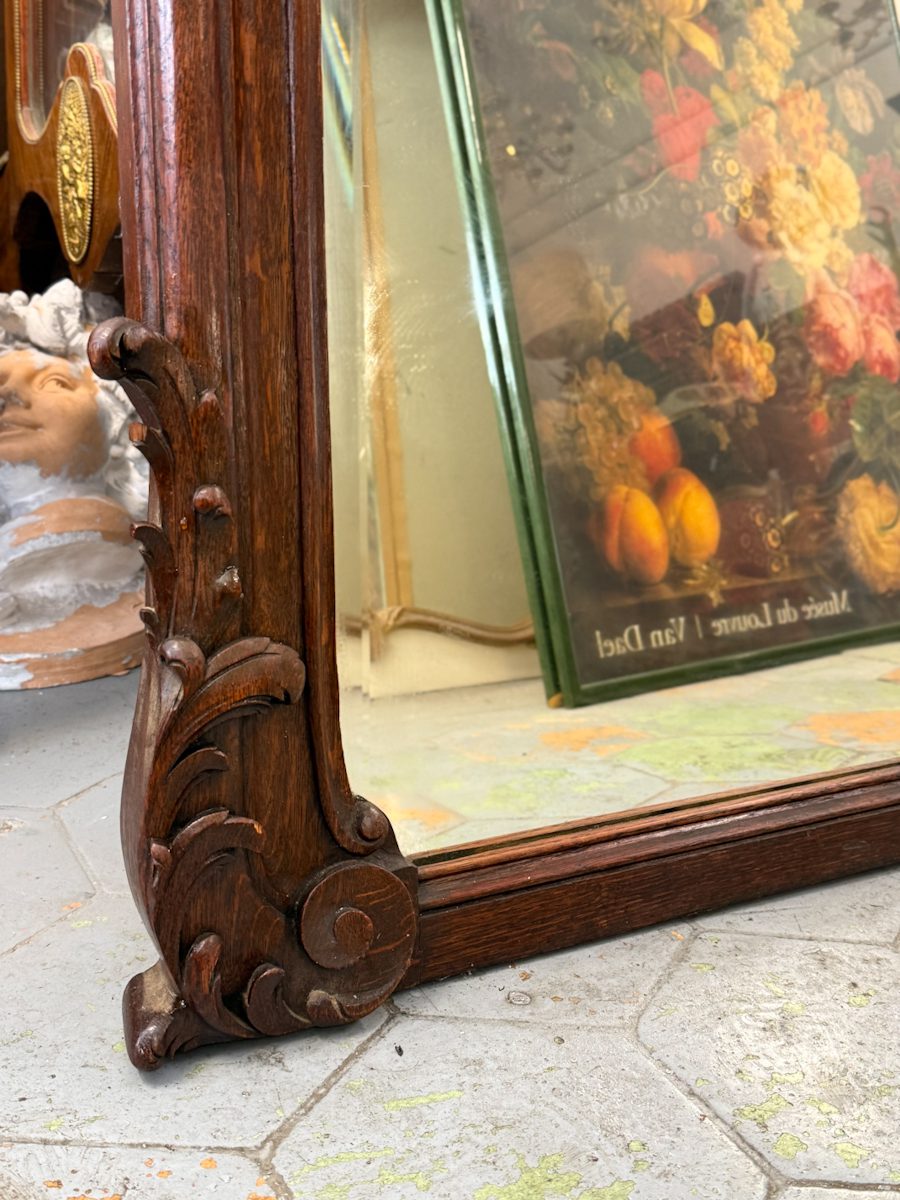
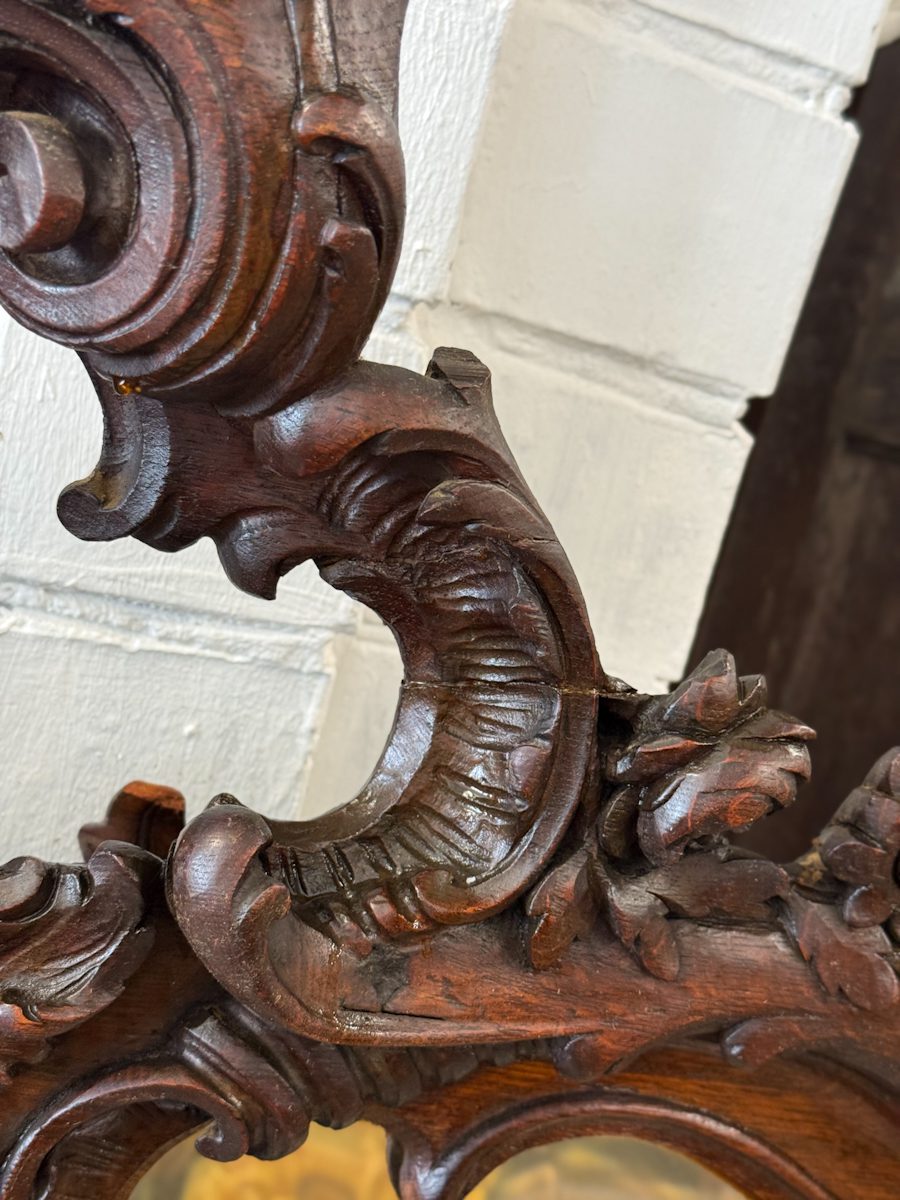
Iespaidīgs liela izmēra kokgriezuma sienas spogulis (carved wood wall mirror), darināts grezni plūstošajā neorokoko (Luija XV atdzimšanas) stila valodā. Figūrveida spoguli ar fasetētu (slīpētu malu) stiklu ietver izliekts, profilēts rāmis, ko stūros un augšā rotā dziļi un brīvi cērts kokgriezums. Krāšņākā daļa ir ažūrais rocaille kronis: asimetriski C-veida rituļi, gliemežvāka kartuša un sulīgi rožu pušķi, kas pārliecas pār spoguļa augšmalu kā dzīvs vainags.
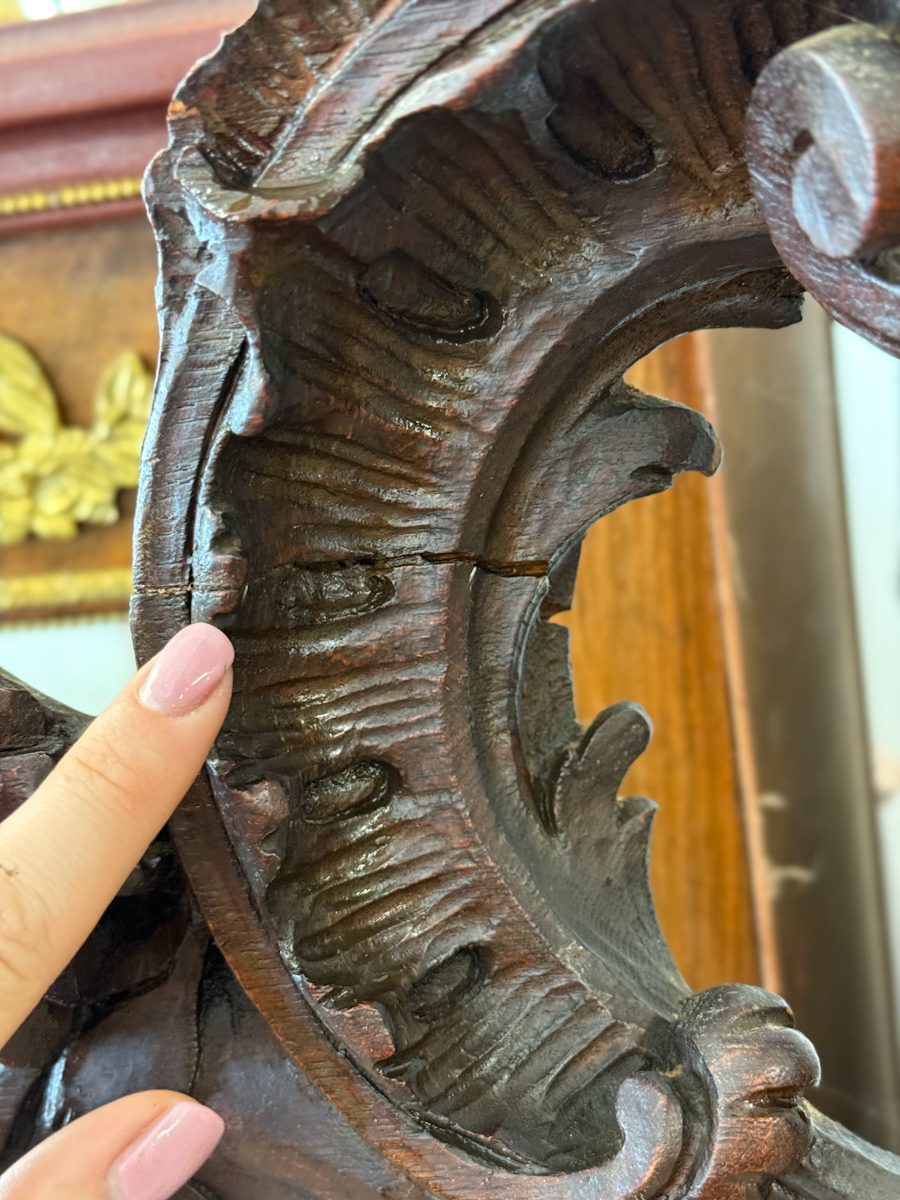
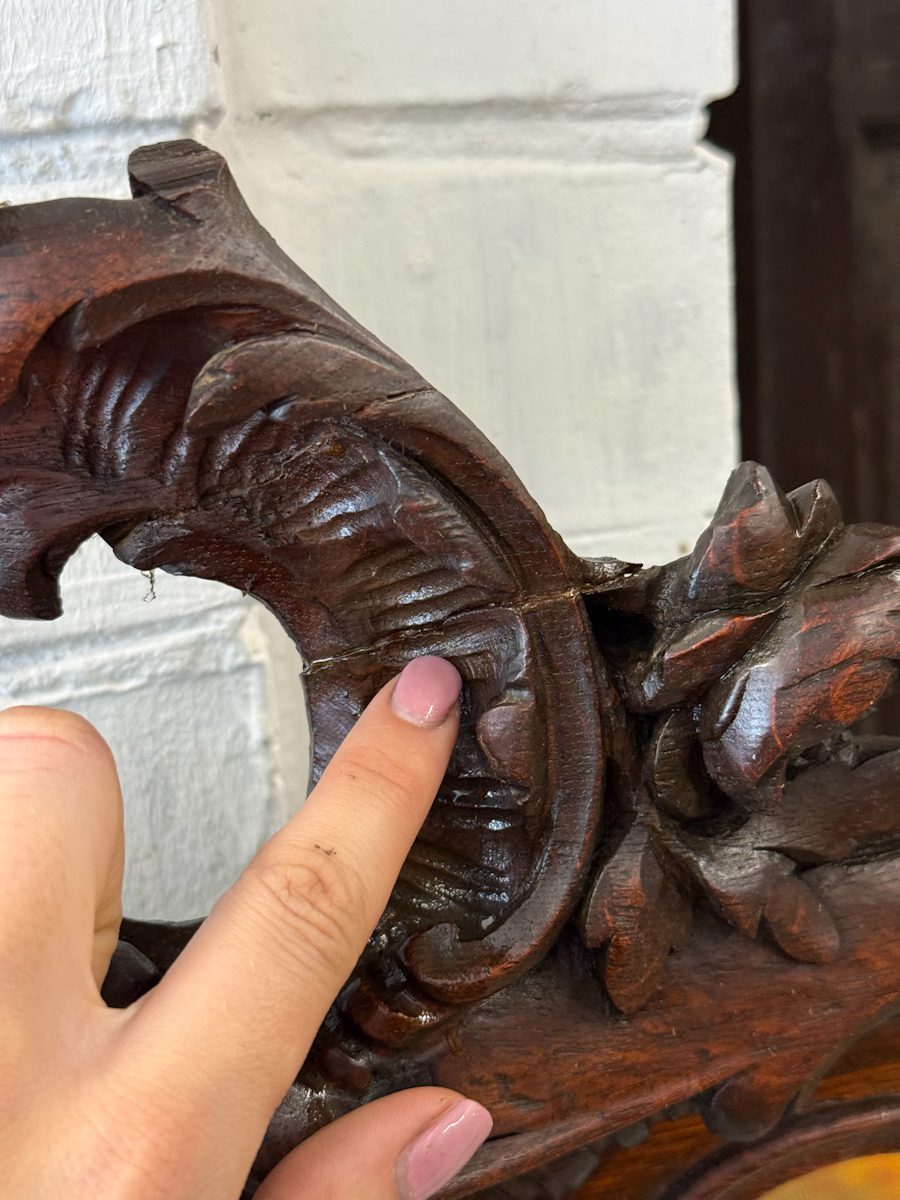
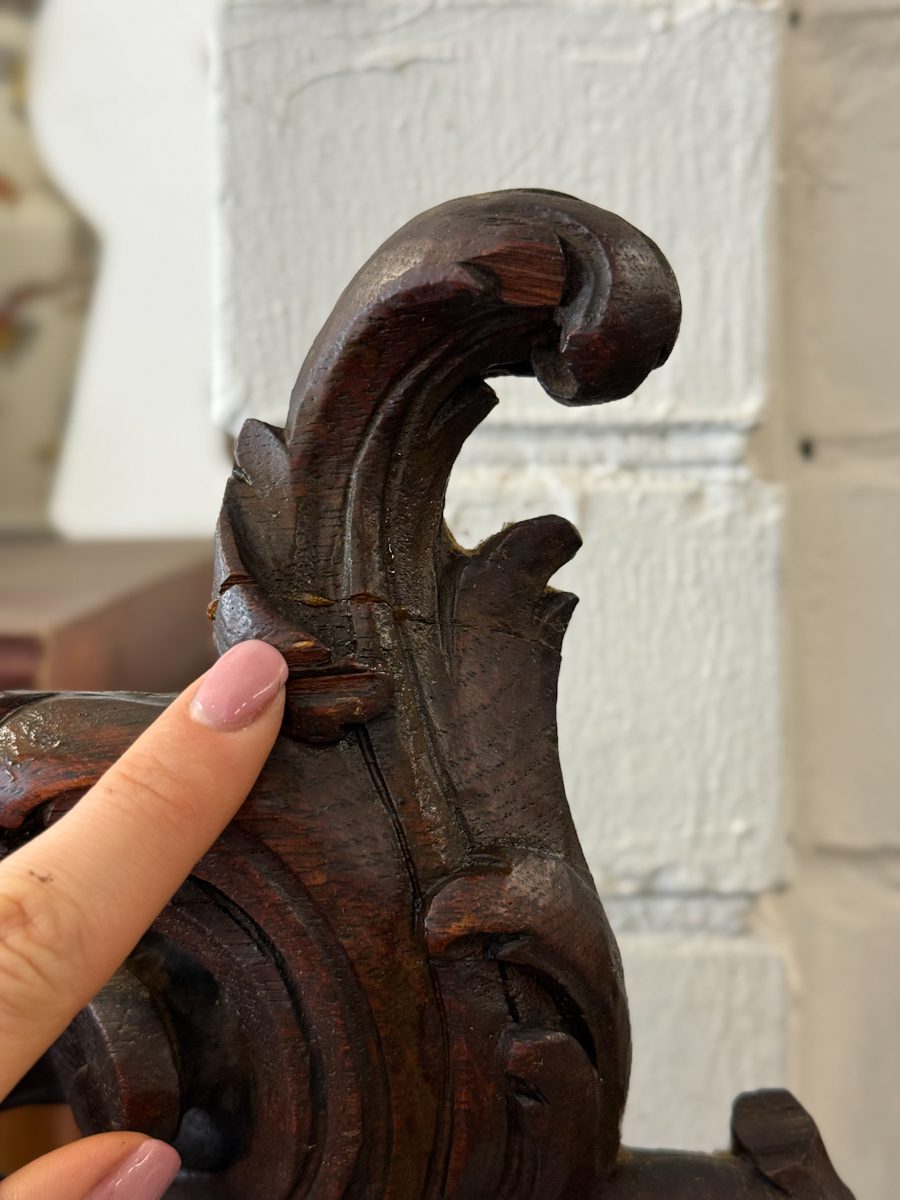
Lieta ir īsta koktēlnieka darbs — rituļi nav plakani, bet caurumoti un telpiski, ar manāmu rokas pārliecību. Koksne ir silta, tumši sarkanīgi brūna (riekstkoks vai rožkoks), ar dziļu dzīslojumu un cēlu vecuma patinu. Lielais izmērs un bagātīgais kronis padara šo spoguli par telpas dominanti.
🇱🇻 Neorokoko laikmeta momentuzņēmums: Pirmajā rītā jaunajā Parīzes dzīvoklī jaunā sieva vēl staigāja pa pustukšajām istabām, kad strādnieki ienesa pēdējo lielo lādi. Pretī sienai tie atslēja kaut ko smagu un tumšu; viņa pienāca un, vēl pirms saprata, ko redz, ieraudzīja sevi visā augumā — un aiz sevis logu, pa kuru lija rīta gaisma. Pirksti pārslīdēja pāri caurumotajiem rituļiem augšā, pieskaroties rožu pušķim, kas šķita uzplaucis tieši šim mirklim. Telpā smaržoja pēc svaiga ģipša un koka. Viņa nodomāja: te nu būs māja — un atspulgs piekrītoši pamāja pretī.
Izgatavošanas periods. Spogulis datējams ar 19. gs. beigām, neorokoko stila uzplaukuma laiku.
Pielietojums. Iespaidīgs reprezentatīvs spogulis salonam, ēdamistabai, vestibilam vai virs kamīna (trumeau tipa novietojums). Lielais izmērs vizuāli paplašina telpu un atstaro gaismu, savukārt bagātīgais kronis kalpo par interjera māksliniecisko akcentu.
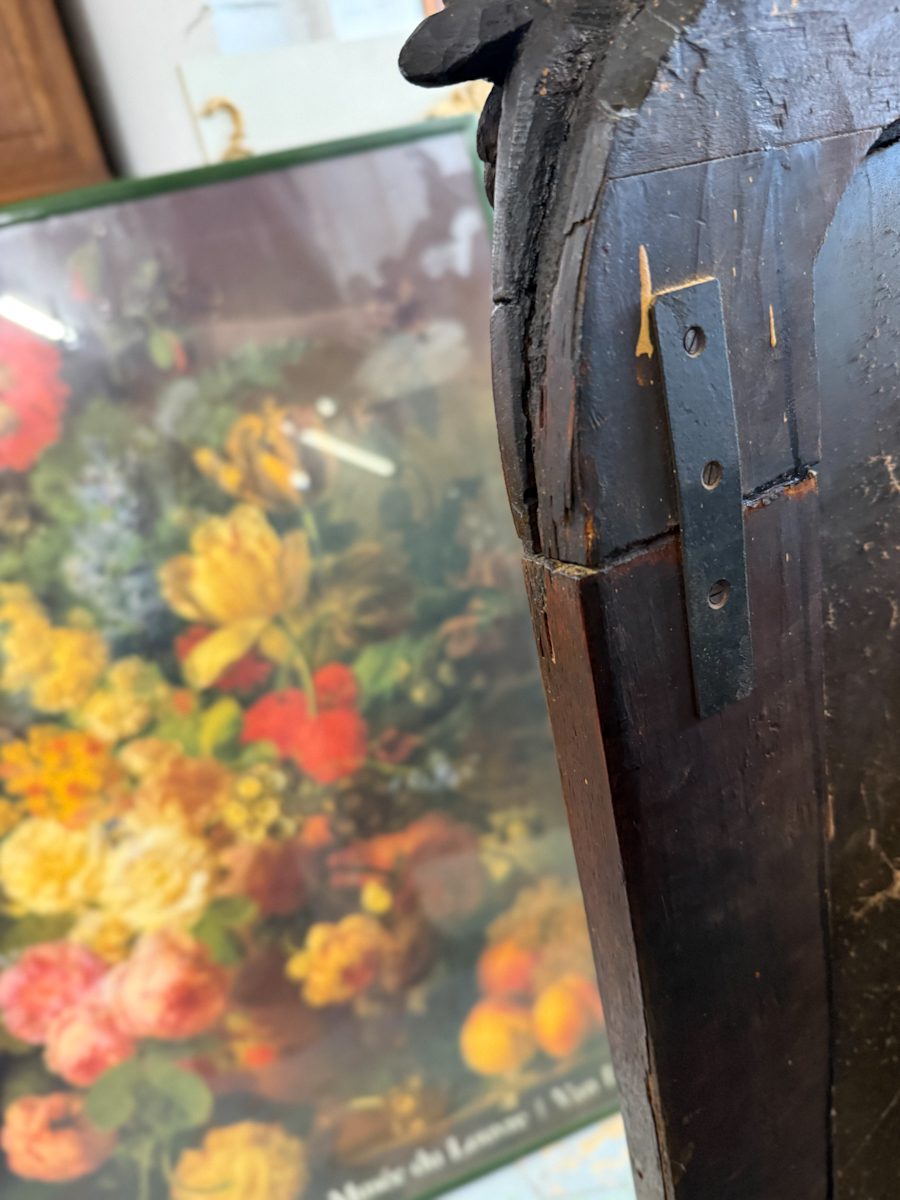
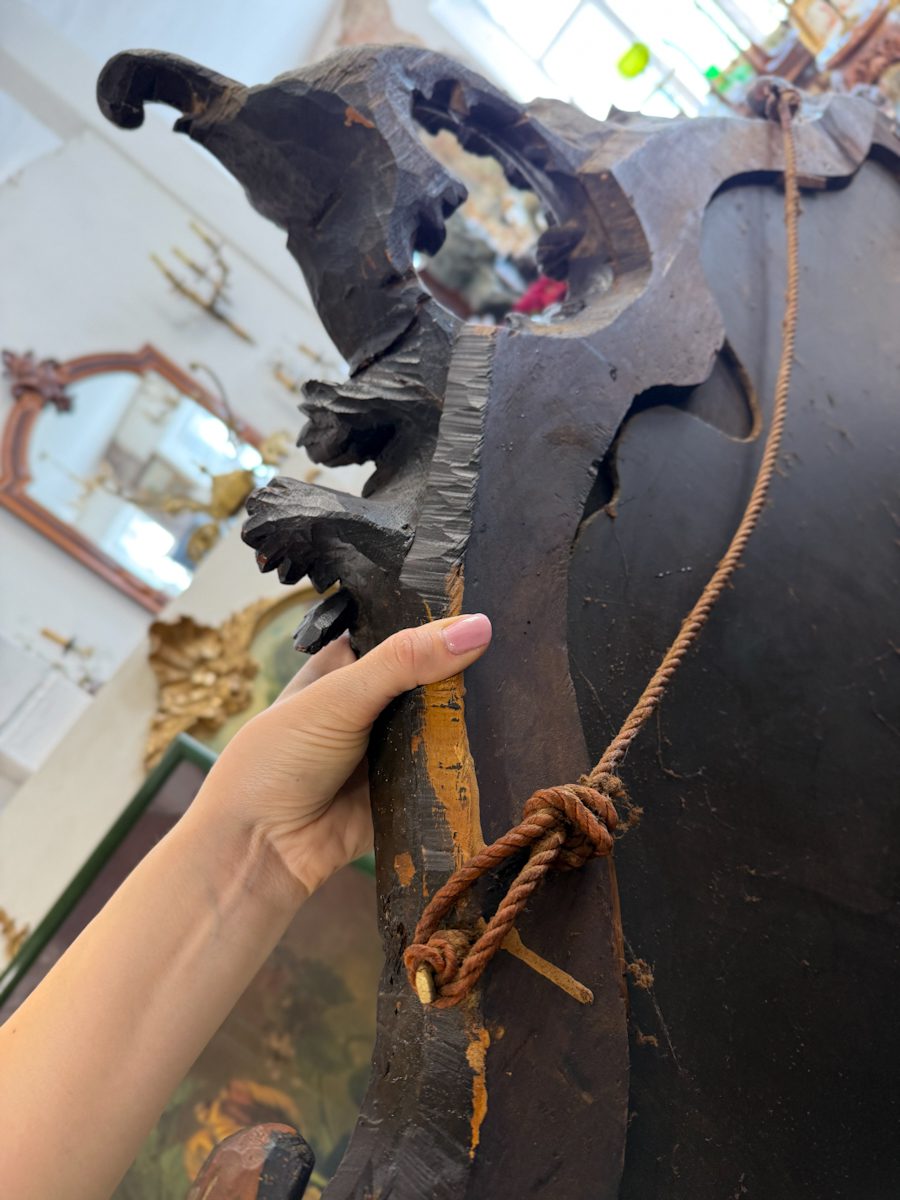
Stāvoklis. Labs, vecumam atbilstošs stāvoklis; kokgriezumam vietām vecuma pēdas, stiklam vieglas patinas vietas (foxing), kas vintāžas spoguļiem dabīgas. Aizmugurē saglabājies vēsturisks koka pamats. Lietas stāvoklis pilnībā atspoguļots fotogrāfijās.
🇷🇺 РУССКИЙ
Размеры:
Высота — 169,5 см
Ширина — 121,5 см
Большое резное настенное зеркало с гребнем рокайль — в стиле неорококо
Внушительное настенное зеркало большого размера из резного дерева, выполненное в роскошно текучем языке неорококо (возрождения Людовика XV). Фигурное зеркало с фасетированным (со шлифованной кромкой) стеклом обрамляет изогнутая профилированная рама, украшенная в углах и сверху глубоко и свободно вырезанной резьбой. Самая великолепная часть — ажурный рокайль-гребень: асимметричные C-образные завитки, раковина-картуш и сочные букеты роз, переваливающиеся через верхний край зеркала, словно живой венок.
Это подлинная работа скульптора по дереву — завитки не плоские, а сквозные и объёмные, с заметной уверенностью руки. Древесина тёплая, тёмно-красновато-коричневая (орех или палисандр), с глубокой текстурой и благородной патиной времени. Большой размер и богатый гребень делают это зеркало доминантой пространства.
🇷🇺 Снимок эпохи неорококо: В первое утро в новой парижской квартире молодая жена ещё бродила по полупустым комнатам, когда рабочие внесли последний большой сундук. К стене они прислонили нечто тяжёлое и тёмное; она подошла и, ещё не поняв, что видит, увидела себя в полный рост — а за собой окно, в которое лился утренний свет. Пальцы скользнули по сквозным завиткам наверху, коснувшись букета роз, что словно расцвёл именно для этого мгновения. В комнате пахло свежей штукатуркой и деревом. Она подумала: вот и будет дом — и отражение согласно кивнуло в ответ.
Зеркало датируется концом XIX века, временем расцвета стиля неорококо. Это впечатляющее представительное зеркало для салона, столовой, прихожей или над камином (расположение типа trumeau). Большой размер визуально расширяет пространство и отражает свет, а богатый гребень служит художественным акцентом интерьера. Состояние хорошее, соответствующее возрасту; на резьбе местами следы времени, на стекле лёгкие участки патины (фоксинг), естественные для винтажных зеркал. На задней стороне сохранилась историческая деревянная основа. Состояние вещи полностью отражено на фотографиях.
🇬🇧 ENGLISH
Dimensions:
Height — 169.5 cm
Width — 121.5 cm
Large Carved Wood Wall Mirror with Rocaille Crest in Louis XV Rococo Style
This imposing large carved wood wall mirror is executed in the richly flowing vocabulary of the Neo-Rococo (Louis XV revival) style. The shaped mirror, set with a beveled glass plate, is framed by a curved, moulded frame, adorned at the corners and crest with deep, freely cut carving. The most splendid part is the pierced rocaille crest: asymmetrical C-scrolls, a shell cartouche and lush bouquets of roses spilling over the top edge of the mirror like a living wreath. As a true carved wood wall mirror, it commands the room.
This is the work of a woodcarver — the scrolls are not flat but pierced and three-dimensional, with a clear confidence of hand. The wood is warm, dark reddish-brown (walnut or rosewood), with a deep graining and a noble patina of age. Its great size and rich crest make this mirror the dominant feature of a room.
🇬🇧 Neo-Rococo snapshot: On the first morning in the new Paris apartment, the young wife was still wandering through the half-empty rooms when the workmen carried in the last great trunk. They leaned something heavy and dark against the wall; she came closer and, before she understood what she was seeing, caught sight of herself full-length — and behind her the window pouring with morning light. Her fingers slid over the pierced scrolls at the top, touching a bouquet of roses that seemed to have bloomed for this very moment. The room smelled of fresh plaster and wood. This, she thought, will be home — and the reflection nodded back in agreement.
The mirror dates to the late 19th century, the heyday of the Neo-Rococo style. It is an impressive statement mirror for a salon, dining room, hallway or over a mantel (trumeau placement). Its large size visually widens a space and reflects light, while the rich crest serves as the artistic accent of the interior. Condition is good and consistent with age; the carving shows some traces of time, the glass some light areas of patina (foxing), natural in vintage mirrors. The historic wooden backing survives on the reverse. The condition is fully reflected in the photographs.
🇩🇪 DEUTSCH
Maße:
Höhe — 169,5 cm
Breite — 121,5 cm
Großer geschnitzter Wandspiegel mit Rocaille-Aufsatz — im Louis-XV-Rokoko-Stil
Ein imposanter großer geschnitzter Wandspiegel aus Holz, ausgeführt in der reich fließenden Sprache des Neorokoko (Louis-XV-Wiedergeburt). Den geformten Spiegel mit facettierter Glasplatte fasst ein geschwungener, profilierter Rahmen, der an den Ecken und am Aufsatz mit tiefer, frei geschnittener Schnitzerei verziert ist. Der prächtigste Teil ist der durchbrochene Rocaille-Aufsatz: asymmetrische C-Voluten, eine Muschelkartusche und üppige Rosensträuße, die über die obere Kante des Spiegels quellen wie ein lebendiger Kranz.
Es ist die Arbeit eines Holzbildhauers — die Voluten sind nicht flach, sondern durchbrochen und dreidimensional, mit deutlicher Sicherheit der Hand. Das Holz ist warm, dunkel rotbraun (Nussbaum oder Palisander), mit tiefer Maserung und einer edlen Alterspatina. Seine Größe und der reiche Aufsatz machen diesen Spiegel zur Dominante eines Raumes.
🇩🇪 Momentaufnahme der Neorokoko-Zeit: Am ersten Morgen in der neuen Pariser Wohnung wanderte die junge Frau noch durch die halbleeren Zimmer, als die Arbeiter die letzte große Truhe hereintrugen. An die Wand lehnten sie etwas Schweres und Dunkles; sie trat näher und sah sich, noch ehe sie begriff, was sie sah, in voller Gestalt — und hinter sich das Fenster, durch das das Morgenlicht strömte. Ihre Finger glitten über die durchbrochenen Voluten oben und berührten einen Rosenstrauß, der für eben diesen Augenblick erblüht schien. Der Raum roch nach frischem Putz und Holz. Das, dachte sie, wird ein Zuhause — und das Spiegelbild nickte zustimmend zurück.
Der Spiegel datiert ins späte 19. Jahrhundert, die Blütezeit des Neorokoko-Stils. Er ist ein eindrucksvoller Schauspiegel für Salon, Esszimmer, Diele oder über einem Kamin (Trumeau-Platzierung). Seine Größe weitet einen Raum optisch und reflektiert Licht, während der reiche Aufsatz als künstlerischer Akzent des Interieurs dient. Zustand gut und altersgemäß; die Schnitzerei zeigt einige Spuren der Zeit, das Glas einige leichte Bereiche von Patina (Stockflecken), bei Vintage-Spiegeln natürlich. Auf der Rückseite ist die historische Holzrückwand erhalten. Der Zustand ist auf den Fotografien vollständig wiedergegeben.
🇫🇷 FRANÇAIS
Dimensions :
Hauteur — 169,5 cm
Largeur — 121,5 cm
Grand miroir mural sculpté à fronton rocaille — de style Louis XV rococo
Un imposant grand miroir mural en bois sculpté, exécuté dans le vocabulaire richement fluide du style néo-rococo (renaissance Louis XV). Le miroir de forme galbée, serti d’une glace biseautée, est encadré d’un cadre galbé et mouluré, orné aux angles et au fronton d’une sculpture profonde et librement taillée. La partie la plus splendide est le fronton rocaille ajouré : volutes en C asymétriques, cartouche en coquille et opulents bouquets de roses débordant du bord supérieur du miroir comme une couronne vivante.
C’est l’œuvre d’un sculpteur sur bois — les volutes ne sont pas plates mais ajourées et tridimensionnelles, avec une nette assurance de la main. Le bois est chaud, brun rougeâtre foncé (noyer ou palissandre), au veinage profond et à la noble patine de l’âge. Sa grande taille et son riche fronton font de ce miroir l’élément dominant d’une pièce.
🇫🇷 Instantané de l’époque néo-rococo : Au premier matin dans le nouvel appartement parisien, la jeune épouse errait encore dans les pièces à demi vides quand les ouvriers apportèrent la dernière grande malle. Ils adossèrent au mur quelque chose de lourd et de sombre ; elle s’approcha et, avant même de comprendre ce qu’elle voyait, s’aperçut en pied — et derrière elle la fenêtre où ruisselait la lumière du matin. Ses doigts glissèrent sur les volutes ajourées du haut, effleurant un bouquet de roses qui semblait avoir fleuri pour cet instant précis. La pièce sentait le plâtre frais et le bois. Voilà, pensa-t-elle, qui sera un foyer — et le reflet acquiesça d’un signe de tête.
Le miroir date de la fin du XIXe siècle, l’apogée du style néo-rococo. C’est un miroir d’apparat impressionnant pour un salon, une salle à manger, un vestibule ou au-dessus d’une cheminée (placement de type trumeau). Sa grande taille élargit visuellement un espace et reflète la lumière, tandis que le riche fronton sert d’accent artistique de l’intérieur. État bon et conforme à l’âge ; la sculpture présente quelques traces du temps, la glace quelques légères zones de patine (piqûres), naturelles sur les miroirs vintage. Au dos subsiste le panneau de bois historique. L’état est entièrement reflété sur les photographies.