Ozolkoka Karšu Lāde ar Gotiskajiem Kokgriezumiem , ļoti smaga — Neo-Gotika, Eiropa, 19.gs. (261)

Ozolkoka Karšu Lāde ar Gotiskajiem Kokgriezumiem , ļoti smaga — Neo-Gotika, Eiropa, 19.gs. (261)
€900.00
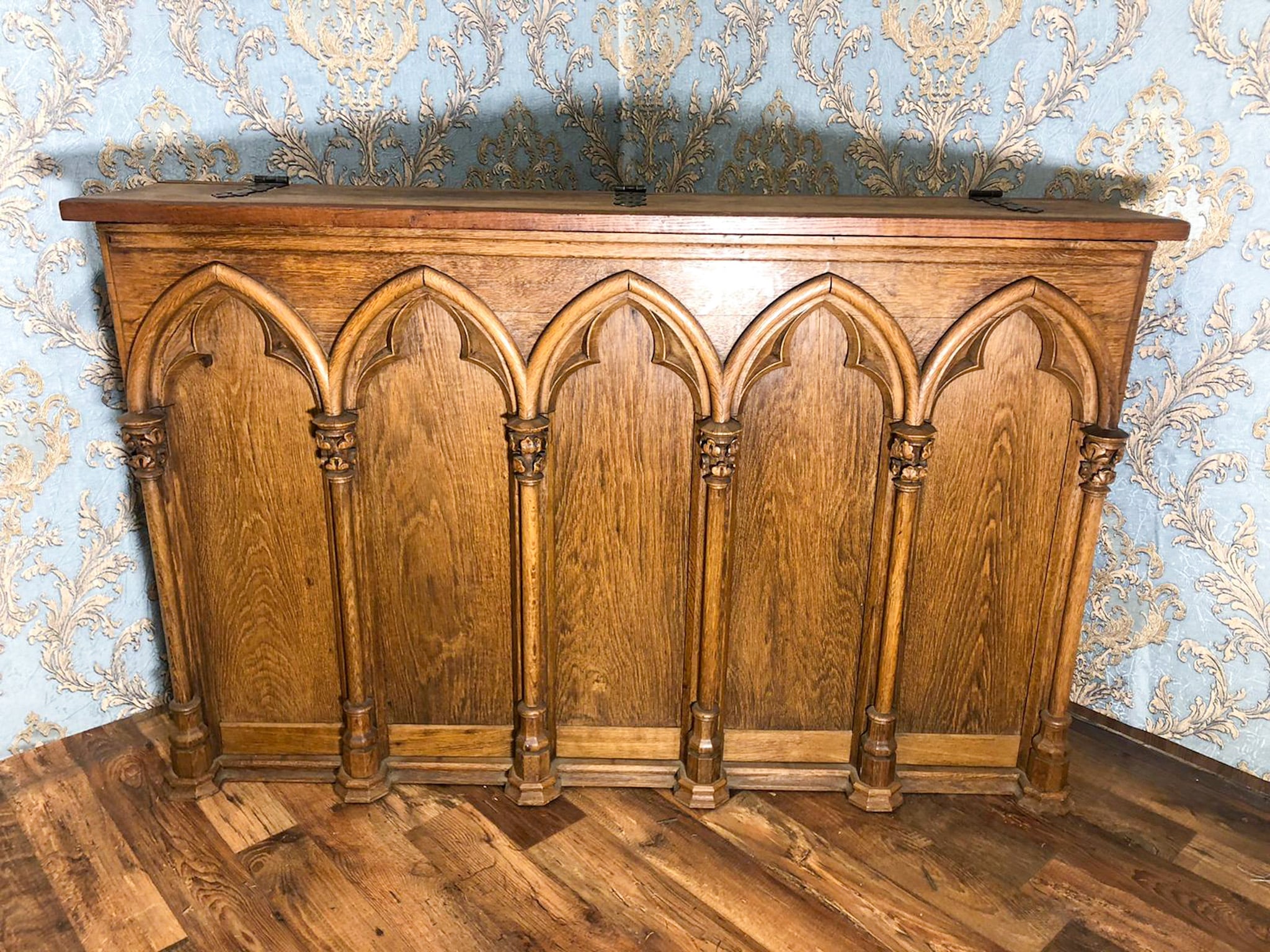
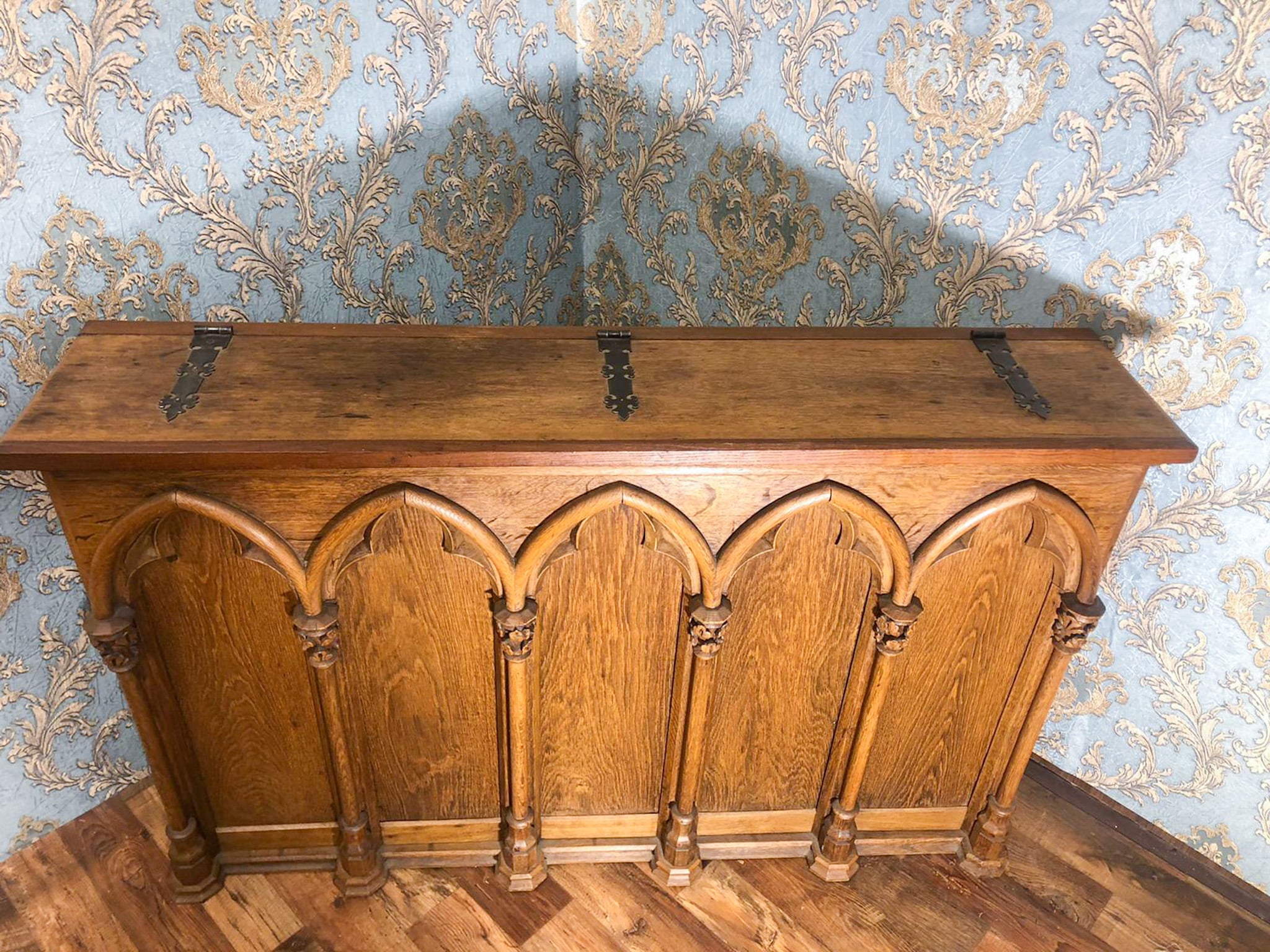
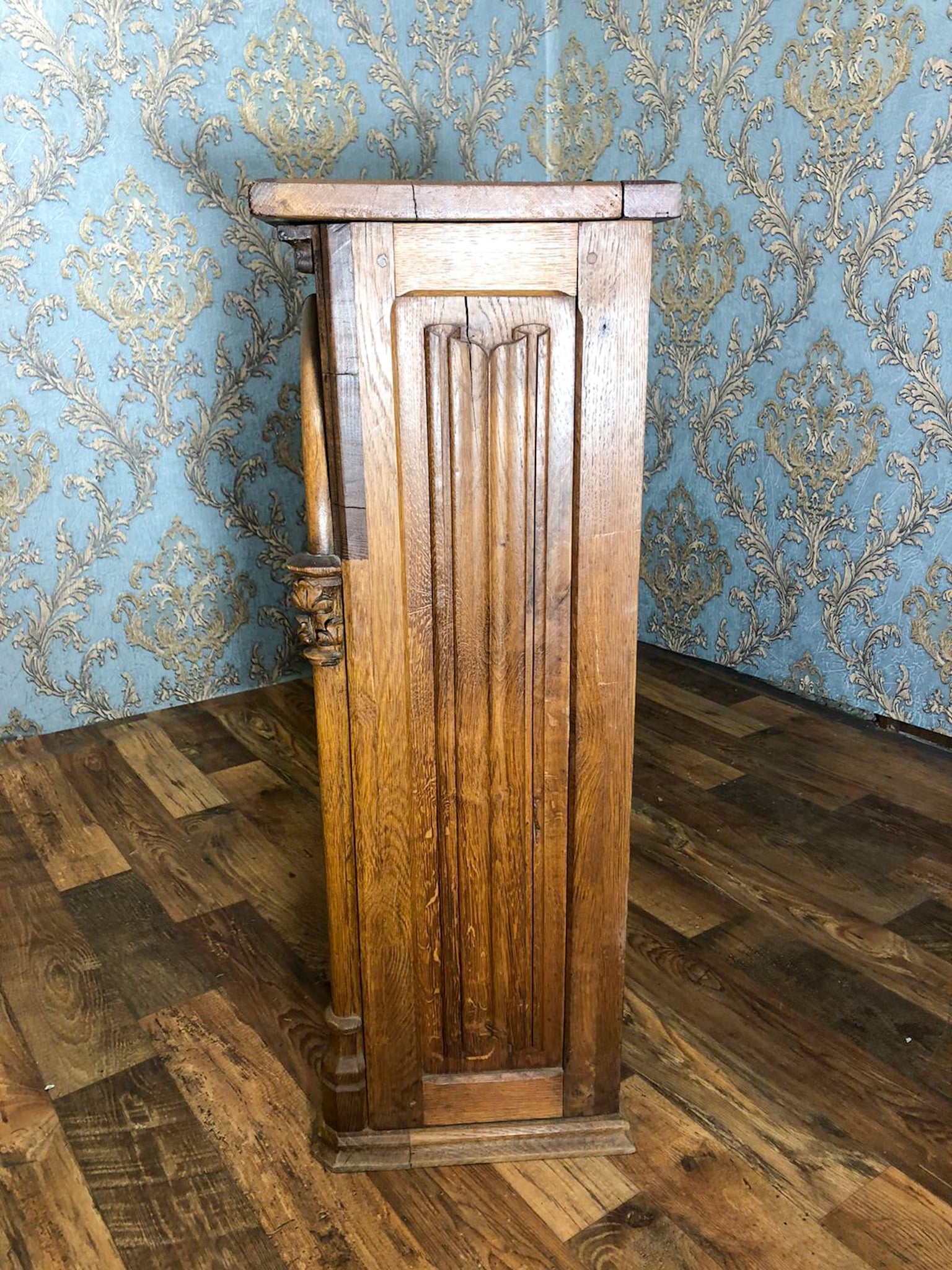
Masīvozola karšu un zīmējumu glabāšanas lāde ar piecām gotiskajām lancet arku kokgriezumu paneļiem, kokgriezumu kolonnu kapiteļiem un kaltām dzelzs eņģēm. Neo-Gotika, Eiropa, ap 1860.–1900. Augstums 90 cm, platums 142 cm, dziļums 32 cm.
📐 IZMĒRI
Augstums: 90 cm × Platums: 142 cm × Dziļums: 32 cm. Svars: ļoti smags (masīvs ozols).
―――――――――――――――――――――
Ozolkoka Karšu Lāde ar Gotiskajiem Arku Kokgriezumiem — Neo-Gotika / Historicisms, Eiropa, ap 1860.–1900.
―――――――――――――――――――――
🏛️ IZGATAVOŠANAS PERIODS, MĀKSLAS STILS, LAIKMETS
Šī monumentālā ozolkoka lāde ir izcils Neo-Gotikas stila paraugs Historicisma laikmetā — perioda, kad 19. gadsimta Eiropa ar entuziasmu atgriezās pie viduslaiku katedrāļu formām un amatnieki sacenšas precizitātē, reproducējot gotikas lancet arku, kolonnu un kapitāļu sistēmu masīvkokā. Šāda veida lādes tika lietotas arhitektu, kartografu un mākslinieku darbnīcās lielu zīmējumu, karšu un projektu glabāšanai — tāpēc angliski tās dēvē par map chest vai drawing file cabinet.
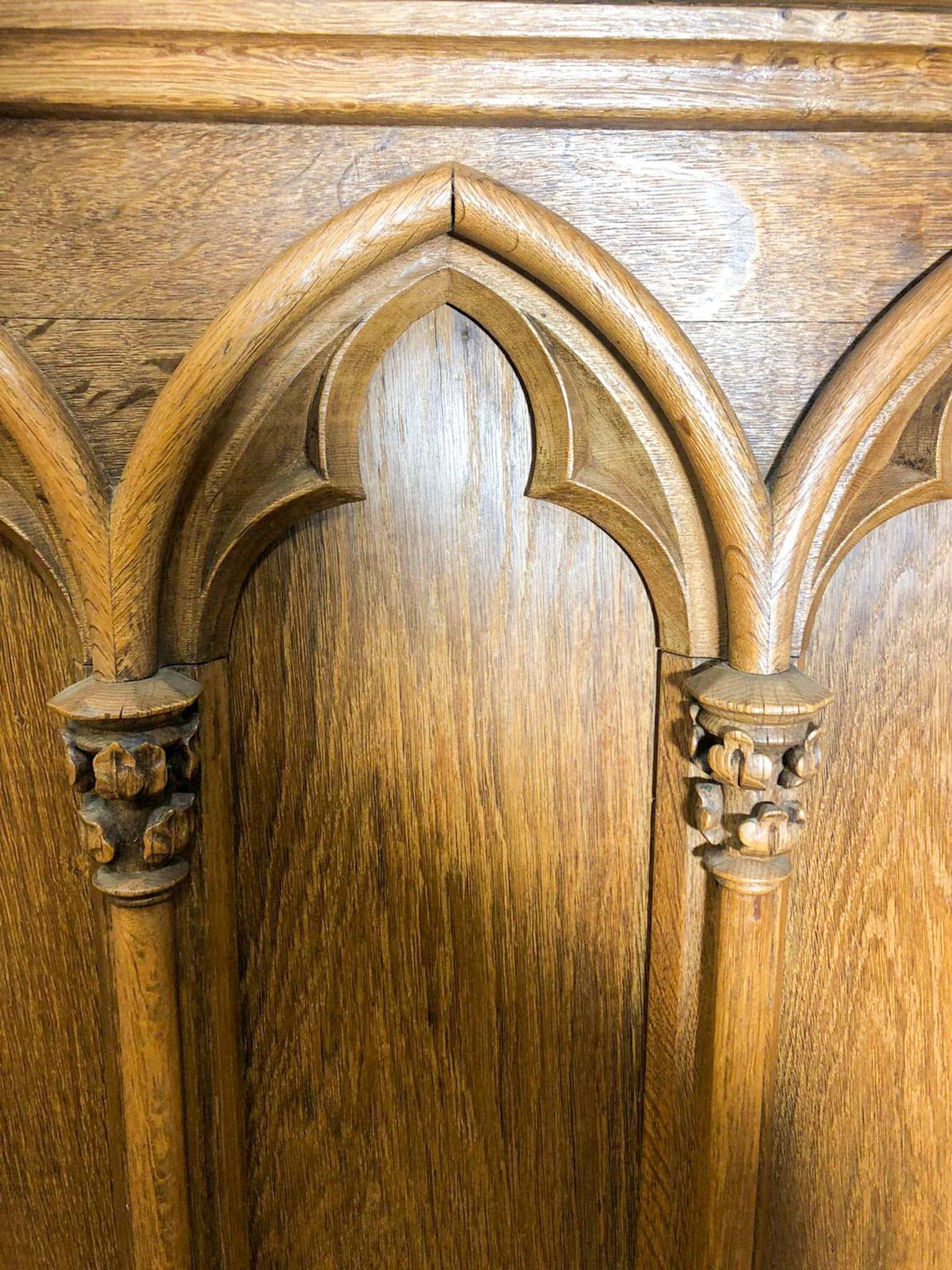
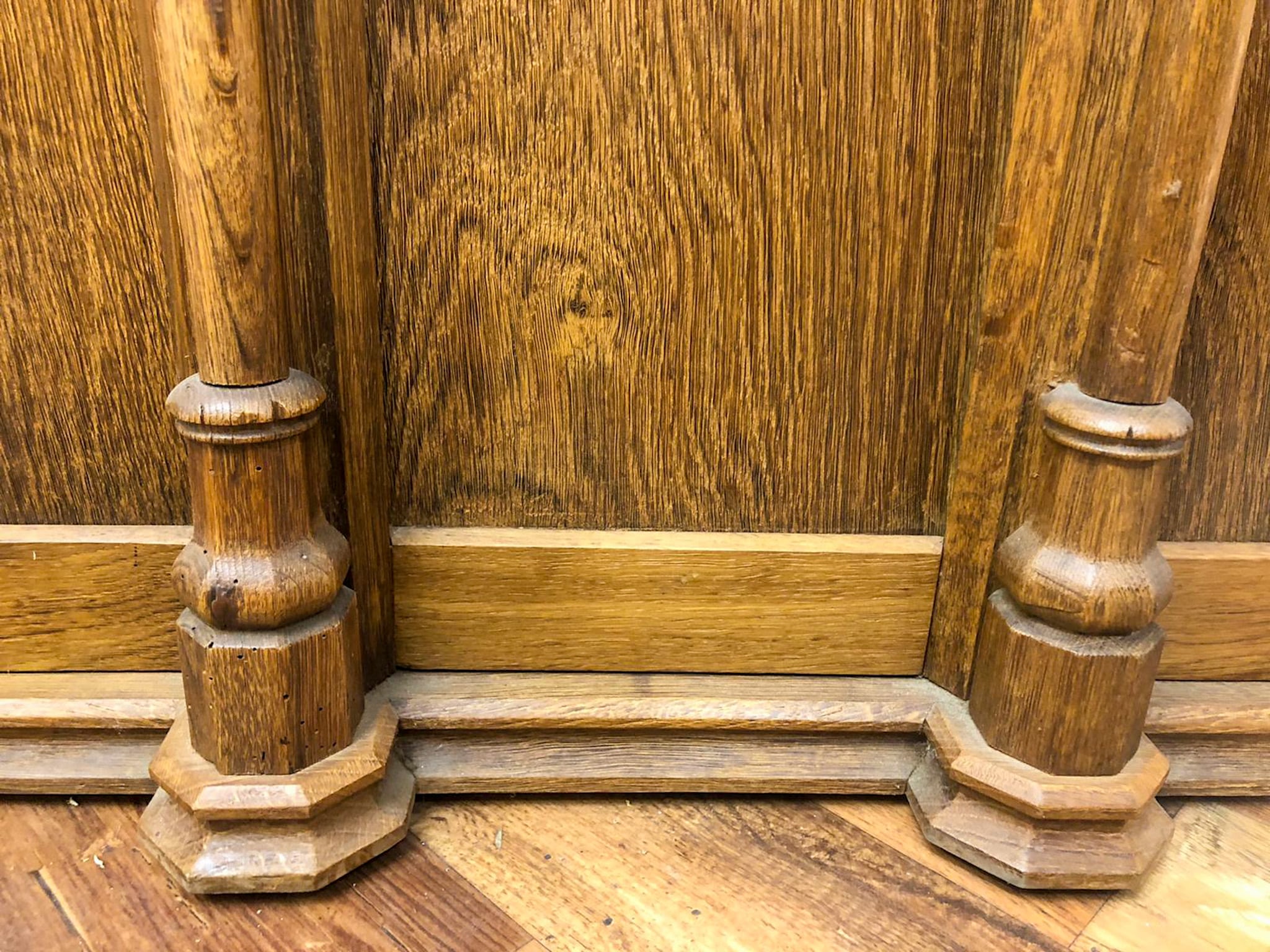
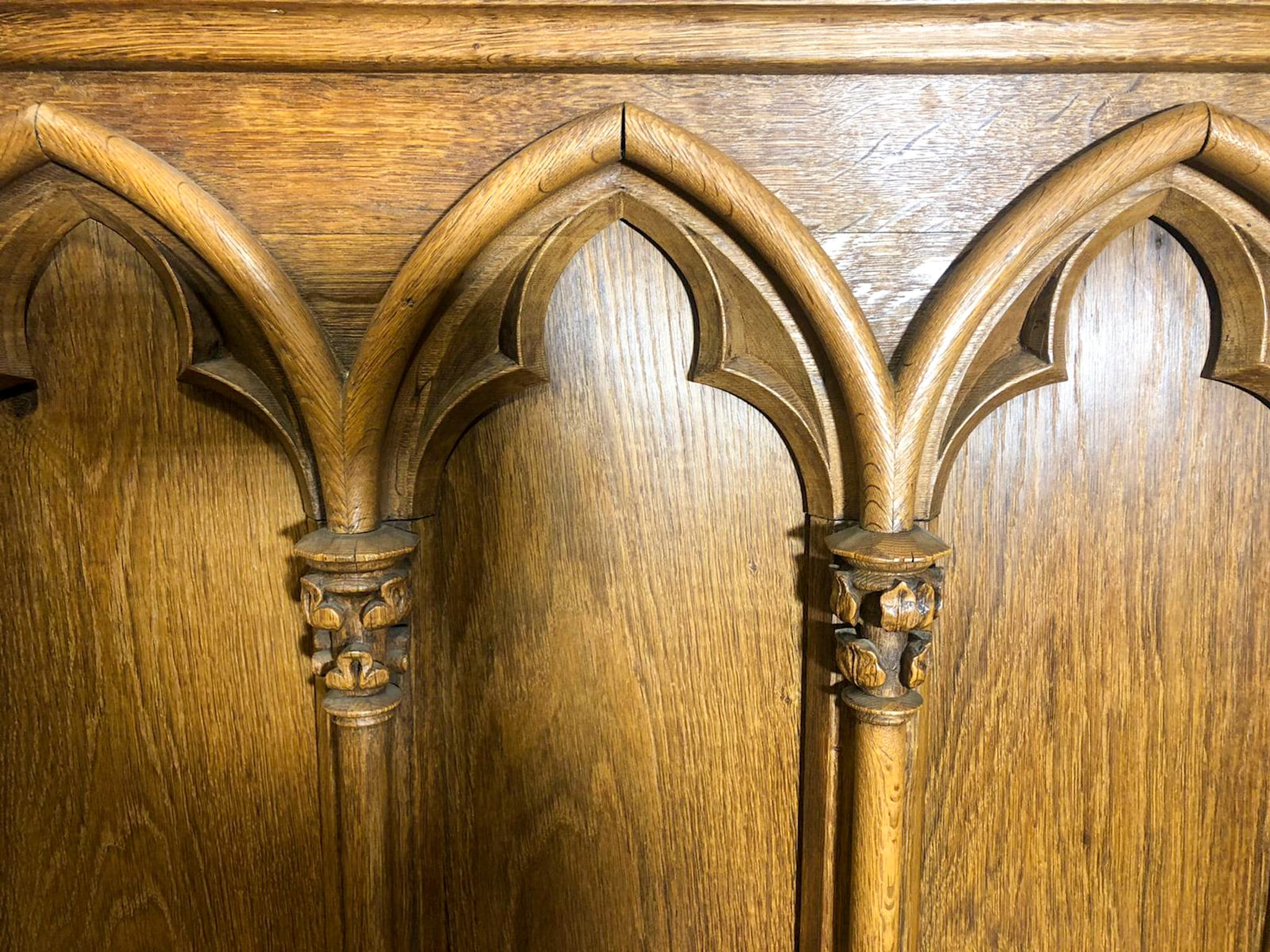
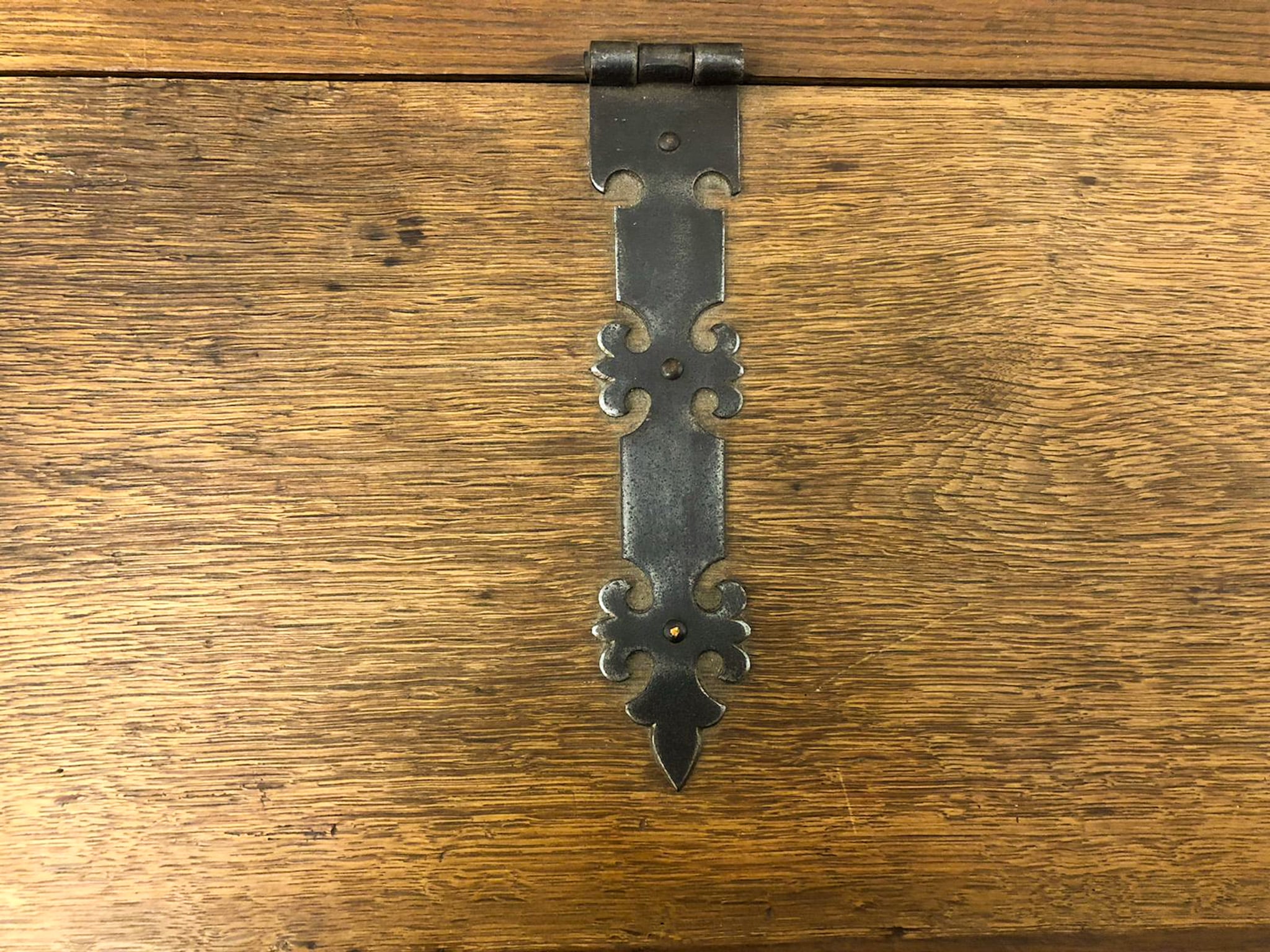
Fasādes piecas lancet arkas — ar asiem gotiskiem smailes un trefoil ornamentiem virsotnēs — atgādina katedrāļu logu tīklojumu. Katras arkas balstās uz torņveida kolonnām ar individuāli grebtu akantu un lapu kapitāļu. Kolonnu pamatnes — astoņstūrainās plinthes — piešķir lietas lejasdaļai stabilitāti un arhitektonisku nobeigumu. Vāks ar diviem kaltas dzelzs eņģiem — ar fleur-de-lis ornamentu — ir vienas no puantā detaļām, kas apliecina, ka šī nav tikai glabātuves lāde, bet māksliniecisks priekšmets pats par sevi. Iekšpuse — nelakota masīvā ozola dēļi ar dabīgu patinu.
Šī lāde datējama 1860.–1900. periodā un pilnībā pieder Belle Époque laikmetam — 1871.–1914. — kad arhitekti un inženieri strādāja pie Eiropas lielāko projektu īstenošanas.
Belle Époque momentuzņēmums: 1889. gadā Gustave Eiffel savā Parīzes birojā uz rue Rabelais pabeidza galīgos torņa būvniecības plānus — tūkstošiem zīmējumu un karšu lapas, kas tika glabātas tieši šādās masīvā koka lādēs ar gotikas arku fasādēm. Tajā pašā gadā Viollet-le-Duc skolnieki turpināja viņa darbu pie Parīzes Dievmātes katedrāles restaurācijas, un Neo-Gotikas formas bija ne tikai māksliniecisks ideāls, bet ikdienas darba rīks. Šī lāde varētu būt glabājusi tās pašas pasaules kartēs.
―――――――――――――――――――――
⚜️ RAŽOTĀJS UN MANUFAKTŪRAS ZĪMOGS
Redzama marķējuma nav. Pēc ozolkoka kvalitātes, lancet arku griešanas precizitātes un kaltas dzelzs eņģu izpildījuma — iespējamā izcelsme Francija, Beļģija vai Anglija, kur Neo-Gotikas mēbeļu ražošana 19. gadsimta otrajā pusē sasniedza Eiropas augstāko līmeni. Anglijā šāda veida lādes izgatavoja tādas firmas kā Holland & Sons un Gillows of Lancaster — augstākās klases biroja un bibliotēku mēbeļu meistari. Kalto dzelzs eņģu fleur-de-lis forma norāda uz franču vai beļģu izcelsmi.
―――――――――――――――――――――
💎 RETUMS UN NOZĪME
Masīvozola Neo-Gotikas karšu lāde ar pilnīgi saglabātu fasādi, piecām lancet arkām un oriģināliem kaltas dzelzs eņģiem šādā izmērā ir ārkārtīgi reta parādība. Šāda veida funkcionālās mēbeles bieži vien tika iznīcinātas vai pārveidotas, kad birojos mainījās glabāšanas sistēmas. Saglabājušies eksemplāri tiek meklēti arhitektūras birojiem, bibliotēkām, muzejiem un kolekcionāriem, kuri novērtē viduslaiku formu atkārtošanu industriālajā laikmetā.
―――――――――――――――――――――
🕯️ PIELIETOJUMS INTERJERĀ, DIZAINĀ UN FOTOGRĀFIJĀ
Šī lāde ir ideāla kā bibliotēkas, arhitekta biroja, studijas vai galerijas centrālais elements. Tās horizontālais format — 142 cm garumā un tikai 32 cm dziļumā — ļauj to novietot arī šaurākās telpās kā sienas elementu. Praktiskā izmantošana — lielu zīmējumu, plakātu, karšu vai audumu glabāšana. Gothic revival un Arts & Crafts interjerā tā ir kulminācijas lieta. Fotogrāfijā — nepārprotams viduslaiku katedrāles un 19. gadsimta arhitekta biroja akcents.
―――――――――――――――――――――
🎁 DĀVANA UN PERSONALIZĀCIJA
Šī lāde ir izcila reprezentatīva iegāde arhitektūras birojiem, dizaina studijām, bibliotēkām un muzejiem. Kā personīga dāvana — arhitektam, māksliniekam vai vēstures entuziastam, kura darba telpai vajag unikālu identitāti. Zvaigznāju simbolikā — Mērkaķis, Skorpions un Ūdensvīrs — personas ar spēcīgu vēsturisko redzējumu un oriģinalitātes izjūtu.
―――――――――――――――――――――
🔍 STĀVOKLIS
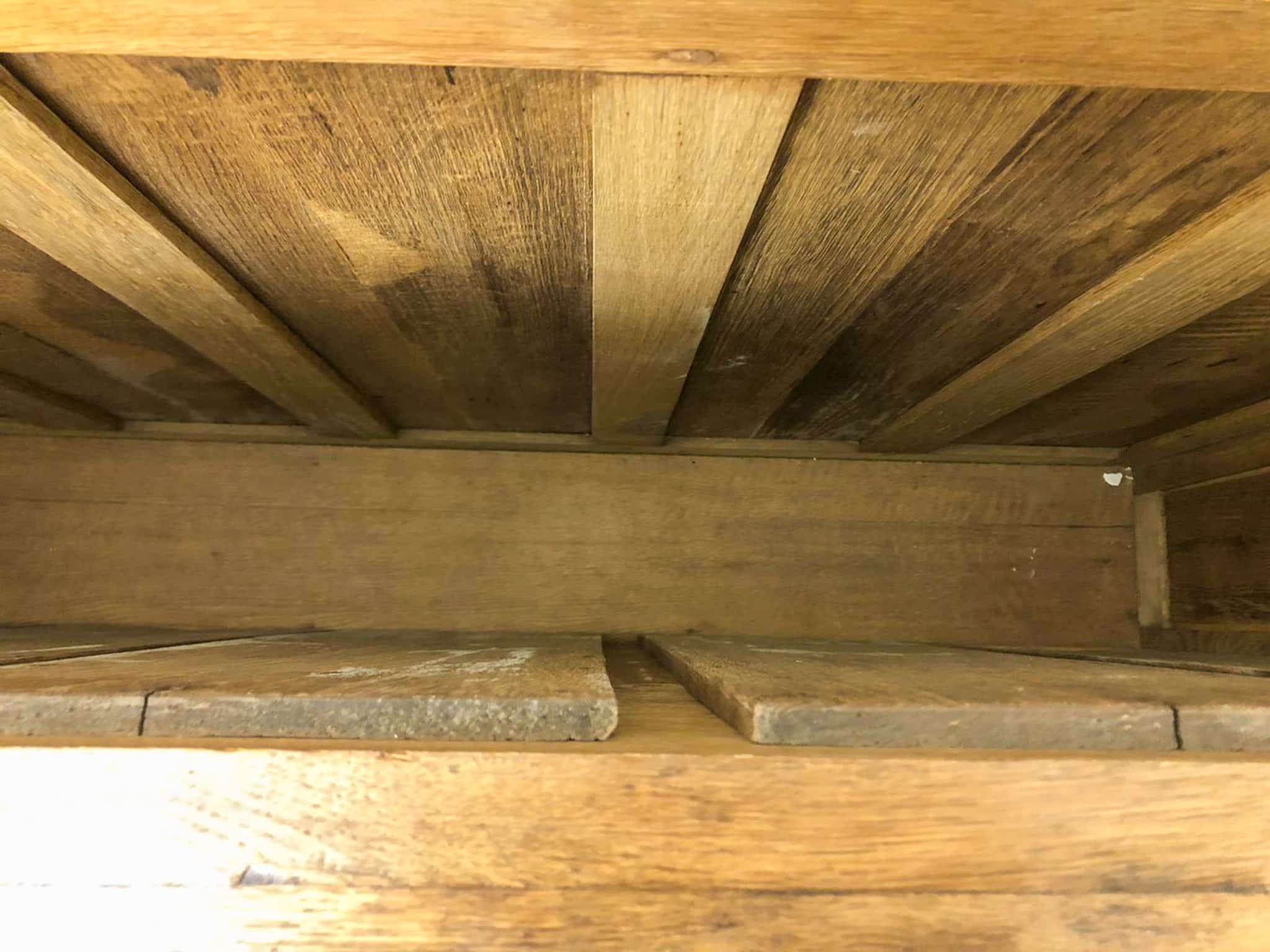
Lāde ir ļoti labā vispārējā stāvoklī, ņemot vērā vecumu un apjomu. Ozolkoka fasāde ar dziļu, siltu patinu. Lancet arku kokgriezumi asi un detalizēti. Atsevišķās kolonnās redzamas smalkas vecuma plaisas — normāla parādība masīvā koka kustībā. Kaltas dzelzs eņģi oriģināli, stabili. Iekšpuse nelakota, ar dabīgu vecuma patinu un putekļu pēdām. Vāka virsma ar nelielu nolietojumu. Lietas stāvoklis pilnībā atspoguļots fotogrāfijās.
―――――――――――――――――――――
🇬🇧 DESCRIPTION IN ENGLISH
―――――――――――――――――――――
📐 DIMENSIONS
Height: 90 cm × Width: 142 cm × Depth: 32 cm. Weight: very heavy (solid oak).
―――――――――――――――――――――
Oak Map Chest with Gothic Arch Carvings — Neo-Gothic / Historicism, Europe, approximately 1860–1900
―――――――――――――――――――――
🏛️ PERIOD, ARTISTIC STYLE, ERA
This monumental solid oak map chest is a distinguished example of the Neo-Gothic style within the Historicism era — a period in which 19th-century Europe enthusiastically returned to the forms of medieval cathedrals, and craftsmen competed in reproducing Gothic lancet arches, columns and capital systems in solid wood. Pieces of this type were used in architects’, cartographers’ and artists’ studios for storing large drawings, maps and project sheets — hence the English designation map chest or drawing file cabinet.
The five façade lancet arches — with sharp Gothic points and trefoil ornaments at their crowns — recall the tracery of cathedral windows. Each arch rests on tower-like columns with individually carved acanthus and leaf capitals. The octagonal column bases — plinthes — lend the lower section architectural stability and a finished quality. The lid, fitted with two wrought iron hinges bearing fleur-de-lis ornament, is among the most distinctive details of the piece, confirming that this is not merely a storage chest but an artistic object in its own right. The interior features unlacquered solid oak boards with a natural patina.
This chest is dateable to approximately 1860–1900 and belongs fully to the Belle Époque — 1871 to 1914 — when architects and engineers were engaged in realising Europe’s greatest construction projects.
Belle Époque snapshot: In 1889, Gustave Eiffel completed the final construction drawings for his tower in his Paris office on the rue Rabelais — thousands of drawing and map sheets stored in exactly this type of solid wood chest with Gothic arch façades. That same year, students of Viollet-le-Duc continued his work on the restoration of Notre-Dame de Paris, and Neo-Gothic forms were not merely an artistic ideal but a daily working tool. This chest may well have held the maps of that same world.
―――――――――――――――――――――
⚜️ MAKER AND MANUFACTORY MARK
No visible maker’s mark is present. Based on the quality of the oak, the precision of the lancet arch carving and the execution of the wrought iron hinges, the probable origin is France, Belgium or England, where Neo-Gothic furniture production in the second half of the 19th century reached the highest level in Europe. In England, pieces of this type were produced by firms such as Holland & Sons and Gillows of Lancaster — masters of high-quality office and library furniture. The fleur-de-lis form of the wrought iron hinges points toward French or Belgian origin.
―――――――――――――――――――――
💎 RARITY AND SIGNIFICANCE
A solid oak Neo-Gothic map chest with a fully preserved façade, five lancet arches and original wrought iron hinges of this scale is an exceptionally rare find. Functional pieces of this type were frequently destroyed or converted as office storage systems changed. Surviving examples are sought by architectural offices, libraries, museums and collectors who appreciate the repetition of medieval forms in the industrial age.
―――――――――――――――――――――
🕯️ USE IN INTERIOR, DESIGN AND PHOTOGRAPHY
This chest is ideal as the central element of a library, architect’s office, studio or gallery. Its horizontal format — 142 cm in width and only 32 cm in depth — allows it to be placed even in narrower spaces as a wall element. Practical uses include storing large drawings, posters, maps or fabrics. In a Gothic Revival or Arts & Crafts interior it is a culminating piece. In photography — an unmistakable accent of a medieval cathedral and a 19th-century architect’s studio.
―――――――――――――――――――――
🎁 GIFT AND PERSONALISATION
This chest is an outstanding acquisition for architectural offices, design studios, libraries and museums. As a personal gift — for an architect, artist or history enthusiast whose workspace demands a unique identity. In astrological symbolism — Capricorn, Scorpio and Aquarius — personalities with a strong historical vision and a sense of originality.
―――――――――――――――――――――
🔍 CONDITION
The chest is in very good overall condition considering its age and scale. The oak façade displays a deep, warm patina. The lancet arch carvings are sharp and detailed throughout. Fine age cracks are visible in certain column sections — a normal consequence of movement in solid wood. The wrought iron hinges are original and structurally stable. The interior is unlacquered, with a natural age patina and traces of dust. The lid surface shows minor wear. The condition of the item is fully reflected in the photographs.
―――――――――――――――――――――
🇷🇺 ОПИСАНИЕ НА РУССКОМ
―――――――――――――――――――――
📐 Размеры: Высота: 90 см × Ширина: 142 см × Глубина: 32 см. Очень тяжёлый (массивный дуб).
Дубовый сундук для карт с готической резьбой — Неоготика, Европа, около 1860–1900 гг.
Массивный дубовый сундук для хранения карт, чертежей и рисунков большого формата — редкий образец неоготического стиля эпохи историзма. Пять стрельчатых lancet-арок на фасаде с резными капителями колонн воспроизводят архитектуру средневековых соборов. Кованые железные петли с орнаментом fleur-de-lis — оригинальные, в превосходном состоянии. Внутри — нелакированные дубовые доски с естественной патиной. Происхождение: предположительно Франция, Бельгия или Англия, около 1860–1900 гг. Состояние хорошее, с естественными следами возраста. Состояние предмета полностью отражено на фотографиях.
―――――――――――――――――――――
🇩🇪 BESCHREIBUNG AUF DEUTSCH
―――――――――――――――――――――
📐 Maße: Höhe: 90 cm × Breite: 142 cm × Tiefe: 32 cm. Sehr schwer (massiver Eiche).
Eichen-Kartentruhe mit neugotischer Bogenschnitzerei — Neugotik, Europa, circa 1860–1900
Monumentale Kartentruhe aus massiver Eiche zur Aufbewahrung von Karten, Zeichnungen und großformatigen Blättern — ein seltenes Beispiel des neugotischen Stils der Historismus-Ära. Die fünf Lanzettbögen der Fassade mit einzeln geschnitzten Säulenkapitellen reproduzieren die Architektur mittelalterlicher Kathedralen. Die schmiedeeisernen Scharniere mit Fleur-de-lis-Ornament sind original und in ausgezeichnetem Zustand. Innen: unlackierte Eichenholzbretter mit natürlicher Patina. Herkunft: vermutlich Frankreich, Belgien oder England, circa 1860–1900. Zustand gut, mit natürlichen Altersspuren. Der Zustand des Objekts ist vollständig in den Fotografien dokumentiert.
―――――――――――――――――――――