
Augsts bronzas altāra svečturis ar ķerubu maskaroniem, baroka stilā (113)
Augsts bronzas altāra svečturis ar ķerubu maskaroniem, baroka stilā (113)
€450.00
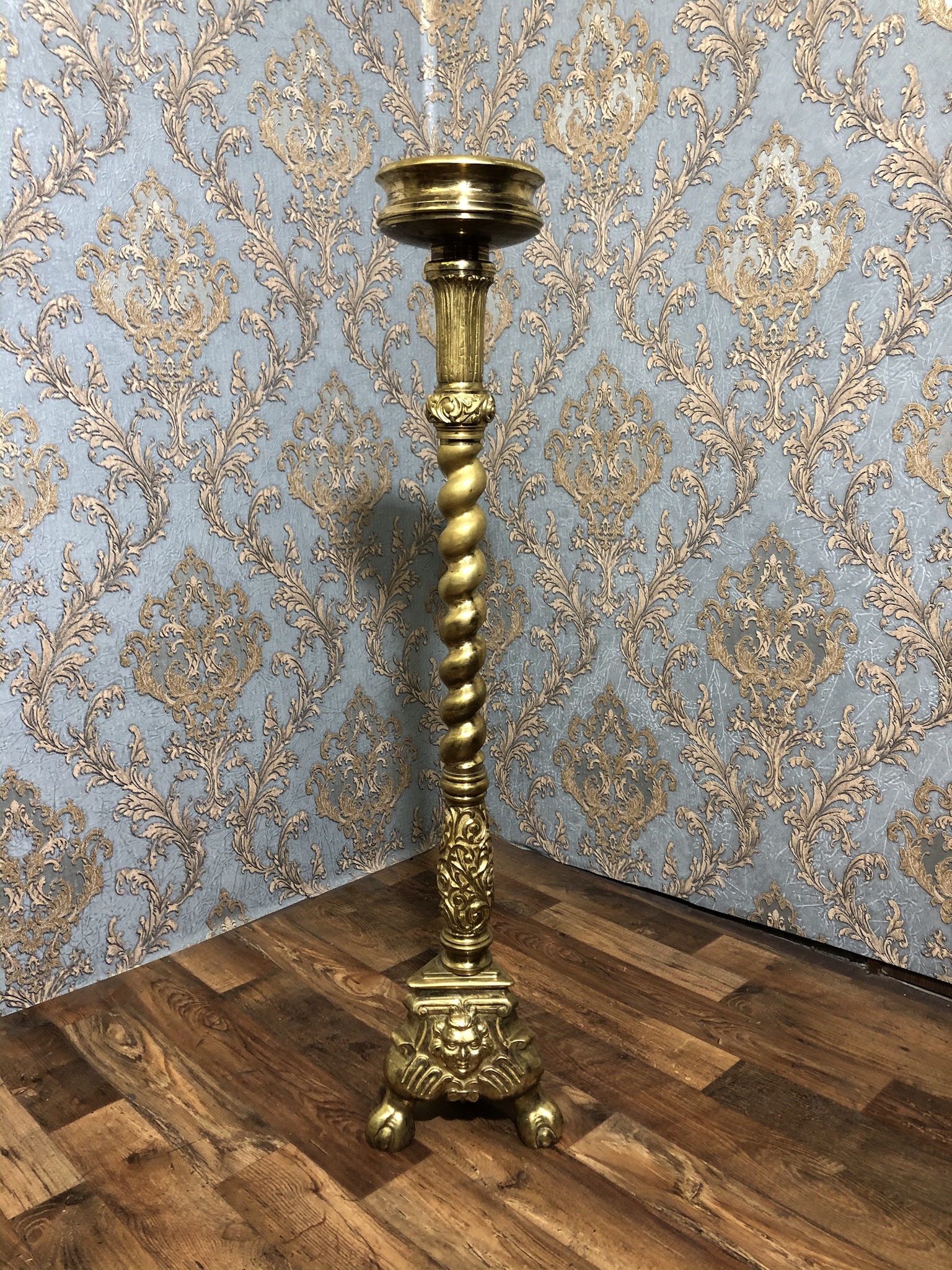
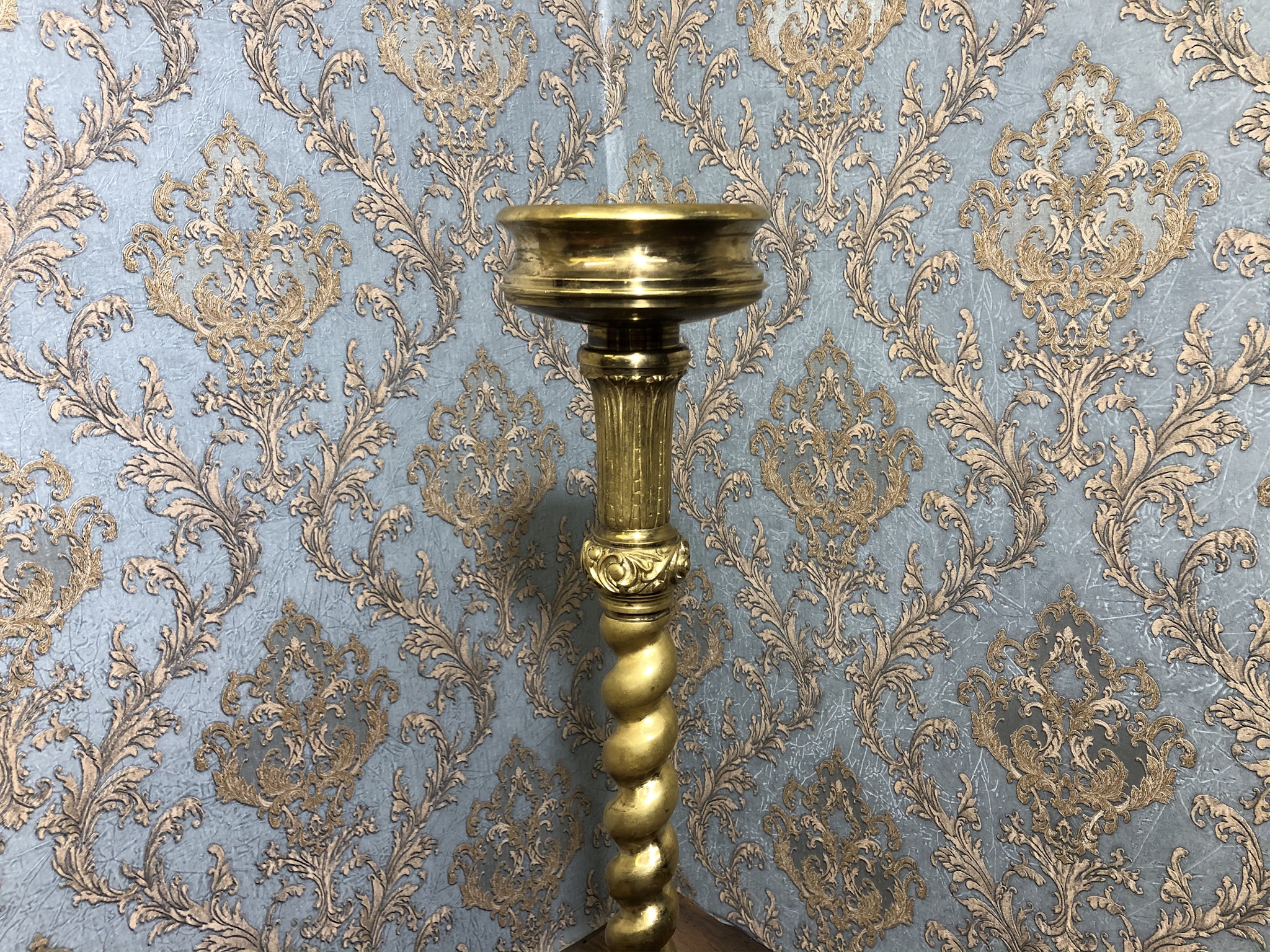
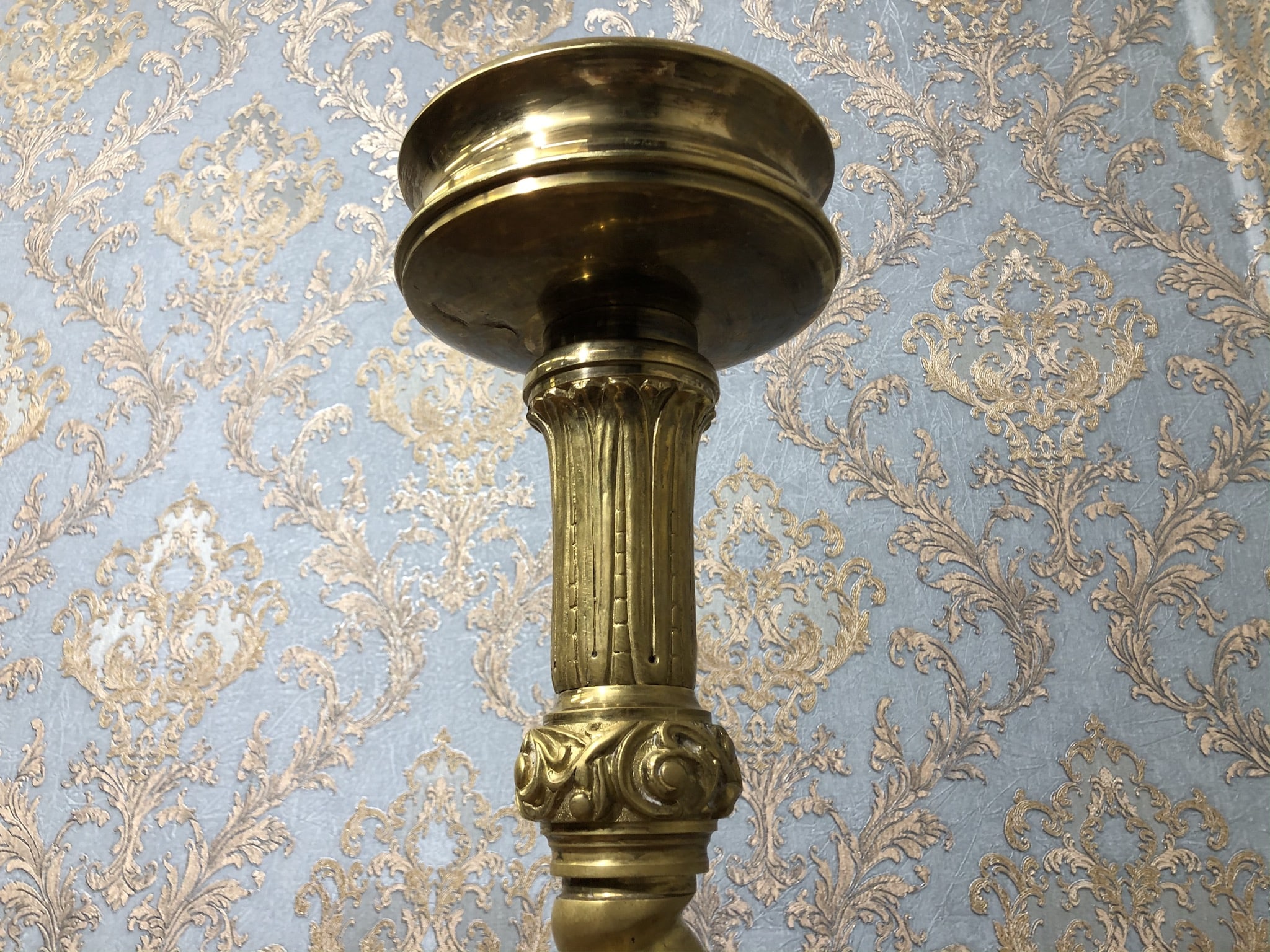
Iespaidīgs, ļoti smags augsts bronzas/misiņa altāra svečturis baroka stilā: vītņots ažūra akanta kāts, trijkājis ar ķerubu maskaroniem un lauvas ķepu kājām, plata sveces tase. Augstums 121 cm.
🇱🇻 LATVISKI
Izmēri:
Augstums — 121 cm
Platums — 26 cm
Augsts bronzas altāra svečturis ar ķerubu maskaroniem — baroka stilā
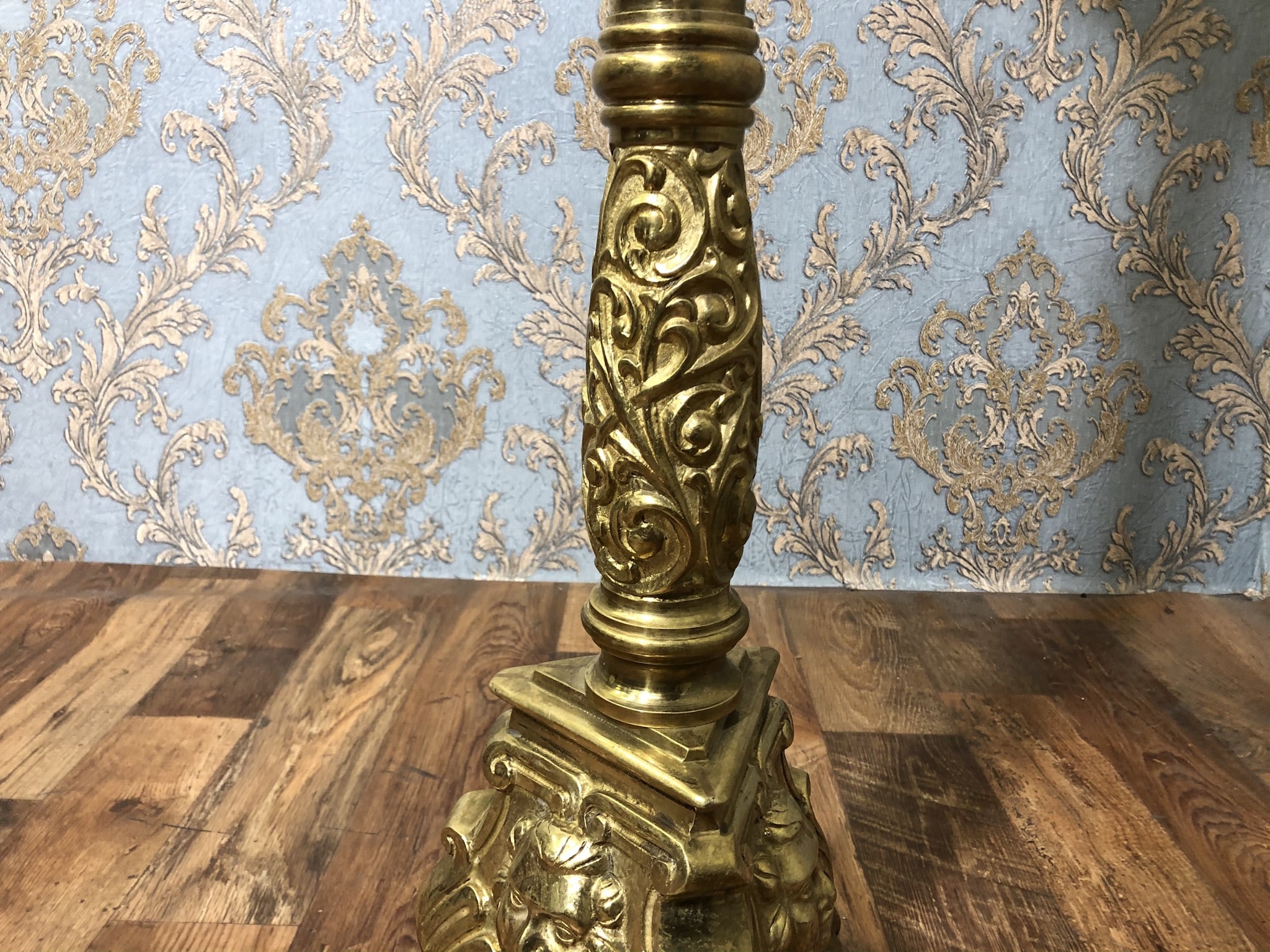
Iespaidīgs un ļoti smags augsts bronzas svečturis (brass pricket candlestick), darināts krāšņajā baroka stila valodā. Tā ir t.s. pricket tipa altāra svečturis — ar platu apaļu tasi un centrālo dzeloni (mietu) lielas baznīcas sveces nostiprināšanai. Kāts veidots no diviem ritmiem: augšdaļā rievots, kanneletam pildspalvas kūlim līdzīgs posms, bet vidū un lejasdaļā — spožs vītņots (barley-twist) un ažūra akanta rituļu cizelējums, kas metālā rada gaismas un ēnas spēli.
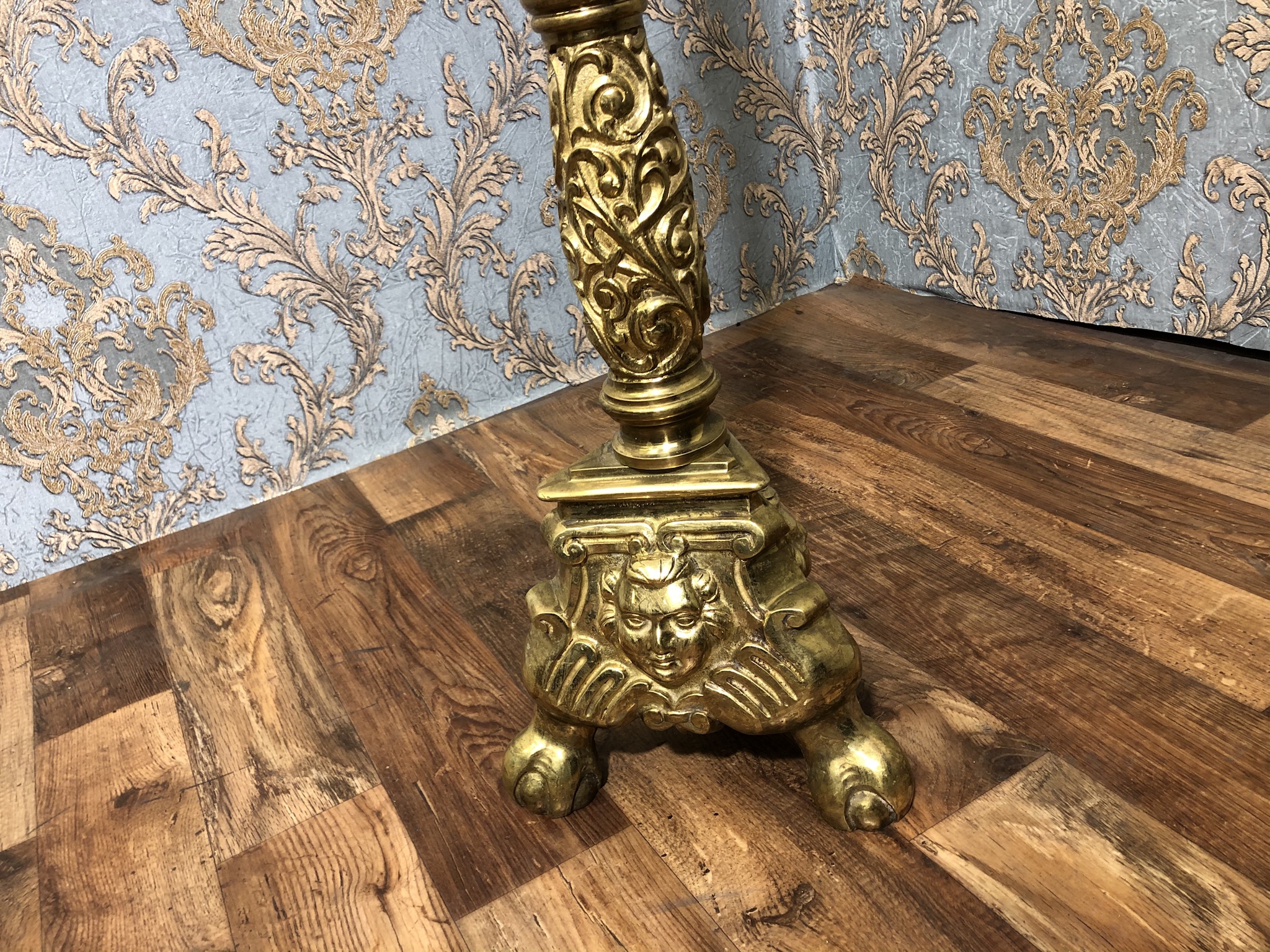
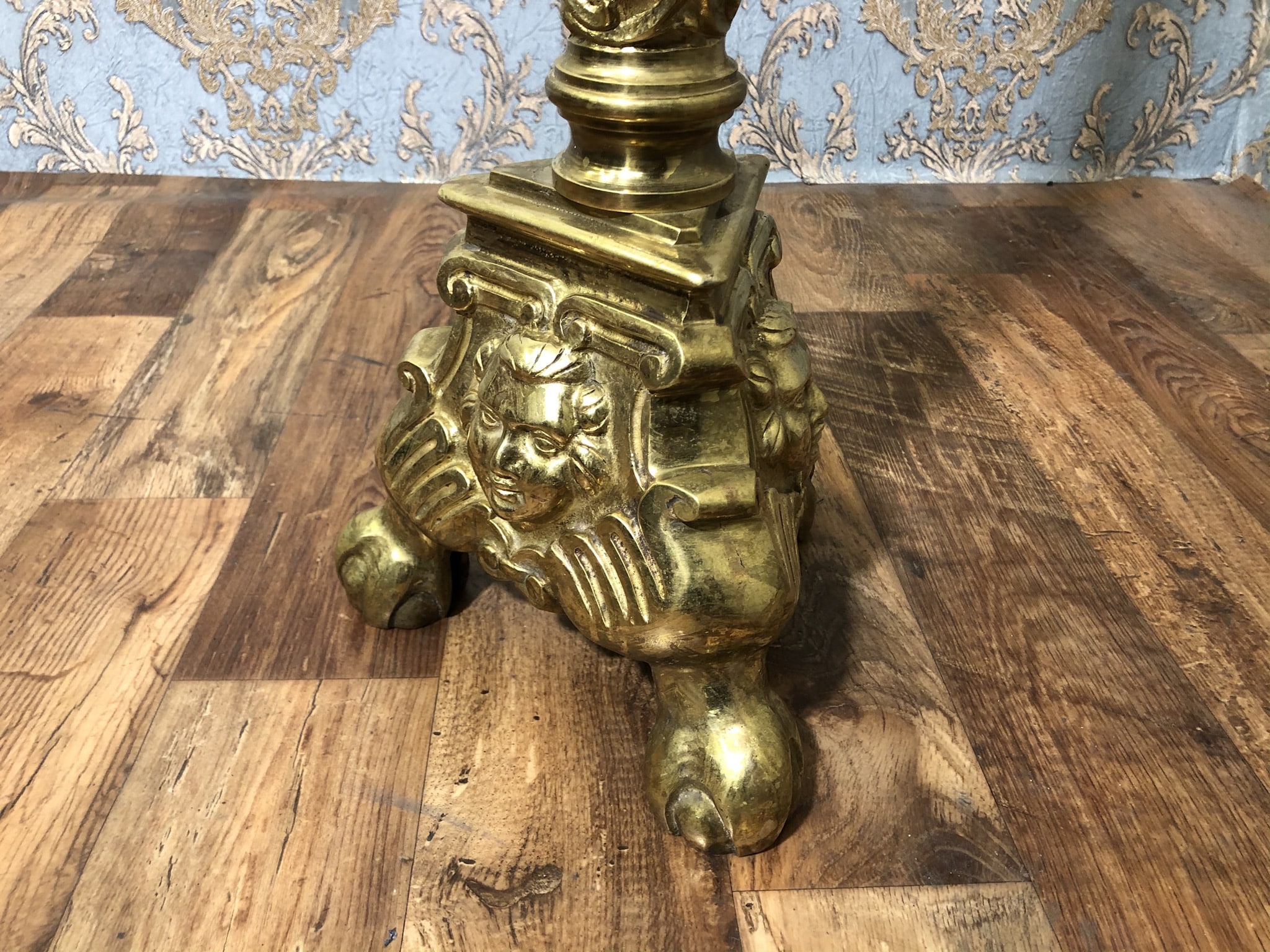
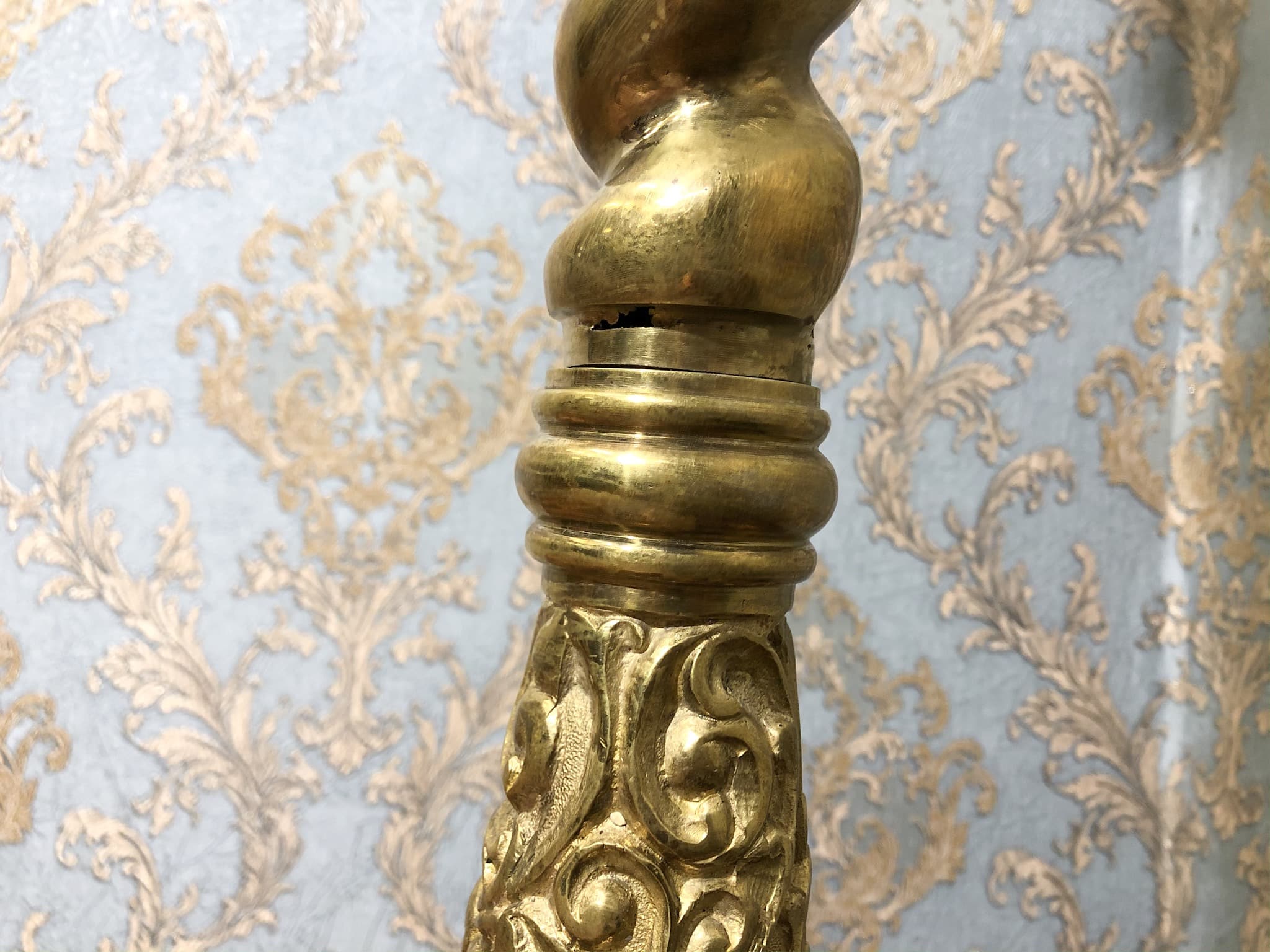
Statīvu balsta masīvs trijkājis ar trim ķerubu maskaroniem (eņģeļu sejām) starp akanta volūtām, kas balstās uz lauvas ķepu kājām — tipisks baroka motīvs, kas savieno debešķīgo un zemišķo. Misiņš/bronza ir bagātīgi cizelēta ar manāmu amatnieka roku; metāls ieguvis siltu, dziļu patinu.
🇱🇻 Baroka laikmeta momentuzņēmums: Pirms agrās mises Romā jaunais Džans Lorenco Bernīni (Gian Lorenzo Bernini) bija aizkavējies tukšajā baznīcā, kur rīta gaisma vēl tikko sāka spraukties caur augstajiem logiem. Viņš pieskārās aukstajai, vītņotajai virsmai un sekoja ar pirkstu akanta rituļiem augšup — līdz vietai, kur metālā iznira maza, smaidoša bērna seja. Vasks vēl nebija aizdedzināts, bet viņš jau redzēja, kā liesma augšā atspīdēs zeltā un kā visa forma uzdzirkstīs. Kaut kur aiz altāra atskanēja soļi; viņš atrāva roku un steidzās prom.
Izgatavošanas periods. Svečturis datējams ar 19. gs. – 20. gs. sākumu, darināts vēsturiskā baroka stila garā.
Pielietojums. Efektīga sakrāla un dekoratīva lieta — kā altāra vai kamīna svečturis, kā grīdas svečturis pie ieejas vai kāpnēm, vai kā skulpturāls akcents interjerā. Lielais augstums un smagums piešķir telpai svinīgumu.
Stāvoklis. Labs, vecumam atbilstošs stāvoklis; metālam dabīga patina. Lietas stāvoklis pilnībā atspoguļots fotogrāfijās.
🇷🇺 РУССКИЙ
Размеры:
Высота — 121 см
Ширина — 26 см
Высокий бронзовый алтарный подсвечник с маскаронами-херувимами — в стиле барокко
Внушительный и очень тяжёлый высокий бронзовый подсвечник, выполненный в пышном языке стиля барокко. Это алтарный подсвечник типа pricket — с широкой круглой чашей и центральным шипом для крепления большой церковной свечи. Ствол построен на двух ритмах: в верхней части — рифлёный сегмент, напоминающий пучок перьев, а в середине и внизу — блестящая витая (barley-twist) и ажурная резьба из завитков аканта, создающая в металле игру света и тени.
Подсвечник опирается на массивный треножник с тремя маскаронами-херувимами (лицами ангелов) среди акантовых волют, покоящийся на ножках в виде львиных лап — типичный мотив барокко, соединяющий небесное и земное. Латунь/бронза богато прочеканена заметной рукой мастера; металл приобрёл тёплую, глубокую патину.
🇷🇺 Снимок эпохи барокко: Перед ранней мессой в Риме молодой Джан Лоренцо Бернини (Gian Lorenzo Bernini) задержался в пустой церкви, где утренний свет едва начинал пробиваться сквозь высокие окна. Он коснулся холодной витой поверхности и провёл пальцем по акантовым завиткам вверх — до места, где из металла выступало маленькое улыбающееся детское лицо. Воск ещё не был зажжён, но он уже видел, как пламя наверху отразится в золоте и как вся форма вспыхнет. Где-то за алтарём раздались шаги; он отдёрнул руку и поспешил прочь.
Подсвечник датируется XIX – началом XX века, выполнен в духе исторического стиля барокко. Это эффектная сакральная и декоративная вещь — как алтарный или каминный подсвечник, как напольный подсвечник у входа или лестницы, либо как скульптурный акцент в интерьере. Большая высота и вес придают пространству торжественность. Состояние хорошее, соответствующее возрасту; у металла естественная патина. Состояние вещи полностью отражено на фотографиях.
🇬🇧 ENGLISH
Dimensions:
Height — 121 cm
Width — 26 cm
Brass Pricket Candlestick with Cherub Masks — Baroque Altar Style
This imposing and very heavy tall brass pricket candlestick is executed in the lavish vocabulary of the Baroque style. It is an altar candlestick of the pricket type — with a wide round dish and a central spike for securing a large church candle. The shaft is built on two rhythms: an upper fluted, feather-bundle-like section, and a brilliant barley-twist and pierced acanthus scrollwork at the centre and base that sets up a play of light and shadow in the metal. As a true brass pricket candlestick, it was made to catch and return candlelight.
The stand rests on a massive tripod with three cherub masks (angel faces) among acanthus volutes, raised on lion-paw feet — a typical Baroque motif uniting the heavenly and the earthly. The brass/bronze is richly chased by a clear craftsman’s hand; the metal has acquired a warm, deep patina.
🇬🇧 Baroque snapshot: Before early Mass in Rome the young Gian Lorenzo Bernini (Gian Lorenzo Bernini) lingered in the empty church, where the morning light had only just begun to press through the high windows. He touched the cold, twisted surface and followed the acanthus scrolls upward with a finger — to the place where a small, smiling child’s face emerged from the metal. The wax was not yet lit, but he already saw how the flame above would reflect in the gold and how the whole form would catch fire. Somewhere behind the altar came footsteps; he drew back his hand and hurried away.
The candlestick dates to the 19th – early 20th century, made in the spirit of the historic Baroque style. It is a striking sacral and decorative piece — as an altar or mantel candlestick, as a floor candlestick by an entrance or stair, or as a sculptural accent in an interior. Its great height and weight bring solemnity to a room. Condition is good and consistent with age; the metal has a natural patina. The condition is fully reflected in the photographs.
🇩🇪 DEUTSCH
Maße:
Höhe — 121 cm
Breite — 26 cm
Hoher bronzener Altarleuchter mit Cherub-Maskarons — im Barockstil
Ein imposanter und sehr schwerer hoher Bronzeleuchter, ausgeführt in der üppigen Sprache des Barock. Es ist ein Altarleuchter vom Typ pricket — mit breiter runder Schale und einem zentralen Dorn zum Befestigen einer großen Kirchenkerze. Der Schaft ist auf zwei Rhythmen aufgebaut: oben ein kannelierter, einem Federbündel ähnlicher Abschnitt, in der Mitte und unten ein glänzendes gedrehtes (barley-twist) und durchbrochenes Akanthus-Rankenwerk, das im Metall ein Spiel von Licht und Schatten erzeugt.
Der Ständer ruht auf einem massiven Dreifuß mit drei Cherub-Maskarons (Engelsgesichtern) zwischen Akanthusvoluten, auf Löwentatzenfüßen — ein typisches Barockmotiv, das Himmlisches und Irdisches verbindet. Das Messing/Bronze ist von erkennbarer Meisterhand reich ziseliert; das Metall hat eine warme, tiefe Patina angenommen.
🇩🇪 Momentaufnahme der Barockzeit: Vor der frühen Messe in Rom verweilte der junge Gian Lorenzo Bernini (Gian Lorenzo Bernini) in der leeren Kirche, wo das Morgenlicht gerade erst durch die hohen Fenster zu dringen begann. Er berührte die kalte, gedrehte Oberfläche und folgte mit dem Finger den Akanthusranken nach oben — bis zu der Stelle, wo ein kleines, lächelndes Kindergesicht aus dem Metall hervortrat. Das Wachs war noch nicht entzündet, doch er sah bereits, wie die Flamme oben sich im Gold spiegeln und wie die ganze Form auflodern würde. Irgendwo hinter dem Altar erklangen Schritte; er zog die Hand zurück und eilte davon.
Der Leuchter datiert ins 19. – frühe 20. Jahrhundert, gefertigt im Geist des historischen Barockstils. Er ist ein eindrucksvolles sakrales und dekoratives Stück — als Altar- oder Kaminleuchter, als Bodenleuchter an einem Eingang oder einer Treppe oder als skulpturaler Akzent im Interieur. Seine große Höhe und sein Gewicht verleihen einem Raum Feierlichkeit. Zustand gut und altersgemäß; das Metall hat eine natürliche Patina. Der Zustand ist auf den Fotografien vollständig wiedergegeben.
🇫🇷 FRANÇAIS
Dimensions :
Hauteur — 121 cm
Largeur — 26 cm
Haut chandelier d’autel en bronze à mascarons de chérubins — de style baroque
Un imposant et très lourd haut chandelier en bronze, exécuté dans le vocabulaire fastueux du style baroque. C’est un chandelier d’autel de type pricket — avec une large coupe ronde et une pointe centrale pour fixer un grand cierge d’église. Le fût est construit sur deux rythmes : en haut une section cannelée semblable à un faisceau de plumes, et au centre et en bas un brillant décor torsadé (barley-twist) et ajouré de rinceaux d’acanthe qui crée dans le métal un jeu d’ombre et de lumière.
Le support repose sur un massif trépied à trois mascarons de chérubins (visages d’anges) parmi des volutes d’acanthe, posé sur des pieds en pattes de lion — un motif baroque typique unissant le céleste et le terrestre. Le laiton/bronze est richement ciselé d’une main de maître manifeste ; le métal a acquis une patine chaude et profonde.
🇫🇷 Instantané de l’époque baroque : Avant la messe matinale à Rome, le jeune Gian Lorenzo Bernini (Gian Lorenzo Bernini) s’était attardé dans l’église déserte, où la lumière du matin commençait à peine à percer par les hautes fenêtres. Il toucha la surface froide et torsadée et suivit du doigt les rinceaux d’acanthe vers le haut — jusqu’à l’endroit où un petit visage d’enfant souriant émergeait du métal. La cire n’était pas encore allumée, mais il voyait déjà comment la flamme, en haut, se refléterait dans l’or et comment toute la forme s’embraserait. Quelque part derrière l’autel résonnèrent des pas ; il retira sa main et se hâta de partir.
Le chandelier date du XIXe – début du XXe siècle, réalisé dans l’esprit du style baroque historique. C’est une pièce sacrée et décorative saisissante — comme chandelier d’autel ou de cheminée, comme chandelier de sol près d’une entrée ou d’un escalier, ou comme accent sculptural dans un intérieur. Sa grande hauteur et son poids apportent de la solennité à une pièce. État bon et conforme à l’âge ; le métal présente une patine naturelle. L’état est entièrement reflété sur les photographies.