
Zaļbalta keramikas vāze ar Rokoko dāmas reljefu — Historisms / Agrīnais Jūgendstils (Green and White Ceramic Vase with Rococo Lady Relief) (5541)
Zaļbalta keramikas vāze ar Rokoko dāmas reljefu — Historisms / Agrīnais Jūgendstils (Green and White Ceramic Vase with Rococo Lady Relief) (5541)
€240.00
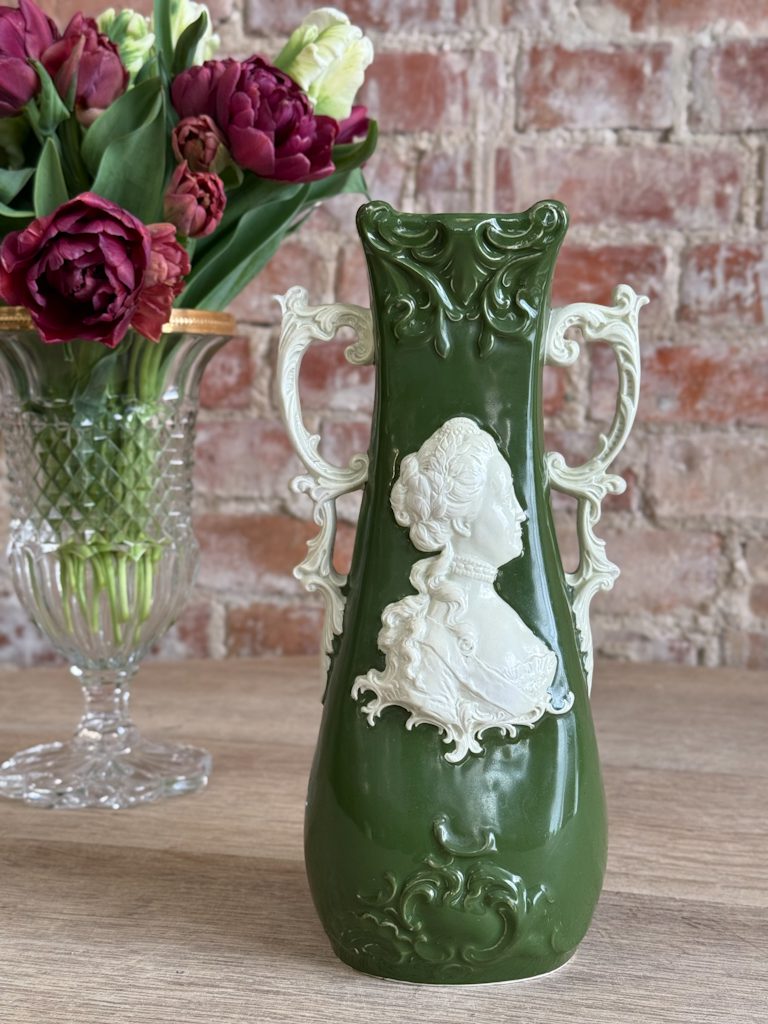
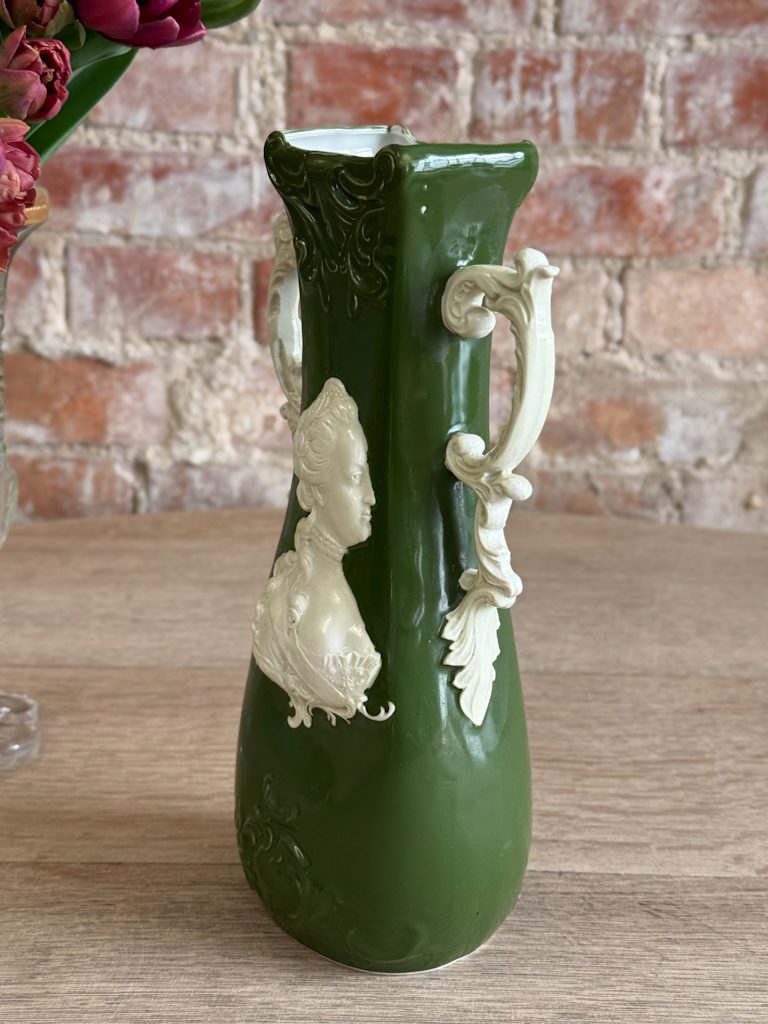
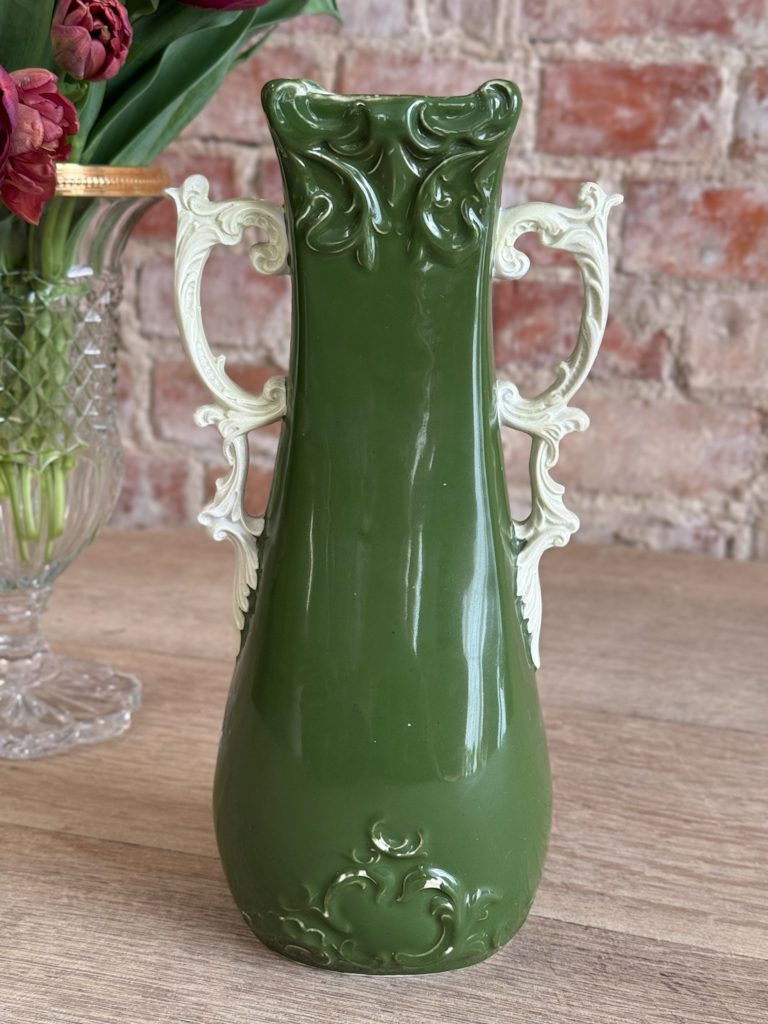
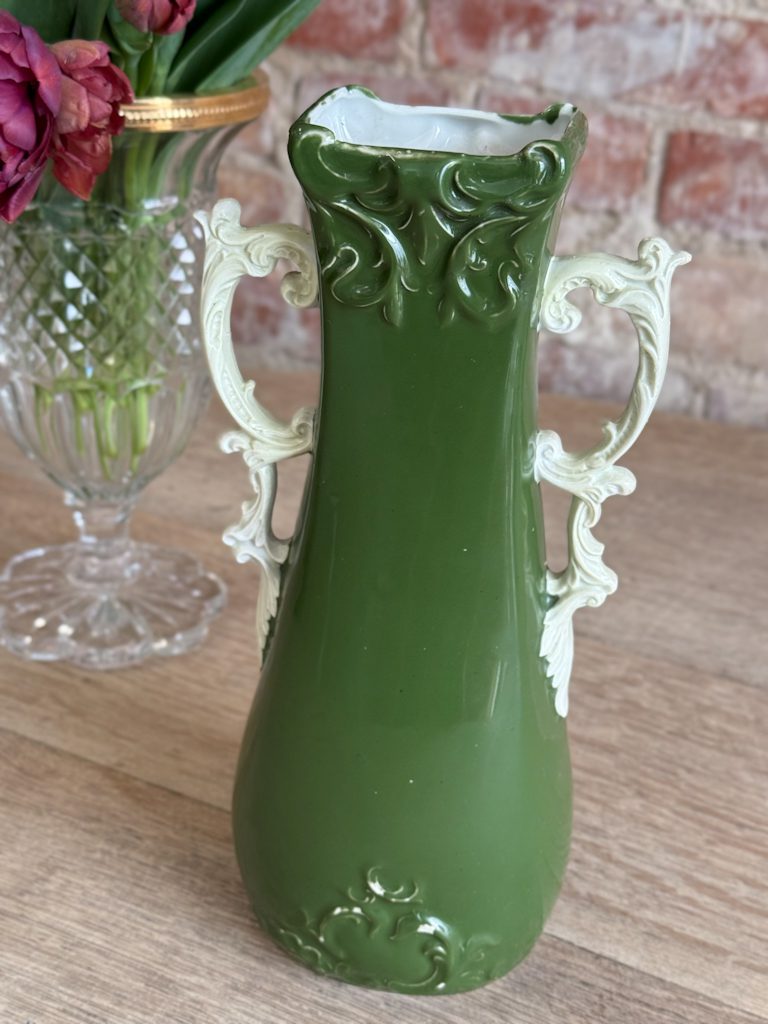
Izsmalcināta zaļbalta keramikas vāze ar augstvērtīgu, sniegbaltu Rokoko dāmas portreta reljefu. Elegants Historisma un agrīnā Jūgendstila perioda mākslas priekšmets ar izteiksmīgiem lējumiem sānos.
Augstums: 29 cm Platums: 14,5 cm
🇱🇻 Zaļa/Balta Keramikas Vāze ar Rokoko Dāmas Reljefu — Historisms / Agrīnais Jūgendstils
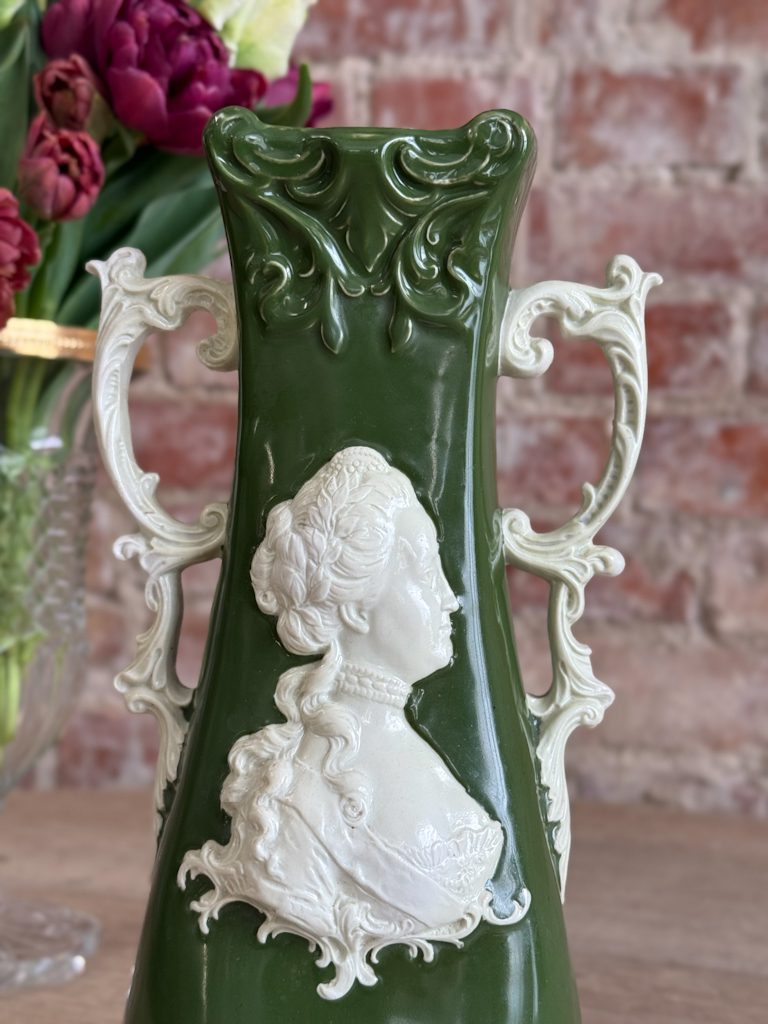
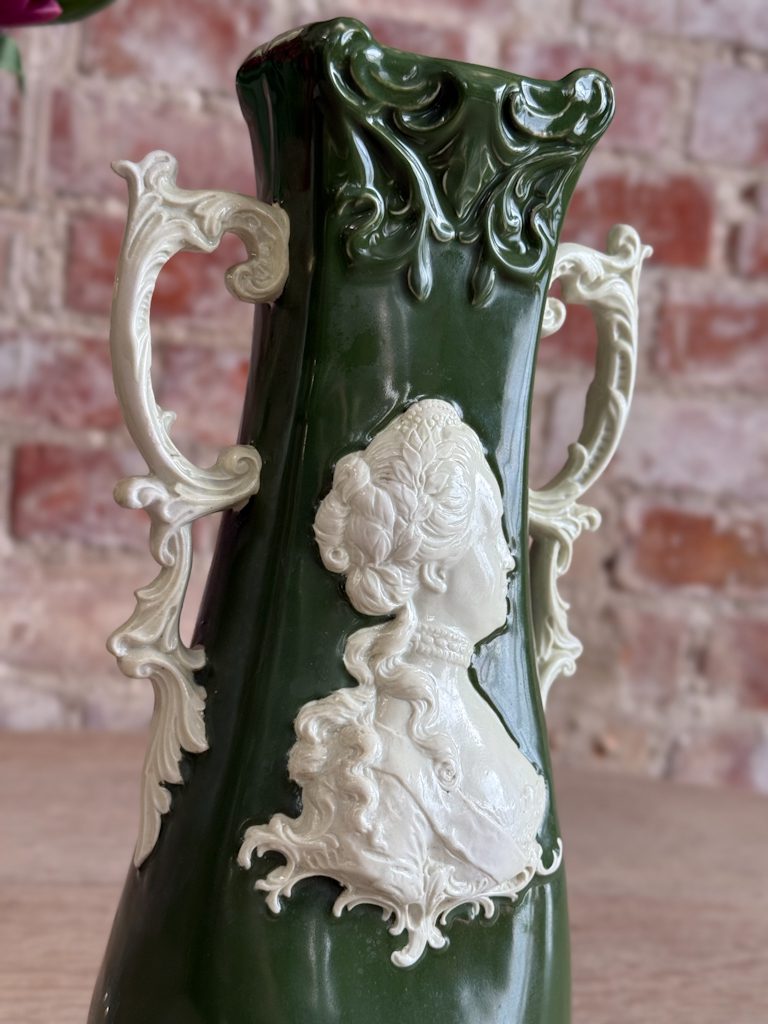
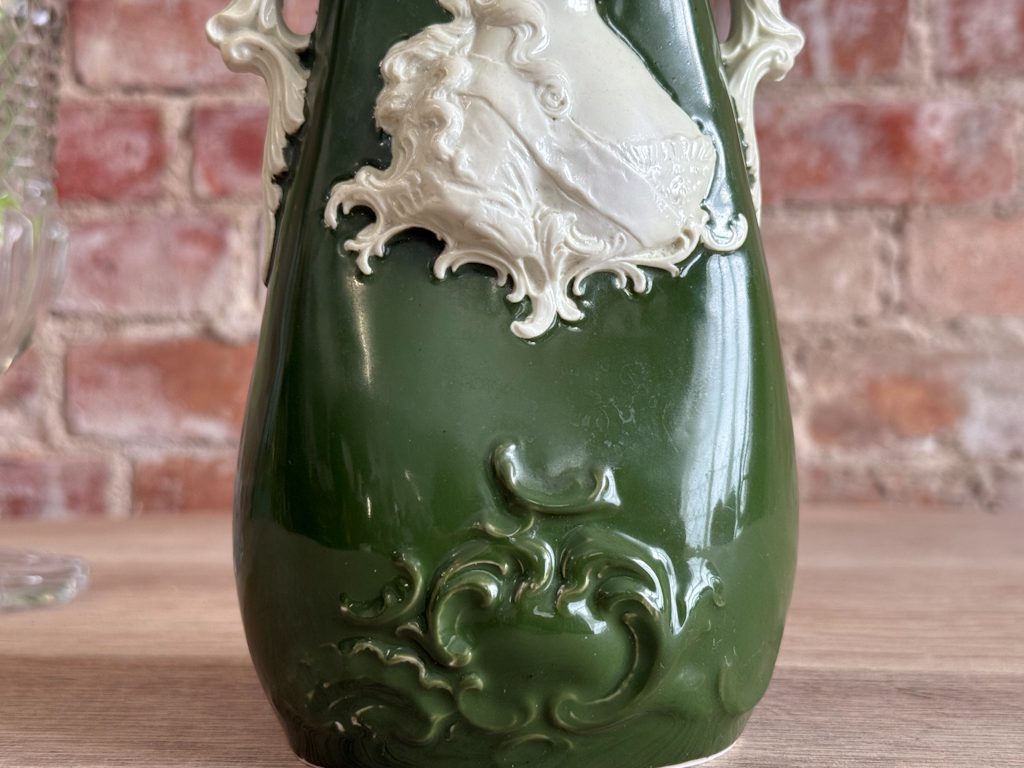
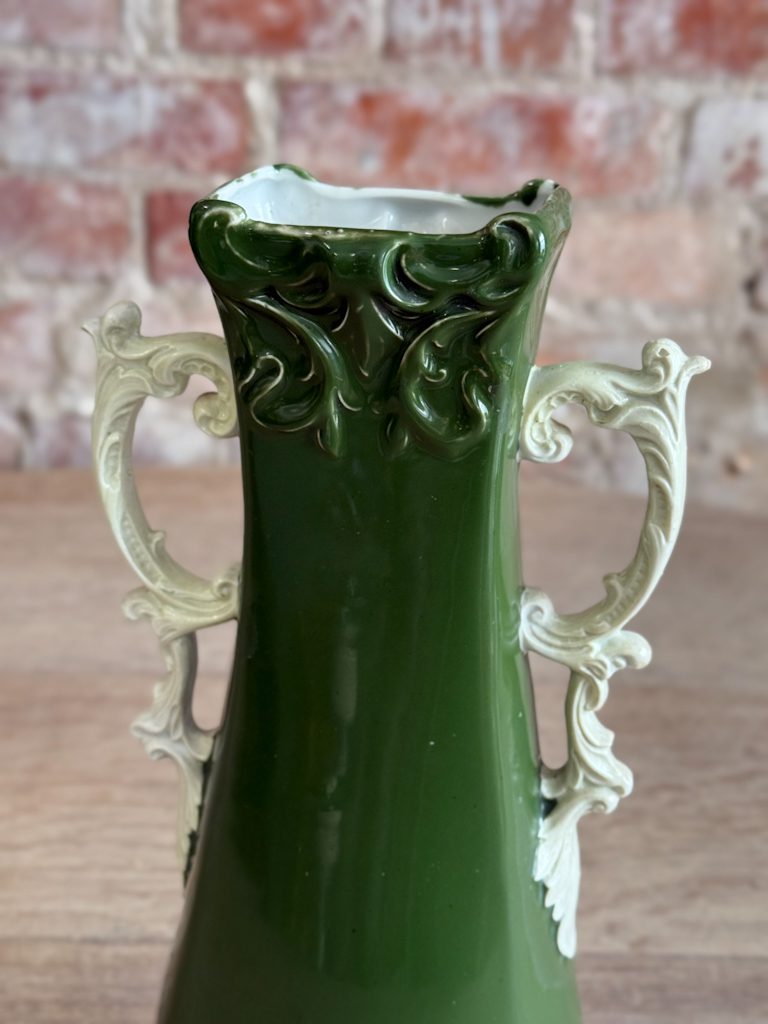
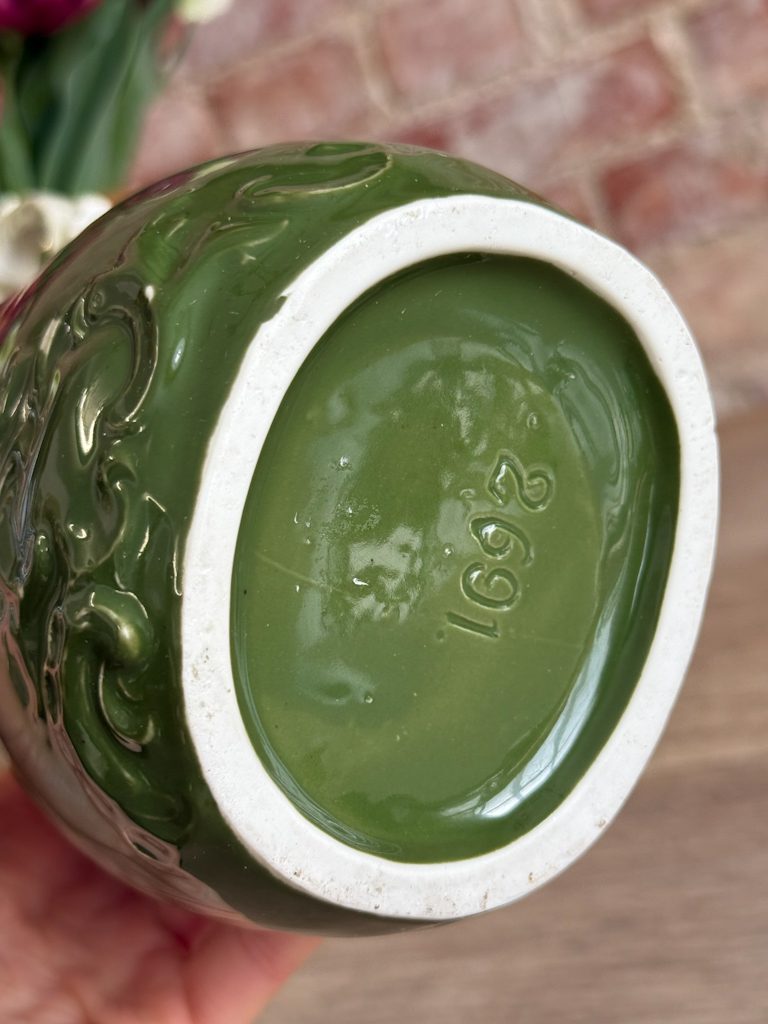
Šī vidēja izmēra keramikas vāze ir apburošs un tehniski augstvērtīgs 19. gadsimta beigu vai 20. gadsimta paša sākuma dekoratīvās mākslas oriģināldarbs. Vāzes korpuss ir klāts ar dziļu, sulīgi zaļu un spīdīgu glazūru, kas kalpo kā nevainojams un izteiksmīgs fons tās centrālajam elementam — sniegbaltam, matētam Rokoko laikmeta dāmas profila reljefam. Dāmas tēls ir izstrādāts ar izcilu tēlniecisku precizitāti, tverot smalkas matu sakārtojuma cirtas, kaklarotu un tērpa detaļas, kas ietvertas vijīgu rokaja un akanta lapu ornamentu rāmī. Vāzes sānus rotā divi krāšņi, caurspīdīgi balti osiņu balsti ar izteiksmīgām vītnēm, savukārt kakliņu un pamatni papildina reljefi, plūstoši viļņu un Jūgendstila līniju motīvi. Vāzes pamatnē iestrādāts iespiests modeļa numurs 1692.
Izgatavošanas periods Priekšmets ir autentisks oriģināldarbs, kas tapis laika posmā no 1890. līdz 1905. gadam kādā no pazīstamajām Bohēmijas vai Vācijas keramikas manufaktūrām. Tas spilgti reprezentē pārejas posmu interjera mākslā — neobarokālo Historismu, kura formas un dekoratīvie elementi jau sāk saplūst ar agrīnā Jūgendstila plūstošajām un organiskajām līnijām.
Retums un nozīme Šāda stāvokļa un izpildījuma keramikas priekšmeti ar tik krasu un tīru krāsu kontrastu — zaļās glazūras un baltā reljefa saspēli — ir salīdzinoši reti sastopami un augstu vērtējami. Tie iemieso gadsimtu mijas Eiropas privāto salonu un mākslas veikalu kultūru, kur katra vāze tika uztverta kā mazs, intīms tēlniecības un telpas dekorēšanas mākslas šedevrs.
Pielietojums Pateicoties saviem izsmalcinātajiem izmēriem, vāze būs izcils akcents uz tualetes galdiņa, kumodes vai gaišā viesistabas vitrīnā. Tā lieliski saskanēs gan ar vēsturisko riekstkoka vai sarkankoka mēbeļu pamatīgumu, gan kalpos kā poētisks, krāsains akcents gaišā mūsdienu interjerā.
Stāvoklis Teicamā un autentiskā vēsturiskā stāvoklī. Glazūra ir spīdīga un tīra, bez plaisām vai restaurācijas pazīmēm. Sniegbaltie sānu lējumi un centrālais dāmas reljefs ir pilnībā saglabāti visās smalkākajās detaļās. Lietas stāvoklis pilnībā atspoguļots fotogrāfijās.
Gadsimtu mijas momentuzņēmums, mākslas salons (Ansis Cīrulis): Ap gadsimtu miju Rīgas un citu Baltijas pilsētu lielie mākslas saloni un antikvārie veikali kļūst par īstām oāzēm, kur gaisā jau jūtams jauna, satraucoša laikmeta elpa. Kamēr neobaroka un historisma smagnējā greznība vēl joprojām stingri turas savās pozīcijās, impērijas pelēkajā ikdienā arvien drosmīgāk sāk ienākt plūstošas Jūgendstila līnijas un dabas formu iedvesmota estētika, kas vilina topošo inteliģenci. Šīs mēbeļu, porcelāna un gleznu krātuves kļūst par vietu, kur jaunie, topošie Baltijas vizionāri un mākslinieki sper savus pirmos soļus lielās mākslas iepazīšanā, alkstot pēc jaunas, tīras izteiksmes valodas.
Kādā mijkrēšļa ietītā Rīgas mākslas salonā, kur smaržo pēc svaigas eļļas lakas un veca koka, septiņpadsmitgadīgais Ansis Cīrulis (Ansis Cīrulis) uz mirkli apstājas pie tikko atvērta un izpakota importa sūtījuma. Viņa pusaudža acis, kurās jau nojaušams nākotnes dizainera vērīgais stingrums, ar patiesu apbrīnu aizķeras pie tikko izceltās, zaļganās keramikas vāzes. Tās spīdīgajā zaļajā glazūrā tikko atdzīvojas vārgais pēcpusdienas saules stars, izgaismojot sniegbalto, matēto Rokoko dāmas profila reljefu un graciozi izlietos sānu balstus — šī kompaktā, cēlā forma jaunā mākslinieka priekšā stāv kā pirmais, neaizmirstamais impulss skaistuma un absolūtas harmonijas meklējumos, pirms viņš pats pēc gadiem radīs savas tautas nacionālā dizaina pamatus.
Высота: 29 см Ширина: 14,5 см
🇷🇺 Зелено-белая керамическая ваза с рельефом дамы Рококо — Историзм / Ранний Югендстиль
Эта керамическая ваза среднего размера — очаровательный и технически высококачественный оригинал декоративно-прикладного искусства конца 19-го или самого начала 20-го века. Корпус вазы покрыт глубокой, сочной зеленой глянцевой глазурью, которая служит великолепным и контрастным фоном для ее центрального элемента — белоснежного матового рельефа с профилем дамы эпохи Рококо. Образ дамы проработан с исключительной скульптурной точностью: тонко переданы локоны прически, ожерелье и детали платья, заключенные в раму из витиеватых мотивов рокайля и листьев аканта. Боковые стороны вазы украшены двумя изящными сквозными белыми ручками с выразительными завитками, а горлышко и основание дополнены рельефными текучими волнами и мотивами линий Югендстиля. На основании вазы выдавлен номер модели 1692.
Предмет является аутентичным оригиналом, созданным в период с 1890 по 1905 год на одной из известных керамических мануфактур Богемии или Германии. Он ярко представляет переходный этап в искусстве интерьера — необарочный историзм, формы и декоративные элементы которого уже начинают сливаться с плавными органическими линиями раннего модерна (Югендстиля). Керамические предметы такого исполнения с столь резким и чистым цветовым контрастом зеленой глазури и белого рельефа встречаются относительно редко. Они воплощают культуру европейских частных салонов и художественных магазинов рубежа веков, где каждая ваза воспринималась как маленькое произведение искусства.
Благодаря своим изысканным размерам ваза станет прекрасным акцентом на туалетном столике, комоде или в светлой гостиной витрине. Она будет отлично гармонировать с основательностью исторической мебели из ореха или красного дерева, а также послужит поэтичным цветовым акцентом в светлом современном интерьере. Предмет находится в отличном аутентичном историческом состоянии. Глазурь чистая, без трещин и следов реставрации. Белоснежные боковые элементы и центральный рельеф полностью сохранены во всех мельчайших деталях. Состояние вещи полностью отображено на фотографиях.
Снимок рубежа веков, художественный салон (Ансис Цирулис): На рубеже веков крупные художественные салоны и антикварные лавки Риги и других балтийских городов становятся настоящими оазисами, где в воздухе уже чувствуется дыхание новой, волнующей эпохи. Пока тяжеловесная роскошь необарокко и историзма все еще прочно удерживает свои позиции, в серые будни империи все смелее начинают проникать плавные линии Югендстиля и вдохновленная природой эстетика, привлекающая молодую интеллигенцию. Эти сокровищницы мебели, фарфора и картин становятся местом, где юные, будущие балтийские провидцы и художники делают свои первые шаги в познании большого искусства, жаждая нового, чистого языка самовыражения.
В полумраке рижского художественного салона, наполненного ароматами свежего масляного лака и старого дерева, семнадцатилетний Ансис Цирулис (Ansis Cīrulis) на мгновение останавливается у только что открытой и распакованной импортной посылки. Его юношеский взгляд, в котором уже угадывается внимательная строгость будущего дизайнера, с искренним восхищением задерживается на только что извлеченной зеленой керамической вазе. На ее глянцевой зеленой поверхности тепло играет слабый луч предвечернего солнца, освещая белоснежный матовый рельеф дамы Рококо и витые боковые ручки. Эта компактная благородная форма стоит перед юным художником как первый, незабываемый импульс в поисках красоты и абсолютной гармонии, за годы до того, как он сам создаст основы национального дизайна своего народа.
Height: 29 cm Width: 14.5 cm
🇬🇧 Green and white ceramic vase with Rococo lady relief — in Late Historicism / Early Jugendstil style
This medium-sized ceramic vase is a charming and technically accomplished original example of decorative art from the late 19th or very early 20th century. The body of the vase is coated in a deep, lush green glossy glaze, serving as an exquisite, high-contrast backdrop for its defining feature—a snow-white, matte relief depicting a Rococo lady in profile. The portrait is executed with superb sculptural precision, capturing the intricate curls of her coiffure, her necklace, and the fine details of her dress, all encased within a framework of twisting rocaille and acanthus foliage. The sides of the vase are flanked by two graceful, openwork white handles detailed with elegant scrolls, while the rim and base are enriched with raised, fluid wave patterns and early Jugendstil lines. Stamped into the underside of the base is the model number 1692.
The item is an authentic original work crafted between 1890 and 1905 by a prominent Bohemian or German ceramic manufacture. It perfectly captures the transitional phase in interior design—Neo-Baroque Historicism, whose classical forms and ornamental flourishes were beginning to dissolve into the fluid, organic lines of early Jugendstil (Art Nouveau). Ceramic objects of this execution, preserving such a sharp, clean contrast between the rich green glaze and the crisp white relief, are relatively rare and highly collectible. They embody the turn-of-the-century European salon and art shop culture, where every vase was approached as an intimate, sculptural statement piece.
Due to its refined proportions, the vase will stand out beautifully atop a dressing table, a chest of drawers, or within a bright living room display cabinet. It will harmonize wonderfully alongside substantial historic walnut or mahogany furniture, while also serving as a poetic, colorful accent within a light-toned contemporary interior. The vase is in excellent authentic historical condition. The glaze remains brilliant and glossy, free of cracks or signs of restoration. The snow-white side handles and central medallion are fully intact across all fine details. The condition of the item is fully reflected in the photographs.
A snapshot from the turn of the century, art salon (Ansis Cīrulis): At the turn of the century, the grand art salons and antique shops of Riga and other Baltic cities became true oases where the breath of a fresh, thrilling era could already be felt in the air. While the heavy opulence of Neo-Baroque and Historicism still firmly held its ground, fluid Jugendstil lines and nature-inspired aesthetics were beginning to pierce the gray utility of the empire, captivating the young intelligentsia. These repositories of furniture, porcelain, and paintings served as the spaces where young, future Baltic visionaries and artists took their first steps into the discovery of grand art, yearning for a new, pure language of expression.
In a twilight-draped Riga art salon, thick with the scent of fresh oil varnish and old timber, seventeen-year-old Ansis Cīrulis (Ansis Cīrulis) pauses for a moment by a newly opened and unpacked import shipment. His youthful gaze, which already hints at the sharp, focused precision of a future designer, lingers with genuine admiration on a newly extracted green ceramic vase. Upon its glossy green surface, the faint rays of the afternoon sun dance warmly, illuminating the snow-white, matte relief of the Rococo lady and the scrolled side handles. This compact, noble form stands before the young artist as a vital, unforgettable impulse in his search for beauty and absolute harmony, years before he himself would lay the foundations for his nation’s national design heritage.
Höhe: 29 cm Breite: 14,5 cm
🇩🇪 Grün-weiße Keramikvase mit Rococo-Damenrelief — Historismus / Früher Jugendstil
Diese mittelgroße Keramikvase ist ein exquisites Originalwerk der dekorativen Kunst aus den Jahren 1890–1905. Der Korpus ist mit einer tiefgrünen, glänzenden Glasur überzogen, die als kontrastreicher Hintergrund für ein schneeweißes, mattes Reliefmedaillon dient, das eine Rokoko-Dame im Profil zeigt. Die Seiten sind mit zwei durchbrochenen weißen Henkeln verziert, während Hals und Fuß fließende Jugendstil-Linien aufweisen. Auf der Unterseite ist die Modellnummer 1692 eingeprägt.
Stücke dieser Art, die den Übergang vom neobarocken Historismus zum fließenden Jugendstil dokumentieren und einen so klaren Farbkontrast bewahren, sind selten. Die Vase eignet sich ideal für einen Frisiertisch oder eine Vitrine im Salon. Sie befindet sich in einem hervorragenden Zustand ohne Risse oder Restaurierungen. Der Zustand des Artikels ist auf den Fotos vollständig dargestellt.
Eine Momentaufnahme aus der Jahrhundertwende, Kunstsalon (Ansis Cīrulis): An der Jahrhundertwende werden die Kunstsalons und Antiquitätenläden von Riga zu Oasen eines neuen, aufregenden Zeitalters. Während der Historismus noch dominiert, dringen fließende Jugendstil-Linien in den Alltag und faszinieren die junge Generation. In einem nach Firnis und altem Holz duftenden Salon bleibt der siebzehnjährige Ansis Cīrulis (Ansis Cīrulis) vor einer frisch geöffneten Kiste stehen. Sein jugendlicher Blick, der bereits die Strenge des zukünftigen Designers erahnen lässt, verweilt voller Bewunderung auf der grünen Keramikvase. Im schwindenden Licht glänzt das weiße Relief der Rokoko-Dame auf der grünen Oberfläche — ein unvergesslicher Impuls auf der Suche nach Harmonie, Jahre bevor er das nacionāle Design seines Volkes prägen sollte.
Hauteur : 29 cm Largeur : 14,5 cm
🇫🇷 Vase en céramique vert et blanc avec relief de dame Rococo — Historicisme / Jugendstil précoce
Ce vase en céramique de dimensions moyennes est une charmante pièce originale d’art décoratif de la fin du 19e ou du tout début du 20e siècle, fabriquée par une manufacture de Bohême ou d’Allemagne. Le corps du vase est recouvert d’une glaçure brillante vert foncé, servant de fond contrasté à son élément central : un médaillon en relief blanc mat représentant une dame de l’époque Rococo de profil. Le portrait est exécuté avec une grande précision, encadré de feuilles d’acanthe et de rocailles. Les côtés sont ornés de deux anses blanches ajourées, tandis que le col et la base présentent des lignes fluides de style Jugendstil. Le numéro de modèle 1692 est estampillé sous la base.
Les céramiques de cette époque offrant un contraste aussi net entre la glaçure verte et le relief blanc sont rares. Idéal sur une coiffeuse ou dans une vitrine de salon, ce vase incarne l’élégance des salons européens de la fin du siècle. L’objet est en excellent état historique, sans fêle ni restauration. L’état de l’objet est fidèlement reflété par les photographies.
Un instantané du tournant du siècle, salon d’art (Ansis Cīrulis) : Au tournant du siècle, les salons d’art et les boutiques d’antiquités de Riga deviennent de véritables oasis où se ressent le souffle d’une ère nouvelle. Tandis que l’Historicisme domine, les lignes fluides du Jugendstil s’imposent et fascinent la jeune génération. Dans un salon qui sent le vernis frais et le vieux bois, Ansis Cīrulis (Ansis Cīrulis), dix-sept ans, s’arrête devant une caisse de transport fraîchement ouverte. Son regard de jeunesse, qui annonce déjà la rigueur du futur designer, contemple avec admiration le vase en céramique verte. Dans la lumière du soir, le relief blanc de la dame Rococo s’illumine sur la surface brillante — un élan inoubliable dans sa quête d’harmonie, des années avant qu’il ne crée les fondements du design national de son peuple.
Højde: 29 cm Bredde: 14,5 cm
🇩🇰 Grøn/hvid keramikvase med Rokoko-damerelief — Historisme / Tidlig Jugendstil
Denne mellemstore keramikvase er et charmerende originalværk af dekorativ kunst fra perioden 1890–1905, fremstillet af en anerkendt bøhmisk eller tysk manufaktur. Korpusset er dækket af en dybgrøn, glitrende glasur, der fungerer som en kontrastrig baggrund for et snehvidt, mat reliefmedaljon, som viser eine Rokoko-dame i profil. Siderne er prydet med to hvide hanke, mens halsen og foden har flidende Jugendstil-linjer. På undersiden er modelnummeret 1692 indpræget.
Genstande af denne art, som dokumenterer overgangen fra den neobarokke historisme til den flidende Jugendstil og bevarer en så klar farvekontrast, er sjældne i dag. Vasen er ideel til et frisørbord eller en vitrine i salonen. Den er i fremragende stand uden revner eller restaureringer. Genstandens tilstand er fuldt ud afspejlet på fotografierne.
Et øjebliksbillede fra århundredeskiftet, kunstsalon (Ansis Cīrulis): Ved århundredeskiftet bliver kunstsalonerne og antikvitetsbutikkerne i Riga til oaser for en ny, spændende tidsalder. Mens historismen stadig dominerer, trænger flidende Jugendstil-linjer ind i hverdagen og fascinerer den unge generation. I en salon, der dufter af fernis og gammelt træ, stopper den syttenårige Ansis Cīrulis (Ansis Cīrulis) foran en nyåbnet transportkasse. Hans ungdommelige blik, som allerede lader ane den kommende designers strenghed, dvæler med beundring på den grønne keramikvase. I det svindende lys glimter det hvide relief af Rokoko-damen på den grønne overflade — en uforglemmelig impuls i søgen efter harmoni, år før han selv vil præge sit folks nacionāle design.
Höjd: 29 cm Bredd: 14,5 cm
🇸ECE Grön/vit keramikvas med Rokoko-damrelief — Historism / Tidig Jugendstil
Denna medelstora keramikvas är ett charmigt originalverk av dekorativ konst från perioden 1890–1905. Korpusen är täckt av en djupgrön, glänsande glasyr som fungerar som en kontrastrik bakgrund för en snövit, matt reliefmedaljong som visar en Rokoko-dam i profil. Sidorna är prydda med två genombrutna vita hänklar, medan halsen och foten har flödande Jugendstil-linjer. På undersidan är modellnumret 1692 inpräglat.
Föremål av detta slag, som dokumenterar övergången från den neobarocka historismen till den flödande Jugendstilen och bevarar en så klar färgkontrast, är sällsynta i dag. Vasen är idealisk för ett toalettbord eller en vitrin i salongen. Den är i ett utmärkt skick utan sprickor eller restaureringar. Föremålets skick återspeglas till fullo på fotografierna.
En ögonblicksbild från sekelskiftet, konstsalong (Ansis Cīrulis): Vid sekelskiftet blir konstsalongerna och antikaffärerna i Riga till oaser för en ny, spännande tidsålder. Medan historismen fortfarande dominerar, tränger flödande Jugendstillinjer in i vardagen och fascinerar den unga generationen. I en salong som doftar av fernissa och gammalt trä stannar den sjuttonårige Ansis Cīrulis (Ansis Cīrulis) till framför en nyöppnad transportlåda. Hans ungdomliga blick, som redan låter ana den blivande designerns stränghet, dröjer med beundran vid den gröna keramikvasen. I det svinnande ljuset skimrar den vita reliefen av Rokoko-damen på den gröna ytan — en oförglömlig impuls i sökandet efter harmoni, år innan han själv kommer att skapa grunden för sitt folks nacionāla design.
Høyde: 29 cm Bredde: 14,5 cm
🇳🇴 Grønn/hvit keramikkvase med Rokoko-damerelieff — Historisme / Tidlig Jugendstil
Denne mellomstore keramikkvasen er et sjarmerende originalverk av dekorativ kunst fra perioden 1890–1905. Korpusen er dekket av en dypgrønn, glitrende glasur som fungerer som en kontrastrik bakgrunn for en snøhvit, matt relieffmedaljong som viser en Rokoko-dame i profil. Sidene er prydet med to gennombrutte hvite hankene, mens halsen og foten har flytende Jugendstil-linjer. På undersiden er modellnummeret 1692 innpreget.
Gjenstander av denne arten, som dokumenterer overgangen fra den neobarokke historismen til den flytende Jugendstilen og bevarer en så klar fargekontrast, er sjeldne i dag. Vasen er ideell til et sminkebord eller en vitrine i salongen. Den är i fremragende stand uten sprekker eller restaureringer. Gjenstandens tilstand er fullt ut gjenspeilet på fotografiene.
Et øjeblikksbilde fra århundreskiftet, kunstsalong (Ansis Cīrulis): Ved århundreskiftet blir kunstsalongene og antikvitetsforretningene i Riga til oaser for en ny, spennende tidsalder. Mens historismen fortsatt dominerer, trenger flytende Jugendstil-linjer inn i hverdagen og fascinerer den unge generasjonen. I en salong som dufter av ferniss og gammelt tre, stopper den syttenårige Ansis Cīrulis (Ansis Cīrulis) foran en nyåpnet transportkasse. Hans ungdommelige blikk, som allerede lar ane den kommende designerens strenghet, dveler med beundring på den grønne keramikkvasen. I det svinnende lyset glimter det hvite relieffet av Rokoko-damen på den grønne overflaten — en uforglemmelig impuls i søken etter harmoni, år før han selv vil prege sitt folks nacionāle design.
Korkeus: 29 cm Leveys: 14,5 cm
🇫🇮 Vihreä-valkoinen keraaminen maljakko Rokoko-daamin kohokuvalla — Historismi / Varhainen Jugendstil
Tämä keskikokoinen keraaminen maljakko on upea alkuperäisteos koristetaiteen alalta vuosilta 1890–1905. Runko on peitetty syvänvihreällä, kiiltävällä lasitteella, joka toimii kontrastisena taustana lumivalkoiselle, mattaiselle kohokuvioiselle mitalille, jossa on Rokoko-daamin profiili. Sivuilla on kaksi avointa valkoista kahvaa, ja kaulassa sekä jalassa on virtaavia Jugendstil-linjoja. Pohjaan on painettu mallinumero 1692.
Tällaiset esineet, jotka dokumentoivat siirtymistä uusbarokkisesta historismista virtaavaan Jugendstiliin ja säilyttävät näin puhtaan värikontrastin, ovat nykyään harvinaisia. Maljakko sopii erinomaisesti kampauspöydälle tai salongin vitriiniin. Se on erittäin hyvässä kunnossa ilman halkeamia tai entisöinnin jälkiä. Esineen kunto näkyy täydellisesti valokuvissa.
Tilannekuva vuosisadan vaihteesta, taidesalonki (Ansis Cīrulis): Vuosisadan vaihteessa Riian taidesalongit ja antikvariaatit muodostuvat uuden, kiehtovan aikakauden keitaiksi. Vaikka historismi hallitsee yhä, virtaavat Jugendstil-linjat tulevat osaksi arkea ja kiehtovat nuorta sukupolvea. Öljylakan ja vanhan puun tuoksuisessa salongissa 17-vuotias Ansis Cīrulis (Ansis Cīrulis) pysähtyy vasta avatun kuljetuslaatikon ääreen. Hänen nuoressa katseessaan, joka jo paljastaa tulevan muotoilijan tarkkuuden, näkyy aitoa ihailua vihreää keraamista maljakkoa kohtaan. Ilta-auringossa valkoinen Rokoko-daamin kohokuva loistaa vihreällä pinnalla — unohtumaton sysäys harmonian etsinnässä vuosia ennen kuin hän itse luo kansansa nacionālisen muotoilun perustan.