
Art Deco Spogulis ar Fazētu Stiklu un Zeltītu Vēdekļa Ornamentu — Art Deco, Eiropa, 20.gs. (6637)
Art Deco Spogulis ar Fazētu Stiklu un Zeltītu Vēdekļa Ornamentu — Art Deco, Eiropa, 20.gs. (6637)
€375.00
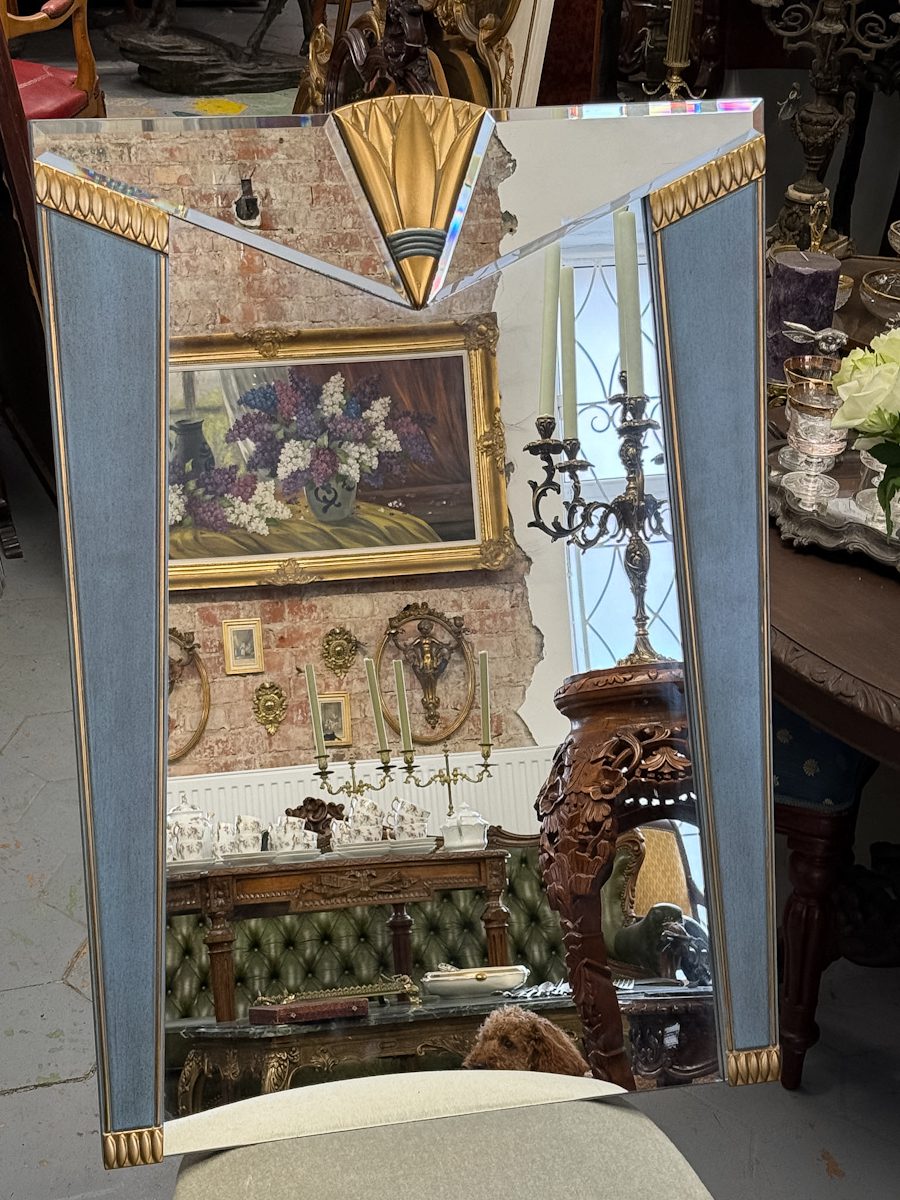
Art Deco spogulis ar diagonālu fazētu stikla kompozīciju, zeltītu éventail vēdekļa ornamentu un gaiši zili pelēku rāmi ar zeltītām oves frīzēm. Rietumeiropa, ap 1920.–1940. Platums 62 cm × augstums 89 cm
📐 IZMĒRI Platums 62 cm × augstums 89 cm.
―――――――――――――――――――――
Art Deco Spogulis ar Fazētu Stiklu, Zeltītu Vēdekļa Ornamentu un Gaiši Zilu Rāmi — Art Deco, Rietumeiropa, ap 1920.–1940.
―――――――――――――――――――――
🏛️ IZGATAVOŠANAS PERIODS, MĀKSLAS STILS, LAIKMETS
Šis spogulis ir izcils Art Deco stila paraugs — laikmeta, kas atnāca pēc Pirmā pasaules kara kā skaistuma un modernisma apliecinājums. Art Deco (no Arts Décoratifs, nosaukts pēc 1925. gada Parīzes izstādes Exposition Internationale des Arts Décoratifs et Industriels Modernes) apvienoja ģeometrisku precizitāti ar dekoratīvu greznumu — un tieši šis spogulis to iemieso ar izcilu skaidrību.
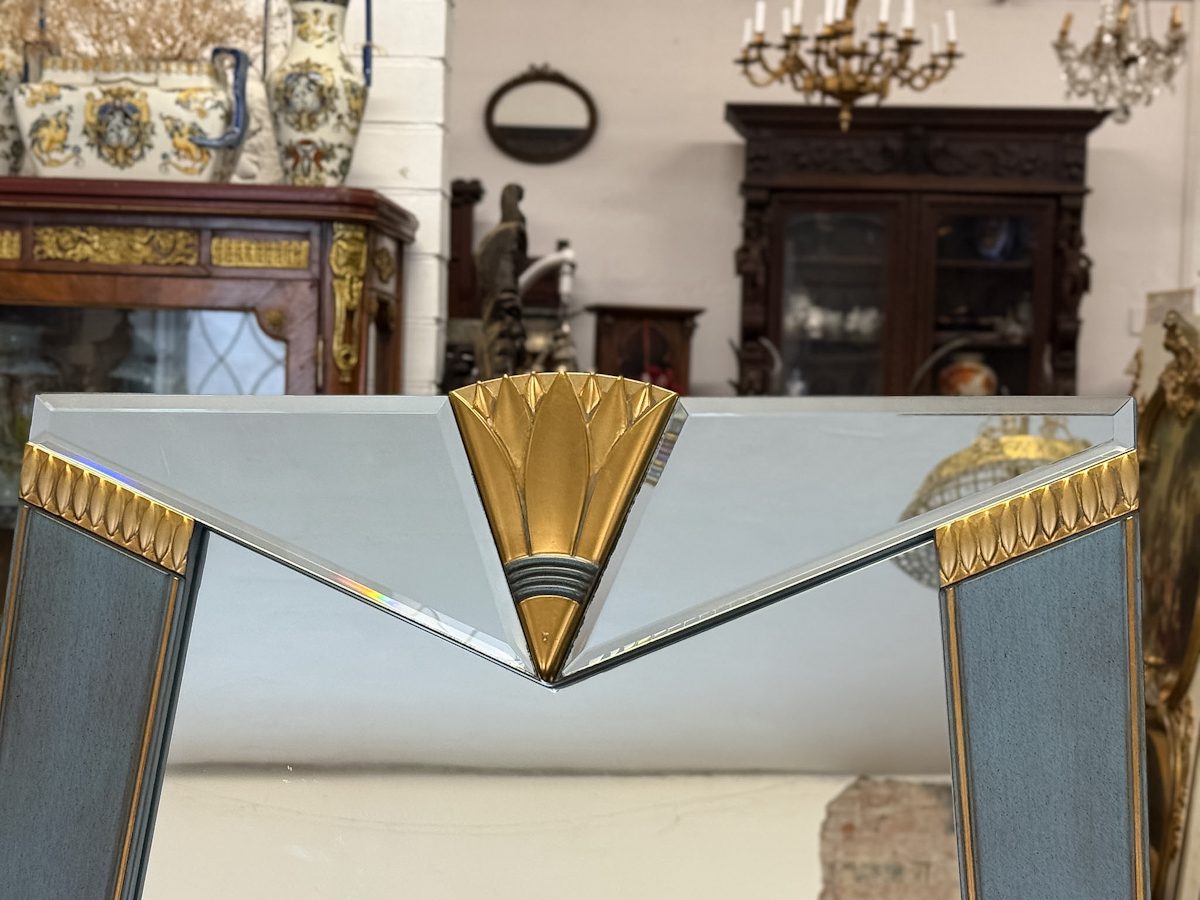
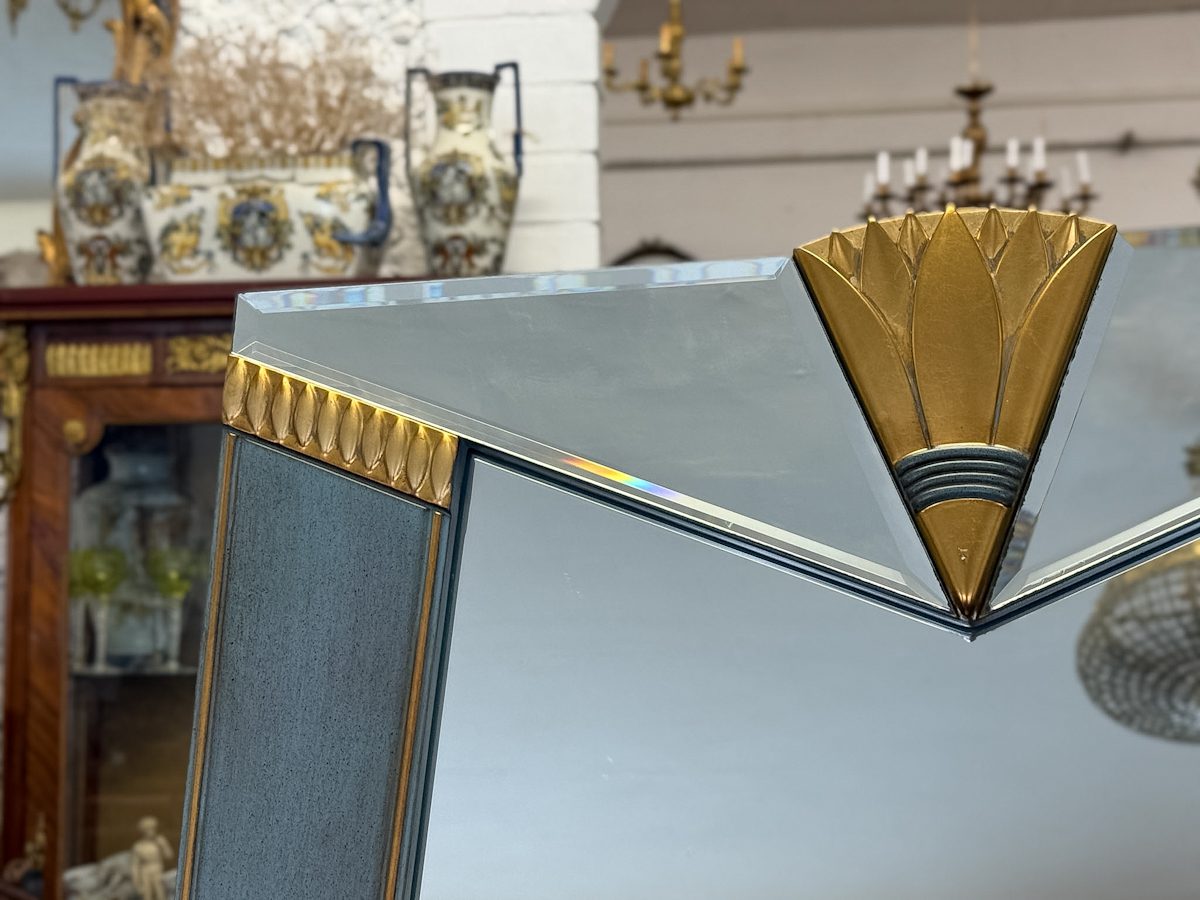
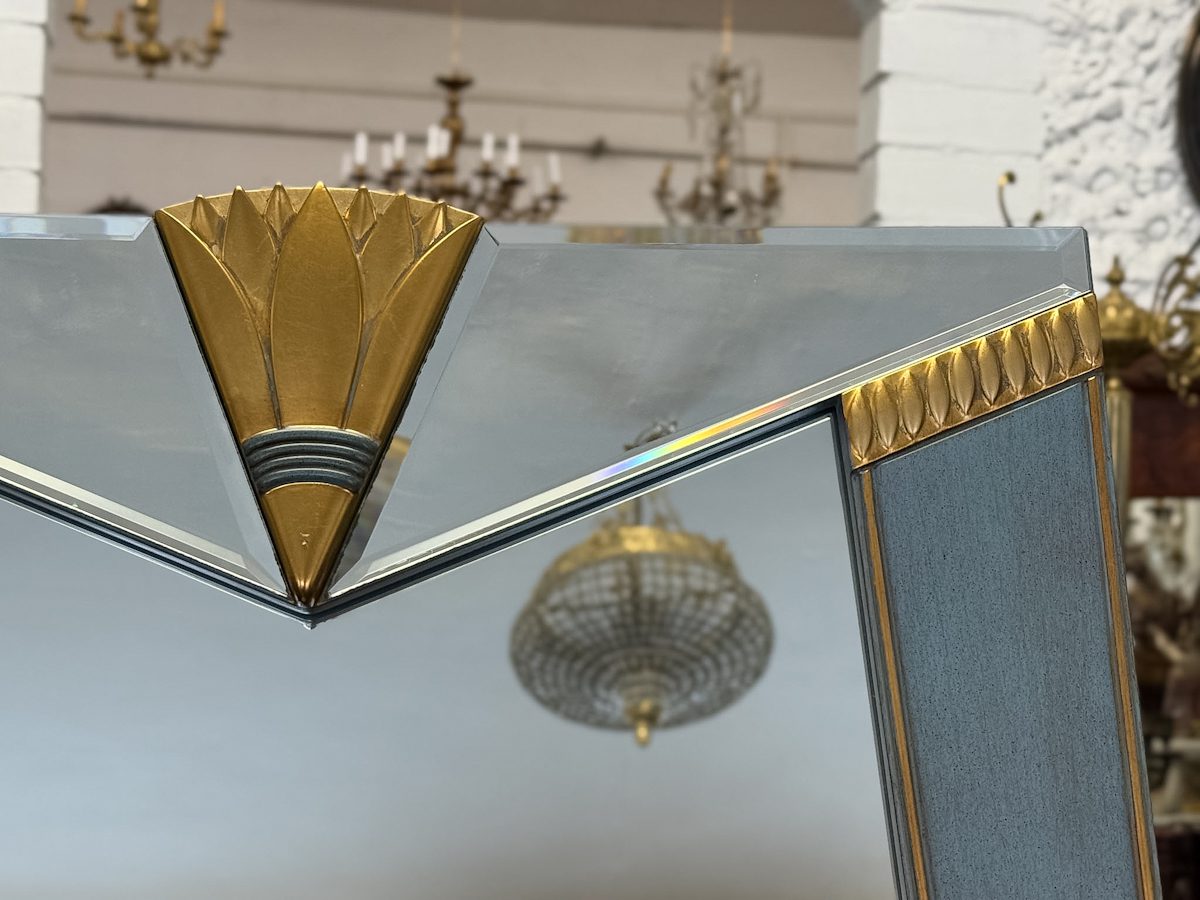
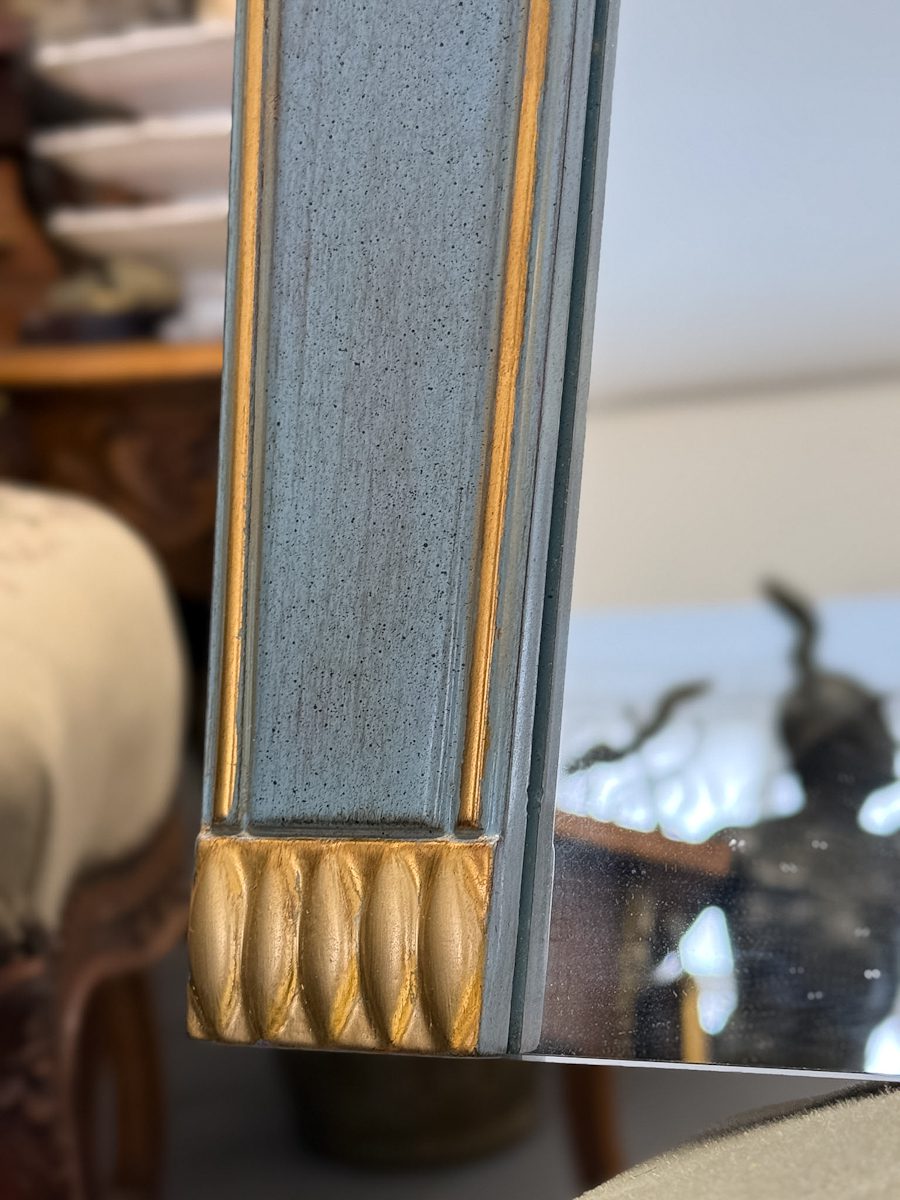
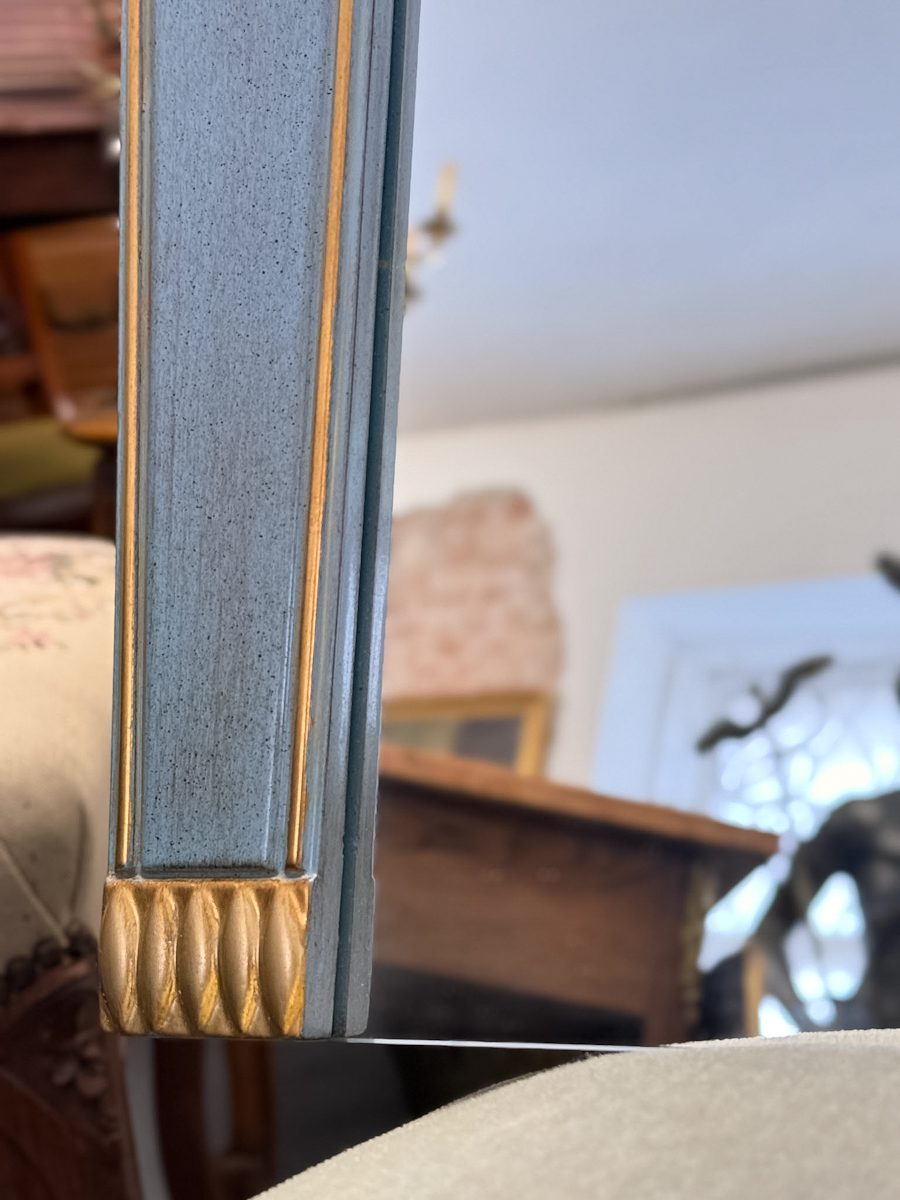
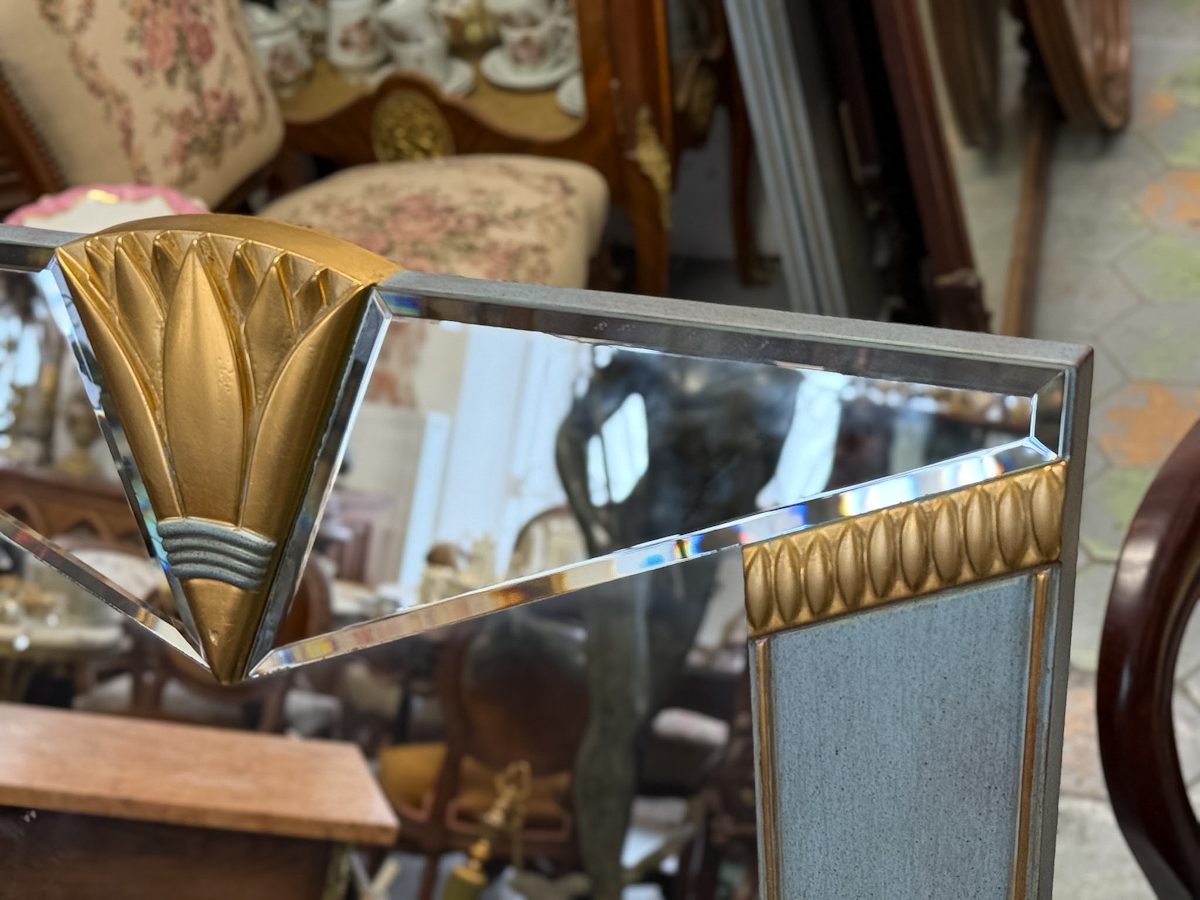
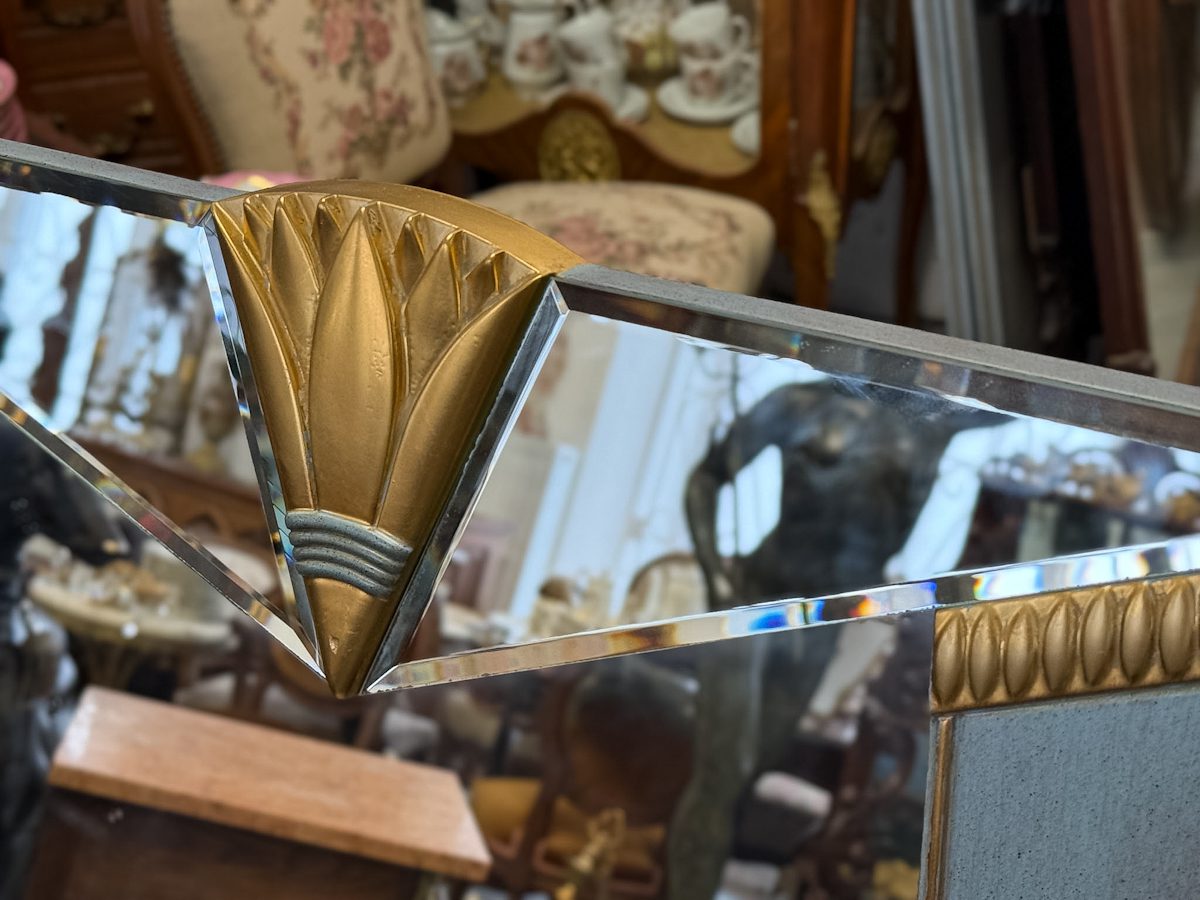
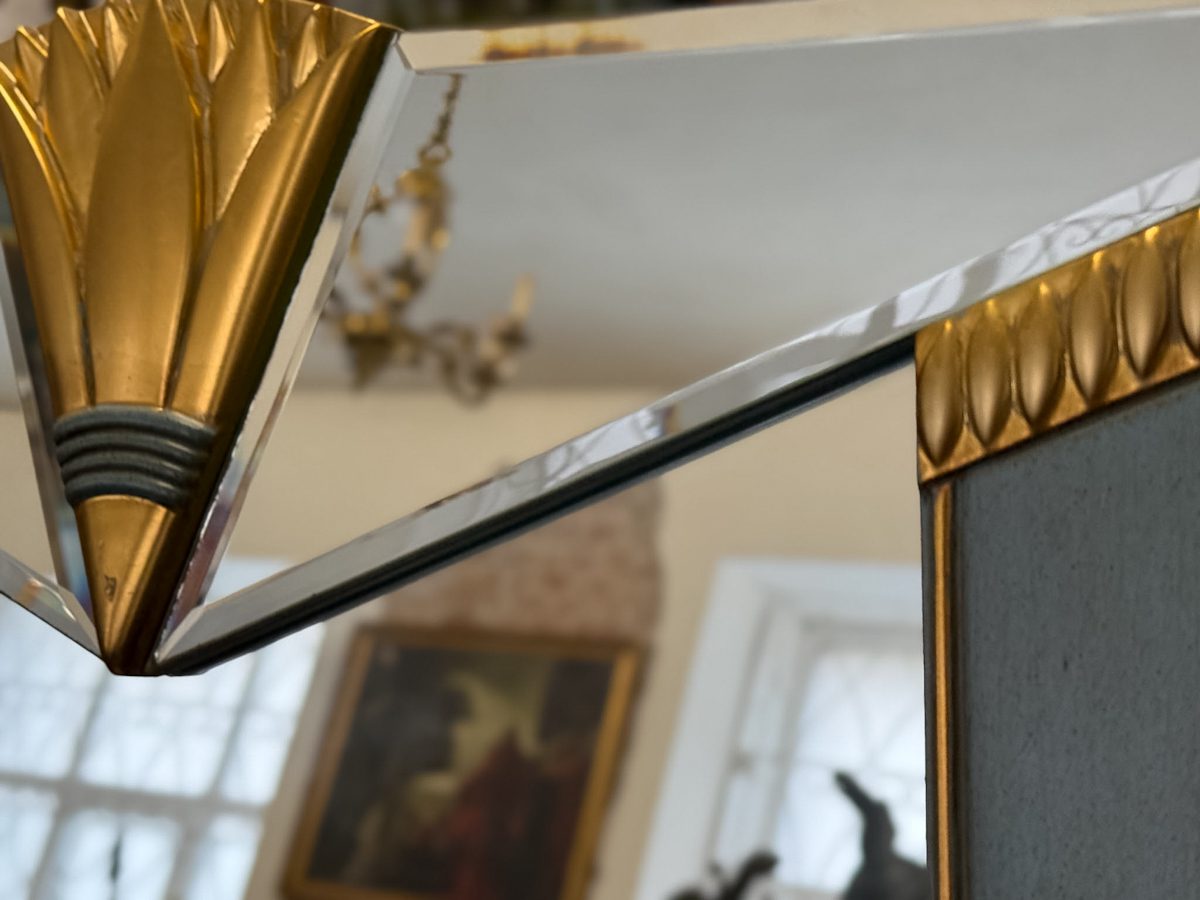
Augšdaļas centrālais ornaments ir klasiskais Art Deco éventail — zeltīts vēdekļveida lotosa vai palmu lapu motīvs ar pakāpienveida cannelures bāzi, kas atgādina Ēģiptes tempļu kolonnas un ir viens no raksturīgākajiem Art Deco ikonogrāfiskajiem elementiem. Fakētās spoguļstikla paneļu diagonālā kompozīcija augšā veido dinamisku “V” vai spārnu formu — tīri Art Deco ģeometrisks risinājums. Sānu stabi apšūti ar gris perle — pērļpelēki zilā tonī krāsotu virsmu, kas izcelta ar zeltītām oves jeb olveida frīzes joslām augšā un apakšā — tieši tā, kā to darīja Parīzes labākie dekoratori starpkaru periodā.
―――――――――――――――――――――
⚜️ RAŽOTĀJS UN MANUFAKTŪRAS ZĪMOGS
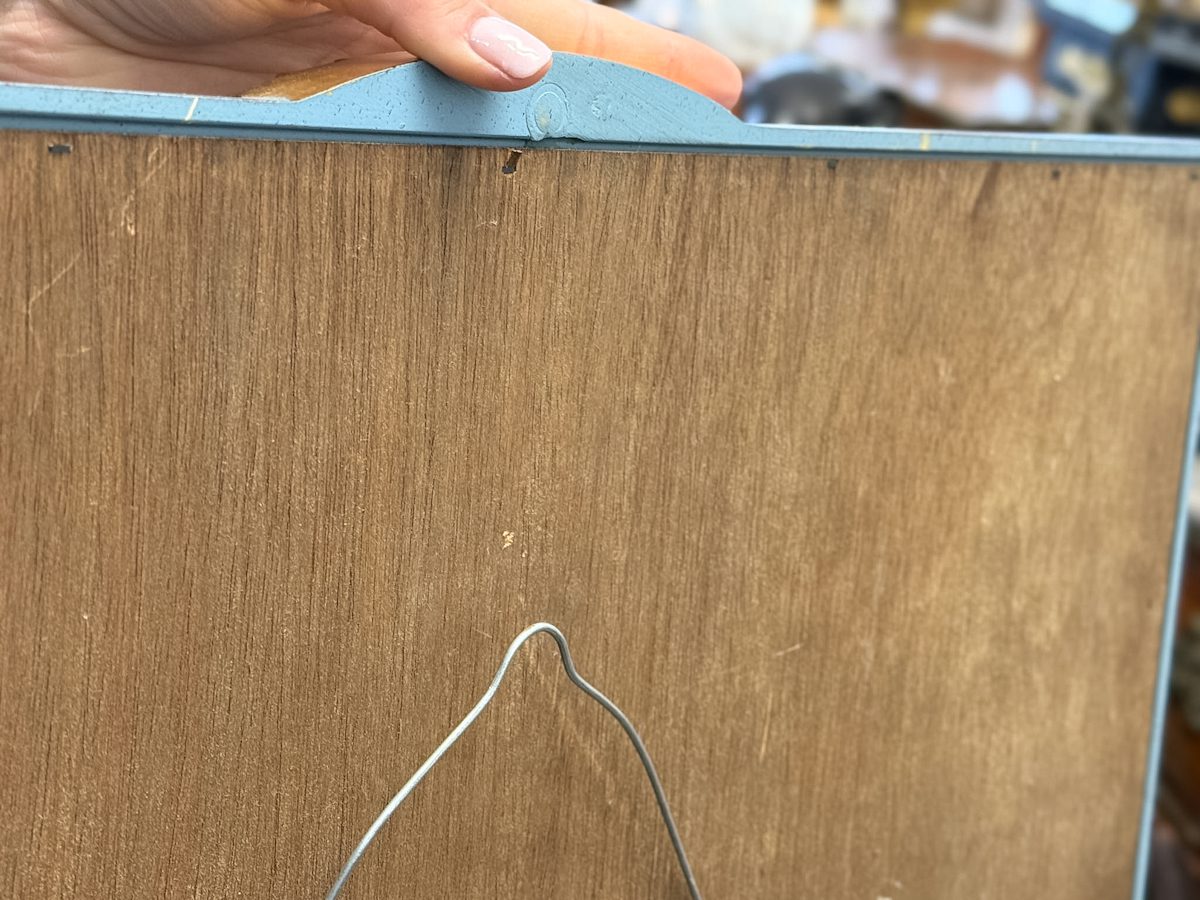
Rāmja aizmugurē nav redzams specifisks manufaktūras zīmogs. Izgatavošanas kvalitāte, materiālu kombinācija un dizaina izsmalcinātība norāda uz Francijas vai Beļģijas izcilāko dekoratīvo ražotāju loku — darbnīcām, kas piegādāja interjera akcentus haute bourgeoisie un dizaina viesnīcām visā Eiropā. Art Deco periodā Parīzes dekoratoru un iekārtotāju nams — maison de décoration — bija prestižu spoguļu galvenais pasūtītājs un pircējs, un daudzi ražotāji apzināti nemarķēja produkciju, atstājot visu slavu dizainera vai veikala vārdam.
―――――――――――――――――――――
💎 RETUMS UN NOZĪME
Art Deco spoguļi ar šādu pilnīgu un intaktu dekoratīvo programmu — saglabāts fazētais stikls, oriģinālā gris perle krāsa, zeltīts éventail ornaments un oves frīze — šodien antikvāru tirgū ir ārkārtīgi pieprasīti. Lielākā daļa Art Deco spoguļu, kas nonāk tirgū, ir vai nu restaurēti, vai ar daļēji zaudētu zeltījumu, vai nomainītu stiklu. Šis eksemplārs izceļas ar savu intaktumu un kolorīta unikalitāti — pelēkzilā un zeltainā kombinācija ir viena no izsmalcinātākajām Art Deco paletēm, ko izvēlējās augstākās klases interjeri.
―――――――――――――――――――――
🕯️ PIELIETOJUMS INTERJERĀ, DIZAINĀ UN FOTOGRĀFIJĀ
Šis spogulis ir ideāls Art Deco, modernisma vai eklektiska interjera elements. Gaiši zilā un zeltainā krāsu kombinācija to padara universālu — tas iederēsies gan klasiski elegantā guļamistabā vai hallē, gan mūsdienīgā interjerā ar mid-century modern vai Hollywood Regency estētiku. Interjera stilisti un fotogrāfi meklē tieši šādus akcentus, jo fazētā stikla diagonāļu spēle rada izcilu gaismas efektu — varavīksnes atspīdumi uz sienām veidojas no jebkura gaismas avota. Viesnīcu un restorānu dizaineriem šis ir ideāls sienas akcents, kas nekavējoties nosaka telpas laikmetu un toni.
―――――――――――――――――――――
🎁 DĀVANA UN PERSONALIZĀCIJA
Šis spogulis ir izsmalcināta un neparasta dāvana cilvēkam ar dizaina izjūtu — interjera mākslinieka, arhitekta, modes pasaules pārstāvja vai kolekcionāra mājoklim. Tā izmērs un dekoratīvā programmā apvienotie elementi — vēdeklis, zelts, pelēkzilā elegance — padara to par piemērotu kāzu vai jubilejas dāvanu vai jaunās dzīvesvietas dāvanu augstākajā klasē.
―――――――――――――――――――――
🔍 STĀVOKLIS
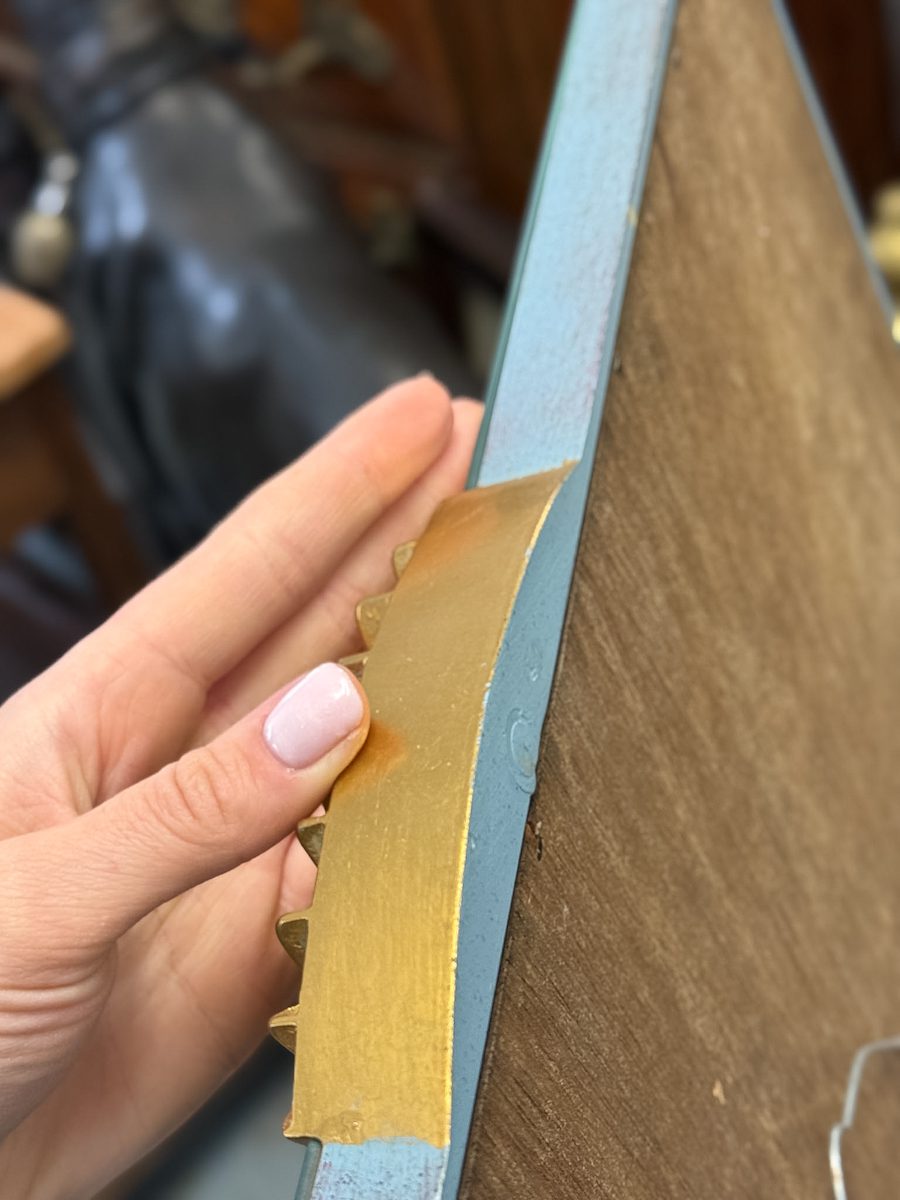
Spogulis labā vispārējā stāvoklī. Fazētā stikla paneļi saglabāti, diagonālā kompozīcija intakta. Zeltītais éventail ornaments ar nelielām patinas un nolietojuma pēdām, kas atbilst vecumam. Gris perle rāmja virsma ar nelielu krāsas nodilumu sānu stabu malās — redzams aizmugures fotoattēlā. Zeltītās oves frīzes joslas saglabājušas lielāko daļu zeltījuma. Nav lūzumu vai strukturālu bojājumu.
Lietas stāvoklis pilnībā atspoguļots fotogrāfijās.
―――――――――――――――――――――
🇬🇧 DESCRIPTION IN ENGLISH
📐 DIMENSIONS Width 62 cm × height 89 cm.
―――――――――――――――――――――
Art Deco Mirror with Bevelled Glass, Gilt Fan Ornament and Pale Blue Frame — Art Deco, Western Europe, approximately 1920–1940.
―――――――――――――――――――――
🏛️ PERIOD, ARTISTIC STYLE, ERA
This mirror is a distinguished example of the Art Deco style — the movement that emerged after the First World War as a celebration of beauty, modernity, and confident elegance. Art Deco (named after the landmark 1925 Paris exhibition Exposition Internationale des Arts Décoratifs et Industriels Modernes) united geometric precision with decorative richness, and this mirror embodies that union with exceptional clarity.
The central upper ornament is the quintessential Art Deco éventail — a gilded fan-form lotus or palm-leaf motif rising from a stepped cannelures base, recalling the columns of Egyptian temples and one of the most iconic motifs of the Art Deco visual vocabulary. The angled bevelled mirror panels above form a dynamic “V” or wing composition — a purely Art Deco geometric solution. The lateral stiles are finished in gris perle — a soft pearl grey-blue tone — framed by gilded oves (egg-and-dart) frieze bands at top and bottom, precisely as the finest Parisian decorators of the interwar period executed their most refined pieces.
―――――――――――――――――――――
⚜️ MAKER AND MARKS
No specific maker’s stamp is visible on the reverse. The quality of construction, the combination of materials, and the refinement of the design point to the circle of leading French or Belgian decorative workshops — ateliers that supplied interior accents to the haute bourgeoisie and luxury hotels across Europe. During the Art Deco period, the Parisian maison de décoration was the principal commissioner and purchaser of prestige mirrors, and many makers deliberately left their work unmarked, allowing the reputation of the designer or retailer to carry the prestige.
―――――――――――――――――――――
💎 RARITY AND SIGNIFICANCE
Art Deco mirrors with such a complete and intact decorative programme — preserved bevelled glass panels, original gris perle finish, gilded éventail ornament, and oves frieze — are extremely sought after on the antique market today. The majority of Art Deco mirrors that come to market have been partially restored, re-gilded, or re-glazed. This example stands out for its intactness and the distinctiveness of its colouring — the grey-blue and gold palette is among the most refined Art Deco combinations, favoured by the highest-tier interiors of the period.
―――――――――――――――――――――
🕯️ USE IN INTERIORS, DESIGN AND PHOTOGRAPHY
This mirror is an ideal accent for Art Deco, Modernist, or eclectic interiors. The pale blue and gold palette makes it remarkably versatile — it will harmonise equally in a classically elegant bedroom or entrance hall, or in a contemporary setting with mid-century modern or Hollywood Regency influences. Interior stylists and photographers actively seek pieces of exactly this kind, as the diagonal bevelled glass panels generate spectacular light effects — prismatic rainbow reflections that animate any surface they fall upon. For hotel and restaurant designers, this is a ready-made focal point that instantly establishes the era and atmosphere of a room.
―――――――――――――――――――――
🎁 AS A GIFT
This mirror is a refined and distinctive gift for someone with a developed sense of design — for the home of an interior designer, architect, fashion professional, or collector. Its scale and the elegance of its decorative programme — fan motif, gold, pearl-blue — make it a fitting wedding gift, anniversary gift, or housewarming present at the highest level.
―――――――――――――――――――――
🔍 CONDITION
Mirror in good overall condition. Bevelled glass panels intact, diagonal composition undamaged. The gilded éventail ornament shows minor patina and age-related wear consistent with its period. The gris perle frame surface shows slight paint wear along the edges of the side stiles, visible in the reverse photograph. The gilded oves frieze bands retain the majority of their gilding. No fractures or structural damage detected.
Condition is fully represented in the photographs.
―――――――――――――――――――――