
Liela izmēra, ļoti smaga skulptūra/figūra no baznīcas, ar mākslinieka parakstu Madonna ar Bērnu Jēzu un Vissvētāko Sirdi — Neoģotika / Katoliskā atdzimšana, Ljēža (Beļģija), ap 1870.–1910. · Autors: Léon Beaujean, Liège(6494)
Liela izmēra, ļoti smaga skulptūra/figūra no baznīcas, ar mākslinieka parakstu Madonna ar Bērnu Jēzu un Vissvētāko Sirdi — Neoģotika / Katoliskā atdzimšana, Ljēža (Beļģija), ap 1870.–1910. · Autors: Léon Beaujean, Liège(6494)
€1,350.00
📐 IZMĒRI
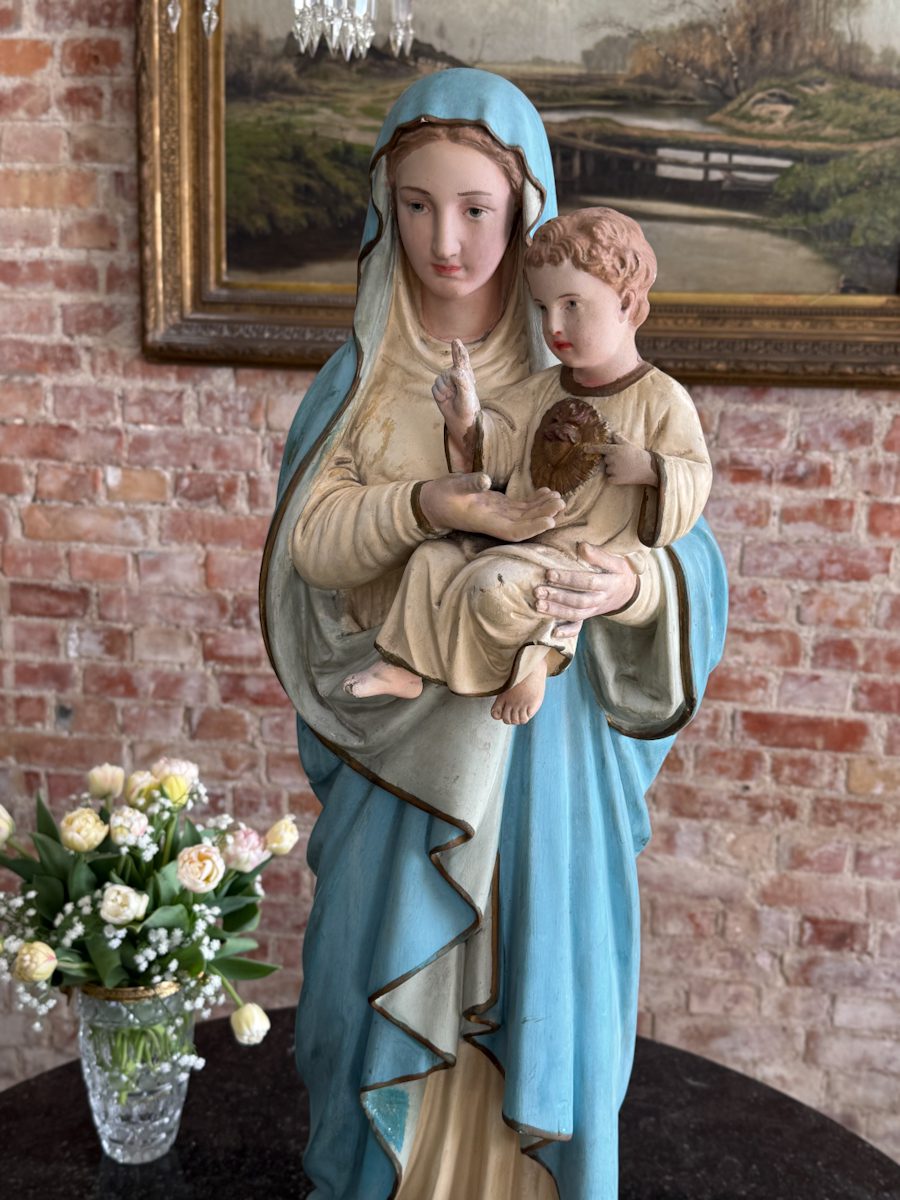
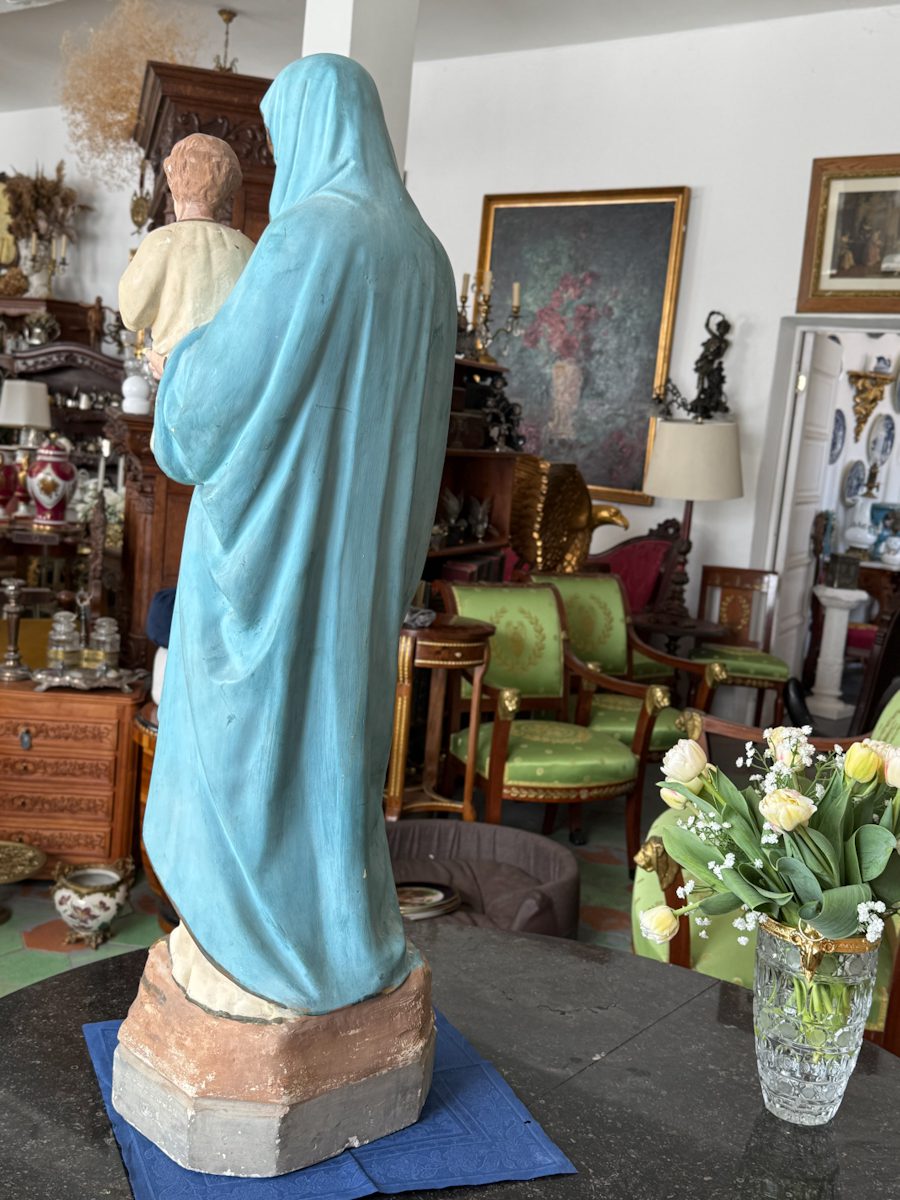
Augstums 101 cm × platums 29 cm. Svars — ļoti ievērojams, masīvs mākslas ģipsis (plâtre d’art) ar iekšējo metāla armējumu. Baznīcas altāra izmēra figūra.
Madonna ar Bērnu Jēzu un Vissvētāko Sirdi — Neogotika / Katoliskā atdzimšana, Ljēža (Beļģija), ap 1870.–1910. · Autors: Léon Beaujean, Liège
🏛️ IZGATAVOŠANAS PERIODS, MĀKSLAS STILS, LAIKMETS
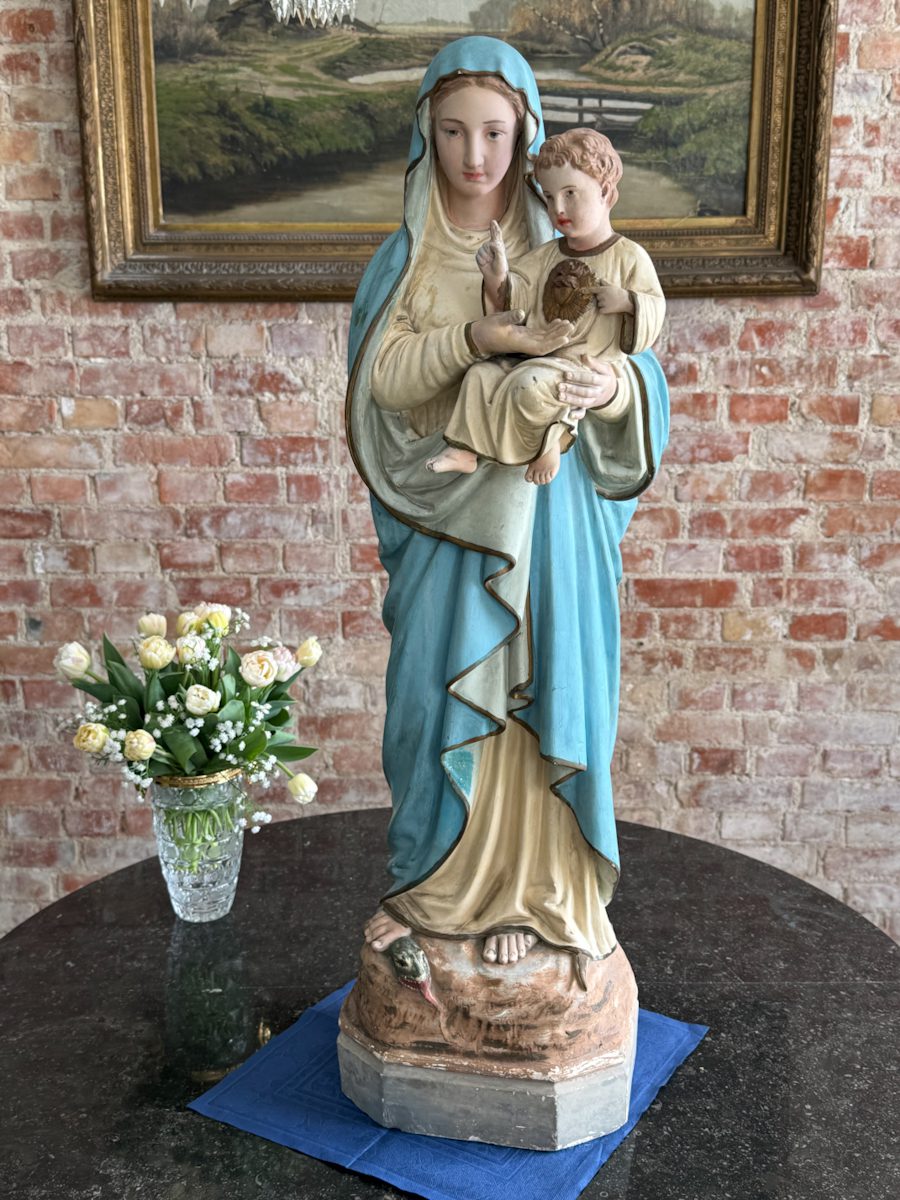
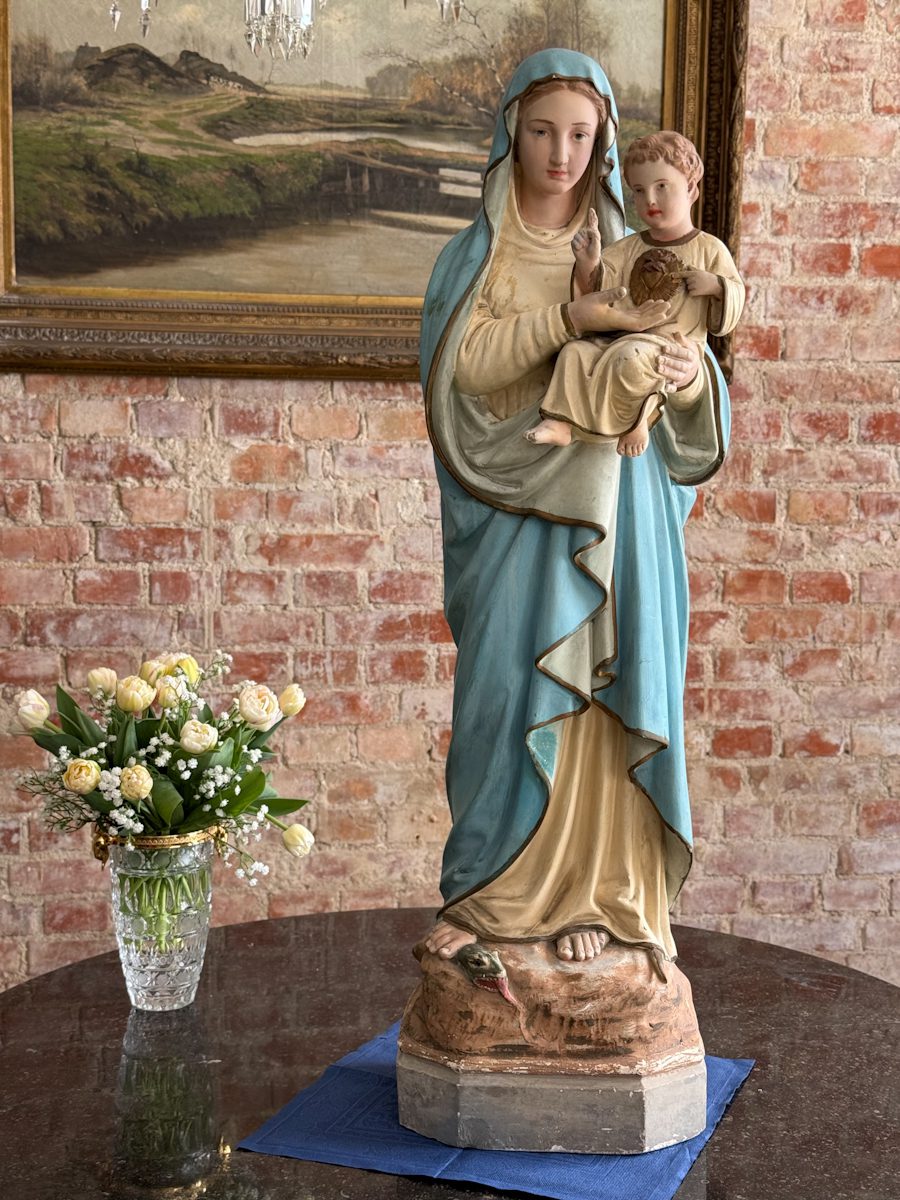
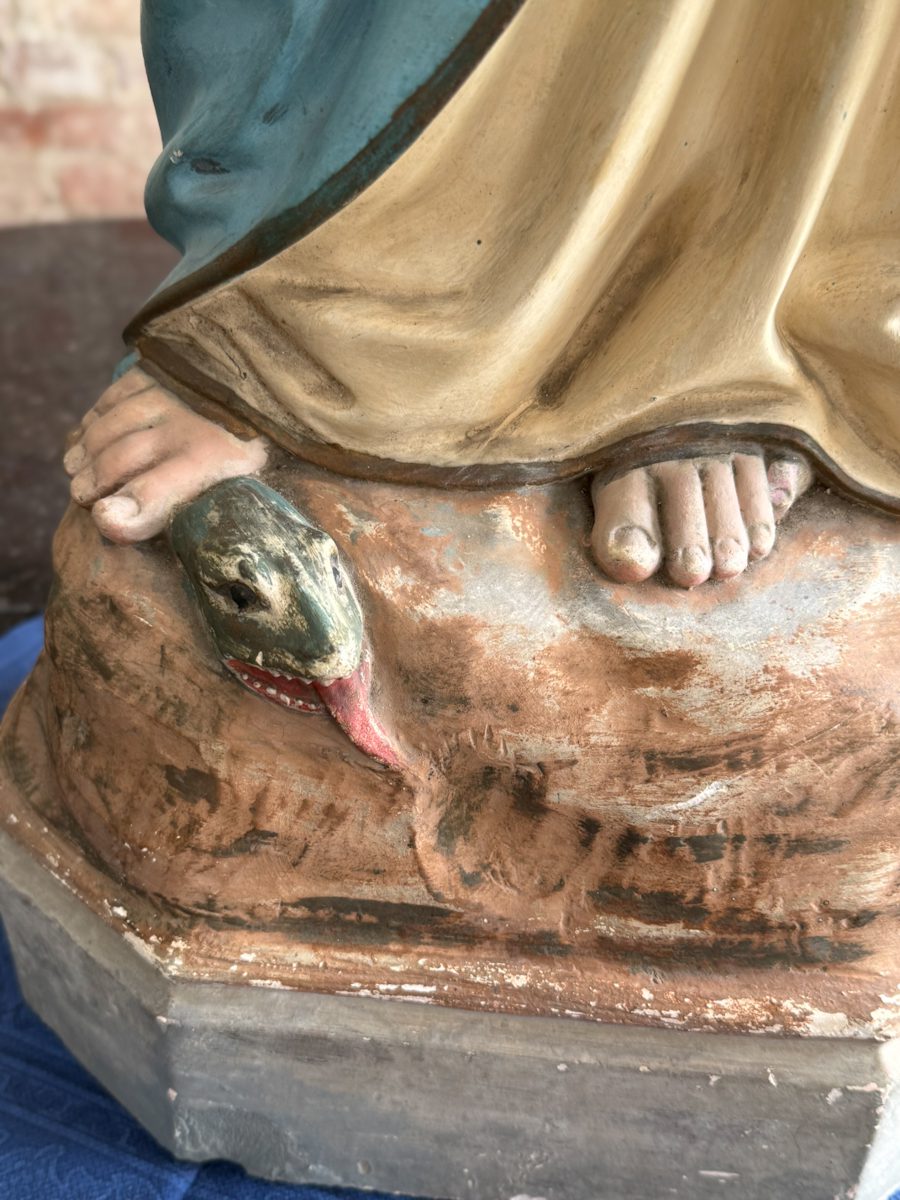
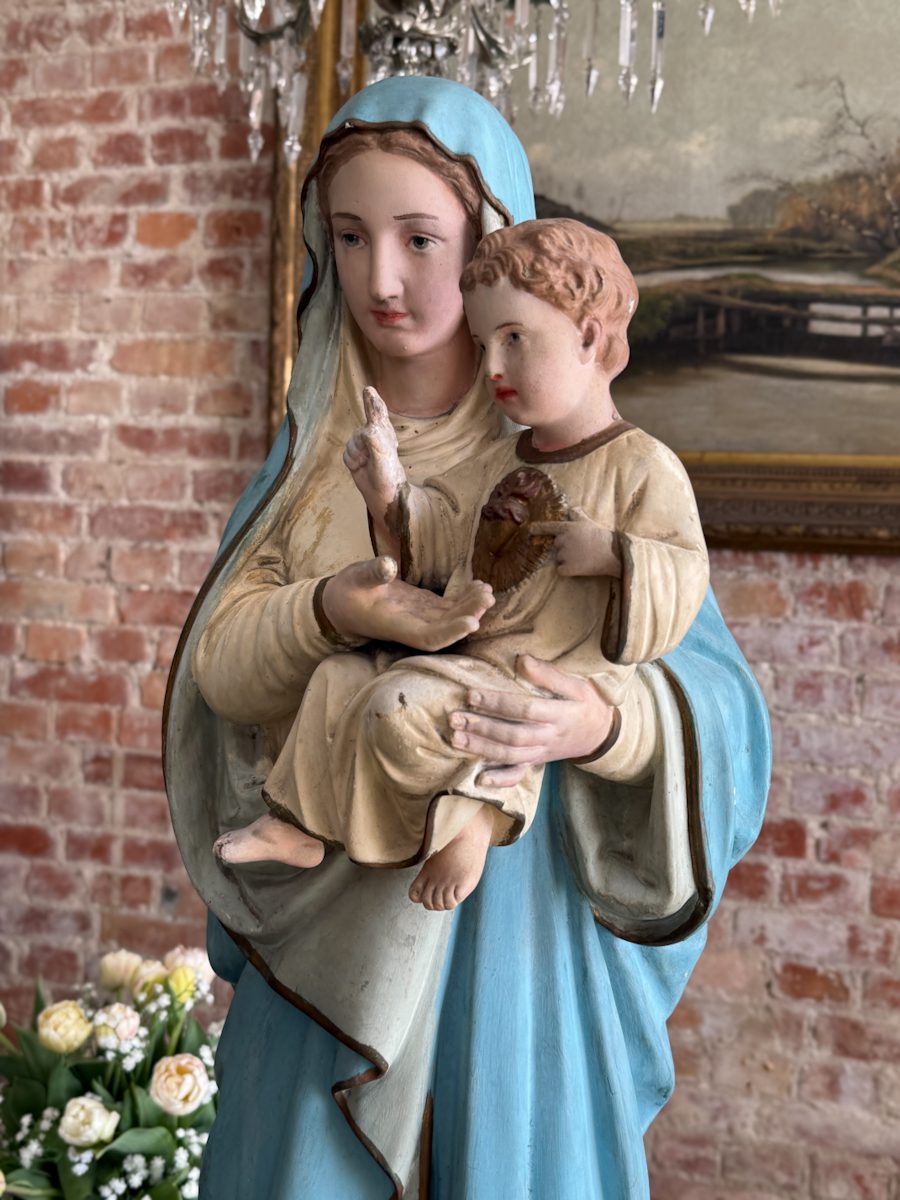
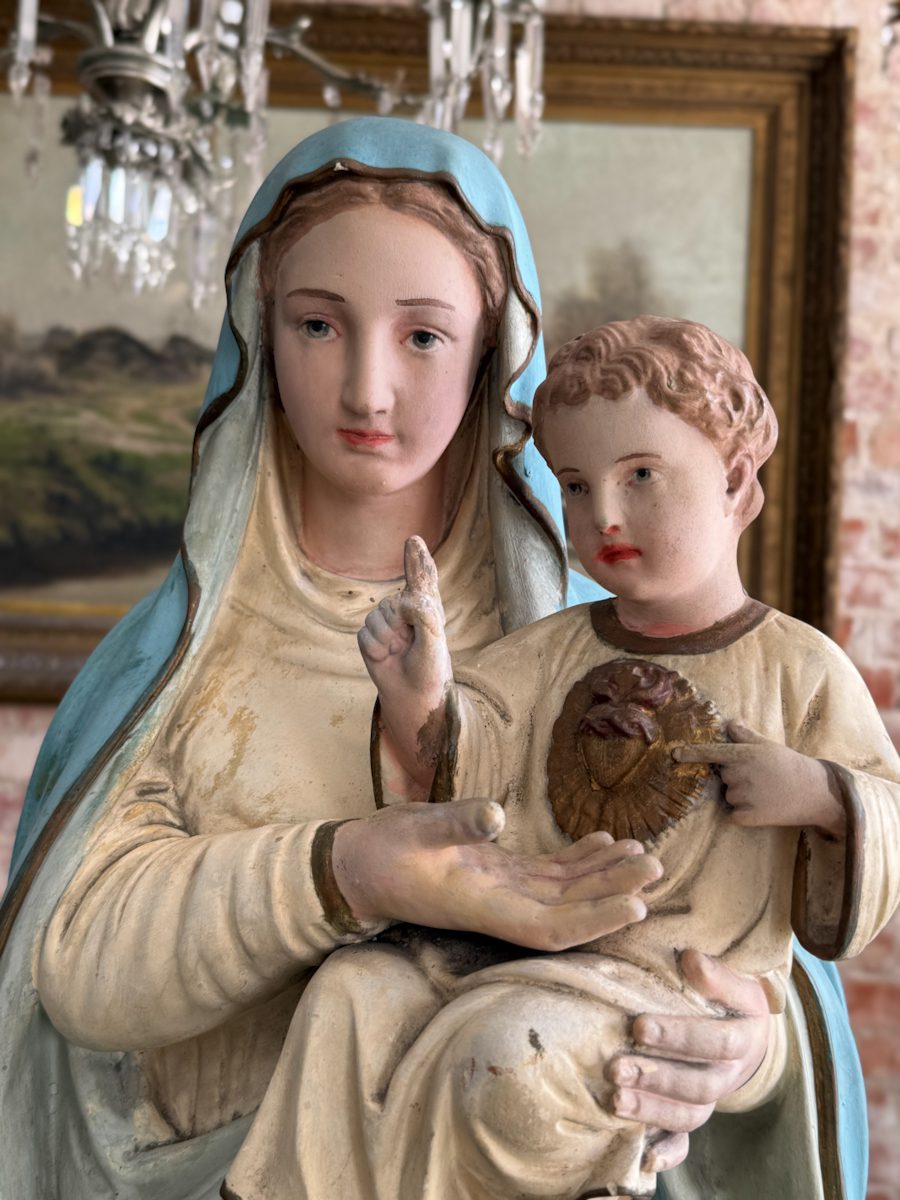
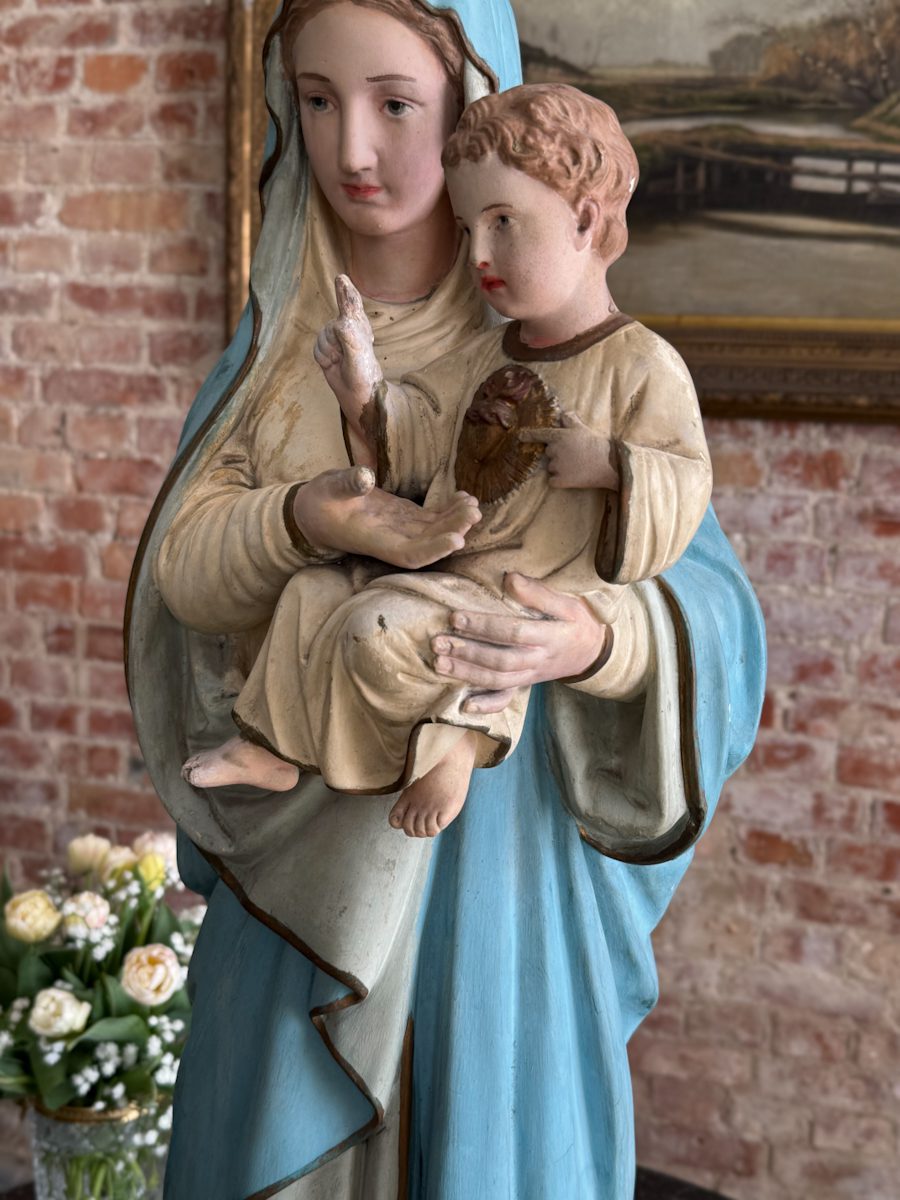
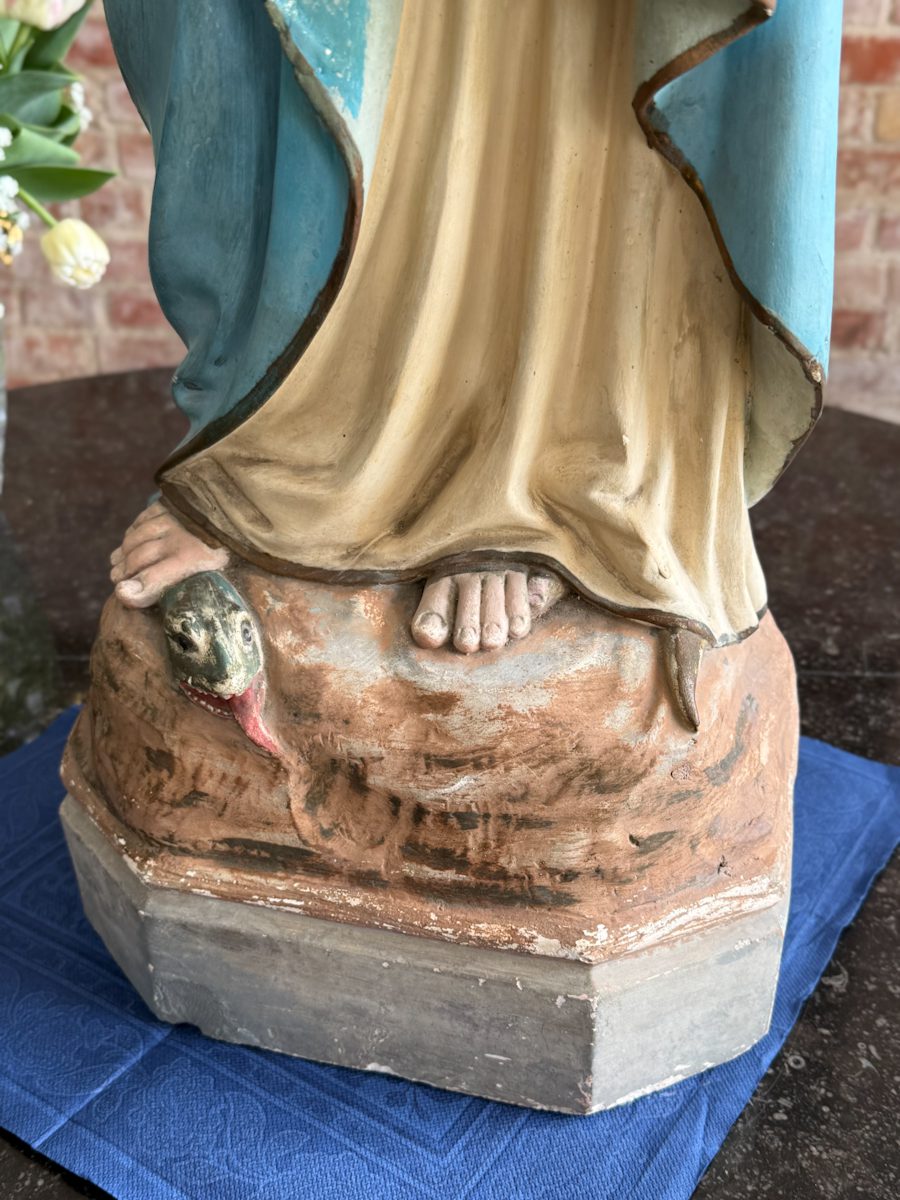
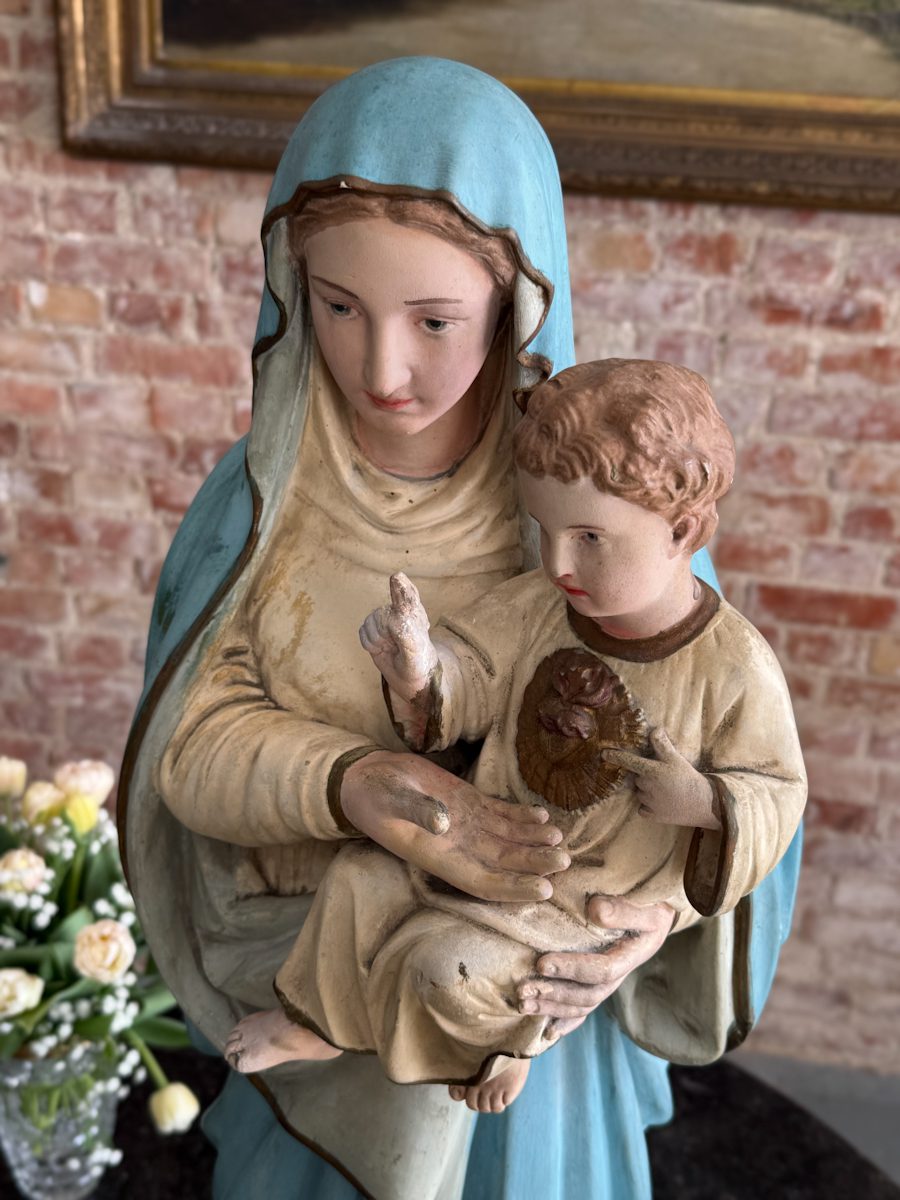
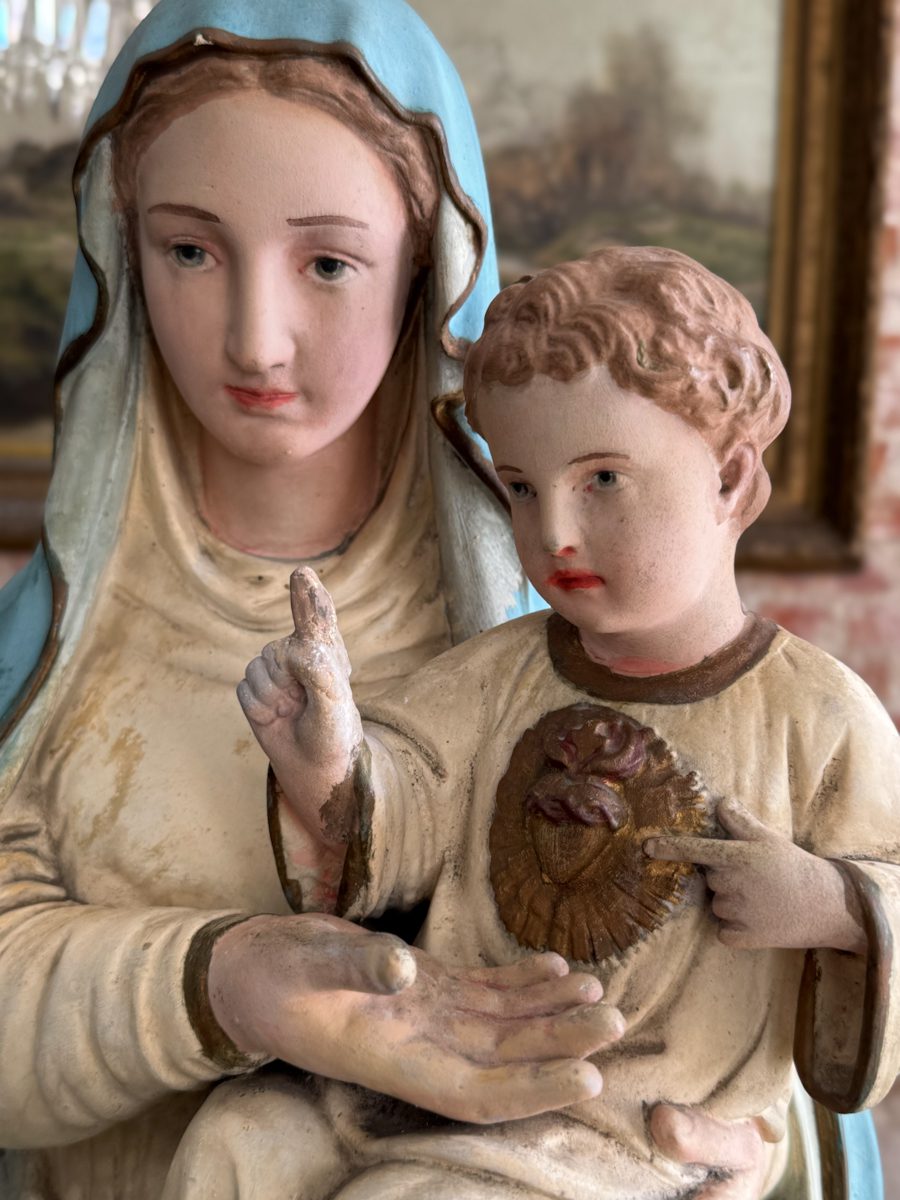
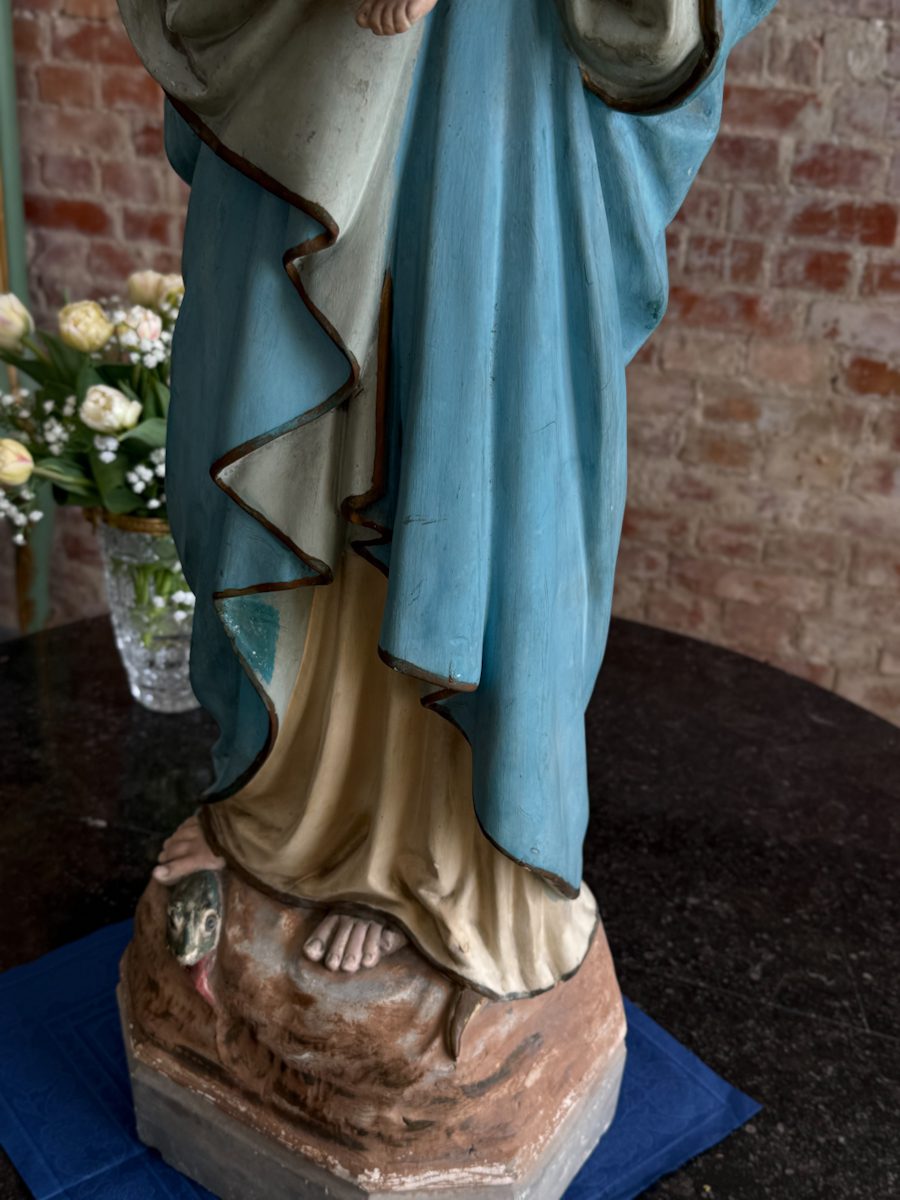
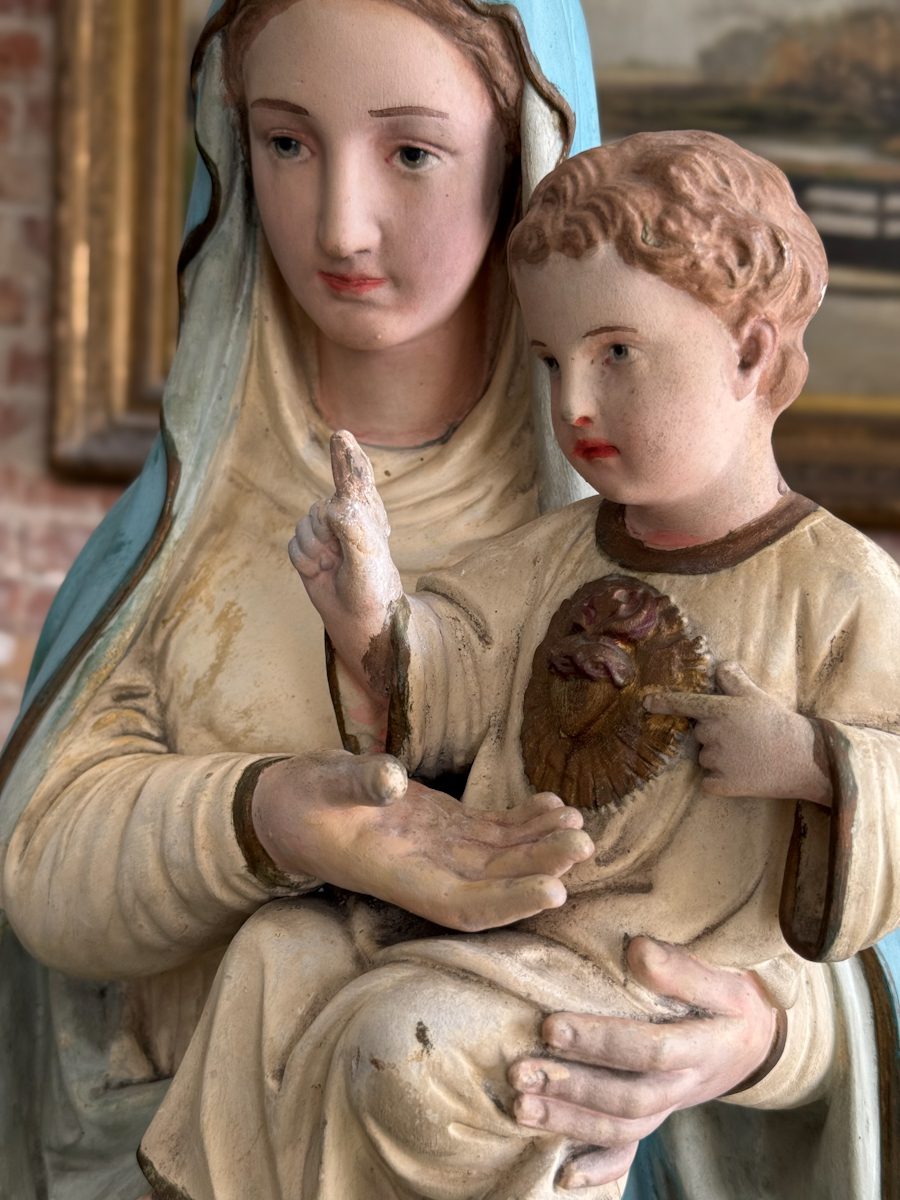
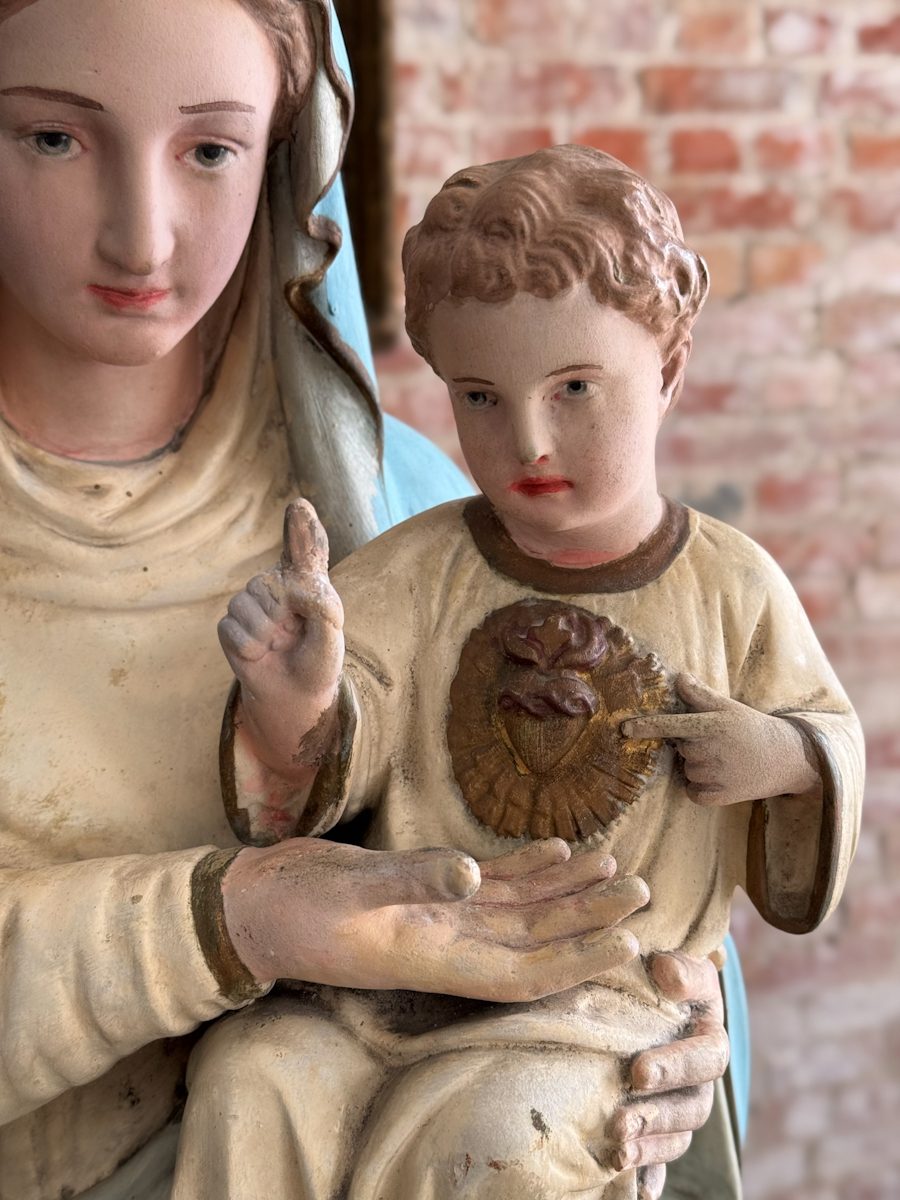
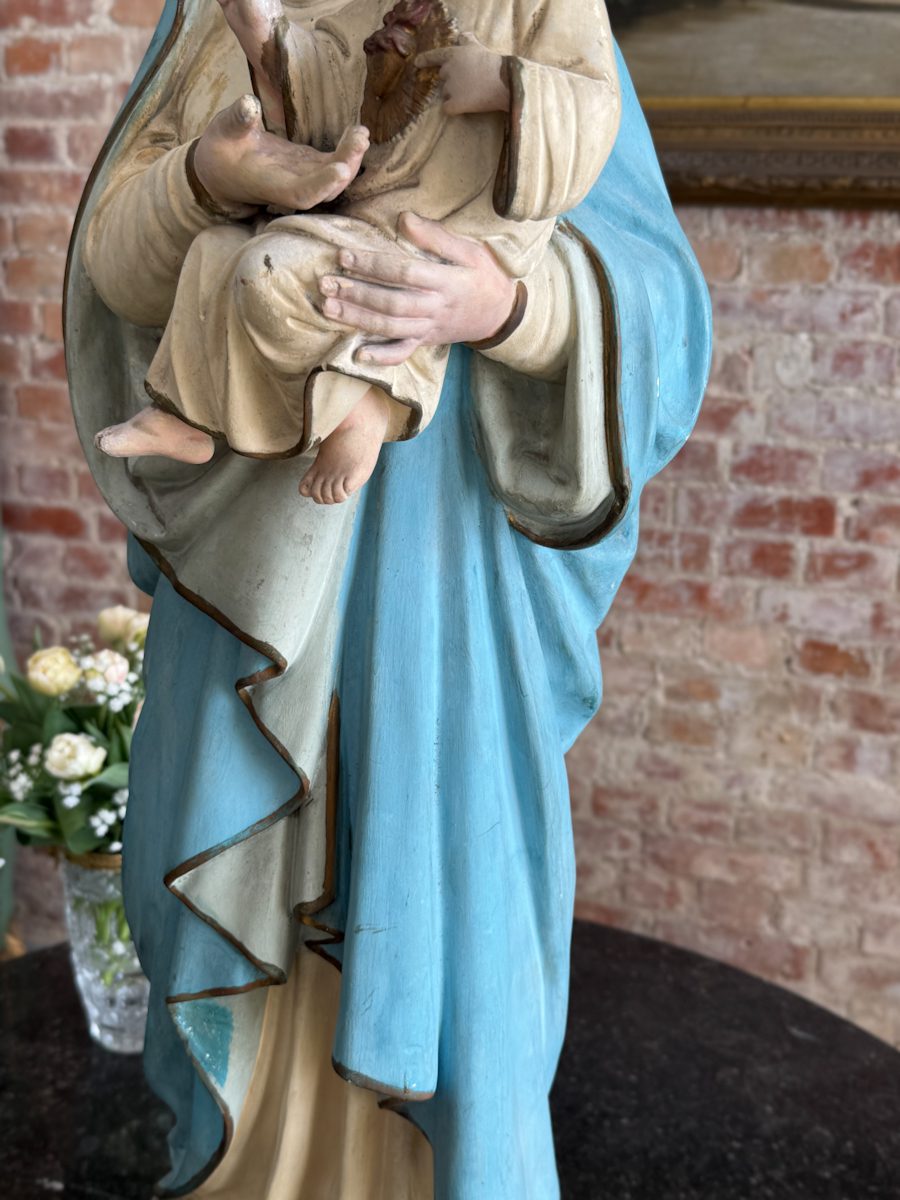
Šī figūra pieder tam īpašajam 19. gadsimta otrās puses periodam Eiropas katoļu mākslā, ko vēsturnieki dēvē par restauration catholique — katoļticīgās atdzimšanas laikmetu, kurā pēc Francijas revolūcijas postošajiem gadiem un sekularizācijas viļņa Eiropa no jauna piepildīja savas baznīcas ar sakrāliem tēliem. Neoģotiskā kustība šajā periodā nebija vairs tikai arhitektūras estētika — tā bija garīgas programmas izpausme, kas centās atgriezties pie viduslaiku baznīcas tēlniecības tīrības, vienkāršības un dievbijīgās cieņas. Madonnai raksturīgais sejas tips — augsti apliekti vaigi, platas acis ar kluso, neatraujamo skatienu, smalki iezīmētas uzacis bez ekspresijai — ir tieša Neogotiskās ikonogrāfijas pazīme. Tomēr tērpa krokojuma naturālisms un Bērna sejas siltā reālistiskā modelēšana liecina, ka Léon Beaujean nebija akls viduslaiku atdarinātājs — viņš bija akadēmiski izglītots tēlnieks, kurš apvienoja viduslaiku garīgo stāju ar 19. gadsimta akadēmiskā reālisma amatniecisko precizitāti. Figūra attēlo klasisko Immaculata — Bezvainīgās Ieņemšanas — ikonogrāfiju: Marija zilā apmetnī tur mazo Jēzu, kurš ar pirkstu rāda uz Savu Vissvētāko Sirdi (Sacré-Cœur) — sirdi ar ērkšķu vainagu, liesmām un gaismas stariem, kas ir 19. gadsimta katoļticīgās devocionālās mākslas ikoniskākais simbols. Zem Marijas kājām — čūska ar atvērtu muti, kura tiek mīta — tas ir senākais Jaunavas Marijas ikonogrāfiskais motīvs, kas atsaucas uz Radīšanas grāmatas 3:15 (“Es likšu ienaidu starp tevi un sievieti”) un simbolizē uzvaru pār grēku un ļauno.
―――――――――――――――――――――
⚜️ RAŽOTĀJS UN AUTORS
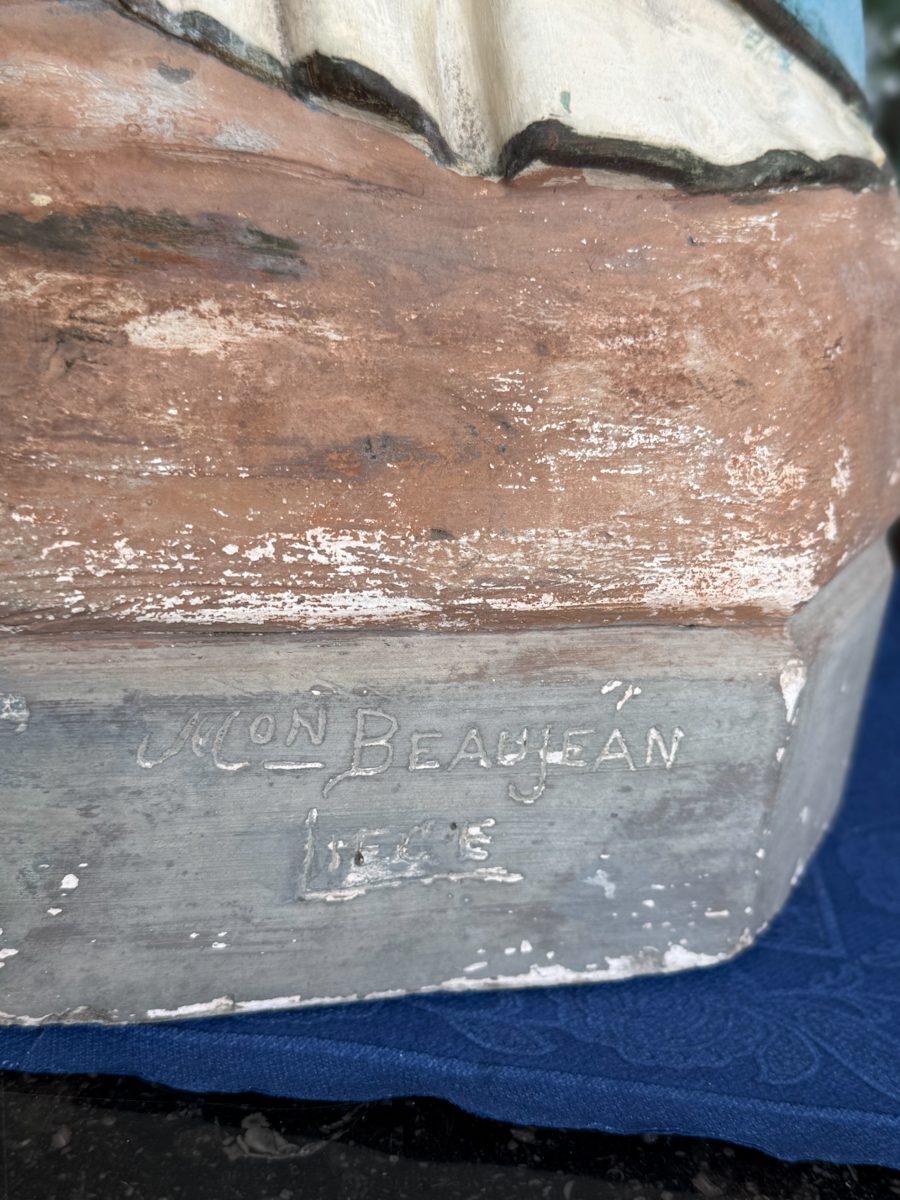
Uz pamatnes nolasāms paraksts: Léon Beaujean — Liège (uz skulptūrām bieži rakstīts ar rokraksta burtu “M” pirms uzvārda — iespējams, Monsieur Beaujean, kā bija pieņemts 19. gadsimta Beļģijā apzīmēt cienījamu amata meistaru). Léon Beaujean bija Ljēžas sakrālās mākslas meistars un akadēmiski izglītots tēlnieks, kurš vadīja savu specializētu darbnīcu — Atelier de sculpture religieuse — reliģisko tēlu darbnīcu, kas apkalpoja baznīcas, klosterus un privātās kapelas visā Valonijas reģionā un tālāk. Ljēža (Liège, vāciski Lüttich) 19. gadsimtā bija ne tikai Beļģijas lielākā rūpniecības pilsēta un senas universitātes pilsēta, bet arī nozīmīgs reliģiozās tēlniecības centrs — pilsēta ar dziļu katoļticīgo identitāti, kurā sakrālā māksla bija gan garīgās dzīves izpausme, gan prestižs amatniecisks eksporta produkts. Beaujean darbnīcas produkcija — liela izmēra ģipša figūras ar augstvērtīgu polihromās apgleznošanas apdari — atbilda tieši tam, ko 19. gadsimta katoļu baznīcu celtniecības un restaurācijas bums (boom de construction religieuse) pieprasīja visā Beļģijā, Francijā, Vācijas Reinzemē un eksportā uz Latīņameriku. Izgatavošanas materiāls — augstvērtīgais mākslas ģipsis (plâtre d’art) ar iekšējo metāla armējumu — bija 19. gadsimta otrās puses standarts augstas klases sakrālās tēlniecības darbnīcās, kas nodrošināja gan smalku detaļu precizitāti, gan figūras ilgizturību altāra ekspozīcijā gadu desmitiem.
―――――――――――――――――――――
💎 RETUMS UN NOZĪME
Parakstītas, identificētas autorības baznīcas altāra figūras ar pilnīgu un ikonogrāfiski bagātu programmu — Immaculata ar Vissvētāko Sirdi un čūsku — ir ievērojami retāks atradums nekā anonīmas sērijveida produkcijas figūras. Šī darba augstums (101 cm) ir altāra, nevis mājas dievbijības (piété privée) kategorija — figūra gandrīz noteikti stāvāja kādā baznīcā vai klosterī un ir saklausījusi simtiem tūkstošu lūgšanu, piedaloties svētceļniecības vai draudzes dzīvē. Svētās Sirds devocionālās ikonogrāfijas kulminācija sakrita tieši ar šī darba varbūtējo radīšanas laiku — pēc 1875. gada, kad Parīzē tika sākta Sacré-Cœur bazilikas celtniecība un Vissvētākās Sirds kults ieguva Vatikāna augstāko svētību, radot milzīgu pieprasījumu pēc šī ikonogrāfiskā tipa figūrām visā katoļu pasaulē. Léon Beaujean paraksts uz šīs figūras ir ne tikai autorības dokuments — tas ir piederības apliecinājums konkrētai Eiropas sakrālās mākslas tradīcijai, kas šodien arvien vairāk tiek novērtēta kolekcionāru un muzeju aprindās.
―――――――――――――――――――――
🕯️ PIELIETOJUMS INTERJERĀ, DIZAINĀ UN FOTOGRĀFIJĀ
Šī figūra ir telpisks paziņojums — tā nevar atrasties stūrī. Tās augstums (101 cm) prasa atbilstošu pjedestālu, nišu vai konsoli — ideāli uz mūra, akmens vai tumšā koka pamatnes, kur zilā apmetņa debesszilajai gammai ir ko atsaukties. Mūsdienu interjeros tā funkcionē kā apzināts kontrasts — gadsimtu piesātināts garīgums modernā vai minimālistiskā telpā rada dziļu, neatrisināmu dialogu. Sacred art collectors un reliģiozās mākslas entuziastu aprindās šāda figūra ir meklēta. Fotogrāfiem tā ir sapnis — viņas skatiens, kas ir vienlaikus klātesošs un absolūti citās sfērās, rada kadros noķeramu klusumu, ko mākslīgi radīt nav iespējams.
―――――――――――――――――――――
🔍 STĀVOKLIS
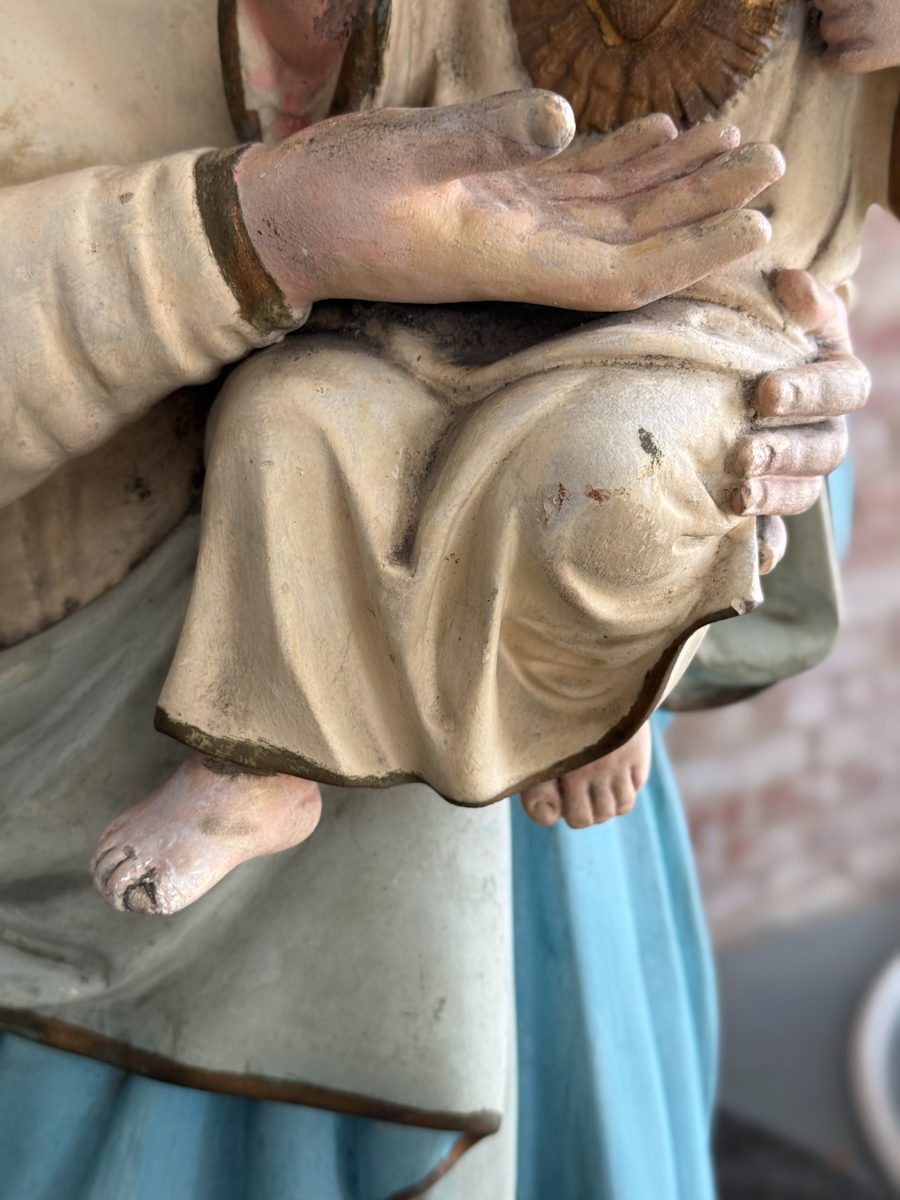
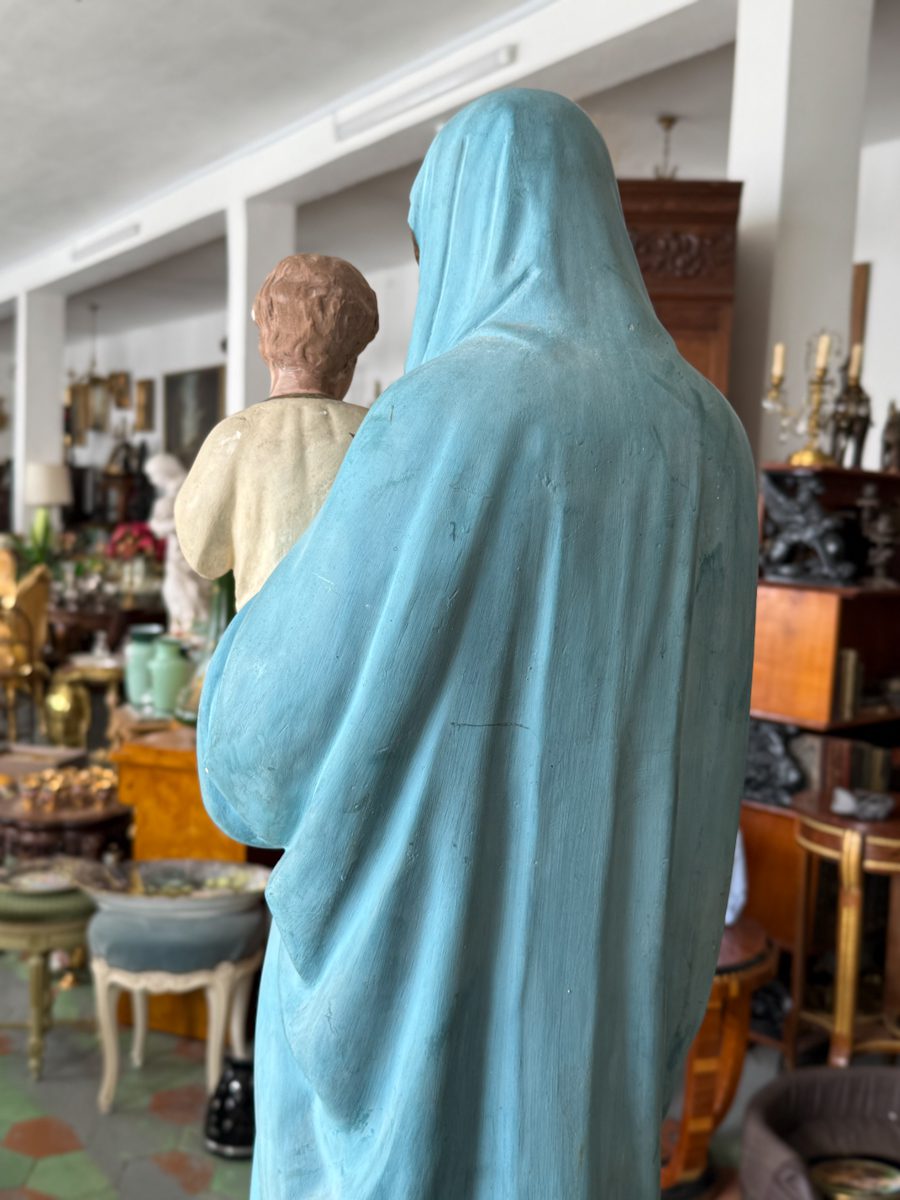
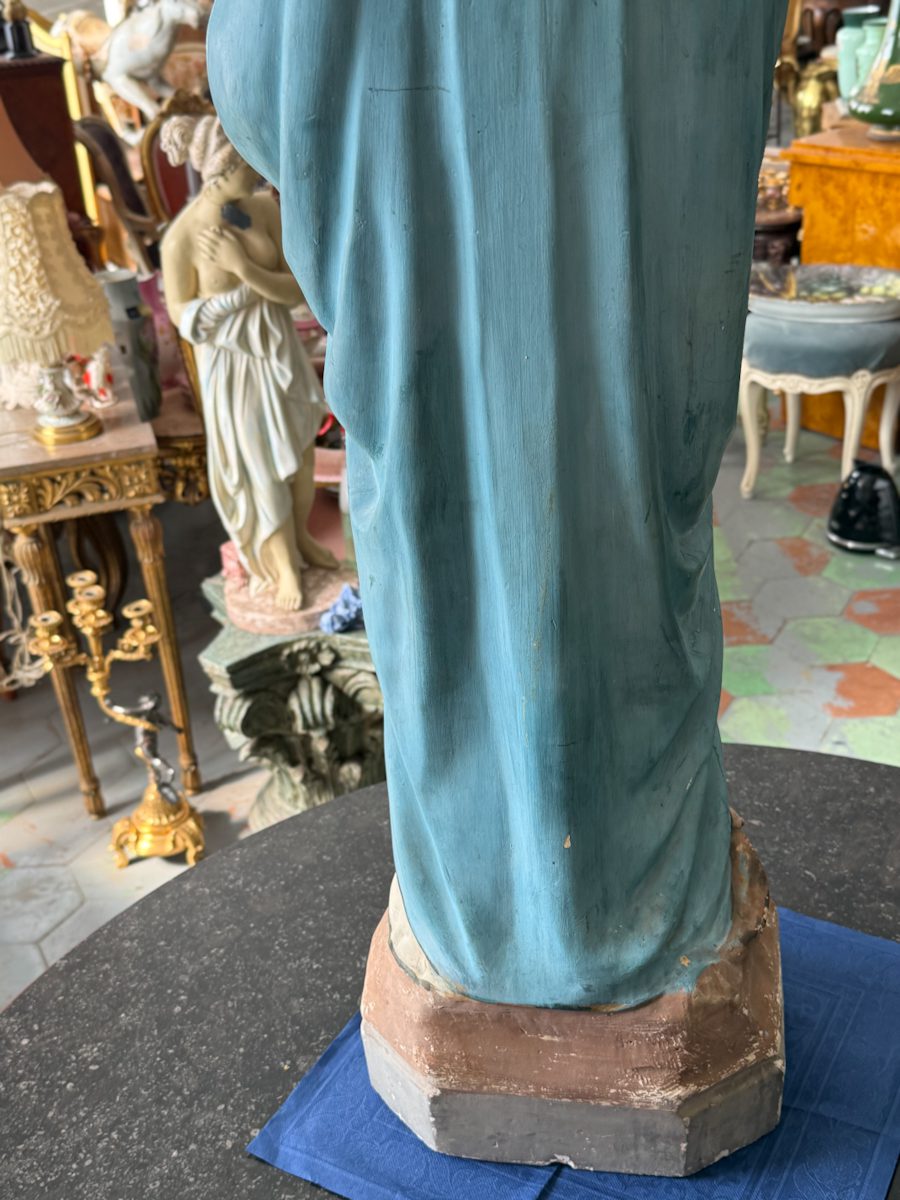
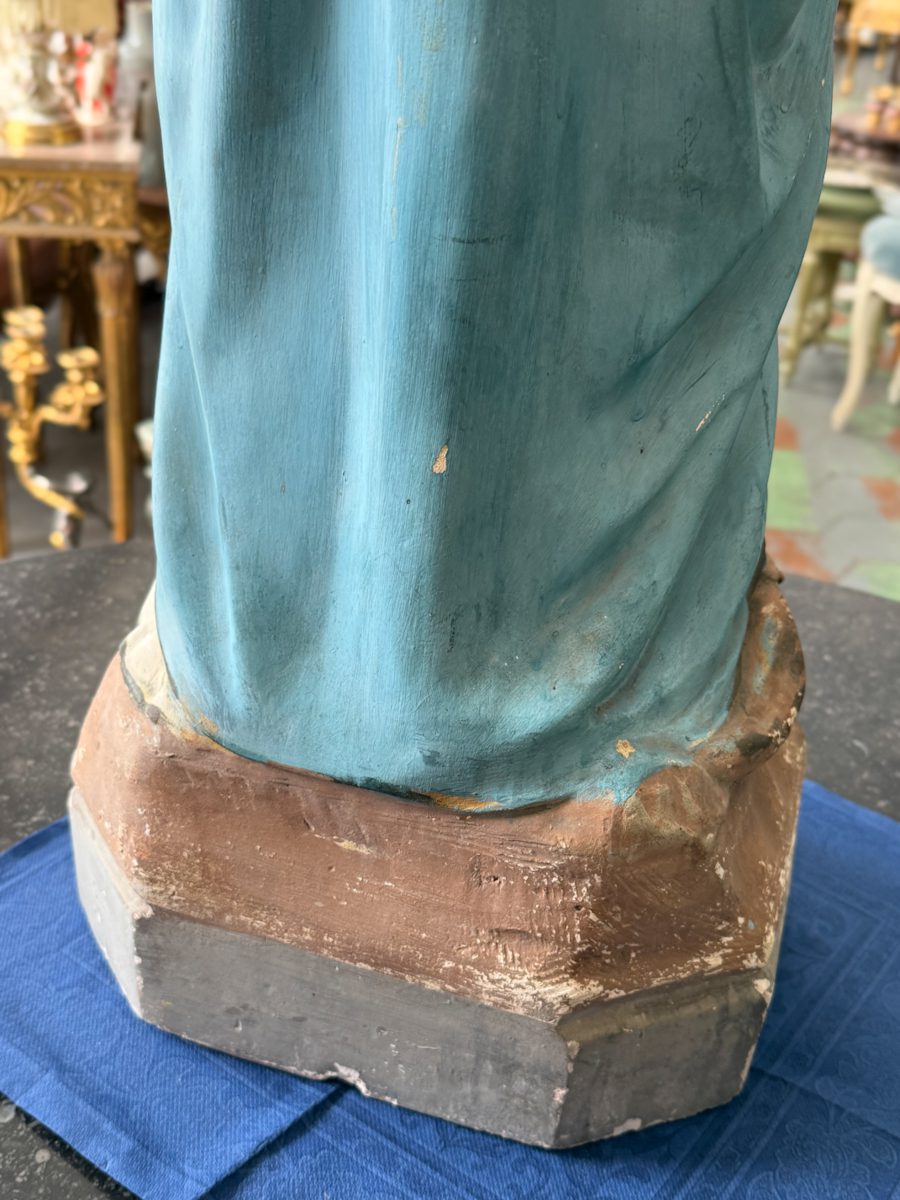
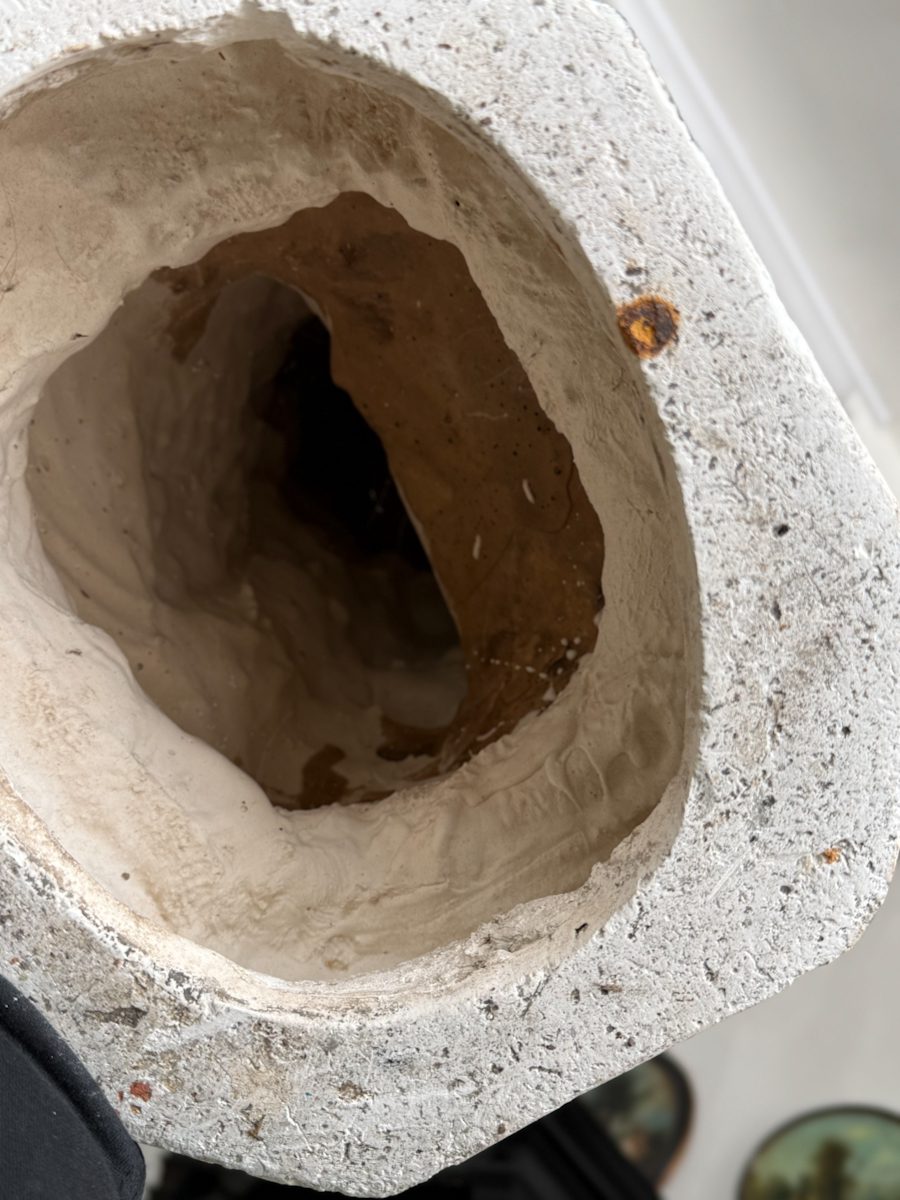
Figūra ir izcilā antīkā stāvoklī, ņemot vērā tās vecumu un baznīcas dzīvi. Mākslas ģipša korpuss strukturāli vesels. Polihromais krāsojums ar maigu, dabisku novecojumu — krāsa nav nolupusi, bet laika gaitā ieguvusi dziļumu un patinu, kas tikai pastiprina figūras autentisko, dzīvoto raksturu. Marijas rokas pirksti ir pilnīgi veseli — sarežģītais lējuma raksts, ko var šķist par bojājumu, ir oriģinālās skulptūras dabīgā virsmas struktūra un nolietojums. Bērna Jēzus figūra vesela. Čūskas galva ar sarkano atvērto muti labi saglabājusies. Pamatne ar nelielu apkaļķojumu — dabisks laika nospiedums. Iekšpusē redzams metāla armējums — oriģinālais konstrukcijas elements. Lietas stāvoklis pilnībā atspoguļots fotogrāfijās.
―――――――――――――――――――――
🇬🇧 DESCRIPTION IN ENGLISH
Madonna with the Child Jesus and the Most Sacred Heart — Neo-Gothic / Catholic Revival, Liège (Belgium), circa 1870–1910 · Artist: Léon Beaujean, Liège
―――――――――――――――――――――
📐 DIMENSIONS
Height 101 cm × width 29 cm. Weight — very substantial, solid art plaster (plâtre d’art) with internal metal armature. An altar-scale figure.
―――――――――――――――――――――
🏛️ PERIOD, ART STYLE, HISTORICAL CONTEXT
This figure belongs to the singular period of the restauration catholique — the Catholic revival of the second half of the 19th century — in which Europe, following the devastation of the French Revolution and the secularisation movements that swept the continent, refilled its churches with sacred images. The Neo-Gothic movement in this period was no longer merely an architectural aesthetic: it was the expression of a spiritual programme seeking to return to the purity, simplicity, and devotional gravity of medieval church sculpture. The Madonna’s facial type — high cheekbones, wide eyes with a still and undistractable gaze, delicately arched brows free of expressionist distortion — is a direct marker of Neo-Gothic iconography. Yet the naturalism of the drapery folds and the warmly realistic modelling of the Child’s face reveal that Léon Beaujean was no blind imitator of the Middle Ages: he was an academically trained sculptor who married medieval spiritual posture with the craft precision of 19th-century academic realism. The figure presents the classical Immaculata — the Immaculate Conception — iconographic programme: Mary in a blue mantle holds the Child Jesus, who points with his finger to His Most Sacred Heart (Sacré-Cœur) — the heart encircled by a crown of thorns, flames, and rays of light, the most iconic devotional symbol of 19th-century Catholic art. Beneath Mary’s feet lies the serpent with open mouth, being trodden down — the oldest iconographic motif of the Virgin Mary, referencing Genesis 3:15 (“I will put enmity between thee and the woman”) and symbolising victory over sin and evil.
―――――――――――――――――――――
⚜️ MAKER AND ARTIST
The base bears the signature: Léon Beaujean — Liège (on sculptures frequently written with the cursive letter “M” before the surname — most likely Monsieur Beaujean, as was customary in 19th-century Belgium when referring to a distinguished master craftsman). Léon Beaujean was a master of sacred art in Liège and an academically trained sculptor who directed his own specialist workshop — the Atelier de sculpture religieuse — serving churches, monasteries, and private chapels throughout the Wallonia region and beyond. Liège in the 19th century was not only Belgium’s greatest industrial city and an ancient university town but also a significant centre for religious sculpture — a city with a profound Catholic identity in which sacred art was both a spiritual expression and a prestigious craft export product. The output of the Beaujean workshop — large-format plaster figures with high-quality polychrome painted finish — answered precisely what the great Catholic church-building and restoration boom of the 19th century demanded across Belgium, France, the German Rhineland, and in export to Latin America. The material — high-quality art plaster (plâtre d’art) with an internal metal armature — was the standard of high-class religious sculpture workshops of the period, ensuring both the precision of fine detail and the structural longevity of the figure through decades of altar exposure.
―――――――――――――――――――――
💎 RARITY AND SIGNIFICANCE
Signed, authoritatively attributed church altar figures with a complete and iconographically rich programme — the Immaculata with the Sacred Heart and the serpent — are a considerably rarer find than anonymous serial-production pieces. The height of this work (101 cm) places it firmly in the altar rather than private devotional (piété privée) category: the figure almost certainly once stood in a church or convent and has absorbed the prayers of hundreds of thousands, participating in the sacramental and pilgrim life of a community. The Sacred Heart devotional iconography reached its cultural peak in precisely the probable period of this work’s creation — after 1875, when construction of the Sacré-Cœur Basilica in Paris began and the cult of the Most Sacred Heart received the highest Vatican blessing, generating an enormous demand for figures of this iconographic type throughout the Catholic world. The signature of Léon Beaujean on this figure is not merely a document of authorship — it is a certificate of belonging to a specific tradition of European sacred art that is today increasingly valued in collector and museum circles.
―――――――――――――――――――――
🕯️ USE IN INTERIOR, DESIGN AND PHOTOGRAPHY
This figure is a spatial declaration — it cannot be placed in a corner. Its height (101 cm) calls for an appropriate plinth, niche, or console — ideally set against stone, brick, or dark wood, where the celestial blue of the mantle has something to resonate against. In contemporary interiors it functions as a deliberate counterpoint: a century-saturated spiritual presence within a modern or minimalist space creates a deep, unresolvable dialogue. Among sacred art collectors and religious art enthusiasts, a figure of this calibre is actively sought. For photographers it is a dream subject — her gaze, simultaneously present and entirely elsewhere, creates within the frame a silence that cannot be artificially manufactured.
―――――――――――――――――――――
🔍 CONDITION
The figure is in excellent antique condition given its age and its life of ecclesiastical service. The art plaster body is structurally sound throughout. The polychrome colouring shows gentle, natural age-related mellowing — the paint has not flaked but has over time acquired depth and patina that only deepens the figure’s authentic, lived character. The fingers of the Madonna’s hand are fully intact — what may appear as damage in certain lighting is the natural surface texture and wear of the original cast, a complex moulded form. The Child Jesus figure is intact in all details. The serpent’s head with its red open mouth is well preserved. The base shows minor calcification — a natural imprint of time. The internal metal armature is visible — an original structural element. The condition of the item is fully reflected in the photographs.