
Bāra Krēslu Pāris ar Zaļu Samtu — Neoklasicisms, Spānija, Vda. de Hurtado, 20.gs. (6453)
Bāra Krēslu Pāris ar Zaļu Samtu — Neoklasicisms, Spānija, Vda. de Hurtado, 20.gs. (6453)
€570.00
Cena norādīta par 2 gabaliem (komplekts). Pieejami: 1 komplekts.
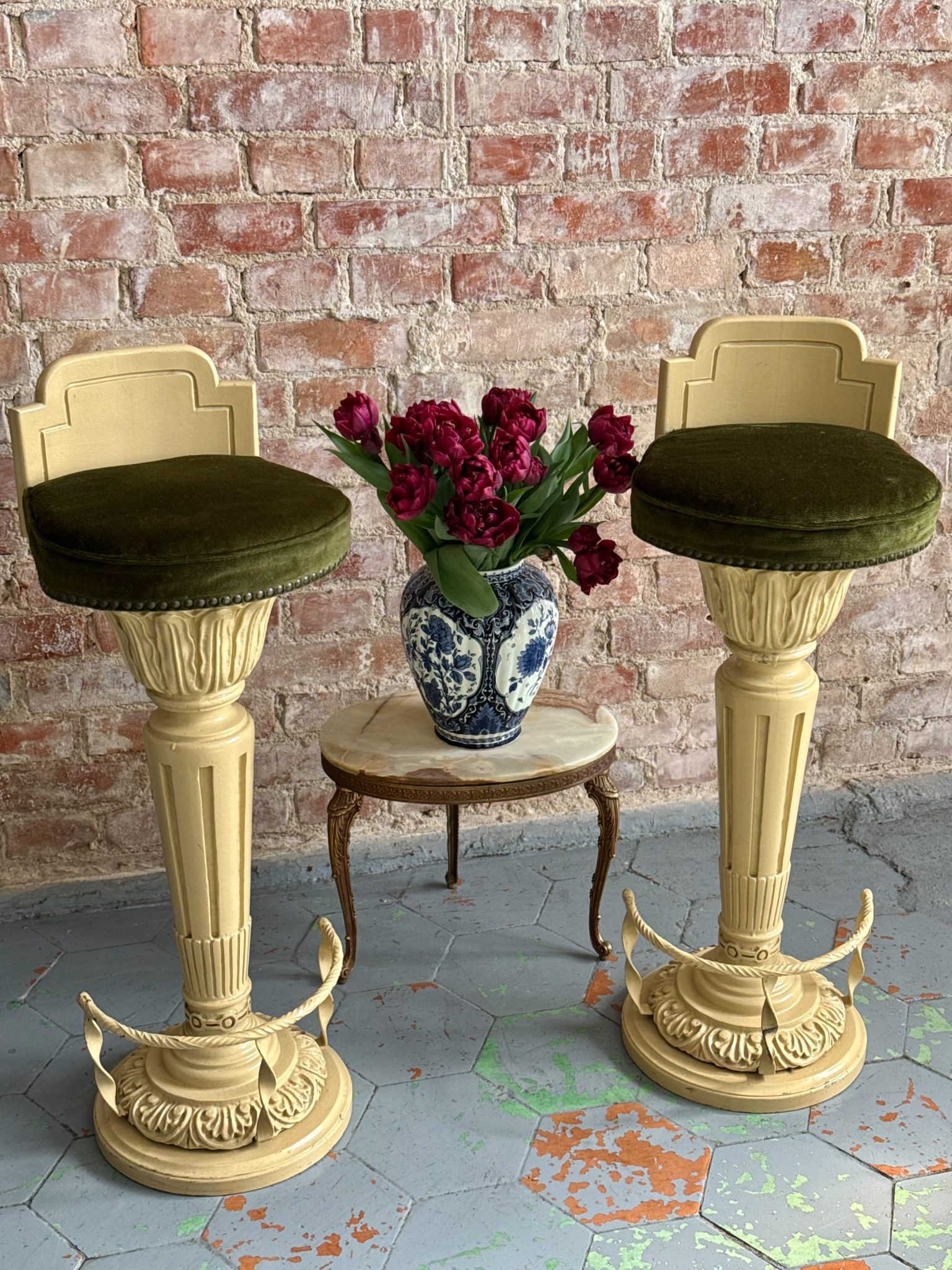
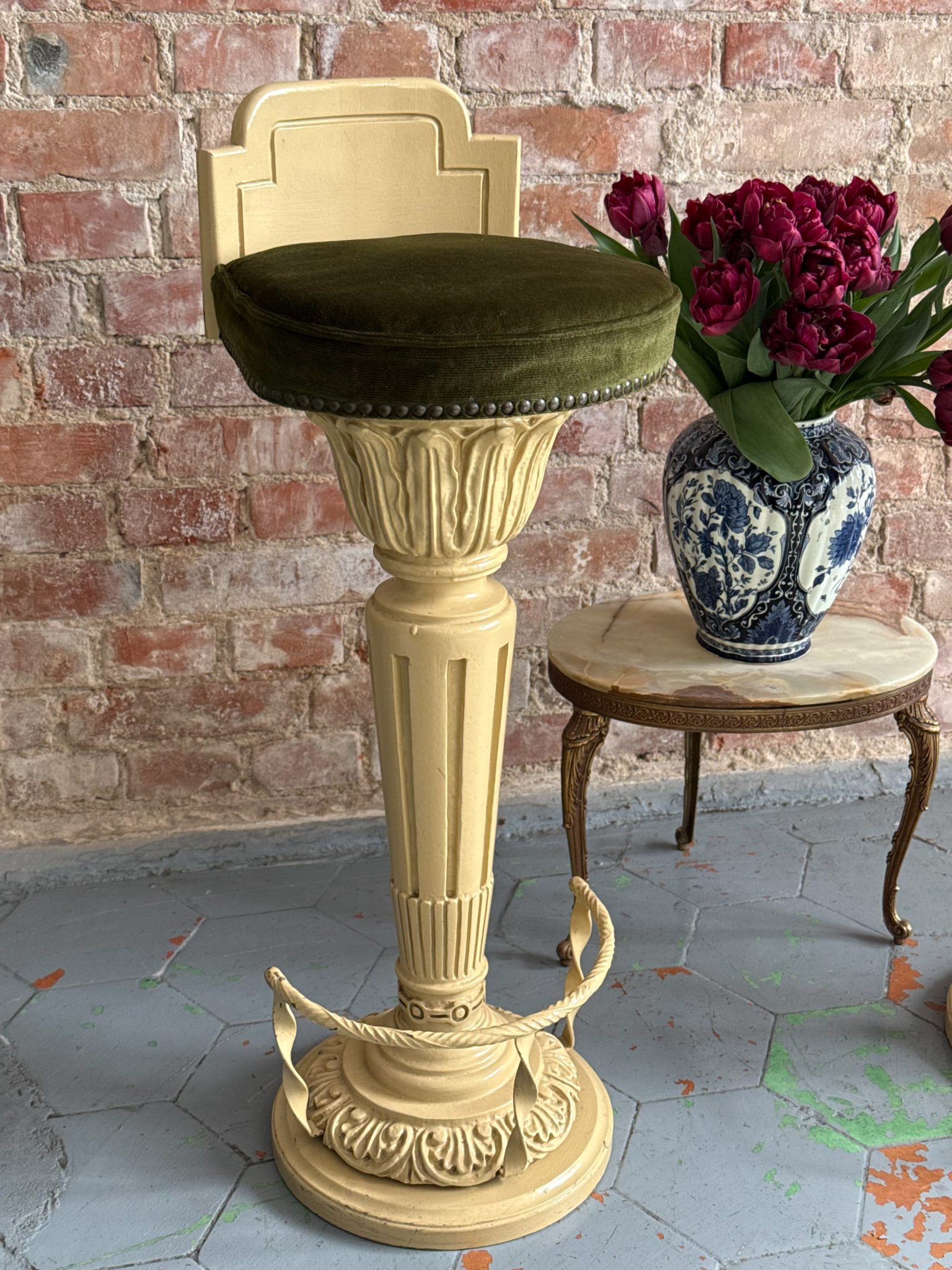
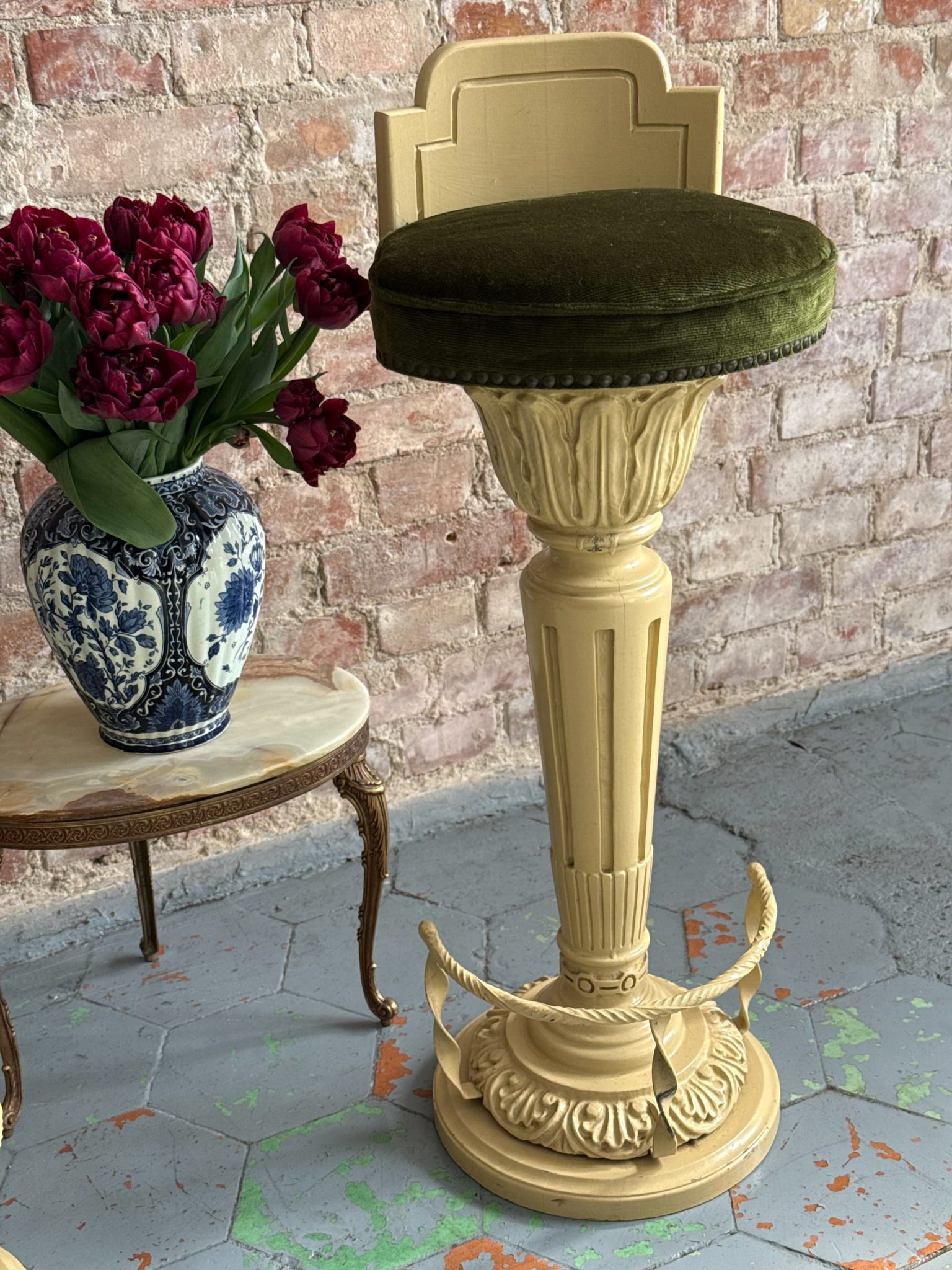
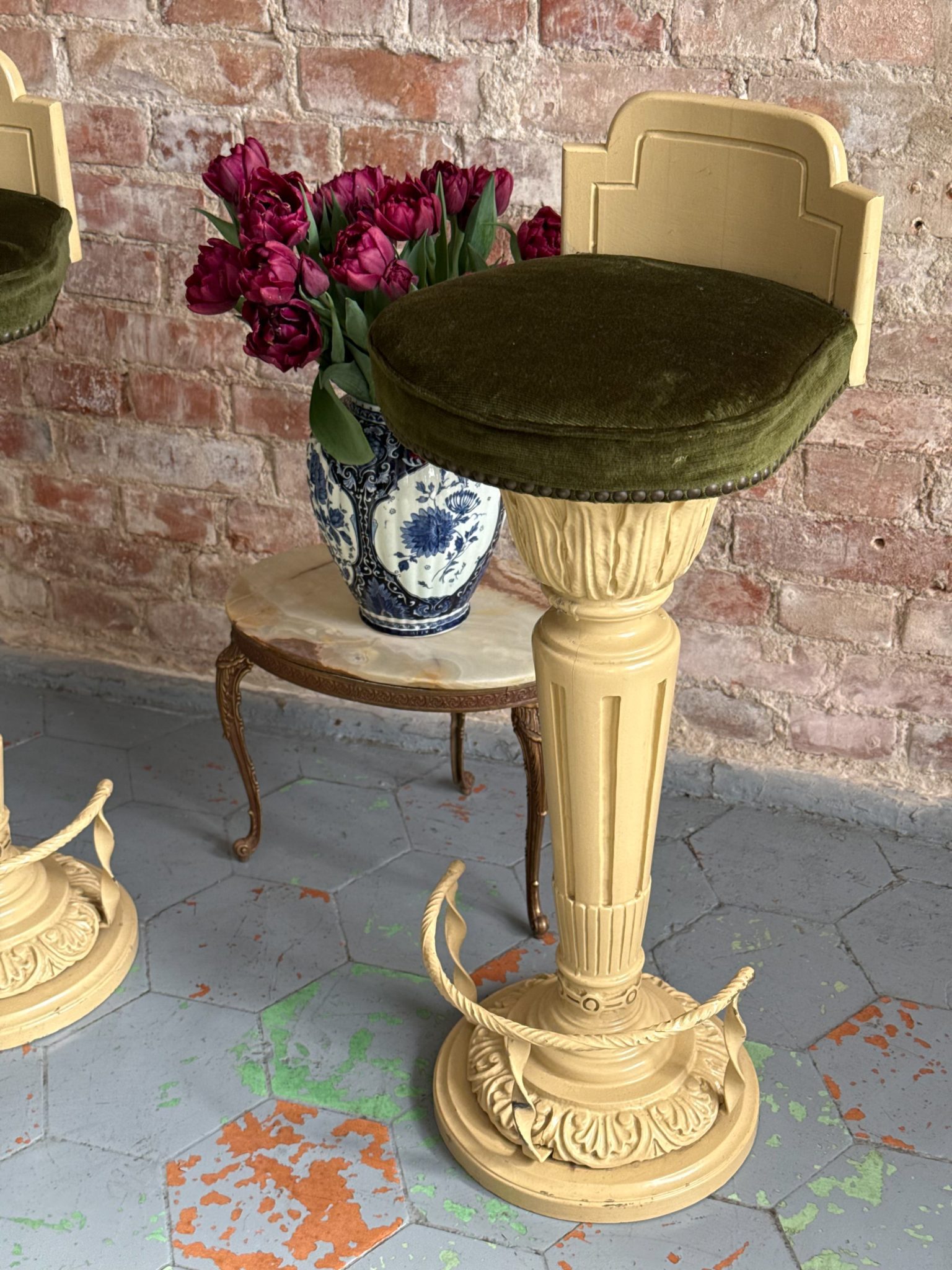
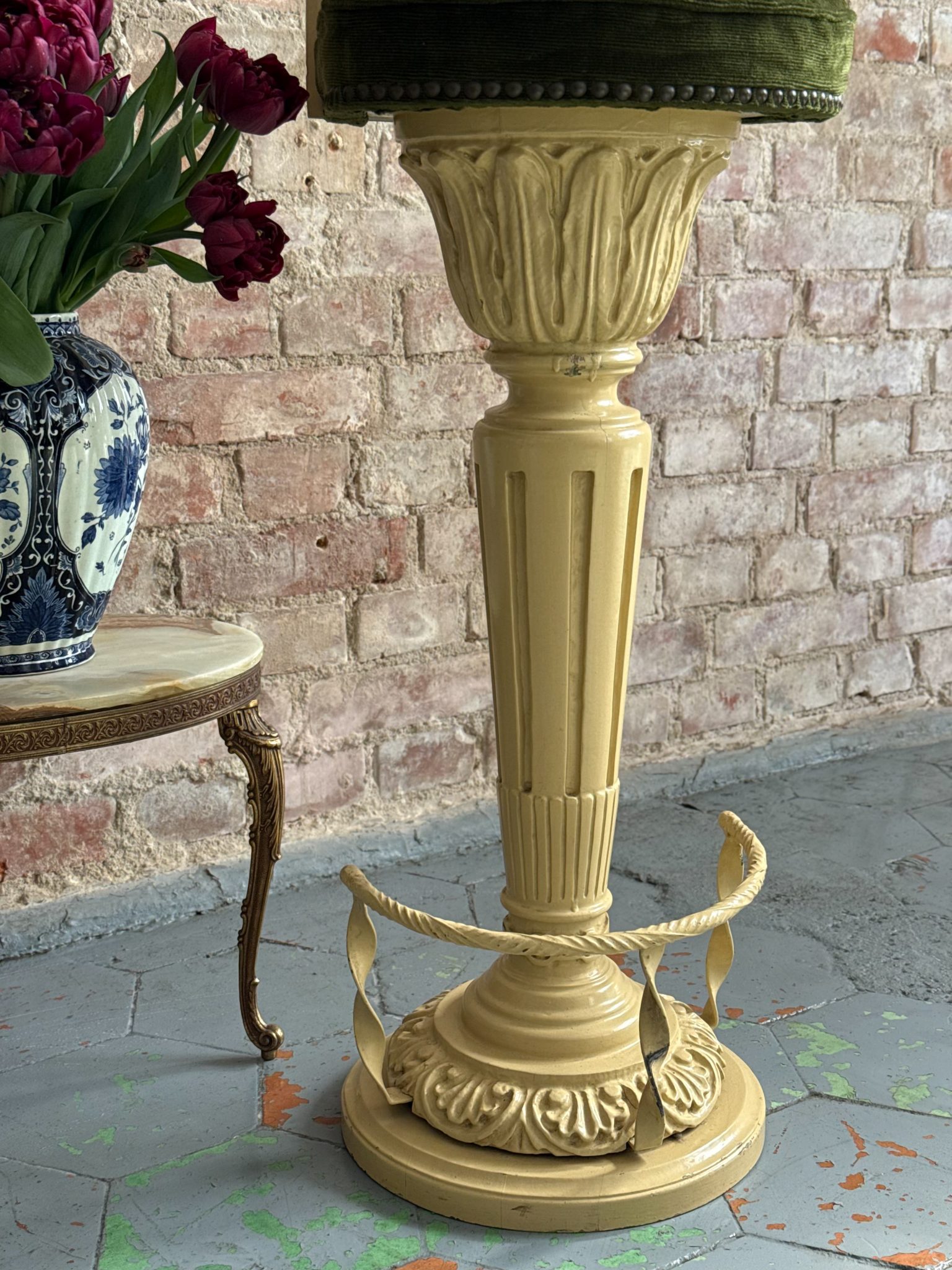
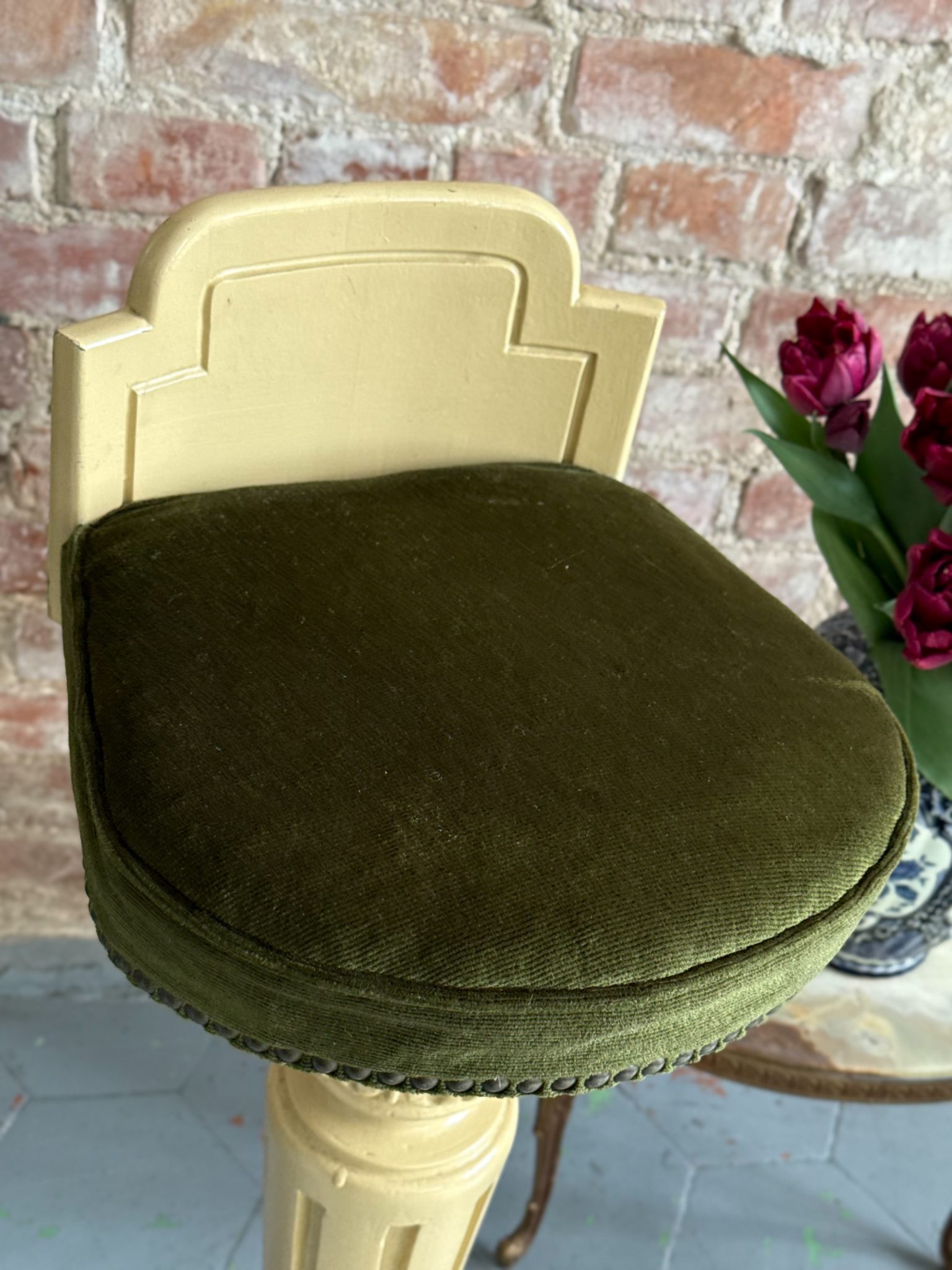
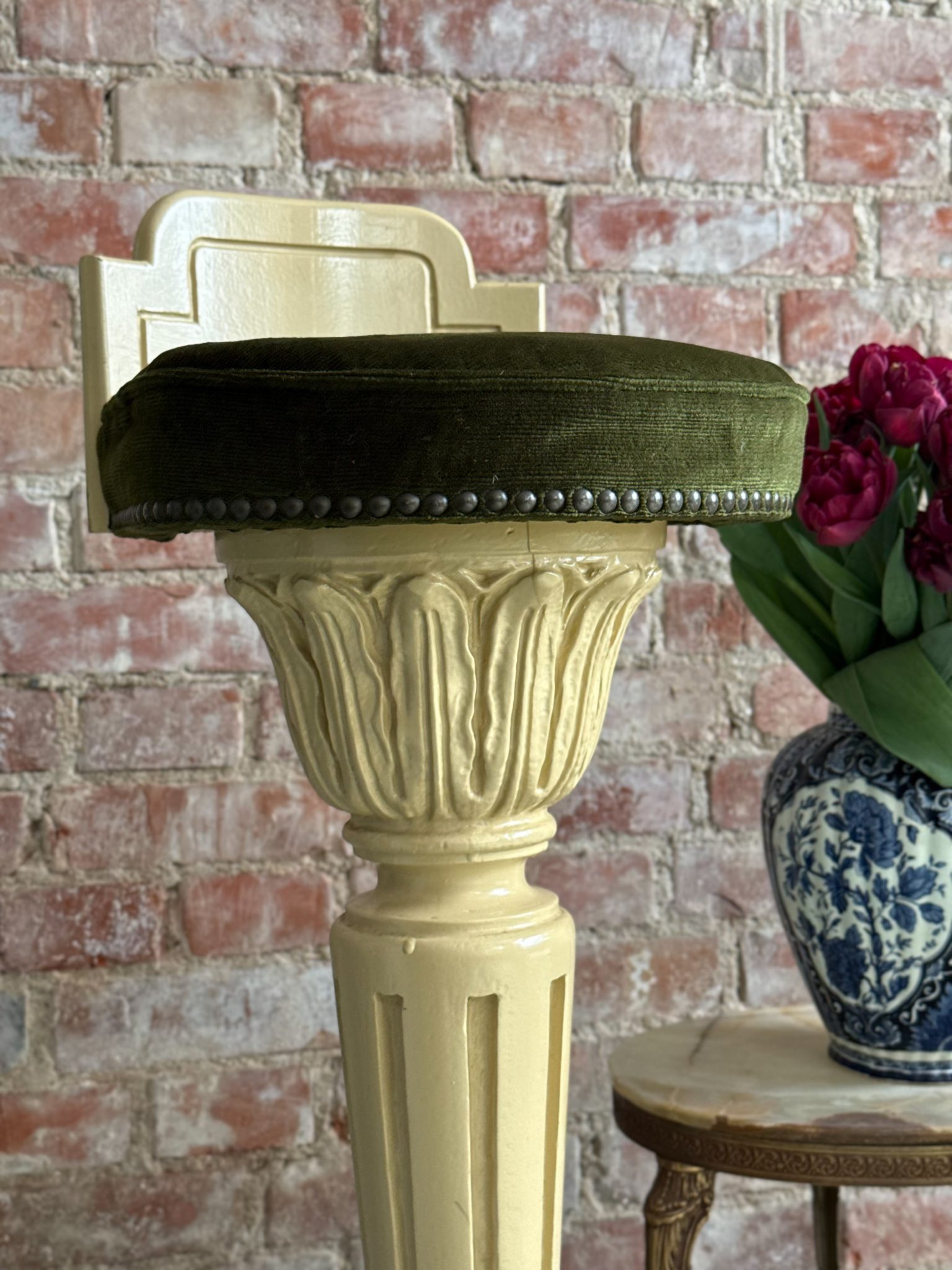
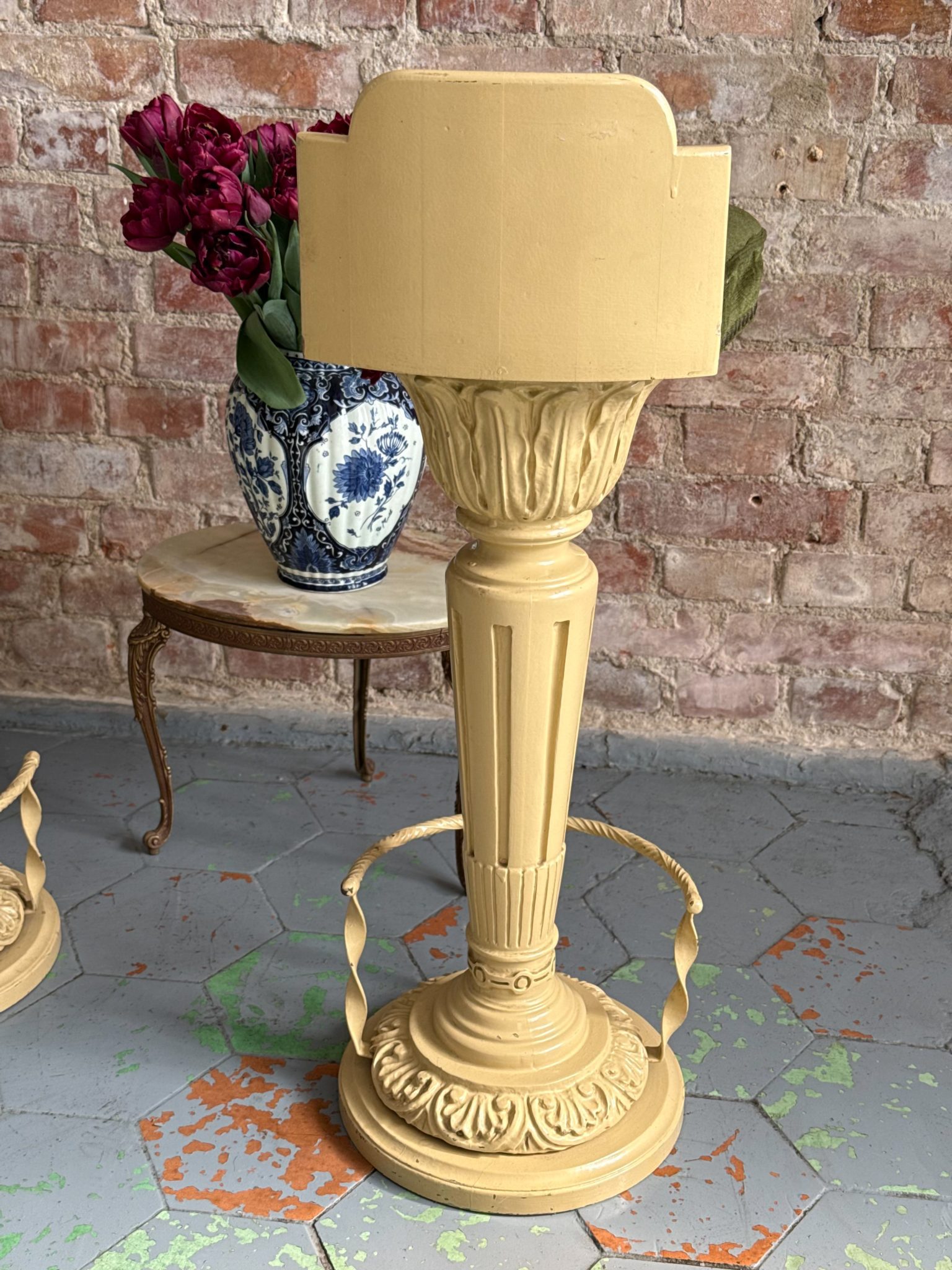
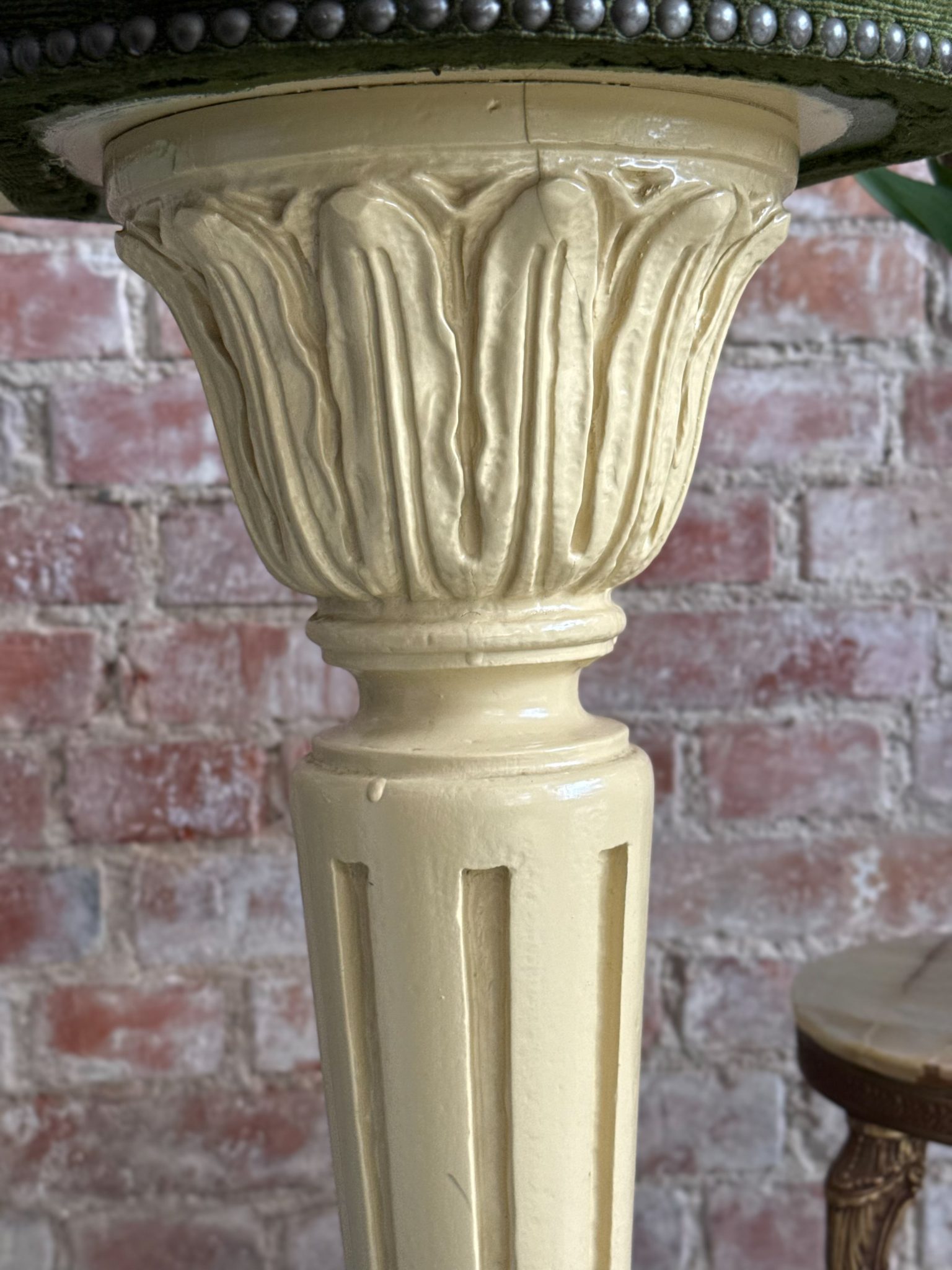
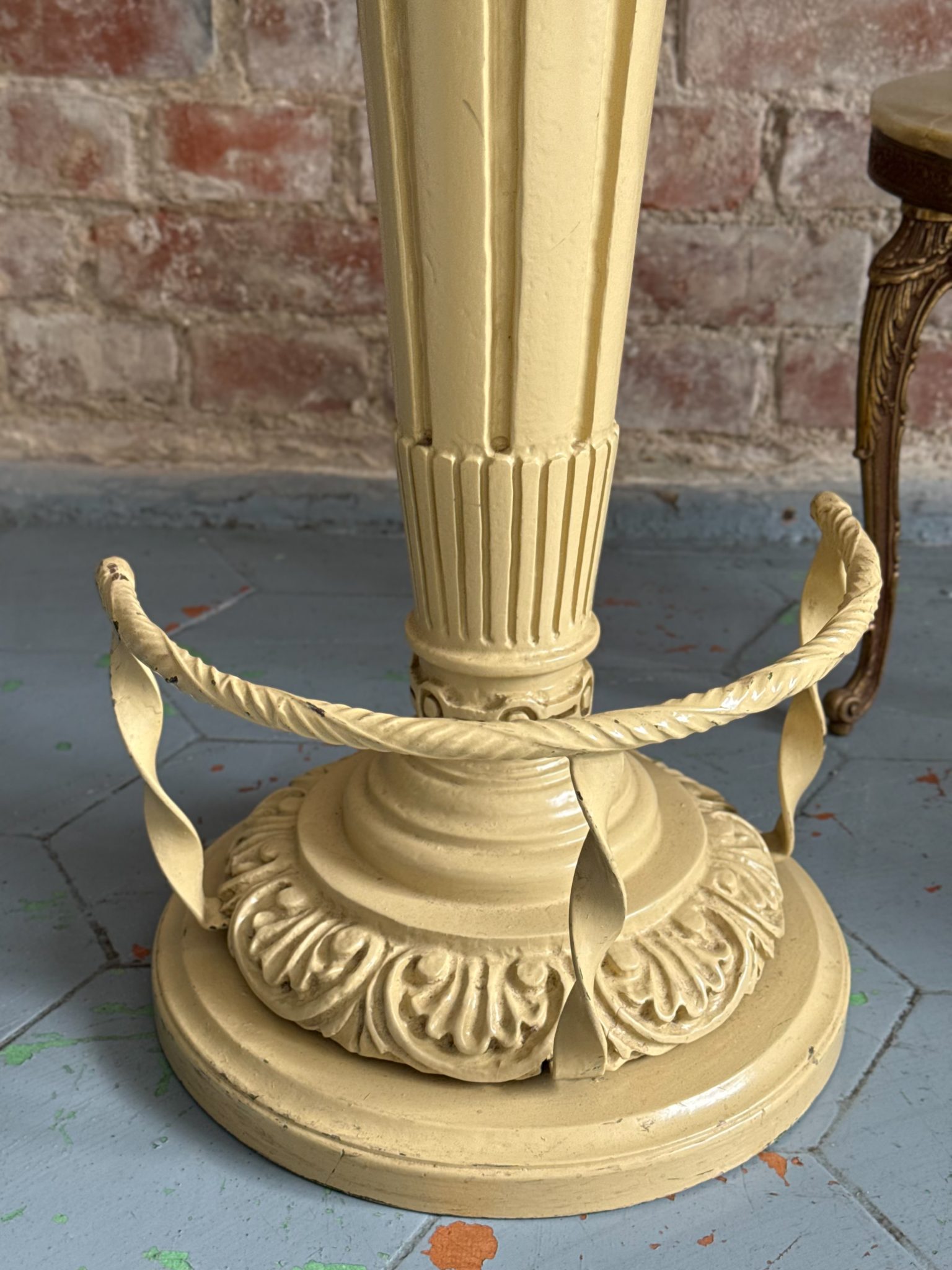
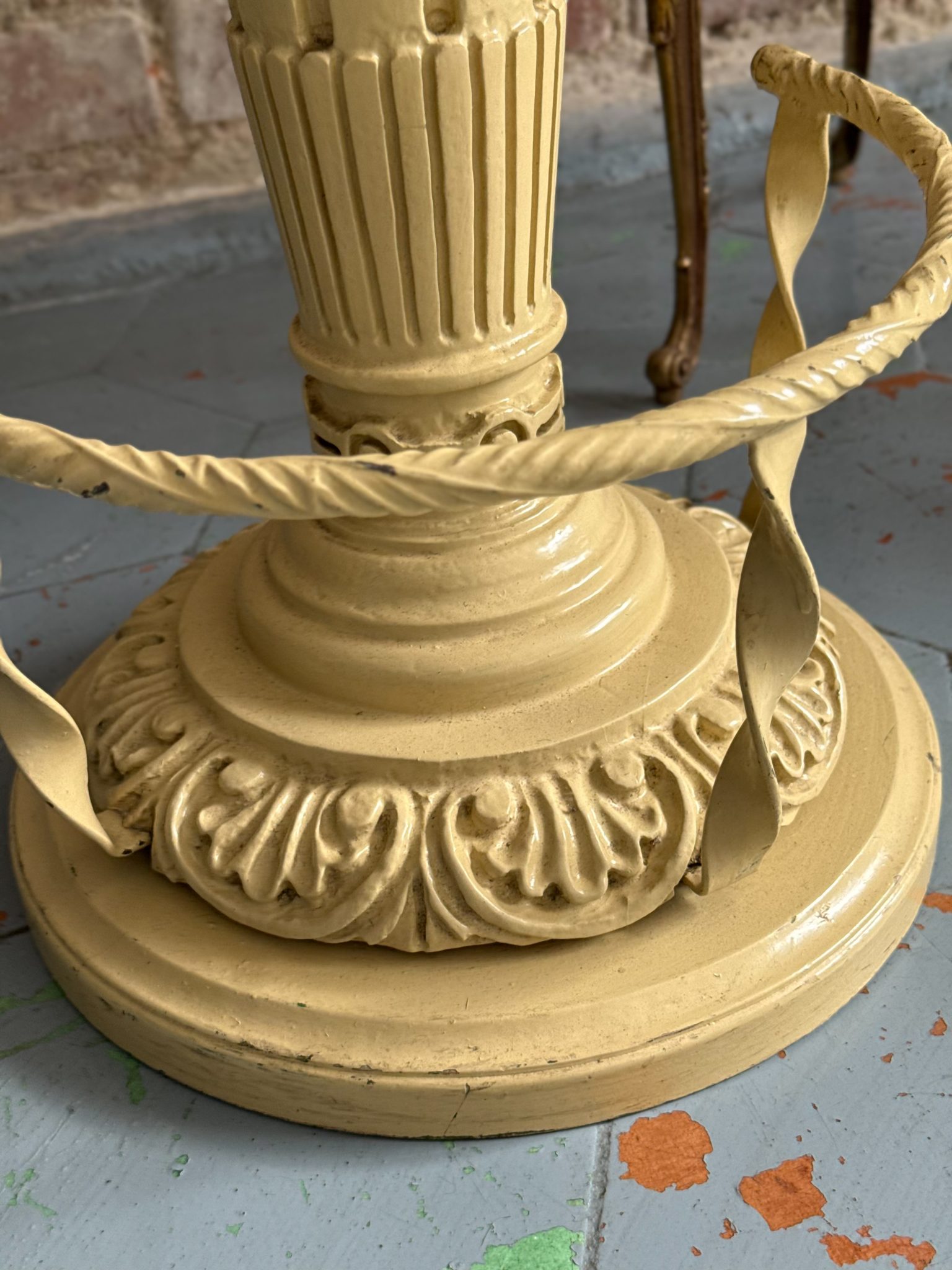
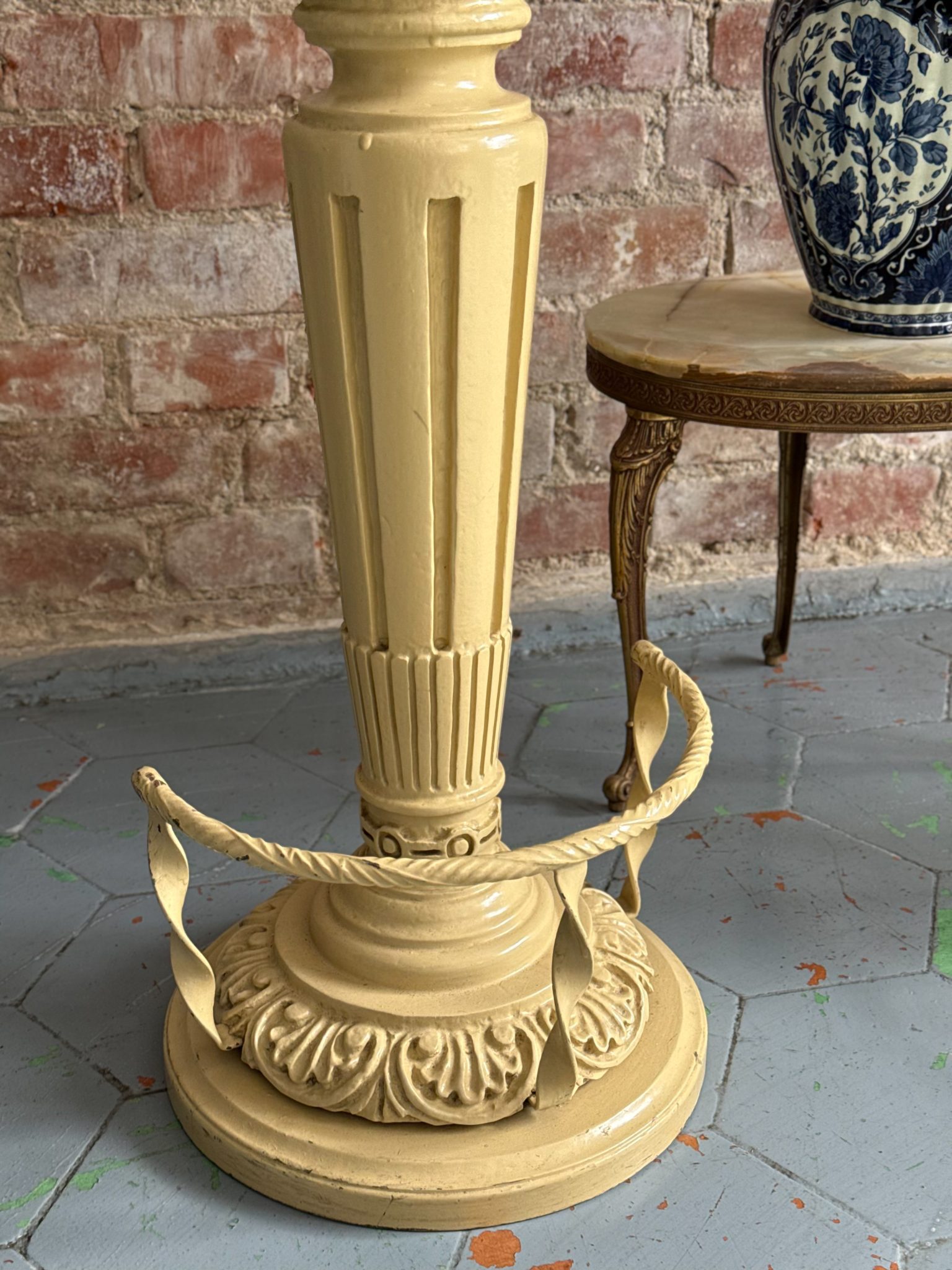
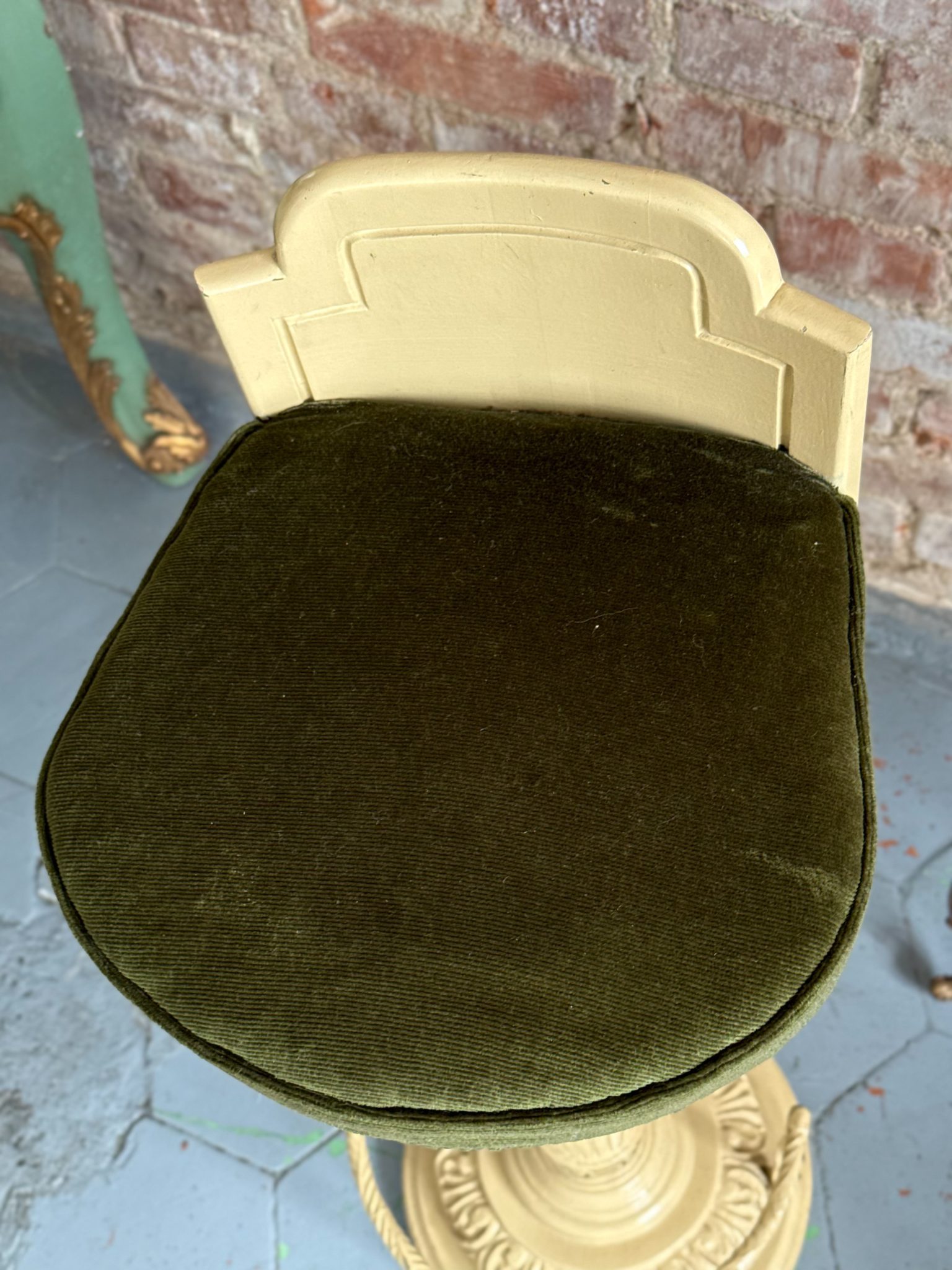
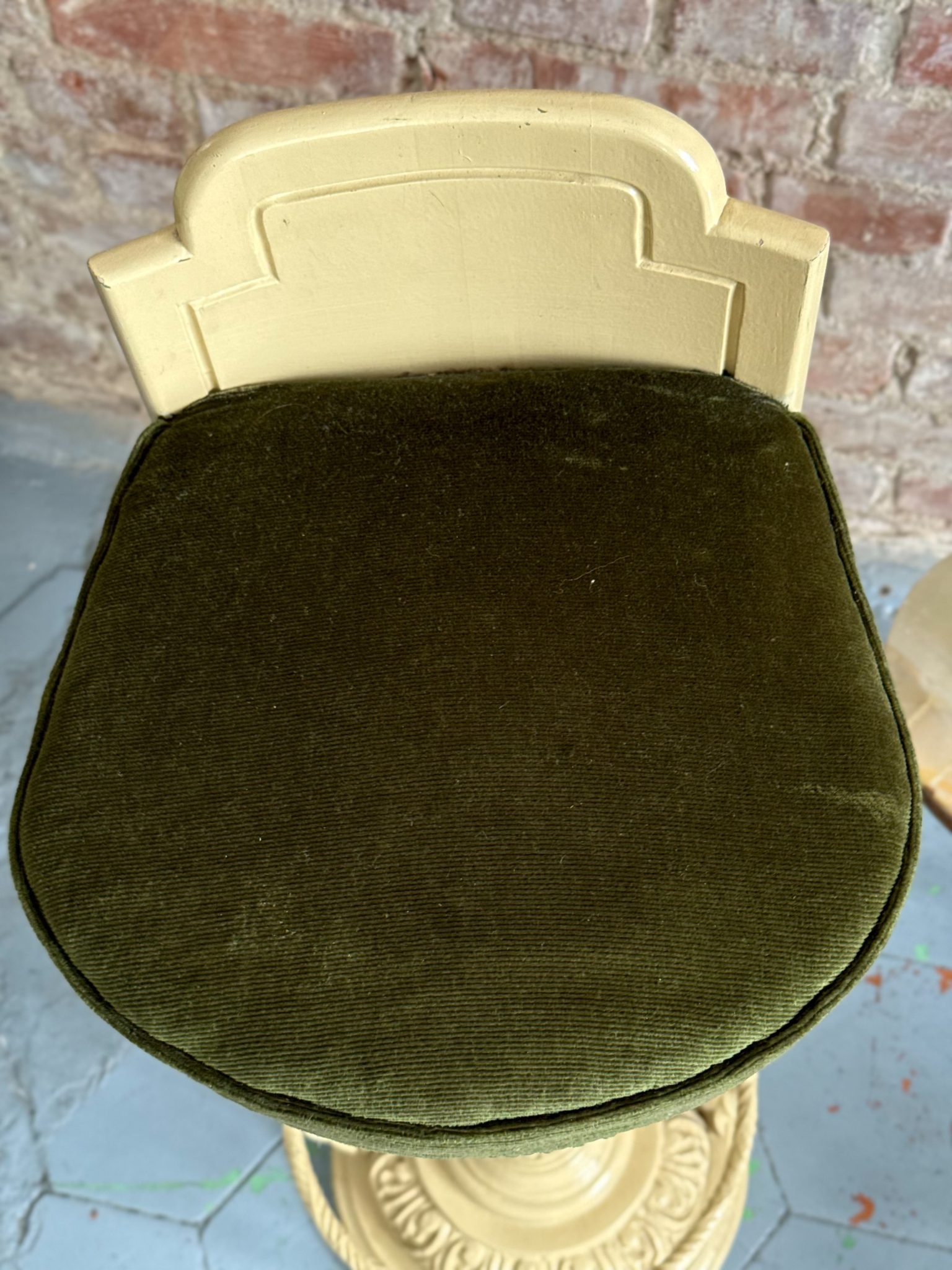
Koka bāra krēslu pāris krēmkrāsā ar zaļu samta sēdvietu un bronzas naglojumu. Kannelēts kolonnas kāts ar akantus lapu kausa un virvju ornamentu pamatnē. Neoklasicisms / Art Deco, Spānija, ražotājs Vda. de Hurtado, S.A. Augstums 88,5 cm × platums 32,5 cm. Sēdvietas augstums 76 cm.
Cena norādīta par 2 gabaliem (komplekts).
―――――――――――――――――――――
📐 IZMĒRI
Augstums 88,5 cm × platums 32,5 cm. Sēdvietas augstums 76 cm.
―――――――――――――――――――――
Bāra Krēslu Pāris ar Zaļu Samtu un Kolonnas Kātu — Neoklasicisms / Art Deco, Spānija, Vda. de Hurtado S.A., ap 1940.–1960.
―――――――――――――――――――――
🏛️ IZGATAVOŠANAS PERIODS, MĀKSLAS STILS, LAIKMETS
Šie divi bāra krēsli ir ārkārtīgi interesants stilistiskās dialogā stāvošs priekšmets: tie pieder tam auglīgajam pārejas brīdim, kad Neoklasicisms vēl turēja savas formas — kannelētās kolonnas, akantus lapu vainagus, apļveida pamatnes ar klasiskajiem ovolo profiliem — bet Art Deco jau atnesa jaunu ģeometrisku stingrību muguras siluetā, kurā “pakāpienveida” (stepped) augšdaļa ir tīrs desmitgades paraksts. Abas estētikas šeit sadzīvo vienā objektā, radot to neparasto spriedzi, kas padara šos krēslus tik vizuāli pievilcīgus: tie ir vienlaikus “seni” un “moderni”.
Virvju ornaments pamatnē (corde torse motīvs) ir Empire stila un vēlāk Regency tradīcijas elements, kas Spānijā 20. gadsimta pirmajā pusē bieži tika apvienots ar neoklasiskajiem stumbriem. Zaļais samts ar bronzas naglojumu (cloutage) piešķir šim noteikti vīrišķīgajam un monumentālajam priekšmetam kluba vai bibliotēkas interjera rezonansi.
Laikmeta momentuzņēmums: Kamēr Parīzē 1925. gadā Exposition Internationale des Arts Décoratifs pasludināja Art Deco par jaunās Eiropas valodu, Madridē un Barselonā spāņu mēbeļu meistari šo valodu tulkoja savā veidā — apvienojot to ar Ibērijas klasiskās tradīcijas dziļajām saknēm. Tieši šādi krēsli varēja rotāt kādu café de tertulias vai privātu gentlemenu klubu, kur Lorka vai Dalī sēdēja pie bāra letes un dzēra jerez vīnu.
―――――――――――――――――――――
⚜️ RAŽOTĀJS UN MANUFAKTŪRAS ZĪMOGS
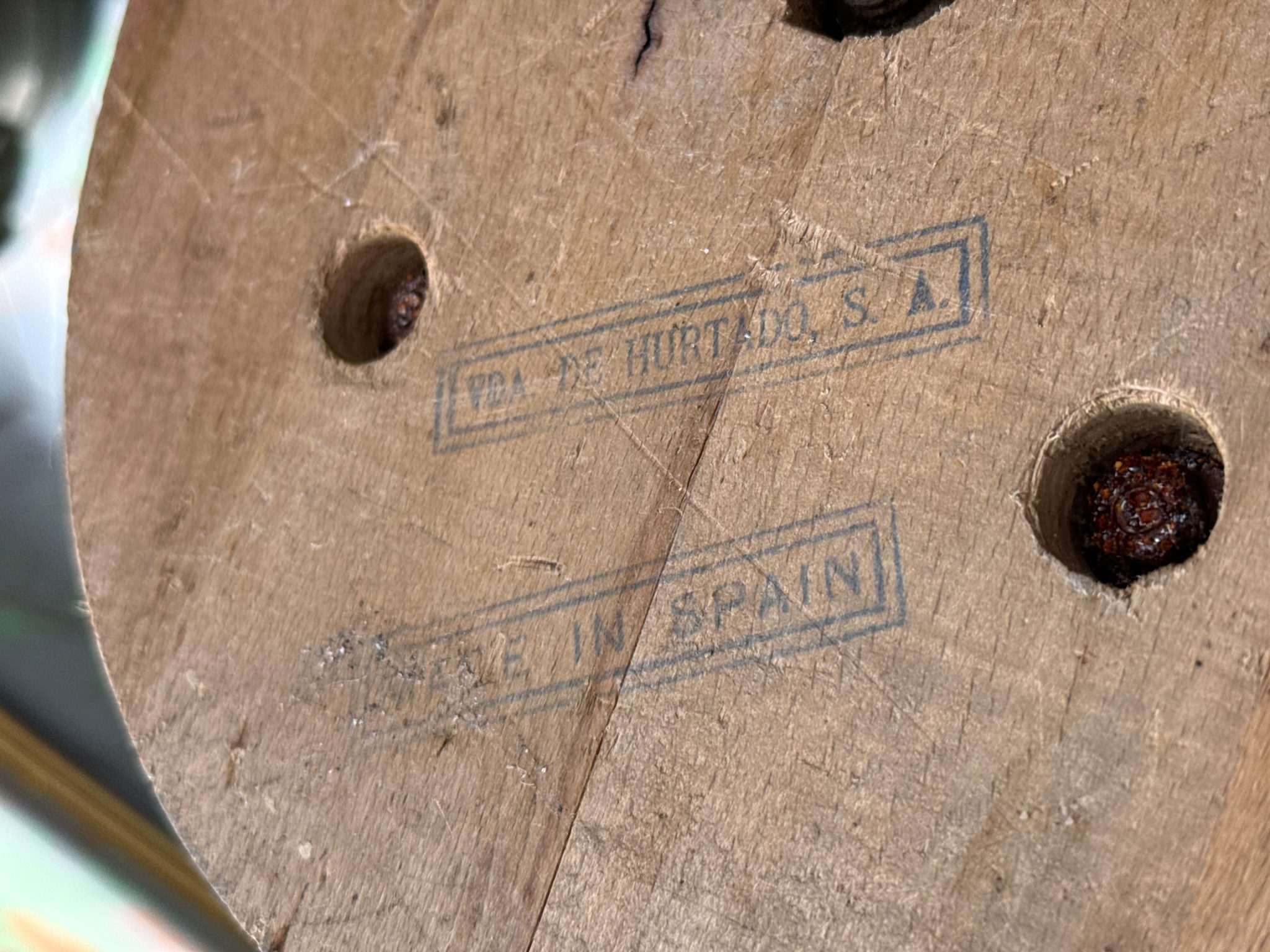
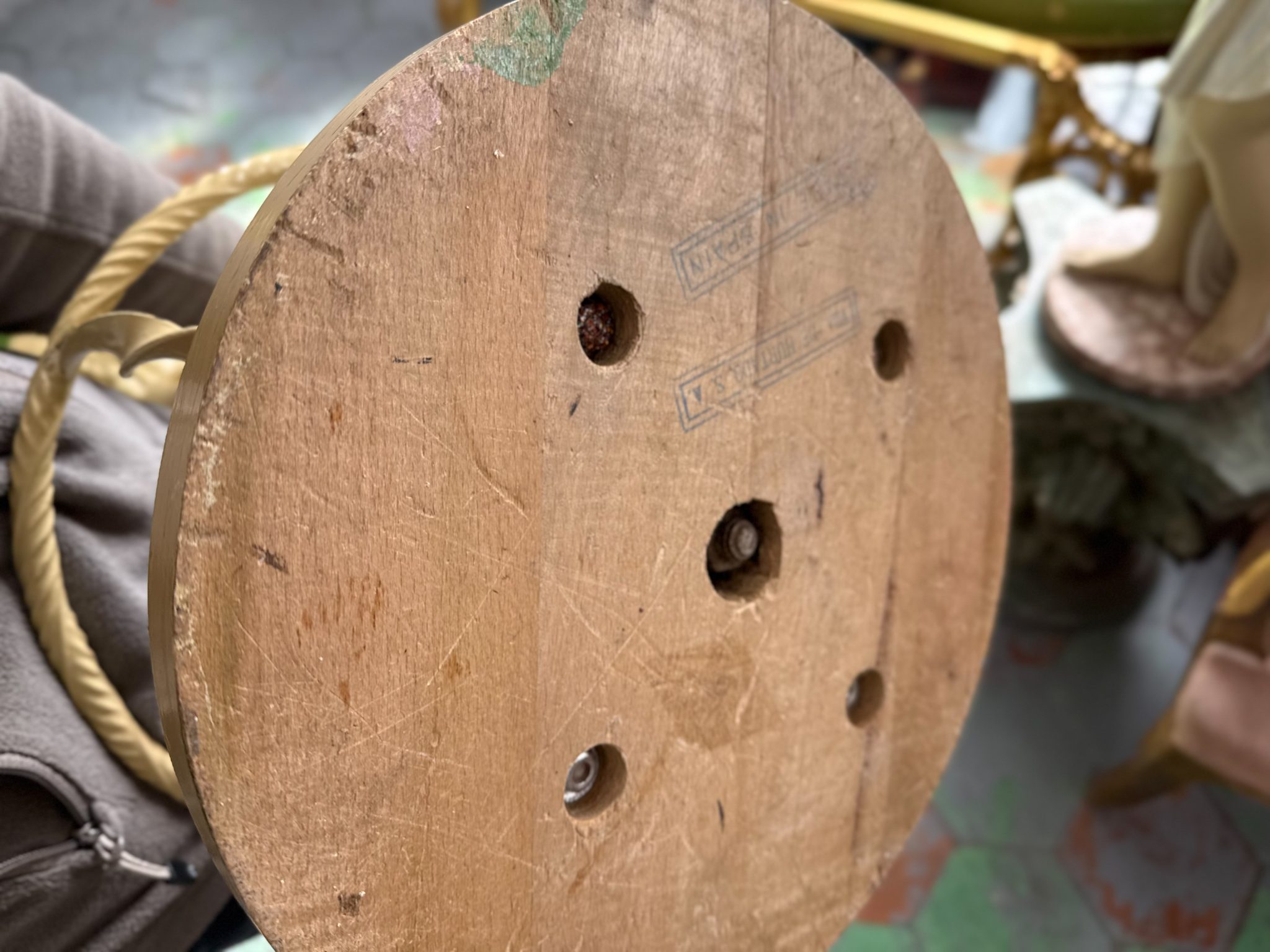
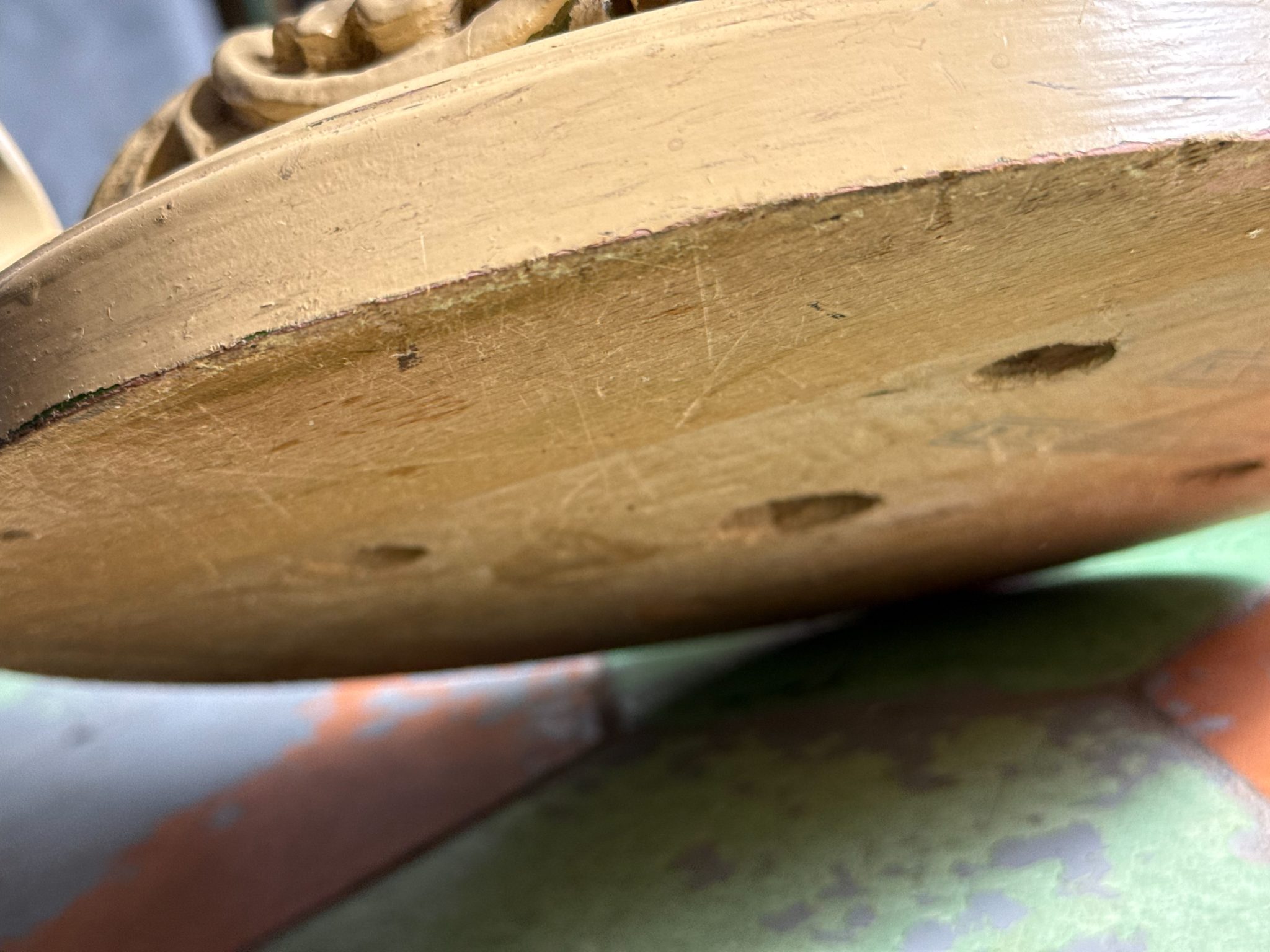
Uz pamatnes redzams skaidrs oriģinālais zīmogs: “Vda. de Hurtado, S.A. / Made in Spain”. Vda. ir saīsinājums no spāņu Viuda — “atraitne” — kas nozīmē, ka uzņēmums turpināja darbību pēc dibinātāja nāves, ko pārņēma viņa sieva vai ģimene. Vda. de Hurtado, S.A. bija Spānijas augstākās klases mēbeļu ražotājs, kas specializējās reprezentatīvu, rokām darinātu koka mēbeļu izgatavošanā eksportam un augstākā tirgus piegādēm. Spānijas mēbeļu nozare 20. gadsimta vidū bija pazīstama ar izcilas kvalitātes kokdarbu tradīciju, kas apvienoja Eiropas klasiskos stilus ar ibērisko amatniecības kultūru. Šāda zīmoga saglabāšanās ir svarīgs autenticitātes apliecinājums — tas ļauj precīzi lokalizēt priekšmeta izcelsmi un ražotāju, kas antikvāru tirgū vienmēr paaugstina vērtību.
―――――――――――――――――――――
💎 RETUMS UN NOZĪME
Saskaņots bāra krēslu pāris (paire) — abi vienādā, labā stāvoklī, ar saglabātu oriģinālo ražotāja zīmogu — ir ievērojams atradums. Augstie bāra krēsli neoklasiskā stilā ar monumentālu kolonnas kātu ir rets priekšmets gan Spānijas, gan starptautiskajā antikvāru tirgū: tie atrodas starp “mēbelēm” un “skulptūru”, kas padara tos pieprasītus gan kolekcionāru, gan interjera dizaineru vidē. Zaļā samta un krēmkrāsas kombinācija ir laikmetīga un pieprasīta.
―――――――――――――――――――――
🕯️ PIELIETOJUMS INTERJERĀ, DIZAINĀ UN FOTOGRĀFIJĀ
Šie krēsli ir radīti bāra letes, augsta darba galdavirsmas vai sala (kitchen island) tuvumā — taču to monumentalitāte ļauj tiem darboties arī kā atsevišķām skulptūrām telpas stūrī vai pie sienas. Klasiskā interjerā ar augstiem griestiem tie rada galma bibliotēkas vai angļu gentlemenu kluba noskaņu. Mūsdienu eklektiskā interjerā — ar rūpnieciskiem elementiem, metālu un betonu — krēmkrāsas kolonnas un zaļais samts rada elegantu kontrastu. Interjera fotogrāfiem šādi priekšmeti ir vērtīgi tieši to skulpturālās silueta dēļ — tie izskatās iespaidīgi arī no attāluma un nepieprasa papildu “rekvizītus”. Restorānā vai bārā ar vēsturisku tematiku — neatvietojams.
―――――――――――――――――――――
🎁 DĀVANA UN PERSONALIZĀCIJA
Bāra krēslu pāris ir izsmalcināta un neparasta dāvana mājas bāra vai virtuvē salas aprīkošanai — priekšmets ar raksturu, ko nevar nopirkt veikalā. Tas piemērots arī kā reprezentatīvs korporatīvs dāvinājums restorānam, viesnīcai vai privātam klubam, kur vēsturiskais stils ir komunikācijas daļa.
―――――――――――――――――――――
🔍 STĀVOKLIS
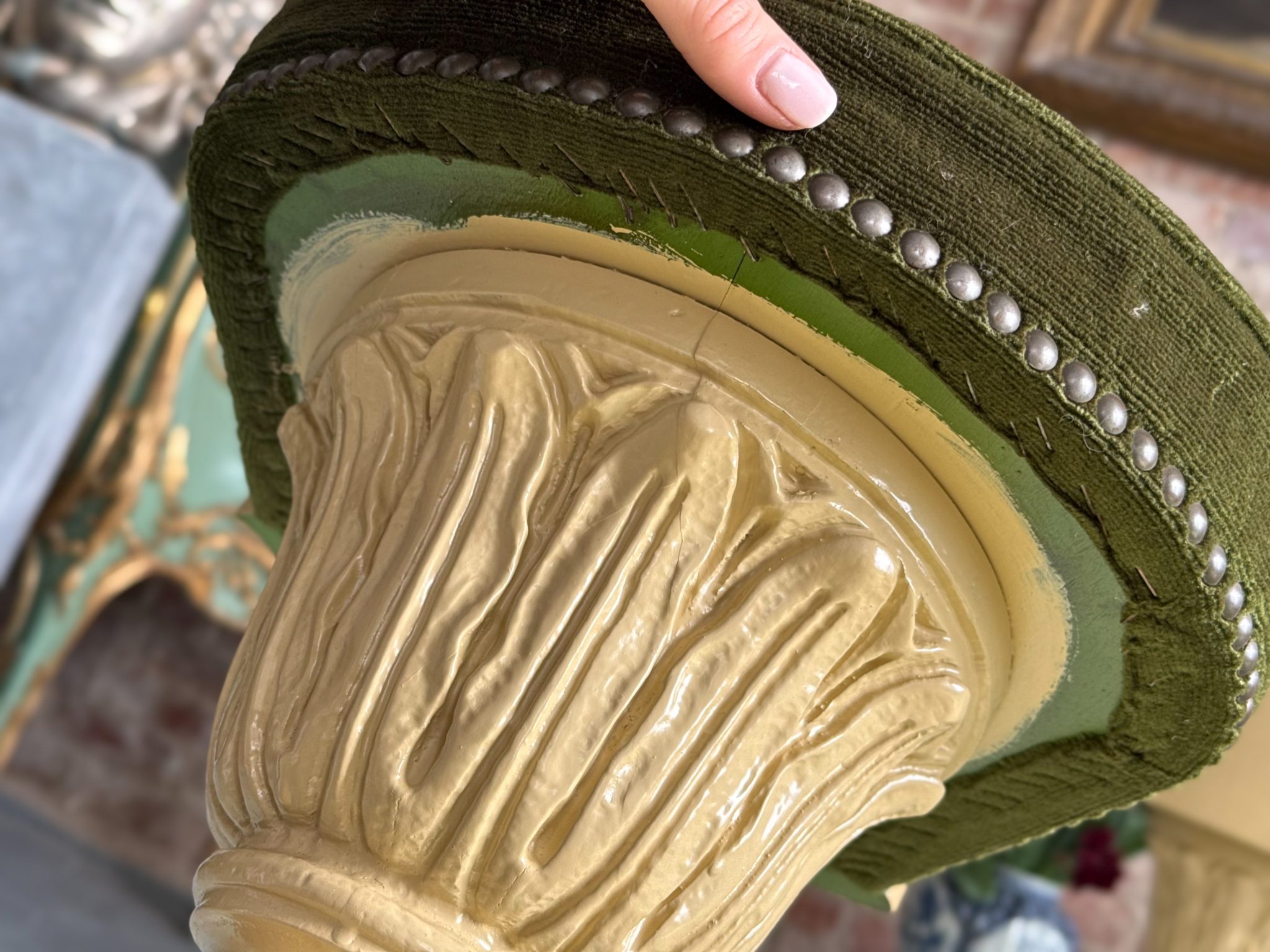
Koka rāmji un kolonnas kāts krēmkrāsas krāsojumā labā vispārējā stāvoklī ar laika nolietojuma pēdām. Pamatnē redzama plaisa vienam krēslam — atspoguļota fotogrāfijās. Zaļā samta sēdvieta uzrāda nolietojumu un netīrumu pēdas. Bronzas naglojums saglabājies. Ražotāja zīmogs uz pamatnes apakšas skaidri salasāms abiem krēsliem. Lietas stāvoklis pilnībā atspoguļots fotogrāfijās.
――――――――――――――――――――― ―――――――――――――――――――――
🇬🇧 DESCRIPTION IN ENGLISH
―――――――――――――――――――――
Price listed per 2 items (set). Available: 1 set.
―――――――――――――――――――――
📐 DIMENSIONS
Height 88.5 cm × width 32.5 cm. Seat height 76 cm.
―――――――――――――――――――――
Pair of Bar Stools with Green Velvet and Column Stem — Neoclassical / Art Deco, Spain, Vda. de Hurtado S.A., circa 1940–1960.
―――――――――――――――――――――
🏛️ PERIOD, ARTISTIC STYLE, ERA
These two bar stools occupy a fascinating stylistic dialogue: they belong to that fertile transitional moment when Neoclassicism still held its forms — fluted columns, acanthus leaf capitals, circular bases with classical ovolo mouldings — while Art Deco had already introduced a new geometric severity in the backrest silhouette, whose stepped upper profile is a pure decade signature. Both aesthetics coexist within a single object, producing the unusual tension that makes these stools so visually compelling: they are simultaneously “ancient” and “modern.”
The rope ornament at the base (corde torse motif) is an element of Empire and later Regency tradition, frequently combined in Spain during the first half of the 20th century with neoclassical column forms. The green velvet with brass cloutage nailheads lends this decidedly monumental piece the resonance of a club interior or private library.
Period snapshot: While Paris in 1925 proclaimed Art Deco the language of the new Europe at the Exposition Internationale des Arts Décoratifs, the master craftsmen of Madrid and Barcelona were translating that language in their own way — combining it with the deep roots of the Iberian classical tradition. Stools precisely like these could have graced a café de tertulias or a private gentlemen’s club, where Lorca or Dalí sat at the bar drinking jerez and arguing about the future of painting.
―――――――――――――――――――――
⚜️ MAKER AND MAKER’S MARK
The original maker’s mark is clearly legible on the underside of the base: “Vda. de Hurtado, S.A. / Made in Spain”. Vda. is the Spanish abbreviation of Viuda — “widow” — indicating that the company continued operations under the founder’s family after his death. Vda. de Hurtado, S.A. was a Spanish high-end furniture manufacturer specialising in representative, hand-crafted wooden furniture for export and the upper domestic market. Spain’s furniture industry in the mid-20th century was known for an outstanding tradition of woodcraft that combined European classical styles with Iberian artisanal culture. The preservation of this label is a significant proof of authenticity — it allows precise identification of origin and maker, which in the antique market consistently enhances value.
―――――――――――――――――――――
💎 RARITY AND SIGNIFICANCE
A matched pair of bar stools — both in consistent condition, with the original maker’s mark preserved — is a notable find. Tall bar stools in a Neoclassical style with a monumental column stem are a rare object in both the Spanish and international antique market: they occupy the space between “furniture” and “sculpture,” making them sought-after by both collectors and interior designers. The combination of green velvet and cream lacquer is both timeless and currently very much in demand.
―――――――――――――――――――――
🕯️ USE IN INTERIOR, DESIGN AND PHOTOGRAPHY
These stools are conceived for use at a bar counter, high work surface, or kitchen island — yet their monumentality equally allows them to function as stand-alone sculptures in a room corner or against a wall. In a classical interior with high ceilings, they evoke a court library or an English gentlemen’s club. In a contemporary eclectic interior — with industrial elements, metal, and concrete — the cream columns and green velvet create an elegant contrast. For interior photographers, objects of this silhouette are particularly valuable: they read powerfully even from a distance and require no additional “props.” In a historically themed restaurant or bar, they are irreplaceable.
―――――――――――――――――――――
🎁 GIFT AND PERSONALISATION
A pair of bar stools is a refined and distinctive gift for equipping a home bar or kitchen island — an object with character that cannot be purchased in any ordinary shop. It is equally suited as a representative corporate gift for a restaurant, hotel, or private club where historical style is part of the communication.
―――――――――――――――――――――
🔍 CONDITION
The wooden frames and column stems in cream lacquer are in good general condition with age-appropriate wear. A crack is visible in the base of one stool — reflected in the photographs. The green velvet seat upholstery shows wear and soiling. The brass nailhead cloutage is preserved. The maker’s mark on the underside of both bases is clearly legible. The condition of the items is fully reflected in the photographs.