
Trīsstāvu Melns Koka Šķīvju Stends ar Zilbaltiem Šķīvjiem — Viktorijas Laikmets, Anglija, 19.gs. (6322)
Trīsstāvu Melns Koka Šķīvju Stends ar Zilbaltiem Šķīvjiem — Viktorijas Laikmets, Anglija, 19.gs. (6322)
€400.00
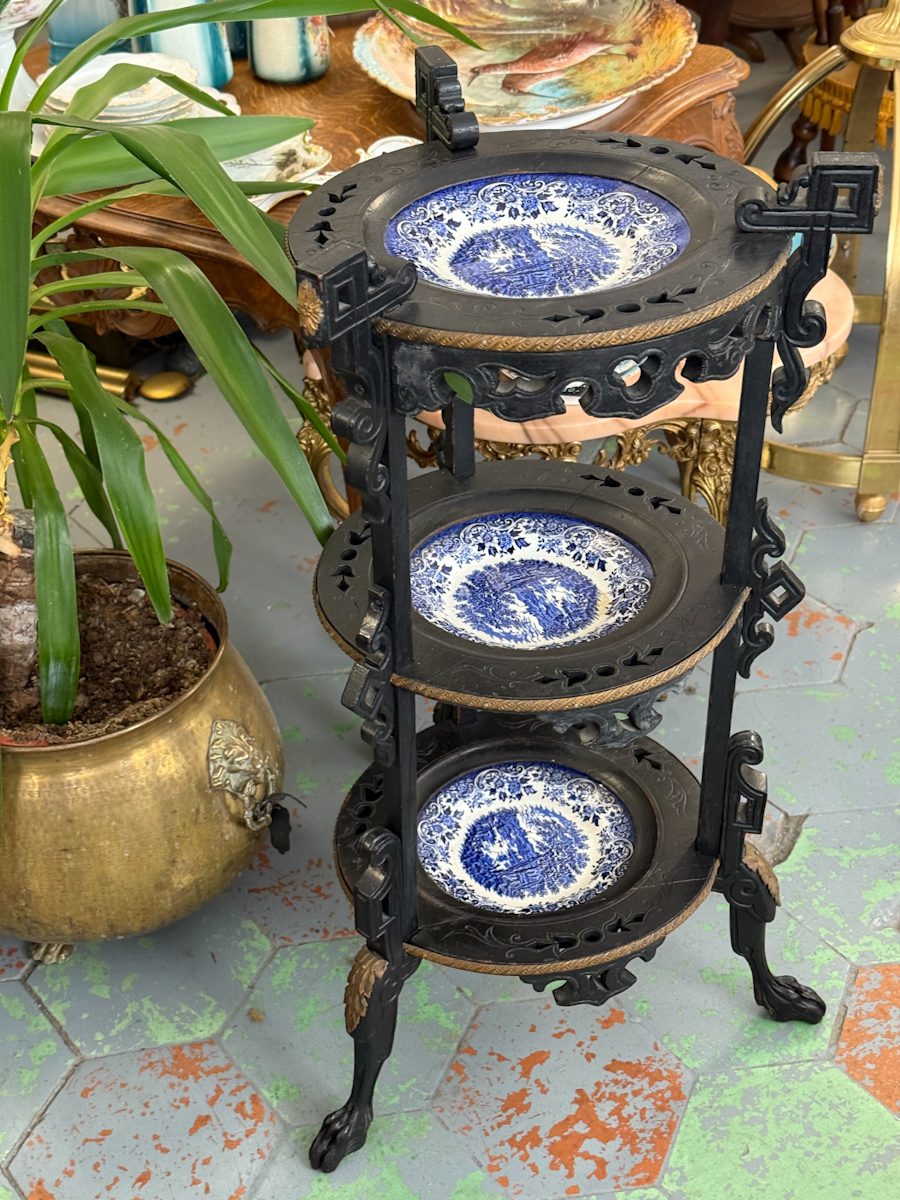
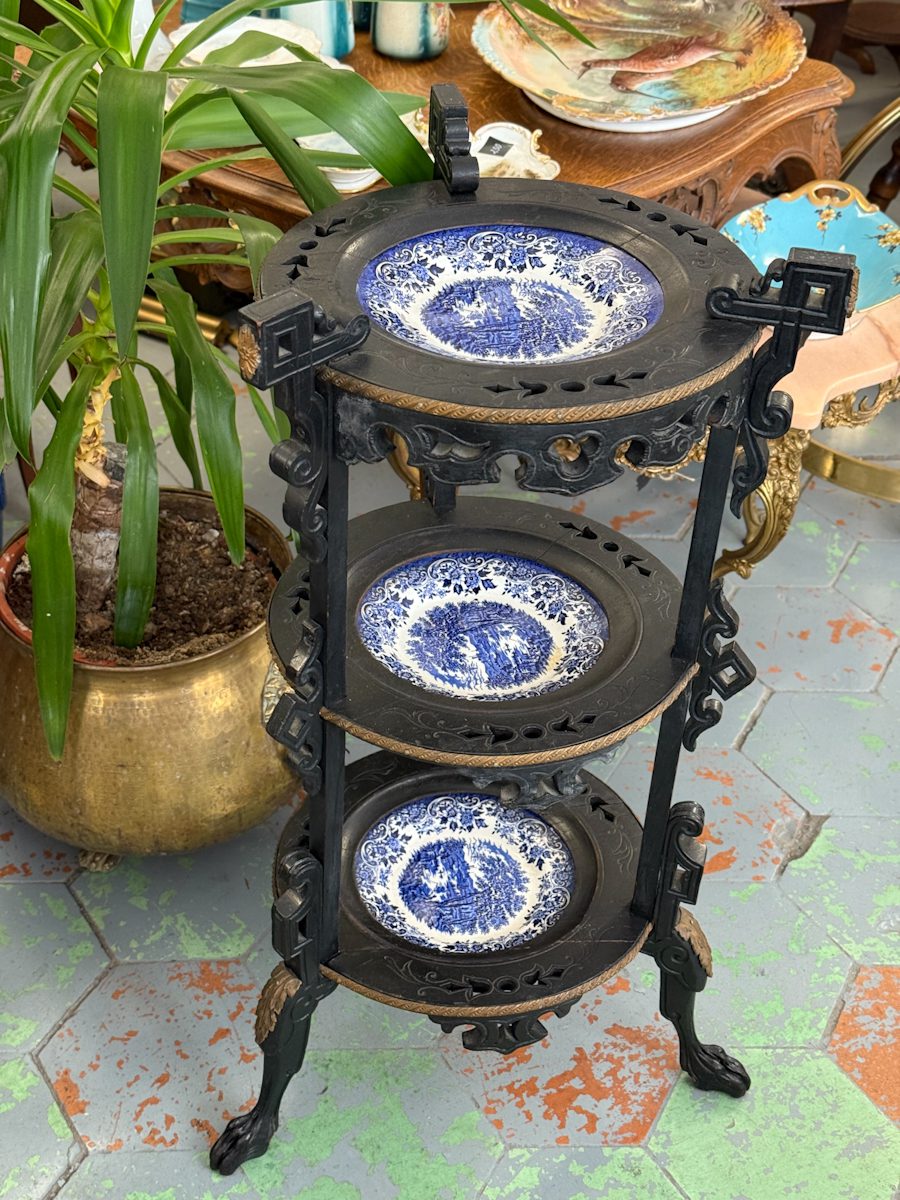
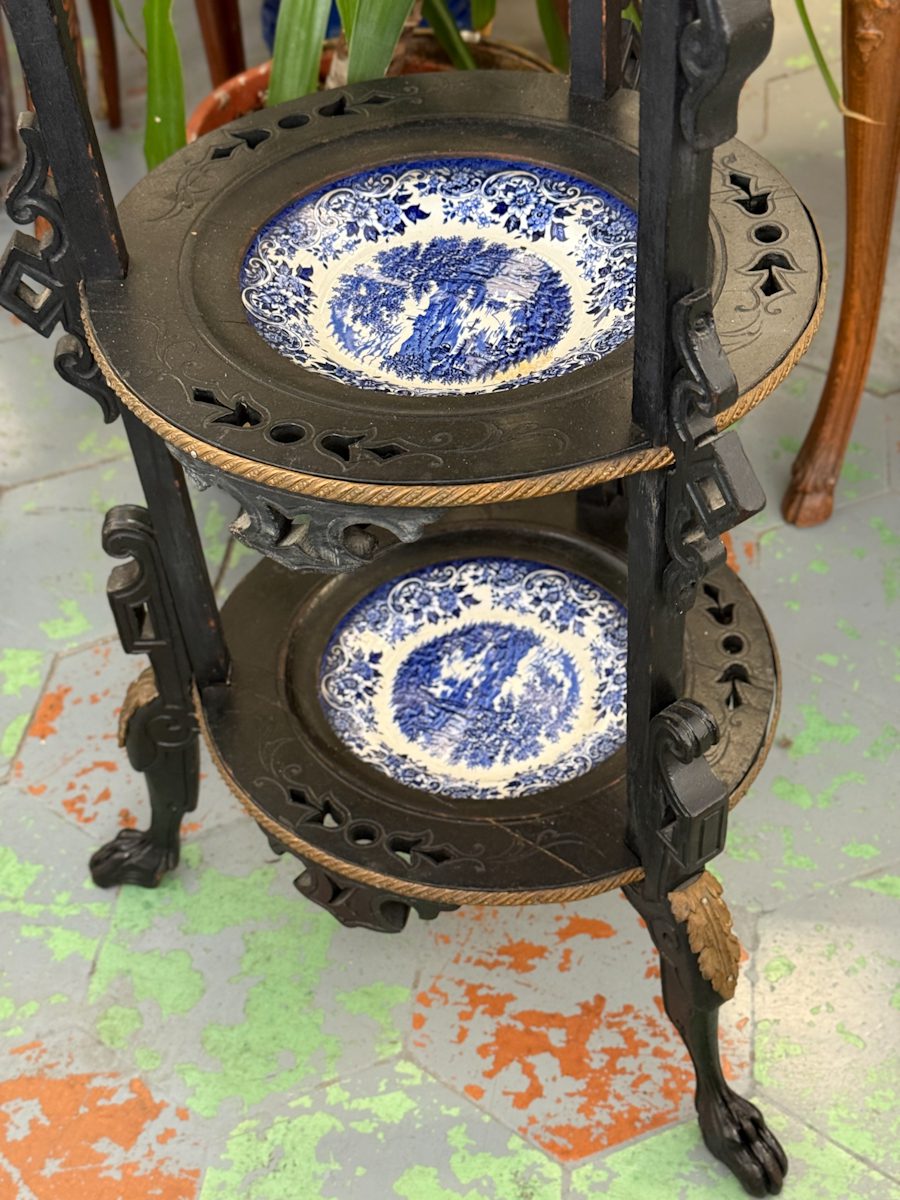
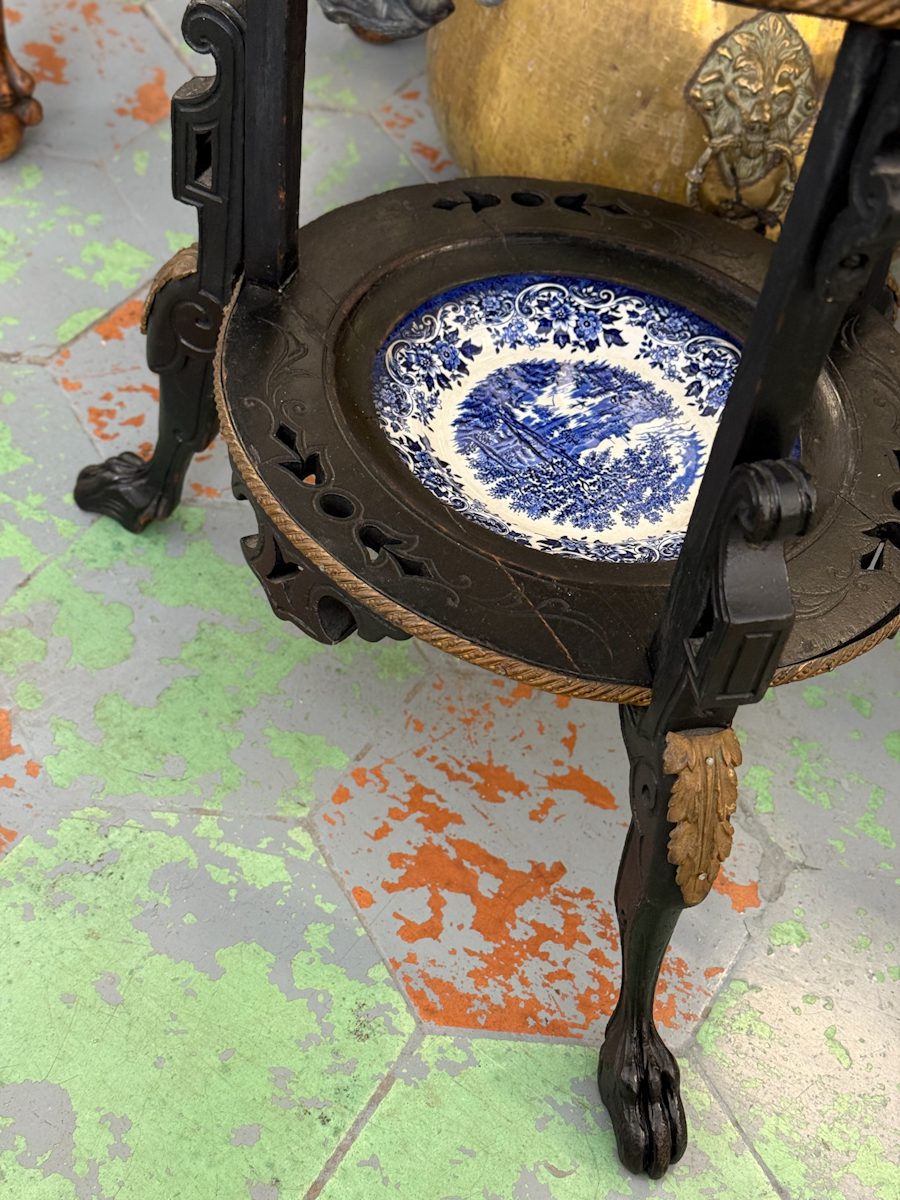
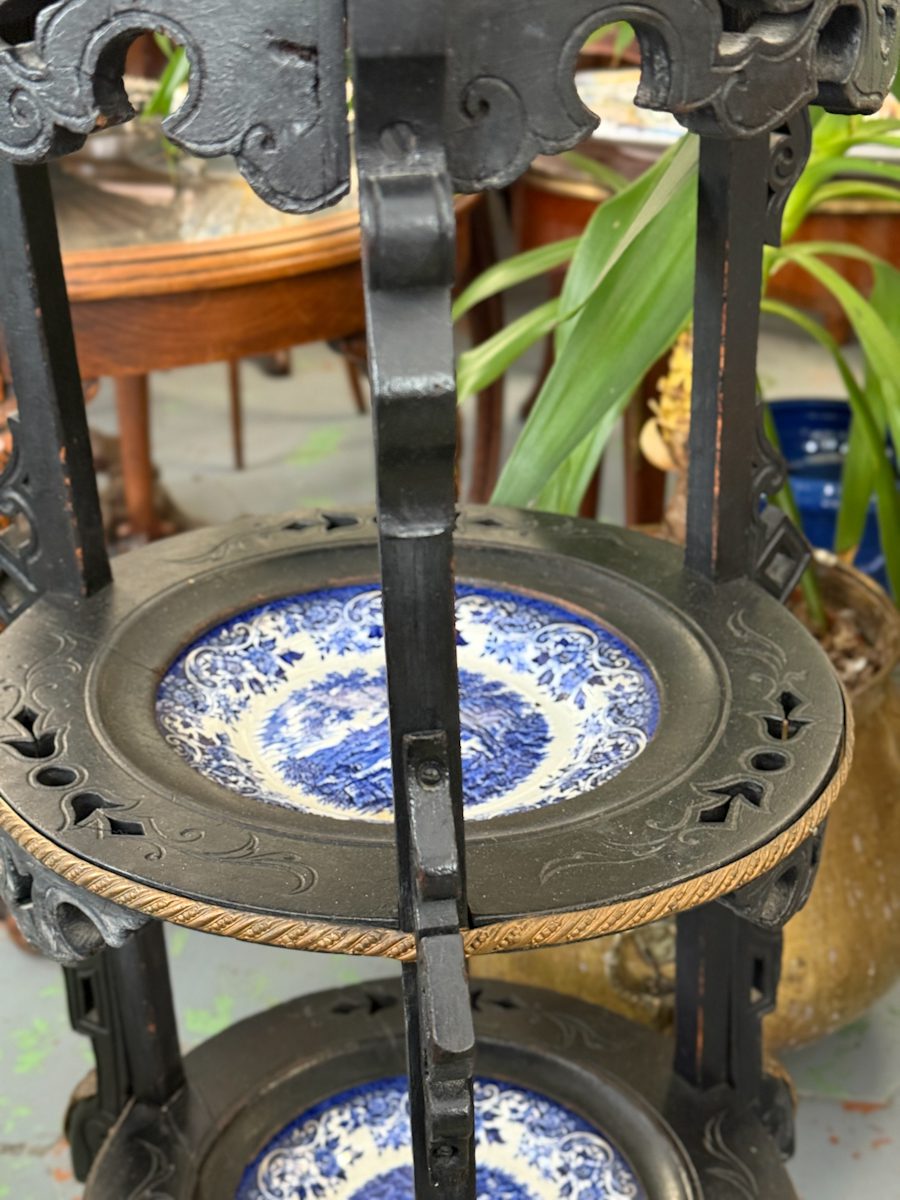
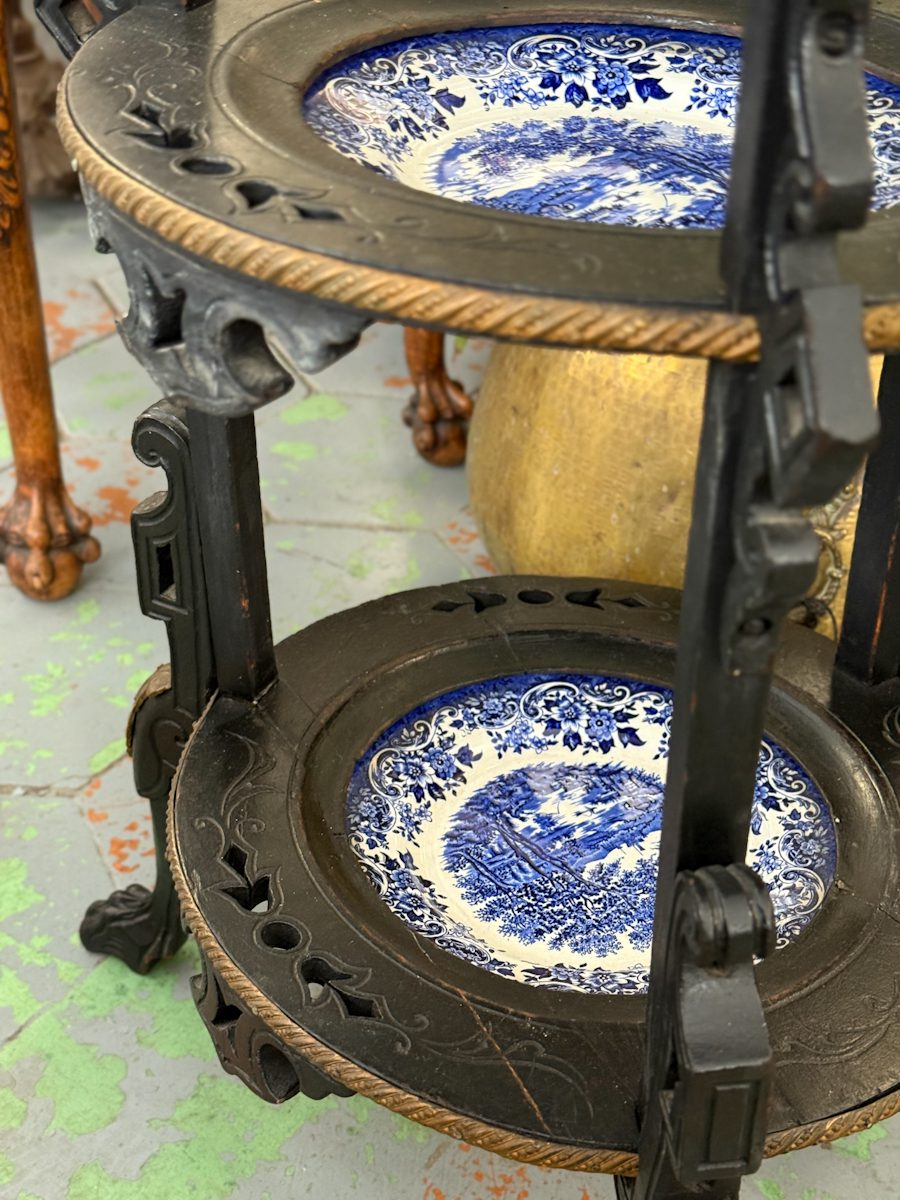
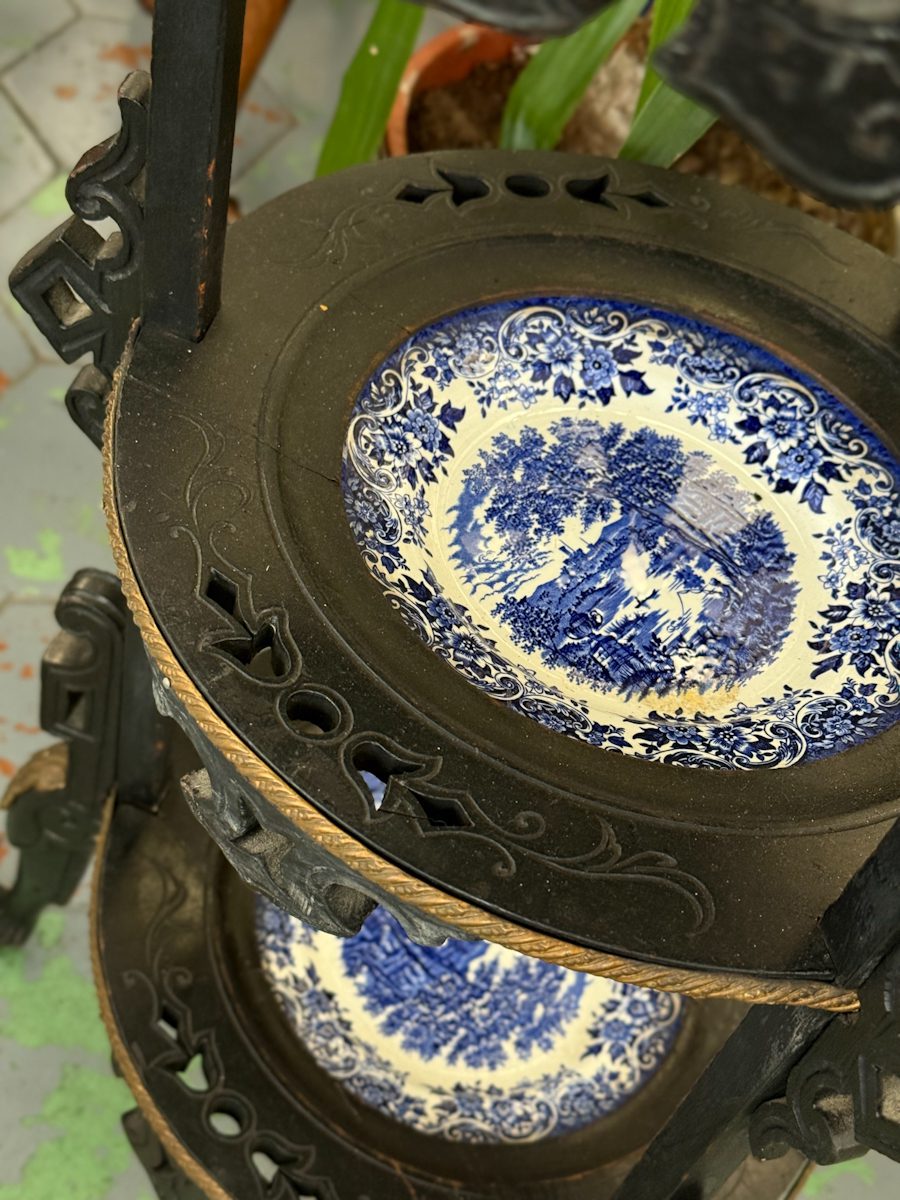
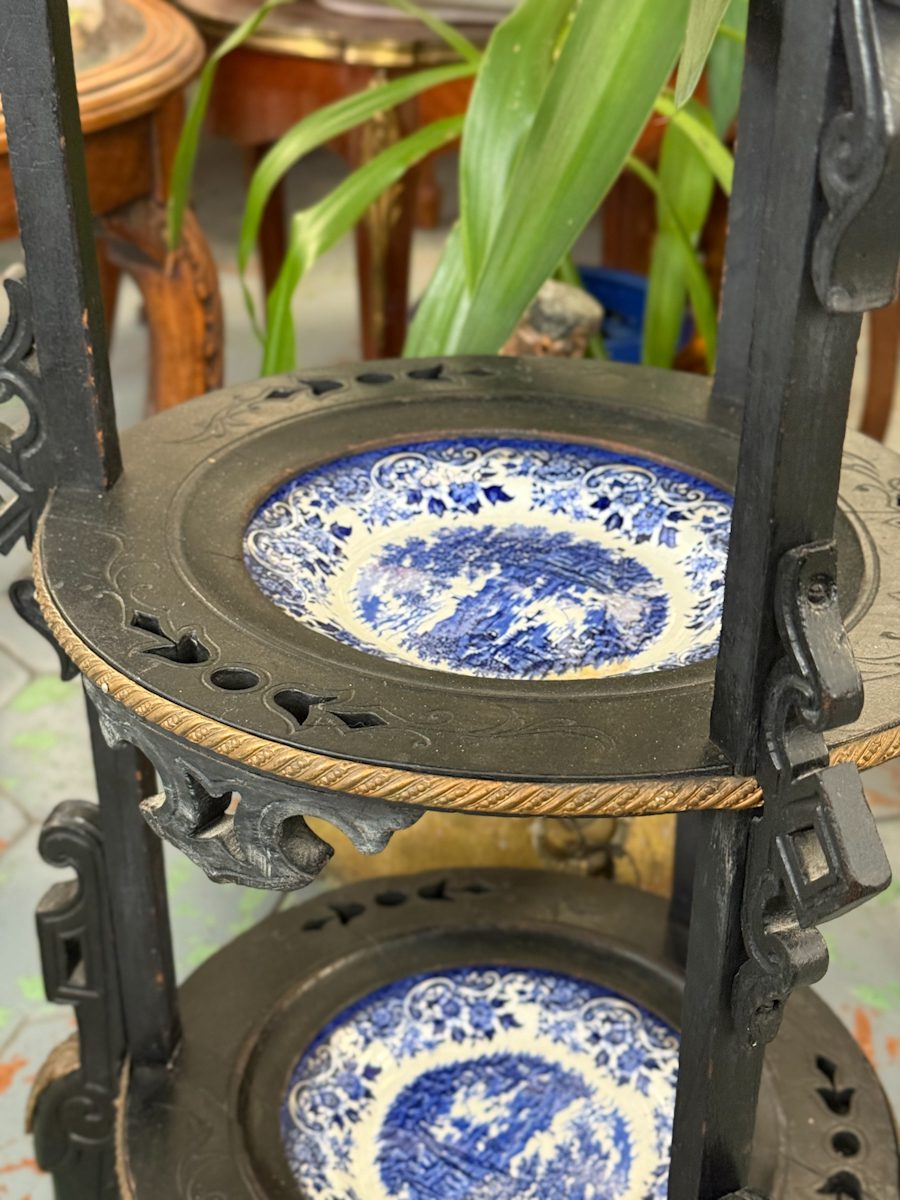
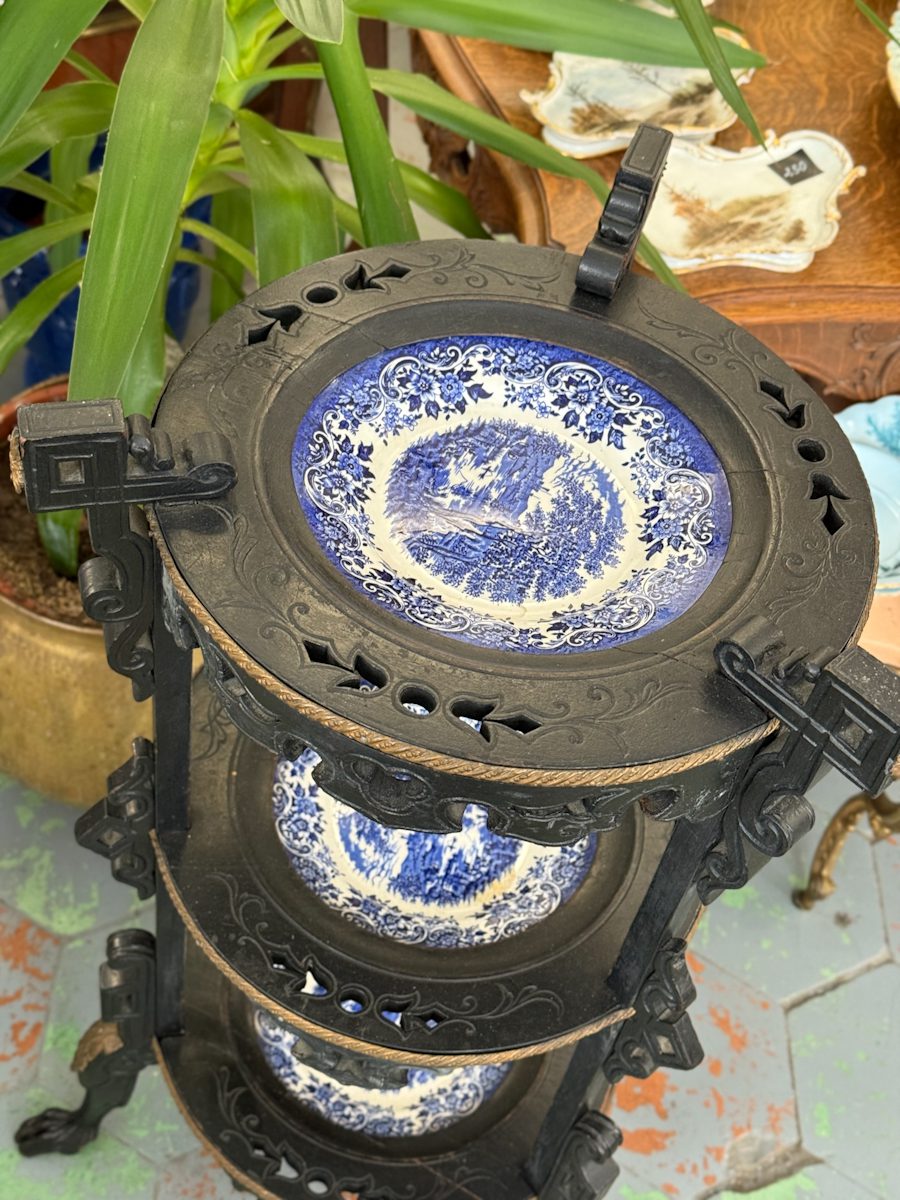
Trīsstāvu melnots koka stends ar izņemamiem zilbaltiem fajansa šķīvjiem. Lakots koks ar zelta akcentiem un lauvas ķepu kājām. Viktorijas laikmets, Anglija, ap 1870.–1900. Augstums 80,5 cm × platums 38 cm. Vidēji viegls.
📐 IZMĒRI Augstums 80,5 cm × platums 38 cm. Svars — vidēji viegls.
―――――――――――――――――――――
Trīsstāvu Koka Šķīvju Stends ar Zilbaltiem Fajansa Šķīvjiem — Viktorijas laikmeta Eklektika / Estētisma stils, Lielbritānija, ap 1870.–1900.
―――――――――――――――――――――
🏛️ IZGATAVOŠANAS PERIODS, MĀKSLAS STILS, LAIKMETS
Šis priekšmets radīts Viktorijas laikmeta kulminācijas posmā — periodā, kad Eklektika un Estētisma kustība (Aesthetic Movement) atnesa jaunu aizraušanos ar Austrumu mākslām, dekoratīvo koku apstrādi un keramikas kultūru. Stends pieder tam īpašajam 19. gadsimta nogales tipam, kas Anglijā kļuva par modes priekšmetu labiekārtotās buržuāziskās un aristokrātiskās mājas drawing room kultūrā — šķīvju izstādīšana uz speciāla stenda bija ne tikai praktiska, bet arī tīri dekoratīva tradīcija.
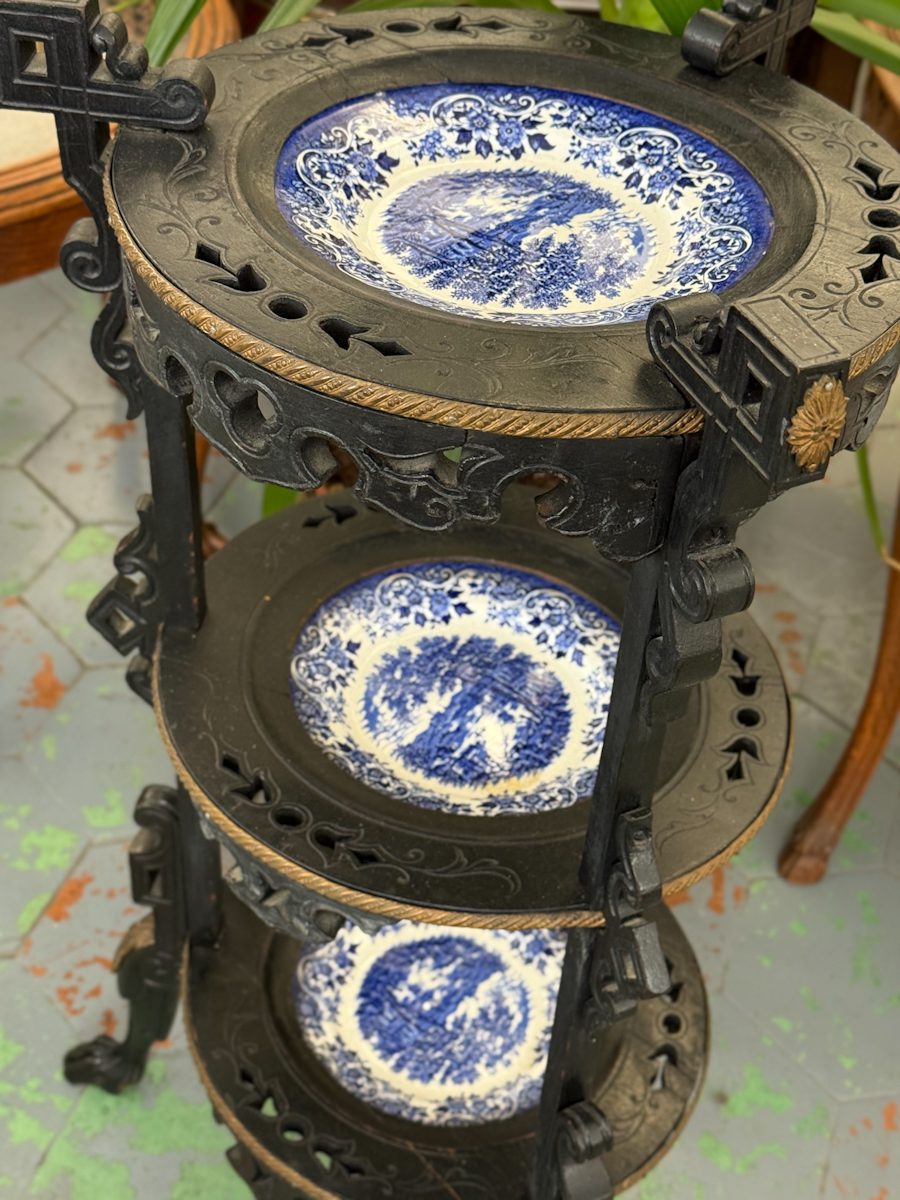
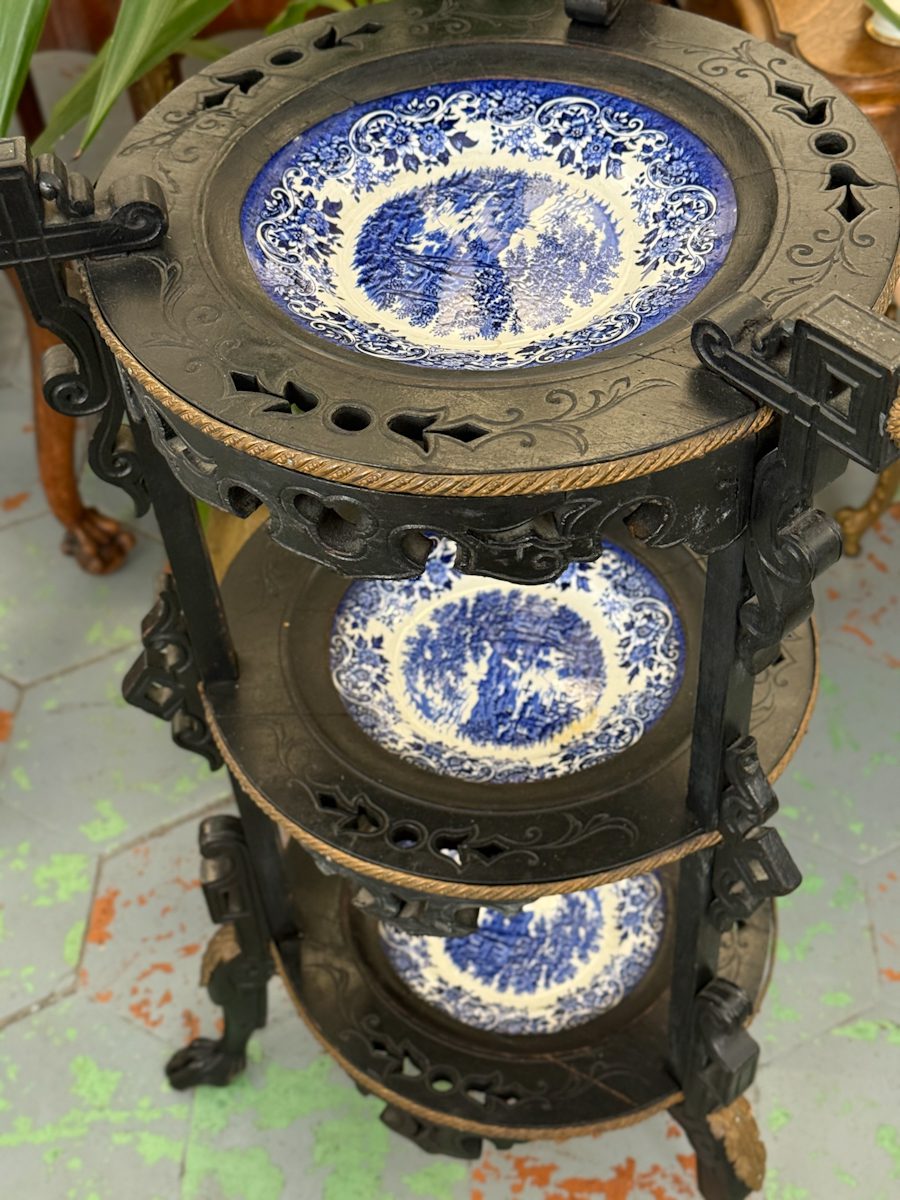
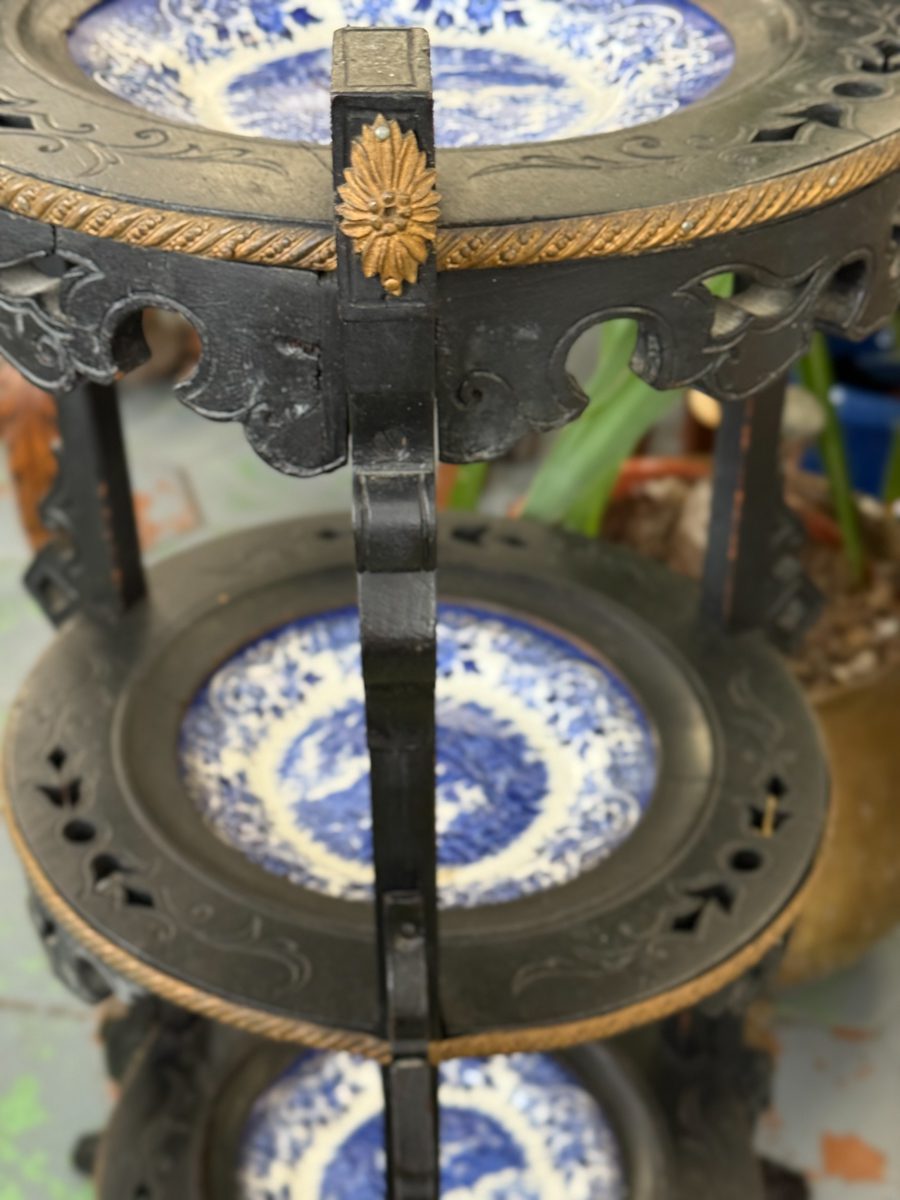
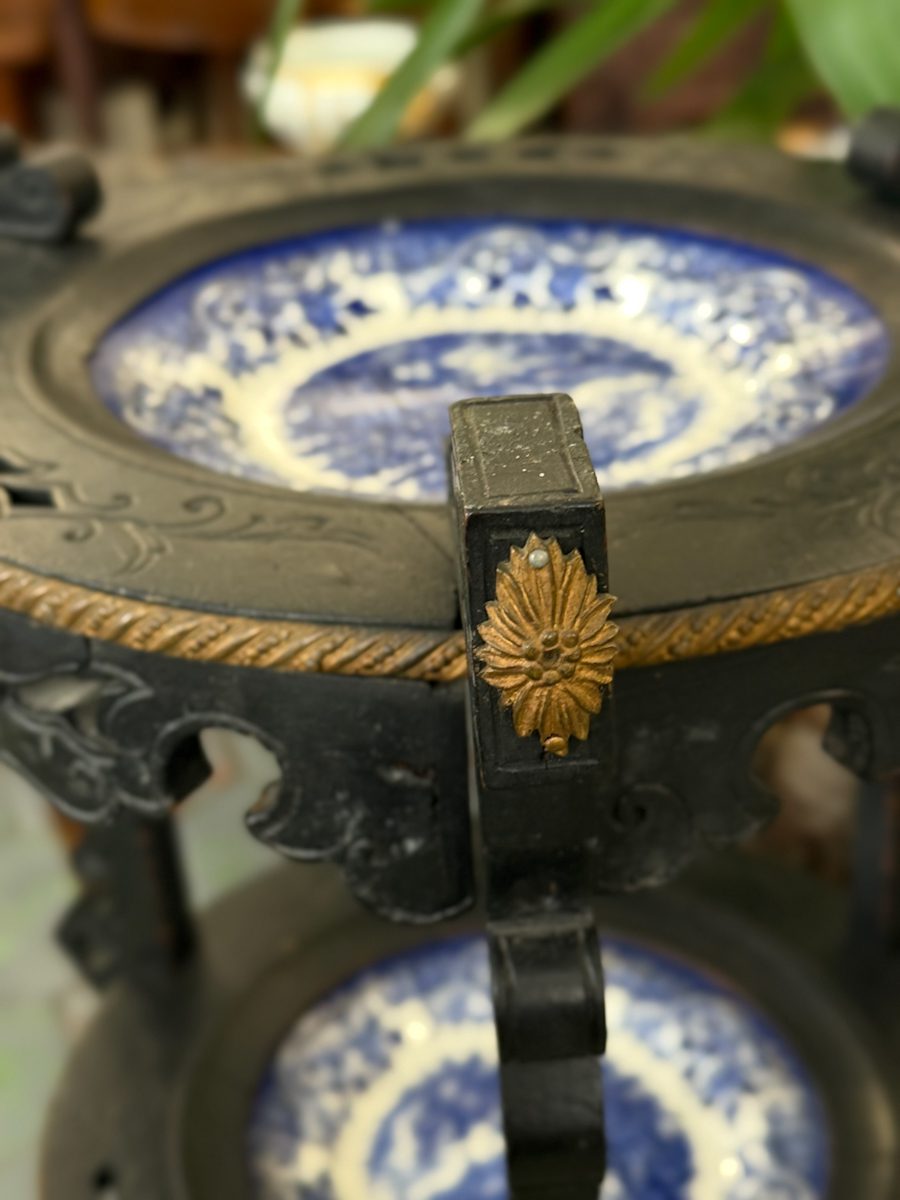
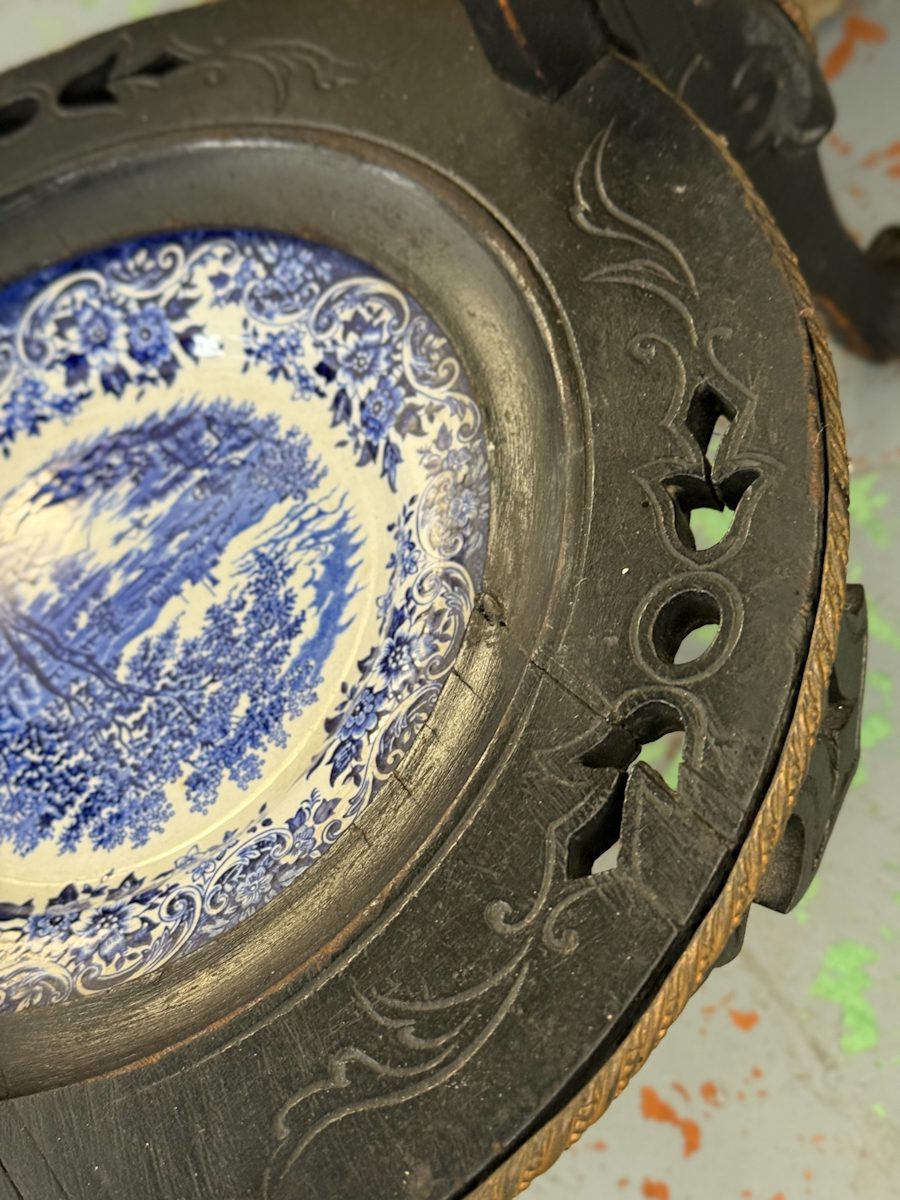
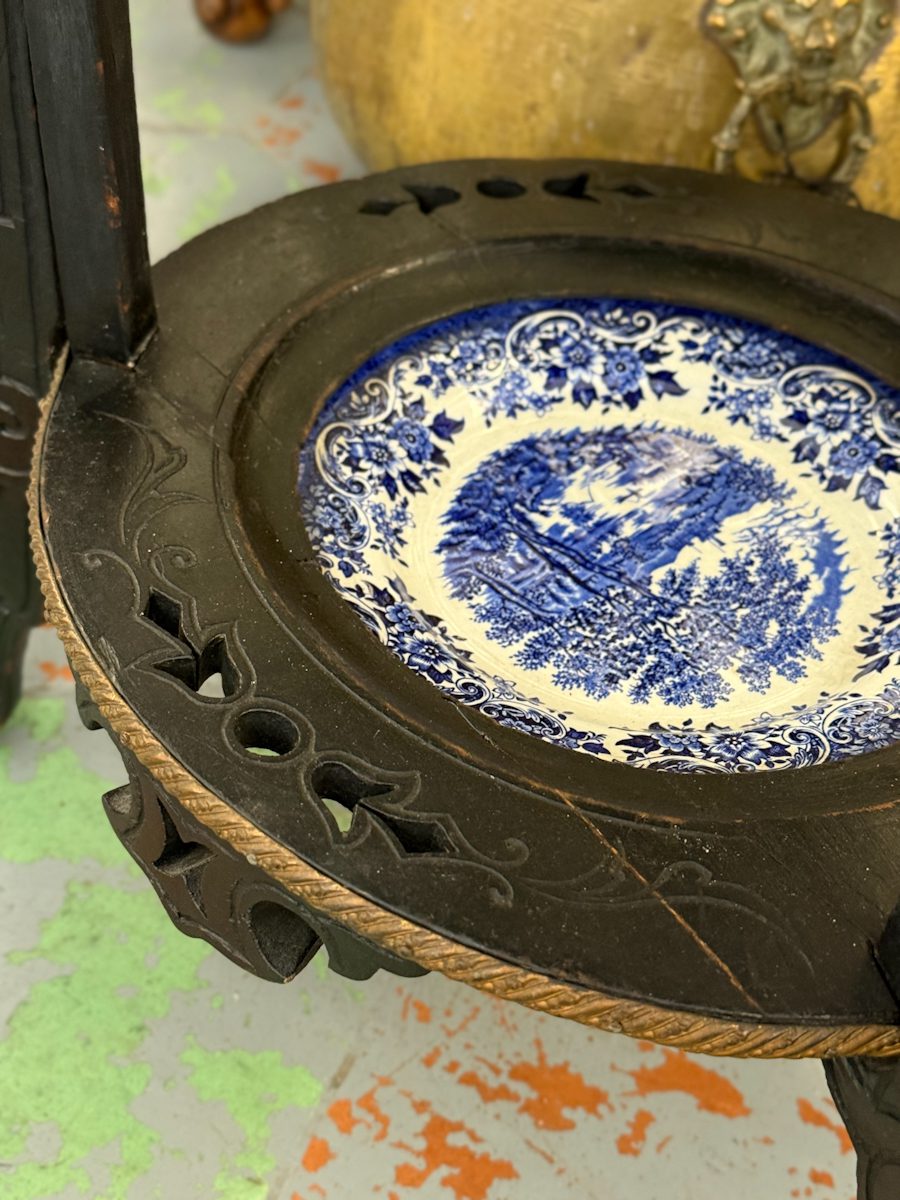
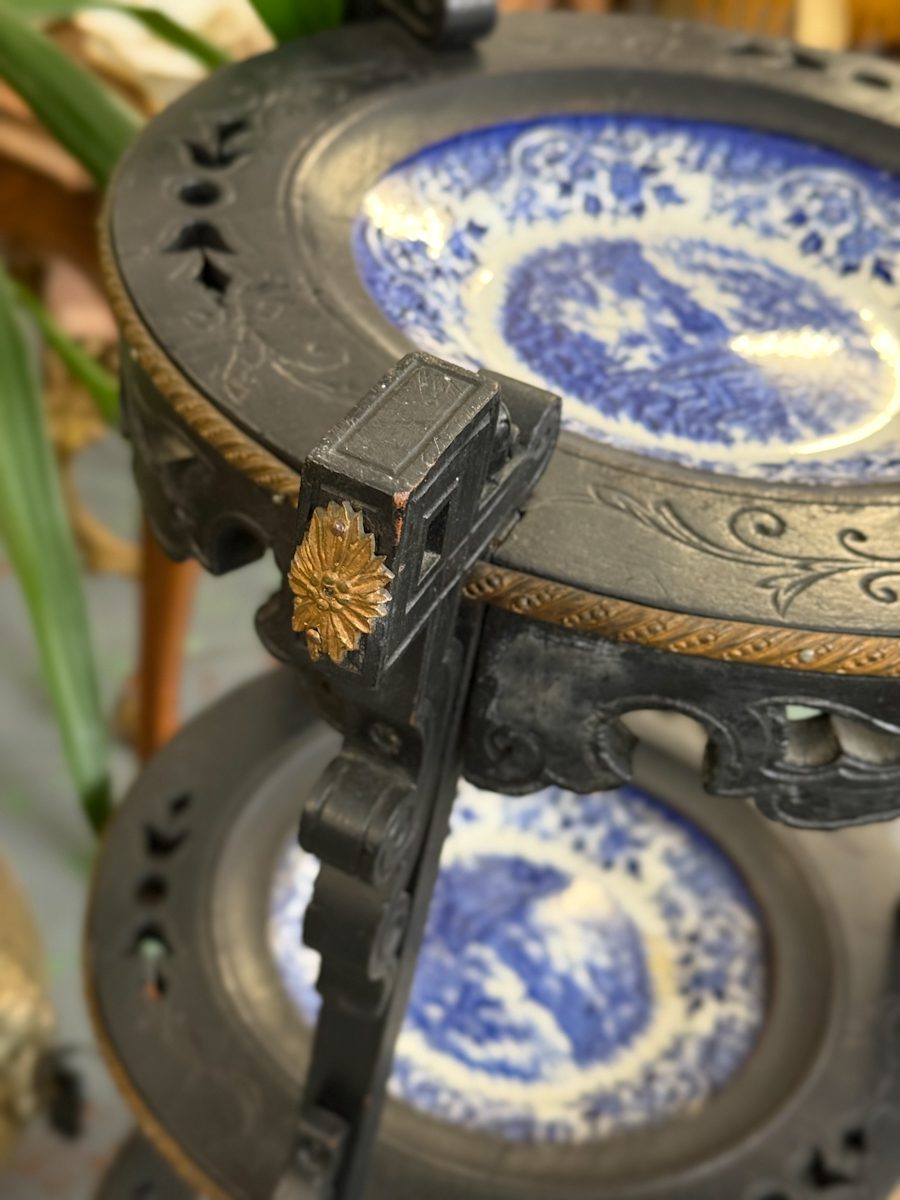
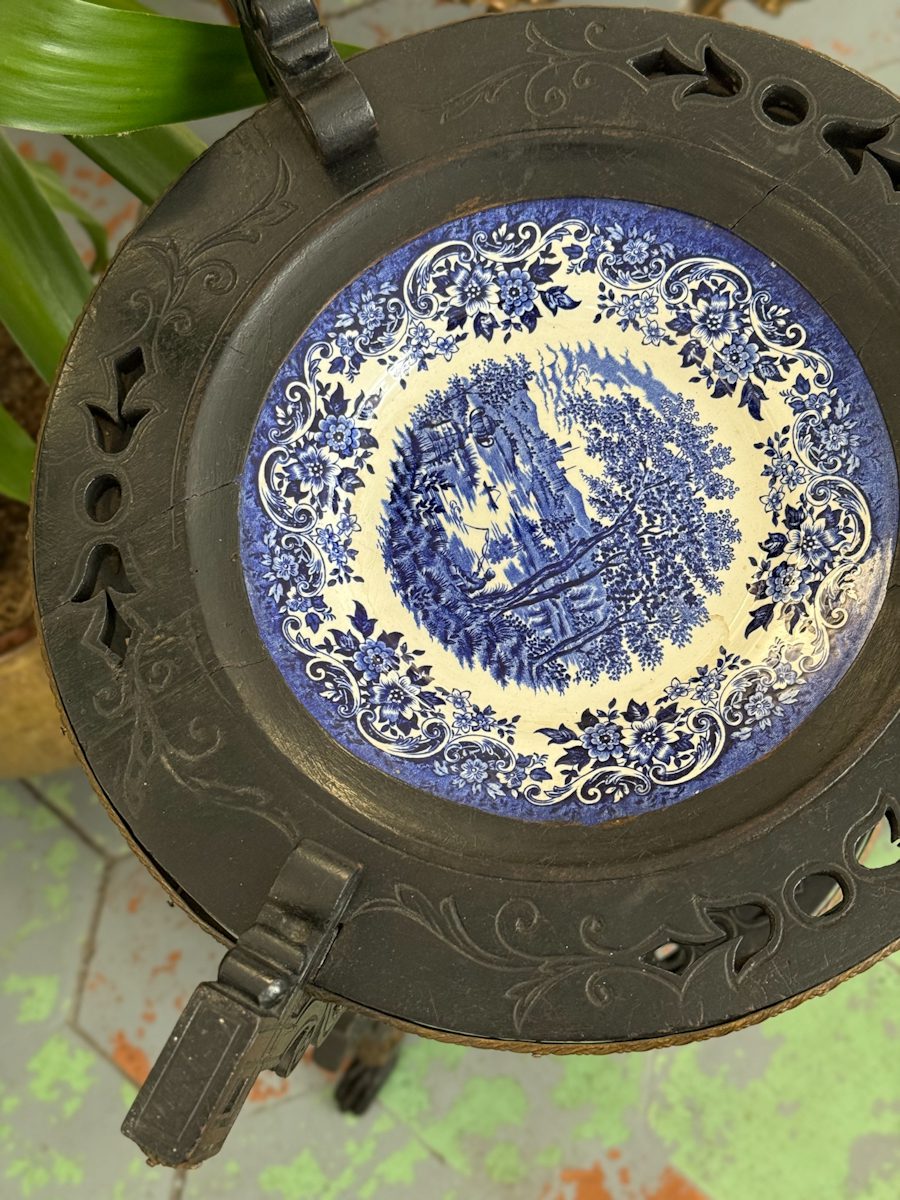
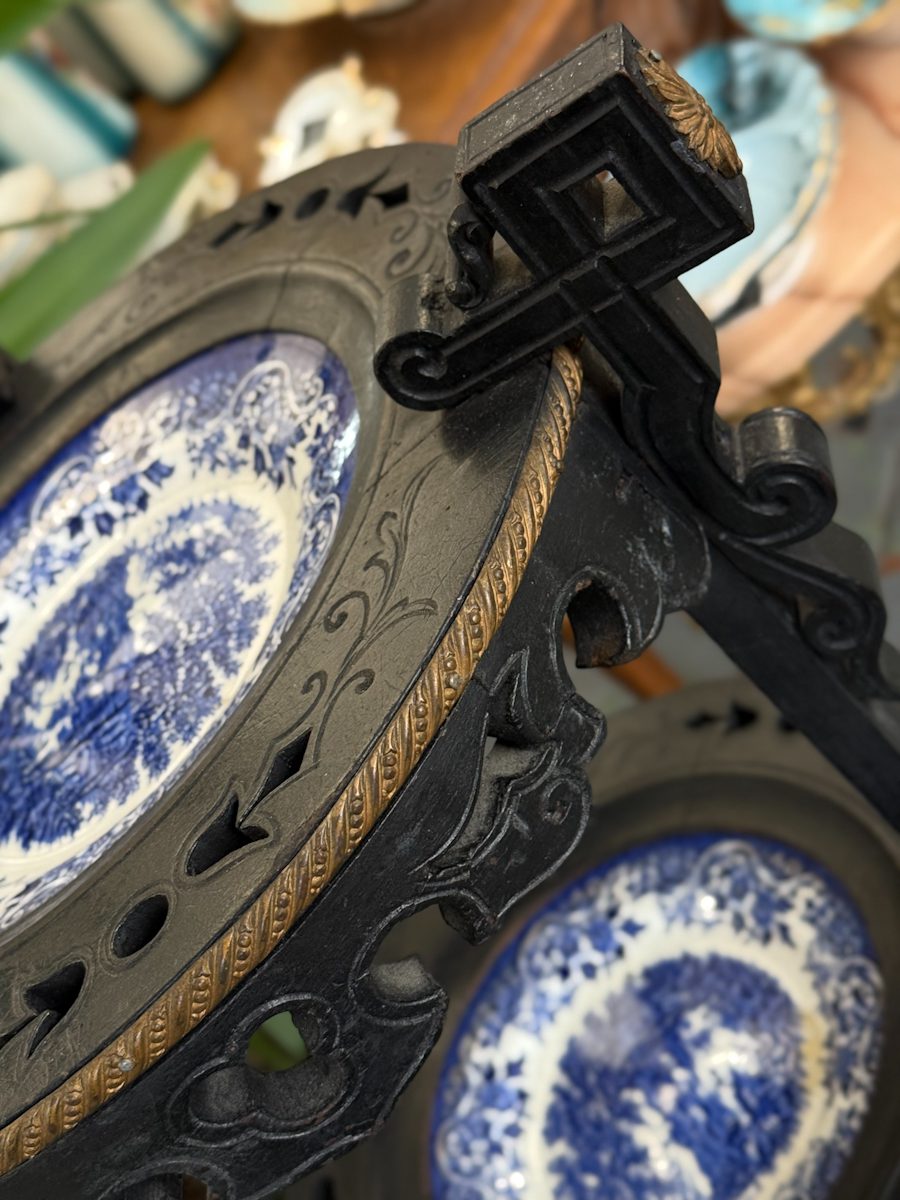
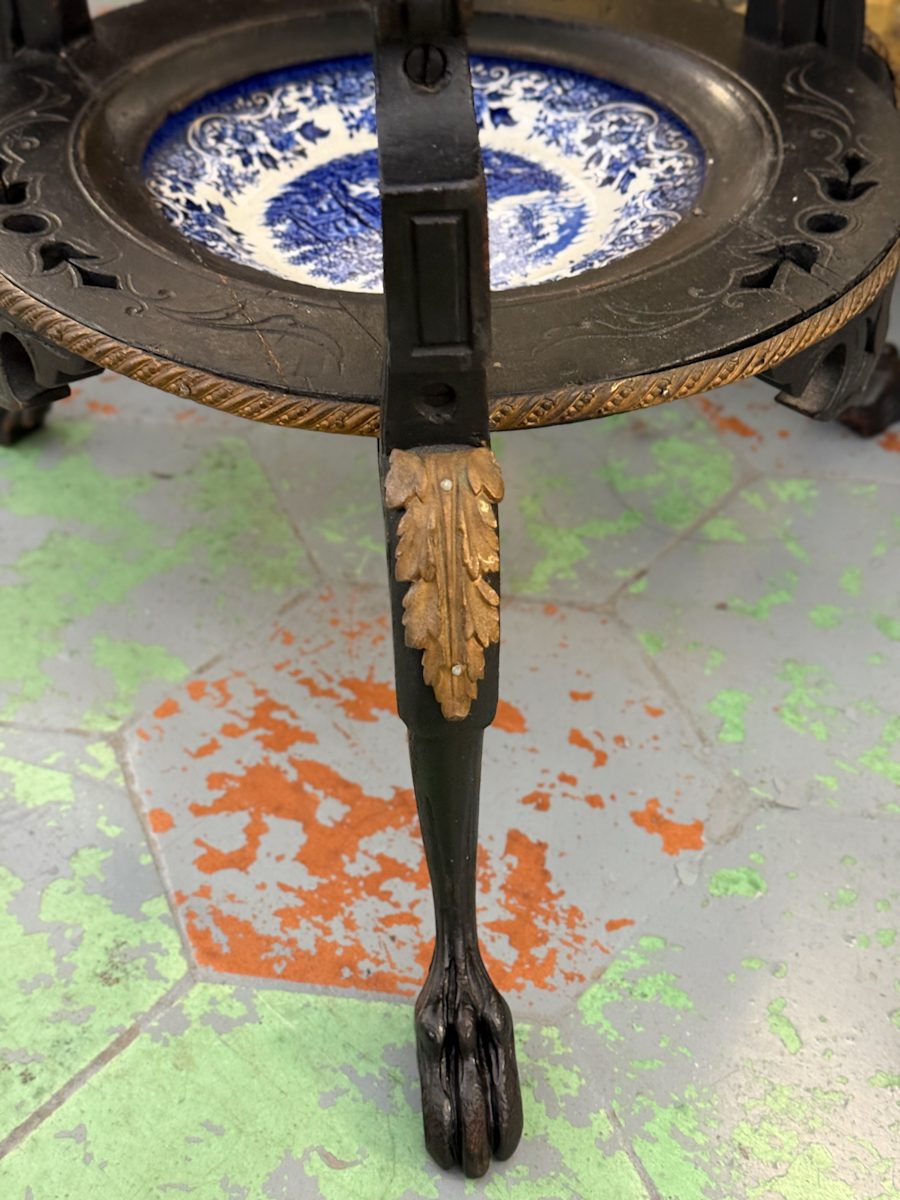
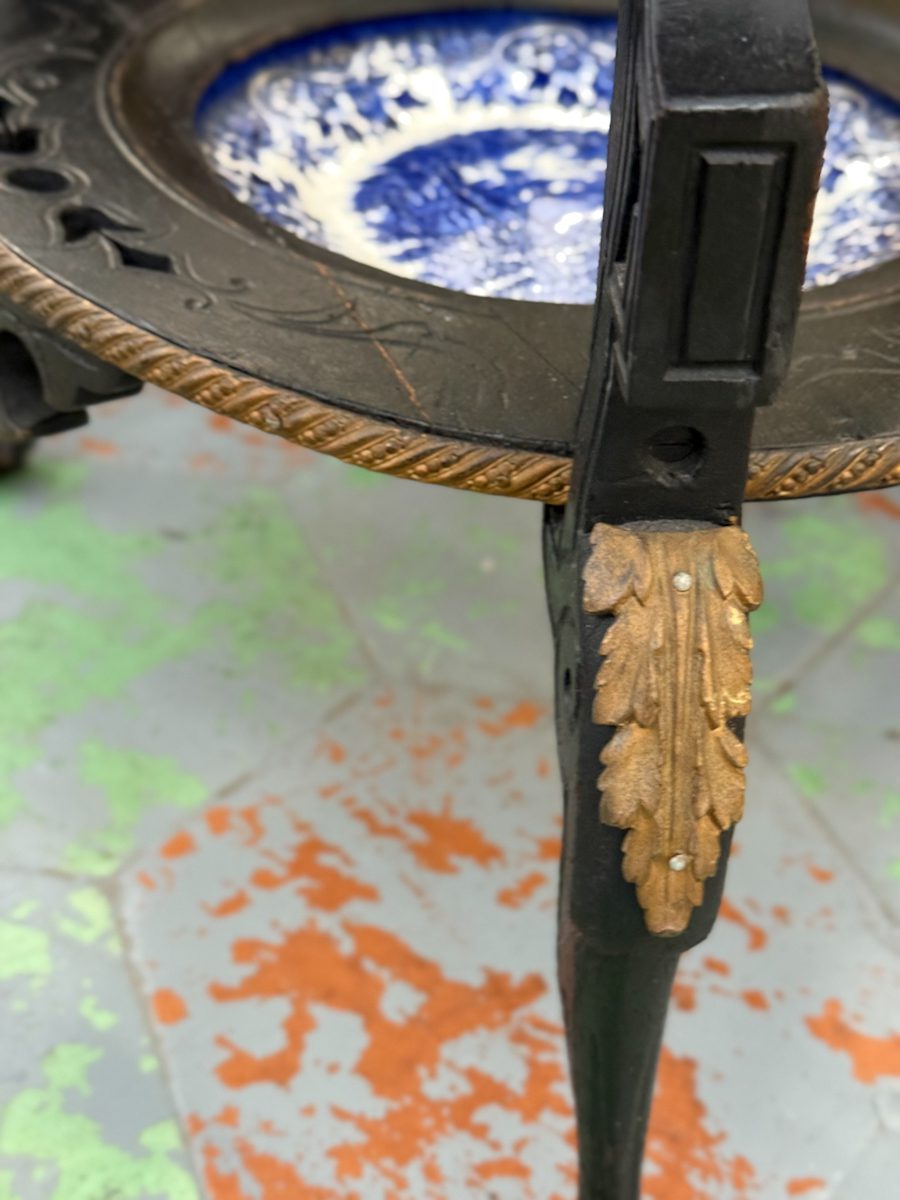
Koka korpuss melnots un lakots, ar pierced (caurgriezto) ornamentiku ap šķīvju turētājiem — raksturīga Viktorijas laika galdnieku tehnika, kas imitēja austrumniecisko fretwork (režģa darbu). Katras kārtas malā uzlikta zeltota rope-twist (virves pinuma) joslīte, kas kontrastē ar melno pamattoni. Kājas beidzas ar reālistiski izveidotu lauvas ķepu (paw feet) — neoklasicistisks motīvs, kas šajā laikmetā piedzīvoja renesansi. Uz vertikālo stieņu savienojumiem uzlikti nelieli bronzas vai misiņa rozetes (sunflower rosette) ornamenti — tipisks Estētisma detaļu akcents, kas atgādina Japānas dekoratīvo mākslu.
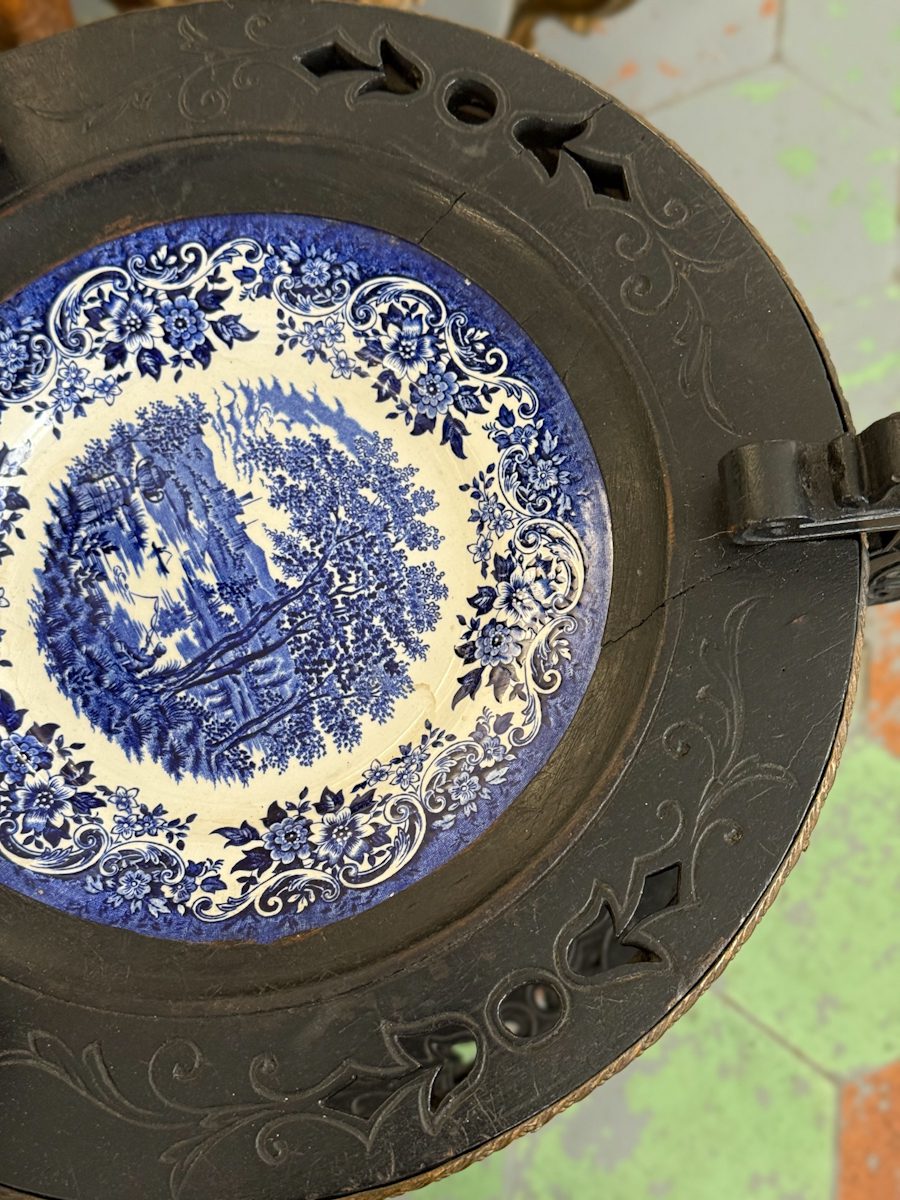
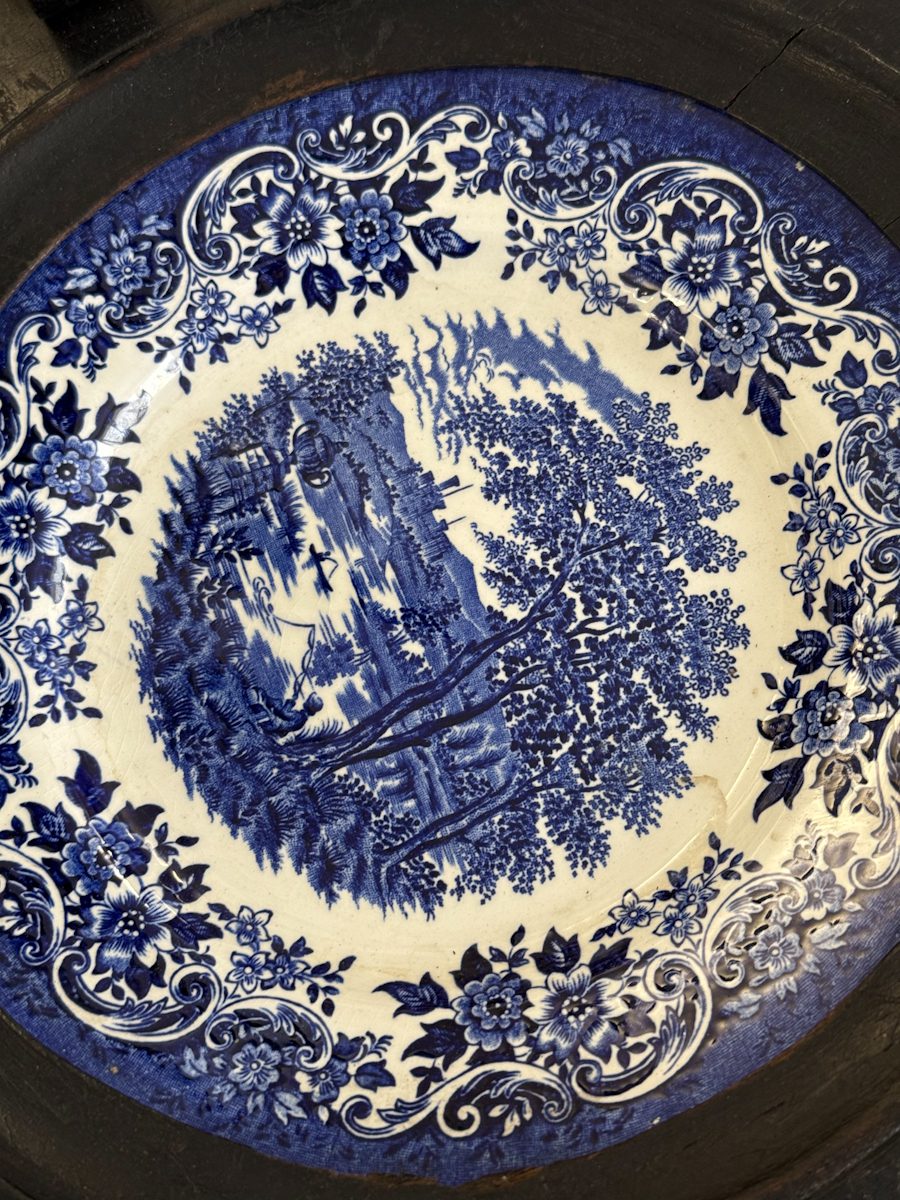
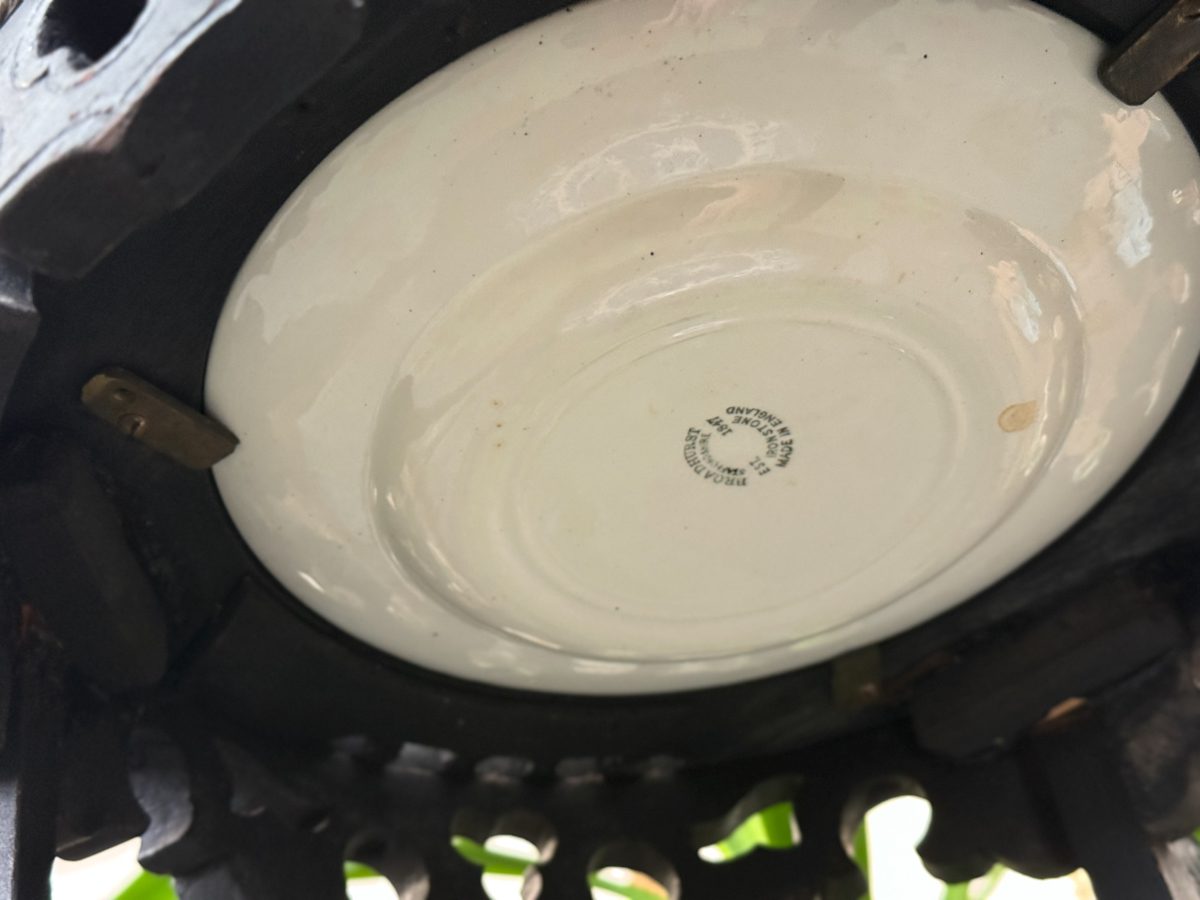
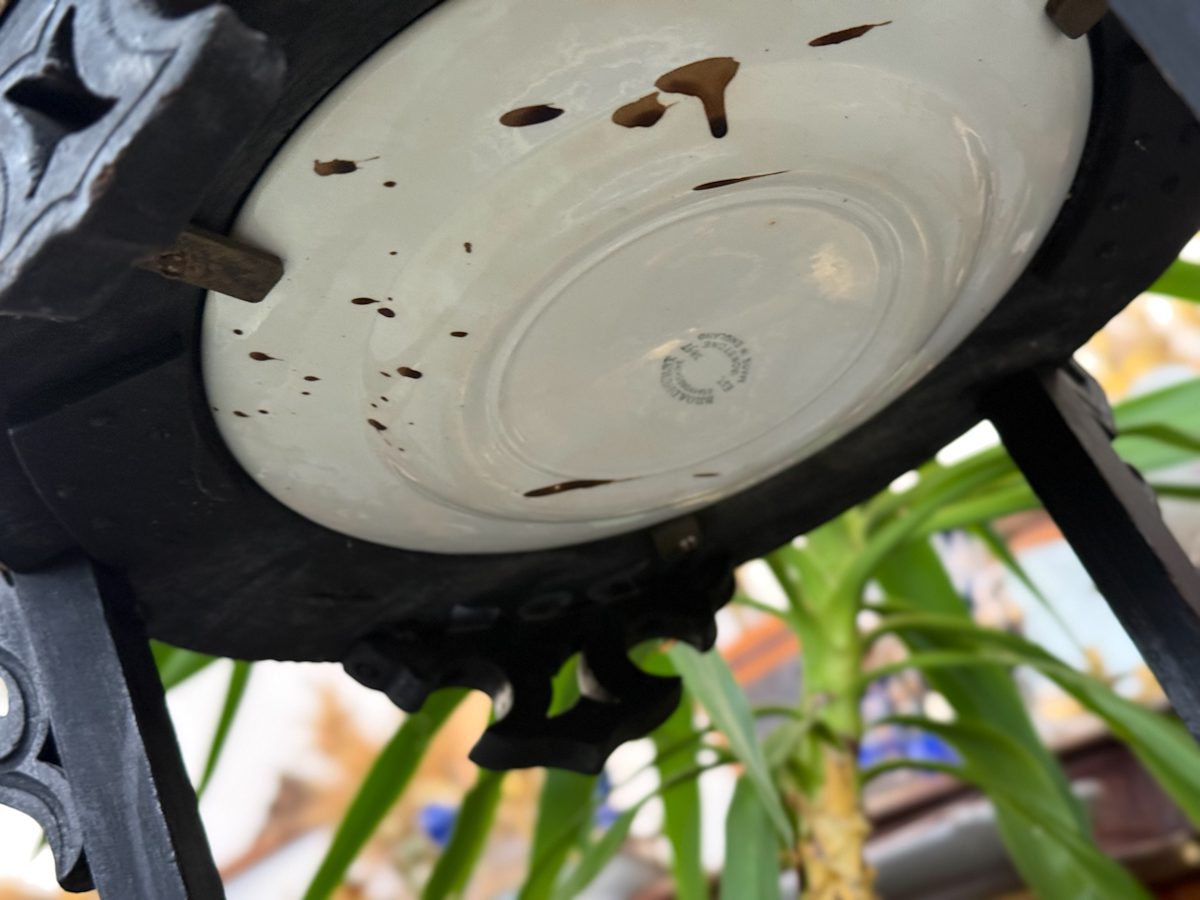
Šķīvji — blue and white transferware tradīcijā, ar romantisku ainavu un bagātīgu ziedu apmali. Zīmogs uz apakšpuses norāda angļu manufaktūru ar norādi “Made in England” un dibināšanas gadu 1887. Šķīvji ir izņemami no stenda.
―――――――――――――――――――――
⚜️ RAŽOTĀJS UN MANUFAKTŪRAS ZĪMOGS
Stenda ražotājs nav marķēts, taču konstrukcija un ornamentika norāda uz Angliju — lielāko Viktorijas laika dekoratīvā koka mēbeļu un aksesuāru eksportētāju. Šāda tipa stendi tika ražoti Londonā un Birminghamā, un eksportēti visā Eiropā.
Šķīvji pēc zīmoga — ražoti Anglijā, iespējams, Staffordshire rajona manufaktūrā. Zīmogā redzama apļveida tekste ar “Made in England” un gads 1887. Blue and white ironstone ainavu dekors ar chinoiserie ziedu apmali pieder populārajai angļu scenic transferware tradīcijai, ko 19. gs. otrajā pusē kolekcionēja visā pasaulē.
―――――――――――――――――――――
💎 RETUMS UN NOZĪME
Trīsstāvu koka šķīvju stendi ar oriģināliem šķīvjiem komplektā — salīdzinoši reta parādība antikvāru tirgū. Parasti vai nu stends saglabājies bez šķīvjiem, vai šķīvji bez stenda. Šajā gadījumā komplekts ir pilnīgs ar trim šķīvjiem. Šādi stendi ir pieprasīti gan Anglijas, gan kontinentālās Eiropas antikvariātos — kā dekoratīvi objekti ar spēcīgu vizuālo klātbūtni. Blue and white transferware kolekcionēšana ir viena no aktīvākajām nišām anglofonajā antikvārajā pasaulē.
―――――――――――――――――――――
🕯️ PIELIETOJUMS INTERJERĀ, DIZAINĀ UN FOTOGRĀFIJĀ
Stends lieliski iekļaujas gan klasiskā angļu interjerā, gan eklektiskā vai vintage romantiskā stilā. Trīs šķīvji zilbaltā toņu gammā rada eleganci bez pārspīlēšanas. Var izmantot kā funkcionālu stāvošu vitrīnu — uz tā novietot citu keramiku, sveces vai dekoratīvus objektus. Interjera stilisti izmanto šāda tipa priekšmetus kā akcentu telpas stūrī vai pie sienas. Fotogrāfiem — ideāls rekvizīts ar tekstūru un dziļumu: melnais lakotais koks, zeltais akcents un zilbaltā keramika veido gleznieciskas kombinācijas.
―――――――――――――――――――――
🎁 DĀVANA UN PERSONALIZĀCIJA
Neparasts un izsmalcināts dāvanas variants cilvēkam ar izsmalcinātu gaumi — mājas interjera entuziastam, keramikas kolekcionāram vai anglofīlam. Pietiekami apjomīgs, lai atstātu iespaidu, un pietiekami elegants, lai rotātu dzīvojamo istabu vai bibliotēku.
―――――――――――――――――――――
🔍 STĀVOKLIS
Koka stends — labā vispārējā stāvoklī, ar vecuma liecībām un patīnu, kas apliecina tā autentiskumu. Redzamas nelielas skrāpējumu un nolietojuma pēdas melnajā lakojumā. Zeltojums uz rope-twist joslītēm un bronzas rozetes saglabājušies. Šķīvji — ar normālu lietošanas nolietojumu; uz vairāku apakšpusēm redzamas nelielas brūnas rūsas traipītes no kontakta ar stenda metāla elementiem. Šķīvji ir izņemami. Lietas stāvoklis pilnībā atspoguļots fotogrāfijās.
―――――――――――――――――――――
🇬🇧 DESCRIPTION IN ENGLISH
―――――――――――――――――――――
📐 DIMENSIONS Height 80.5 cm × width 38 cm. Weight — medium light.
―――――――――――――――――――――
Three-Tier Ebonised Wooden Plate Stand with Blue and White Transferware Plates — Victorian Eclectic / Aesthetic Movement, Great Britain, circa 1870–1900.
―――――――――――――――――――――
🏛️ PERIOD, ARTISTIC STYLE, ERA
This piece was made during the height of the Victorian era, when the Eclectic style and the Aesthetic Movement brought new enthusiasm for Eastern art, decorative woodwork, and ceramic culture. The stand belongs to a specific late 19th-century type that became fashionable in England for the well-appointed drawing room — displaying plates on a dedicated stand was both a practical and purely decorative tradition.
The wooden frame is ebonised and lacquered, with pierced fretwork ornament around each plate cradle — a characteristic Victorian technique evoking Japanese and Chinese decorative arts. Each tier is edged with a gilded rope-twist band contrasting elegantly against the dark ground. The feet terminate in carved lion’s paw (paw feet) — a neoclassical motif that enjoyed a strong revival during this era. The upright connectors are accented with small bronze or brass sunflower rosette mounts — a typical Aesthetic Movement detail evoking Japanese decorative arts.
The plates — in the classic blue and white transferware tradition — feature a romantic landscape scene with elaborate floral borders. The maker’s mark on the reverse reads “Made in England” with a founding date of 1887. The plates are removable from the stand.
―――――――――――――――――――――
⚜️ MAKER AND MANUFACTURER’S MARK
The stand bears no maker’s mark, but its construction and ornament point to England — the leading Victorian exporter of decorative wooden accessories. Such stands were produced in London and Birmingham and exported throughout Europe.
The plates, based on the backstamp, were produced in England, likely in the Staffordshire district. The circular mark reads “Made in England” with the year 1887. The blue and white ironstone scenic landscape with chinoiserie floral borders belongs to the popular English scenic transferware tradition, widely collected throughout the 19th century.
―――――――――――――――――――――
💎 RARITY AND SIGNIFICANCE
Three-tier wooden plate stands complete with their original matching plates are comparatively rare on the antiques market. In this case, the set is complete with all three plates. Such stands are sought after in both the British and continental European antiques trade as decorative objects with strong visual presence. Collecting blue and white transferware is one of the most active niches in the Anglophone antiques world.
―――――――――――――――――――――
🕯️ USE IN INTERIORS, DESIGN AND PHOTOGRAPHY
The stand integrates beautifully into a classic English interior, as well as eclectic or vintage romantic settings. The three plates in a blue-and-white palette create elegance without excess. It may also serve as a functional standing display for other ceramics, candles, or decorative objects. Interior designers use pieces of this type as accent focal points in a corner or against a wall. For photographers — an ideal prop with rich texture and depth: the ebonised wood, gilt accents, and blue-and-white ceramics create painterly combinations.
―――――――――――――――――――――
🎁 AS A GIFT
An unusual and refined gift for someone with a discerning eye — a home interiors enthusiast, a ceramics collector, or an Anglophile. Substantial enough to make an impression, elegant enough to grace a drawing room or library.
―――――――――――――――――――――
🔍 CONDITION
The wooden stand is in good overall condition, with age-appropriate patina and wear consistent with its period. Minor scratching and surface wear to the ebonised lacquer. The gilding on the rope-twist bands and the bronze rosette mounts are well-preserved. The plates show normal use wear; several display small rust-coloured marks on the reverse from contact with the metal elements of the stand. Plates are removable. The condition of the item is fully reflected in the photographs.
―――――――――――――――――――――