
Franču medību ainas eļļas glezna ar suņiem un jātniekiem, parakstīta “Nery” (5851)
Franču medību ainas eļļas glezna ar suņiem un jātniekiem, parakstīta “Nery” (5851)
€1,650.00
Kvalitatīva franču medību ainas (chasse à courre) eļļas glezna: sarkanos frakos jātnieki, suņu bars un brieža dzīšana pāri upei rudens mežā. Greznā zeltītā rāmī, parakstīta “Nery”. 19. gs. beigas – 20. gs. sākums.
🇱🇻 LATVISKI
Izmēri:
Augstums — 95,5 cm
Platums — 115 cm
Franču medību ainas eļļas glezna ar suņiem un jātniekiem — parakstīta
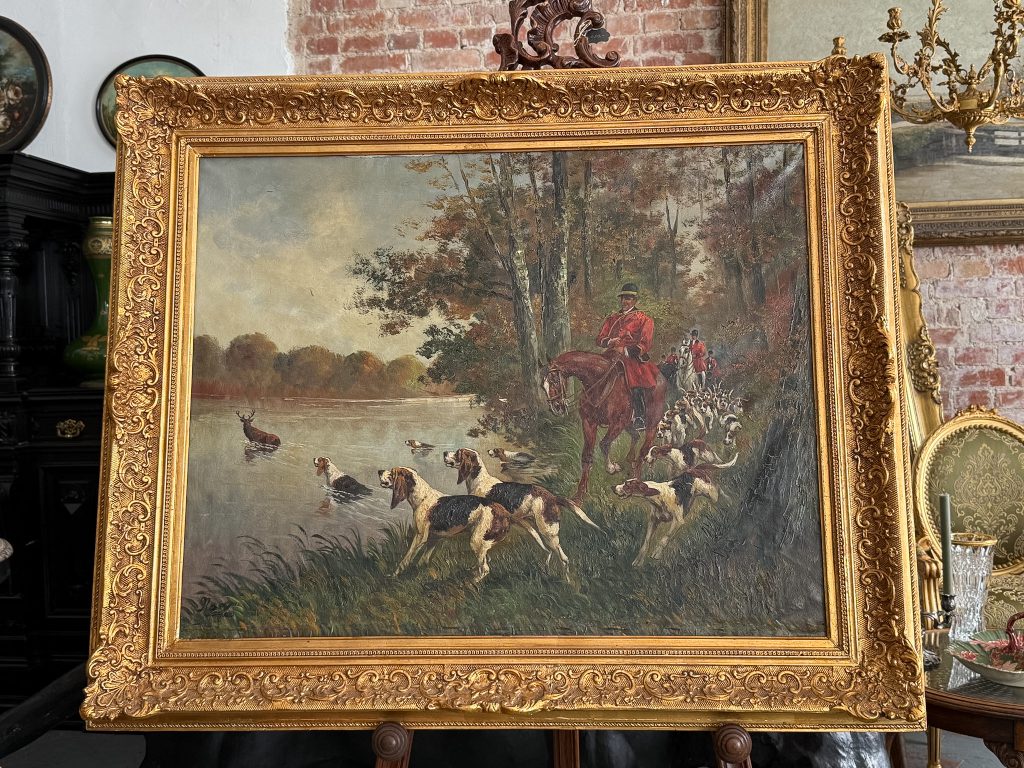
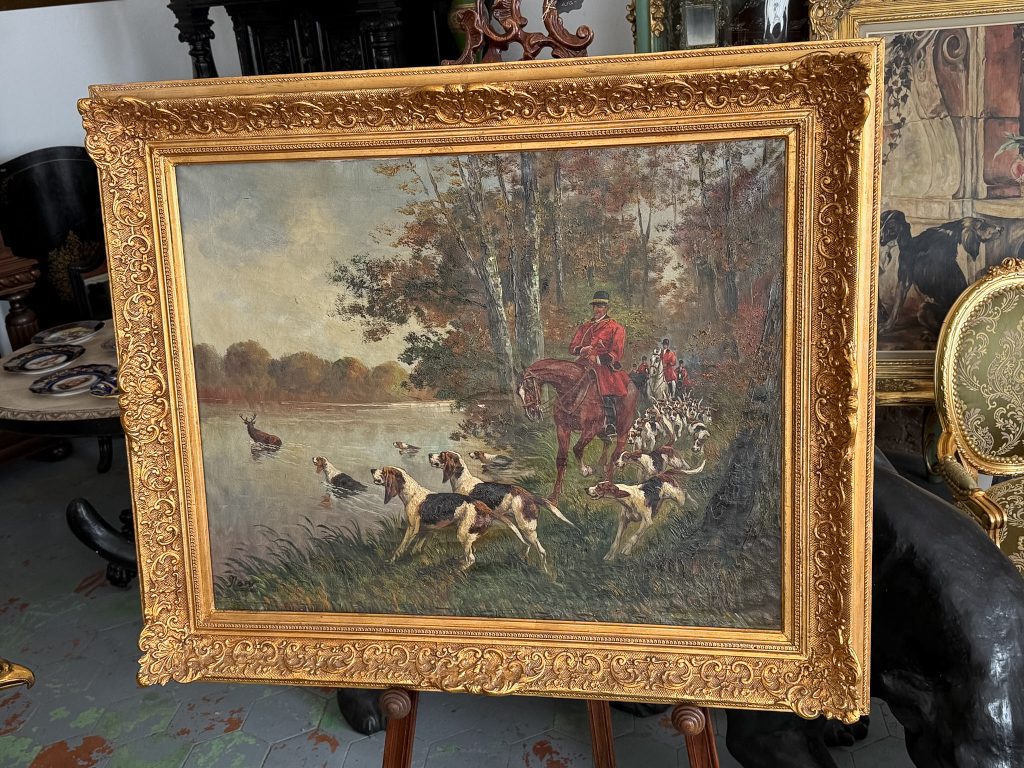
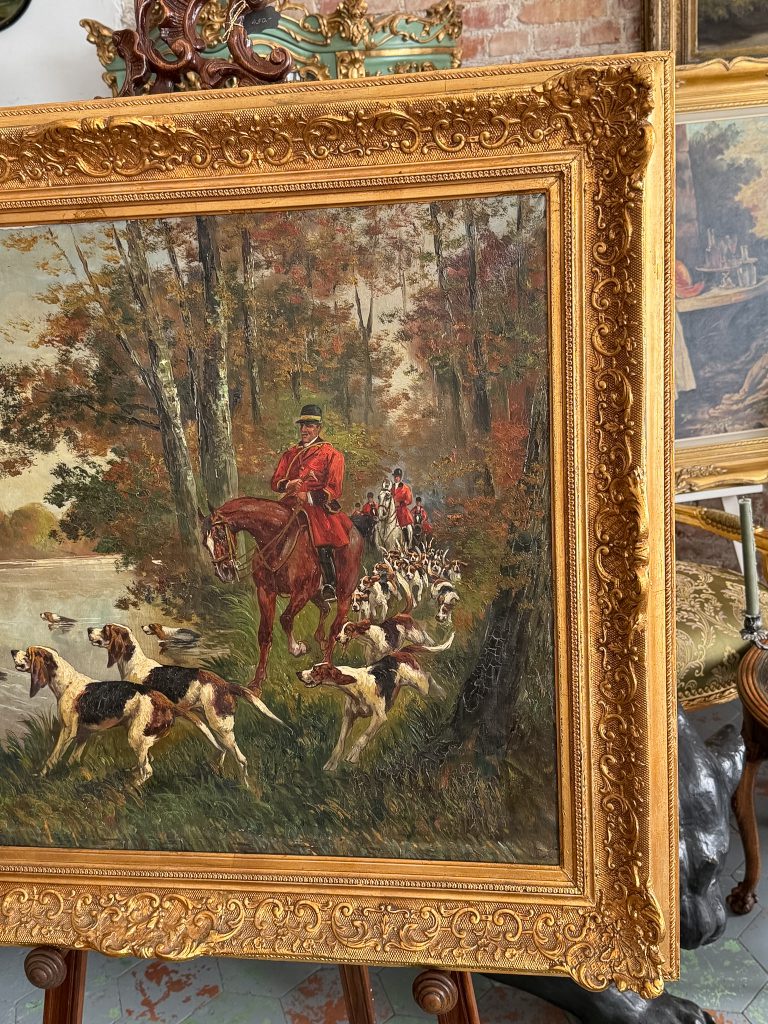
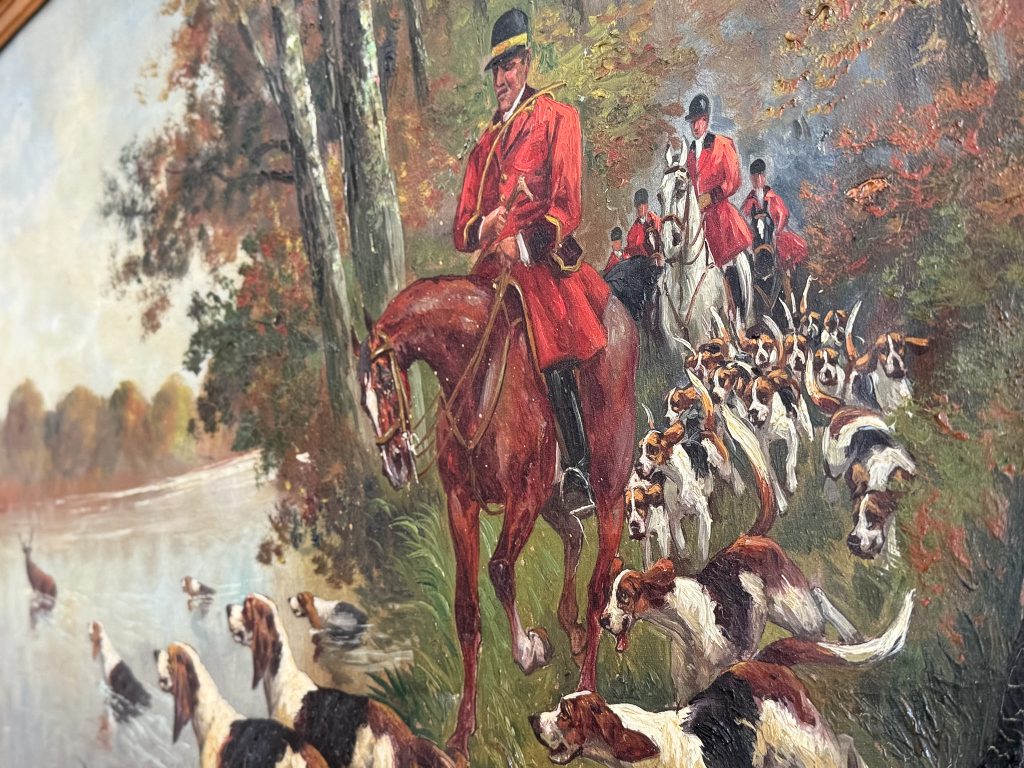
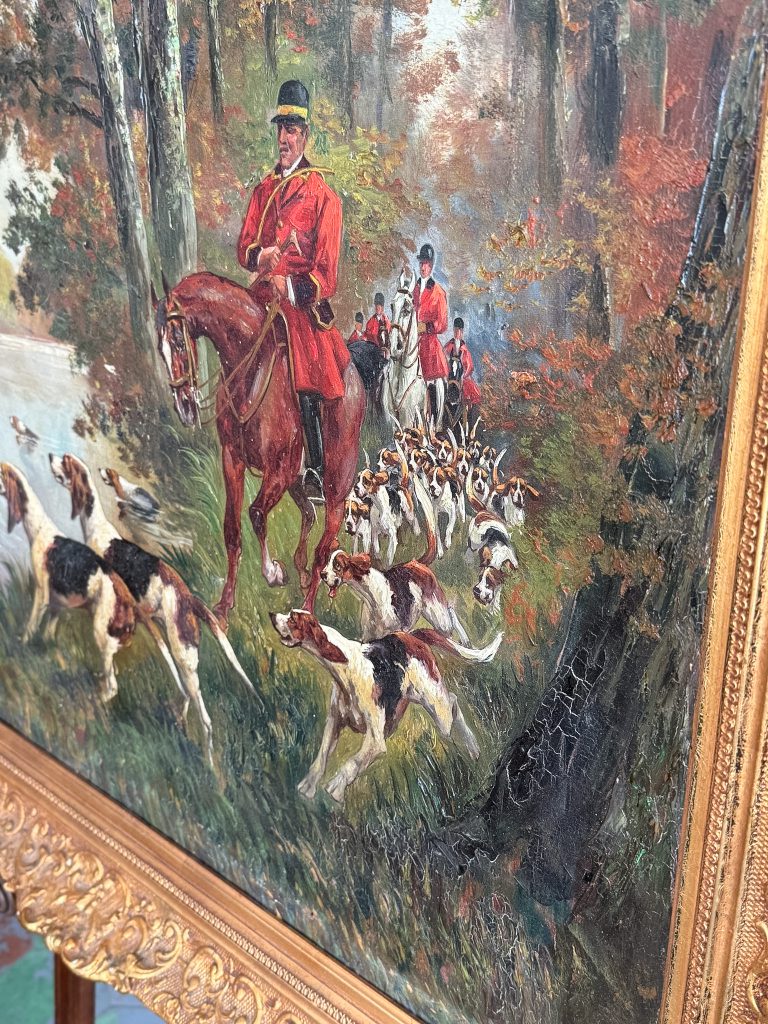
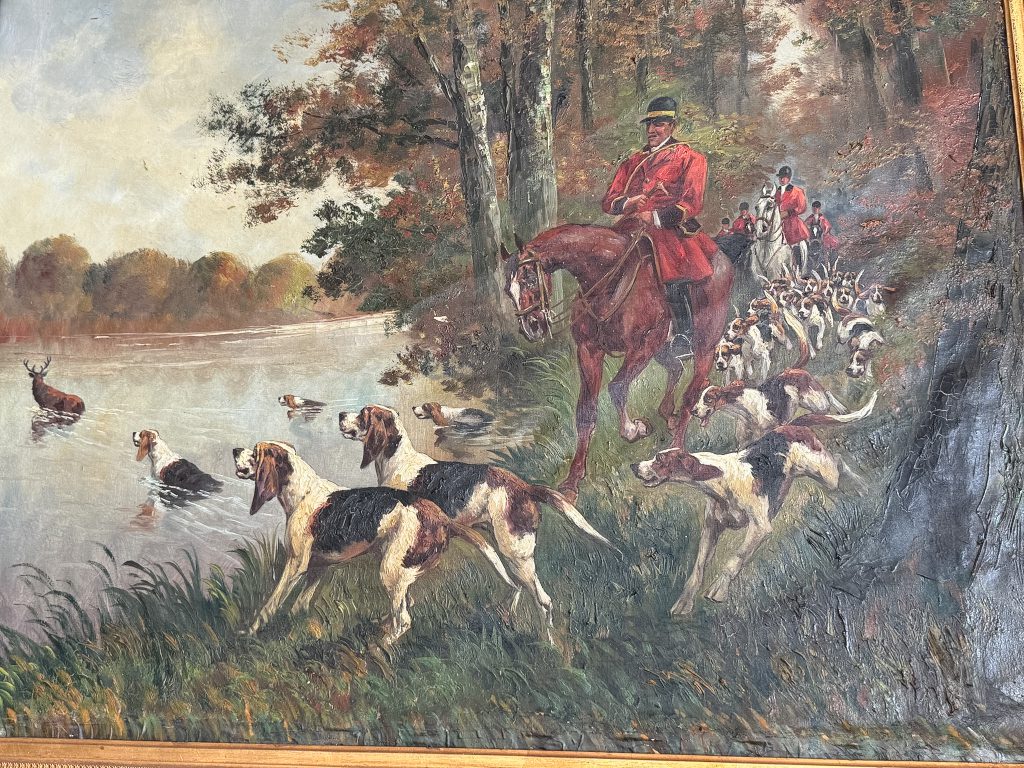
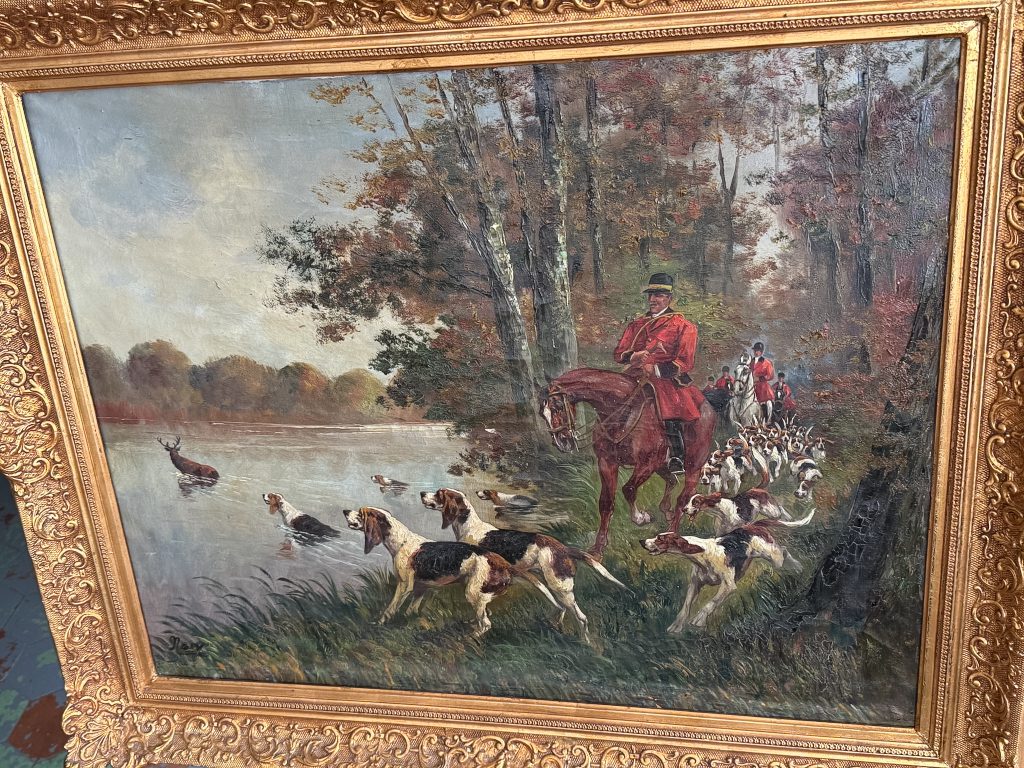
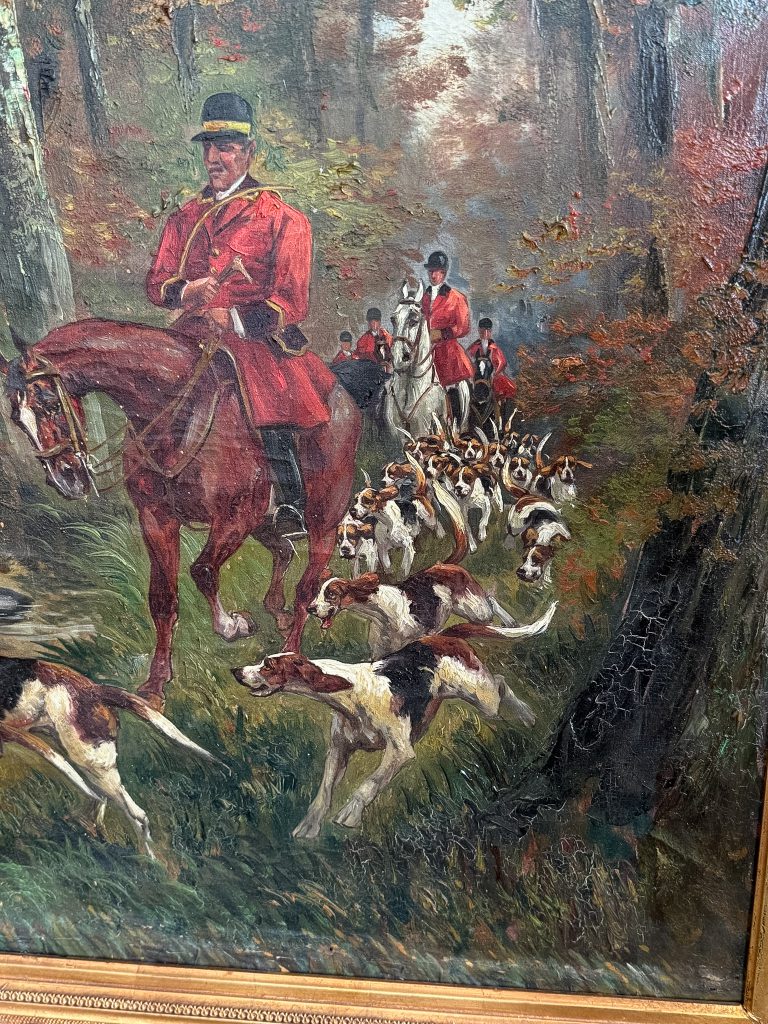
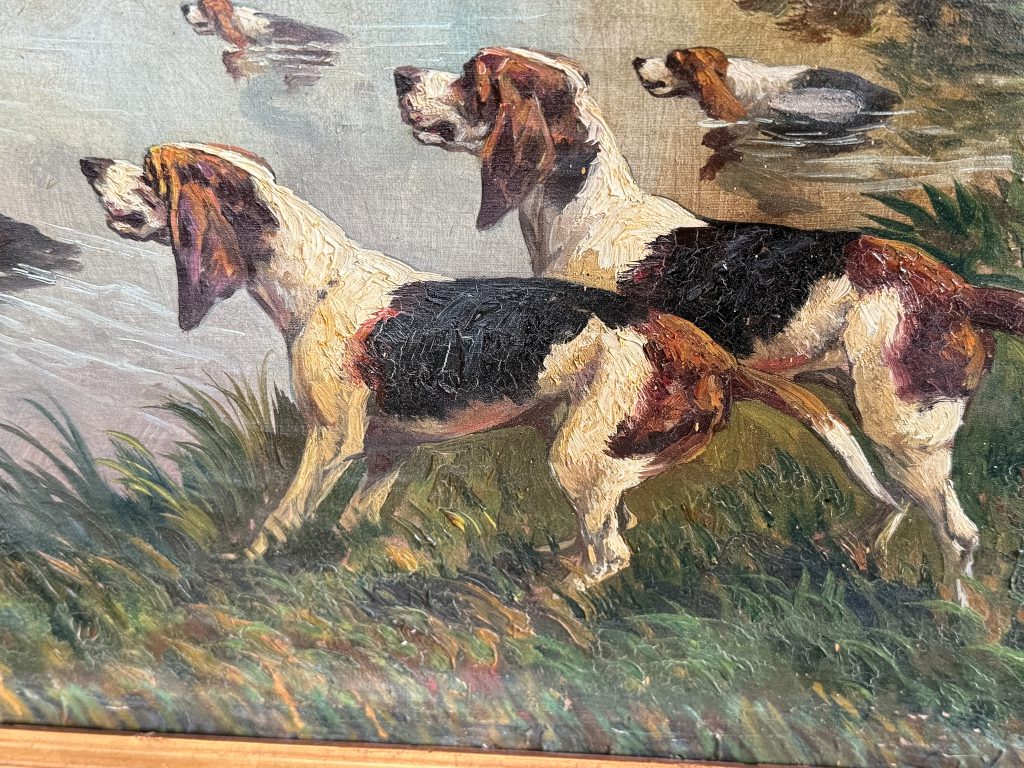
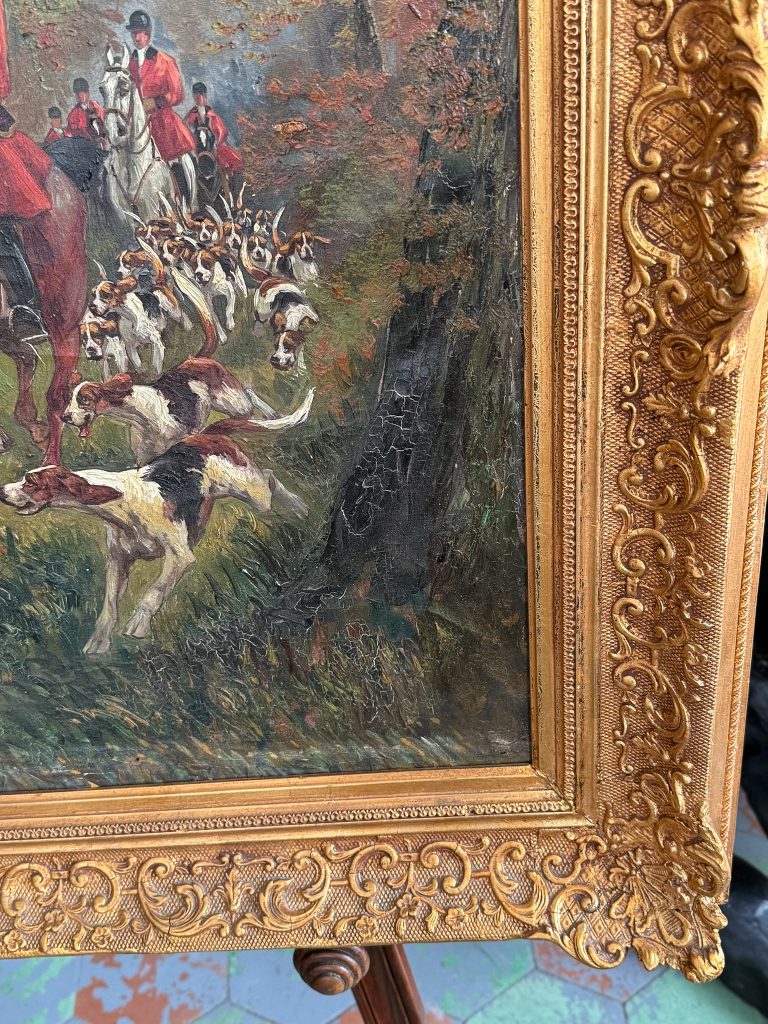
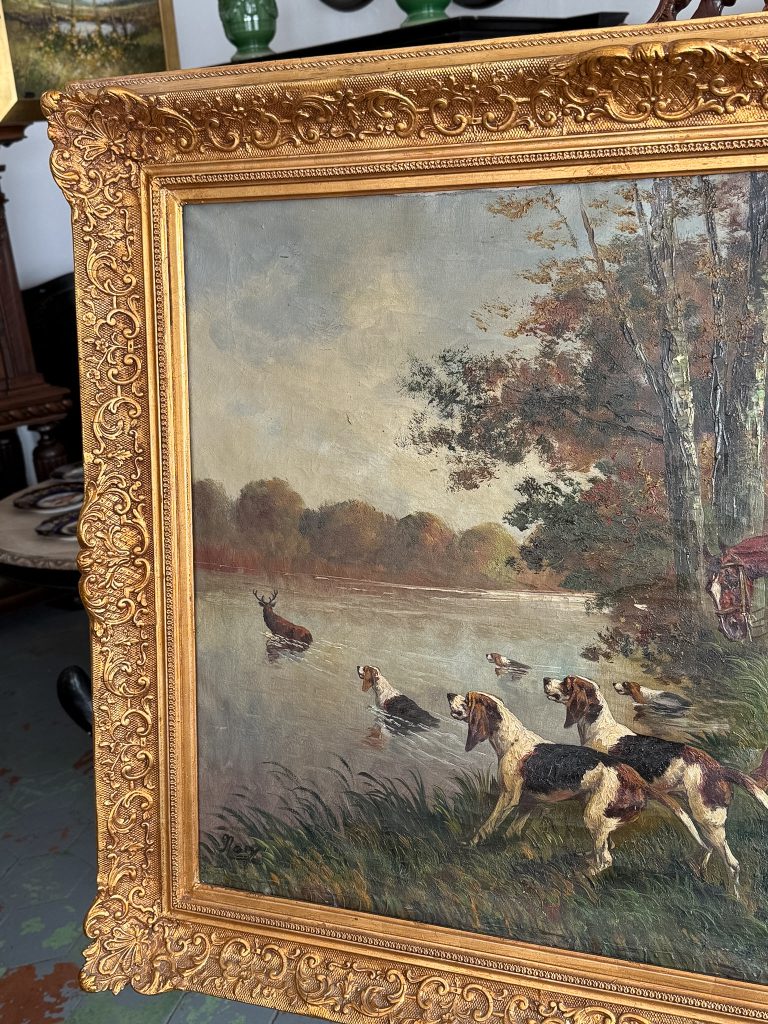
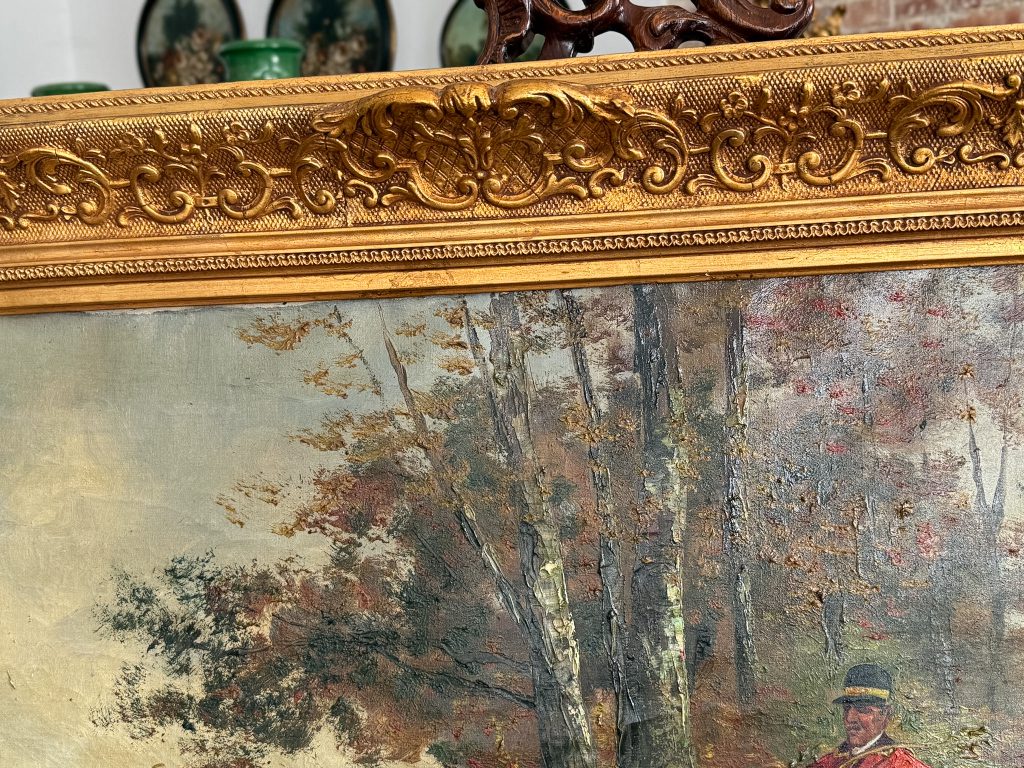
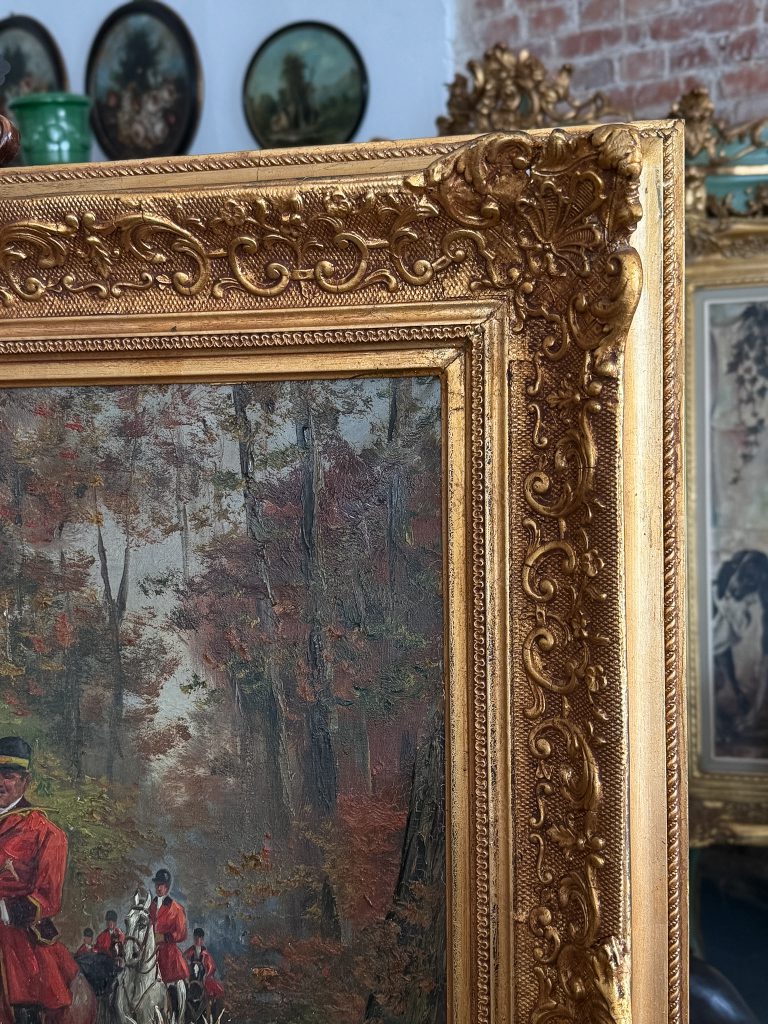
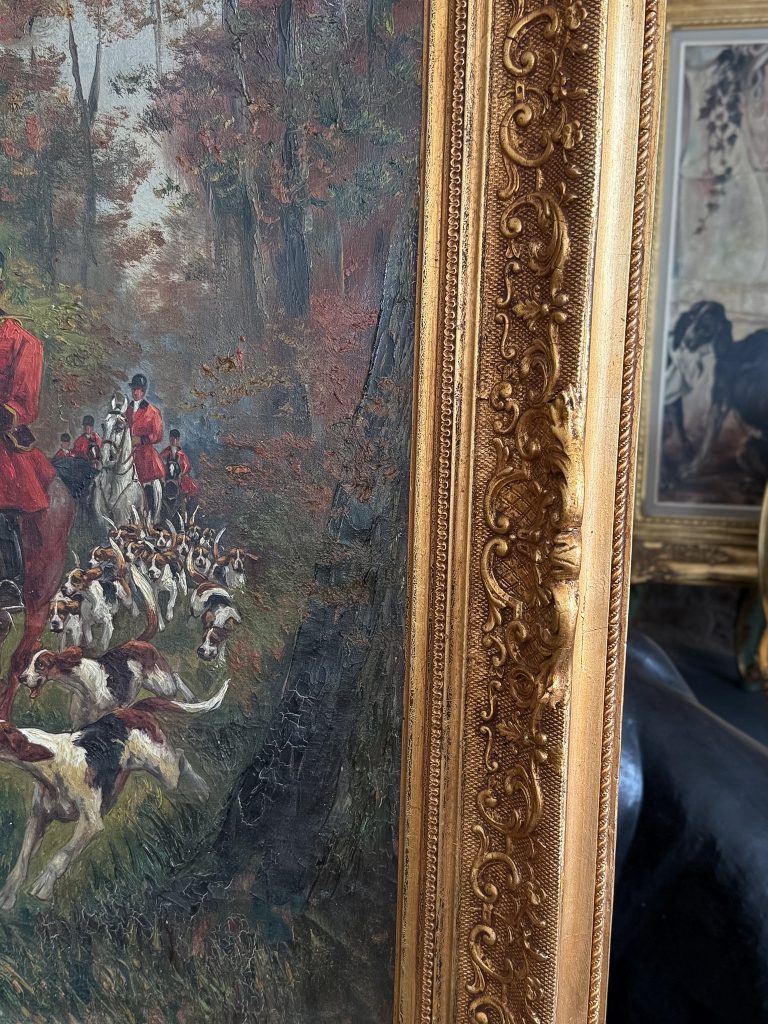
Dzīva un meistarīga franču medību aina (french hunting scene) — eļļa uz audekla —, kas attēlo klasisku chasse à courre (medības ar suņiem un zirgiem) rudens mežā. Priekšplānā kāpj un skrien liels franču medību suņu bars, kura deguni jau pievērsti upei, kur pa ūdeni peld bēgošs staltbriedis. Aiz suņiem — sarkanā medību frakā tērpts jātnieks uz ugunīga zirga, bet tālāk pa meža taku virzās viss medību pulks: vēl jātnieki sarkanos un melnos tērpos, balts zirgs, migla starp kokiem.
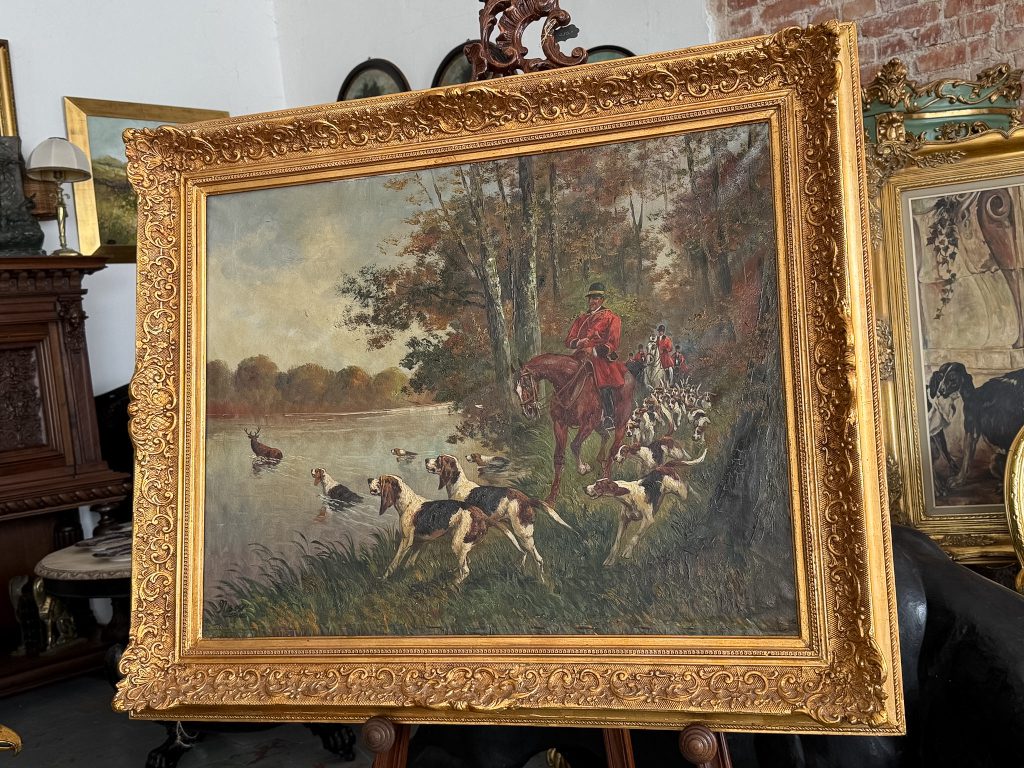
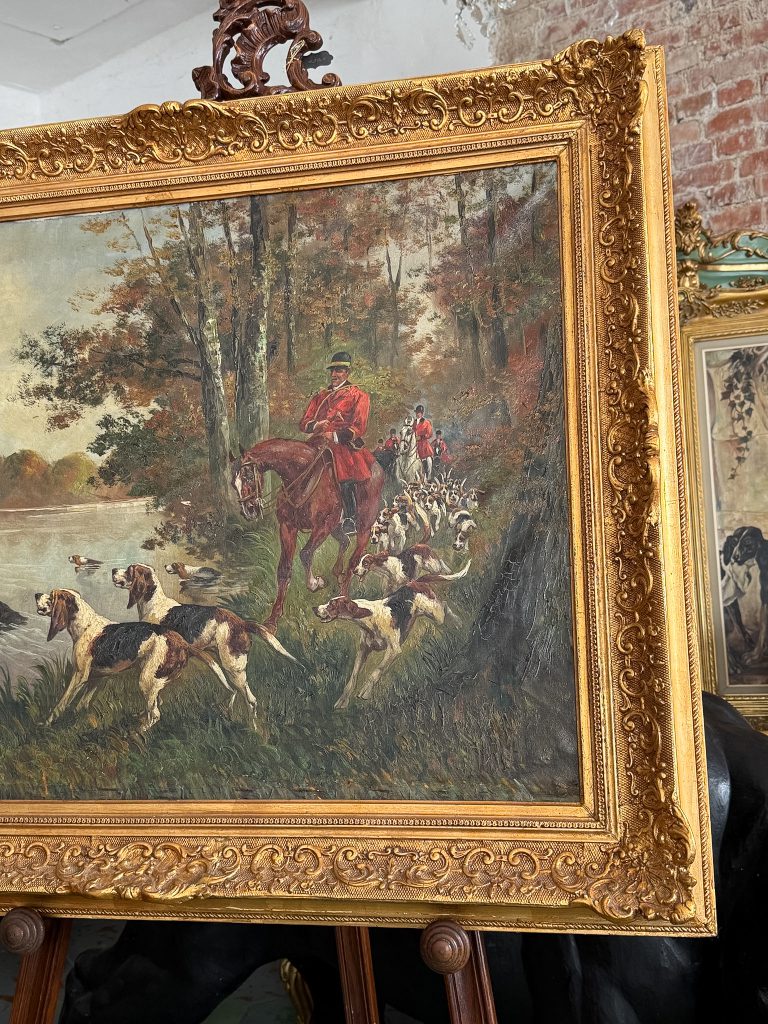
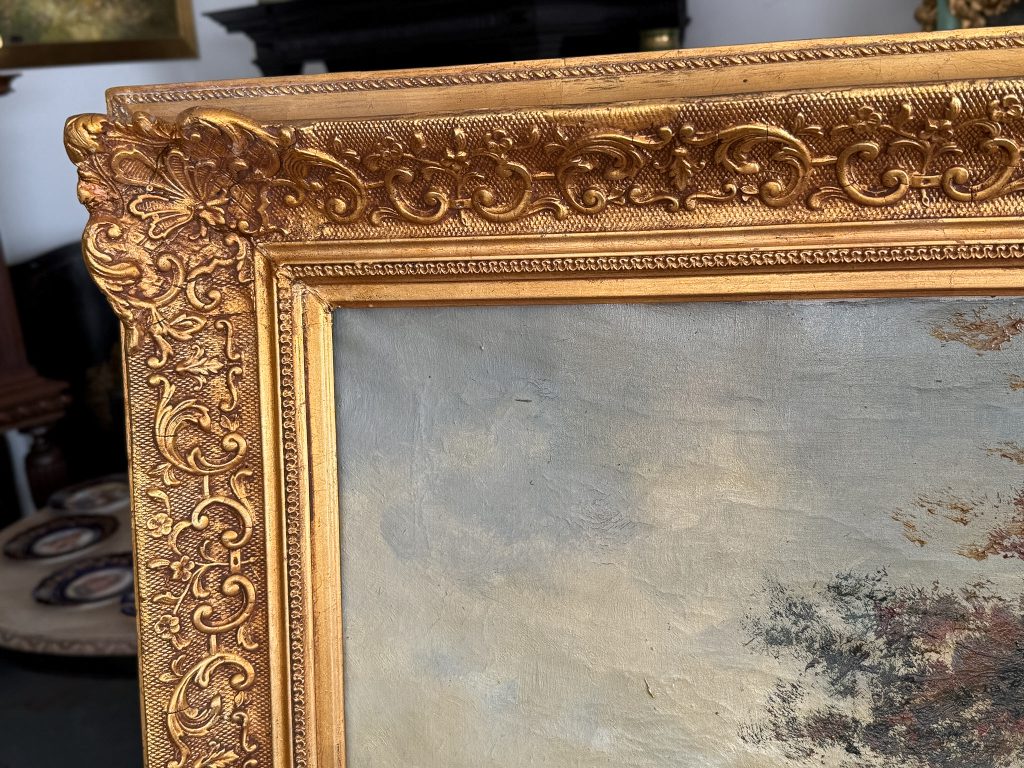
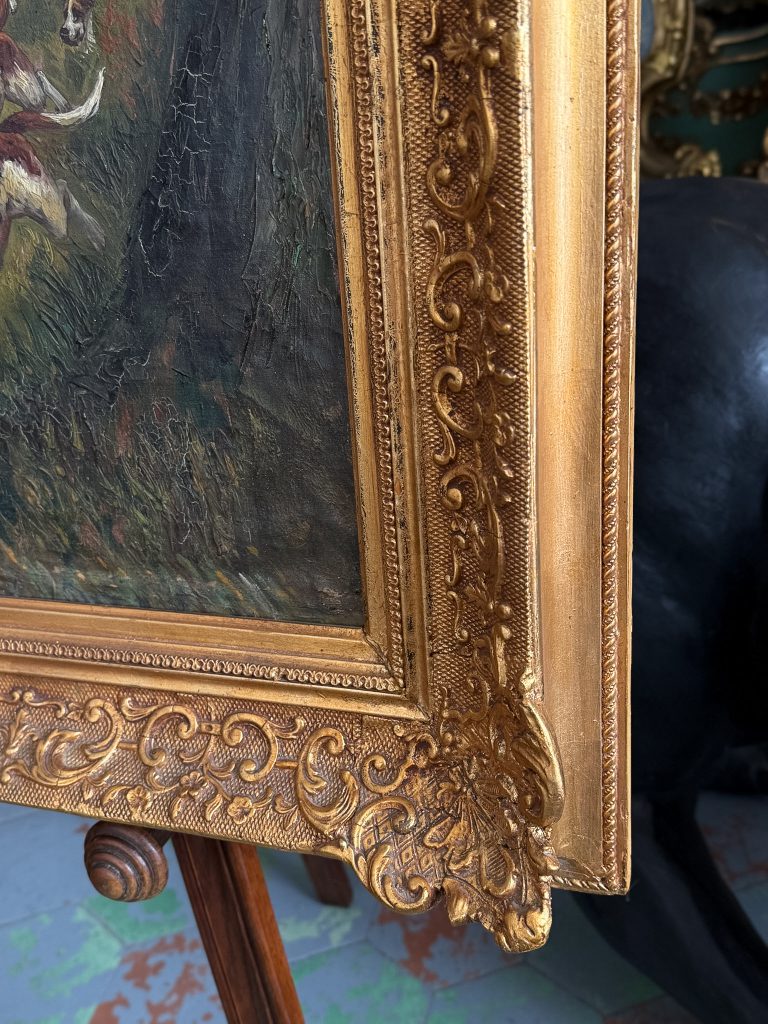
Mākslinieks strādājis ar drošu, bagātīgu otu — biezi uzliktas krāsas (impasto) suņu kažokā un zālē, bet maigāka, atmosfēriska apdare upes un rudens lapotnes fonā. Kompozīcija veidota ar dramatisku dziļumu: skatiens seko suņiem no priekšplāna pāri upei līdz tālajam mežam. Tas ir kvalitatīvs žanra darbs, kas prasa gan zooloģisku precizitāti, gan ainavas izjūtu. Gleznu ietver grezns zeltīts neorokoko stila rāmis.
🇱🇻 Medību ainas momentuzņēmums: Rudens rītā, kad migla vēl klājās pār upi, vecais piķiers apturēja zirgu meža malā un ļāva suņiem doties uz priekšu. Viņš dzirdēja, kā tie ievelk gaisu — un tad pēkšņi visu pārņēma tā īpašā saspringtā klusuma sajūta, kas nāk pirms dzīšanas sākuma. Pār ūdeni slīdēja brieža silueta ēna. Gaiss smaržoja pēc slapjām lapām, zirga sviedriem un upes. Viņš nepalaida ne skaņas; tikai nedaudz savilka pavadu un gaidīja to mirkli, kuru gleznotājs vēlāk notvēra uz audekla — kad viss vēl ir iespējams.
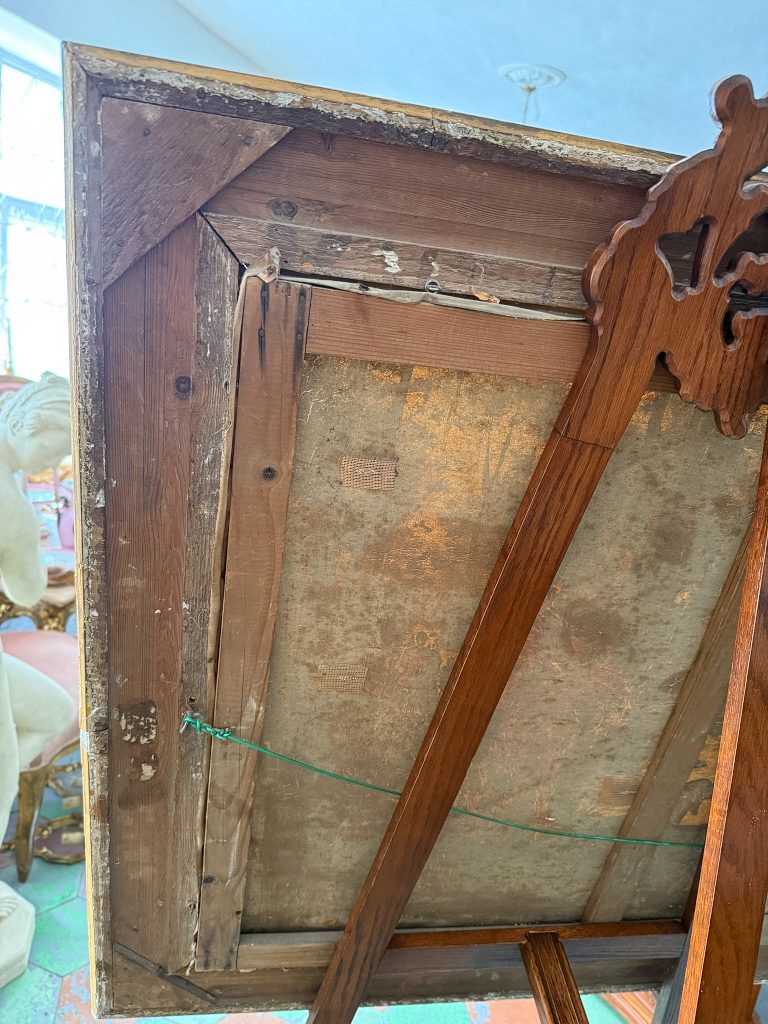
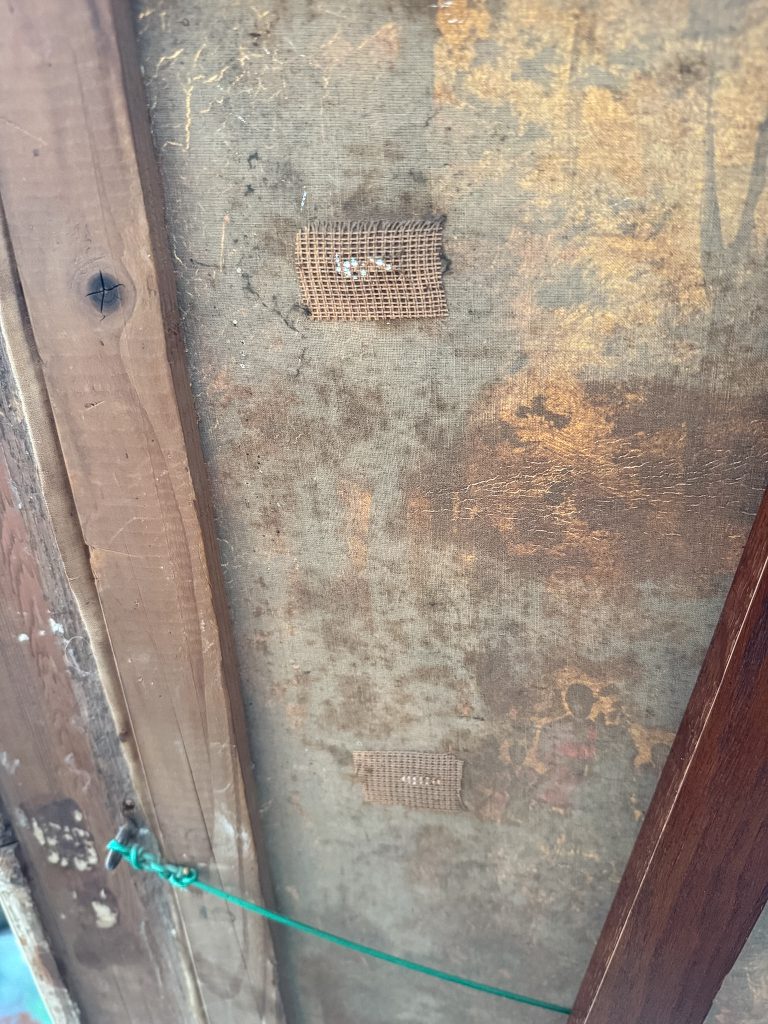
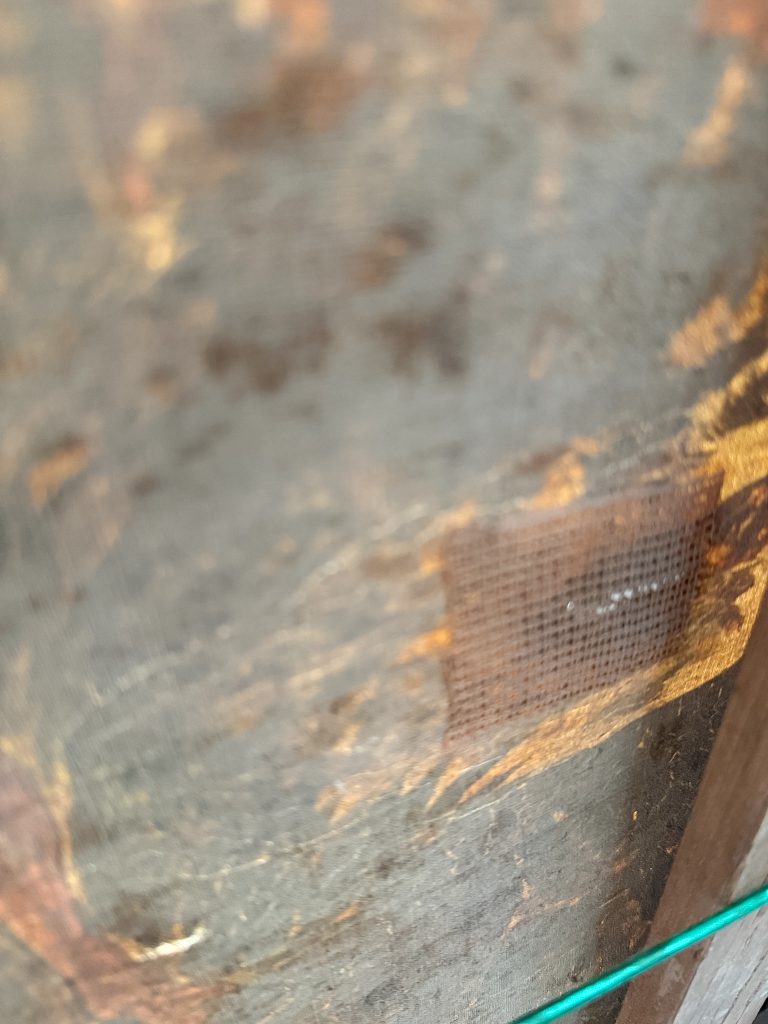
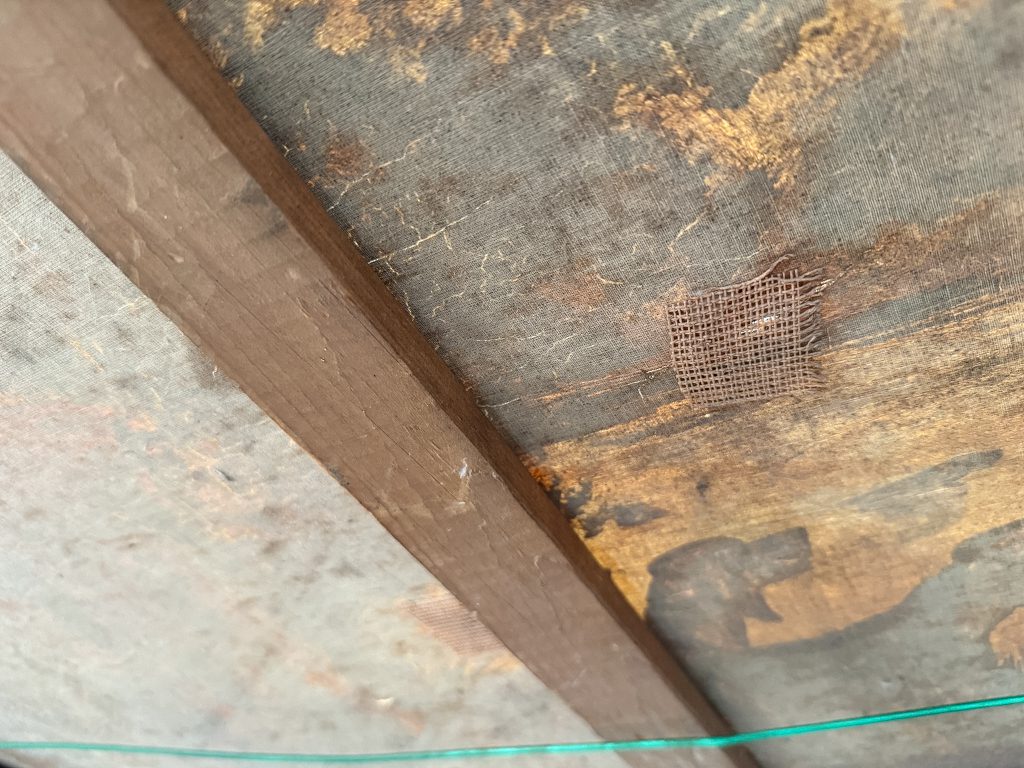
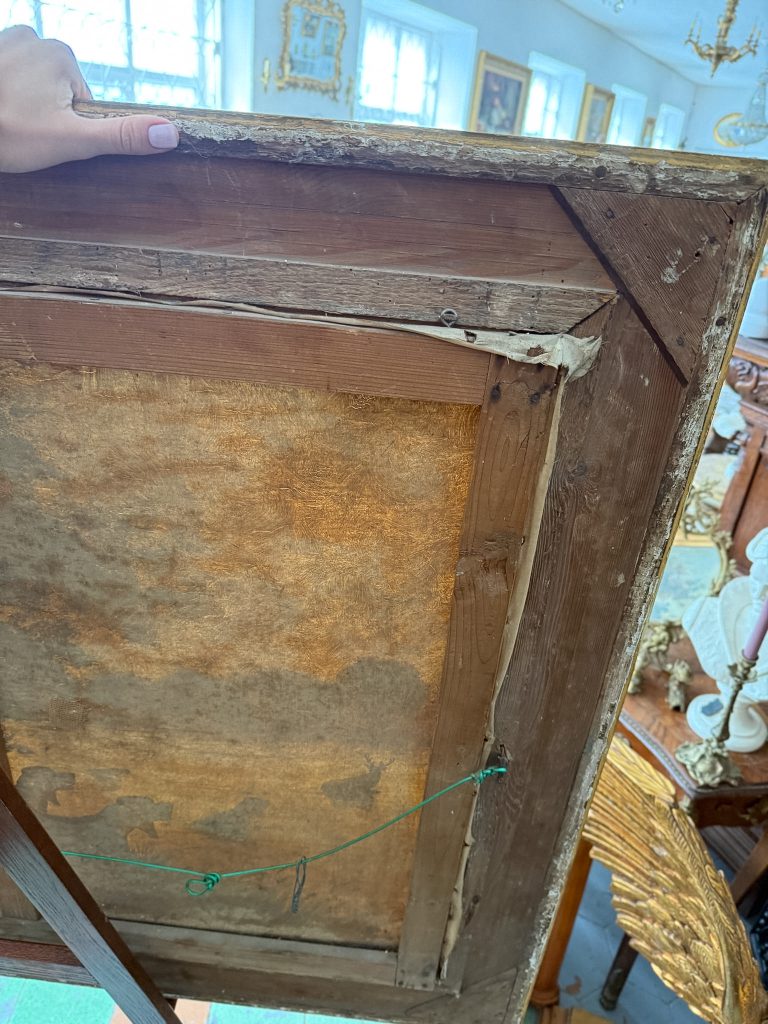
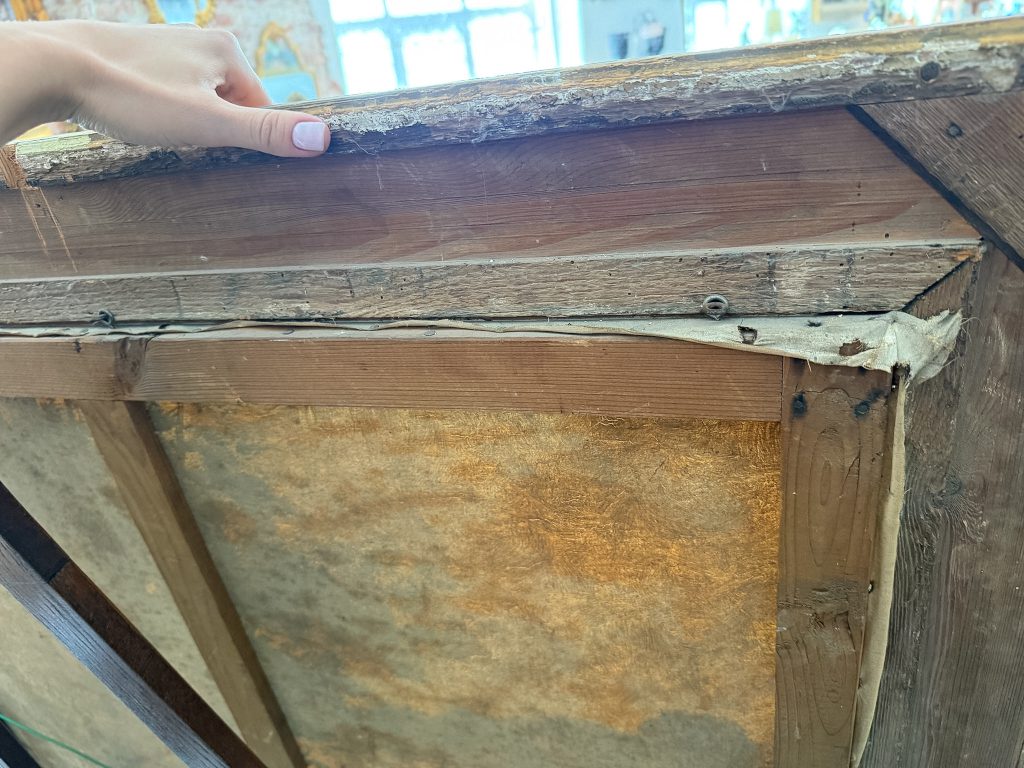
Tehnika un formāts. Eļļa uz audekla, uzstiepta uz koka rāmja (aizmugure ar laika pēdām redzama fotogrāfijās). Horizontāls formāts, vidēji liels izmērs.
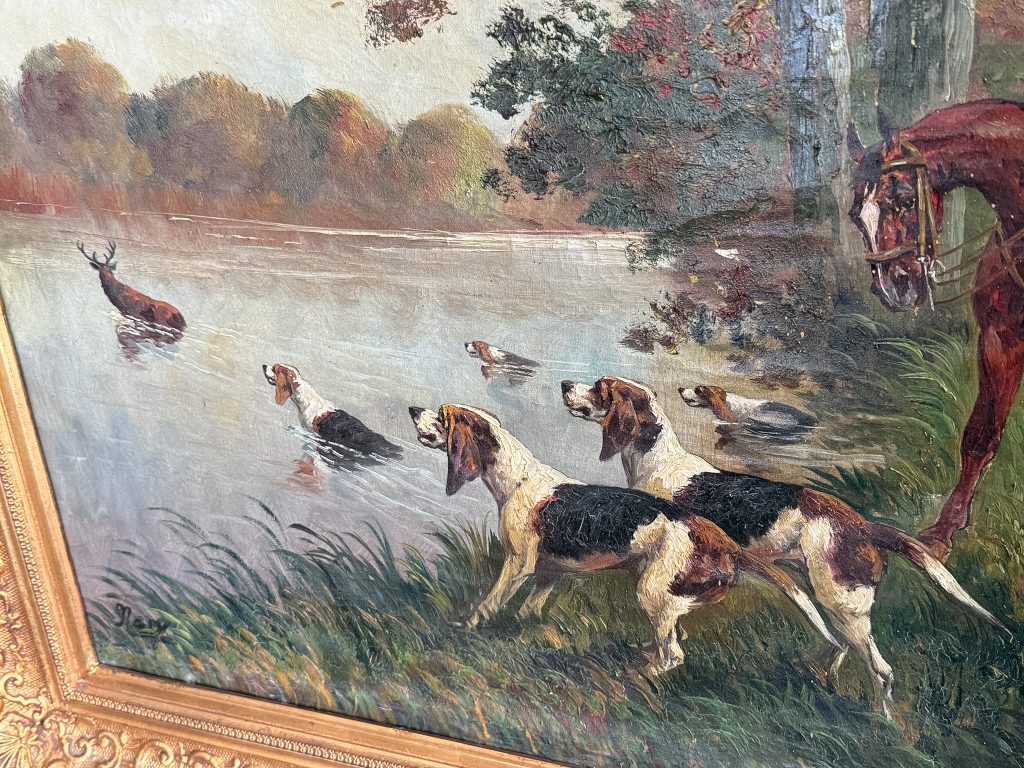
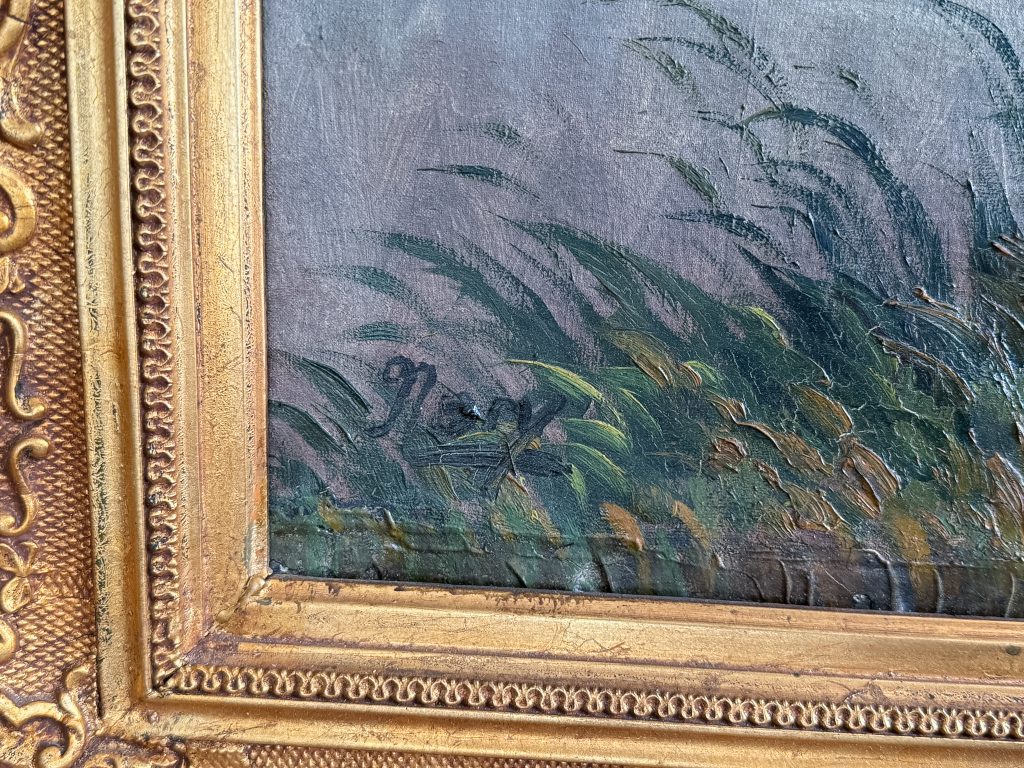
Paraksts un autors. Glezna ir parakstīta apakšējā kreisajā stūrī (“Nery” vai līdzīgi). Konkrēto mākslinieku pēc šī paraksta vien droši identificēt nav izdevies; darbs tiek godīgi piedāvāts kā kvalitatīva, profesionāla nezināma franču meistara medību aina chasse à courre tradīcijā. Papildu izpētei noderīgas mākslinieku datubāzes (Bénézit, askArt).
Izgatavošanas periods. Glezna datējama ar 19. gs. beigām – 20. gs. sākumu.
Pielietojums. Iespaidīga lieta kabinetam, bibliotēkai, medību namam, ēdamistabai vai vīrišķīgam reprezentatīvam interjeram. Medību žanrs ir kolekcionējams un labi sader ar antīkām mēbelēm un ādas iekārtu.
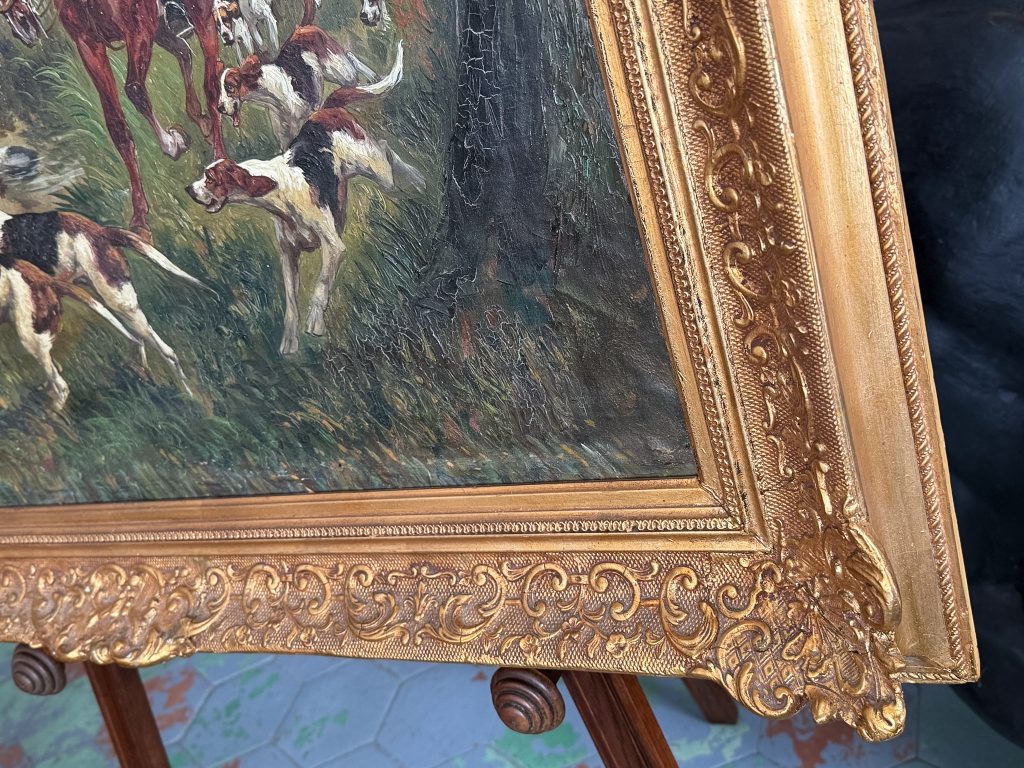
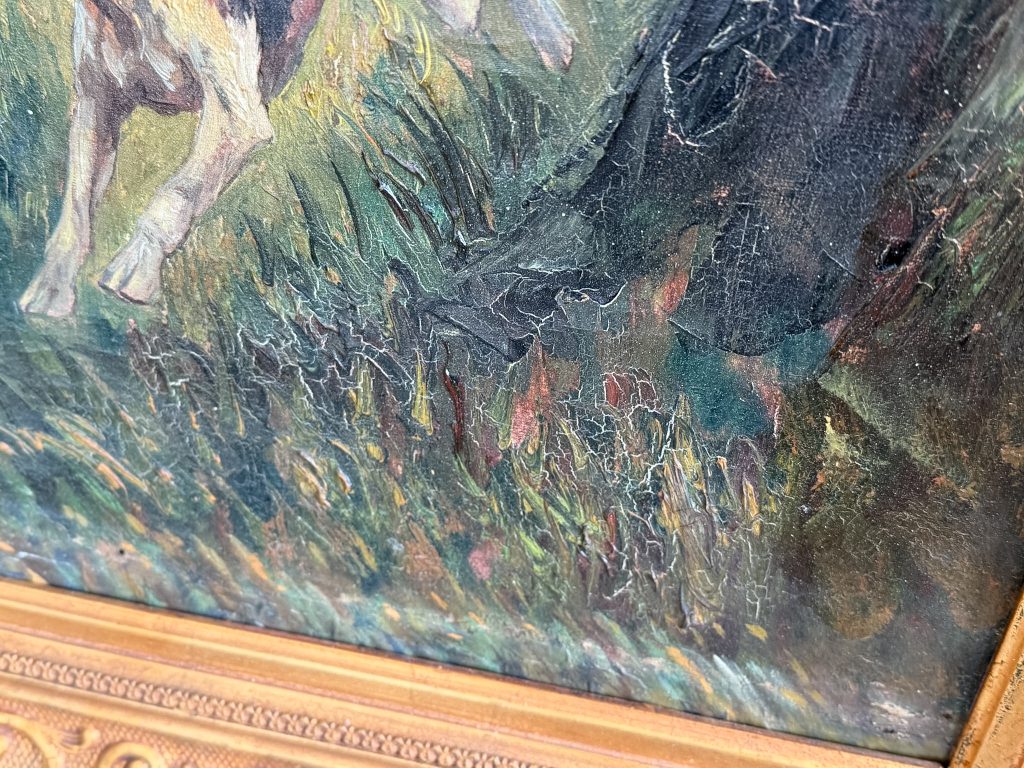
Stāvoklis. Labs, vecumam atbilstošs stāvoklis; redzams laikmetīgs krakelē (smalks krāsas plaisojums), kas oriģinālām eļļas gleznām dabīgs; rāmim vietām vecuma nodilumi. Lietas stāvoklis pilnībā atspoguļots fotogrāfijās.
🇷🇺 РУССКИЙ
Размеры:
Высота — 95,5 см
Ширина — 115 см
Картина с французской охотничьей сценой, собаки и всадники, масло — подписана
Живая и мастерская французская охотничья сцена — масло на холсте, — изображающая классическую chasse à courre (охоту с собаками и лошадьми) в осеннем лесу. На переднем плане поднимается и бежит большая свора французских охотничьих собак, чьи носы уже обращены к реке, где по воде плывёт убегающий олень. За собаками — всадник в красном охотничьем фраке на огненном коне, а дальше по лесной тропе движется вся охота: ещё всадники в красных и чёрных одеждах, белая лошадь, туман между деревьями.
Художник работал уверенной, богатой кистью — густо положенные краски (impasto) в шерсти собак и траве, но более мягкая, атмосферная отделка в фоне реки и осенней листвы. Композиция построена с драматической глубиной: взгляд следует за собаками с переднего плана через реку к дальнему лесу. Это качественная жанровая работа, требующая и зоологической точности, и чувства пейзажа. Картину обрамляет роскошная золочёная рама в стиле неорококо.
🇷🇺 Снимок охотничьей сцены: Осенним утром, когда туман ещё стелился над рекой, старый доезжачий придержал коня на опушке и пустил собак вперёд. Он слышал, как они втягивают воздух — и вдруг всё охватило то особое напряжённое молчание, что приходит перед началом гона. По воде скользила тень силуэта оленя. Воздух пах мокрой листвой, лошадиным потом и рекой. Он не издал ни звука; лишь слегка натянул повод и ждал тот миг, который художник позже поймал на холсте — когда всё ещё возможно.
Это масло на холсте, натянутом на деревянный подрамник (задняя сторона со следами времени видна на фотографиях), горизонтального формата, среднего размера. Картина подписана в нижнем левом углу (“Nery” или похоже). Конкретного художника по одной этой подписи достоверно установить не удалось; работа честно предлагается как качественная, профессиональная охотничья сцена неизвестного французского мастера в традиции chasse à courre. Для дальнейшего исследования полезны базы данных художников (Bénézit, askArt). Картина датируется концом XIX – началом XX века. Это впечатляющая вещь для кабинета, библиотеки, охотничьего дома, столовой или мужского представительного интерьера. Охотничий жанр коллекционен и хорошо сочетается с антикварной мебелью и кожаной обстановкой. Состояние хорошее, соответствующее возрасту; виден характерный кракелюр (тонкое растрескивание краски), естественный для оригинальных масляных картин; у рамы местами потёртости. Состояние вещи полностью отражено на фотографиях.
🇬🇧 ENGLISH
Dimensions:
Height — 95.5 cm
Width — 115 cm
French Hunting Scene Oil Painting with Hounds and Riders — Signed
A lively and accomplished french hunting scene — oil on canvas — depicting a classic chasse à courre (hunt with hounds and horses) in an autumn forest. In the foreground a large pack of French hounds climbs and runs, their noses already turned to the river where a fleeing stag swims across the water. Behind the hounds rides a huntsman in a red hunting coat on a fiery horse, while further along the forest path moves the whole hunt: more riders in red and black, a white horse, mist among the trees. As a true french hunting scene, it carries the drama of the chase.
The artist worked with a confident, rich brush — thickly laid paint (impasto) in the hounds’ coats and the grass, with a softer, atmospheric finish in the river and autumn foliage behind. The composition is built with dramatic depth: the eye follows the hounds from the foreground across the river to the distant wood. It is a quality genre work, demanding both zoological accuracy and a feeling for landscape. The painting is framed in an ornate gilt Neo-Rococo frame.
🇬🇧 Hunting scene snapshot: On an autumn morning, when mist still lay over the river, the old huntsman halted his horse at the edge of the wood and let the hounds go forward. He heard them draw in the air — and suddenly everything was gripped by that particular taut silence that comes before the chase begins. The shadow of a stag’s silhouette slid across the water. The air smelled of wet leaves, horse sweat and the river. He made no sound; he only drew the rein a little and waited for the moment the painter would later catch on canvas — when everything is still possible.
This is oil on canvas, stretched on a wooden frame (the reverse with traces of time is shown in the photographs), of horizontal format and medium size. The painting is signed in the lower left corner (“Nery” or similar). The specific artist could not be securely identified from the signature alone; the work is offered honestly as a quality, professional hunting scene by an unidentified French hand in the chasse à courre tradition. For further research, artist databases (Bénézit, askArt) are useful. The painting dates to the late 19th – early 20th century. It is an impressive piece for a study, library, hunting lodge, dining room or a masculine statement interior. The hunting genre is collectable and pairs well with antique furniture and leather furnishings. Condition is good and consistent with age; characteristic craquelure (fine cracking of the paint) is visible, natural in original oil paintings; the frame shows some wear in places. The condition is fully reflected in the photographs.
🇩🇪 DEUTSCH
Maße:
Höhe — 95,5 cm
Breite — 115 cm
Französische Jagdszene, Hunde und Reiter, Öl — signiert
Eine lebendige und meisterhafte französische Jagdszene — Öl auf Leinwand —, die eine klassische chasse à courre (Jagd mit Hunden und Pferden) in einem herbstlichen Wald zeigt. Im Vordergrund steigt und läuft eine große Meute französischer Jagdhunde, deren Nasen schon dem Fluss zugewandt sind, wo ein fliehender Hirsch durch das Wasser schwimmt. Hinter den Hunden reitet ein Jäger im roten Jagdrock auf einem feurigen Pferd, während weiter den Waldweg entlang die ganze Jagd zieht: weitere Reiter in Rot und Schwarz, ein weißes Pferd, Nebel zwischen den Bäumen.
Der Künstler arbeitete mit sicherem, reichem Pinsel — dick aufgetragene Farbe (Impasto) im Fell der Hunde und im Gras, mit einem weicheren, atmosphärischen Finish im Hintergrund von Fluss und Herbstlaub. Die Komposition ist mit dramatischer Tiefe aufgebaut: Der Blick folgt den Hunden vom Vordergrund über den Fluss bis zum fernen Wald. Es ist ein hochwertiges Genrewerk, das sowohl zoologische Genauigkeit als auch ein Gefühl für die Landschaft verlangt. Das Gemälde ist in einem verzierten vergoldeten Neorokoko-Rahmen gefasst.
🇩🇪 Momentaufnahme der Jagdszene: An einem Herbstmorgen, als der Nebel noch über dem Fluss lag, hielt der alte Piqueur sein Pferd am Waldrand an und ließ die Hunde vor. Er hörte, wie sie die Luft einzogen — und plötzlich ergriff alles jene besondere gespannte Stille, die vor dem Beginn der Hatz kommt. Der Schatten einer Hirschsilhouette glitt über das Wasser. Die Luft roch nach nassem Laub, Pferdeschweiß und Fluss. Er gab keinen Laut von sich; er zog nur den Zügel ein wenig an und wartete auf den Augenblick, den der Maler später auf der Leinwand einfing — wenn noch alles möglich ist.
Es handelt sich um Öl auf Leinwand, auf einen Holzkeilrahmen gespannt (die Rückseite mit Spuren der Zeit ist auf den Fotografien zu sehen), im Querformat und in mittlerer Größe. Das Gemälde ist in der unteren linken Ecke signiert (“Nery” oder ähnlich). Der konkrete Künstler ließ sich anhand der Signatur allein nicht sicher bestimmen; das Werk wird ehrlich als hochwertige, professionelle Jagdszene einer nicht identifizierten französischen Hand in der Tradition der chasse à courre angeboten. Für die weitere Recherche sind Künstlerdatenbanken (Bénézit, askArt) hilfreich. Das Gemälde datiert ins späte 19. – frühe 20. Jahrhundert. Es ist ein eindrucksvolles Stück für ein Arbeitszimmer, eine Bibliothek, ein Jagdhaus, ein Esszimmer oder ein maskulines Repräsentationsinterieur. Das Jagdgenre ist sammelwürdig und harmoniert gut mit antiken Möbeln und Lederausstattung. Zustand gut und altersgemäß; charakteristisches Craquelé (feine Rissbildung der Farbe) ist sichtbar, bei originalen Ölgemälden natürlich; der Rahmen zeigt stellenweise Abrieb. Der Zustand ist auf den Fotografien vollständig wiedergegeben.
🇫🇷 FRANÇAIS
Dimensions :
Hauteur — 95,5 cm
Largeur — 115 cm
Scène de chasse française, chiens et cavaliers, huile — signée
Une scène de chasse française vivante et magistrale (french hunting scene) — huile sur toile — représentant une chasse à courre classique dans une forêt d’automne. Au premier plan, une grande meute de chiens courants français grimpe et court, le nez déjà tourné vers la rivière où un cerf en fuite traverse l’eau à la nage. Derrière les chiens chevauche un veneur en habit rouge sur un cheval fougueux, tandis que plus loin, le long du sentier forestier, avance tout l’équipage : d’autres cavaliers en rouge et noir, un cheval blanc, la brume entre les arbres.
L’artiste a travaillé d’un pinceau sûr et riche — peinture posée en épaisseur (impasto) dans le pelage des chiens et l’herbe, avec une finition plus douce et atmosphérique dans le fond de la rivière et du feuillage d’automne. La composition est construite avec une profondeur dramatique : le regard suit les chiens du premier plan jusqu’au bois lointain, par-delà la rivière. C’est une œuvre de genre de qualité, exigeant à la fois une exactitude zoologique et un sens du paysage. Le tableau est encadré d’un cadre doré orné de style néo-rococo.
🇫🇷 Instantané de scène de chasse : Par un matin d’automne, alors que la brume reposait encore sur la rivière, le vieux piqueur arrêta son cheval à la lisière du bois et laissa les chiens partir devant. Il les entendit aspirer l’air — et soudain tout fut saisi par ce silence tendu si particulier qui précède le début de la chasse. L’ombre de la silhouette d’un cerf glissait sur l’eau. L’air sentait les feuilles mouillées, la sueur du cheval et la rivière. Il ne fit aucun bruit ; il resserra seulement un peu les rênes et attendit l’instant que le peintre saisirait plus tard sur la toile — quand tout est encore possible.
Il s’agit d’une huile sur toile, tendue sur un châssis de bois (le dos avec des traces du temps est visible sur les photographies), de format horizontal et de taille moyenne. Le tableau est signé dans l’angle inférieur gauche (« Nery » ou similaire). L’artiste précis n’a pu être identifié avec certitude à partir de la seule signature ; l’œuvre est honnêtement proposée comme une scène de chasse de qualité, professionnelle, d’une main française non identifiée dans la tradition de la chasse à courre. Pour des recherches complémentaires, les bases de données d’artistes (Bénézit, askArt) sont utiles. Le tableau date de la fin du XIXe – début du XXe siècle. C’est une pièce impressionnante pour un bureau, une bibliothèque, un pavillon de chasse, une salle à manger ou un intérieur d’apparat masculin. Le genre de la chasse est collectionnable et s’accorde bien avec le mobilier ancien et les aménagements en cuir. État bon et conforme à l’âge ; un craquelé caractéristique (fin craquellement de la peinture) est visible, naturel sur les peintures à l’huile originales ; le cadre présente une usure par endroits. L’état est entièrement reflété sur les photographies.