
Napoleona III laikmeta porcelāna salātu bļoda ar karoti (5828)
Napoleona III laikmeta porcelāna salātu bļoda ar karoti (5828)
€220.00
Platums 23cm, augstums 6cm.
🇱🇻 LATVISKI
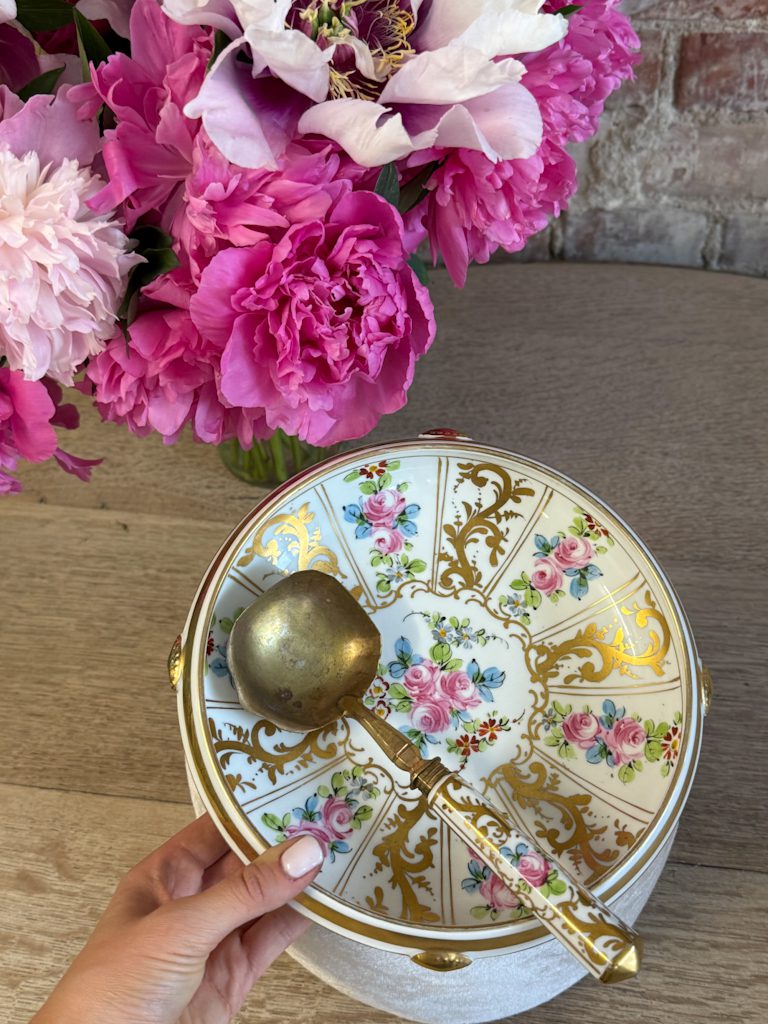
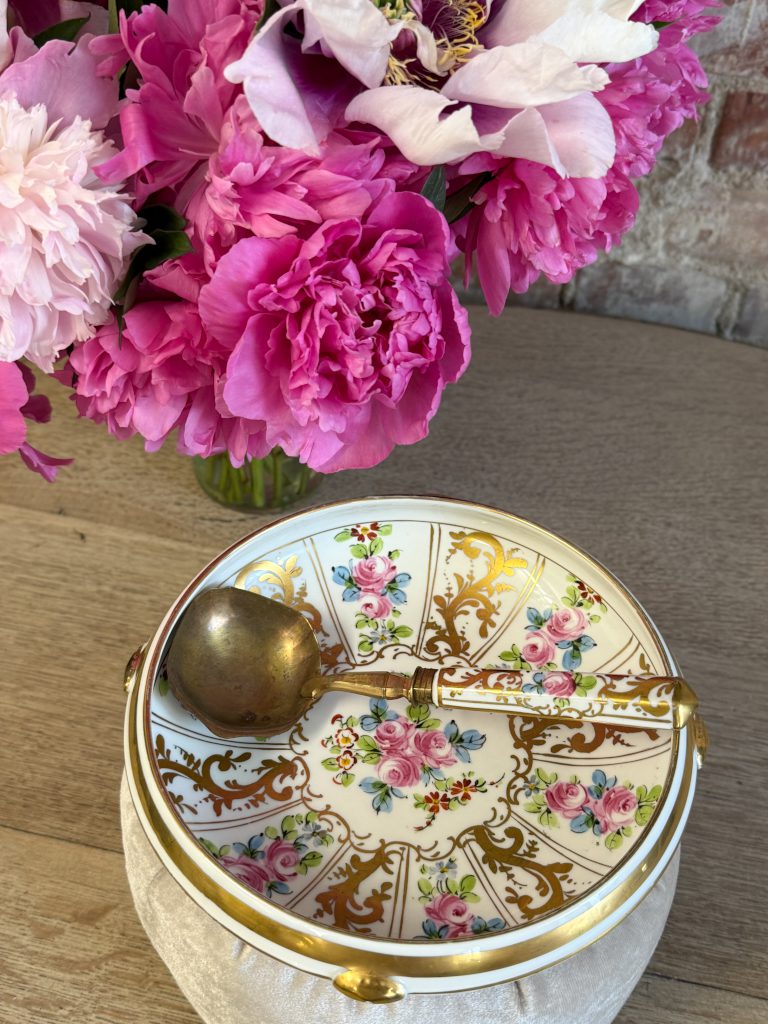
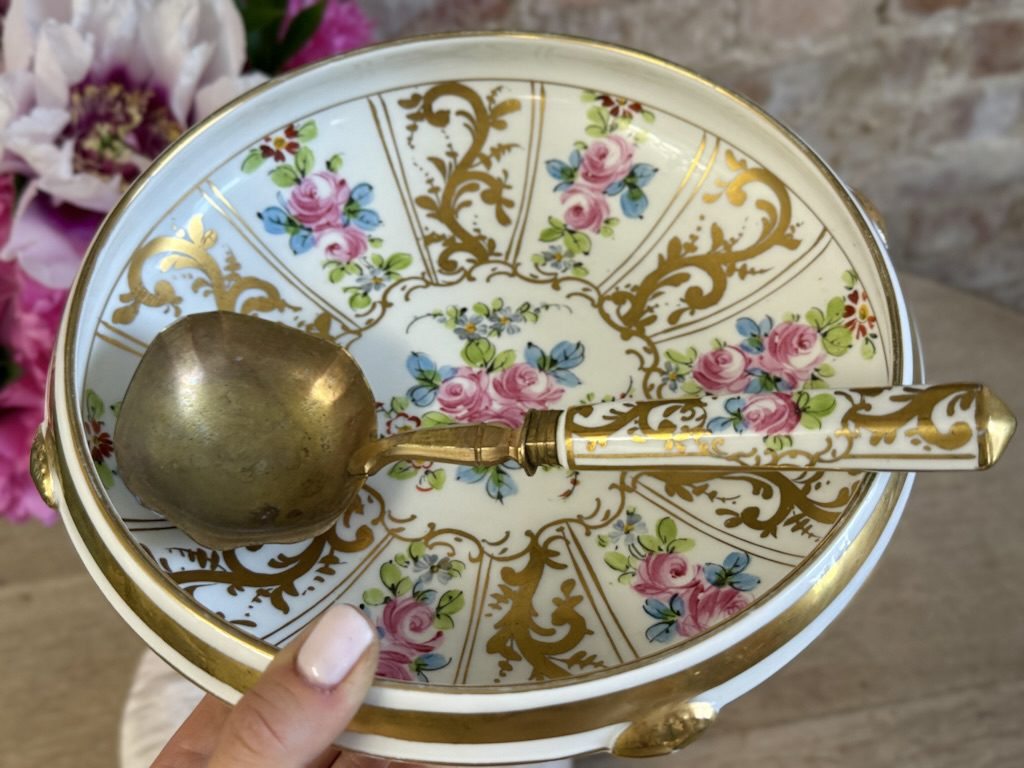
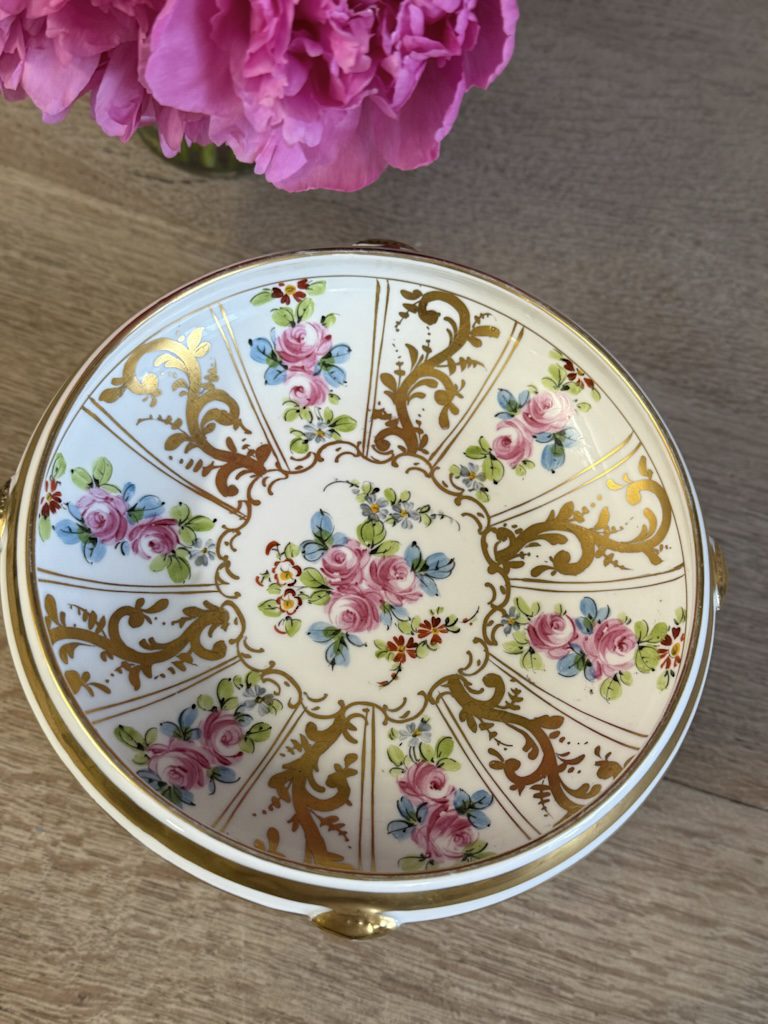
Porcelāna salātu bļoda ar porcelāna roktura karoti. Rozes un zelta rokoko ornaments. Francija vai Bohēmija, aptuveni 1850.–1890. gads. Diametrs 23 cm, augstums 6 cm.
Izsmalcināts un reti sastopams komplekts — apaļa porcelāna salātu bļoda kopā ar piederīgo karoti, kuras kāts arī veidots no porcelāna ar identisku gleznojumu. Komplekts ir izcils Napoleona III laikmeta dekoratīvā porcelāna paraugs ar raksturīgo rokoko atdzimšanas ornamentu.
🕰 Laika periods un stils
Šis komplekts datējams ar 19. gs. vidu līdz otrai pusei — aptuveni 1850.–1890. gadiem — un pieder Jaunā Rokoko (Neo-Rococo / Napoleona III stils) mākslas virzienam. Šajā periodā visā Eiropā — īpaši Francijā — notika grandioza atgriešanās pie 18. gadsimta rokoko estētikas: vijīgie akantusa ornamenti, rozes pušķi un zelta “cartouche” rāmējumi kļuva par simbolu labklājībai un izsmalcinātam gaumei. Tieši šāda dekorācija — radiāli zelta volūtu riņķi ar rozīšu buķetēm starp tiem — ir viens no vischaraktēriskākajiem Napoleona III porcelāna rotājuma risinājumiem.
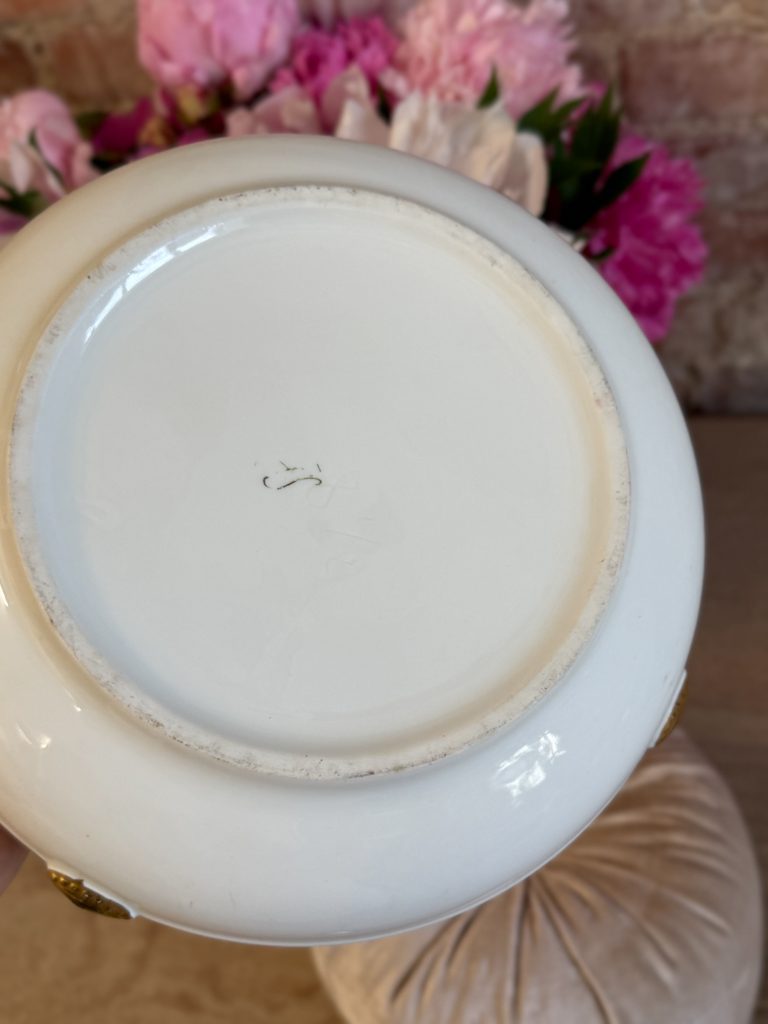
Apakšā saredzams viegls zīmogs vai monogramma, kas fotogrāfijā nav pilnīgi nolasāms. Pēc glazūras kvalitātes, bļodas formas proporcijām un gleznojuma stila priekšmets visticamāk ražots Francijā (Parīzes apkārtne vai Limoža) vai augstākās klases Bohēmijas manufaktūrā.
📋 Priekšmeta apraksts
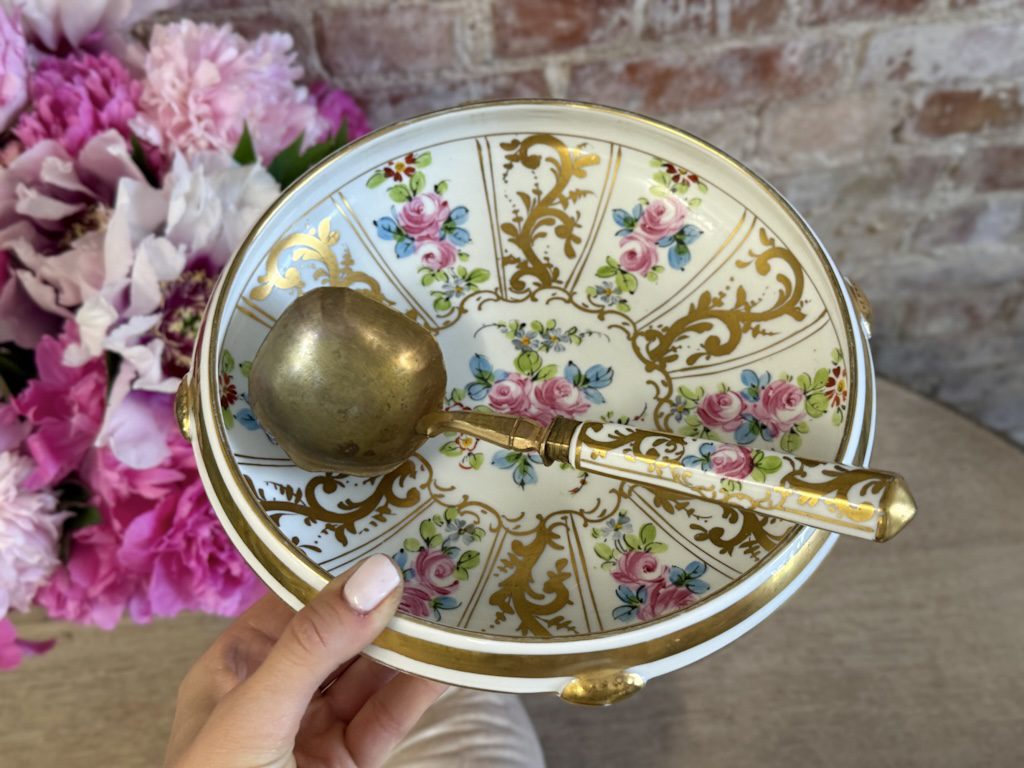
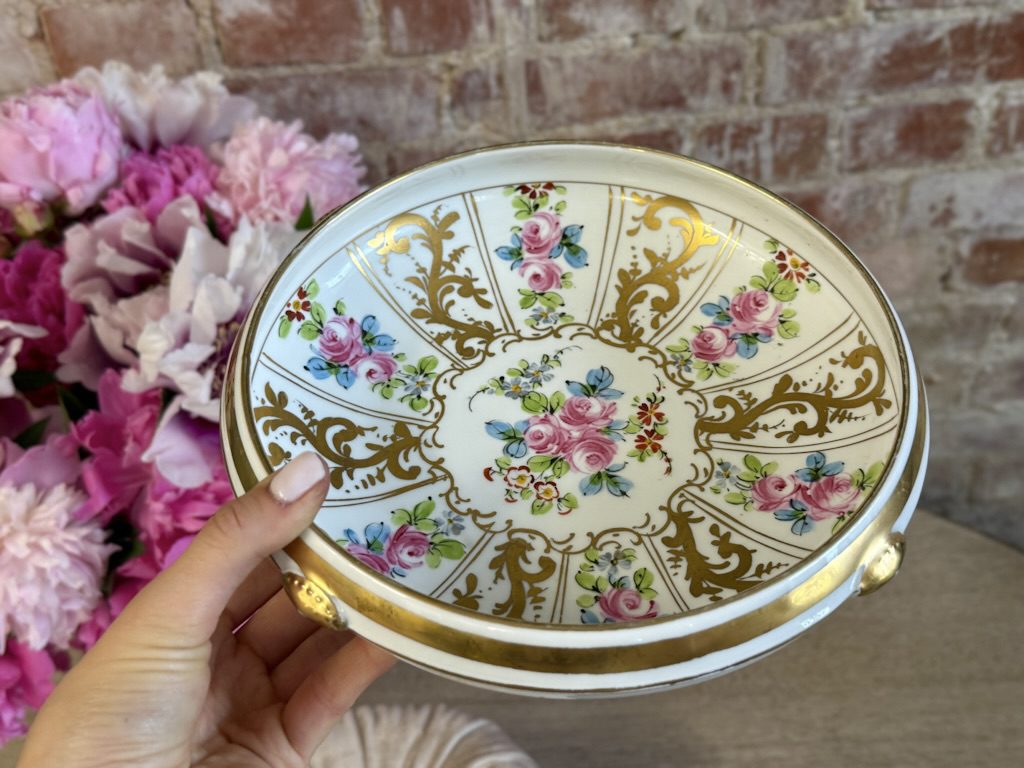
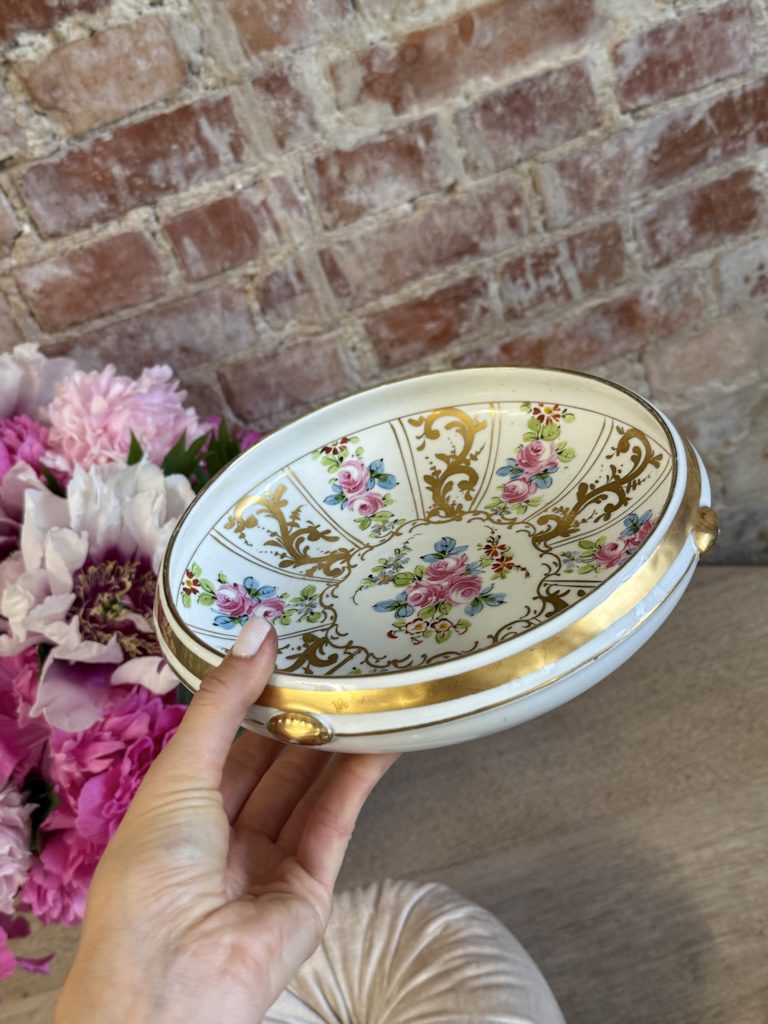
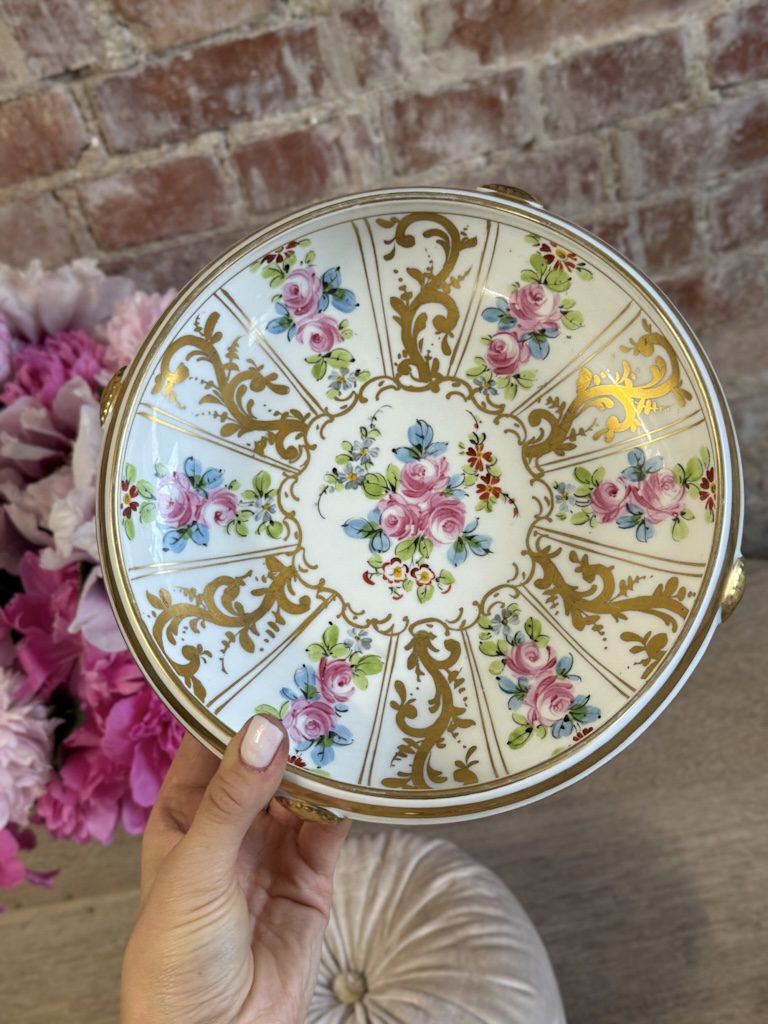
Bļoda ir apaļa, ar nedaudz ieliektu iekšpusi un izteiktu ārējo sieniņu, kas apjozta ar platu zelta joslu. Ārpusē redzami četri nelielu zelta “medallion” knaģīši — raksturīgs elements, kas piešķir bļodai rotaļīgu, rokoko garu. Bļodas iekšpuse greznota ar eleganti organizētu kompozīciju: no centrālā puķu pušķa ar rozēm izstaro astoņas zelta akantusa vīnes “staru” joslas, starp kurām katrā lauciņā iegleznots rozes pušķītis ar zilganām lapām. Fons ir silti krēmbalts, un zelta ornaments ir bagātīgs, spožs un detalizēts.
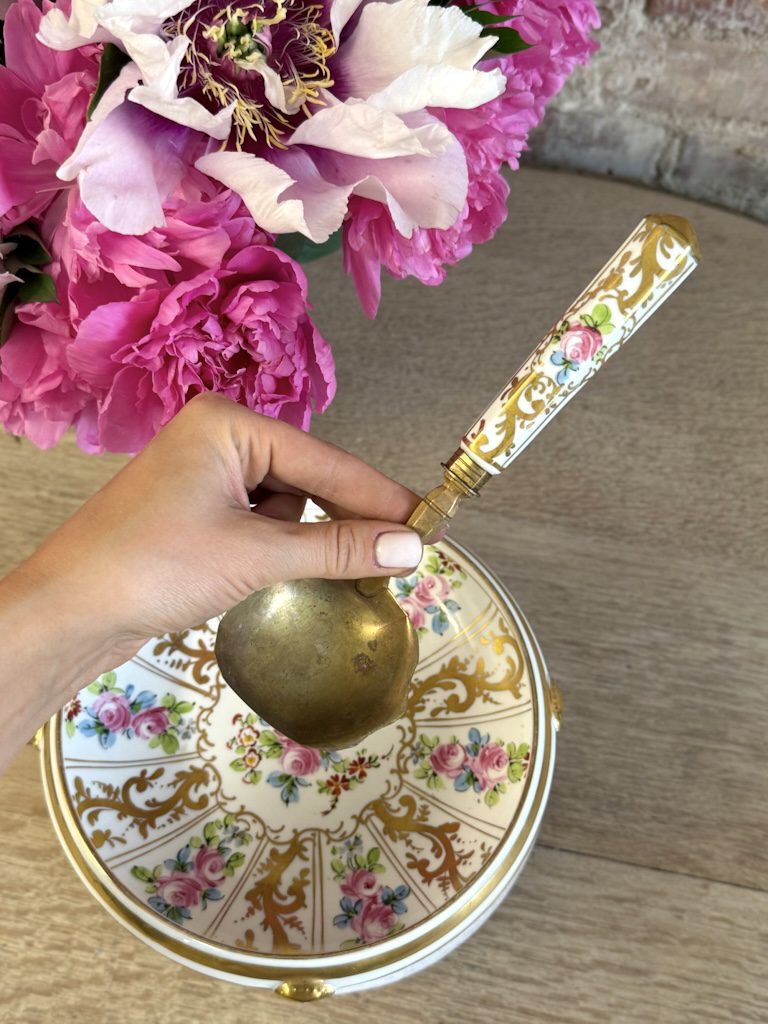
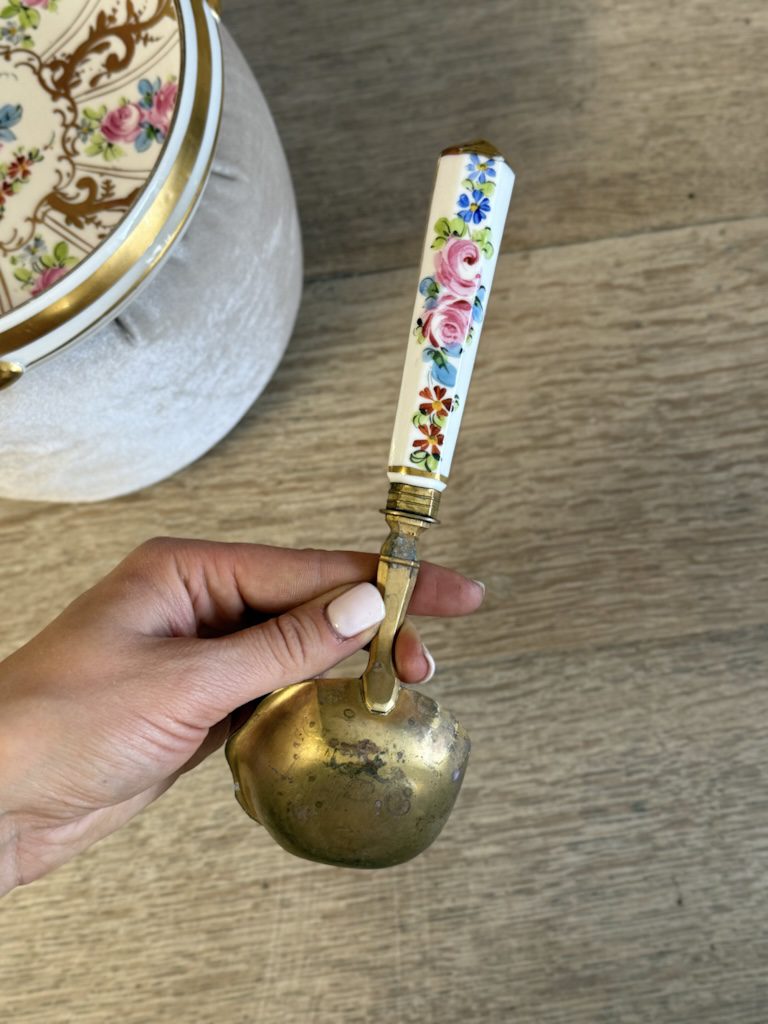
Karote ir izcils papildinājums — tās kāts izgatavots no porcelāna ar identisku gleznojumu: rozes, zelta ornaments un zilganas lapas uz krēmkrāsas fona, kāta gals noapaļots ar zelta apmali. Karotītes “kauss” ir metāla (misiņš ar patinu), kas savienots ar porcelāna kātu ar zelta savienojumu. Šādi kombinētie piederumi — porcelāna kāts ar metāla karotītes daļu — bija ārkārtīgi modes priekšmets 19. gs. vidū un tika gatavoti ekskluzīviem galda klājumiem.
🏡 Interjera un lietošanas ieteikums
Šis komplekts ir tikpat piemērots aktīvai lietošanai (svinīgai maltītei, deserta vai salātu pasniegšanai), cik dekoratīvai ekspozīcijai. Uz bufetes, konsoļgaldiņa vai atklātā skapja tas radīs romantisku, franču klasicisma atmosfēru. Rozā, zaļā un zelta palete lieliski saskan ar dabisku linu, veco koku un svaigu ziedu klātbūtni.
⭐ Stāvokļa novērtējums
Bļoda saglabājusies labā stāvoklī. Gleznojums ir spilgts un labi saglabājies. Zelta ornaments kopumā blīvs un saglabājies — ar dažiem nolietojuma śķērsvītriem, kas normāli šāda vecuma priekšmetam. Porcelāns bez plaisām vai lausku pēdām. Karotes metāla daļa uzrāda laika patinu — kas ir raksturīgi un pievilcīgi oriģinālajiem 19. gs. piederumiem. Porcelāna kāts ir veselā stāvoklī.
Priekšmeta stāvoklis pilnībā atspoguļots pievienotajās fotogrāfijās.
🇬🇧 ENGLISH
Porcelain salad bowl with matching porcelain-handled serving spoon. Rose and gold rococo ornament. France or Bohemia, approximately 1850–1890. Diameter 23 cm, height 6 cm.
An elegant and rarely found matched set — a round porcelain salad bowl with its original companion spoon, whose handle is also made of porcelain decorated with an identical pattern. The set is a fine example of Second Empire decorative porcelain with a characteristic Neo-Rococo ornamental scheme.
🕰 Period & Style
This set dates to the mid-to-late 19th century — approximately 1850–1890 — and belongs to the Neo-Rococo (Napoleonic III style) movement. This period saw a sweeping revival of 18th-century Rococo aesthetics across Europe, especially in France: scrolling acanthus ornament, rose bouquets, and gilded cartouche framing became hallmarks of refined taste and prosperity. The radial composition of golden volute “rays” alternating with rose sprays is one of the most characteristic decorative solutions of Second Empire porcelain.
A faint mark or monogram is visible on the base but is not fully legible in the photographs. Based on the glazing quality, proportions, and painting style, the piece was most likely produced in France (Paris region or Limoges) or a high-quality Bohemian manufactory.
📋 Description
The bowl is round with a slightly concave interior and a distinct outer wall encircled by a broad gold band. Four small gold medallion knobs adorn the exterior — a playful Rococo-spirit detail. The interior features an elegantly organised composition: from a central rose bouquet, eight gilded acanthus scroll “rays” radiate outward, each panel between them filled with a delicate rose spray with blue-toned leaves. The background is a warm creamy white, and the gilded ornament is rich, lustrous, and finely detailed.
The spoon is an outstanding companion piece — its porcelain handle bears an identical decoration of roses, gold ornament, and blue-toned leaves on a cream ground, with a rounded gold-rimmed tip. The bowl of the spoon is metal (brass with patina), joined to the porcelain handle with a gold collar fitting. Such combined pieces — porcelain-handled spoons with metal bowls — were highly fashionable in the mid-19th century and were produced for exclusive table services.
🏡 Display & Use
This set is equally suited to active use — for a celebratory table, serving dessert or salad — and to decorative display. On a sideboard, console table, or open dresser, it will evoke a romantic French classical atmosphere. The rose, green, and gold palette harmonises beautifully with natural linen, aged wood, and fresh flowers.
⭐ Condition
The bowl is in good condition. The painted decoration is vivid and well preserved. The gilded ornament is overall dense and intact, with some minor wear lines consistent with a piece of this age. No cracks or chips to the porcelain. The metal bowl of the spoon shows natural age patina — characteristic and appealing in original 19th-century flatware. The porcelain handle of the spoon is intact.
The full condition of this piece is documented in the accompanying photographs.