
porcelāna šķīvis ar putna motīvu, neliela izmēra (5764)
porcelāna šķīvis ar putna motīvu, neliela izmēra (5764)
€120.00
Platums 24cm.
🇱🇻 LATVISKI
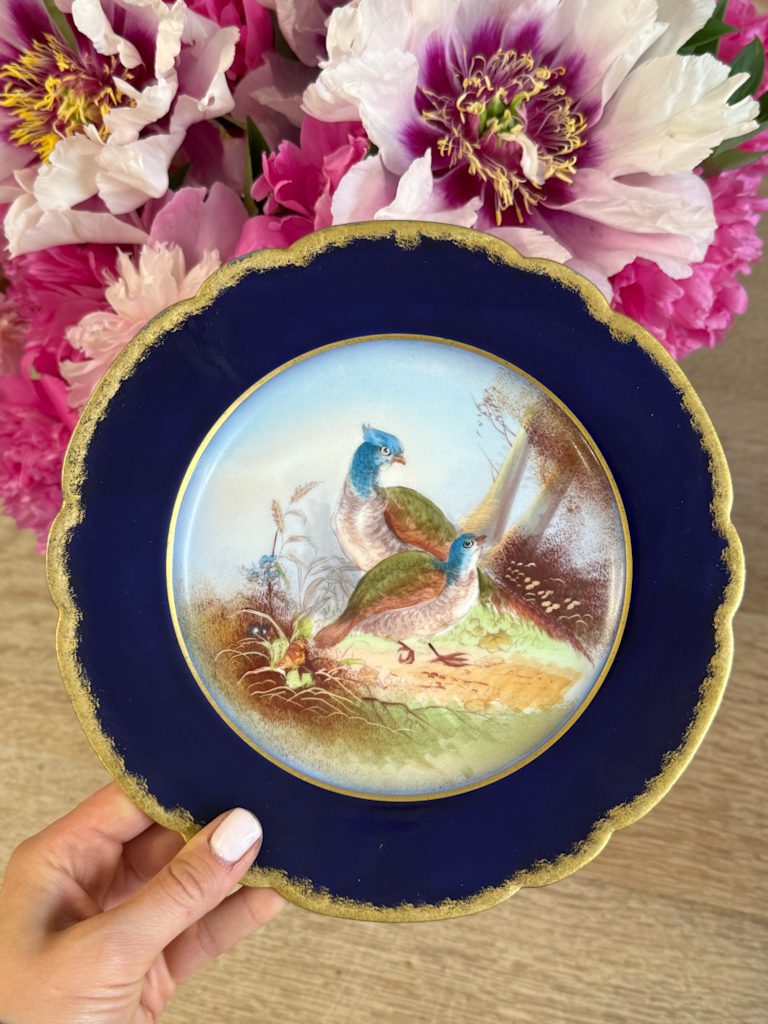
Porcelāna dekoratīvs šķīvis ar roku gleznotu fazānu pāri. Francija vai Anglija, aptuveni 1870.–1900. gads. Diametrs 24 cm.
Izsmalcināts dekoratīvs porcelāna šķīvis ar augstākās klases miniatūras gleznojumu — viens no raksturīgākajiem Viktorijas laikmeta un Skaistā Laikmeta (Belle Époque) putnu motīvu šķīvjiem.
🕰 Laika periods un stils
Šķīvis datējams ar aptuveni 1870.–1900. gadu un pieder Viktorijas laikmeta / Belle Époque dekoratīvā porcelāna tradīcijai. Šajā periodā gan Anglijā (Royal Worcester, Minton, Coalport), gan Francijā (Limoža, Sèvres) bija ārkārtīgi modē dekoratīvi šķīvji ar roku gleznotu putnu un medījumu (game birds) motīvu uz kobalta zilā fona — tie bija svinīgu vakariņu galda dekorācijas un dāvanu kultūras neatņemama daļa augstākajā sabiedrībā. Šāda tipa šķīvji parasti tika gatavoti sērijās, kur katrs šķīvis attēloja citu putnu sugu.
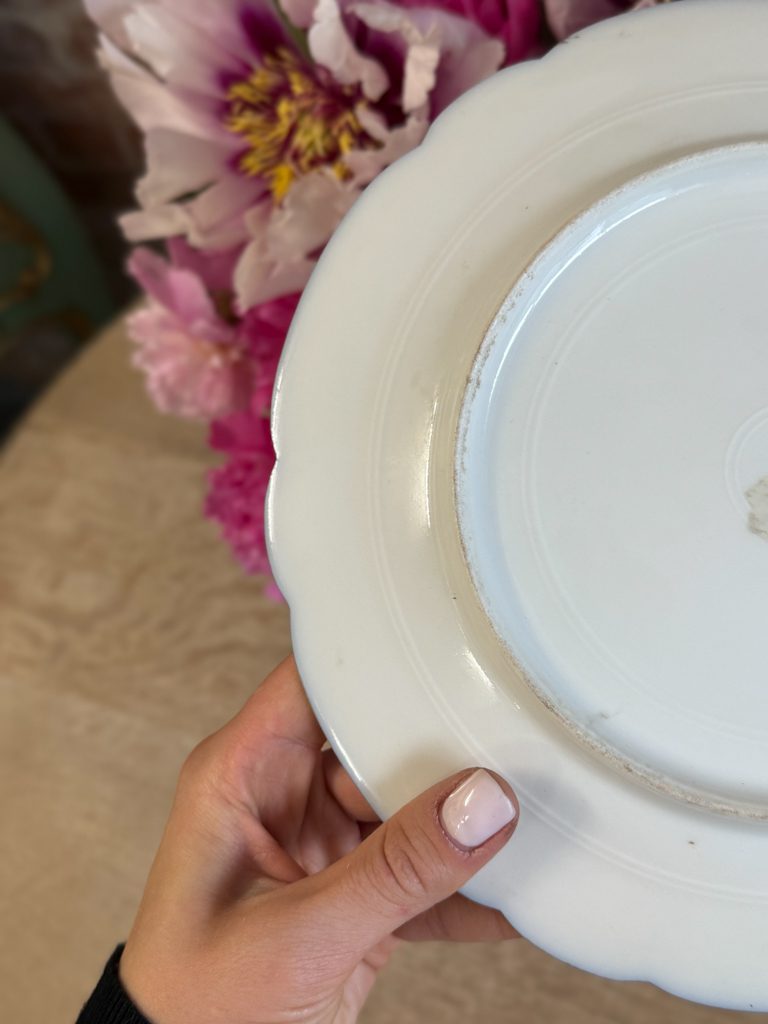
Apakšā nav pilnībā lasāms ražotāja zīmogs. Pēc glazūras kvalitātes, viļņainās malas formas (scalloped edge) un gleznojuma stila šķīvis visticamāk ražots Anglijā (Royal Worcester, Coalport vai cita Staffordshire manufaktūra) vai Francijā (Limoža).
📋 Priekšmeta apraksts
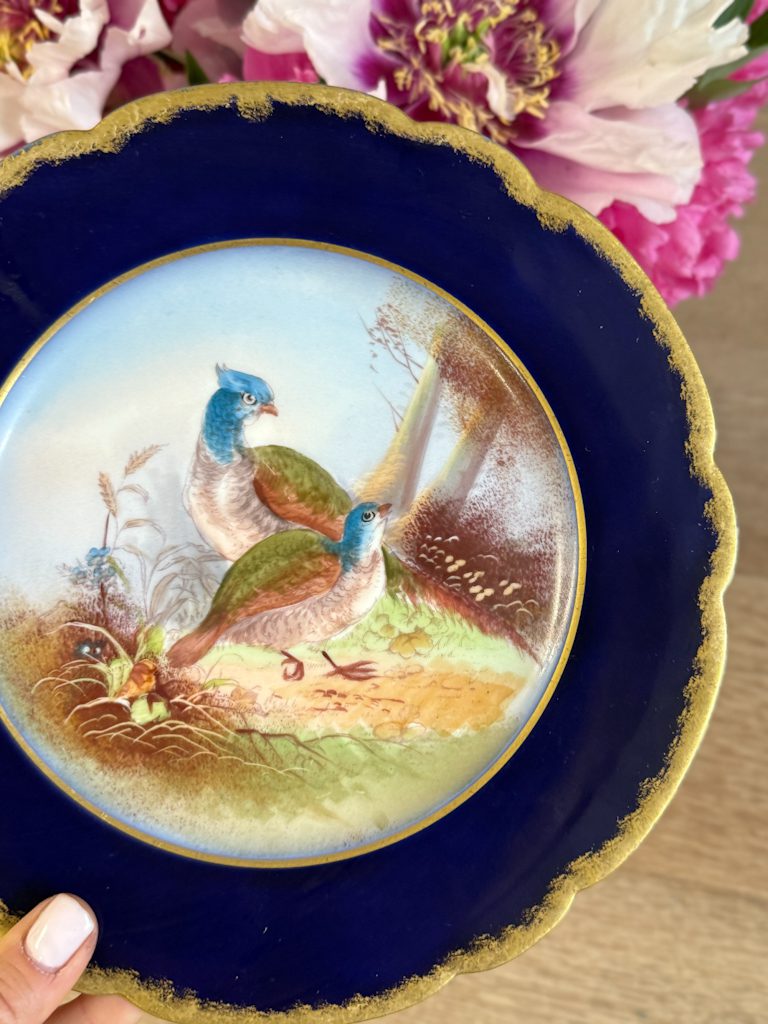
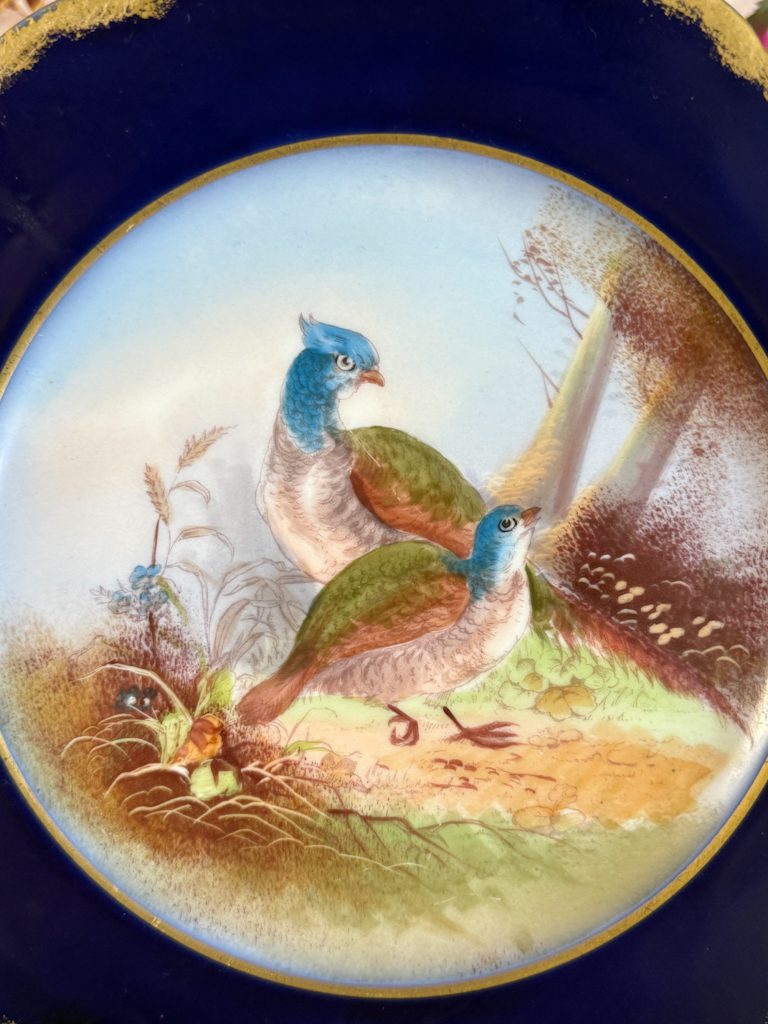
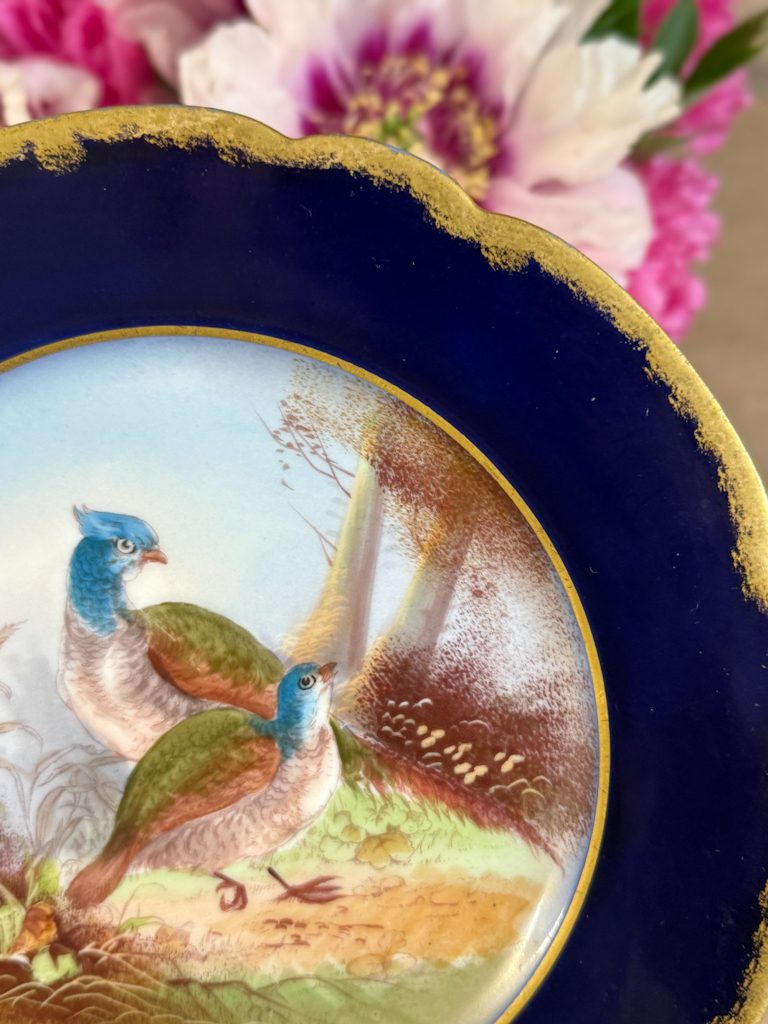
Šķīvja centrālo medaljonu rotā divi fazāni (Phasianus colchicus vai cita fazānu suga ar zilganām galvām) dabiskā meža ainā — rudens krāsu fons ar lapu koku stumbru, zeltainiem zālājiem, sausām vārpatām un nelielu sēni priekšplānā. Abu putnu spalvotais tērps atveidots ar lielu precizitāti un māksliniecisko smalkinājumu: spilgti zilganās galvas, zaļganbrūnais muguras spalvojums, bālganā vēdera daļa un raksturīgā fazāna aste — visi elementi gleznoti ar smalku otu un akvarelim līdzīgu toņu pāreju.
Ainas fons ir gaiši zils ar saulainām gaisa perspektīvas toņu pārejām, kas piešķir dziļuma sajūtu. Gleznojuma kvalitāte liecina par pieredzējuša porcelāna gleznotāja roku — šāda game birds ainavas glezniecība bija ļoti augstu vērtēta 19. gs. beigās, un labākie meistari šajā žanrā bija ļoti pieprasīti.
Šķīvja plato apmali klāj dziļi kobalta zilā glazūra ar viļņainu, skalopētu malu (scalloped edge), kas apzeltīta ar otu uzklātu zelta slāni — nolietojies un raksturīgs laika nospiedums, kas piešķir šķīvim īstu antikvāro raksturu.
🏡 Interjera ieteikums
Šis šķīvis ir izcils dekoratīvs sienas šķīvis — piestiprināts pie sienas ar speciālu turētāju, tas radītu elegantu akcentu medību kabineta, bibliotēkas, ēdamistabas vai hallē ar angļu, franču vai klasiskā stilā iekārtotu interjeru. Kobaltā zilā un zelta palete harmonizējas ar tumšu koku, ādu, bronzas akcentiem un zaļiem audumu motīviem.
⭐ Stāvokļa novērtējums
Šķīvis saglabājies labā stāvoklī. Centrālais gleznojums ir spilgts, detalizēts un labi saglabājies. Kobalta apmale ir blīva un neskarta. Zelta apzeltījums uz viļņainās malas uzrāda vidēju nolietojumu — vietām nodzisis — kas ir normāls un gaidāms šāda vecuma priekšmetam ar vēsturi. Porcelāns bez plaisām vai lausku pēdām. Apakšā redzamas laika pēdas, kas liecina par lietošanu vai glabāšanu.
Priekšmeta stāvoklis pilnībā atspoguļots pievienotajās fotogrāfijās.
🇬🇧 ENGLISH
Hand-painted porcelain decorative plate with a pair of pheasants. France or England, approximately 1870–1900. Diameter 24 cm.
A refined decorative porcelain plate with a high-quality miniature painting — one of the most characteristic examples of Victorian and Belle Époque game bird plates.
🕰 Period & Style
The plate dates to approximately 1870–1900 and belongs to the Victorian / Belle Époque decorative porcelain tradition. During this period, decorative plates with hand-painted game bird motifs on a cobalt blue ground were enormously fashionable in both England (Royal Worcester, Minton, Coalport) and France (Limoges, Sèvres) — forming an integral part of formal dinner table decoration and gift culture in high society. Such plates were typically produced in sets, each depicting a different bird species.
The maker’s mark on the reverse is not fully legible. Based on the glazing quality, the scalloped rim form, and the painting style, the plate was most likely produced in England (Royal Worcester, Coalport, or another Staffordshire manufactory) or France (Limoges).
📋 Description
The central medallion features two pheasants (likely Phasianus colchicus or a related species with blue-toned heads) in a naturalistic woodland setting — an autumnal background with a tree trunk, golden grasses, dried seed heads, and a small mushroom in the foreground. The plumage of both birds is rendered with exceptional precision and artistic refinement: vivid blue-toned heads, olive-brown back feathers, pale creamy underparts, and the characteristic pheasant tail — all painted with a fine brush and watercolour-like tonal transitions.
The background is a soft sky blue with sunny atmospheric perspective gradations, creating a convincing sense of depth. The quality of the painting reflects an experienced porcelain painter’s hand — this genre of game bird landscape painting was held in very high regard in the late 19th century, and the finest practitioners were greatly sought after.
The wide border is coated in deep cobalt blue glaze with a scalloped edge, gilded with a brush-applied gold layer — worn and aged in the characteristic manner that gives the plate its genuine antique character.
🏡 Display & Use
This plate makes an outstanding decorative wall piece — mounted with a plate hanger, it would create an elegant accent in a hunting room, library, dining room, or hallway styled in English, French, or classical decor. The cobalt and gold palette harmonises beautifully with dark wood, leather, bronze accents, and green textile motifs.
⭐ Condition
The plate is in good condition. The central painting is vivid, detailed, and well preserved. The cobalt border is dense and undamaged. The gilded scalloped edge shows moderate wear — some fading in places — entirely normal and expected for a piece of this age with history. No cracks or chips to the porcelain. The reverse shows age marks consistent with use or storage.
The full condition of this piece is documented in the accompanying photographs.