
Miniatūra Izmēra, Porcelāna Trauciņš ar Vāku (5621)
Miniatūra Izmēra, Porcelāna Trauciņš ar Vāku (5621)
€120.00
Antīks franču “Limoges” porcelāna sinepju, ievārījuma un saldumu trauks (Martial Redon / Barny & Rigoni)
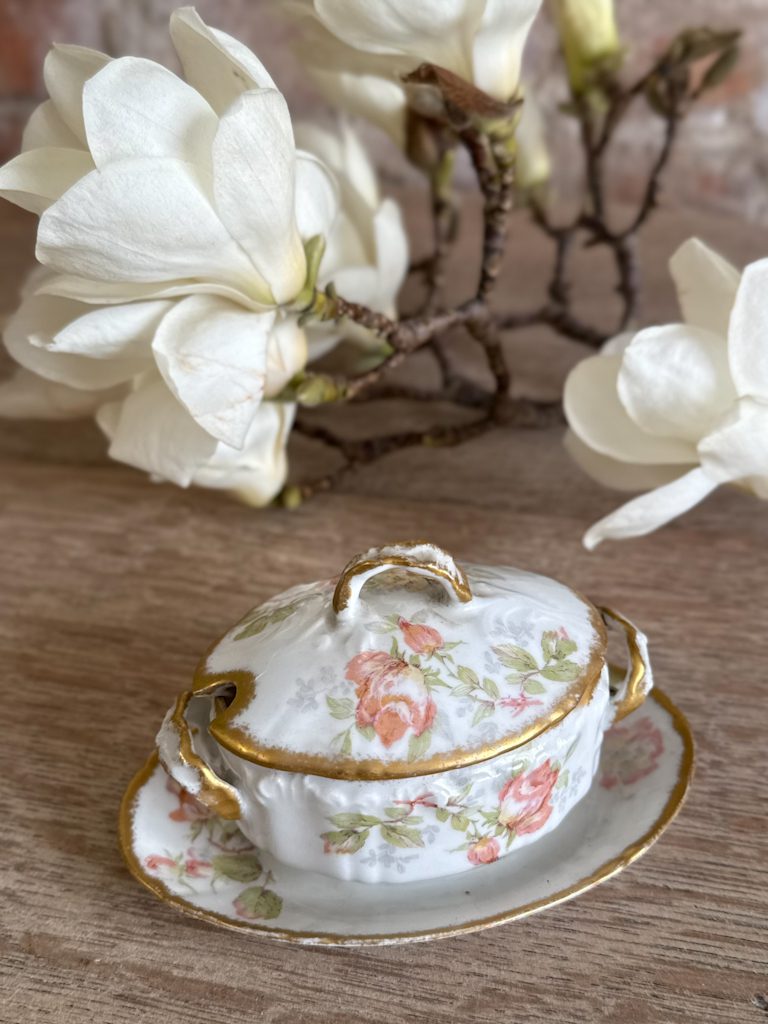
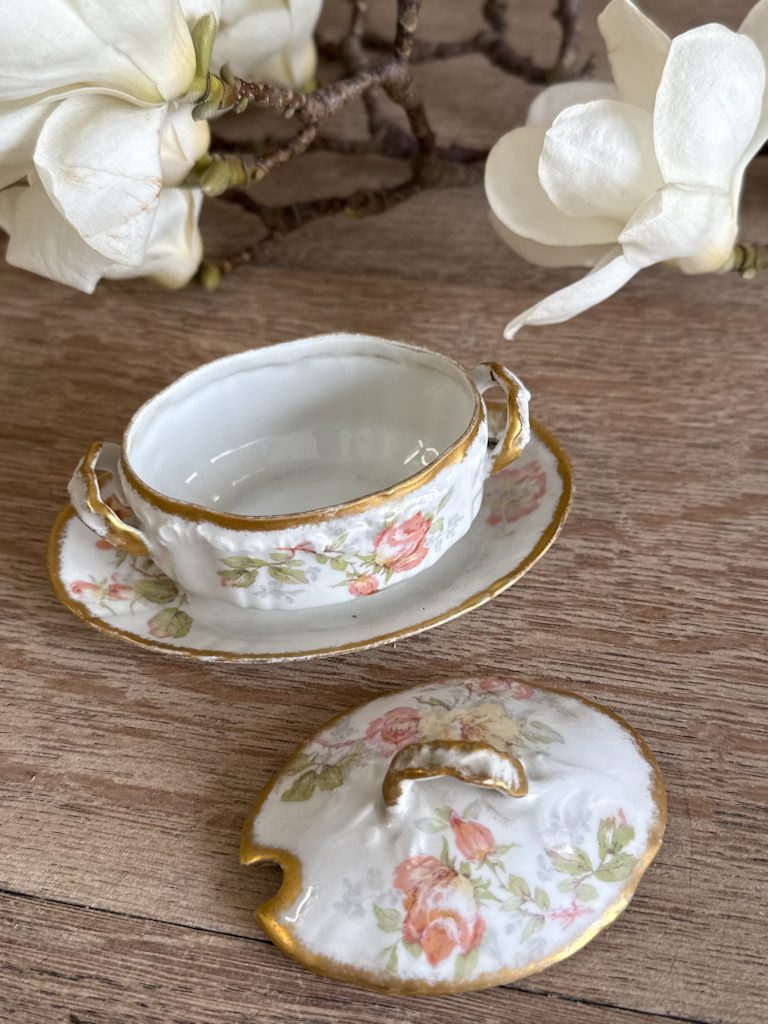
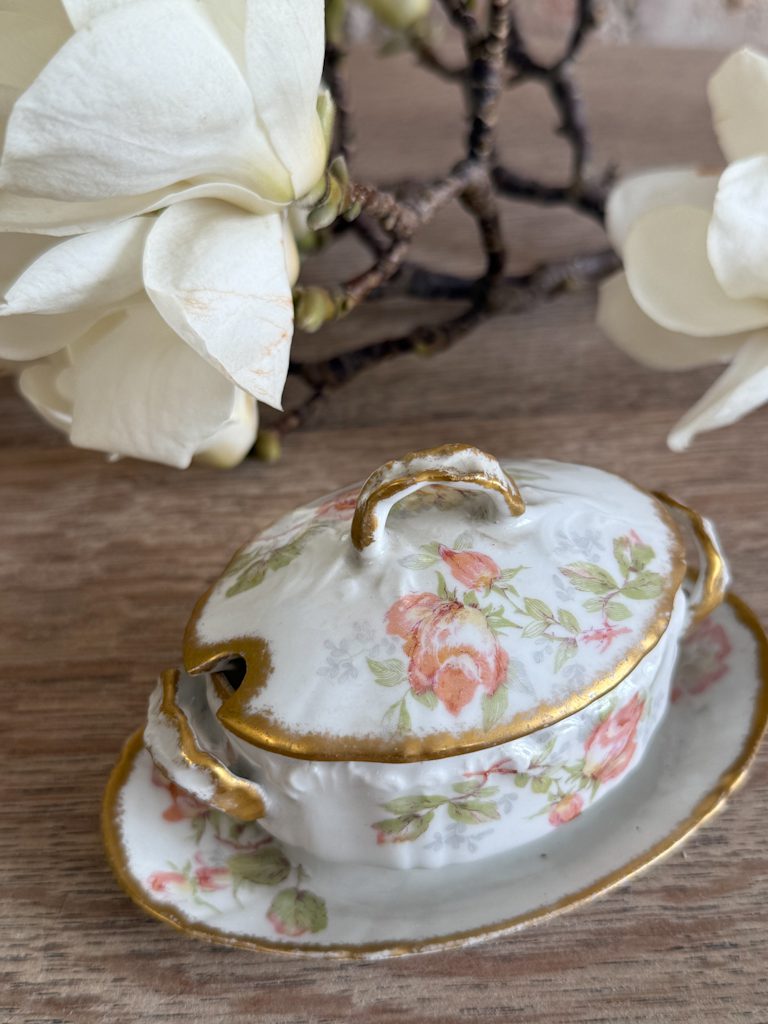
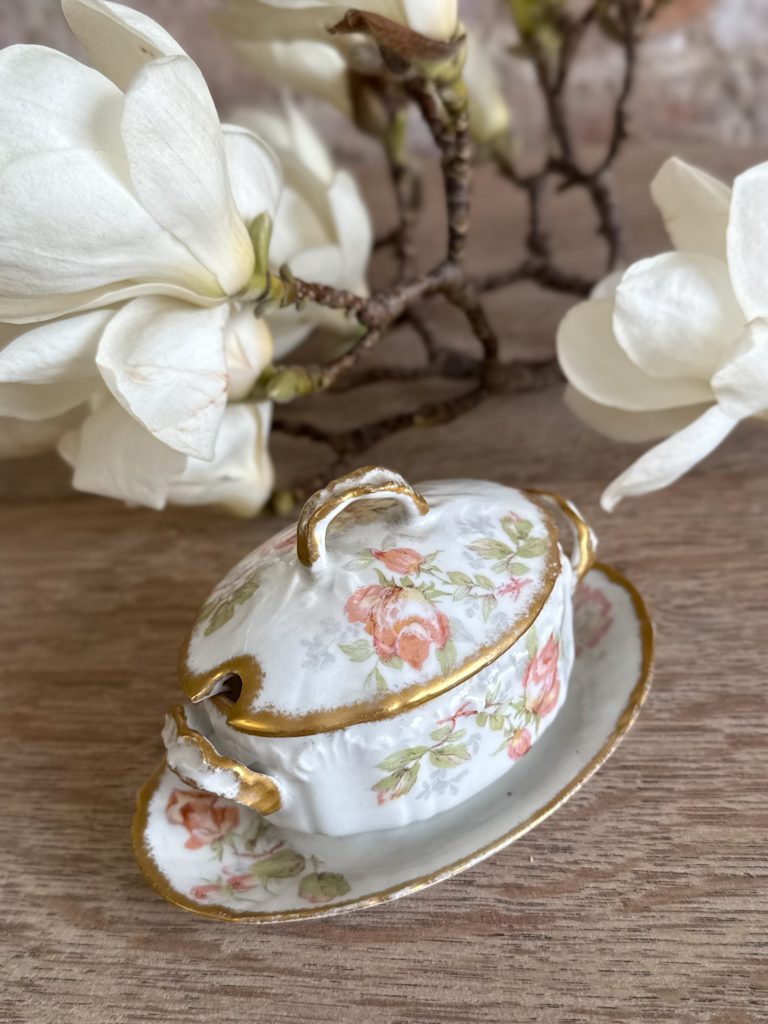
Šis ārkārtīgi smalkais un romantiskais miniatūrais porcelāna trauks ar noņemamu vāku vēsturiski ir radīts kā daudzfunkcionāls galda elements – tas lieliski kalpo gan kā moutardier (sinepju un mazo mērču pasniegšanas terīne), gan kā elegants trauciņš ievārījumam, medum vai smalkiem saldumiem. Lai gan vizuāli tas atgādina lādīti, tā praktisko dabu nodod vākā eleganti iestrādātais izgriezums karotītei un stabilā, vienā gabalā ar pamatšķīvi atlietā forma. Sniegbalto porcelānu rotā delikāti sārtu rožu motīvi asimetriskās vītnēs un bagātīgs, ar rokām klāts zeltījums, kas izceļ trauka viļņotās (festonētās) malas un smalkos rokturīšus.
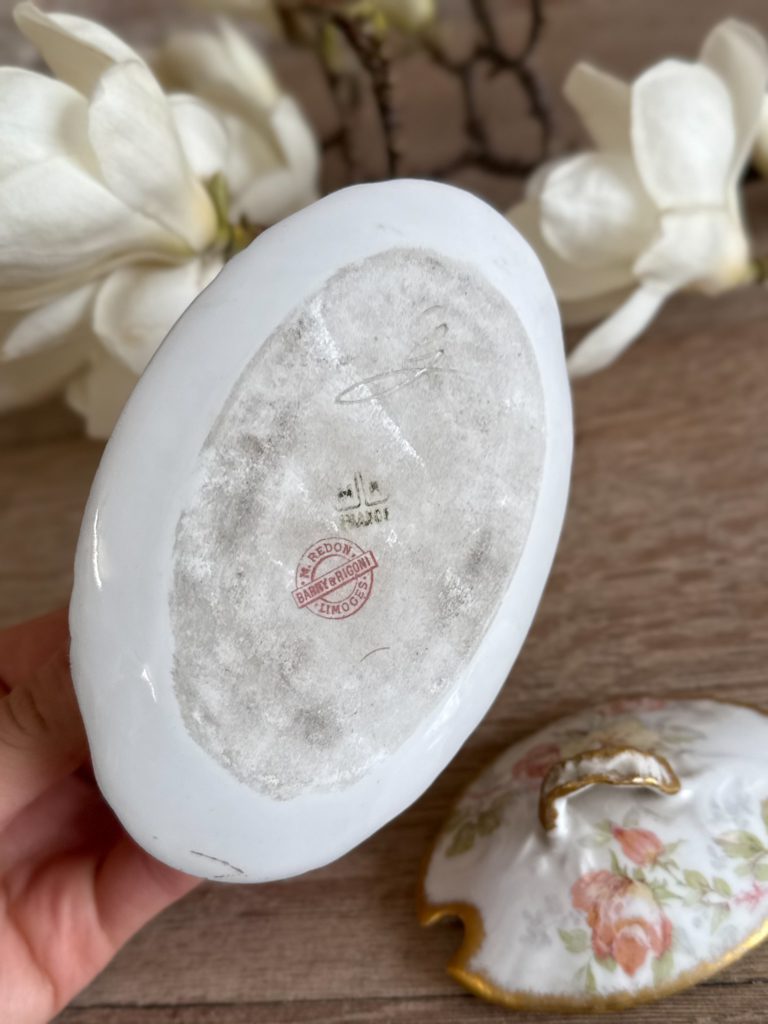
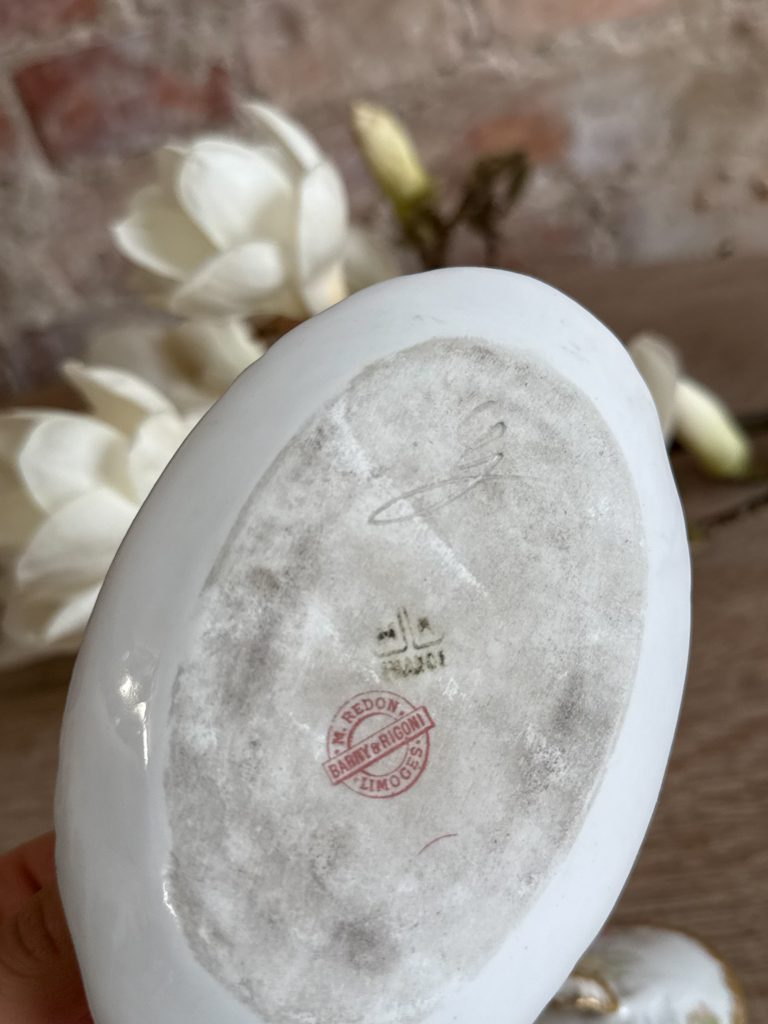
Manufaktūra, vēsture un tradīcijas Uz trauka pamatnes ir atrodami divi vēsturiski zīmogi, kas liecina par augstākās klases sadarbību. Zaļais zemglazūras zīmogs “M.R. France” pieder leģendārajai Martial Redon manufaktūrai, kas 19. gadsimta beigās bija viena no vadošajām Limožas (Limoges) porcelāna ražotnēm, saņemot augstākos apbalvojumus Parīzes pasaules izstādēs par sava porcelāna dzidro baltumu. Savukārt sarkanais virsglazūras zīmogs norāda uz Barny & Rigoni – izcilu un prestižu Limožas porcelāna dekorēšanas studiju. Šāda prakse, kur viena slavenākā manufaktūra rada ideālu “balto zeltu” (pašu trauku), bet cita specializēta meistardarbnīca to apglezno, bija raksturīga Francijas luksusa porcelāna industrijai tās ziedu laikos.
Laika periods un stila ietekme Zīmogi un trauka dizains ļauj to precīzi datēt ar 19. un 20. gadsimta miju (ap 1890.–1906. gadu) – slaveno Belle Époque jeb “Skaisto laikmetu”. Priekšmets iemieso vēlīnā neorokoko (Rococo Revival) stila būtību: atteikšanos no stingrām, taisnām līnijām, dodot priekšroku organiskām formām, bagātīgam zeltījumam un sentimentāliem, romantiskiem ziedu motīviem, kas atspoguļoja tā laika franču buržuāzijas mīlestību pret grezni klātiem un detaļām bagātiem rīta vai pēcpusdienas tējas galdiem.
Retums un pieprasījums antikvāriāta pasaulē Mazi, funkcionāli galda piederumi antikvāriāta pasaulē ir īpaši pieprasīti un salīdzinoši reti. Tā kā šie priekšmeti tika aktīvi lietoti ikdienā, to trauslie vāciņi (īpaši tie, kuriem ir izgriezums karotei) gandrīz vienmēr laika gaitā tika saplēsti vai pazaudēti. Atrast pilnībā saglabātu, neskartu šāda tipa trauku ar abiem oriģinālajiem manufaktūru zīmogiem un perfektu zeltījumu ir liels retums un brīnišķīgs papildinājums jebkurai Limožas porcelāna kolekcijai vai luksusa galda klājumam.
Stāvoklis Priekšmets ir izcilā, muzeja līmeņa antīkā stāvoklī. Porcelāns ir vesels, bez plaisām vai atsitumiem. Apzeltījums uz malām, rokturiem un vāka satvērēja ir teicami saglabājis savu sākotnējo spozmi. Viss kopējais priekšmeta stāvoklis un smalkās detaļas ir skaidri apskatāmas pievienotajos fotoattēlos.
Antique French “Limoges” Porcelain Mustard, Jam, or Sweets Tureen (Martial Redon / Barny & Rigoni)
This exceptionally delicate and romantic miniature porcelain covered dish was historically created as a versatile table accessory—perfectly serving either as a moutardier (a mustard or small sauce tureen) or as an elegant container for jam, honey, or fine sweets. Although it visually resembles a trinket box, its practical nature is revealed by the elegantly designed spoon cutout in the lid and the stable form, which is cast in one piece with its attached underplate. The snow-white porcelain is adorned with delicate pink rose motifs in asymmetrical garlands and rich, hand-applied gilding that highlights the vessel’s scalloped edges and fine handles.
Manufactory, History, and Traditions The base of the vessel bears two historic marks that attest to a top-tier collaboration. The green underglaze mark “M.R. France” belongs to the legendary Martial Redon manufactory, which was one of the leading Limoges porcelain producers in the late 19th century, winning top awards at the Paris World’s Fairs for the pristine whiteness of its porcelain. The red overglaze mark indicates Barny & Rigoni, an outstanding and prestigious Limoges porcelain decorating studio. This practice—where a renowned manufactory created the perfect “white gold” (the blank vessel) and a specialized master workshop decorated it—was a hallmark of the French luxury porcelain industry during its golden age.
Time Period and Style Influence The marks and the design of the piece allow it to be accurately dated to the turn of the 19th and 20th centuries (circa 1890s–1906)—the famous Belle Époque. The piece embodies the essence of the late Rococo Revival style: an abandonment of strict, straight lines in favor of organic forms, rich gilding, and sentimental, romantic floral motifs. This reflected the French bourgeoisie’s love for lavishly set and detail-rich breakfast or afternoon tea tables.
Rarity and Demand in the Antique World Small, functional table accessories are highly sought after and relatively rare in the antique world. Because these items were actively used daily, their fragile lids (especially those with a cutout for a spoon) were almost always broken or lost over time. Finding a completely intact, pristine vessel of this type with both original manufactory marks and perfect gilding is a great rarity and a wonderful addition to any Limoges porcelain collection or luxury table setting.
Condition The piece is in excellent, museum-quality antique condition. The porcelain is intact, with no cracks or chips. The gilding on the edges, handles, and lid finial has perfectly retained its original brilliance. The overall condition of the item and its fine details can be clearly seen in the attached photographs.