
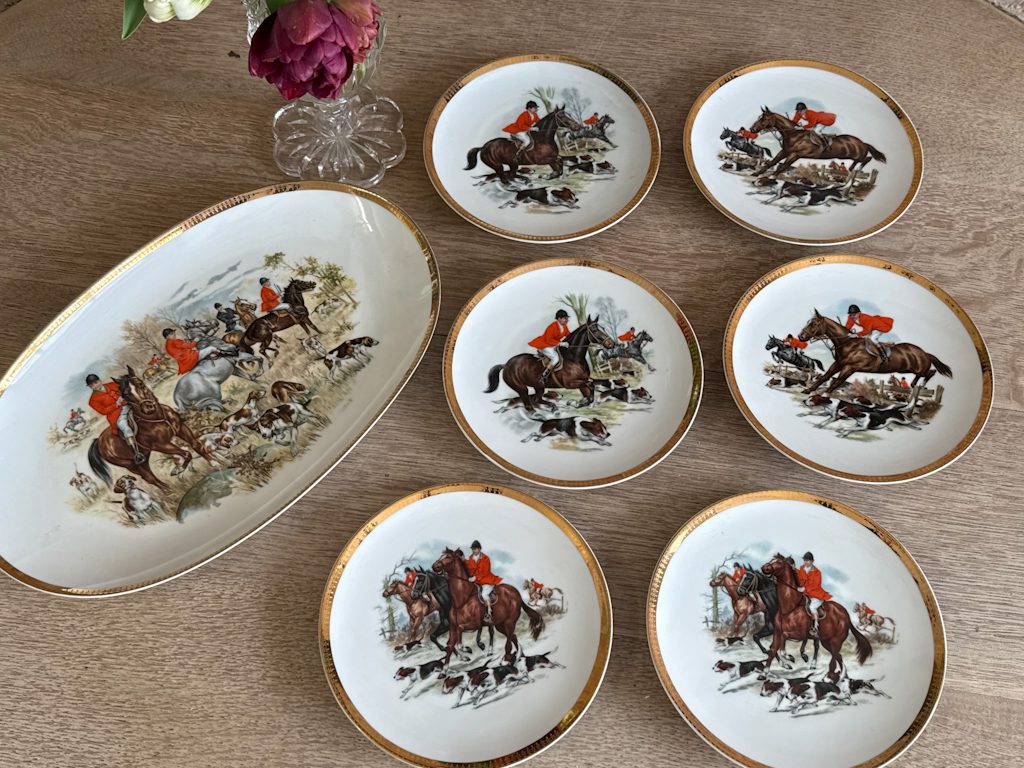
Šķīvju Komplekts ar Medību Suņu un Zirgu Motīviem, 1gab Servējamais Šķīvis un 6gab Salātu Šķīvji Centrāleiropa vai Vācija, ap 1940.–1960. gads (5588)
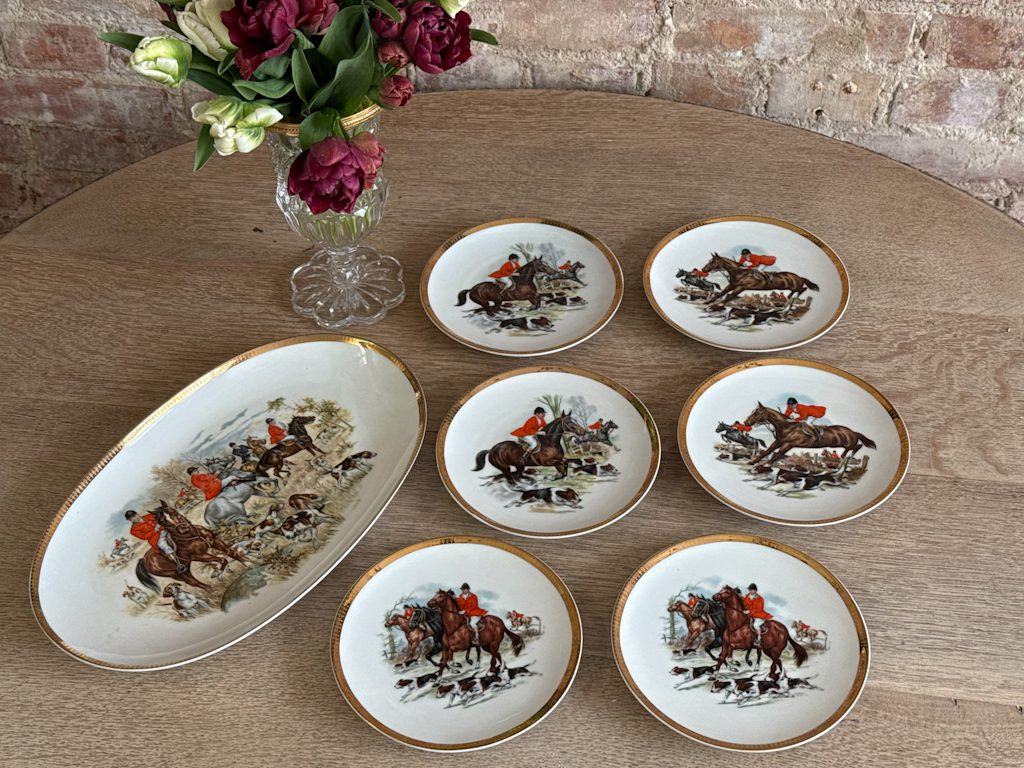
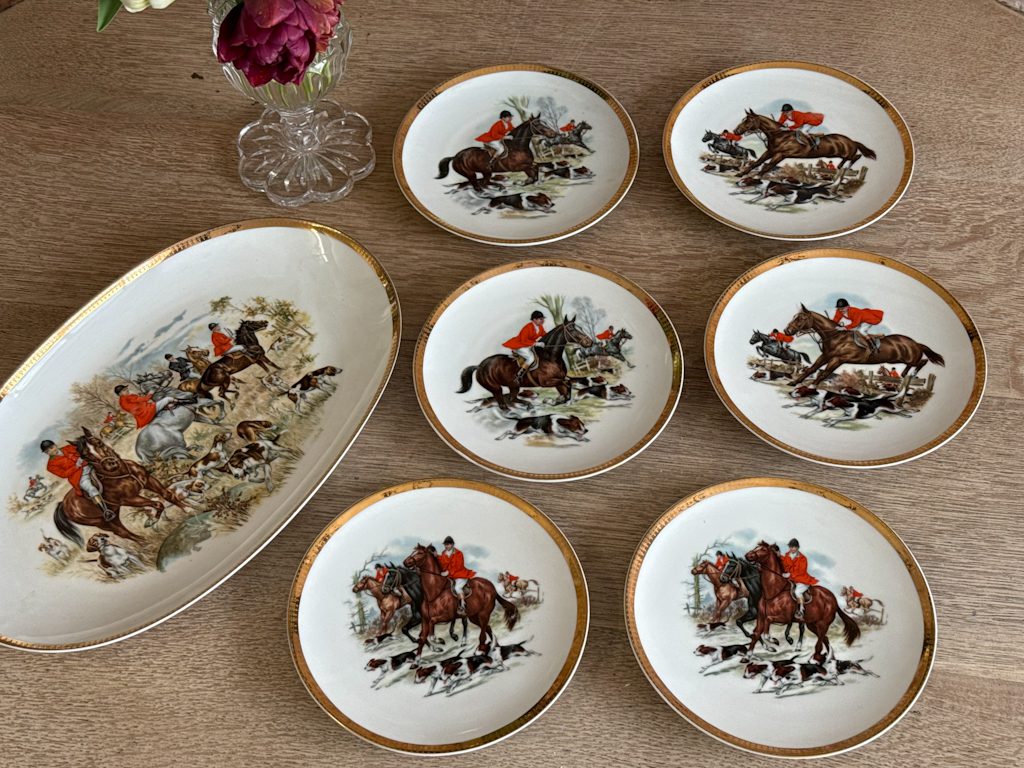
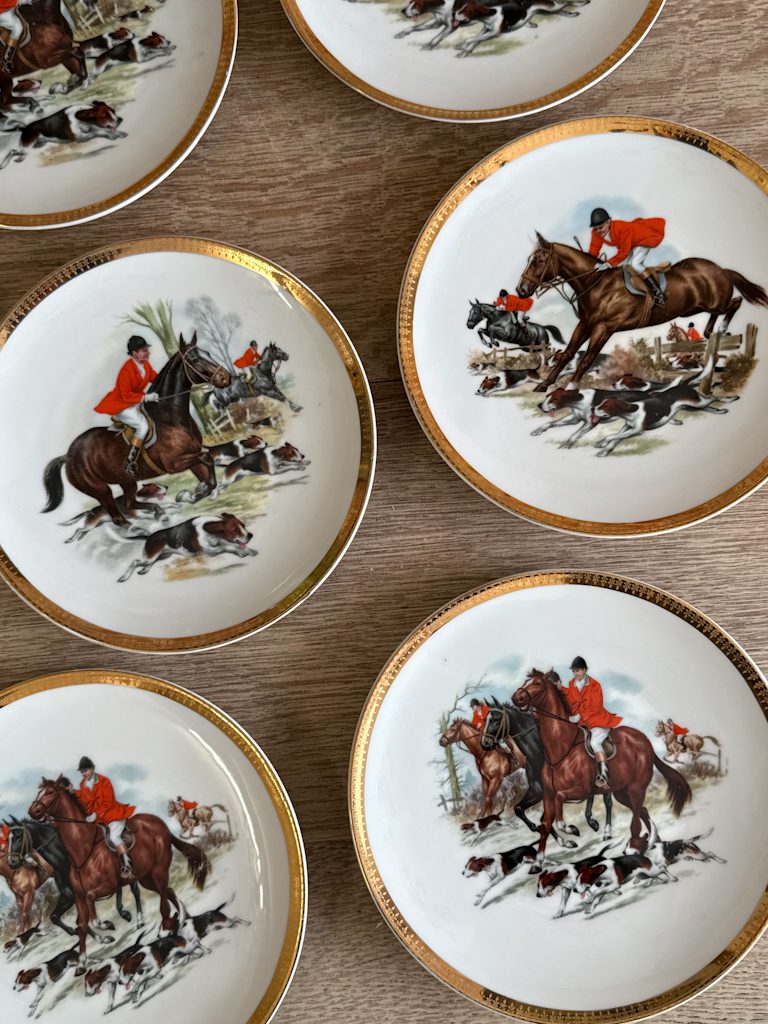
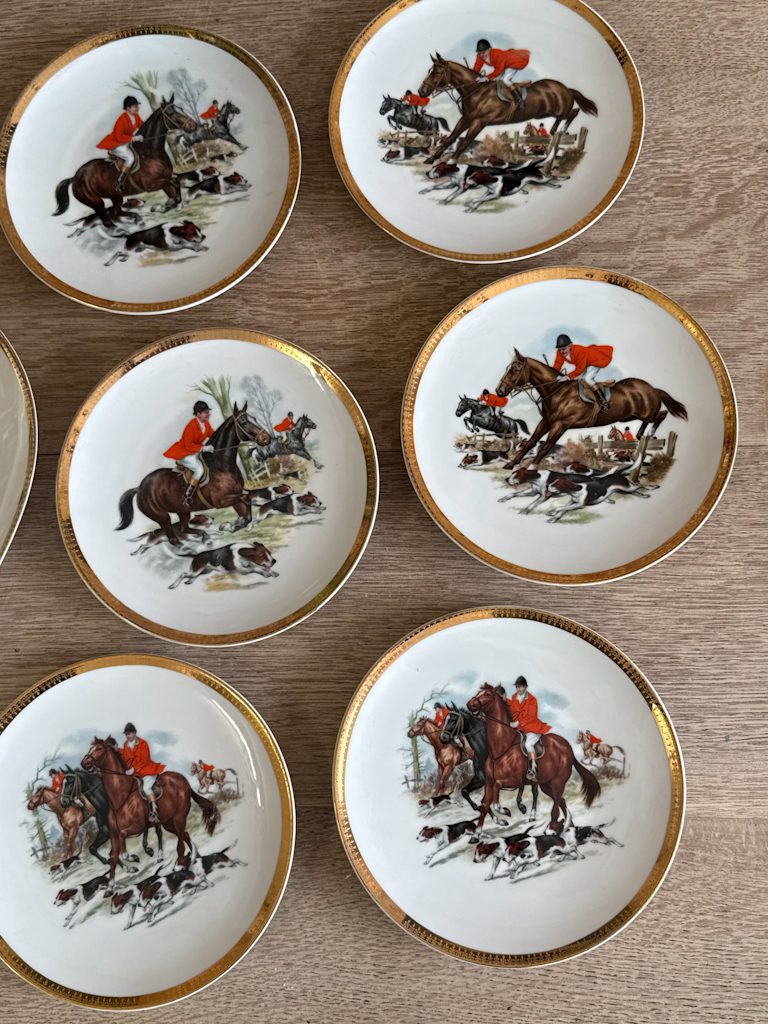
Šķīvju Komplekts ar Medību Suņu un Zirgu Motīviem, 1gab Servējamais Šķīvis un 6gab Salātu Šķīvji Centrāleiropa vai Vācija, ap 1940.–1960. gads (5588)
€200.00
📐 IZMĒRI — Servējamais šķīvis: 40 cm × 28 cm (ovāls). Salātu šķīvji: diametrs 20 cm. Komplektā 7 gabali. Vidēji smagi.
Porcelāna medību servīzes komplekts — servējamais šķīvis un seši salātu šķīvji ar angļu lauku medību ainām — Centrāleiropa vai Vācija, ap 1940.–1960. gads
―――――――――――――――――――――
🏛️ IZGATAVOŠANAS PERIODS, MĀKSLAS STILS, LAIKMETS
Ir ainavas, kas pastāv ārpus laika. Viens no tiem ir angļu lauku rīts — rudens migla virs birzs, dūņainas takas smarža, zirgu elpu mākoņi aukstajā gaisā un sarkanos kamzoļos tērptie jātnieki, kas kopā ar suņu baru izveļas pāri žogam pretī nezināmajam. Šo ainu porcelāna glezniecībā iemūžināja ar tādu mīlestību un detaļu precizitāti, ka skatoties uz šiem šķīvjiem, gandrīz jūti, kā trauksmainais solis dzenas pakaļ skaņai, ko tālu priekšā raisa medību taure.
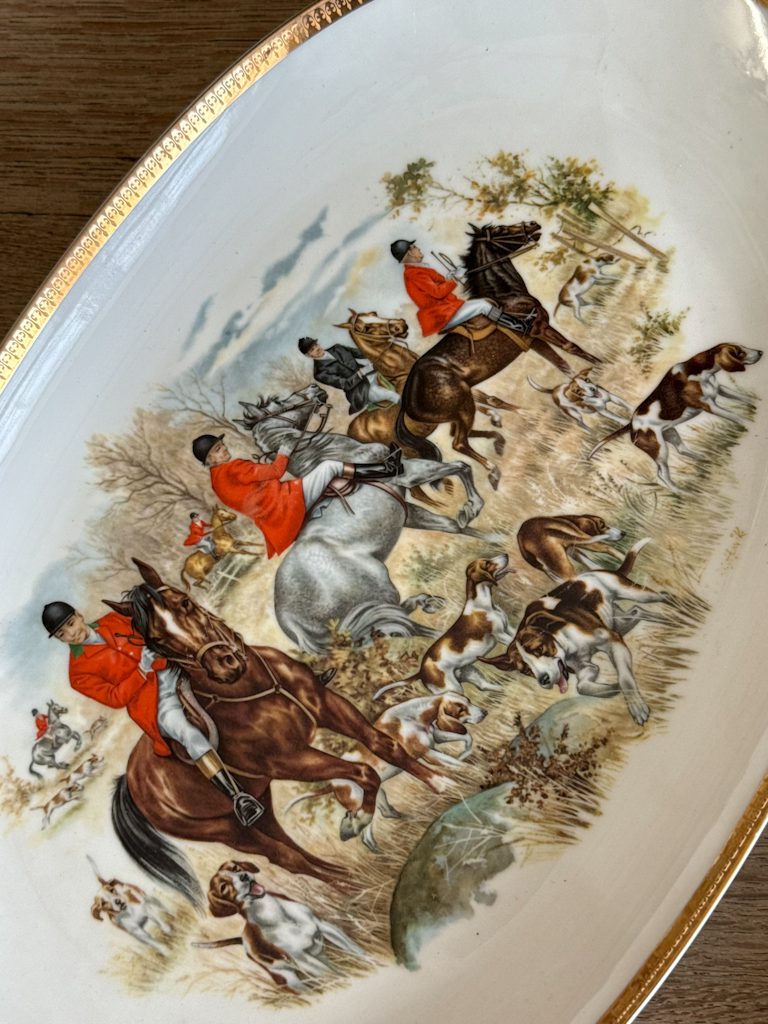
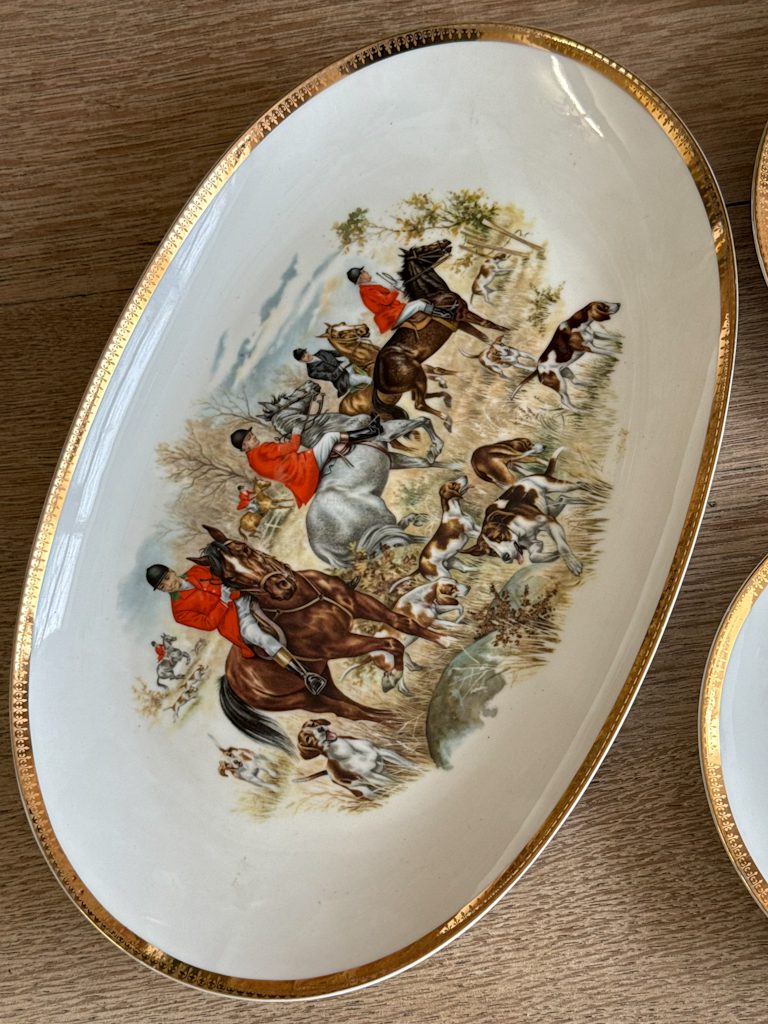
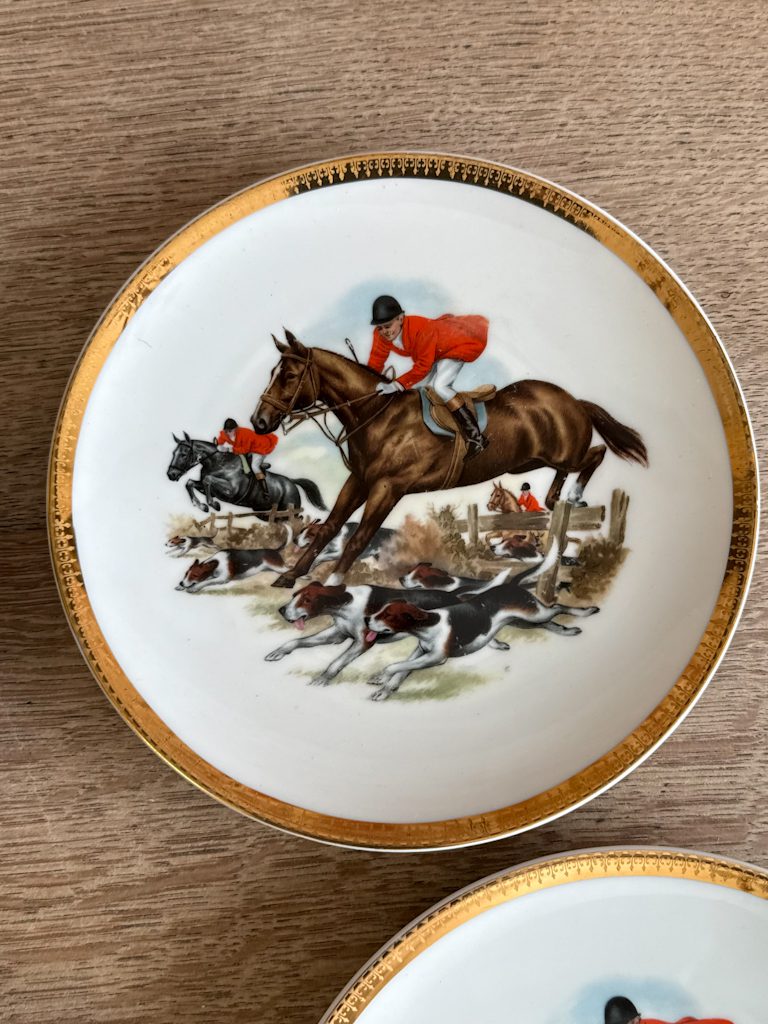
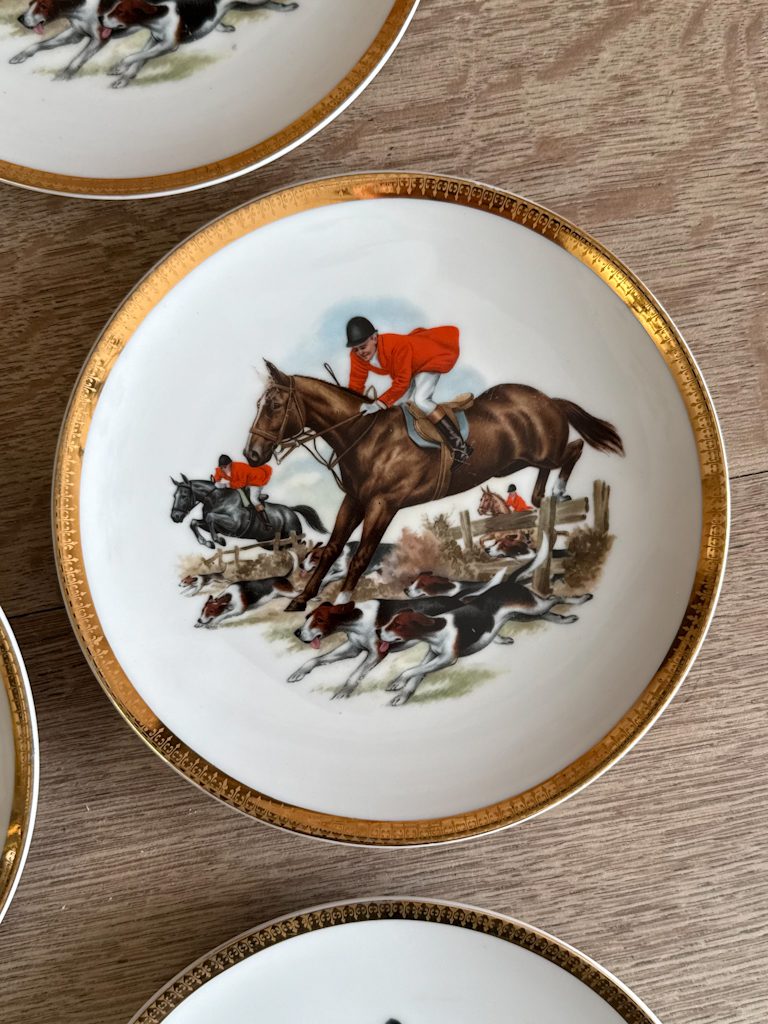
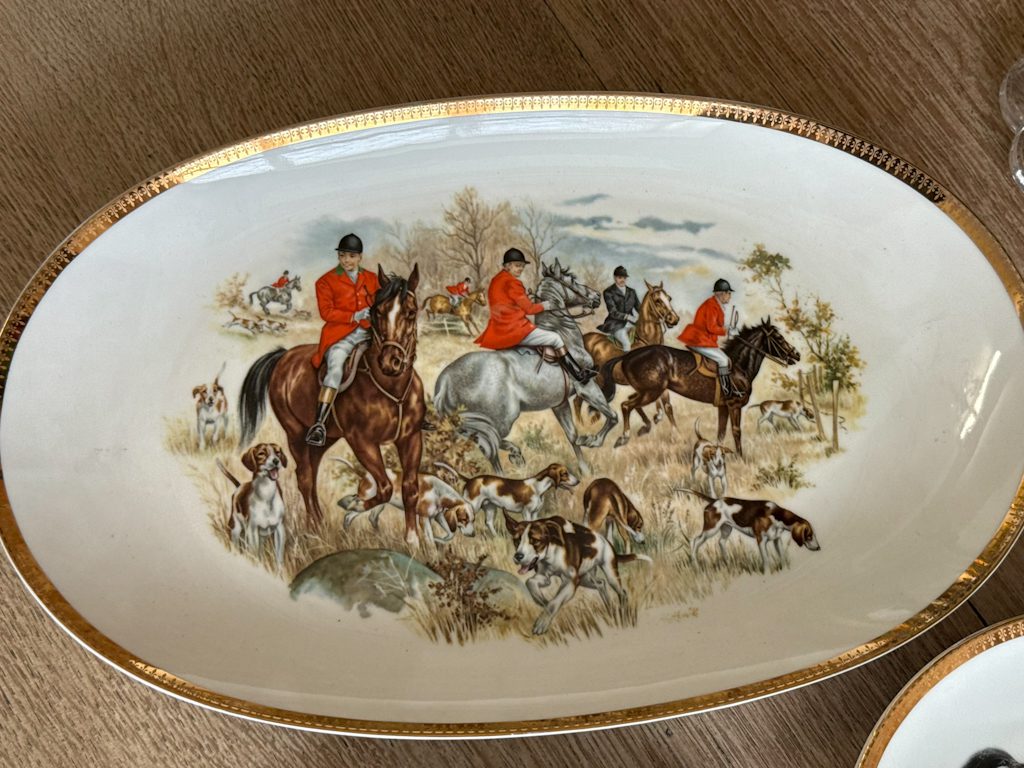
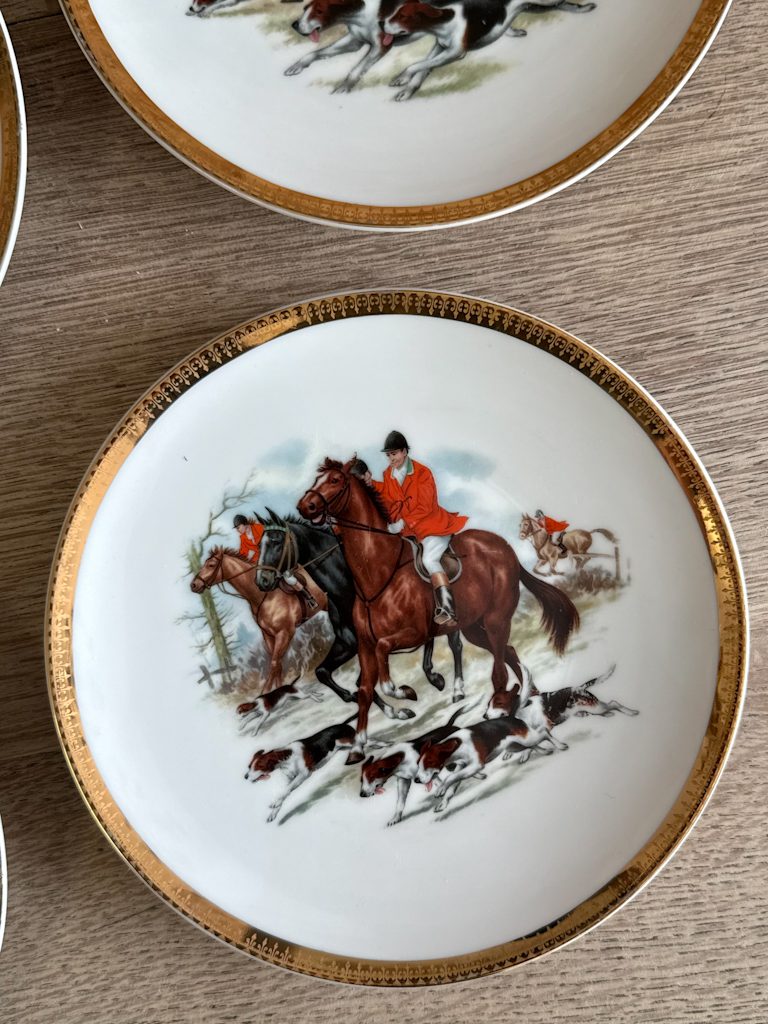
Komplekts datējams ar aptuveni 1940.–1960. gadu. Katrs no sešiem pusdienu šķīvjiem attēlo atšķirīgu medību epizodi — jātnieks pāri žogam, suņu bars pilnā skriešanā, sarkansvārku džentlmeņi grupu vajāšanā — savukārt lielais ovālais servējamais šķīvis atver pilnu dramatisko ainavu: vairāki jātnieki un suņu bars pusbiezokņa apkaimē, kur zirgi gandrīz sadodas, un haoss ir kontrolēts ar aristokrātisku žestu. Zelta ažūra apmale — smalkā, precīzā rindā — ir šī laikmeta Vācijas un Austrijas augstākās klases porcelāna raksturīgā pazīme.
Stils pieder tam auglīgajam periodam, kad Viktorijas laikmeta medību glezniecības tradīcija — Henrija Alvena Boultona, Džordža Stabbsa un Henrija Tomasa Allena darbu iespaidā — jau bija kļuvusi par kontinentālās Eiropas aristokrātiskā galda kultūras neatņemamu sastāvdaļu, pārnesot angļu lauku garu uz Vācijas, Austrijas un Čehijas porcelāna manufaktūru ražojumiem.
―――――――――――――――――――――
⚜️ RAŽOTĀJS UN MANUFAKTŪRAS ZĪMOGS
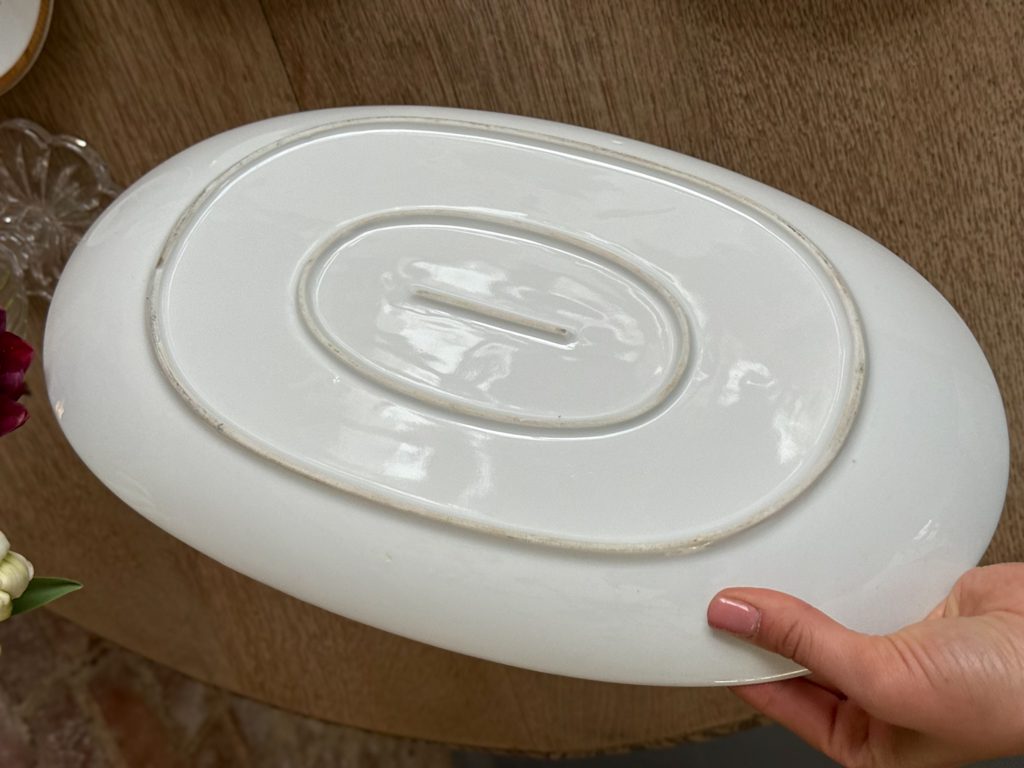
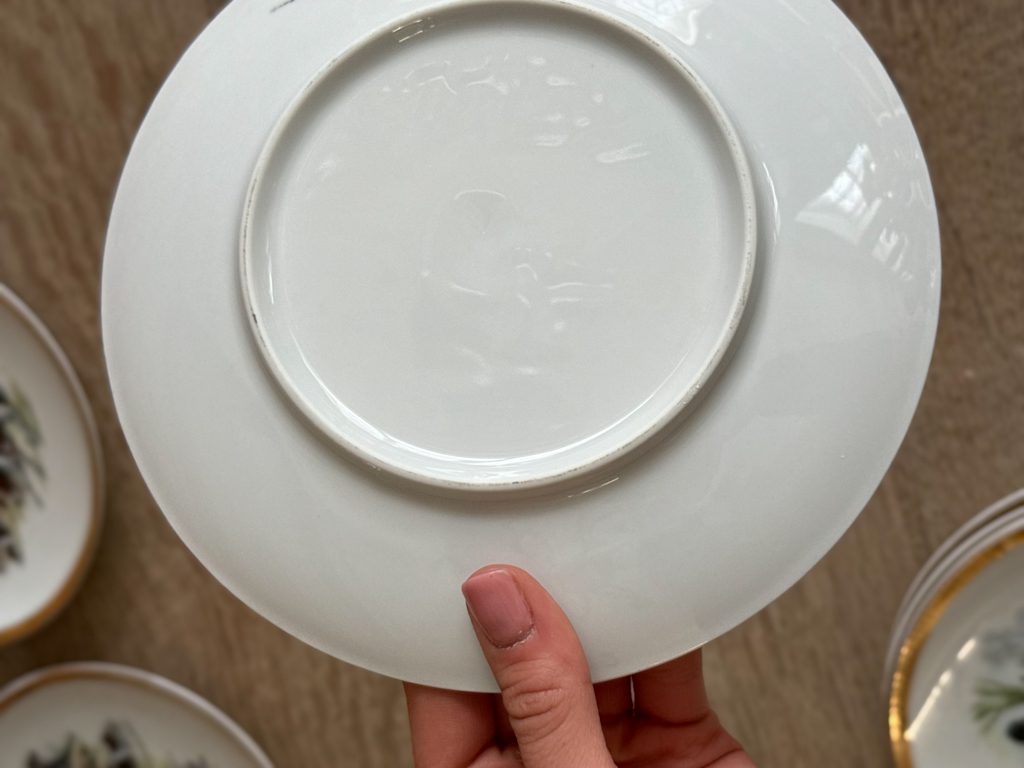
Uz šķīvjiem nav identificējama ražotāja zīmoga. Porcelāna masa — tīri balta, ar labu caurspīdīgumu — un zelta apmales ažūra ornamentika liecina par Centrāleiropas augstākās klases manufaktūru, visticamāk Vācijā vai Čehijā — tādas kā Bavārijas Schumann, Tirschenreuther vai Bohēmijas manufaktūras, kas specializējās reprezentatīvos galda komplektos ar medību un zirgu tematiku. Šādus komplektus pasūtīja aristokrātiskas dzimtas saviem medību pilīm un lauku rezidencēm — tās bija ne tikai trauki, bet galda telpa, kurā medības turpinājās arī pēc atgriešanās mājās, kur vīni tika celti pie uguns un stāsti stāstīti par rīta piedzīvojumu.
―――――――――――――――――――――
💎 RETUMS UN NOZĪME
Pilnīgi saglabāts 7 gabalu komplekts — ar lielo servējamo šķīvi un sešiem atbilstošiem pusdienu šķīvjiem, kuros katrs gleznojums ir atšķirīgs — ir ievērojami retāks atradums nekā atsevišķi šķīvji. Medību tematika porcelānā ir viens no pieprasītākajiem žanriem kolekcionāru vidū Lielbritānijā, Vācijā, Austrijā un ASV, kur tā tiek uztverta kā anglosakšu aristokrātiskās kultūras iemiesojums. Komplekta vērtību vēl paaugstina tas, ka servējamais šķīvis ar savu grandiozo kompozīciju darbojas kā pats par sevi pabeigts mākslas darbs.
―――――――――――――――――――――
🕯️ PIELIETOJUMS INTERJERĀ, DIZAINĀ UN FOTOGRĀFIJĀ
Šis komplekts ir radīts tiem interjeriem, kuros ir stāsts. Angļu country house, medību, klasiskā un eklektiskā stilā veidotās telpās tas uz ēdamistabas galda rada pilnīgu atmosfēru — it kā rīts uz zirga turpinās pusdienu galda elegancē. Servējamais šķīvis sienas dekorācijā vai bufetes centrā darbojas kā gleznojums. Pusdienu šķīvji kopā — kā stāstu grāmata, kurā katrs lappusē jauna epizode no tās pašas lielas medību dienas. Fotogrāfijā — izcils priekšmets gentleman’s lifestyle, country living un interjera kataloga uzņēmumiem, kur sarkanās jātnieku jakas un zeltainā porcelāna apmale rada siltumu un dziļumu.
―――――――――――――――――――――
🔍 STĀVOKLIS
Vispārējais stāvoklis — labs, atbilstošs vecumam. Visi 7 gabali veseli, bez lūzumiem vai skaldījumiem. Gleznojumi spilgti, ar bagātīgu krāsu gammu — sarkanās jakas, brūnie zirgi, baltie suņi — bez miglošanās vai krāsas zuduma. Zelta ažūra apmale labi saglabājusies, ar raksturīgu minimālu nodilumu. Servējamā šķīvja apakšā redzamas normālas lietošanas pēdas. Lietas stāvoklis pilnībā atspoguļots fotogrāfijās.
―――――――――――――――――――――
🇬🇧 DESCRIPTION IN ENGLISH
📐 DIMENSIONS — Serving plate: 40 cm × 28 cm (oval). Salat plates: diameter 20 cm. Set of 7 pieces. Medium weight.
Porcelain Hunting Service Set — Serving Plate and Six Salat Plates with English Country Hunt Scenes — Central Europe or Germany, circa 1940–1960
―――――――――――――――――――――
🏛️ PERIOD, ART STYLE, HISTORICAL CONTEXT
There are landscapes that exist outside of time. One of them is the English country morning — autumn mist over a copse, the smell of muddy tracks, the breath of horses clouding in the cold air, and red-coated riders spilling over a fence in pursuit of the unknown. This scene was captured in porcelain painting with such love and precision of detail that looking at these plates, one almost senses the pack straining forward, following a sound carried faintly on the wind ahead.
The set dates to approximately 1940–1960. Each of the six dinner plates depicts a different hunting episode — a rider clearing a fence, the pack in full cry, red-coated gentlemen in a group chase — while the large oval serving plate opens the full dramatic scene: several riders and the hound pack in a near-thicket setting, horses almost colliding, the chaos held in check with an aristocratic gesture. The fine gold filigree border — precise and delicate — is a characteristic feature of high-quality German and Austrian porcelain of this period.
The style belongs to that fertile period when the Victorian tradition of hunting painting — shaped by the legacy of Henry Alken, George Stubbs, and Henry Thomas Alken — had become an integral part of continental European aristocratic table culture, translating the English country spirit into the porcelain manufactories of Germany, Austria, and Bohemia.
―――――――――――――――――――――
⚜️ MAKER AND MANUFACTURER’S MARK
No maker’s mark is present on the pieces. The porcelain body — pure white with good translucency — and the filigree gold border ornament indicate a high-quality Central European manufactory, most likely in Germany or Bohemia — such as the Bavarian Schumann, Tirschenreuther, or Bohemian manufactories that specialised in representative table services with hunting and equestrian subjects. Sets of this kind were commissioned by aristocratic families for their hunting lodges and country residences — they were not merely tableware, but a continuation of the hunt at the dining table, where wines were raised by the fire and the morning’s adventures were recounted in full.
―――――――――――――――――――――
💎 RARITY AND SIGNIFICANCE
A fully intact 7-piece set — with the large serving plate and six matching dinner plates, each bearing a different scene — is a considerably rarer find than individual pieces. Hunting subjects in porcelain are among the most sought-after collecting categories in the United Kingdom, Germany, Austria, and the United States, where they are understood as an embodiment of Anglo-Saxon aristocratic culture. The value of this set is further enhanced by the serving plate itself, whose grand composition functions as a self-contained work of art.
―――――――――――――――――――――
🕯️ USE IN INTERIOR DESIGN AND PHOTOGRAPHY
This set was made for interiors that have a story to tell. In English country house, hunting, classical, and eclectic style spaces, it transforms the dining table into a complete atmosphere — as though the morning ride continues in the elegance of luncheon. The serving plate on a wall or at the centre of a sideboard functions as a painting in its own right. The dinner plates together read like an illustrated book, each page a new episode from the same long hunting day. In photography — an outstanding subject for gentleman’s lifestyle, country living, and interior catalogue shoots, where the red of the riders’ coats and the gold of the porcelain border create warmth and historical depth.
―――――――――――――――――――――
🔍 CONDITION
Overall condition — good, consistent with age. All 7 pieces are intact, with no cracks or chips. The painted scenes are vivid, with a rich colour palette — red coats, brown horses, white hounds — with no fading or colour loss. The gold filigree border is well preserved with characteristic minimal wear. Normal signs of use are visible on the reverse of the serving plate. The condition of the item is fully reflected in the photographs.