
Trīs porcelāna deserta šķīvīši ar putti eņģeļu ainām, reljefu arabesku apmali un zelta malu — Neobaroks / Historicisms, Vācija vai Bohēmija, ap 1880.–1900. gads, 3 gab. (5557)
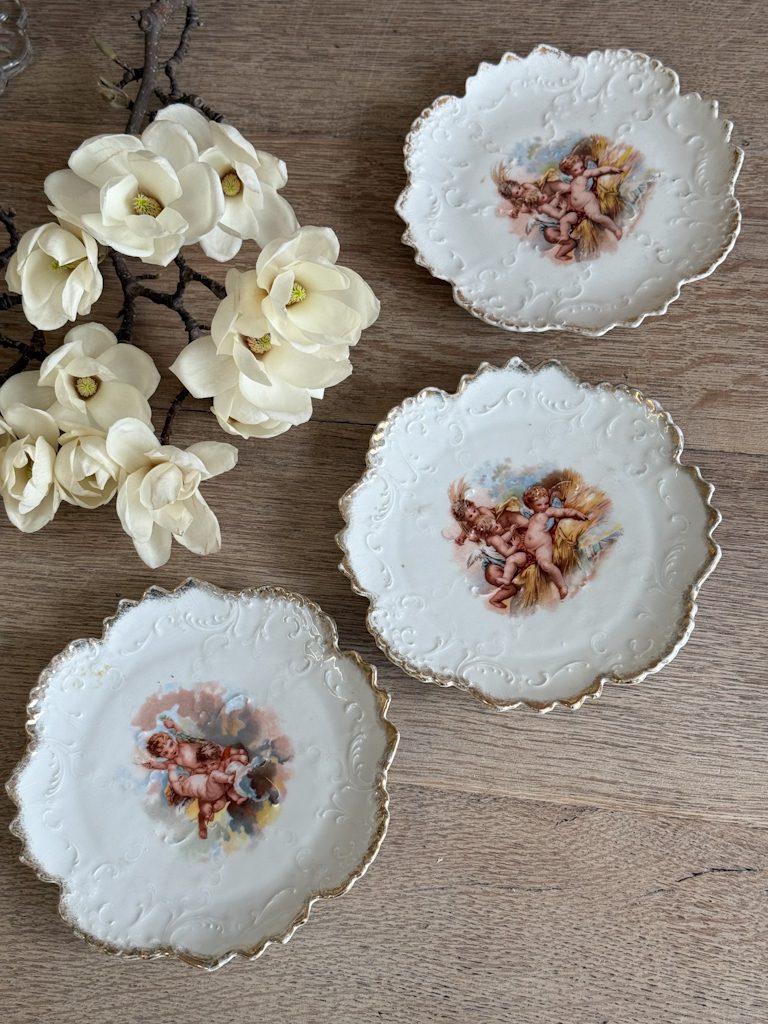
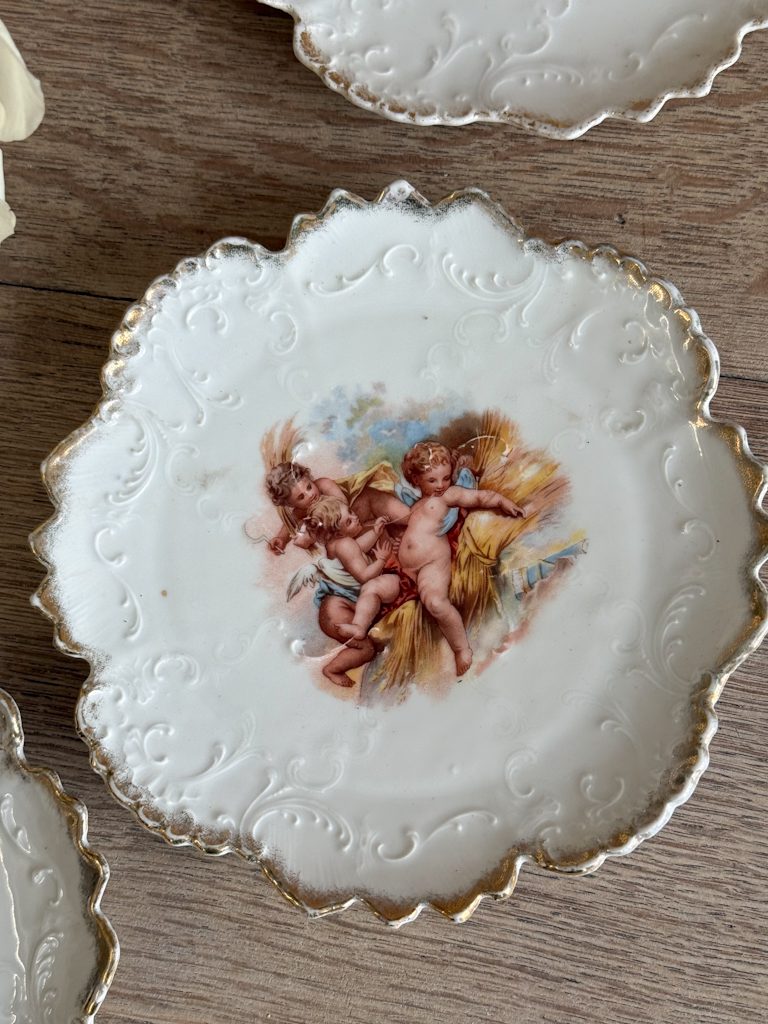
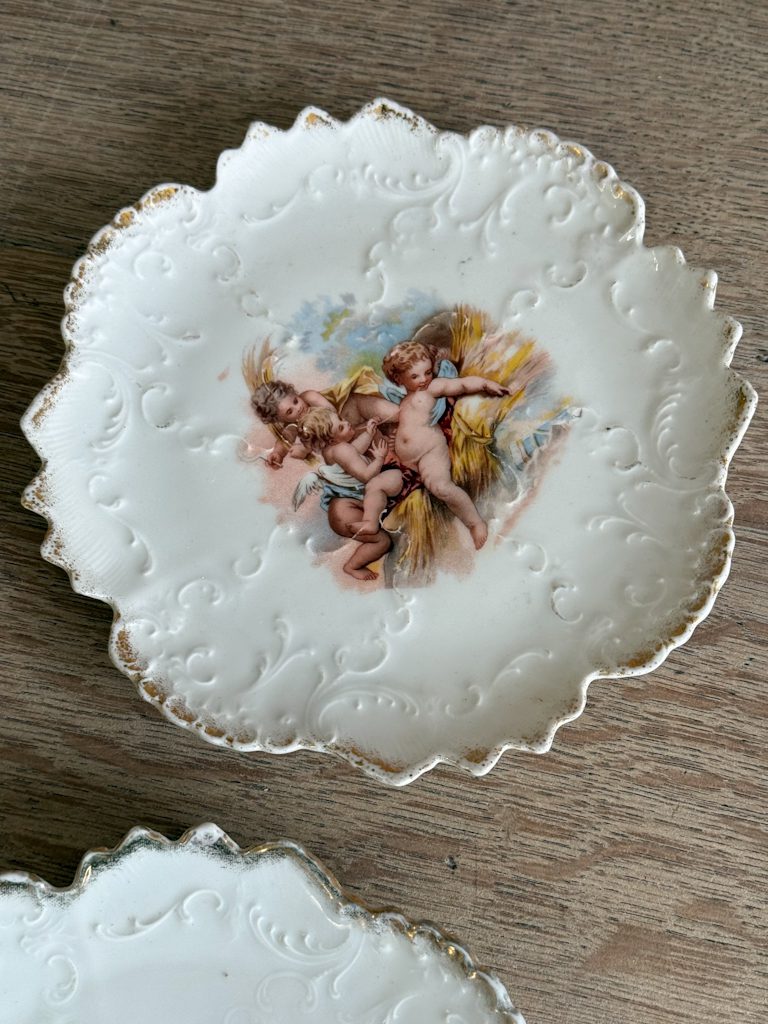
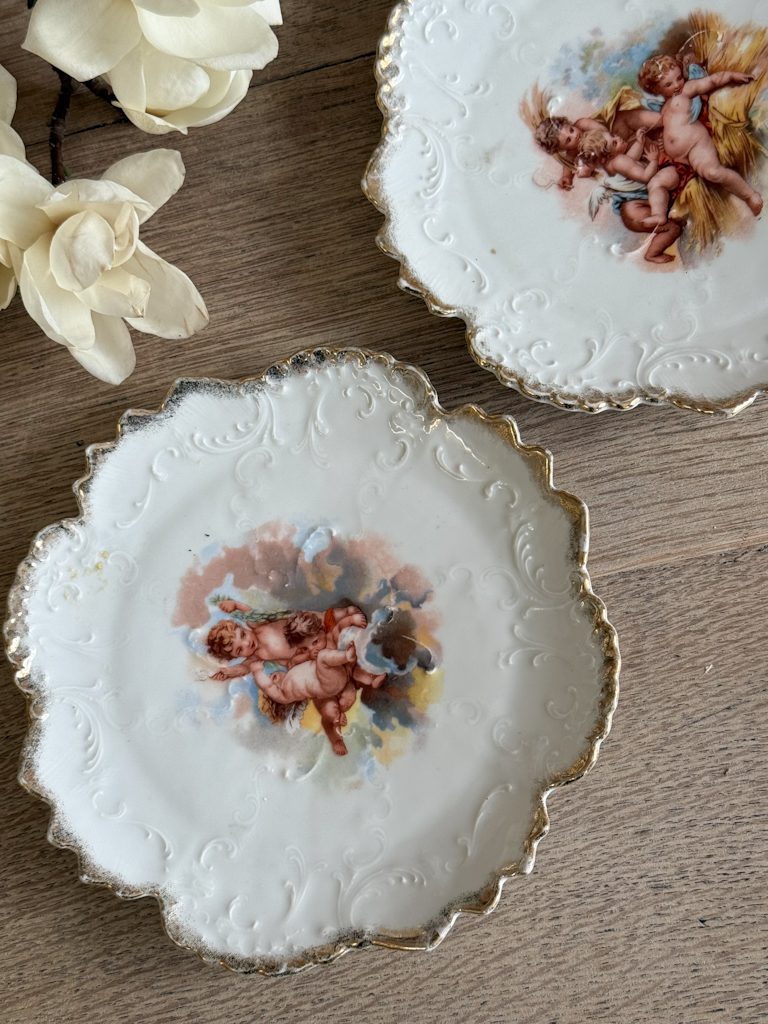
Trīs porcelāna deserta šķīvīši ar putti eņģeļu ainām, reljefu arabesku apmali un zelta malu — Neobaroks / Historicisms, Vācija vai Bohēmija, ap 1880.–1900. gads, 3 gab. (5557)
€100.00
📐 IZMĒRI — Diametrs 22,5 cm. Komplektā 3 gabali.
Trīs porcelāna deserta šķīvīši ar putti eņģeļu ainām, reljefu arabesku apmali un zelta malu — Neobaroks / Historicisms, Vācija vai Bohēmija, ap 1880.–1900. gads, 3 gab.
―――――――――――――――――――――
🏛️ IZGATAVOŠANAS PERIODS, MĀKSLAS STILS, LAIKMETS
Ir brīži, kad porcelāns pārstāj būt trauks un kļūst par noskaņu. Šie trīs šķīvīši ir tieši tādi. Uz katra no tiem — savs putti eņģeļu ainojums, savs mazais debesu stāsts: viens ar diviem bērnišķīgiem eņģeļiem mākoņos, otrs ar trim putti labības kūļu siltajā gaismā, trešais ar eņģeļu grupu, kurā jūtama ne tikai rotaļa, bet arī kāds brīdis pirms tās. Katrs šķīvis ir atšķirīgs — ne sērijas atkārtojums, bet trīs dažādi skatieni uz to pašu pasauli, kurā nav bēdu, tikai vasara, zelts un bērnu smiekli, kas izkaisīti pa debesīm.
Šie šķīvīši pieder vēlā Neobaroka un Historicisma estētikas pasaulei — periodam, kad 19. gs. otrā puse Eiropā atklāja 18. gs. Rokokō prieku no jauna. Francuā Bušē putti gleznojumi, Tīpolo debesu kupoli, Fragonāra vieglums — viss tas, ko bija padzinušas revolūcijas un kari, atgriezās uz porcelāna šķīvjiem kā kultūras atmiņa un kā skaistuma nepieciešamība. Putti nav tikai dekorācija — tas ir 19. gs. cilvēka sapnis par nevainību, par laiku pirms vēstures smaguma, par to, ka kaut kur augstu virs mākoņiem joprojām valda vieglums.
Reljefā arabesku apmale — izsmalkts akantusa un viļņu ritms, kas ieskauj centrālo ainu kā rakstīts rāmis — ir veidota no veidnes, un tās kvalitāte liecina par pieredzējušu manufaktūru, kas apvienoja lietveidnes precizitāti ar roku pielikto zelta malu. Putti ainas centrā ir izpildītas chromo-lithography vai agrīnas transferdrukāšanas tehnikā ar roku apdari — tehnika, kas 1880.–1900. gados ļāva Eiropas vidējai un augstākai buržuāzijai baudīt gleznieciskas kvalitātes porcelānu par pieejamu cenu, nezaudējot māksliniecisko vērtību.
―――――――――――――――――――――
⚜️ RAŽOTĀJS UN TRADĪCIJA
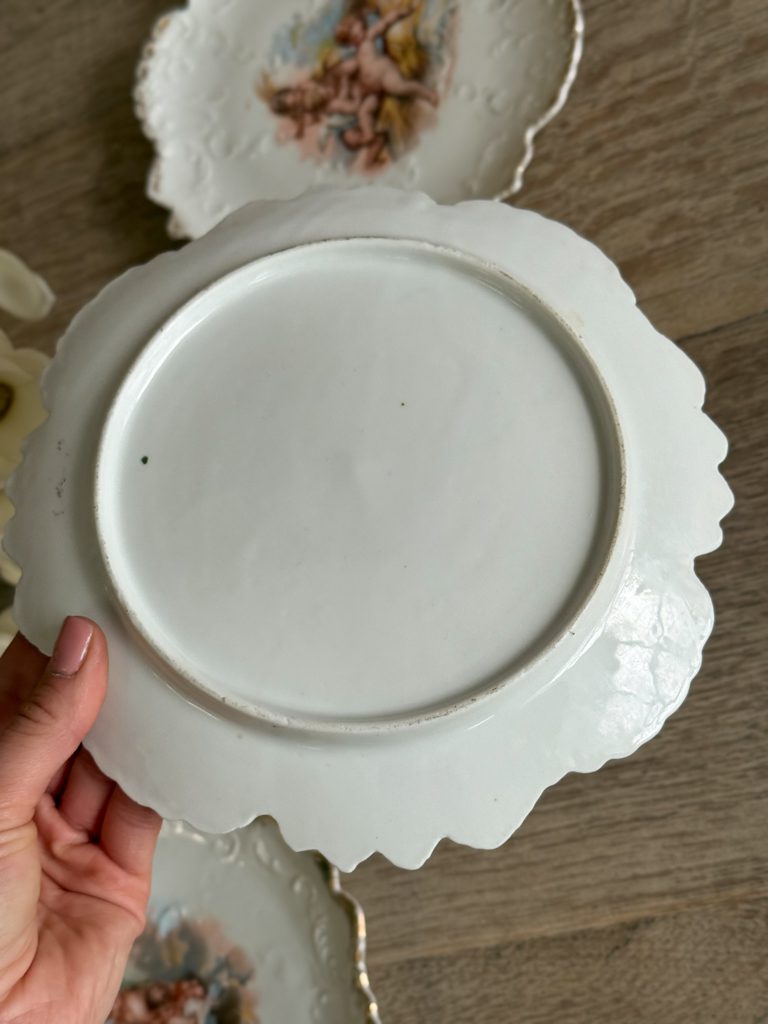
Šķīvīši nav marķēti — pamatne tīra, balta, bez zīmoga. Tas nav neparasti šī perioda Vācijas un Bohēmijas eksporta porcelānam: daudzas Silēzijas, Bavārijas un Bohēmijas manufaktūras 19. gs. beigās ražoja augstvērtīgus dekoratīvos un galda porcelāna izstrādājumus bez pastāvīga marķējuma, jo tie bija paredzēti mazumtirdzniecībai caur porcelāna veikalu tīkliem Parīzē, Vīnē, Berlīnē un Prāgā. Reljefu izstrādājuma kvalitāte, porcelāna masas baltums un putti ainu izpildījuma precizitāte norāda uz vidējas vai augstākas klases manufaktūru — iespējams, Silēzijas reģionā, kas 19. gs. beigās bija otrais lielākais Eiropas porcelāna ražošanas centrs aiz Saksijas.
Putti tēma ar sezonālo vai mītoloģisko kontekstu — eņģeļi labības laukā, eņģeļi mākoņos — ir tieši tā tematika, ko Eiropas porcelāna mājas aizguva no baroka un rokokō glezniecības un tulkoja 19. gs. buržuāziskajam galdam kā skaistuma un prieka simbolu.
―――――――――――――――――――――
💎 RETUMS UN NOZĪME
Trīs šķīvīši ar dažādām putti ainām — ne identisks komplekts, bet māksliniecisks trīsbalsu koris — ir retāks un interesantāks atradums nekā vienota sērija. Katrs šķīvis stāsta savu stāstu, un kopā tie veido nelielu eņģeļu pasauli uz galda. Bezmarķēta, bet augstvērtīga 19. gs. beigu Eiropas porcelāna kategorija šobrīd piedzīvo aktīvu kolekcionāru intereses pieaugumu — īpaši interjera dizaineriem, kuri meklē autentiskus Viktoriāna un neobaroka laika piederumus romantiskam vai eklektiskam stilam.
―――――――――――――――――――――
🕯️ PIELIETOJUMS INTERJERĀ, DIZAINĀ UN FOTOGRĀFIJĀ
Uz šiem šķīvīšiem siera kūkas šķēlīte garšo citādāk — tas ir fakts, nevis metafora. Deserta pasniegšanai pie tējas vai kafijas, kur putti eņģeļi skatās uz augšu no šķīvīša un vakara viesiem nevar nesmaididīt. Sienas dekorācijā trīs šķīvīši kopā veido mazu galeriju — reljefa baltums un zeltainā mala uz gaiša sienas fona ir klasisks viktoriāņu interjera paņēmiens, kas pēdējos gados atgriezies modernā romantiskā stilā. Stikla vitrīnā kopā ar citiem 19. gs. porcelāna priekšmetiem. Romantiskā, Viktoriāna, neobaroka un provansas stila interjeros šie šķīvīši ir ne tikai dekorācija, bet noskaņa — tā noskaņa, ko neviens IKEA šķīvis nekad nespēs radīt. Fotogrāfijā — putti ar reljefa fonu un zelta malu ir still-life klasika, kas darbojas gan ar svaigiem ziediem, gan ar vakara svecēm.
―――――――――――――――――――――
🔍 STĀVOKLIS
Vispārējais stāvoklis — labs, atbilstošs vecumam. Visi 3 gabali veseli, bez lūzumiem vai skaldījumiem. Reljefā arabesku apmale saglabājusies skaidri. Putti ainas — labi saglabājušās ar pilnu krāsu intensitāti. Zelta mala malā — ar dabīgu, vecumam atbilstošu nodilumu, kas nemazina šķīvju skaistumu, bet apliecina to autentisko vecumu. Bez ražotāja zīmoga. Lietas stāvoklis pilnībā atspoguļots fotogrāfijās.
―――――――――――――――――――――
🇬🇧 DESCRIPTION IN ENGLISH
Three Porcelain Dessert Plates with Putti Angel Scenes, Relief Arabesque Border and Gilt Edge — Neo-Baroque / Historicism, Germany or Bohemia, circa 1880–1900, set of 3
―――――――――――――――――――――
📐 DIMENSIONS — Diameter 22.5 cm. Set of 3 pieces.
―――――――――――――――――――――
🏛️ PERIOD, ART STYLE, HISTORICAL CONTEXT
There are moments when porcelain ceases to be a vessel and becomes a mood. These three plates are exactly that. Each carries its own putti scene, its own small celestial story: one with two cherubic angels among clouds, another with three putti in the warm light of harvested wheat, a third with a group of angels in a moment that feels not quite play and not quite something more. Each plate is different — not the repetition of a series, but three distinct gazes into the same world where there is no sorrow, only summer, gold, and the laughter of children scattered across the sky.
These plates belong to the aesthetic world of late Neo-Baroque and Historicism — the period in which the second half of the 19th century rediscovered the pleasures of 18th-century Rococo. Boucher’s painted putti, Tiepolo’s heavenly ceilings, Fragonard’s lightness — everything that revolutions and wars had driven away returned on porcelain plates as cultural memory and as a necessity of beauty. Putti are not merely decoration — they are the 19th-century person’s dream of innocence, of time before the weight of history, of a place high above the clouds where lightness still reigns.
The relief arabesque border — a refined rhythm of acanthus and waves encircling the central scene like a written frame — is mould-formed, and its quality speaks to an experienced manufactory that combined the precision of casting with a hand-applied gilt edge. The putti scenes at the centre are executed in chromolithography or early transfer printing with hand finishing — a technique that in the 1880s–1900s allowed the European middle and upper bourgeoisie to enjoy painting-quality porcelain at an accessible price without sacrificing artistic merit.
―――――――――――――――――――――
⚜️ MAKER AND TRADITION
The plates carry no maker’s mark — the base is clean, white, unmarked. This is not unusual for German and Bohemian export porcelain of this period: many Silesian, Bavarian, and Bohemian manufactories in the late 19th century produced high-quality decorative and table porcelain without a permanent mark, as pieces were intended for retail through porcelain shop networks in Paris, Vienna, Berlin, and Prague. The quality of the relief work, the whiteness of the porcelain body, and the precision of the putti scene execution all point to a mid- to upper-tier manufactory — possibly in the Silesian region, which in the late 19th century was the second largest porcelain production centre in Europe after Saxony.
The putti subject matter with seasonal or mythological context — angels in a wheat field, angels among clouds — is precisely the imagery that European porcelain houses borrowed from Baroque and Rococo painting and translated for the 19th-century bourgeois table as a symbol of beauty and joy.
―――――――――――――――――――――
💎 RARITY AND SIGNIFICANCE
Three plates with different putti scenes — not an identical set but an artistic three-voice choir — is a rarer and more interesting find than a uniform series. Each plate tells its own story, and together they form a small angelic world on the table. Unmarked but high-quality late 19th-century European porcelain is currently experiencing an active resurgence of collector interest, particularly among interior designers seeking authentic Victorian and Neo-Baroque pieces for romantic or eclectic interiors.
―――――――――――――――――――――
🕯️ USE IN INTERIOR DESIGN AND PHOTOGRAPHY
A slice of cheesecake tastes different on these plates — that is a fact, not a metaphor. For serving dessert with tea or coffee, where the putti look up from the plate and the evening’s guests cannot help but smile. As wall decoration, three plates together form a small gallery — the white relief and gilt edge against a pale wall is a classic Victorian interior device that has returned in recent years in modern romantic style. In a glass cabinet alongside other 19th-century porcelain. In Romantic, Victorian, Neo-Baroque, and Provençal interiors these plates are not merely decoration but atmosphere — the kind of atmosphere that no flat-pack plate will ever create. In photography — putti with a relief ground and gilt edge are still-life classics, working equally with fresh flowers and evening candlelight.
―――――――――――――――――――――
🔍 CONDITION
Overall condition — good, consistent with age. All 3 pieces are intact, with no cracks or chips. The relief arabesque border is well preserved and clearly defined. The putti scenes are well retained with full colour intensity. The gilt edge shows natural, age-appropriate wear that does not diminish the beauty of the plates but confirms their authentic age. No maker’s mark. The condition of the item is fully reflected in the photographs.