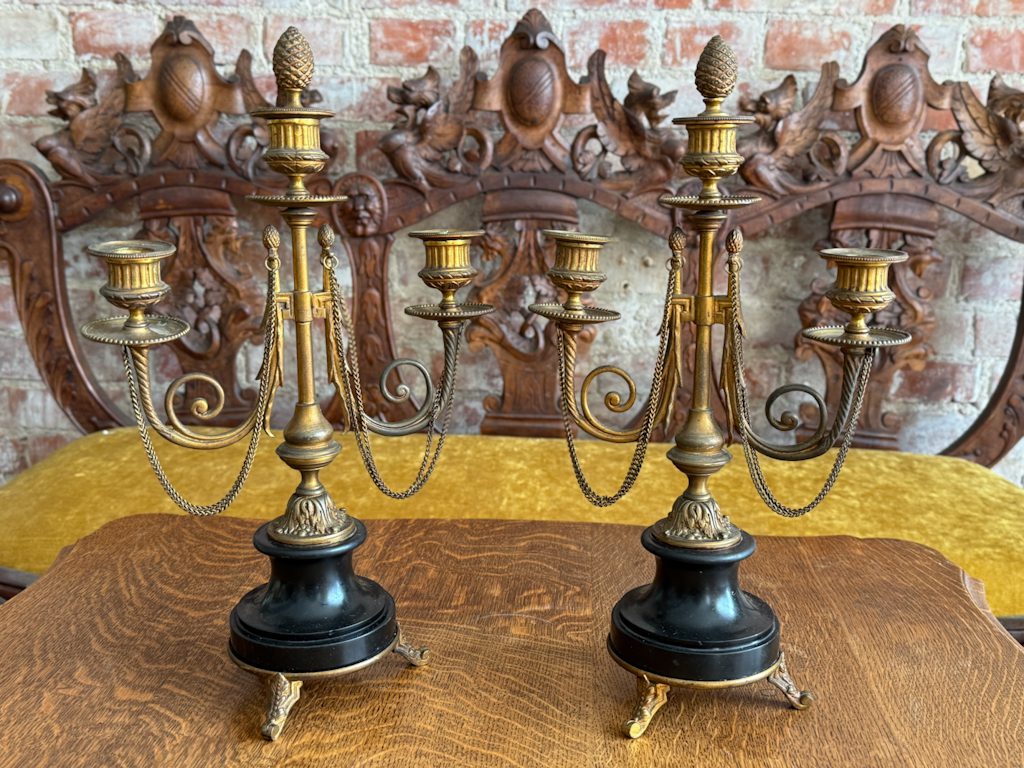
Klasicisma stila bronzas un marmora svečturu pāris (3 svecēm) — Francija, 19. gs. beigas (5518)
Klasicisma stila bronzas un marmora svečturu pāris (3 svecēm) — Francija, 19. gs. beigas (5518)
€320.00
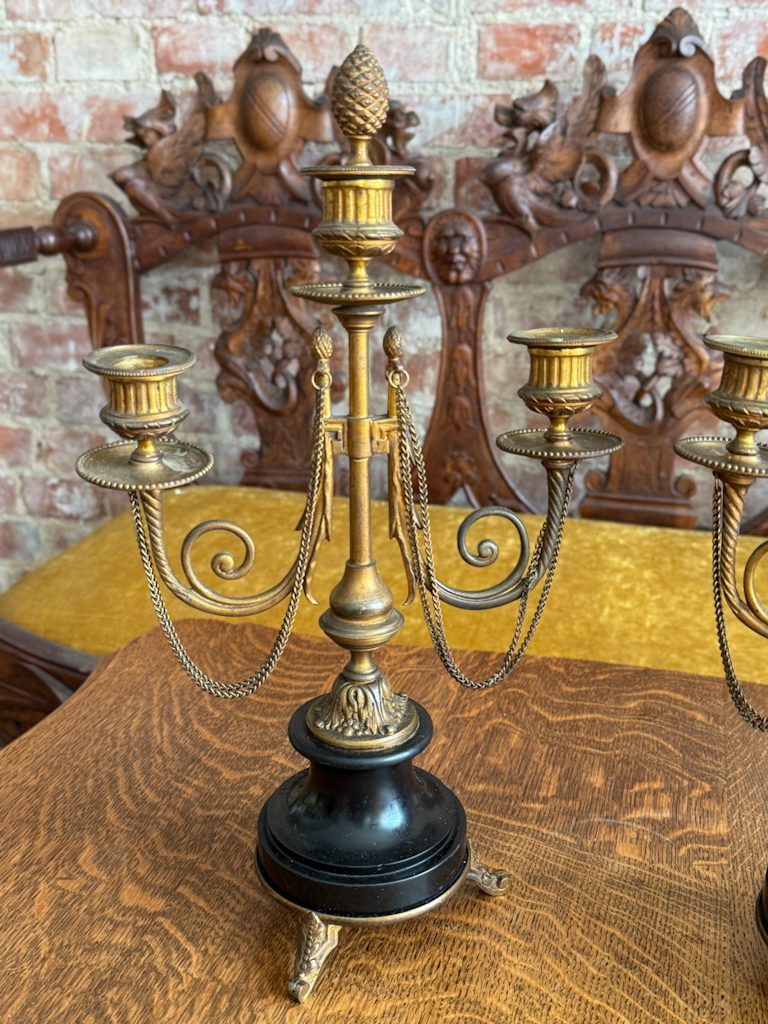
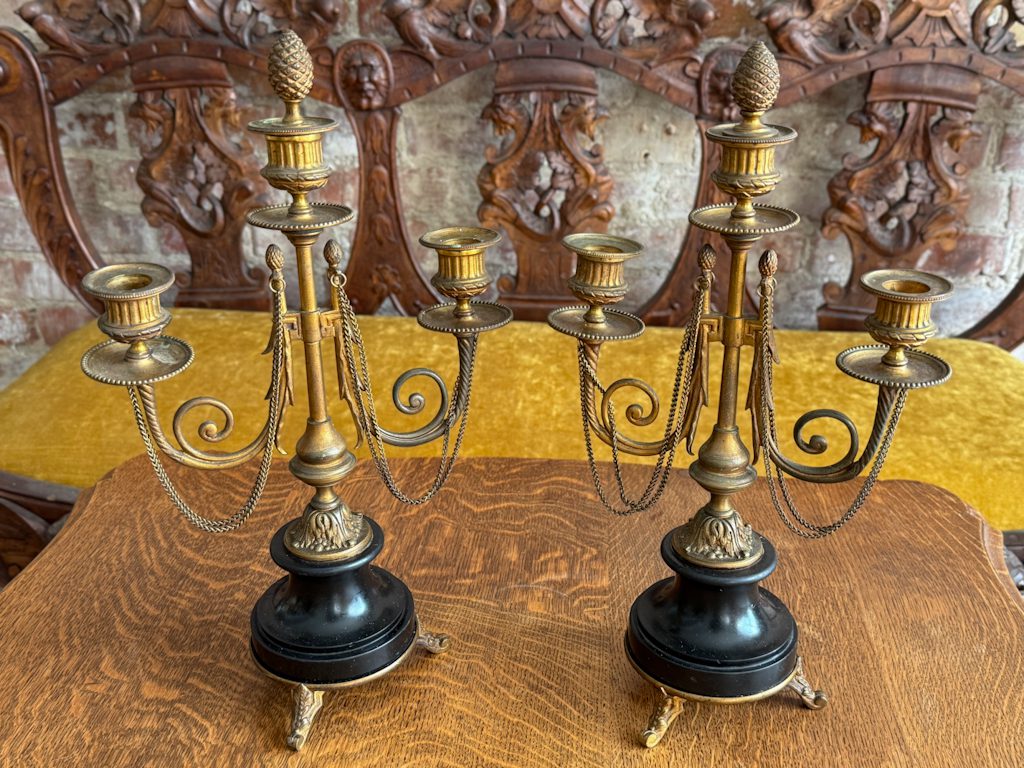
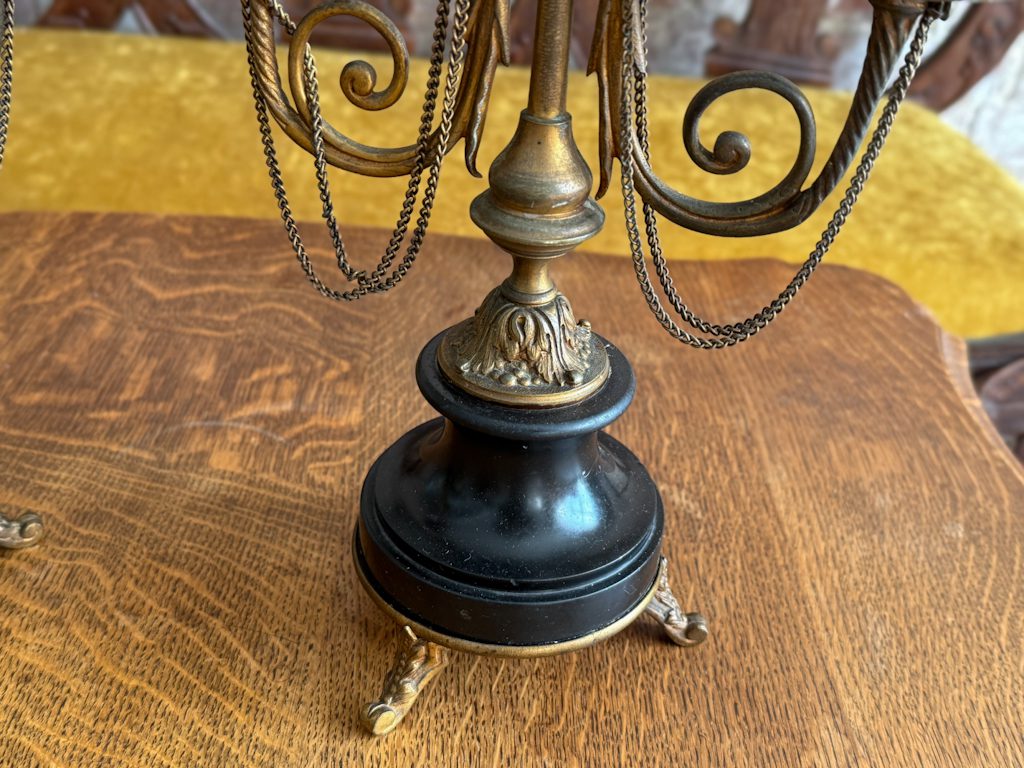
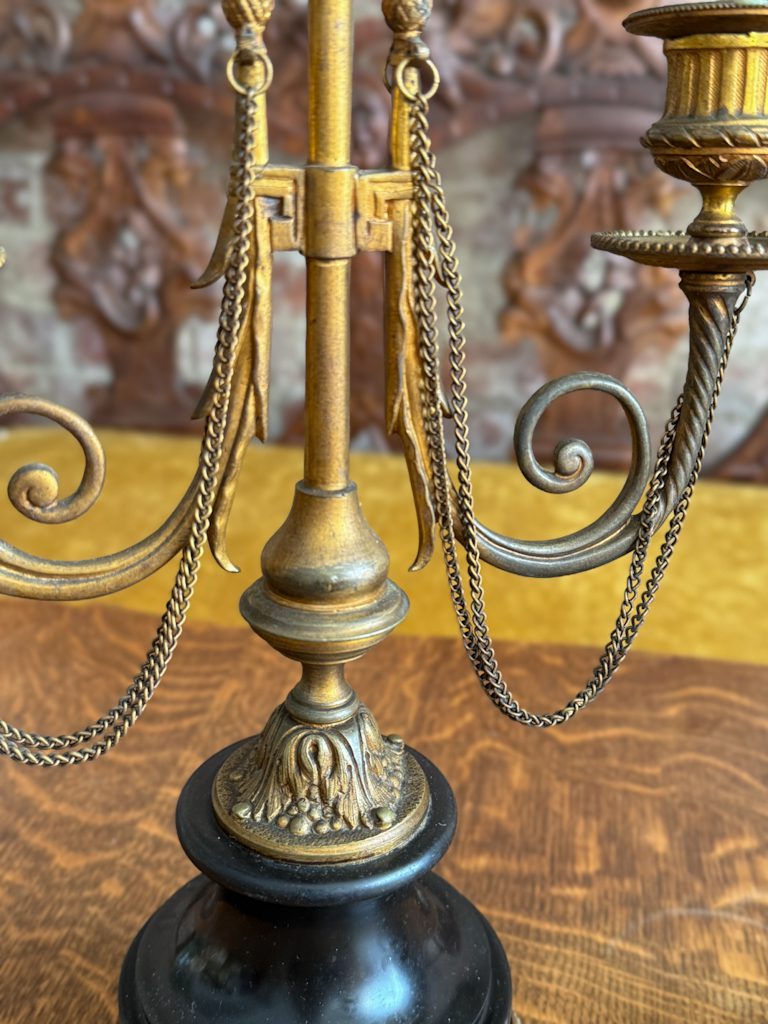
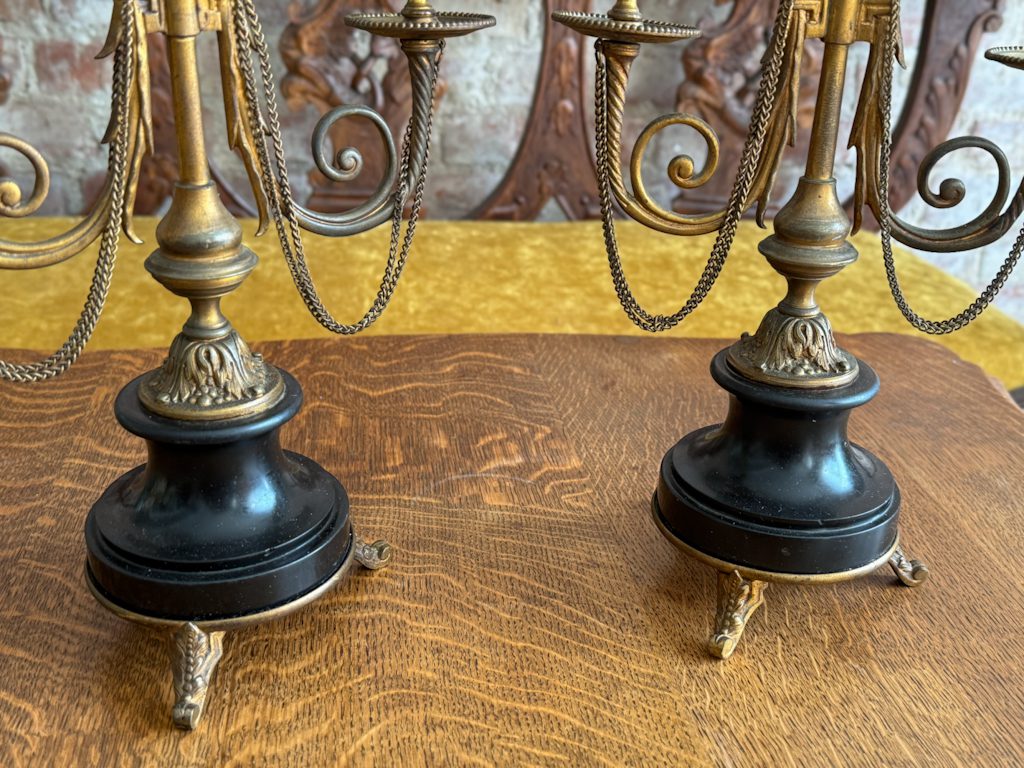
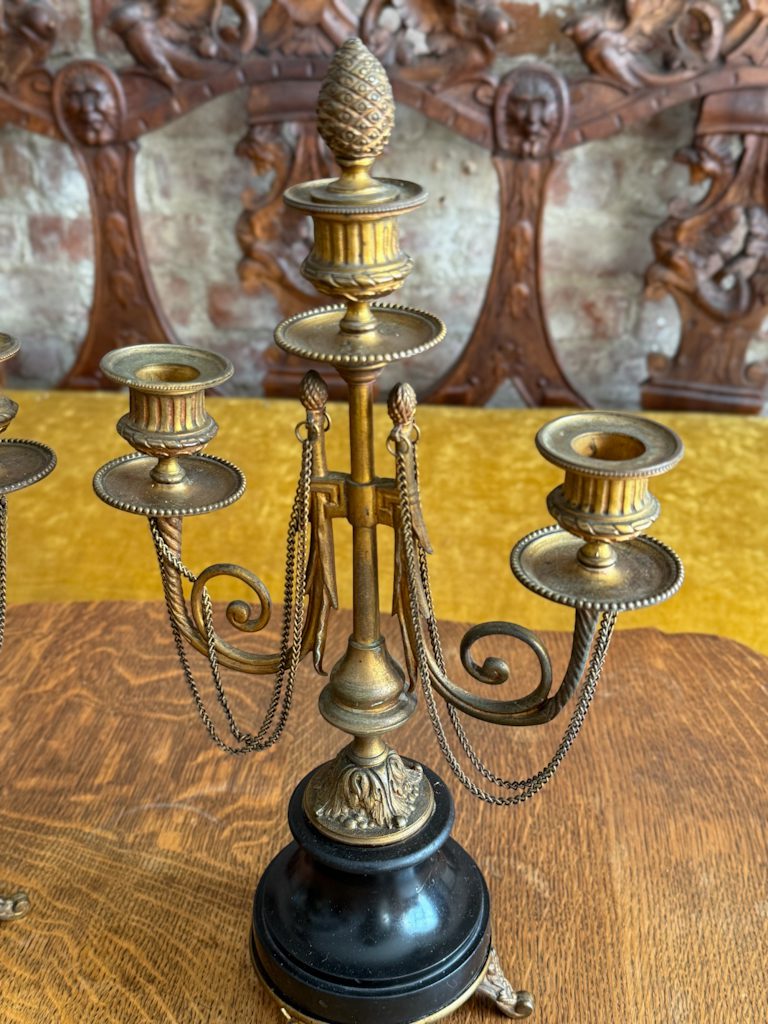
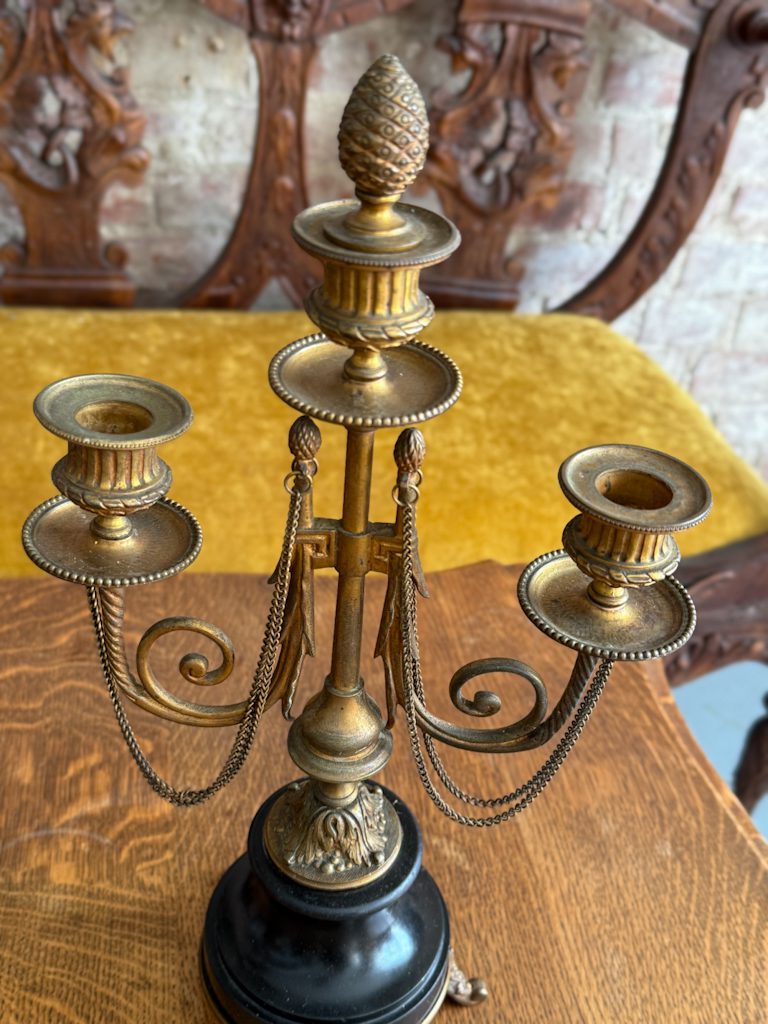
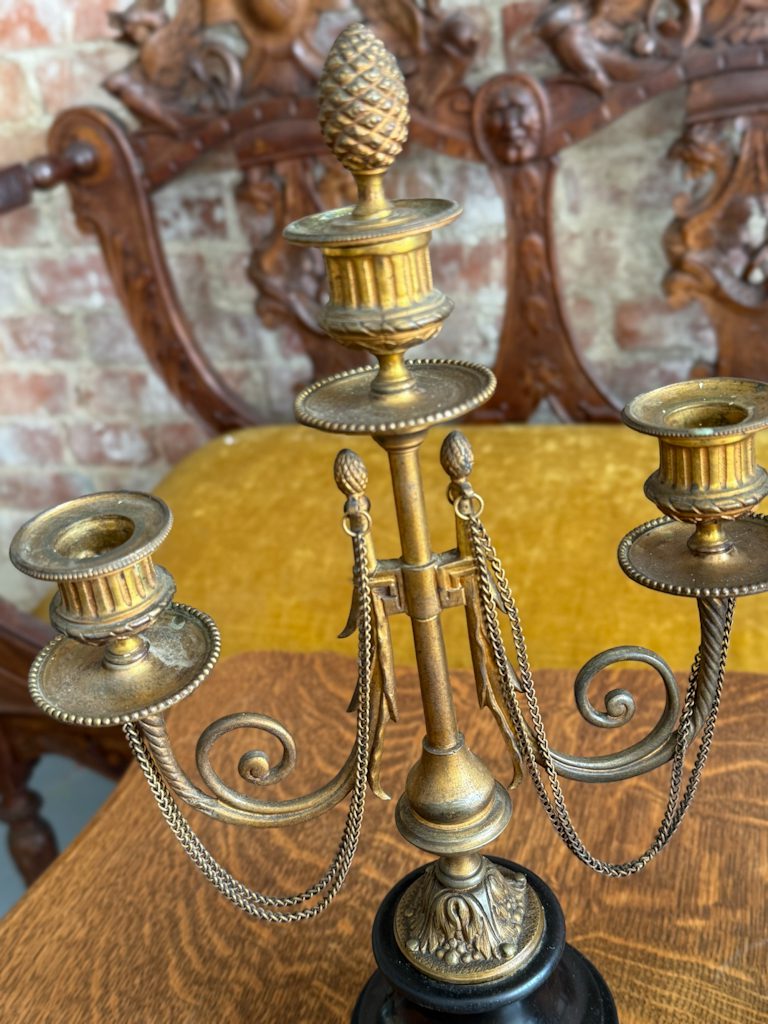
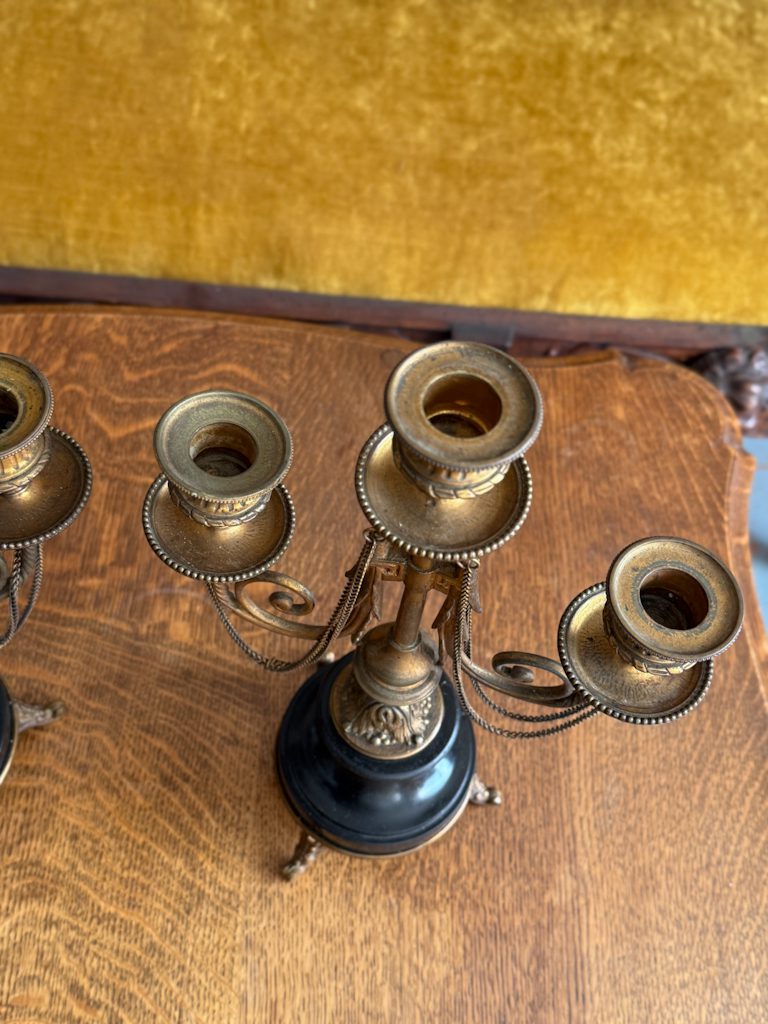
Elegants un pabeigts klasicisma stila trīsžuburu svečturu pāris (candelabra pair bronze 5518) no patinētas un zeltītas bronzas uz masīvām melna marmora pamatnēm. Rotāts ar smalkām ķēdītēm un pīnijas čiekura liesmu slāpētājiem.
🇱🇻 Izmēri: Augstums — 39 cm (katram) Platums — 23 cm (katram)
Klasicisma stila bronzas un marmora svečturu pāris (3 svecēm) — Francija, 19. gs. beigas
IZGATAVOŠANAS PERIODS, MĀKSLAS STILS, LAIKMETS Šis izsmalcinātais, vidēja izmēra trīsžuburu svečturu pāris ir augstvērtīgs historisma (klasicisma / Luija XVI stila) meistardarbs, kas radīts Francijā 19. gadsimta beigās. Šajā periodā franču bronzas lējēji meistarīgi atgriezās pie taisnām, arhitektoniskām līnijām un simetrijas, iedvesmojoties no Antīkās pasaules paraugiem un Pompeju izrakumu estētikas. Svečturu (candelabra pair bronze) dizains izstaro atturīgu, bet reizē ļoti dārgu salonu eleganci, kurā katrs elements ir stingri līdzsvarots.
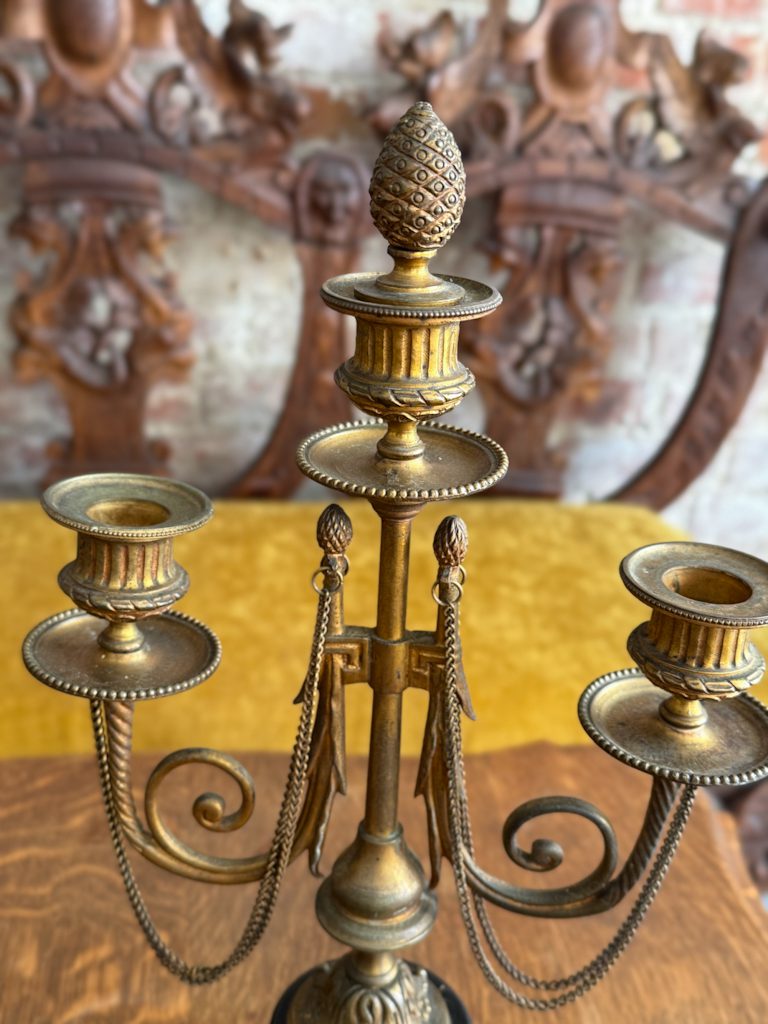
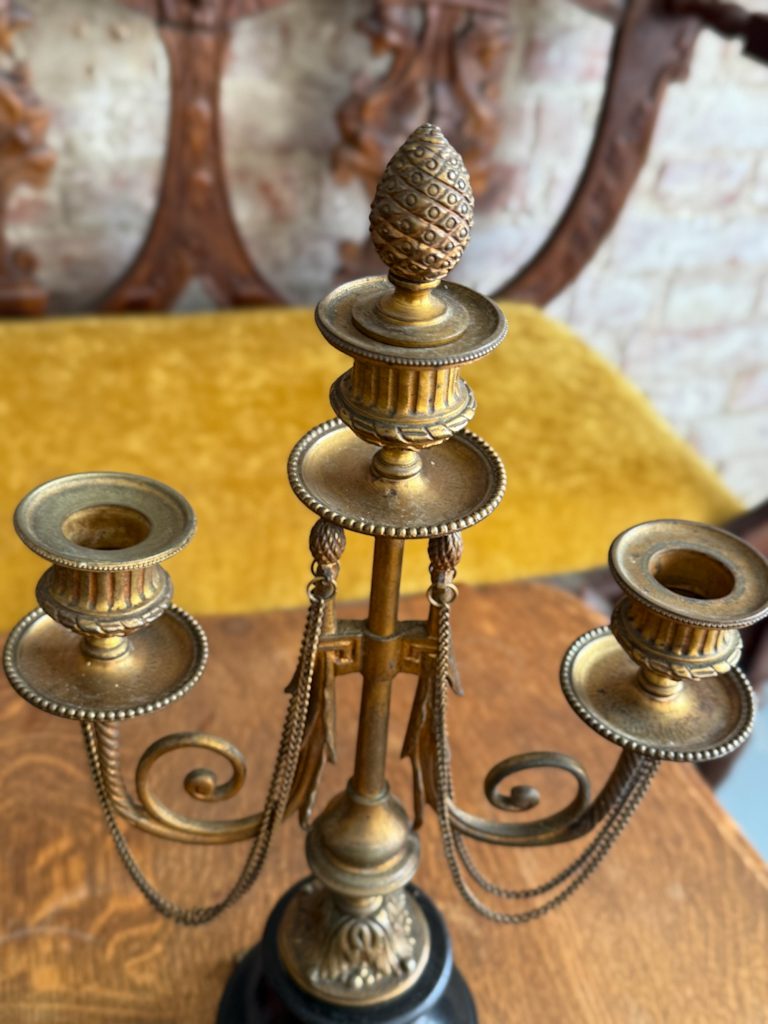
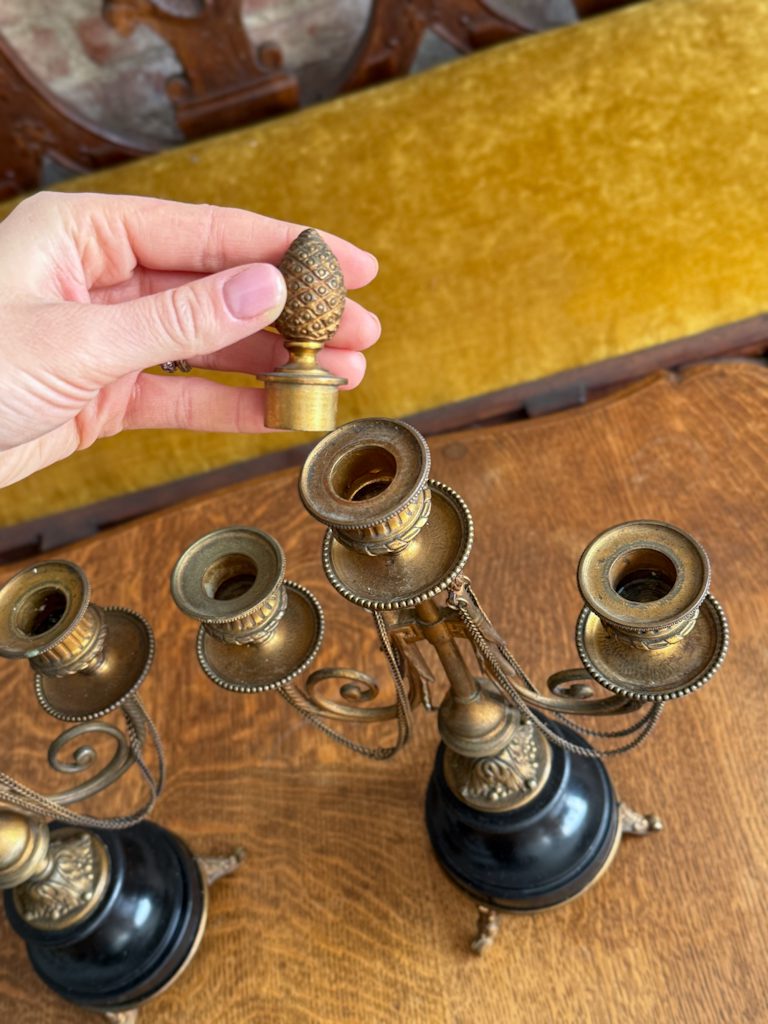
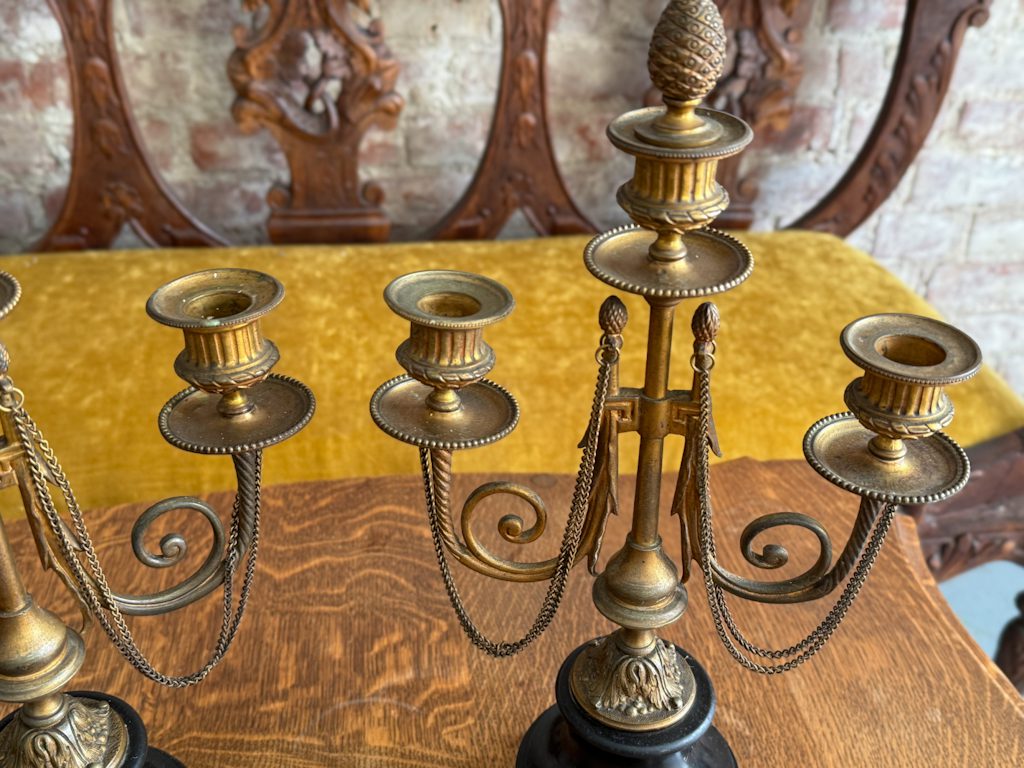
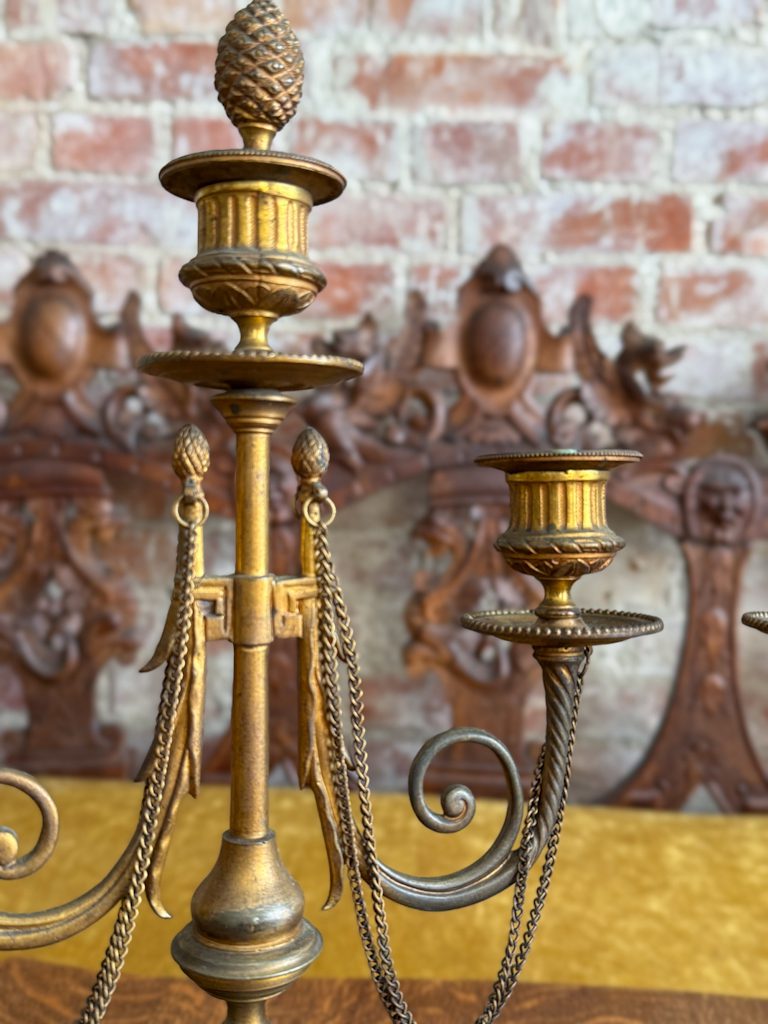
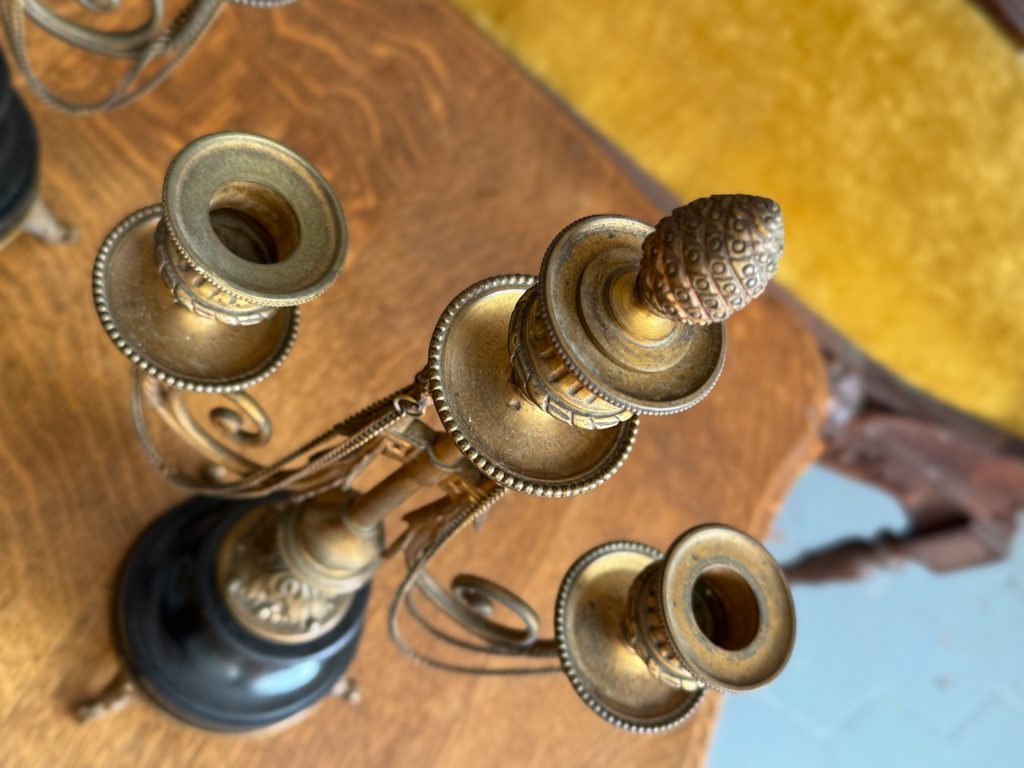
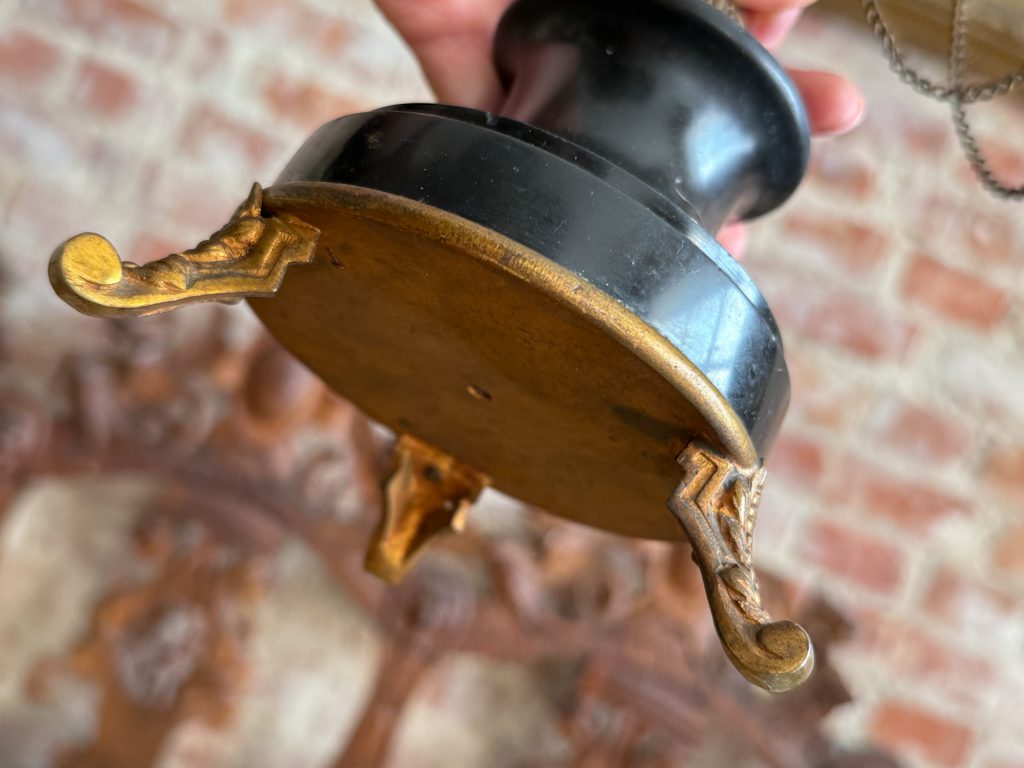
Svečturu korpusi ir veidoti no patinētas un zeltītas bronzas, ko papildina smalkas, dekoratīvas bronzas ķēdītes, kas vijīgi savieno sānžuburus ar centrālo asi. Katrs svečturis ir paredzēts trim svecēm, un centrālo ligzdu rotā noņemams, dekoratīvs pīnijas čiekura formas liesmu slāpētājs (éteignoir). Žuburi ir dekorēti ar meandra un akanta lapu ornamentiem, un tie balstās uz slaida, rievota pīlāra. Konstrukcijas pamatā ir masīvas, pulētas melna marmora pamatnes, kas nodrošina izcilu stabilitāti un vizuālo smagumu, savukārt viss ansamblis balstās uz trim izteiksmīgām, zeltītām bronzas kājiņām ar dekoratīvu augu motīvu reljefu.
Klasicisma laikmeta momentuzņēmums: 1891. gads, Vīne. Teātra primadonnas Katarīnas Šratas (Katharina Schratt) buduārā smaržo pēc svaigām pavasara ceriņu buķetēm un pūdera. Gatavojoties vakara izrādei Burgteātrī, viņa uz brīdi apsēžas pie sava tualetes galdiņa, kur fonā klusi krakšķ kamīns. Rīta saules stari, laužoties caur logu stikliem, uzreiz atduras pret smago, tumšo rāmi, un spoguļa platā, dziļā fasete pēkšņi pārvērš gaismu mirdzošā varavīksnes lokā uz sienas. Viņa pastiepj roku un viegli pieskaras aukstajām, lietajām lauvu figūrām rāmja sānos, sajūtot metāla vēsumu un neticamo, masīvo svaru. Tajā mirklī, skatoties savā atspulgā, viņu pārņem patīkams gandarījums un gaidas — šī mazā tēlniecības forma starp teātra skicēm un ziediem ir kā drošs, nesatricināms miera enkurs pirms kārtējā Parīzes stila triumfa uz skatuves.
RAŽOTĀJS UN MANUFAKTŪRAS ZĪMOGS Priekšmetam nav redzama tieša autora paraksta vai lietuves zīmoga, kas šāda veida klasiskajiem garnitūru elementiem bija parasta prakse, jo tie tika ražoti kā augstākā līmeņa interjera aksesuāri specializētās Parīzes bronzas lietuvēs. Izpildījuma tehnika, detalizētais vītņu darbs, vaska liešanas precizitāte un bronzas un marmora nevainojamais savienojums skaidri apliecina akadēmiski skolotu Francijas meistaru darbu.
RETUMS UN NOZĪME Svečturu pāri antikvariātu tirgū vienmēr ir daudz augstāk vērtēti nekā atsevišķi eksemplāri, jo to kompozicionālais uzdevums interjerā ir simetrija. Īpaša šī pāra vērtība ir pilnīga komplektācija — abi centrālie pīnijas čiekura uzgaļi ir saglabājušies, un arī smalkās bronzas ķēdes ir oriģinālas, kas šāda vecuma un trausluma lietām ir liels retums.
PIELIETOJUMS INTERJERĀ, DIZAINĀ UN FOTOGRĀFIJĀ Šis pāris ir perfekts instruments telpas simetrijas un asu akcentu radīšanai. Tie izskatīsies nevainojami uz liela ēdamgalda, kamīna konsoles abās pusēs vai uz eleganta bufetes skapja. Pateicoties melnā marmora un zeltītās bronzas klasiskajam kontrastam, šie svečturi lieliski papildina ne tikai klasiskos interjerus, bet ir izcils rekvizīts modernā, minimālistiskā vai Nordic Noir dizainā, kur tie darbojas kā spēcīgi, vēsturiski akcenti. Sveču gaisma, atspīdot bronzas ķēdītēs un pulētajā marmorā, rada unikālu gaismu spēli fotogrāfijā un interjera dizainā.
STĀVOKLIS Svečturi ir teicamā vēsturiskā stāvoklī. Bronzas elementi ir stingri, bez lūzumiem vai deformācijām, ar patīkamu, dabisku patinu. Melnā marmora pamatnes ir veselas, bez robiem vai plaisām, saglabājot spoguļgludu pulējumu. Visi vītņu savienojumi un noņemamie čiekuru uzgaļi funkcionē nevainojami un stabili.
🇷🇺 Размеры: Высота — 39 см (каждый) Ширина — 23 см (каждый)
Пара бронзовых и мраморных подсвечников в стиле классицизма (на 3 свечи) — Франция, конец XIX века
Снимок эпохи Бель Эпок: 1891 год, Вена. В будуаре театральной примадонны Катарины Шратт (Katharina Schratt) пахнет свежими букетами сирени и пудрой. Готовясь к вечернему спектаклю в Бургтеатре, она на мгновение присаживается к своему туалетному столику, пока в камине тихо потрескивают дрова. Лучи утреннего солнца, пробиваясь сквозь оконные стекла, сразу ударяются о тяжелую темную раму, и широкий глубокий фацет зеркала внезапно превращает свет в сияющую радугу на стене. Она протягивает руку и слегка касается холодных литых фигур львов по бокам рамы, ощущая прохладу металла и невероятный массивный вес. В это мгновение, глядя на свое отражение, ее охватывает приятное удовлетворение и ожидание — эта малая скульптурная форма среди театральных эскизов и цветов кажется надежным, непоколебимым якорем спокойствия перед очередным триумфом парижского стиля на сцене.
Эта изысканная пара трехрожковых подсвечников среднего размера представляет собой великолепный образец историзма (стиля Луи XVI / классицизма), созданный во Франции в конце XIX века. Корпуса выполнены из патинированной и золоченой бронзы высокого качества, дополненной тонкими декоративными цепочками, плавно соединяющими рожки с центральной осью. Каждый подсвечник рассчитан на три свечи, а центральные розетки увенчаны съемными гасителями пламени в форме пиниевых шишек. Конструкция базируется на массивных основаниях из полированного черного мрамора, покоящихся на трех фигурных позолоченных ножках. Предмет находится в отличном историческом состоянии, литые элементы и мрамор полностью лишены дефектов. Данная пара, благодаря своей полной сохранности (включая оригинальные шишки-насадки и цепочки), представляет собой высокий приоритет для коллекционеров премиального европейского интерьера.
🇬🇧 Dimensions: Height — 39 cm (each) Width — 23 cm (each)
Pair of Classical Bronze and Marble Candelabras (3 Lights) — France, Late 19th Century
Belle Époque snapshot: 1891, Vienna. The boudoir of theater primadonna Katharina Schratt (Katharina Schratt) is filled with the scent of fresh lilac bouquets and powder. Preparing for an evening performance at the Burgtheater, she sits at her dressing table for a moment while the fireplace quietly crackles. The morning sun rays, piercing the window glass, instantly strike the heavy dark frame, and the mirror’s wide, deep bevel suddenly transforms the light into a radiant rainbow arc on the wall. She reaches out and lightly touches the cold, cast lion figures flanking the frame, feeling the metal’s chill and its incredible, substantial weight. In that moment, looking at her reflection, a warm sense of cozy satisfaction and anticipation washes over her—this small sculptural form nestled among theater sketches and flowers stands as a steadfast, unshakeable anchor of calm before another triumph of Parisian style on stage.
This exceptional, mid-sized antique candelabra pair bronze is a premier statement of French Historicism (Louis XVI / Neoclassical style), dating to the late 19th century. The ornate bodies are expertly cast from high-grade patinated and gilded bronze, linked gracefully by intricate hanging chains connecting the outer branches to the central shaft. Each three-light candelabrum features detailed acanthus and meander motifs, with the central socket holding a rare, removable flame extinguisher (éteignoir) shaped as a pinecone. The structures are anchored by heavy, cylindrical bases of polished black marble, supported by three ornate gilded feet. Remaining in excellent vintage condition, the marble shows no chips, and the complete retention of the original chains and removable pinecone finials makes this pair a high collector’s priority, perfect for bringing classical symmetry to a luxury dining room or mantelpiece.
🇩🇪 Abmessungen: Höhe — 39 cm (jeweils) Breite — 23 cm (jeweils)
Paar klassizistische Tischleuchter aus Bronze und Marmor (3-flammig) — Frankreich, Ende 19. Jahrhundert
Momentaufnahme der Belle-Époque-Zeit: 1891, Wien. Im Boudoir der Theaterprimadonna Katharina Schratt (Katharina Schratt) duftet es nach frischen Fliedersträußen und Puder. Zur Vorbereitung auf eine Abendvorstellung im Burgtheater nimmt sie einen Moment an ihrem Frisiertisch Platz, während der Kamin leise knistert. Die morgendlichen Sonnenstrahlen, die durch die Fensterscheiben brechen, treffen sofort auf den schweren, dunklen Rahmen, und der breite, tiefe Facettenschliff des Spiegels verwandelt das Licht plötzlich in einen strahlenden Regenbogenbogen an der Wand. Sie streckt die Hand aus und berührt leicht die kalten, gegossenen Löwenfiguren an den Seiten des Rahmens, wobei sie die Kühle des Metalls und das unglaubliche, massive Gewicht spürt. In diesem Moment, als sie ihr Spiegelbild betrachtet, überkommt sie eine angenehme Zufriedenheit und Vorfreude – diese kleine skulpturale Form zwischen Theaterskizzen und Blumen wirkt wie ein sicherer, unerschütterlicher Anker der Ruhe vor einem weiteren Triumph des Pariser Stils auf der Bühne.
Dieses elegante, mittelschwere Paar 3-flammiger Tischleuchter ist ein herausragendes Beispiel des Historismus (Klassizismus / Louis-XVI-Stil), gefertigt in Frankreich am Ende des 19. Jahrhunderts. Die Leuchterkörper sind aus hochwertiger patinierter und feuervergoldeter Bronze gegossen und mit feinen, hängenden Zierketten versehen, die die Außenarme mit dem Mittelschaft verbinden. Die zentrale Tülle ist jeweils mit einem abnehmbaren Löschhorn (éteignoir) in Form eines Pinienzapfens bestückt. Die kannelierten Schäfte ruhen auf massiven Sockeln aus poliertem schwarzem Marmor, die von drei reich verzierten, vergoldeten Bronzefüßen getragen werden. Das Paar befindet sich in einem hervorragenden historischen Zustand ohne Beschädigungen am Marmor. Die absolute Vollständigkeit inklusive der originalen Ketten und Pinienzapfen-Aufsätze macht diese Objekte zu einer hohen Priorität für Sammler anspruchsvoller Antiquitäten.
🇫🇷 Dimensions : Hauteur — 39 cm (chacun) Largeur — 23 cm (chacun)
Paire de flambeaux de style Néoclassique en bronze et marbre (à 3 lumières) — France, fin du XIXe siècle
Instantané de la Belle Époque : 1891, Vienne. Dans le boudoir de la primadonna du théâtre Katharina Schratt (Katharina Schratt), une odeur de bouquets de lilas frais et de poudre flotte dans l’air. Se préparant pour une représentation en soirée au Burgtheater, elle s’assoit un instant à sa coiffeuse tandis que la cheminée crépite doucement. Les rayons du soleil matinal, traversant les vitres de la fenêtre, frappent instantanément le lourd cadre sombre, et le biseau large et profond du miroir transforme soudain la lumière en un arc-en-ciel éclatant sur le mur. Elle tend la main et touche légèrement les froides figures de lions moulées flanquant le cadre, ressentant la fraîcheur du métal et son poids incroyable et substantiel. À ce moment, en regardant son reflet, un sentiment de douce satisfaction et d’anticipation l’envahit — cette petite forme sculpturale nichée parmi les croquis de théâtre et les fleurs se dresse comme un ancrage de calme inébranlable avant un autre triomphe du style parisien sur scène.
Cette somptueuse paire de candélabres à trois feux de taille moyenne est un témoignage remarquable de l’historisme français (style Louis XVI / Néoclassique), réalisée en France à la fin du XIXe siècle. Les fûts cannelés et les bras de lumière sont fondus en bronze patiné et doré, reliés délicatement par de fines chaînettes de bronze suspendues. Le binet central est coiffé d’un rare éteignoir amovible en forme de pomme de pin. L’ensemble repose sur de solides bases cylindriques en marbre noir de Belgique, soutenues par trois pieds griffe en bronze doré. Cette paire d’exception se trouve dans un état de conservation historique remarquable, sans éclats sur le marbre. Conservant l’intégralité de ses éléments d’origine (chaînettes et éteignoirs), elle constitue une véritable priorité pour les collectionneurs de haute décoration européenne.
🇩🇰 Dimensioner: Højde — 39 cm (for hver) Bredde — 23 cm (for hver)
Klassicistisk lysestagepar i bronze og marmor (3-armet) — Frankrig, slutningen af det 19. århundrede
Snapshot af Belle Époque-æraen: 1891, Wien. I teaterprimadonnaen Katharina Schratts (Katharina Schratt) boudoir dufter der af friske syrenbuketter og pudder. Som forberedelse til aftenens forestilling i Burgtheater sætter hun sig et øjeblik ved sit toiletbord, mens kaminen knitrer blidt. Morgenmørkets solstråler, der trænger gennem vinduesglasset, rammer øjeblikkeligt den tunge, mørke ramme, og spejlets brede, dybe facet forvandler pludselig lyset til en strålende regnbue på væggen. Hun strækker hånden ud og rører let ved de kolde, støbte løvefigurer på siderne af rammen, og mærker metallets kulde og den utrolige, massive vægt. I det øjeblik, hvor hun ser på sin refleksion, bliver hun overvældet av en behagelig tilfredshed og forventning — denne lille skulpturelle form midt blandt teaterskitser og blomster står som et sikkert, urokkeligt anker af ro før endnu en triumf for den parisiske stil på scenen.
Dette elegante antikke lysestagepar i mellemstørrelse er et fremragende eksempel på fransk historicisme (Louis XVI / klassicisme), fremstillet i Frankrig i slutningen af det 19. århundrede. De dekorative kroppe er støbt i højkvalitets patineret og forgyldt bronze, forbundet med fine, hængende kæder, der forbinder yderarmene med midterskaftet. Den centrale lysestage er udstyret med en aftagelig flammeslukker formet som en pinjekogle. Konstruktionen hviler på massive baser af poleret sort marmor, som understøttes af tre forgyldte bronzefødder. Lysestagerne fremstår i fremragende antik stand uden skader på marmoren. At parret er komplet bevaret inklusive de originale kæder og pinjekogle-topstykker gør dette til en stor prioritet for samlere af eksklusiv europæisk kunst.
🇸🇪 Mått: Höjd — 39 cm (för varje) Bredd — 23 cm (för varje)
Klassicistiskt ljusstakspar i brons och marmor (3-armat) — Frankrike, slutet av 1800-talet
Momentbild från Belle Époque-epoken: 1891, Wien. I teaterprimadonnan Katharina Schratts (Katharina Schratt) boudoar doftar det av färska syrenbuketter och pudder. Som förberedelse för en kvällsföreställning på Burgtheater slår hun sig ner ett ögonblick vid sitt sminkbord, medan kaminen sprakar lågmält. Morgonsolens strålar som tränger genom fönsterrutorna träffar omedelbart den tunga, mörka ramen, och spegelns breda, djupa fasett förvandlar plötsligt ljuset till en strålande regnbågsbåge på väggen. Hon sträcker ut handen och rör lätt vid de kalla, gjutna lejonfigurerna på sidorna av ramen, och känner metallens kyla och den utroliga, massiva vikten. I det ögonblicket, när hon betraktar sin reflektion, överkoms hon av en behaglig tillfredsställelse och förväntan – denna lilla skulpturala form bland teaterskisser och blommor verkar som ett säkert, oryggligt ankare av lugn före ännu en triumf av den parisiske stilen på scenen.
Detta enastående par antika 3-armade ljusstakar i mellanstorlek är ett praktfullt exempel på fransk historism (Louis XVI / klassicism), tillverkade i Frankrike under slutet av 1800-talet. Ljusstakarna är gjutna i högkvalitativ patinerad och förgylld brons, sammanlänkade av dekorativa hängande kedjor från sidoarmarna till mittstången. Den centrala ljuspipan är försedd med en avtagbar eldsläckare formad som en pinjekotte. De kannelerade skaften vilar på kraftiga cylindriska socklar av polerad svart marmor som bärs upp av tre förgyllda bronsfötter. Paret är i utmärkt historiskt skick utan nagg på marmorn. Att pjäserna är fullständigt kompletta med sina originalkedjor och kottformade släckare gör detta par till en hög prioritet för samlare av fransk metallkonst.
🇳🇴 Dimensjoner: Høyde — 39 cm (for hver) Bredde — 23 cm (for hver)
Klassisistisk lysestakepar i bronse og marmor (3-armet) — Frankrike, slutten av 1800-tallet
Glimt fra Belle Époque-epoken: 1891, Wien. I teaterprimadonnaen Katharina Schratts (Katharina Schratt) budoar dufter det av friske syrenbuketter og pudder. Som forberedelse til en kveldsforestilling i Burgtheater setter hun seg et øyeblikk ved sitt toalettbord, mens kaminen knitrer lavmælt. Morgensolens strålar som trenger gjennom vindusrutene, treffer øyeblikkelig den tunge, mørke rammen, og speilets brede, dype fasett forvandler plutselig lyset til en strålende regnbuebue på veggen. Hun strekker hånden ut og berører lett de kalde, støpte løvefigurene på sidene av rammen, og kjenner metallets kulde og den utrolige, massive vekten. I det øyeblikket, når hun betrakter sin refleksjon, blir hun fylt av en behagelig tilfredshet og forventning – denne lille skulpturelle formen blant teaterskisser og blomster virker som et sikkert, urokkelig anker av ro før nok en triumf for den parisiske stilen på scenen.
Dette usedvanlig vakre antikke lysestakeparet i mellomstørrelse er et klassisk eksempel på fransk historisme (Louis XVI / klassisisme), skapt i Frankrike i slutten av 1800-tallet. De forseggjorte korpusene er støpt i patinert og forgylt bronse, elegant forbundet med tynne, hengende bronsekjeder fra sidearmene til midtstangen. Den sentrale lyspipen er utstyrt med en avtagbar flammeslukker formet som en kongle. Lysestakene er forankret i massive sylindriske sokler av polert svart marmor, understøttet av tre forgylte bronseføtter. Paret er i utmerket historisk stand uten skader eller nagg i marmoren. Komplett bevaring av originale kjeder og kongle-toppstykker gjør dette sjeldne paret til en prioritet for samlere av finere europeisk kunst.