
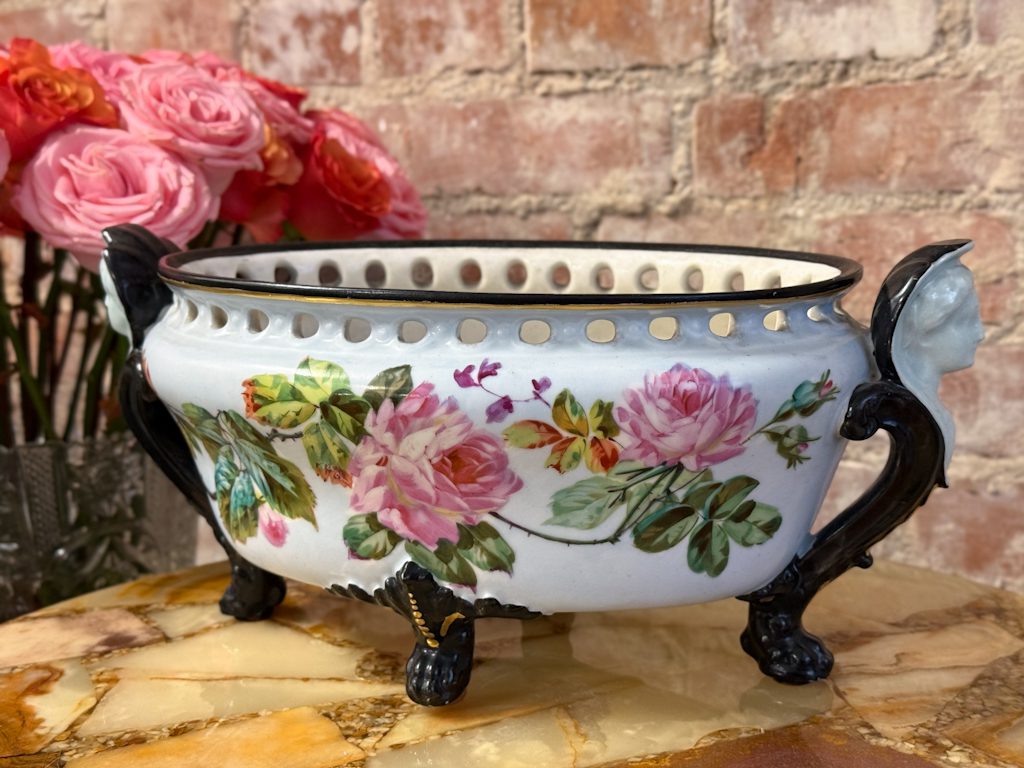
Porcelāna kašpo ar roku gleznotu rožu vainagu, sievietes sejas rokturiem un melniem lāpas kājiņu statīviem — Historicisms / Jūgendstils, Francija vai Beļģija, ap 1890.–1905. Grezns Porcelāna Kašpo ar Ziedu Motīviem, uz Ķepiņām, Neliela Izmēra (5451)
Porcelāna kašpo ar roku gleznotu rožu vainagu, sievietes sejas rokturiem un melniem lāpas kājiņu statīviem — Historicisms / Jūgendstils, Francija vai Beļģija, ap 1890.–1905. Grezns Porcelāna Kašpo ar Ziedu Motīviem, uz Ķepiņām, Neliela Izmēra (5451)
€340.00
📐 IZMĒRI
Augstums 16,5 cm × garums 35 cm × platums 20 cm. Iespaidīgs ovāls formāts — klasisks jardinière proporcijās, kas paredzēts kā galda vai konsoles centrepiece.
―――――――――――――――――――――
Porcelāna kašpo ar roku gleznotu rožu vainagu, sievietes sejas rokturiem un melniem lāpas kājiņu statīviem — Historicisms / Jūgendstils, Francija vai Beļģija, ap 1890.–1905.
―――――――――――――――――――――
🏛️ IZGATAVOŠANAS PERIODS, MĀKSLAS STILS, LAIKMETS
Šis kašpo ir viens no izcilākajiem Jūgendstila un Historicisma pārejas perioda piemēriem, ko var iedomāties šādā izmērā. Tā veidols runā divās valodās ar pilnīgu pārliecību — un tieši šī divbalsība padara priekšmetu ārkārtīgi interesantu.
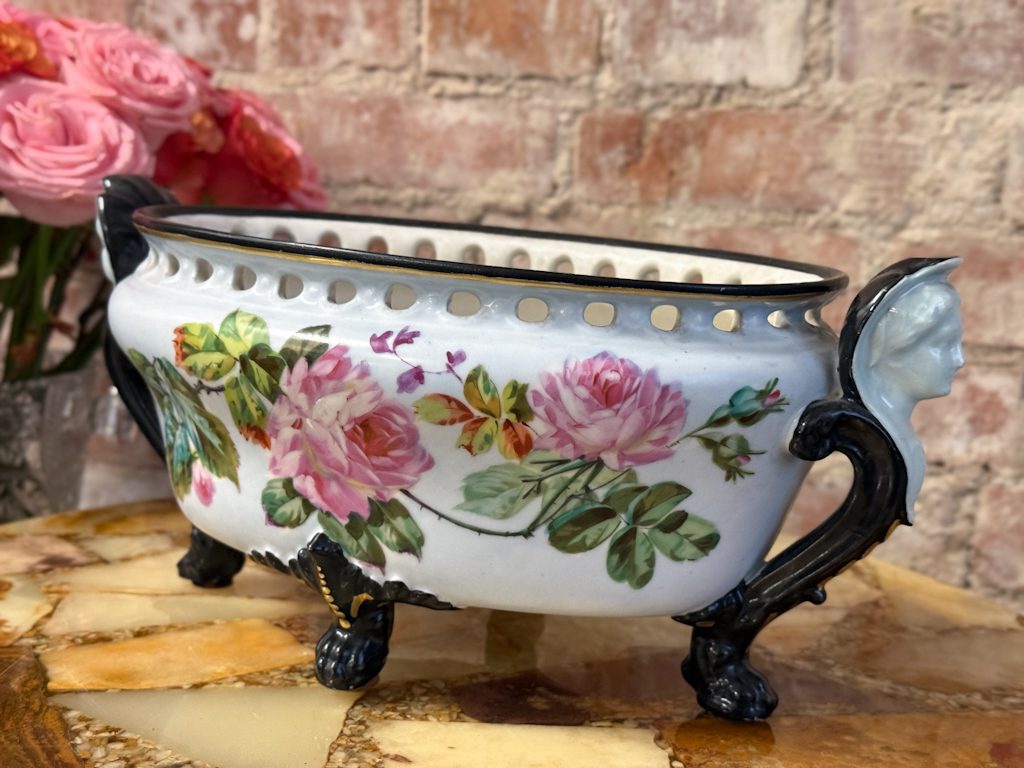
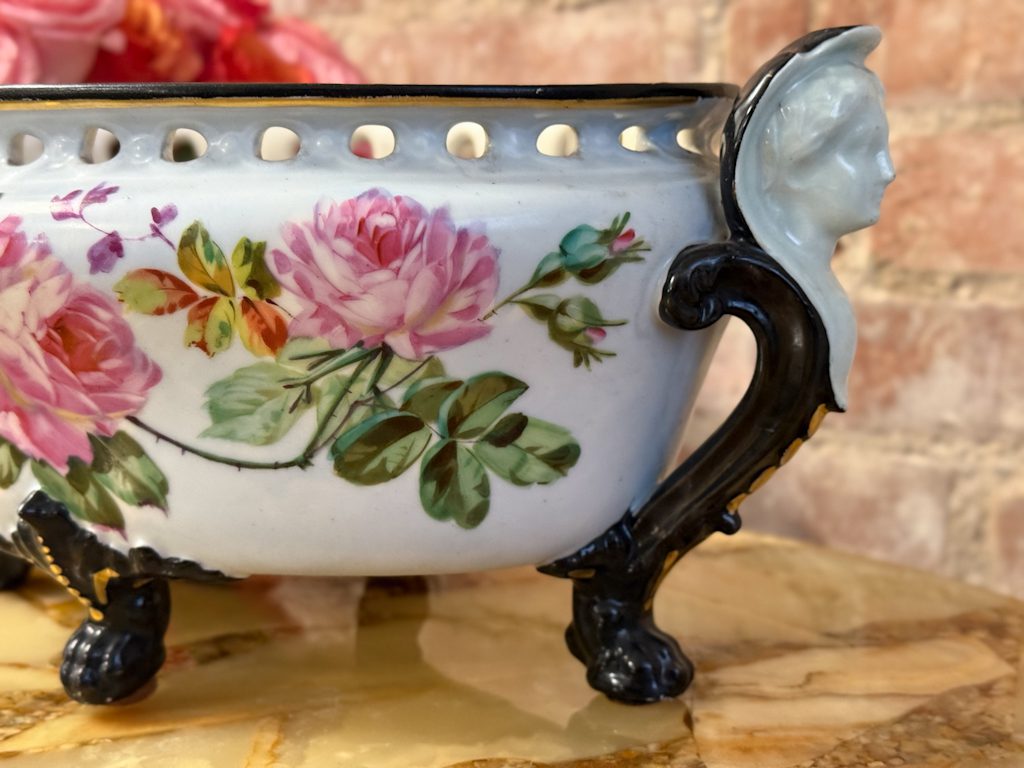
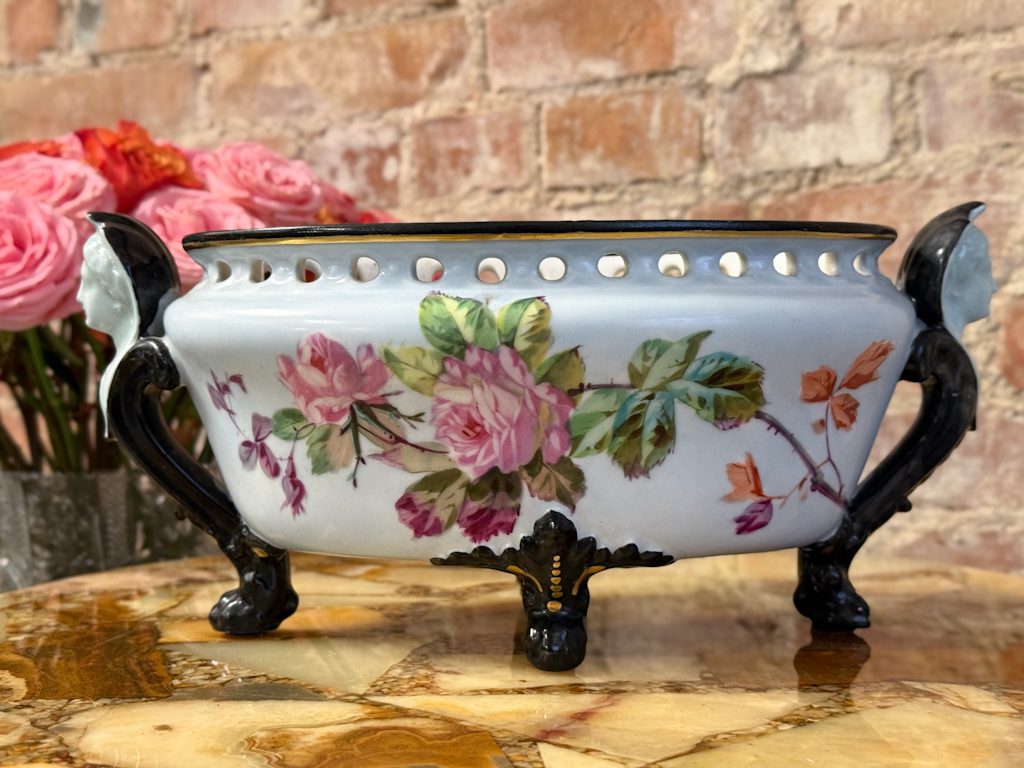
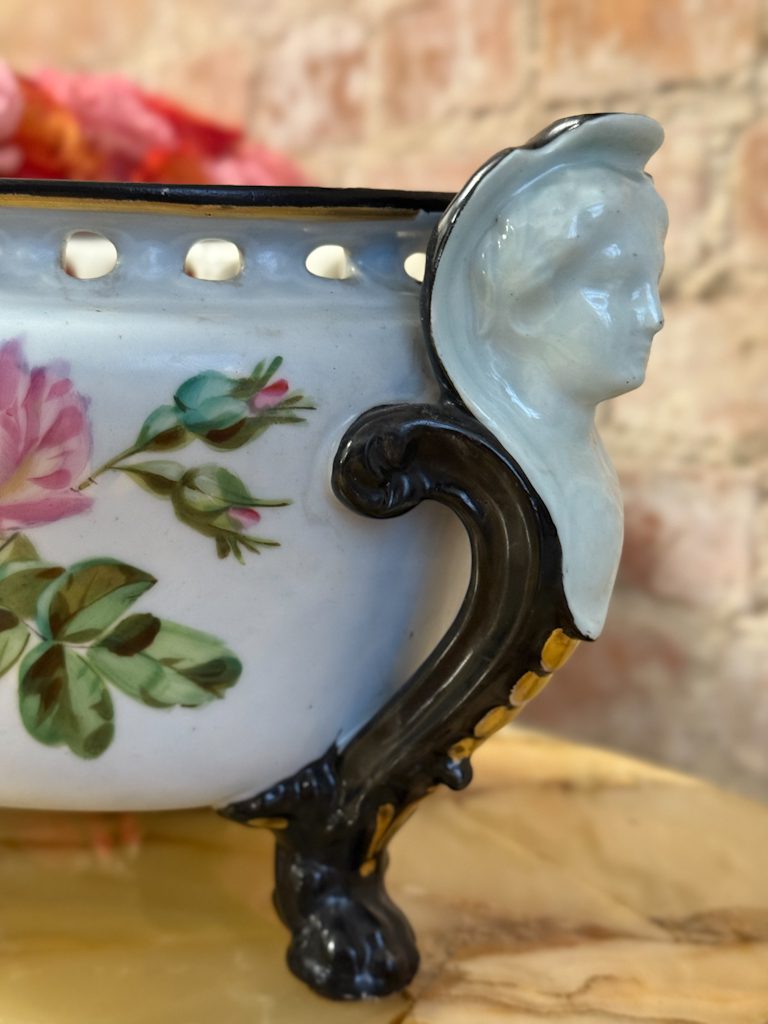
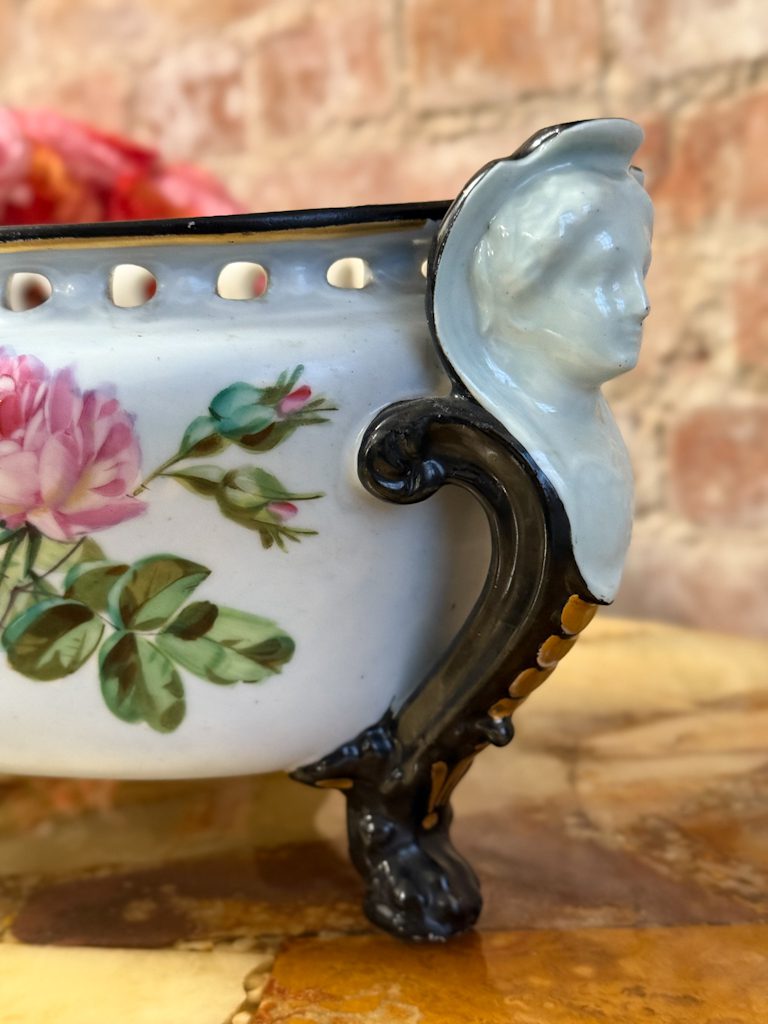
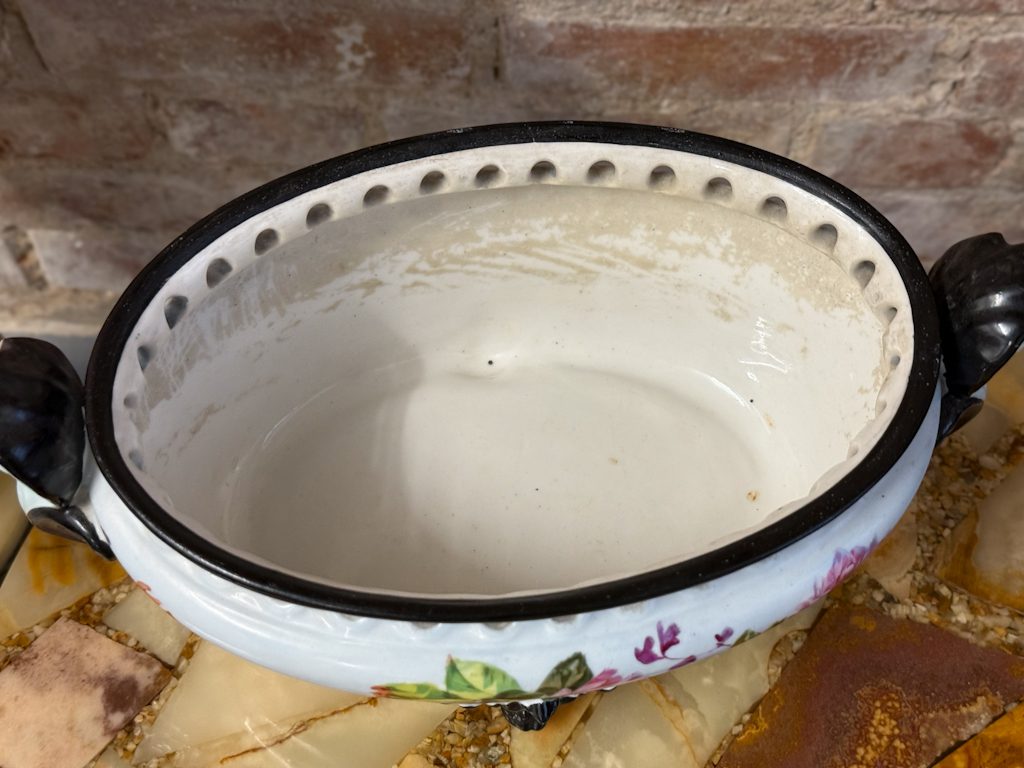
Historicisma valoda ir klātesošo formā: ovāls siluets ar ažūru cauruļveida joslu zem malas, melnās glazētās porcelāna kājiņas ar lāpas formas akantus lapu kronām un reljefinām porcelāna rokturēm — tas viss ir svinīgās Eiropas dekoratīvās mākslas gramatika, kas veidojusies 19. gs. otrajā pusē. Taču Jūgendstila valoda runā tikpat skaļi: divas sievietes sejas profili — glazētā pelēkzilā porcelānā, ar matu lokā ieplūstošām māju lapiņu formām — ir tipisks femme-fleur jeb sieviete-zieds tēls, kas bija viens no Jūgendstila centrālajiem simboliem visā Eiropā. Tieši šādi sievietes profili kā rokturi vai dekoratīvi elementi parādās Parīzes, Briseles un Prāgas Jūgendstila keramikā un izstrādājumos ar bronzas apkalumu.
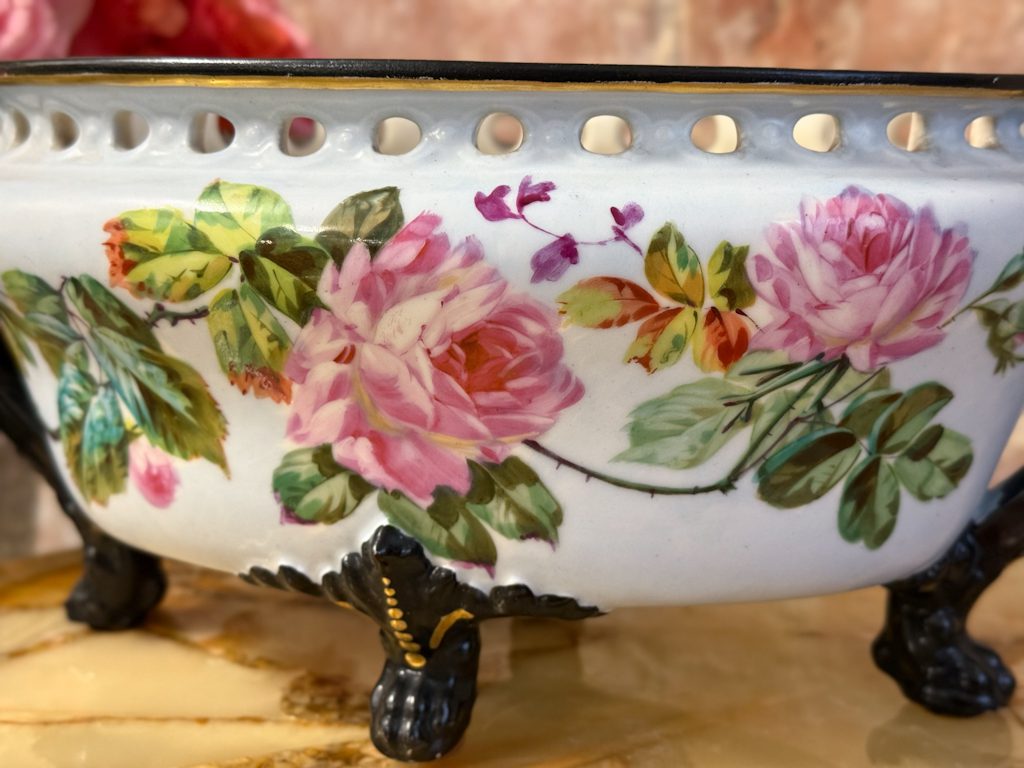
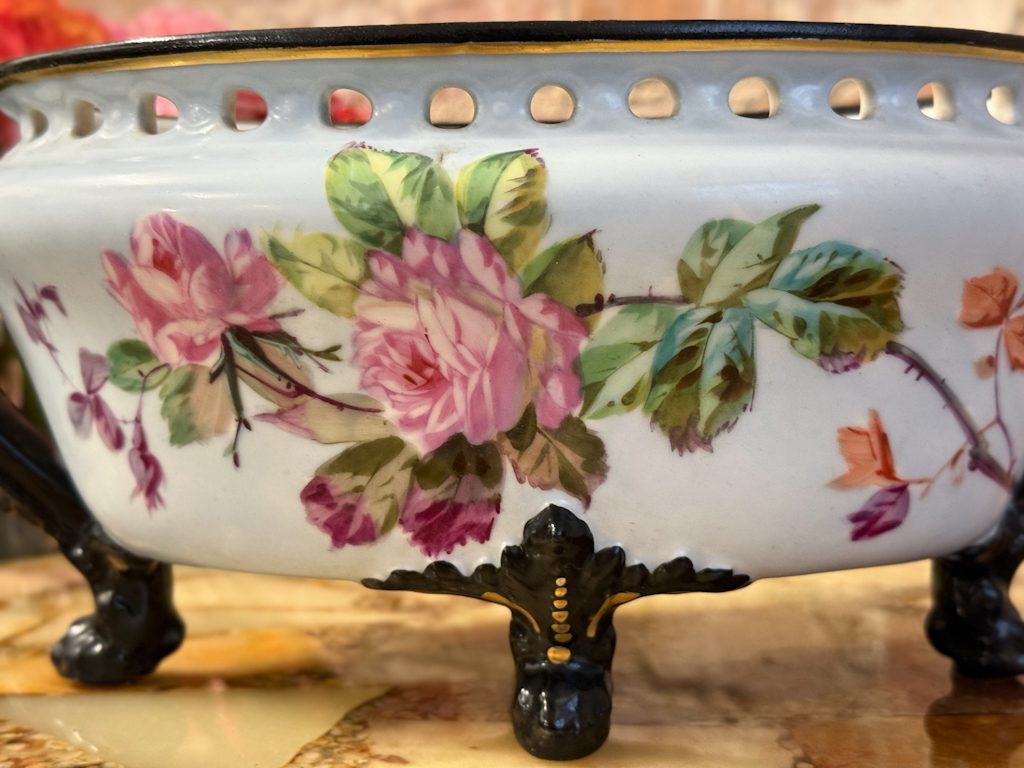
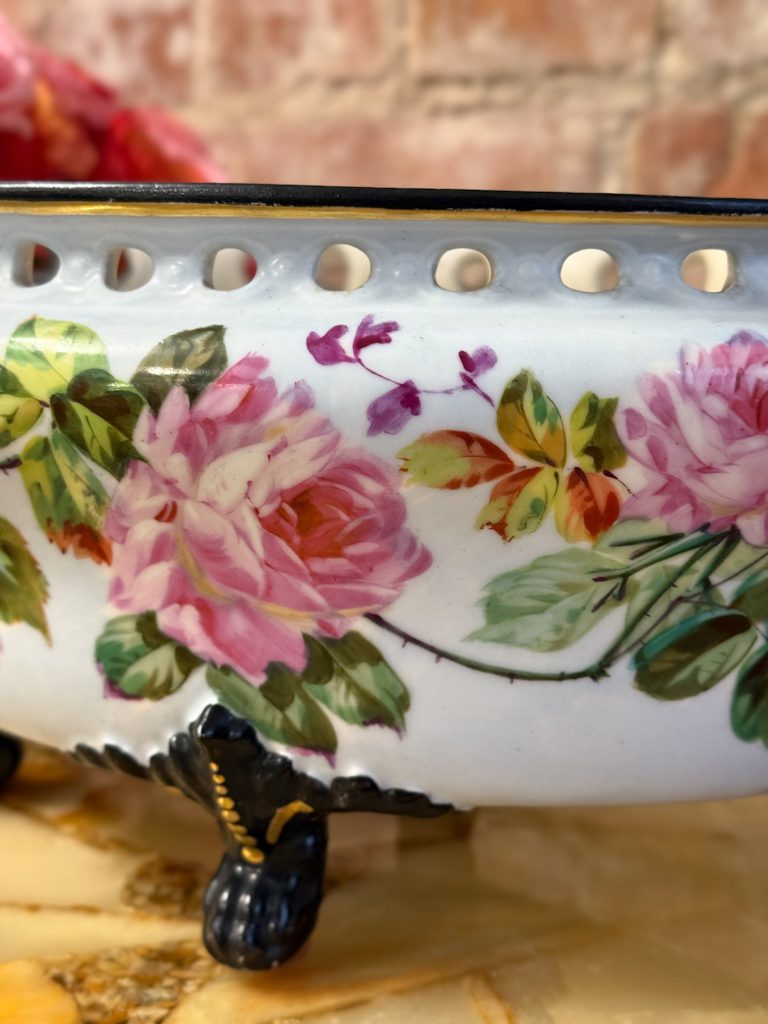
Gleznojums — brīvi plūstoši rozā rožu zari ar krāsainām lapām visā korpusa garumā, bez medaljona ietvēruma, bez simetrijas nosacījuma — ir tīra agrīnā Jūgendstila estētika: daba kā brīva kustība, nevis kā ornamentāls motīvs.
―――――――――――――――――――――
⚜️ RAŽOTĀJS UN MANUFAKTŪRAS ZĪMOGS
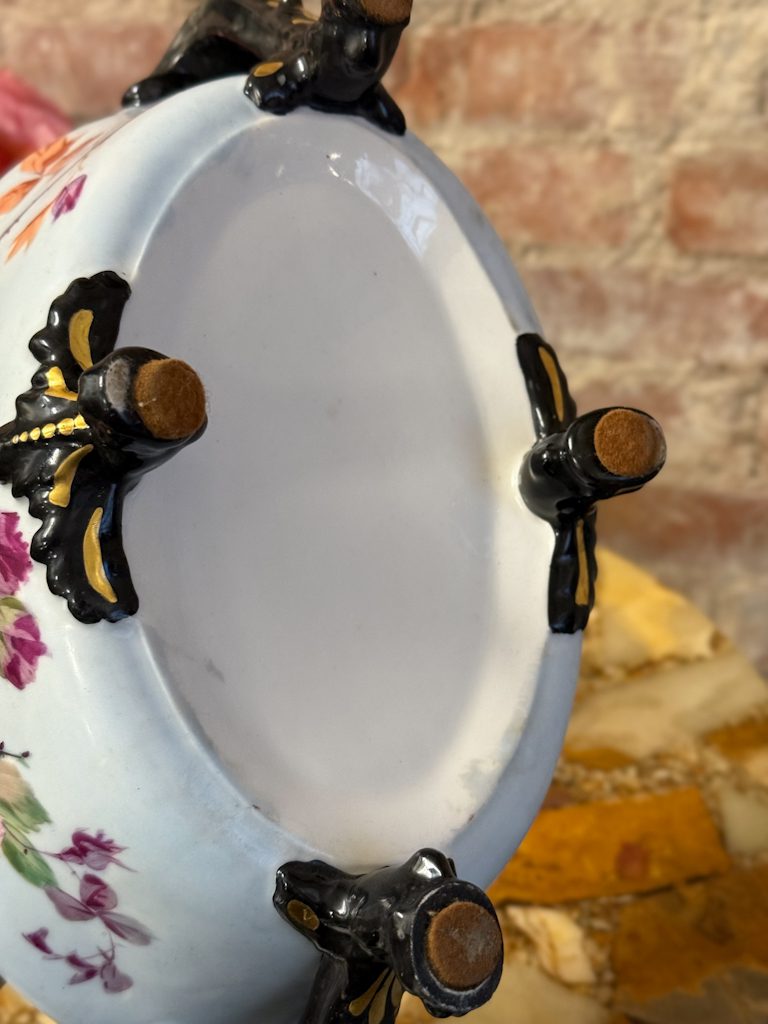
Apakšā nav redzams krāsots manufaktūras zīmogs — glazēta balta porcelāna plakne bez marķējuma. Kājiņu statīvs ir porcelāna, nevis metāla, ar melno glazūru un zelta detaļām — tas liecina par integrētu, vienlaicīgu ražošanu, nevis vēlāk pievienotu apkalumu.
Pēc sievietes sejas rokturēm profila stilā, rožu gleznojuma brīvuma, melnās glazūras un ažūrās malas kombinācijas šis priekšmets visciešāk atbilst Francijas vai Beļģijas lielajām keramikas manufaktūrām agrīnā Jūgendstila periodā — ar iespējamu stilistisko piederību Boch Frères Keramis (Beļģija) vai Saint-Amand-les-Eaux / Choisy-le-Roi (Francija) tradīcijai. Šīs manufaktūras šajā periodā ražoja tieši šāda tipa reprezentatīvus kašpo un jardinières ar figurāliem rokturiem, ažūru malu un roku gleznotu rožu dekoru.
Boch Frères Keramis, dibināta 1841. gadā, ieguva starptautisku atzinību Parīzes Pasaules izstādēs un piegādāja savu preci Eiropas aristokrātijai. Choisy-le-Roi bija atzīta par vienu no tehniskā līmeņa ziņā augstākajām Francijas manufaktūrām — tās prece parādījās Parīzes prestižajos mākslas tirgotājos un tika eksportēta uz visiem Eiropas tirgiem, tai skaitā Baltijas valstīm un Krieviju.
―――――――――――――――――――――
💎 RETUMS UN NOZĪME
Šis kašpo ir retums vairāku apstākļu dēļ vienlaikus. Pirmkārt, sievietes sejas profila rokturi glazētā pelēkzilā porcelānā — tas ir izsmalcināts Jūgendstila figurālais elements, ko izmantoja tikai augstākas klases manufaktūras. Otrkārt, melnā glazētā porcelāna kājiņu statīvs ar integrētām zelta detaļām ir tehniski sarežģītāks risinājums nekā parasts metāla apkalums. Treškārt, visu šo elementu saglabāšanās kopā — rokturi, kājiņas, ažūrā mala un gleznojums — pilnā komplektā un bez restaurācijām ir neparasti. Šādi priekšmeti Eiropas augstākās klases antikvāro mākslu tirgū tiek klasificēti kā museum quality vai collector’s piece.
―――――――――――――――――――――
🕯️ PIELIETOJUMS INTERJERĀ, DIZAINĀ UN FOTOGRĀFIJĀ
Šī kašpo mērogs, gleznojums un figurālie rokturi padara to par iespaidīgu centrepiece jebkurā vidē — kamīnplaukts, ēdamistabas galda centrā, konsoles galvenais akcents vai bibliotēkas dekorācija. Melnā un baltā krāsu spēle ar rozā rožu gleznojumu un sievietes sejas profilu ir vizuāli ļoti spēcīga un darbojas gan klasiskā, gan eklektiskā, gan pat modernā interjerā.
Fotogrāfiem un stilistiem tas ir teju ideāls priekšmets — sievietes sejas profils kā rokturis ir viena no tām detaļām, kas pat tuvplānā stāsta visu par laikmetu.
―――――――――――――――――――――
🎁 DĀVANA UN PERSONALIZĀCIJA
Šis kašpo ar sievietes sejas profila rokturiem un rožu gleznojumu ir reprezentatīva dāvana augstākā līmenī — tas ir priekšmets, ko var dāvināt kā korporatīvu vai diplomātisku dāvanu, kā arī kā īpašu personīgu veltījumu cilvēkam ar izsmalcinātu gaumi un novērtētu interjeru. Rožu tematika un sievietes tēls padara to par īpaši piemērotu jubilejas vai atzinības dāvanu.
―――――――――――――――――――――
🔍 STĀVOKLIS
Porcelāns labā stāvoklī. Gleznojums saglabājies labi visā korpusa garumā ar dzīvīgām krāsām. Ažūrā mala pilnā komplektā bez trūkstošām caurumošanām. Sievietes sejas rokturi abi saglabājušies. Melnā glazētā kājiņu sistēma bez trūkstošām daļām. Zelta detaļas ar laika patinu. Iekšpuse ar lietošanas pēdām, kas atbilst priekšmeta vecumam. Nav redzamas restaurācijas.
Lietas stāvoklis pilnībā atspoguļots fotogrāfijās.
―――――――――――――――――――――
🇬🇧 DESCRIPTION IN ENGLISH
Porcelain cachepot with hand-painted rose garland, female face handles, and black glazed porcelain feet — Historicism / Art Nouveau style, France or Belgium, circa 1890–1905.
―――――――――――――――――――――
📐 DIMENSIONS
Height 16.5 cm × length 35 cm × width 20 cm. An impressive oval form in classic jardinière proportions, designed as a table or console centrepiece.
―――――――――――――――――――――
🏛️ PERIOD, ARTISTIC STYLE, HISTORICAL CONTEXT
This cachepot is one of the most compelling examples of the Historicism-to-Art Nouveau transitional period one might encounter at this scale. Its design speaks two languages with complete conviction — and it is precisely this duality that makes the piece so remarkable.
The Historicist language is present in the form: the oval silhouette with a pierced gallery rim below the edge, the black-glazed porcelain feet with acanthus-leaf crowns in relief, and the monumental moulded handles — all part of the ceremonial decorative grammar of the later 19th century. Yet the Art Nouveau language speaks with equal force: the two female face profiles — glazed in pale grey-blue porcelain, with hair flowing into leaf-like shapes — are characteristic femme-fleur (woman-flower) figures, one of the central symbols of Art Nouveau across Europe. Precisely such female profiles as handles or decorative elements appear in Parisian, Brussels, and Prague Art Nouveau ceramics and bronze-mounted works.
The painted decoration — freely flowing pink rose branches with colourful leaves extending across the full length of the body, without medallion framing or symmetrical constraint — is pure early Art Nouveau aesthetics: nature as free movement rather than ornamental motif.
―――――――――――――――――――――
⚜️ MAKER AND MARKS
No painted maker’s mark is visible on the base — a clean white glazed porcelain surface without markings. The footed stand is porcelain rather than metal, with black glaze and gilded accents — indicating integrated, simultaneous production rather than later-added mounts.
Based on the female face handles in profile, the freedom of the rose painting, the combination of black glaze and pierced rim, this piece corresponds most closely to the French or Belgian large ceramic manufactory tradition of the early Art Nouveau period — with possible stylistic attribution to Boch Frères Keramis (Belgium) or the Saint-Amand-les-Eaux / Choisy-le-Roi (France) tradition. These manufactories produced precisely this type of representative cachepot and jardinière with figural handles, pierced rims, and hand-painted rose decoration during this period.
Boch Frères Keramis, founded in 1841, gained international recognition at the Paris World Expositions and supplied European aristocracy with its wares. Choisy-le-Roi was regarded as one of the technically most accomplished French manufactories — its pieces appeared in the leading Parisian art dealerships and were exported to all European markets, including the Baltic states and Russia.
―――――――――――――――――――――
💎 RARITY AND SIGNIFICANCE
This cachepot is remarkable for several reasons simultaneously. The female face profile handles in pale grey-blue glazed porcelain represent a refined Art Nouveau figural element used only by higher-tier manufactories. The black-glazed porcelain footed stand with integrated gilded details is technically more complex than a simple metal mount. The survival of all these elements together — handles, feet, pierced rim, and painted decoration — in complete form and without restoration is unusual. Objects of this type are classified in the European high-end antique art market as museum quality or collector’s pieces.
―――――――――――――――――――――
🕯️ USE IN INTERIORS, DESIGN AND PHOTOGRAPHY
The scale, painting, and figural handles of this cachepot make it a powerful centrepiece in any setting — a mantelpiece, the centre of a dining table, the principal accent of a console, or a library decoration. The interplay of black and white with the pink rose painting and the female face profile is visually compelling and works equally well in classical, eclectic, and modern interiors.
For photographers and stylists, it is a near-ideal subject — the female face profile as a handle is one of those details that tells the entire story of an era even in close-up.
―――――――――――――――――――――
🎁 AS A GIFT
This cachepot with female face handles and rose decoration is a representative gift at the highest level — a piece that can be given as a corporate or diplomatic present, or as a deeply personal gift to someone with refined taste and a cherished interior. The rose theme and the female figure make it particularly fitting for an anniversary or an expression of distinguished appreciation.
―――――――――――――――――――――
🔍 CONDITION
The porcelain is in good condition. The painted decoration is well preserved across the full length of the body with vivid colours. The pierced gallery rim is complete with no missing perforations. Both female face handles are intact. The black-glazed footed stand has no missing parts. The gilded details show natural age patina. The interior shows traces of use consistent with the object’s age. No visible restoration.
The condition of the item is fully reflected in the photographs.