
Porcelāna kašpo ar mitoloģiskiem gleznojumiem — Trīs Grācijas un Erosa aina — Neorokoko / Historicisms, Vācija (Tīringene vai Silēzija), ap 1870.–1900. Neliela Izmēra Kašpo/Puķpods (5438)
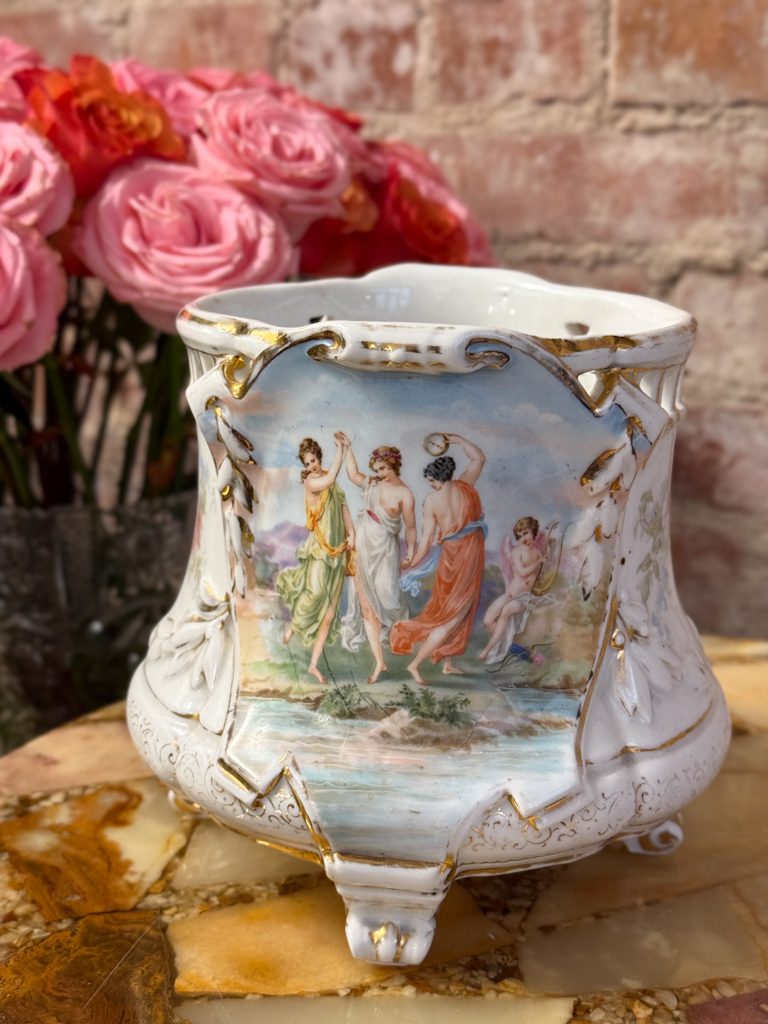
Porcelāna kašpo ar mitoloģiskiem gleznojumiem — Trīs Grācijas un Erosa aina — Neorokoko / Historicisms, Vācija (Tīringene vai Silēzija), ap 1870.–1900. Neliela Izmēra Kašpo/Puķpods (5438)
€210.00
📐 IZMĒRI
Augstums 17,5 cm × platums 18 cm. Kompakts, bet plastisks formāts ar izteiktu vertikālo dinamiku.
―――――――――――――――――――――
Porcelāna kašpo ar mitoloģiskiem gleznojumiem — Trīs Grācijas un Erosa aina — Neorokoko / Historicisms, Vācija (Tīringene vai Silēzija), ap 1870.–1900.
―――――――――――――――――――――
🏛️ IZGATAVOŠANAS PERIODS, MĀKSLAS STILS, LAIKMETS
Šis kašpo ir izcils Vācijas Historicisma porcelāna paraugs — laikmeta, kad 19. gadsimta otrās puses Eiropas manufaktūras ar pilnu pārliecību atgriežās pie antīkās pasaules skaistuma un Rokoko viegluma, apvienojot tos vienā un tajā pašā priekšmetā.
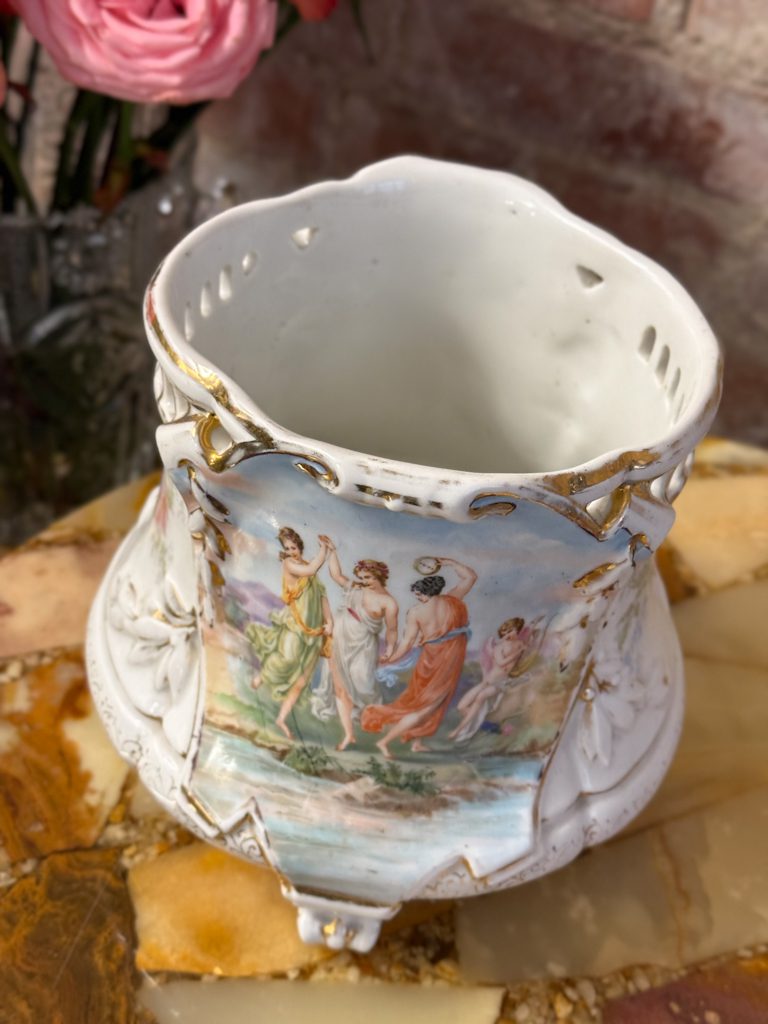
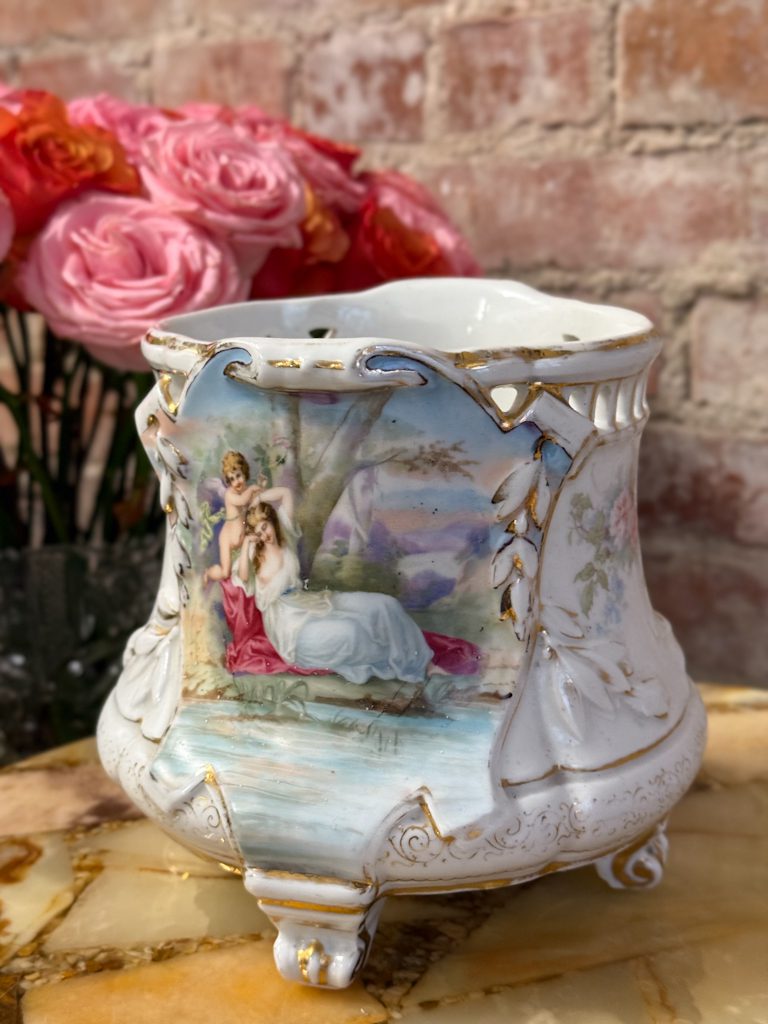
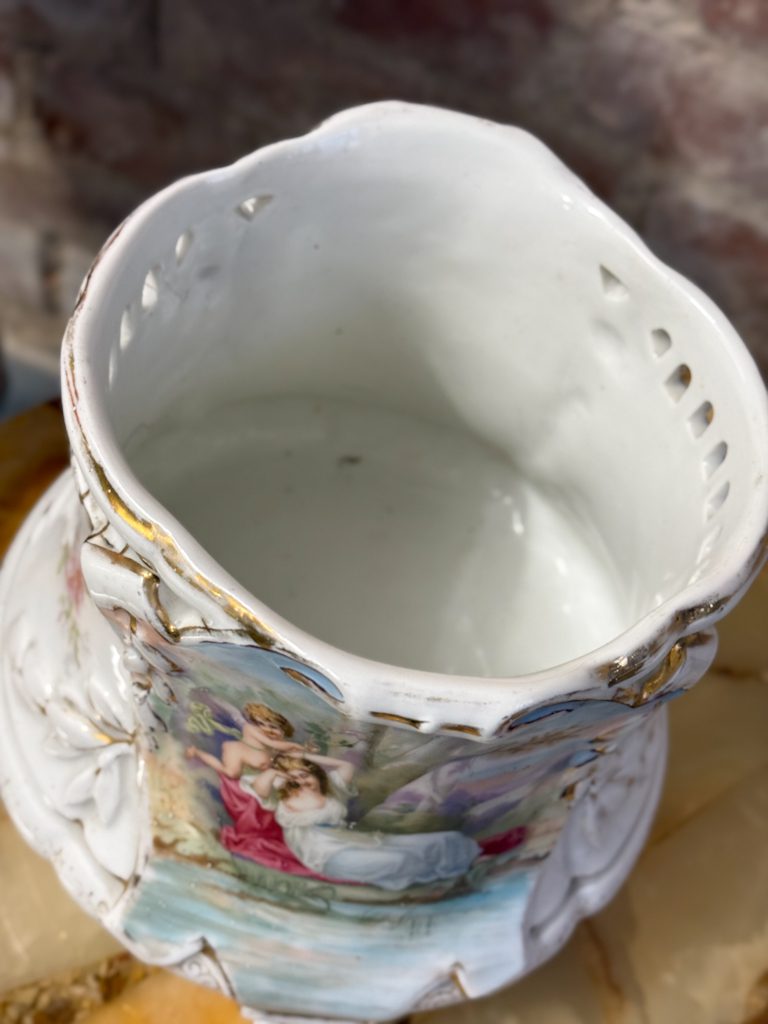
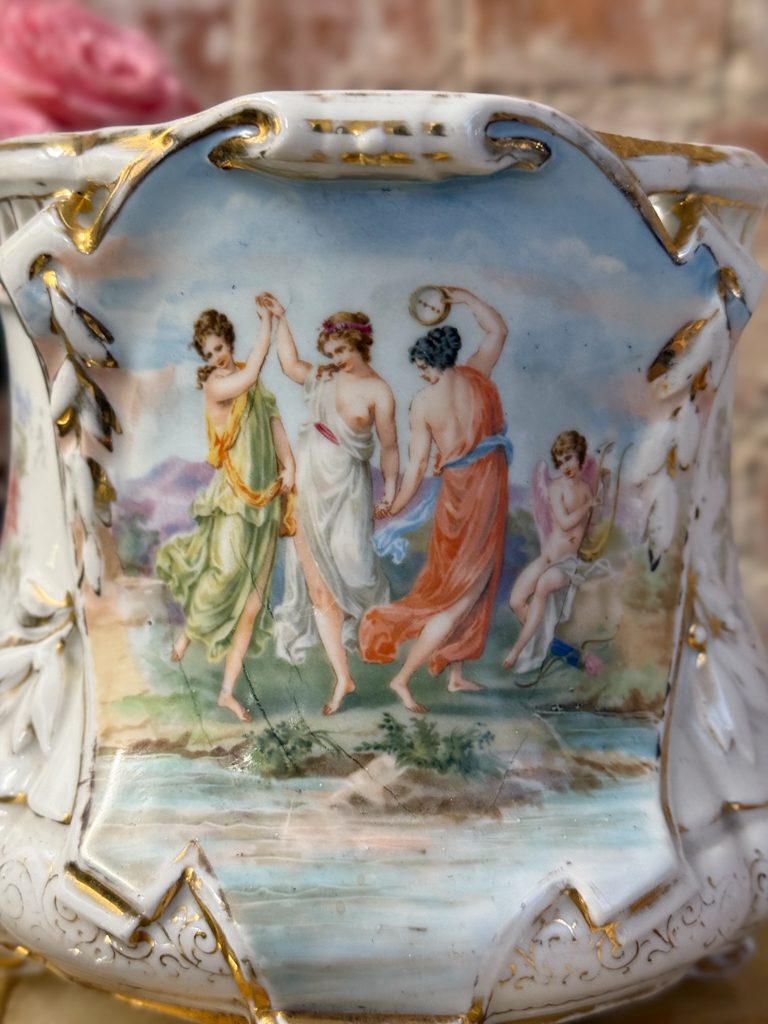
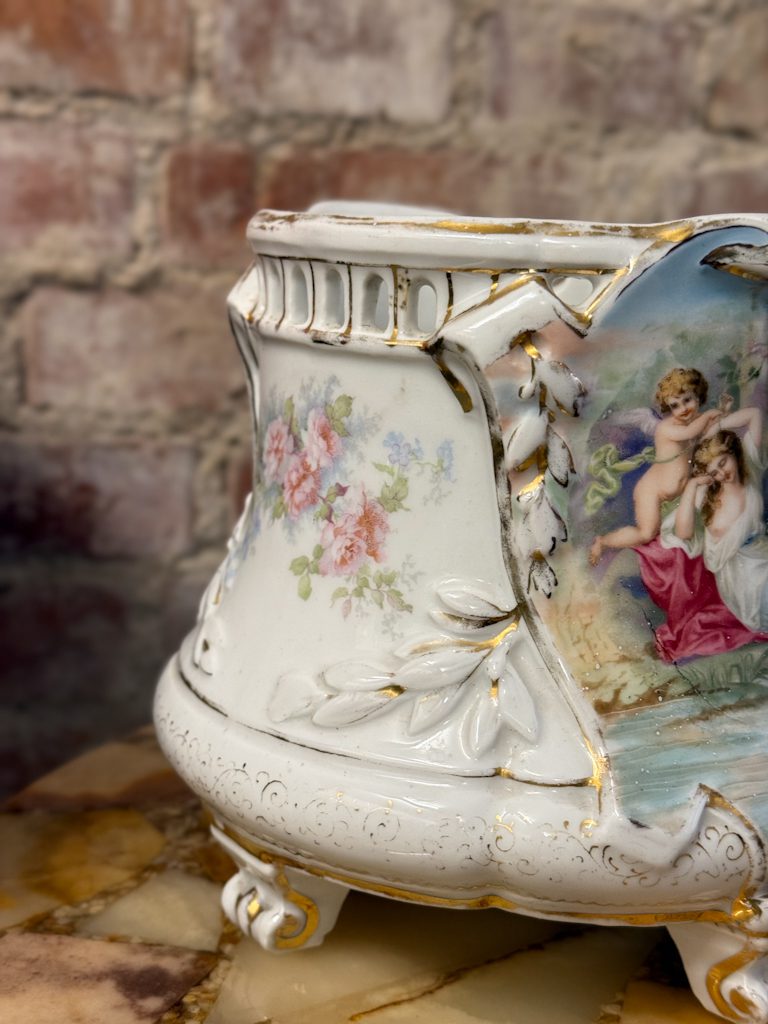
Forma runā skaidru Neorokoko valodu: izliekts, puskurvilinears siluets ar sašaurinājumu vidū un platu augšdaļu, ažūra josla zem malas, četras porcelāna kājiņas ar spirālveida papildinājumiem, reljefās lapu un vīteņu kārtis stūros — viss veidots kā kustīgs, dzīvīgs organisms. Taču gleznojums ir tīrs Klasicisms un antīkā mitoloģija: divas paneļu ainas apstiprina, ka priekšmeta veidotāji apzināti atsaucās uz Eiropas glezniecības lielākajiem tematiem.
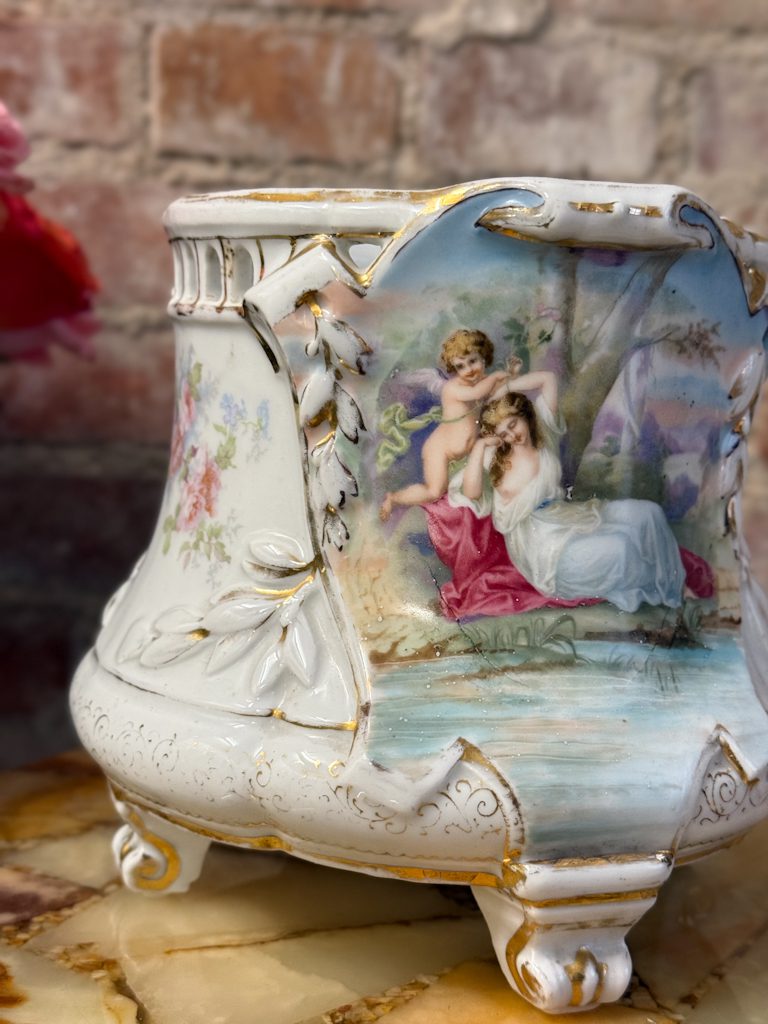
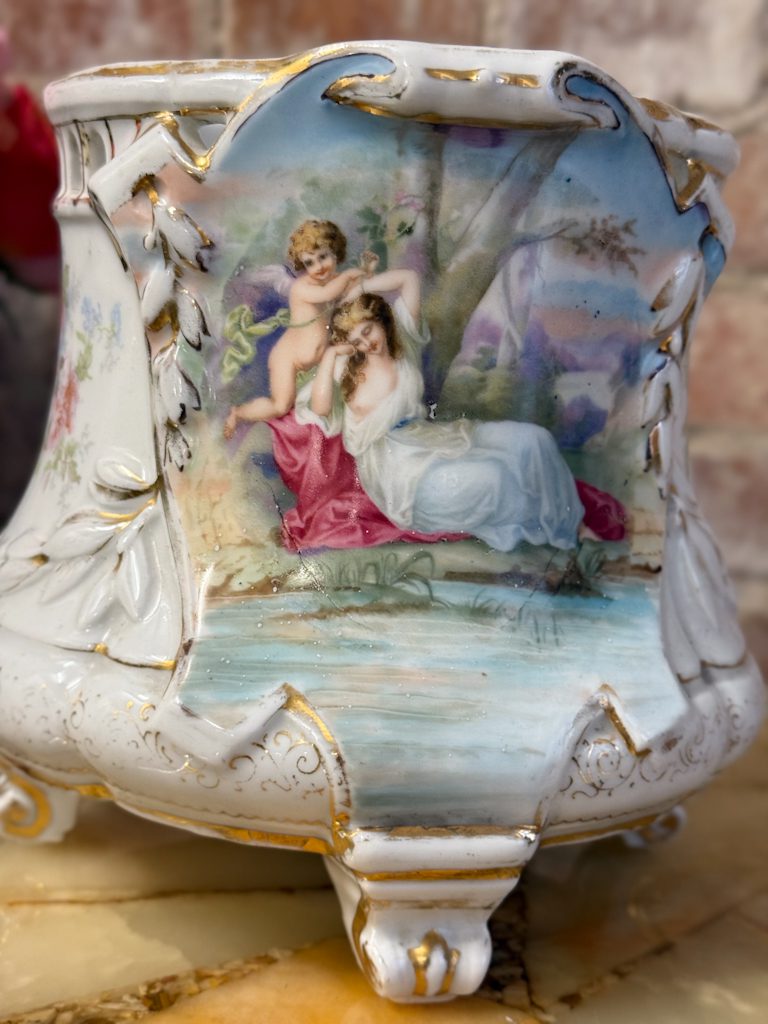
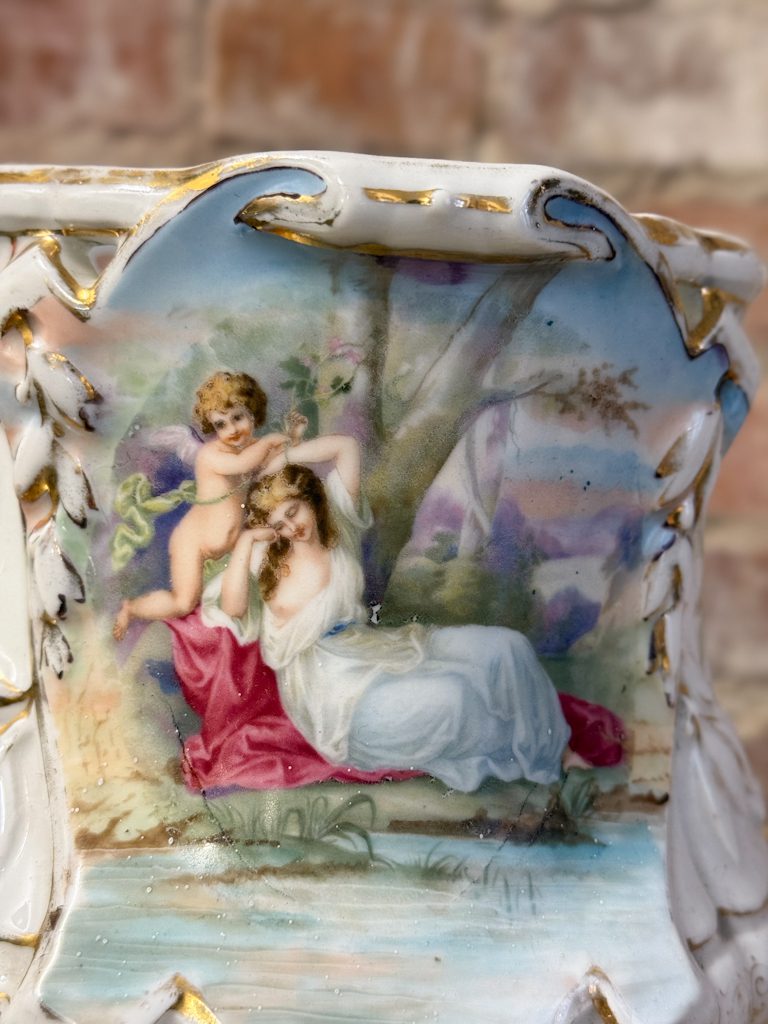
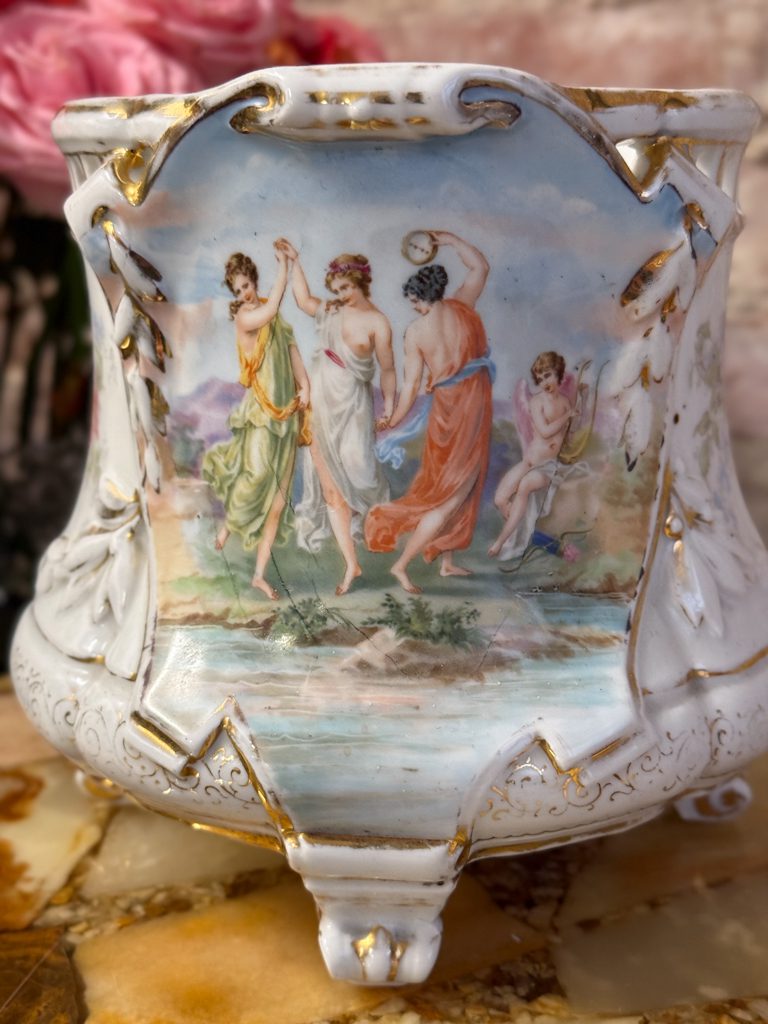
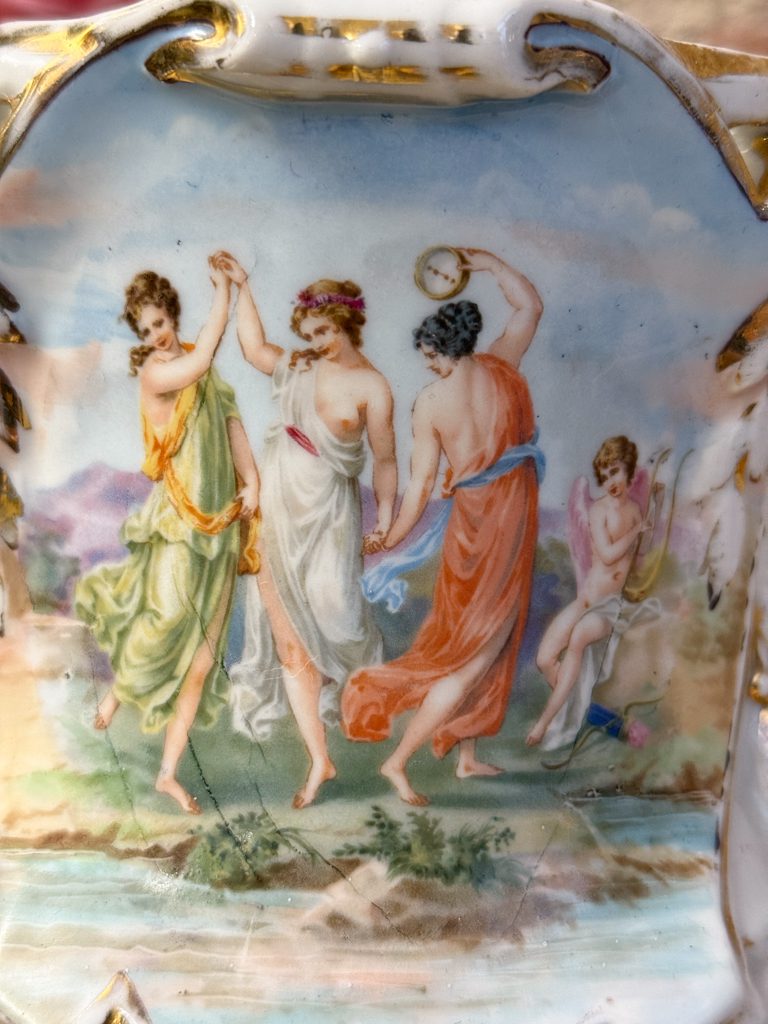
Pirmajā panelī attēlotas Trīs Grācijas — Aglaja, Eifrosina un Talija — dejojošās figūras antīkos drāpējumos, ar Erosu blakus: šis attēls ir tieša atsauce uz Rafaēla, Canovā un Torvaldena slavenajiem darbiem, kas bija Eiropas aristokrātiskās kultūras centrālie simboli. Otrajā panelī — Eros un sieviete pie ūdens romantiskā ainavu fona kontekstā — motīvs, kas atsaucas uz Fragonāra un Bušē 18. gadsimta pastorālajiem gleznojumiem.
―――――――――――――――――――――
⚜️ RAŽOTĀJS UN MANUFAKTŪRAS ZĪMOGS
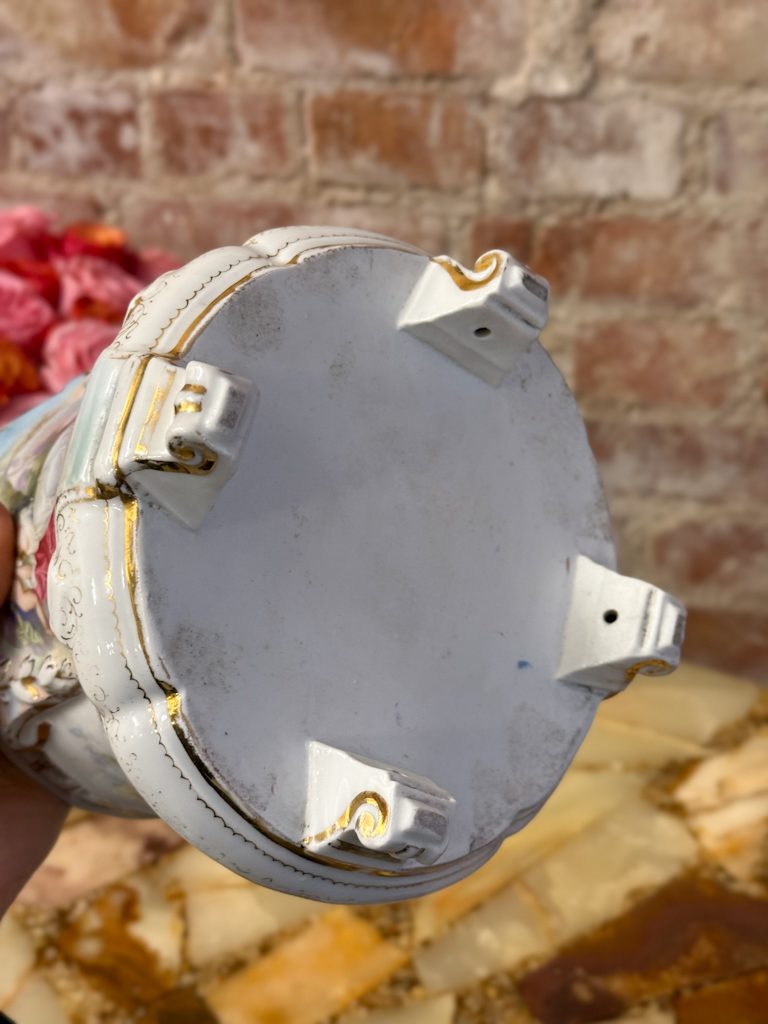
Apakšā nav redzams krāsots ražotāja zīmogs — tikai glazēta balta porcelāna plakne. Kājiņu statīvs ir integrēts — porcelāna, nevis metāla.
Pēc formas rakstura, reljefā apdarinājuma kvalitātes, ažūrās malas, kājiņu veida un mitoloģiskā gleznojuma stila šis kašpo atbilst Vācijas Tīringenes vai Silēzijas manufaktūru Neorokoko produkcijai — reģionam, kurā darbojās desmitkārt vairāk manufaktūru nekā jebkurā citā Eiropas apgabalā. Volkstedt, Kloster Veilsdorf, Schierholz, Elbogen (Čehija/Bohēmija) un Silēzijas manufaktūras šajā periodā masveidā ražoja tieši šāda tipa kašpo ar figurālu mitoloģisku gleznojumu un Neorokoko plastiku — preci, kas tika eksportēta uz Franciju, Angliju, Krieviju, Skandināviju un Baltijas valstīm, piegādājot buržuāzijas un zemākās aristokrātijas salonus visā Eiropā.
Šī tipa prece regulāri parādījās Leipcigas tirdzniecības gadatirgos — galvenajā Eiropas keramikas tirdzniecības platformā 19. gadsimta otrajā pusē — un nonāca ievērojamos iekšzemes un eksporta tirgotājos visā kontinentā.
―――――――――――――――――――――
💎 RETUMS UN NOZĪME
Kašpo ar Trīs Grāciju tēmu ir vizuāli un kulturāli izcils priekšmets — Trīs Grācijas bija vienas no visbiežāk attēlotajām figūrām Eiropas mākslas vēsturē no Antīkas līdz 19. gadsimtam, un to klātbūtne uz porcelāna priekšmeta liecina par apzinātu kultūras kontekstu, nevis tikai dekoratīvu izvēli. Divu dažādu mitoloģisko ainu kombinācija vienā priekšmetā — ar reljefajiem stūru elementiem un ažūro malu — padara šo kašpo par sarežģītāku un neparastāku kolekcionāru eksemplāru nekā tipiskā vienpaneļa prece.
―――――――――――――――――――――
🕯️ PIELIETOJUMS INTERJERĀ, DIZAINĀ UN FOTOGRĀFIJĀ
Šis kašpo ar mitoloģiskiem gleznojumiem organiski iekļaujas klasiskā, eklektiskā un neoklasikas interjerā — grāmatu plauktā blakus klasikai, darba galdā kā rakstāmpiederumu traukā, vai kamīnplaukstā kā kultūrvēsturiskam akcentam. Baltā porcelāna un zelta kombinācija darbojas jebkurā krāsu schemā.
Fotogrāfiem tas ir interesants rekvizīts tieši gleznojuma dēļ — Trīs Grācijas tuvplānā izskatās kā miniatūra freskā.
―――――――――――――――――――――
🎁 DĀVANA UN PERSONALIZĀCIJA
Trīs Grāciju tēma — skaistums, žēlastība un prieks — padara šo kašpo par neparastu un literāri bagātu dāvanu ikvienam, kurš novērtē antīko kultūru, mākslas vēsturi vai klasisko estētiku. Tas ir piemērots kā reprezentatīva dāvana māksliniekam, literātam, akadēmiķim vai kultūras institūcijai — priekšmets, kas nes sev līdzi veselu civilizācijas stāstu.
―――――――――――――――――――――
🔍 STĀVOKLIS
Porcelāns kopumā labā stāvoklī ar laika patinu. Gleznojums abos paneļos saglabājies ar redzamām smalkiem plaisājumiem glazūrā, kas raksturīgi šāda vecuma porcelānam un nemazina priekšmeta estētisko vērtību. Reljefie stūru elementi saglabājušies. Ažūrā mala pilnā komplektā. Kājiņas bez trūkstošām daļām. Zeltījums ar laika nolietojuma pēdām. Nav redzamas restaurācijas.
Lietas stāvoklis pilnībā atspoguļots fotogrāfijās.
―――――――――――――――――――――
🇬🇧 DESCRIPTION IN ENGLISH
Porcelain cachepot with mythological paintings — The Three Graces and an Eros scene — Neo-Rococo / Historicism style, Germany (Thuringia or Silesia), circa 1870–1900.
―――――――――――――――――――――
📐 DIMENSIONS
Height 17.5 cm × width 18 cm. A compact yet sculpturally expressive form with a pronounced vertical dynamic.
―――――――――――――――――――――
🏛️ PERIOD, ARTISTIC STYLE, HISTORICAL CONTEXT
This cachepot is a fine example of German Historicist porcelain — the period during which the European manufactories of the later 19th century returned with full conviction to the beauty of the ancient world and the lightness of Rococo, uniting both in a single object.
The form speaks a clear Neo-Rococo language: a curved, semi-curvilinear silhouette with a waist narrowing and a broad upper section, a pierced gallery rim, four porcelain feet with scrolled additions, and relief leaf and tendril cartouches at the corners — all conceived as a living, dynamic organism. The painted decoration, however, belongs entirely to Classicism and ancient mythology: two panel scenes confirm that the makers consciously referenced the greatest themes of European painting.
The first panel depicts The Three Graces — Aglaea, Euphrosyne, and Thalia — dancing figures in antique drapery, with Eros beside them: a direct reference to the celebrated works of Raphael, Canova, and Thorvaldsen, which were among the central symbols of European aristocratic culture. The second panel shows Eros and a female figure beside water in a romantic landscape — a motif referencing the 18th-century pastoral paintings of Fragonard and Boucher.
―――――――――――――――――――――
⚜️ MAKER AND MARKS
No painted maker’s mark is visible on the base — a clean white glazed porcelain surface. The footed stand is integrated porcelain rather than metal.
Based on the character of the form, the quality of the relief decoration, the pierced rim, the foot type, and the style of the mythological painting, this cachepot is consistent with German Thuringian or Silesian manufactory Neo-Rococo production — a region that housed far more porcelain manufactories than any other area of Europe. Volkstedt, Kloster Veilsdorf, Schierholz, Elbogen (Bohemia), and Silesian producers extensively manufactured precisely this type of cachepot with figural mythological painting and Neo-Rococo sculptural decoration during this period — wares exported to France, England, Russia, Scandinavia, and the Baltic states, supplying the salons of the bourgeoisie and lesser aristocracy across the continent.
This type of production regularly appeared at the Leipzig Trade Fairs — the principal European ceramic trading platform in the second half of the 19th century — reaching significant domestic and export dealers throughout the continent.
―――――――――――――――――――――
💎 RARITY AND SIGNIFICANCE
A cachepot with the Three Graces theme is a visually and culturally distinguished object — the Three Graces were among the most frequently depicted figures in the history of European art from Antiquity through the 19th century, and their presence on a porcelain piece reflects deliberate cultural awareness rather than mere decorative choice. The combination of two distinct mythological scenes in one object — alongside relief corner elements and a pierced rim — makes this cachepot a more complex and unusual collector’s specimen than typical single-panel production.
―――――――――――――――――――――
🕯️ USE IN INTERIORS, DESIGN AND PHOTOGRAPHY
This cachepot with mythological painting integrates naturally into a classical, eclectic, or neoclassical interior — on a bookshelf alongside classical texts, on a writing desk as a container for desk accessories, or on a mantelpiece as a cultural-historical accent. The combination of white porcelain and gold works in any colour scheme.
For photographers, it is a compelling subject precisely for its painting — the Three Graces in close-up resemble a miniature fresco.
―――――――――――――――――――――
🎁 AS A GIFT
The theme of the Three Graces — beauty, grace, and joy — makes this cachepot an unusual and culturally rich gift for anyone who values antiquity, art history, or classical aesthetics. It is suited as a distinguished present for an artist, writer, academic, or cultural institution — a piece that carries an entire story of civilisation within it.
―――――――――――――――――――――
🔍 CONDITION
The porcelain is in overall good condition with age patina. The painted decoration on both panels is preserved with fine crazing of the glaze visible, characteristic of porcelain of this age and not diminishing the object’s aesthetic value. The relief corner elements are intact. The pierced rim is complete. The feet have no missing parts. The gilding shows age wear. No visible restoration.
The condition of the item is fully reflected in the photographs.