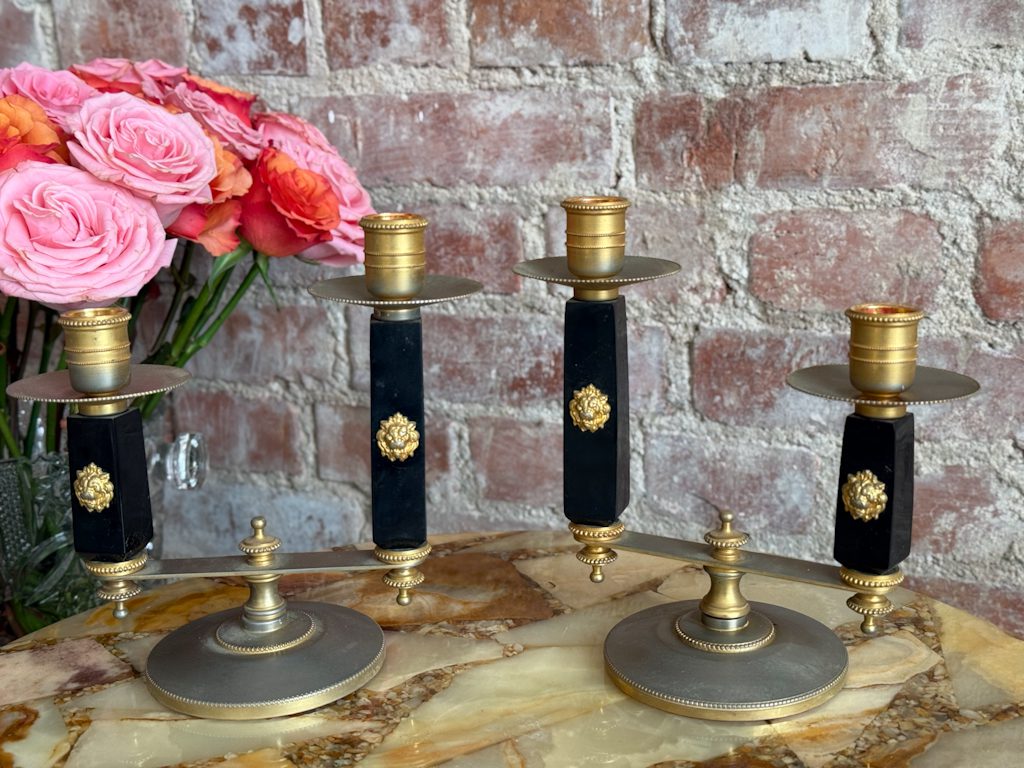
Svečturu Pāris ar Lauvas Galvu Detalizāciju, Neliela Izmēra, Viegli Pēc Svara (5402)


Augstums 19.5cm
Platums 19.5cm
LATVIEŠU VALODĀ
⚜️ Izmēri: augstums 18 cm, platums 26 cm (katrs svečturis atsevišķi). Divu svečturu pāris — regulējami divu sveču turētāji uz kopīgas pamatnes. Materiāls: lieta un patinēta bronza ar melnota metāla (iespējams, melnots misiņš vai lakots tērauds) kolonnu elementiem un bronzas lauvas galvas aplikācijām.
⚜️ Šis svečturu pāris pieder Empire stilam — vienam no viskonsekventāk izstrādātajiem un viegli atpazīstamākajiem Eiropas dekoratīvās mākslas stiliem, kas radās Napoleona I valdīšanas laikā Francijā (1804–1815) un turpināja dominēt visā Eiropā vēl ilgi pēc impērijas sabrukuma. Empire stils bija apzināts politisks un estētisks projekts — tas izmantoja senās Romas un Ēģiptes imperatoru varas simbolus, lai vizuāli leģitimizētu Napoleona varu. Lauvas galva — viens no šī stila centrālajiem motīviem — bija tieša atsauce uz romiešu imperatoru atribūtiem, kā arī uz karaļvaras un spēka simboliku kopumā. Melnota metāla un zeltītas bronzas kontrasts ir tipisks augstākā Empire stila materiālu risinājums, kas atgādina slavenos Parīzes bronzas namu — Thomire, Feuchère, Ravrio — izstrādājumus.
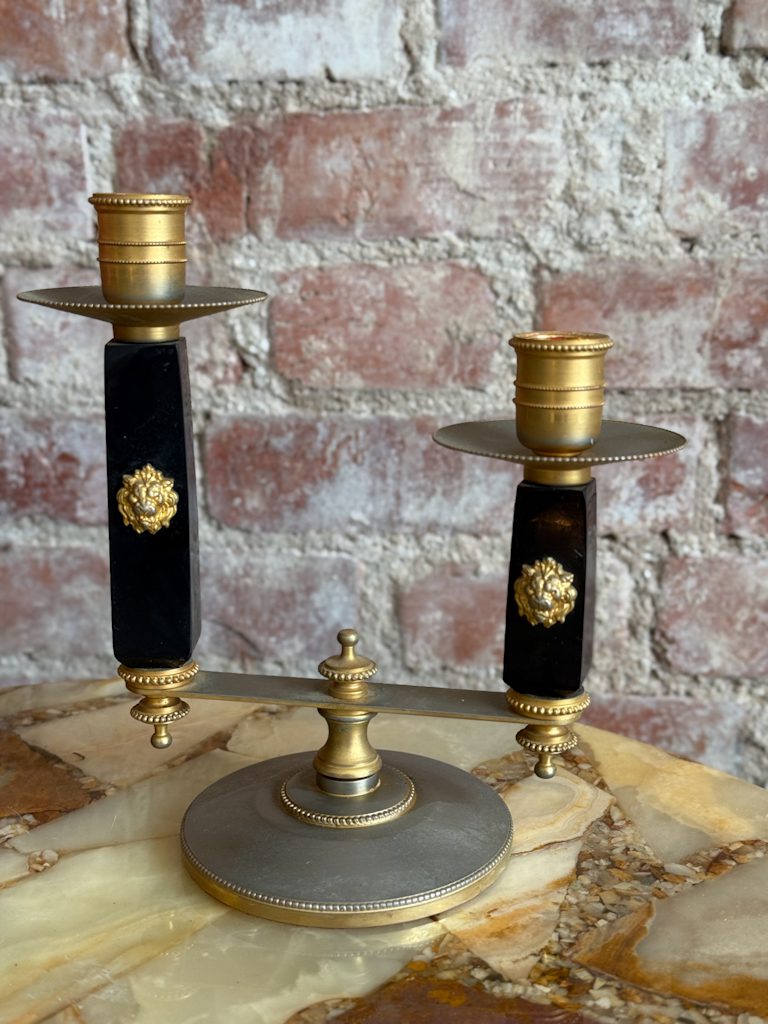
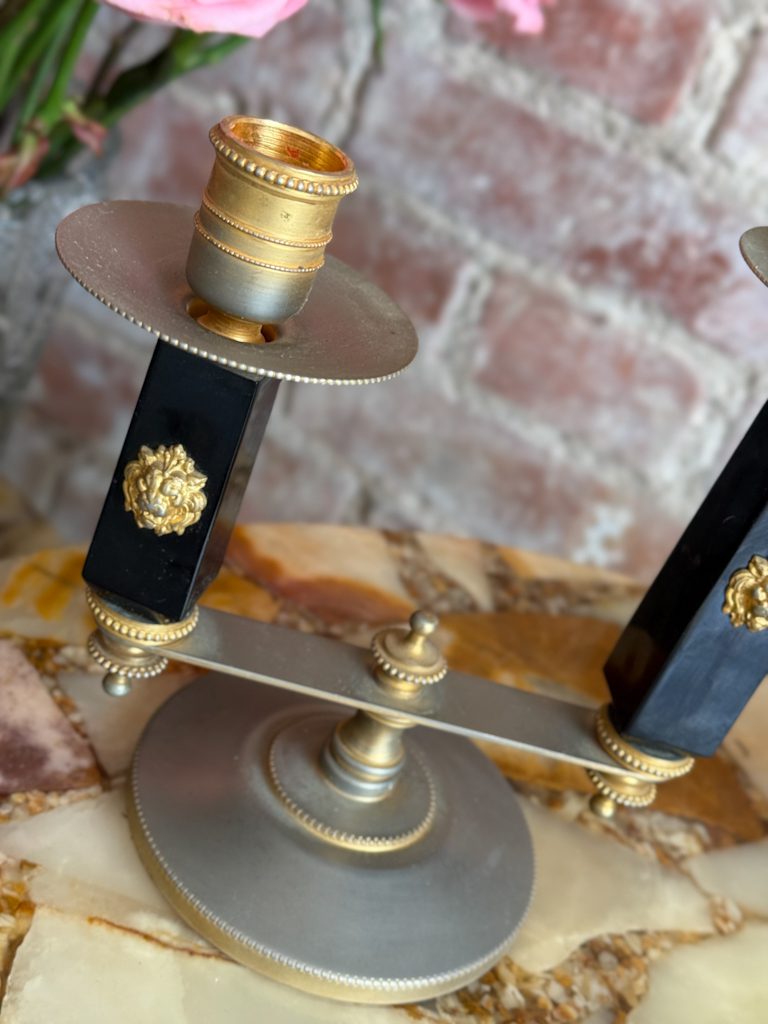
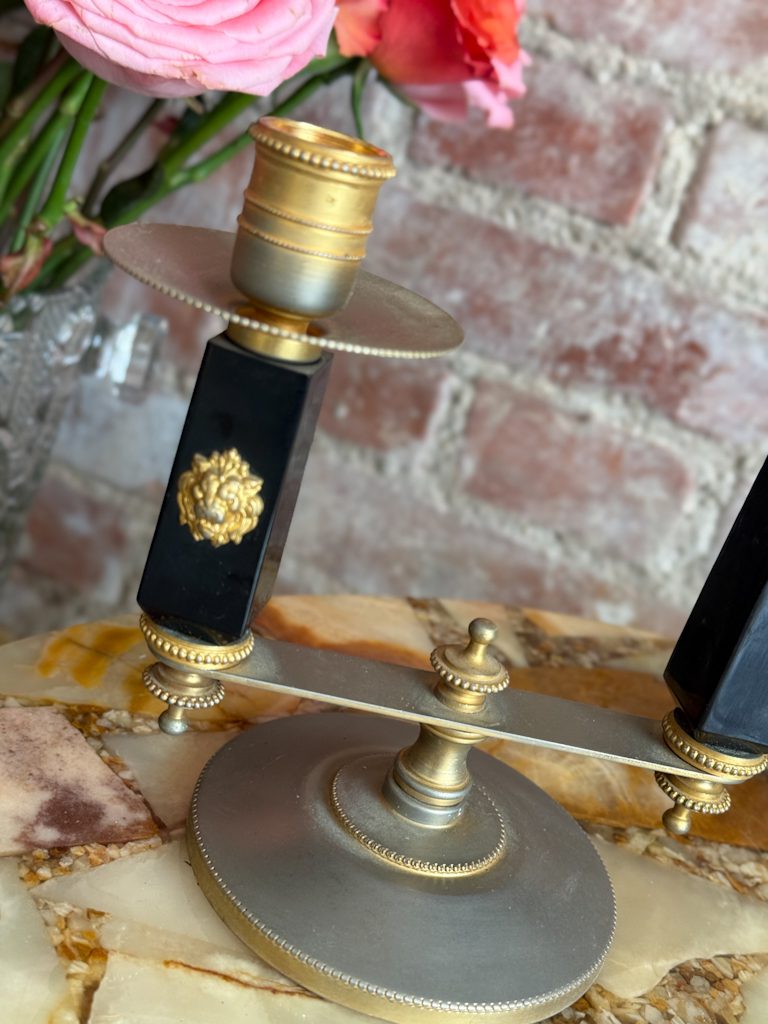
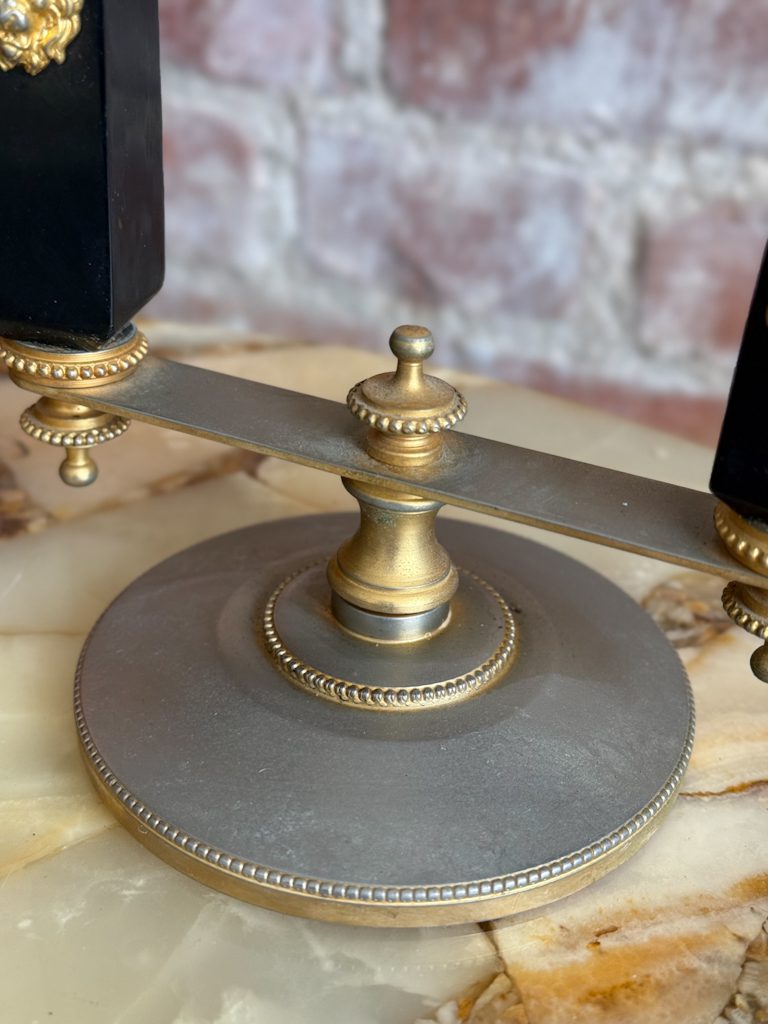
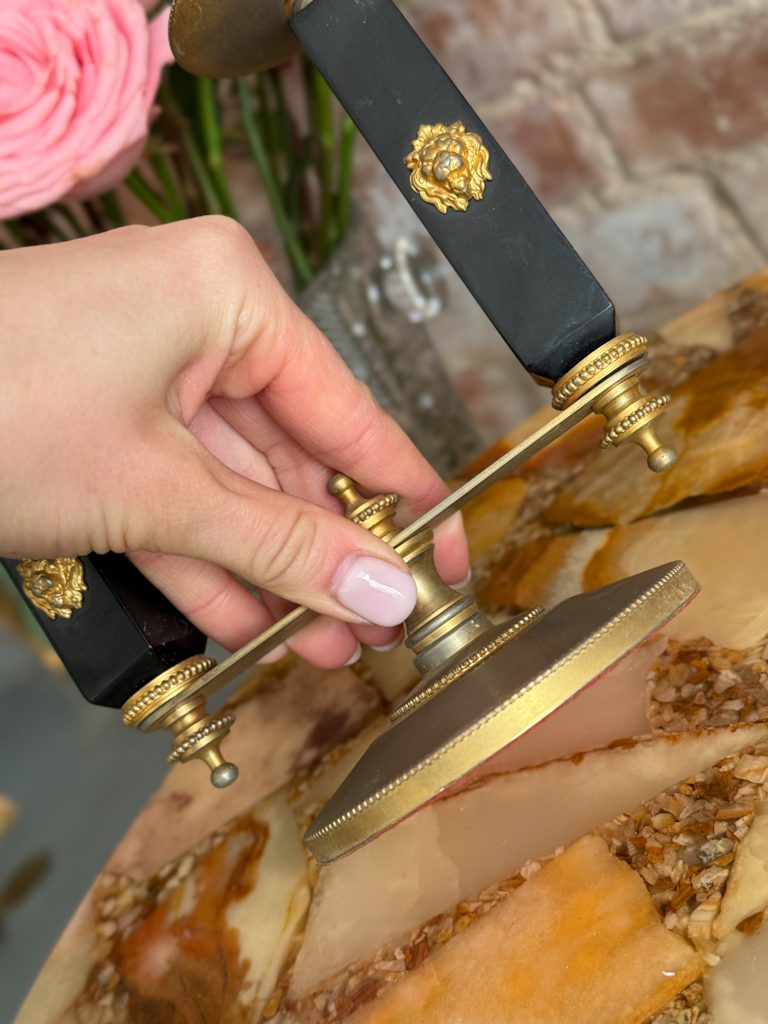
⚜️ Konstruktīvi šie svečturi ir ievērojami ar savu regulējamo mehānismu — horizontālais bronzas stienis, uz kura uzstiprinātie svečtu turētāji var tikt bīdīti tuvāk vai tālāk no centra, mainot attālumu starp svecēm. Šāds regulējamais divu sveču turētāja mehānisms — angliski saukts par “sliding double candlestick” vai “adjustable Empire candlestick” — ir salīdzinoši rets Empire bronzas mākslas elements, kas bija populārs galvenokārt 19. gadsimta pirmajā pusē un parasti saistīts ar lasītāja vai rakstāmgalda svečturiem. Tas piešķir šim pārim papildu praktisko un kolekcionāro interesi.
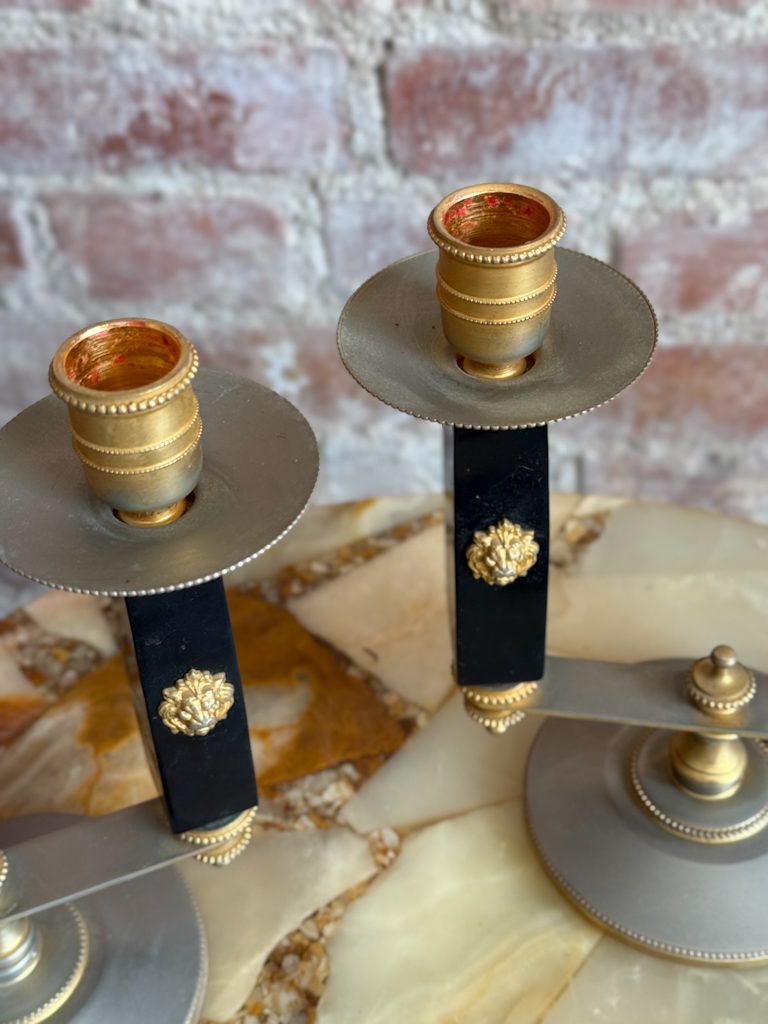
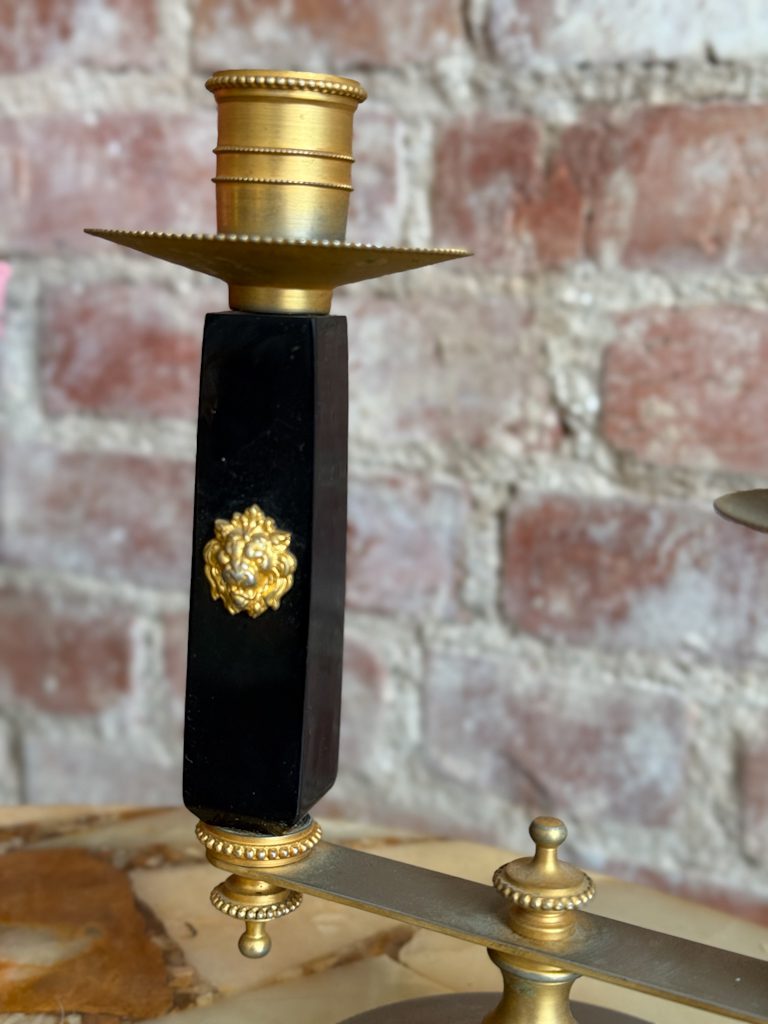
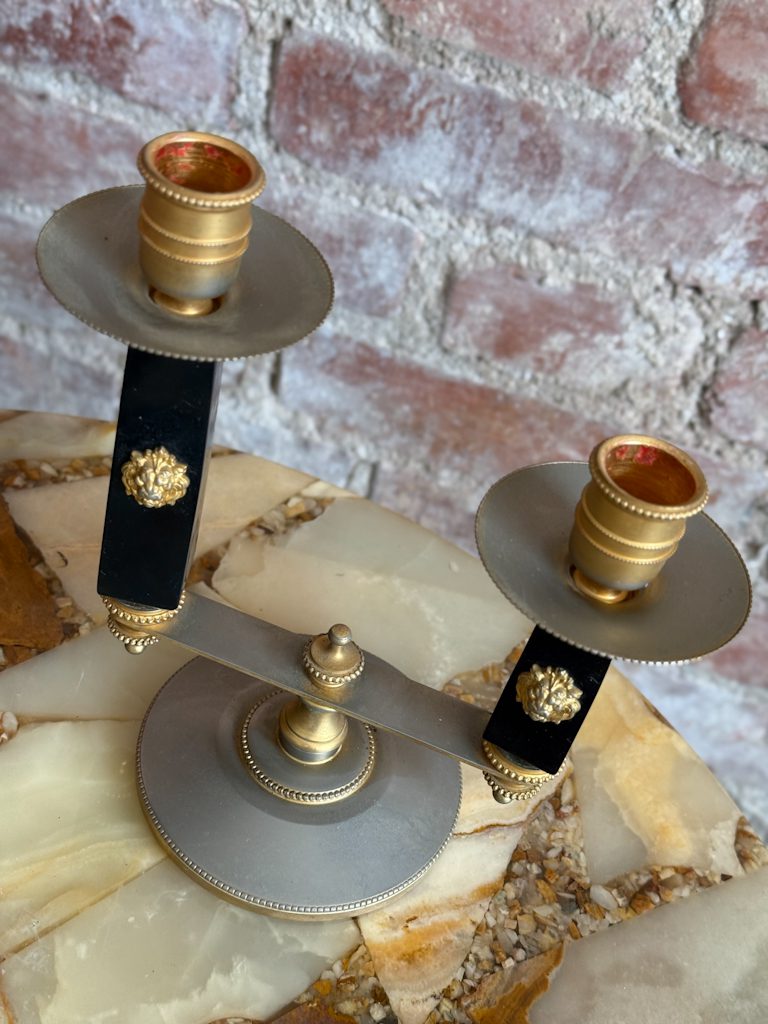
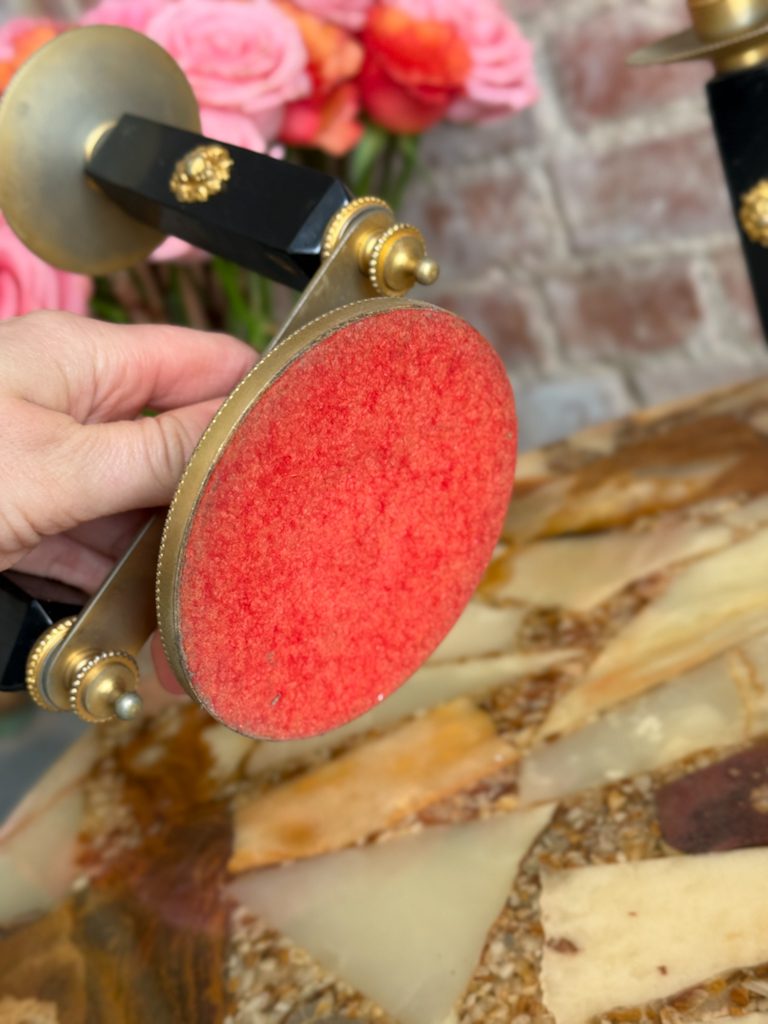
⚜️ Katrs svečturis sastāv no četrskaldņu melnota kolonnas elementa, kura priekšpusē iestiprināta zeltīta bronzas lauvas galvas aplikācija ar detalizētu sejas plastiku. Kolonnu augšdaļu un apakšdaļu rotā pērļotas bronzas apmalītes. Svečtu turētāji veidoti kā rievoti cilindriski kausi ar pērļotu apmalīti un platu metāla dripping šķīvīti. Pamatne ir plakana apaļa bronzas diska forma ar pērļotu apmali, savukārt centrālais balsts ir klasiska vāzes tipa kāta siluets. Pamatnes apakšpuse ir pārklāta ar sarkanu samta audumu, kas aizsargā mēbeles virsmas — tas ir raksturīgs kvalitatīvu Eiropas bronzas izstrādājumu apdares elements.
⚜️ Svečturu pamatnē nav redzams skaidrs ražotāja zīmogs. Pamatnes sarkanais samts ir oriģināls un saglabājies labā stāvoklī, tomēr nepalīdz identificēt ražotāju. Materiālu kvalitāte, konstrukcijas precizitāte un regulējamā mehānisma izstrādātība liecina par augsta līmeņa Eiropas bronzas manufaktūru — visticamāk franču vai beļģu izcelsmes, ražojumu datējot ar 19. gadsimta otro pusi vai 20. gadsimta sākumu. Regulējamie svečturi ar lauvas galvas dekoru ir dokumentēti Francijas Empire perioda bronzas katalogu reprodukcijās, un šādi izstrādājumi reizēm parādās arī Eiropas izsoļu namu piedāvājumos kā Empire vai Restaurācijas perioda galda svečturi.
⚜️ Antikvāru tirgū regulējami divu sveču turētāji ar lauvas galvu dekoru un melnota metāla kolonnu elementiem ir salīdzinoši reti — lielākā daļa Empire svečturu bija fiksētas konstrukcijas. Regulējamā mehānisma klātbūtne padara šo pāri par funkcionāli un kolekcionāri interesantāku objektu. Pāris kā tāds vienmēr tiek vērtēts augstāk nekā atsevišķi eksemplāri, jo komplekts saglabājas kopā reti. Šādi izstrādājumi ir pieprasīti gan klasisku interjeru veidotāju, gan Empire bronzas kolekcionāru vidū.
⚜️ Interjerā svečturu pāris ideāli iekļaujas Empire, Neoklasicisma vai eklektiskā stilā veidotās telpās. Tie ir izcili kā galda svečturi rakstāmgaldā vai bibliotēkā — kam tie, iespējams, sākotnēji arī bija domāti — kā arī kā eleganti akcenti uz kamīna plaukta vai konsoles. Melnota metāla un zeltītas bronzas kontrasts padara tos vizuāli izsmalcinātus un piemērotus arī mūsdienu minimālistiskos vai industriālos interjerus, kur to vēsturiskā forma kļūst par māksliniecisku kontrapunktu. Fotogrāfiem un stilistiem šis pāris ir izcils rekvizīts — to stingrās ģeometriski melnās kolonnas un zeltainās bronzas detaļas rada spēcīgu kontrastu, kas ir ļoti efektīvs gan dabīgā, gan studijas apgaismojumā.
⚜️ Svečturu pāris ir labā antikvārā stāvoklī. Bronzas daļas ir patinētas ar nevienmērīgu zeltīguma toni — daļēji nodiluši, daļēji tumšāki laukumi, kas liecina par patiesu vecumu un lietošanu. Melnoto kolonnu virsmas ir gludas ar nelielu spīdumu, bez būtiskiem skrāpējumiem. Lauvas galvas aplikācijas ir saglabājušās detalizēti un bez bojājumiem. Regulējamais mehānisms darbojas, kaut arī bīdīšana prasa zināmu piepūli — mehānisms ir nedaudz stīvs, kas ir gaidāms vecuma dēļ, bet nav bojāts. Pamatnes sarkanais samts ir oriģināls un saglabājies labā stāvoklī, bez plīsumiem, ar nelielu nolietojumu malās. Svečtu turētāju iekšpusē redzamas vaska pēdas — liecina par aktīvu lietošanu.
Lietas stāvoklis pilnībā ir atspoguļots fotogrāfijās.
ENGLISH
⚜️ Dimensions: height 18 cm, width 26 cm (each candlestick individually). A pair of adjustable two-light candlesticks on a shared base. Material: cast and patinated bronze with blackened metal (likely blackened brass or lacquered steel) column elements and bronze lion’s head appliqués.
⚜️ This pair of candlesticks belongs to the Empire style — one of the most consistently conceived and immediately recognisable movements in European decorative arts, which emerged during the reign of Napoleon I in France (1804–1815) and continued to exert its influence across the continent long after the Empire’s fall. The Empire style was a deliberate political and aesthetic project, drawing on the imperial symbols of ancient Rome and Egypt to visually legitimise Napoleonic authority. The lion’s head — one of the central motifs of this style — was a direct reference to the attributes of Roman emperors, as well as a universal symbol of sovereign power and strength. The contrast between blackened metal and gilded bronze is a characteristic material solution of the highest Empire style, recalling the output of celebrated Parisian bronze houses such as Thomire, Feuchère, and Ravrio.
⚜️ Structurally, these candlesticks are notable for their adjustable mechanism — a horizontal bronze bar on which the candle holders can be slid closer together or further apart, varying the distance between the candles. This type of sliding double candlestick, sometimes called an “adjustable Empire candlestick,” is a comparatively rare element in Empire bronze work, most popular during the first half of the 19th century and typically associated with reading or writing desk candlesticks. This feature lends the pair additional practical and collector interest.
⚜️ Each candlestick consists of a quadrangular blackened column element, on the face of which a gilded bronze lion’s head appliqué is mounted with detailed facial modelling. The upper and lower sections of the columns are edged with beaded bronze borders. The candle cups are formed as fluted cylindrical holders with beaded rims and wide metal drip pans. The base is a flat circular bronze disc with a beaded edge, while the central support takes the form of a classical vase-type column shaft. The underside of the base is covered with red velvet fabric to protect furniture surfaces — a characteristic finishing detail of quality European bronze objects.
⚜️ No clear maker’s stamp is visible on the base. The red velvet on the underside is original and well-preserved, though it does not assist in identifying the manufacturer. The quality of the materials, the precision of the construction, and the refinement of the adjustable mechanism point to a high-level European bronze manufactory — most likely of French or Belgian origin, with the pieces dating to the second half of the 19th century or the early 20th century. Adjustable candlesticks with lion’s head decoration are documented in reproductions of French Empire-period bronze catalogues, and objects of this type occasionally appear in European auction house offerings as Empire or Restoration period desk candlesticks.
⚜️ In the antiques market, adjustable two-light candlesticks with lion’s head decoration and blackened metal column elements are comparatively rare — the majority of Empire candlesticks were of fixed construction. The presence of the adjustable mechanism makes this pair functionally and collectably more interesting. As a matched pair, they are always valued more highly than individual examples, as complete sets are rarely preserved together. Objects of this type are sought after by both classical interior specialists and collectors of Empire bronze.
⚜️ In an interior context, the pair integrates beautifully into Empire, Neoclassical, or eclectically styled spaces. They are outstanding as desk or library candlesticks — for which purpose they were most likely originally intended — as well as elegant accents on a mantelpiece or console. The contrast of blackened metal and gilded bronze also makes them visually sophisticated in contemporary minimalist or industrial interiors, where their historical form becomes an artistic counterpoint. For photographers and stylists, this pair is an exceptional prop — the strict geometric black columns and golden bronze details create a strong visual contrast that reads powerfully in both natural and studio light.
⚜️ The pair is in good antique condition appropriate to their age. The bronze components carry an uneven patina with partially worn gilding and darker areas consistent with genuine age and use. The surfaces of the blackened columns are smooth with a slight sheen and no significant scratching. The lion’s head appliqués are preserved in full detail without damage. The adjustable mechanism functions, though sliding requires some effort — the mechanism is slightly stiff as expected with age, but is not damaged. The red velvet on the base underside is original and in good condition with minor wear at the edges. The interior of the candle cups shows traces of wax, indicating active past use.
The condition of the item is fully reflected in the photographs.