
Stūra Kumode ar Lauvu Atlantiem un Porcelāna Medaljonu — Ets de Gorart, Gente, Beļģija, 19.gs. (5188)













Stūra Kumode ar Lauvu Atlantiem un Porcelāna Medaljonu — Ets de Gorart, Gente, Beļģija, 19.gs. (5188)
€3,500.00
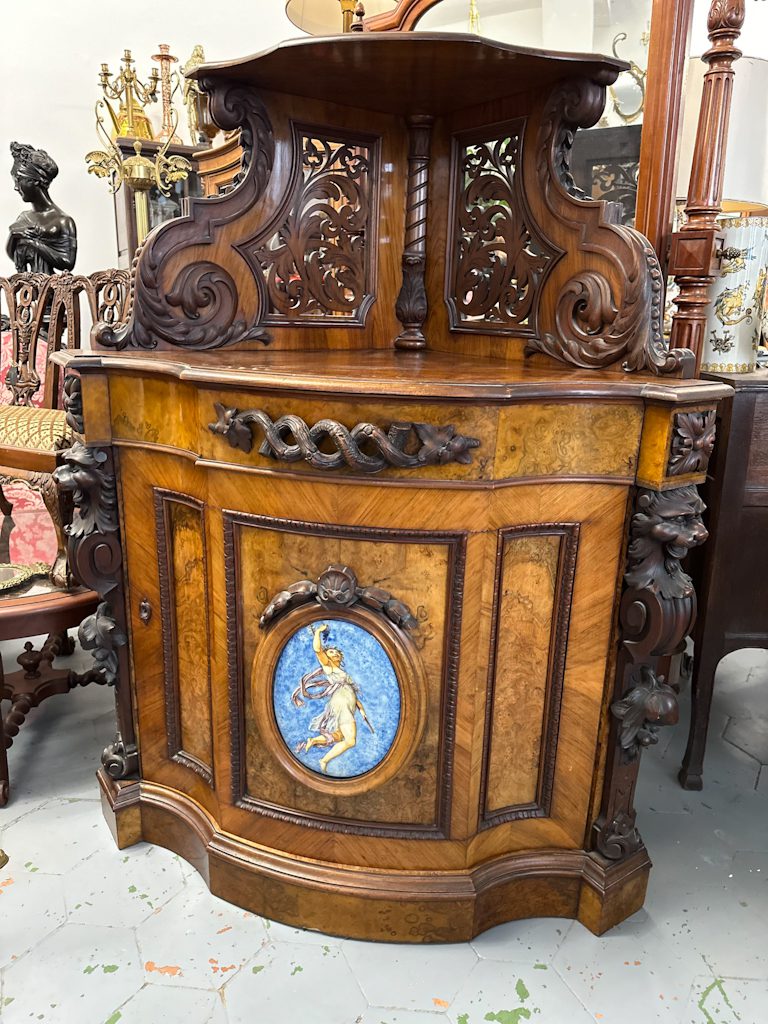
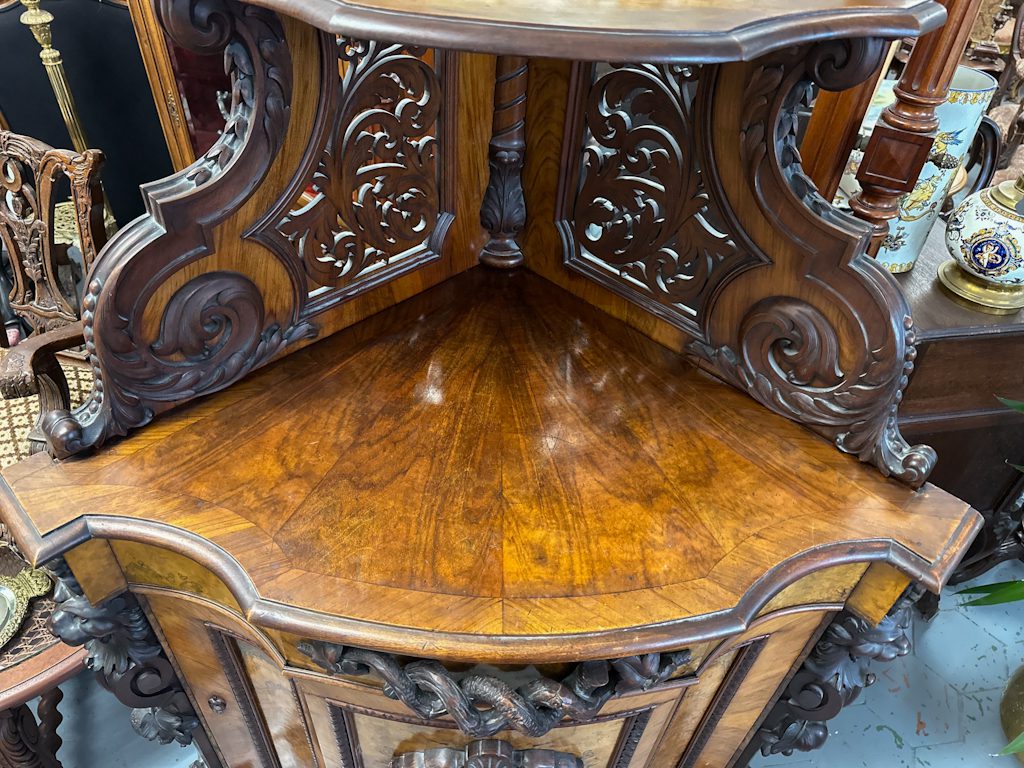
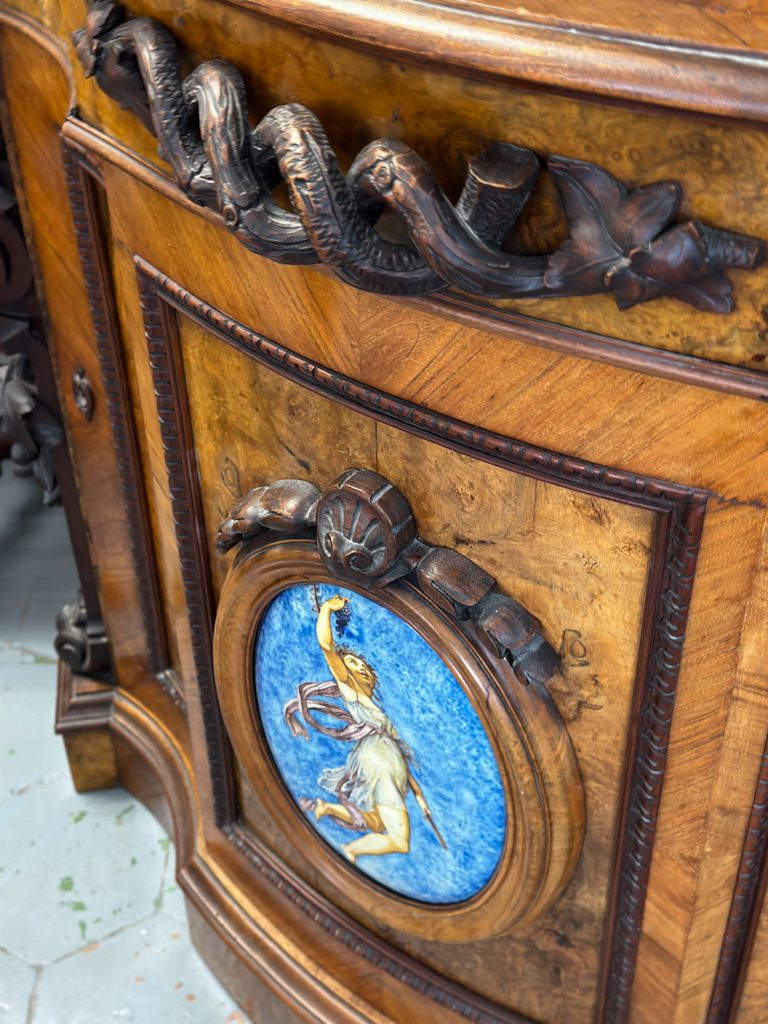
Unikāla stūra kumode rieksta burla furnierā ar porcelāna medaljonu (Bakhante), vīnogu zaru frīzi, lauvu atlantiem un caurgrieztu augšējo plauktu. Ražotāja zīmogs: Ets de Gorart, Gente. Beļģija, ap 1870.–1890. Augstums 142 cm × platums 111 cm × dziļums 80 cm.
📐 IZMĒRI Augstums 142 cm × platums 111 cm × dziļums 80 cm.
―――――――――――――――――――――
Stūra Kumode ar Lauvu Atlantiem un Porcelāna Medaljonu — Neobaroks / Historizisms, Belle Époque, Ets de Gorart, Gente, Beļģija, ap 1870.–1890.
―――――――――――――――――――――
🏛️ IZGATAVOŠANAS PERIODS, MĀKSLAS STILS, LAIKMETS
Šis priekšmets pieder Belle Époque — “Skaistā Laikmeta” — izcilākajiem radošajiem gadiem, kas aizsākās 1871. gadā un turpinājās līdz 1914. gadam. Mākslinieciskais stils ir Neobaroks — viens no Historizisma spilgtākajiem virzieniem, kurā 19. gadsimta beļģiskie meistari interpretēja 17. gadsimta baroka dekoratīvo ekstāzi ar jaunu tehnoloģisku precizitāti un industriālā laikmeta pašapziņu.
Šis priekšmets pieder tam brīdim, kad Historizisms savā barokiālā bagātībā sasniedza zenītu, bet Jūgendstils jau klauvēja pie durvīm — forma vēl ir arhitektoniska un simetriska, bet lauvu atlanti sānu stūros, vīnogu zaru pampres frīze un caurgrieztie ajouré paneļi jau ienes to orgānisko, vijošos kustību, kas drīz kļūs par Art Nouveau valodu. Abas estētikas šeit sadzīvo vienā objektā ar retu harmoniju.
Burr walnut — rieksta burl furnieris — ar tā hipnotiskajiem apļveida tekstūras rakstiem bija Belle Époque prestižākais dekoratīvais koksnes materiāls Beļģijā un Francijā. Katrs panelis šajā kumodes korpusā ir kā abstrakta glezniecība: neviens neatkārtojas, katrs ir dabas unikāls darbs.
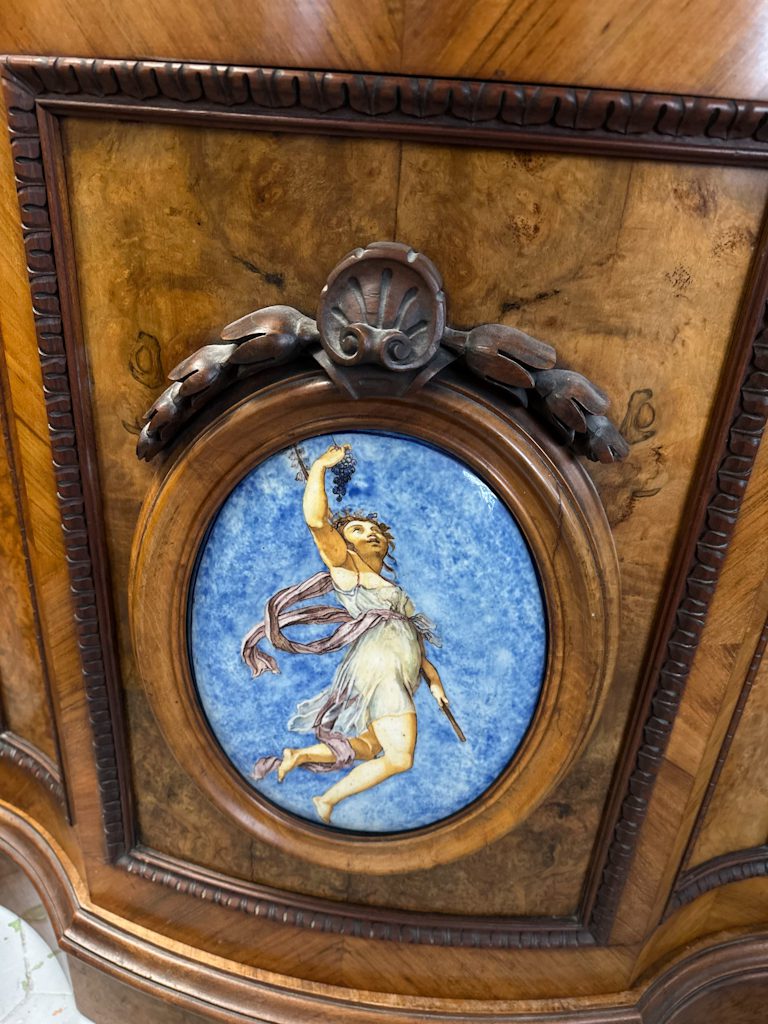
Henrijs de Tulūz-Lotreķs 1888. gadā ieradās Parīzē un sāka zīmēt Monmartra kabareju dejotājas — tieši tādas vieglās, rotaļīgās figūras kā šī porcelāna medaljona Bakhante, kas ar vīnogu ķekari rokā lec pāri kobalta zilajam laukam. Māksla un mēbele tajā laikā runāja vienu valodu — un abas to darīja ar lielu drosmi.
―――――――――――――――――――――
⚜️ RAŽOTĀJS UN MANUFAKTŪRAS ZĪMOGS
Uz aizmugures saglabājies oriģinālais bronzas ovālais zīmogs ar tekstu: “Ets DE GORART / FABR DE MEUBLES / BREVETÉ / GAND”.
Établissements De Gorart — mēbeļu manufaktūra Gentē (Gand franciski), Beļģija. Apzīmējums breveté — “patentēts” — norāda, ka manufaktūra bija reģistrēta un aizsargāta ar patenta tiesībām, kas 19. gadsimtā bija augstākais kvalitātes un oriģinalitātes apliecinājums.
Gente 19. gadsimta otrajā pusē bija viens no Beļģijas svarīgākajiem rūpniecības un mākslas centriem. Pilsēta, kurā saplūda flamandu amatniecības tradīcija ar industriālā laikmeta jaunajām iespējām, radīja virkni augstākās klases mēbeļu manufaktūru, kuras eksportēja savus darbus uz Parīzi, Londonu un Briseli. De Gorart ražotnes izstrādājumi bija pazīstami ar precīzu furniera griešanu, augstākās klases koksnes materiālu izmantošanu un dekoratīvo elementu — porcelāna, bronzas, kokgriezumu — māksliniecisko integrāciju.
Ražotāja zīmoga saglabāšanās oriģinālajā bronzas plāksnītē ir ārkārtīgi reta — lielākajā daļā mēbeļu tādi zīmogi ir vai nu nozuduši, vai bojāti. Tas šo gabalu padara par dokumentētu, izsekojamu Beļģijas mēbeļu vēstures liecinieku.
―――――――――――――――――――――
💎 RETUMS UN NOZĪME
Šis ir viens no retākajiem gabaltiem, ar kādiem var saskarties antikvāru pasaulē. Trīs apstākļi kopā padara to par muzeālu vienību.
Pirmkārt — forma: stūra kumode (encoignure) ar divstāvu konstrukciju un caurgrieztu augšējo plauktu ir ārkārtīgi rets formāts, kas tika izgatavots pēc pasūtījuma konkrētai telpai un konkrētam klientam.
Otrkārt — porcelāna medaljons: roku gleznots ovāls plaque ar mitoloģisku Bakhantes figūru uz kobalta zilā fona — Sèvres manierē izpildīts, ar augstu māksliniecisko vērtību kā patstāvīgs darbs. Ikonogrāfiskā programma ir apzināta un vienota: Bakhante ar vīnogu ķekari medaljonā, vīnogu zaru pampres frīze ap korpusu — viss runā vienu valodu.
Treškārt — dokumentēts ražotājs: oriģinālais De Gorart / Gand bronzas zīmogs, kas pārvērš šo gabalu par izsekojamu vēstures liecinieku un kolekcionāru tirgū piešķir tam papildu autentiskuma dimensiju.
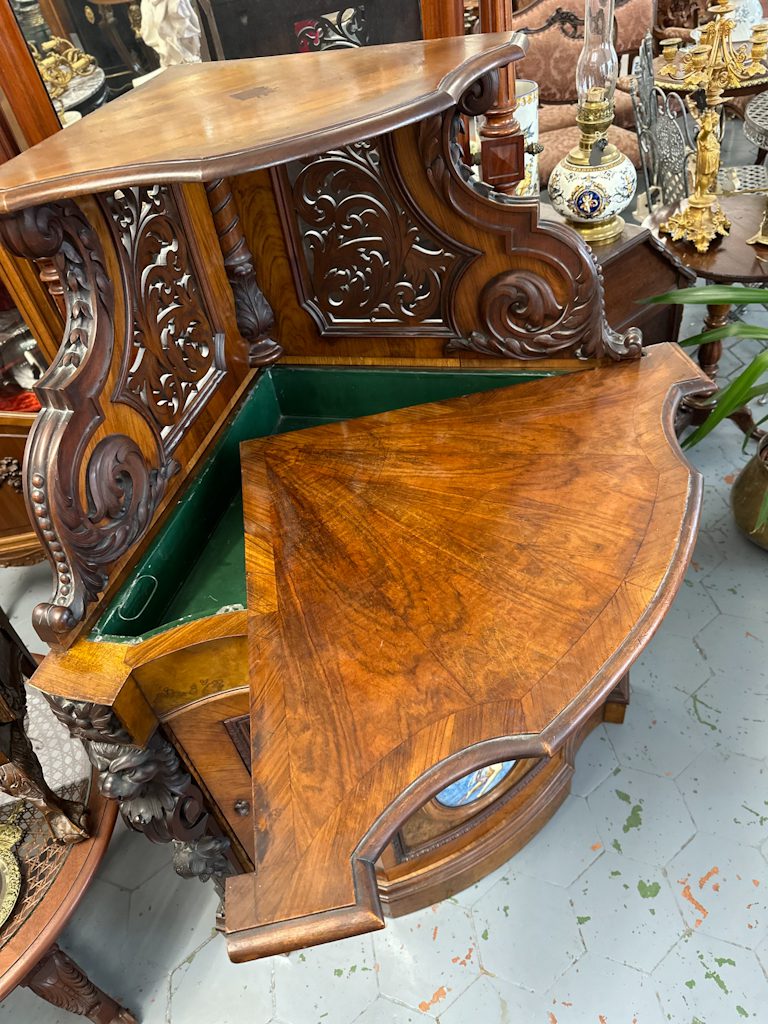
Lauvu atlanti sānu stūros, ajouré paneļi augšdaļā, augšējā jardinière sekcija ar ūdensnecaurlaidīgu zaļo apdarinājumu — katrs elements ir individuāls mākslas darbs, kas kopā veido vienotu, pārsteidzošu veselumu.
―――――――――――――――――――――
🕯️ PIELIETOJUMS INTERJERĀ, DIZAINĀ UN FOTOGRĀFIJĀ
Stūra kumode ir telpas arhitektoniskais risinājums un dekoratīvs akcents vienlaikus — tā aizpilda stūri tā, kā neviens cits gabals to nevar. Šī konkrētā kumode ar savu augstumu un dekoratīvo bagātību prasa telpu ar augstiem griestiem, kur tā var runāt pilnā balsī.
Augšējā atklātā jardinière sekcija ar zaļo iekšpusi — paredzēta puķu podu novietošanai — piešķir priekšmetam dzīvu, organisku dimensiju. Interjera dizaineri izmanto šādu gabalu kā telpas stūra definētāju — brīdī, kad tā ir novietota, telpa iegūst savu karakteru.
Fotogrāfiem un set design speciālistiem burr walnut furnieris ar tā hipnotisko tekstūru un porcelāna medaljona kobaltzilajai krāsai ir ideāls fons stāstu un modes fotografēšanai.
―――――――――――――――――――――
🎁 DĀVANA UN PERSONALIZĀCIJA
Bakhante — Bakha pavadone, vīna un prieka dievietes tēls — padara šo gabalu par simboliski bagātu dāvanu ikvienam, kurš novērtē vīna kultūru, senās Grieķijas un Romas mitoloģiju vai vienkārši māksliniecisko drosmi. Vīnogu zaru frīze un Bakhantes medaljons kopā veido vienotu ikonogrāfisko programmu, kas šo kumodi padara par ideālu dāvanu vīna kolekcionāram vai vīndārzam. Kā reprezentatīva korporatīva vai diplomātiska dāvana — augstākajā līmenī, neatkārtojama.
―――――――――――――――――――――
🔍 STĀVOKLIS
Labs vispārējais stāvoklis priekšmetam šāda vecuma un sarežģītības mēbelei. Burr walnut furnieris saglabājies labi — redzama dabīga vecuma patina, atsevišķas nelielas plaisas furnierā, kas raksturīgas šāda vecuma priekšmetiem un apliecina autentiskumu. Porcelāna medaljons bez redzamiem bojājumiem — glazūra un gleznojums skaidri. Augšējā jardinière sekcijas zaļais ūdensnecaurlaidīgais apdarinājums ar laika nolietojuma pēdām. Bronzas zīmogs oriģināls un labi saglabājies. Kokgriezumu detaļas — lauvu atlanti, vīnogu zaru frīze, ajouré paneļi — pilnā integritātē.
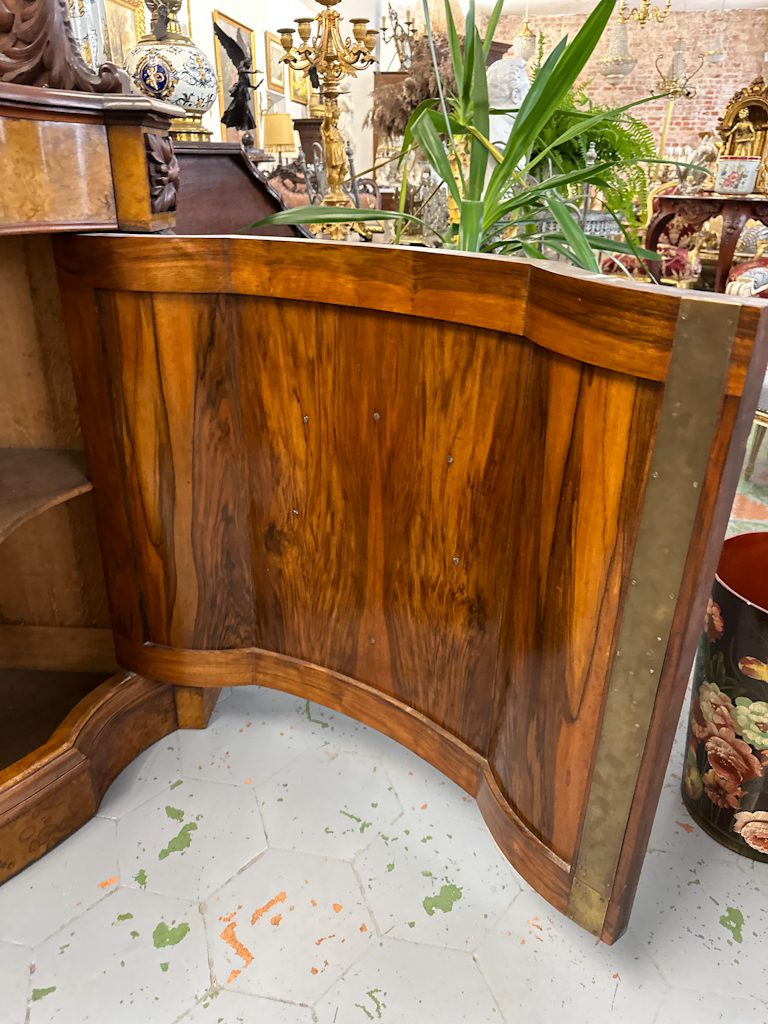
Lietas stāvoklis pilnībā atspoguļots fotogrāfijās.
―――――――――――――――――――――
🇬🇧 DESCRIPTION IN ENGLISH
📐 DIMENSIONS Height 142 cm × width 111 cm × depth 80 cm.
―――――――――――――――――――――
Corner Cabinet with Lion Atlantes and Porcelain Bacchante Medallion — Neo-Baroque / Historicism, Belle Époque, Ets de Gorart, Ghent, Belgium, circa 1870–1890.
―――――――――――――――――――――
🏛️ PERIOD, ARTISTIC STYLE, ERA
This piece belongs to the most creative years of the Belle Époque — the “Beautiful Era” from 1871 to 1914 — during which Belgium produced some of the most inventive furniture in Europe. The artistic style is Neo-Baroque — one of the most vivid currents within Historicism — in which 19th-century Belgian craftsmen reinterpreted the decorative exuberance of 17th-century Baroque with new technical precision and the confidence of the industrial age.
This piece belongs to that transitional moment when Historicism had reached its Baroque zenith, but Art Nouveau was already knocking at the door. The form is still architectural and symmetrical, yet the lion atlantes at the corners, the grapevine pampres frieze, and the ajouré fretwork panels already carry that organic, flowing movement that would soon become the language of Art Nouveau. Both aesthetics coexist here with rare harmony.
Burr walnut — with its hypnotic circular grain patterns — was the most prestigious decorative wood veneer in Belgium and France during the Belle Époque. Every panel on this cabinet’s body is like abstract painting: none repeats, each is a unique work of nature.
Henri de Toulouse-Lautrec arrived in Paris in 1888 and began drawing the dancing girls of Montmartre — figures of precisely the same lightness and playfulness as the Bacchante on this porcelain medallion, leaping across a cobalt blue ground with a bunch of grapes raised aloft. Art and furniture spoke the same language then — and both did so with great boldness.
―――――――――――――――――――――
⚜️ MAKER AND MARKS
On the reverse, the original oval bronze maker’s plaque reads: “Ets DE GORART / FABR DE MEUBLES / BREVETÉ / GAND”.
Établissements De Gorart — furniture manufacturers in Ghent (Gand in French), Belgium. The designation breveté — “patented” — indicates that the manufactory held registered patent protection, which in the 19th century was the highest certificate of quality and originality a furniture maker could hold.
Ghent in the second half of the 19th century was one of Belgium‘s most important industrial and artistic centres. The city, where the Flemish craft tradition merged with the new possibilities of the industrial age, produced a series of premier furniture workshops exporting their work to Paris, London, and Brussels. De Gorart‘s production was known for its precise veneer cutting, use of the finest wood materials, and the artistic integration of decorative elements — porcelain, bronze, woodcarving — into a coherent whole.
The survival of the original bronze maker’s plaque is exceptionally rare — on most furniture such marks have been lost or damaged. It makes this piece a documented, traceable witness to Belgian furniture history.
―――――――――――――――――――――
💎 RARITY AND SIGNIFICANCE
This is one of the rarest pieces one can encounter in the antiques world. Three circumstances together make it a museum-grade object.
First — the form: a corner cabinet (encoignure) with a two-tier construction and an open fretwork upper shelf is an extremely rare format, made to order for a specific room and a specific client.
Second — the porcelain medallion: a hand-painted oval plaque with a mythological Bacchante figure on a cobalt blue ground — executed in the Sèvres manner, with high artistic value as an independent work of art. The iconographic programme is deliberate and unified: the Bacchante with her bunch of grapes in the medallion, the grapevine pampres frieze encircling the body — everything speaks one language.
Third — the documented maker: the original De Gorart / Gand bronze plaque transforms this piece into a traceable historical document, adding an additional dimension of authenticity that the collector’s market values exceptionally highly.
The lion atlantes at the side corners, the ajouré fretwork panels above, the upper jardinière section with its waterproof green lining — each element is an individual work of art, composing together a unified, astonishing whole.
―――――――――――――――――――――
🕯️ INTERIOR, DESIGN AND PHOTOGRAPHY USE
A corner cabinet is simultaneously an architectural solution and a decorative accent — it fills a corner in a way no other piece can. This particular cabinet, with its height and decorative richness, calls for a room with high ceilings where it can speak at full volume.
The open upper jardinière section with its green waterproof lining — designed for potted plants — gives the piece a living, organic dimension. Interior designers use such a piece as a corner-defining element — the moment it is placed, the room acquires its character.
For photographers and set designers, the burr walnut veneer with its hypnotic texture and the cobalt blue of the porcelain medallion form an ideal backdrop for narrative and fashion photography.
―――――――――――――――――――――
🎁 AS A GIFT
The Bacchante — companion of Bacchus, figure of wine and joy — makes this piece a symbolically rich gift for anyone who appreciates wine culture, Greco-Roman mythology, or simply artistic boldness. The grapevine frieze and the Bacchante medallion together form a unified iconographic programme, making this cabinet an ideal gift for a wine collector or estate. As a corporate or diplomatic gift it is of the highest representative calibre — unrepeatable.
―――――――――――――――――――――
🔍 CONDITION
Good overall condition for a piece of this age and complexity. The burr walnut veneer is well preserved — natural age patina visible, with some minor veneer hairline cracks characteristic of pieces of this age, confirming authenticity. The porcelain medallion without visible damage — glaze and painting clear. The green waterproof lining of the upper jardinière section shows age-related wear. The bronze maker’s plaque original and well preserved. All carved details — lion atlantes, grapevine frieze, ajouré panels — in full integrity.
The condition of the piece is fully reflected in the photographs.