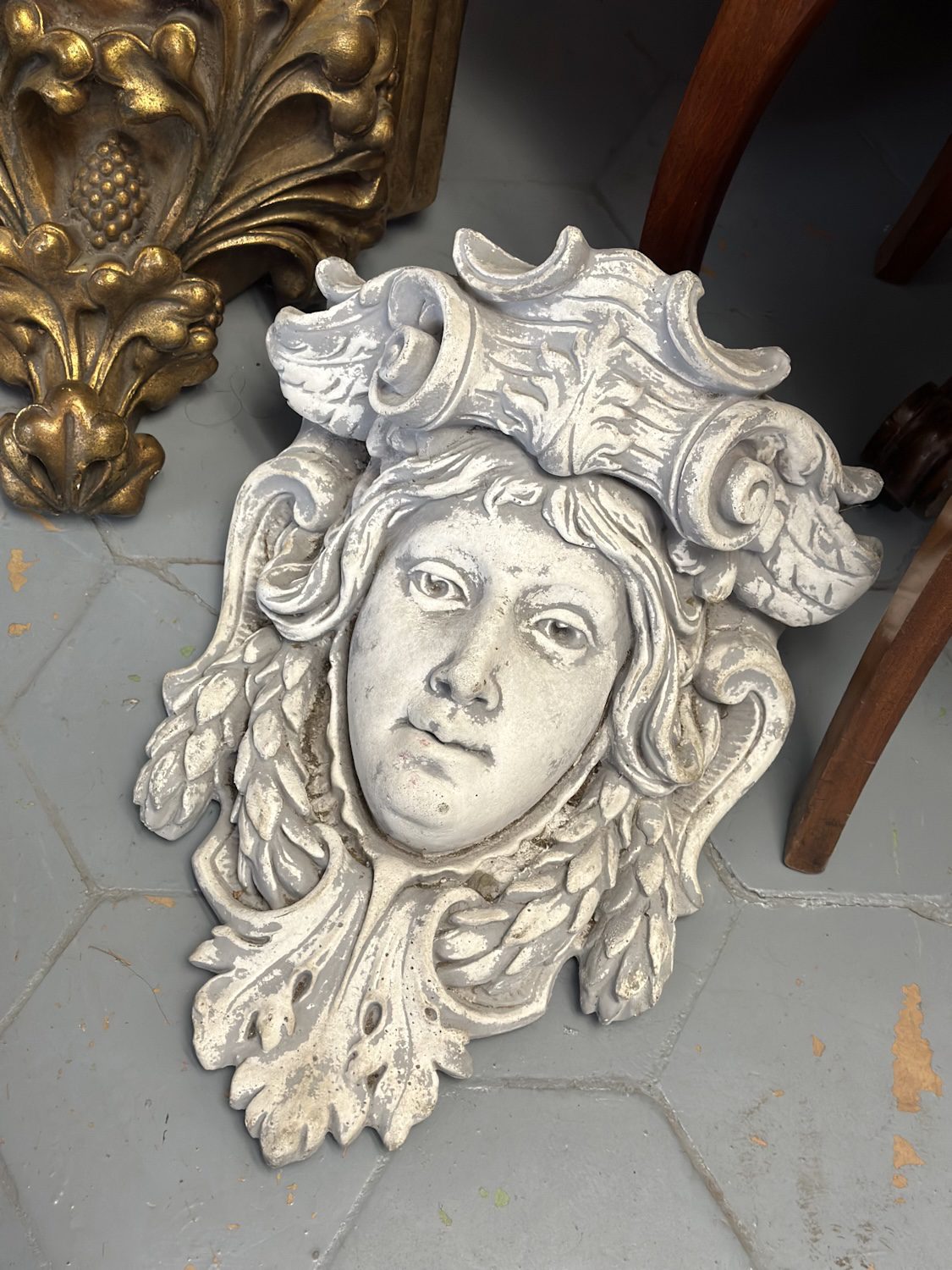
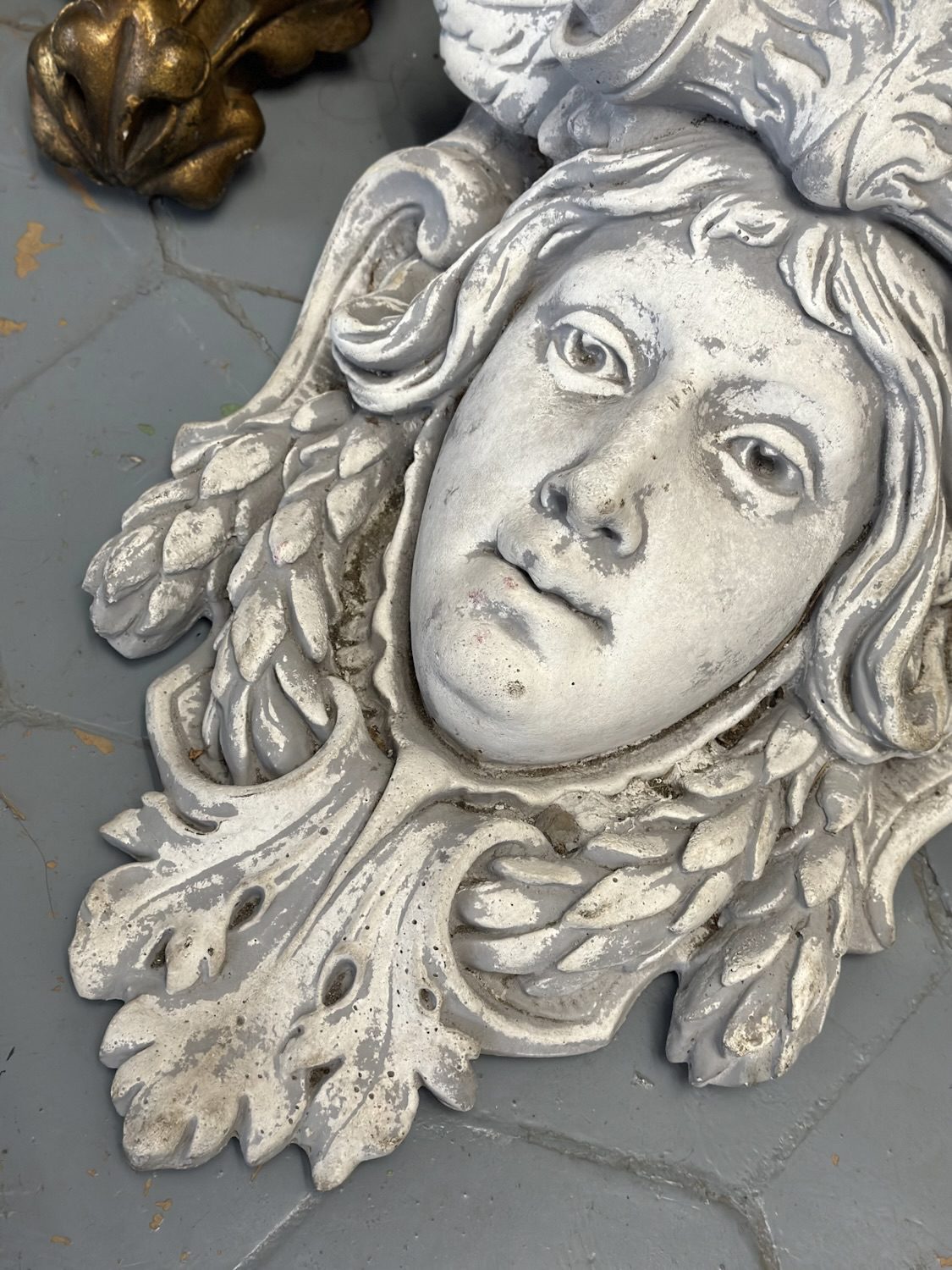
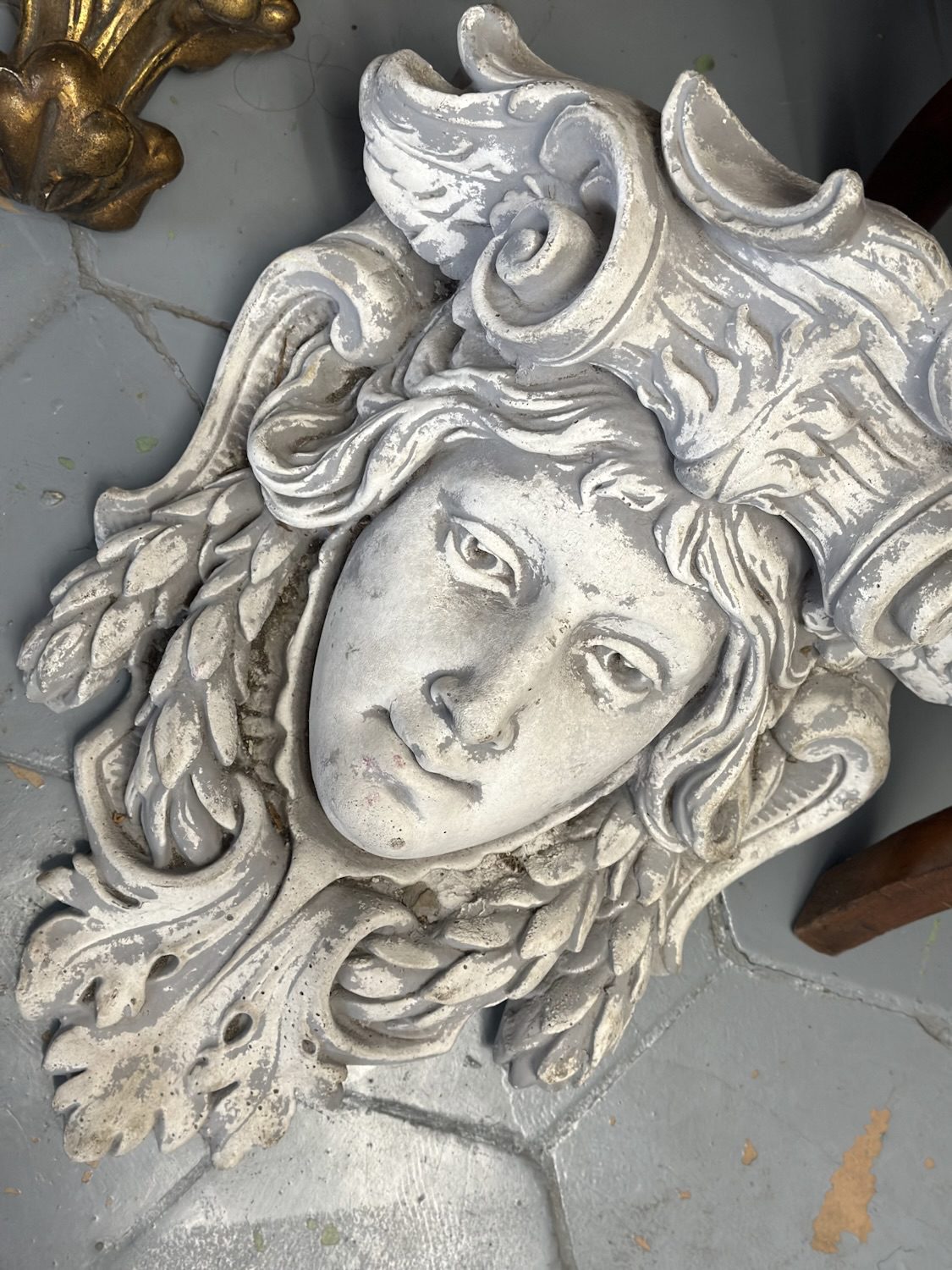
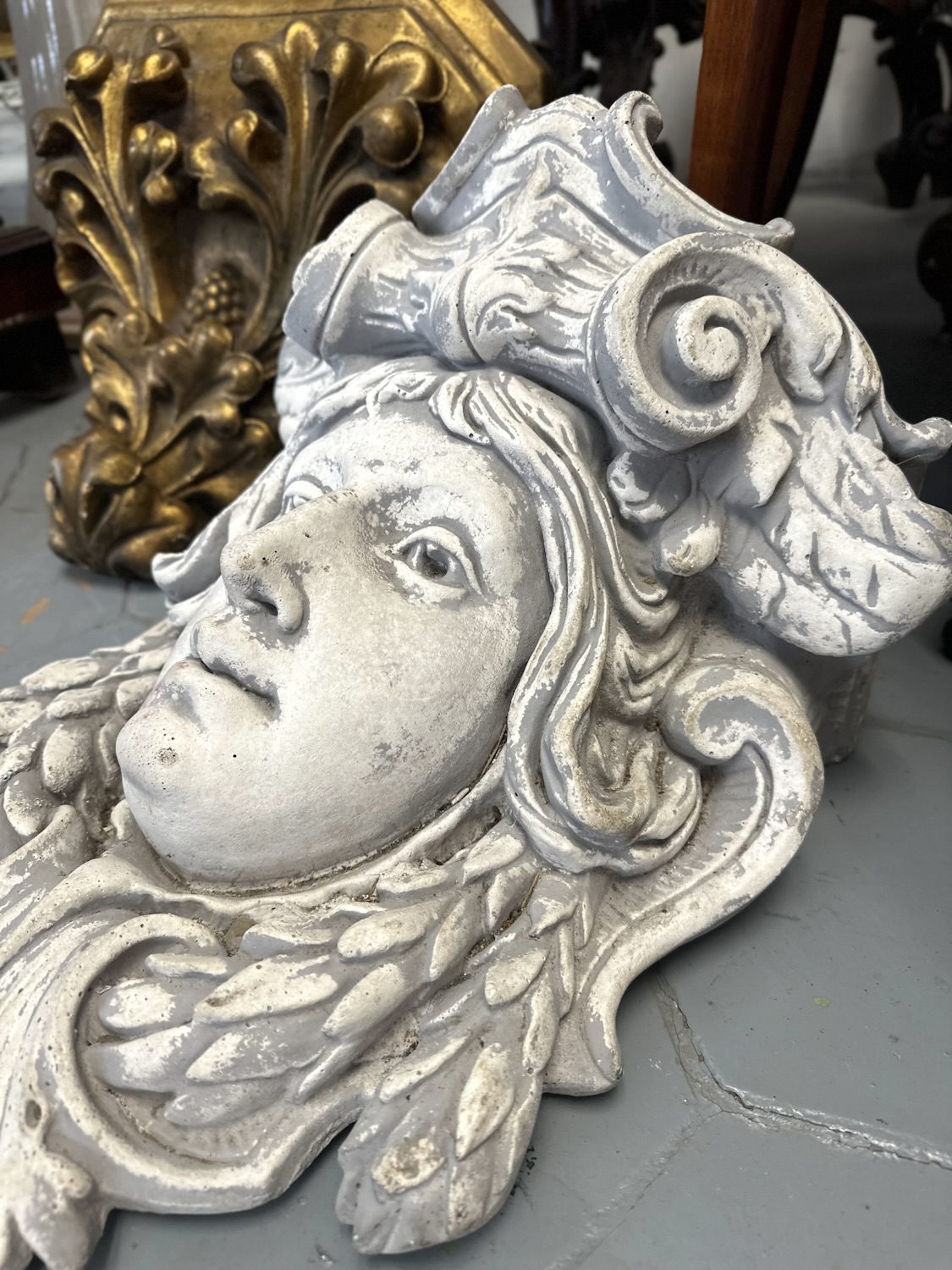
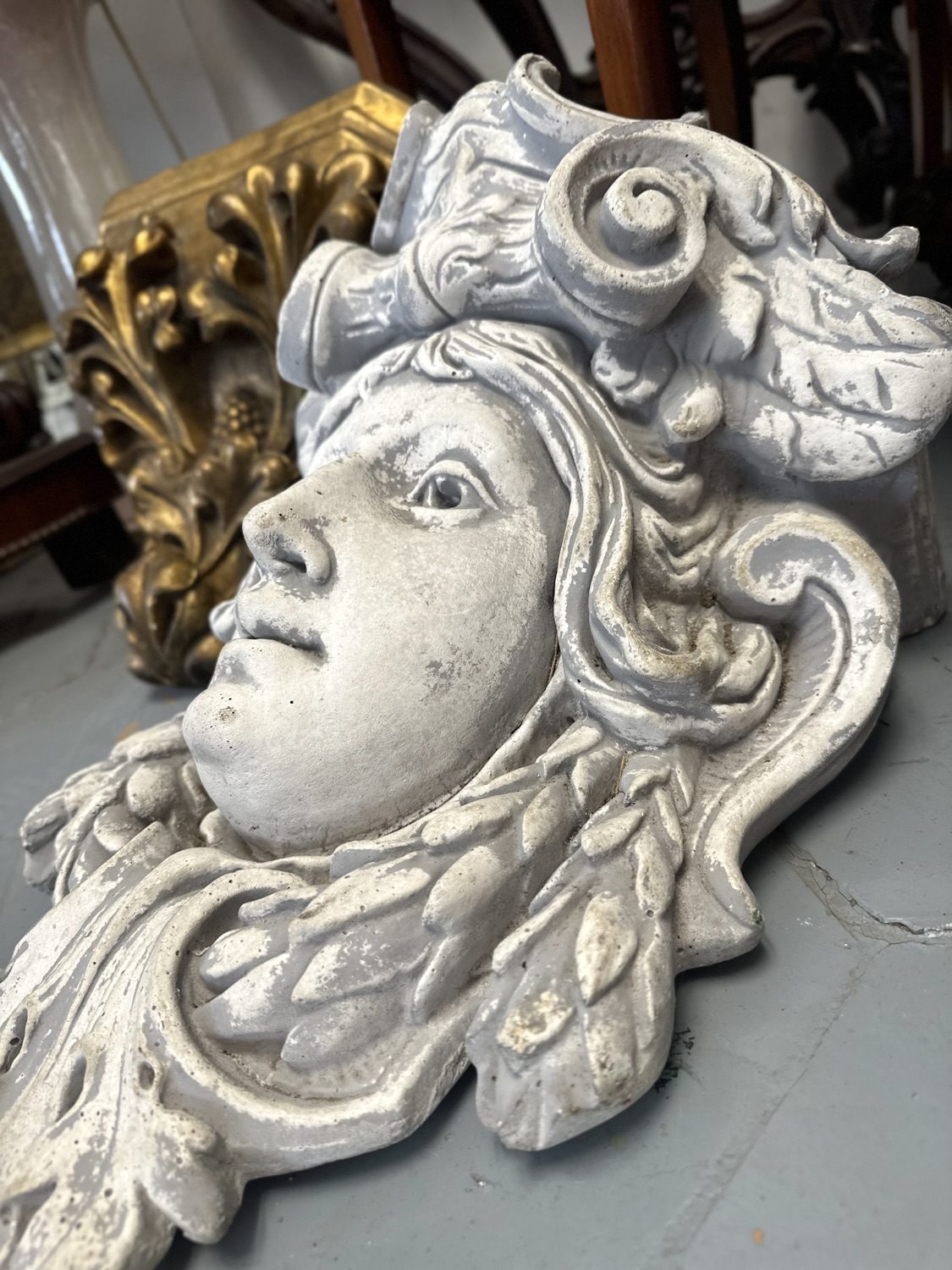
Maskarons ar Sievietes Seju — Beaux-Arts / Neobaroks, Francija, ap 1880.–1910. Betona Galva, Figūra Liekama pie Sienas, Ļoti Smaga, Vidēja Izmēra (4389)
📐 IZMĒRI
Augstums: 45 cm. Platums: 35 cm. Svars: ļoti ievērojams — masīvs betona vai ģipša-cementa kompozīts ar dobumu aizmugurē, kas paredzēts montāžai fasādē vai sienā. Priekšmets cēlies no Francijas.
Maskarons ar Sievietes Seju — Beaux-Arts / Neobaroks, Francija, ap 1880.–1910.
―――――――――――――――――――――
🏛️ IZGATAVOŠANAS PERIODS, MĀKSLAS STILS, LAIKMETS
Šis maskarons pieder Beaux-Arts stilam — vienam no 19. gadsimta otrās puses un 20. gadsimta sākuma ietekmīgākajiem arhitektoniskajiem virzieniem, kas dzima Parīzes École des Beaux-Arts akadēmiskajās zālēs un izplatījās visā Eiropā un Amerikā. Beaux-Arts nav vienkārši stils — tas ir monumentālas reprezentācijas filozofija: arhitektūra kā pilsētas greznuma un valsts varas izteiksme, kurā katrs ornamentālais elements nes simbolisku un estētisku nozīmi.
Maskarons — sievietes vai vīrieša sejas reljefskulptūra arhitektoniskā ornamentā — ir viens no Beaux-Arts fasādes valodas pamatelementiem. Francijas Trešās Republikas laikā (1870–1940) Parīzes un provinču pilsētu jaunajos reprezentatīvajos namos, prefektūrās, bankās, teātros un stacijās maskaroni rotāja logu atslēgakmeņus, portiku vainagojumus un ēku stūra elementus. Tie bija ne tikai dekorācija — tie bija pilsētas sejas metafora, fasādes skatiens uz ielu.
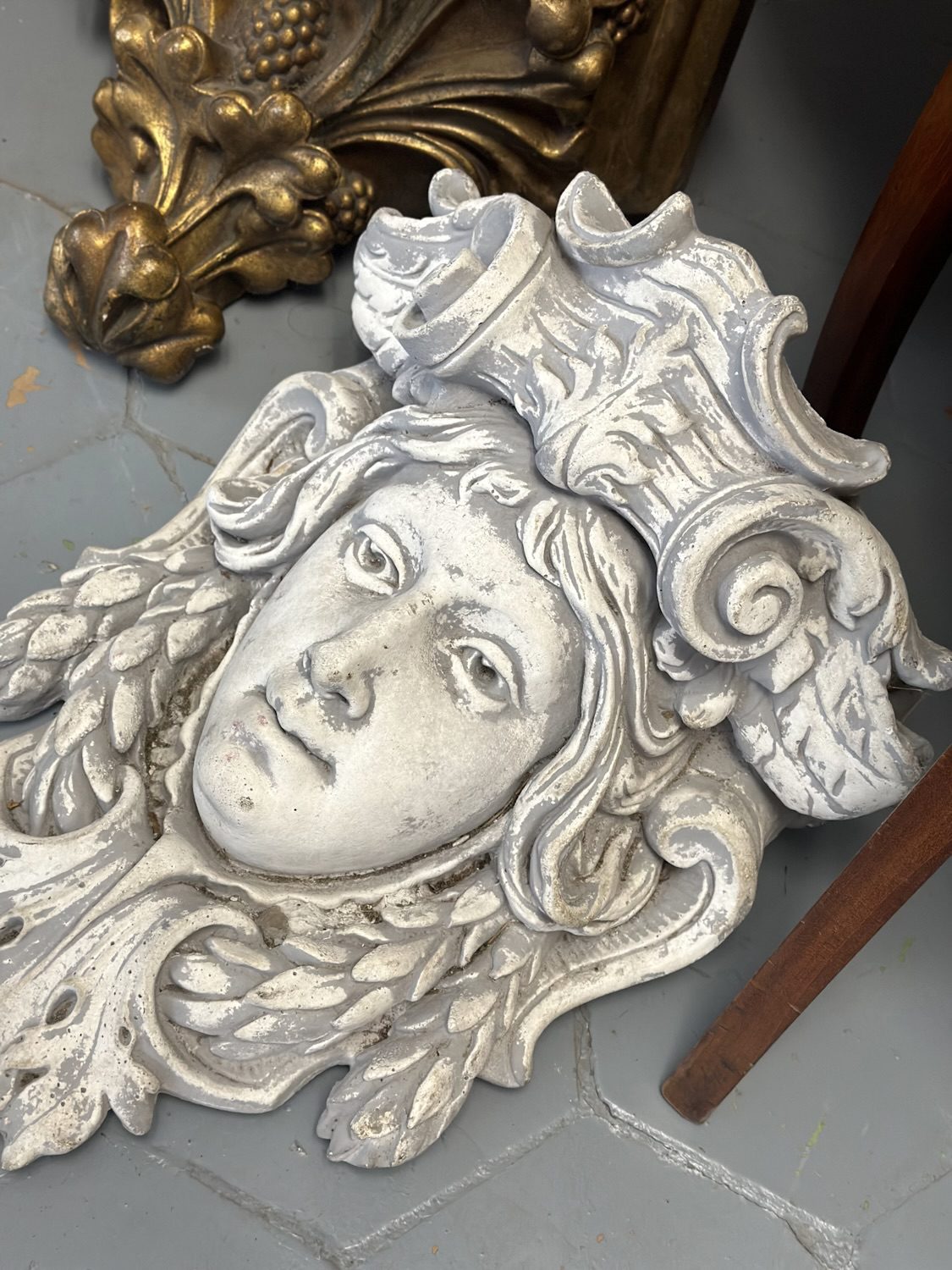
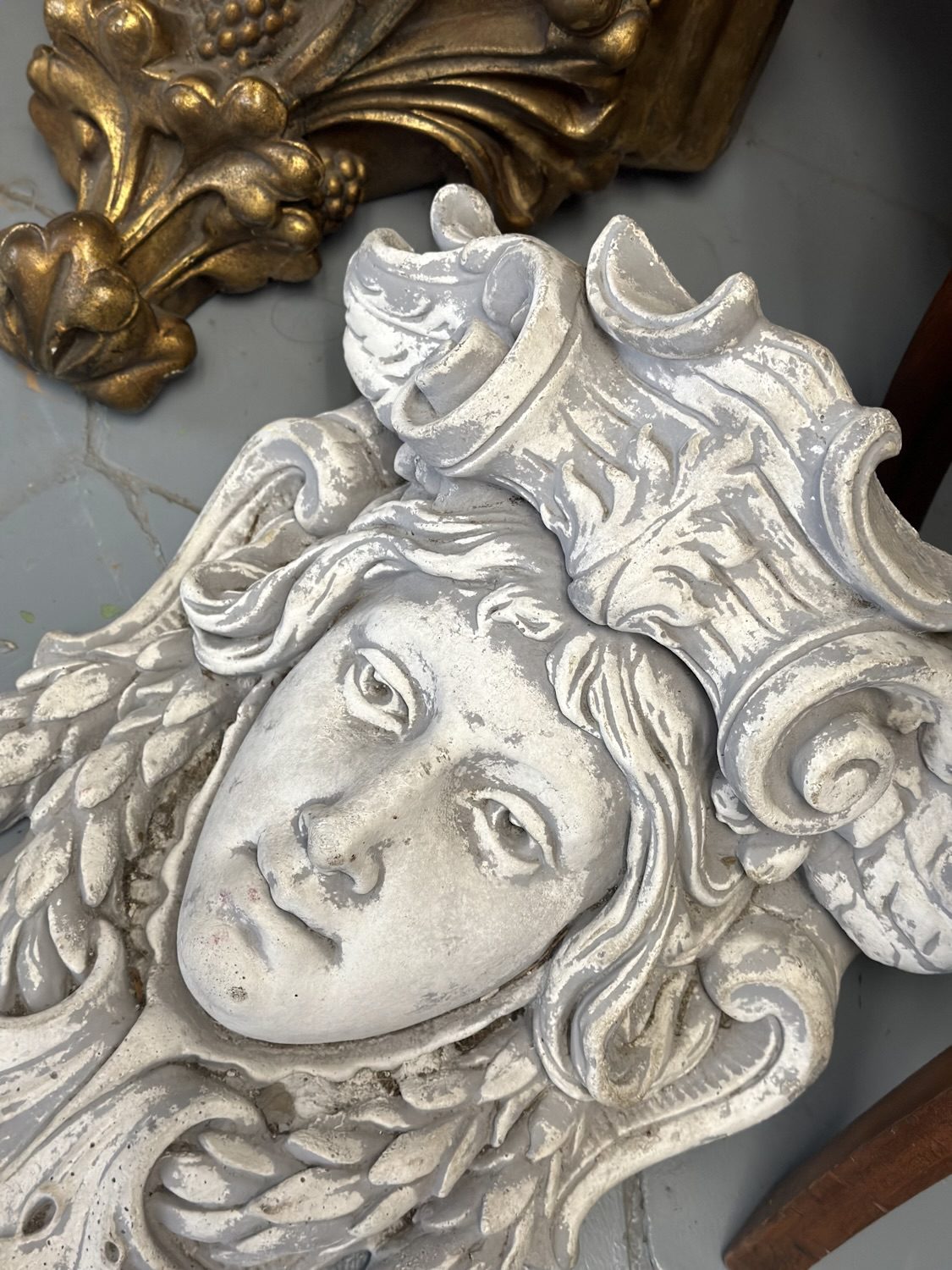
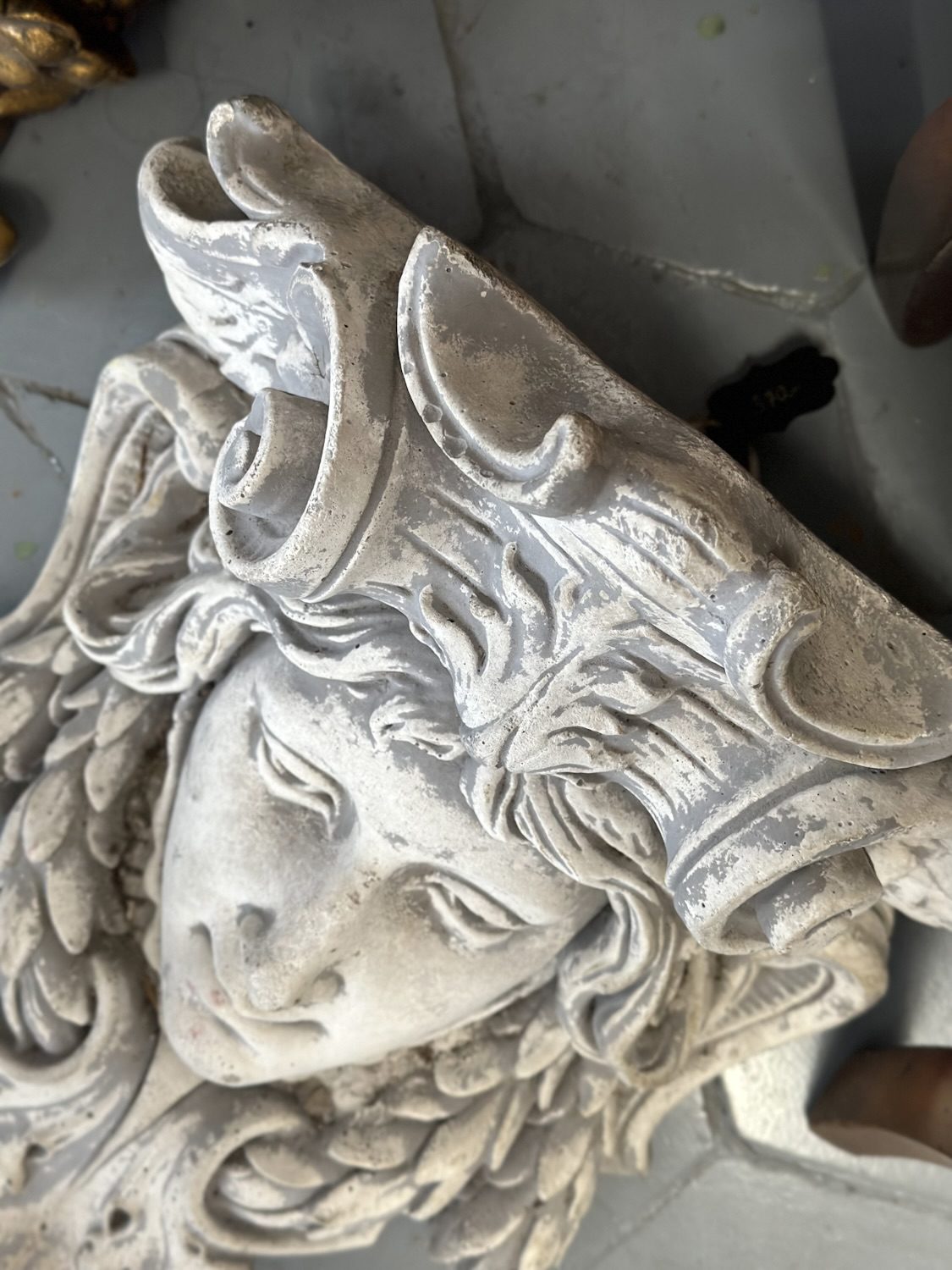
Šis konkrētais maskarons nes Beaux-Arts ornamentālās valodas trīs pamatpazīmes pilnā izvērsumā: akantus lapas apakšdaļā, kas simbolizē dzīvības spēku un dabas bagātību; volūtas — klasiskās arhitektūras spirālveida ritinājuma formas — abos sānos, kas piešķir kompozīcijai monumentālu arhitektonisko ietvaru; un virs sejas strukturālais vainaga vai ķiveres elements, kas atgādina Baroka kapitāļa formu un piešķir visam ansamblim vertikālu dinamiku. Seja ir mierīga, nedaudz pacelts skatiens — debešķīga klātbūtne, kas skatās pāri laicīgajam.
―――――――――――――――――――――
⚜️ RAŽOTĀJS UN STILISTISKĀ PIEDERĪBA
Fotogrāfijās ražotāja zīmogs nav redzams, taču priekšmeta izcelsme no Francijas un tā izpildījuma kvalitāte ļauj to droši lokalizēt Parīzes vai lielās Francijas provinces pilsētas arhitektoniskās plastiskās mākslas tradīcijā. 19. gadsimta otrajā pusē Francijā darbojās specializētas ornamentikas darbnīcas — ateliers de sculpture ornementale —, kas piegādāja fasādes elementus arhitektiem un uzņēmējiem haussmanisma pārbūvju un Trešās Republikas reprezentatīvo ēku celtniecības vajadzībām. Šādas darbnīcas strādāja gan ar akmeni, gan ar ģipša un cementa kompozītiem, kas ļāva ātrāk un ekonomiskāk reproducēt sarežģītas ornamentālas formas lielos daudzumos. Parīzes arhitektūras ornamentikas tradīcija šajā periodā bija Eiropas augstākajā līmenī — Francijas ornamentālās plastiskās mākslas darbnīcu produkcija tika eksportēta uz Angliju, Beļģiju, Vāciju un Krieviju.
―――――――――――――――――――――
💎 RETUMS UN NOZĪME
Autentiski Francijas Beaux-Arts laikmeta arhitektoniskās plastiskās mākslas elementi ar saglabātu sejas plastikas kvalitāti un bagātu ornamentālo rāmi antikvāru tirgū parādās arvien retāk — jo īpaši tādi, kuru izcelsme ir dokumentēta. Lielākā daļa šādu elementu ir neatgriezeniski zaudēti ēku nojaukšanas vai fasāžu renovācijas laikā. Kolekcionāri, arhitekti un interjera dizaineri, kuri strādā ar Beaux-Arts vai klasicisma estētiku, šādus elementus meklē aktīvi — jo tie ir vienīgais veids, kā jaunā telpā ievest autentiskas Eiropas pilsētas arhitektūras klātbūtni.
―――――――――――――――――――――
🕯️ PIELIETOJUMS INTERJERĀ, DIZAINĀ UN FOTOGRĀFIJĀ
Šis maskarons ir radīts sienai — un tieši tur tas atklāj savu pilno potenciālu. Virs kamīna, virs ārdurvīm vai iekštelpu portāla, dārza sienas centrā, fasādes atslēgakmens vietā virs loga — jebkurā no šiem kontekstiem tas rada Francijas Trešās Republikas reprezentatīvās arhitektūras klātbūtni. Klasiskos un eklektiskos interejros tas darbojas kā vizuālais fokuss, kas organizē sienas plakni sev apkārt. Laikmetīgos minimālistiskos telpās ar tīrām baltām sienām tas darbojas kā spēcīgs kultūrvēsturiskais kontrasts — viena dekorācija, kas uzreiz maina telpas raksturu un paaugstina to estētiskajā kategorijā. Modes, mākslas un interjera fotogrāfijā šāds elements ir nenovērtējams — tas kadru pārvērš par Parīzes salona vai Haussmann bulevāra ainas fragmentu.
―――――――――――――――――――――
🎁 DĀVANA UN PERSONALIZĀCIJA
Francijas Beaux-Arts maskarons ir izsmalcināta un kultūrvēsturiski nozīmīga dāvana arhitektiem, interjera dizaineriem, mākslas kolekcionāriem un visiem, kuriem Francijas kultūras mantojums ir tuva sirds lieta. Tas der kā reprezentatīva dāvana jaunas mājas vai biroja iekārtošanas atzīmēšanai — un kā neatkarīgs mākslas darbs, kas prasa ne vairāk kā vienu stipru naglu un pietiekamu sienu.
―――――――――――――――――――――
🔍 STĀVOKLIS
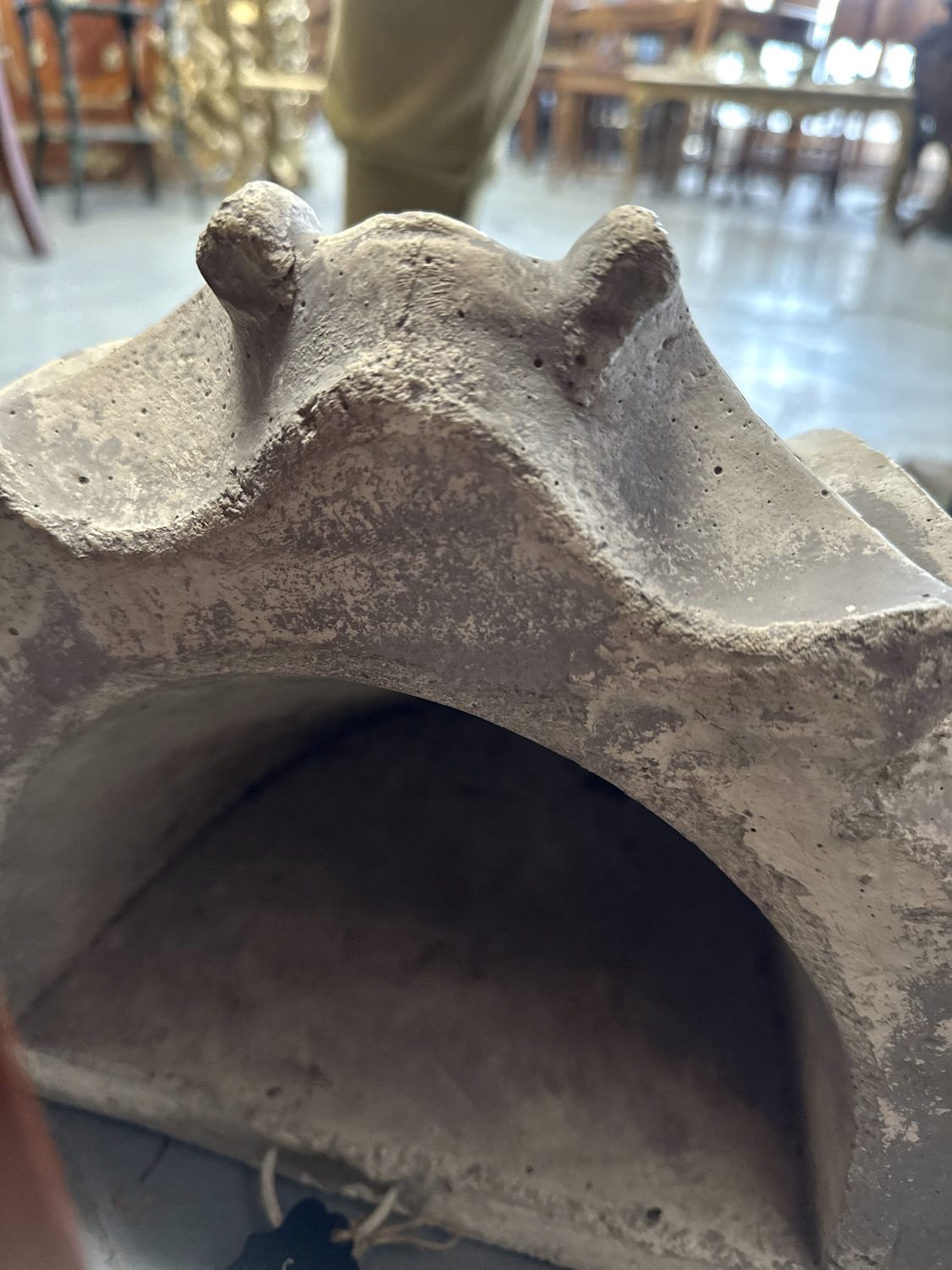
Maskarons saglabājies ļoti labā stāvoklī, ņemot vērā tā vecumu un paredzamo arhitektonisko izmantošanu Francijā. Baltā krāsojuma virsma uzrāda autentisku dabīgu nolietojumu — pelēcīgas un dzeltenbrūnas patinas pēdas ornamentālo formu iegrimumā, kas piešķir priekšmetam autentisku vecuma iespaidu bez jebkādas mākslīgas “mākslīgošanas”. Sejas plastika, akantus lapas, volūtas un vainaga elements saglabājušies bez būtiskiem bojājumiem. Aizmugurē redzama dobā betona struktūra — raksturīga šāda tipa arhitektoniskiem elementiem. Lietas stāvoklis pilnībā atspoguļots fotogrāfijās.
―――――――――――――――――――――
🇬🇧 DESCRIPTION IN ENGLISH
Mascaron with Female Face — Beaux-Arts / Neo-Baroque, France, circa 1880–1910
―――――――――――――――――――――
📐 DIMENSIONS
Height: 45 cm. Width: 35 cm. Weight: very substantial — a massive concrete or plaster-cement composite with a hollow cavity at the rear, intended for installation on a façade or wall. The piece originates from France.
―――――――――――――――――――――
🏛️ PERIOD, ARTISTIC STYLE, ERA
This mascaron belongs to the Beaux-Arts style — one of the most influential architectural movements of the second half of the 19th century and the early 20th, born in the academic halls of the École des Beaux-Arts in Paris and disseminated throughout Europe and the Americas. Beaux-Arts is not merely a style — it is a philosophy of monumental representation: architecture as an expression of urban grandeur and state power, in which every ornamental element carries symbolic and aesthetic significance.
The mascaron — a relief sculpture of a female or male face within an architectural ornament — is one of the fundamental elements of the Beaux-Arts façade language. During France’s Third Republic (1870–1940), mascarons adorned the window keystones, portico crownings and corner elements of new representative townhouses, prefecture buildings, banks, theatres and railway stations in Paris and provincial cities. They were not merely decoration — they were a metaphor for the face of the city itself, the façade’s gaze upon the street.
This particular mascaron carries the three defining characteristics of the Beaux-Arts ornamental language in full deployment: acanthus leaves in the lower section, symbolising the force of life and the abundance of nature; volutes — the classical spiral scroll forms of architectural tradition — on both sides, lending the composition a monumental architectural frame; and above the face a structural crown or helmet element recalling the form of a Baroque capital, imparting vertical dynamism to the whole ensemble. The face is serene, with a slightly upward gaze — a celestial presence looking out beyond the temporal world.
―――――――――――――――――――――
⚜️ MAKER AND STYLISTIC ATTRIBUTION
No maker’s stamp is visible in the photographs; however, the French provenance and the quality of execution allow confident placement within the ornamental sculptural tradition of Paris or a major French provincial city. In the second half of the 19th century, France was home to specialised ornamental workshops — ateliers de sculpture ornementale — supplying façade elements to architects and developers for the Haussmann urban renewal projects and the representative building programmes of the Third Republic. Such workshops worked in both stone and plaster-cement composites, enabling the faster and more economical reproduction of complex ornamental forms in large quantities. The Parisian architectural ornament tradition of this period was at the highest level in Europe — French ornamental sculpture workshop production was exported to England, Belgium, Germany and Russia.
―――――――――――――――――――――
💎 RARITY AND SIGNIFICANCE
Authentic French Beaux-Arts architectural sculptural elements with preserved facial plastic quality and a richly ornamented surround appear on the antiques market with increasing rarity — particularly those with documented provenance. The great majority of such elements have been irretrievably lost through building demolition or façade renovation. Collectors, architects and interior designers working with Beaux-Arts or classicist aesthetics seek such pieces actively — as they are the only means of bringing the authentic presence of European urban architecture into a new space.
―――――――――――――――――――――
🕯️ USE IN INTERIOR, DESIGN AND PHOTOGRAPHY
This mascaron was made for the wall — and it is there that it reveals its full potential. Above a fireplace, above an entrance door or interior portal, at the centre of a garden wall, as a keystone above a window — in any of these contexts it creates the presence of France’s Third Republic representative architecture. In classical and eclectic interiors it functions as a visual focal point organising the wall plane around it. In contemporary minimalist spaces with clean white walls it acts as a powerful cultural and historical counterpoint — a single decoration that immediately transforms the character of a room and elevates it into a higher aesthetic category. In fashion, fine art and interior photography, such an element is invaluable — it transforms a frame into a fragment of a Parisian salon or Haussmann boulevard scene.
―――――――――――――――――――――
🎁 AS A GIFT AND PERSONALISATION
A French Beaux-Arts mascaron is a refined and culturally significant gift for architects, interior designers, fine art collectors and all those for whom the French cultural heritage holds a special place. It is well suited as a representative gift to mark the completion of a new home or office interior — and as an independent work of art requiring nothing more than a single firm nail and a sufficient wall.
―――――――――――――――――――――
🔍 CONDITION
The mascaron survives in very good condition for its age and presumed architectural use in France. The white painted surface displays authentic natural wear — grey and yellow-brown patina traces in the recesses of the ornamental forms, lending the piece a genuine aged appearance without any artificial distressing. The facial sculpture, acanthus leaves, volutes and crown element are preserved without significant damage. The hollow concrete structure visible at the rear is characteristic of architectural elements of this type. The condition of the piece is fully reflected in the photographs.