
Šaha Konsolgaldiņš ar Atveramo Spēļu Virsmu — Louis XV, Francija, 19.gs. (4967)
Šaha Konsolgaldiņš ar Atveramo Spēļu Virsmu — Louis XV, Francija, 19.gs. (4967)
€650.00
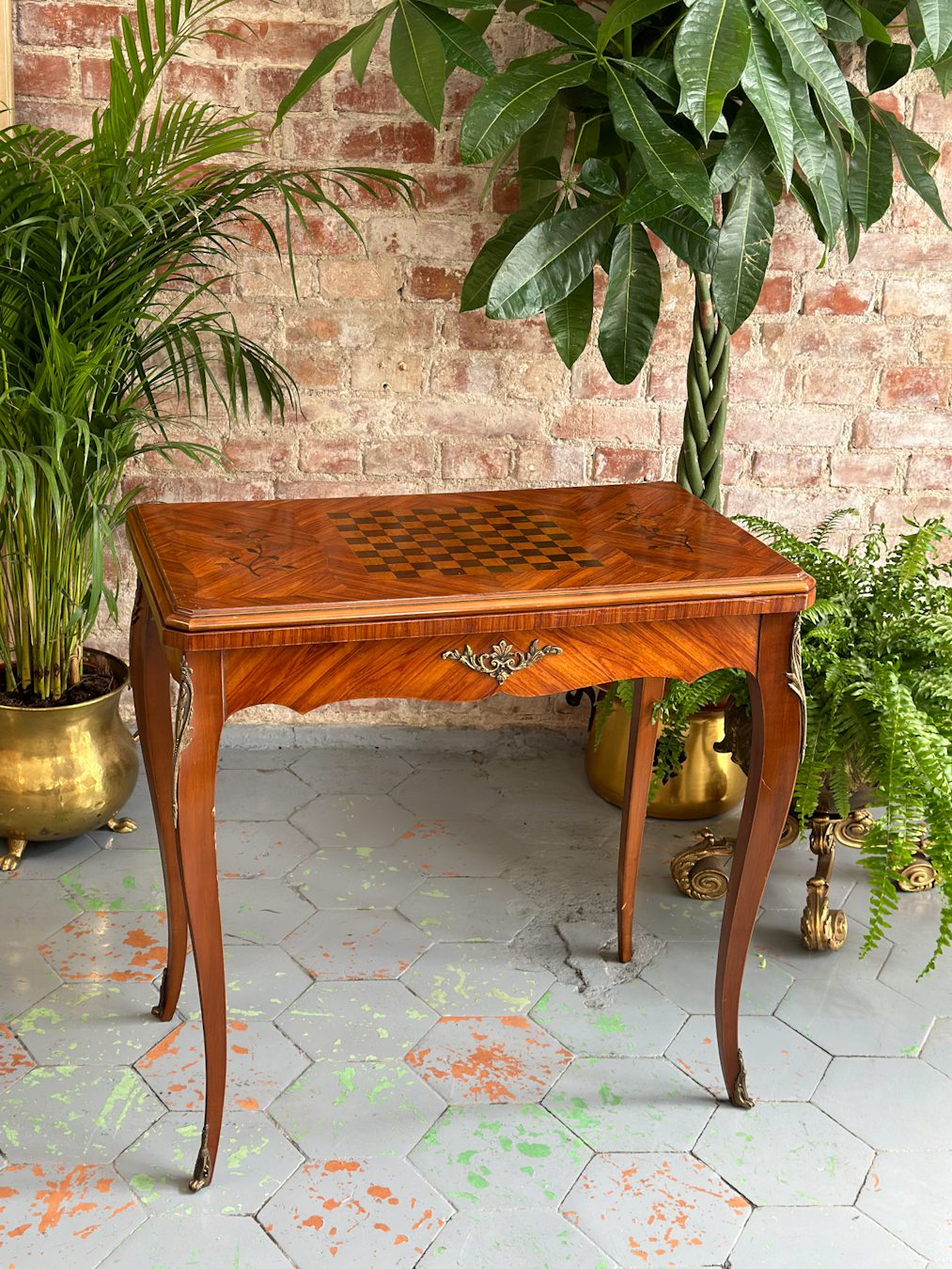
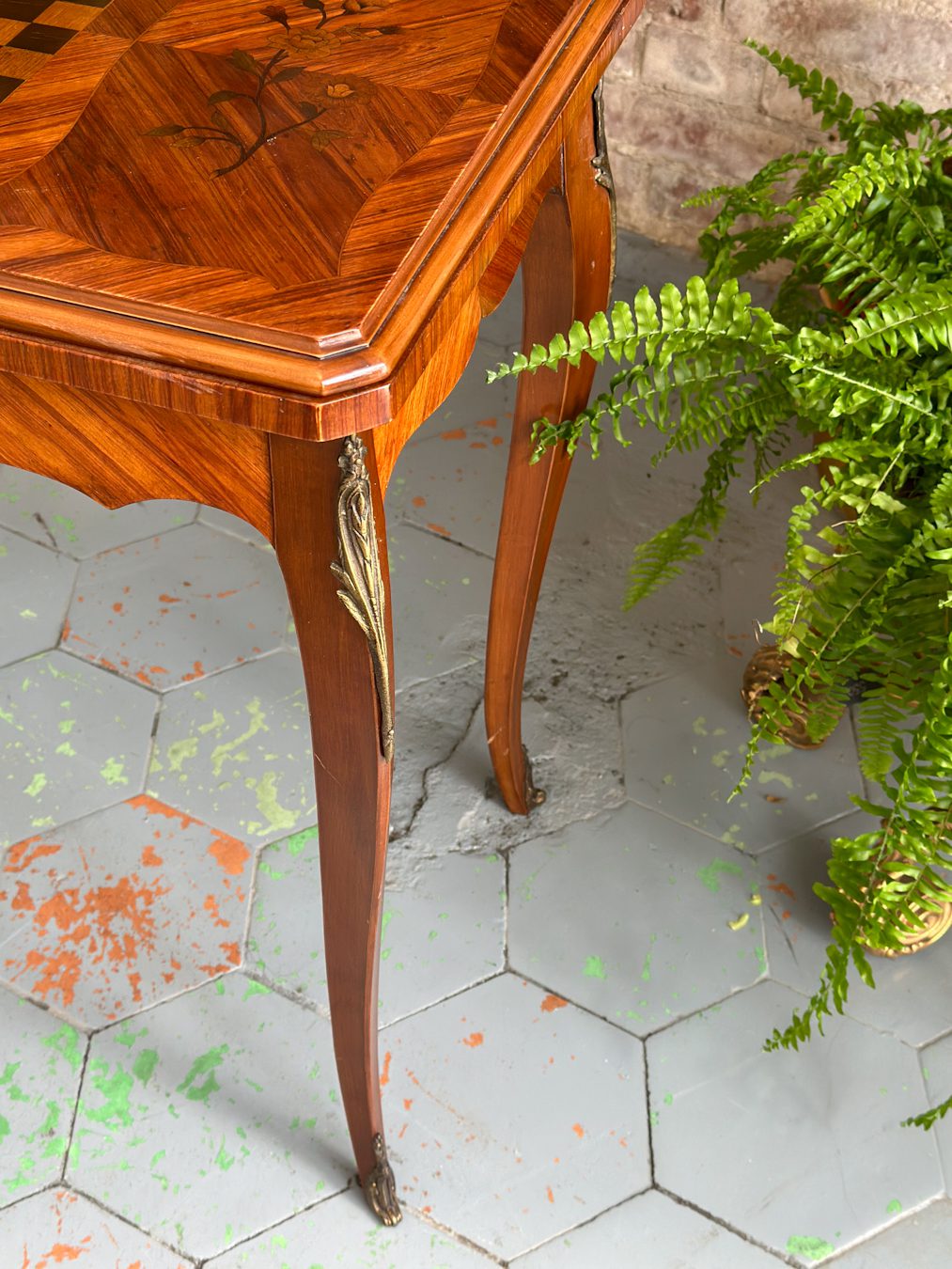
Rožkoka marqueterie galdiņš ar iebūvētu šaha laukumu un atveramu spēļu virsmu (tapis vert). Louis XV stils, Francija, ap 1880.–1900. Bronzas appliques un cabriole kājas. Augstums 74 cm × 75,5 cm × 43 cm. Atvērtā veidā 86 × 75,5 cm.
📐 IZMĒRI Augstums 74 cm × garums 75,5 cm × dziļums 43 cm. Atvērtā veidā virsma: 86 cm × 75,5 cm.
―――――――――――――――――――――
Šaha Konsolgaldiņš ar Atveramo Spēļu Virsmu — Louis XV stils, Francija, ap 1880.–1900.
―――――――――――――――――――――
🏛️ IZGATAVOŠANAS PERIODS, MĀKSLAS STILS, LAIKMETS
Šis elegantais table de jeu ir tipisks Belle Époque laikmeta augstākās galdniecības paraugs — periods no 1871. līdz 1914. gadam, kad Francija bija Eiropas dekoratīvās mākslas un salona kultūras neapstrīdamais centrs. Galdiņš pieder Louis XV stila atdzimšanas kustībai, kas Trešās Republikas un Second Empire periodā Parīzē piedzīvoja īstu renesansi — haute bourgeoisie saloni un aristokrātiskie kabineti piepildījās ar šī stila rafināto izliekto formu un zeltīto bronzas montures greznību.
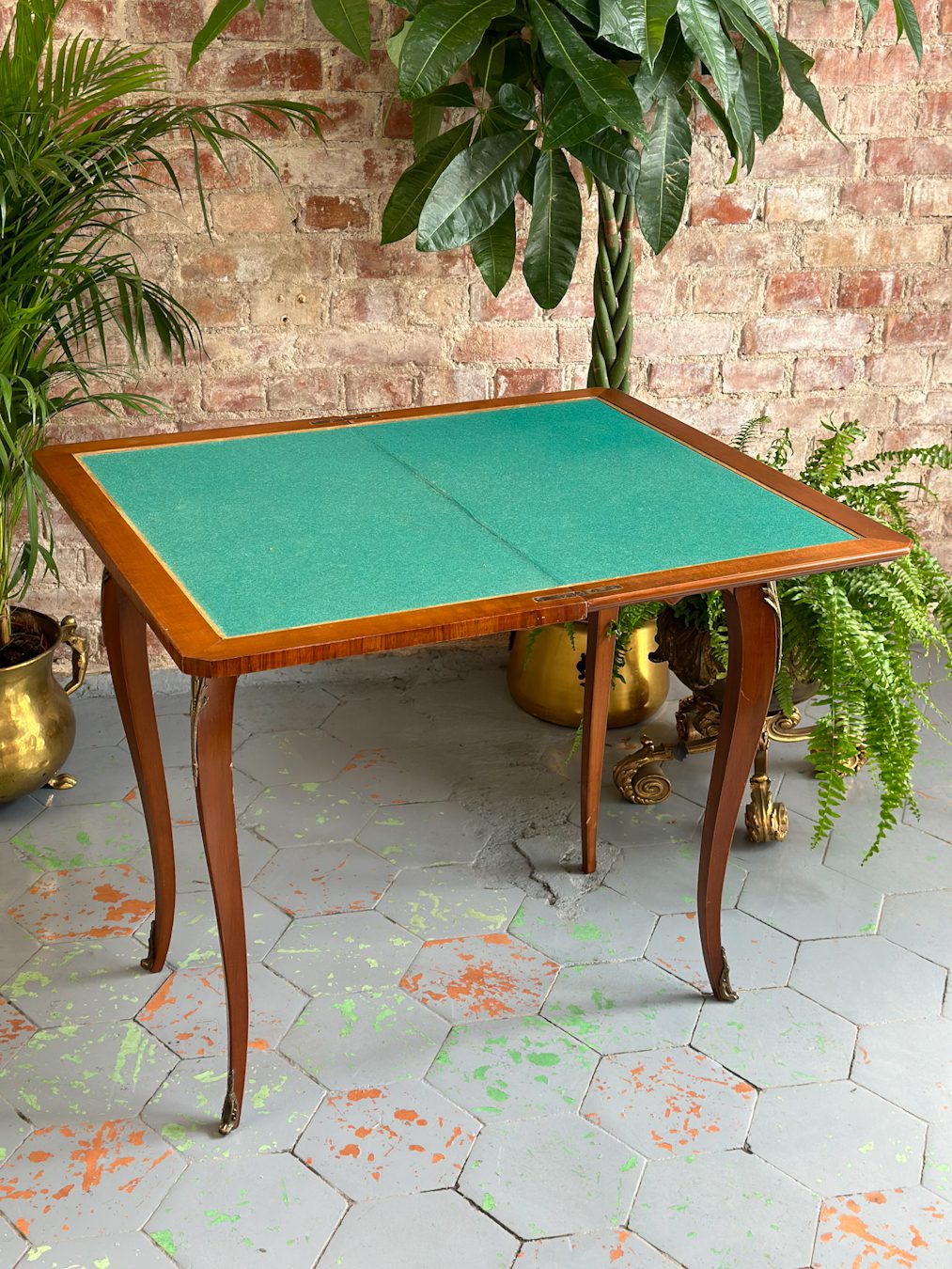
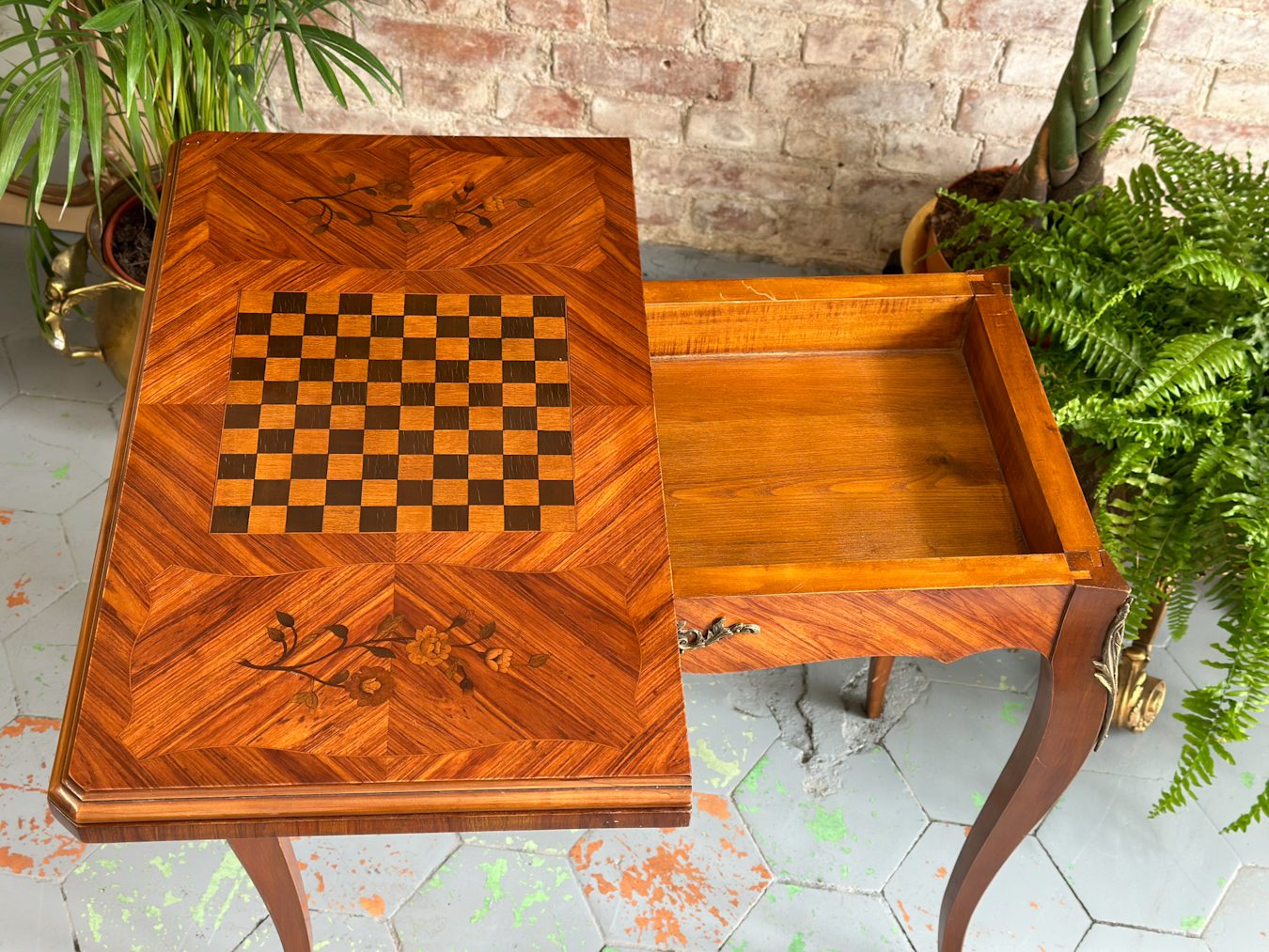
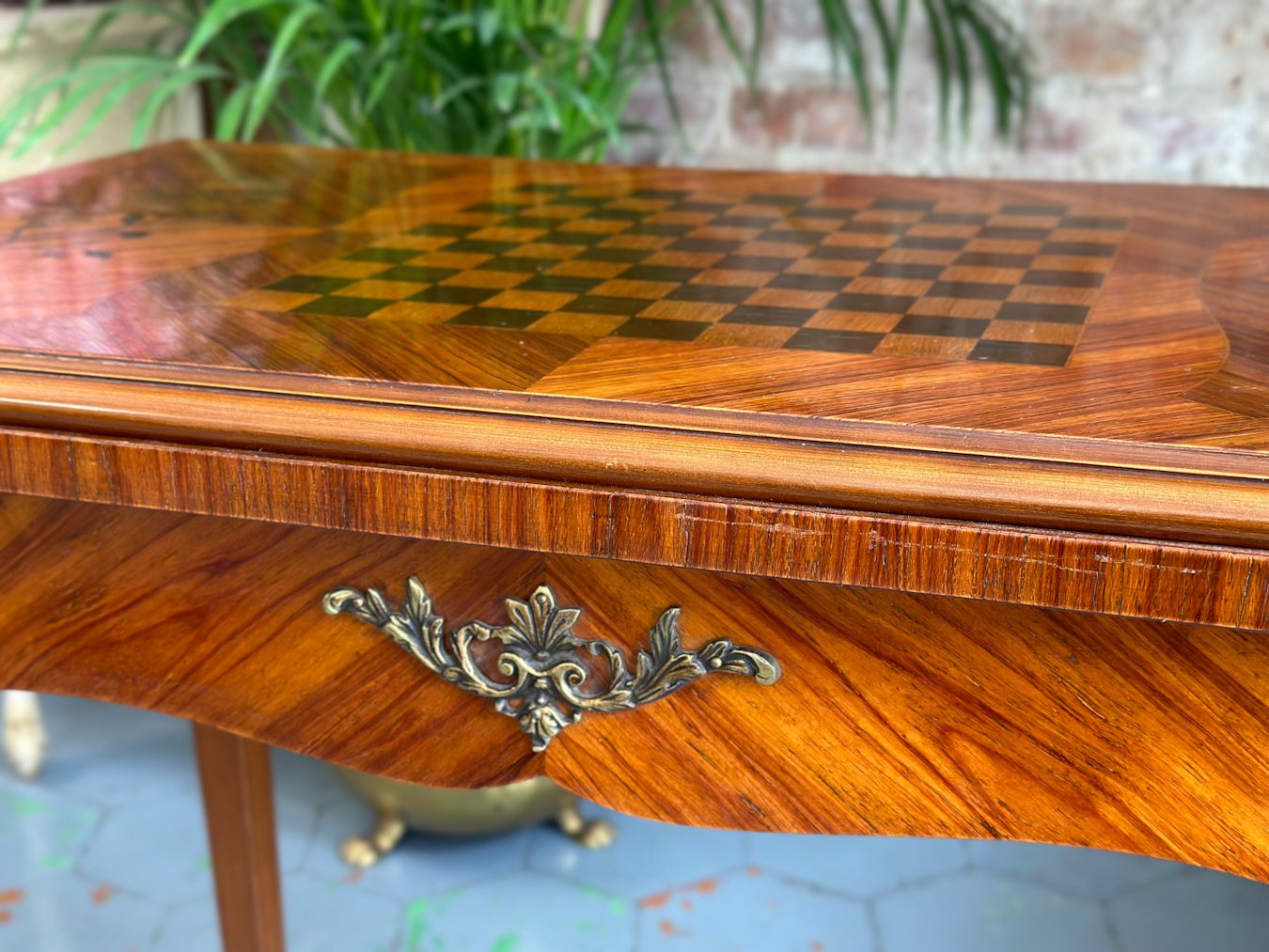
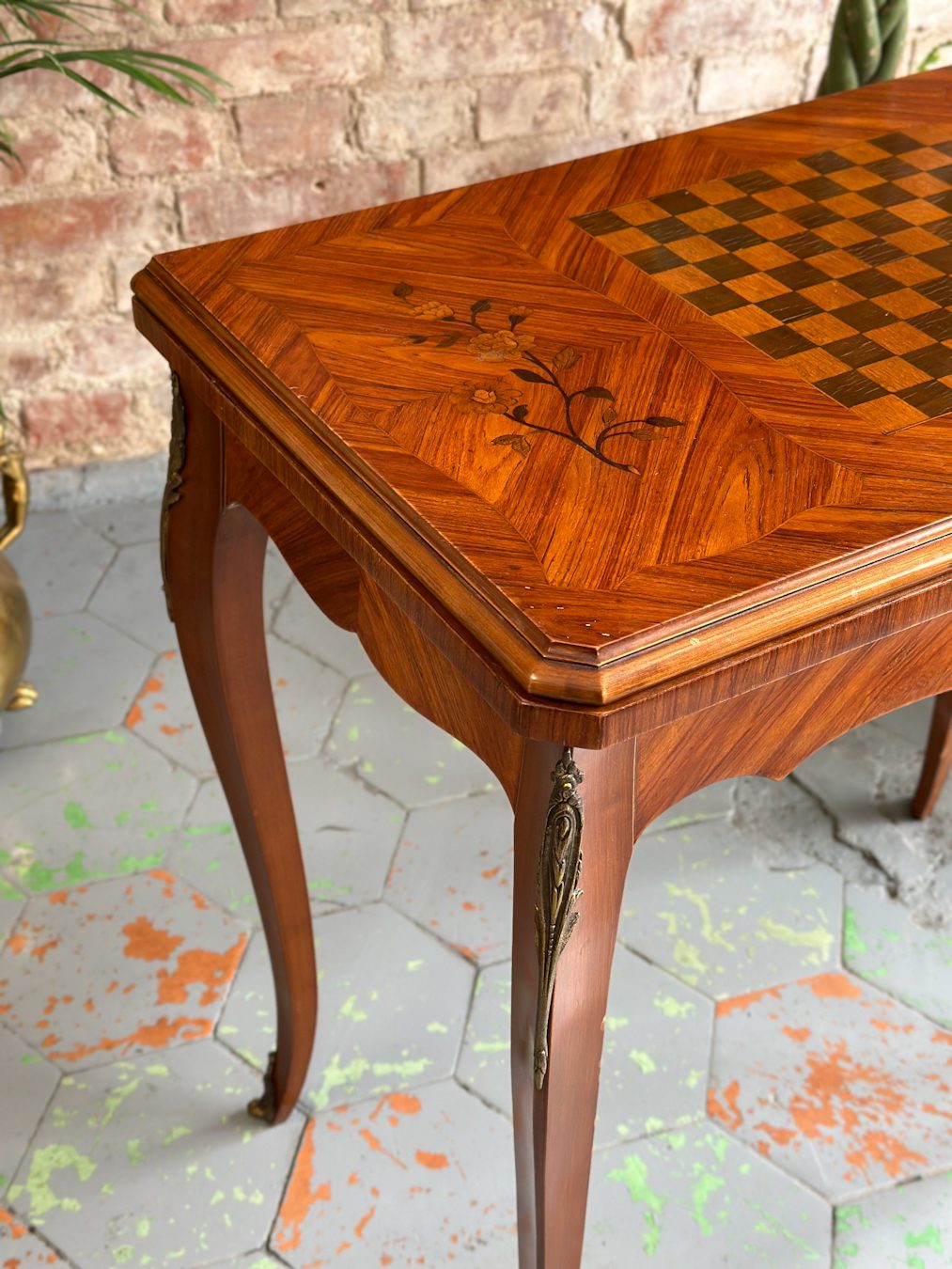
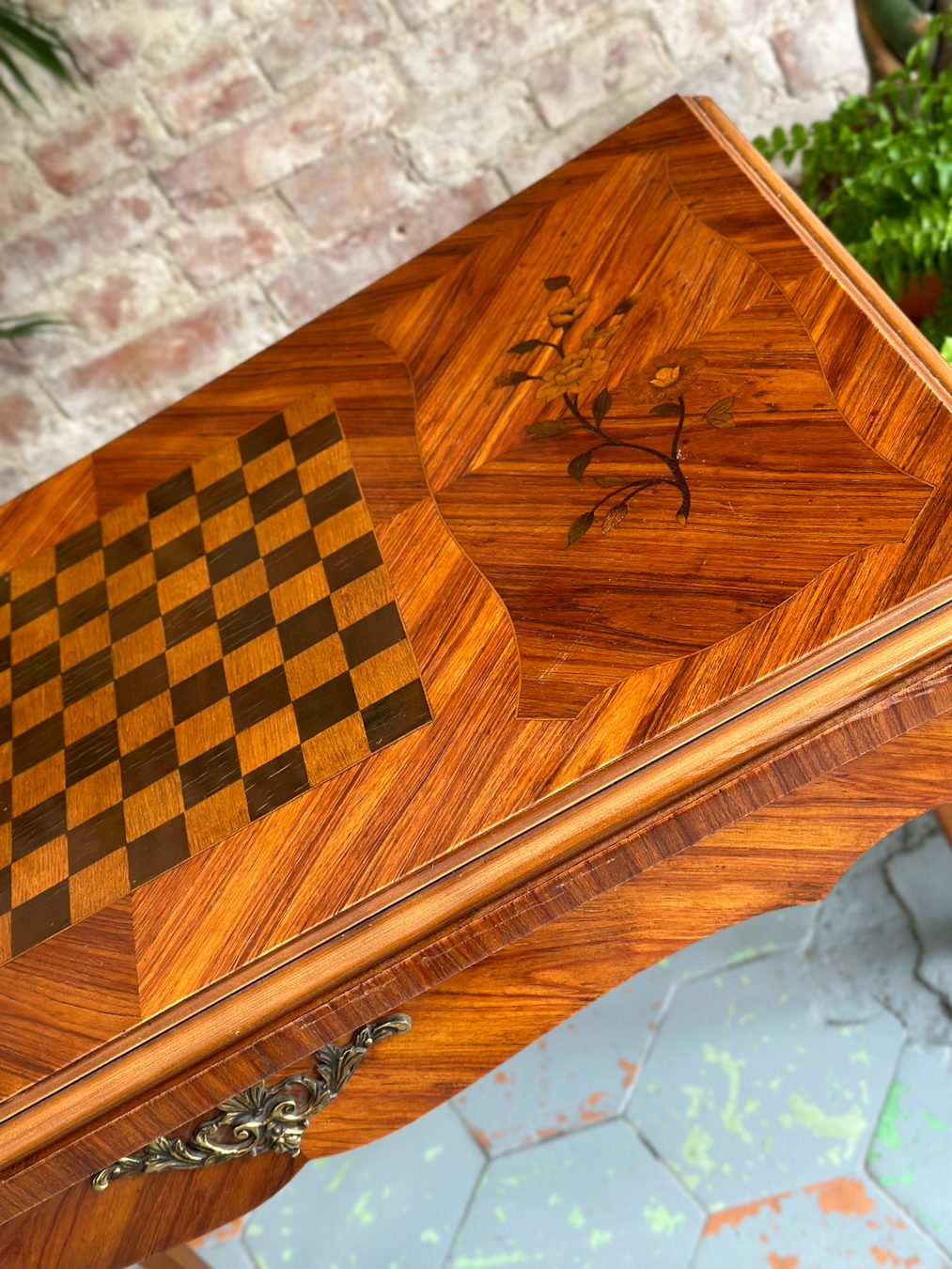
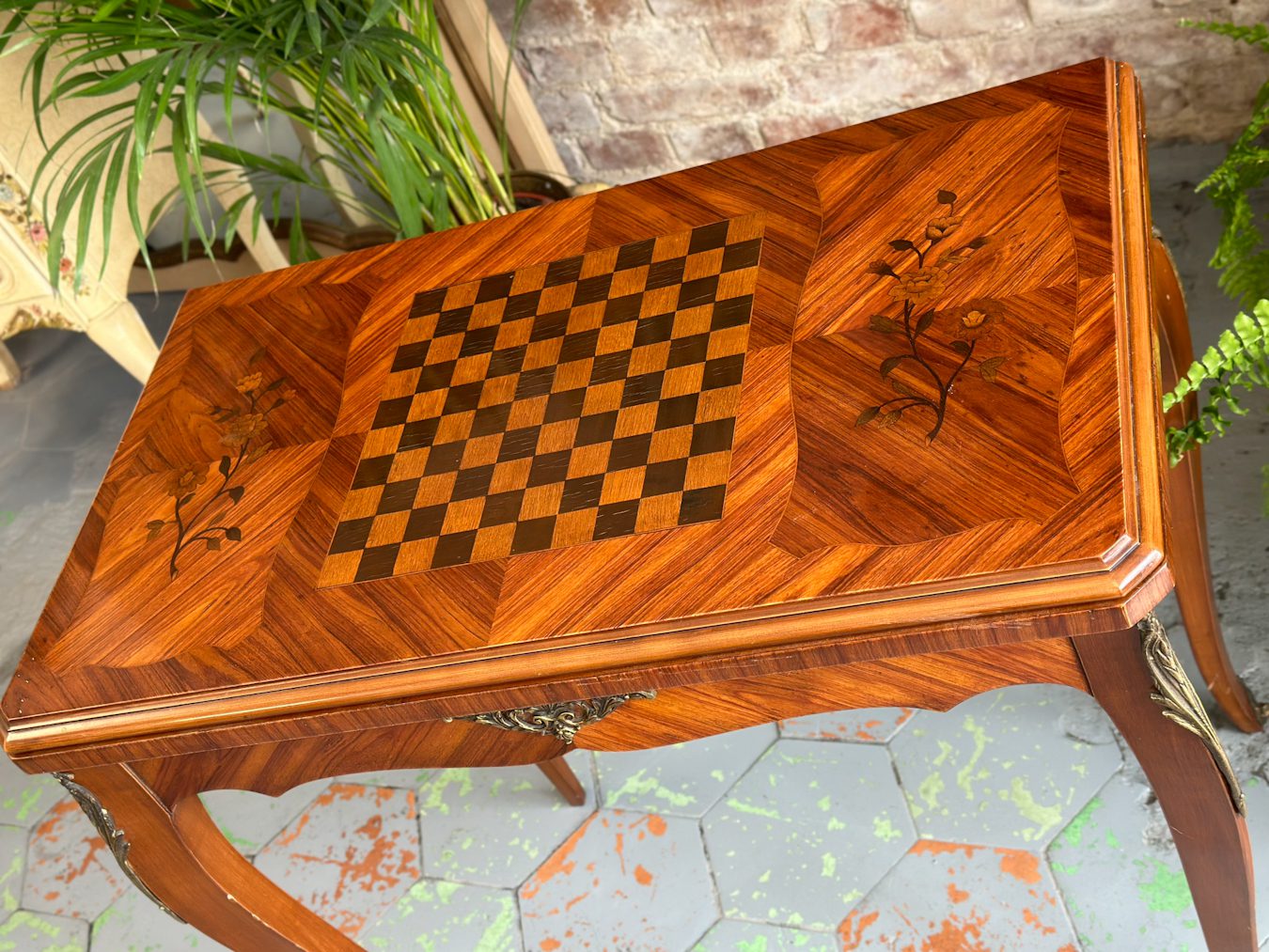
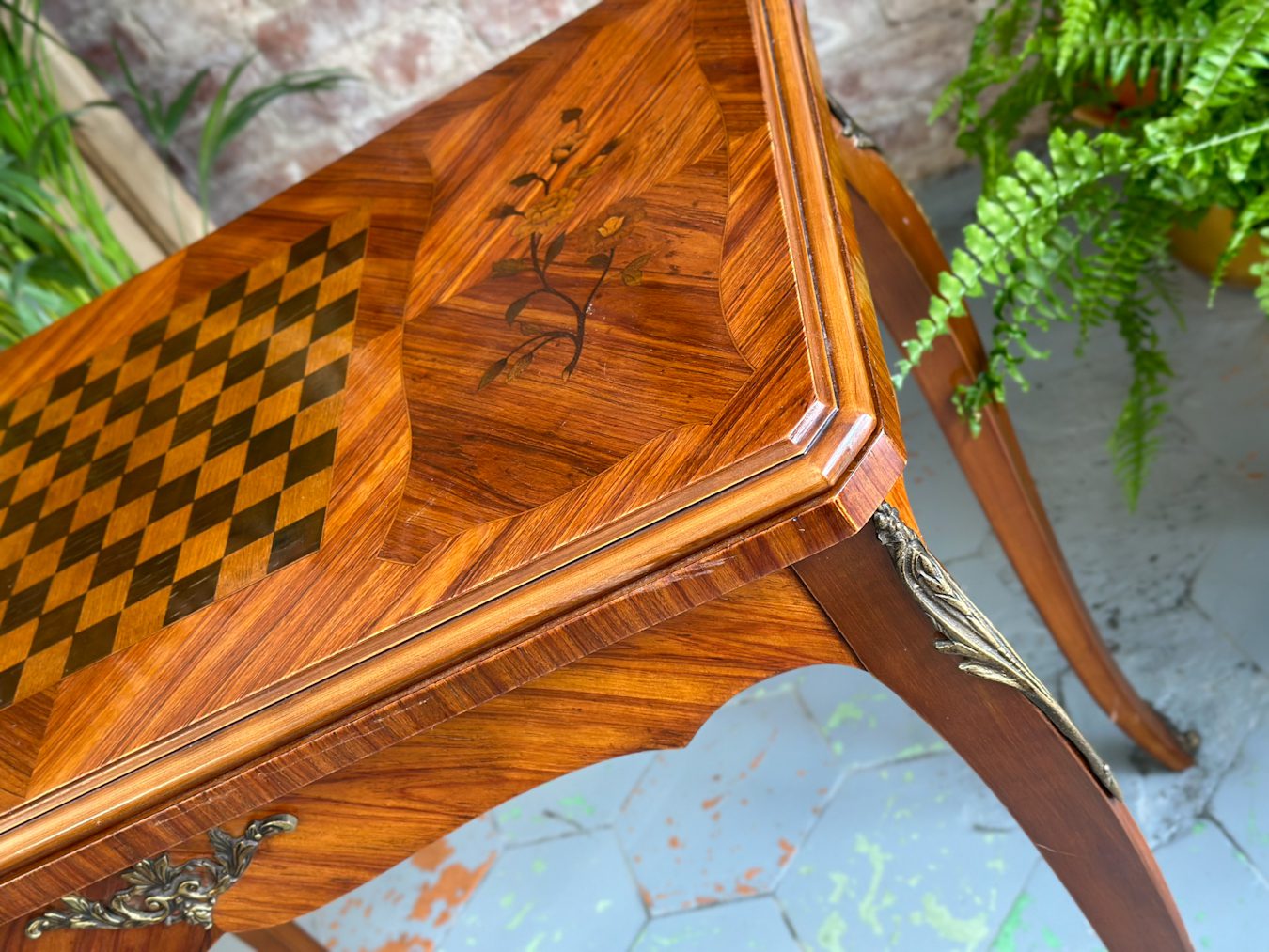
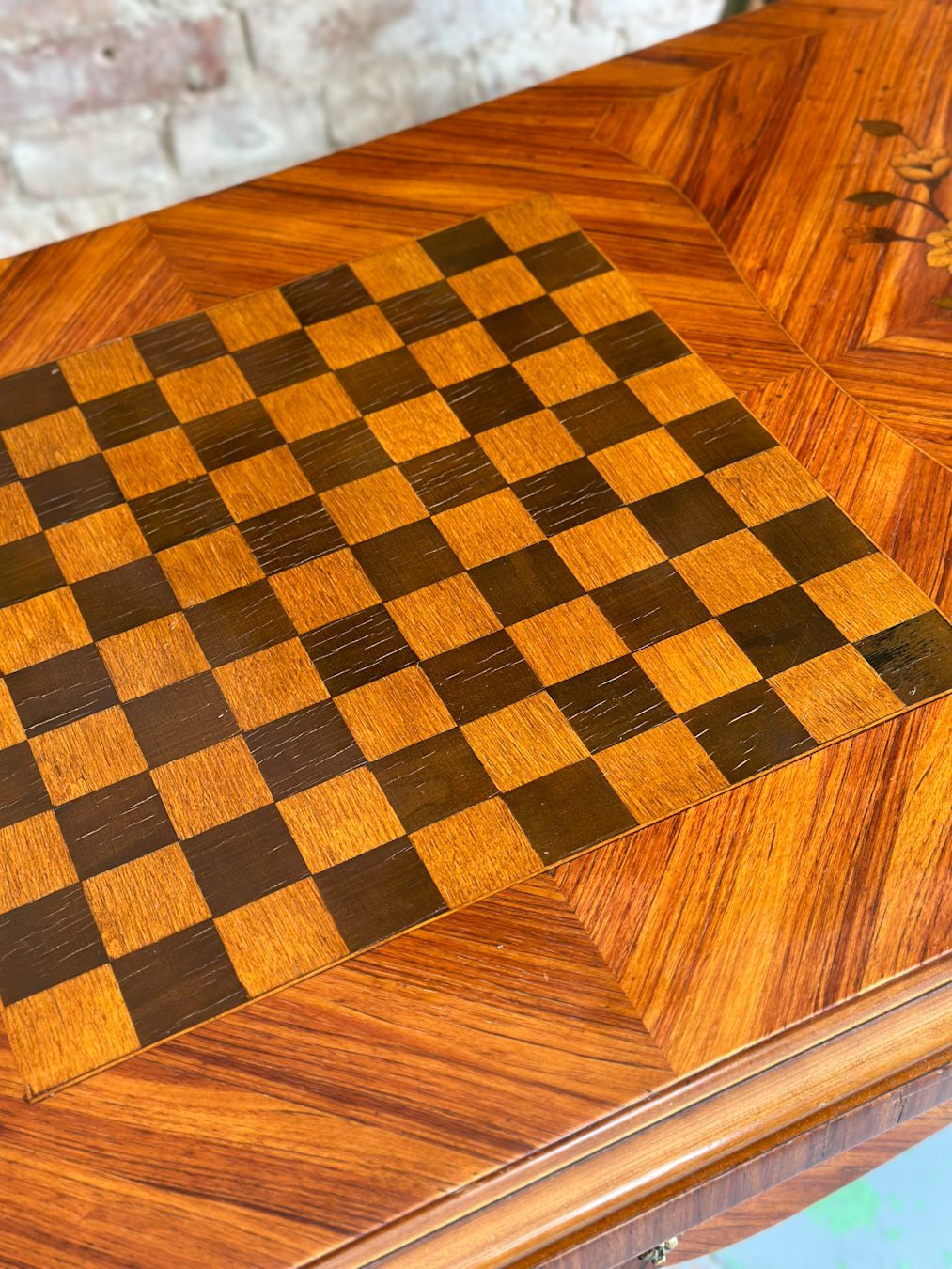
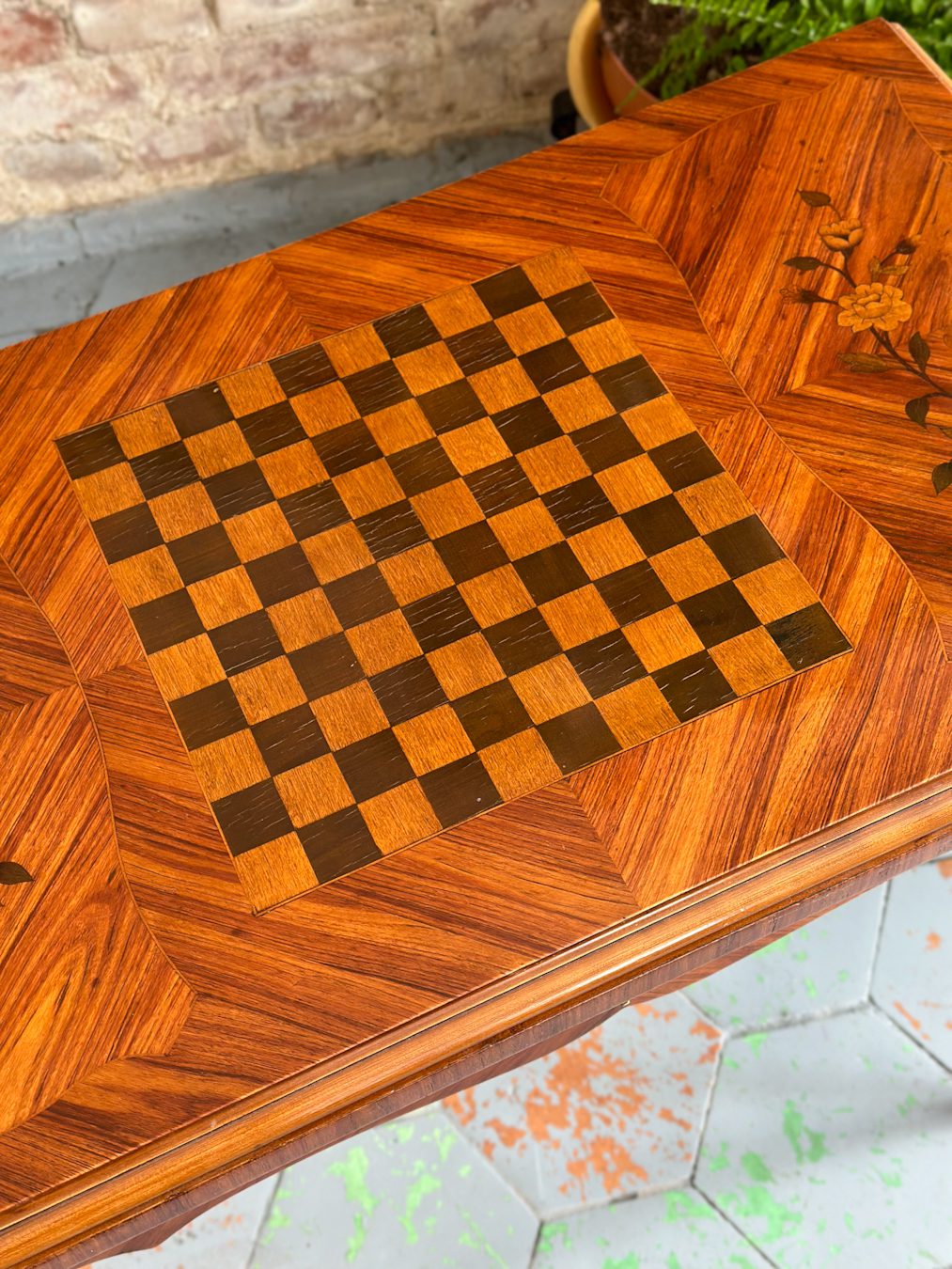
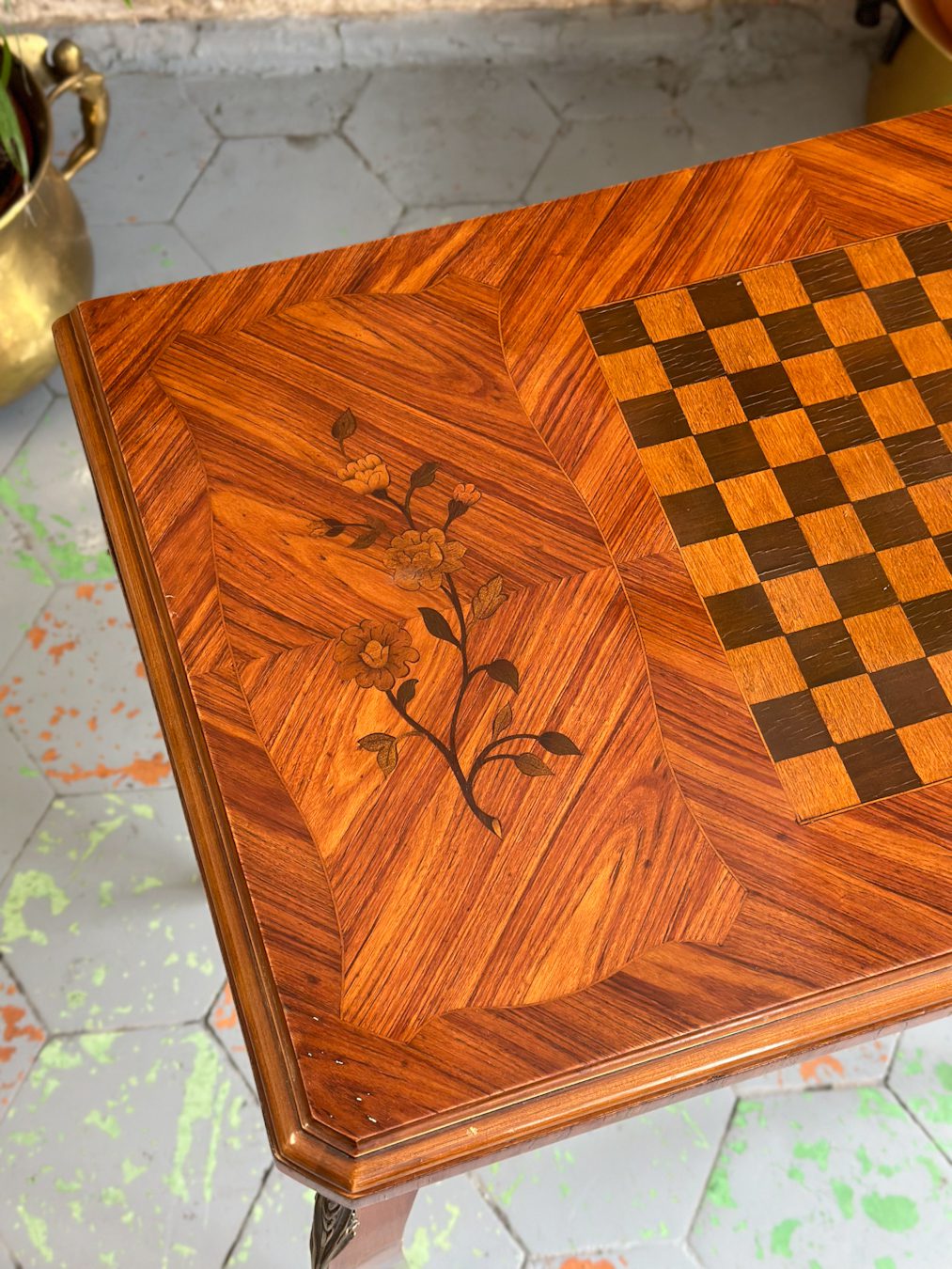
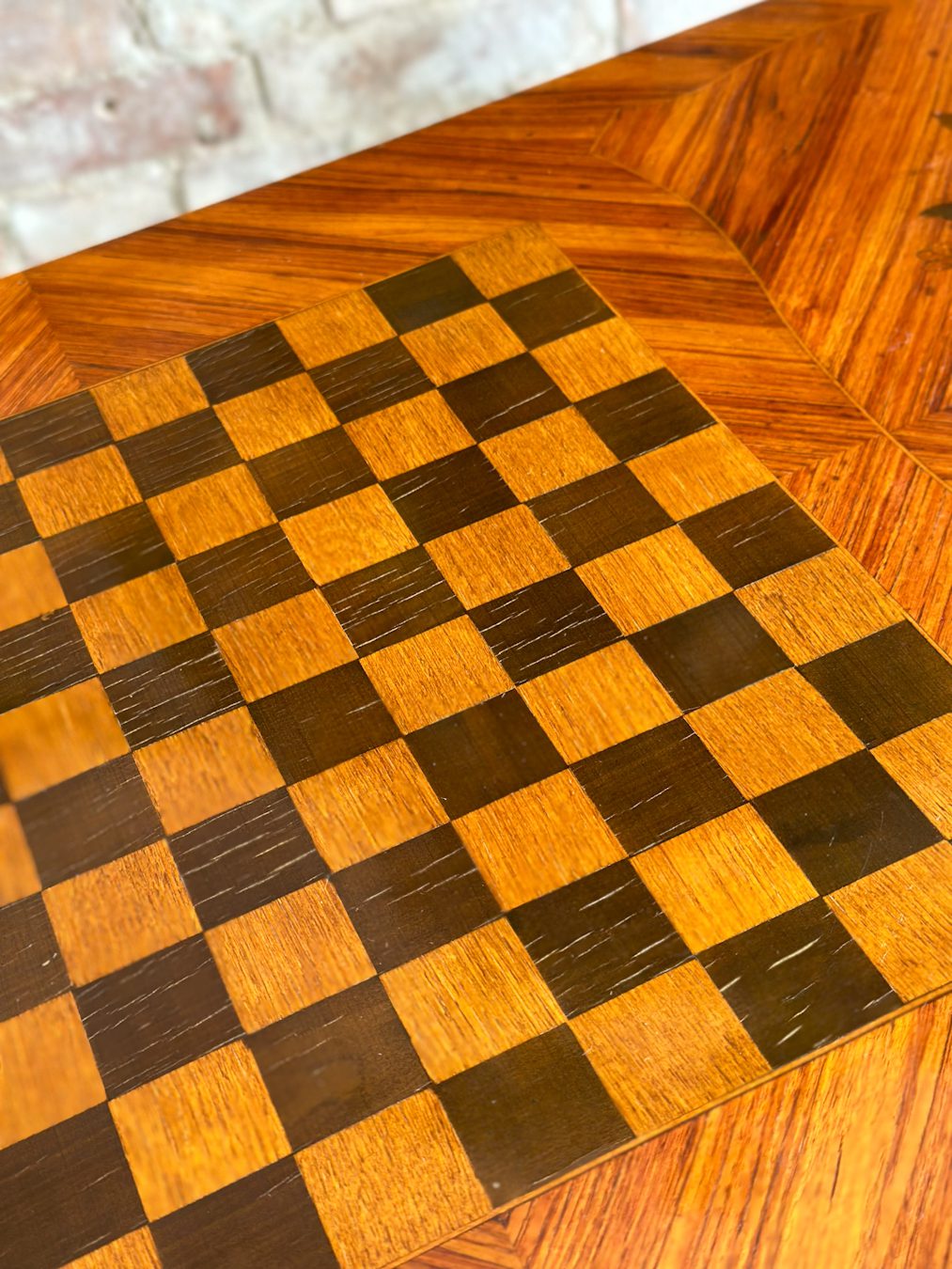
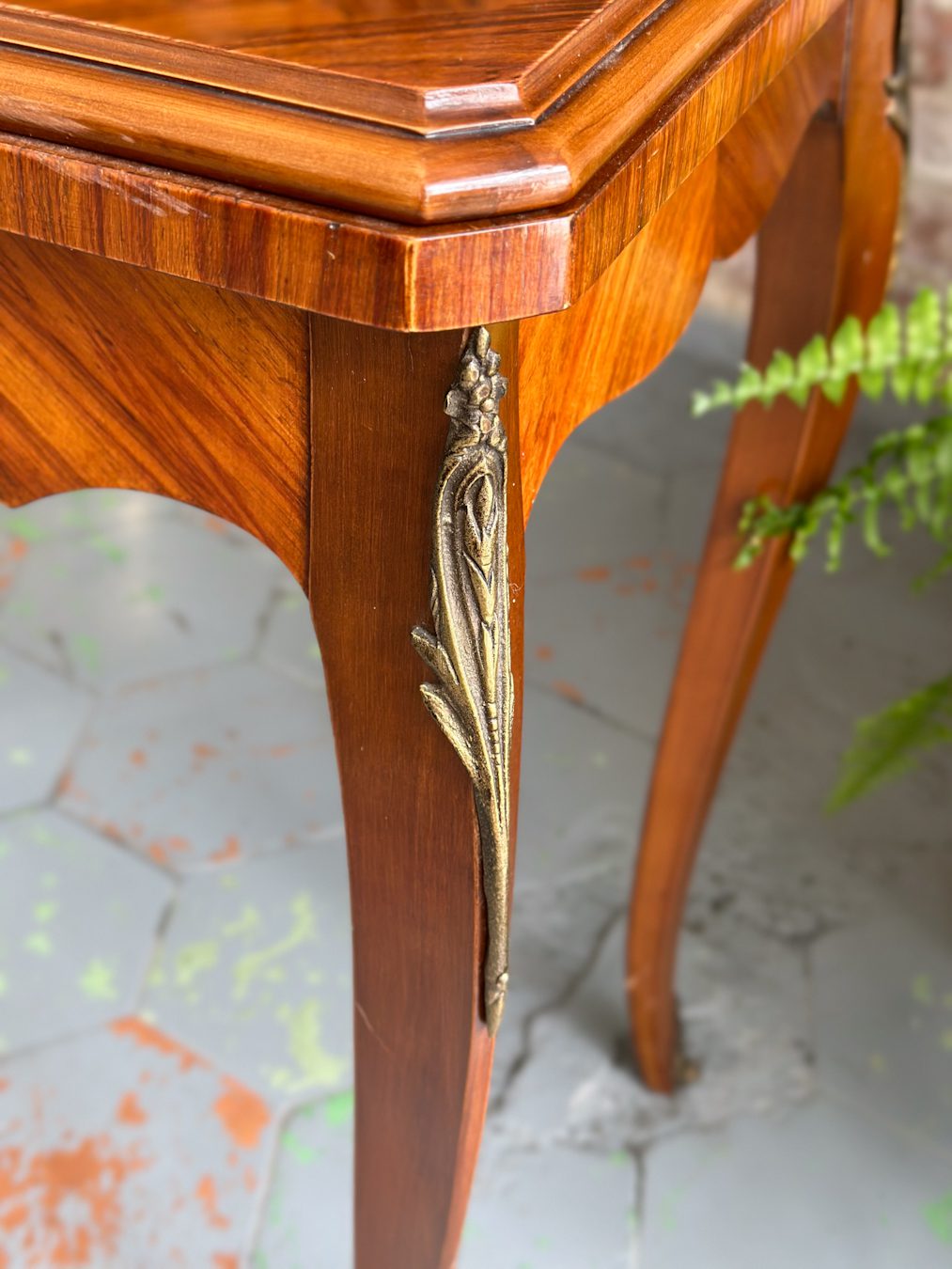
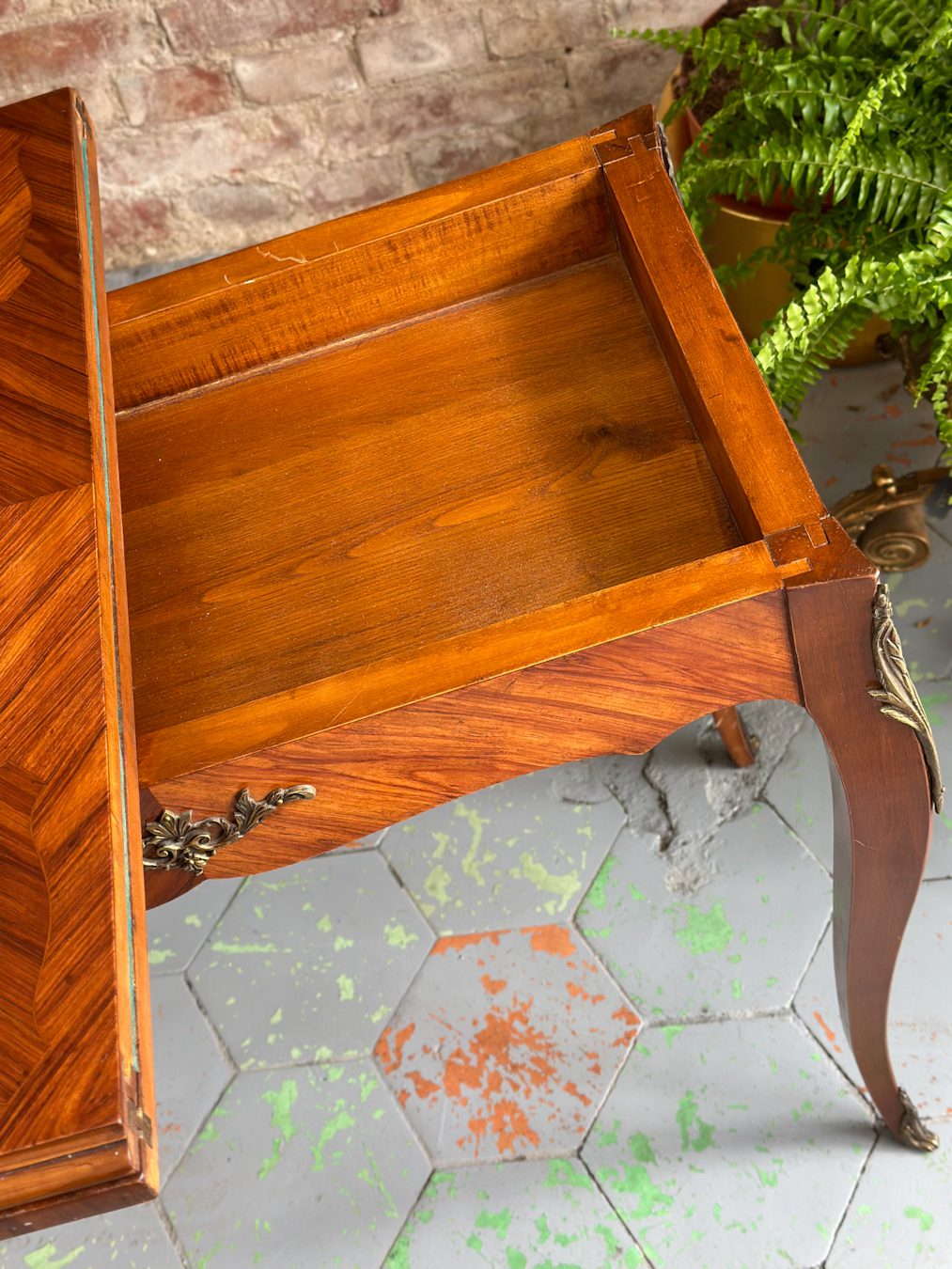
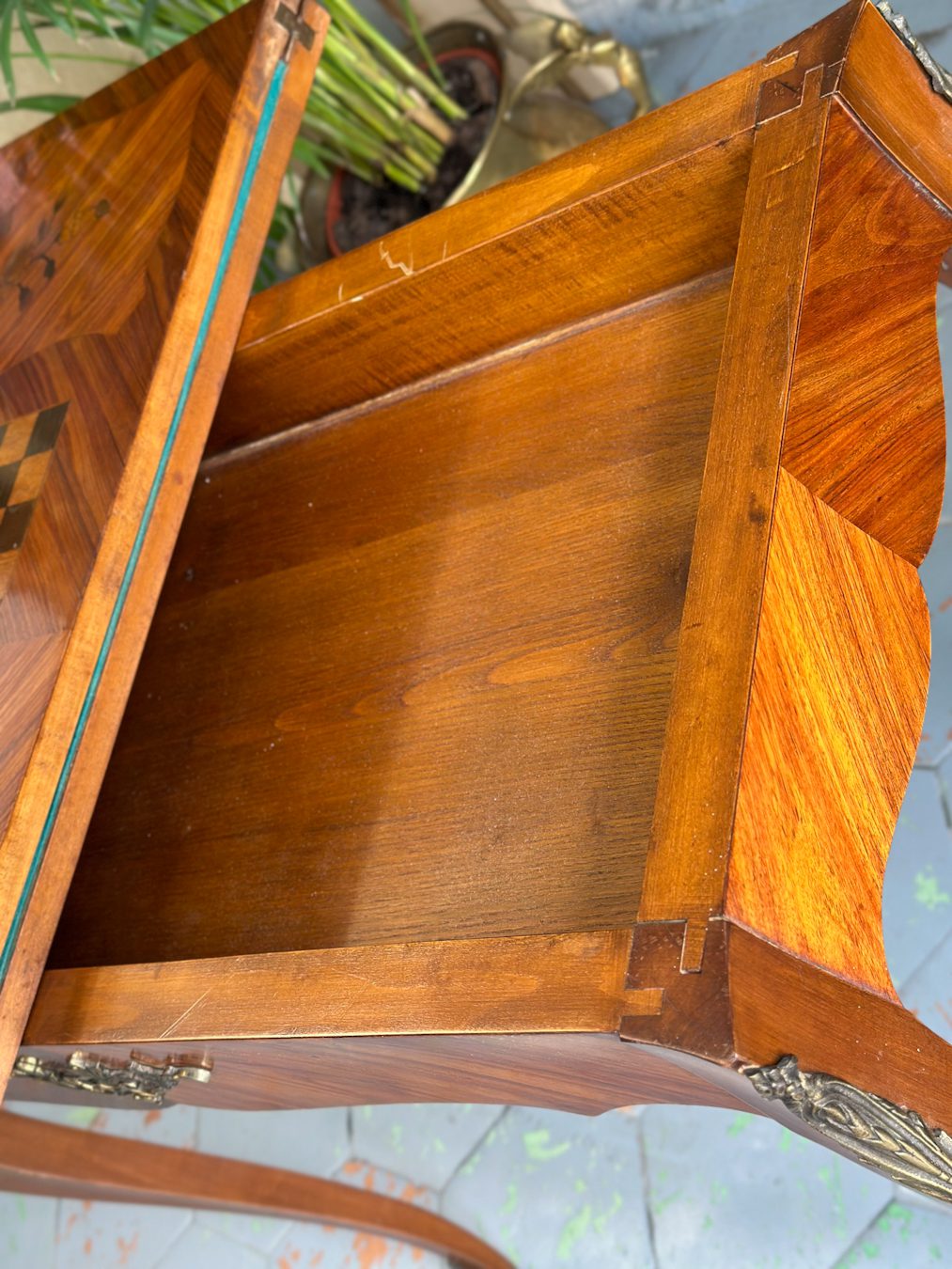
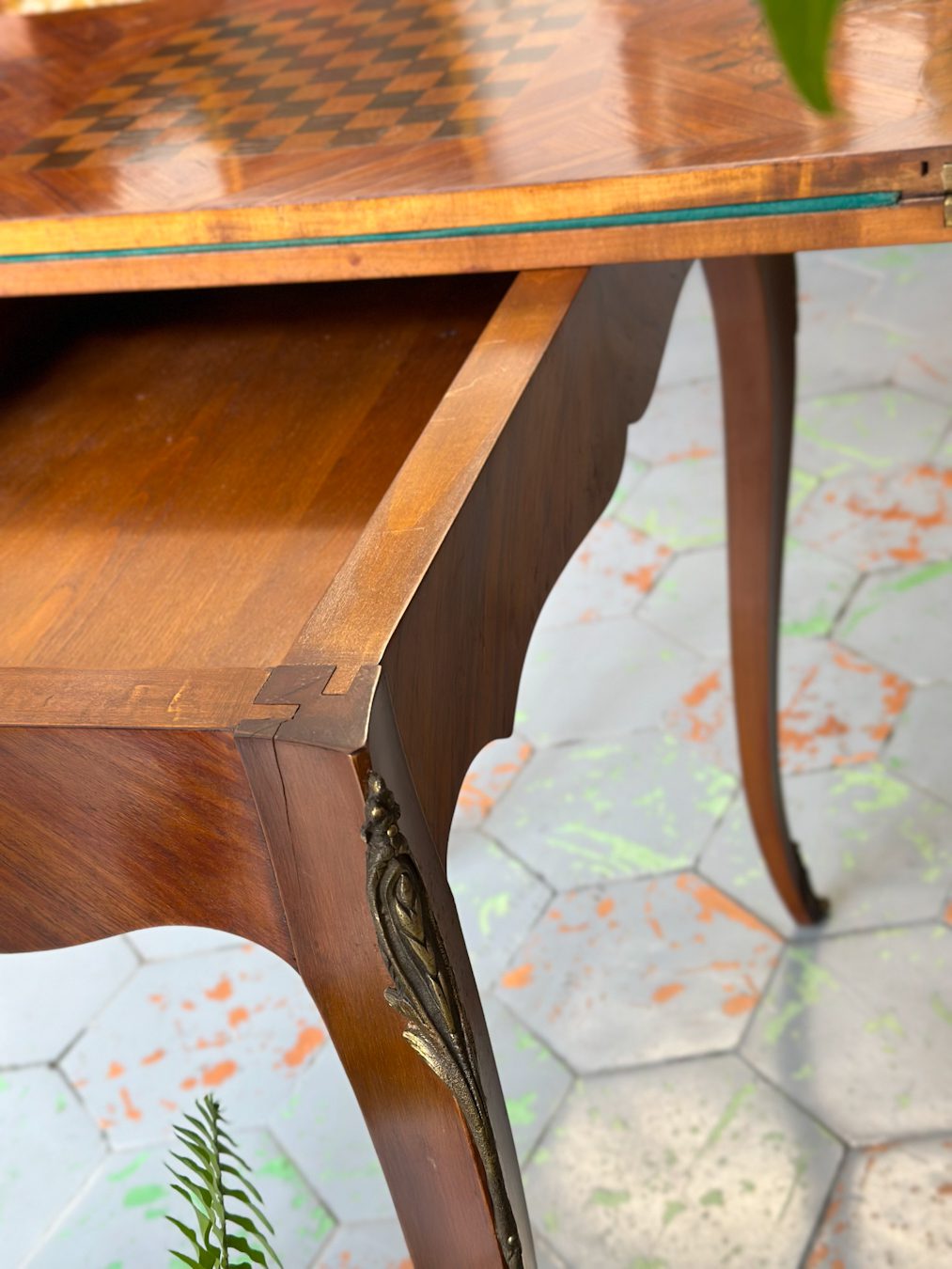
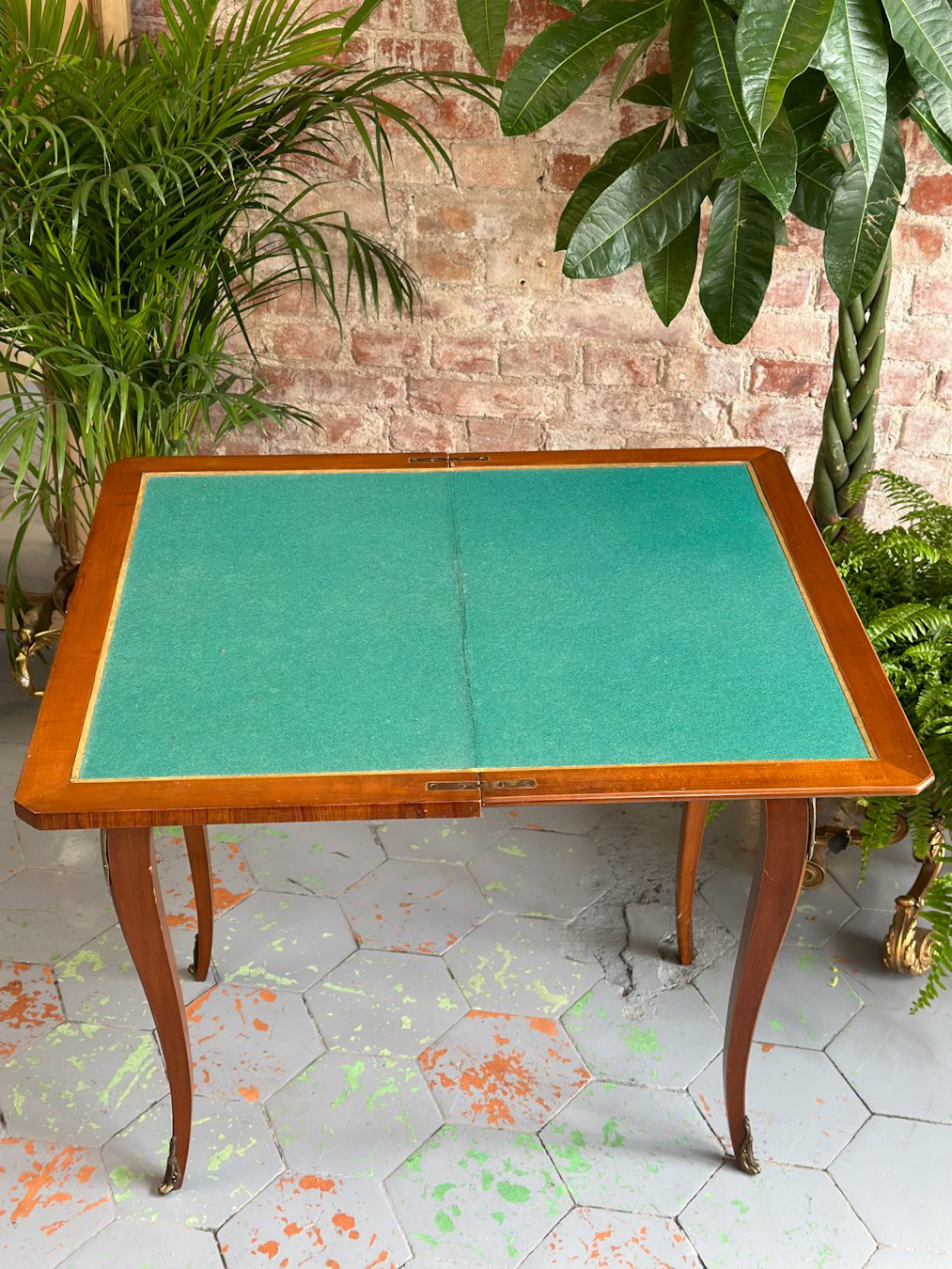
Priekšmets ir izcils marqueterie un parqueterie amatniecības paraugs: galda virsma veidota no precīzi saliktiem rožkoka (bois de rose) un tumšāka koka furniera kvadrantiem ar diagonālo zvaigžņu rakstu, kura centrā iegults pilnvērtīgs šaha laukums (échiquier). Katrā stūrī — delikāti iezīmēti ziedu incrustations: ziedoši kociņi un pumpuri, kas atsauc atmiņā 18. gadsimta Rococo marqueterie šedevrus. Apakšā — izliekta tablier ar bronzas sabots uz cabriole kājām un zeltīts bronzas applique uz priekšējās frīzes. Atvērtā veidā virsma atklāj zaļu tapis vert — klasisko spēļu galda segumu, kas pazīstams no Versaļas līdz Londonas klubiem.
✨ Belle Époque momentuzņēmums: 1880. gadu Parīzē šaha partijas salonos bija ne tikai galda spēle — tās bija sociāls rituāls. Tieši tajā laikā Parīzē dzīvoja un spēlēja Vilhelms Šteinics, pasaules pirmais oficiālais šaha čempions, un Parīzes kafejnīcas un saloni kļuva par vietu, kur šī intelektuālā spēle satikās ar saloniskās dzīves eleganci. Pie šāda galdiņa varēja sēdēt gan hercogiene, gan filosofs — abiem tas izskatītos pilnīgi dabiski.
―――――――――――――――――――――
⚜️ RAŽOTĀJS UN MANUFAKTŪRAS ZĪMOGS
Uz galdiņa nav identificēts konkrēts ražotāja zīmogs vai etiķete. Tomēr marqueterie izpildes kvalitāte — īpaši šaha laukuma precizitāte, furniera diagonālā simetrija un ziedu incrustations smalkums — liecina par augsta līmeņa Parīzes vai Parīzes apkārtnes ébénisterie darbnīcu. Šādi tables de jeu 19. gadsimta otrajā pusē ražoja tādi meistari kā Henri Dasson, Paul Sormani un vairākas mazākas, bet tikpat prasmīgas Parīzes darbnīcas, kas apgādāja salonveida dzīvokļu tirgu. Bronzas appliques un sabots kvalitāte atbilst manière française augstākajai kategorijai.
―――――――――――――――――――――
💎 RETUMS UN NOZĪME
Tables de jeu ar iebūvētu šaha laukumu marqueterie tehnikā, zaļo tapis vert otrajā pusē un pilnvērtīgu atvilktni ir ārkārtīgi reti antikvāru tirgū. Lielākā daļa saglabājusies tikai kā spēļu galdiņi vai tikai kā konsoļgaldiņi — priekšmeti ar abām funkcijām vienā ir kolekcionāru īpašā meklējumu kategorija. Šis eksemplārs izceļas ar marqueterie saglabāšanas stāvokli, bronzas detaļu integritāti un funkcionālās mehānikas darba spēju. Louis XV stila tables de jeu ar šādu apdari regulāri parādās prestižo māju izsolēs Christie’s, Sotheby’s un Drouot.
―――――――――――――――――――――
🕯️ PIELIETOJUMS INTERJERĀ, DIZAINĀ UN FOTOGRĀFIJĀ
Slēgtā veidā galdiņš darbojas kā elegants konsolīšu galdiņš — ideāli piemērots dzīvistabas stūrim, kabineta centrā vai guļamistabas malā. Atvērtā veidā tas pārtop pilnvērtīgā spēļu galdiņā četriem spēlētājiem. Marqueterie virsma ar rožkoka spīdumu rada siltu, karalisko atmosfēru jebkurā klasiskā vai eklektiskā interjerā. Interjera stilisti to bieži izmanto kā galveno akcentu Louis XV, Rococo Revival vai maximalism tematikā veidotās telpās. Fotogrāfiem galdiņš ir izcila rekvizīta platforma — tā marqueterie raksts un bronzas detaļas ir vizuāli bagātas pat detaļu uzņēmumos.
―――――――――――――――――――――
🎁 DĀVANA UN PERSONALIZĀCIJA
Šaha galdiņš ir no tām dāvanām, kas runā bez vārdiem — tā ir dāvana cilvēkam, kurš novērtē gan intelektu, gan estētiku. Piemērota kā reprezentatīva korporatīva vai diplomātiska dāvana, kā arī kā izcils dāvinājums šaha entuziastam, interjera kolekcionāram vai ikvienam, kas novērtē Belle Époque saloniskās dzīves estētiku. Galdiņš apvieno divus pasauļus — mākslas objekta un lietojama mēbeļu gabala — kas padara to par ideālu dāvanu ar pastāvīgu klātbūtni dzīvē.
―――――――――――――――――――――
🔍 STĀVOKLIS
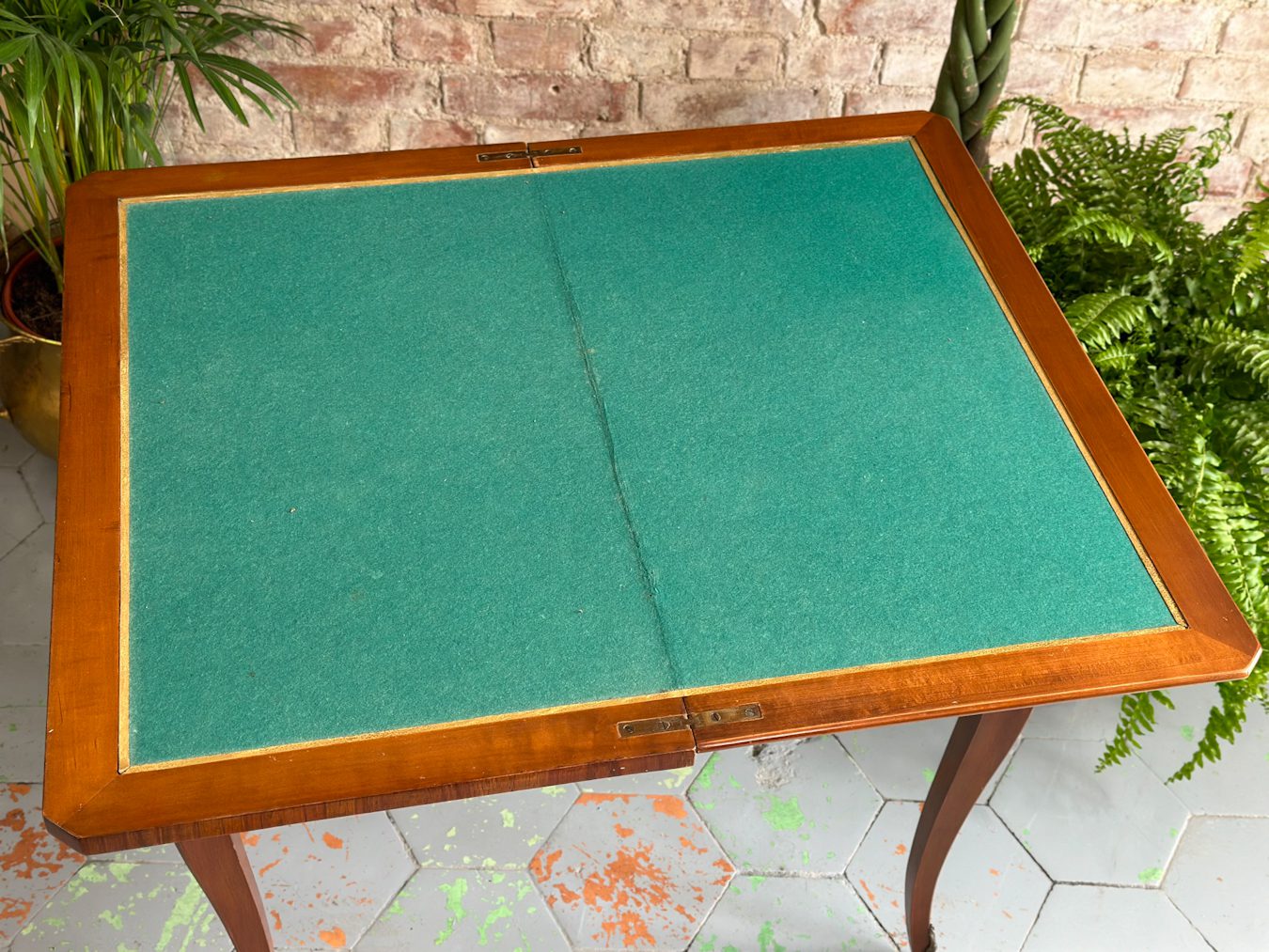
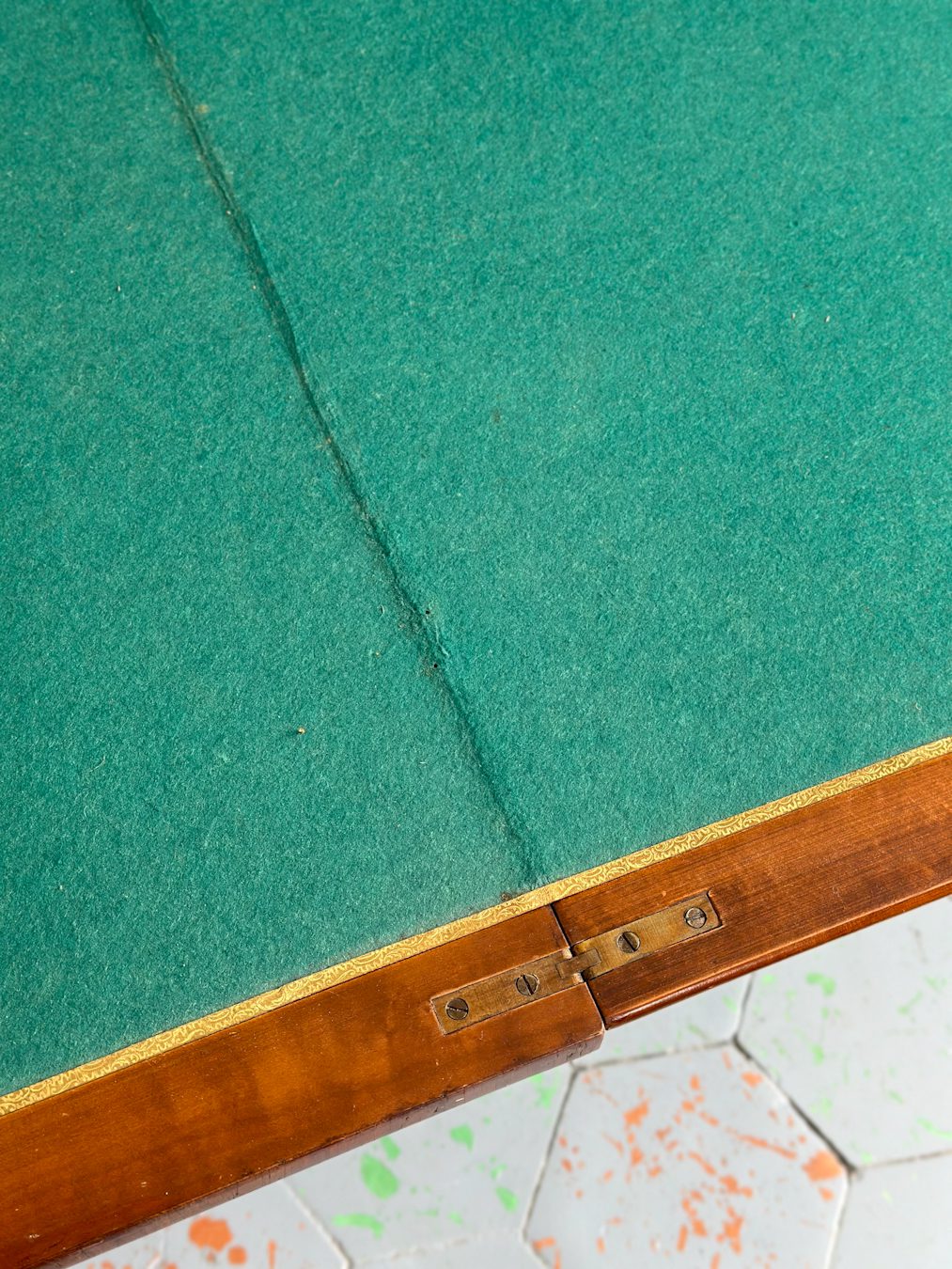
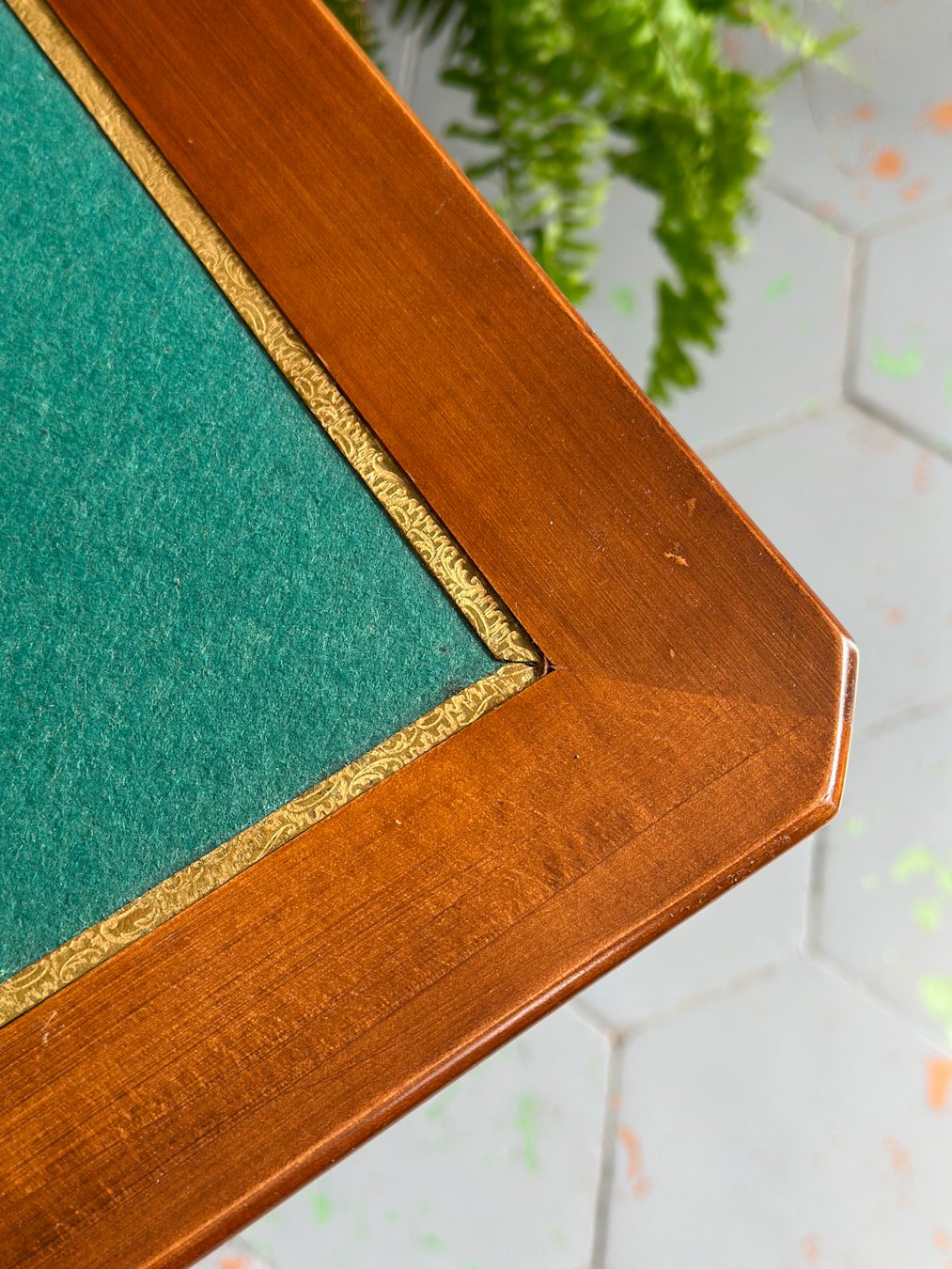
Galdiņš ir labā vispārējā stāvoklī, ņemot vērā tā vecumu. Marqueterie virsma ir labi saglabājusies ar dabiskām ekspluatācijas pēdām — smalkiem skrāpējumiem, kas tikai apliecina priekšmeta autentiskumu. Šaha laukuma furniera elementi ir veseli. Zaļais tapis vert uz atveramās virsmas ir nolietojies un vietām bojāts — tas ir vienīgais elements, kas varētu prasīt nomaiņu. Bronzas appliques un sabots uz kājām ir saglabājušies ar dabisku patinu. Atvilktne ir funkcionāla. Atvēršanas mehānisms darbojas.
Lietas stāvoklis pilnībā atspoguļots fotogrāfijās.
―――――――――――――――――――――
🇬🇧 DESCRIPTION IN ENGLISH
📐 Dimensions: Height 74 cm × Length 75.5 cm × Depth 43 cm. Open surface: 86 cm × 75.5 cm.
―――――――――――――――――――――
Chess Console Table with Fold-Open Gaming Surface — Louis XV Style, France, c. 1880–1900.
―――――――――――――――――――――
🏛️ PERIOD, ARTISTIC STYLE, ERA
This refined table de jeu is a distinguished example of the finest Belle Époque cabinetmaking — that luminous period from 1871 to 1914 when France stood as the undisputed centre of European decorative arts and salon culture. The piece belongs to the Louis XV Revival movement, which experienced a true renaissance in Third Republic Paris, as the haute bourgeoisie and aristocratic households filled their interiors with the sinuous forms and gilded bronze montures characteristic of this style.
The piece is an exceptional specimen of marqueterie and parqueterie craftsmanship: the top is composed of precisely laid bois de rose (rosewood) and contrasting wood veneer panels arranged in a diagonal star pattern, at the centre of which is inlaid a full chess board (échiquier). Each corner bears delicate floral incrustations — flowering branches and buds recalling 18th-century Rococo marqueterie masterpieces. The curved tablier is fitted with gilded bronze sabots on cabriole legs and a decorative bronze applique on the front apron. Opened, the surface reveals a green tapis vert — the classic gaming table baize known from Versailles to London’s finest clubs.
✨ Belle Époque snapshot: In 1880s Paris, chess matches in private salons were far more than a pastime — they were a social ritual. It was in precisely this era that Wilhelm Steinitz, the world’s first official chess champion, was living and playing in Paris, and the city’s salons and cafés became the stage where this ancient intellectual game met the elegance of salon life at its height. At a table such as this, a duchess and a philosopher might have sat across from one another — and both would have found it entirely natural.
―――――――――――――――――――――
⚜️ MAKER AND MARK
No specific maker’s mark or label has been identified on this piece. However, the quality of the marqueterie — particularly the precision of the chess board inlay, the symmetry of the diagonal veneer pattern, and the refinement of the floral incrustations — points clearly to a high-calibre Parisian or Paris-region ébénisterie workshop. Such tables de jeu were produced in the second half of the 19th century by makers including Henri Dasson, Paul Sormani, and numerous smaller but equally skilled Parisian workshops supplying the salon apartment market. The quality of the bronze appliques and sabots is consistent with the highest tier of manière française cabinetmaking.
―――――――――――――――――――――
💎 RARITY AND SIGNIFICANCE
Tables de jeu combining an inlaid marqueterie chess board, a green baize reverse, and a functioning drawer are exceptionally rare on the antique market. Most surviving examples serve either as gaming tables or as console tables — pieces uniting both functions in a single object represent a special category sought by collectors. This example stands out for the preservation of its marqueterie, the integrity of its bronze mounts, and the working condition of its opening mechanism. Louis XV style tables de jeu of this quality regularly appear at the major auction houses — Christie’s, Sotheby’s and Drouot — where they attract strong collector interest.
―――――――――――――――――――――
🕯️ USE IN INTERIORS, DESIGN AND PHOTOGRAPHY
Closed, the table functions as an elegant side or console table — perfectly suited to a drawing room corner, the centre of a study, or beside a bed. Open, it becomes a fully operational gaming table for four players. The marqueterie surface with its rosewood lustre creates a warm, regal atmosphere in any classical or eclectic interior. Interior designers frequently use pieces of this character as a focal accent in Louis XV, Rococo Revival or maximalist spaces. For photographers and stylists, the table provides exceptional visual richness — its marqueterie pattern and bronze details photograph beautifully even in close-up detail shots.
―――――――――――――――――――――
🎁 AS A GIFT
A chess table of this quality speaks without words — it is a gift for a person who values both intellect and beauty in equal measure. Suitable as a distinguished corporate or diplomatic gift, and equally compelling as a personal offering to a chess enthusiast, an interior collector, or anyone who appreciates the aesthetic of the Belle Époque salon. The table unites two worlds — art object and functional furniture — making it a gift with an enduring presence in daily life.
―――――――――――――――――――――
🔍 CONDITION
The table is in good overall condition for its age. The marqueterie surface is well preserved with natural signs of use — light surface scratches that only affirm the piece’s authenticity. The chess board veneer elements are intact. The green tapis vert on the fold-open surface is worn and partially damaged in places — this is the only element that may benefit from replacement. The bronze appliques and sabots retain a handsome natural patina. The drawer is functional. The opening mechanism operates correctly.
Condition is fully reflected in the photographs.
―――――――――――――――――――――