
Greznā Boule Stila Kumode ar Intarsiju, Bronzu un Marmora Virsmu — Luija XIV / Napoleon III, Francija, 19.gs. (4500)

Greznā Boule Stila Kumode ar Intarsiju, Bronzu un Marmora Virsmu — Luija XIV / Napoleon III, Francija, 19.gs. (4500)
€1,350.00
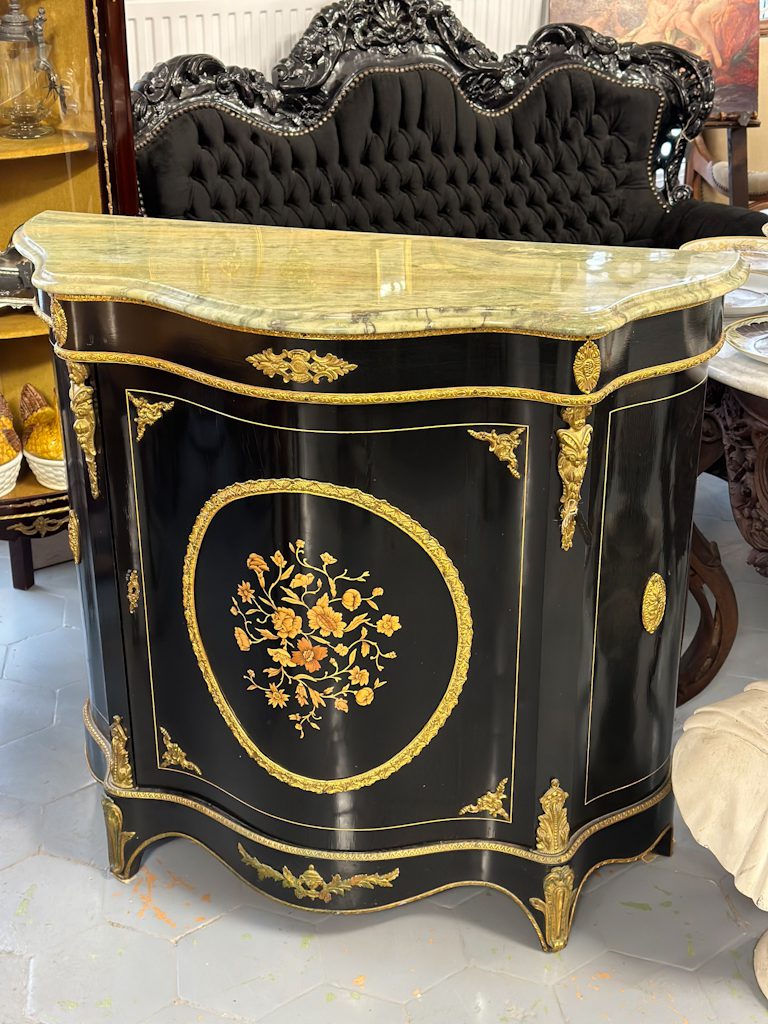
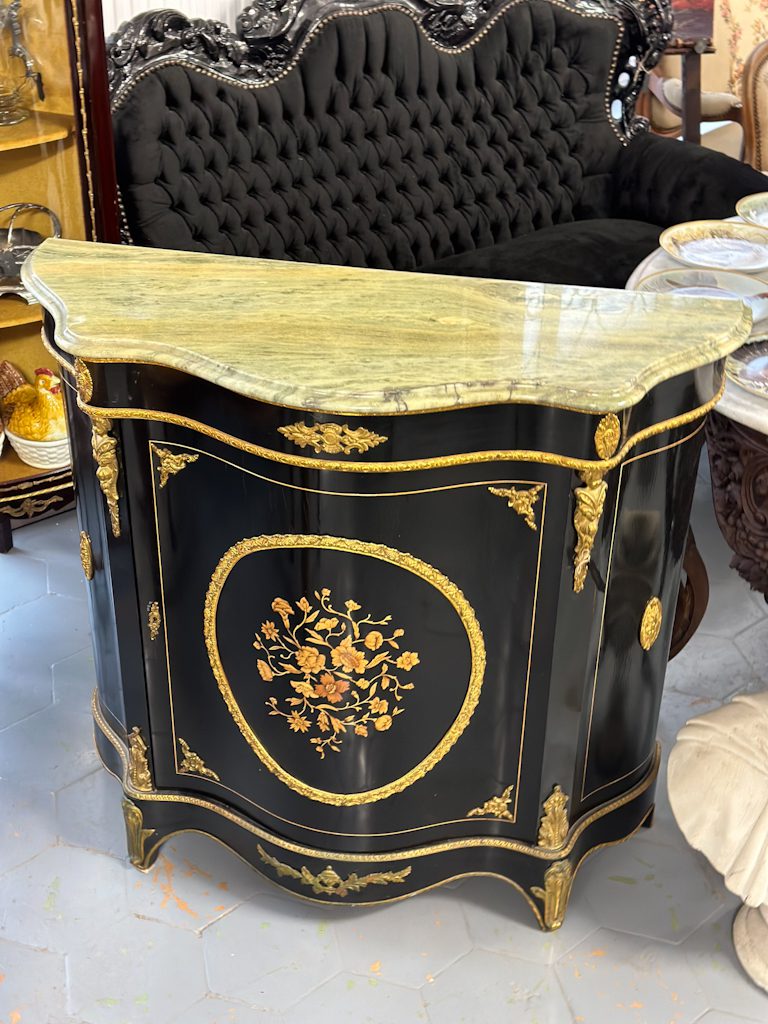
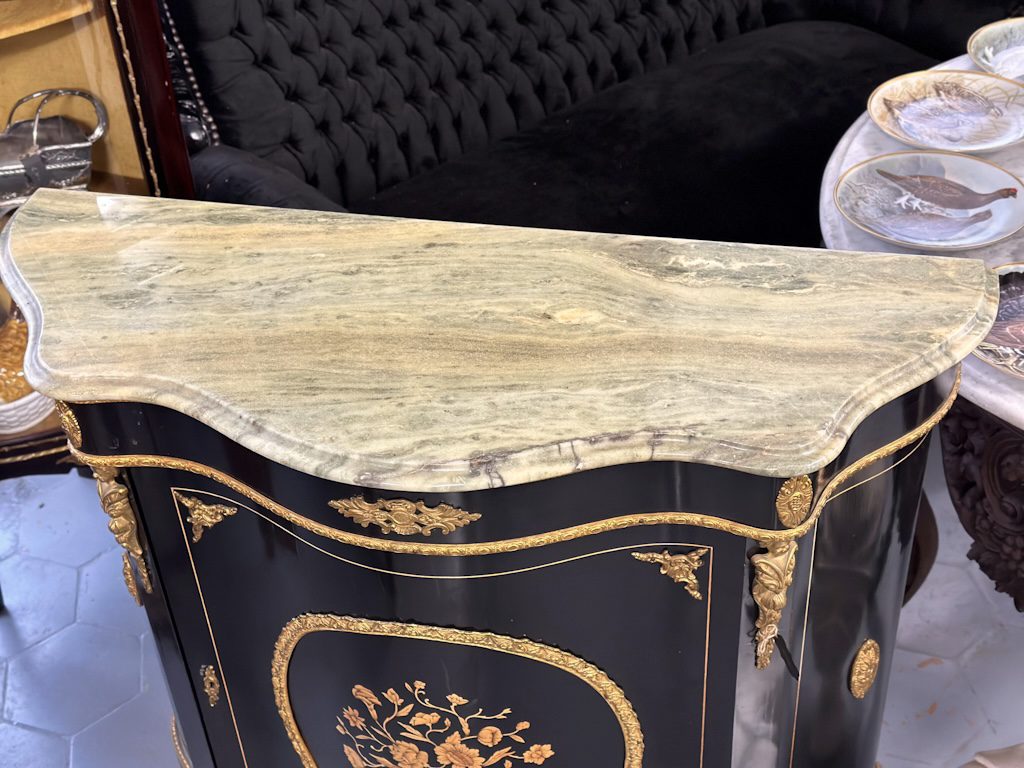
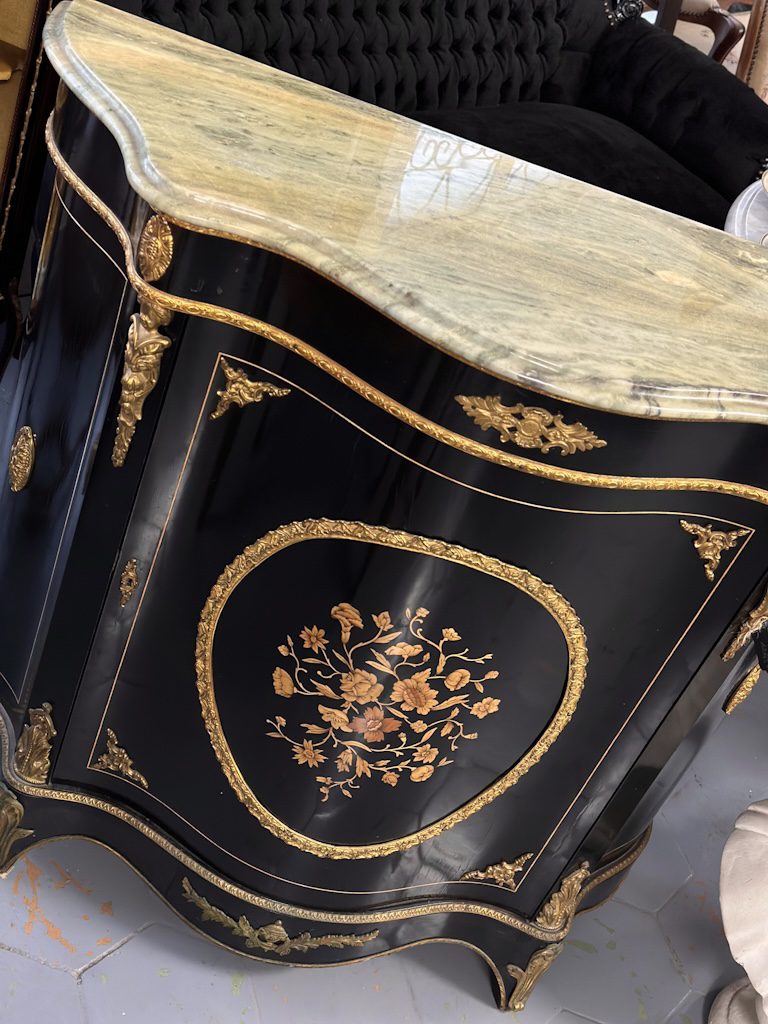
Iespaidīga ebonizēta koka kumode ar zelta koka ziedu intarsiju ovālā medaljonā, bagātīgām bronzas ormolu montāžām un zaļā marmora serpentīna virsmu. Luija XIV / Napoleona III stils, Francija, ap 1860.–1890. Augstums 95,5 cm × garums 100 cm × dziļums 38 cm.
📐 IZMĒRI
Augstums 95,5 cm × garums 100 cm × dziļums 38 cm.
―――――――――――――――――――――
Greznā Boule Stila Kumode ar Ziedu Intarsiju, Bronzas Montāžām un Zaļā Marmora Virsmu — Luija XIV / Napoleona III stils, Francija, ap 1860.–1890.
―――――――――――――――――――――
🏛️ IZGATAVOŠANAS PERIODS, MĀKSLAS STILS, LAIKMETS
Šī ārkārtīgi iespaidīgā kumode pieder Belle Époque laikmeta greznākajam slānim — tam periodam no 1871. līdz 1914. gadam, kad Napoleona III stils savā pilnbriedā apvienoja vairāku gadsimtu dekoratīvās mākslas sasniegumus vienā objektā. Kumode datējama aptuveni 1860.–1890. gados — Second Empire un agrīnās Belle Époque ziedu laikā.
Šis priekšmets pieder tam retajam auglīgajam pārejas brīdim, kad Luija XIV laikmeta lieliskums — ar tā Boule tradīcijas ebonizēto koku, zelta bronzu un intarsiju — tika reinterpretēts Napoleona III gaumē: vēl monumentālāks, vēl bagātāks, vēl teatrālāks. Abas estētikas šajā kumodes sadzīvo vienā objektā ar absolūtu pārliecību.
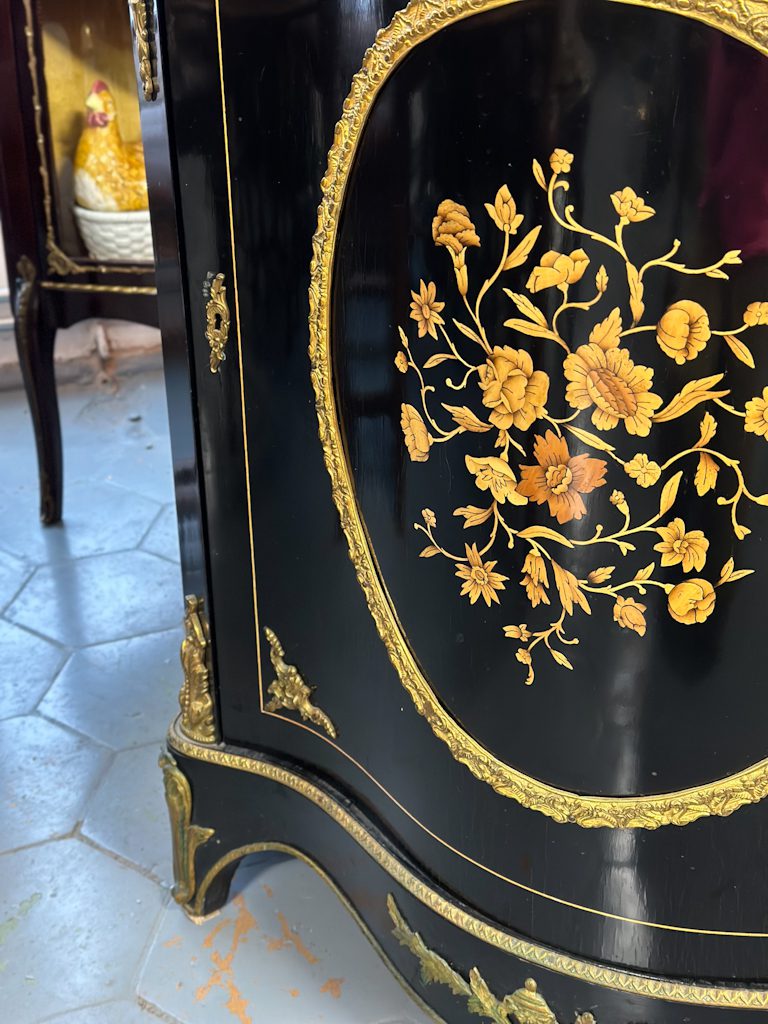
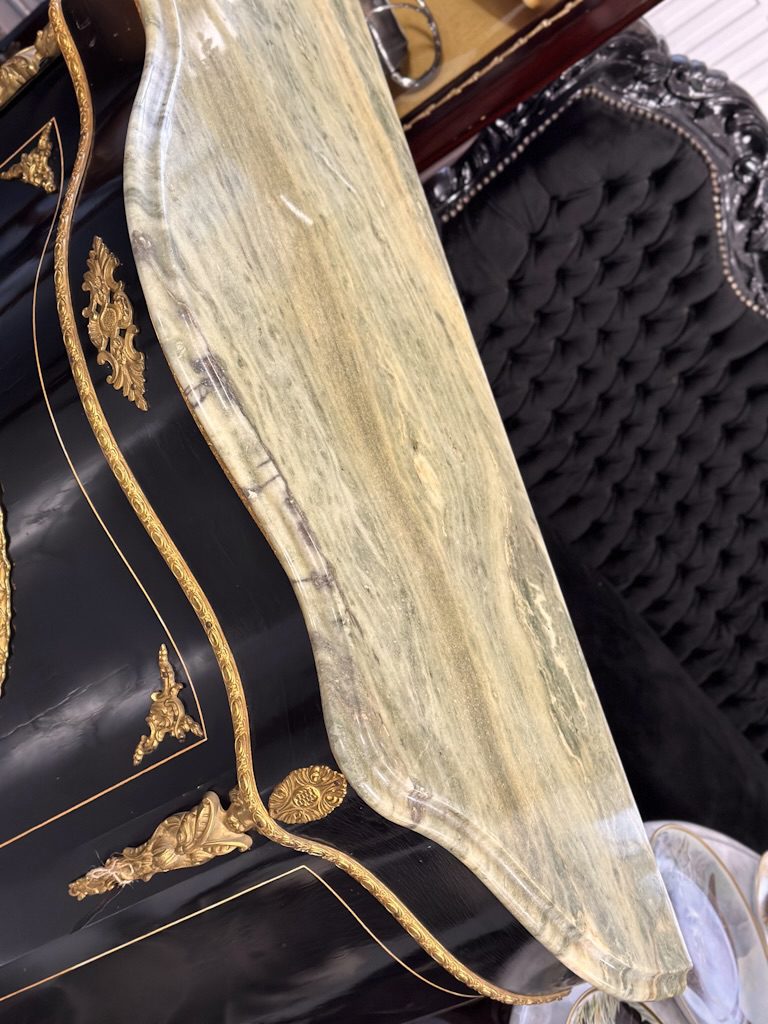
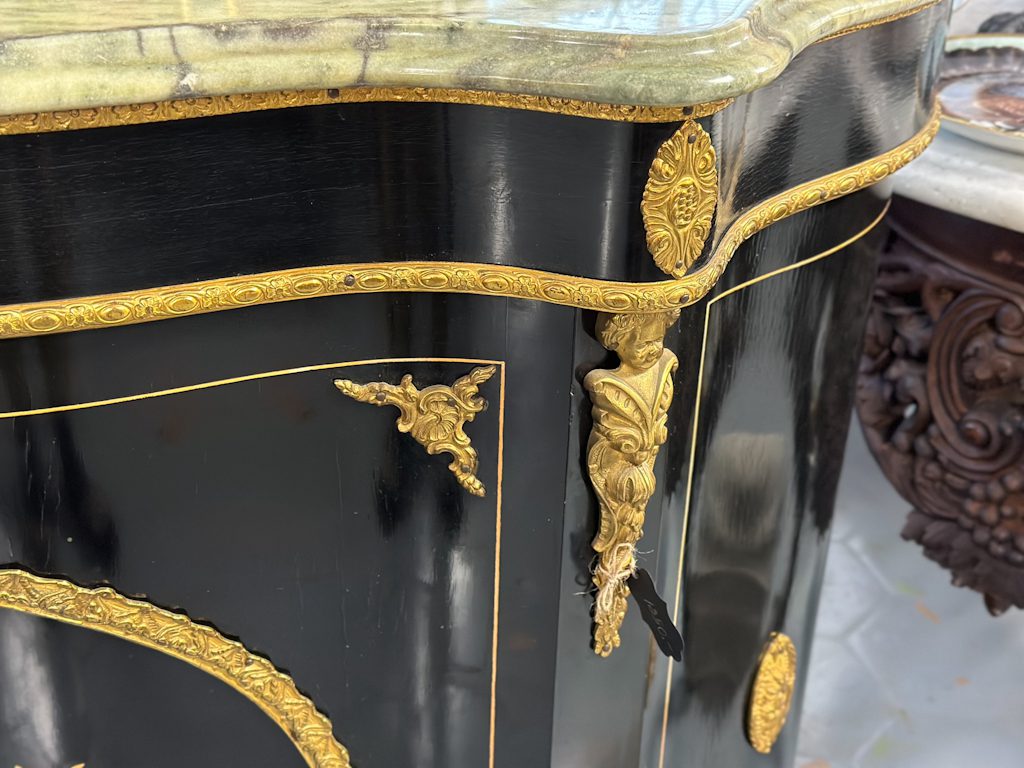
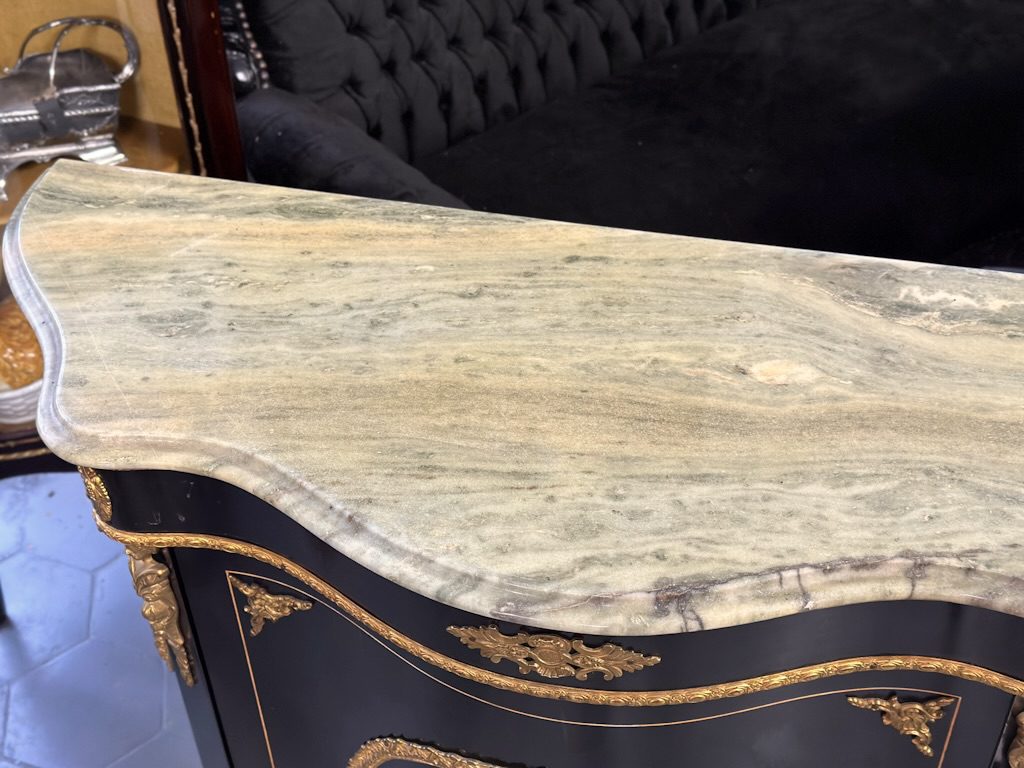
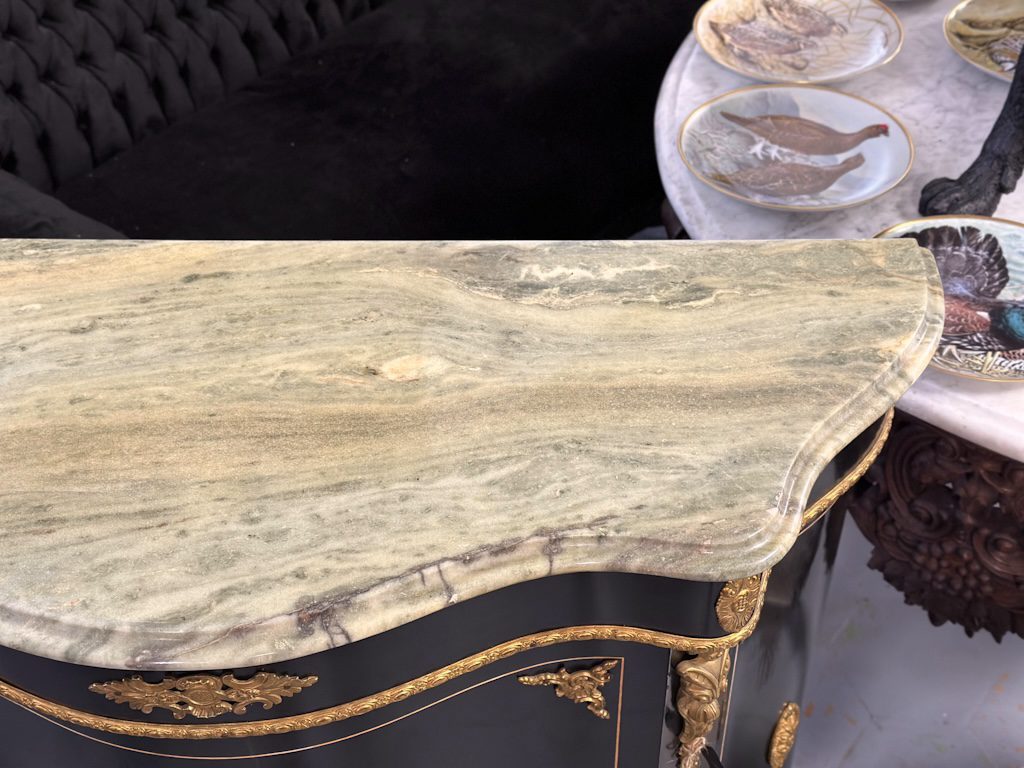
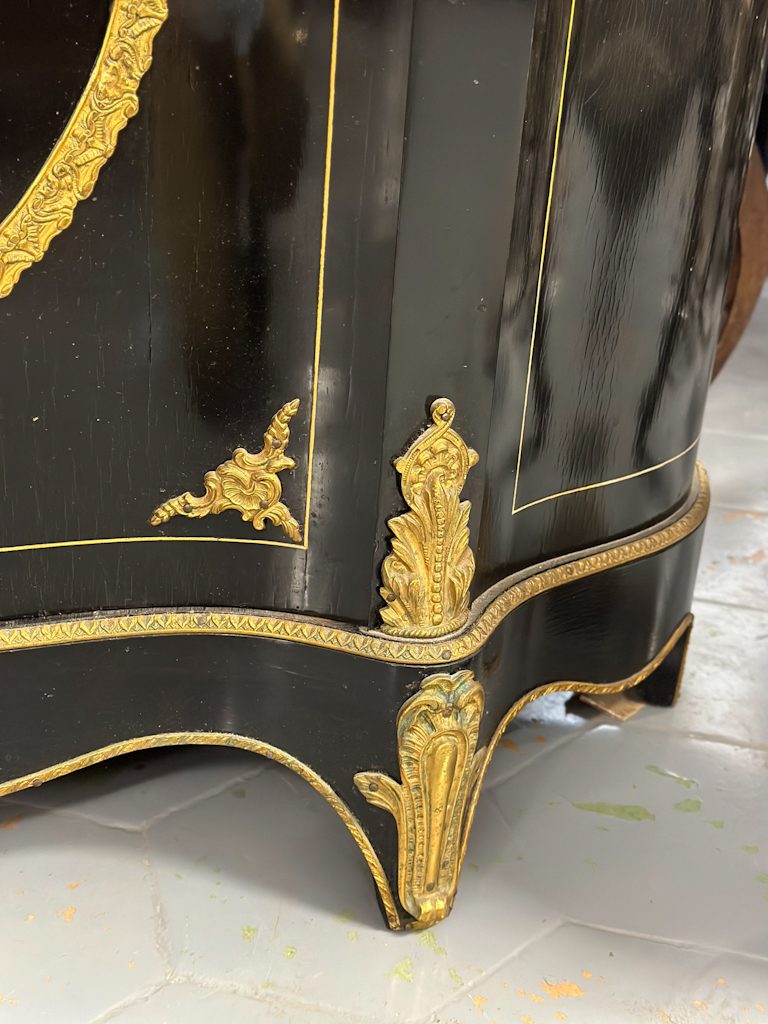
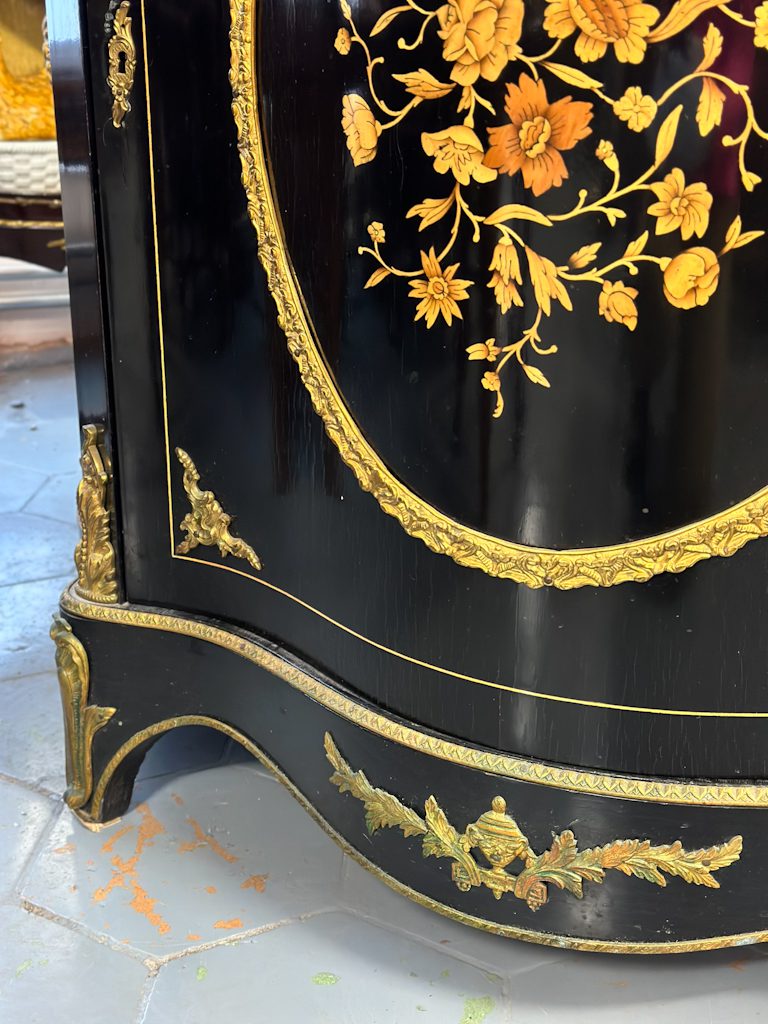
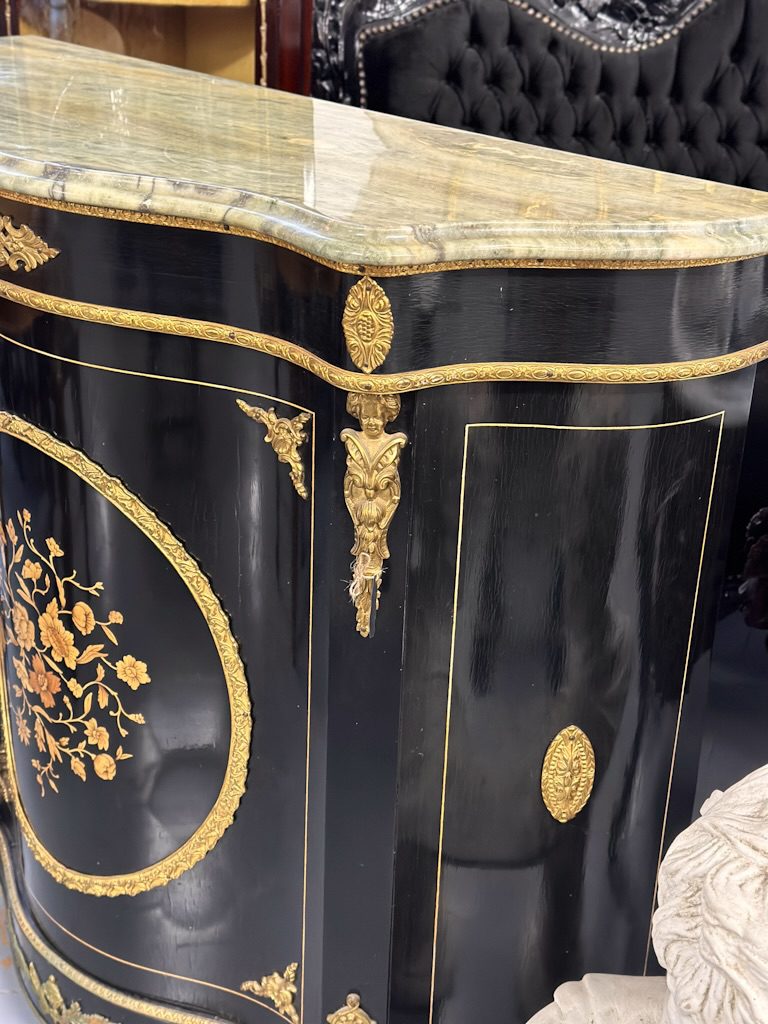
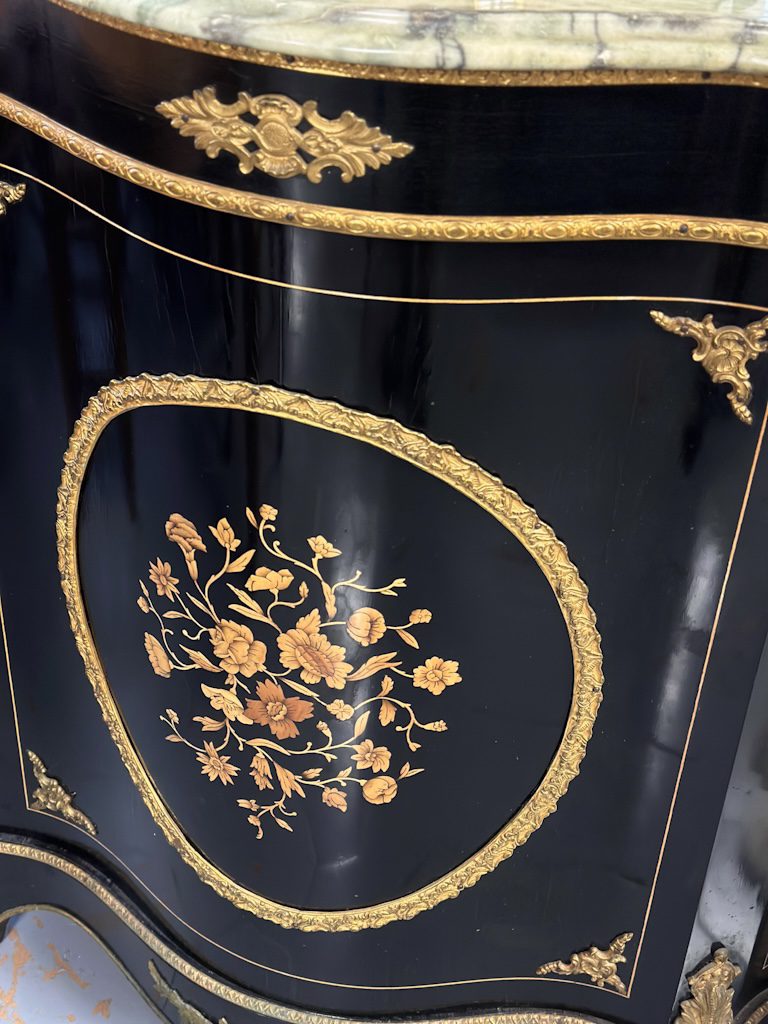
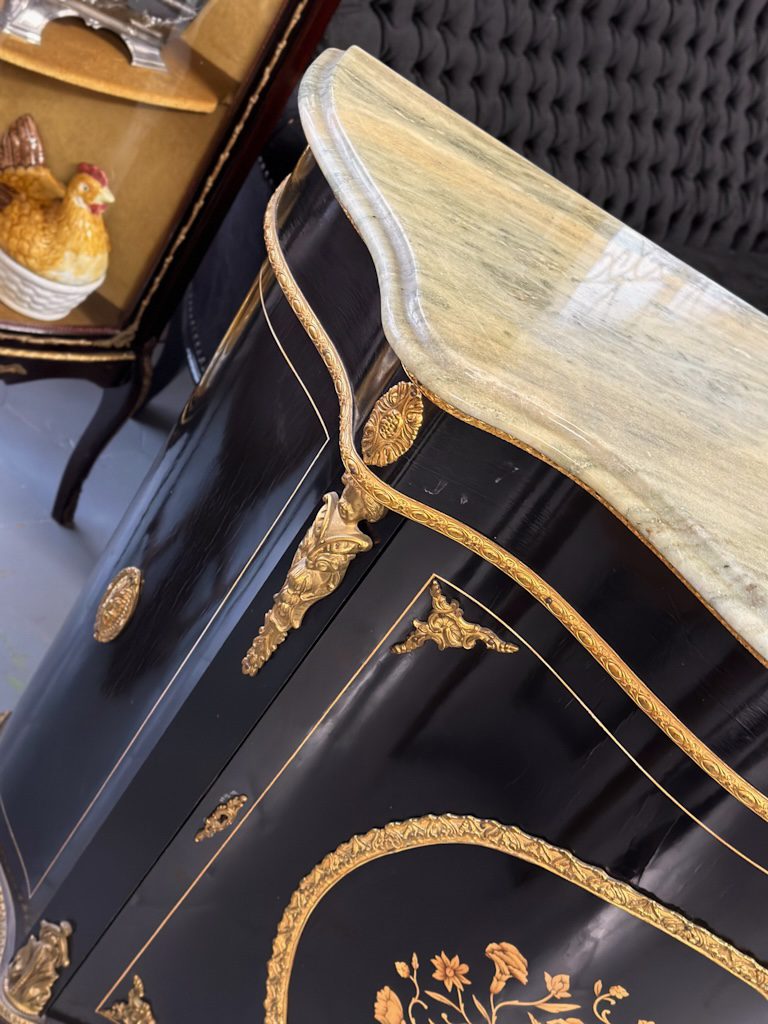
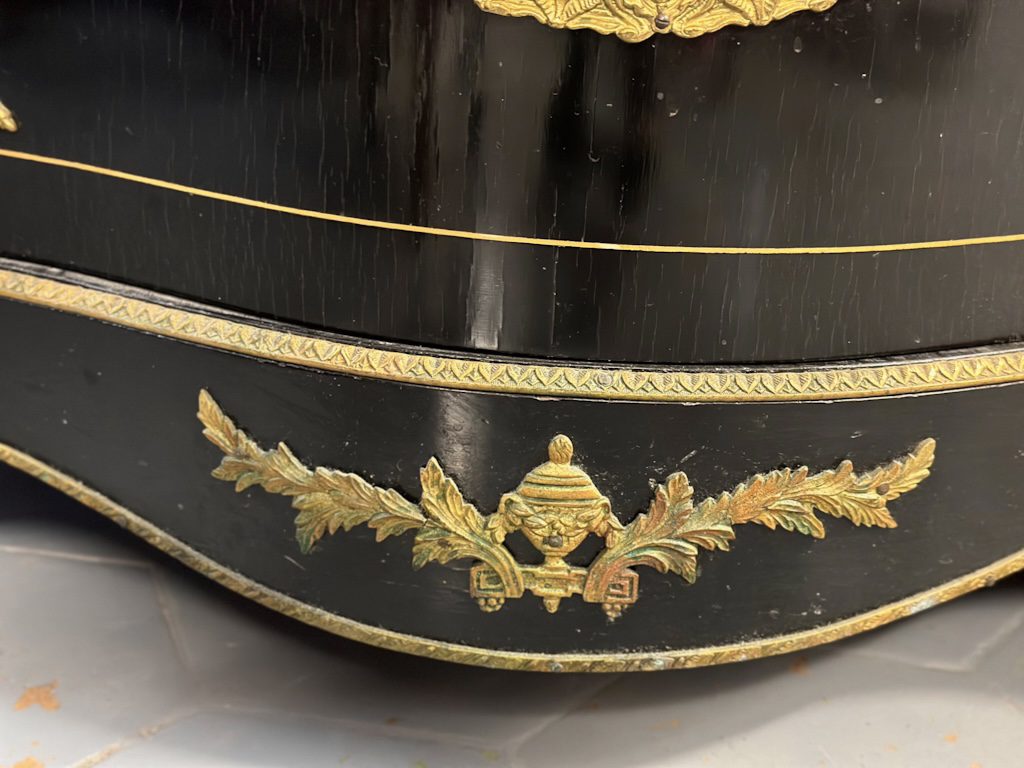
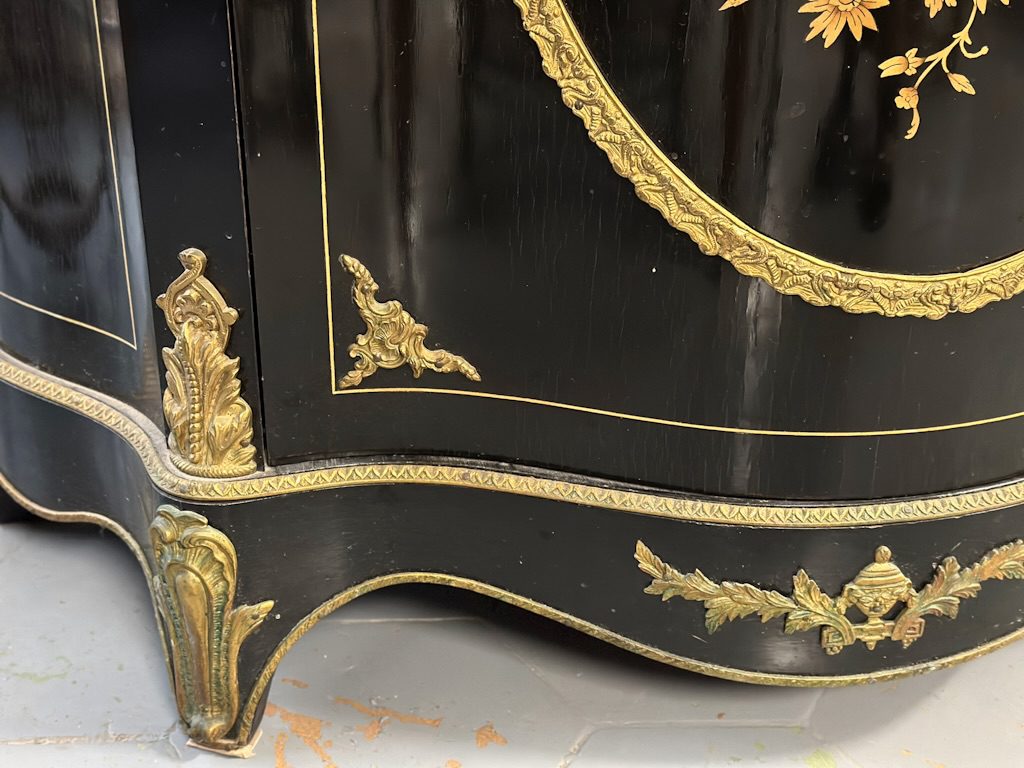
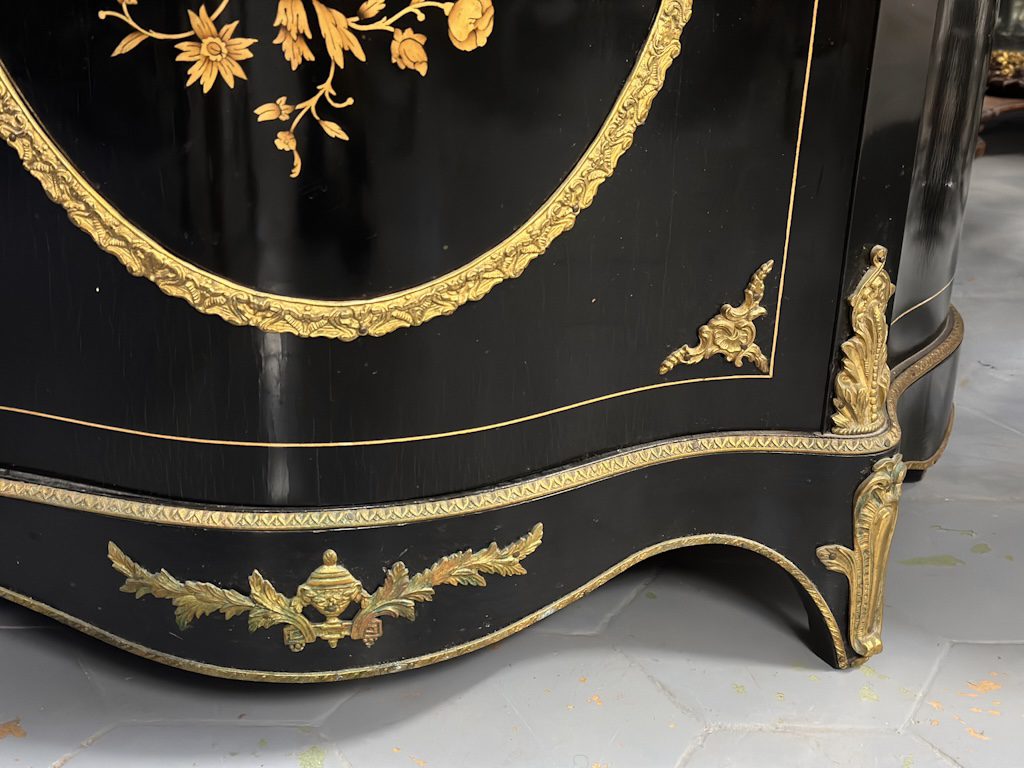
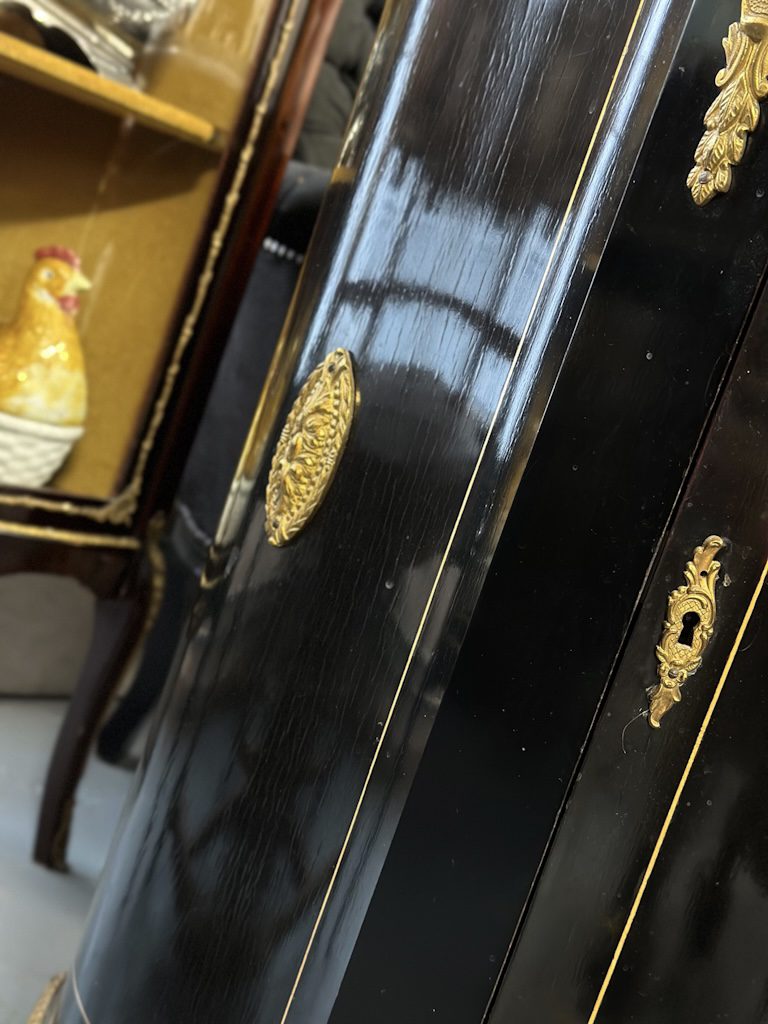
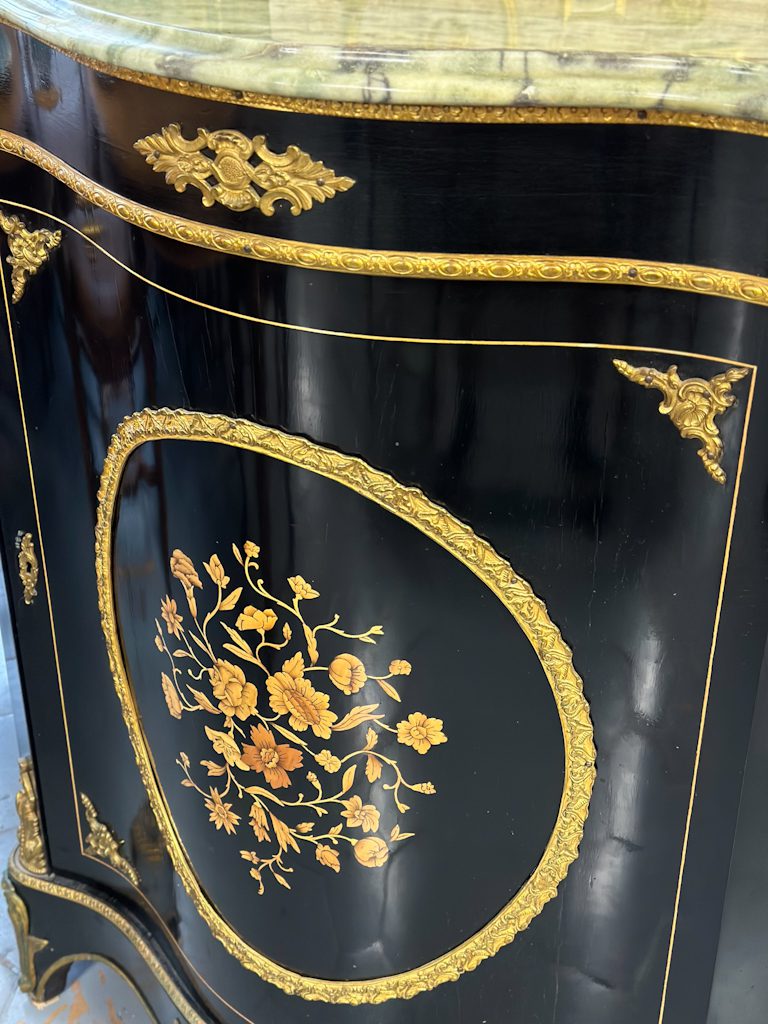
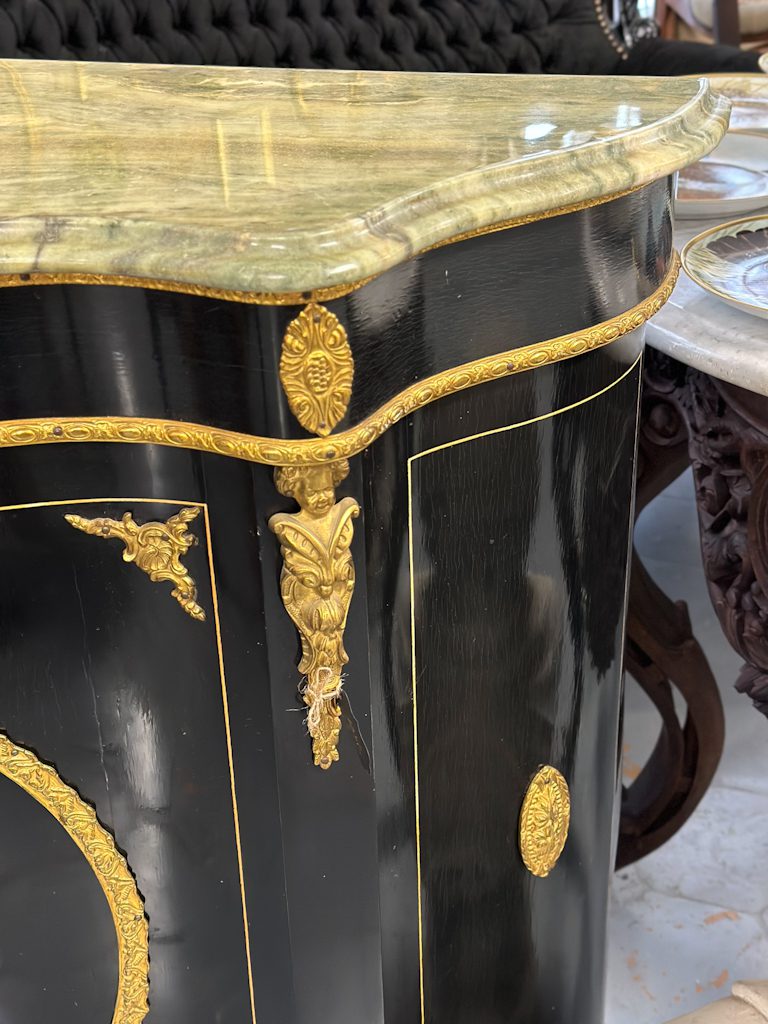
Kumode ir neparasts un izsmalcināts trīsdaļīgs ansamblis: serpentīna formas bombé korpuss ar izliektiem stūriem un vienu durvju paneli — tas ir meuble d’appui tips, ko Parīzes labākās darbnīcas izgatavoja kā salona vai ēdamistabas sienas gabalu augstākajiem pasūtītājiem. Galvenais dekoratīvais elements — ovālais medaljons ar zelta koka marquetry ziedu pušķi uz melna fona — ir izpildīts ar izcistu precizitāti: katrs zieds, katrs lapiņas veins ir atsevišķs intarsijas gabals. Bronzas ormolu montāžas klāj visu virsmu: akantus stūru uzlikas, rocaille durvju roktura figūra ar sievietes galvu, ovālie medaljoniņi sānos, lauru vainaga un urnas motīvs apakšējā frīzē. Virs visa šī — vert de mer tipa zaļā marmora virsma ar serpentīna kontūru.
Šarls Garnjē tajā laikā projektēja Parīzes Operas namu — un tieši šādas kumodes rotāja tā foajē un avant-scène abonentu salonos. Melns ebène ar zeltu un zaļo marmoru bija tas pats valodas dialekts, ko Garnjē izvēlējās savām reprezentatīvajām telpām.
―――――――――――――――――――――
⚜️ RAŽOTĀJS UN MANUFAKTŪRAS ZĪMOGS
Redzama ražotāja zīmoga nav konstatēts. Tomēr bronzas ormolu montāžu kvalitāte un marquetry intarsijas izpildījuma precizitāte liecina par Parīzes augstākās kategorijas ébénisterie darbnīcu — tā sauktajiem maîtres ébénistes, kas Second Empire un Belle Époque periodā piegādāja galdniecības darbus gan imperatoriskajam galmam, gan Eiropas aristokrātijai. Boule tradīcijas ebonizēto mēbeļu ražošana bija Parīzes ekskluzīva specialitāte — citas Eiropas pilsētas šajā laukā nesasniedza Francijas galvaspilsētas kvalitātes līmeni. Bronzas ormolu detaļu liešanas asums un chiseling precizitāte norāda uz pieredzējušu ciseleur-doreur darbu.
―――――――――――――――――――――
💎 RETUMS UN NOZĪME
Boule tradīcijas meuble d’appui kumodes ar marquetry ziedu intarsiju, pilnu bronzas ormolu apšuvumu un oriģinālu marmora virsmu ir vieni no meklētākajiem Napoleona III perioda mēbeļu gabaliem starptautiskajā tirgū. Šī kumodes trīsdaļīgais serpentīna siluets, intarsijas kvalitāte un bronzas detaļu daudzums to izceļ no viduvēja piedāvājuma. Londona, Parīze, Ņujorka — visos trijos antikvariātu tirgos šādi gabali tiek atrasti reti un pārdoti ātri.
―――――――――――――――――――――
🕯️ PIELIETOJUMS INTERJERĀ, DIZAINĀ UN FOTOGRĀFIJĀ
Šī kumode ir radīta kā sienas gabals — un katru sienu, pie kuras tā atrodas, tā pārvērš par fokusa punktu. Klasiskā vai eklektiskā salonā tā funkcionē kā telpas kroņjuvels; mūsdienu baltā interjerā melnais ebène ar zeltu un zaļo marmoru kļūst par absolūtu statement. Fotogrāfiem un stilistiem — intarsijas detaļu makro, bronzas refleksijas un marmora virsmas tekstūra nodrošina neizsmēlamas vizuālās iespējas. Restorāniem, viesnīcām un privātiem klientiem ar augstu gaumi — šī ir izvēle, ko atceras.
―――――――――――――――――――――
🎁 DĀVANA UN PERSONALIZĀCIJA
Šāda līmeņa kumode ir reprezentatīva dāvana diplomātiskā vai korporatīvā līmenī — objekts, kas runā par pasūtītāja gaumi un izpratni par kultūras mantojumu. Privātam kolekcionāram tā ir iespēja iegādāties gabalu, kas laika gaitā tikai pieaugs vērtībā.
―――――――――――――――――――――
🔍 STĀVOKLIS
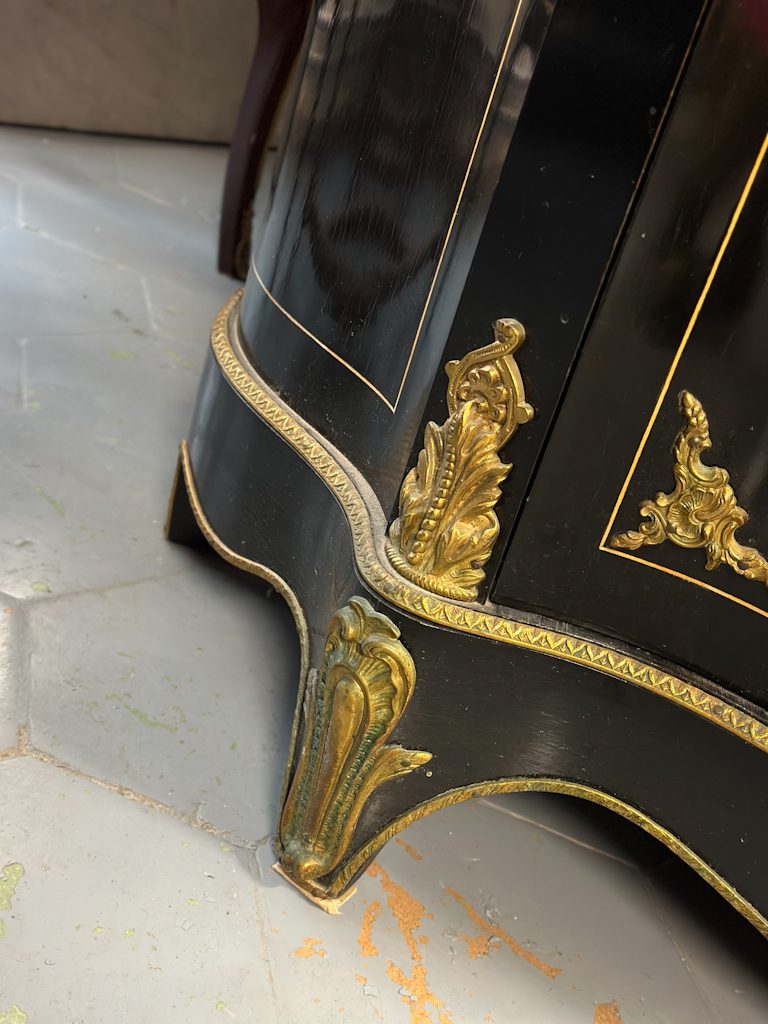
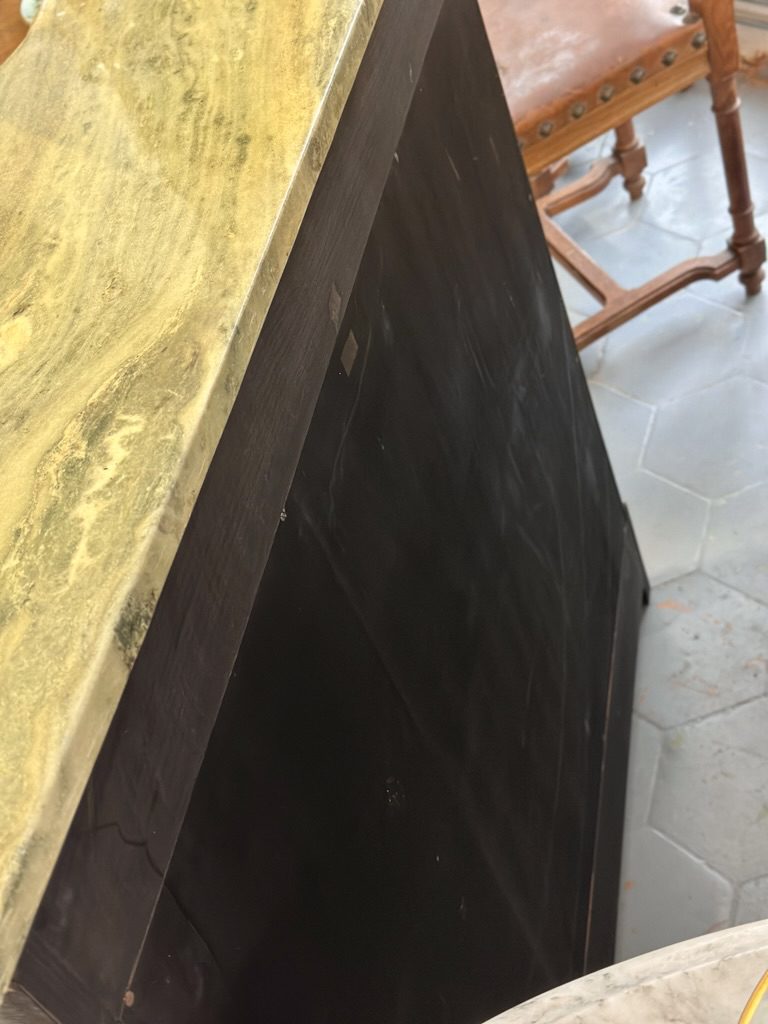
Kumode ir labā vispārējā stāvoklī atbilstoši vecumam. Ebonizētais lakojums uzrāda nolietojuma pēdas — sīki skrāpējumi un krāsas zudumi, kas liecina par ilgu dzīvi. Bronzas apakšējās frīzes ormolu detaļām ir redzama patina ar zaļganu oksidāciju — liecība par autentiskumu. Marquetry intarsija saglabājusies labi — ziedi un vīteņojums skaidri. Zaļā marmora virsmai ir redzami sīki bojājumi. Konstrukcija stabila. Lietas stāvoklis pilnībā atspoguļots fotogrāfijās.
―――――――――――――――――――――
🇬🇧 DESCRIPTION IN ENGLISH
―――――――――――――――――――――
📐 DIMENSIONS
Height 95.5 cm × length 100 cm × depth 38 cm.
―――――――――――――――――――――
Boulle-Style Cabinet with Floral Marquetry, Ormolu Bronze Mounts and Green Marble Top — Louis XIV / Napoleon III Style, France, c. 1860–1890
―――――――――――――――――――――
🏛️ PERIOD, ART STYLE, EPOCH
This extraordinarily impressive cabinet belongs to the most opulent stratum of the Belle Époque — that period from 1871 to 1914 when the Napoleon III style in its full maturity united the decorative achievements of several centuries in a single object. The piece dates to approximately 1860–1890, the flowering years of the Second Empire and early Belle Époque.
This piece belongs to that rare and fertile transitional moment when the grandeur of the Louis XIV era — with its Boulle tradition of ebonized wood, gilt bronze, and marquetry — was reinterpreted through the Napoleon III sensibility: still more monumental, still more lavish, still more theatrical. Both aesthetics coexist in this cabinet with complete authority.
The cabinet presents an unusual and highly refined form: a serpentine bombé body with bowed corners and a single door panel — the meuble d’appui type that the finest Parisian workshops produced as a salon or dining room wall piece for the most demanding clientele. The principal decorative element — an oval medallion with a gilt wood marquetry floral bouquet on an ebonized ground — is executed with exceptional precision: each flower, each leaf vein is an individual inlay piece. Bronze ormolu mounts cover the entire surface: acanthus corner mounts, a rocaille door handle with female mascaron, oval medallions at the sides, and a laurel wreath with urn motif along the lower apron. Above it all sits the vert de mer green marble top with its serpentine profile.
Charles Garnier was designing the Paris Opéra in those same years — and it was precisely cabinets like this that furnished its foyer and the avant-scène subscriber salons. Black ébène with gold and green marble was the same aesthetic dialect that Garnier chose for his grandest representational spaces.
―――――――――――――――――――――
⚜️ MAKER AND MARK
No visible maker’s mark has been identified. The quality of the bronze ormolu mounts and the precision of the marquetry inlay execution point firmly to a Paris top-tier ébénisterie workshop — the maîtres ébénistes who during the Second Empire and Belle Époque supplied cabinetwork to the imperial court and European aristocracy. The production of Boulle-tradition ebonized furniture was a Parisian exclusive speciality — no other European city matched the French capital’s quality in this field. The casting sharpness and chiseling precision of the bronze ormolu details indicate the work of an experienced ciseleur-doreur.
―――――――――――――――――――――
💎 RARITY AND SIGNIFICANCE
Boulle-tradition meuble d’appui cabinets with marquetry floral inlay, full bronze ormolu cladding, and original marble tops are among the most sought-after Napoleon III period furniture pieces on the international market. The serpentine silhouette, the quality of the inlay, and the density of the bronze decoration distinguish this cabinet from average offerings. London, Paris, New York — in all three major antiques markets, pieces of this type are found rarely and sell quickly.
―――――――――――――――――――――
🕯️ USE IN INTERIORS, DESIGN AND PHOTOGRAPHY
This cabinet was made as a wall piece — and every wall it stands against it transforms into a focal point. In a classical or eclectic salon it functions as the room’s crown jewel; in a contemporary white interior the black ébène with gold and green marble becomes an absolute statement. For photographers and stylists — the marquetry detail macros, the bronze reflections, and the marble surface texture offer inexhaustible visual possibilities. For restaurants, hotels, and private clients of refined taste — this is a choice that is remembered.
―――――――――――――――――――――
🎁 GIFT AND PERSONALISATION
A cabinet of this calibre is a representative gift at diplomatic or corporate level — an object that speaks of the giver’s taste and understanding of cultural heritage. For a private collector it is the opportunity to acquire a piece that will only grow in value over time.
―――――――――――――――――――――
🔍 CONDITION
The cabinet is in good overall condition consistent with its age. The ebonized lacquer shows signs of wear — minor scratches and small areas of paint loss that speak of a long life. The bronze ormolu mounts on the lower apron show natural patina with some green oxidation — testimony to authenticity. The marquetry inlay is well preserved — flowers and scrollwork remain clearly defined. The green marble top has minor surface marks. The structure is solid and stable. The condition of the item is fully reflected in the photographs.