
Aklais Amors ar puttu — Baroka/Neoklasicisma stils – Figūra, Vidēja Izmēra, Smaga (4256)
Aklais Amors ar puttu — Baroka/Neoklasicisma stils – Figūra, Vidēja Izmēra, Smaga (4256)
€200.00
Aklais Amors ar puttu — Baroka/Neoklasicisma stils, Eiropas skulptūras tradīcija, ap 20. gs. pirmā puse
―――――――――――――――――――――
📐 48 × 25,5 cm (augstums × platums).
―――――――――――――――――――――
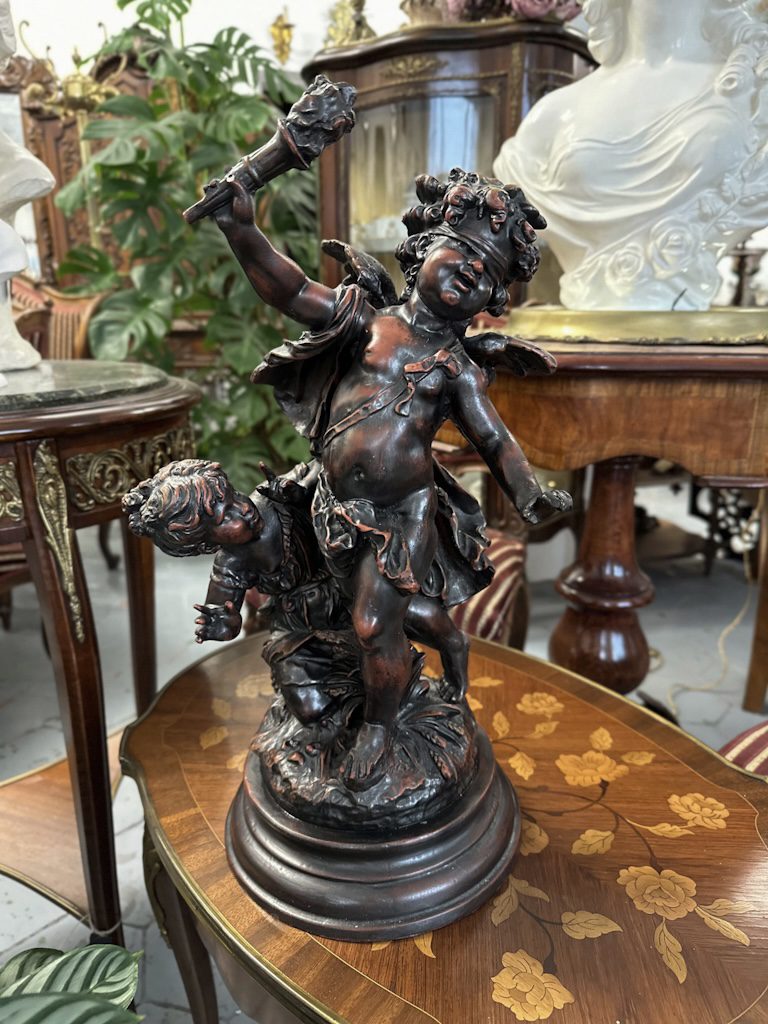
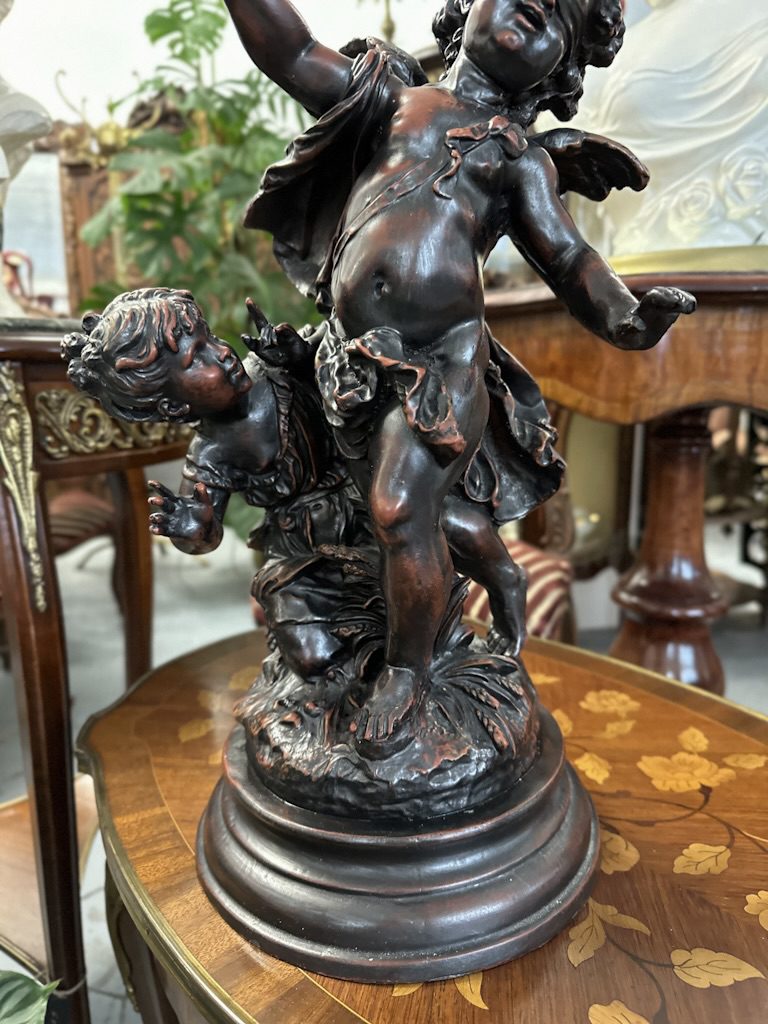
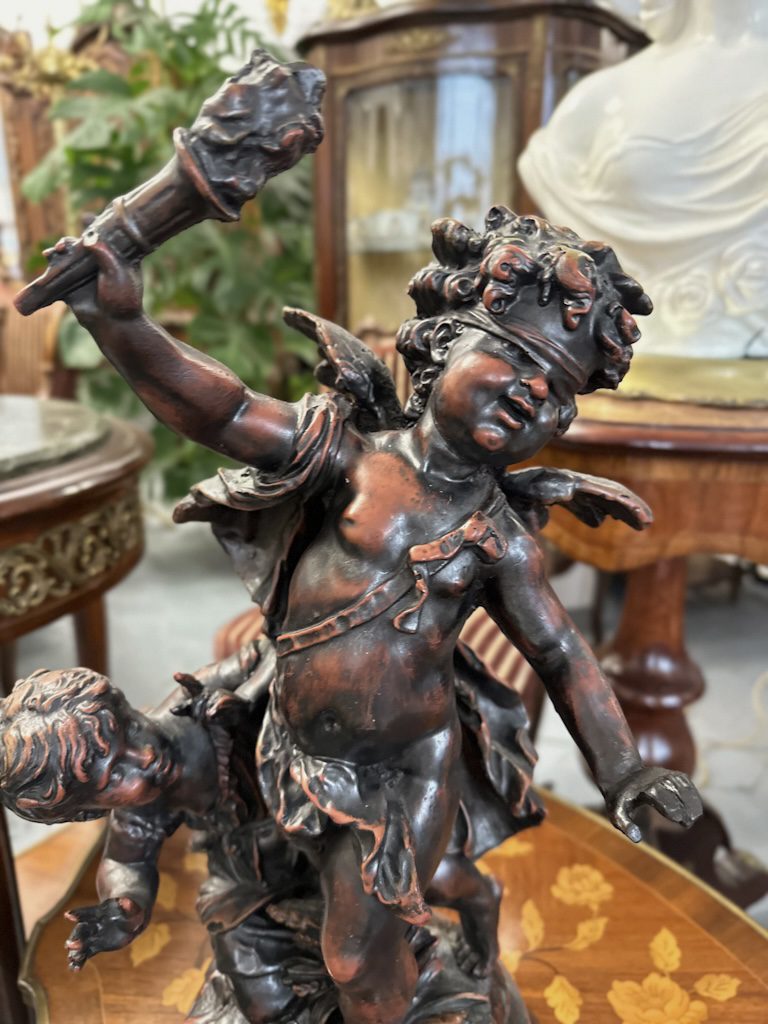
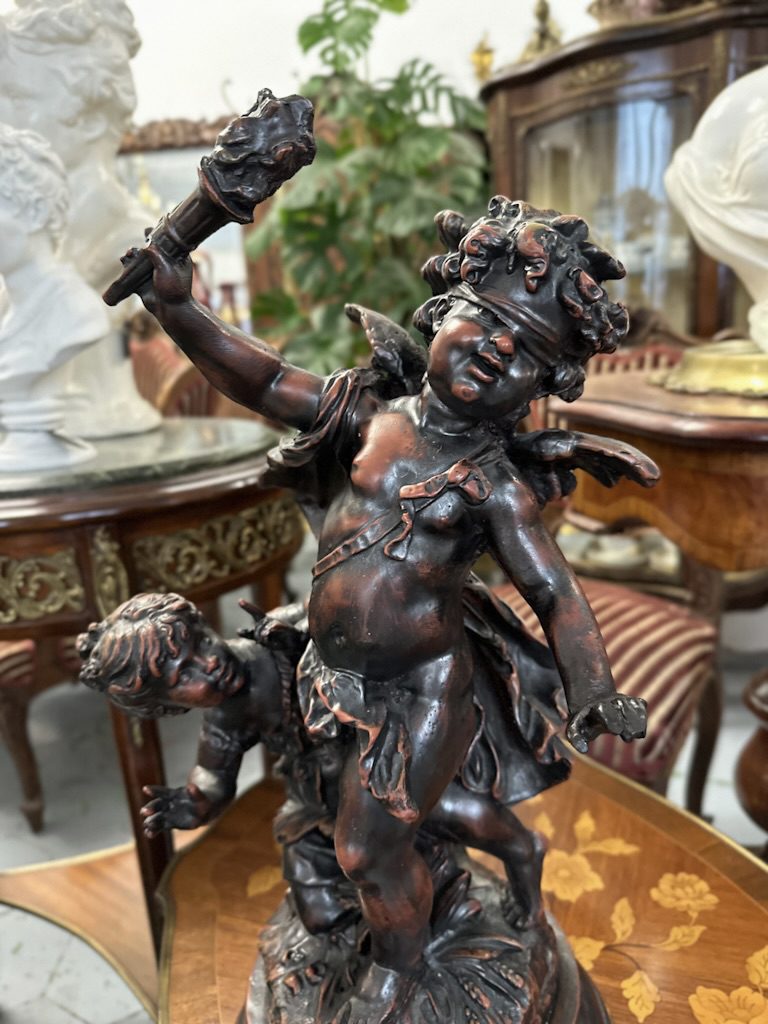
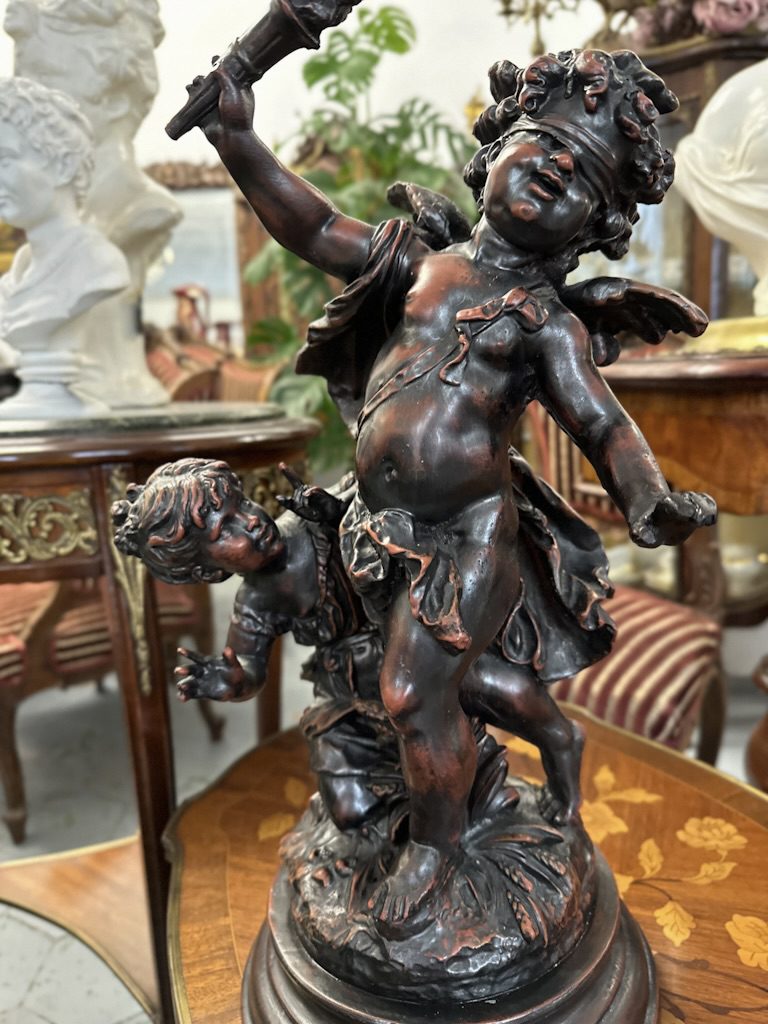
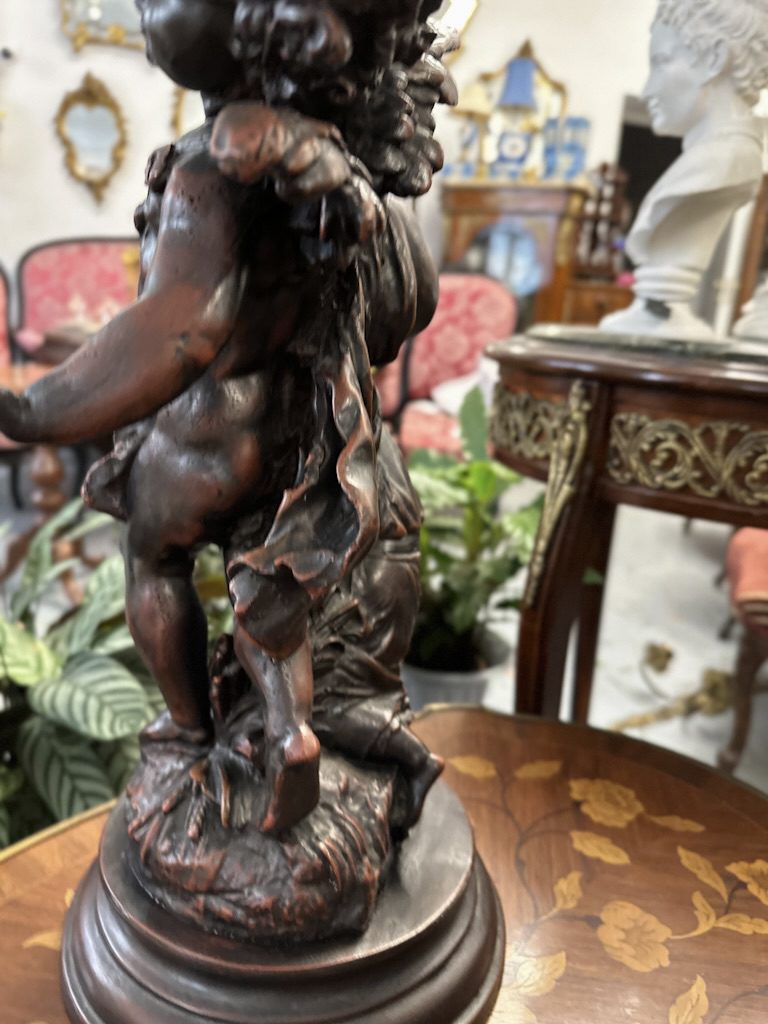
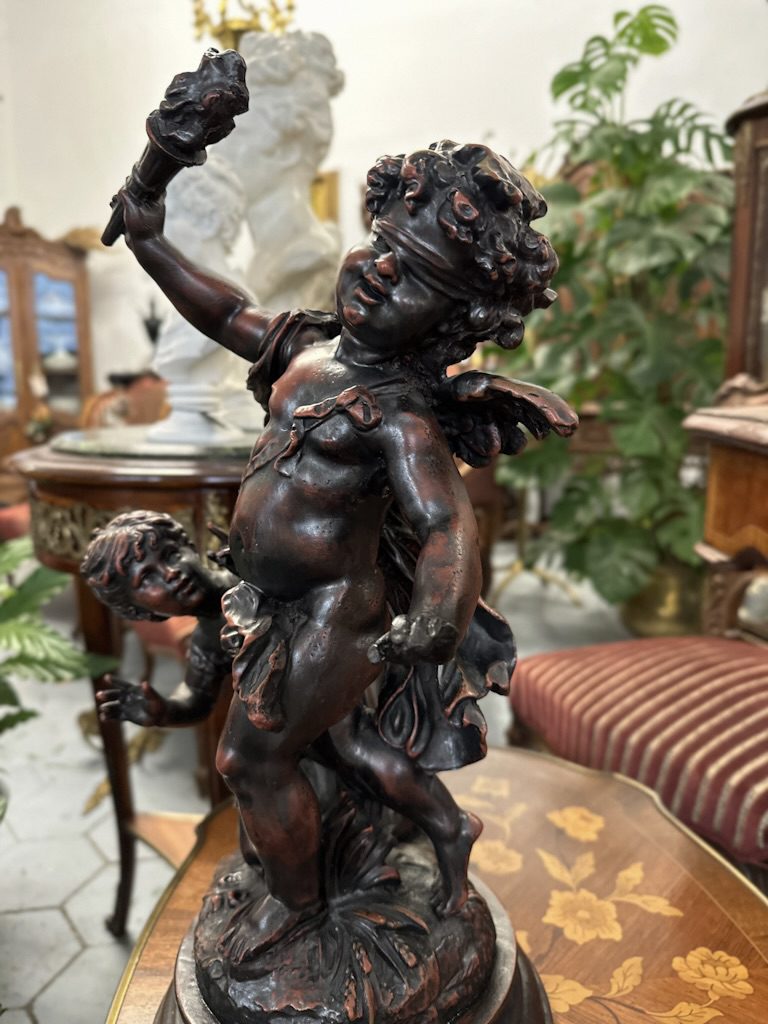
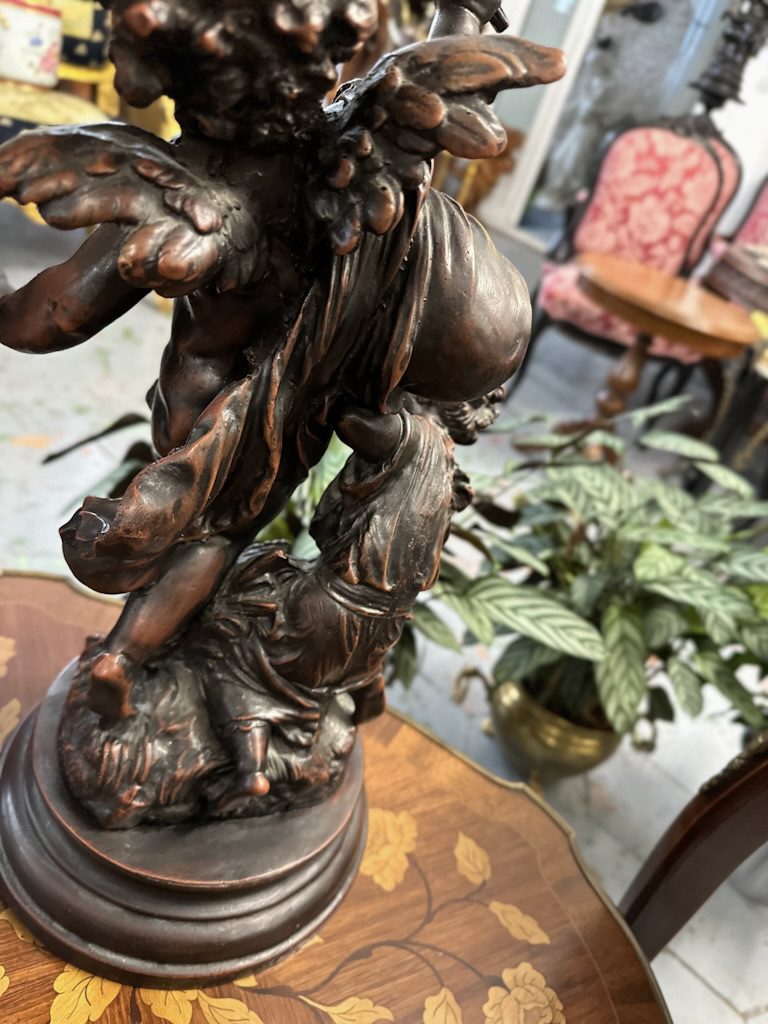
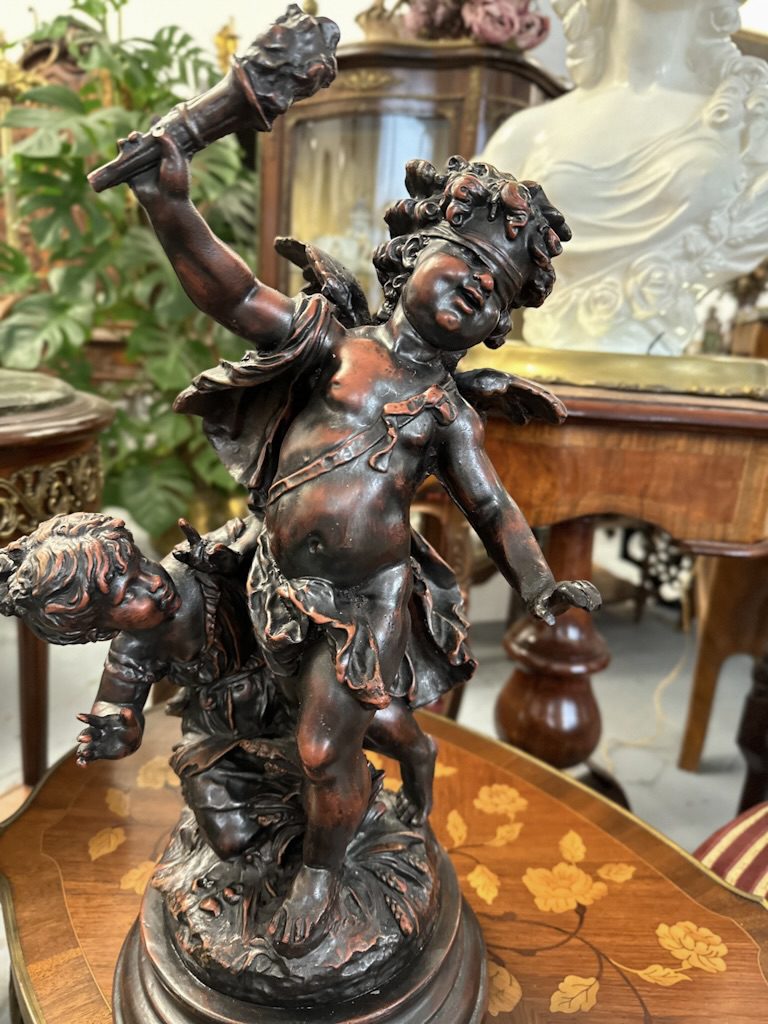
🏛️ Šī skulptūra attēlo vienu no Eiropas mākslas vēstures mīļākajiem un visbiežāk tēlotajiem motīviem — aklo Amoru (Cupido Caecus) kopā ar puttu. Galvenā figūra ir krietni liela, apaļīga puišeļa veidolā ar aizsietu aci, spārniem, grezniem cirtainiem matiem un lāpas vai zizļa figūru rokā — kas ir tieša atsauce uz mīlestības uguns simboliku. Blakus tam mazāks putto — bērniņa figūra bez spārniem — papildina kompozīciju ar dinamisku kustības sajūtu. Abas figūras tēlotas kustībā, ar tekstiliju draperijai, kas veido kustību un gaisu ap ķermeni. Melnbrūnā patina ar vara atspoguļojumiem dziļumos piešķir skulptūrai klasiska antīka bronzas izstrādājuma izskatu un smagu materiāla smagumu. Kompozīcijas dinamisms, drapērijas apstrāde un puttu tēlojums ir tieša 17.–18. gs. franču un flāmu baroka skulptūras tradīcijas mantojums.
―――――――――――――――――――――
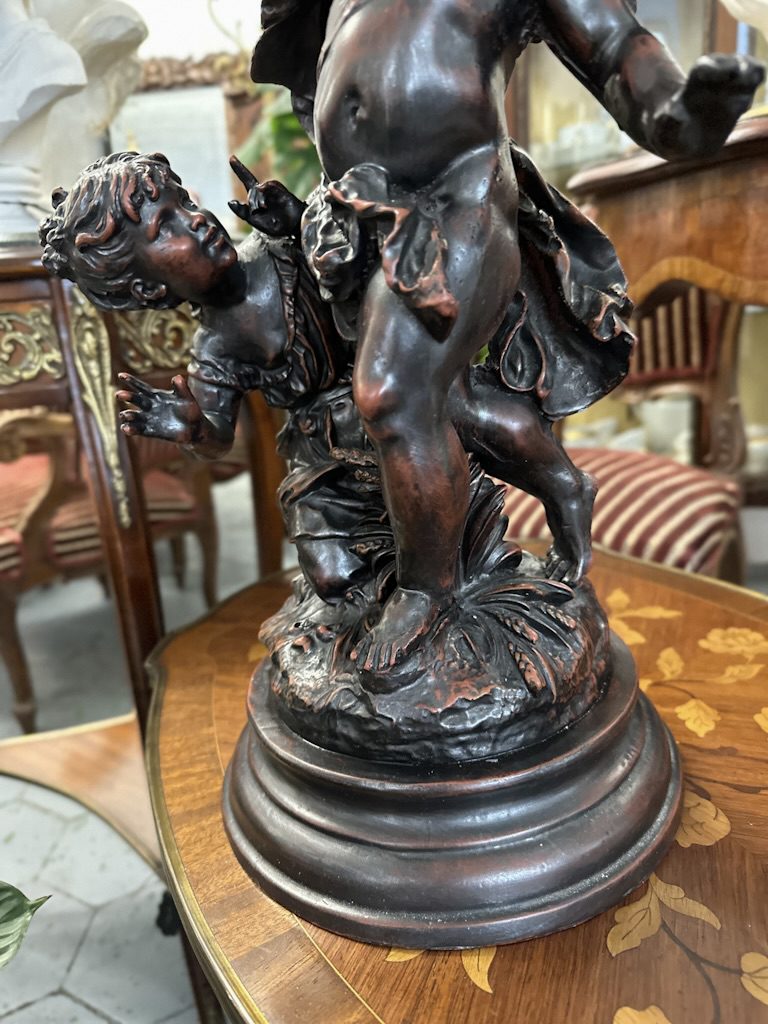
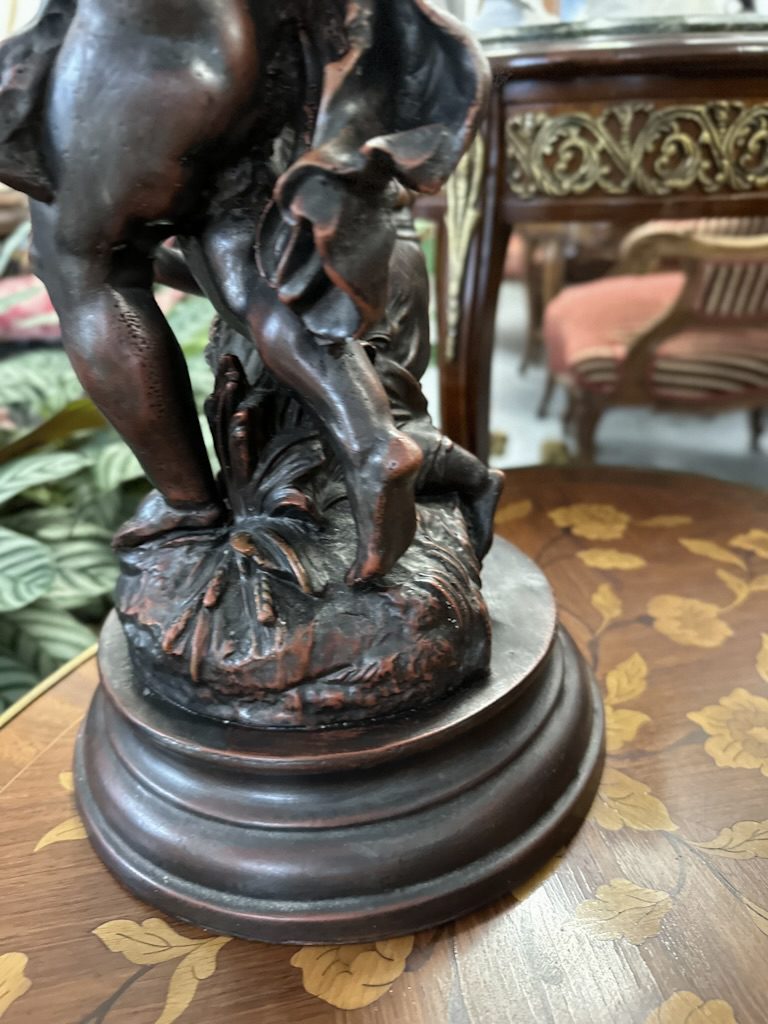
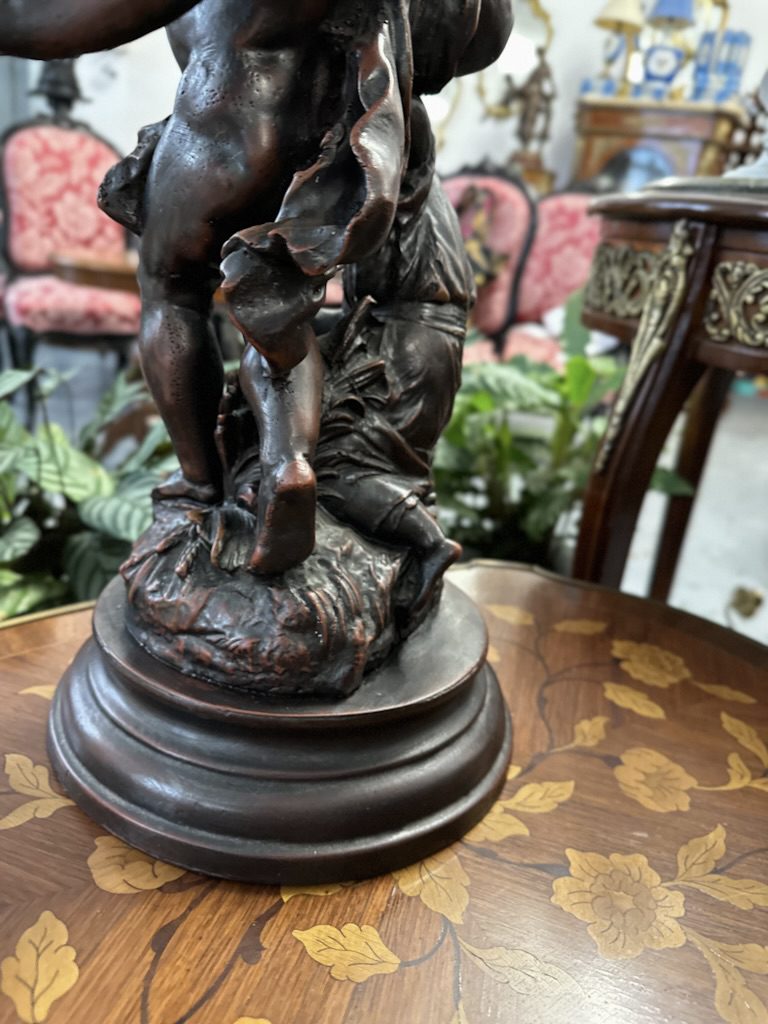
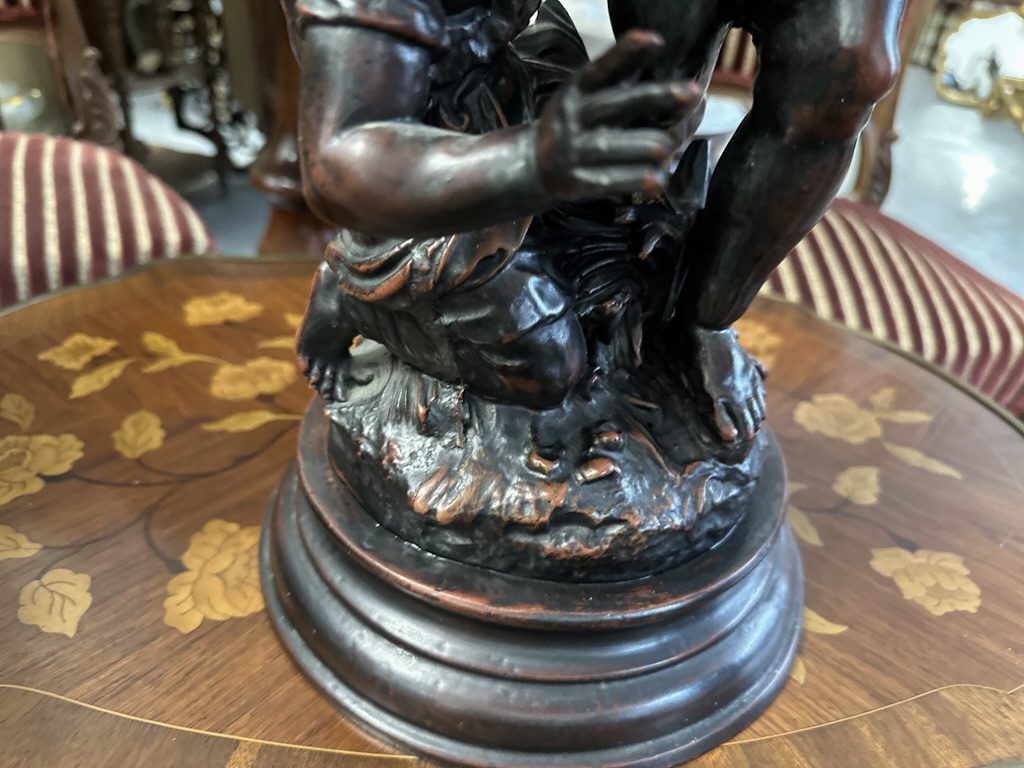
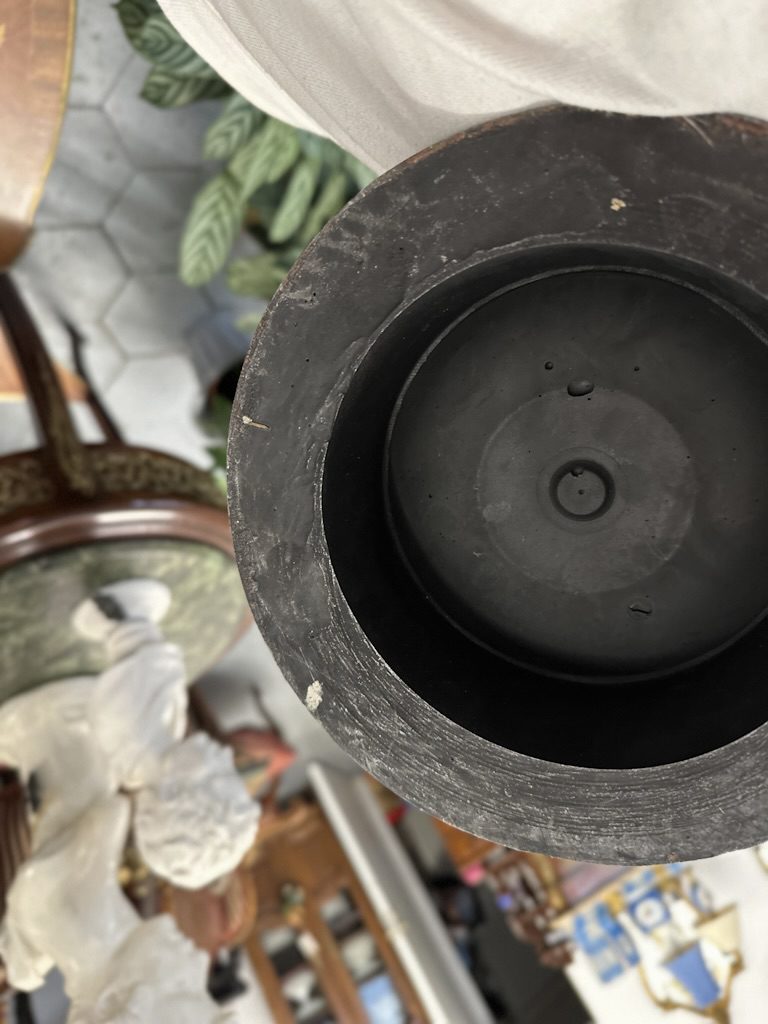
⚜️ Pamatnes apakšā nav ražotāja zīmoga — dobā metāla pamatne liecina par cinkolejumu (zamak) vai speltera lējum vai kompozīta lējumu, kas bija ļoti populārs materiāls Eiropā no 19. gs. beigām līdz 20. gs. vidum kā bronzas imitācija. Šādi lējumi — ar bronzas patinobjuma apdari — ražoja tūkstošiem figūru pēc slavenu meistaru origināliem vai stilizētu baroka/renesanses kompozīciju manierē. Parīzē darbojās virkne namu — Susse Frères, Barbedienne, Siot-Decauville — kas šādas figūras piedāvāja augstākās sabiedrības interjeru tirgum. Pat bez marķējuma šāda tipa akmens un tumšbrūnā patina ir raksturīga Francijā un Beļģijā ražotajiem lējumiem, kuri rotāja Eiropas buržuāzijas un aristokrātijas dzīvokļus.
―――――――――――――――――――――
💎 Aklais Amors — Cupido ar aizsietu aci — ir viens no mākslas vēstures visatpazīstamākajiem simboliem: mīlestība, kas darbojas akli, bez prāta iejaukšanās. Šī tēma piesaista kolekcionārus, kuri interesējas par mitoloģisko skulptūru, kā arī tos, kuri meklē estētiski bagātu interjera akcentu ar kulturālu dziļumu. Tumšā melnbrūnā brons ar vara atblāzmu ir viens no elegantākajiem krāsu toņiem skulptūras pasaulē — tas harmonizē ar koku furnitūru, velūra tekstiliem un zelta dekorācijas elementiem vienādi labi.
―――――――――――――――――――――
🕯️ Šī figūra ir universāls un emocionāli iekrauts interjera elements. Klasiskā salonā vai bibliotēkā — uz koka vai marmora kamīnplaukta kā centrālais akcentu objekts. Guļamistabā vai privātā salonā — kā mīlestības un romantisma simbols. Juvelieru veikalā vai skaistumkopšanas salonā — kā tematisks dekoratīvs elements. Dizaineru un stiltu studijās aklais Amors ar lāpu ir viens no ikoniskākajiem motīviem, ko izmanto gan foto sesijās, gan izstāžu telpās. Tumšā bronzas imitācijas materiāls efektīvi kontrastē gan ar gaišiem, gan tumšiem interjeriem.
―――――――――――――――――――――
🎁 Aklais Amors ir viens no viszinīgākajiem un vismīļākajiem dāvanu motīviem — mīlestības akls spēks, kas virza cilvēci. Šī skulptūra ir izcila dāvana: kā kāzu vai jubilejas dāvana pāriem, kuri vērtē klasisko mākslu un simboliku; kā Mīlestības dienas (Valentīndienas) dāvana ar dziļāku estētisku dimensiju; mākslas vēsturniekiem, filologiem, dzejniekiem un filozofiem; kā arī Svaru (Libra) un Auna (Aries) zodiaka zīmju cilvēkiem — Venēras un Marsa motīvs ir šo zīmju dziļākā planētu simbolika.
―――――――――――――――――――――
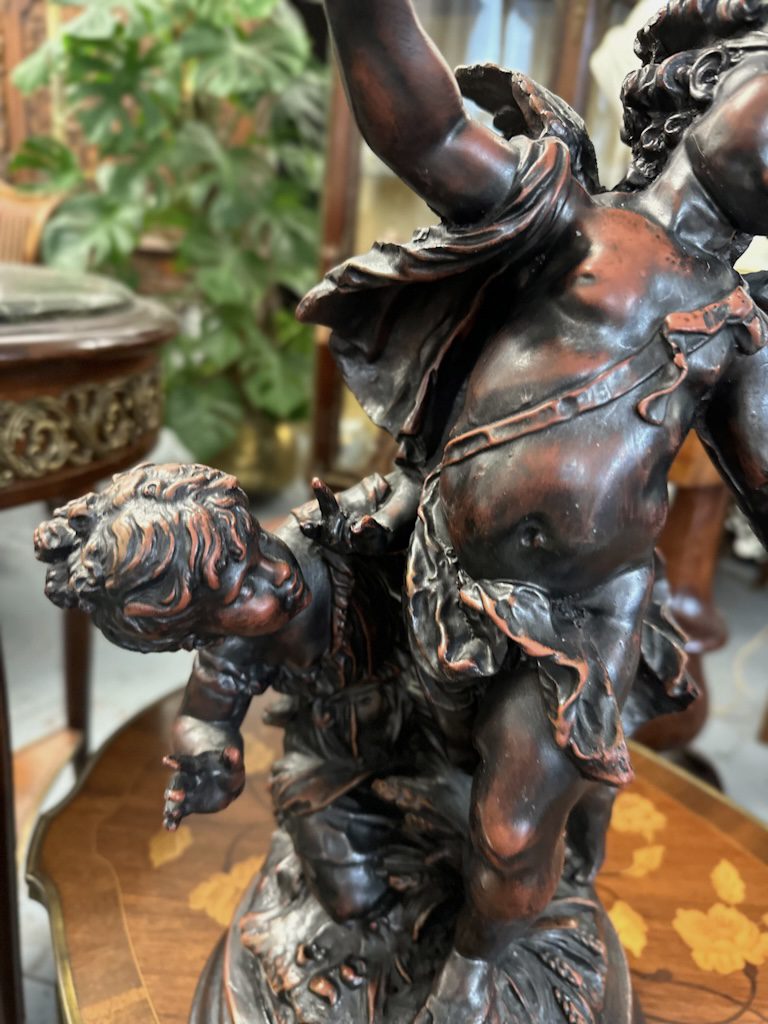
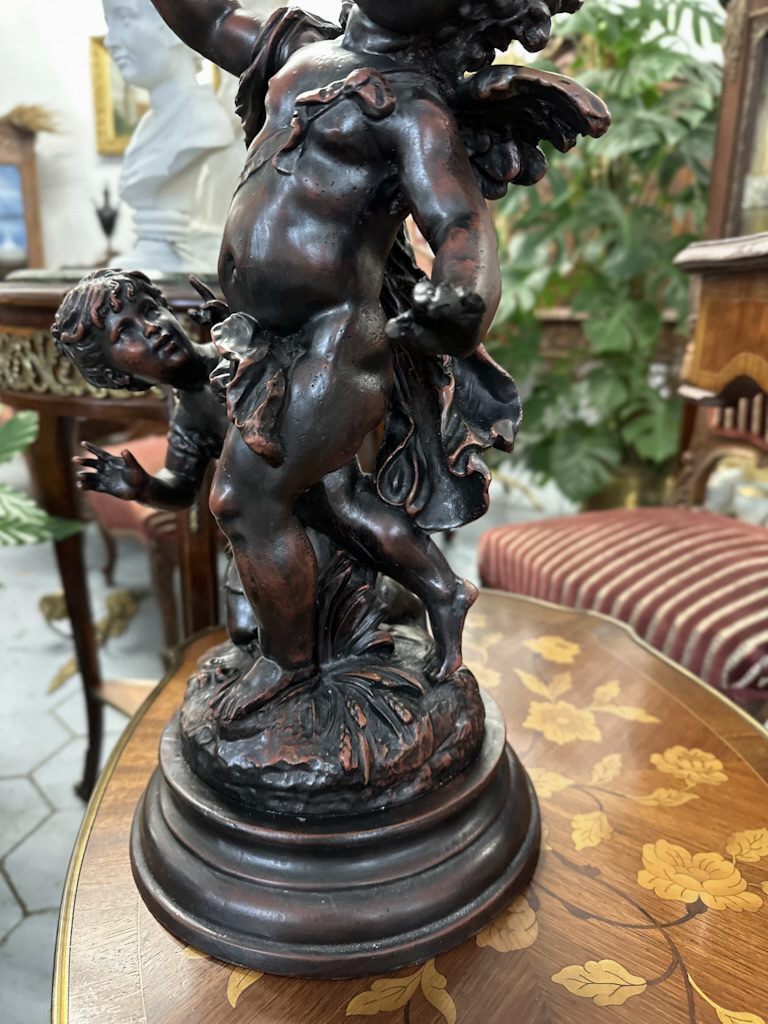
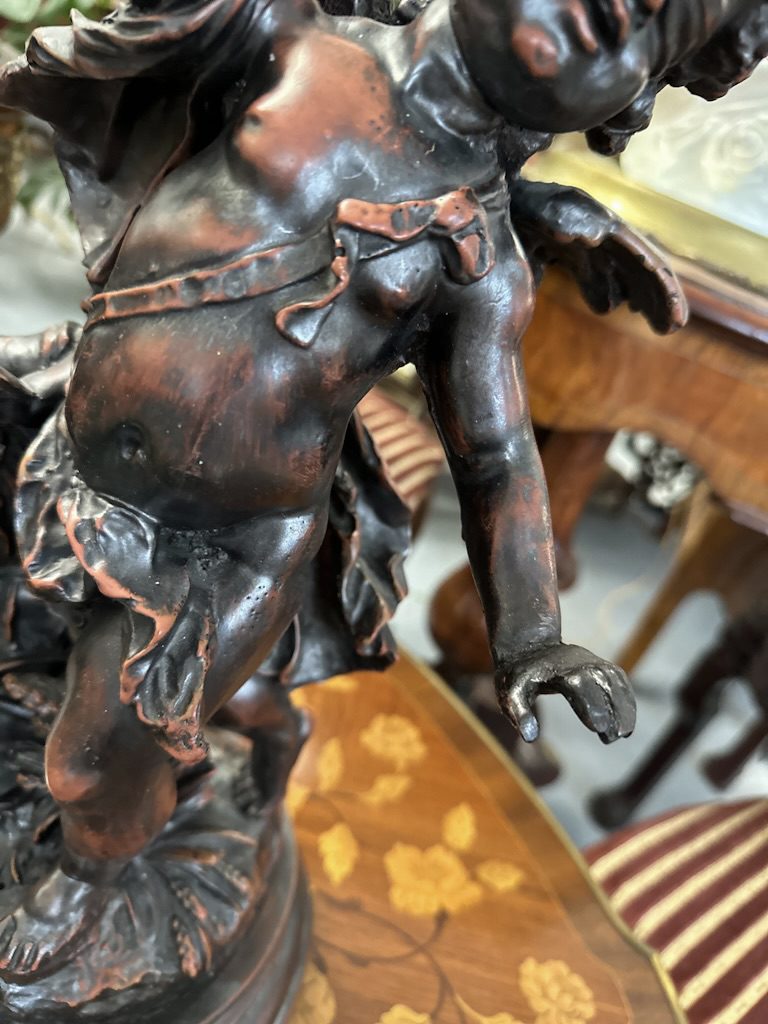
🔍 Figūra ir lietotā stāvoklī, kopumā labā stāvoklī. Patina vienmērīga, ar raksturīgām vara atspoguļojuma nianšu variācijām dziļumos — tas ir apdares, nevis bojājuma rezultāts. Vietām redzamas nelielas apdares nolietojuma pēdas (skatīt fotogrāfijas). Pamatne stabila, dobā struktūra intakta. Nav skaldījumu vai strukturālu bojājumu. Lietas stāvoklis pilnībā atspoguļots fotogrāfijās.
―――――――――――――――――――――
🇬🇧 Blind Cupid with putto — Baroque / Neoclassical style, European sculpture tradition, approximately first half of the 20th century
―――――――――――――――――――――
📐 48 × 25.5 cm (height × width).
―――――――――――――――――――――
🏛️ This sculpture depicts one of the most beloved and frequently rendered motifs in European art history — the blind Cupid (Cupido Caecus) accompanied by a putto. The principal figure is a generously proportioned boy with a blindfold, wings, elaborate curling hair, and a torch or sceptre raised aloft — a direct reference to the symbolism of love’s flame. A smaller putto — a wingless child figure — completes the composition with a sense of dynamic movement. Both figures are depicted in motion, with drapery flowing around their bodies to suggest air and energy. The dark brown patina with copper highlights in the depths gives the sculpture the appearance of a classical antique bronze and a satisfying material weight. The dynamism of the composition, the treatment of the drapery, and the rendering of the putti are a direct inheritance from the 17th and 18th century French and Flemish Baroque sculpture tradition.
―――――――――――――――――――――
⚜️ No maker’s mark appears on the underside of the base — the hollow metal base indicates a zinc alloy (zamak) or spelter casting, or coposite casting a material widely used in Europe from the late 19th century through the mid-20th century as a bronze substitute. Such castings — finished with bronze patination — produced thousands of figures after famous originals or in the manner of stylised Baroque and Renaissance compositions. Paris was home to several distinguished houses — Susse Frères, Barbedienne, Siot-Decauville — that offered such figures to the luxury interior market. Even without a mark, this type of dark brown patina is characteristic of French and Belgian foundry production that adorned the drawing rooms of the European bourgeoisie and aristocracy.
―――――――――――――――――――――
💎 The blind Cupid — Cupido with a blindfold — is one of the most recognisable symbols in art history: love that acts blindly, beyond the reach of reason. This theme appeals to collectors of mythological sculpture as well as to those seeking an aesthetically rich interior accent with genuine cultural depth. The dark brown-black bronze with copper undertones is one of the most elegant colour registers in the world of sculpture — it harmonises equally well with wooden furniture, velvet textiles, and gilt decorative elements.
―――――――――――――――――――――
🕯️ This figure is a versatile and emotionally charged interior element. In a classical drawing room or library — on a wooden or marble mantelpiece as a central accent object. In a bedroom or private salon — as a symbol of love and romance. In a jewellery shop or beauty salon — as a thematic decorative element. For designers and stylists, the blind Cupid with a torch is one of the most iconic motifs used in both photo sessions and exhibition spaces. The dark bronze-effect material contrasts effectively with both light and dark interior schemes.
―――――――――――――――――――――
🎁 Blind Cupid is one of the most universally understood and beloved gift motifs — the blind force of love that drives humanity. This sculpture makes an outstanding gift: as a wedding or anniversary gift for couples who appreciate classical art and symbolism; as a Valentine’s Day gift with deeper aesthetic dimension; for art historians, philologists, poets, and philosophers; and for those born under Libra or Aries — the motifs of Venus and Mars are the deepest planetary symbolism of these signs.
―――――――――――――――――――――
🔍 The figure is in used condition, generally good overall. The patina is even, with characteristic copper-tone variations in the recesses — a result of the finishing technique rather than damage. Minor surface wear is visible in places — please refer to the photographs. The base is stable and the hollow structure is intact. No chips or structural damage observed. The condition of the item is fully reflected in the photographs.