
Jauna Sieviete ar Ziedu Grozu — Idilliskais Žanrs, Francija, ap 1870.–1900. Sievietes Figūra, Vidēja Lieluma, Smaga (4026)
Jauna Sieviete ar Ziedu Grozu — Idilliskais Žanrs, Francija, ap 1870.–1900. Sievietes Figūra, Vidēja Lieluma, Smaga (4026)
€250.00
📐 IZMĒRI
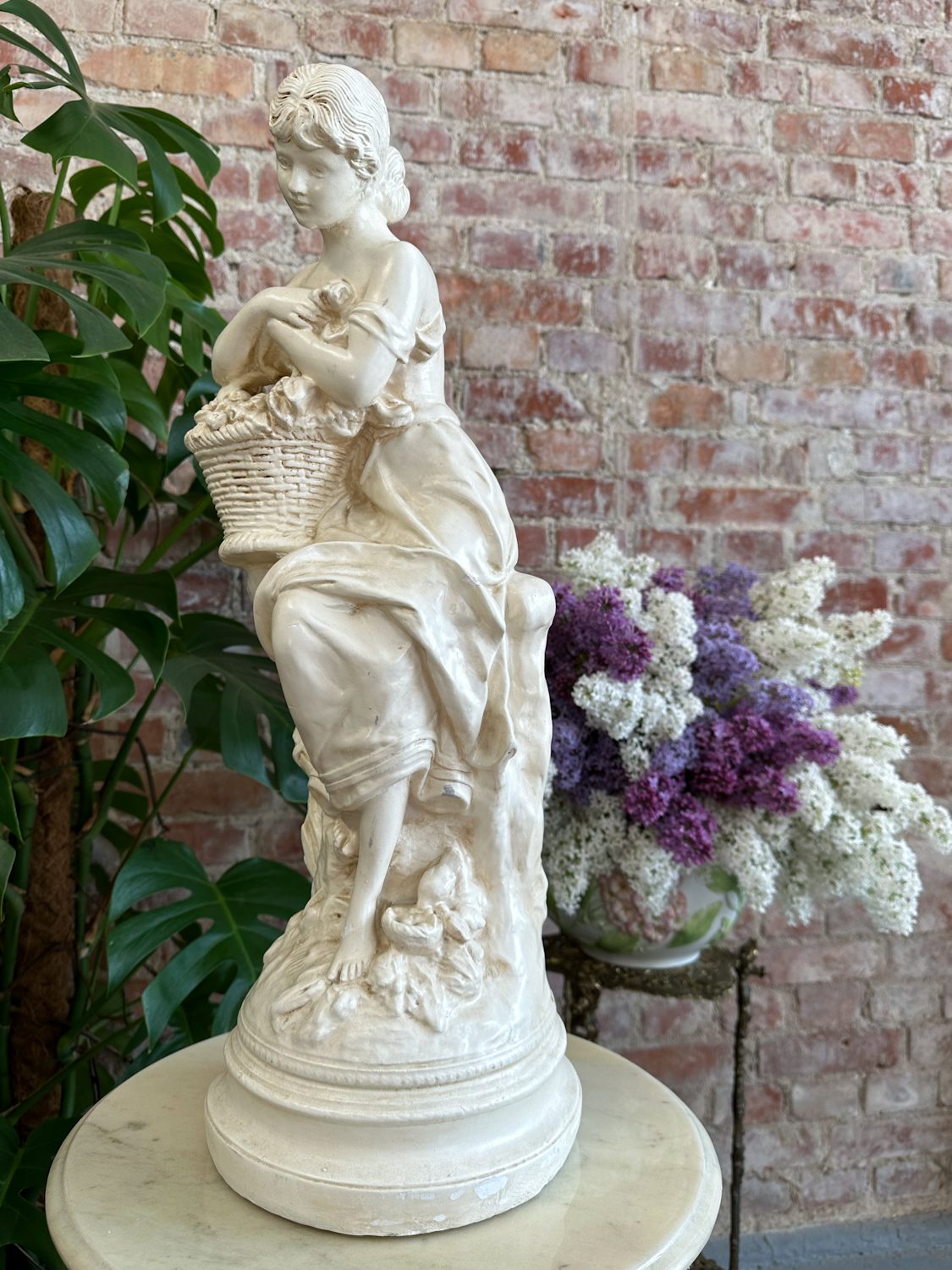
Augstums: 60,5 cm. Platums: aptuveni 21 cm. Svars: ievērojams — masīvs mākslinieciskais ģipsis ar apaļu profiletu pamatni. Figūra veidota kā apjomīga skulptūra ar pilnvērtīgu apaļu skatu no visiem leņķiem.
―――――――――――――――――――――
Jauna Sieviete ar Ziedu Grozu — Idilliskais Žanrs, Francija, ap 1870.–1900.
🏛️ IZGATAVOŠANAS PERIODS, MĀKSLAS STILS, LAIKMETS
Šī figūra pieder Franču Idilliskā Žanra (genre sentimental) tradīcijai — vienam no 19. gadsimta otrās puses populārākajiem un mīļākajiem mākslas virzieniem, kas Parīzē uzplauka Napoleona III Otrās Impērijas laikā un turpinājās Trešās Republikas pirmajās desmitgadēs. Šajā periodā Parīzes Salons katru gadu prezentēja simtiem skulptūru ar meitenēm, bērniem, zemnieku sievietēm un pastorāliem tēliem — un tieši šādi darbi guva vislielāko popularitāti plašas augstākās buržuāzijas vidū, kas savās mājās vēlējās ne varonīgas allegorijas, bet dzīves maiguma un ikdienas dzejas iemiesojumu.
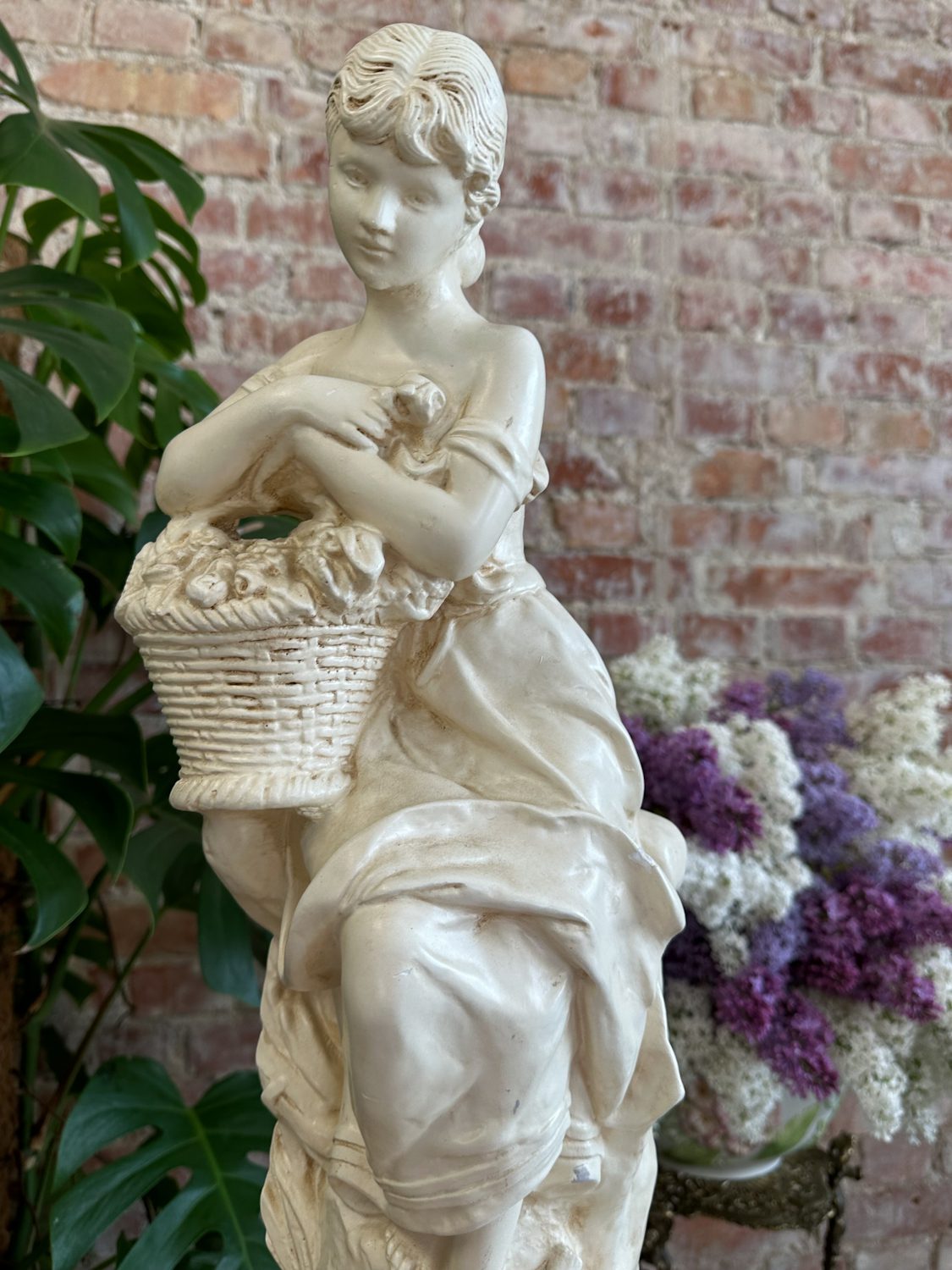
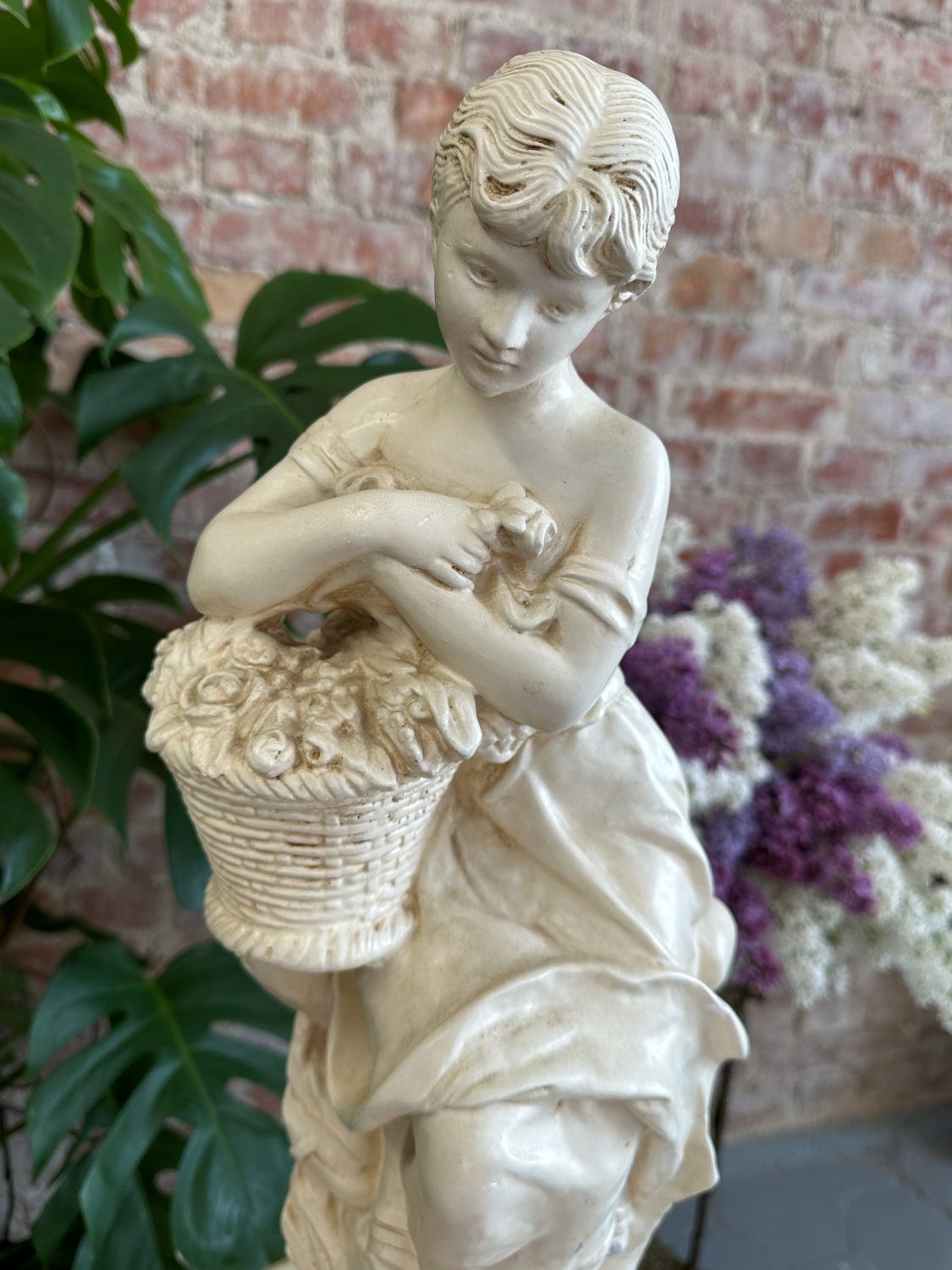
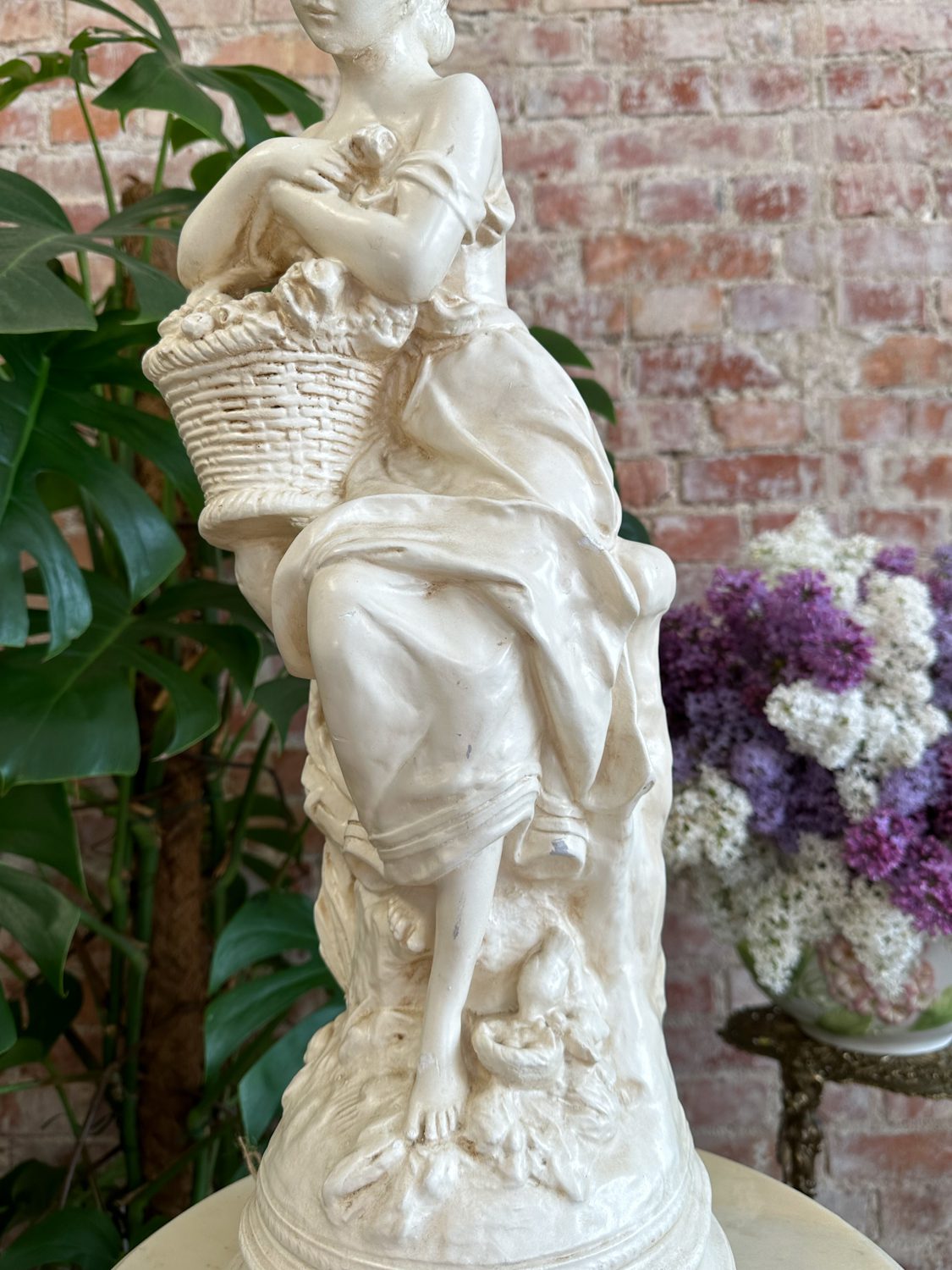
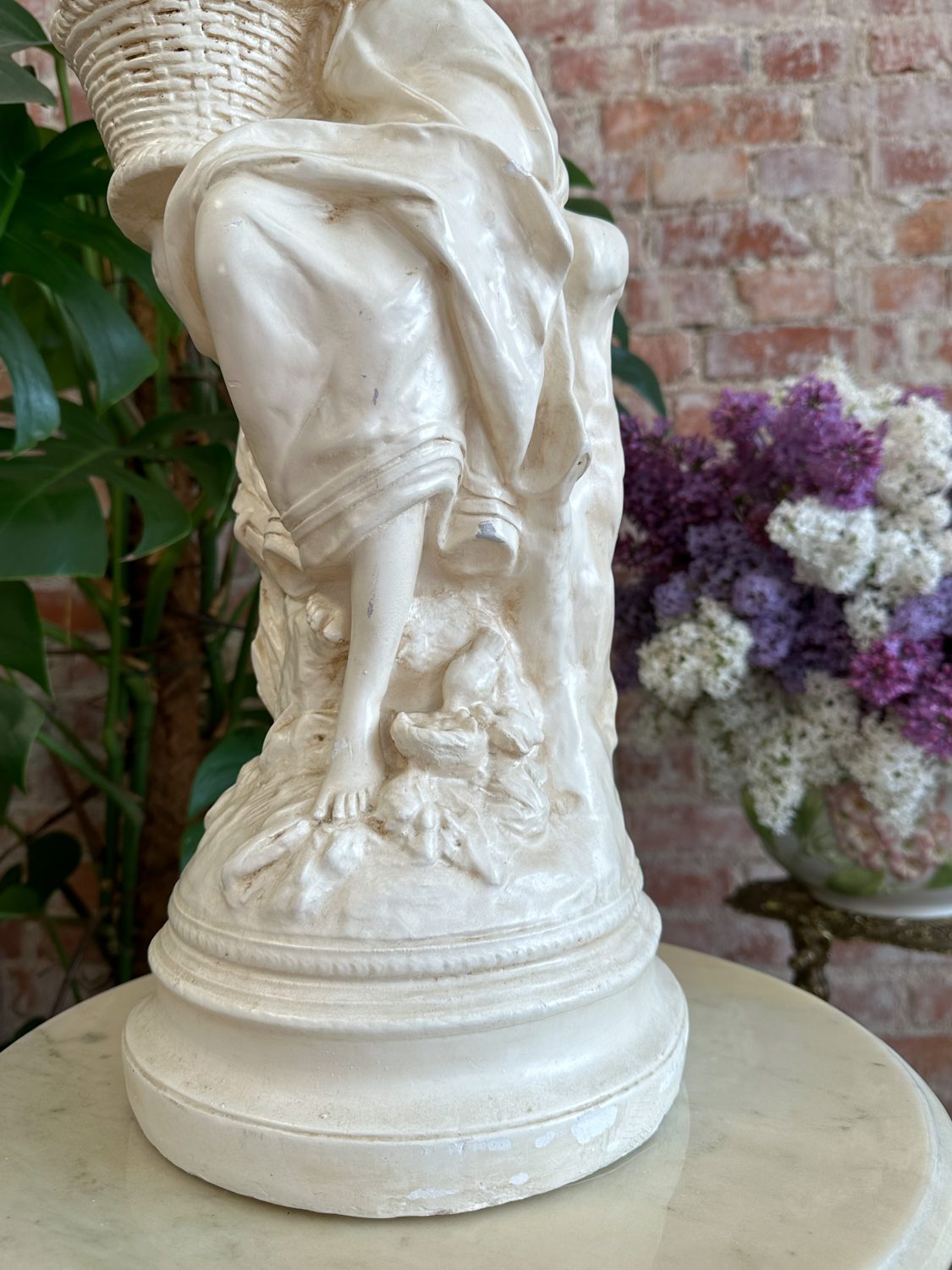
Jaunā sieviete sēdus pozā ar ziedu grozu rokās ir viena no šī žanra kanoniskajām ainām — tā apvieno vairākus iemīļotus elementus: bērnišķīgo tīrību (meitenes seja ir gandrīz bērna seja), dabas klātbūtni (ziedi, putni pie kājām), brīvā laika pastoralitāti un pieticīgo, tomēr cēlo sievišķību. Figūras kompozīcija ir izsvērta un harmoniska — sēdus poza uz akmeņainas virsmas, nedaudz uz priekšu noliecies ķermenis, skatiens vērsts uz grozu rokās — tā ir laimes un miera ainas skulpturāls iemiesojums.
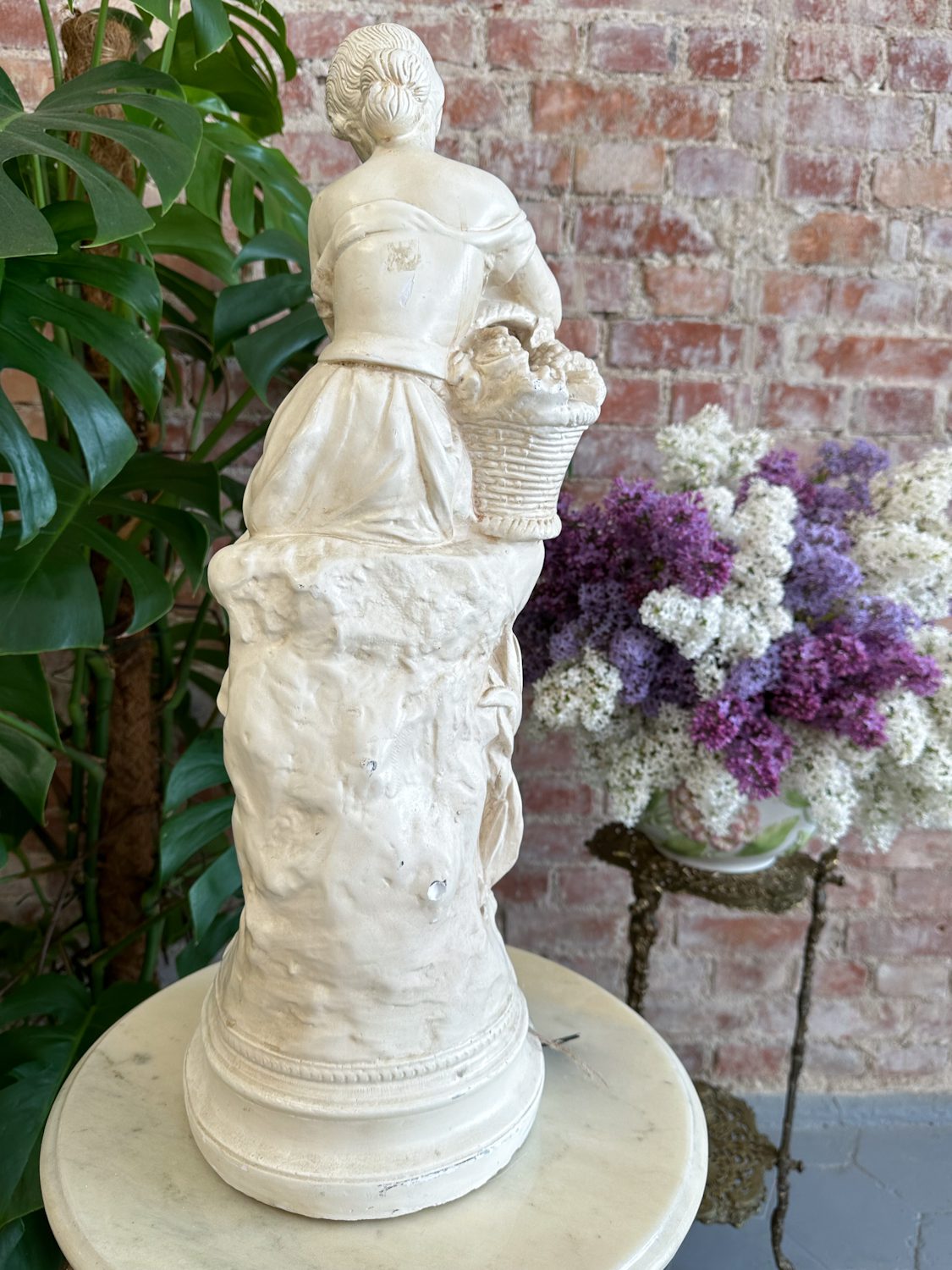
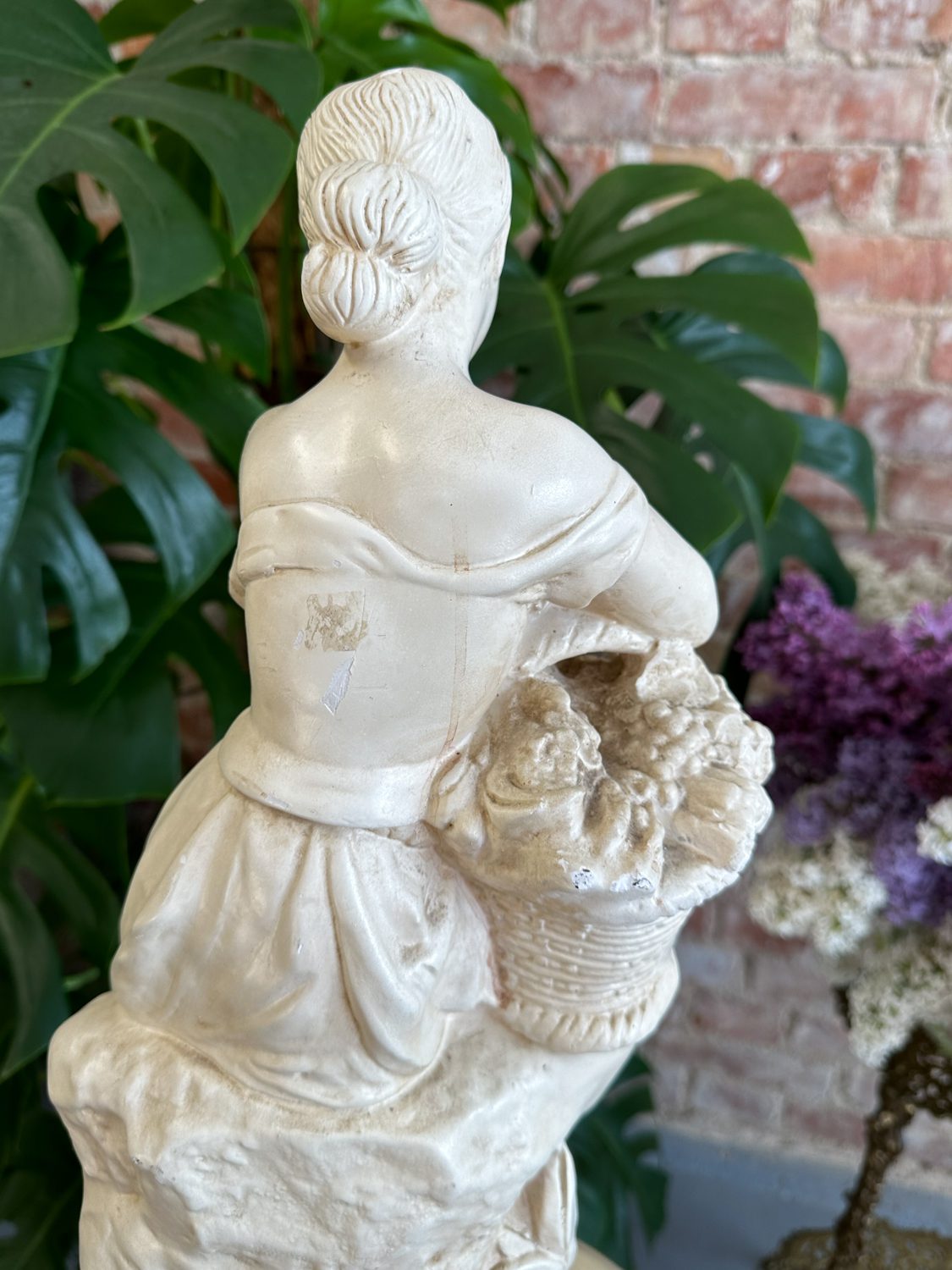
Aizmugurē uz muguras redzams mazs iespiestas etiķetes vai zīmoga paliekas — iespējams ražotāja vai ateliers marķējums, kas nav pilnīgi nolasāms, bet apliecina priekšmeta profesionālu izcelsmi.
―――――――――――――――――――――
⚜️ RAŽOTĀJS UN STILISTISKĀ PIEDERĪBA
Fotogrāfijās pilnībā nolasāms ražotāja zīmogs nav redzams, taču figūras veidošanas tehnoloģija — mākslinieciskais ģipsis ar smalku virsmas apstrādi un profiletu pamatni — norāda uz profesionālu Parīzes vai lielās Francijas provinces mākslas darbnīcu. 19. gadsimta otrajā pusē Francijā darbojās specializētas ateliers de sculpture en plâtre, kas reproducēja populāras Salona skulptūras plašam buržuāziskajam tirgum — ģipša reprodukcijas bija pieejamāks un demokrātiskāks mākslas darbu iegūšanas veids, kas ļāva arī vidusšķiras namiem rotāties ar Salona mākslas tēliem. Šādi priekšmeti tika pārdoti caur mākslas veikaliem, bāzāriem un tiešajiem ateliers pasūtījumiem.
Figūras tēma — jauna sieviete ar ziedu grozu un putniem — ir sasaucama ar daudziem 19. gadsimta Francijas skulptoriem, kuri strādāja idilliskā žanrā, tostarp Albert-Ernest Carrier-Belleuse, Mathurin Moreau un viņu laikabiedru tradīcijā.
―――――――――――――――――――――
💎 RETUMS UN NOZĪME
Labi saglabātas Francijas 19. gadsimta idilliskā žanra ģipša figūras — ar pilnīgu sejas plastikas kvalitāti, detalizētu groza, ziedu un putniem tekstūru un neskartu balto virsmu — antikvāru tirgū parādās arvien retāk. Lielākā daļa šādu priekšmetu laika gaitā ir bojāti vai restaurēti. Šis eksemplārs saglabājies ievērojami oriģinālā stāvoklī. Kolekcionāri, kuri meklē Francijas žanra skulptūru ar romantiskās ikdienas estētiku, šādu priekšmetu augstu vērtē.
―――――――――――――――――――――
🕯️ PIELIETOJUMS INTERJERĀ, DIZAINĀ UN FOTOGRĀFIJĀ
Šī figūra ir ideāla interjera elementa izmērs un raksturs — tā ir pietiekami liela, lai kļūtu par kamīna plaukta, konsolītes vai bibliotēkas galda kulminācijas punktu, bet pietiekami mierīga un maiga, lai nekonkurētu ar pārējo. Klasiskos, romantiskos un Provenças stilā iekārtotos interejros tā darbojas kā harmonisks papildinājums — balts ģipsis uz koka, akmens vai tekstila fona rada to franču maison de campagne skaistumu, ko nav iespējams nopirkt par naudu — tikai atrast. Laikmetīgos minimālistiskos interejros balts, kluss tēls uz tīras sienas kļūst par spēcīgu paziņojumu. Interjera, modes un portreta fotogrāfijā šāda figūra ir nenovērtējams props — tā kadram piešķir franču romantisma gaisotni.
―――――――――――――――――――――
🎁 DĀVANA UN PERSONALIZĀCIJA
Jauna sieviete ar ziediem — prieka, jaunības, dabas un sievišķīgās žēlastības simbols — ir izcila dāvana sievietei jebkurā vecumā. Tā der kā personalizēta un kultūrvēsturiski nozīmīga dāvana kāzām, dzimšanas dienai, mātes dienai un jebkuram iemīļotam brīdim, kurā vēlaties pateikt — tu esi skaistums un maigums pasaulē. Mākslas cienītājiem un Francijas kultūras entuziastiem tā ir dāvana, kas runā par laiku, kad māksla un ikdiena bija viens.
―――――――――――――――――――――
🔍 STĀVOKLIS
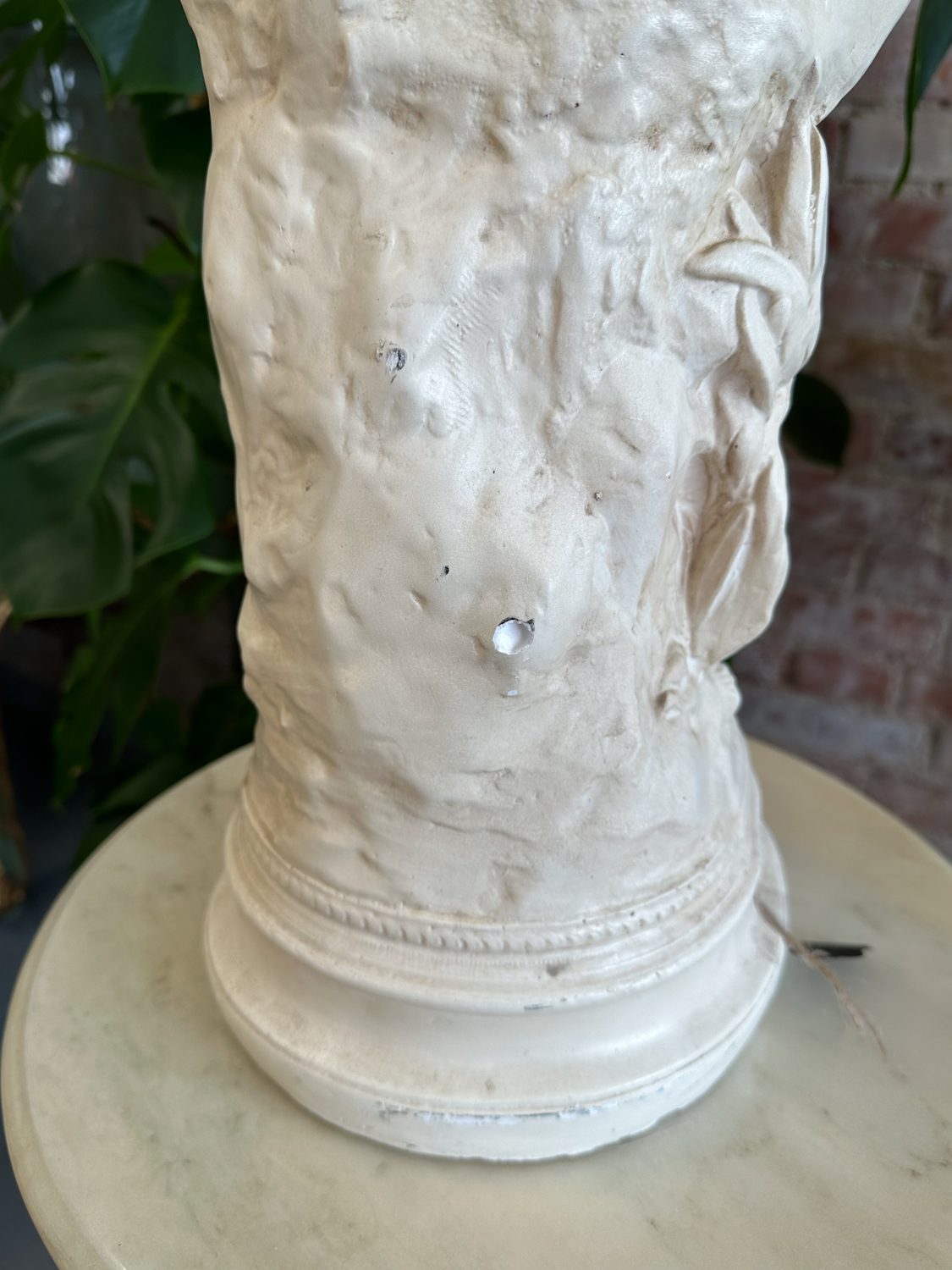
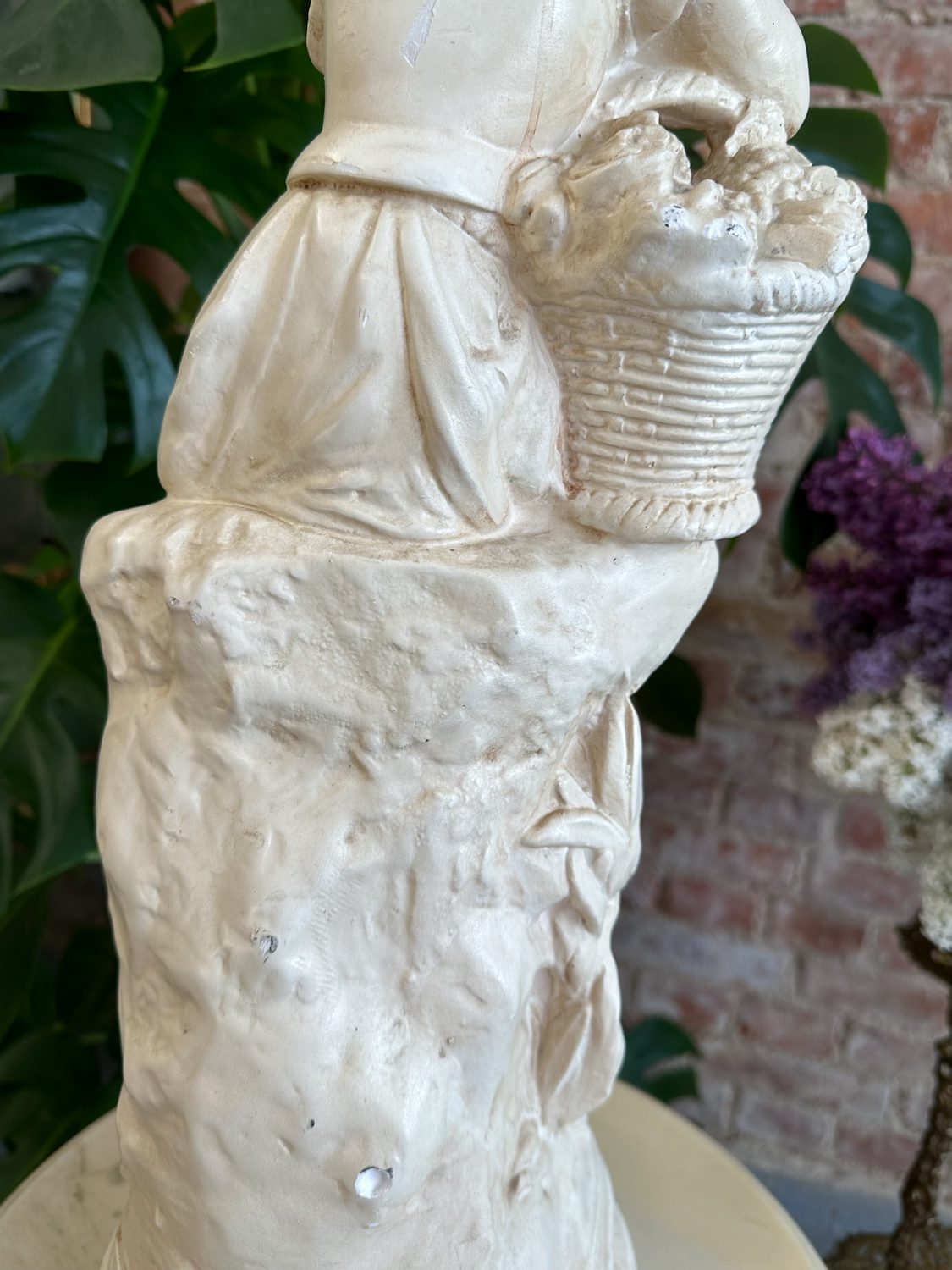
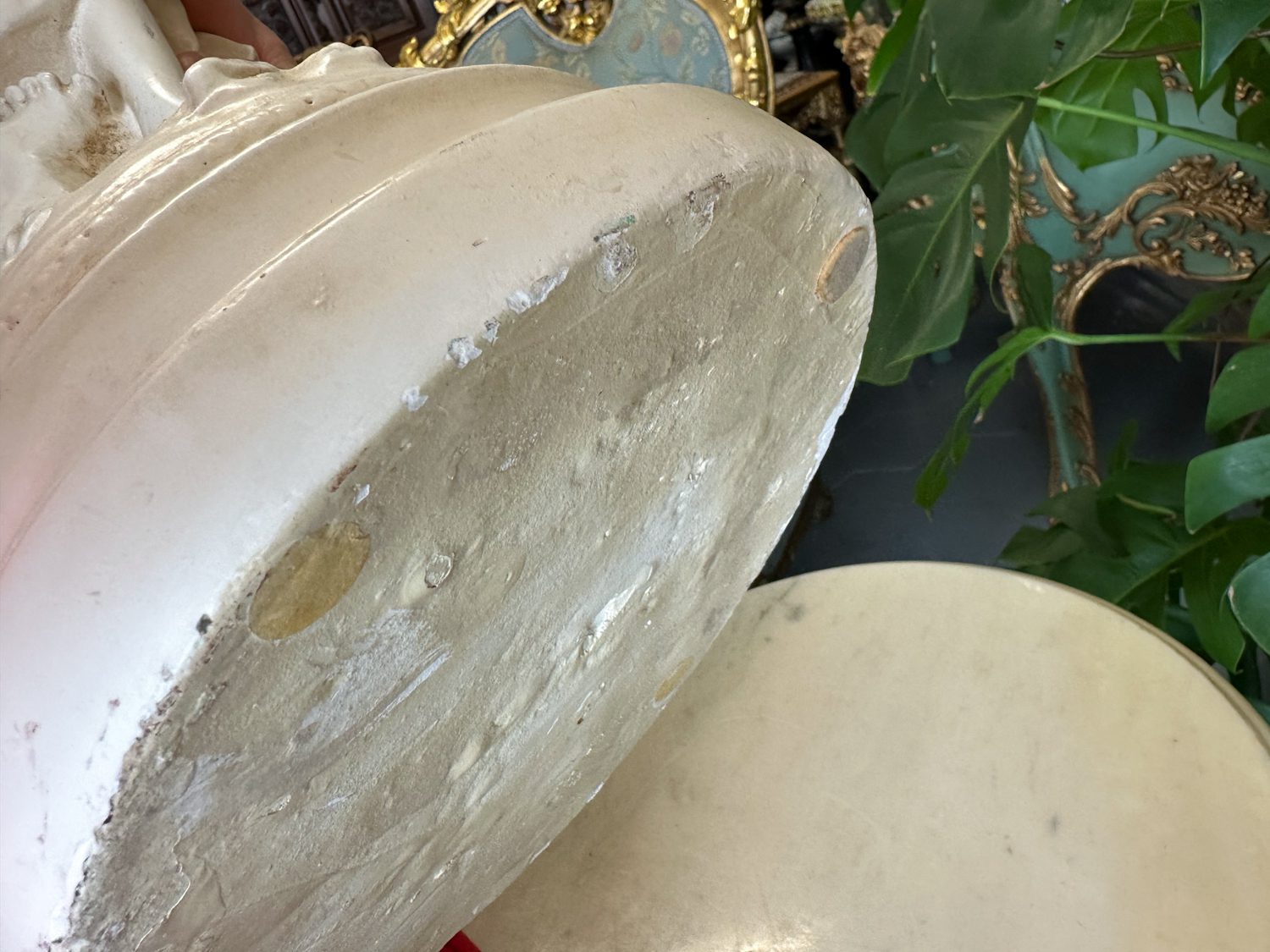
Figūra saglabājusies labā vispārējā stāvoklī. Baltā ģipša virsma ir tīra un bez lieliem bojājumiem — vietām redzamas nelielas skaidas un virsmas nolietojuma pēdas, kas atbilst priekšmeta vecumam. Aizmugurē uz muguras zona uzrāda nelielu etiķetes vai zīmoga paliekas — tās nav vizuāli traucējošas. Pamatnes apakšdaļā redzama dabīga apkopjamo materiālu tekstūra ar vairākiem sīkiem caurumiņiem — tipiska šāda vecuma ģipša lējumiem. Sejas plastika, matu detaļas, groza tekstūra un putni pie kājām saglabājušies precīzi. Lietas stāvoklis pilnībā atspoguļots fotogrāfijās.
―――――――――――――――――――――
🇬🇧 DESCRIPTION IN ENGLISH
Young Woman with Flower Basket — Idyllic Genre, France, circa 1870–1900
―――――――――――――――――――――
📐 DIMENSIONS
Height: 60.5 cm. Width: approximately 21 cm. Weight: substantial — a solid artistic plaster cast with a round profiled base. The figure is conceived as a fully sculptural work, viewable from all angles.
―――――――――――――――――――――
🏛️ PERIOD, ARTISTIC STYLE, ERA
This figure belongs to the French Idyllic Genre (genre sentimental) tradition — one of the most popular and beloved artistic movements of the second half of the 19th century, which flourished in Paris during Napoleon III’s Second Empire and continued through the early decades of the Third Republic. During this period, the Paris Salon annually presented hundreds of sculptures depicting girls, children, peasant women and pastoral subjects — and it was precisely these works that achieved the greatest popularity among the broad upper bourgeoisie, who sought in their homes not heroic allegories but an embodiment of life’s tenderness and the poetry of everyday existence.
A young woman in a seated pose with a basket of flowers is one of the canonical scenes of this genre — combining several beloved elements: childlike purity (the girl’s face is almost a child’s), the presence of nature (flowers, birds at her feet), pastoral leisure and modest yet noble femininity. The figure’s composition is balanced and harmonious — a seated pose on a rocky surface, the body inclined slightly forward, the gaze directed toward the basket in her hands — a sculptural embodiment of a scene of happiness and peace.
On the reverse of the figure, small remnants of a pressed label or stamp are visible — a probable maker’s or atelier mark that is not fully legible, but confirms a professional provenance.
―――――――――――――――――――――
⚜️ MAKER AND STYLISTIC ATTRIBUTION
No fully legible maker’s stamp is visible in the photographs; however, the construction of the figure — artistic plaster with refined surface treatment and a profiled base — points to a professional Parisian or major French provincial art workshop. In the second half of the 19th century, France was home to specialised ateliers de sculpture en plâtre that reproduced popular Salon sculptures for the broad bourgeois market — plaster reproductions were a more accessible and democratic means of acquiring art, allowing middle-class households to decorate their homes with Salon subjects. Such pieces were sold through art shops, bazaars and direct atelier commissions.
The figure’s subject — a young woman with a flower basket and birds — is closely associated with many 19th-century French sculptors working in the idyllic genre, including the tradition of Albert-Ernest Carrier-Belleuse, Mathurin Moreau and their contemporaries.
―――――――――――――――――――――
💎 RARITY AND SIGNIFICANCE
Well-preserved French 19th-century idyllic genre plaster figures — with complete facial sculptural quality, detailed basket, flower and bird textures and an intact white surface — appear on the antiques market with increasing rarity. The great majority of such pieces have been damaged or restored over time. This example survives in a remarkably original state. Collectors seeking French genre sculpture with a romantic everyday aesthetic hold such pieces in high regard.
―――――――――――――――――――――
🕯️ USE IN INTERIOR, DESIGN AND PHOTOGRAPHY
This figure is the ideal scale and character for an interior element — large enough to become the focal point of a mantelpiece, console or library table, yet sufficiently quiet and gentle not to compete with its surroundings. In classical, romantic and Provençal-style interiors it functions as a harmonious complement — white plaster against a backdrop of wood, stone or textile creates that French maison de campagne beauty that cannot be bought for money — only found. In contemporary minimalist interiors, a white, quiet figure against a clean wall becomes a powerful statement. In interior, fashion and portrait photography, such a figure is an invaluable prop — it lends a frame the atmosphere of French Romanticism.
―――――――――――――――――――――
🎁 AS A GIFT AND PERSONALISATION
A young woman with flowers — a symbol of joy, youth, nature and feminine grace — is an outstanding gift for a woman of any age. It is well suited as a personalised and culturally significant gift for weddings, birthdays, Mother’s Day and any cherished occasion where you wish to say: you are beauty and tenderness in the world. For art lovers and enthusiasts of French culture, it is a gift that speaks of a time when art and everyday life were one.
―――――――――――――――――――――
🔍 CONDITION
The figure survives in good overall condition. The white plaster surface is clean and free of major damage — minor chips and surface wear are visible in places, consistent with the piece’s age. On the reverse of the figure, small remnants of a label or stamp are visible on the back — not visually intrusive. The underside of the base displays the natural texture of the cast material with several small air holes — typical of plaster casts of this age. The facial sculpture, hair detailing, basket texture and birds at the feet are all preserved precisely. The condition of the piece is fully reflected in the photographs.