
Apaļš Salona Galds ar Vīdola Koka Virsmu un Melnotu Akcentu — Historicisms, Centrāleiropa, ap 1860. (3698)

Apaļš Salona Galds ar Vīdola Koka Virsmu un Melnotu Akcentu — Historicisms, Centrāleiropa, ap 1860. (3698)
€950.00
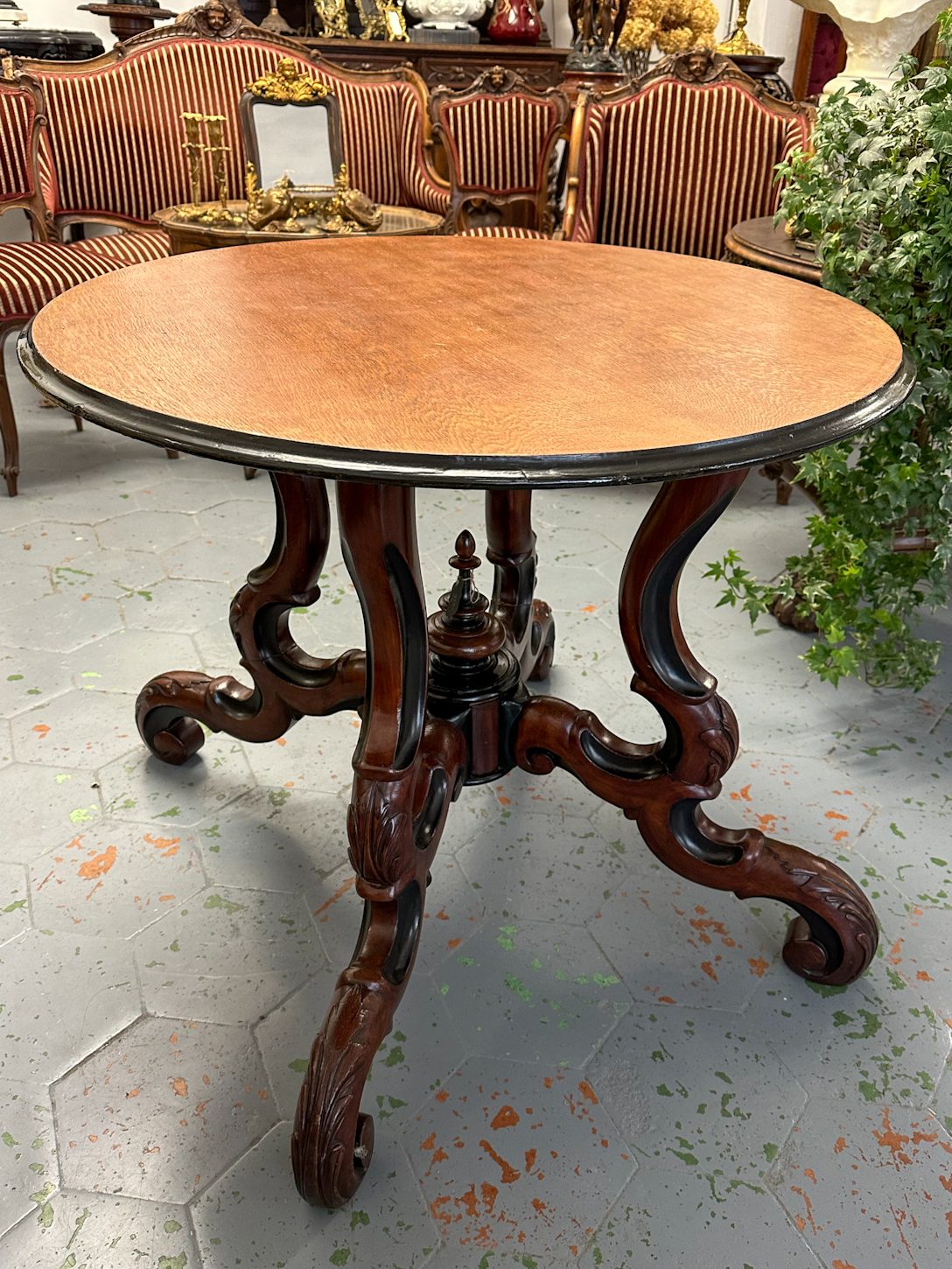
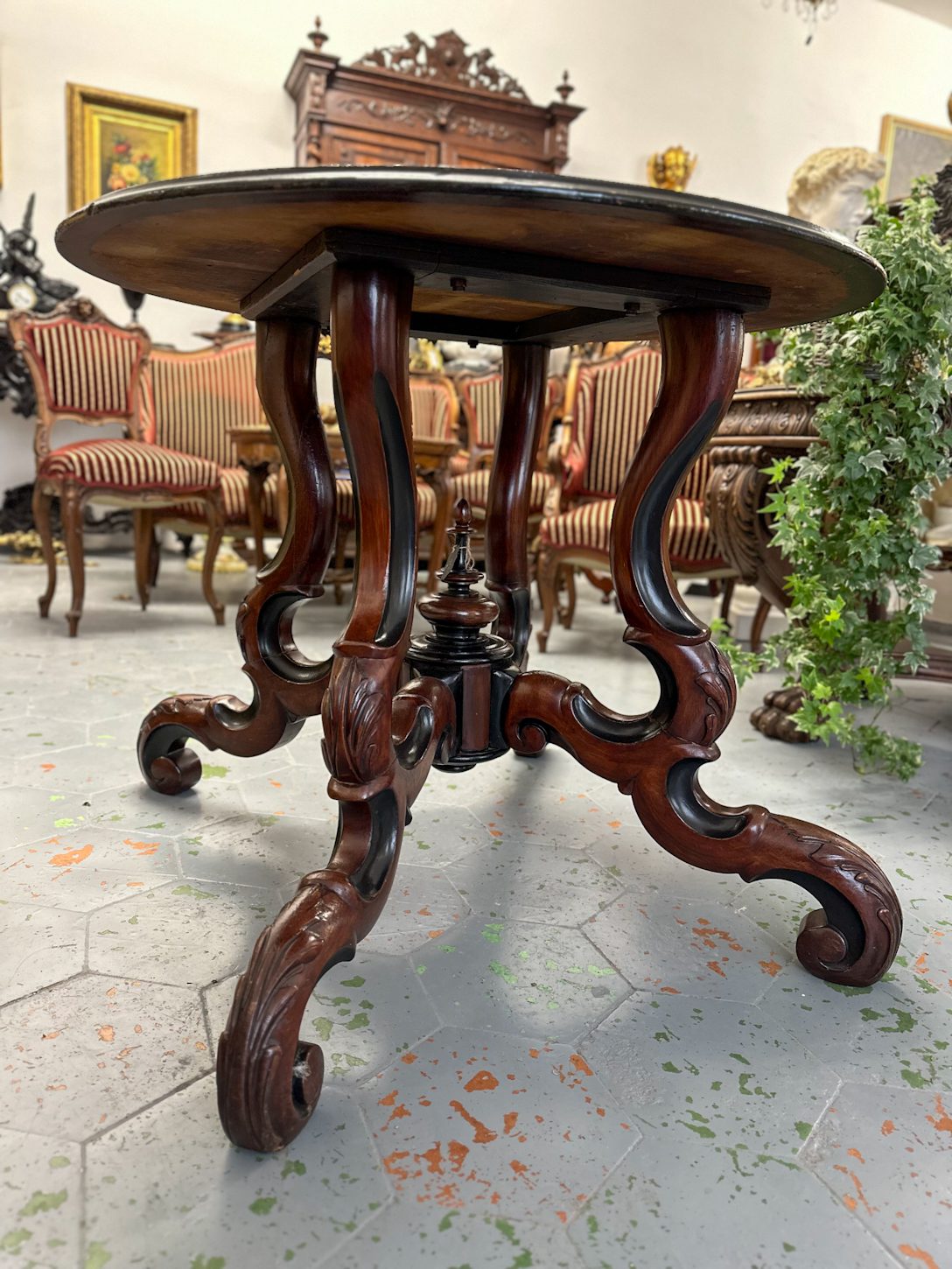
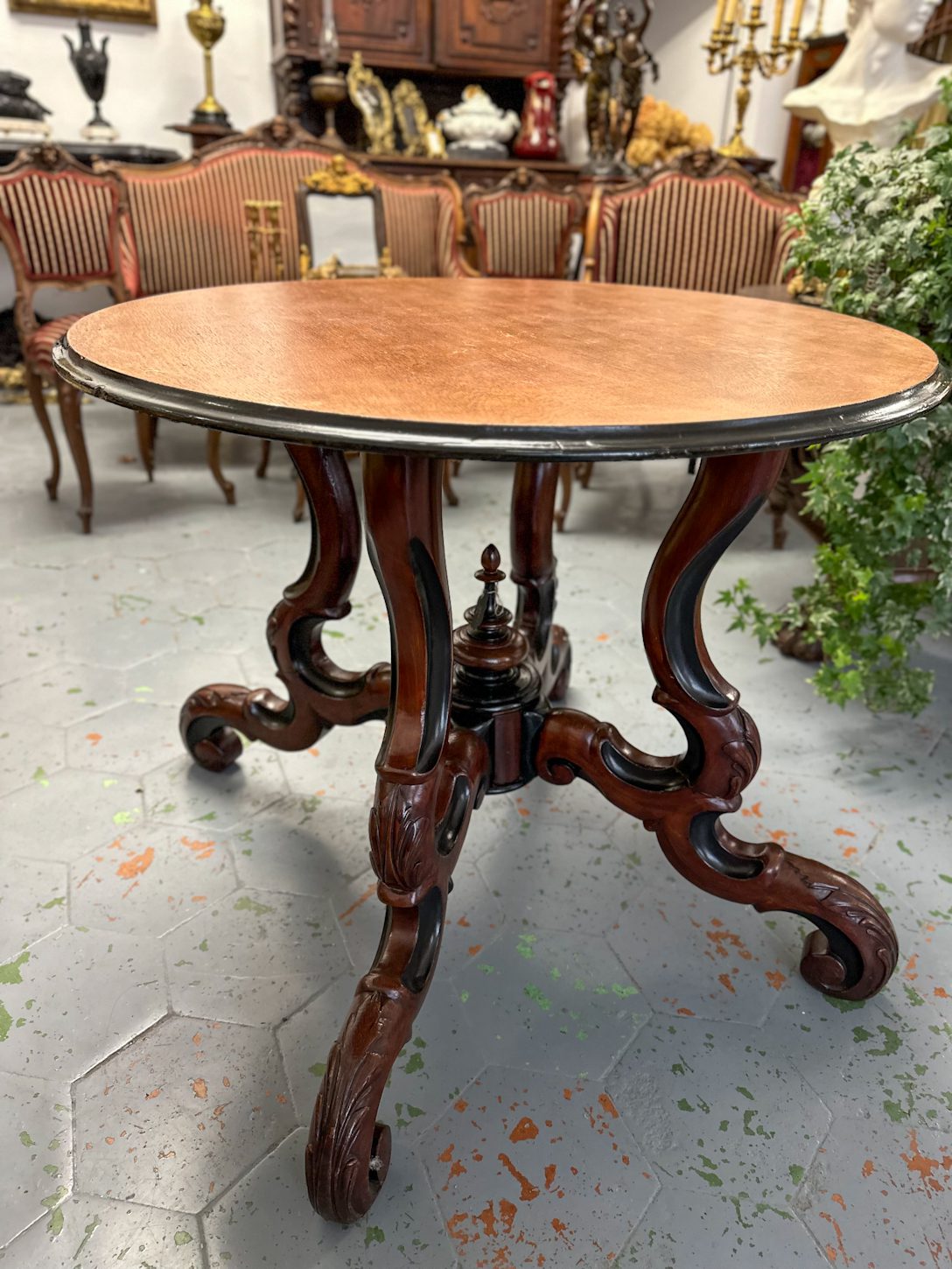
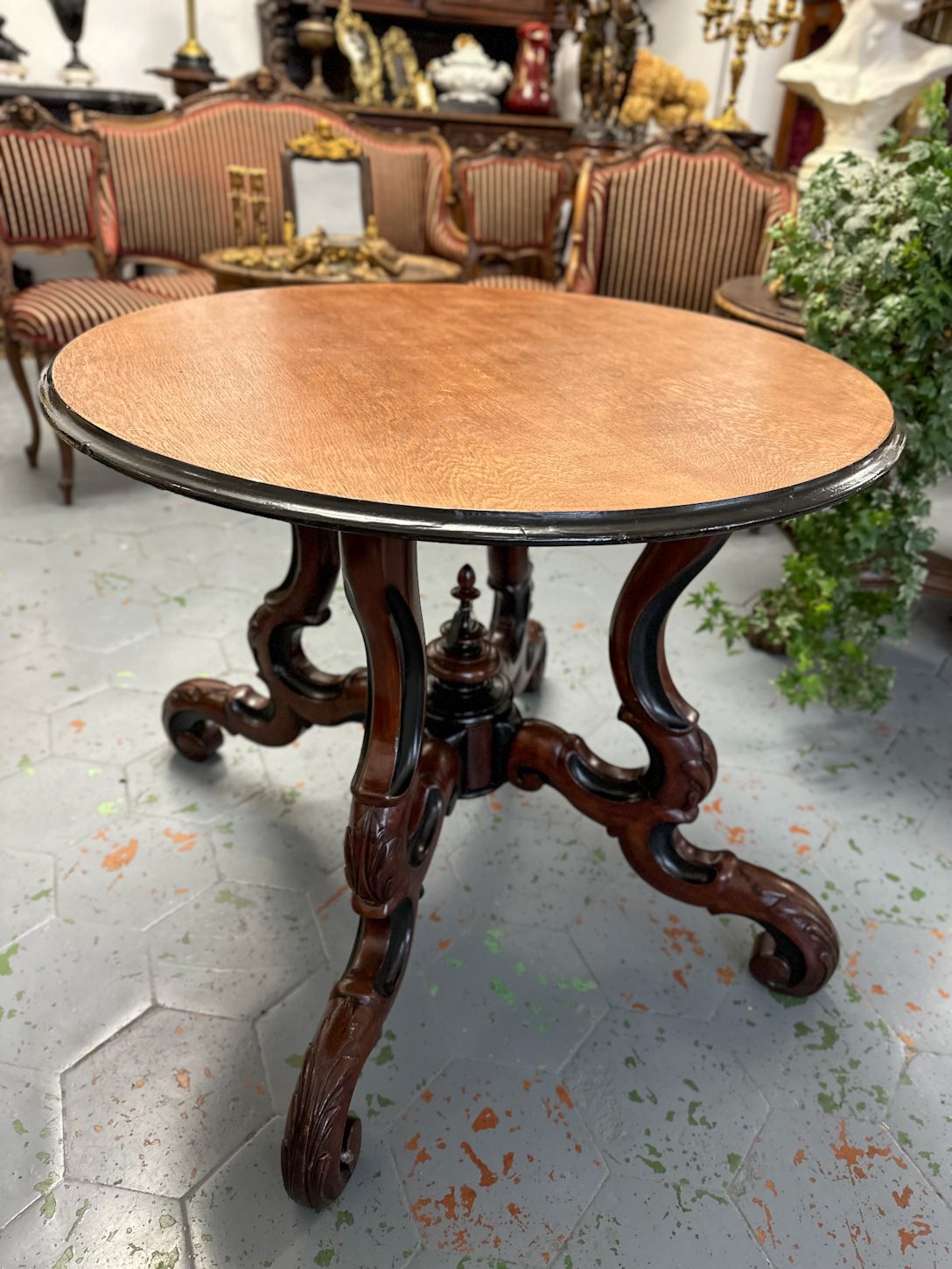
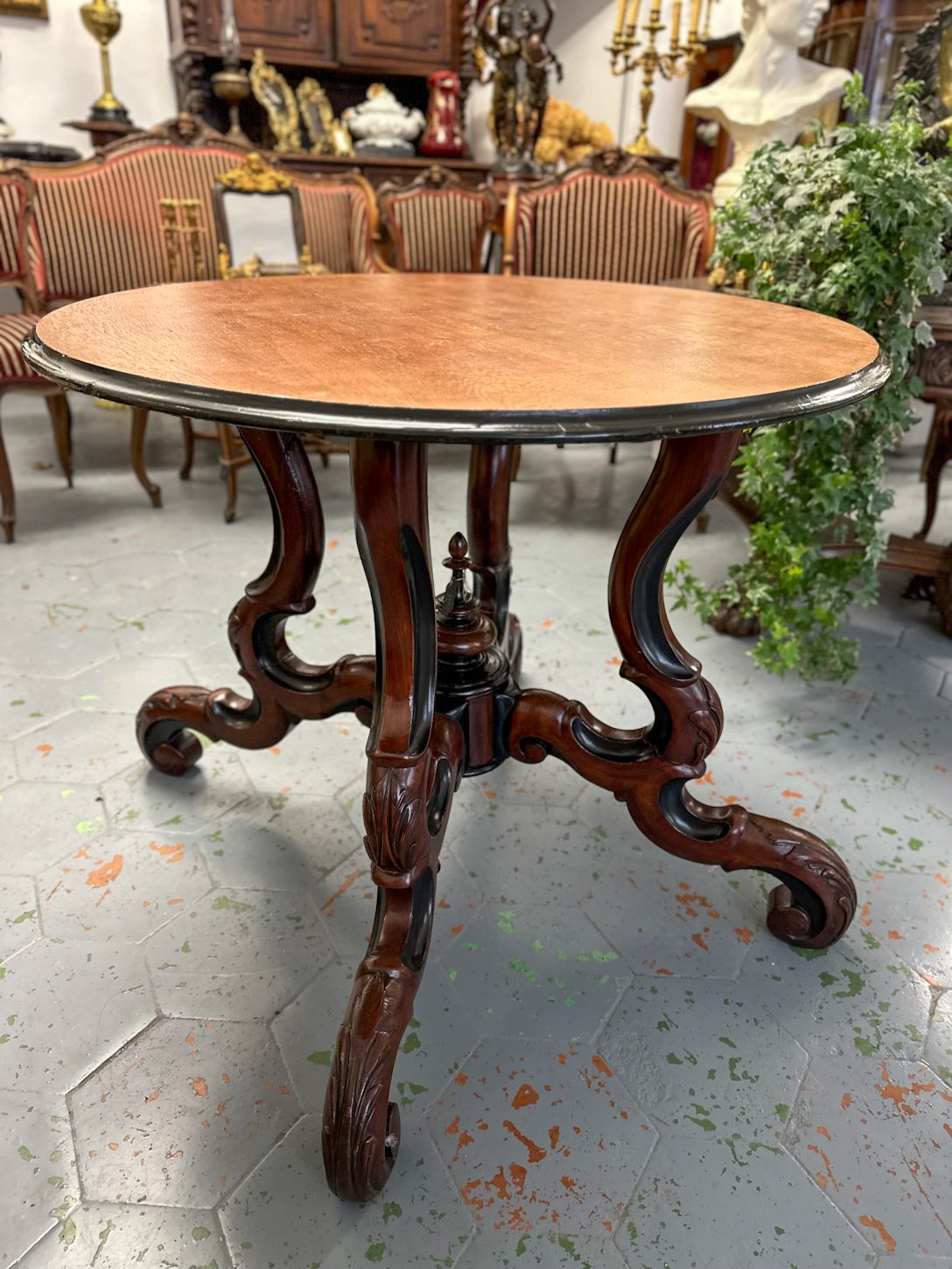
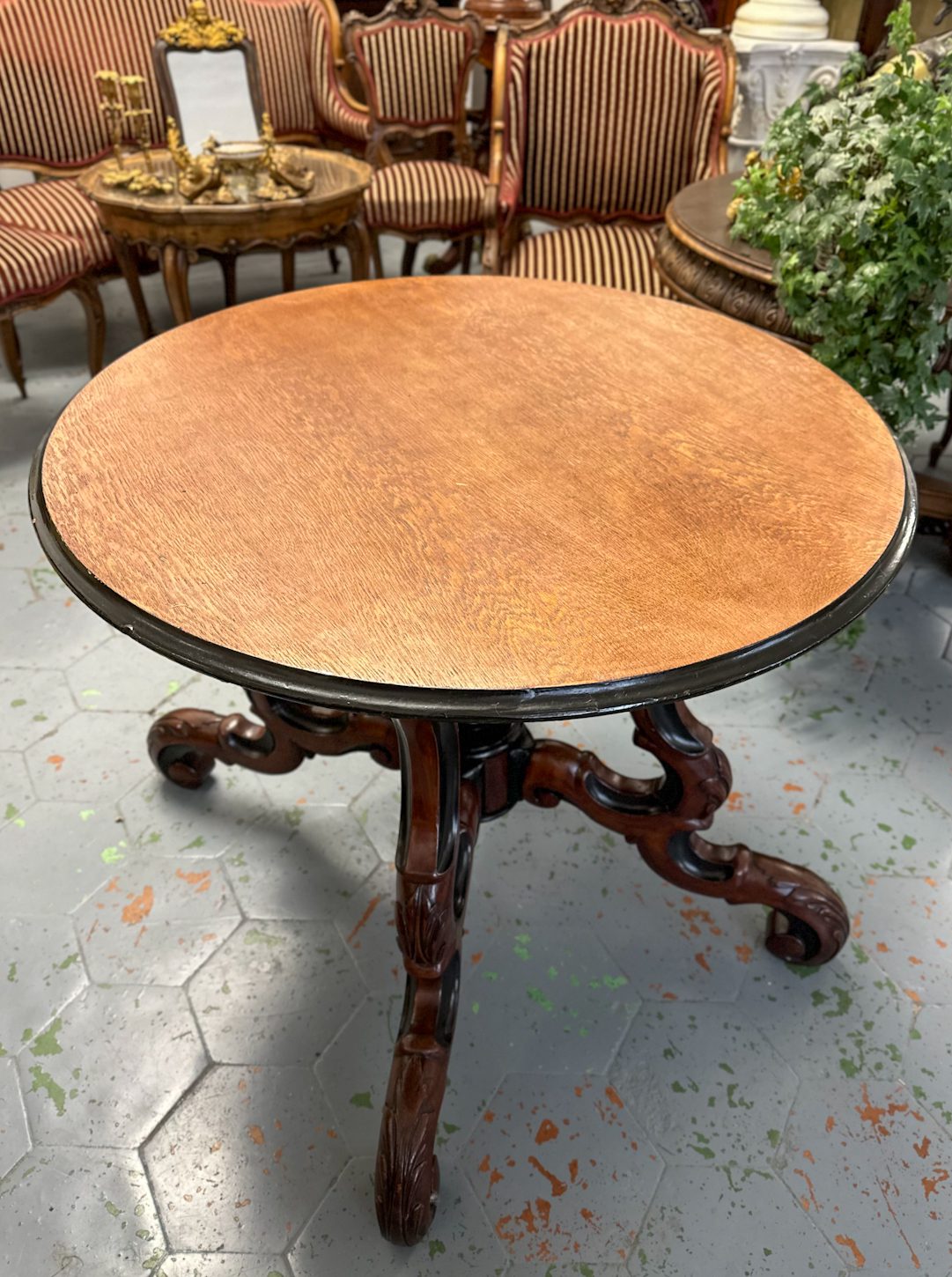
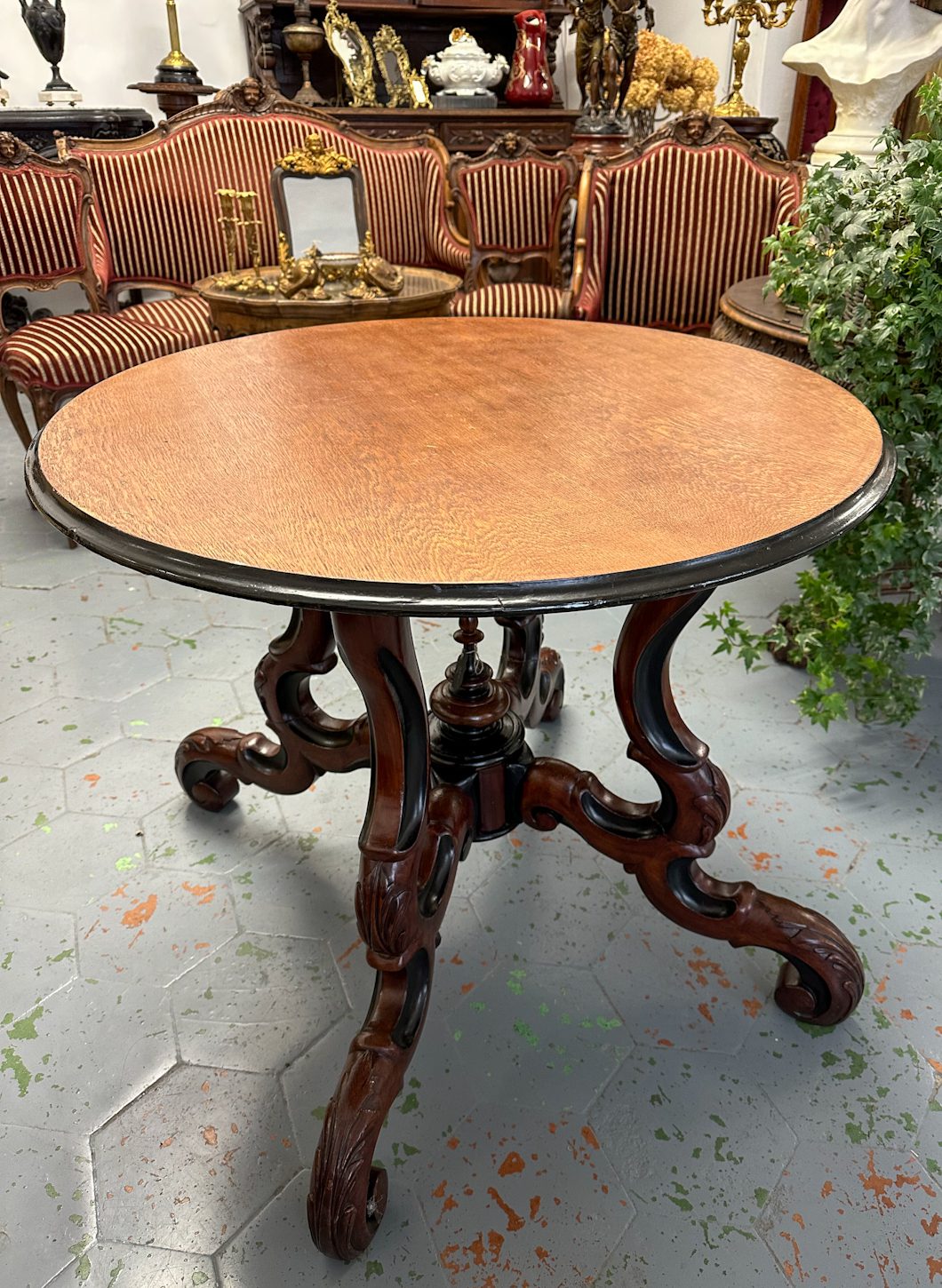
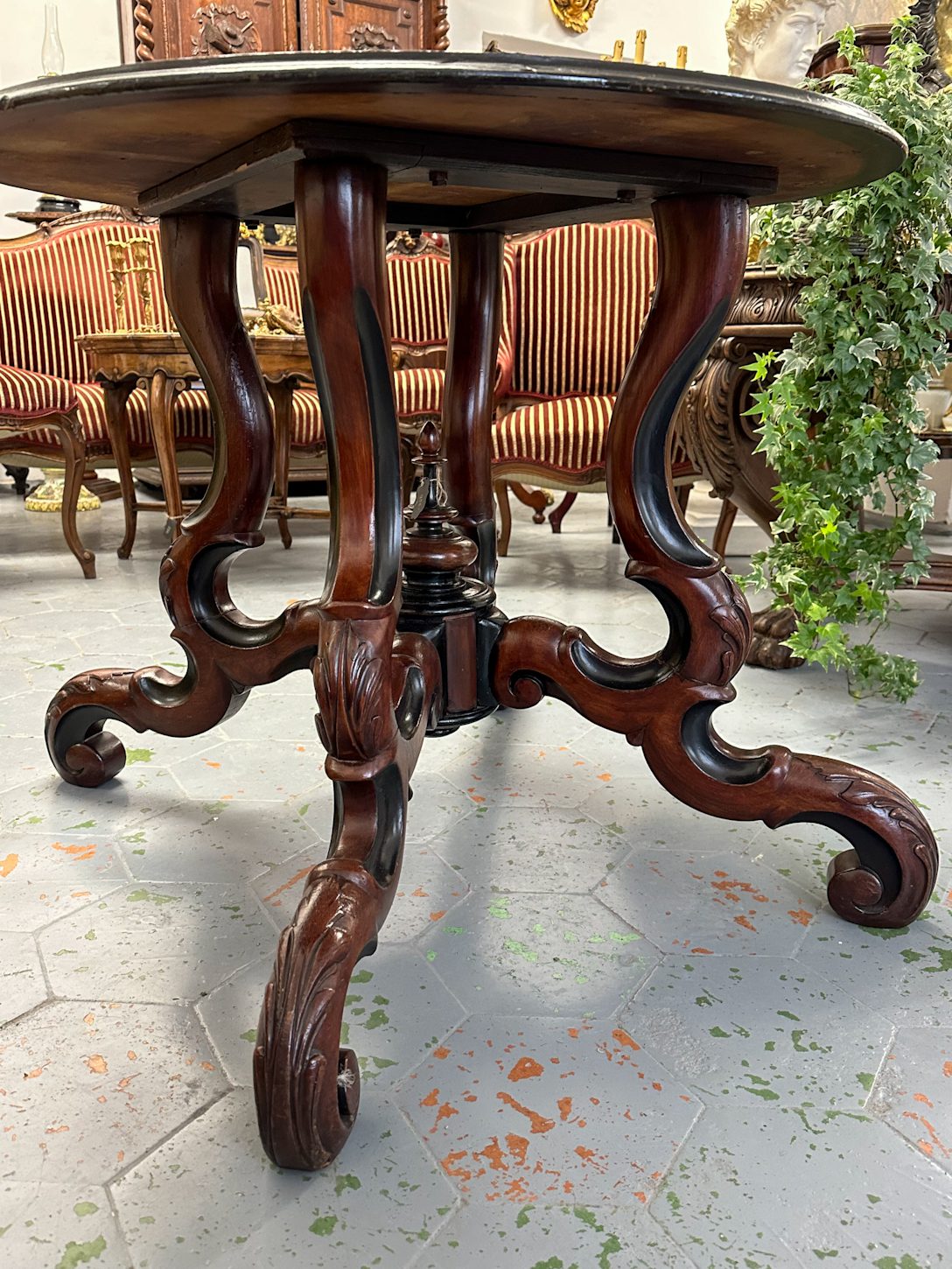
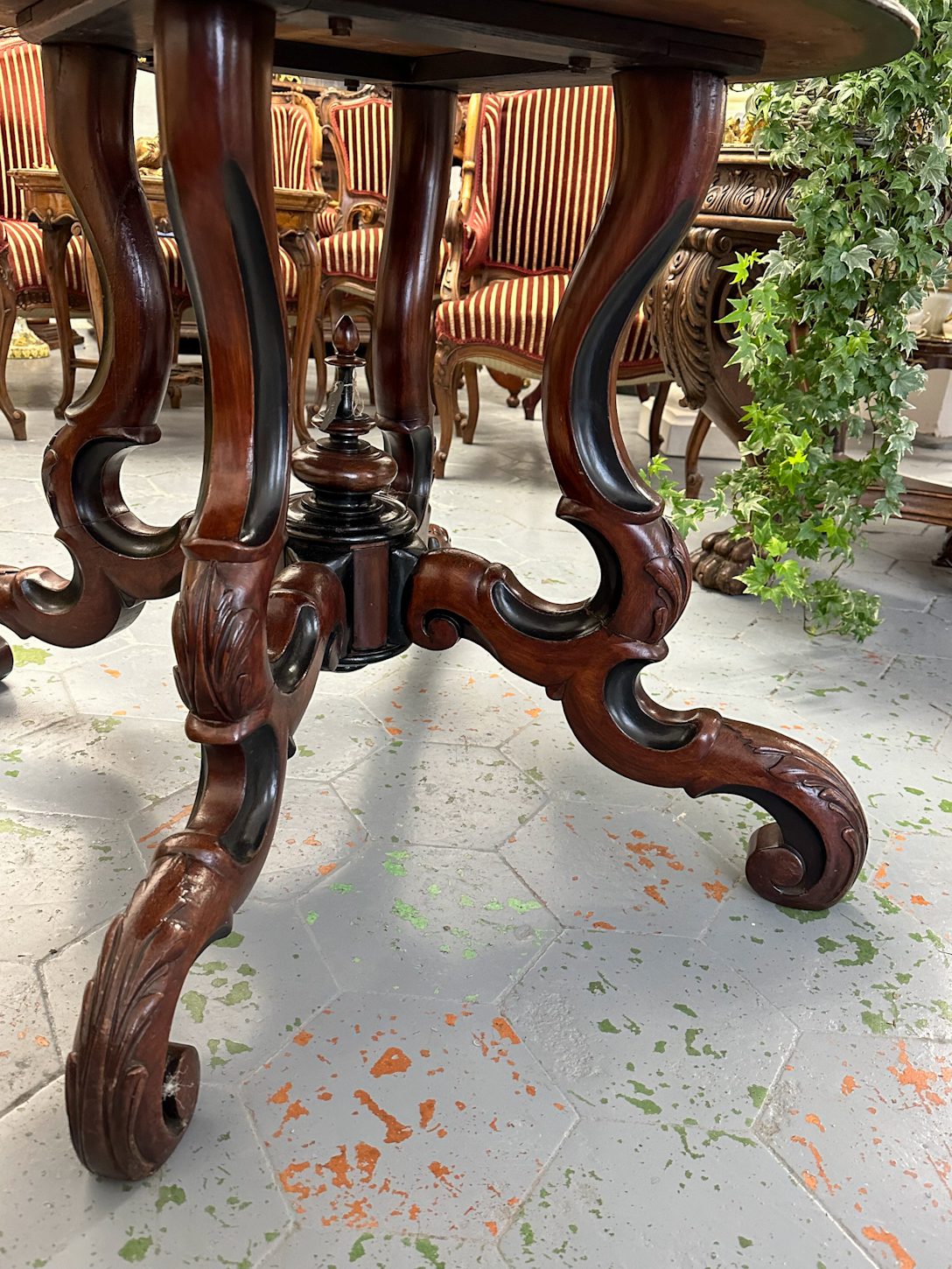
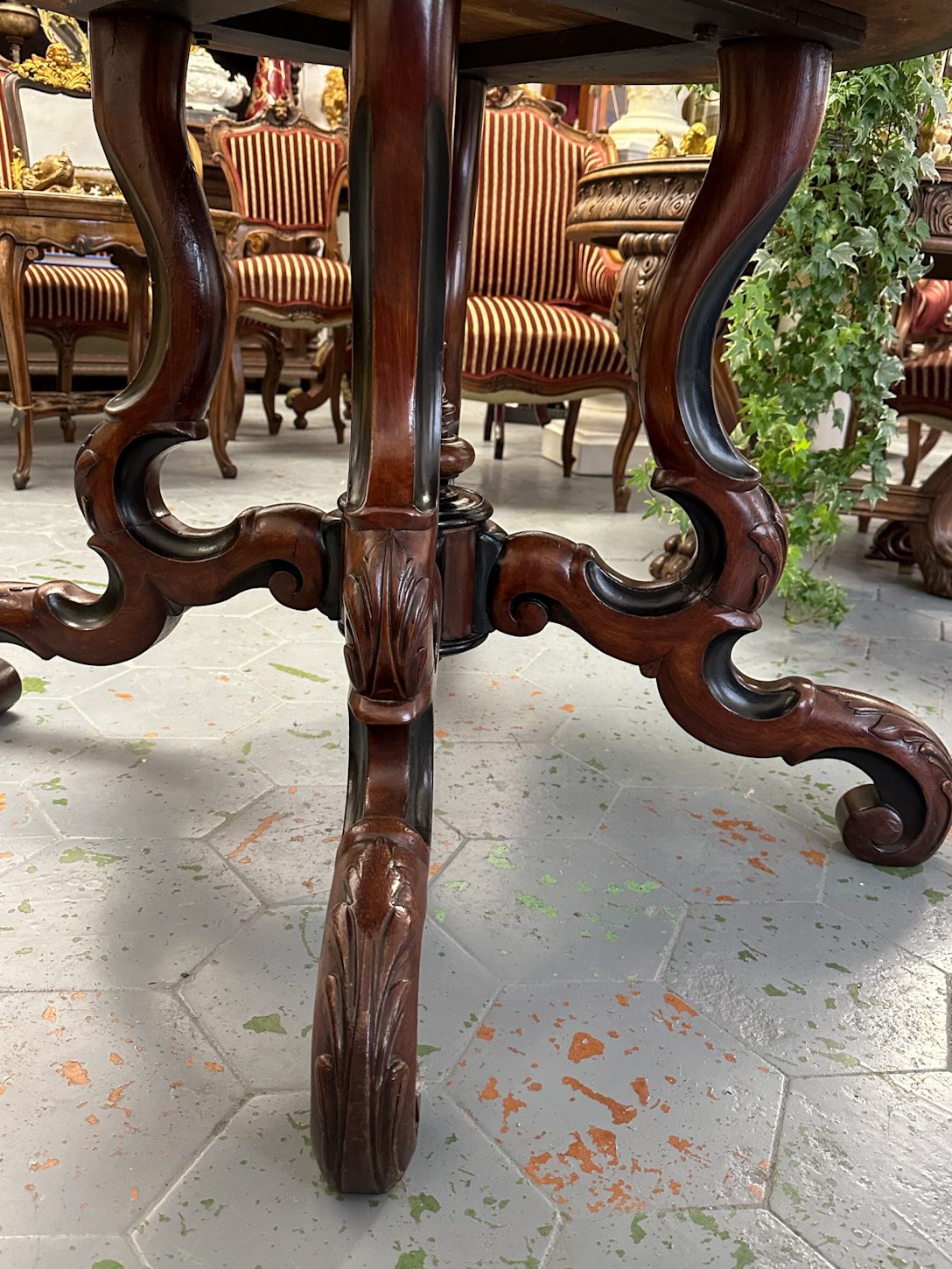
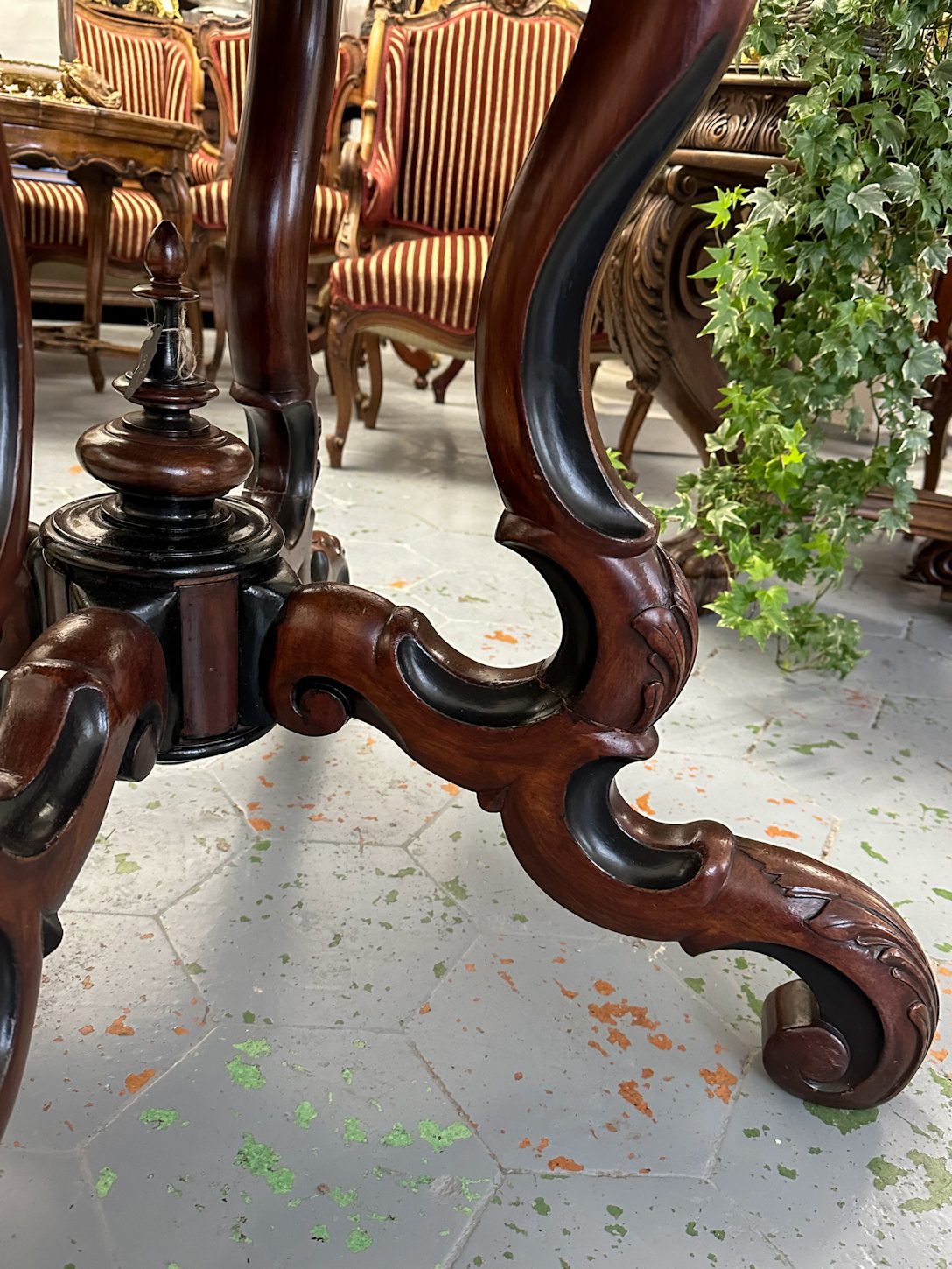
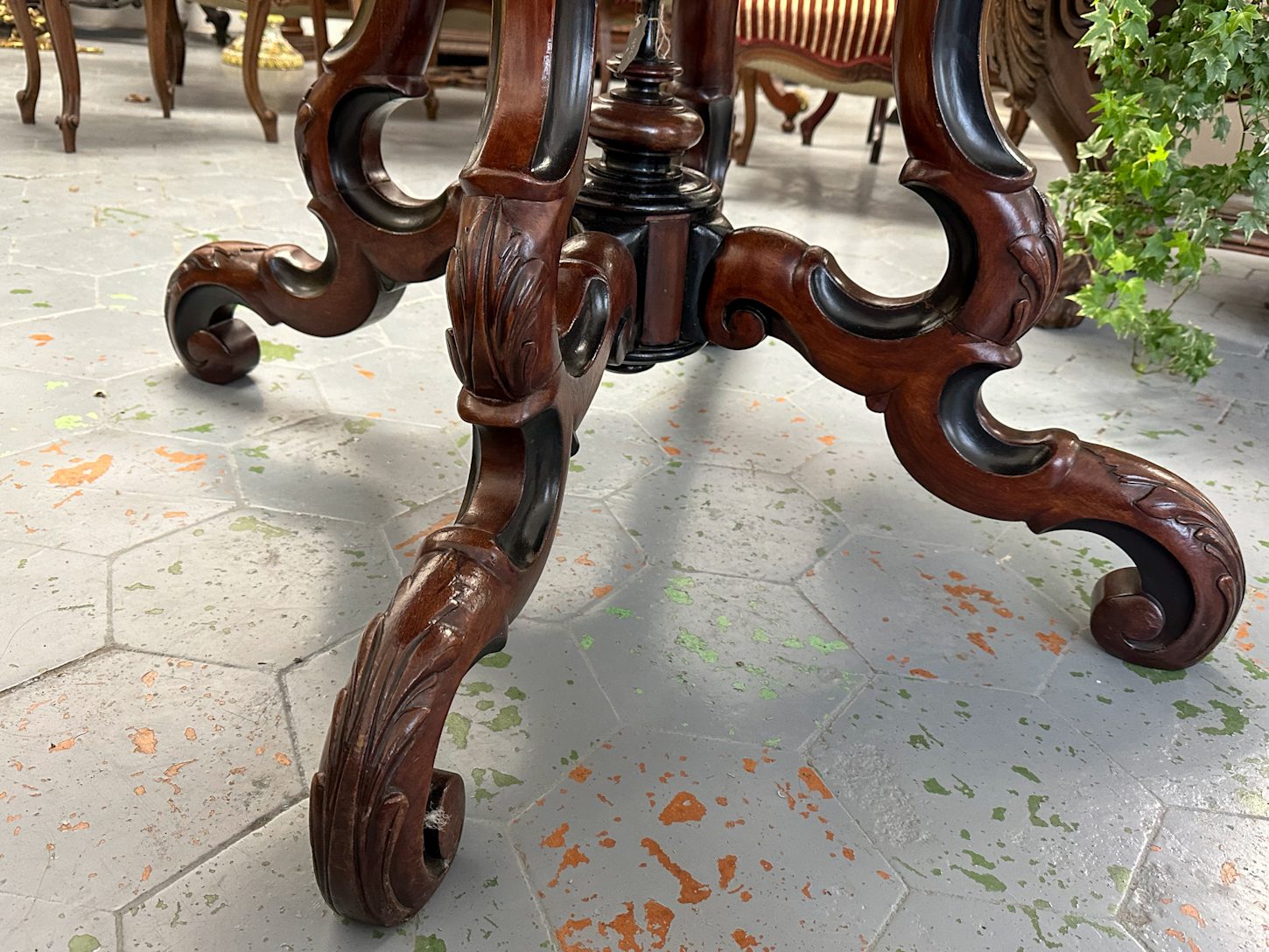
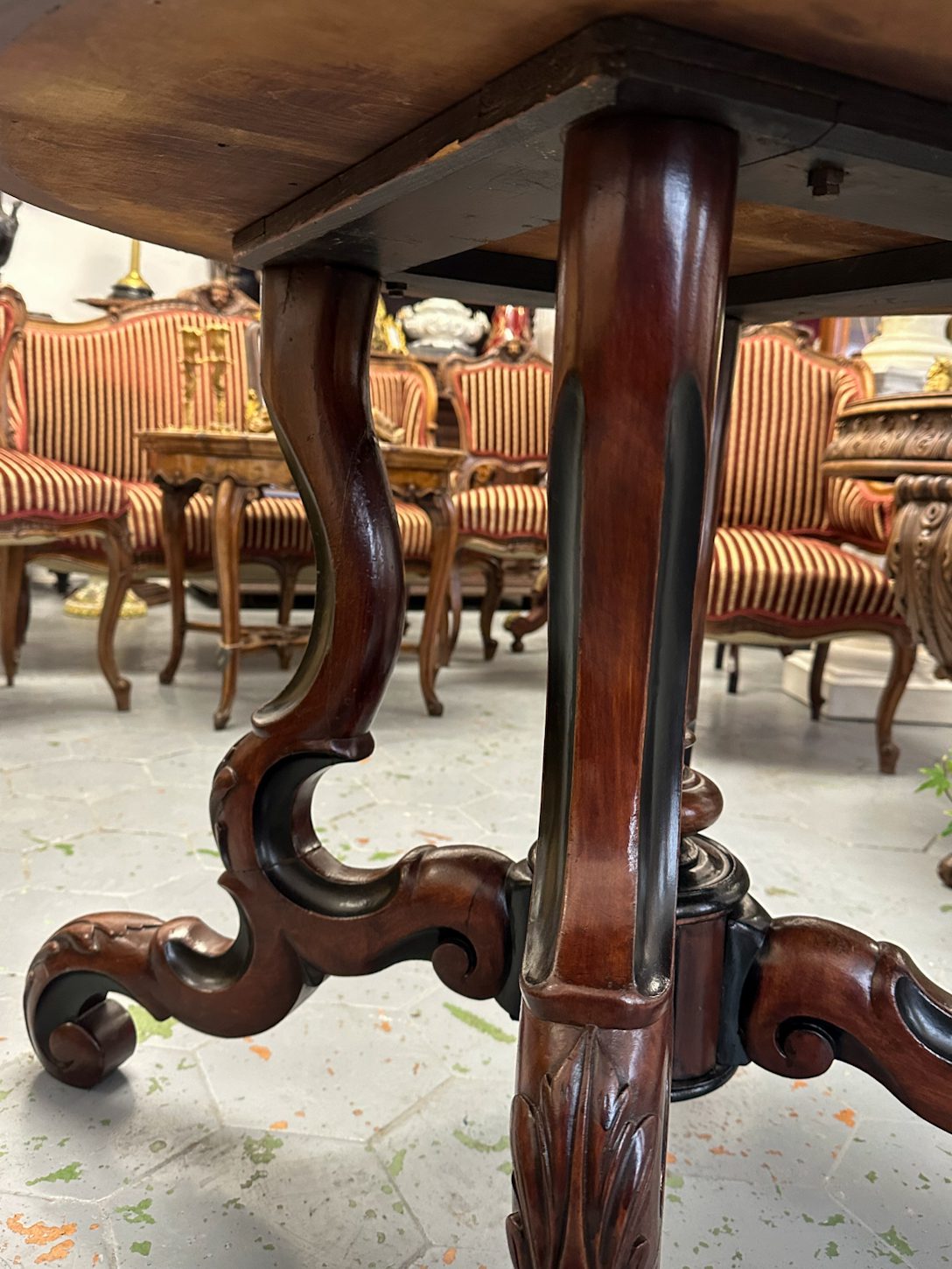
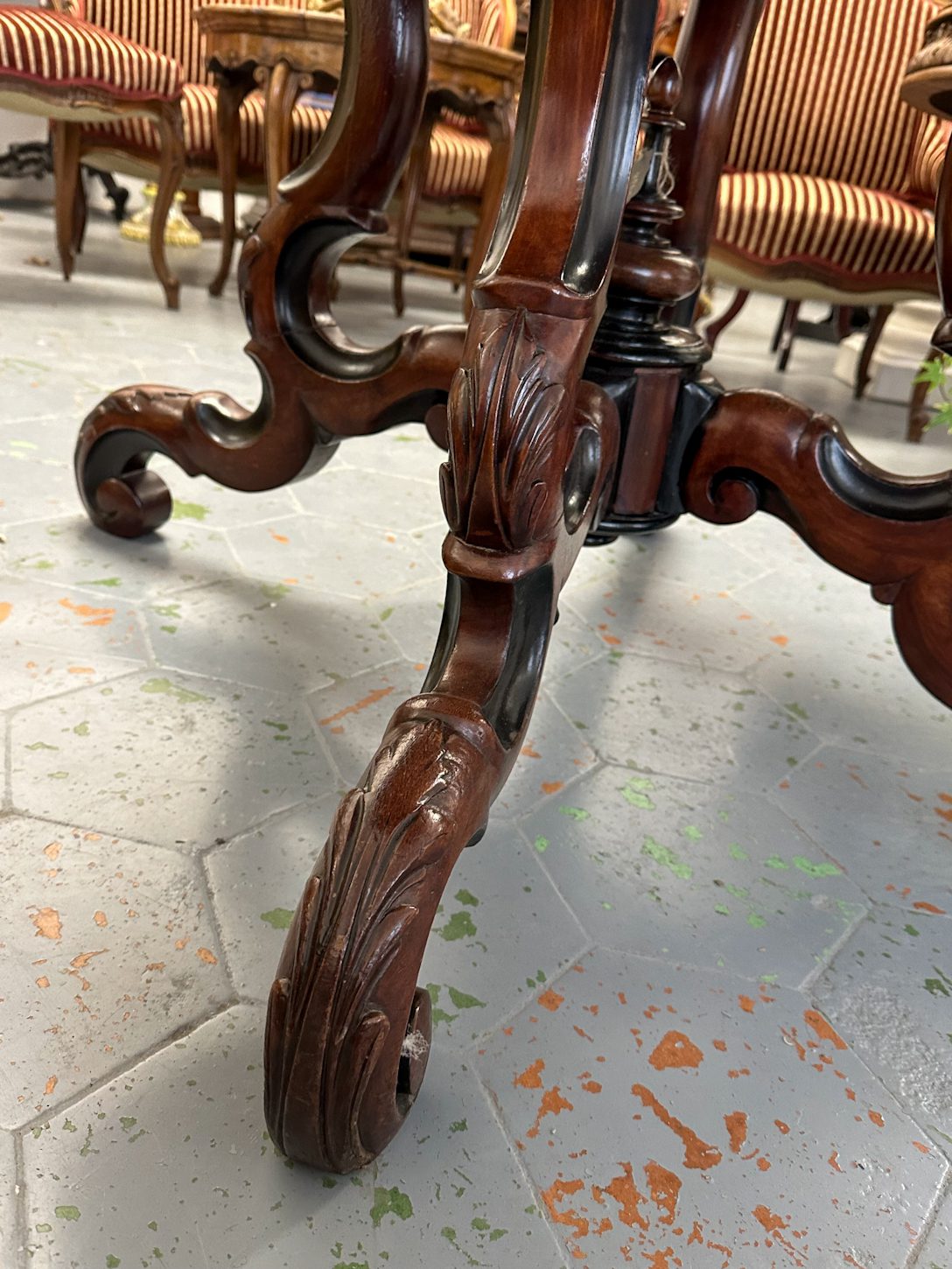
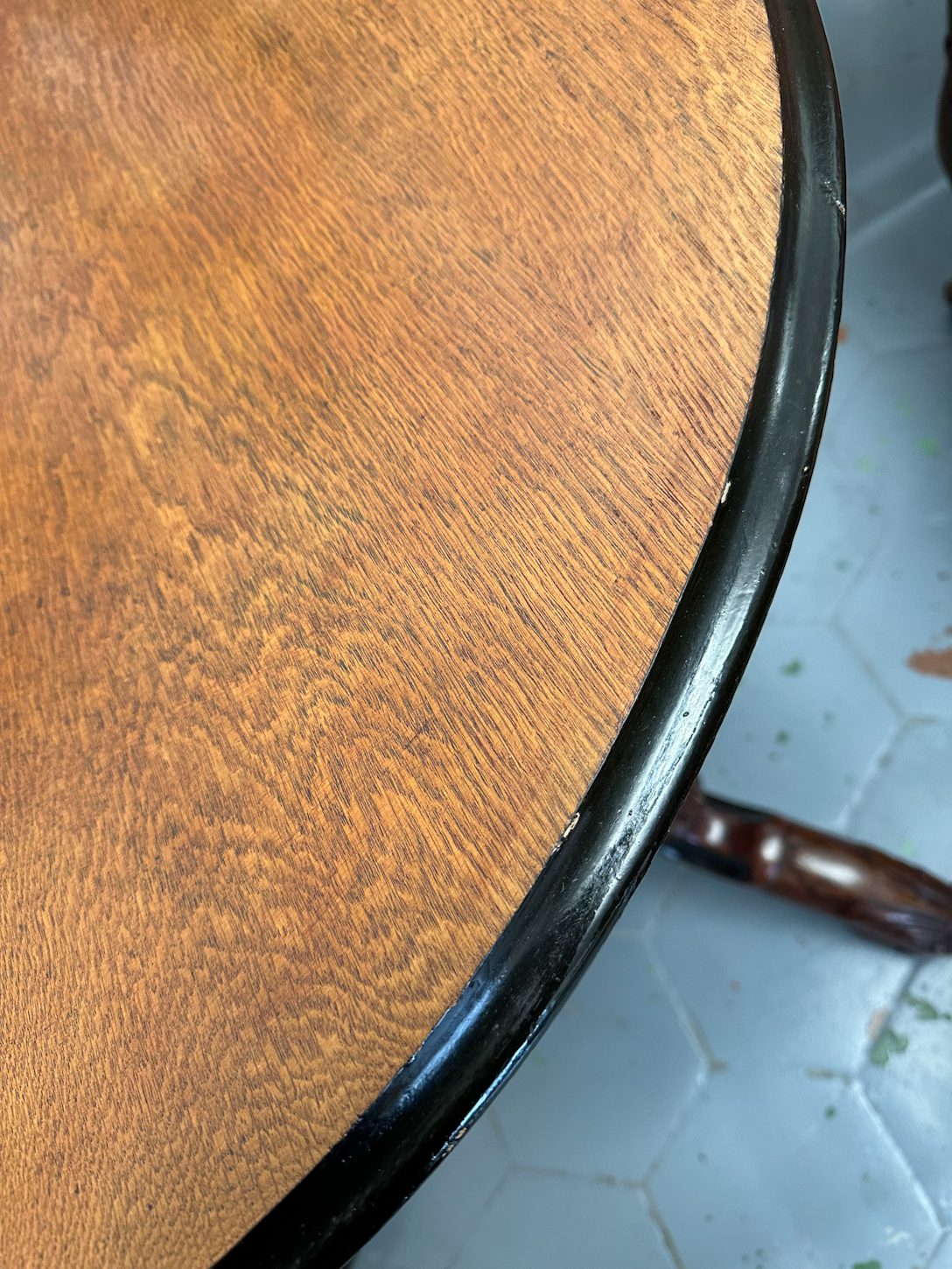
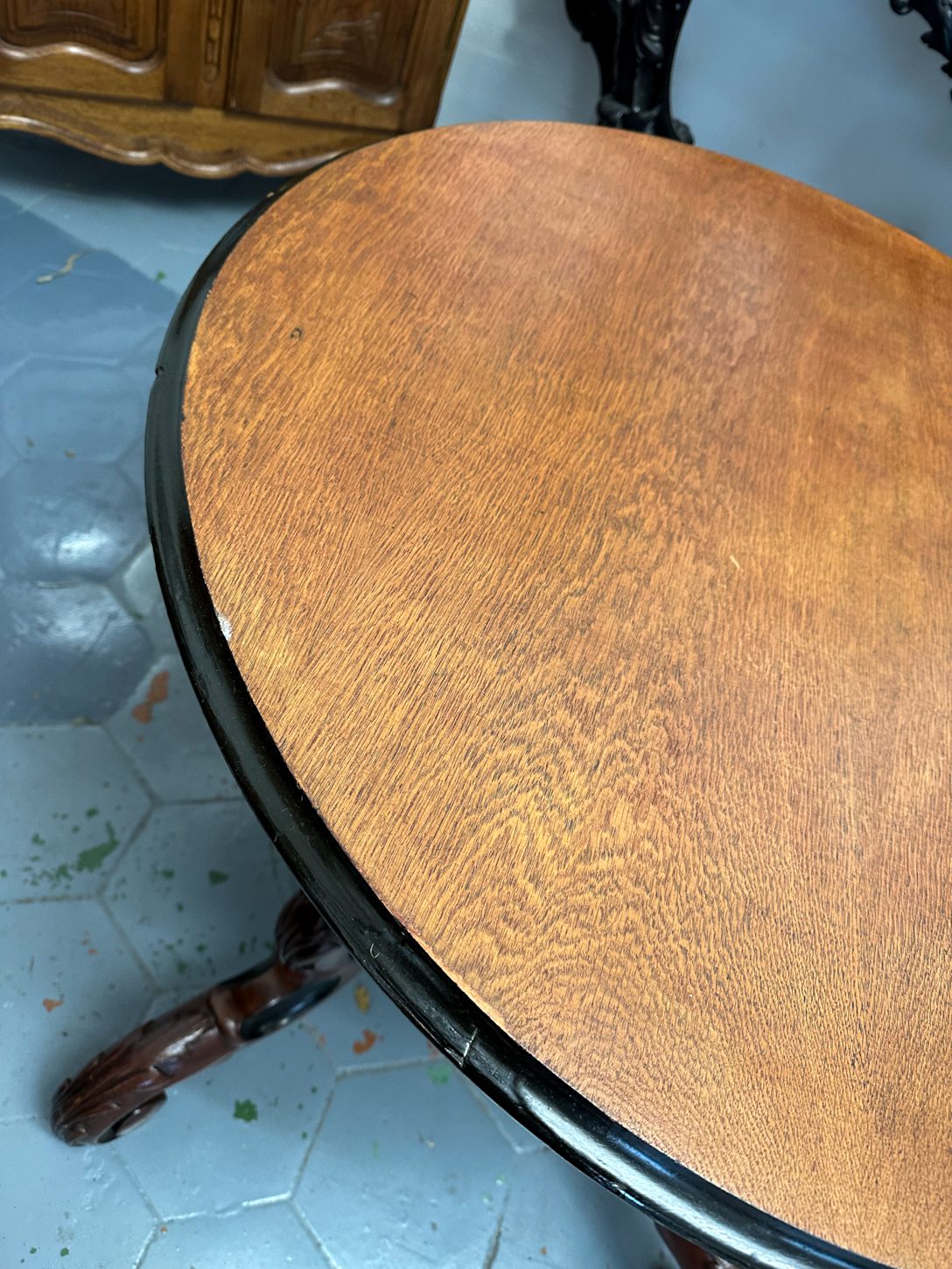
Apaļš salona galds ar silto ozolkoka/vīdola placage virsmu un melnotu malu. Četras cabriole kājas ar rocaille griezumiem, savienotas ar melnotu stretcher sistēmu un centrālo finial. Historicisms / Biedermeier pāreja, Centrāleiropa, ap 1850.–1880. Augstums 70 cm × diametrs 84,5 cm.
📐 IZMĒRI
Augstums 70 cm × virsmas diametrs 84,5 cm × kāju platums 81 cm.
―――――――――――――――――――――
Apaļš Salona Galds ar Melnotu Malu un Vīdola Koka Virsmu — Historicisms / Biedermeier pāreja, Centrāleiropa, ap 1850.–1880.
―――――――――――――――――――――
🏛️ IZGATAVOŠANAS PERIODS, MĀKSLAS STILS, LAIKMETS
Šis galds pieder tam auglīgajam pārejas brīdim, kad Biedermeier vēl turēja savas formas — vienkāršo, silto, ģimeniski intīmo virsmu —, bet Historicisms jau atnesa jaunu ornamentālo valodu: rocaille locījumus kāju profilā, melnotu ébénisé kontūrlīniju kā dramatiskas kontrastes instrumentu, un centrālo savienojumu ar pagrieztu finial torni kā baroka silueta atbalsi. Abas estētikas šeit sadzīvo vienā objektā — un tas padara šo galdoru par ārkārtīgi personīgu 19. gadsimta Centrāleiropas buržuāzijas interjera liecinieku.
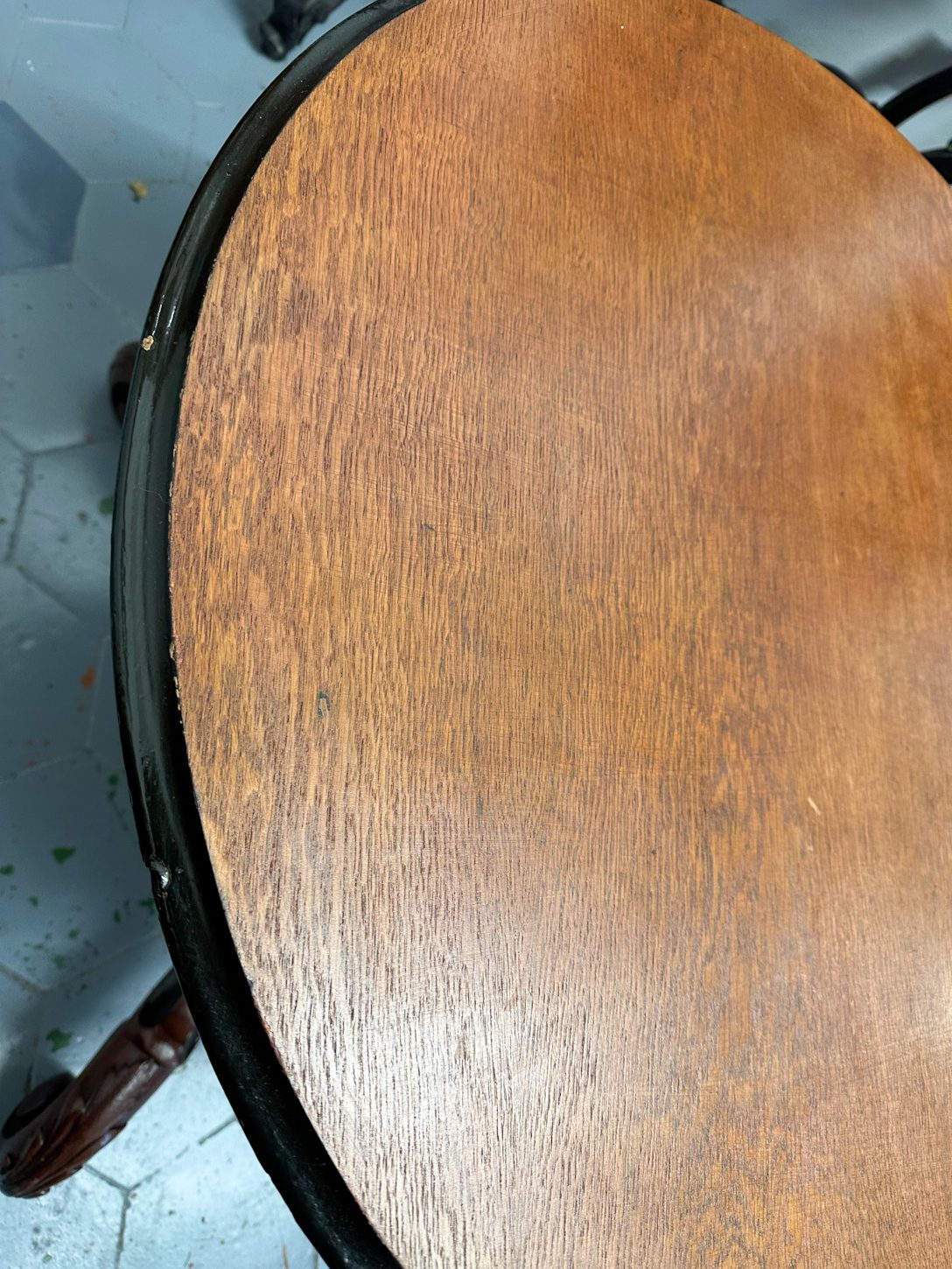
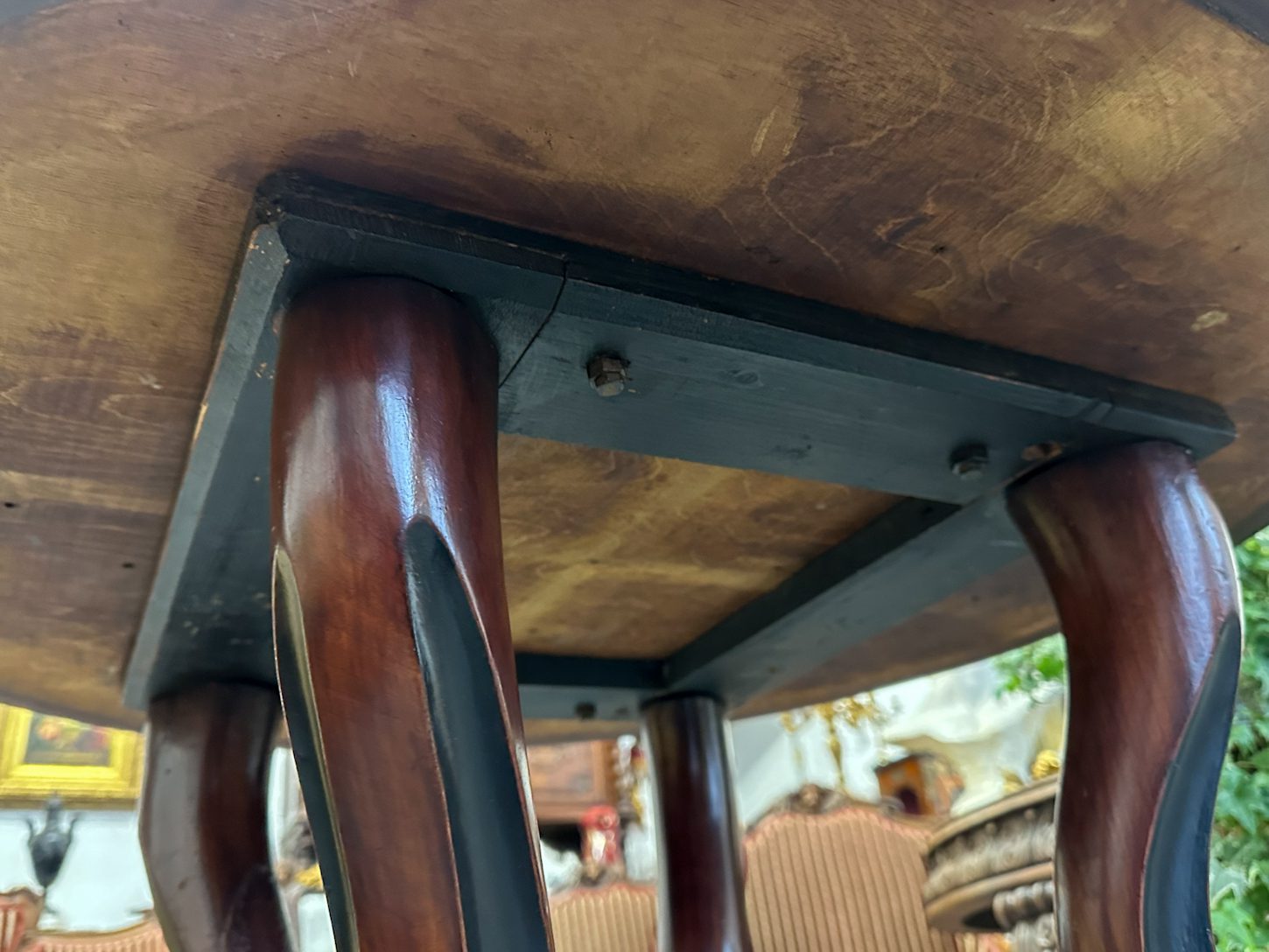
Četras cabriole tipa kājas ar rocaille rakstu augšdaļā un scroll locījumu kājās, savienotas ar centrālo melnotu stretcher sistēmu, ko kronē torņveida finial — tas ir Vācijas, Austrijas vai Čehijas augstākās klases galdniecības raksturīgākais risinājums ap 1860. gadu. Galda virsma — siltā dzeltenpelēcīgā ozolkoka vai vīdola koka placage — rada brīnišķīgu kontrastu ar melnotajiem malas un kāju akcentiem.
Belle Époque — “Skaistais Laikmets” — sākās 1871. gadā. Taču šis galds radīts tieši tajā mirklī pirms tā — kad Vīne vēl bija Eiropas kultūras centrs un ass, ap kuru viss griezās un Johans Štrauss II tikko bija uzrakstījis Skaisto zilo Donavu. 1867. gadā tā pirmatskaņojumā Vīnes filharmoniķi spēlēja zālē, kurā tādi galdi stāvēja foajē — ar siltajiem koka toņiem un melnotajiem akcentiem, kas atbalsoja fraka atlapas. Šis galds ir no tā pasaules.
―――――――――――――――――――――
⚜️ RAŽOTĀJS UN MANUFAKTŪRAS ZĪMOGS
Redzamā ražotāja zīmoga nav. Kāju profilu elegance — cabriole forma bez pārspīlējuma, rocaille griezumu mērenība, melnoto un gaišo toņu kontrastes precizitāte — norāda uz augsti kvalificētu Vīnes, Prāgas vai Drēzdenes galdniecības darbnīcu, kas strādājušas haute bourgeoisie pasūtījumiem. Centrālās savienojuma konstrukcijas ar finial izsmalcinātā proporcionalitāte liecina par meistaru, kas saprata ne tikai funkciju, bet arī skulptūru. Galda virsmas placage tonis — raksturīgā medus-amber krāsa — atbilst Centrāleiropas ozola vai vīdola tradīcijai.
―――――――――――――――――――――
💎 RETUMS UN NOZĪME
Salona galdi ar šo specifisko kāju un stretcher kombināciju — cabriole ar rocaille augšdaļu, melnotu stretcher ar centrālo finial, un siltās toņa virsmu kontrastā ar melnotajiem akcentiem — ir samērā reti saglabājušies pilnā oriģinālā stāvoklī. Šis izmērs — 84,5 cm diametrā — ir ideāls modernajiem dzīvokļiem, un tieši tāpēc šī kategorija ir aktīvi pieprasīta starptautiskajos antikvāru tirgos. Vīnes un Prāgas izsoles šādus galdus regulāri novērtē ar nopietnu kolekcionāru interesi.
―――――――――――――――――――――
🕯️ PIELIETOJUMS INTERJERĀ, DIZAINĀ UN FOTOGRĀFIJĀ
Galds ir universāls — tas iederēsies klasiskā Biedermeier iedvesmotā interjerā, eklektiskā laikmetīgā dzīvokļa salonā, un pat skandināviski minimālistiskā telpā kā apzināts kontrasts ar siltā koka toņiem. Ideāls kā kafijas galds, blakusgalds vai galda lampas postaments viesistabā vai kabinetā. Fotogrāfijā siltā virsma ar melnoto konturējumu rada gandrīz chiaroscuro efektu — tas ir ļoti fotogrāfisks galds.
―――――――――――――――――――――
🎁 DĀVANA UN PERSONALIZĀCIJA
Kompaktais izmērs padara šo galdoru par izsmalcinātu dāvanu mājas iekārtošanas entuziastam vai kultūrvēsturiskā mantojuma novērtētājam. Pietiekami nozīmīgs, lai pārstāvētu augstu gaumi — pietiekami kompakts, lai to varētu novietot jebkurā telpā.
―――――――――――――――――――――
🔍 STĀVOKLIS
Laba antikvāra stāvokļa. Galda virsma placage ar vecuma lietošanas pēdām — vietām redzami virspusēji skrāpējumi un nelielas krāsas tona izmaiņas; melnoto malu vietās nelielas nolietojuma pazīmes. Kāju rocaille griezumi saglabājuši detalizāciju. Centrālais finial — savienojums stabils. Kāju scroll kājas — bez deformācijām. Lietas stāvoklis pilnībā atspoguļots fotogrāfijās.
―――――――――――――――――――――
🇬🇧 DESCRIPTION IN ENGLISH
📐 DIMENSIONS
Height 70 cm × top diameter 84.5 cm × leg spread 81 cm.
―――――――――――――――――――――
Round Salon Table with Warm Oak Top and Ebonised Accents — Historicism / Late Biedermeier Transition, Central Europe, circa 1850–1880.
―――――――――――――――――――――
🏛️ PERIOD, ARTISTIC STYLE, ERA
This table belongs to that fertile transitional moment when Biedermeier still held its forms — the simple, warm, domestically intimate surface — while Historicism was already introducing a new ornamental language: rocaille scrollwork in the leg profile, ebonised ébénisé contour lines as an instrument of dramatic contrast, and a central connector with a turned finial tower as a Baroque silhouette echo. Both aesthetics coexist in a single object — and this is precisely what makes this table an exceptionally personal witness to the 19th-century Central European bourgeois interior.
Four cabriole-type legs with rocaille carving at the top and scroll terminations below, joined by a central ebonised stretcher system crowned by a tower-form finial — this is the most characteristic solution of German, Austrian, or Czech high-grade cabinetmaking around 1860. The table top — in a warm honey-amber oak or elm placage — creates a wonderful contrast with the ebonised edge and leg accents.
Belle Époque began in 1871. But this table was made at the precise moment before it — when Vienna was still the cultural axis of Europe and Johann Strauss II had just written The Blue Danube. At its 1867 premiere, the Vienna Philharmonic played in a hall where such tables stood in the foyer — with their warm wood tones and ebonised accents mirroring the lapels of a dress coat. This table belongs to that world.
―――――――――――――――――――――
⚜️ MAKER AND PROVENANCE
No maker’s mark is visible. The elegance of the leg profile — cabriole form without exaggeration, the restraint of the rocaille carving, the precision of the ebonised and light tone contrast — points to a high-grade Viennese, Prague, or Dresden workshop working for haute bourgeoisie commissions. The refined proportionality of the central connector construction with its finial speaks to a craftsman who understood not only function but sculpture. The placage tone — that characteristic honey-amber — corresponds to the Central European oak or elm tradition.
―――――――――――――――――――――
💎 RARITY AND SIGNIFICANCE
Salon tables with this specific combination of legs and stretcher — cabriole with rocaille upper section, ebonised stretcher with central finial, and warm-toned top in contrast to ebonised accents — have survived in complete original condition comparatively rarely. This diameter — 84.5 cm — is ideal for modern apartments, and this is precisely why this category is actively sought in international antique markets. Vienna and Prague auction houses regularly see serious collector interest in such tables.
―――――――――――――――――――――
🕯️ USE IN INTERIORS, DESIGN AND PHOTOGRAPHY
The table is versatile — it sits equally naturally in a classical Biedermeier-inspired interior, in an eclectic contemporary apartment salon, and even in a Scandinavian-minimalist space as a deliberate counterpoint with warm wood tones. Ideal as a coffee table, side table, or lamp table in a drawing room or study. In photography, the warm surface with its ebonised contour creates an almost chiaroscuro effect — this is a highly photogenic table.
―――――――――――――――――――――
🎁 AS A GIFT
Its compact size makes this table a refined gift for a home decoration enthusiast or an admirer of cultural heritage. Significant enough to represent elevated taste — compact enough to find a place in any room.
―――――――――――――――――――――
🔍 CONDITION
Good antique condition. Table top placage with age-related use marks — minor surface scratches and slight tonal variations in places; minor wear on the ebonised edge sections. Leg rocaille carvings retain their detail. Central finial connection stable. Leg scroll feet without deformation. The condition of the piece is fully documented in the photographs.
―――――――――――――――――――――