
Limoges Porcelāna Lādīte ar Zelta Mandalu — Franču Porcelāns, 20. gs. (6707)
Limoges Porcelāna Lādīte ar Zelta Mandalu — Franču Porcelāns, 20. gs. (6707)
€180.00
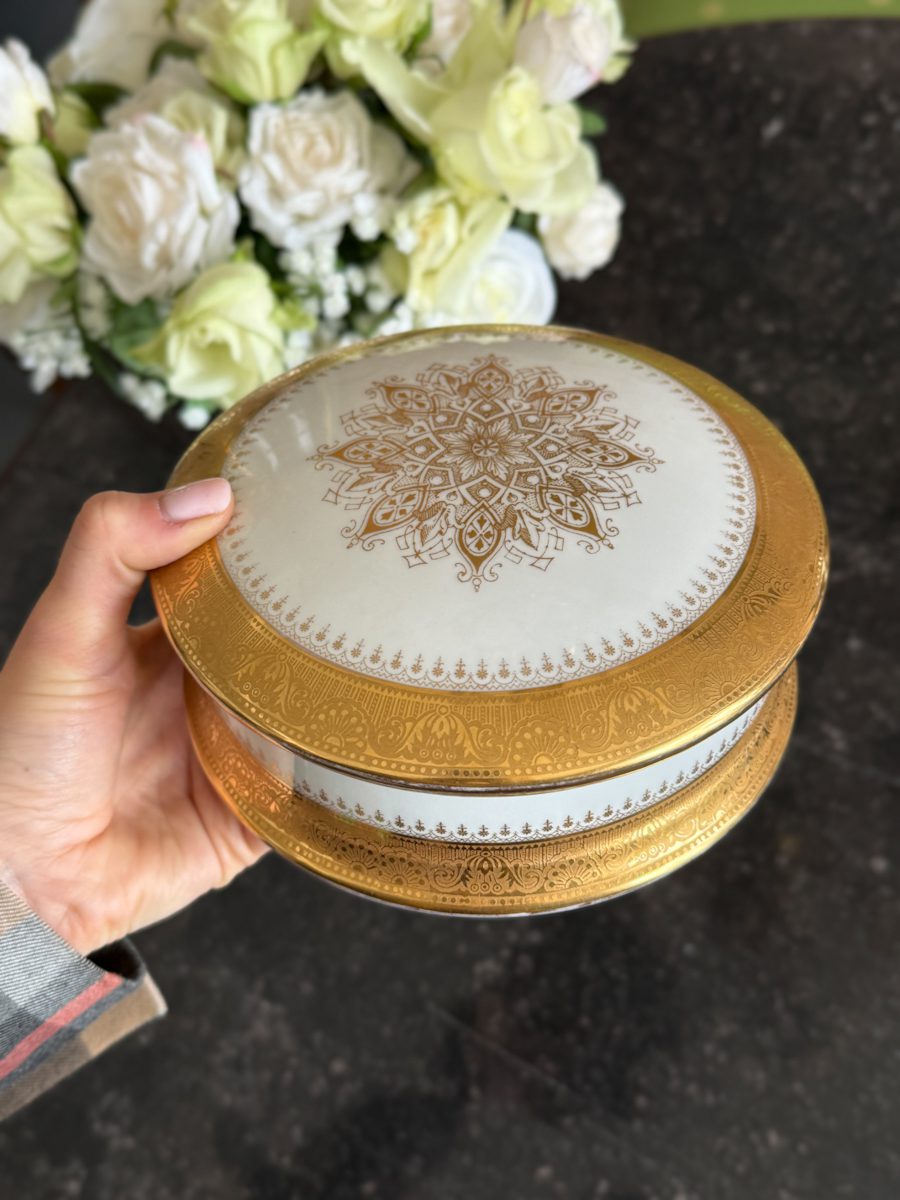
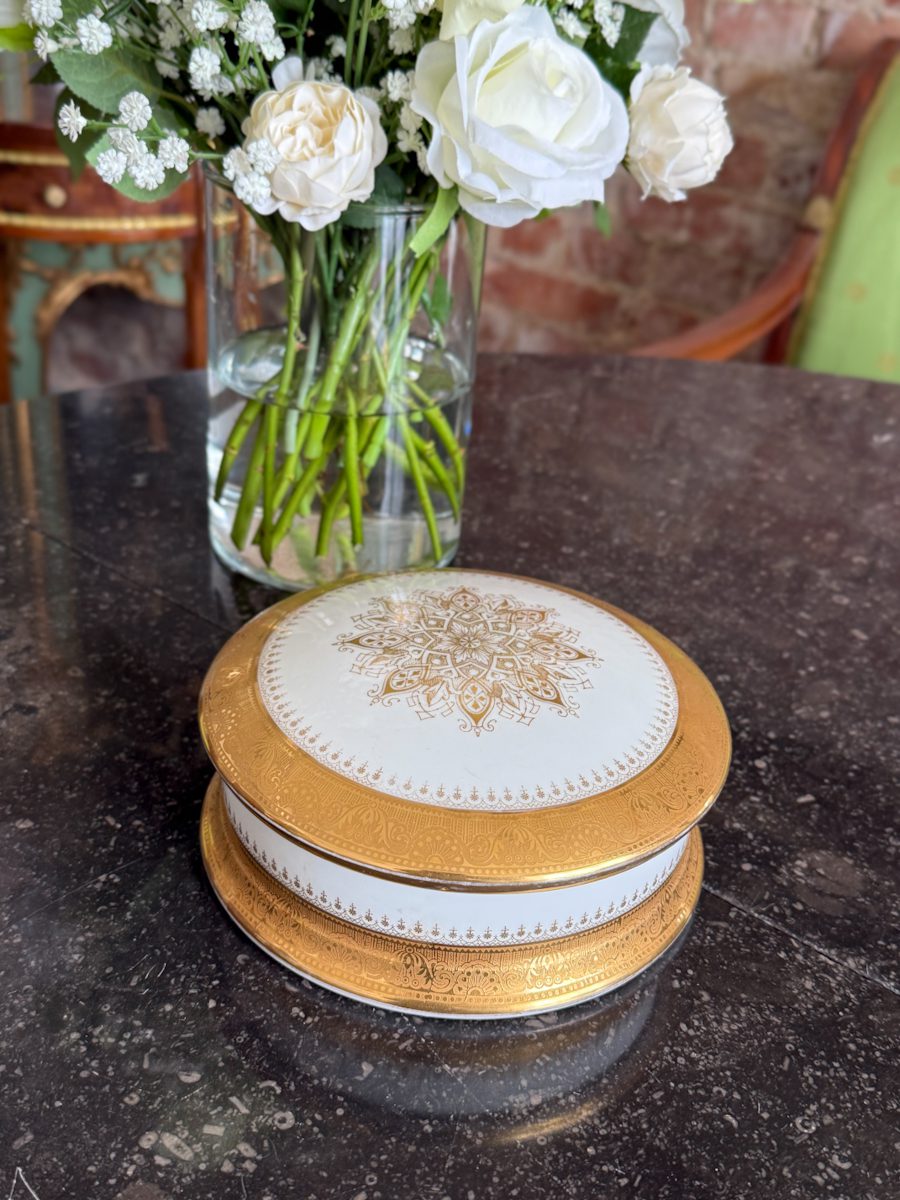
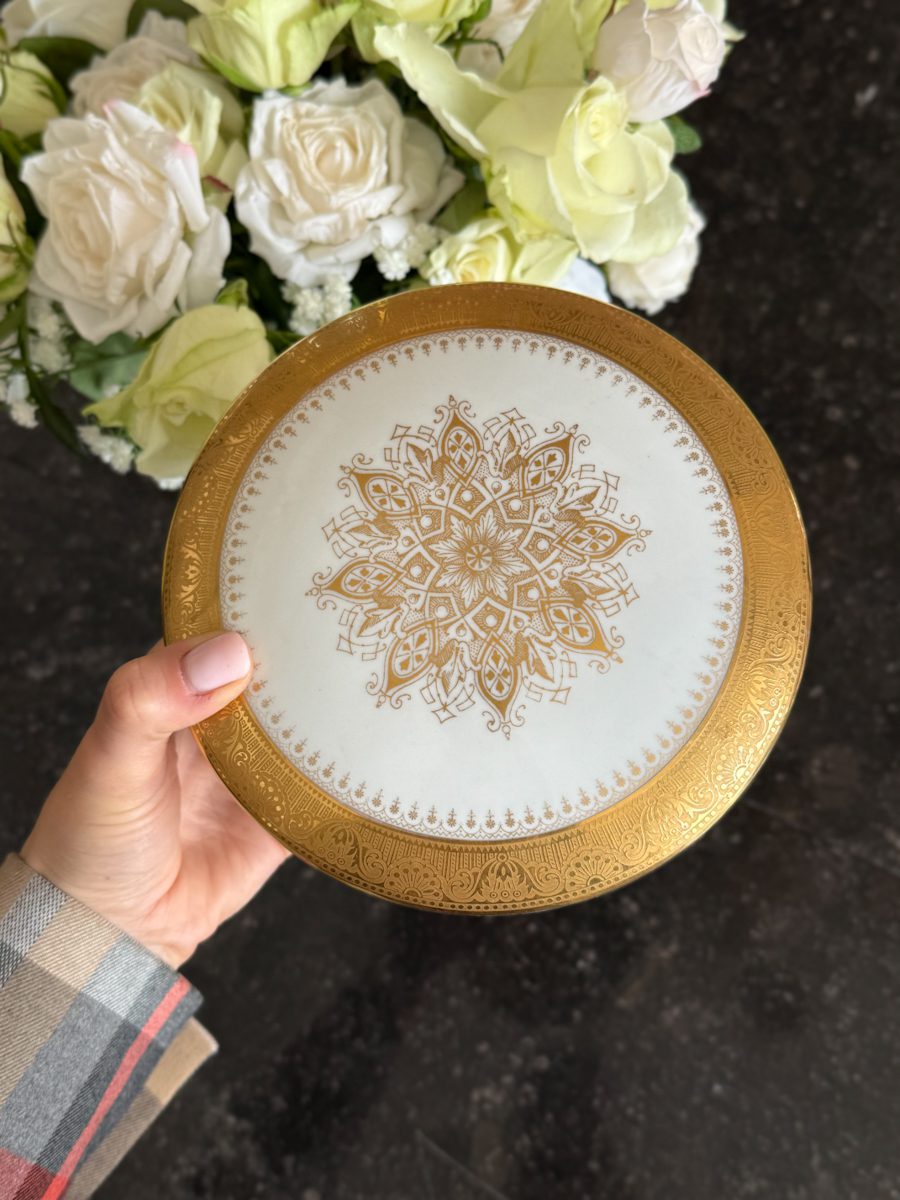
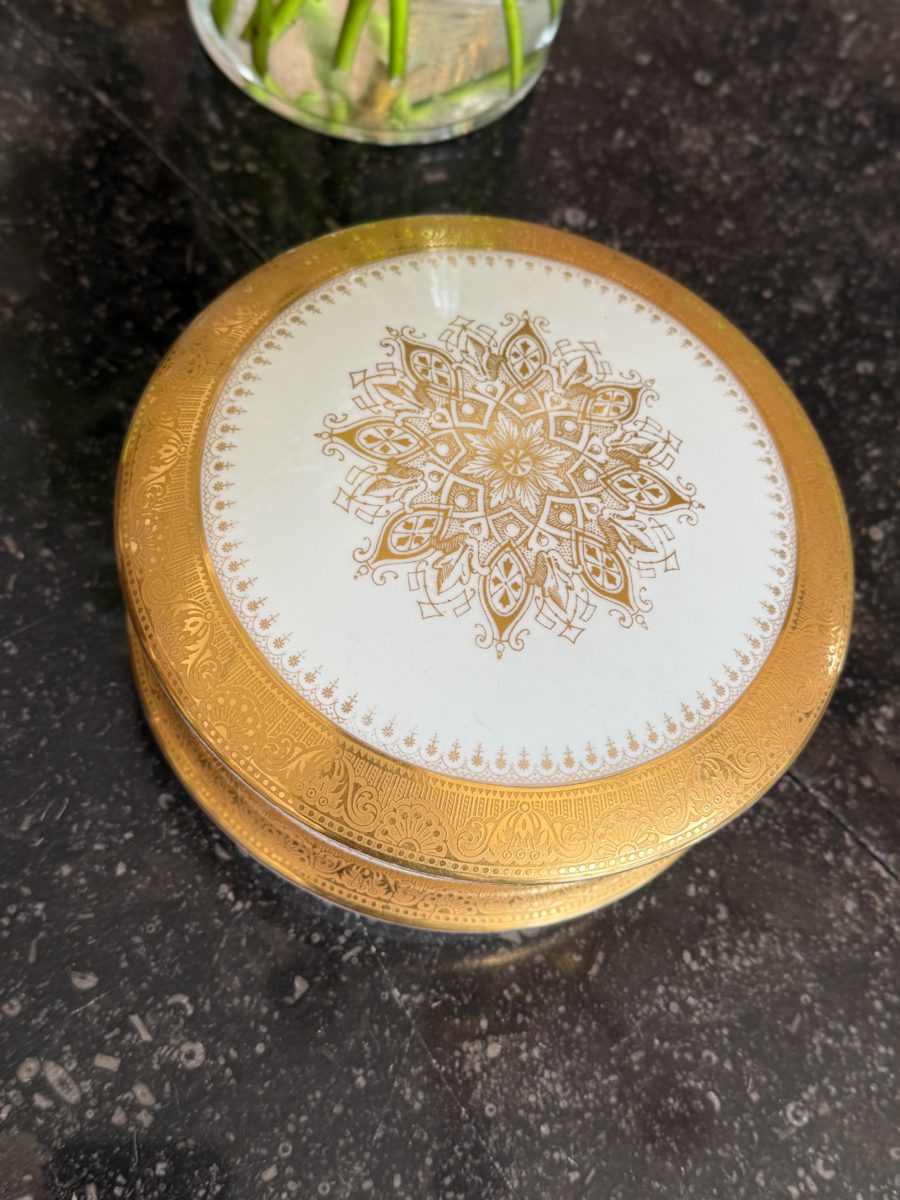
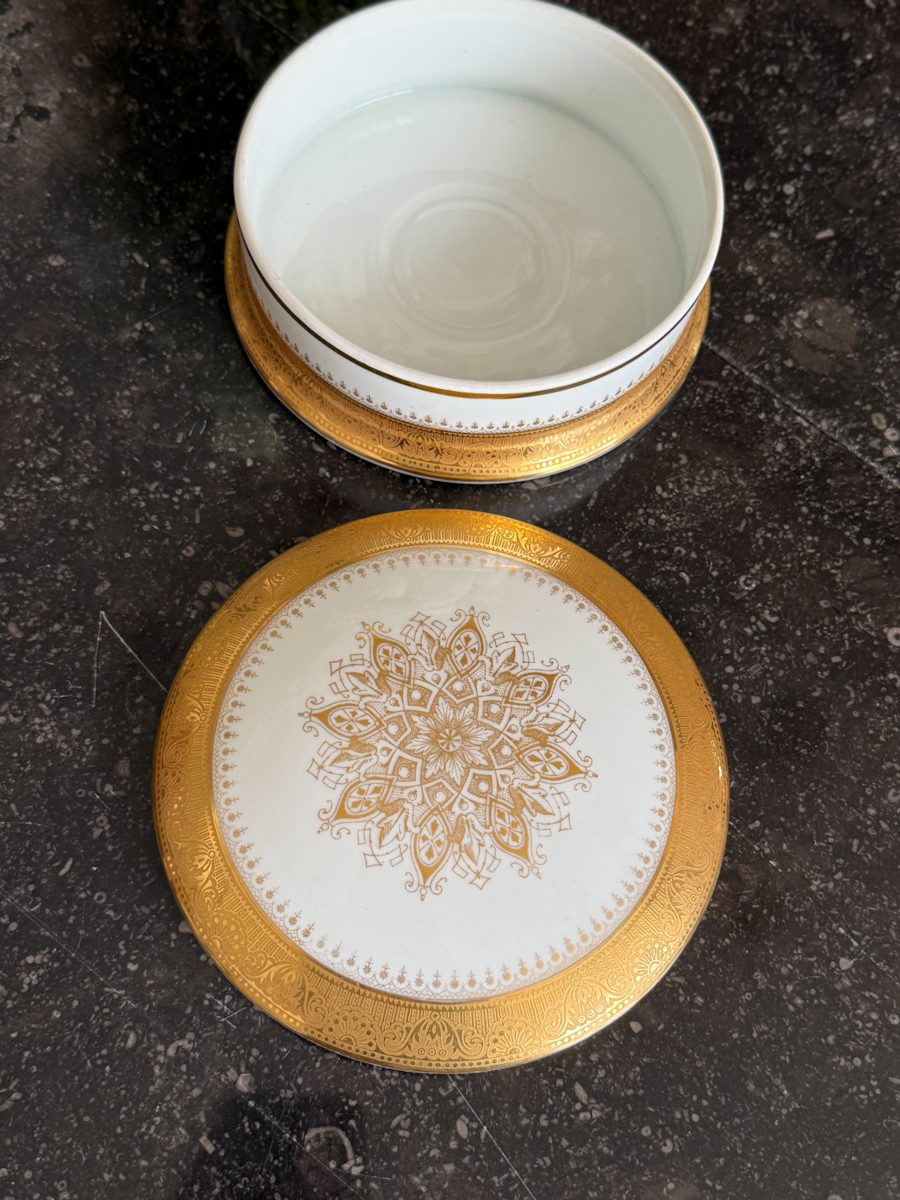
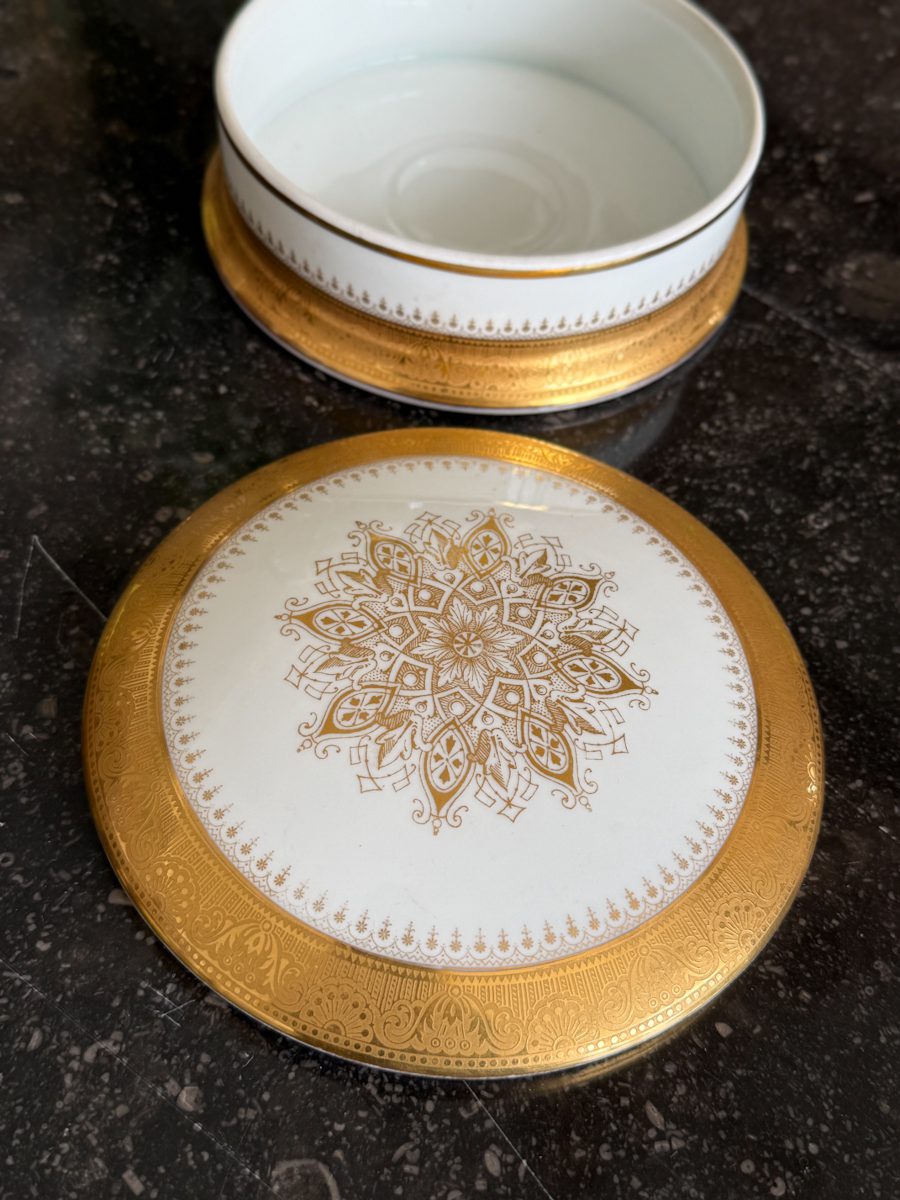
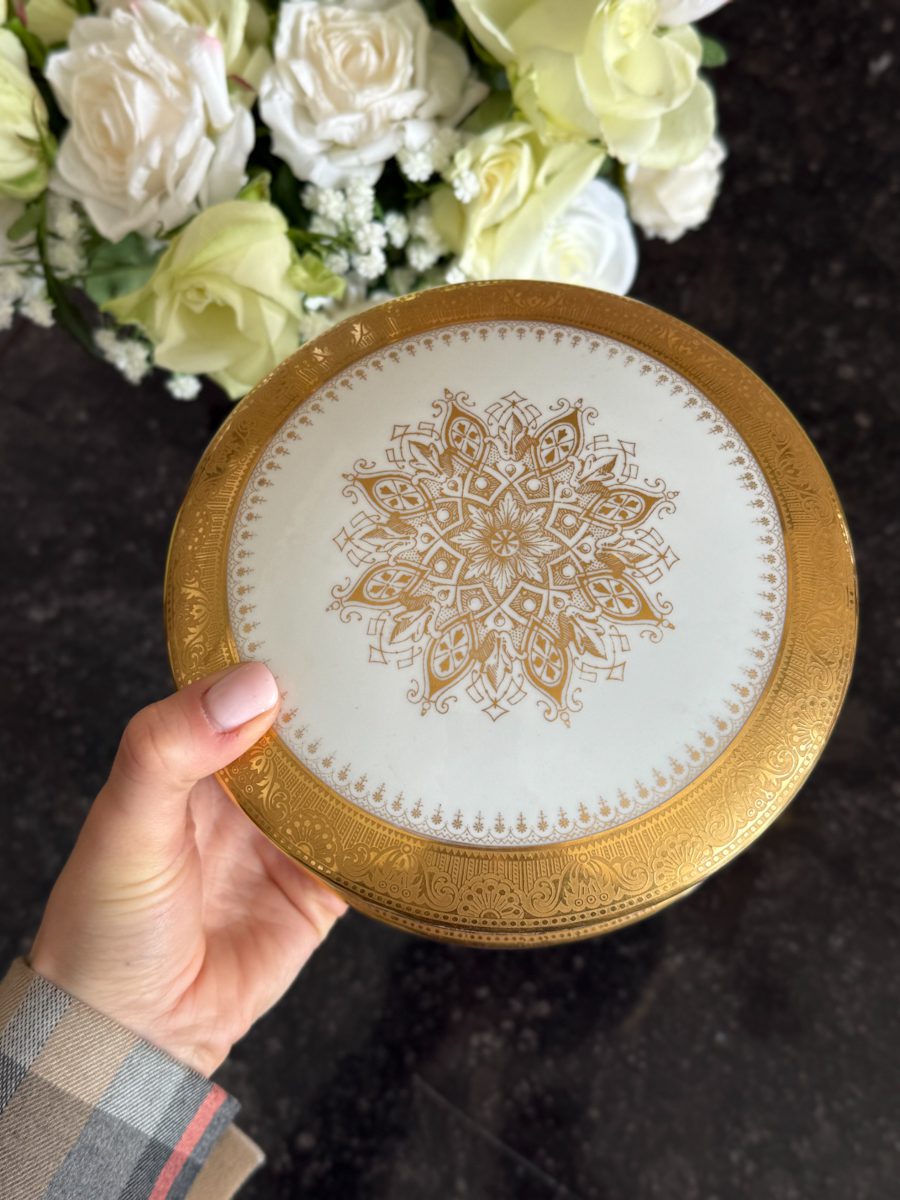
Eleganta Limoges porcelāna lādīte ar vāku — zeltā apdrukāts mandalas medaljons, grebta zelta josla un kreļļu rotājums uz balta fona. Zaļš “Limoges France” zīmogs. 20. gs. Rotaslietu vai konfekšu trauks, izsmalcināts dekoratīvs akcents.
Platums 17cm, augstums 6.5cm.
🇱🇻 Limoges Porcelāna Lādīte ar Zelta Mandalu — Franču Porcelāns, 20. gs. (6707)
Šī elegantā Limoges porcelāna lādīte (limoges trinket box) ir apaļš trauks ar vāku, bagātīgi rotāts ar zeltu: vākā — simetrisks mandalas vai zvaigznes medaljons, gar malu plata, dziļi grebta (acid-etched) zelta josla ar smalku ornamentu, un zelta kreļļu rindas uz tīri baltā porcelāna fona. Tas ir franču galda un tualetes porcelāna izsmalcinātības paraugs — neliels priekšmets, kas izstaro greznību.
Materiāls: Limoges porcelāns ar zelta apdari. Mazs apaļš trauks ar vāku.
Izgatavošanas periods un mākslas stils Lādīte datējama ar 20. gadsimtu, Franciju, Limožas (Limoges) reģionu — pasaulslaveno franču porcelāna ražošanas centru kopš 18. gs. beigām, kad apkārtnē atklāja kaolīna atradnes. Bagātīgā zelta apdare un acid-etched (skābē grebtā) zelta josla ir raksturīga 20. gs. Limožas dekoratīvajam porcelānam, kas turpināja klasiskās franču tradīcijas. Mandalas medaljons vākā apvieno austrumniecisku ornamentālu iedvesmu ar franču zeltījuma meistarību.
🇱🇻 20. gadsimta momentuzņēmums: Koletta (Colette) pieskārās mazās lādītes vākam uz savas tualetes galdiņa Palērojālas dzīvoklī, kur pa logu plūda Parīzes pēcpusdienas gaisma. Pirksts uz mirkli pakavējās pie aukstā zelta ornamenta, pirms viņa pacēla vāku. Iekšā — ne dārglietas, bet kaut kas mazāks un personiskāks: gredzens, vēstules stūrītis, atmiņa. Sievietes vislabāk glabātie noslēpumi, viņa kādreiz bija rakstījusi, nekad nav tie lielākie — tie ir tie, kas ietilpst plaukstā.
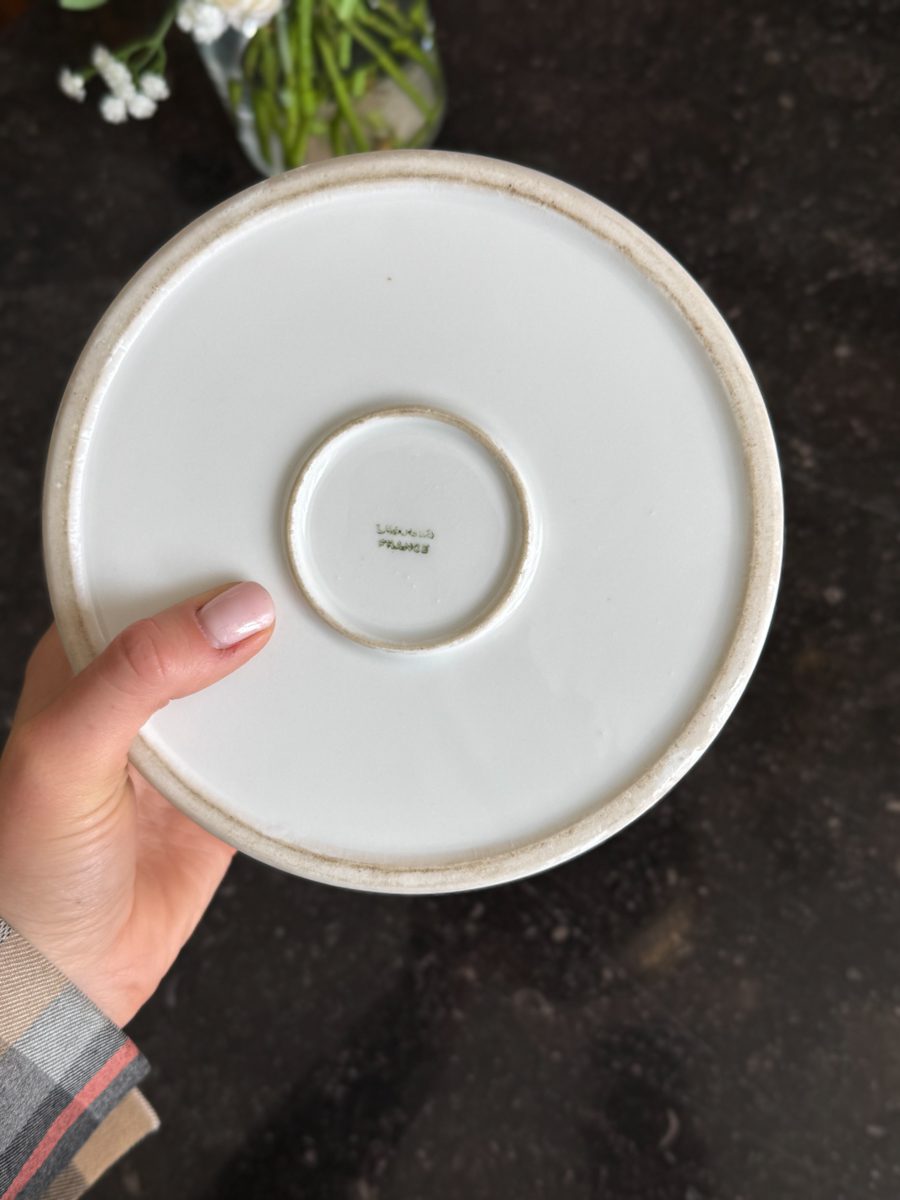
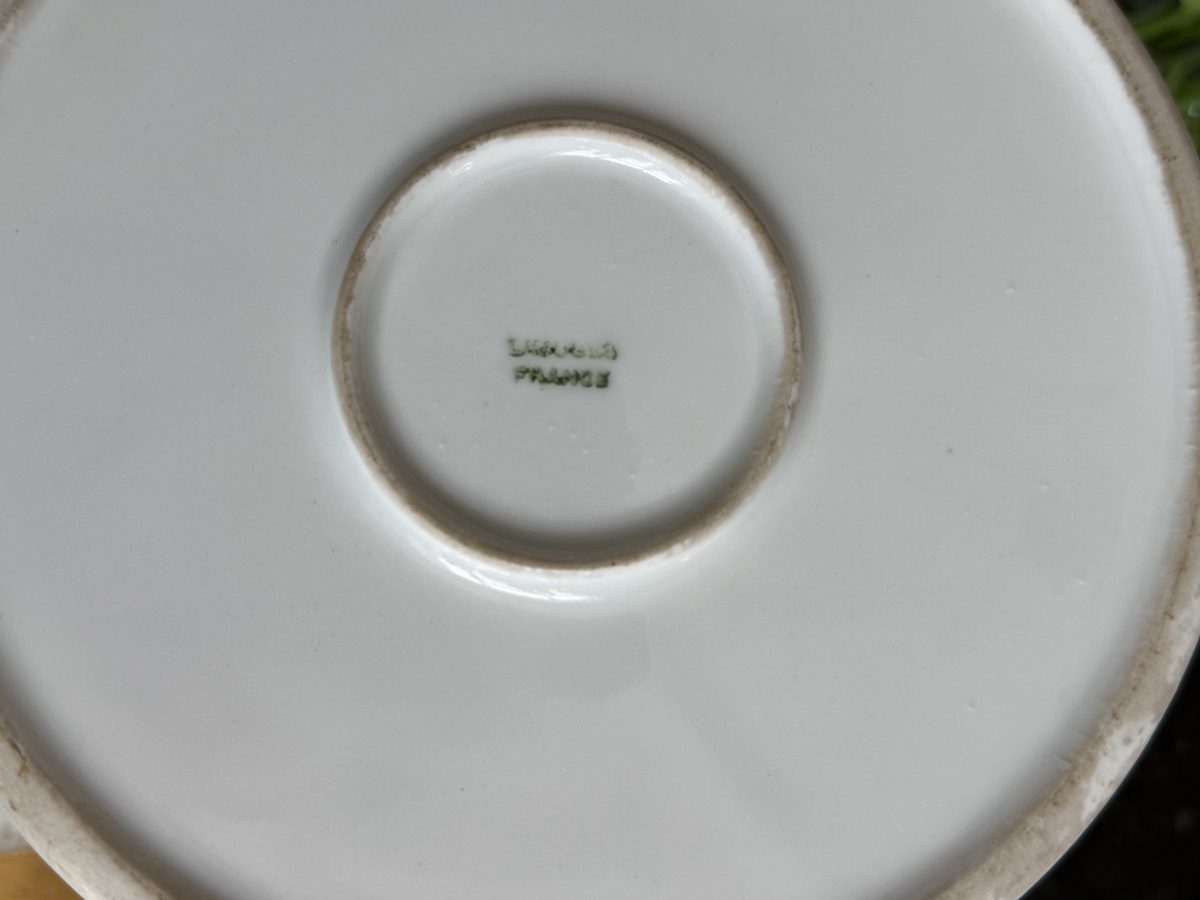
Ražotājs un zīmogs Trauka apakšā redzams zaļš zīmogs “LIMOGES FRANCE”, kas apliecina autentisku franču Limožas porcelānu. Zaļais zīmogs parasti norāda uz baltā porcelāna ražotāju; ja blakus būtu vēl viens zīmogs (apgleznotāja/dekoratora marka), tas norādītu uz konkrēto dekorēšanas darbnīcu. Lūdzu, pārbaudi, vai nav otra zīmoga.
Retums un nozīme Limožas porcelāna lādītes ar šādu bagātīgu zelta apdari ir iecienīts kolekcionāru objekts, īpaši starptautiskajā tirgū. Labi saglabājies zeltījums bez ievērojama nodiluma paaugstina vērtību.
Pielietojums interjerā, dizainā un fotogrāfijā Daudzpusīga un praktiska — kā rotaslietu vai gredzenu trauks uz tualetes galdiņa, konfekšu/bonbonjē trauks, vizītkaršu vai sīkumu glabātuve, vai vienkārši kā elegants dekoratīvs akcents uz kumodes, plaukta vai naktsskapīša. Zelts un baltais porcelāns efektīgi izceļas gaišā interjerā un ir pateicīgs objekts fotografēšanai.
Dāvana Izsmalcināta dāvana — porcelāna cienītājam, kāzās, dzimšanas dienā vai kā romantiska žeste. Maza, bet greznuma pilna.
Stāvoklis Vecumam atbilstošā stāvoklī. Zelta apdarei vietām iespējams sīks nodilums, īpaši uz malām un vāka, kā gaidāms lietotam dekoratīvam porcelānam; porcelāns bez redzamiem bojājumiem. Lietas stāvoklis pilnībā atspoguļots fotogrāfijās.
🇷🇺 Лиможская фарфоровая шкатулка с золотой мандалой — французский фарфор, XX век (6707)
Эта элегантная лиможская фарфоровая шкатулка представляет собой круглую ёмкость с крышкой, богато украшенную золотом: на крышке — симметричный медальон в виде мандалы или звезды, по краю широкая, глубоко гравированная (acid-etched) золотая полоса с тонким орнаментом, и ряды золотых бусин на чисто-белом фоне фарфора. Это образец изысканности французского столового и туалетного фарфора — небольшой предмет, излучающий роскошь.
Материал: лиможский фарфор с золотой отделкой. Малая круглая ёмкость с крышкой.
Шкатулка датируется XX веком, Франция, регион Лимож (Limoges) — всемирно известный центр производства французского фарфора с конца XVIII века, когда в окрестностях обнаружили месторождения каолина. Богатая золотая отделка и гравированная в кислоте золотая полоса характерны для декоративного фарфора Лиможа XX века, продолжавшего классические французские традиции. Медальон-мандала на крышке сочетает восточное орнаментальное вдохновение с французским мастерством золочения.
🇷🇺 Снимок эпохи XX века: Колетт (Colette) коснулась крышки маленькой шкатулки на своём туалетном столике в квартире у Пале-Рояль, куда в окно струился парижский послеполуденный свет. Палец на миг задержался на холодном золотом орнаменте, прежде чем она подняла крышку. Внутри — не драгоценности, а нечто меньшее и более личное: кольцо, уголок письма, воспоминание. Самые тщательно хранимые тайны женщины, писала она когда-то, никогда не самые большие — это те, что умещаются на ладони.
На дне ёмкости виден зелёный штамп «LIMOGES FRANCE», удостоверяющий подлинный французский лиможский фарфор. Зелёный штамп обычно указывает на производителя белого фарфора; если рядом был бы второй штамп (марка художника/декоратора), он указал бы на конкретную мастерскую декорирования. Рекомендуем проверить, нет ли второго штампа.
Лиможские фарфоровые шкатулки с такой богатой золотой отделкой — любимый объект коллекционеров, особенно на международном рынке. Хорошо сохранившееся золочение без значительного износа повышает ценность. Универсальна и практична — как ёмкость для украшений или колец на туалетном столике, бонбоньерка, хранилище для визиток или мелочей, или просто как элегантный декоративный акцент на комоде, полке или прикроватной тумбочке. Золото и белый фарфор эффектно выделяются в светлом интерьере и благодарны для фотографии. Изысканный подарок ценителю фарфора, на свадьбу, день рождения или как романтический жест. Маленькая, но полная роскоши.
Состояние соответствует возрасту. На золотой отделке местами возможен мелкий износ, особенно на краях и крышке, что ожидаемо для использовавшегося декоративного фарфора; фарфор без видимых повреждений. Состояние предмета полностью отражено на фотографиях.
🇬🇧 Antique Limoges Trinket Box with Gold Mandala — French Porcelain, 20th Century (6707)
This elegant limoges trinket box is a round lidded dish, richly decorated in gold: on the lid, a symmetrical mandala or star medallion; around the rim, a broad, deeply acid-etched gold band with fine ornament; and rows of gold beads on a pure white porcelain ground. It is an example of the refinement of French table and dressing-table porcelain — a small object that radiates luxury.
Material: Limoges porcelain with gold decoration. A small round lidded dish.
This limoges trinket box dates to the 20th century, France, the Limoges region — the world-famous centre of French porcelain production since the late 18th century, when kaolin deposits were discovered nearby. The rich gold decoration and the acid-etched gold band are characteristic of 20th-century Limoges decorative porcelain, which continued the classical French traditions. The mandala medallion on the lid combines an Eastern ornamental inspiration with French gilding mastery.
🇬🇧 20th-century snapshot: Colette (Colette) touched the lid of the little box on her dressing table in the apartment by the Palais-Royal, where the Parisian afternoon light streamed through the window. A finger lingered for a moment on the cold gold ornament before she lifted the lid. Inside — not jewels, but something smaller and more personal: a ring, the corner of a letter, a memory. A woman’s best-kept secrets, she had once written, are never the largest ones — they are the ones that fit in the palm of a hand.
The underside of this limoges trinket box bears a green “LIMOGES FRANCE” mark, certifying authentic French Limoges porcelain. A green mark usually indicates the maker of the white porcelain; were a second mark present (a painter’s or decorator’s mark), it would point to the specific decorating workshop, so we recommend checking for a second mark. Limoges porcelain boxes with such rich gold decoration are a favourite collector’s object, especially on the international market. Well-preserved gilding without significant wear raises the value. It is versatile and practical — as a jewellery or ring dish on a dressing table, a bonbonnière, a holder for calling cards or small items, or simply as an elegant decorative accent on a chest of drawers, a shelf or a bedside table. The gold and white porcelain stand out strikingly in a light interior and make a rewarding subject for photography. A refined gift for a porcelain lover, for a wedding, a birthday, or as a romantic gesture. Small, yet full of luxury.
Condition is consistent with age. The gold decoration may show minor wear in places, especially on the edges and lid, as expected of used decorative porcelain; the porcelain is without visible damage. The condition of the item is fully reflected in the photographs.
🇩🇪 Limoges-Porzellandose mit goldenem Mandala — französisches Porzellan, 20. Jahrhundert (6707)
Diese elegante Limoges-Porzellandose ist eine runde Deckeldose, reich in Gold verziert: auf dem Deckel ein symmetrisches Mandala- oder Sternmedaillon; am Rand ein breites, tief säuregeätztes (acid-etched) Goldband mit feinem Ornament; und Reihen goldener Perlen auf reinweißem Porzellangrund. Sie ist ein Beispiel für die Raffinesse des französischen Tafel- und Toilettenporzellans — ein kleines Objekt, das Luxus ausstrahlt.
Material: Limoges-Porzellan mit Goldverzierung. Eine kleine runde Deckeldose.
Die Dose datiert ins 20. Jahrhundert, Frankreich, in die Region Limoges (Limoges) — das weltberühmte Zentrum der französischen Porzellanherstellung seit dem späten 18. Jahrhundert, als in der Umgebung Kaolinvorkommen entdeckt wurden. Die reiche Goldverzierung und das säuregeätzte Goldband sind charakteristisch für das dekorative Limoges-Porzellan des 20. Jahrhunderts, das die klassischen französischen Traditionen fortführte. Das Mandala-Medaillon auf dem Deckel verbindet eine östliche ornamentale Inspiration mit französischer Vergoldungskunst.
🇩🇪 Momentaufnahme des 20. Jahrhunderts: Colette (Colette) berührte den Deckel der kleinen Dose auf ihrem Toilettentisch in der Wohnung am Palais-Royal, wo das Pariser Nachmittagslicht durchs Fenster strömte. Ein Finger verweilte einen Augenblick auf dem kalten Goldornament, bevor sie den Deckel hob. Darin — keine Juwelen, sondern etwas Kleineres und Persönlicheres: ein Ring, die Ecke eines Briefes, eine Erinnerung. Die bestgehüteten Geheimnisse einer Frau, hatte sie einst geschrieben, sind nie die größten — es sind jene, die in eine Handfläche passen.
Die Unterseite trägt eine grüne Marke „LIMOGES FRANCE”, die echtes französisches Limoges-Porzellan bescheinigt. Eine grüne Marke weist gewöhnlich auf den Hersteller des weißen Porzellans hin; wäre eine zweite Marke vorhanden (eine Maler- oder Dekorateurmarke), würde sie auf die konkrete Dekorwerkstatt verweisen, weshalb wir empfehlen, auf eine zweite Marke zu prüfen. Limoges-Porzellandosen mit einer so reichen Goldverzierung sind ein beliebtes Sammlerobjekt, besonders auf dem internationalen Markt. Gut erhaltene Vergoldung ohne nennenswerten Abrieb erhöht den Wert. Sie ist vielseitig und praktisch — als Schmuck- oder Ringschale auf einem Toilettentisch, als Bonbonniere, als Behälter für Visitenkarten oder kleine Dinge, oder einfach als eleganter dekorativer Akzent auf einer Kommode, einem Regal oder einem Nachttisch. Das Gold und das weiße Porzellan heben sich in einem hellen Interieur eindrucksvoll ab und sind ein dankbares Motiv für die Fotografie. Ein erlesenes Geschenk für einen Porzellanliebhaber, zur Hochzeit, zum Geburtstag oder als romantische Geste. Klein, doch voller Luxus.
Der Zustand entspricht dem Alter. Die Goldverzierung kann stellenweise leichten Abrieb zeigen, besonders an den Rändern und am Deckel, wie bei benutztem dekorativem Porzellan zu erwarten; das Porzellan ist ohne sichtbare Schäden. Der Zustand des Objekts ist vollständig auf den Fotografien wiedergegeben.
🇫🇷 Boîte en porcelaine de Limoges au mandala doré — porcelaine française, XXe siècle (6707)
Cette élégante boîte en porcelaine de Limoges est une coupe ronde couverte, richement décorée à l’or : sur le couvercle, un médaillon symétrique en forme de mandala ou d’étoile ; sur le pourtour, une large bande dorée profondément gravée à l’acide (acid-etched) à l’ornement fin ; et des rangs de perles d’or sur un fond de porcelaine d’un blanc pur. C’est un exemple du raffinement de la porcelaine française de table et de toilette — un petit objet qui rayonne de luxe.
Matériau : porcelaine de Limoges à décor doré. Petite coupe ronde couverte.
La boîte date du XXe siècle, France, région de Limoges (Limoges) — le centre mondialement célèbre de la production de porcelaine française depuis la fin du XVIIIe siècle, lorsque des gisements de kaolin furent découverts aux alentours. Le riche décor doré et la bande dorée gravée à l’acide sont caractéristiques de la porcelaine décorative de Limoges du XXe siècle, qui perpétuait les traditions classiques françaises. Le médaillon en mandala du couvercle allie une inspiration ornementale orientale à la maîtrise française de la dorure.
🇫🇷 Instantané du XXe siècle : Colette (Colette) effleura le couvercle de la petite boîte sur sa coiffeuse dans l’appartement près du Palais-Royal, où la lumière de l’après-midi parisien entrait par la fenêtre. Un doigt s’attarda un instant sur le froid ornement doré avant qu’elle ne soulève le couvercle. À l’intérieur — non des bijoux, mais quelque chose de plus petit et de plus intime : une bague, le coin d’une lettre, un souvenir. Les secrets les mieux gardés d’une femme, avait-elle écrit un jour, ne sont jamais les plus grands — ce sont ceux qui tiennent dans le creux d’une main.
Le dessous porte une marque verte « LIMOGES FRANCE », attestant une authentique porcelaine française de Limoges. Une marque verte indique habituellement le fabricant de la porcelaine blanche ; si une seconde marque était présente (une marque de peintre ou de décorateur), elle désignerait l’atelier de décoration précis, aussi recommandons-nous de vérifier la présence d’une seconde marque. Les boîtes en porcelaine de Limoges à décor doré aussi riche sont un objet de collection prisé, surtout sur le marché international. Une dorure bien conservée et sans usure notable élève la valeur. Elle est polyvalente et pratique — comme coupe à bijoux ou à bagues sur une coiffeuse, comme bonbonnière, comme rangement pour cartes de visite ou petits objets, ou simplement comme élégant accent décoratif sur une commode, une étagère ou une table de chevet. L’or et la porcelaine blanche se détachent de façon saisissante dans un intérieur clair et constituent un sujet gratifiant pour la photographie. Un cadeau raffiné pour un amateur de porcelaine, pour un mariage, un anniversaire, ou comme geste romantique. Petite, mais pleine de luxe.
L’état est conforme à l’âge. Le décor doré peut présenter par endroits une légère usure, surtout sur les bords et le couvercle, comme il est attendu d’une porcelaine décorative ayant servi ; la porcelaine est sans dommage visible. L’état de l’objet est entièrement reflété par les photographies.