
Masīva ozolkoka konsole ar kolonnām, historisma / neorenesanses stilā (548)
Masīva ozolkoka konsole ar kolonnām, historisma / neorenesanses stilā (548)
€950.00
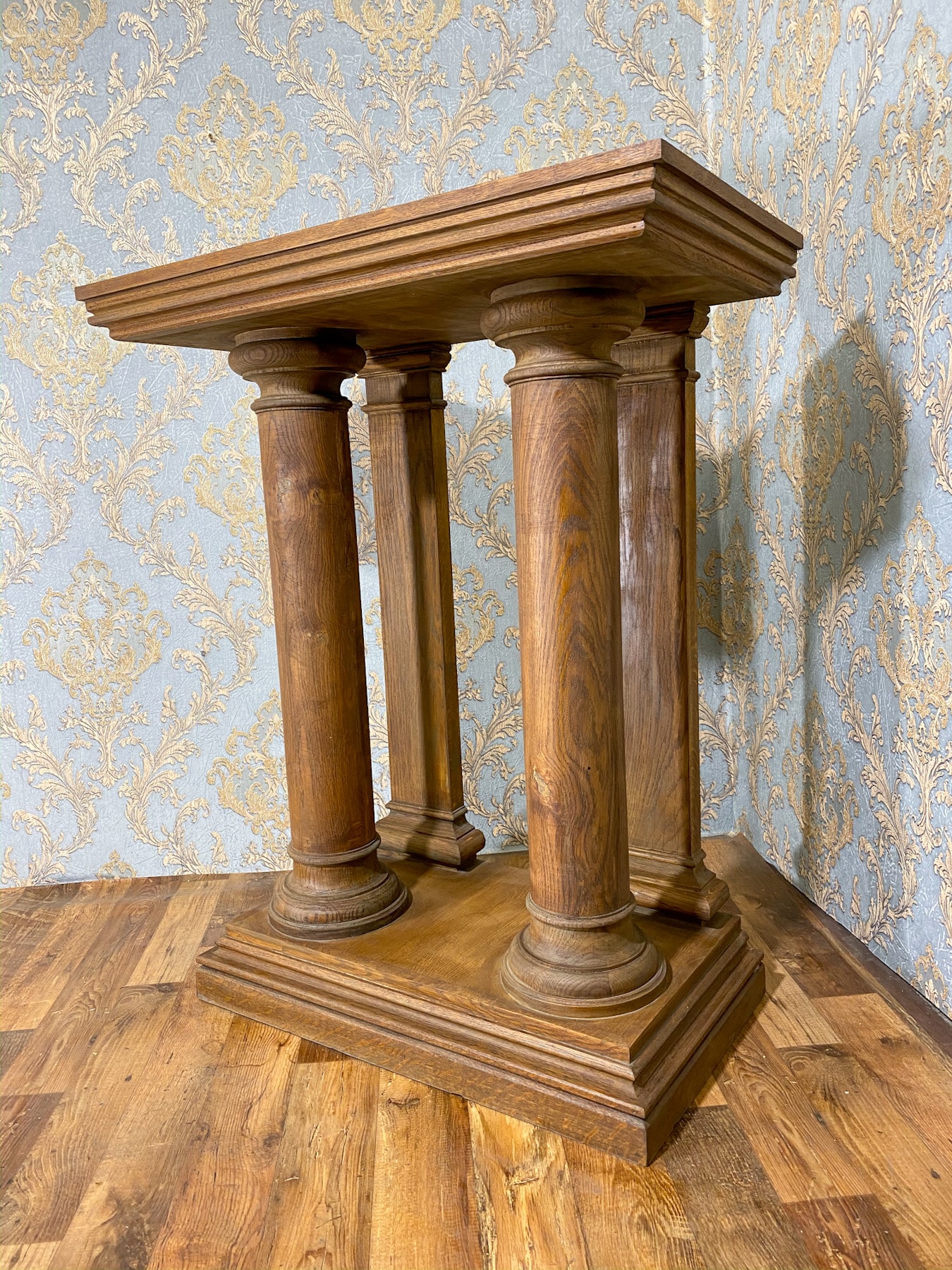
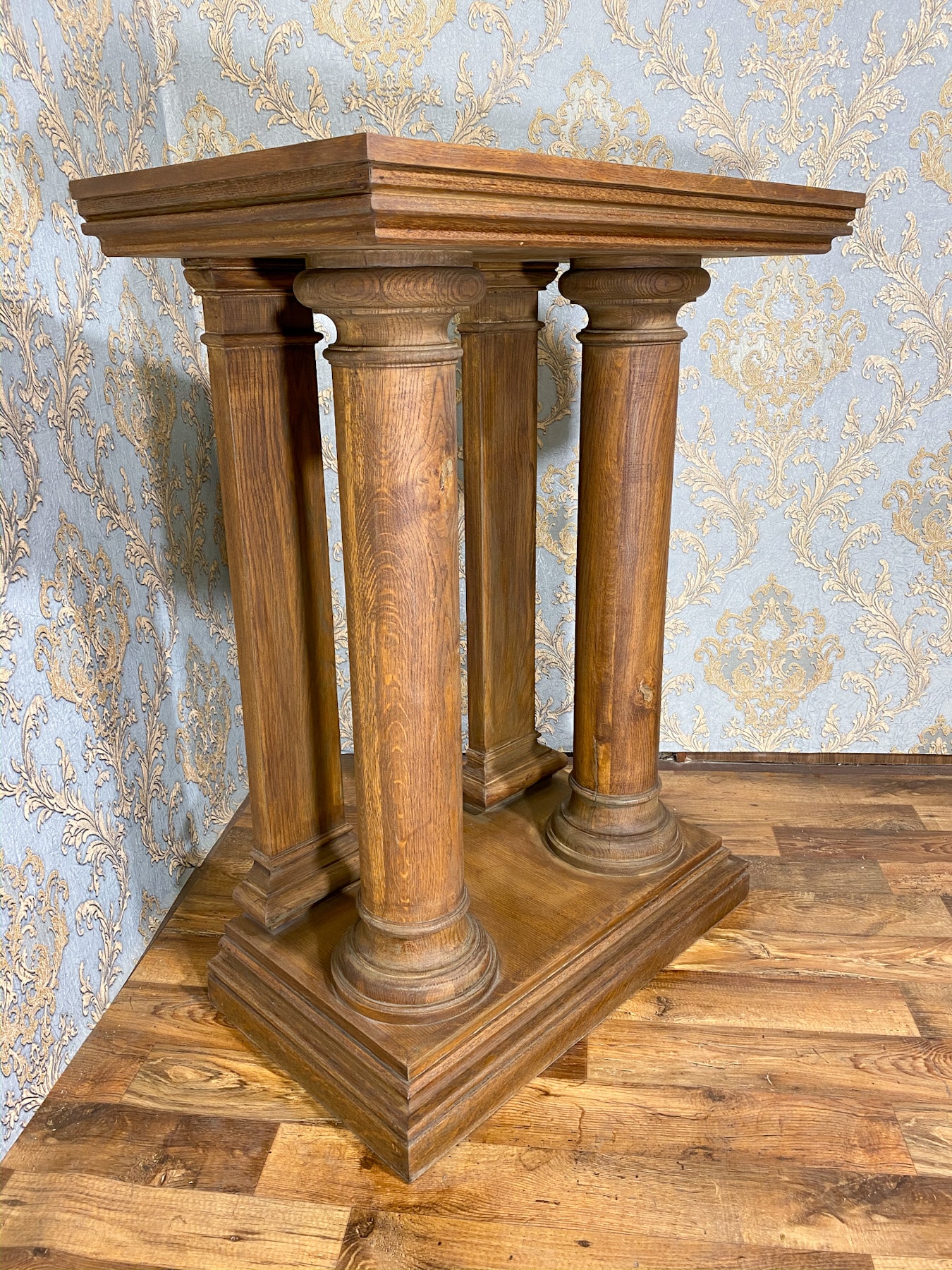
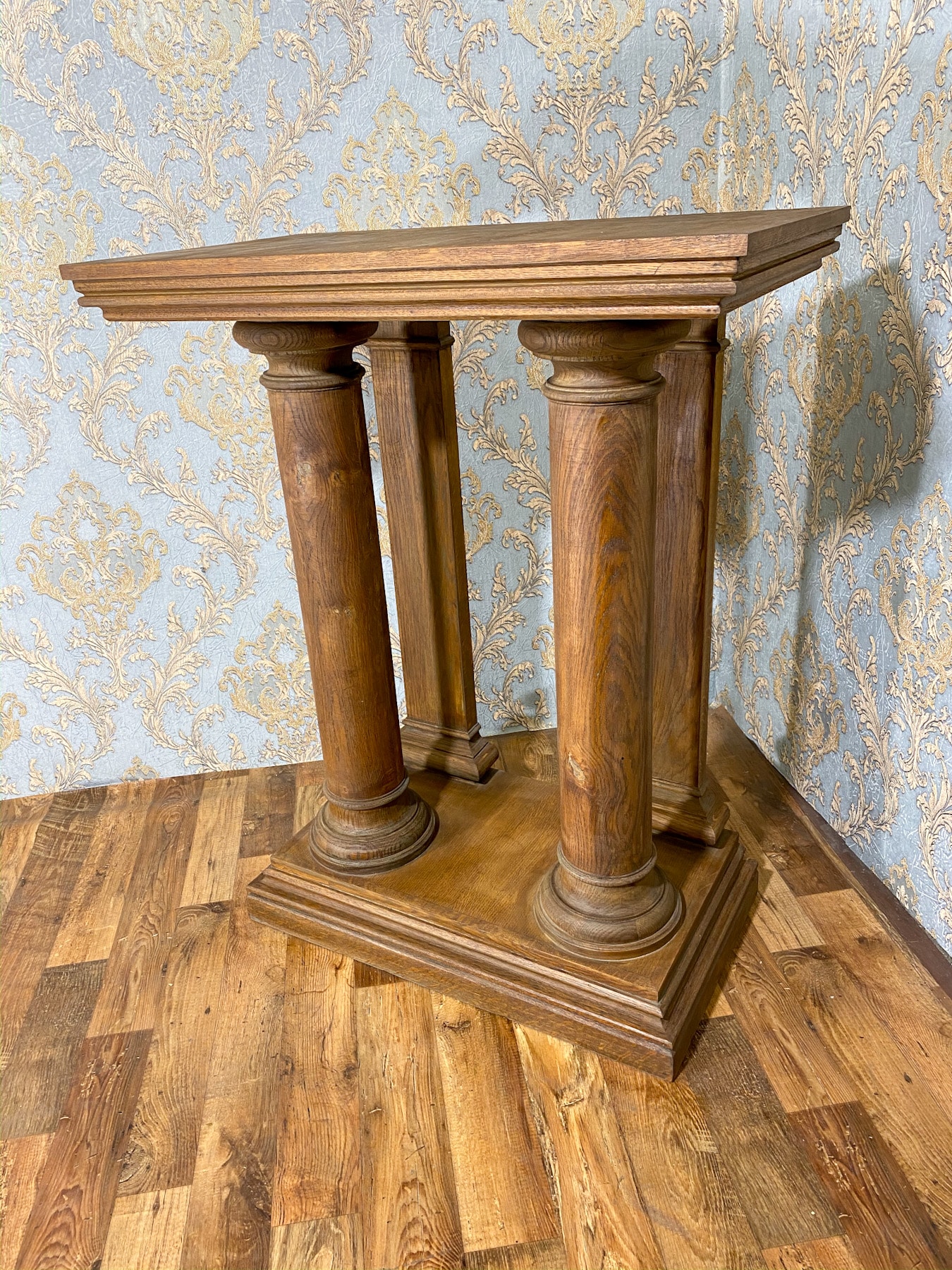
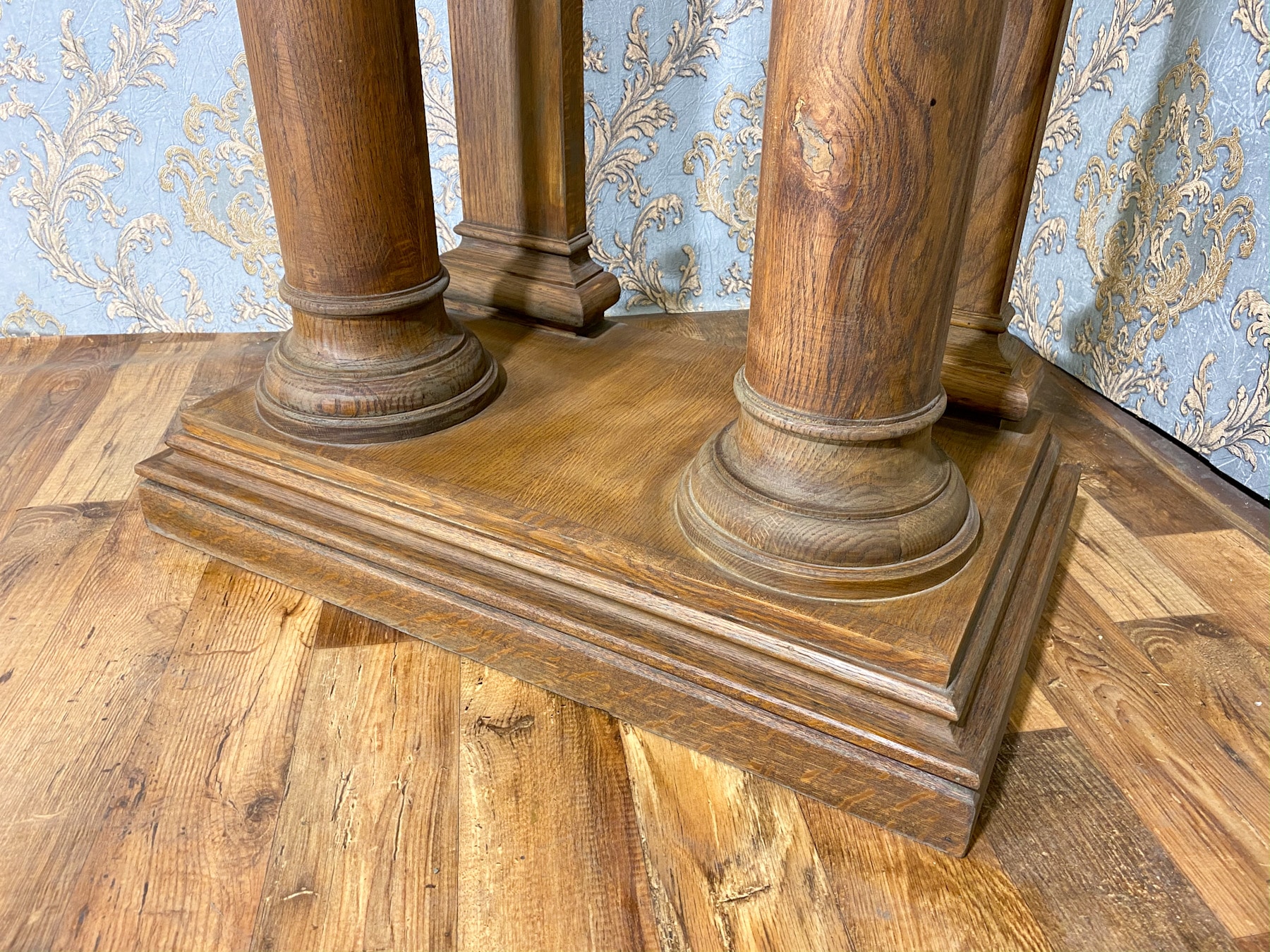
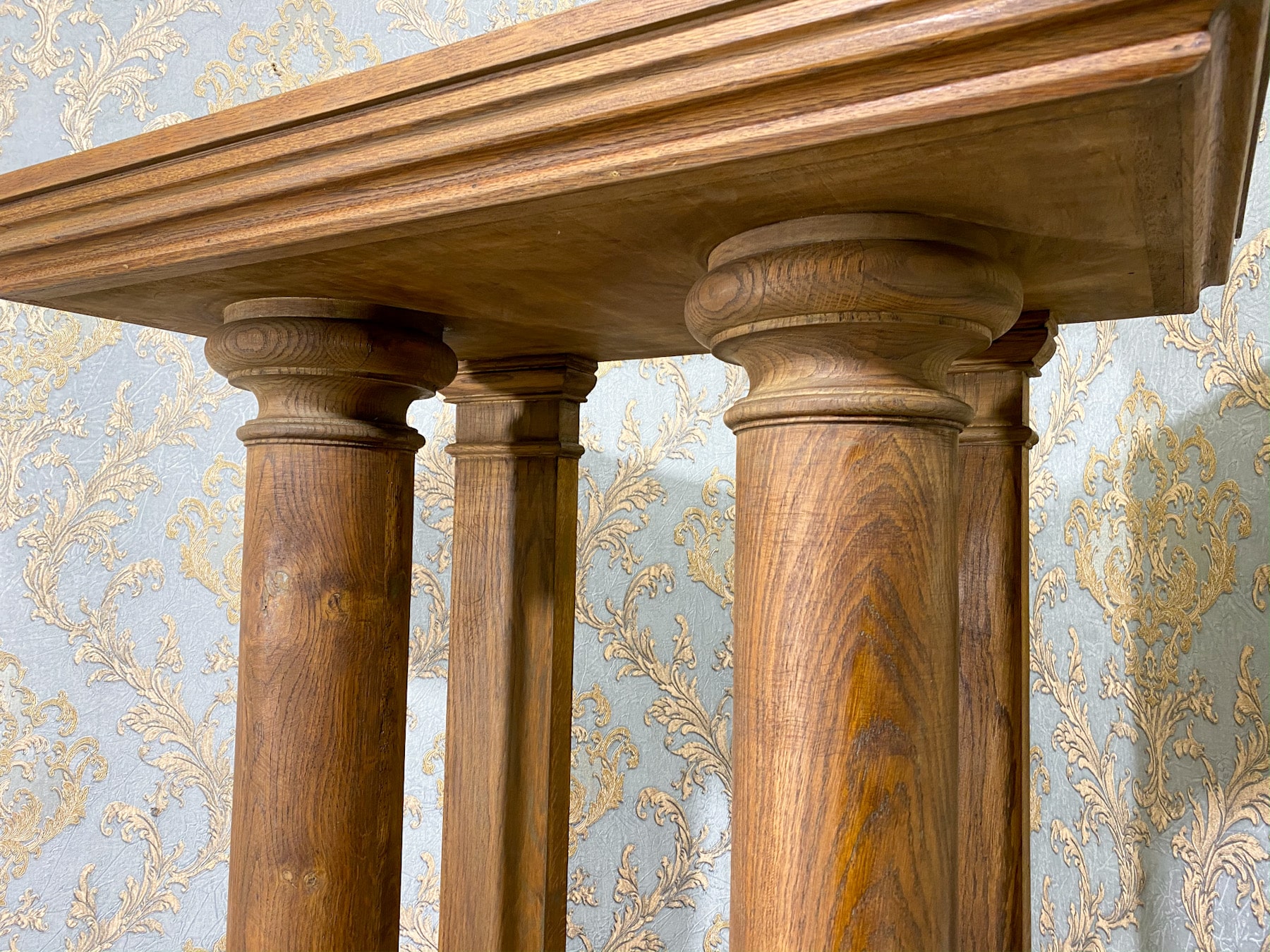
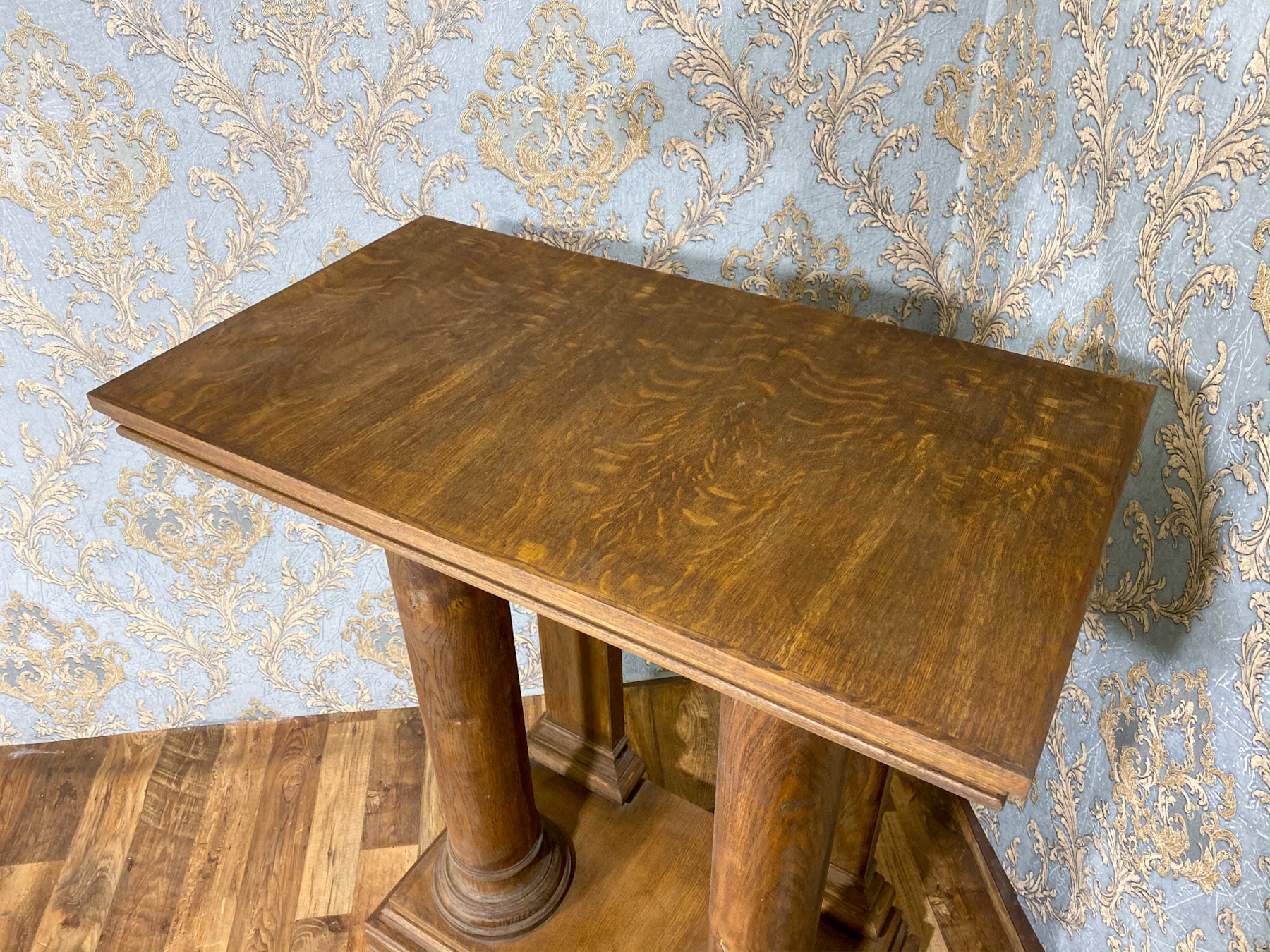
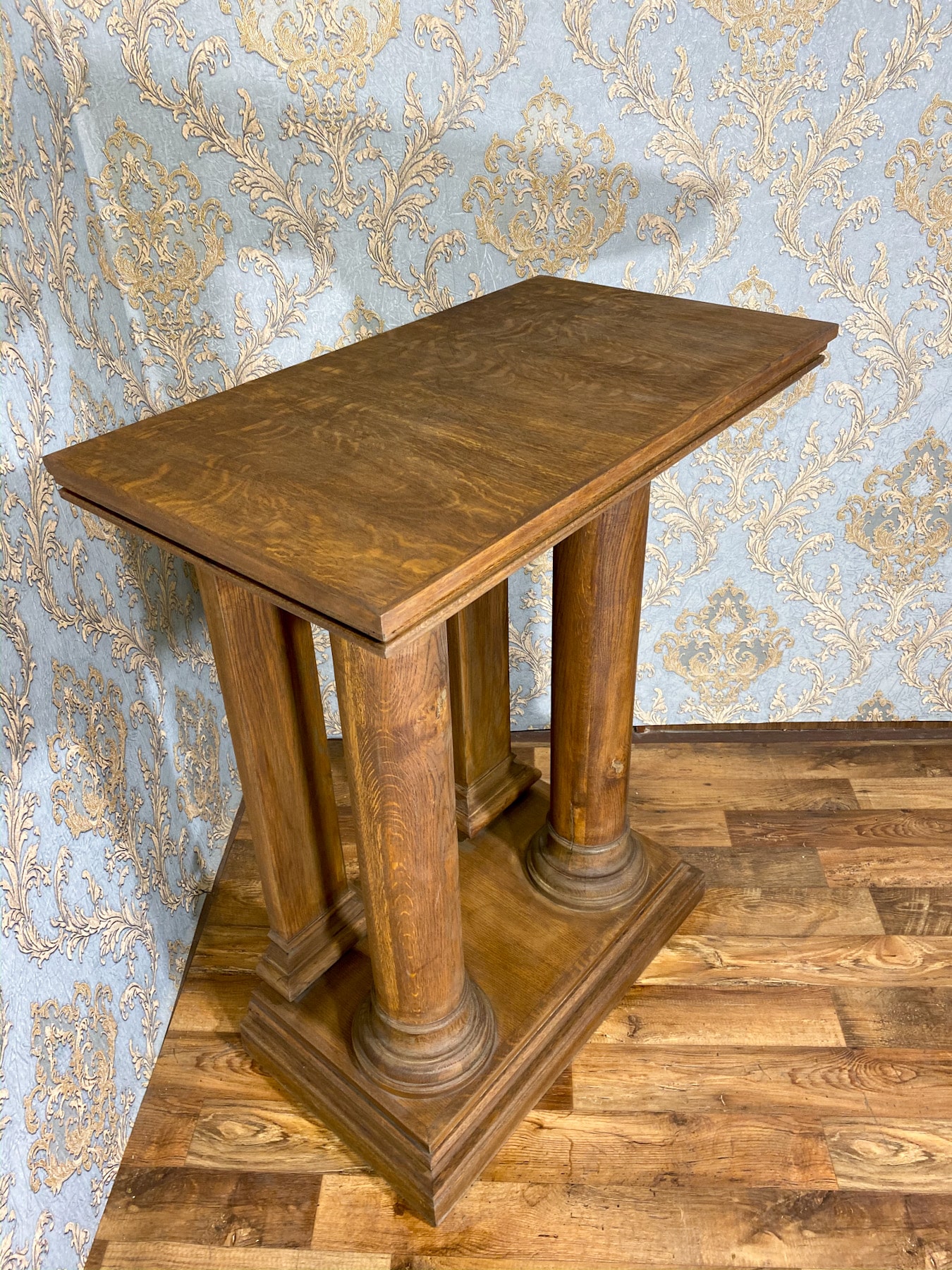
Iespaidīga, ļoti smaga masīva ozolkoka konsole-postaments ar sešu kolonnu arhitektonisku motīvu. Historisma / neorenesanses stils, 19. gs. beigas – 20. gs. sākums. Stingra klasiska forma — toskāniešu kolonnas uz pakāpienveida cokola.
🇱🇻 LATVISKI
Izmēri:
Augstums — 113 cm
Platums — 90 cm
Dziļums — 50,5 cm
Masīva ozolkoka konsole ar kolonnām — historisma / neorenesanses stilā
Iespaidīga un ļoti smaga ozolkoka konsole-postaments (oak column console), kuras formu nosaka tīrs arhitektūras motīvs: profilētu, pakāpienveida taisnstūra virsmu balsta sešas apaļas kolonnas, kas slejas no masīva, pakāpieniem profilēta cokola. Tā ir historisma un neorenesanses stila valoda — laikmets, kad mēbeles tapzināti aizņēmās antīkās un renesanses arhitektūras valodu, pārnesot templi un pili uz dzīvojamo telpu.
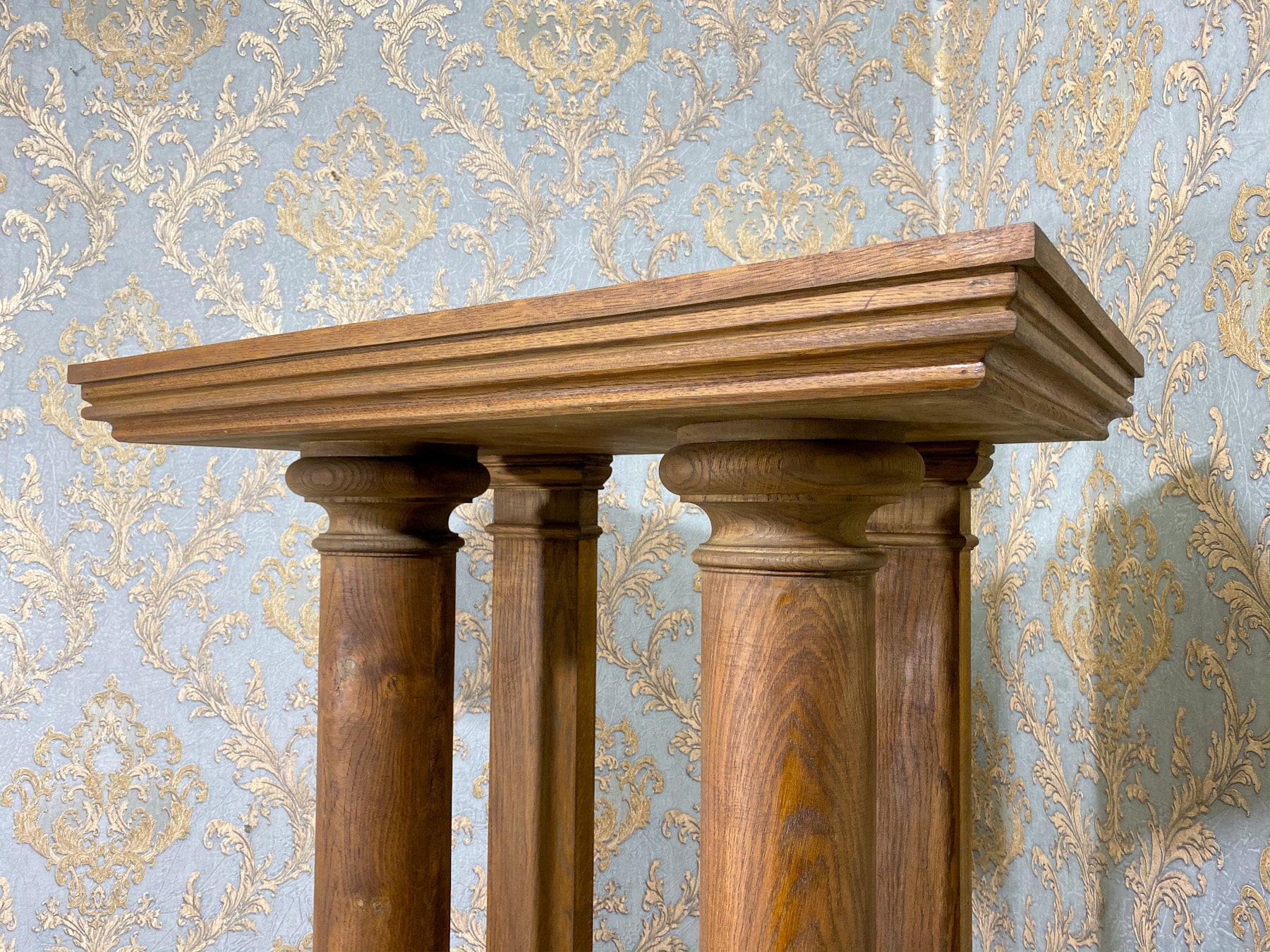
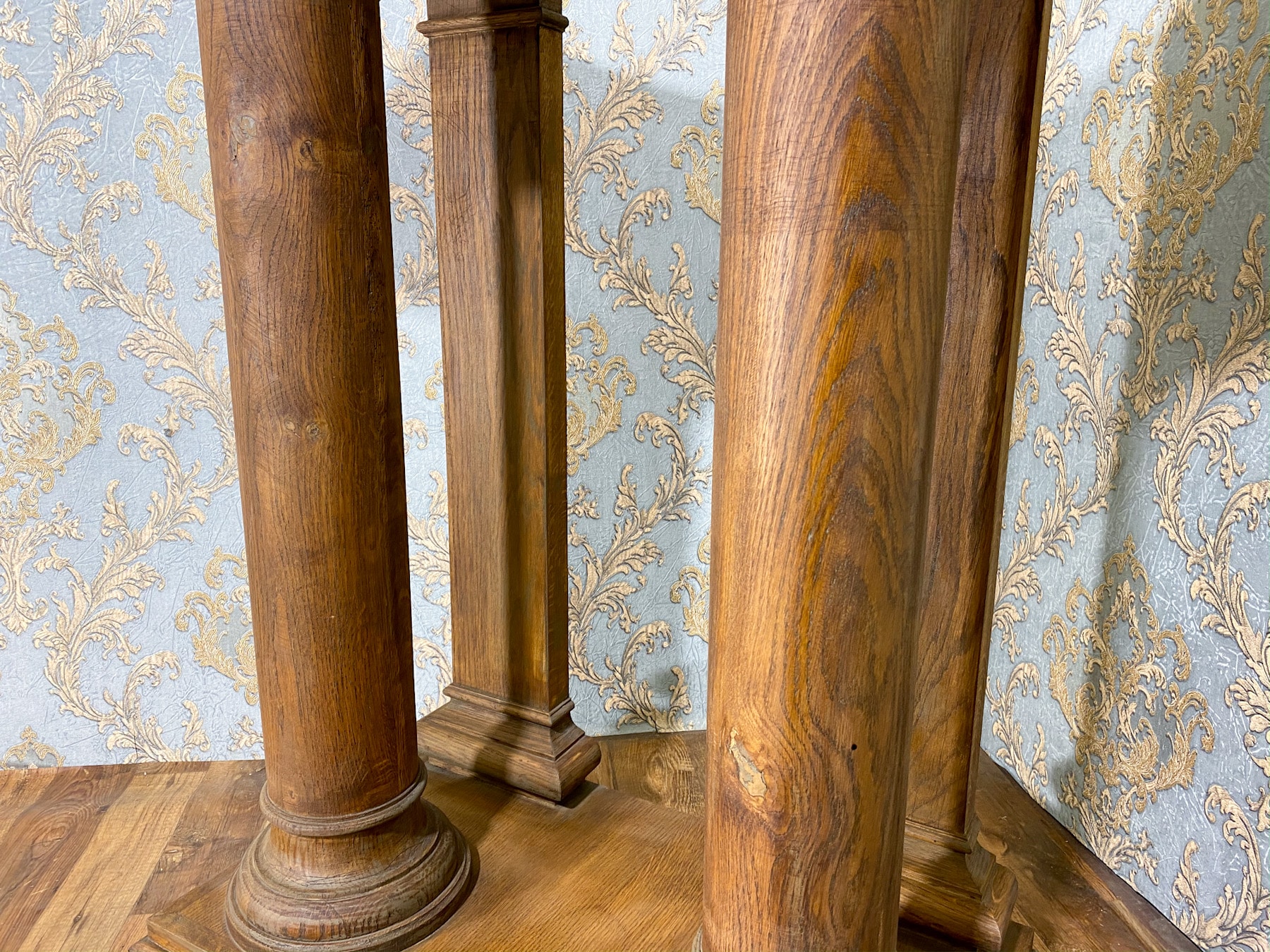
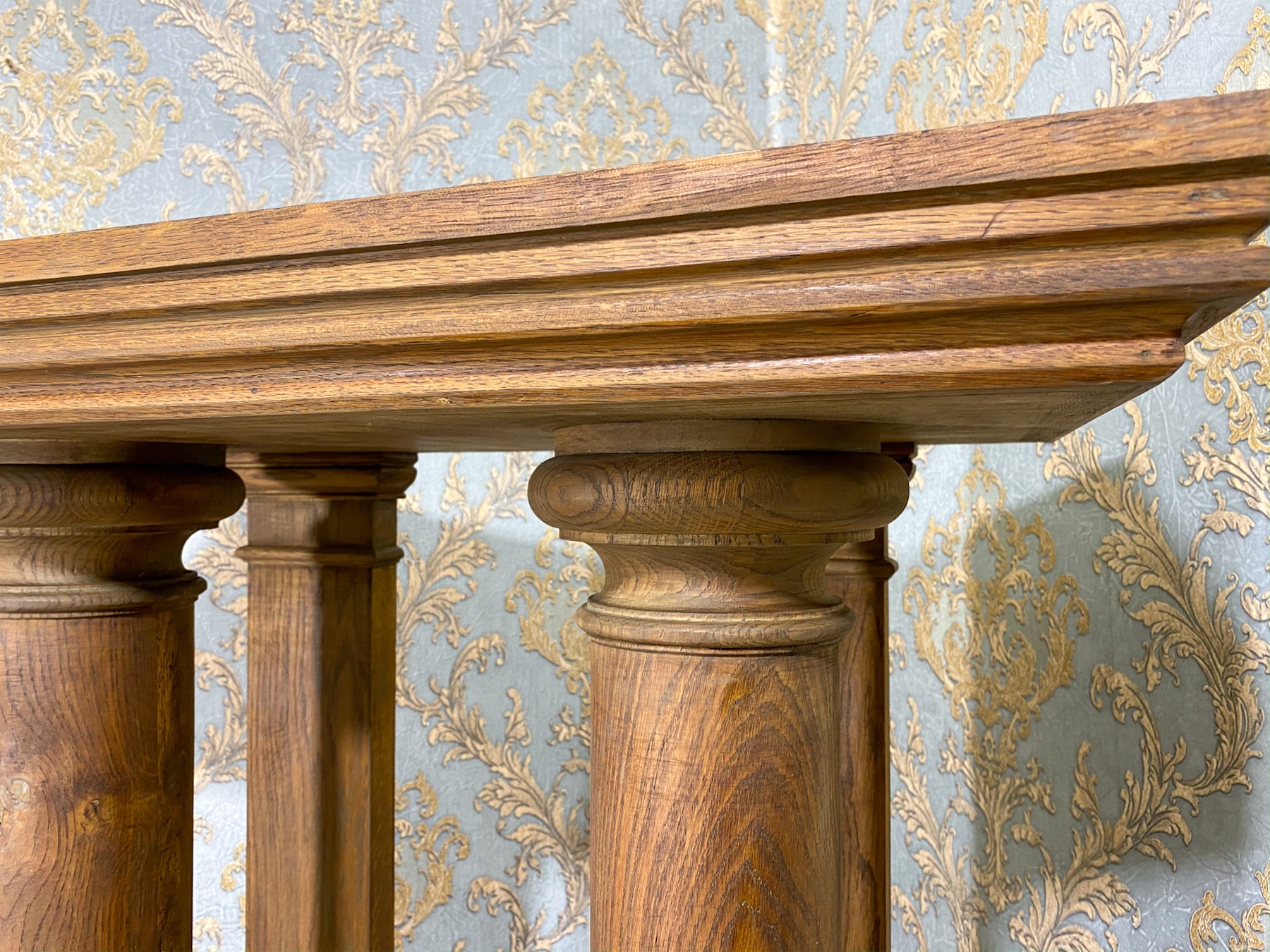
Kolonnas ir gludas, ar vienkāršiem toskāniešu tipa kapiteļiem un noapaļotām bāzēm — atturīgi, bez liekas grezniecības, ar uzsvaru uz proporciju un materiāla cēlumu. Virsmas un cokola dēļi rāda izteiksmīgu ozola dzīslojumu un raksturīgo staru rakstu, kas masīvam ozolam piešķir dziļumu un siltu toni. Konstrukcija ir stingra, smaga un pamatīga — lieta veidota, lai kalpotu paaudzēm.
🇱🇻 Historisma laikmeta momentuzņēmums: Gotfrīds Zempers (Gottfried Semper), atgriezies darbnīcā pēc garas dienas celtniecības laukumā, nolika cepuri uz tuvākās līdzenās virsmas un brīdi stāvēja, pārlaizdams skatienu sešām vertikālēm, kas atmeta garas ēnas pāri grīdai. Vakara gaisma ozolā izcēla katru gadskārtu kā uz griezuma plāna. Viņš ar īkšķi pārvilka pa kapiteļa apaļo malu — tā pati forma, ko viņš tūkstoš reižu bija zīmējis uz papīra, tagad bija silta un taustāma zem pirksta. Kaut kur iekšā viņš pasmaidīja: arī mazā lieta var nest sevī veselas ēkas loģiku.
Izgatavošanas periods. Konsole datējama ar 19. gs. beigām – 20. gs. sākumu, historisma / neorenesanses stila uzplaukuma laiku.
Pielietojums. Daudzpusīga reprezentatīva lieta — kā konsole pie sienas vestibilā vai salonā, kā postaments skulptūrai, vāzei vai biste, vai kā efektīgs akcents bibliotēkā un kabinetā. Smagā, arhitektoniskā forma piešķir telpai svaru un nopietnību.
Stāvoklis. Labs, vecumam atbilstošs stāvoklis; masīvs ozols ar dabīgu patinu un dzīslojumu. Lietas stāvoklis pilnībā atspoguļots fotogrāfijās.
🇷🇺 РУССКИЙ
Размеры:
Высота — 113 см
Ширина — 90 см
Глубина — 50,5 см
Массивная дубовая консоль с колоннами — в стиле историзма / неоренессанса
Внушительная и очень тяжёлая консоль-постамент из дуба, форму которой определяет чистый архитектурный мотив: профилированную прямоугольную столешницу со ступенчатым краем несут шесть круглых колонн, поднимающихся от массивного, профилированного ступенями цоколя. Это язык историзма и неоренессанса — эпохи, когда мебель сознательно заимствовала язык античной и ренессансной архитектуры, перенося храм и дворец в жилое пространство.
Колонны гладкие, с простыми капителями тосканского типа и скруглёнными базами — сдержанно, без излишней роскоши, с акцентом на пропорцию и благородство материала. Доски столешницы и цоколя показывают выразительную текстуру дуба и характерный лучевой рисунок, придающий массивному дубу глубину и тёплый тон. Конструкция прочная, тяжёлая и основательная — вещь создана, чтобы служить поколениями.
🇷🇺 Снимок эпохи историзма: Готфрид Земпер (Gottfried Semper), вернувшись в мастерскую после долгого дня на стройке, положил шляпу на ближайшую ровную поверхность и постоял мгновение, обводя взглядом шесть вертикалей, отбрасывавших длинные тени по полу. Вечерний свет выделял в дубе каждое годовое кольцо, словно на чертеже разреза. Он провёл большим пальцем по округлому краю капители — та самая форма, которую он тысячу раз рисовал на бумаге, теперь была тёплой и осязаемой под пальцем. Где-то внутри он улыбнулся: и малая вещь способна нести в себе логику целого здания.
Консоль датируется концом XIX – началом XX века, временем расцвета стиля историзма / неоренессанса. Это многофункциональная представительная вещь — как консоль у стены в холле или салоне, как постамент для скульптуры, вазы или бюста, либо как эффектный акцент в библиотеке и кабинете. Массивная архитектурная форма придаёт пространству вес и серьёзность. Состояние хорошее, соответствующее возрасту; массивный дуб с естественной патиной и текстурой. Состояние вещи полностью отражено на фотографиях.
🇬🇧 ENGLISH
Dimensions:
Height — 113 cm
Width — 90 cm
Depth — 50.5 cm
Oak Column Console Table with Six Columns — Neo-Renaissance Style
This imposing and very heavy oak column console is a pedestal-console whose form is governed by a pure architectural motif: a stepped, moulded rectangular top is carried by six round columns rising from a massive, stepped plinth. It speaks the language of Historicism and Neo-Renaissance taste — an era when furniture deliberately borrowed the vocabulary of classical and Renaissance architecture, bringing the temple and the palace into the living room. As an architectural piece, this oak column console turns structure itself into ornament.
The columns are smooth, with plain Tuscan-type capitals and rounded bases — restrained, without excess ornament, the emphasis placed on proportion and the nobility of the material. The boards of the top and plinth show expressive oak graining and the characteristic medullary ray pattern that gives solid oak its depth and warm tone. The construction is firm, heavy and substantial — a piece built to serve for generations.
🇬🇧 Historicism snapshot: Gottfried Semper (Gottfried Semper), back in his studio after a long day on the building site, set his hat down on the nearest flat surface and stood a moment, letting his eye travel over six verticals that threw long shadows across the floor. The evening light picked out every annual ring in the oak as if on a sectional drawing. He ran a thumb along the rounded edge of a capital — the very form he had drawn a thousand times on paper now lay warm and tangible beneath his finger. Somewhere inside he smiled: even a small thing can carry the logic of a whole building.
The console dates to the late 19th – early 20th century, the heyday of the Historicism / Neo-Renaissance style. It is a versatile statement piece — as a console against a wall in a hall or salon, as a plinth for sculpture, a vase or a bust, or as a striking accent in a library or study. Its massive, architectural form lends weight and seriousness to a room. Condition is good and consistent with age; solid oak with a natural patina and graining. The condition is fully reflected in the photographs.
🇩🇪 DEUTSCH
Maße:
Höhe — 113 cm
Breite — 90 cm
Tiefe — 50,5 cm
Massive Eichenkonsole mit Säulen — im Stil des Historismus / der Neorenaissance
Eine imposante und sehr schwere Konsole aus Eiche, deren Form von einem reinen Architekturmotiv bestimmt wird: Eine profilierte, gestufte rechteckige Platte wird von sechs runden Säulen getragen, die sich von einem massiven, stufig profilierten Sockel erheben. Es ist die Sprache des Historismus und der Neorenaissance — einer Epoche, in der Möbel bewusst die Sprache antiker und Renaissance-Architektur entliehen und Tempel und Palast in den Wohnraum holten.
Die Säulen sind glatt, mit schlichten Kapitellen toskanischer Art und gerundeten Basen — zurückhaltend, ohne übermäßigen Prunk, mit Betonung von Proportion und dem Adel des Materials. Die Bretter von Platte und Sockel zeigen eine ausdrucksstarke Eichen-Maserung und das charakteristische Spiegelbild, das massiver Eiche Tiefe und einen warmen Ton verleiht. Die Konstruktion ist fest, schwer und gediegen — ein Stück, das für Generationen gemacht ist.
🇩🇪 Momentaufnahme der Zeit des Historismus: Gottfried Semper (Gottfried Semper), nach einem langen Tag auf der Baustelle in seine Werkstatt zurückgekehrt, legte den Hut auf die nächste ebene Fläche und stand einen Augenblick still, ließ den Blick über sechs Senkrechte wandern, die lange Schatten über den Boden warfen. Das Abendlicht hob in der Eiche jeden Jahresring hervor wie auf einer Schnittzeichnung. Mit dem Daumen fuhr er über die gerundete Kante eines Kapitells — eben jene Form, die er tausendmal auf Papier gezeichnet hatte, lag nun warm und greifbar unter seinem Finger. Irgendwo in seinem Inneren lächelte er: auch ein kleines Ding kann die Logik eines ganzen Bauwerks in sich tragen.
Die Konsole datiert ins späte 19. – frühe 20. Jahrhundert, die Blütezeit des Historismus / der Neorenaissance. Sie ist ein vielseitiges Schaustück — als Konsole an der Wand in Diele oder Salon, als Postament für Skulptur, Vase oder Büste oder als markanter Akzent in Bibliothek und Arbeitszimmer. Ihre massive, architektonische Form verleiht einem Raum Gewicht und Ernst. Zustand gut und altersgemäß; massive Eiche mit natürlicher Patina und Maserung. Der Zustand ist auf den Fotografien vollständig wiedergegeben.
🇫🇷 FRANÇAIS
Dimensions :
Hauteur — 113 cm
Largeur — 90 cm
Profondeur — 50,5 cm
Console massive en chêne à colonnes — de style historiciste / néo-Renaissance
Une imposante et très lourde console-piédestal en chêne, dont la forme est dictée par un pur motif architectural : un plateau rectangulaire mouluré, à degrés, est porté par six colonnes rondes s’élevant d’un socle massif et mouluré en gradins. C’est le langage de l’historicisme et de la néo-Renaissance — une époque où le mobilier empruntait délibérément le vocabulaire de l’architecture antique et Renaissance, faisant entrer le temple et le palais dans le salon.
Les colonnes sont lisses, à chapiteaux simples de type toscan et à bases arrondies — sobres, sans faste superflu, l’accent étant mis sur la proportion et la noblesse du matériau. Les planches du plateau et du socle révèlent un veinage de chêne expressif et le rayon médullaire caractéristique qui confère au chêne massif sa profondeur et son ton chaleureux. La construction est ferme, lourde et solide — une pièce conçue pour servir des générations.
🇫🇷 Instantané de l’époque de l’historicisme : Gottfried Semper (Gottfried Semper), de retour à l’atelier après une longue journée sur le chantier, posa son chapeau sur la surface plane la plus proche et resta un instant immobile, laissant son regard parcourir six verticales qui jetaient de longues ombres sur le sol. La lumière du soir faisait ressortir dans le chêne chaque cerne annuel comme sur un dessin de coupe. Il passa le pouce sur le bord arrondi d’un chapiteau — cette forme même qu’il avait dessinée mille fois sur le papier était à présent tiède et tangible sous son doigt. Quelque part en lui, il sourit : même une petite chose peut porter en elle la logique d’un édifice entier.
La console date de la fin du XIXe – début du XXe siècle, l’apogée du style historiciste / néo-Renaissance. C’est une pièce maîtresse polyvalente — comme console contre un mur dans un hall ou un salon, comme piédestal pour une sculpture, un vase ou un buste, ou comme accent marquant dans une bibliothèque ou un cabinet. Sa forme massive et architecturale apporte du poids et de la gravité à une pièce. État bon et conforme à l’âge ; chêne massif à la patine et au veinage naturels. L’état est entièrement reflété su